Special Issue
Data-Driven Discovery: Biostatistics, Biometrics & Computational Science
Guest Editor: Yingjun Zhao — Department of Intelligent Manufacturing Engineering, Xinjiang University, China
Submission
Covid-19 Research
Safety Profile of COVID-19 Vaccines: Retrospective Analysis of Short, Medium, and Long-Term Side Effects: The Military Hospital Experience – Read more Evaluating the Efficacy of Different SARS-Cov-2 Drug Targets Using the Topo-Geometrical Superposition Algorithm, Molecular Docking and Chemical Reactivity Frameworks – Read more Preventing COVID-19 Infection by Complementary Medicine and Oral Health – Read more Analysis of Body Temperature in Patients with Trauma Visiting a Local Emergency Medical Center during the SARS-CoV-2 Outbreak – Read more N95 Respirator Fit Testing Experience during the Pandemic at a Singapore Tertiary Health Institution: Streamlining Workflow and Improving Respirator Fit Rate – Read more COVID-19 is an Amplifier of Social Inequalities Structural Violence against Students with Special Learning Needs and Low Socio-Economic Status – Read more Interaction between Chronic Influenza and COVID-19: Novel Aspects of Immune System Combat – Read more Daily Life, Fear of COVID-19 and Social Support in the Older Adults in Home Isolation: A Cross-Sectional Study – Read more The Impact of COVID-19 Pandemic on Cardiovascular Diseases in Brazil – Read more Diversity of Non-Influenza Respiratory Viruses Associated with Influenza-Like Illness during 2009 pre and pandemic periods in Sao Paulo, Brazil, a Historical Overview – Read more Cardiovascular Complications of SARS-CoV-2 (COVID-19) in Adults – Read more Impact of COVID-19 Pandemic on the Development of Childrens Executive Functions Implications for School-Based Interventions – Read more The Impact of the COVID-19 Pandemic on Youth Education – Read more Association between Dietary Habits, Lifestyle and Migraine Attacks During Social Isolation in the COVID-19 Pandemic: A Systematic Review of Observational Studies – Read more The Brazilian Increase in Cases of Lung Cancer and COVID-19, Can They be related? – Read more The Possible Therapeutic Application of CO on COVID-19 – Read more Planetary View of COVID Impact vs. IQ & PISA Rank as National Level of Intelligence – Read more Electrophysiological Study in a Patient with Visual Deficit after Severe Coronavirus 2 Pneumonia – Read more A Presentation of Analyses of COVID-19 Vaccine Samples, Blood Samples, Urine Samples, Foot Bath Samples, Sitz Bath Samples, and Skin-Extract Samples – Read more Is Anosmia-Ageusia in COVID-19 Patients Associated with Neuro-Philic Virus Mutant and Mild Respiratory Involvement? – Read more
Home/ All Articles/ Application of Umbilical Cord Tissue Allografts in Reduction Mammoplasty Wound: A Case Stu…

Abstract & Article Details

Case Study • Vol.3, Issue 12 • ISSN: 2766-2276 • Open Access • CC BY 4.0

Open Access Case Study Vol.3, Issue 12 December 12, 2022

Application of Umbilical Cord Tissue Allografts in Reduction Mammoplasty Wound: A Case Study

DOI: 10.37871/jbres1623
Authors
Allen Meglin, John Shou, Kevin Welch, Eric Vinke, Naomi Lambert* and Tyler Barrett
Full Text PDF

Abstract

Nearly 15 million patients undergo cosmetic surgery in the United States each year, with breast augmentations such as implants, lifts, or reductions being some of the most common procedures. The most common complications of these procedures are scarring and infection at the incision site, which often necessitates expensive corrective surgery.

After significant weight loss, the patient in this study underwent an elective lower body lift in conjunction with a breast reduction and nipple-areolar transplant. The patient experienced postoperative wound dehiscence, creating a large open wound, warranting rapid wound closure to avoid further pain and infection. The patient was treated for eight weeks with conservative measures. After eight weeks of failed attempts to close her wound, she was referred for specialist care.

Upon initial examination, the donor site wound measured 3.5 cm x 3.5 cm x 1.25 cm deep with no sign of epithelialization. The patient received a single dose of Wharton’s jelly flowable perinatal tissue allograft and twelve hyperbaric oxygen therapy treatments over seven weeks. Upon inspection at the final examination, the wound was closed entirely with 100% epithelialization.

This case study demonstrates a precedent for the application of Wharton’s jelly flowable allografts in complicated cosmetic post-surgical wounds. Future efforts will be directed at applying Wharton’s jelly allografts on a preventative basis. Preventative applications could be in stage 2 pressure sores, in the region of recurrent chronic venous insufficiency ulcers between stages of tenuous healing, prior to joint replacement in patients with immune compromised states, or prior to surgical intervention in patients with a known history of postoperative infections. The obvious goal is to prevent needless patient suffering and reduce unnecessary healthcare costs.

Research Topics

How to Cite

Allen Meglin, John Shou, Kevin Welch, Eric Vinke, Naomi Lambert* and Tyler Barrett (2022). Application of Umbilical Cord Tissue Allografts in Reduction Mammoplasty Wound: A Case Study. Journal of Biomedical Research & Environmental Sciences, 3(12). https://doi.org/10.37871/jbres1623

Article Information

JournalJournal of Biomedical Research & Environmental Sciences (JBRES)
ISSN2766-2276
DOI DOI 10.37871/jbres1623
Volume / IssueVol. 3, Issue 12
PublishedDecember 12, 2022
Article TypeCase Study
Pages1495-1499
LicenseCC BY 4.0 — Open Access
PublisherSciRes Literature LLC, Sheridan, WY, USA
LanguageEnglish
Creative Commons BY 4.0

Published under CC BY 4.0 — free to share, copy, adapt, and redistribute with attribution.

Certificate of Publication
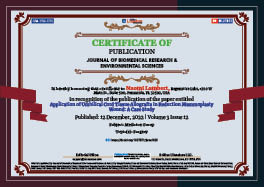
Certificate of Publication — Application of Umbilical Cord Tissue Allografts in Reduction Mammoplasty Wound: A Case Study

Certificate verifies that this article was peer-reviewed and published in the Journal of Biomedical Research & Environmental Sciences.

Publish with JBRES — Peer-reviewed, multidisciplinary Open Access with rapid review, DOI, and global visibility.
Double-Blind CrossRef DOI Discoverable
