Special Issue
Innovations in Biomedical Research and Clinical Medicine
Guest Editor: Editorial Board — Journal of Biomedical Research & Environmental Sciences
Submission
Covid-19 Research
Safety Profile of COVID-19 Vaccines: Retrospective Analysis of Short, Medium, and Long-Term Side Effects: The Military Hospital Experience – Read more Evaluating the Efficacy of Different SARS-Cov-2 Drug Targets Using the Topo-Geometrical Superposition Algorithm, Molecular Docking and Chemical Reactivity Frameworks – Read more Preventing COVID-19 Infection by Complementary Medicine and Oral Health – Read more Analysis of Body Temperature in Patients with Trauma Visiting a Local Emergency Medical Center during the SARS-CoV-2 Outbreak – Read more N95 Respirator Fit Testing Experience during the Pandemic at a Singapore Tertiary Health Institution: Streamlining Workflow and Improving Respirator Fit Rate – Read more COVID-19 is an Amplifier of Social Inequalities Structural Violence against Students with Special Learning Needs and Low Socio-Economic Status – Read more Interaction between Chronic Influenza and COVID-19: Novel Aspects of Immune System Combat – Read more Daily Life, Fear of COVID-19 and Social Support in the Older Adults in Home Isolation: A Cross-Sectional Study – Read more The Impact of COVID-19 Pandemic on Cardiovascular Diseases in Brazil – Read more Diversity of Non-Influenza Respiratory Viruses Associated with Influenza-Like Illness during 2009 pre and pandemic periods in Sao Paulo, Brazil, a Historical Overview – Read more Cardiovascular Complications of SARS-CoV-2 (COVID-19) in Adults – Read more Impact of COVID-19 Pandemic on the Development of Childrens Executive Functions Implications for School-Based Interventions – Read more The Impact of the COVID-19 Pandemic on Youth Education – Read more Association between Dietary Habits, Lifestyle and Migraine Attacks During Social Isolation in the COVID-19 Pandemic: A Systematic Review of Observational Studies – Read more The Brazilian Increase in Cases of Lung Cancer and COVID-19, Can They be related? – Read more The Possible Therapeutic Application of CO on COVID-19 – Read more Planetary View of COVID Impact vs. IQ & PISA Rank as National Level of Intelligence – Read more Electrophysiological Study in a Patient with Visual Deficit after Severe Coronavirus 2 Pneumonia – Read more A Presentation of Analyses of COVID-19 Vaccine Samples, Blood Samples, Urine Samples, Foot Bath Samples, Sitz Bath Samples, and Skin-Extract Samples – Read more Is Anosmia-Ageusia in COVID-19 Patients Associated with Neuro-Philic Virus Mutant and Mild Respiratory Involvement? – Read more
Home/ Article Figures/ Image View

Article Figures

View article figures, metadata, abstract and related content from this JBRES publication.

Original Article Vol. 6, Issue 7 2025-07-27
The Veterans Affairs Lipid Optimization Reimagined - Quality Improvement Program Rationale and Methods
Abigail A Santos*, Jennifer DelGrande, Abigail Fink, Juhi Seth, Courtney Bonnema, Rachel Ward, Helen M Wellman, Nedim Yel, Mason Coleman Lopez, Dakotah Feil, Sharon Sharnprapai, Kristin Colson, Eddie Pan, Tharen Leesch, David Pena, Michelle Congdon, Michele Bolles, Luc Djousse and John Michael Gaziano
Internal Medicine Public Health Cardiovascular Diseases
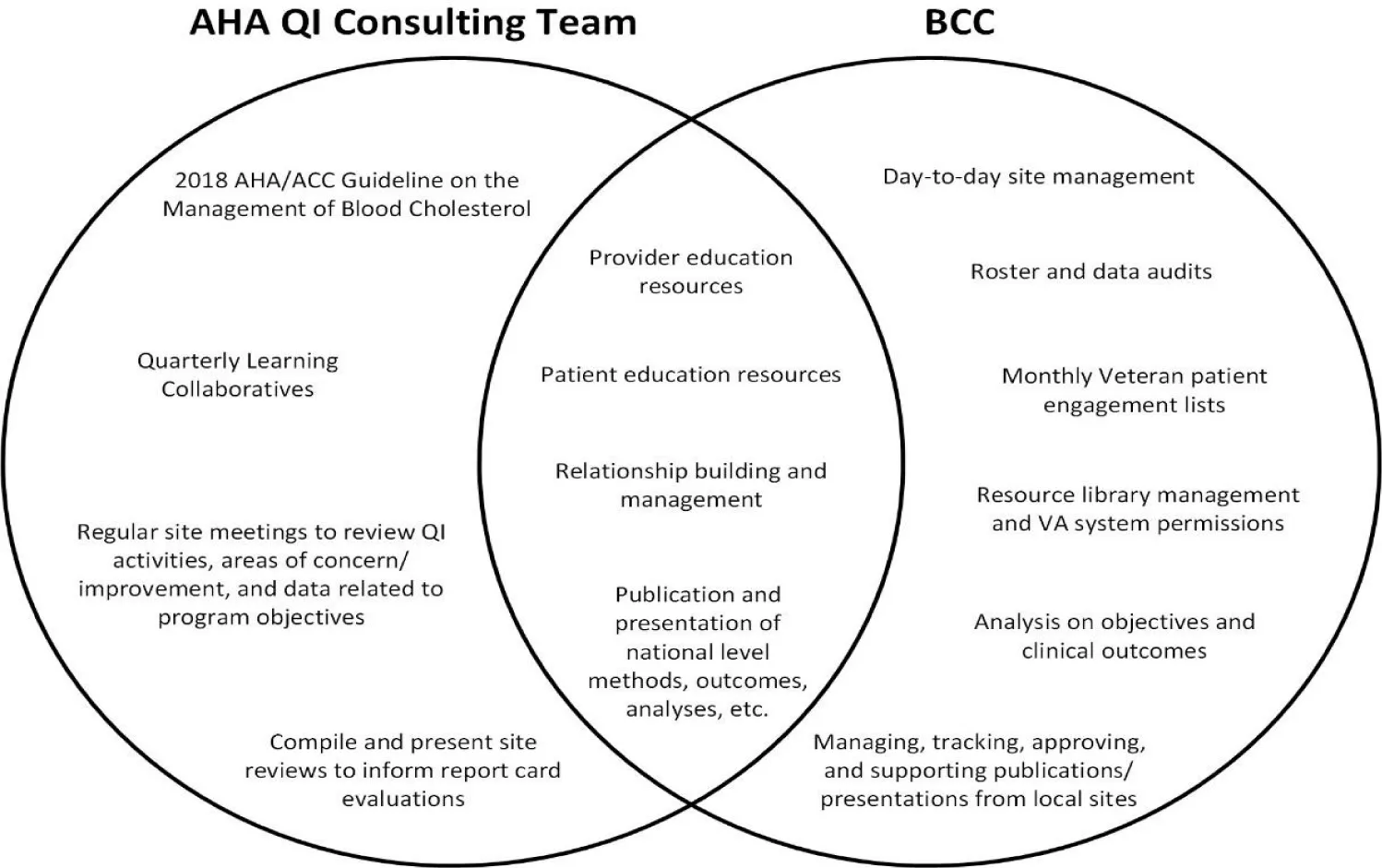
The Veterans Affairs Lipid Optimization Reimagined - Quality Improvement Program  Rationale and Methods
jbres2147-g001.webp

Article Figures (2)

Abstract

Background: Atherosclerotic cardiovascular disease (ASCVD) is a major contributor to morbidity and mortality in United States (US) Veterans and to healthcare costs in the United States Veterans Affairs (VA) Healthcare System. Optimizing Low-Density Lipoprotein Cholesterol (LDL-C) can improve Veteran health, reduce incidence of cardiovascular events and death, and lower healthcare costs.

Methods: The VA Lipid Optimization Reimagined - Quality Improvement (VALOR-QI) program is an innovative three-year multi-site quality improvement program leveraging various lipid optimization strategies tailored to unique barriers and needs at 50 VA Medical Centers. Program oversight is provided by the Boston VA Coordinating Center and the American Heart Association (AHA), and local teams include a site lead or Clinical Champion (CC), a Healthcare Coach (HC), and a Health Care Provider Network (HCPN) of clinicians treating Veterans with ASCVD. Outcome data are collected through the VA electronic health record database and QI data are collected through the VA Research Electronic Data Capture (REDCap) system. Primary and secondary outcomes include the percentage of Veterans with optimized LDL-C (

Article Information

JournalJournal of Biomedical Research & Environmental Sciences (JBRES)
Article TypeOriginal Article
Published2025-07-27
Volume / IssueVol. 6, Issue 7
DOI10.37871/jbres2147
Pages929-937
LicenseCC BY 4.0 — Free to reuse with attribution
Back to Image Search
Publish with JBRES — Peer-reviewed, multidisciplinary Open Access with rigorous double-blind review, CrossRef DOI, and global visibility.
Double-Blind CrossRef DOI Discoverable