Article Figures
View article figures, metadata, abstract and related content from this JBRES publication.
Article Figures (6)


Abstract
Background: The precise analytical-clinical characterization of pregnancies carrying the most frequent aneuploidies has now been surpassed by the technical capacity to obtain their proteomic profile. Amniotic fluid contains the differential proteins related to its specific genetic alteration, representing the molecular etiopathogenesis that generates the associated phenotypes.
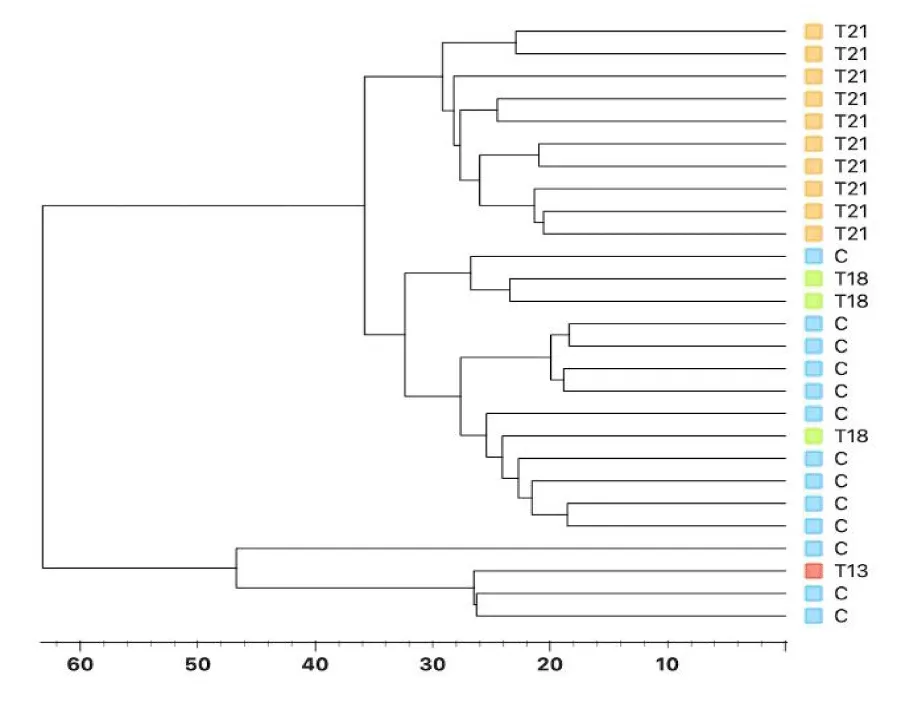
Method: The description of the pathognomonic proteomic profiles of amniotic fluid, obtained by Data Independent Acquisition mass spectrometry, of 785 proteins in amniotic fluid from 15 fetuses carrying the most frequent aneuploidies and 15 fetuses with normal combined risk screening.
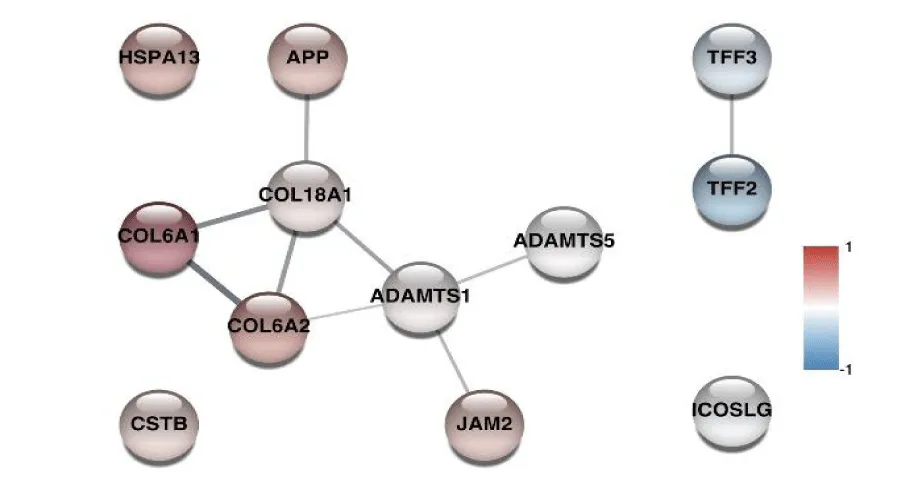
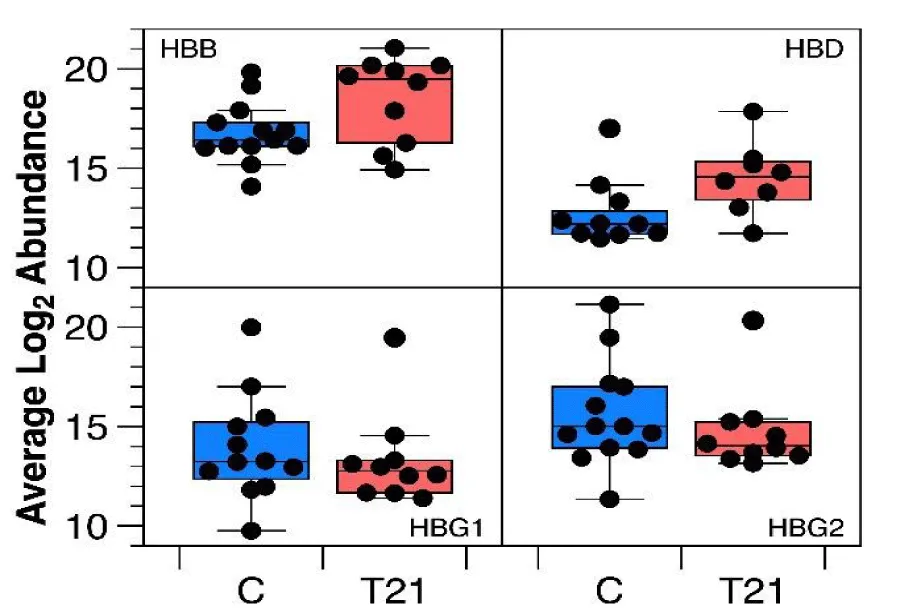
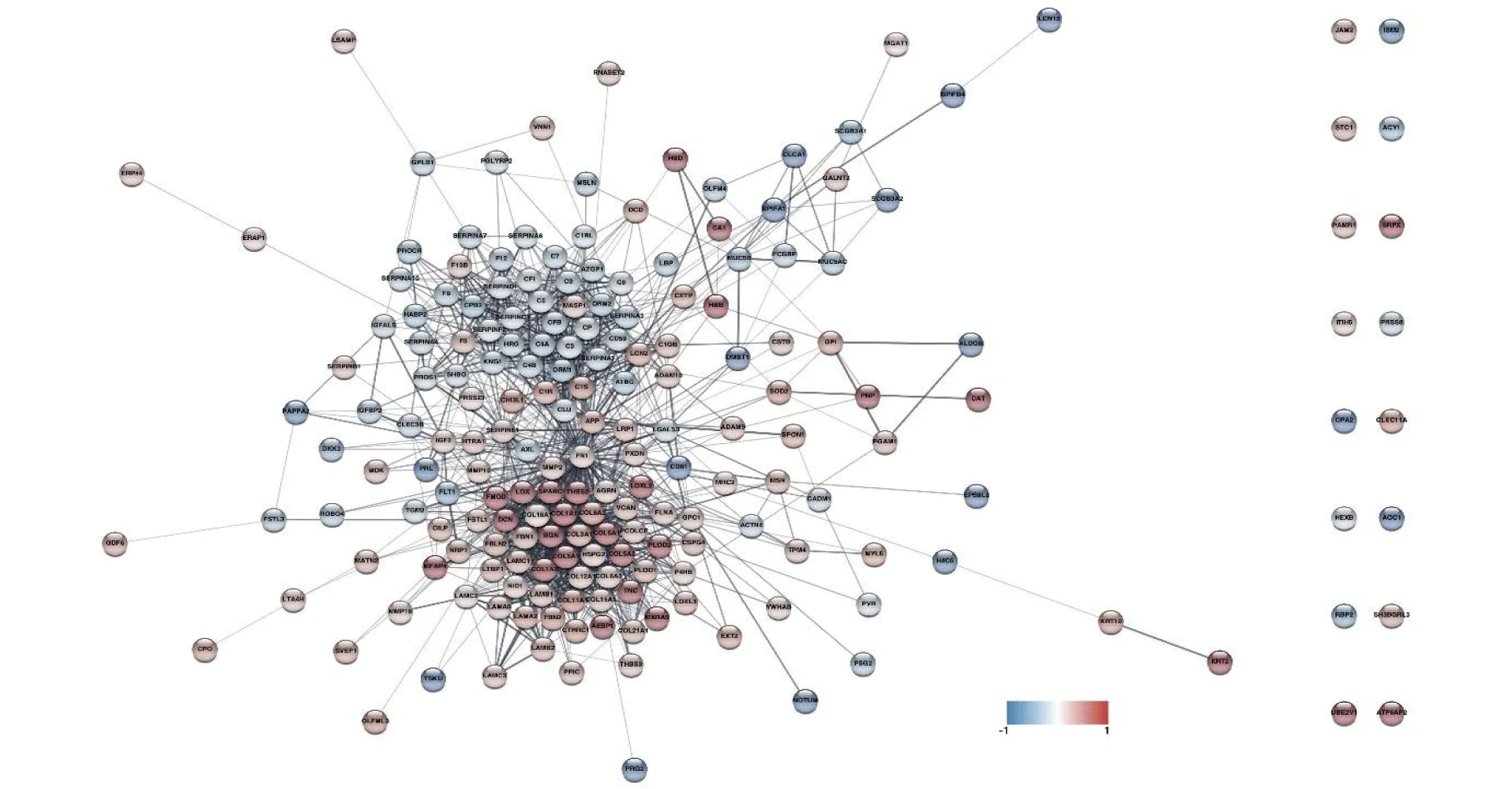
Results: 119 proteins were clearly overrepresented in the T21 samples and 87 were decreased, 12 encoded by genes located on chromosome 21. The specific proteomic profile of pregnancies carrying Trisomy 21 was based on the combination of the COL6A1, DMBT1, HBB and PRG2 proteins. The proteomic profiles associated with T18 and T13 already suggested specific differential profiles, without reaching statistical significance.
Conclusion: The proteomic analysis of the amniotic fluid defined differentially quantified proteins related to the specific genetic alteration of Trisomy 21, as a molecular etiopathogenesis that generates associated phenotypes based on the overexpression of Extracellular Matrix (ECM) genes and adult hemoglobins, as well as a decrease in coagulation factors, the complement system and immunoglobulin fragments.
Article Information
| Journal | Journal of Biomedical Research & Environmental Sciences (JBRES) |
|---|---|
| Article Type | Original Article |
| Published | 2025-05-28 |
| Volume / Issue | Vol. 6, Issue 5 |
| DOI | 10.37871/jbres2108 |
| Pages | 532-544 |
| License | CC BY 4.0 — Free to reuse with attribution |