Abstract & Article Details
Research Article • Vol.7, Issue 2 • ISSN: 2766-2276 • Open Access • CC BY 4.0
The Development of Acute Kidney Injury and Electrolyte Disorders in Relation to Different Cardioplegic Solutions used during Cardiac Surgery
Abstract
Background: Acute Kidney Injury (AKI) is a serious complication after cardiac surgery. We sought to determine the possible onset of AKI in patients undergoing cardiac surgery with different cardioplegic solution during Cardiopulmonary Bypass (CPB) including Custodiol Solution (CS), cold crystalloid St. Thomas cardioplegia (CCC), warm Blood Cardioplegia (WBC).Methods: We retrospectively collected data from 186 patients undergoing cardiac surgery between June 2023 and December 2024. Three groups of patients, based on the above mentioned three different types of cardioplegic solutions administered, were established. We analyzed pH, sodium, potassium, calcium, chlorine, lactates before cardiac surgery (T0), after the first dose of cardioplegic solution infusion (T1) and at the end of CPB (T2), at 48 hours (T3) and 7 days after cardiac surgery (T4). The severity of renal injury was defined as a creatinine serum increase between 0.3 and 1.9 mg/dl and an increase >/= 2 mg/dl.Results: Preoperative serum creatinine level (Odds Ratio [OR]: 9.5; p < 0.001), lactate level at weaning from cardiopulmonary bypass > 3 mMol/L (OR: 10; p =0.03), sodium level imbalance during CPB (OR: 1.1; p = 0.02), and, with a little statistical significance, male gender (OR: 4.2; p =0.05) were statistically significant independent predictors of AKI. Different type of cardioplegia was not detected as an independent risk factor at the multivariate analysis, although WBC was associated with a higher risk of AKI at the univariate analysis (p < 0.001, for all measurements).Conclusion: There is no evidence concluding which could be the safest cardioplegic solution to prevent AKI occurrence. However, WBC is associated with a slightly higher risk of developing postoperative AKI, as highlighted in the univariate analysis of the variables alone. In light of what we have observed in our study, the results are hypothesis-generating rather than definitive.

Research Topics
How to Cite
Article Information
| Journal | Journal of Biomedical Research & Environmental Sciences (JBRES) |
|---|---|
| ISSN | 2766-2276 |
| DOI | DOI 10.37871/jbres2273 |
| Volume / Issue | Vol. 7, Issue 2 |
| Received | January 29, 2026 |
| Accepted | February 26, 2026 |
| Published | February 27, 2026 |
| Article Type | Research Article |
| Pages | 1-11 |
| License | CC BY 4.0 — Open Access |
| Publisher | SciRes Literature LLC, Sheridan, WY, USA |
| Language | English |

Published under CC BY 4.0 — free to share, copy, adapt, and redistribute with attribution.
Certificate of Publication
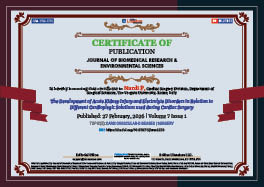
Certificate verifies that this article was peer-reviewed and published in the Journal of Biomedical Research & Environmental Sciences.