Abstract & Article Details
Review Article • Vol.6, Issue 4 • ISSN: 2766-2276 • Open Access • CC BY 4.0
Healing with Food or Managing with Injection? A New Era in Chronic Disease Care
Abstract
The global burden of chronic diseases, particularly obesity, diabetes, and cardiovascular diseases, continues to rise. While pharmacological interventions, such as Semaglutide, provide short-term benefits in weight management and glycaemic control, they present limitations, including high costs, side effects, and limited long-term efficacy. In contrast, a Plant-Based Diet (PBD) offers a sustainable and cost-effective approach that directly addresses the underlying metabolic dysfunctions driving chronic diseases.
At Bethsaida Hospital in Indonesia, our cardiology centre, led by Prof. Dasaad Mulijono, has successfully implemented a PBD therapeutic strategy, yielding substantial clinical improvements. Patients with Coronary Artery Disease (CAD), Type 2 Diabetes (T2D), and hypertension have demonstrated sustained weight loss, reduced medication dependence, and reversal of key disease markers. Many hypertensive patients have discontinued antihypertensive therapy following sustained blood pressure normalisation, while diabetic patients have achieved exceptional glycaemic control (Hba1c < 6%), often eliminating insulin dependence. Overweight patients have attained a healthy BMI (21 - 22), and those with hyperlipidaemia have reached LDL-C levels below 30 mg/dL through a combined plant-based and pharmacological approach. Moreover, patients with moderate renal impairment have experienced normalised serum creatinine levels. Most notably, our cardiology patients exhibit an exceptionally low restenosis rate (~2%) and strong evidence of atherosclerotic stabilisation and plaque regression.
These findings underscore the transformative potential of PBDs in preventing and reversing chronic diseases. Unlike pharmacological interventions, which primarily mitigate symptoms, dietary interventions offer a comprehensive and sustainable solution to improving metabolic health and cardiovascular function. Integrating Artificial Intelligence (AI) can further personalise and facilitate adherence to plant-based dietary interventions. A paradigm shift from pharmacological dependence to lifestyle medicine is imperative to reducing healthcare costs and enhancing long-term patient outcomes.

Research Topics
How to Cite
Article Information
| Journal | Journal of Biomedical Research & Environmental Sciences (JBRES) |
|---|---|
| ISSN | 2766-2276 |
| DOI | DOI 10.37871/jbres2092 |
| Volume / Issue | Vol. 6, Issue 4 |
| Received | April 8, 2025 |
| Accepted | April 23, 2025 |
| Published | April 24, 2025 |
| Article Type | Review Article |
| Pages | 373-377 |
| License | CC BY 4.0 — Open Access |
| Publisher | SciRes Literature LLC, Sheridan, WY, USA |
| Language | English |

Published under CC BY 4.0 — free to share, copy, adapt, and redistribute with attribution.
Certificate of Publication
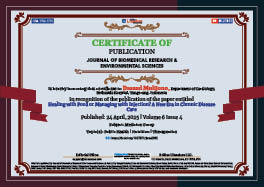
Certificate verifies that this article was peer-reviewed and published in the Journal of Biomedical Research & Environmental Sciences.