Article Figures
View article figures, metadata, abstract and related content from this JBRES publication.
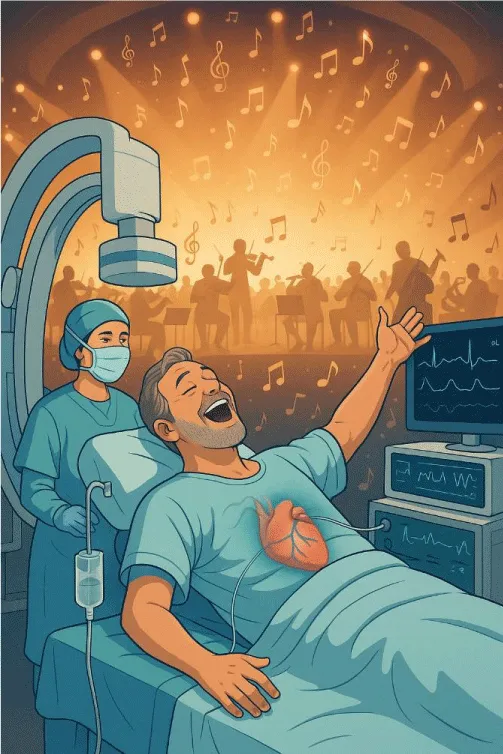
Article Figures (1)
Abstract
Music, deeply embedded in human culture, profoundly influences physiological and psychological states, showcasing remarkable potential within clinical environments, notably the catheterization laboratory (Cath Lab). This article offers an in-depth examination of music's crucial role in interventional cardiology from both physiological and neurochemical perspectives. Music effectively modulates stress responses, enhancing parasympathetic activity and reducing heart rate, blood pressure, and cortisol levels, thereby promoting a state of calmness and relaxation critical for optimal procedural outcomes. Neurochemically, music stimulates the release of dopamine, serotonin, oxytocin, and endorphins, crucial neurochemicals associated with mood enhancement, emotional stability, teamwork facilitation, and pain relief. These effects collectively enhance cognitive performance, procedural precision, and patient comfort, resulting in reduced anxiety, decreased reliance on medication, and shorter recovery times. Highlighting practical implementation, Bethsaida Hospital—under the leadership of Prof. Dasaad Mulijono (DM)—exemplifies the integration of music through advanced, personalized audio experiences within a compassionate and spiritually mindful environment, underscoring the significance of music as an indispensable adjunctive therapeutic modality in interventional cardiology.
Article Information
| Journal | Journal of Biomedical Research & Environmental Sciences (JBRES) |
|---|---|
| Published | 2026-02-27 |
| Volume / Issue | Vol. 7, Issue 2 |
| DOI | 10.37871/jbres2275 |
| Pages | 1-6 |
| License | CC BY 4.0 — Free to reuse with attribution |