Special Issue
Advances in Environmental Health and Toxicology
Guest Editor: Editorial Team — Journal of Biomedical Research & Environmental Sciences
Submission
Covid-19 Research
Safety Profile of COVID-19 Vaccines: Retrospective Analysis of Short, Medium, and Long-Term Side Effects: The Military Hospital Experience – Read more Evaluating the Efficacy of Different SARS-Cov-2 Drug Targets Using the Topo-Geometrical Superposition Algorithm, Molecular Docking and Chemical Reactivity Frameworks – Read more Preventing COVID-19 Infection by Complementary Medicine and Oral Health – Read more Analysis of Body Temperature in Patients with Trauma Visiting a Local Emergency Medical Center during the SARS-CoV-2 Outbreak – Read more N95 Respirator Fit Testing Experience during the Pandemic at a Singapore Tertiary Health Institution: Streamlining Workflow and Improving Respirator Fit Rate – Read more COVID-19 is an Amplifier of Social Inequalities Structural Violence against Students with Special Learning Needs and Low Socio-Economic Status – Read more Interaction between Chronic Influenza and COVID-19: Novel Aspects of Immune System Combat – Read more Daily Life, Fear of COVID-19 and Social Support in the Older Adults in Home Isolation: A Cross-Sectional Study – Read more The Impact of COVID-19 Pandemic on Cardiovascular Diseases in Brazil – Read more Diversity of Non-Influenza Respiratory Viruses Associated with Influenza-Like Illness during 2009 pre and pandemic periods in Sao Paulo, Brazil, a Historical Overview – Read more Cardiovascular Complications of SARS-CoV-2 (COVID-19) in Adults – Read more Impact of COVID-19 Pandemic on the Development of Childrens Executive Functions Implications for School-Based Interventions – Read more The Impact of the COVID-19 Pandemic on Youth Education – Read more Association between Dietary Habits, Lifestyle and Migraine Attacks During Social Isolation in the COVID-19 Pandemic: A Systematic Review of Observational Studies – Read more The Brazilian Increase in Cases of Lung Cancer and COVID-19, Can They be related? – Read more The Possible Therapeutic Application of CO on COVID-19 – Read more Planetary View of COVID Impact vs. IQ & PISA Rank as National Level of Intelligence – Read more Electrophysiological Study in a Patient with Visual Deficit after Severe Coronavirus 2 Pneumonia – Read more A Presentation of Analyses of COVID-19 Vaccine Samples, Blood Samples, Urine Samples, Foot Bath Samples, Sitz Bath Samples, and Skin-Extract Samples – Read more Is Anosmia-Ageusia in COVID-19 Patients Associated with Neuro-Philic Virus Mutant and Mild Respiratory Involvement? – Read more
Home/ Article Figures/ Image View

Article Figures

View article figures, metadata, abstract and related content from this JBRES publication.
Review Article Vol. 6, Issue 12 2025-12-16
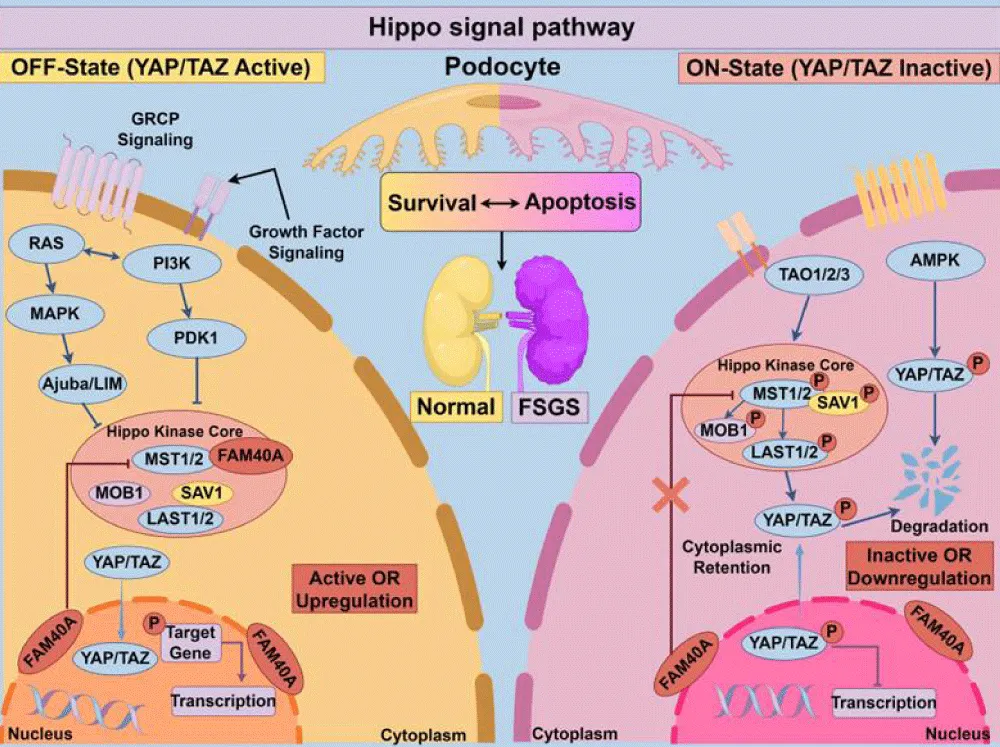
FAM40A Deficiency Activates the Hippo Pathway to Promote Podocyte Apoptosis and Contribute to FSGS
Chen Z and Guo Z
Pathology Nephrology
FAM40A Deficiency Activates the Hippo Pathway to Promote Podocyte Apoptosis and Contribute to FSGS
jbres2240-g001.webp

Article Figures (6)

Abstract

Background: Focal Segmental Glomerulosclerosis (FSGS), a major cause of end-stage renal disease, is characterized by podocyte loss via apoptosis and cytoskeletal disruption. Although dysregulation of the Hippo-YAP pathway is implicated in podocyte injury, upstream regulators of this pathway in FSGS pathogenesis remain elusive.
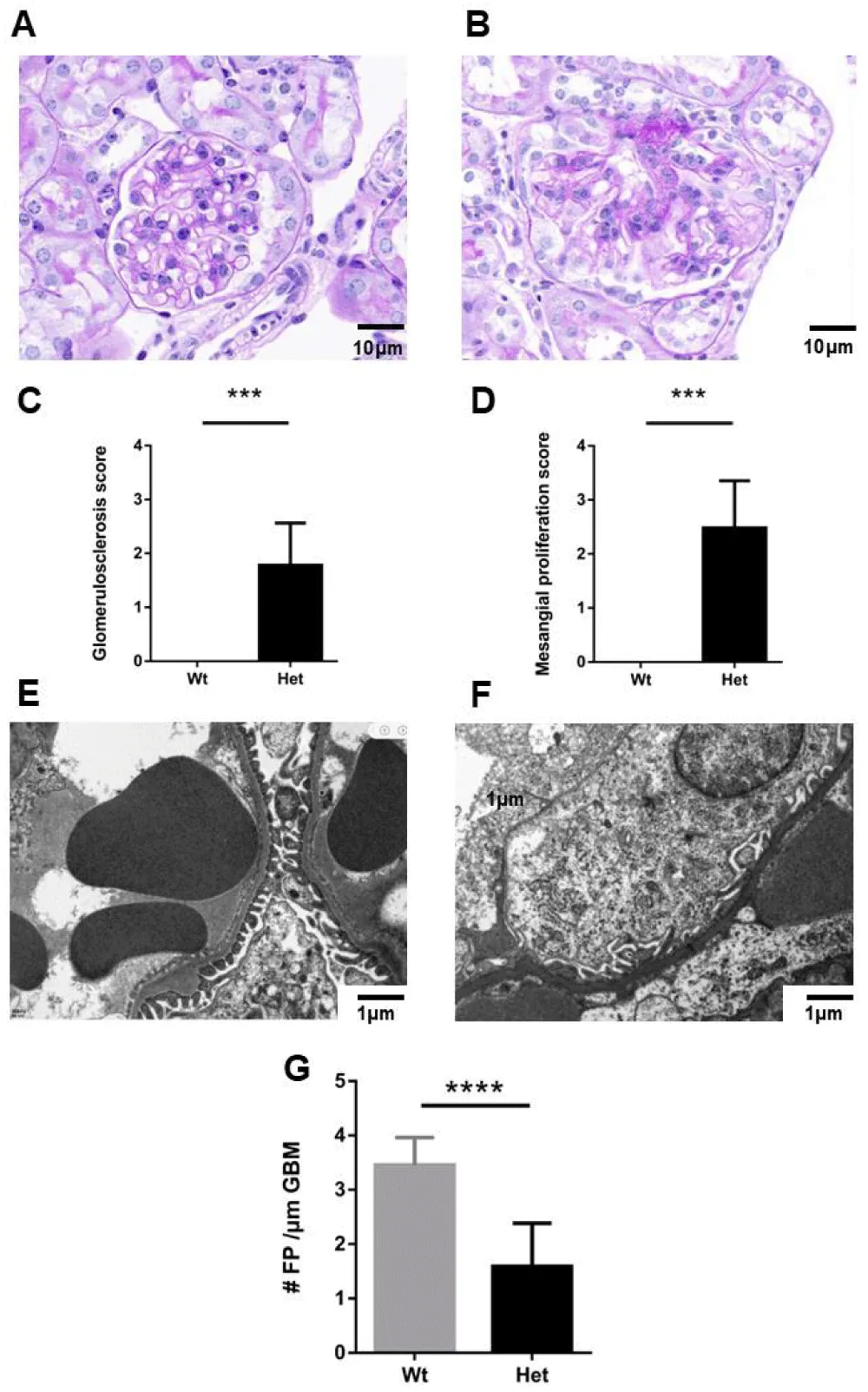
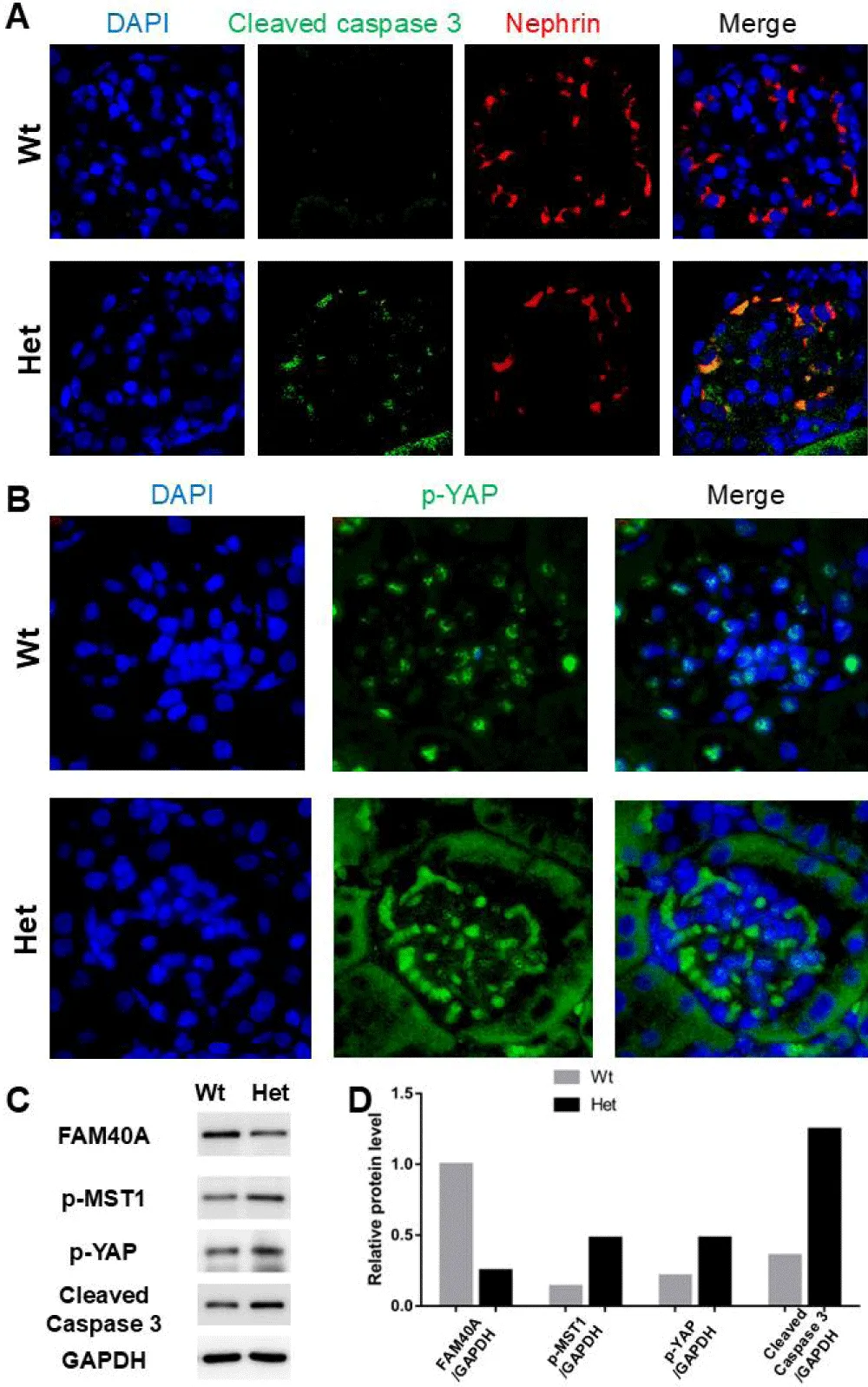
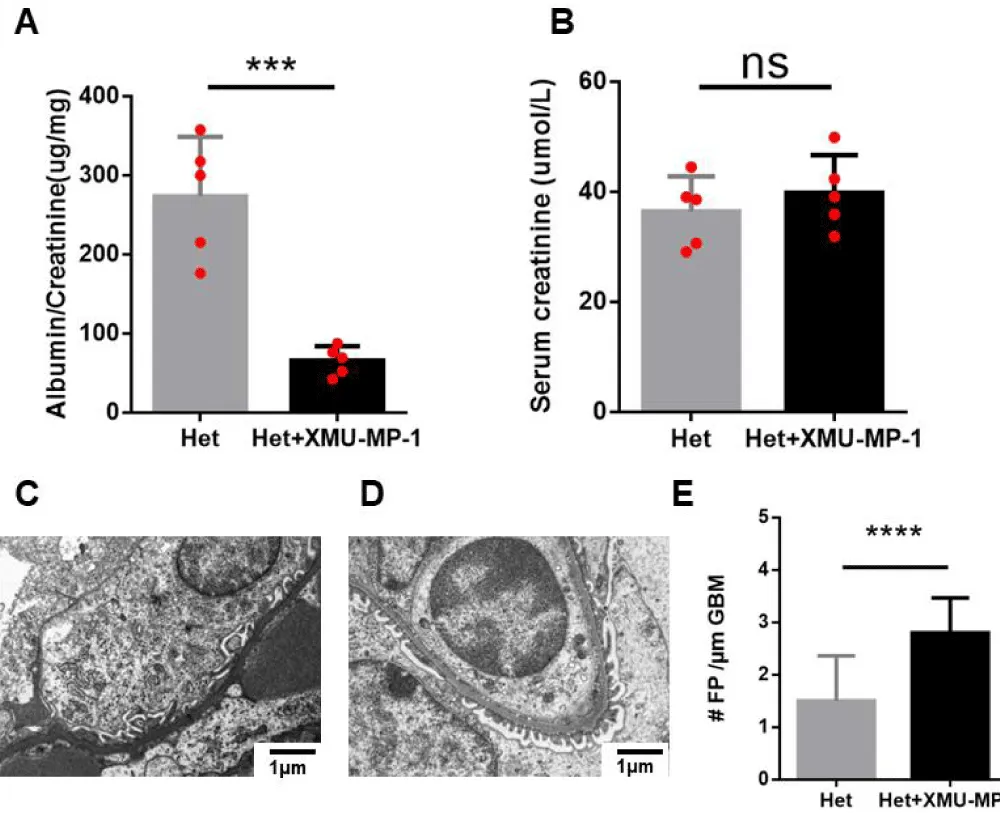
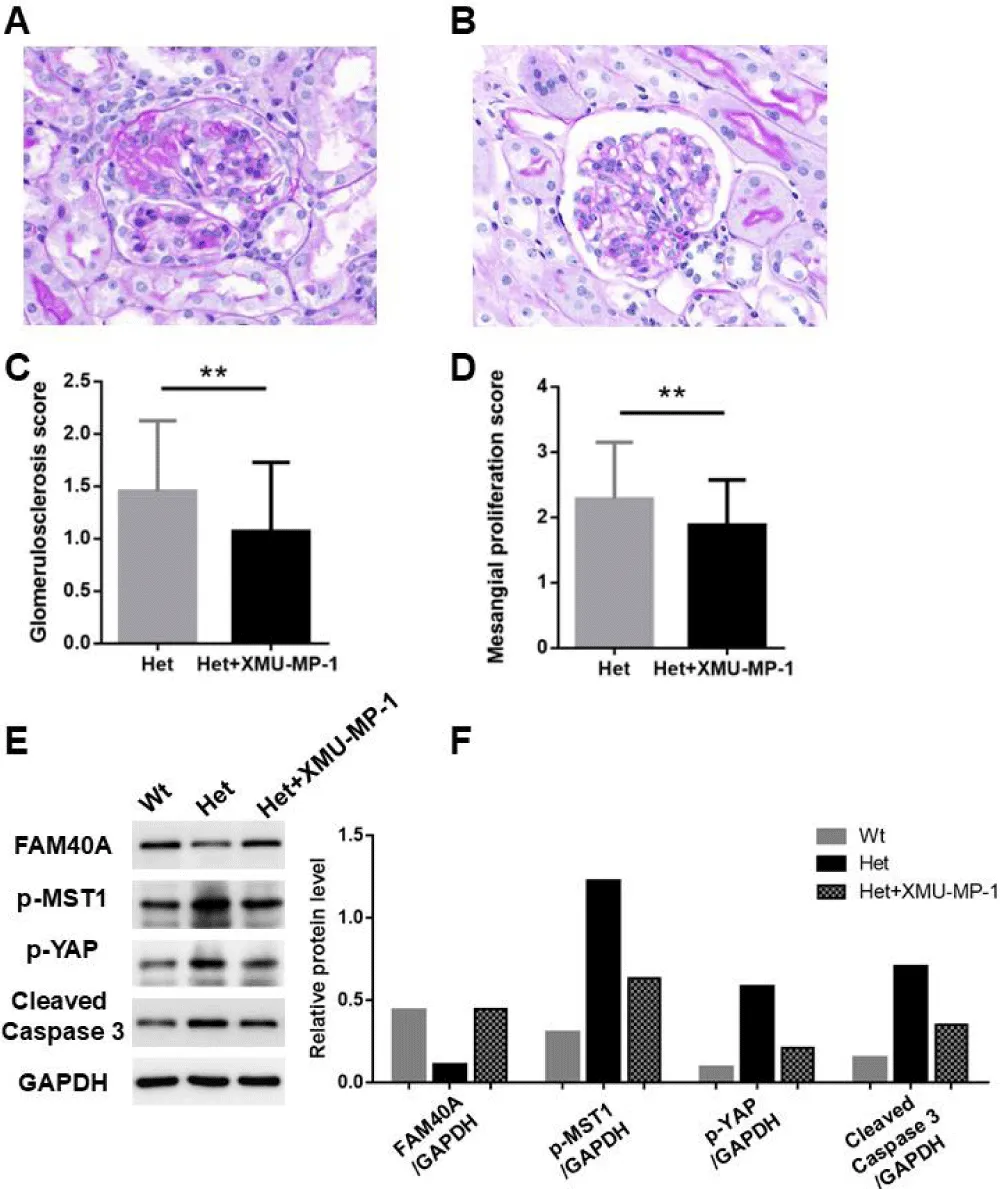
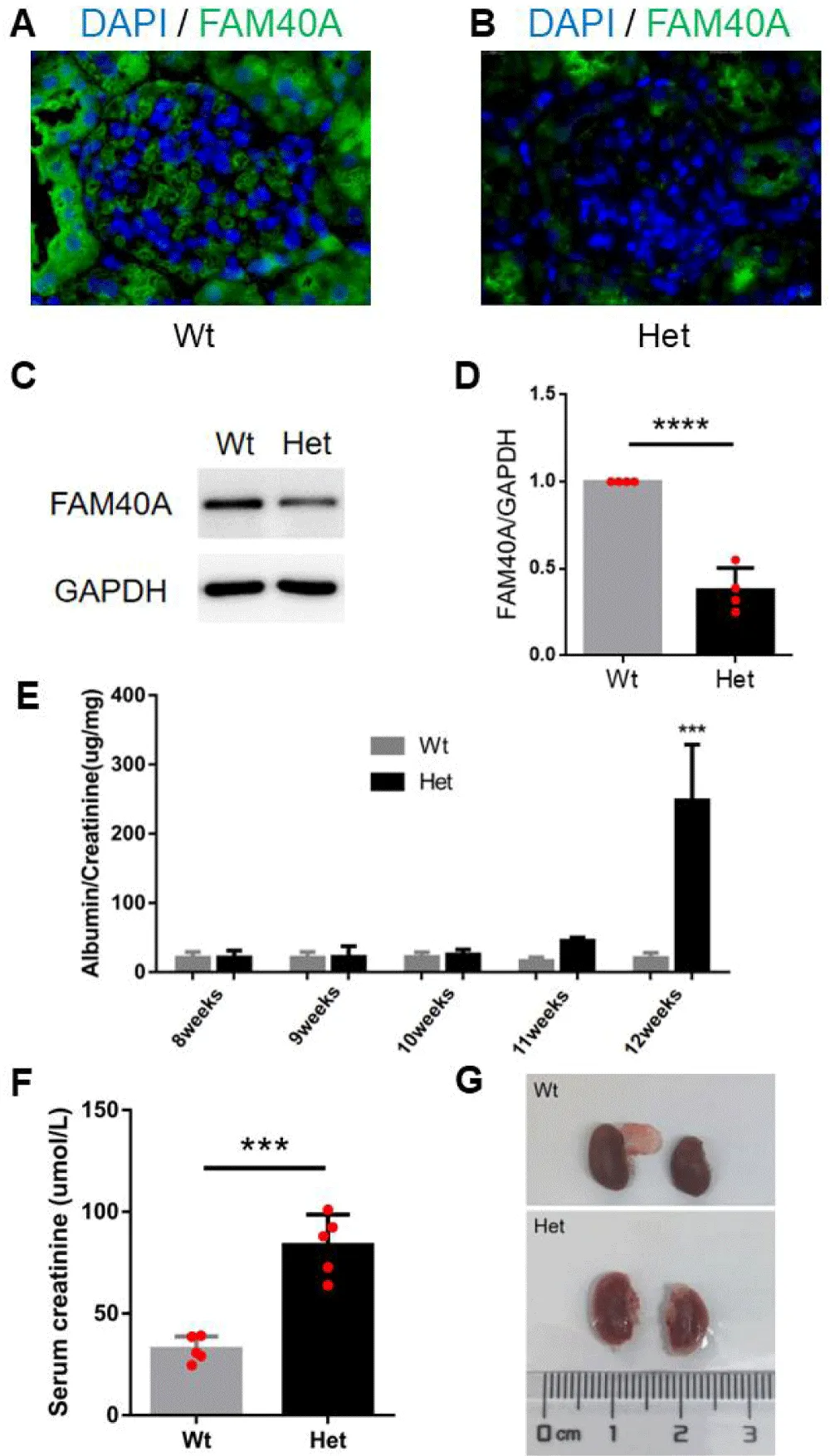
Methods: To determine whether FAM40A deficiency precipitates FSGS, we generated heterozygous FAM40A+/− mice by CRISPR/Cas9-mediated deletion of exons 3-8 (Δex3-8 allele). At specified time points, kidneys were collected for histological examination (PAS, TEM), immunofluorescence, and Western blotting to quantify podocyte apoptosis and Hippo pathway activation. Finally, FAM40A+/− mice were randomly assigned to receive treatment with the MST1/2 inhibitor XMU-MP-1 (1 mg/kg/day) via intraperitoneal injection or vehicle treatment for 10 days. Endpoints included urinary Albumin-to-Creatinine Ratio (ACR), renal histology, podocyte density, and podocyte apoptosis markers.
Results: We identified FAM40A as a novel negative regulator of the Hippo pathway in podocytes. FAM40A directly suppressed the kinase activity of Mst1/2, thereby preventing phosphorylation and inactivation of the downstream effector YAP. FAM40A deficiency triggered Mst1/2 activation, leading to YAP phosphorylation, nuclear exclusion, and transcriptional repression. This cascade resulted in podocyte apoptosis and exacerbated FSGS phenotypes In vivo.
Conclusion: Our study defines the FAM40A-Mst1/2-YAP axis as a critical signalling pathway governing podocyte survival. Loss of FAM40A activates Hippo signalling to promote podocyte apoptosis and FSGS progression. While short-term MST1/2 inhibition ameliorates disease features in mice, further evaluation of safety and feasibility is required. These findings highlight FAM40A as a potential therapeutic target for FSGS.

Article Information

JournalJournal of Biomedical Research & Environmental Sciences (JBRES)
Article TypeReview Article
Published2025-12-16
Volume / IssueVol. 6, Issue 12
DOI10.37871/jbres2240
Pages1911-1928
LicenseCC BY 4.0 — Free to reuse with attribution
Back to Image Search
Publish with JBRES — Peer-reviewed, multidisciplinary Open Access with rigorous double-blind review, CrossRef DOI, and global visibility.
Double-Blind CrossRef DOI Discoverable