Special Issue
Advances in Environmental Health and Toxicology
Guest Editor: Editorial Team — Journal of Biomedical Research & Environmental Sciences
Submission
Covid-19 Research
Safety Profile of COVID-19 Vaccines: Retrospective Analysis of Short, Medium, and Long-Term Side Effects: The Military Hospital Experience – Read more Evaluating the Efficacy of Different SARS-Cov-2 Drug Targets Using the Topo-Geometrical Superposition Algorithm, Molecular Docking and Chemical Reactivity Frameworks – Read more Preventing COVID-19 Infection by Complementary Medicine and Oral Health – Read more Analysis of Body Temperature in Patients with Trauma Visiting a Local Emergency Medical Center during the SARS-CoV-2 Outbreak – Read more N95 Respirator Fit Testing Experience during the Pandemic at a Singapore Tertiary Health Institution: Streamlining Workflow and Improving Respirator Fit Rate – Read more COVID-19 is an Amplifier of Social Inequalities Structural Violence against Students with Special Learning Needs and Low Socio-Economic Status – Read more Interaction between Chronic Influenza and COVID-19: Novel Aspects of Immune System Combat – Read more Daily Life, Fear of COVID-19 and Social Support in the Older Adults in Home Isolation: A Cross-Sectional Study – Read more The Impact of COVID-19 Pandemic on Cardiovascular Diseases in Brazil – Read more Diversity of Non-Influenza Respiratory Viruses Associated with Influenza-Like Illness during 2009 pre and pandemic periods in Sao Paulo, Brazil, a Historical Overview – Read more Cardiovascular Complications of SARS-CoV-2 (COVID-19) in Adults – Read more Impact of COVID-19 Pandemic on the Development of Childrens Executive Functions Implications for School-Based Interventions – Read more The Impact of the COVID-19 Pandemic on Youth Education – Read more Association between Dietary Habits, Lifestyle and Migraine Attacks During Social Isolation in the COVID-19 Pandemic: A Systematic Review of Observational Studies – Read more The Brazilian Increase in Cases of Lung Cancer and COVID-19, Can They be related? – Read more The Possible Therapeutic Application of CO on COVID-19 – Read more Planetary View of COVID Impact vs. IQ & PISA Rank as National Level of Intelligence – Read more Electrophysiological Study in a Patient with Visual Deficit after Severe Coronavirus 2 Pneumonia – Read more A Presentation of Analyses of COVID-19 Vaccine Samples, Blood Samples, Urine Samples, Foot Bath Samples, Sitz Bath Samples, and Skin-Extract Samples – Read more Is Anosmia-Ageusia in COVID-19 Patients Associated with Neuro-Philic Virus Mutant and Mild Respiratory Involvement? – Read more
Home/ All Articles/ Enhanced Genome Editing Needs an AI-Powered Meta-Platform for Smarter TALEN and CRISPR Too…

Abstract & Article Details

• Vol.7, Issue 4 • ISSN: 2766-2276 • Open Access • CC BY 4.0

Open Access Vol.7, Issue 4 April 6, 2026

Enhanced Genome Editing Needs an AI-Powered Meta-Platform for Smarter TALEN and CRISPR Tool Selection

DOI: 10.37871/jbres2289
Authors
Yufeng Liu, Muhammad Zawwad Raza and Muhammad Riaz

Abstract

Artificial intelligence (AI) is increasingly shaping genome-editing design, supporting predictive modeling of TALEN- and CRISPR-based systems by integrating genomic sequence features, chromatin structural context, and experimental metadata. However, the rapid proliferation of machine learning (ML)-driven tools has created a fragmented landscape in which different models operate on distinct, incompatible scoring scales and rely on heterogeneous training datasets, thereby substantially limiting the systematic, reproducible benchmarking of these tools. It produces a clear unmet need for harmonization in this space. To address this gap, we propose an AI-driven meta-platform that integrates predictions from existing genome-editing design tools using a stacked ensemble learning strategy and meta-modeling. The framework harmonizes diverse datasets and incorporates continuously filtered feedback from experimentally validated editing outcomes, with appropriate safeguards to manage the challenges inherent to multi-source, community-contributed experimental data. Through this process, the system learns the context-dependent strengths and limitations of individual predictors across different cell types, delivery modalities, and nuclease variants. By doing so, it enables tool-agnostic benchmarking, mitigates model-specific biases, and provides confidence-aware prioritization of candidate guides. We argue that such a unifying platform can shift the field from isolated, model-specific predictions towards an integrated, knowledge-driven ecosystem. This is expected to enhance robustness, interpretability, and reproducibility while supporting responsible data governance through explainable AI and privacy-preserving learning.

Research Topics

Get email alerts when new articles are published in these topics Subscribe for Alerts

How to Cite

Yufeng Liu, Muhammad Zawwad Raza and Muhammad Riaz (2026). Enhanced Genome Editing Needs an AI-Powered Meta-Platform for Smarter TALEN and CRISPR Tool Selection. Journal of Biomedical Research & Environmental Sciences, 7(4). https://doi.org/10.37871/jbres2289

Article Information

JournalJournal of Biomedical Research & Environmental Sciences (JBRES)
ISSN2766-2276
DOI DOI 10.37871/jbres2289
Volume / IssueVol. 7, Issue 4
ReceivedMarch 31, 2026
AcceptedApril 5, 2026
PublishedApril 6, 2026
Pages1-6
LicenseCC BY 4.0 — Open Access
PublisherSciRes Literature LLC, Sheridan, WY, USA
LanguageEnglish
Creative Commons BY 4.0

Published under CC BY 4.0 — free to share, copy, adapt, and redistribute with attribution.

Certificate of Publication
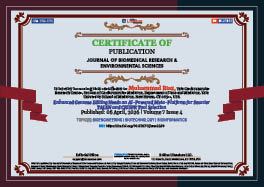
Certificate of Publication — Enhanced Genome Editing Needs an AI-Powered Meta-Platform for Smarter TALEN and CRISPR Tool Selection

Certificate verifies that this article was peer-reviewed and published in the Journal of Biomedical Research & Environmental Sciences.

Publish with JBRES — Peer-reviewed, multidisciplinary Open Access with rigorous double-blind review, CrossRef DOI, and global visibility.
Double-Blind CrossRef DOI Discoverable
