Special Issue
Innovations in Biomedical Research and Clinical Medicine
Guest Editor: Editorial Board — Journal of Biomedical Research & Environmental Sciences
Submission
Covid-19 Research
Safety Profile of COVID-19 Vaccines: Retrospective Analysis of Short, Medium, and Long-Term Side Effects: The Military Hospital Experience – Read more Evaluating the Efficacy of Different SARS-Cov-2 Drug Targets Using the Topo-Geometrical Superposition Algorithm, Molecular Docking and Chemical Reactivity Frameworks – Read more Preventing COVID-19 Infection by Complementary Medicine and Oral Health – Read more Analysis of Body Temperature in Patients with Trauma Visiting a Local Emergency Medical Center during the SARS-CoV-2 Outbreak – Read more N95 Respirator Fit Testing Experience during the Pandemic at a Singapore Tertiary Health Institution: Streamlining Workflow and Improving Respirator Fit Rate – Read more COVID-19 is an Amplifier of Social Inequalities Structural Violence against Students with Special Learning Needs and Low Socio-Economic Status – Read more Interaction between Chronic Influenza and COVID-19: Novel Aspects of Immune System Combat – Read more Daily Life, Fear of COVID-19 and Social Support in the Older Adults in Home Isolation: A Cross-Sectional Study – Read more The Impact of COVID-19 Pandemic on Cardiovascular Diseases in Brazil – Read more Diversity of Non-Influenza Respiratory Viruses Associated with Influenza-Like Illness during 2009 pre and pandemic periods in Sao Paulo, Brazil, a Historical Overview – Read more Cardiovascular Complications of SARS-CoV-2 (COVID-19) in Adults – Read more Impact of COVID-19 Pandemic on the Development of Childrens Executive Functions Implications for School-Based Interventions – Read more The Impact of the COVID-19 Pandemic on Youth Education – Read more Association between Dietary Habits, Lifestyle and Migraine Attacks During Social Isolation in the COVID-19 Pandemic: A Systematic Review of Observational Studies – Read more The Brazilian Increase in Cases of Lung Cancer and COVID-19, Can They be related? – Read more The Possible Therapeutic Application of CO on COVID-19 – Read more Planetary View of COVID Impact vs. IQ & PISA Rank as National Level of Intelligence – Read more Electrophysiological Study in a Patient with Visual Deficit after Severe Coronavirus 2 Pneumonia – Read more A Presentation of Analyses of COVID-19 Vaccine Samples, Blood Samples, Urine Samples, Foot Bath Samples, Sitz Bath Samples, and Skin-Extract Samples – Read more Is Anosmia-Ageusia in COVID-19 Patients Associated with Neuro-Philic Virus Mutant and Mild Respiratory Involvement? – Read more
Home/ All Articles/ How a Plant-Based Diet and Ultra-Low LDL Levels Can Reverse Atherosclerosis and Prevent Re…

Abstract & Article Details

Perspective • Vol.6, Issue 4 • ISSN: 2766-2276 • Open Access • CC BY 4.0

Open Access Perspective Vol.6, Issue 4 April 24, 2025

How a Plant-Based Diet and Ultra-Low LDL Levels Can Reverse Atherosclerosis and Prevent Restenosis: A Breakthrough in Heart Health

DOI: 10.37871/jbres2091
Authors
Dasaad Mulijono*

Abstract

Low-Density Lipoprotein Cholesterol (LDL-C) remains a key target in preventing and treating cardiovascular disease. Recent data and expert consensus increasingly support aggressive LDL-C lowering strategies, with emerging evidence suggesting that levels below 30 mg/dL (ultralow/ UL) may provide significant clinical benefits, including atherosclerosis regression and reduced rates of restenosis post-intervention.

At our cardiology centre at Bethsaida Hospital in Indonesia, directed by Prof. Dasaad Mulijono, we have successfully implemented a comprehensive approach that combines a Plant-Based Diet (PBD) with high-intensity lipid-lowering therapy (excluding PCSK9 inhibitors) to achieve sustained UL-LDL-C in patients with Coronary Artery Disease (CAD). This strategy has resulted in a restenosis rate of approximately 2%, compared to rates as high as 10-20% in other centres. Furthermore, Computed Tomography Coronary Angiography (CTCA), angiographic, and clinical follow-up data suggest signs of halted or regressed atherosclerotic progression.

These findings support the hypothesis that integrating a PBD with intensive lipid management may represent an effective and sustainable model for secondary prevention in high-risk cardiovascular populations. Future guidelines may consider more aggressive LDL-C targets and lifestyle-based interventions to optimize patient outcomes.

Research Topics

Get email alerts when new articles are published in these topics Subscribe for Alerts

How to Cite

Dasaad Mulijono* (2025). How a Plant-Based Diet and Ultra-Low LDL Levels Can Reverse Atherosclerosis and Prevent Restenosis: A Breakthrough in Heart Health. Journal of Biomedical Research & Environmental Sciences, 6(4). https://doi.org/10.37871/jbres2091

Article Information

JournalJournal of Biomedical Research & Environmental Sciences (JBRES)
ISSN2766-2276
DOI DOI 10.37871/jbres2091
Volume / IssueVol. 6, Issue 4
ReceivedApril 8, 2025
AcceptedApril 23, 2025
PublishedApril 24, 2025
Article TypePerspective
Pages368-372
LicenseCC BY 4.0 — Open Access
PublisherSciRes Literature LLC, Sheridan, WY, USA
LanguageEnglish
Creative Commons BY 4.0

Published under CC BY 4.0 — free to share, copy, adapt, and redistribute with attribution.

Certificate of Publication
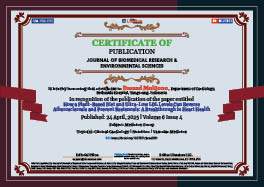
Certificate of Publication — How a Plant-Based Diet and Ultra-Low LDL Levels Can Reverse Atherosclerosis and Prevent Restenosis: A Breakthrough in Heart Health

Certificate verifies that this article was peer-reviewed and published in the Journal of Biomedical Research & Environmental Sciences.

Publish with JBRES — Peer-reviewed, multidisciplinary Open Access with rigorous double-blind review, CrossRef DOI, and global visibility.
Double-Blind CrossRef DOI Discoverable
