Special Issue
Data-Driven Discovery: Biostatistics, Biometrics & Computational Science
Guest Editor: Yingjun Zhao — Department of Intelligent Manufacturing Engineering, Xinjiang University, China
Submission
Covid-19 Research
Safety Profile of COVID-19 Vaccines: Retrospective Analysis of Short, Medium, and Long-Term Side Effects: The Military Hospital Experience – Read more Evaluating the Efficacy of Different SARS-Cov-2 Drug Targets Using the Topo-Geometrical Superposition Algorithm, Molecular Docking and Chemical Reactivity Frameworks – Read more Preventing COVID-19 Infection by Complementary Medicine and Oral Health – Read more Analysis of Body Temperature in Patients with Trauma Visiting a Local Emergency Medical Center during the SARS-CoV-2 Outbreak – Read more N95 Respirator Fit Testing Experience during the Pandemic at a Singapore Tertiary Health Institution: Streamlining Workflow and Improving Respirator Fit Rate – Read more COVID-19 is an Amplifier of Social Inequalities Structural Violence against Students with Special Learning Needs and Low Socio-Economic Status – Read more Interaction between Chronic Influenza and COVID-19: Novel Aspects of Immune System Combat – Read more Daily Life, Fear of COVID-19 and Social Support in the Older Adults in Home Isolation: A Cross-Sectional Study – Read more The Impact of COVID-19 Pandemic on Cardiovascular Diseases in Brazil – Read more Diversity of Non-Influenza Respiratory Viruses Associated with Influenza-Like Illness during 2009 pre and pandemic periods in Sao Paulo, Brazil, a Historical Overview – Read more Cardiovascular Complications of SARS-CoV-2 (COVID-19) in Adults – Read more Impact of COVID-19 Pandemic on the Development of Childrens Executive Functions Implications for School-Based Interventions – Read more The Impact of the COVID-19 Pandemic on Youth Education – Read more Association between Dietary Habits, Lifestyle and Migraine Attacks During Social Isolation in the COVID-19 Pandemic: A Systematic Review of Observational Studies – Read more The Brazilian Increase in Cases of Lung Cancer and COVID-19, Can They be related? – Read more The Possible Therapeutic Application of CO on COVID-19 – Read more Planetary View of COVID Impact vs. IQ & PISA Rank as National Level of Intelligence – Read more Electrophysiological Study in a Patient with Visual Deficit after Severe Coronavirus 2 Pneumonia – Read more A Presentation of Analyses of COVID-19 Vaccine Samples, Blood Samples, Urine Samples, Foot Bath Samples, Sitz Bath Samples, and Skin-Extract Samples – Read more Is Anosmia-Ageusia in COVID-19 Patients Associated with Neuro-Philic Virus Mutant and Mild Respiratory Involvement? – Read more
Home/ Article Figures/ Image View

Article Figures

View article figures, metadata, abstract and related content from this JBRES publication.
Vol. 7, Issue 4 2026-04-05
Deep Learning-Based Drilling Rate Prediction for Composite Sedimentary Zones: A Case Study of the Lower Taedong River
Kum-Hyok Choe*, Kum-Dol Pak, Yong-Nam Kim and Il-Jin Kim
Geosciences
Deep Learning-Based Drilling Rate Prediction for Composite Sedimentary Zones: A Case Study of the Lower Taedong River
jbres2288-g001.webp

Article Figures (2)

Abstract

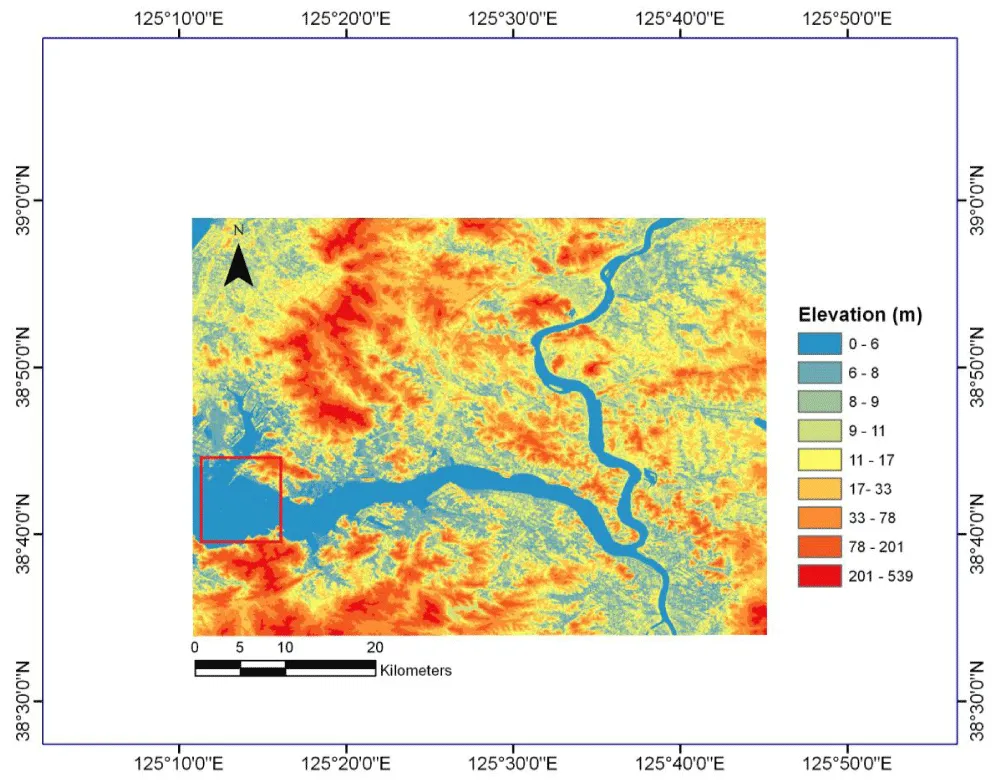
Background: The lower Taedong River (DPR Korea) is a typical fluvial-estuarine-marine composite sedimentary zone characterized by strong heterogeneity, complex hydrodynamics, and highly variable sediment properties. These geological and hydrological conditions give rise to severe drilling challenges, including unstable penetration rates, low construction efficiency, frequent bit clogging, and borehole collapse. This case study proposes a deep learning-based solution to address these engineering problems.
Case Presentation: A total of 350 field datasets were collected from 50 drilling points in the study area, encompassing 11 input parameters classified into three categories: 5 sediment geological indices, 3 hydrodynamic parameters, and 3 drilling operational parameters. A 4-layer Backpropagation (BP) neural network with a topological structure of 11–15–10–1 was constructed. The Adam optimization algorithm and early stopping strategy were employed in model training to mitigate overfitting.
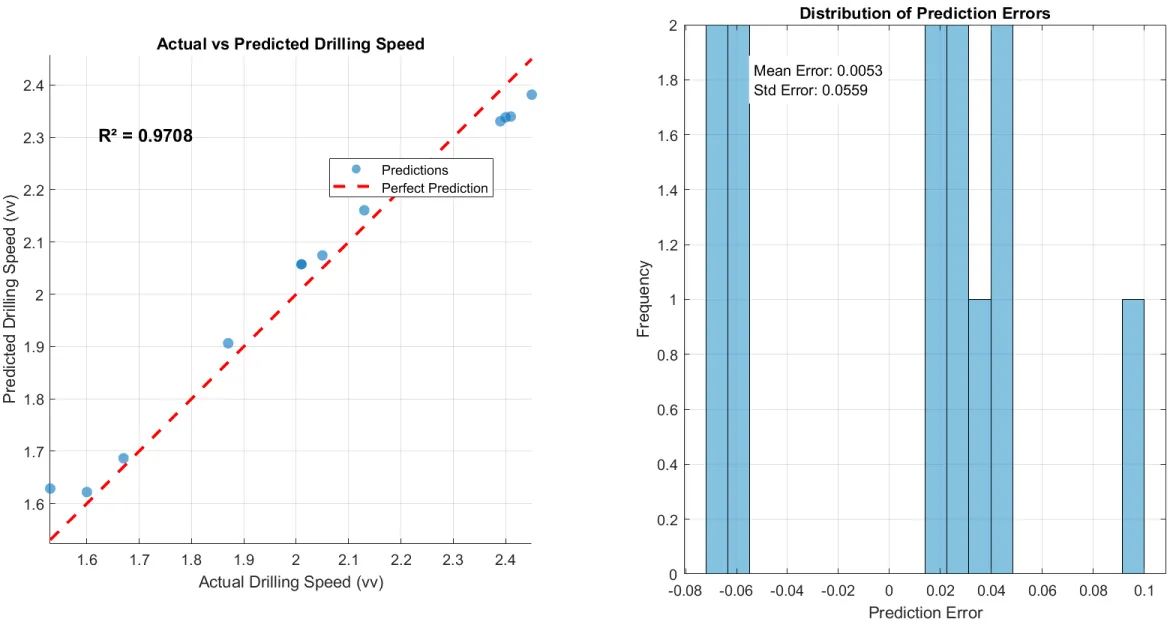
Results: The trained BP neural network model achieved excellent prediction performance on the test set, with a root mean square error (RMSE) of 0.12 m/h, a coefficient of determination (R²) of 0.97, and an average relative error of 2.8%. This performance is significantly superior to that of the multiple nonlinear regression model (RMSE = 0.16 m/h, R² = 0.87, average relative error = 6.8%). More than 92% of the model’s predictions had a relative error within ±5%, meeting the accuracy requirements of practical geotechnical engineering.
Conclusion: This case study validates the effectiveness of deep learning in accurately predicting drilling rates in complex composite sedimentary environments. The proposed BP neural network model serves as a practical engineering tool for optimizing drilling parameters, reducing construction costs, and enhancing safety control in similar coastal drilling projects worldwide.

Article Information

JournalJournal of Biomedical Research & Environmental Sciences (JBRES)
Published2026-04-05
Volume / IssueVol. 7, Issue 4
DOI10.37871/jbres2288
Pages1-9
LicenseCC BY 4.0 — Free to reuse with attribution
Back to Image Search
Publish with JBRES — Peer-reviewed, multidisciplinary Open Access with rigorous double-blind review, CrossRef DOI, and global visibility.
Double-Blind CrossRef DOI Discoverable