Special Issue
Advances in Environmental Health and Toxicology
Guest Editor: Editorial Team — Journal of Biomedical Research & Environmental Sciences
Submission
Covid-19 Research
Safety Profile of COVID-19 Vaccines: Retrospective Analysis of Short, Medium, and Long-Term Side Effects: The Military Hospital Experience – Read more Evaluating the Efficacy of Different SARS-Cov-2 Drug Targets Using the Topo-Geometrical Superposition Algorithm, Molecular Docking and Chemical Reactivity Frameworks – Read more Preventing COVID-19 Infection by Complementary Medicine and Oral Health – Read more Analysis of Body Temperature in Patients with Trauma Visiting a Local Emergency Medical Center during the SARS-CoV-2 Outbreak – Read more N95 Respirator Fit Testing Experience during the Pandemic at a Singapore Tertiary Health Institution: Streamlining Workflow and Improving Respirator Fit Rate – Read more COVID-19 is an Amplifier of Social Inequalities Structural Violence against Students with Special Learning Needs and Low Socio-Economic Status – Read more Interaction between Chronic Influenza and COVID-19: Novel Aspects of Immune System Combat – Read more Daily Life, Fear of COVID-19 and Social Support in the Older Adults in Home Isolation: A Cross-Sectional Study – Read more The Impact of COVID-19 Pandemic on Cardiovascular Diseases in Brazil – Read more Diversity of Non-Influenza Respiratory Viruses Associated with Influenza-Like Illness during 2009 pre and pandemic periods in Sao Paulo, Brazil, a Historical Overview – Read more Cardiovascular Complications of SARS-CoV-2 (COVID-19) in Adults – Read more Impact of COVID-19 Pandemic on the Development of Childrens Executive Functions Implications for School-Based Interventions – Read more The Impact of the COVID-19 Pandemic on Youth Education – Read more Association between Dietary Habits, Lifestyle and Migraine Attacks During Social Isolation in the COVID-19 Pandemic: A Systematic Review of Observational Studies – Read more The Brazilian Increase in Cases of Lung Cancer and COVID-19, Can They be related? – Read more The Possible Therapeutic Application of CO on COVID-19 – Read more Planetary View of COVID Impact vs. IQ & PISA Rank as National Level of Intelligence – Read more Electrophysiological Study in a Patient with Visual Deficit after Severe Coronavirus 2 Pneumonia – Read more A Presentation of Analyses of COVID-19 Vaccine Samples, Blood Samples, Urine Samples, Foot Bath Samples, Sitz Bath Samples, and Skin-Extract Samples – Read more Is Anosmia-Ageusia in COVID-19 Patients Associated with Neuro-Philic Virus Mutant and Mild Respiratory Involvement? – Read more
Home/ Article Figures/ Image View

Article Figures

View article figures, metadata, abstract and related content from this JBRES publication.

Case Series Vol. 6, Issue 5 2025-05-14
Multivessel Minimally Invasive Coronary Bypass with Aortic Crossclamp. Experience with 40 First Patients
Naila El Nakadi, Sebastien Du2019ulisse, Karim Homsy, Serge Cappeliez, Badih El Nakadi and Sotirios Marinakis*
Vascular Medicine Public Health Surgery Clinical Cardiology
Multivessel Minimally Invasive Coronary Bypass with Aortic Crossclamp. Experience with 40 First Patients
jbres2101-g001.webp

Article Figures (4)

Abstract

Background: Minimally Invasive Coronary Revascularization (MICS-CABG) has been performed for over 20 years; however, their technical complexity, steep learning curves and absence of training programs explain the weak acceptance of these techniques. Multivessel coronary pathology consists of an extra challenge for complete revascularization in a minimally invasive setup. Cardiopulmonary bypass with cardiac cardioplegic arrest gives the possibility to a minimally invasive full coronary revascularization despite the complexity of coronary lesions.

Objectives: The aim of this article is to report on our short-term outcomes and to share our experience on multivessel MICS-CABGs with aortic crossclamp on our 40 first consecutive patients.

Methods: All patients who benefited from a scheduled multivessel MICS-CABG with aortic crossclamp in our hospital, from February 2022 to November 2023 (n = 40) were identified. Baseline demographics, peri, postoperative and laboratory data were extracted from each patient’s medical records. The 30 days results were reported.

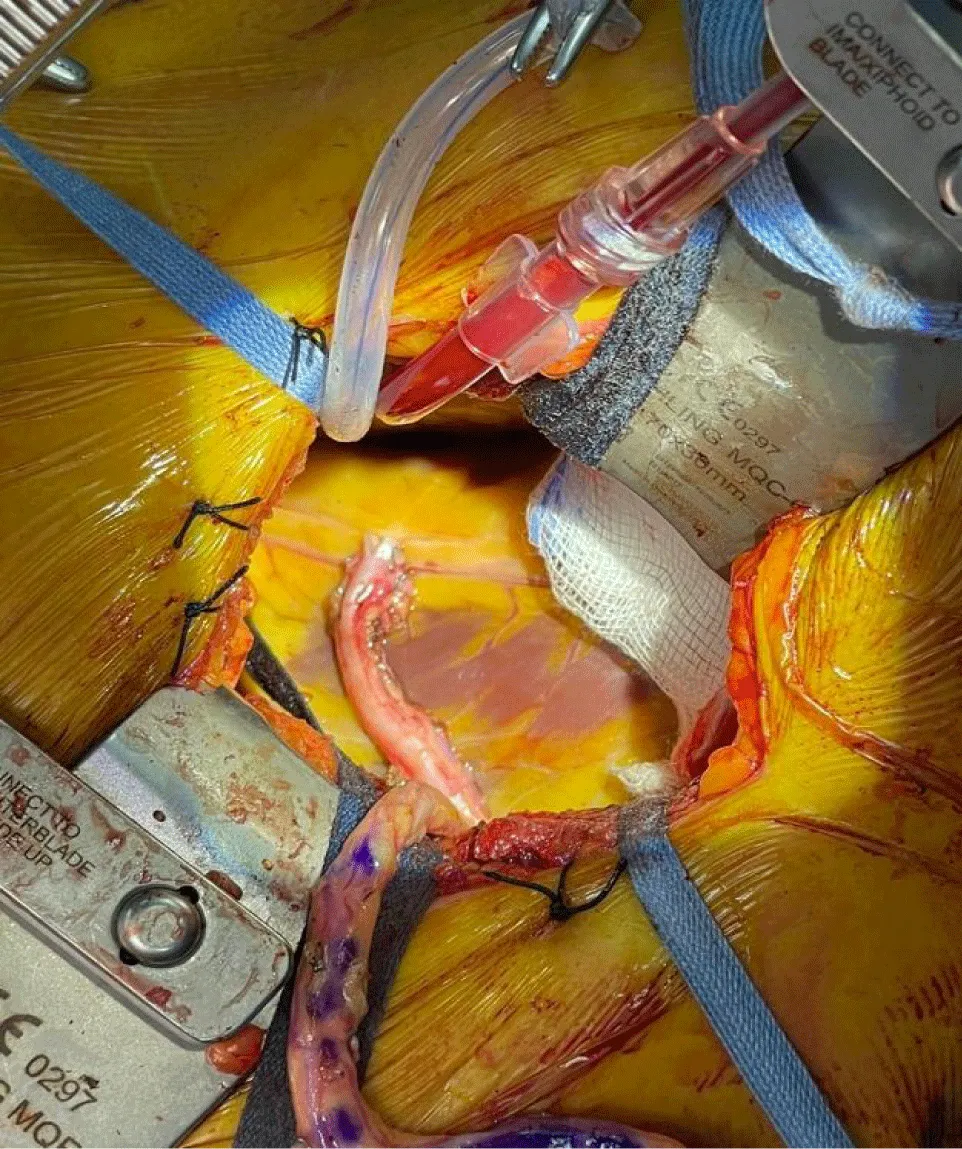
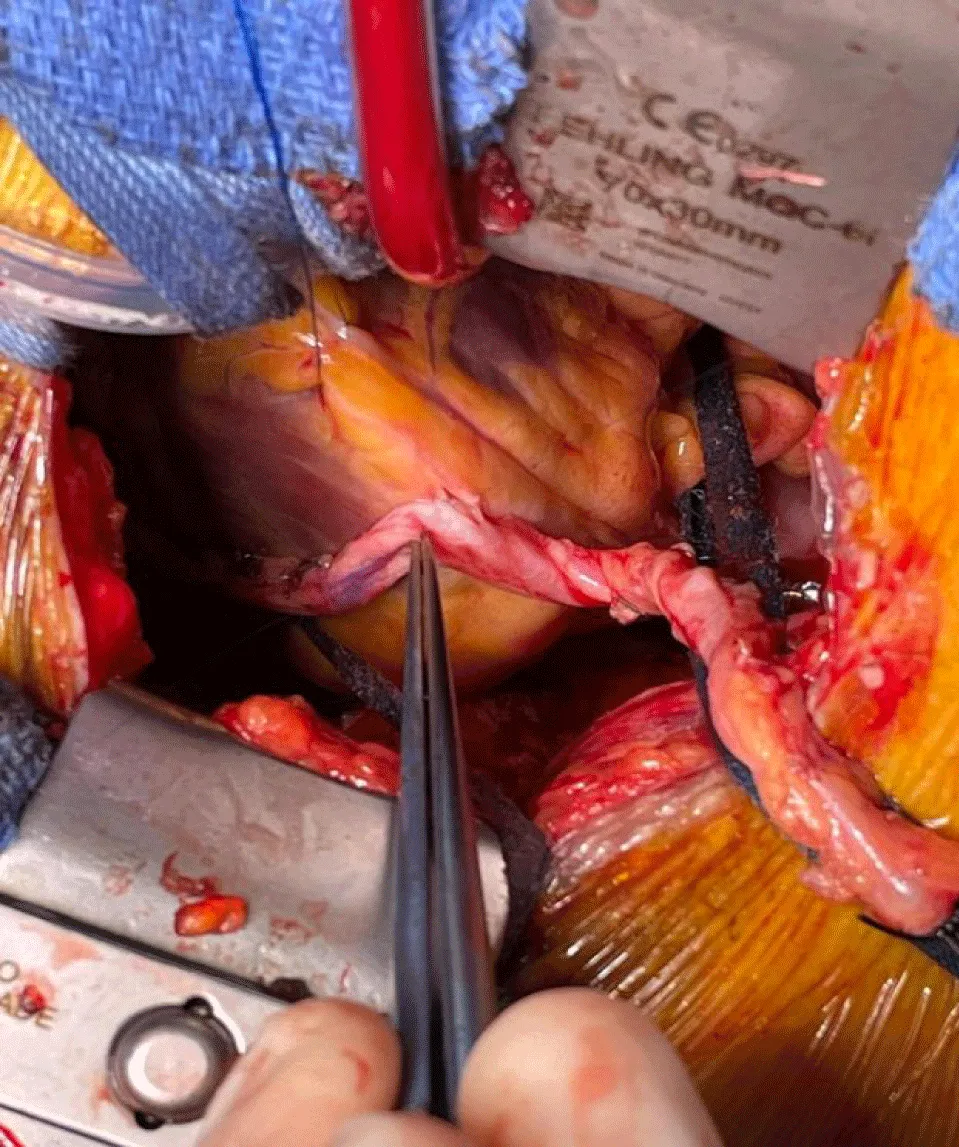
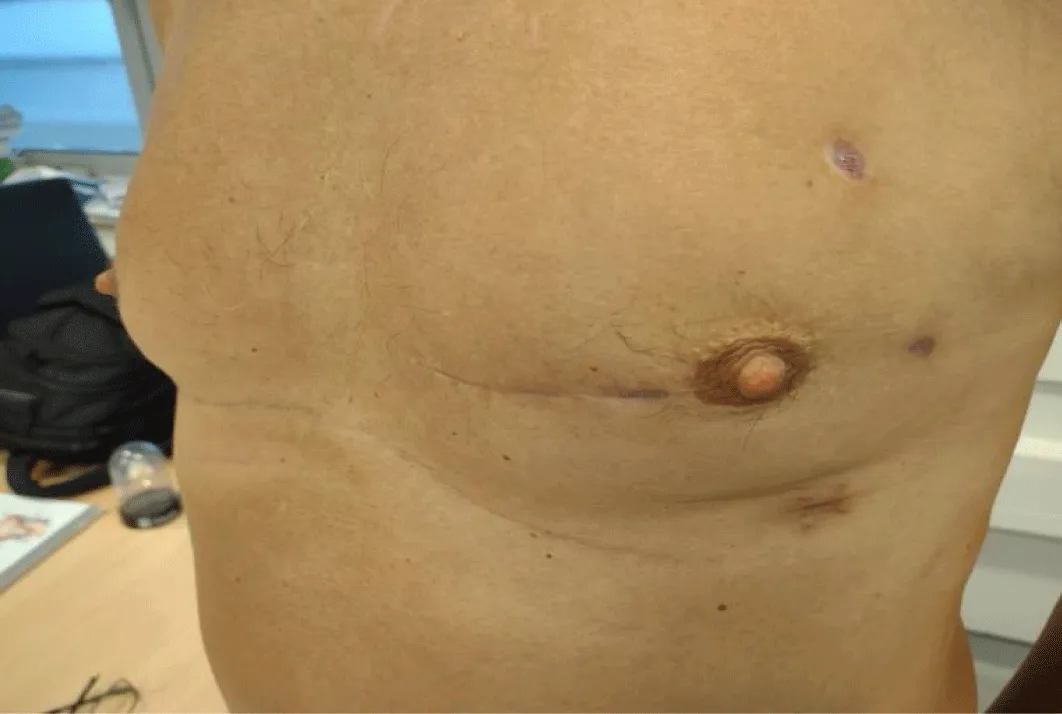
Results: We started our minimal invasive coronary artery program on July 2018. However, difficulty addressing every coronary pathology in a minimally invasive off pump operation motivated us to adopt femorofemoral cardiopulmonary bypass and aortic crossclamp for patients with multivessel MICS-CABGs. The first 5 patients were operated on using a right thoracoscopic approach for aortic crossclamp. For the remaining 35 we adopted the TCRAT (Total Coronary Revascularization via Left Thoracotomy) technique with aortic crossclamp from the left. The average number of coronary anastomoses was 3.5 +/- 0.75, with aortic cross-clamp time 126 +/- 25min and total extracorporeal circulation (ECC) 166 +/- 36min. One Major Adverse Cardiac Event (MACE) was observed which was a death at postoperative day 9 due to pneumonia infection. Twenty-two patients were operated through the 3rd intercostal space and 18 from the fourth. Left internal mammary artery was harvested either thoracoscopically or under direct view regarding patient’s anatomy.

Conclusions: Multivessel MICS-CABG is a technically demanding operation. ECC and heart cardioplegic arrest expand MICS-CABGs indications to almost every patient.

Article Information

JournalJournal of Biomedical Research & Environmental Sciences (JBRES)
Article TypeCase Series
Published2025-05-14
Volume / IssueVol. 6, Issue 5
DOI10.37871/jbres2101
Pages439-443
LicenseCC BY 4.0 — Free to reuse with attribution
Back to Image Search
Publish with JBRES — Peer-reviewed, multidisciplinary Open Access with rigorous double-blind review, CrossRef DOI, and global visibility.
Double-Blind CrossRef DOI Discoverable