Special Issue
Advances in Environmental Health and Toxicology
Guest Editor: Editorial Team — Journal of Biomedical Research & Environmental Sciences
Submission
Covid-19 Research
Safety Profile of COVID-19 Vaccines: Retrospective Analysis of Short, Medium, and Long-Term Side Effects: The Military Hospital Experience – Read more Evaluating the Efficacy of Different SARS-Cov-2 Drug Targets Using the Topo-Geometrical Superposition Algorithm, Molecular Docking and Chemical Reactivity Frameworks – Read more Preventing COVID-19 Infection by Complementary Medicine and Oral Health – Read more Analysis of Body Temperature in Patients with Trauma Visiting a Local Emergency Medical Center during the SARS-CoV-2 Outbreak – Read more N95 Respirator Fit Testing Experience during the Pandemic at a Singapore Tertiary Health Institution: Streamlining Workflow and Improving Respirator Fit Rate – Read more COVID-19 is an Amplifier of Social Inequalities Structural Violence against Students with Special Learning Needs and Low Socio-Economic Status – Read more Interaction between Chronic Influenza and COVID-19: Novel Aspects of Immune System Combat – Read more Daily Life, Fear of COVID-19 and Social Support in the Older Adults in Home Isolation: A Cross-Sectional Study – Read more The Impact of COVID-19 Pandemic on Cardiovascular Diseases in Brazil – Read more Diversity of Non-Influenza Respiratory Viruses Associated with Influenza-Like Illness during 2009 pre and pandemic periods in Sao Paulo, Brazil, a Historical Overview – Read more Cardiovascular Complications of SARS-CoV-2 (COVID-19) in Adults – Read more Impact of COVID-19 Pandemic on the Development of Childrens Executive Functions Implications for School-Based Interventions – Read more The Impact of the COVID-19 Pandemic on Youth Education – Read more Association between Dietary Habits, Lifestyle and Migraine Attacks During Social Isolation in the COVID-19 Pandemic: A Systematic Review of Observational Studies – Read more The Brazilian Increase in Cases of Lung Cancer and COVID-19, Can They be related? – Read more The Possible Therapeutic Application of CO on COVID-19 – Read more Planetary View of COVID Impact vs. IQ & PISA Rank as National Level of Intelligence – Read more Electrophysiological Study in a Patient with Visual Deficit after Severe Coronavirus 2 Pneumonia – Read more A Presentation of Analyses of COVID-19 Vaccine Samples, Blood Samples, Urine Samples, Foot Bath Samples, Sitz Bath Samples, and Skin-Extract Samples – Read more Is Anosmia-Ageusia in COVID-19 Patients Associated with Neuro-Philic Virus Mutant and Mild Respiratory Involvement? – Read more
Home/ All Articles/ Beyond Confusion: Recognition, Prevention and Management of Delirium in Hospitalized Adult…

Abstract & Article Details

Systematic Review / Meta-Analysis • Vol.7, Issue 8 • ISSN: 2766-2276 • Open Access • CC BY 4.0

Open Access Systematic Review / Meta-Analysis Vol.7, Issue 8 August 13, 2026

Beyond Confusion: Recognition, Prevention and Management of Delirium in Hospitalized Adults

DOI: 10.37871/jbres2322
Authors
Devina Wadhwa*, BSC (Pharm), MD, FRCPC
FullText PDF

Abstract

Delirium is one of the most common and clinically significant neuropsychiatric syndromes encountered in hospitalized adults, particularly among older patients, critically ill individuals, and those undergoing major surgery. Characterized by an acute disturbance in attention, awareness, and cognition, delirium is associated with increased mortality, prolonged hospitalization, functional decline, institutionalization, long-term cognitive impairment, and substantial healthcare costs. Despite its prevalence, delirium remains underrecognized, especially in patients presenting with hypoactive symptoms.Advances in recent years have improved understanding of the complex pathophysiological mechanisms underlying delirium, highlighting the interplay between neuroinflammation, neurotransmitter imbalance, oxidative stress, blood-brain barrier dysfunction, and impaired cerebral network connectivity. Prevention through multicomponent, non-pharmacological interventions remains the most effective strategy for reducing delirium incidence, while pharmacological therapy continues to have a limited role and should be reserved for carefully selected patients with severe distress or behaviours that threaten patient or staff safety.Emerging research has focused on artificial intelligence (AI)-based prediction models, blood-based biomarkers, electroencephalography, and precision medicine approaches that may improve early identification of high-risk patients and facilitate individualized prevention strategies. However, important challenges remain, including the underrecognition of hypoactive delirium, limited evidence supporting pharmacological interventions, and the need for prospective validation of emerging diagnostic technologies.This narrative review summarizes the contemporary evidence regarding the epidemiology, pathophysiology, risk factors, diagnosis, prevention, and management of delirium in hospitalized adults while highlighting current controversies, recent advances, and future directions that may shape clinical practice.

How to Cite

Devina Wadhwa*, BSC (Pharm), MD, FRCPC (2026). Beyond Confusion: Recognition, Prevention and Management of Delirium in Hospitalized Adults. Journal of Biomedical Research & Environmental Sciences, 7(8). https://doi.org/10.37871/jbres2322

Article Information

JournalJournal of Biomedical Research & Environmental Sciences (JBRES)
ISSN2766-2276
DOI DOI 10.37871/jbres2322
Volume / IssueVol. 7, Issue 8
ReceivedJuly 12, 2026
AcceptedAugust 12, 2026
PublishedAugust 13, 2026
Article TypeSystematic Review / Meta-Analysis
Pages1-14
LicenseCC BY 4.0 — Open Access
PublisherSciRes Literature LLC, Sheridan, WY, USA
LanguageEnglish
Creative Commons BY 4.0

Published under CC BY 4.0 — free to share, copy, adapt, and redistribute with attribution.

Certificate of Publication
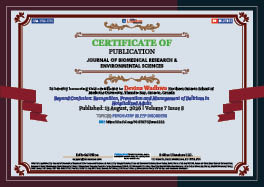
Certificate of Publication — Beyond Confusion: Recognition, Prevention and Management of Delirium in Hospitalized Adults

Certificate verifies that this article was peer-reviewed and published in the Journal of Biomedical Research & Environmental Sciences.

Publish with JBRES — Peer-reviewed, multidisciplinary Open Access with rigorous double-blind review, CrossRef DOI, and global visibility.
Double-Blind CrossRef DOI Discoverable
