Article Figures
View article figures, metadata, abstract and related content from this JBRES publication.
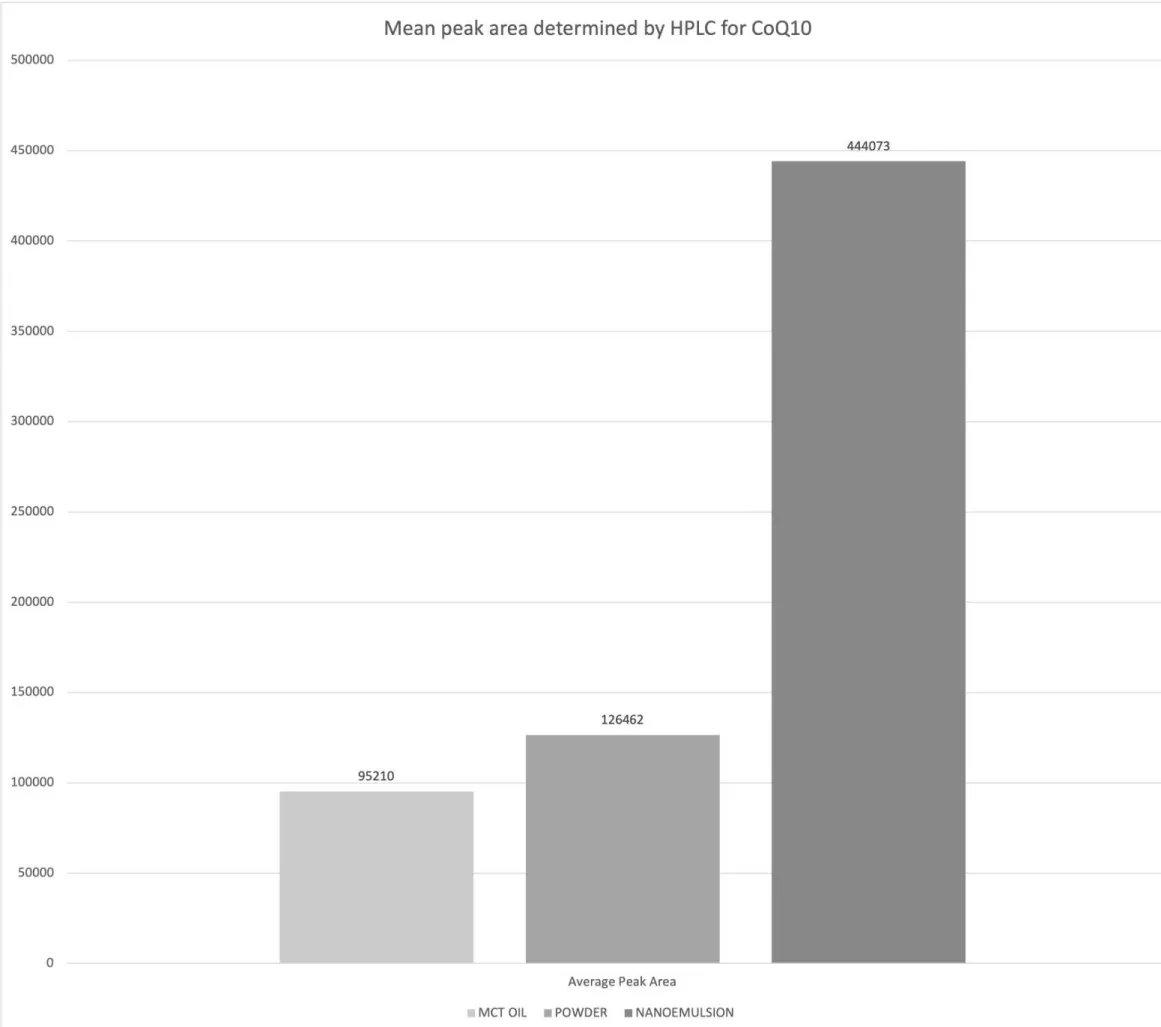
Article Figures (2)
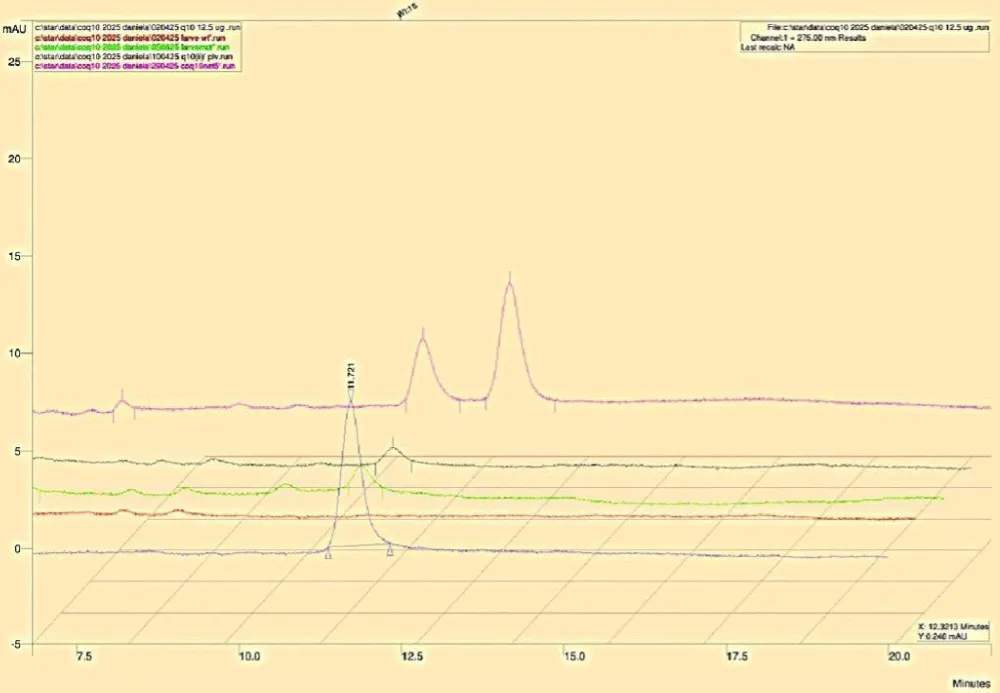
Abstract
Coenzyme Q10 (CoQ10) is a vital lipophilic molecule involved in mitochondrial energy production and antioxidant defense mechanisms. Despite its therapeutic potential in aging, cardiovascular, and neurodegenerative diseases, CoQ10 exhibits poor oral bioavailability due to its hydrophobicity [1,2]. This study evaluates the bioavailability of CoQ10 in powder, nanoemulsion, and medium?chain triglyceride (MCT) oil formulations using Drosophila melanogaster larvae as an experimental model
Larvae were reared on culture media supplemented with equivalent doses of CoQ10 (0.02% w/w). Homogenates were analyzed via high?performance liquid chromatography (HPLC) to quantify absorbed CoQ10. Standards (0.15–12.8 µg/mL) yielded a linear calibration curve (R² = 0.9983), confirming analytical robustness. Results demonstrated significantly higher absorption in the nanoemulsion group (mean peak area: 444,073 ± 273,416) compared with powder (126,462 ± 65,265) and MCT oil (95,210 ± 36,401) (p < 0.01). No CoQ10 was detected in control larvae, confirming specificity. These findings indicate that nanoemulsions markedly enhance CoQ10 bioavailability in Drosophila, providing a foundation for improved nutraceutical delivery systems and a translational model for human CoQ10 pharmacokinetics [1,3,4].
Article Information
| Journal | Journal of Biomedical Research & Environmental Sciences (JBRES) |
|---|---|
| Article Type | Research Article |
| Published | 2026-02-03 |
| Volume / Issue | Vol. 7, Issue 2 |
| DOI | 10.37871/jbres2262 |
| Pages | 1-7 |
| License | CC BY 4.0 — Free to reuse with attribution |