Article Figures
View article figures, metadata, abstract and related content from this JBRES publication.
Article Figures (5)
Abstract
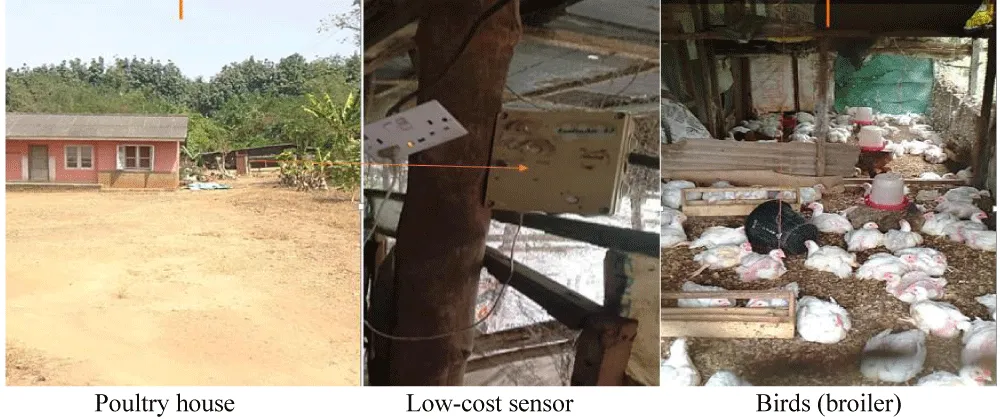
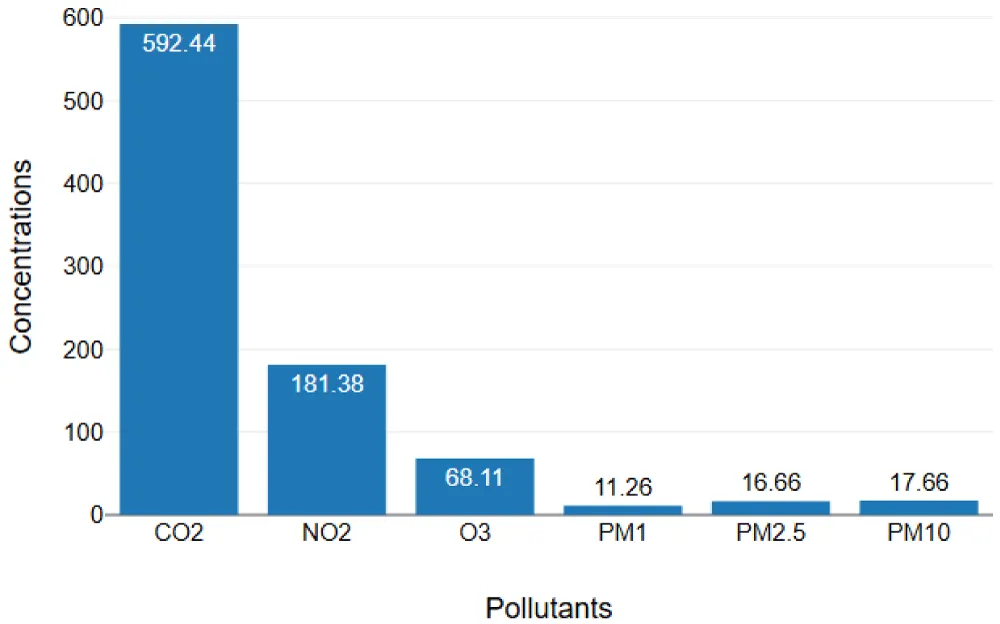
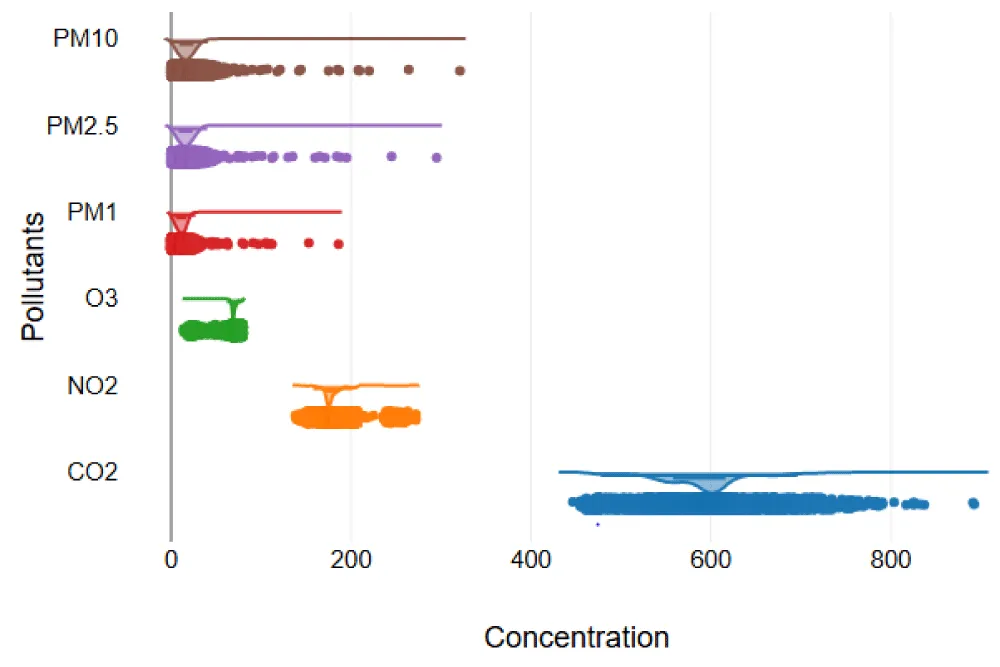
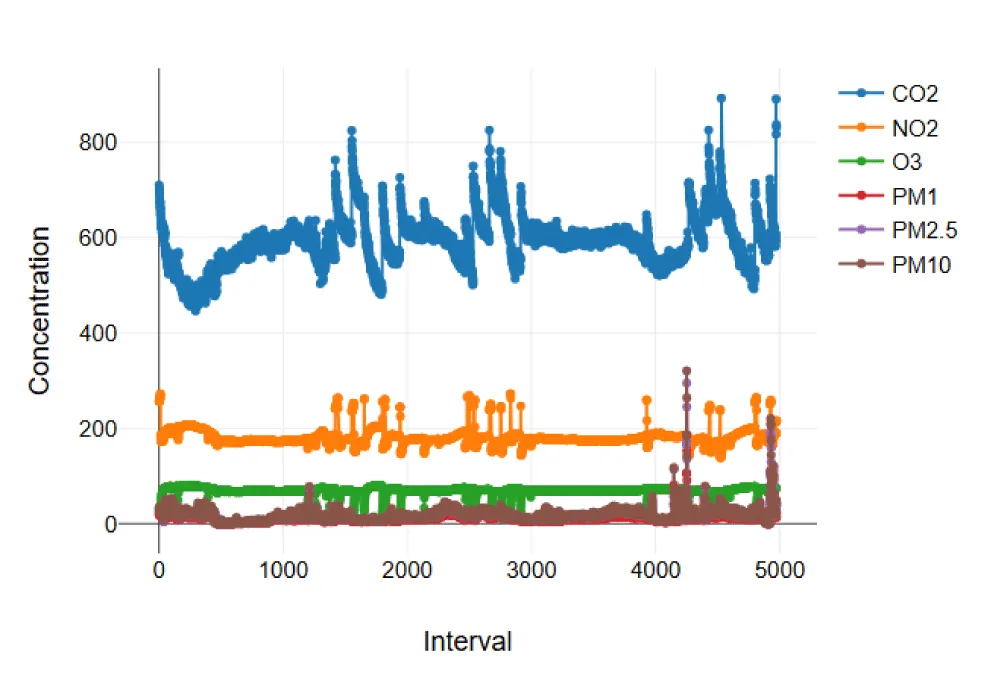
A large portion of the world's population depends on poultry for vital goods and services, and substantial production of birds leads to inadequate indoor air quality, air pollutant emissions, and worldwide atmospheric components. Bird buildings are zootechnical structures used for the enhancing and utilization of poultry or laying hens. Because extensive poultry farming amenities include numerous ecological consequences, this study aimed to evaluate the CO2, NO2, O3, PM1, PM2.5, and PM10 of an indoor poultry facility at the Federal College of Agriculture, Akure, Nigeria, over a period of six months using a SentinAir low-cost air quality detector. With their respective interquartiles of 54.77, 11, 4, 8, 12, and 12, the mean findings showed CO2 (592.44 ± 53.15 ppm), NO2 (181.38 ± 16.48 ppb), O3 (68.11 ± 10.06 ppb), PM1 (11.26 ± 7.67 µg/m³), PM2.5 (16.66 ± 11.92 µg/m³), and PM10 (17.66 ± 13.11 µg/m³). The period between 4000 and 5000 was when all contaminants peaked the highest. According to Pearson correlations, there were connections between the pollutants, with PMs exhibiting substantial correlations (0.98-1.00) and NO2 and O3 (r = + 0.79). The workers' possible health risks fall into the moderate and unhealthy for sensitive group categories. Even if the data indicated that there was no risk to the animals or people inside the poultry house, the house nevertheless needs to be continuously monitored.
Article Information
| Journal | Journal of Biomedical Research & Environmental Sciences (JBRES) |
|---|---|
| Article Type | Research Article |
| Published | 2025-10-20 |
| Volume / Issue | Vol. 6, Issue 10 |
| DOI | 10.37871/jbres2205 |
| Pages | 1492-1504 |
| License | CC BY 4.0 — Free to reuse with attribution |