Special Issue
Advances in Environmental Health and Toxicology
Guest Editor: Editorial Team — Journal of Biomedical Research & Environmental Sciences
Submission
Covid-19 Research
Safety Profile of COVID-19 Vaccines: Retrospective Analysis of Short, Medium, and Long-Term Side Effects: The Military Hospital Experience – Read more Evaluating the Efficacy of Different SARS-Cov-2 Drug Targets Using the Topo-Geometrical Superposition Algorithm, Molecular Docking and Chemical Reactivity Frameworks – Read more Preventing COVID-19 Infection by Complementary Medicine and Oral Health – Read more Analysis of Body Temperature in Patients with Trauma Visiting a Local Emergency Medical Center during the SARS-CoV-2 Outbreak – Read more N95 Respirator Fit Testing Experience during the Pandemic at a Singapore Tertiary Health Institution: Streamlining Workflow and Improving Respirator Fit Rate – Read more COVID-19 is an Amplifier of Social Inequalities Structural Violence against Students with Special Learning Needs and Low Socio-Economic Status – Read more Interaction between Chronic Influenza and COVID-19: Novel Aspects of Immune System Combat – Read more Daily Life, Fear of COVID-19 and Social Support in the Older Adults in Home Isolation: A Cross-Sectional Study – Read more The Impact of COVID-19 Pandemic on Cardiovascular Diseases in Brazil – Read more Diversity of Non-Influenza Respiratory Viruses Associated with Influenza-Like Illness during 2009 pre and pandemic periods in Sao Paulo, Brazil, a Historical Overview – Read more Cardiovascular Complications of SARS-CoV-2 (COVID-19) in Adults – Read more Impact of COVID-19 Pandemic on the Development of Childrens Executive Functions Implications for School-Based Interventions – Read more The Impact of the COVID-19 Pandemic on Youth Education – Read more Association between Dietary Habits, Lifestyle and Migraine Attacks During Social Isolation in the COVID-19 Pandemic: A Systematic Review of Observational Studies – Read more The Brazilian Increase in Cases of Lung Cancer and COVID-19, Can They be related? – Read more The Possible Therapeutic Application of CO on COVID-19 – Read more Planetary View of COVID Impact vs. IQ & PISA Rank as National Level of Intelligence – Read more Electrophysiological Study in a Patient with Visual Deficit after Severe Coronavirus 2 Pneumonia – Read more A Presentation of Analyses of COVID-19 Vaccine Samples, Blood Samples, Urine Samples, Foot Bath Samples, Sitz Bath Samples, and Skin-Extract Samples – Read more Is Anosmia-Ageusia in COVID-19 Patients Associated with Neuro-Philic Virus Mutant and Mild Respiratory Involvement? – Read more
Home/ Article Figures/ Image View

Article Figures

View article figures, metadata, abstract and related content from this JBRES publication.
Research Article Vol. 6, Issue 10 2025-10-10
Molecular Description of the Glideosomatic Complex in the Parasitic Protozoans Toxoplasma and Plasmodium: A Sequence Comparison with Apicomplexans of Interest in the Health of Arthropods of Agricultural Importance
Edison Pascal*, Lenin Gonzalez-Paz, Anu00edbal Mendez and Helimar Vasquez
Molecular Description of the Glideosomatic Complex in the Parasitic Protozoans Toxoplasma and Plasmodium: A Sequence Comparison with Apicomplexans of Interest in the Health of Arthropods of Agricultural Importance
jbres2197-g001.webp

Article Figures (1)

Abstract

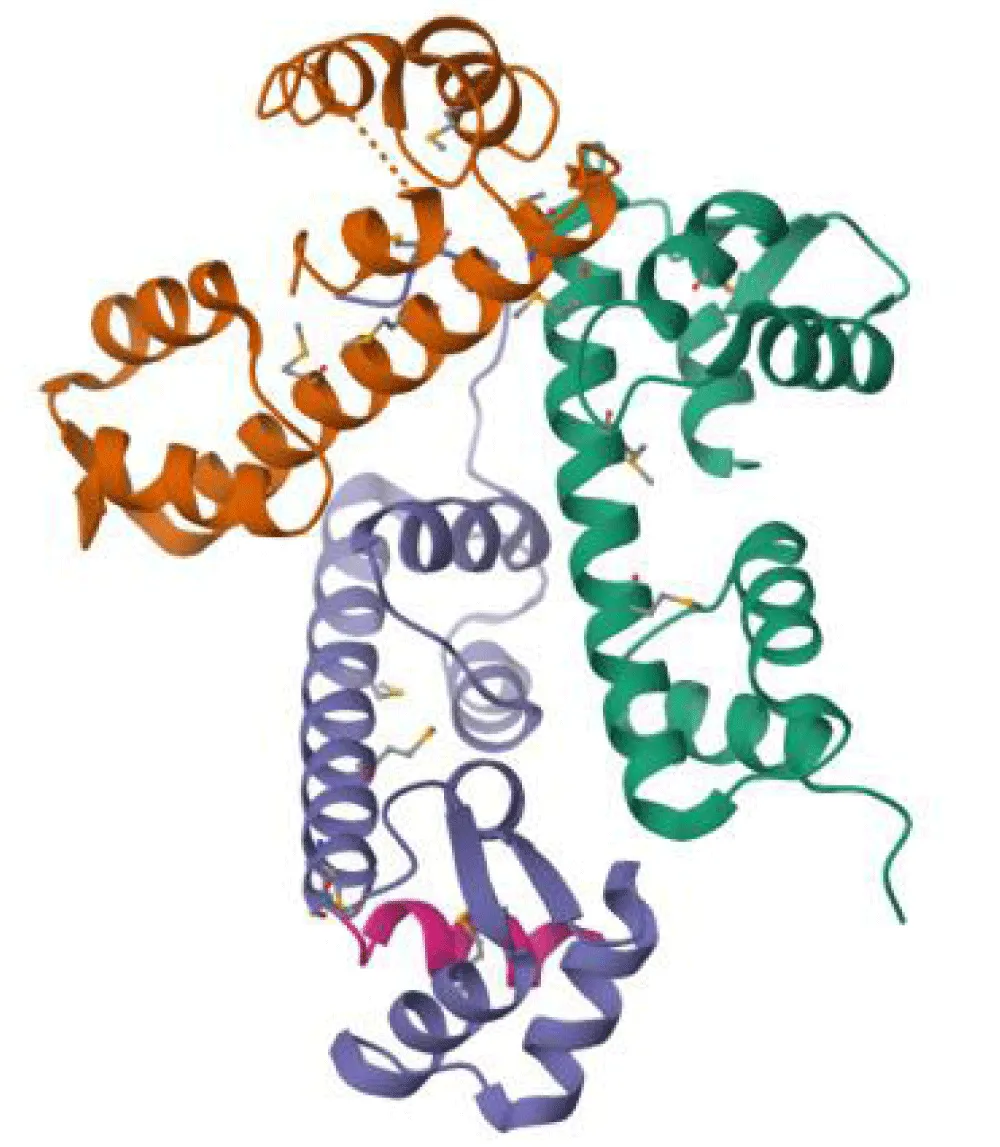
This research aimed to molecularly analyze the glideosome complex in the parasites Toxoplasma and Plasmodium, comparing it with apicomplexans of interest in arthropods of agricultural importance (such as gregarines), to identify relevant structural and functional similarities and differences in their motility and potential therapeutic targets. Through a systematic review of databases (PubMed, Google Scholar, NCBI, PDB) and comparative analysis of amino acid sequences, we evaluated whether the molecular conformation of the glideosome in arthropod apicomplexans bears similarities to those of medical relevance. The glideosome, essential for gliding locomotion, a movement without morphological changes that facilitates cell invasion, is composed of proteins such as Myosin A (MyoA), its light chain (MLC1/MTIP), and the proteins GAP45 and GAP50. Post-translationally modified (myristoylation, palmitoylation), the latter act as anchors between the motor complex and the parasite's inner membrane. The study revealed notable differences: Toxoplasma gondii MyoA has 1,810 amino acids, while in Gregarina polymorpha it reaches 2,846, suggesting evolutionary adaptations linked to their niches (invasion of mammalian cells vs. extracellular environments in arthropods). Despite these divergences, conserved domains were identified in MyoA, indicating a common functional core for motility. These findings support that the glideosome is an ancestral system optimized for invasion, but with structural variations that reflect ecological pressures. The comparison among apicomplexans positions this complex as a key model for studying pathogenicity mechanisms and developing broad or specific control strategies, depending on the differences identified. This work underscores the importance of comparative approaches for understanding the evolution of molecular systems in parasites with a medical and agricultural impact.

Article Information

JournalJournal of Biomedical Research & Environmental Sciences (JBRES)
Article TypeResearch Article
Published2025-10-10
Volume / IssueVol. 6, Issue 10
DOI10.37871/jbres2197
Pages1415-1423
LicenseCC BY 4.0 — Free to reuse with attribution
Back to Image Search
Publish with JBRES — Peer-reviewed, multidisciplinary Open Access with rigorous double-blind review, CrossRef DOI, and global visibility.
Double-Blind CrossRef DOI Discoverable