 CrossRef
 CrossMark
 Mendeley
 Scholar
Abbreviations
ANOVA: Analysis of Variance; BCG: Bacillus Calmette-Guérin; COVID-19: Coronavirus Disease 2019; DATASUS: Department of Informatics of the Unified Health System; HDI: Human Development Index; HIV: Human Immunodeficiency Virus; IPV: Injectable Polio Vaccine; NOPV2: Novel Oral Polio Vaccine Type 2 OPV: Oral Polio Vaccine; PNI: National Immunization Program; UNDP: United Nations Development Programme
Introduction
Vaccination is a highly effective and cost-efficient public health measure implemented worldwide to control and prevent infectious diseases. Populations in developing countries and in regions lacking adequate sanitary conditions particularly benefit from vaccination campaigns conducted globally, as these initiatives play a crucial role in reducing morbidity, mortality, and health inequalities [1].
Poliomyelitis is caused by the poliovirus, which leads to an acute systemic viral infection characterized by a broad spectrum of clinical manifestations, ranging from mild and self-limited symptoms to severe neurological involvement. In its most serious forms, the disease may result in paralysis of the limb muscles as well as the respiratory muscles. Respiratory muscle paralysis is life-threatening and may lead to death in the absence of ventilatory support [2].
Poliovirus transmission occurs primarily through the fecal–oral route and may also occur via respiratory droplets. Children are particularly vulnerable due to developing hygiene habits and increased exposure in environments with inadequate sanitation [3,4].
Following infection, poliovirus may cause viremia and, in rare cases, invade the central nervous system, resulting in severe neurological complications [5,6]. Between 1% and 5% of infected individuals develop meningitis. Approximately 1 in 200 infected persons presents with neurological signs and symptoms, including asymmetric muscle weakness, dysphagia, myalgia, loss of superficial and deep tendon reflexes, and impairment of bowel and bladder function [7].
Importantly, the virus exhibits limited genetic variability, which allows it to be effectively neutralized by antibodies induced through vaccination. Immunization remains the only available preventive measure, as there is no curative treatment for poliomyelitis [2,8]. Although the disease can affect both adults and children, it predominantly impacts children, particularly those under five years of age.
In the 1950s, Jonas Salk developed the first poliovirus vaccine, followed by Albert Sabin’s Oral Polio Vaccine (OPV). Both vaccines played fundamental roles in the global reduction of poliomyelitis and remain key components of immunization strategies worldwide [9].
Vaccination remains the most effective medical intervention for reducing the burden of infectious diseases that threaten public health. Although the relative advantages of the inactivated Salk vaccine-Injectable Polio Vaccine (IPV)-and the OPV have been debated since their introduction, both vaccines have played fundamental and complementary roles in the control and progressive global eradication of poliomyelitis [10].
The vaccination schedule established by Brazil’s National Immunization Program (PNI) for poliomyelitis includes all children under five years of age. It consists of three doses of the IPV, administered at 2, 4, and 6 months of life. Subsequently, two booster doses are given at 15 months and at 4 years of age, using the OPV, whose effectiveness has been well established [11]. Because the booster doses are administered orally in droplet form, the creation of the character “Zé Gotinha” was encouraged as a public health symbol, becoming an iconic representation of vaccination campaigns in Brazil [12].
The eradication of poliomyelitis is hindered by multiple challenges, including political instability, lack of commitment or motivation among responsible authorities, insufficient financial resources, and deficiencies in infrastructure, organization, and professional training within immunization programs. Furthermore, polio does not occur in isolation: more prevalent infectious diseases, such as HIV, tuberculosis, and malaria, often divert attention and resources, contributing to the lower prioritization of poliomyelitis in certain contexts [13].
Psychosocial and sociocultural factors also play a significant role in vaccination uptake. For instance, rumors regarding the safety of the OPV in Nigeria led to a period of reduced immunization coverage [13]. In Brazil, similarly, the presence of anti-vaccination movements-particularly those opposing COVID-19 immunization-has negatively affected public confidence and vaccination campaigns.
In this context, analyzing vaccination coverage across the five Brazilian regions over time is essential to identify potential challenges and to support the development of effective public health policies. Considering the severe clinical manifestations associated with poliovirus infection and the proven efficacy of both the IPV and the OPV [14], increasing vaccination coverage is imperative. A comprehensive understanding of the complexities surrounding immunization requires a detailed evaluation of historical coverage trends, enabling the identification of factors associated with low uptake rates. The scientific literature provides important insights into the mechanisms associated with declining vaccination coverage, thereby informing the formulation of robust public policies and strengthening efforts toward the eradication of poliovirus and other vaccine-preventable infectious diseases. Therefore, this study aimed to analyze regional disparities and temporal trends in poliomyelitis vaccination coverage across Brazil from 2018 to 2022.
Despite the success of immunization programs, recent declines in vaccination coverage in several countries, including Brazil, raise concerns regarding the potential reemergence of poliomyelitis.
Methods
This ecological, descriptive, cross-sectional study was conducted using data from the Information System of the PNI, available through the Department of Informatics of the Unified Health System (DATASUS) of the Brazilian Ministry of Health. The epidemiological profile of poliomyelitis immunizations, administered through the IPV and the OPV, was structured according to the five geographic regions of Brazil, focusing on vaccination coverage rates between 2018 and 2022. Vaccination coverage data were obtained directly from the PNI, available through the DATASUS platform of the Brazilian Ministry of Health. These indicators are calculated and publicly reported by the Ministry of Health according to the official methodology used for monitoring immunization coverage in Brazil.
The collected data were organized and presented through comparative tables, line graphs to illustrate temporal trends, and a heat map to visually highlight regional disparities. Statistical analyses were performed using Microsoft Excel (Microsoft Corporation, Redmond, WA, USA) with the Analysis ToolPak add-in. Analysis of Variance (ANOVA) was applied to evaluate differences in vaccination coverage among Brazilian regions during the study period. Subsequently, Tukey’s post-hoc test was performed to identify specific regional differences. The level of significance was set at 5% (p ≤ 0.05).
Each region was treated as a categorical factor, and the years from 2018 to 2022 were analyzed both collectively and individually to assess variations over time.
Results and Discussion
The analysis of poliomyelitis vaccination coverage across the five Brazilian regions (North, Northeast, Southeast, South, and Central-West) between 2018 and 2022 revealed important patterns reflecting regional disparities in immunization.
The results demonstrated that the North region had the lowest mean vaccination coverage, at 71.17%, along with marked annual variation. In contrast, the South region showed the highest mean coverage, at 85.71%, standing out for its relative consistency in vaccination rates throughout the study period. The Northeast, Southeast, and Central-West regions presented intermediate mean coverages of 78.58%, 80.43%, and 81.84%, respectively. However, none of the regions reached the 95% target established by the PNI (Table 1).
| Year | North | Northeast | Southeast | South | Central-West |
| 2018 | 77.06 | 90.04 | 92.66 | 89.91 | 88.59 |
| 2019 | 79.59 | 82.73 | 84.54 | 89.04 | 85.40 |
| 2020 | 65.69 | 73.11 | 78.28 | 86.50 | 80.47 |
| 2021 | 62.29 | 68.53 | 71.53 | 79.98 | 74.22 |
| 2022 | 71.23 | 78.50 | 75.14 | 83.10 | 80.50 |
| Mean | 71.17* | 78.58 | 80.43 | 85.71* | 81.84 |
| Standard Deviation | 6.55 | 7.48 | 7.46 | 3.71 | 4.90 |
| Legend: * Statistically significant difference according to Tukey’s post-hoc test (p = 0.02). | |||||
To further illustrate these disparities, the heatmap of regional differences in poliomyelitis vaccination coverage (2018-2022) (Figure 1) visually highlights both temporal and geographic variations.
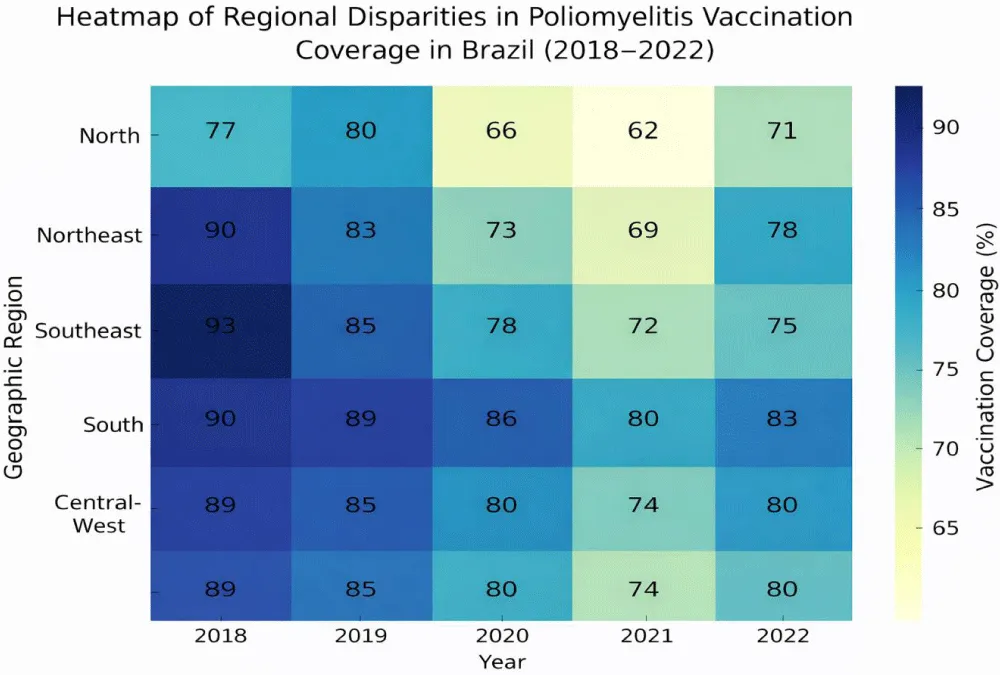
A marked decline in vaccination coverage was observed during 2020 and 2021, a period coinciding with the COVID-19 pandemic [15,16]. This reduction is particularly concerning, as decreased vaccination rates increase population vulnerability to poliomyelitis outbreaks. Beginning in 2022, a slight recovery in coverage was noted; however, vaccination rates remained below the national target (Figures 2-7).
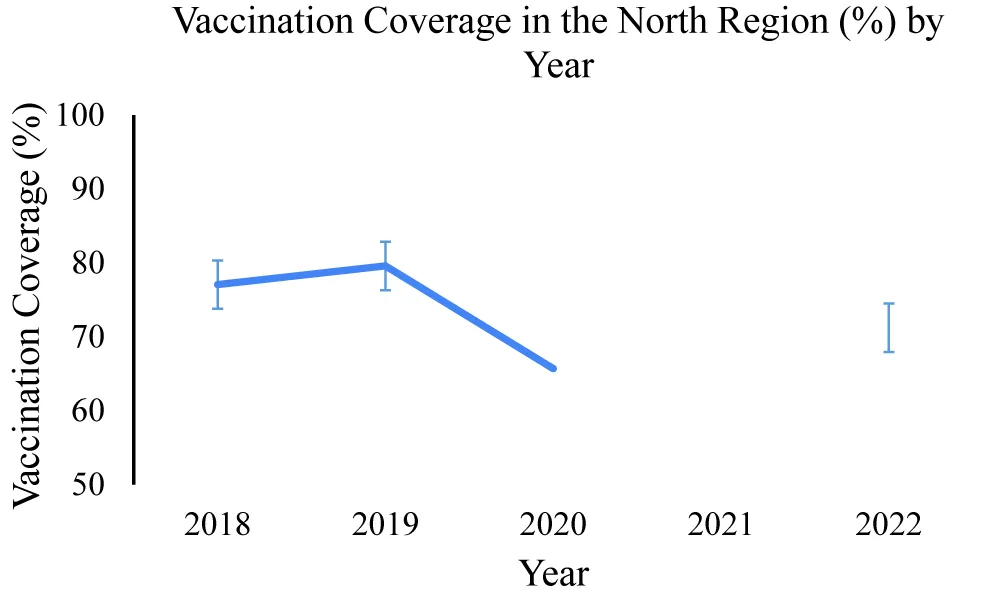
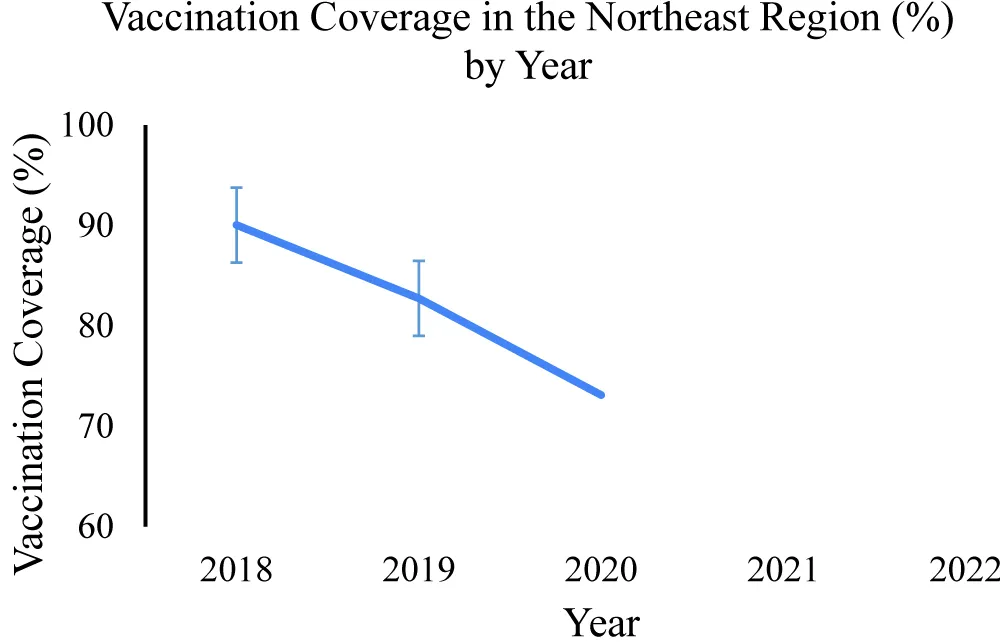
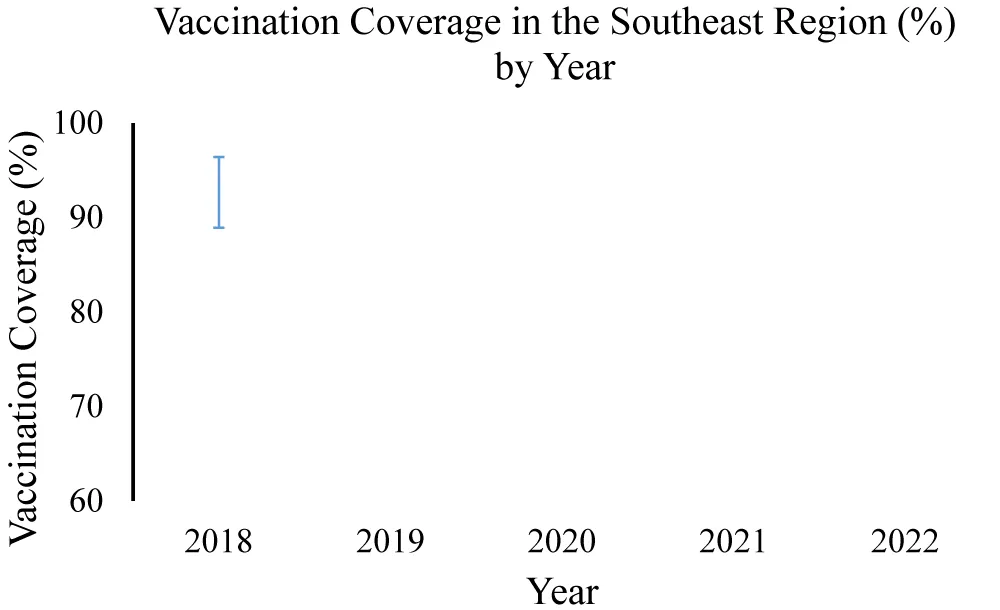
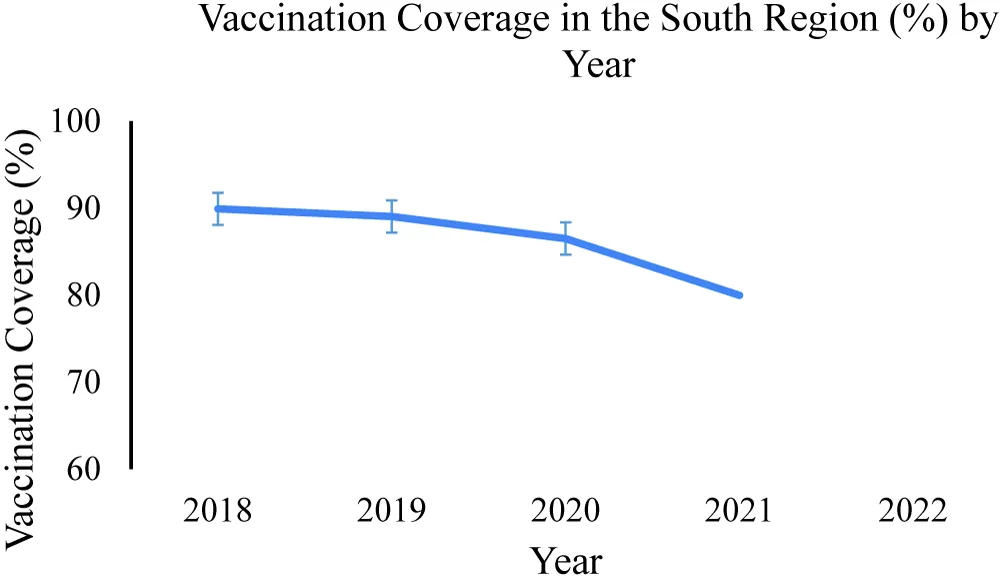
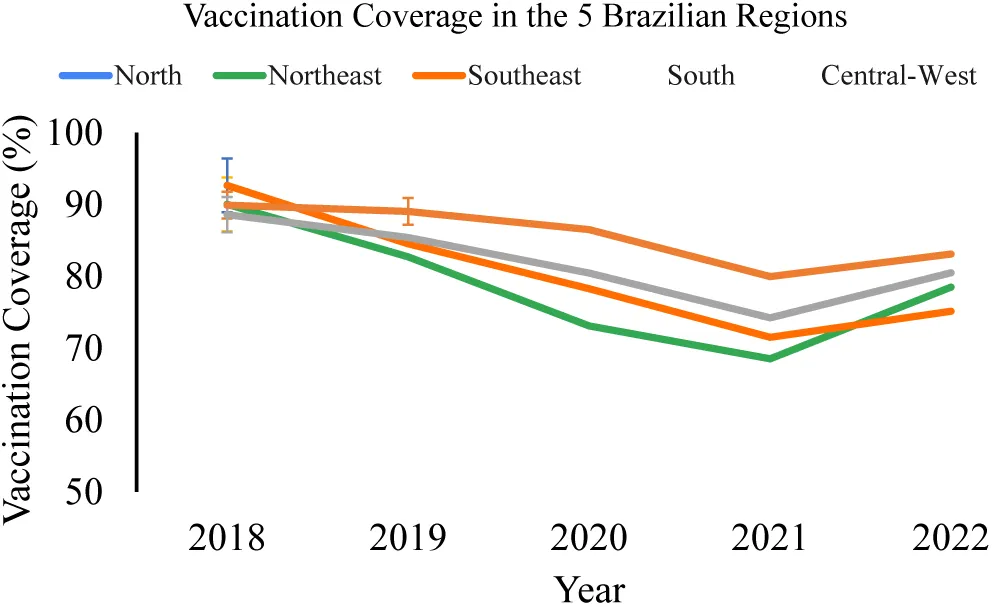
Similar declines in vaccination coverage during the COVID-19 pandemic have been reported in several countries. Global analyses indicate that disruptions in healthcare services, reduced access to immunization programs, and increased vaccine hesitancy contributed to decreased routine childhood vaccination rates during this period [17,18]. Studies conducted in Latin America and other regions have highlighted that pandemic-related restrictions and the reallocation of healthcare resources significantly affected immunization programs, reinforcing the need for resilient public health systems capable of maintaining essential services during health crises [19,20].
Multiple factors contribute to declining vaccination coverage, ranging from psychosocial influences on economic challenges. In 2018, the Pan American Health Organization issued an alert regarding the concerning decrease in polio vaccination coverage across the Americas, underscoring the seriousness of the situation [21,22].
To determine whether differences in vaccination coverage among regions were statistically significant, an ANOVA was performed. The analysis revealed significant differences between regions (p = 0.04). This finding suggests that the observed variations in vaccination coverage are unlikely to be attributable to chance alone, but rather may be associated with socioeconomic, cultural, or healthcare infrastructure-related factors.
Tukey’s post-hoc test demonstrated that, among the five Brazilian regions, only the comparison between the North and South regions showed a statistically significant difference in mean poliomyelitis vaccination coverage (p = 0.02). Specifically, the North region presented a considerably lower mean coverage compared to the South, highlighting substantial disparities in immunization reach. The remaining interregional comparisons did not demonstrate statistically significant differences, indicating relative homogeneity among those areas, although the North region remains a critical area of concern regarding vaccination coverage.
Year-specific ANOVA analyses further revealed that, when each year was examined individually (2018-2022), comparisons between the North and South regions-as well as other regional comparisons-did not show statistically significant differences (p > 0.05). This indicates that the significant difference observed between the North and South regions when considering the overall mean for the entire period (2018–2022) does not emerge consistently within any single year. Instead, the disparities were distributed across the study period and were not sufficiently distinct in isolated years to reach statistical significance independently.
The North region, which presented the lowest mean coverage and the greatest variability, reflects significant challenges that may include geographic barriers, limited access to healthcare services, and unfavorable socioeconomic conditions. In contrast, the South region, characterized by greater consistency and better overall performance, stands out due to its more robust healthcare infrastructure and more favorable socioeconomic indicators. These findings are consistent with the scientific literature, which associates higher vaccination coverage rates with regions that have stronger socioeconomic conditions and adequate access to healthcare services. Previous studies corroborate these results, demonstrating that municipalities with a high Human Development Index (HDI) tend to exhibit higher immunization rates [23-26].
The experience with the implementation of the novel oral polio vaccine type 2 (nOPV2) in response to outbreaks of vaccine-derived poliovirus in countries across Africa and Southeast Asia underscores the importance of innovative vaccination strategies [9]. Such strategies may serve as valuable references for targeted interventions in Brazil, particularly in regions with persistently low vaccination coverage.
From a public health perspective, the persistence of vaccination coverage below the recommended threshold represents a significant risk for the reintroduction of poliovirus transmission. Maintaining high immunization coverage is essential to prevent outbreaks and ensure herd immunity. Therefore, strengthening surveillance systems, expanding vaccination campaigns, and implementing targeted interventions in regions with lower coverage should be prioritized to protect vulnerable populations and sustain progress toward global polio eradication.
Conclusion
The PNI establishes a vaccination coverage target of 95% for vaccines included in the national immunization schedule. However, the present analysis revealed that, between 2018 and 2022, none of the Brazilian regions achieved this target, with the North region presenting a considerably lower mean vaccination coverage compared to the others. The critical importance of the IPV and the OPV is widely recognized, particularly given the low genetic variability of poliovirus, which enables effective eradication through immunization. Nevertheless, reductions in vaccination coverage increase the risk of viral reintroduction and disease resurgence, underscoring the ongoing need for sustained preventive vaccination efforts.
These findings highlight the urgent need for targeted and effective public health policies, especially in the North and Northeast regions, to overcome barriers preventing optimal vaccination coverage. Strategic interventions should include strengthening healthcare infrastructure, implementing community-based education initiatives, and promoting evidence-based communication campaigns to address vaccine hesitancy-an issue that was further exacerbated during the COVID-19 pandemic, as suggested by Doherty M, et al.[1]. It is essential that these measures be tailored to regional realities in order to maximize their impact on vaccination coverage and to support the eradication of poliomyelitis in Brazil.