 CrossRef
 CrossMark
 Mendeley
 Scholar
Introduction
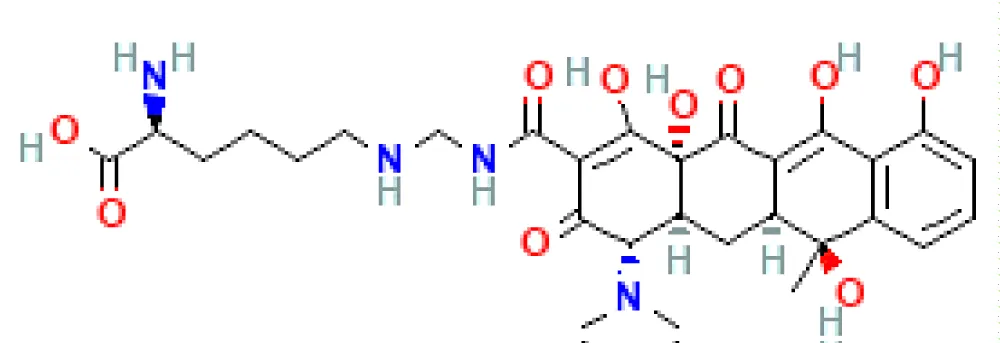
Lymecycline is a semisynthetic derivative of the tetracycline family having chemical name is Lymecycline is N6-4-(Dimethylamino)-1,4,4a,5,5a,6,11,12a-octahydro-3,6,10,12,12a-pentahydroxy-6-methyl-1,11-dioxo-2 naphthacenylcarbonyl- aminomethyl-L-lysine. Compendial name is Lymecycline with molecular formula is C29H38N4O10 and molecular weight is 602.63, synthesized through the chemical modification of tetracycline by coupling it with L-lysine and formaldehyde, which enhances its solubility and bioavailability [1-3]. Classified as a second-generation tetracycline, Lymecycline was developed to overcome the limitations of earlier agents like tetracycline and chlortetracycline, particularly in terms of absorption, tissue distribution, and side effect profile [3]. The second-generation tetracyclines, including doxycycline and minocycline, were introduced to provide broader clinical utility and improve tolerability [4].
The history of tetracyclines begins with chlortetracycline (aureomycin), discovered in the late 1940s from Streptomyces Aureofaciens, marking the advent of a new era in antimicrobial therapy [5]. Tetracyclines quickly gained prominence due to their ability to inhibit a wide range of pathogens. Over time, structural modifications led to newer agents like doxycycline, minocycline, and Lymecycline, each with improved pharmacokinetic and pharmacodynamic characteristics [6]. These drugs are now used not only for infectious diseases but also for dermatological applications, such as acne and rosacea, due to their dual antimicrobial and anti-inflammatory actions [7].
Mechanistically, Lymecycline like other tetracyclines acts as a bacteriostatic agent by inhibiting bacterial protein synthesis. It binds reversibly to the 30S ribosomal subunit, thereby preventing the attachment of aminoacyl-tRNA to the A site of the ribosome, effectively halting peptide elongation. This interruption disrupts bacterial replication and growth, accounting for its efficacy against a broad spectrum of gram-positive and gram-negative organisms [8].
Lymecycline demonstrates activity against several clinically relevant pathogens, including Cutibacterium acnes, Chlamydia trachomatis, Mycoplasma pneumoniae, and Rickettsia species [9]. This broad antimicrobial spectrum underpins its use in managing conditions like respiratory infections, sexually transmitted infections, and dermatologic disorders such as acne vulgaris [10].
One of the distinctive advantages of Lymecycline lies in its pharmacokinetics. It exhibits higher water solubility compared to its parent compound, resulting in more efficient oral absorption and greater bioavailability [11]. Once ingested, Lymecycline undergoes rapid hydrolysis in the gastrointestinal tract to release tetracycline, which is the pharmacologically active moiety, confirming its role as a prodrug [12]. Plasma concentration studies reveal that only tetracycline is present systemically after oral administration of Lymecycline, supporting this metabolic transformation [13].
Additionally, Lymecycline provides better tissue penetration and has a longer half-life than older tetracyclines, which allows for once-daily or twice-daily dosing and improved patient compliance [14]. Gastrointestinal side effects such as nausea and abdominal discomfort, commonly observed with tetracycline, appear to occur less frequently with Lymecycline, making it more suitable for long-term use [15].
A primary therapeutic application of Lymecycline is in the treatment of moderate to moderately severe acne vulgaris. Acne pathogenesis involves follicular occlusion, sebum overproduction, C. acnes colonization, and inflammation [16]. Lymecycline helps reduce C. acnes levels and exerts anti-inflammatory effects by inhibiting neutrophil chemotaxis and the release of inflammatory cytokines [17]. This dual action enhances its effectiveness in inflammatory acne, especially when topical treatments are insufficient [18].
Beyond acne, Lymecycline has been explored in the management of Hidradenitis Suppurativa (HS) a chronic inflammatory skin disorder characterized by recurrent nodules, abscesses, and sinus tracts. Tetracyclines, including Lymecycline, are among the first-line systemic treatments recommended in European S1 guidelines for mild to moderate HS [19]. Their efficacy is attributed to both antimicrobial effects and modulation of the immune response, although high-quality randomized trials are still needed to strengthen the evidence base [20].
Despite these benefits, Lymecycline, like all tetracyclines, carries a risk of adverse effects, notably photosensitivity reactions. Phototoxicity arises when the drug absorbs ultraviolet light, resulting in oxidative damage to the skin. While rare, this reaction necessitates preventive counseling for patients on sun exposure and photoprotection measures. Interestingly, Lymecycline appears to have a lower incidence of such reactions compared to earlier tetracyclines, although comprehensive epidemiological data are still evolving. In conclusion, Lymecycline exemplifies the evolution of tetracycline antibiotics into more patient-friendly formulations with enhanced therapeutic profiles. It combines the antimicrobial spectrum and anti-inflammatory properties of its class with improved pharmacokinetics, reduced side effects, and better patient adherence. These attributes make it an excellent candidate for managing chronic dermatological conditions like acne vulgaris and HS. Future studies may explore its potential in resistant infections and inflammatory disorders. The Chemical structure of Lymecycline is shown in figure 1.
Problem Statement
Despite the established clinical efficacy of Lymecycline in managing moderate-to-severe acne and other dermatological infections, the accessibility of this essential antibiotic in developing healthcare markets like Pakistan remains severely limited. Currently, the market is characterized by a high reliance on expensive innovator brands (e.g., Tetralysal®), which imposes a significant socio-economic burden on patients and often leads to sub-optimal treatment adherence. Furthermore, the absence of a locally manufactured, pharmaceutically equivalent generic version creates a gap in the supply chain and prevents cost-effective therapeutic interventions. There is a critical need to develop a robust, stable, and validated generic formulation that adheres to stringent British Pharmacopoeia (BP) and International Council For Harmonisation (ICH) standards to ensure safety and efficacy comparable to the reference product.
Relevance of research
This study holds significant clinical and industrial relevance as it presents the development of the first generic Lymecycline 408 mg capsule in Pakistan. By employing a Quality-By-Design (QBD) approach and rigorous analytical validation, this research.
- Enhances patient access: Provides a cost-effective alternative to the innovator drug, facilitating long-term management of chronic skin conditions.
- Validates analytical precision: Establishes a validated HPLC-UV method for the precise quantification of Lymecycline, ensuring high quality-control standards in local manufacturing.
- Demonstrates In-vitro bioequivalence: Through comparative dissolution profiling and $f_1$/$f_2$ factor analysis across multiple pH media, this work provides scientific evidence that the generic formulation is pharmaceutically equivalent to the innovator.
- Promotes local manufacturing: This research supports the pharmaceutical 'indigenization' policy, reducing import dependency and strengthening the local healthcare infrastructure.
Methodology
Materials, instruments and chemicals
Lymecycline Hydrochloride (API) was procured from KOPRAN Pharma. Tetracycline hydrochloride (B.P./Eur. Ph.) reference standard with certified potency was used as the reference. Excipients included magnesium stearate, Aerosil-200, and empty gelatin capsule shells (#0), all obtained from local suppliers. For qualitative and quantitative analyses, the following instruments and reagents were employed: a refrigerator, HPLC system equipped with a stationary phase column (4.6 mm × 25 cm, 5 µm packing, L-7/C8), UV–Visible spectrophotometer, dissolution apparatus (12-basket), Karl Fischer apparatus, glassware (beakers, pipettes, amber-colored volumetric flasks). Analytical grade reagents included hydrochloric acid, purified water, sodium acetate, glacial acetic acid, monobasic potassium phosphate, sodium hydroxide, phosphoric acid, 2-methyl-2-propanol, dipotassium hydrogen orthophosphate, tetrabutylammonium hydrogen phosphate, sodium edetate, and sodium metabisulfite.
Product formulation development
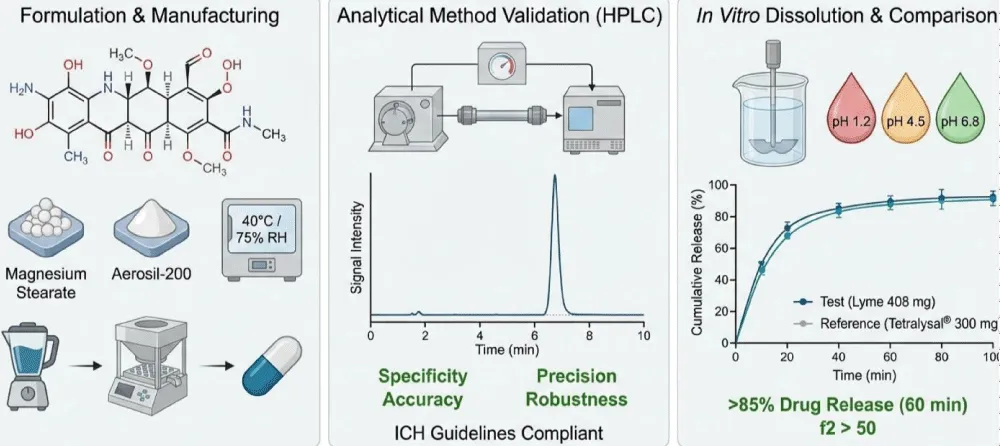
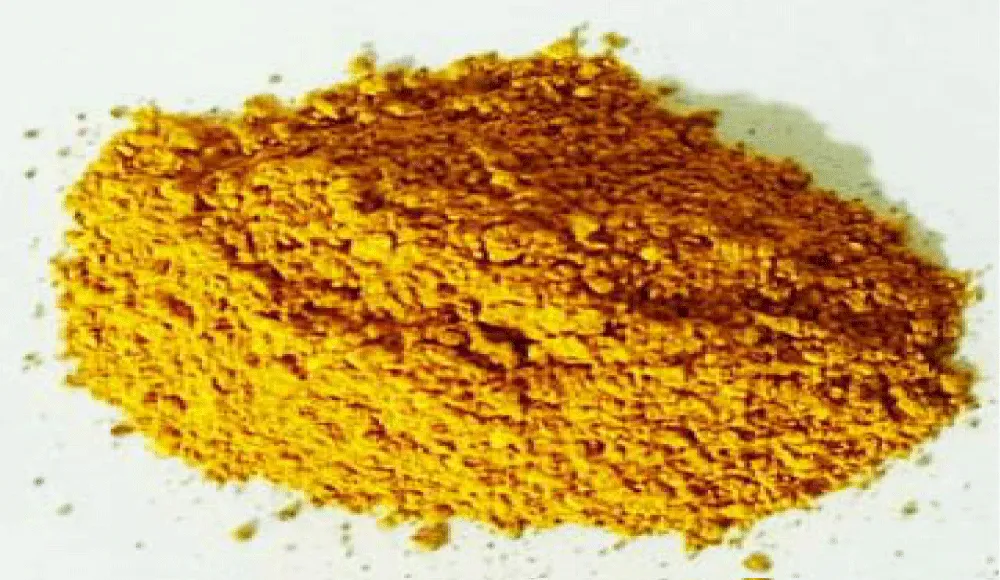
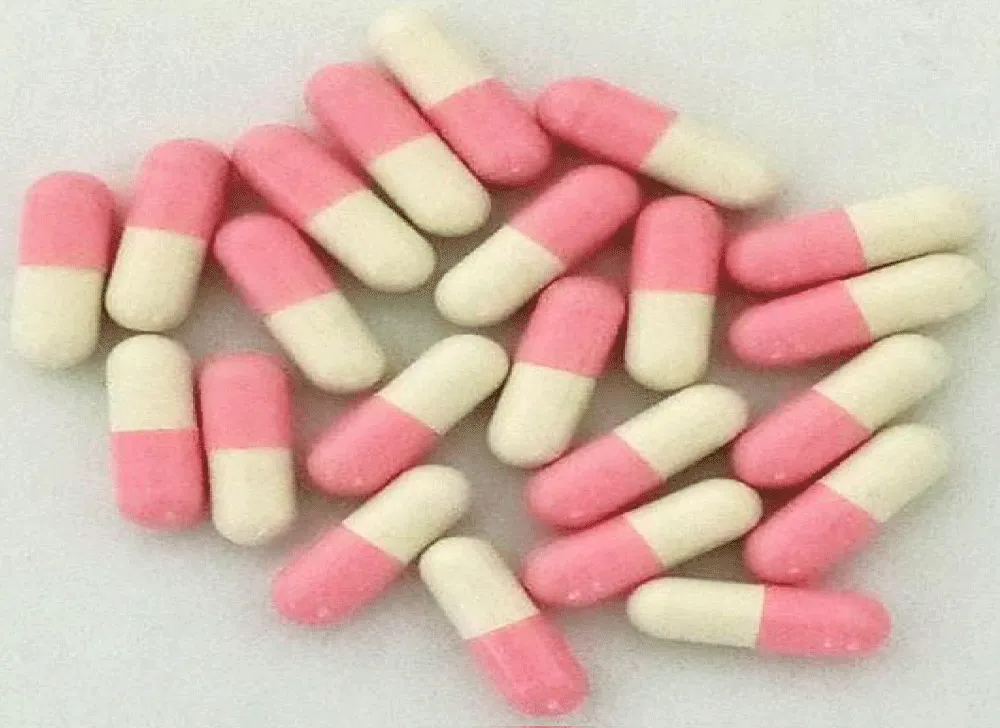
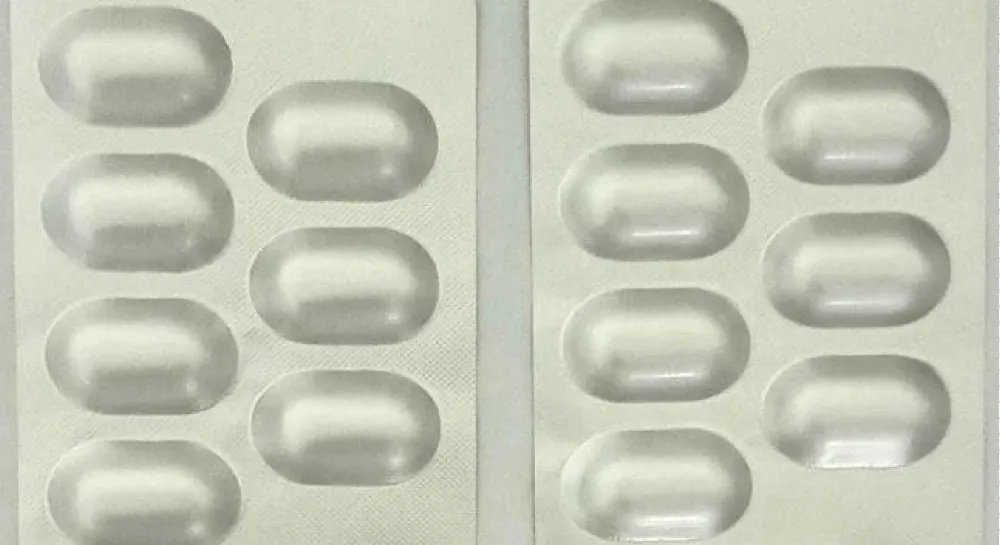
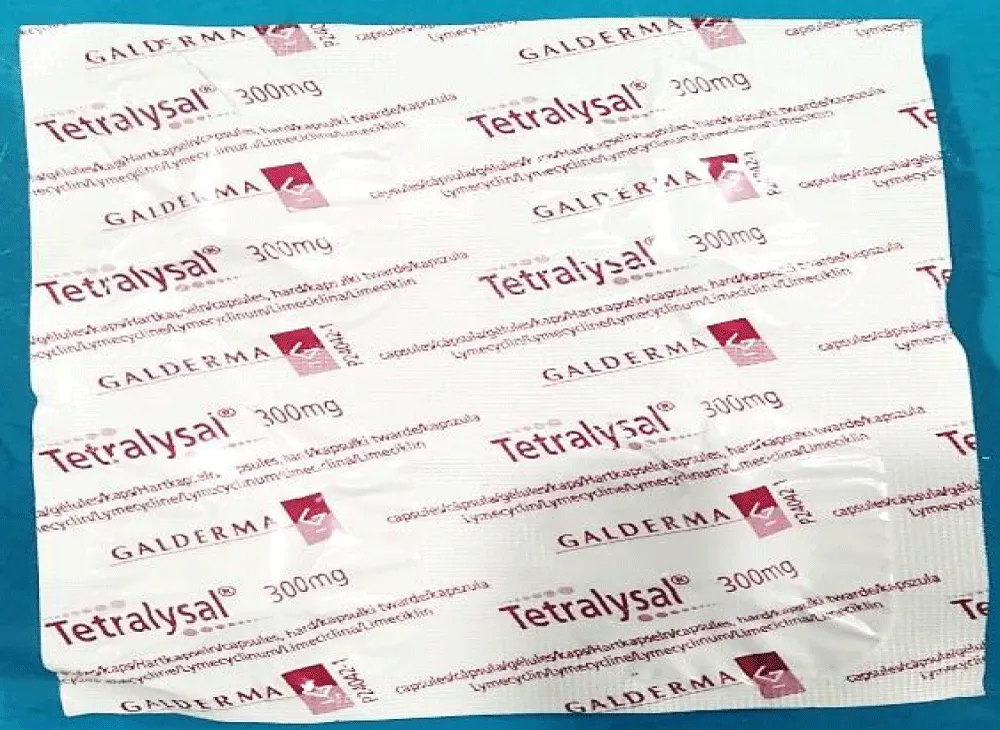
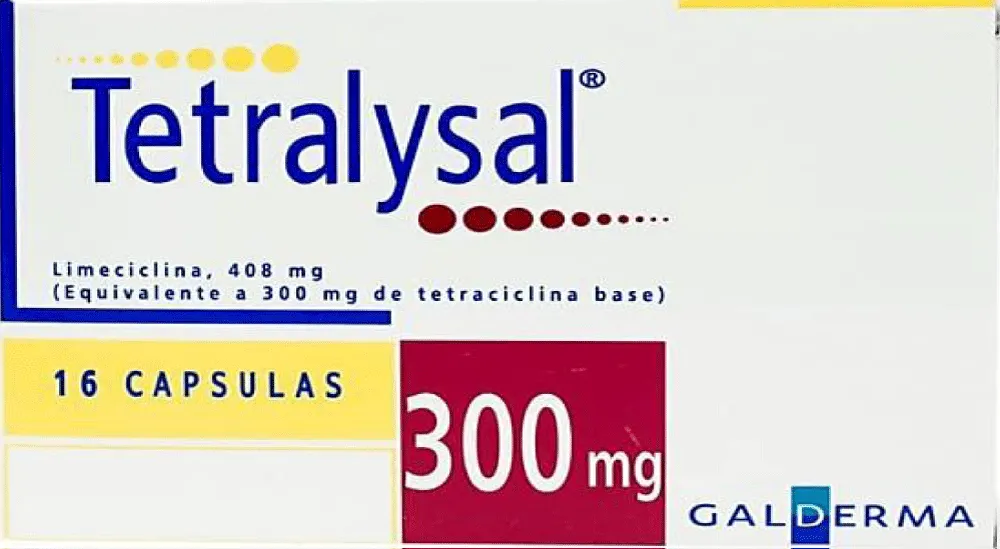
The formulation development of Lymecycline and API calculation are mentioned in table 1. The lymecycline Active Pharmaceutical Ingredient (API) was potency-adjusted to 100% based on the assay value provided by Quality Control, and any quantitative variation resulting from this adjustment was compensated by proportionally reducing the amount of magnesium stearate to maintain formulation balance. The physical appearance of the API was visually examined (Figure 2) to ensure compliance with specified quality attributes. During the final mixing (bulk) stage, all pre-processed intermediates were blended under controlled conditions to achieve a homogeneous powder mixture suitable for encapsulation (Figure 3). The blended material was subsequently filled into hard gelatin capsule shells, representing the intermediate (post-encapsulation) stage, during which in-process evaluation, stabilization monitoring, and quality verification were performed prior to final release (Figure 4). After successful completion of all manufacturing steps, in-process controls, and final quality assurance testing, the finished product—lymecycline 408 mg hard gelatin capsules—was packaged in aluminum–aluminum (Alu–Alu) blister strips to ensure protection against moisture, light, and environmental factors (Figure 5). The reference product, Tetralysal® 300 mg capsules, was documented for comparative evaluation (Figures 6,7).
| Sr, # | Raw Materials | Role of Ingredients | Percentage of Ingredients/cap. | Scale |
| mg/capsule | ||||
| 1 | Lymecycline | API | 98.10% | 490.517* |
| 2 | Magnesium stearate | Glidant | 1.29% | 6.483** |
| 3 | Aerosil-200 | Lubricant | 0.60% | 3 |
| 4 | Empty Gelatin Capsule shell # 0 (Pink/White) | To enclose medicine | ---- | 100 |
| Total weight of Contents/ capsule | 500 mg | |||
| Total weight of capsule with shell | 600 mg |
Analytical method development
Preparation of diluted: (10% naoh): 10.0 g of the Sodium hydroxide pellets was taken in 90 ml volumetric flasks and diluted up to the mark with water.
Mobile phase: “A mobile phase solution was prepared by dissolving 80.0 g of 2-methyl-2-propanol and 3.5 g of dipotassium hydrogen orthophosphate in a 1000 ml volumetric flask containing 300 ml of water. The pH was adjusted to 8.0 using dilute phosphoric acid. Subsequently, 2.0 g of tetrabutylammonium hydrogen phosphate was dissolved in 200 ml of water, the pH adjusted to 8.0 with dilute sodium hydroxide, and the solution was added to the flask. In a separate step, 0.4 g of sodium edetate was dissolved in 10 ml of water, the pH adjusted to 8.0 with dilute sodium hydroxide, and the solution transferred into the same flask. Finally, the volume was made up to the mark with distilled water and mixed thoroughly.
Chromatographic conditions:
- Detector: UV 254 nm
- Column: 4.6 mm × 25 cm; Packing (L-7/C8) (8 µm)
- Column Temperature: 40ºC ±1ºC
- Flow Rate: 1.2 ml/min
- Injection Volume: 20 µL
- Retention Time: About 5.6 mint
Preparation of sodium meta-bisulfite: (4% w/v): An accurately weighed quantity of sodium metabisulfite (4.0 g) was transferred into a 96 ml volumetric flask and diluted to volume with distilled water.
Preparation of 0.05 m hydrochloric acid: 2.2 ml Hydrochloric Acid (usually 37%) in 50 ml water was taken and diluted up to 500 ml with water and mix well.
Reference solution: An accurately weighed quantity of tetracycline hydrochloride reference standard (325 mg, equivalent to approximately 300 mg of tetracycline) was transferred into a 100 ml volumetric flask containing 5 ml of water. To this, 1 ml of sodium metabisulfite solution was added, and the mixture was allowed to stand in the dark at 20-25°C for 20-24 hours without stirring. Subsequently, 50 ml of 0.05 M hydrochloric acid was added to dissolve the precipitate, and the volume was made up to 100 ml with distilled water. From this solution, 5 ml was transferred to a 100 ml volumetric flask, diluted to volume with water, and filtered through a 0.45 µm nylon membrane filter.
Sample solution: The contents of not less than 20 Lymecycline capsules were emptied, and an accurately weighed portion equivalent to 500 mg of Lymecycline (approximately equivalent to 300 mg of tetracycline) was transferred into a 100 ml volumetric flask containing 5 ml of water. To this, 1 ml of sodium metabisulfite solution was added, and the mixture was allowed to stand in the dark at 20-25°C for 20-24 hours without stirring. Subsequently, 50 ml of 0.05 M hydrochloric acid was added to dissolve the precipitate, and the volume was made up to 100 ml with distilled water. From this solution, 5 ml was transferred into a 100 ml volumetric flask, diluted to volume with water, and filtered through a 0.45 µm nylon membrane filter.
Analysis: Six replicate injections of the standard preparation (filtered through a 0.45 µm syringe filter) and two replicate injections of the sample preparation were separately injected into the chromatograph, and the responses of the major peaks were recorded. The percentage of tetracycline was calculated by comparing the peak responses of the sample solution with those of the standard solution. System suitability was considered acceptable if the tailing factor of the major peak of the analyte in the standard solution was not more than 2.0, the number of theoretical plates was not less than 2000, and the Relative Standard Deviation (RSD) for six replicate injections of the standard preparation did not exceed 1.0%.
Calculation: %age (Tetracycline) = (Avg.Area of Sample)/(Avg. Area of Standard) × (Dil.of Standard )/(Dil.of Sample ) × ( 0.9241 )/1 × Potency W.S %age OF Lymecycline = %age of Tetracycline × 1.356 = -------------% (as labeled). Note: This Method (section 2.3) is also applicable for Lymecycline Raw Material (API).
Dissolution (by uv spectrophotometer)
Preparation of dissolution medium 0.1 m hydrochloric acid: Take 51 ml of Hydrochloric Acid (usually 37%) in 1000 ml water, now dilute up to 6000 ml with water and Mix well.
Parameters: Dissolution testing was performed using a USP II (paddle) apparatus at 75 rpm, with 900 ml of 0.1 M hydrochloric acid as the dissolution medium. The test was conducted for 60 minutes at a controlled temperature of 37 ± 0.5°C.
Procedure: The procedure was carried out under protection from light. Each of six dissolution vessels was filled with 900 ml of 0.1 M hydrochloric acid, and the medium was equilibrated to 37 ± 0.5°C. One capsule containing 408 mg of Lymecycline (equivalent to 300 mg of tetracycline) was transferred into each vessel, and the apparatus was immediately operated for 60 minutes.
Sample preparation: At the designated sampling time, approximately 20 ml of the reaction mixture was withdrawn and filtered through Whatman filter paper to remove particulate matter. A 5 ml aliquot of the filtrate was transferred into a 100 ml volumetric flask, to which 50 ml of deionized water and 5 ml of 5 M sodium hydroxide were added. The solution was then diluted to the mark with deionized water and thoroughly mixed. The absorbance of the resulting solution was measured exactly 6 minutes after the addition of sodium hydroxide.
Standard preparation: An accurately weighed 0.090 g of Tetracycline Hydrochloride working standard was transferred into a 100 ml volumetric flask. 70 ml of 0.1 M hydrochloric acid was added, and the mixture was dissolved completely using stirring and/or sonication. The solution was then diluted to the 100 ml mark with 0.1 M hydrochloric acid, mixed thoroughly, and filtered through Whatman filter paper to remove any insoluble particles. For absorbance measurement, 2 ml of the filtered solution was transferred into a 100 ml volumetric flask, to which 50 ml of deionized water and 5 ml of 5 M sodium hydroxide were added. The solution was diluted to the mark with deionized water, mixed thoroughly, and the absorbance was measured at the maximum wavelength (λmax = 380 nm) exactly 6 minutes after the addition of sodium hydroxide.
Analysis: The percentage of Lymecycline in the medium was calculated from the measured absorbance and the declared content of Tetracycline Hydrochloride. Each milligram of Tetracycline Hydrochloride was considered equivalent to 0.9241 mg of Tetracycline. The content of Tetracycline obtained was then multiplied by 1.356 to determine the corresponding content of Lymecycline.
Calculation: %age of Tetracycline = ( Absorbance of Sample)/(Average Absorbance of Standard)×(Dil.of Standard x 0.9241)/(Dilution of Sample ) × Potency of W.S %age of Lymecycline = %age of Tetracycline x 1.356 = -------------% (as labeled)
In vitro study (comparative dissolution profile)
Recommendation / requirement: The dissolution measurements of the two products (e.g. test and comparator) to be made under the same test conditions.
- Use at least 12 units for determination of each profile using Apparatus-II (Paddle) at 100 rpm.
- A minimum of three time-points to be included, the time-points for both reference (comparator) and test product being the same.
- For Immediate Release Product;
- Studies to be performed in media covering the physiological range, e.g. pH 1.2 (0.1M) hydrochloric acid Medium, pH 4.5 acetate buffer & pH 6.8 phosphate buffer.
- Mean dissolution values to be used to estimate the similarity factor, f2
- If both the test and reference (comparator) products show more than 85% dissolution in 15 minutes the profiles are considered similar (no calculations required).
- For product to be considered similar, f2 values should be close to 100. Generally, greater than 50 (50-100) ensure sameness or equivalence of the two dissolution curves and, thus, of the performance of the test and reference products. The dissolution medium preparation and volume is mentioned in table 2.
| Acid Buffer (pH 1.2): | Prepare the 0.1 N HCl by taking 102.0 ml of HCl (37%) in 12000 ml of purified water. |
| Acetate Buffer (pH 4.5): | Take 35.88g of sodium acetate and 19.2 ml acetic acid in 2000 ml of purified water mix well and make volume up to 12000 ml with purified water adjust the pH 4.5 with acetic acid. |
| Phosphate Buffer (pH 6.8): | Dissolve 81.6 g of monobasic potassium phosphate and 10.9 g of sodium hydroxide in 12000 ml of water. Adjust with 6 N sodium hydroxide or dilute phosphoric acid to a pH of 6.8. |
Procedure: The dissolution procedure was carried out protected from light. 900 ml of dissolution medium was added to each of six vessels, and the temperature was equilibrated at 37 ± 0.5ºC. One capsule was transferred into each vessel, and the apparatus was immediately run for 60 minutes.
Sample preparation: At the designated sampling time, approximately 20 ml of the dissolution medium was withdrawn and filtered through Whatman filter paper. A 5 ml aliquot of the filtered sample was transferred into a 100 ml volumetric flask, to which 50 ml of deionized water and 5 ml of 5 M sodium hydroxide were added. The solution was then diluted to the 100 ml mark with deionized water, mixed thoroughly, and the absorbance was measured exactly 6 minutes after the addition of sodium hydroxide.
Standard preparation: An accurately weighed 0.090 g of Tetracycline Hydrochloride working standard was transferred into a 100 ml volumetric flask. 70 ml of dissolution medium was added, and the mixture was dissolved completely using stirring and/or sonication. The solution was then diluted to the 100 ml mark with the same medium, mixed thoroughly, and filtered through Whatmann filter paper. For absorbance measurement, 2 ml of the filtered solution was transferred into a 100 ml volumetric flask, to which 50 ml of deionized water and 5 ml of 5 M sodium hydroxide were added. The solution was diluted to the mark with deionized water, mixed thoroughly, and the absorbance was measured exactly 6 minutes after the addition of sodium hydroxide.
Analysis: The percentage of Lymecycline in the dissolution medium was determined from the measured absorbance and the declared content of Tetracycline Hydrochloride. Each milligram of Tetracycline Hydrochloride was considered equivalent to 0.9241 mg of Tetracycline, and the resulting Tetracycline content was subsequently multiplied by 1.356 to obtain the corresponding content of Lymecycline.
Calculation: %age of Tetracycline = ( Absorbance of Sample)/(Average Absorbance of Standard)×(Dil.of Standard x 0.9241)/(Dilution of Sample ) × Potency of W.S %age of Lymecycline = %age of Tetracycline x 1.356.
- Mean (X̅) = ∑x (Sum of all the readings) / N (total number of readings)
- % Co-efficient of Variation (CV or RSD) = Std. Dev. / Mean × 100
- Difference Factor (f1) = {[∑nt=1 (Rt – Tt )] / [∑nt=1 Rt ]} × 100
- Similarity Factor (f2) = 50 × LOG {[1+(1/n) × ∑nt=1 (Rt – Tt )2]–0.5 × 100}
Acceptance criteria: % Coefficient of Variation (CV) < 20% for time points up to 10 minutes and < 10% for other time points.
- Both Reference product & Test product shows more than 85% mean drug release within 15 minutes (no calculation required)
- Difference factor (f1) value ≤ 15
- Similarity factor (f2) value ≥ 50 (50 – 100)
- Reference product and In-House product details for In vitro study is describe in table 3.
- The innovator (reference) product employed for comparative In vitro evaluation is presented in figure 7.
| Description | Reference / Comparator Product | Test Product |
| Product Name | Tetralysal 300 mg Capsule | Lyme 300 mg Capsule |
| Composition | Each hard capsule contains: Lymecycline 408 mg, equivalent to 300mg tetracycline. | Each hard capsule contains: Lymecycline (B.P) 408 mg, equivalent to 300mg tetracycline. |
| Lot # | 4010 | T-001 |
| Mfg. Date / Exp. Date | 07-2023/07-2026 | 02-2024/01-2026 |
| Manufacturer | Sophartex. France | Skims Pharmaceuticals |
Excipient compatibility study
A description of the drug-excipient samples: In table 4 API and others in-active material were prepared & tested for compatibility Study also mentioned the role of each ingredient.
| Sample (Lymecycline) Preparation | |||
| Sr. | Ingredient | Quantity(mg) / Capsule | Role Ingredient |
| 1. | Lymecycline | 408 | API |
| 2. | Magnesium Stearate | 6.483 | Glidant |
| 3. | Aerosil-200 | 3 | Lubricant |
| 4. | Hard Gelatin capsule Shell | 100 | To enclosed medicine |
Drug substance-excipient compatibility study: Samples of the drug substance and excipients were prepared according to table 1 and stored under accelerated conditions for one month (temperature: 40°C ± 2°C; relative humidity: 75% ± 5%). Drug-excipient compatibility was assessed by HPLC analysis of the drug substance and excipients in the solid state. The results of this study are summarized in the compatibility study report (Table 12).
Results
Formulation development
Active ingredient: Lymecycline B.P 408 mg (equivalent to 300 mg Tetracycline base).
Excipients selection: All excipients used in the formulation were selected based on compatibility studies and found to be compatible which is pharmacopeial and previously used in different oral dosage form. The chromatographic evaluation of Tetracycline HCl, the Lymecycline sample, and the blank preparation are shown in figures 8,10, respectively.
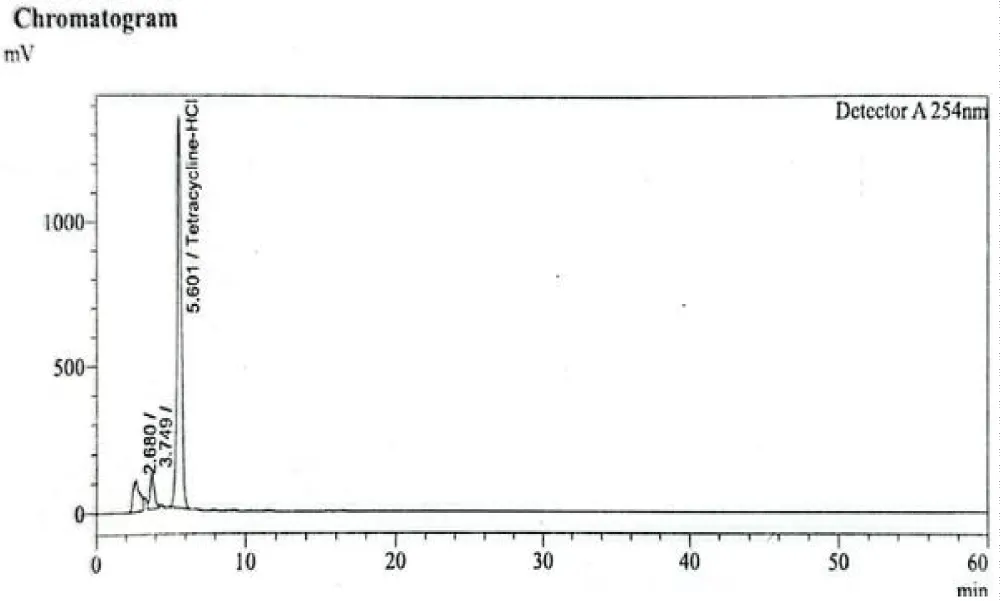
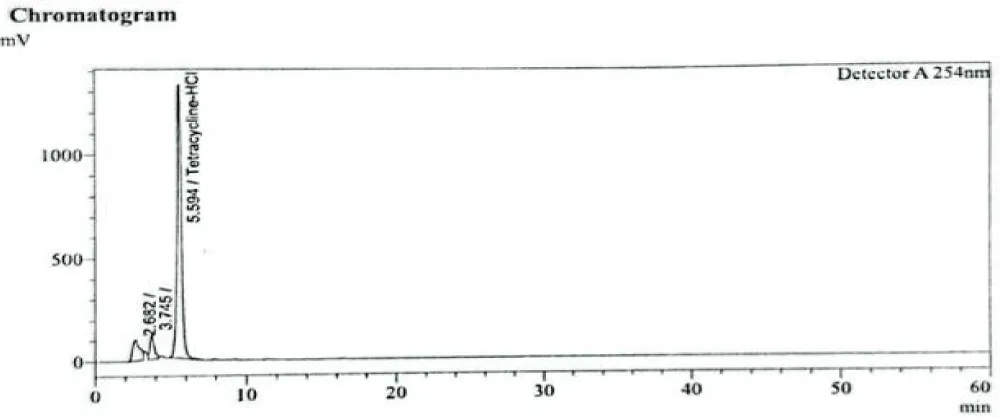
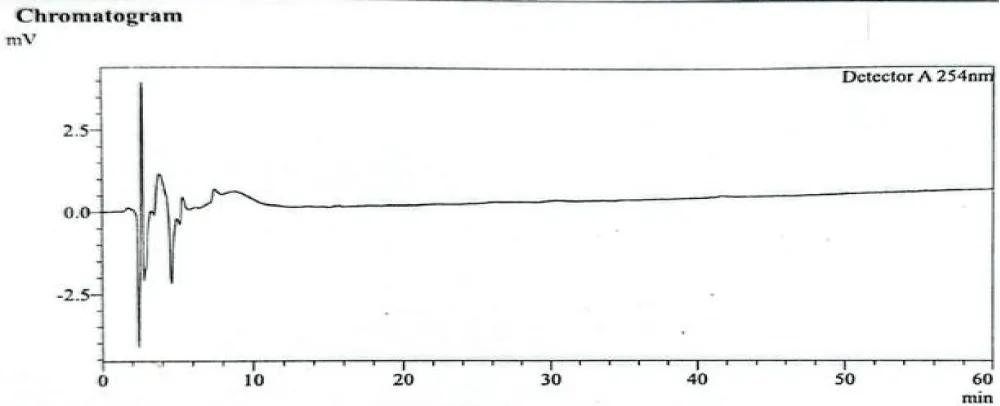
Figures 8,10 illustrate key aspects of the development of Lyme 300 mg Capsules, which contain Lymecycline BP 408 mg (equivalent to 300 mg of Tetracycline base). The formulation was designed with a focus on achieving consistent drug performance, stability, and patient compliance. A well-structured formulation approach ensured optimal selection of excipients, hard capsule fill properties, and manufacturing parameters. This strategic development process aimed to produce a robust and reproducible dosage form that meets regulatory and quality standards.
The figures support the formulation design by showing data from validated analytical methods used to ensure the quality and uniformity of the final product. This ensures that every batch of Lyme 300 mg Capsules consistently meets the required specifications throughout its shelf life. Together, the formulation strategy and analytical validation demonstrate a scientifically sound development process, contributing to the products overall safety, efficacy, and quality. These figures collectively highlight the technical and regulatory diligence involved in bringing Lyme 300 mg Capsules to a stable and market-ready pharmaceutical product.
Comparative dissolution profile results
The obtained value in acidic medium of reference product is provided in table 5 and graphically presentation for reference and test product (pH 1.2) is given figure 11 for CDP.
| Std. | Qty. (mg) | Dil. (mg/mL) | Abs. | Avg. | Std. Dev. | % RSD | |||||||
| Tetracycline | 300 | 0.018 | 0.924 | 0.924 | 0 | 0.01 | |||||||
| 98.20% | 0.924 | ||||||||||||
| 0.924 | |||||||||||||
| Tetralysal 300 | 408 mg | mg/mL | 45 minutes | 60 minutes | 75 minutes | ||||||||
| SPL | Weight | Dil. | Abs. | % Release | Abs. | % Release | Abs. | % Release | |||||
| 1 | 590.4 | 0.017 | 0.3105 | 43.77 | 0.6793 | 95.8 | 0.68 | 96.04 | |||||
| 2 | 594.2 | 0.017 | 0.3152 | 44.44 | 0.6864 | 96.8 | 0.69 | 96.84 | |||||
| 3 | 589.7 | 0.017 | 0.3056 | 43.08 | 0.6906 | 97.4 | 0.69 | 97.88 | |||||
| 4 | 587.2 | 0.017 | 0.3206 | 45.2 | 0.6966 | 98.2 | 0.7 | 98.18 | |||||
| 5 | 585.1 | 0.017 | 0.3167 | 44.65 | 0.6783 | 95.6 | 0.68 | 95.95 | |||||
| 6 | 581.5 | 0.017 | 0.3129 | 44.11 | 0.6841 | 96.5 | 0.69 | 96.71 | |||||
| 7 | 590.7 | 0.017 | 0.3186 | 44.92 | 0.6976 | 98.4 | 0.7 | 98.45 | |||||
| 8 | 579.4 | 0.017 | 0.3227 | 45.49 | 0.6864 | 96.8 | 0.69 | 97.31 | |||||
| 9 | 592 | 0.017 | 0.3038 | 42.83 | 0.6789 | 95.7 | 0.68 | 95.92 | |||||
| 10 | 574.6 | 0.017 | 0.3141 | 44.28 | 0.6892 | 97.2 | 0.69 | 97.38 | |||||
| 11 | 584.5 | 0.017 | 0.3167 | 44.65 | 0.6973 | 98.3 | 0.7 | 98.38 | |||||
| 12 | 590.8 | 0.017 | 0.3218 | 45.37 | 0.6827 | 96.3 | 0.68 | 97.13 | |||||
| MEAN | 587.5 | 0.017 | 0.3149 | 44.4 | 0.6873 | 96.9 | 0.69 | 97.18 | |||||
| S. D | 0.01 | 0.81 | 0.01 | 0.96 | 0.01 | 0.88 | |||||||
| %R.S. D | 1.82 | 1.82 | 0.99 | 0.99 | 0.93 | 0.91 |
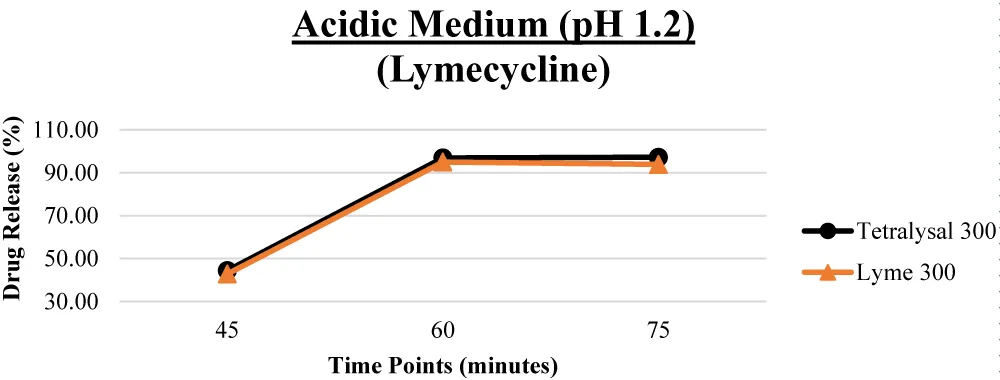
The obtained value in acidic medium of product is shown in table 6. For f1 and f2 calculation.
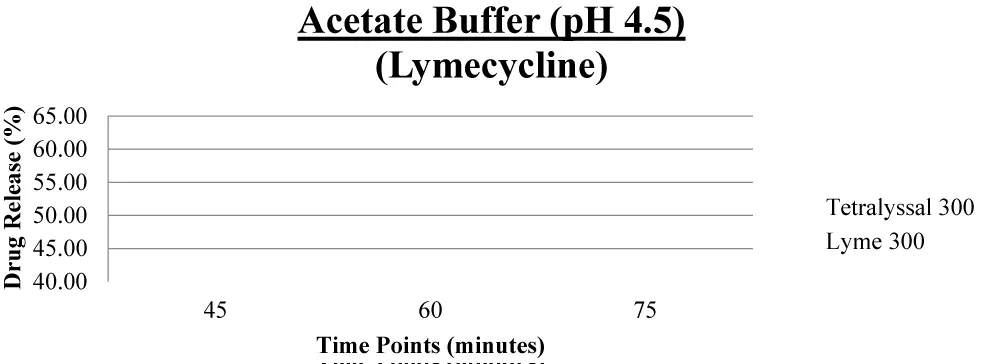
The obtained value in Acetate Buffer (pH 4.5) of product is given in table 8. For f1 and f2 calculation (Figure 12).
| Lyme 300 | 408mg | mg/mL | 45 minutes | 60minutes | 75 minutes | ||||
| SPL | Weight | Dil. | Abs. | % Release | Abs. | % Release | Abs. | % Release | |
| 1 | 600.4 | 0.017 | 0.309 | 43.52 | 0.6678 | 94.15 | 0.6702 | 94.5 | |
| 2 | 604.2 | 0.017 | 0.302 | 42.51 | 0.6712 | 94.63 | 0.6748 | 95.1 | |
| 3 | 589.7 | 0.017 | 0.299 | 42.11 | 0.6789 | 95.71 | 0.6802 | 95.9 | |
| 4 | 607.2 | 0.017 | 0.296 | 41.69 | 0.6817 | 96.11 | 0.6863 | 96.8 | |
| 5 | 595.1 | 0.017 | 0.29 | 40.9 | 0.6708 | 94.57 | 0.6719 | 94.7 | |
| 6 | 591.5 | 0.017 | 0.307 | 43.25 | 0.6794 | 95.78 | 0.6812 | 96 | |
| 7 | 590.7 | 0.017 | 0.303 | 42.73 | 0.6803 | 95.91 | 0.6843 | 96.5 | |
| 8 | 599.4 | 0.017 | 0.307 | 43.24 | 0.6746 | 95.11 | 0.6791 | 95.7 | |
| 9 | 602 | 0.017 | 0.305 | 43.06 | 0.6708 | 94.57 | 0.6763 | 95.4 | |
| 10 | 594.6 | 0.017 | 0.315 | 44.35 | 0.6763 | 95.35 | 0.6768 | 95.4 | |
| 11 | 604.5 | 0.017 | 0.303 | 42.77 | 0.6608 | 93.16 | 0.6643 | 93.7 | |
| 12 | 592.8 | 0.017 | 0.311 | 43.79 | 0.6708 | 94.57 | 0.6721 | 76.6 | |
| MEAN | 597.6 | 0.017 | 0.304 | 42.83 | 0.6736 | 94.97 | 0.68 | 93.9 | |
| S.D | 0.006 | 0.9 | 0.01 | 0.82 | 0.01 | 5.27 | |||
| %R.S. D | 2.11 | 2.11 | 0.86 | 0.86 | 0.89 | 5.61 | |||
| Time | Rt | Tt | Rt - Tt | (Rt - Tt)2 | Ó (Rt - Tt)2 | f2 | |||
| 45 | 44.4 | 42.83 | 1.57 | 2.46 | 17.24 | 79.27 | |||
| 60 | 96.89 | 94.97 | 1.92 | 3.69 | |||||
| 75 | 97.18 | 93.85 | 3.33 | 11.09 | |||||
| Time | Rt | Ó(Rt) | Tt | Ó(Tt) | Rt - Tt | Ó (Rt - Tt) | f1 | ||
| 45 | 44.4 | 238.47 | 42.83 | 231.65 | 1.57 | 6.82 | 2.86 | ||
| 60 | 96.89 | 94.97 | 1.92 | ||||||
| 75 | 97.18 | 93.85 | 3.33 | ||||||
| Std. | Qty. (mg) | Dil. (mg/mL) | Abs. | Avg. | Std. Dev. | % RSD | ||||||||
| Tetracycline | 300 | 0.018 | 0.6021 | 0.6022 | 0 | 0.01 | ||||||||
| 98.20% | 0.6022 | |||||||||||||
| 0.6022 | ||||||||||||||
| Tetralysal 300 | 408 mg | mg/mL | 45 minutes | 60 minutes | 75 minutes | |||||||||
| SPL | Weight | Dil. | Abs. | % Release | Abs. | % Release | Abs. | % Release | ||||||
| 1 | 592.8 | 0.017 | 0.2105 | 45.55 | 0.2607 | 56.41 | 0.2768 | 59.89 | ||||||
| 2 | 584.6 | 0.017 | 0.235 | 45.55 | 0.2657 | 57.49 | 0.2817 | 60.95 | ||||||
| 3 | 579.7 | 0.017 | 0.2204 | 47.69 | 0.2558 | 55.35 | 0.2856 | 61.8 | ||||||
| 4 | 586.4 | 0.017 | 0.2106 | 45.57 | 0.2576 | 55.74 | 0.2883 | 62.38 | ||||||
| 5 | 582.9 | 0.017 | 0.218 | 47.17 | 0.2495 | 53.98 | 0.2849 | 61.64 | ||||||
| 6 | 584.1 | 0.017 | 0.2047 | 44.29 | 0.2467 | 53.38 | 0.2781 | 62.38 | ||||||
| 7 | 575.6 | 0.017 | 0.2201 | 47.62 | 0.2489 | 53.85 | 0.2827 | 61.17 | ||||||
| 8 | 582.4 | 0.017 | 0.234 | 50.63 | 0.2567 | 55.54 | 0.2883 | 62.38 | ||||||
| 9 | 591.8 | 0.017 | 0.2251 | 48.7 | 0.2604 | 56.34 | 0.2768 | 59.89 | ||||||
| 10 | 586.7 | 0.017 | 0.2241 | 48.49 | 0.2583 | 55.89 | 0.2869 | 62.08 | ||||||
| 11 | 579.2 | 0.017 | 0.2237 | 48.4 | 0.2547 | 55.11 | 0.2827 | 61.17 | ||||||
| 12 | 594.8 | 0.017 | 0.2267 | 49.05 | 0.2567 | 55.54 | 0.2804 | 60.67 | ||||||
| MEAN | 580.1 | 0.017 | 0.2211 | 47.39 | 0.26 | 55.39 | 0.28 | 61.37 | ||||||
| S. D | 0.01 | 1.76 | 0.01 | 1.13 | 0 | 0.86 | ||||||||
| %R.S. D | 3.97 | 3.71 | 2.03 | 2.03 | 1.41 | 1.41 | ||||||||
| Lyme 300 | 408mg | mg/mL | 45 minutes | 60 minutes | 75 minutes | ||||
| SPL | Weight | Dil. | Abs. | % Release | Abs. | % Release | Abs. | % Release | |
| 1 | 594.1 | 0.02 | 0.2 | 43.6 | 0.2506 | 54 | 0.2667 | 57.7 | |
| 2 | 602.4 | 0.02 | 0.2 | 48.99 | 0.267 | 58 | 0.2725 | 59 | |
| 3 | 587.8 | 0.02 | 0.2 | 45.63 | 0.2457 | 53 | 0.2764 | 59.8 | |
| 4 | 597.6 | 0.02 | 0.2 | 44.81 | 0.2491 | 54 | 0.2809 | 60.8 | |
| 5 | 581.5 | 0.02 | 0.2 | 46.61 | 0.2406 | 52 | 0.2794 | 60.5 | |
| 6 | 592.7 | 0.02 | 0.2 | 46.89 | 0.2418 | 52 | 0.2679 | 58 | |
| 7 | 597 | 0.02 | 0.2 | 45.2 | 0.2503 | 54 | 0.2746 | 59.4 | |
| 8 | 594.9 | 0.02 | 0.2 | 47.77 | 0.2553 | 55 | 0.2791 | 60.4 | |
| 9 | 600.4 | 0.02 | 0.2 | 46.67 | 0.2574 | 56 | 0.2679 | 58 | |
| 10 | 598.7 | 0.02 | 0.2 | 44.59 | 0.2493 | 54 | 0.2781 | 60.2 | |
| 11 | 602.7 | 0.02 | 0.2 | 47.15 | 0.2567 | 56 | 0.2742 | 59.3 | |
| 12 | 588.2 | 0.02 | 0.2 | 48.14 | 0.2459 | 53 | 0.2753 | 59.6 | |
| MEAN | 592.3 | 0.02 | 0.2 | 46.34 | 0.25 | 54 | 0.27 | 59.4 | |
| S. D | 0 | 1.53 | 0.01 | 2 | 0 | 1 | |||
| %R.S. D | 3.3 | 3.31 | 2.82 | 3 | 1.68 | 1.68 | |||
| Time | Rt | Tt | Rt - Tt | (Rt - Tt)2 | Ó(Rt - Tt)2 | f2 | |||
| 45 | 47.39 | 46.3 | 1.1 | 1.1 | 6.32 | 87.7 | |||
| 60 | 55.39 | 54.3 | 1.1 | 1.25 | |||||
| 75 | 61.37 | 59.4 | 2 | 3.96 | |||||
| Time | Rt | Ó(Rt) | Tt | Ó(Tt) | Rt - Tt | Ó(Rt - Tt) | f1 | ||
| 45 | 47.39 | 164 | 46 | 159.99 | 1.05 | 4.16 | 2.53 | ||
| 60 | 55.39 | 54 | 1.12 | ||||||
| 75 | 61.37 | 59 | 1.99 | ||||||
The obtained value in Phosphate Buffer (pH 6.8) of reference product is given in table 9. For CDP and Graphically presentation for reference and test product Comparison in (pH 6.8) in figure 13. for CDP.
| Std. | Qty. (mg) | Dil. (mg/mL) | Abs. | Avg. | Std. Dev. | % RSD | ||||||
| Tetracycline | 300 | 0.018 | 0.3054 | 0.3054 | 0 | 0.02 | ||||||
| 98.20% | 0.3055 | |||||||||||
| 0.3054 | ||||||||||||
| Tetralysal 300 | 408mg | mg/mL | 45 minutes | 60minutes | 75 minutes | |||||||
| SPL | Weight | Dil. | Abs. | % Release | Abs. | % Release | Abs. | % Release | ||||
| 1 | 585.6 | 0.017 | 0.0852 | 36.34 | 0.0908 | 38.73 | 0.0957 | 40.8 | ||||
| 2 | 582.8 | 0.017 | 0.0792 | 33.78 | 0.0915 | 39.03 | 0.0967 | 41.3 | ||||
| 3 | 570.8 | 0.017 | 0.0728 | 31.05 | 0.0928 | 39.59 | 0.0937 | 40 | ||||
| 4 | 572.5 | 0.017 | 0.0751 | 32.04 | 0.0897 | 38.26 | 0.0942 | 40.2 | ||||
| 5 | 580.1 | 0.017 | 0.0748 | 31.91 | 0.0894 | 38.14 | 0.0937 | 40 | ||||
| 6 | 576.7 | 0.017 | 0.0767 | 32.72 | 0.0875 | 37.33 | 0.0908 | 38.7 | ||||
| 7 | 592.4 | 0.017 | 0.0786 | 33.53 | 0.0887 | 37.84 | 0.0911 | 38.9 | ||||
| 8 | 582.1 | 0.017 | 0.0783 | 33.39 | 0.0867 | 36.98 | 0.0928 | 39.6 | ||||
| 9 | 593.2 | 0.017 | 0.0781 | 33.32 | 0.0918 | 39.16 | 0.0972 | 41.5 | ||||
| 10 | 577.8 | 0.017 | 0.0789 | 33.66 | 0.0906 | 38.65 | 0.0991 | 42.3 | ||||
| 11 | 594.3 | 0.017 | 0.0784 | 33.44 | 0.0918 | 39.16 | 0.0915 | 39 | ||||
| 12 | 571.9 | 0.017 | 0.0784 | 33.44 | 0.0897 | 38.26 | 0.0926 | 39.5 | ||||
| MEAN | 581.7 | 0.017 | 0.0779 | 33.22 | 0.09 | 38.43 | 0.094 | 40.1 | ||||
| S. D | 0 | 1.24 | 0 | 0.75 | 0 | 1.07 | ||||||
| %R.S. D | 3.74 | 3.74 | 1.95 | 1.95 | 2.65 | 2.65 | ||||||
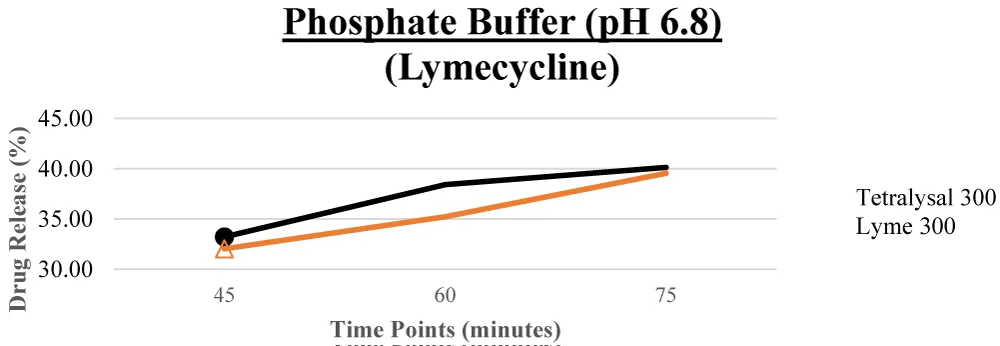
The obtained value in Phosphate Buffer (pH 6.8) of product is given in table 10. For f1 and f2 calculation.
A comparative dissolution study was conducted between the test product, Lyme 300 mg Capsules, and the reference product, Tetralysal 300 mg Capsules. The difference factor (f1) was calculated in Acidic medium pH 1.2 in table 5 & 6 is 2.86%, and the similarity factor (f2) was 79.27%, in acetate buffer pH 4.5 is calculated in tables 7,8 (f1) is 2.53% and (f2) is 87.70% and in phosphate buffer pH 6.8 is calculated in tables 9,10 (f1) is 4.45% and (f2) is 82.52%. These values fall within the acceptable regulatory limits (f1 < 15 and f2 > 50), indicating a high degree of similarity between the dissolution profiles of the two products. Both the test and reference formulations exhibited more than 75% drug release within 75 minutes in an acidic medium, which is a key requirement for immediate-release formulations. Additionally, the dissolution behaviour was found to be comparable in acetate buffer (pH 4.5) and phosphate buffer (pH 6.8), further supporting the consistency of drug release across different physiological pH conditions. These findings confirm that the test product meets the regulatory criteria for dissolution profile similarity, providing strong evidence of In vitro study. As such, the data support the conclusion that Lyme 300 mg Capsules perform similarly to Tetralysal 300 mg Capsules, and can be considered pharmaceutically equivalent in terms of dissolution behavior.
| Lyme 300 | 408mg | mg/mL | 45 minutes | 60minutes | 75 minutes | |||
| SPL | Weight | Dil. | Abs. | % Release | Abs. | % Release | Abs. | % Release |
| 1 | 594.1 | 0.02 | 0.1 | 34.04 | 0.0857 | 37 | 0.0958 | 40.9 |
| 2 | 602.4 | 0.02 | 0.1 | 33.4 | 0.0841 | 36 | 0.0942 | 40.2 |
| 3 | 587.8 | 0.02 | 0.1 | 31.35 | 0.0847 | 36 | 0.0924 | 39.4 |
| 4 | 597.6 | 0.02 | 0.1 | 31.05 | 0.0789 | 34 | 0.0941 | 40.1 |
| 5 | 605.1 | 0.02 | 0.1 | 33.66 | 0.0798 | 34 | 0.0928 | 39.6 |
| 6 | 596.7 | 0.02 | 0.1 | 31.91 | 0.0818 | 35 | 0.0897 | 38.3 |
| 7 | 590.7 | 0.02 | 0.1 | 29.73 | 0.0751 | 32 | 0.0908 | 38.7 |
| 8 | 599.4 | 0.02 | 0.1 | 32.25 | 0.0876 | 37 | 0.0905 | 38.6 |
| 9 | 605.6 | 0.02 | 0.1 | 31.61 | 0.0847 | 36 | 0.0953 | 40.7 |
| 10 | 598.7 | 0.02 | 0.1 | 32.12 | 0.0818 | 35 | 0.0946 | 40.4 |
| 11 | 604.4 | 0.02 | 0.1 | 32.63 | 0.0841 | 36 | 0.0914 | 39 |
| 12 | 582.8 | 0.02 | 0.1 | 30.63 | 0.0828 | 35 | 0.0911 | 38.9 |
| MEAN | 596.3 | 0.02 | 0.1 | 32.03 | 0.08 | 35 | 0.0927 | 39.6 |
| SD | 0 | 1.22 | 0 | 1 | 0 | 0.84 | ||
| %RSD | 3.8 | 3.81 | 3.94 | 4 | 2.11 | 2.11 | ||
| Time | Rt | Tt | Rt - Tt | (Rt - Tt)2 | Σ (Rt - Tt)2 | f2 | ||
| 45 | 33.22 | 32 | 1.2 | 1.42 | 12 | 82.52 | ||
| 60 | 38.43 | 35.2 | 3.2 | 10.24 | ||||
| 75 | 40.14 | 39.6 | 0.6 | 0.35 | ||||
| Time | Rt | Σ(Rt) | Tt | Σ(Tt) | Rt - Tt | Σ (Rt - Tt) | f1 | |
| 45 | 33.22 | 112 | 32 | 106.81 | 1.19 | 5 | 4.45 | |
| 60 | 38.43 | 35 | 3.2 | |||||
| 75 | 40.14 | 40 | 0.59 | |||||
Analytical method verification
The analytical method for Lyme 300 mg Capsules was verified in accordance with ICH Guideline Q2 (R1), November 2005, confirming its suitability for routine quality control. System suitability parameters including %RSD (0.19%), tailing factor (1.63), and theoretical plates (5620) met all acceptance criteria, demonstrating system precision and chromatographic efficiency. The method showed excellent specificity, with no interference observed from placebo or blank preparations at the retention time of the active ingredient in both standard and sample solutions. Accuracy was confirmed through recovery studies, with results ranging from 99.70% to 101.25%, well within acceptable limits. Robustness testing showed that the method remained stable over 4 hours, even under slight pH variations, with consistent chromatographic results. The method also demonstrated high precision, with repeatability and intermediate precision values of 0.25% and 0.44% RSD, respectively. Additionally, the method satisfied criteria for linearity and range, further supporting its reliability. Overall, the method was proven to be accurate, precise, specific, robust, and suitable for its intended analytical purpose.
The compatibility study results are calculated and %age of recovery with each in-active material is described in table 11.
| Excipient Compatibility Study After One Month | |||||||||
| (Temperature: 40°C ± 2°C, relative humidity 75% ± 5%). | |||||||||
| Sr. | Composition | Theoretical Contents | Weight (mg) | Concentration (mg/mL) | Area | %Age Of Contents | |||
| STD. | SPL. | STD. | SPL. | Ave. STD. | SPL. | ||||
| 1. | Standard | 100% | 325 | 408 | 0.1625 | 0.204 | 2182577.6 | 2187253 | 100.03 |
| API | |||||||||
| 2. | Standard | 100% | 325 | 408 + 6.483 | 0.1625 | 0.204 | 2182577.6 | 2158951 | 98.74 |
| API + | |||||||||
| Mg stearate | |||||||||
| 3. | Standard | 100% | 325 | 408 + 3.0 | 0.1625 | 0.204 | 2182577.6 | 2150625 | 98.36 |
| API+ | |||||||||
| Aerosil 200 | |||||||||
| 4. | Standard | 100% | 325 | 408 + 100 | 0.1625 | 0.204 | 2182577.6 | 2165903 | 99.05 |
| API + Capsule Shell | |||||||||
The chosen excipients in the solid oral formulation (Lymecycline 408 mg, equivalent to 300 mg Tetracycline Base) were found to be compatible, with no adverse interactions observed under one month of accelerated conditions (40°C ± 2°C / 75% RH ± 5%).
Stability study (accelerated conditions)
A formulation stability study of Lyme 300 mg Capsules (Filled in ALU-ALU Foil having 7 hard capsule/ Blister) conducted under accelerated conditions (40°C ± 2°C / 75% RH ± 5%) up to six month yielded satisfactory results, indicating physical and chemical studies.
The chosen excipients in the formulation (Lymecycline 408 mg, equivalent to 300 mg Tetracycline Base) were found to be compatible, with no adverse interactions observed under one month of accelerated conditions (40°C ± 2°C / 75% RH ± 5%).
Discussion
The development of Lyme 300 mg Capsules, containing Lymecycline BP 408 mg (equivalent to 300 mg Tetracycline base), demonstrated robust formulation design supported by comprehensive analytical and stability data. All selected excipients were pharmacopeial and proven compatible through pre-formulation and accelerated compatibility studies, ensuring stability and safety of the product. Comparative dissolution testing revealed high similarity to the reference product, Tetralysal 300 mg, with an f1 value of 2.87% and f2 value of 79.27%, confirming dissolution equivalence across various media and supporting In vitro study. Analytical method verification, performed in accordance with ICH Q2(R1), confirmed system suitability, specificity, accuracy (recovery 99.70% – 101.25%), precision (repeatability and intermediate % RSD < 0.5%), robustness, and linearity ensuring the method's reliability for routine quality control. Stability studies under ICH-recommended accelerated conditions (40°C ± 2°C / 75% RH ± 5%) over six months demonstrated that the formulation remained physically and chemically stable, with no significant changes or interactions observed, especially when packaged in ALU-ALU blister packs. Collectively, these results validate the formulation’s quality, safety, and regulatory compliance, positioning it for successful market approval [21-24]. Table 12 shows Comprehensive Stability Summary Report Lymecycline 408 mg Hard Capsule.
| Sr. # | Parameter | Specification | Acc 1M | Acc 3M | Acc 6M | RT 1M | RT 3M | RT 6M |
| 1 | Physical Characteristics | Pink cap & white body hard gelatin capsule size '0'; yellow hygroscopic powder; packed in Alu-Alu blister | Complies | Complies | Complies | Complies | Complies | Complies |
| 2 | Uniformity of Dosage Weight | 600 mg/capsule ±10% (540–660 mg) | 600.3 | 599 | 598.8 | 601.1 | 604.1 | 596 |
| 3 | Water Determination | NMT 7.0% | 4.50% | 4.58% | 4.72% | 4.52% | 4.47% | 4.91% |
| 4 | Identification | Must comply for Lymecycline | Complies | Complies | Complies | Complies | Complies | Complies |
| 5 | Dissolution Test | NLT 80% (Q) in 60 minutes | 95.10% | 93.12% | 92.41% | 95.01% | 93.81% | 92.44% |
| 6 | Assay | 90.0% – 110.0% | 100.38% | 99.90% | 99.82% | 100.18% | 99.98% | 100.04% |
Remarks
The product was found stable up to 6 months under accelerated and real-time storage conditions as per ICH Q1A (R2) guidelines for climatic Zone IVa.
Conclusion
The Lyme 300 mg Capsule demonstrates In vitro pharmaceutical equivalence with the reference product (Tetralysal 300 mg) in accordance with WHO Annex 3, Section 2.2.4, covering equivalence and dissolution studies. This is supported by f₁/f₂ values and comparable dissolution profiles across multiple pH conditions. The formulation is physically and chemically stable, with all excipients confirmed to be compatible under accelerated stability testing. The analytical methods used for assay and quality control are fully validated and verified, meeting all predefined acceptance criteria for specificity, accuracy, precision, robustness, linearity, range, and system suitability. Therefore, the product is considered pharmaceutically equivalent and analytically reliable. Additionally, six months of stability studies conducted according to ICH Q1A(R2) confirm that the product meets all required chemical and physical specifications.