
2025 November 28;6(11):1756-1763. doi: 10.37871/jbres2228.
-
Subject area(s):

 |
|
 |
|
 |
|

 Review Article
Real-Time Biometric Monitoring for Cognitive Workload Detection in High Demand Professions: A Narrative Review
Reginald B O’Hara1,2*, Shelby C Loftis2 and Cynthia Rando2
2Sophic Synergistics, LLC, Applied Health and Performance, 18050 Saturn Ln, Ste 280, Houston, TX 77058 USA
- Wearable device
- Biometric monitoring
- Bone remodeling
- Cognitive workload
- Physiological stress
- Data privacy
- Artificial intelligence
- Multimodal approaches
Abstract
Background: Wearable technology and multidimensional data analysis present significant opportunities for the continuous, real-time monitoring of cognitive overload, potentially identifying early warning signals before performance degrades. However, key challenges exist, including ensuring data security, sensor accuracy, consistent calibration, accurate data processing, network limitations, and individual variability in responses.
Objectives: (1) To explore the theoretical foundations of mental workload, (2) to investigate methods for integrating data from multiple sources, (3) to evaluate the role of Machine Learning (ML) and Artificial Intelligence (AI) in predicting early indicators of cognitive overload, (4) to examine ethical, privacy, and security concerns related to AI and ML applications, and (5) to propose directions for future empirical research on the validity and reliability of real-time biometric monitoring.
Methods: Following the framework for Narrative Reviews (NRs) and the SANRA (Scale for the Assessment of NR articles) quality criteria, a comprehensive literature search was conducted across Google Scholar, PubMed Central, and electronic university databases from 1981 to 2025. Articles were selected based on relevance to the objectives and the primary aim using predefined search terms.
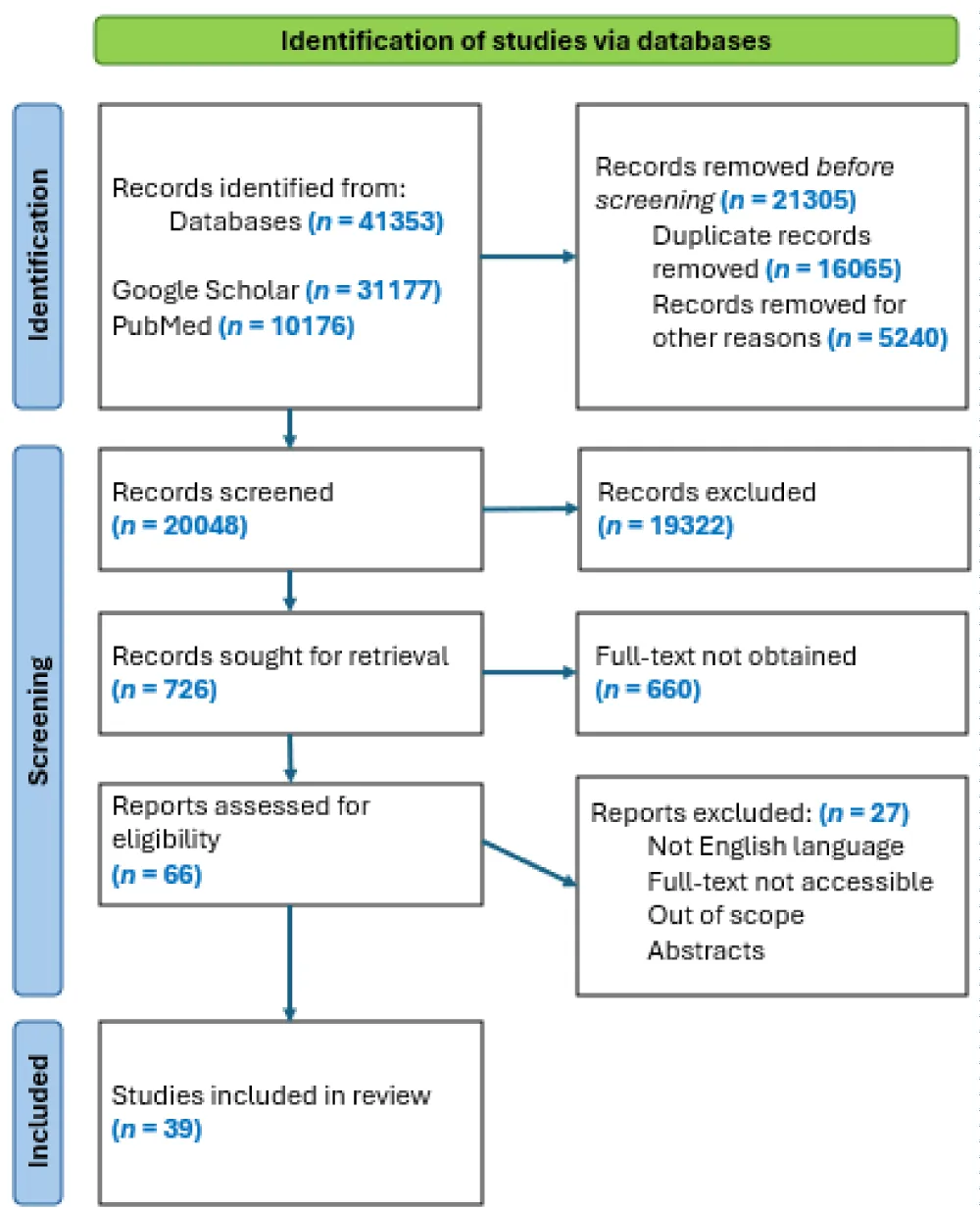
Results: After 27 articles were excluded for not meeting established inclusion criteria, a total of 66 articles were assessed for eligibility. After the final analysis, 39 full-text articles were included.
Conclusion: Integrating physiological and behavioral data with subjective assessments analyzed through AI and ML, may enable early detection of cognitive overload in high-stress environments. Such approaches could improve physical and cognitive performance, provide timely alerts for work-recovery cycles, and reduce task error rates. Presently, there is a lack of longitudinal studies addressing data standardization, sensor validation, and cybersecurity. Future empirical research is necessary to evaluate these technologies before their widespread use in critical sectors such as healthcare, public safety, air traffic control, and industry.
Abbreviations
AI: Artificial Intelligence; ANS: Autonomic Nervous System; CLC: Cognitive Load Component; CLT: Cognitive Load Theory; EDA: Electro Dermal Activity; EEG: Electroencephalogram; fNIRS: Functional Near-Infrared Spectroscopy; HRV: Heart Rate Variability; IT: Information Technology; ISA: Instantaneous Self-Assessment; MAM: Multimodal Assessment Methods; ML: Machine Learning; MRT: Multiple Resource Theory; MWL: Mental Workload; NASA: National Aeronautics And Space Administration; NR: Narrative Review; PAAS: Physical Activity Affect Scale; PNS: Parasympathetic Nervous System; RR: Respiratory Rate; RT: Real-Time; SNS: Sympathetic Nervous System; TL: Task Load Index.
Introduction
Mental Workload (MWL), often termed Cognitive Workload (CWL), refers to the cognitive effort required to effectively perform and complete a task at a specific moment [1]. CWL is influenced by task complexity, mental effort, and time pressure to meet task goals [1-3]. The brain functions much like a processing system. For example, when it receives an overload of information, particularly during multitasking, its efficiency declines, increasing the probability of mistakes and slower task performance.
In recent years, employee health and stress have increased markedly, likely because of rapid technological growth and advancements in Information Technology (IT), such as Artificial Intelligence (AI), robotic process automation, remote work platforms, team collaboration tools, and workforce analytics, which continuously track employee performance [2]. Although these evolving technologies are helpful, they can also increase employees’ cognitive demands. For instance, the increase in clinical settings and the integration of IT, including electronic medical records, patient monitoring systems, and communication tools, is designed to improve the delivery of patient care. However, these systems require clinicians and nurses to divide their attention between multiple platforms and patient-care tasks, thereby encouraging multitasking.
Frequent task-switching can overload mental resources, leading to increased error rates [4]. Multitasking increases the mental load by pushing the brain beyond its cognitive reserves, often resulting in task errors, safety risks, and cognitive processing delays, particularly in high-pressure environments where rapid and accurate performance is required. Overload likely occurs not because a person can truly focus on multiple tasks at once but because when individuals multitask, the brain is compelled to switch rapidly between tasks, which may exhaust mental resources, disrupt focus, and increase the chance of errors [1].
The emerging interest and increasing adoption of wearable biometric sensors play a critical role in enabling rapid collection, processing, and analysis of neurophysiological and behavioral pattern data in Real-Time (RT) contexts [1,2,4]. As mental workload increases, so does the risk of human error, especially in work settings that require sustained attention and rapid decision making under time constraints. To counteract these risks, non-invasive biometric monitoring systems offer a promising solution by enabling rapid responses and individualized targeted interventions. These systems assess the RT indicators of brain activity, heart rate, Heart Rate Variability (HRV), pupil dilation, and fixation to detect early signs of overload [1,4-6]. By continuously monitoring these physiological signals, biometric sensors can help mitigate critical errors, improve employee safety and health, and sustain productivity, thereby enhancing performance metrics.
Individuals in demanding roles can greatly benefit from RT biometric monitoring systems, which help prevent injuries, sustain productivity, preserve health, and minimize errors. For instance, construction workers often experience significant occupational fatigue because of the mental and physically demanding nature of their work, which often requires working in various types of environments (e.g., outside) [7]. Fatigue leads to a higher risk of errors and diminished awareness of potentially hazardous situations, resulting in potential catastrophic errors. In 2019, construction workers reported more than 200,000 cases of work-related injuries and illnesses, highlighting the occupational risks present in this sector of industry, along with 79,700 missed workdays, all of which negatively affected productivity [7]. These findings underscore the importance of addressing occupational fatigue not only in construction but also in other demanding occupations such as nursing, emergency responders (e.g., fire, police), and specialized industrial technicians [7-9]. Integrating multimodal sensor datasets with fatigue measurement systems to capture RT biometric data can play a critical role in the early detection of mental fatigue [5,6]. However, in many high-pressure occupations, employees often lack access to RT monitoring systems that can detect mental overload before it leads to task errors, declining mental health, or decreased performance [10]. Data relevant to mental and physical stress is typically gathered after stressful incidents have occurred rather than during RT work conditions [1].
This Narrative Review (NR) offers a distinct contribution to the field by exploring advancements in Artificial Intelligence (AI)-based prediction techniques that integrate multidimensional data to assess cognitive workload in real-time occupational environments. Prior reviews often only focus on use of single sensor systems or theoretical constructs. However, this review bridges physiological, behavioral, subjective, and performance measures for early detection of cognitive overload. Lastly, and perhaps most importantly, it emphasizes real-world application in high-stress occupational contexts, addressing implementation barriers, ethical issues, and potential pathways for future empirical validation.
The primary aim of this NR was to examine the scientific, technological, and feasibility of RT biometric monitoring systems for the early detection and management of MWL in high-demand occupations. The objectives of this review were: (1) to explore the theoretical foundations of MWL, (2) to evaluate various biometric modalities and performance indicators, (3) to examine the potential application of AI and Machine Learning (ML) to further enhance RT monitoring accuracy, (4) to understand ethical, security, and privacy challenges, and (5) based on the first four objectives, we recommend future empirical research.
Methods
Inclusion criteria for selection of studies
Primary and secondary sources were eligible for inclusion and had to be written in English (Table 1). Peer-reviewed, open access articles were eligible for inclusion and had to address the NRs central aim and five objectives. Articles that focused on the use of multimodal data, biosensor modalities for detecting cognitive overload, and the integration of biometric sensors for real-time monitoring of cognitive load were eligible for inclusion. Finally, articles that adequately described the scientific, technological, and feasibility of real-time biometrics monitoring for integration into high demand occupations were eligible for analysis.
| Table 1: Inclusion criteria. |
| 1. Original research articles |
| 2. Systematic reviews |
| 3. Defense technical reports |
| 4. Doctoral dissertations |
| 5. Full-text, open access peer reviewed articles |
| 6. Populations(s): high demand occupations, robotic tech and smart factory |
| 7. Context: use of multimodal data, use of biosensor modalities in workplace |
| 8. Integration of biometric sensors for real-time monitoring of mental workload |
| 9. Published between 1981-2025 |
| 10. Written in the English language |
Search strategy and screening
This Narrative Review (NR) was conducted according to the general framework of NRs outlined by Ferrari [11] alongside NR quality criteria developed by Baethge C, et al. [12].
Peer reviewed primary and secondary sources focused on cognitive workload, real-time biometric monitoring, and multi-modal data assessment methods that were identified by searching Google Scholar, PubMed Central, and electronic university databases between 1981 and 2025. The key search terms for each database were “biometric sensors,” “cognitive overload,” “mental workload,” “multimodal data,” “occupational stress,” “artificial intelligence,” “predictive analytics,” and “electronic health records.” Finally, we reviewed additional relevant reference lists of the eligible full-text articles.
Source selection and data extraction
A primary literature search on Google Scholar using Boolean operators to separate the search terms “biometric sensors” OR “cognitive OR “mental” AND “multimodal data” AND “biometric sensors” from 1981 to 2025, focusing on review articles, systematic reviews, observational studies, and government technical reports from full-text, open-access articles. We determined the key concepts for the review and navigated databases for proper keywords directly related to the topics of interest [11]. Zotero software was used to extract the results for the initial search strategy in the Google Scholar advanced search filter by entering the search terms “biometric sensors”, which yielded 10,200 results. The second search focused on “cognitive workload” AND “multimodal data,” generating 755 combined results. For the third search, we applied the key terms “mental workload” AND “occupational stress,” which produced 3,422 results. A fourth Google Scholar advanced search highlighted the terms “artificial intelligence,” “predictive analytics,” AND “electronic health records,” yielding 16,800 articles.
The same search strategy was performed in the electronic university library in the MINERQUEST search bar, choosing PubMed Central as the secondary database search, using the terms “biometric sensors” OR “cognitive workload” AND “multimodal data” for the period 1981–2025. The first search yielded 9,230 results with varying degrees of relevance to specific inclusion criteria. We applied filters for the second search using only the available online and peer-reviewed data. We narrowed the resource type to only articles, review articles, reports, and first online articles, which yielded 946 results.
The 27 reports excluded lacked real-time biometric data relevance, focused primarily on theoretical models without applied sensor technologies, or did not provide open-access full texts. Further, studies not aligned with the five primary objectives of this review or those with insufficient methodological rigor were excluded. Two reviewers (RBO, SCL) independently reviewed titles and abstracts that were included in the initial database search against inclusion and exclusion criteria, then searched and selected full-text articles meeting the inclusion criteria. Articles were then independently appraised by both authors (RBO, SCL). When there were disagreements on the overall appraisal process, both reviewers met to discuss the issue until they agreed. Both authors (RBO, SCL) developed a data extraction form, which was pilot tested prior to the database search and then revised after each reviewer appraised a minimum of three full-text articles. The final list of research data characteristics extracted and examined from all articles included (1) author(s) and year, (2) article type, (3) primary aim, (4) method, and (5) key results.
Results
Figure 1 shows the NRs flowchart for selecting sources. Articles were screened for eligibility, based on the established inclusion criteria. Thirty-nine articles were included for extensive review. Articles selected for inclusion consisted of the following: (1) primary research articles (n = 19), reviews (n = 12), systematic reviews (n = 5), defense technical reports (n = 2) and a doctoral thesis (n = 1).
Discussion
Theoretical foundations
The concept of mental (cognitive) workload is grounded in Wicken’s Multiple Resource Theory (MRT) and Sweller’s Cognitive Load Theory (CLT) [14,15]. MRT posits that the brain processes information through separate cognitive channels (e.g., visual, auditory), rather than relying on a single unified cognitive resource. Tasks competing for the same channel can cause interference, partially explaining why multitasking sometimes succeeds but often impairs performance [14].
CLT builds on this by asserting that the brain can only process a limited amount of new information at once, particularly when the content is complex. CLT outlines three types of cognitive load: (1) intrinsic load, tied to the inherent complexity of the material, (2) extraneous load, caused by poorly designed instructions or interfaces, and (3) germane load, referring to the mental effort necessary to build understanding or form mental models [15].
Wickens further emphasized that different tasks engage different cognitive resources. For instance, driving uses visual-spatial channels while conversing relies on auditory-verbal functions such as listening and speaking. While tasks that span multiple sensory systems can be manageable, success also depends on factors such as situational awareness and self-regulation. Research shows that in-person passengers often adjust their conversation pace during complex driving conditions, helping reduce cognitive load [16]. In contrast, remote phone conversations lack visual cues, even when tasks are spread across different cognitive channels [14,16,17].
To enhance employee performance, organizations applying CLT may consider schema-focused training that involves repeated exposure to practical, real-world situations, allowing them to build automatic responses and reduce the intrinsic load during a real crisis [18]. Reducing extraneous load may be achieved by simplifying tools and interfaces, through intuitive dashboards or straightforward protocols that minimize the cognitive effort needed to interpret information under stressful conditions [17]. Additionally, large information inputs can decrease brain load when broken down into step-by-step flows and the use of external memory aids, such as visual cues, reminders, or auto-calculations [18].
Biometric sensor modalities and mental workload
This section outlines practical biometric sensor modalities and evaluation measures for continuously Monitoring Mental Workload (MWL) in Real-Time (RT) and real-world occupational settings. These measures, drawn from the scientific literature, are not exhaustive, as their applicability may vary based on task type, complexity, and demands. The goal is to systematically collect reliable data with minimal variation across days, weeks, or months. To be effective, the devices used must show both validity, measuring what they are intended to measure and reliability, producing consistent results over time. Since mental workload is a multifaceted construct that varies by occupation, it is important to consider the mental demands, stress levels, and task complexity specific to each occupational role. Improving predictive accuracy requires the collection and analysis of multidimensional data sources, including physiological metrics, task performance metrics, subjective reports, and task complexity. The evaluation measures presented in the following sections offer a comprehensive overview of these data sources, supporting their inclusion in future multimodal assessment studies.
Physiological and behavioral measures
Heart Rate Variability (HRV), Electroencephalography (EEG), and Electrodermal (EDA). HRV, a marker of autonomic nervous system regulation, reflects how the body responds to both physical and emotional stress and is widely used to assess workload fluctuations [19,20]. While it offers real-time insights, its interpretation can be influenced by factors such as sleep quality, cardiovascular fitness, and emotional state. EEG and EDA are non-invasive physiological measures routinely used to examine cognitive workload and emotional stress. EEG records brain electrical activity through scalp-mounted electrodes. These signals capture fluctuations in brain wave patterns associated with cognitive strain, emotional stress, and fatigue [1,21]. EEG enables continuous, objective monitoring of mental workload during tasks without interfering with performance, making it effective for tracking time-dependent changes in brain activity [21,22]. EDA measures changes in skin conductivity caused by sweat gland activity, which is regulated by the body’s stress-response system [1,5]. Increases in EDA signal heightened stress, emotional arousal, and mental workload. As a wearable and non-intrusive method, EDA effectively detects early signs of stress by capturing involuntary physiological responses in high-demand environments [5].
Respiratory Rate (RR): RR patterns depict how stress and cognitive load are related, as both the breathing rate and rhythm routinely shift in response to mental or emotional stress. Higher mental demands routinely cause breathing to become faster and more uniform, reducing the variability in respiratory patterns. Monitoring these changes in respiration provides a non-invasive method for tracking physiological indicators of stress and cognitive effort during task performance [2].
Eye tracking: Eye-tracking devices, which are minimally invasive, measure visual attention by monitoring measures such as blink frequency, gaze duration, pupil size, and fixation periods [1]. With increased MWL, fixation patterns may become more focused, and the blink rate decreases. These indicators can provide valuable data on attention, visual processing efficiency, and cognitive load during complex task execution or interaction with work interfaces [1].
Subjective and performance measures
NASA-TLX (Task Load Index): The NASA-TLX is a widely used multidimensional tool designed to assess perceived mental and physical workload during task performance, particularly in high-stakes ecosystems like aerospace, healthcare, first response, and human-machine interaction settings [23,24]. It also has applications in general workplace assessments to pinpoint overly complex or demanding tasks. Participants rate six workload dimensions which include mental effort, physical demand, time pressure, perceived effort, and frustration [17]. These dimensions are ranked on a scale from 0 (very low) to 100 (very high). After completing the specified task, the individual provides a score for each domain, which is then combined to calculate an overall workload index [2]. Higher total scores, approaching 100, indicate greater perceived mental workload [1].
Bedford scale: The Bedford Workload Scale is a 10-point tool mental workload rating system constructed for assessing the cognitive demands placed on military and commercial pilots during and following high-intensity flight tasks [25]. A score of 1 reflects minimal workload, while a score of 10 signifies cognitive overload that interferes with task completion. Due to its simplistic design, the Bedford Scale is particularly useful in high-speed, performance-critical environments like aviation, where rapid assessment is critical [25].
Physical Activity Affect Scale (PAAS): PAAS is employed to examine emotional reactions to physical exertion, allowing researchers and practitioners to understand how physical fatigue influences mood and cognitive functioning [1]. The scale evaluates dimensions such as energy, fatigue, tension, and relaxation. These measures are relevant for physically demanding occupations, such as emergency responders, factory or assembly line workers, and healthcare providers, where emotional state can influence cognitive performance [1].
Instantaneous Self-Assessment (ISA): Originally developed for use in aviation, The ISA provides RT self-reports of perceived cognitive load during active task performance [1]. The ISA allows individuals to rate their mental effort, stress, and task demand as they occur, providing a fast and noninvasive way to examine mental strain without interfering with task execution [1].
Cognitive Load Component Questionnaire (CLC): The CLC breaks down MWL into three core domains: (1) mental effort, (2) task complexity, and (3) time-related pressure [26]. By isolating these elements, the questionnaire helps identify which factors contribute most to perceived mental workload during actual task execution, providing a more detailed understanding of task-related cognitive strain [26].
Task completion time: Measuring the duration of completing a task provides insight into how cognitive workload influences efficiency. When workload levels are elevated, individuals often take longer to complete tasks, suggesting reduced focus, increased effort, or mental fatigue. An increased workload typically slows down performance, reflecting cognitive strain or divided attention [1,3]. This measure is useful for assessing adaptability and performance in varying occupational roles.
Error rate and accuracy: Both error rate and accuracy measure the quality and precision of task execution. Higher cognitive workload often leads to an increase in errors and a decrease in accuracy [1]. Monitoring these indicators can reveal how cognitive demands influence attention, decision-making, and the ability to perform with consistency, especially in environments where task detail and precision are critical [5,10].
Reaction time: Reaction time measures the speed that an individual can respond to a given stimulus, such as a visual or auditory signal. Under high cognitive load, response times routinely slow down due to overloaded mental processing. This metric is important for professions that require immediate and accurate execution, such as emergency medical services, transport, and military operations [1,5].
Multisource data integration methods
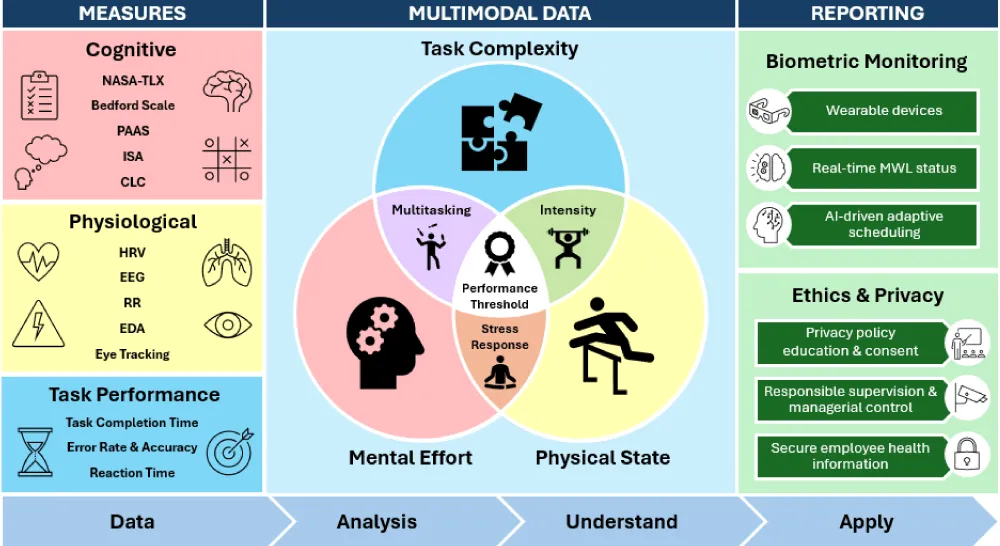
Multimodal Assessment Methods (MAMs) are valuable for gaining in-depth insights into an individual’s cognitive processes, task performance, and emotional responses during work-related activities [1]. As depicted in figure 2, to understand MWL, these methods integrate multiple data variables, including physiological signals, self-reported ratings, and task outcomes to deliver more accurate and meaningful insights [9,27]. Data-fusion strategies using multimodal inputs are beneficial in high-pressure occupations, such as military operations, clinical care, industrial systems and emergency services, where maintaining performance and minimizing task errors is paramount [9]. Hence, combining diverse assessment metrics can enhance both reliability and precision, offering a more holistic representation of an individual’s cognitive load on the job.
Artificial intelligence and machine learning methods
Data fusion approaches allow for the incorporation of ML techniques and AI, improving the ability to predict signs of mental strain and initiate proactive responses to other health-related issues, making them valuable for tracking employees in high-stress or safety-critical roles [20,28]. The fusion of multimodal methods used to integrate these data, such as ML and AI, can rapidly detect when an individual’s performance falls significantly, such as 20 percent or more below their standard baseline under normal cognitive conditions, allowing for prompt identification and targeted action to mitigate mistakes, maintain output, and protect workers’ well-being.
The use of data fusion techniques with ML and AI presents specific challenges that deserve consideration. Hence, to overcome potential misleading data output, it is important (1) to maintain data integrity and continually update data across different locations and devices (e.g., synchronization of data), (2) to ensure sensors are precisely calibrated and adjusted, (3) to understand that workers performing the same occupational task can exhibit varying brain activities and stress response patterns [5,9], (4) to recognize how AI and ML models may yield false alarms, suffer from algorithmic bias, and require large, high-quality datasets that accurately reflect the target cohort [29,30]. The future predictive capabilities of AI and ML techniques may become more relevant in applied workplace environments for RT monitoring of cognitive stress, such as the following human-robot interaction case study.
Human-robot case study: Tracking cognitive overload
This case study illustrates the cognitive demands placed on a human operator working alongside a robotic arm, known as a cobot, within a smart factory setting. It outlines recommended training techniques for measuring human cognitive stress in RT using objective data [6]. In an industrial smart factory case study, a human operator is coordinated with a cobot to complete time-sensitive classification and sorting tasks. Although initially appearing efficient, the system did not account for the operator’s mental and physical condition, as the cobot functioned at a constant speed [6]. To evaluate RT mental load, the research team employed EEG and Functional Near-Infrared Spectroscopy (fNIRS) technologies, alongside the inclusion of a foot pedal, to measure reaction time to audio stimuli [6]. The dual-task design was intended to simulate real-world factory conditions. For the primary task, the cobot handed the human operator color-coded boxes, and he had to quickly decide whether the printed equation on the box was correct. The operator then had to sort the boxes based on either the printed text color or the color label displayed [6]. For the secondary task, he had to press a foot pedal below his factory workstation as quickly as possible to track his divided attention and stress level. If he fell behind by not matching the speed of the cobot, the boxes were dropped. The reaction time was measured over five episodes, each lasting four minutes and the results of this study showed peak cognitive overload during rapid task sequences, suggesting the need for adaptive cobot behavior based on RT human stress signals [6].
Wearable technologies can also be applied across other high-stress fields, such as medicine, emergency services, and biotech, to monitor cognitive workload in RT. However, the sensor modalities used to measure cognitive load should vary based on the type of occupation. For instance, a surgeon engaged in lengthy, intricate surgical procedures may be unable to use EEG headgear during operations and require less invasive biosensor technologies to measure his cognitive load in this type of setting.
Adaptive scheduling, continuous RT monitoring, and performance
Adaptive scheduling leverages RT biometric and neuroergonomic data to predict and modify tasks based on the user’s projected workload. Patterns identified through collected data such as stress, attention, cognitive load, and decision-making guide the scheduling of demanding tasks and stressful work conditions, allowing for planned recovery cycles to reduce mental fatigue and cognitive strain [31].
Eliminating the need for intermediaries between raw physiological data and processed insights allows biometric sensors to operate more efficiently, lowering costs, saving time, and potentially saving lives. In physical and mentally demanding occupations, continuously gathering RT data may offer deeper insight into an individual’s current performance level and help detect warning signals of the early onset cognitive or physical fatigue [8]. Moreover, the integration of wearable biosensors with enhanced employee onboarding practices has led to improvements across various industries. Virtual simulations can simplify complex or high-risk training tasks into clear, manageable steps, helping workers build familiarity with new systems, equipment, and workflows. This approach may help employees become more productive while also minimizing time and cost investments [32].
Ethics and data governance
Managing sensitive user data requires acknowledging that health-related information is inherently private and should be handled with confidentiality [33]. A substantial number of users may not fully understand the privacy concerns linked to biometric wearable devices or the precise security measures taken to protect their data [34,35]. For instance, privacy policies displayed on wearable devices are often difficult to navigate on small screens, which can hinder user comprehension, potentially resulting in misleading content, unauthorized data usage or biased profiling based on misunderstood agreements [34,36]. Furthermore, varying types of occupational environments can pose challenges for biometric signaling wearables owing to overheating, water and/or sweat leakage, and a lack of sensor connectivity in occupations such as construction, healthcare, first responders, industrial tech factories, and mining [37], or in extreme environments like space, aviation, and deep-sea exploration.
The use of AI in handling sensitive personal data raises important ethical concerns. AI integration involves collecting data beyond basic biometric measurements, including user behavior and surveillance-related metrics. When AI-driven biometric systems withhold worker data and use it to expand managerial oversight, they risk causing social and ethical harm [38]. Employees should have the right to review and approve a predetermined list of behaviors or activities that AI systems are allowed to monitor to avoid invasion of user health privacy. Future empirical research is necessary to fully understand how AI monitoring may influence decisions made by industry executive leaders and employee beliefs. Establishing proactive policies could reduce ambiguity relevant to how AI systems are used and protect workers from misuse of personal health information [38].
While biometric monitoring technologies offer potentially relevant benefits, their widespread integration into occupational settings is limited by several practical challenges. These challenges include but are not limited to the significant expense associated with advanced biosensors, problems ensuring interoperability between different platforms, and inconsistencies in sensor calibration techniques across various user devices. Regulatory requirements, such as those mandated by Health Insurance Portability and Accountability Act (HIPAA) for protection of sensitive health information, add another layer of complexity, particularly when sensitive health data is transmitted digitally. Moreover, the lack of standardized data formats and limited device compatibility across industries present added challenges. More importantly, until these challenges are systematically resolved, the broad implementation of biometric systems to capture multidimensional data will continue to face significant limitations [33-35].
Future directions
Customizing cognitive workload thresholds using individual baseline models may improve the accuracy and precision of physiological monitoring, while reducing errors often found in singular or standalone biometric systems [39]. This may enhance user trust in biometric outputs, even when occupational task demands vary. Therefore, combining AI and ML may help create work schedules that match an individual’s cognitive resources at a specific period, leading to improved task scheduling, lower cognitive strain, enhanced worker safety, and more data-driven decision-making for organizational leaders using RT inputs [27].
To achieve a more holistic framework for predicting mental and physical workloads, AI and ML platforms should be considered by integrating multiple data streams of occupation specific data, which may enhance predictive accuracy and address the shortcomings of single-source systems [27]. Lastly, individual and occupation role-based differences suggest that variations in biometric responses are natural and should be factored into systems design [36].
Conclusion
This review explored the scientific, technological and practical aspects of RT biometric monitoring systems for detecting and managing cognitive workload in complex, high-stress occupations. We examined the theoretical foundations of cognitive overload to understand how increased occupational task demands can degrade cognitive processing. By integrating multidimensional measures, including physiological, behavioral, and subjective data and integrating AI and ML for multimodal data fusion, these systems have the potential to enhance the predictive accuracy of cognitive overload. This in turn aids in the development of adaptive scheduling for managing employee workload in high-demand professions. While these advancements are promising, they also introduce ethical and data governance challenges that must first be addressed through longitudinal empirical validation and reliability research applied in high-demand occupations before large scale implementation. Future investigations should focus on the variability of wearable sensors used to collect RT physiological data in real-world, high demand occupational settings, personalizing cognitive workload thresholds for individuals, and developing transparent governance and ethical frameworks. These measures are paramount for protecting personal health information data and promoting sustained cognitive and physical health in high-stress occupational ecosystems.
Authors Contribution
Conceptualization, R.B.O. and S.C.L.; methodology, R.B.O.; validation, R.B.O.; formal analysis, R.B.O. and S.C.L.; investigation, R.B.O. and S.C.L.; resources, R.B.O.; writing—original draft preparation, R.B.O. and S.C.L.; writing—review and editing, R.B.O., S.C.L. and C.R.; visualization, S.C.L.; supervision, R.B.O. and C.R.; project administration, R.B.O. All authors have read and agreed to the published version of the manuscript.
Funding
This research received no external funding.
Conflicts of Interest
The authors declare no conflicts of interest.
References
- Lucchese A, Padovano A, Facchini F. Comprehensive systemic literature review on cognitive workload: Trends on methods, technologies and case studies. IET Collab Intell Manuf. 2025;1(7):70025. doi: 10.1049/cim2.70025.
- Mahdavi N, Tapak L, Darvishi E, Doosti-Irani A, Shafiee Motlagh M. Unraveling the interplay between mental workload, occupational fatigue, physiological responses and cognitive performance in office workers. Sci Rep. 2024 Aug 1;14(1):17866. doi: 10.1038/s41598-024-68889-4. PMID: 39090219; PMCID: PMC11294527.
- Subramanyam MP, Muralidhara P, Muralidhara P. Mental workload and cognitive fatigue: A study. J Manag Res. 2013.
- Douglas HE, Raban MZ, Walter SR, Westbrook JI. Improving our understanding of multi-tasking in healthcare: Drawing together the cognitive psychology and healthcare literature. Appl Ergon. 2017 Mar;59(Pt A):45-55. doi: 10.1016/j.apergo.2016.08.021. Epub 2016 Sep 11. PMID: 27890158.
- Bustos D, Guedes JC, Baptista JS, Vaz MP, Costa JT, Fernandes RJ. Applicability of Physiological Monitoring Systems within Occupational Groups: A Systematic Review. Sensors (Basel). 2021 Oct 30;21(21):7249. doi: 10.3390/s21217249. PMID: 34770556; PMCID: PMC8587311.
- Zakeri Z, Arif A, Omurtag A, Breedon P, Khalid A. Multimodal assessment of cognitive workload using neural, subjective and behavioural measures in smart factory settings. Sensors (Basel). 2023 Nov 2;23(21):8926. doi: 10.3390/s23218926. PMID: 37960625; PMCID: PMC10647588.
- Seong S, Park S, Ahn YH, Kim H. Development of an integrated fatigue measurement system for construction workers: a feasibility study. BMC Public Health. 2022 Aug 22;22(1):1593. doi: 10.1186/s12889-022-13973-5. PMID: 35996096; PMCID: PMC9394036.
- Furberg RD, Taniguchi T, Aagaard B, Ortiz AM, Hegarty-Craver M, Gilchrist KH, Ridenour TA. Biometrics and policing: a protocol for multichannel sensor data collection and exploratory analysis of contextualized psychophysiological response during law enforcement operations. JMIR Res Protoc. 2017 Mar 17;6(3):e44. doi: 10.2196/resprot.7499. PMID: 28314707; PMCID: PMC5375974.
- Hosseini S, Gottumukkala R, Katragadda S, Bhupatiraju RT, Ashkar Z, Borst CW, Cochran K. A multimodal sensor dataset for continuous stress detection of nurses in a hospital. Sci Data. 2022 Jun 1;9(1):255. doi: 10.1038/s41597-022-01361-y. PMID: 35650267; PMCID: PMC9159985.
- Alberdi A, Aztiria A, Basarab A, Cook DJ. Using smart offices to predict occupational stress. Int J Ind Ergon. 2018 Sep;67:13-26. doi: 10.1016/j.ergon.2018.04.005. Epub 2018 May 26. PMID: 39896836; PMCID: PMC11784994.
- Ferrari R. Writing narrative style literature reviews. Med Writ. 2015;24(4):230-235. doi: 10.1179/2047480615Z.000000000329.
- Baethge C, Goldbeck-Wood S, Mertens S. SANRA-a scale for the quality assessment of narrative review articles. Res Integr Peer Rev. 2019 Mar 26;4:5. doi: 10.1186/s41073-019-0064-8. PMID: 30962953; PMCID: PMC6434870.
- Page MJ, McKenzie JE, Bossuyt PM, Boutron I, Hoffmann TC, Mulrow CD, Shamseer L, Tetzlaff JM, Akl EA, Brennan SE, Chou R, Glanville J, Grimshaw JM, Hróbjartsson A, Lalu MM, Li T, Loder EW, Mayo-Wilson E, McDonald S, McGuinness LA, Stewart LA, Thomas J, Tricco AC, Welch VA, Whiting P, Moher D. The PRISMA 2020 statement: an updated guideline for reporting systematic reviews. BMJ. 2021 Mar 29;372:n71. doi: 10.1136/bmj.n71. PMID: 33782057; PMCID: PMC8005924.
- Wickens CD. Processing resources in attention dual task performance and workload assessment. Champaign (IL): University of Illinois at Urbana-Champaign. Engineering Psychology Program. 1981.
- Sweller J. Cognitive load during problem solving: Effects on learning. Cogn Sci. 1988;12(2):257-285. doi: 10.1207/s15516709cog1202_4.
- Gugerty L, Rando C, Rakauskas M, Brooks J, Olson H. Differences in remote versus in-person communications while performing a driving task. Proc Hum Factors Ergon Soc Annu Meet. 2003;47(16):1855-1859. doi: 10.1177/154193120304701605.
- Quandt M, Stern H, Zeitler W, Freitag M. Human-centered design of cognitive assistance systems for industrial work. Procedia CIRP. 2022;107:233-238. doi: 10.1016/j.procir.2022.04.039.
- Meylani R. Innovations with schema theory: Modern implications for learning, memory, and academic achievement. Int J Multidiscip Res. 2024. doi: 10.36948/ijfmr.2024.v06i01.13785.
- Corrigan SL. Soldier performance management: The utility of heart rate variability to evaluate allostatic load [dissertation]. 2022.
- Macartney MJ, Larsen P, Gibson N, Michael S, Drain J, Peoples GE, Groeller H. Overnight sleeping heart rate variability of Army recruits during a 12-week basic military training course. Eur J Appl Physiol. 2022 Sep;122(9):2135-2144. doi: 10.1007/s00421-022-04987-3. Epub 2022 Jul 14. PMID: 35833968; PMCID: PMC9381457.
- Bernadine C, Nanda N, Vijayalakshmi R, Thilaga M, Naga D, Nabaraj D. Breaking the camel's back: Can cognitive overload be quantified in the human brain? Procedia Soc Behav Sci. 2013;97:21-29. doi: 10.1016/j.sbspro.2013.10.200.
- Tajmirriahi M, Rabbani H. A Review of EEG-based Localization of Epileptic Seizure Foci: Common Points with Multimodal Fusion of Brain Data. J Med Signals Sens. 2024 Jul 25;14:19. doi: 10.4103/jmss.jmss_11_24. PMID: 39234592; PMCID: PMC11373807.
- Kostenko A, Rauffet P, Chauvin C, Coppin G. A dynamic closed-looped and multidimensional model for mental workload evaluation. IFAC-PapersOnLine. 2016;49(19):549-554. doi: 10.1016/j.ifacol.2016.10.621.
- Paxion J, Galy E, Berthelon C. Mental workload and driving. Front Psychol. 2014 Dec 2;5:1344. doi: 10.3389/fpsyg.2014.01344. PMID: 25520678; PMCID: PMC4251303.
- Roscoe AH, Ellis GA. A subjective rating scale for assessing pilot workload in flight: A decade of practical use. Farnborough (UK): Royal Aerospace Establishment, Procurement Executive, Ministry of Defense. 1990.
- Shi Y, Du J, Worthy DA. The impact of engineering information formats on learning and execution of construction operations: A virtual reality pipe maintenance experiment. Autom Constr. 2020;119:103367. doi: 10.1016/j.autcon.2020.103367.
- Amal S, Safarnejad L, Omiye JA, Ghanzouri I, Cabot JH, Ross EG. Use of Multi-Modal Data and Machine Learning to Improve Cardiovascular Disease Care. Front Cardiovasc Med. 2022 Apr 27;9:840262. doi: 10.3389/fcvm.2022.840262. PMID: 35571171; PMCID: PMC9091962.
- Bhatti E, Kaur P. Advances in sensor technologies for breast cancer detection: a comprehensive review of imaging and non-imaging approaches. Discov Artif Intell. 2025;5(168). doi: 10.1007/s44163-025-00443-1.
- Merino-Olague M, Iriarte X, Castellano-Aldave C, Plaza A. Hybrid modeling and identification of mechanical systems using physics-enhanced machine learning. Eng Appl Artif Intell. 2025;159:111762. doi: 10.1016/j.engappai.2025.111762.
- Xenos G, Serpanos D. Cross-silo federated learning in security operations center for effective malware detection. Int J Inf Secur. 2025. doi: 10.1007/s10207-025-01101-4.
- Javeed H, Carlo A. Human-centered simulation models for adaptive scheduling in advanced manufacturing systems. ResearchGate. 2024. doi: 10.13140/RG.2.2.27596.53126.
- Suram S, Miryala RK. Wearable technologies in human resource management: A comprehensive analysis of adoption and its impact. ANU J Commer Manag. 2024. doi: 10.6084/m9.figshare.25484752.v1.
- Mehraeen E, Ghazisaeedi M, Farzi J, Mirshekari S. Security challenges in healthcare cloud computing: A systematic review. Global J Health Sci. 2017;9(3):157. doi: 10.5539/gjhs.v9n3p157.
- Cilliers L. Wearable devices in healthcare: Privacy and information security issues. Health Inf Manag. 2020 May-Sep;49(2-3):150-156. doi: 10.1177/1833358319851684. Epub 2019 May 30. PMID: 31146589.
- Mehrtak M, SeyedAlinaghi S, MohsseniPour M, Noori T, Karimi A, Shamsabadi A, Heydari M, Barzegary A, Mirzapour P, Soleymanzadeh M, Vahedi F, Mehraeen E, Dadras O. Security challenges and solutions using healthcare cloud computing. J Med Life. 2021 Jul-Aug;14(4):448-461. doi: 10.25122/jml-2021-0100. PMID: 34621367; PMCID: PMC8485370.
- Shajari S, Kuruvinashetti K, Komeili A, Sundararaj U. The Emergence of AI-Based Wearable Sensors for Digital Health Technology: A Review. Sensors (Basel). 2023 Nov 29;23(23):9498. doi: 10.3390/s23239498. PMID: 38067871; PMCID: PMC10708748.
- Svertoka E, Saafi S, Rusu-Casandra A, Burget R, Marghescu I, Hosek J, Ometov A. Wearables for Industrial Work Safety: A Survey. Sensors (Basel). 2021 Jun 2;21(11):3844. doi: 10.3390/s21113844. PMID: 34199446; PMCID: PMC8199604.
- Awumey E, Das S, Forlizzi J. A systematic review of biometric monitoring in the workplace: Analyzing socio-technical harms in development, deployment, and use. FAccT '24: Proceedings of the 2024 ACM Conference on Fairness, Accountability, and Transparency; Brazil: 2024. p.920-932. doi: 10.1145/3630106.3658945.
- Li J, Washington P. A Comparison of Personalized and Generalized Approaches to Emotion Recognition Using Consumer Wearable Devices: Machine Learning Study. JMIR AI. 2024 May 10;3:e52171. doi: 10.2196/52171. PMID: 38875573; PMCID: PMC11127131.




Content Alerts
SignUp to our
Content alerts.
 This work is licensed under a Creative Commons Attribution 4.0 International License.
