
2025 November 25;6(11):1777-1783. doi: 10.37871/jbres2229.
-
Subject area(s):

 |
|
 |
|
 |
|

 Research Article
Training the Future MLS Educators through the Doctorate in Clinical Laboratory Sciences: A Mixed-Methods Study
Rajendran R* and Salazar J
- Doctorate in Clinical Laboratory Sciences (DCLS)
- Medical Laboratory Scientists (MLS)
- Clinical doctorate
- Terminal degree
- Academia
- Educators
Abstract
The purpose of this study was to identify clinical, academic and research skills gained through a Doctorate in Clinical Laboratory Sciences (DCLS) degree program that enhanced graduates’ effectiveness as educators. A sequential explanatory mixed methods study was conducted using a survey and follow-up zoom interviews with practicing DCLS professionals. Data from the survey and interviews were stratified and analysed to identify skills, education styles, and techniques that are instrumental to DCLS faculty. Of the 12 eligible participants, 8 (67%) completed both the survey and interviews, resulting in a response rate of 67%. Many participants were Caucasian/white (n = 5, 62.5%) and female (n = 7, 88%). Many held academic positions such as Assistant Professor of Instruction (n = 3, 38%) and Assistant Clinical Professor (n = 3, 38%). Key themes identified included an expanded scope of practice in academia, development as subject matter experts, learning through emotional intelligence and value added to individuals. DCLS graduates in academia possess unique set of skills and experiences that make them diverse and valuable academic educators. Their broad expertise enables them to effectively train and mentor future MLS students while contributing to program innovation, curriculum development and scholarly advancement within academic institutions.
Abbreviations
DCLS: Doctorate in Clinical Laboratory Sciences; NAACLS: National Accrediting Agency for Clinical Laboratory Sciences; ASCLS: American Society of Clinical Laboratory Science; MLS: Medical Laboratory Scientists; ACE: American College of Education
Introduction
In the United States, the Doctorate in Clinical Laboratory Science (DCLS) has been introduced within the clinical laboratory sciences profession that is characterized by advanced clinical practice beyond that of the entry level generalist [1]. The DCLS is an advanced professional doctorate designed for practicing clinical laboratory scientists who seek to elevate their level of clinical expertise and to develop leadership and management skills by strengthening the connection between the clinical laboratory and other healthcare providers [2].
Currently, four institutions offer the DCLS degree program, University of Texas Medical Branch in Galveston, Rutgers University, University of Kansas Medical Centre and University of Cincinnati. The primary objective of the degree is to develop advanced practitioners who are multi-faceted and capable of functioning in various clinical settings, serving as a bridge between the clinical laboratory and the patient care team. Each year, an estimated 12-15 students graduate with the DCLS degree and continue to serve as practitioners, community leaders, educators, and scholars within the field of clinical laboratory science.
Among the three principal areas of practice (Clinical, academia, research), most DCLS graduates work as clinical practitioners, primarily as laboratory directors or consultants. This is followed by those in academic roles, with fewer primarily engaged in research. This distribution is expected since the primary intent of the DCLS degree is to train advanced clinical practitioners. Some DCLS professionals also conduct applied research, particularly in quality improvement and laboratory test utilization, addressing pre- and post-analytical errors to enhance patient outcomes. These efforts are crucial role since majority of errors in the total laboratory process are due to pre-analytical factors (up to 68%) and post-analytical factors (up to 47%), and improvements in these areas can significantly impact patient care [3].
A subset of DCLS graduates primarily work in academia, training MLS students and other allied health professionals while specializing in clinical practice and/or research. Their diverse technical skills and extensive career experiences make them valuable educators, enriching their teaching with real-world expertise. However, limited research has explored how DCLS training translates into measurable teaching competencies or professional growth as educators.
With the introduction of the DCLS degree, an increasing number of individuals find the degree as an appealing alternative to traditional PhDs and EdDs, particularly those aiming to become MLS educators. Its specialized curriculum, field relevance, hybrid learning format, applied doctoral project, and shorter completion time (3-4 years) make it a pragmatic route for career advancement while maintain clinical relevance.
Research on professional and clinical doctorates across other health disciplines such as nursing, pharmacy, and physical therapy has documented positive outcomes in practitioner confidence, leadership and professional identify [4-6]. Yet, few studies have examined whether similar outcomes occur within the context of the DCLS, particularly regarding educator development and teaching effectiveness. Health professions education doctorates are specifically designed to build pedagogical expertise [7], whereas the DCLS emphasizes clinical application and interprofessional collaboration. This distinction highlights a clear gap in the literature on how the DCLS experience enhances or supports teaching competencies remains limited.
This brings us to the primary objective of our study which was to identify skills and experiences gained through a clinical doctorate in clinical laboratory sciences that enhance graduates' effectiveness as educators. By highlighting key competencies that support growth in academic careers, the findings will provide insights into graduates’ perceptions on how the DCLS program prepares them for their role in education.
Methods
This is a sequential explanatory mixed methods study, with a quantitative survey of DCLS graduates currently practicing in an academic setting, followed by qualitative, in-depth interviews. A survey was created and disseminated to all currently practicing DCLS in an academic setting seeking answers pertaining to the study's primary purpose. Example of the survey questions include the following: the amount of teaching these individuals perform along with their primary role (Consultant, lab director, researcher), the type of teaching these individuals provide that benefits their current work setting and the target learners (Students (MLS or other health professions), clinicians, residents, other healthcare professionals). The full survey instrument is provided in Appendix A. Along with the survey, an option to participate in a follow-up zoom interview to discuss in-depth topics related to skills a practicing DCLS utilize, education style and techniques that are instrumental in these individuals as DCLS prepared faculty. A complete version of the follow-up instrument is available in Appendix B.
Sampling frame and eligibility
The sampling frame included all individuals who graduated from a DCLS program in the United States and were currently teaching as of December 2022. The survey instrument was administered from February 1, 2023, to February 22, 2023, followed by the follow-up interview period, which took place from February 23, 2023, to March 23, 2023. Eligible participants included individuals who held a DCLS degree, teaching or involved in academic activities at the time of study and be at least 18 years old. Individuals who were not practicing, did not hold a DCLS degree or declined consent were excluded. Figure 1 outlines the full recruitment pathway, including the sampling frame, eligibility assessment, survey participation and selection of individuals who completed the follow-up interviews.
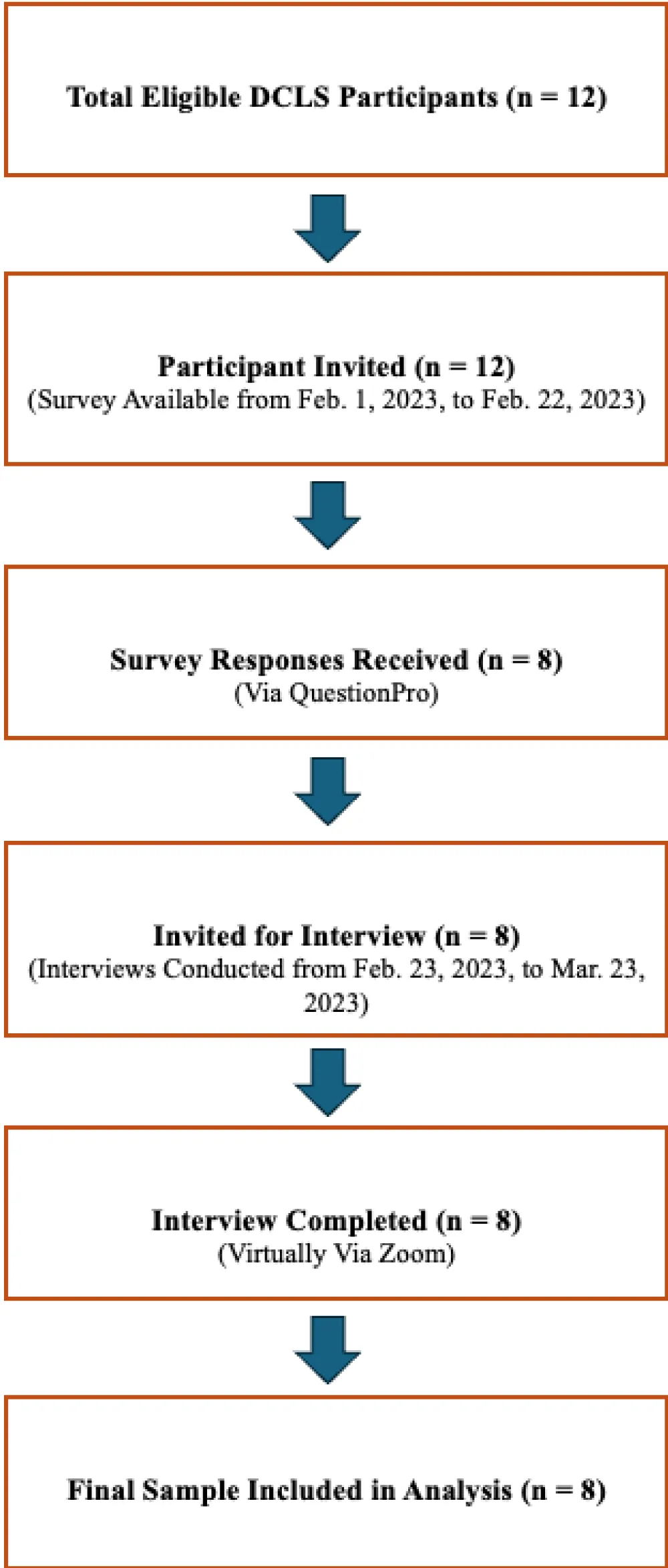
Participant recruitment
Information regarding the study and request to complete the survey was posted on American Society of Clinical Laboratory Sciences (ASCLS) DCLS community forum and directly emailed (via QuestionPro) to all current practicing DCLS. Each invitation included a study overview, purpose, voluntary participation statement, estimated completion time and contact information for the principal investigator.
Data Collection
Survey
The survey was designed using QuestionPro, an online survey platform that allows for secure data collection and storage. The survey instrument was developed by the investigators based on topics derived from prior studies on professional doctorates, laboratory education and clinical teaching competencies. Example survey topics included participant demographic (Age, gender, ethnicity), the DCLS program the participant attended/graduated from, prior experience in education, research and clinical settings, current job title, current level of delivering education and other questions aligned with the primary objective of the project.
The survey instrument contained seven questions including multiple-choice and open-ended questions. QuestionPro platform setting was modified to require responses for all essential items to minimize missing data, only one submission per participant and allow participants to review and change answers before submission. All survey responses were anonymous, except for participants who voluntarily provided an email address to be contacted for a follow-up interview. Lastly, to assess potential non-response bias, we compared early and late survey respondents on key variables (Demographics, occupation, professional experience) and by examining existing characteristics of graduates and practicing DCLS who did not respond relative to those who participated.
Follow-up interviews
Participants who expressed interest in a follow-up interview provided contact information at the end of the survey. Semi-structured interviews were conducted virtually via Zoom. Interviews lasted approximately 30-45 minutes and were audio-recorded with participant consent.
A separate verbal consent process was conducted at the start of each interview, outlining the purpose of the follow-up interview, data collection and recording procedures, confidentiality and voluntary participation. Participants verbally acknowledged their consent before the interview began. The follow-up interview guide was developed based on prior literature on the DCLS curriculum, educator development, professional doctorates and quantitative survey data. Key topic included skills and experiences gained through DCLS training, educational techniques used in teaching roles and perceived strengths and challenges as DCLS prepared educators.
Two trained coders independently coded transcripts using open and axial coding to generate inductive categories. To ensure the validity of the identified categories, peer debriefers were involved in the process, offering insights and offering the consistency of the of the identified themes. Manual coding was followed by verification using OpenAI’s ChatGPT (GPT-5, 2025) to serve as an independent, unbiased reviewer to confirm thematic alignment and ensure consistency across data interpretation. The combination of manual coding and AI-assisted analysis strengthen the reliability of the identified categories, ensuring the accuracy and depth of the qualitative findings.
Data Analysis
Quantitative survey data were stratified and analysed using descriptive statistics in QuestionPro, including frequencies and proportions. Qualitative interview data were analysed through thematic coding, followed by comparison and integration of quantitative and qualitative findings to explain observed patterns and relationships.
Results
Of the 12 eligible participants, 8 (67%) participated in both the survey and the follow-up zoom interviews. Most participants were Caucasian/white (n = 5, 62.5%), female (n = 7, 88%) that held the job title assistant professor of instruction (n = 3, 38%) and/or assistant clinical professor (n = 3, 38%). Regarding professional experience, participants showed a wide variation where individuals with clinical experience ranged from 6 to 21 years, academic experience from 4 to 15 years and research experience from 1 to 8 years. Full study participant demographics are detailed in table 1. Although the survey produced limited quantitative findings, the diversity in participant demographics informed the refinement of follow-up interview, allowing the qualitative phase to probe how the differences in clinical exposure, teaching responsibilities and scholarly activity shaped participant’s perspective on the DCLS degree and its contribution to MLS education. Through open and axial coding of interview transcripts, five central themes were identified. The coding process was performed manually by the investigators and subsequently validated using ChatGPT (Open AI, 2025) as an independent, unbiased confirmation tool to ensure consistency and objectivity in theme categorization.
| Table 1: Demographic characteristics of participants. | ||||||
| Gender | Ethnicity | Clinical Experience (y) | Academic Experience (y) | Research Experience (y) | Primary Job Title | |
| Participant 1 | F | Caucasian/White | 21 | 5 | 8 | Physician/Laboratory Liaison Adjunct associate professor |
| Participant 2 | F | Hispanic | 6 | 7 | 1 | Clinical assistant professor |
| Participant 3 | F | Hispanic | 10 | 8 | 2 | Clinical assistant professor Program director |
| Participant 4 | F | Caucasian/White | 13 | 5 | 3 | Clinical assistant professor |
| Participant 5 | F | Caucasian/White | 6 | 11 | 2 | Assistant professor of instruction Director of clinical education |
| Participant 6 | M | Caucasian/White | 15 | 7 | 2 | Assistant professor of instruction Assistant program director |
| Participant 7 | F | Asian | 9 | 4 | 3 | Assistant professor of instruction |
| Participant 8 | F | Caucasian/White | 19 | 15 | 2 | Associate professor |
Increased scope of practice in academia
Among the major themes identified from the follow-up interviews, participants perceived they could serve multiple roles as advanced practitioners and educators, expanding their scope of practice, particularly in academic settings. The degree allowed them to become more versatile professionals providing access to or meeting the qualifications for a broader range of opportunities compared to individuals without a clinical doctorate. Participants emphasized expanded roles and more diverse responsibilities after acquiring the clinical doctorate. They also reported gaining skills and knowledge that enhanced their ability to function as advanced practitioners capable of analysing complicated cases and providing individualized care in a clinical setting. In academic and research setting, participants felt they can bridge the gap between clinical practice and education by mentoring residents, fellows, graduate and doctorate students, as well as overseeing research projects and serving as subject matter experts. Lastly, some participants discussed the impact of multiple roles within an organization, specifically, the dual role of teaching graduate students while engaging in clinical practice. This unique combination, they noted, enhanced both the quality of education they provided and their continued relevance in patient care settings.
Becoming subject matter experts enhances ability to teach in an academic setting
Participants voiced that the DCLS degree prepared them to be subject matter experts in various areas of their respective practice, more specifically in academia. The in-depth topics covered in the clinical doctorate complimented their teaching and learning specifically, enhancing their teaching efficacy and professional standing within the scholastic environment. They discussed the advantages of credentials and how it can solidify one’s position as a subject matter expert, thereby strengthening their standing among academic peers. Furthermore, this recognition not only validates their expertise but also boosts their confidence and authority within their scope of practice.
Approach learning with emotional intelligence
Participants emphasized the importance of self-awareness and empathy, particularly in understanding other professionals, who may not fully grasp the contributions of a DCLS. They reinforced the notion; individuals need emotional regulation and social awareness for successful interprofessional interactions. Participants stress the significance of open dialogue, which fosters an environment where ideas can be exchanged freely, and every individual is feeling valued.
Experiences during clinicals/residency
Of the themes identified from the follow-up interviews, clinicals/residency was sensed to be the favourite part of the clinical doctorate. Participants commented that by going through their clinicals/residency, they were able to learn various soft skills associated with communication, collaboration, and decision-making. In the beginning, participants perceived the experience to be challenging since it required them be visible and have direct interactions with patients and physicians, but as the clinicals progressed, the interactions opened educational opportunities and helped bridge gaps in understanding. They found that engaging with knowledgeable faculty and clinicians boosted their confidence and improved their ability to contribute meaningfully.
Value added to individuals
Participants expressed that pursuing a clinical doctorate brings personal value, confidence, and benefits, especially for educators who gain a deeper understanding to guide their studies and interactions with healthcare professionals. Additionally, individuals strongly emphasized the importance of individual determination and desire in recognizing the degree’s worth.
A detailed summary of the qualitative analytic process is provided in Appendix C, that includes the table outlining the open and axial coding linked to each identified theme.
Discussion
The primary objective of the study was to identify skills and experiences an individual perceive they acquired through the pursuit and completion of the DCLS degree. Our study identified 12 practicing DCLS professionals who met the inclusion criteria, with 8 completing the survey and follow-up interviews. The majority participants were Caucasian/White, female, and employed in academia, holding positions that involve teaching learners at all levels. There is limited published data on the total number of practicing DCLS in an academic setting as educators. The study by Salazar et. al., reported post-graduation outcomes for 2019-2020 graduates, where, out of the 33 graduates, only 4 (12%) reported they wanted to work in an academic setting post-graduation, a possible reason for our study’s limited participation rate [2].
Common themes identified in our study include diversified professionals, becoming subject matter experts, opportunity to develop emotional intelligence, unique learning experiences offered in clinicals/residency and value added to individuals by going through the program and successfully completing it. Collectively, the perceptions of the study participants regarding the clinical doctorate align with the objectives of the existing DCLS programs in the United States, which is to prepare advanced practitioners in clinical, academic and research settings.).
Furthermore, the National Accrediting Agency for Clinical Laboratory Sciences (NAACLS) along with American Society of Clinical Laboratory Science (ASCLS) defined the roles and responsibilities of the DCLS into five main areas, patient care management, education, research applications, health care policy development and health care services delivery and access. Data from our study revealed a correlation between the themes and perceptions from the participant interviews that match the previously-mentioned DCLS responsibilities [1]. Similarly, there is evidence that supports the findings of our study indicating that individuals that complete a clinical doctorate have similar perceptions related to utilization of the doctorate, value of the doctorate, impact on career and impact on self and support [8-10].
Increased scope of practice in academia
Among the major themes identified from the follow-up interviews, participants perceived they could serve multiple roles as advanced practitioners and educators, expanding their scope of practice, particularly in academic settings. This broadened role aligns with previous literature demonstrating that attainment of terminal degree equips doctoral-level laboratory professionals to assume wider academic and consultative responsibilities, including contributors in interprofessional education or practice and practitioner scholars capable of addressing complex, real-world problems [11,12]. Participants felt they can bridge the gap between clinical practice and education by mentoring residents, fellows, graduate and doctorate students, as well as overseeing research projects and serving as subject matter experts. They discussed the impact of multiple roles within an organization, specifically, the dual role of teaching graduate students while engaging in clinical practice. This unique combination, they noted, enhanced both the quality of education they provided and their continued relevance in patient care settings.
Our study’s findings reflect the intent of the DCLS curriculum to prepare advanced laboratory practitioners capable of meeting growing healthcare demands across diagnostics, treatment monitoring, disease prevention and early detection [1]. For MLS programs, this underscores the need for clinically grounded faculty who can incorporate real-world decision-making into curriculum design. Integrating competencies such as complex case interpretation, interdisciplinary communication, and clinical decision-support reasoning into MLS training may strengthen students’ readiness for graduate study or advanced practice pathways.
There are varying literatures surrounding faculty dual appointments and its value, specifically in nursing, but limited data is available regarding educators within the MLS profession. Reported benefits include enhanced professional development, deeper clinical insight, and improved leadership and communication skills, all of which help faculty maintain clinical relevance [13,14]. Consequently, the study by Hobensack M, et al. [15], showed that a lack of dual appointment limits the exchange of practical insights and research, thereby reducing the profession’s impact on patients, populations and health equity.
Becoming subject matter experts
In academia, terminal degree is a standard requirement for teaching at the college or university level especially if individuals are aiming towards prestigious appointments, educational leadership and to carry out sophisticated research. Beyond credentialing, the terminal degree process develops critical thinking, analytic reasoning and evaluative skills; competencies consistently identified as essential for becoming a subject matter expert [16]. Participants in our study noted that the DCLS degree fostered in-depth learning and a holistic approach to teaching, enabling them to explain complex concepts more effectively and translate scientific knowledge into clinical practice. The in-depth learning and acquisition of soft skills not only enhances teaching but has the potential to improve their scholarly productivity, a trend that was evident in other disciplines such as nursing and medicine [17-19].
Academia is a prestige economy, where individuals are evaluated by their professional reputation and scholarly dissemination both equally important to establishing oneself as a subject matter expert [20]. Our findings reinforce these observations, completion of the DCLS degree provided participants with the knowledge, skills and resources necessary to develop expertise in their field. Embedding DCLS consultations, diagnostic management teams (DMT) simulations and evidence-based decision-making workshops ino MLS curricula may help translate these individuals’ expertise into structure learning experience for students.
Approach learning with emotional intelligence
Emotional Intelligence (EI) has been increasingly recognized in health professions as foundational to effective teamwork, conflict resolution, and patient-centred decision-making [21]. Active listening, patience, and the ability to educate with kindness are some elements discussed regarding how the participants approached learning and interactions with the clinical team. The ability to teach and learn demonstrates adaptability, a key component of EI. Evidence shows that emotionally intelligent individuals have the capacity to improve behaviours, produce outcomes and have an impact on work team performance [22,23]. Ultimately, these insights suggest that by going through the DCLS program, individuals experience interprofessional teamwork, built professional relationships which fostered EI and overall perceived empowerment. MLS curricula, which often prioritize technical skills, may benefit from integrating EI related competencies such as reflective practice, communication workshops, and team-based learning exercises that mirror the types of experiences DCLS graduates reported during their matriculation process.
Interactions in clinicals/residency
Clinical rotations are an integral part of all DCLS curriculum. They are crucial and provide hands-on experience in the areas of application of theoretical concepts, exposure to real-world scenarios, development of clinical skills, patient-centred care, interdisciplinary teamwork and ethical decision-making [24]. A well-structured clinicals/residency program enhances learner success by integrating interprofessional collaboration, education, and mentorship, providing students with insight into the DCLS profession. Current DCLS programs follow two primary residency models: four separate four-week clinical rotations spread across the four-year curriculum or a single, intensive one-year residency near program completion.
Our study included participants from both clinicals/residency formats, and all unanimously regarded their clinical experiences as the most valuable and educational aspect of their clinical doctorate. The majority of DCLS graduates emphasized the critical role of hands-on training and direct interactions with the patient care team-including clinicians, fellows, residents, nurses, PAs, and NPs. These interactions were instrumental in building their confidence, clinical competence, and ability to integrate effectively into interdisciplinary healthcare teams.
Several findings from other health professions mirror our participants’ perceptions regarding clinicals/residency where a good clinical teaching atmosphere promotes optimal learning and meaningful experiences [25-27]. Collectively, these experiences underscore the value of practical, team-based learning in developing the skills necessary for effective collaboration and communication within the healthcare setting which can be achieved through well-structured clinicals/residency.
Value added to individuals
Participants expressed that pursuing a clinical doctorate brings personal value, confidence, and benefits, especially for educators who gain a deeper understanding to guide their studies and interactions with healthcare professionals. Additionally, individuals strongly emphasized the importance of individual determination and desire in recognizing the degree’s worth. We noted that all participants collectively acknowledged the value of the clinical doctorate, but for each participant, the value they perceived varied from personal growth and confidence-building to professional development and community impact. The value of a clinical doctorate as stated before consists of better earning potential, leadership opportunities, career flexibility and most importantly, knowledge; having the ability to change or shape the world is a gift that keeps on giving to the future generations [28].
Limitations
Our study had several limitations including convenience sampling where the generalizability of findings was limited to DCLS graduates and educators. The small sample size of the study may not capture the full spectrum of experiences among the study participants. Additionally, responses may be subject to personal bias, as participants of the study were known on a personal level to study investigators as students and colleagues. Lastly, responses may be subject to social desirability bias, as participants could have provided answers that reflect positively on the DCLS program or their professional roles. The survey and interview instruments were not formally validated, which may affect the reliability of the findings. To mitigate these limitations, data triangulation through survey and interview responses, peer debriefing and the use of AI-assisted theme confirmation (ChatGPT) were employed to enhance analytical rigor and reduce potential bias in interpretation.
Conclusion
Results from our study show that DCLS graduates in an academic setting possess a unique set of academic, research and clinical skills and experiences that make them diverse and valuable educators. As they progress through and successfully complete the DCLS program, these individuals perceive they acquire skills and experiences that allow them to be diverse experts who can effectively train and mentor future MLS students while contributing to program innovation, curriculum development and scholarly advancement within academic institutions.
Acknowledgment
The authors would like to thank all the DCLS educators that participated in the study for their continued support and dedication.
Institutional Review Board Statement
This study was reviewed by our institutional IRB and considered it to be a quality assessment/quality improvement study that did not require IRB approval or oversight (IRB # 23-0021).
Conflict of Interest Statements
All authors declare no conflicts of interest.
Declaration of Funding
No funding was received.
References
- Nadder TS. The Development of the Doctorate in Clinical Laboratory Science in the U.S. EJIFCC. 2013 Apr 12;24(1):37-42. PMID: 27683437; PMCID: PMC4975353.
- Salazar JH, Zahner CJ, Freeman VS, Laposata M. The Doctorate in Clinical Laboratory Sciences: A New Curriculum to Enhance the Connection of the Laboratory to Health Care Providers. Acad Pathol. 2021 Aug 9;8:23742895211034121. doi: 10.1177/23742895211034121. PMID: 34414258; PMCID: PMC8369965.
- Plebani M. Errors in clinical laboratories or errors in laboratory medicine? Clin Chem Lab Med. 2006;44(6):750-9. doi: 10.1515/CCLM.2006.123. PMID: 16729864.
- Chapman HM, McSherry R, Bettany-Saltikov J, Mohan M, Spencer D. Protocol: Assessing the outcomes and impact of professional doctorate programmes in health and social care on the individual, their profession, their employing organisation and wider society: A comprehensive systematic review. Campbell Syst Rev. 2024 Oct 15;20(4):e1446. doi: 10.1002/cl2.1446. PMID: 39410955; PMCID: PMC11473971.
- Denise Hawkes SY. A systematic review of research on professional doctorates. London review of education.2018;16(1). doi: 10.18546/LRE.16.1.03.
- Task force on the professional doctorate. 2010.
- Kulo V, Cestone C. A continuing professional development imperative? Examining trends and characteristics of health professions education doctoral programs. BMC Med Educ. 2022 Dec 9;22(1):853. doi: 10.1186/s12909-022-03937-z. PMID: 36482331; PMCID: PMC9733163.
- Watson J, Robertson S, Ryan T, Wood E, Cooke J, Hampshaw S, Roddam H. Understanding the value of a doctorate for allied health professionals in practice in the UK: a survey. BMC Health Serv Res. 2024 May 2;24(1):566. doi: 10.1186/s12913-024-11035-7. PMID: 38698416; PMCID: PMC11064402.
- Kim MJ, McKenna H, Davidson P, Leino-Kilpi H, Baumann A, Klopper H, Al-Gasseer N, Kunaviktikul W, Sharma SK, Ventura C, Lee T. Doctoral education, advanced practice and research: An analysis by nurse leaders from countries within the six WHO regions. Int J Nurs Stud Adv. 2022 Aug 20;4:100094. doi: 10.1016/j.ijnsa.2022.100094. PMID: 38745635; PMCID: PMC11080457.
- Ellis L. Academics' perceptions of the professional or clinical doctorate: findings of a national survey. J Clin Nurs. 2007 Dec;16(12):2272-9. doi: 10.1111/j.1365-2702.2007.02120.x. PMID: 18036117.
- Zenzano T, Allan JD, Bigley MB, Bushardt RL, Garr DR, Johnson K, Lang W, Maeshiro R, Meyer SM, Shannon SC, Spolsky VW, Stanley JM. The roles of healthcare professionals in implementing clinical prevention and population health. Am J Prev Med. 2011 Feb;40(2):261-7. doi: 10.1016/j.amepre.2010.10.023. PMID: 21238876.
- Panta S, Thapaliya S. The future of doctoral education: The role of professional doctorates in bridging academia and industry. Journal of Integrative Education Studies 2025.
- Hodgman EC. Education-practice partnerships: faculty practice as faculty development. J Prof Nurs. 1991 Sep-Oct;7(5):310-8. doi: 10.1016/8755-7223(91)90118-5. PMID: 1757707.
- Mateo M, Fahje CJ. The nurse educator role in the clinical setting. J Nurses Staff Dev. 1998 Jul-Aug;14(4):169-75. doi: 10.1097/00124645-199807000-00001. PMID: 9807332.
- Hobensack M, Turi E, Sochalski J. Benefits of Dual Appointments in Academic Research and Bedside Nursing. Am J Nurs. 2024 Nov 1;124(11):8. doi: 10.1097/01.NAJ.0001081660.66123.e6. Epub 2024 Oct 24. PMID: 39446496.
- A terminal degree that doesn't need an ending. 2017 .
- Stack S. The effect of field of terminal degree on scholarly productivity: an analysis of criminal justice faculty. Journal of Criminal Justice Education. 2001;12(1):19-34. doi: 10.1080/10511250100085031.
- Hollman A, Bice MR, Ball J, Ford B, Shafer AB, Sonja Bickford S. Comparison of scholarly productivity among current professors who obtained terminal degrees. American Journal of Distance Education. 2018;32(4):267-282. doi: 10.1080/08923647.2018.1511514.
- Kane WJ, Berry PS, Denton AH, Schroen AT. Attainment of an Additional Graduate Degree Is Associated With Sustained Scholarly Activity Beyond Surgical Residency. J Surg Educ. 2021 Jul-Aug;78(4):1189-1196. doi: 10.1016/j.jsurg.2020.12.004. Epub 2020 Dec 19. PMID: 33349567.
- Ross-Hellauer T, Tennant JP, Banelytė V, Gorogh E, Luzi D, Kraker P, Pisacane L, Ruggieri R, Sifacaki E, Vignoli M. Ten simple rules for innovative dissemination of research. PLoS Comput Biol. 2020 Apr 16;16(4):e1007704. doi: 10.1371/journal.pcbi.1007704. PMID: 32298255; PMCID: PMC7161944.
- Arora S, Ashrafian H, Davis R, Athanasiou T, Darzi A, Sevdalis N. Emotional intelligence in medicine: a systematic review through the context of the ACGME competencies. Med Educ. 2010 Aug;44(8):749-64. doi: 10.1111/j.1365-2923.2010.03709.x. PMID: 20633215.
- Coronado-Maldonado I, Benítez-Márquez MD. Emotional intelligence, leadership, and work teams: A hybrid literature review. Heliyon. 2023 Sep 20;9(10):e20356. doi: 10.1016/j.heliyon.2023.e20356. PMID: 37790975; PMCID: PMC10543214.
- Karimi L, Leggat SG, Bartram T, Afshari L, Sarkeshik S, Verulava T. Emotional intelligence: predictor of employees' wellbeing, quality of patient care, and psychological empowerment. BMC Psychol. 2021 Jun 4;9(1):93. doi: 10.1186/s40359-021-00593-8. PMID: 34088348; PMCID: PMC8176682.
- The crucial role of clinical rotations and hands-on experience in shaping future healthcare professionals. Medicine AUSO. 2024.
- Zhang J, Shields L, Ma B, Yin Y, Wang J, Zhang R, Hui X. The clinical learning environment, supervision and future intention to work as a nurse in nursing students: a cross-sectional and descriptive study. BMC Med Educ. 2022 Jul 15;22(1):548. doi: 10.1186/s12909-022-03609-y. PMID: 35841091; PMCID: PMC9284732.
- Miller J. Effective clinical learning for nursing students. American Nurse Journal. 2024;19(4).
- Yaas MH, Hamarash MQ, Almushhadany OI, Ibrahim RH. Assessing the effectiveness of clinical rotations in preparing undergraduate nursing students for practice: Mixed study. The Malaysian Journal of Nursing (MJN). 2023;15(2):87-99. doi: 10.31674/mjn.2023.v15i02.010.
- What is a terminal degree and how can it benefit your future.2024.




Content Alerts
SignUp to our
Content alerts.
 This work is licensed under a Creative Commons Attribution 4.0 International License.
