
2025 December 30;6(12):2034-2044. doi: 10.37871/jbres2248.
-
Subject area(s):

 |
|
 |
|
 |
|

 Research Article
From Lab to Life: Strategic Health Communication for Public Engagement with Botanical Innovations
Barwant MM1, Ali UM2*, Singh B3, Fatima N4 and Kumari R4
2Department of Plant Sciences, Faculty of Agriculture, Wollega University, Shambu, Ethiopia
3Department of Botany, K. S. Saket PG College Ayodhya, Dr. Ram Manohar Lohia Avadh University Ayodhya (UP) India
4University Department of Botany, Babasaheb Bhimrao Ambedkar Bihar University, Muzaffarpur, Bihar-842001, India
- Health communication
- Public understanding of science
- Botanical innovations
- Plant awareness disparity
- Ethno-botany
Abstract
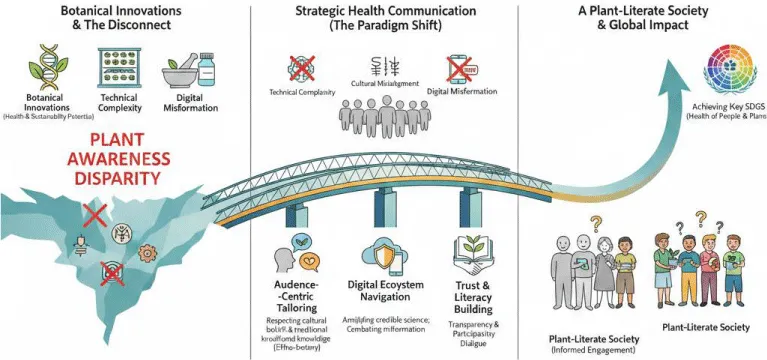
Botanical innovations hold unprecedented potential to address pressing global challenges in human health and environmental sustainability. However, a significant disconnect persists between scientific advancement and public understanding, often termed 'plant awareness disparity,' limiting the societal impact of these innovations. This comprehensive review examines the critical role of strategic health communication in bridging this gap. It synthesizes interdisciplinary literature to provide a roadmap for enhancing public engagement, trust, and informed decision-making regarding plant science. The review is structured to first establish the historical and scientific context of plant-based solutions, then analyze communication theories and barriers, and finally propose evidence-based strategies and a future agenda. Our analysis reveals that effective communication must move beyond simply transmitting information. It requires: (1) audience-centric message tailoring that respects cultural beliefs and traditional knowledge; (2) savvy navigation of the digital ecosystem to amplify credible science and combat misinformation; and (3) a foundational commitment to building scientific literacy and public trust through transparency and participatory dialogue. We identify major barriers, including technical complexity, cultural misalignment, and the pervasive spread of digital misinformation. The successful integration of botanical innovations into society is contingent upon a paradigm shift in science communication. By adopting a strategic, multi-dimensional approach that is inclusive, digitally agile, and trust-building, the plant science community can foster a plant-literate society. This is a prerequisite for unlocking the full potential of plant science to contribute to the health of both people and the planet, thereby achieving key Sustainable Development Goals (SDGs).
Introduction
Plants underpin the health of our planet and the well-being of its people. They are the bedrock of global food security, a primary source of life-saving medicines, and our most powerful allies in mitigating climate change through carbon sequestration and ecosystem stabilization [1,2]. Yet, at a time when botanical innovations from gene-edited crops and plant-based vaccines to phytoremediation strategies are most critical for achieving the Sustainable Development Goals (SDGs), a profound disconnect persists between their potential and public understanding [3,4]. This gap not only limits the societal impact of plant science but also hinders evidence-based policy and personal health decisions.
This disconnect is symptomatic of a deeper issue known as "plant awareness disparity" (formerly plant blindness), a pervasive tendency to overlook the fundamental importance of plants in the biosphere [5]. This societal blind spot is exacerbated by an increasingly complex information landscape. While digital media offers unprecedented opportunities for public engagement, it also serves as a fertile ground for misinformation, particularly concerning plant-based health products and agricultural technologies [6,7]. The COVID-19 pandemic starkly illustrated this challenge, where the rapid spread of unsubstantiated claims about botanical remedies complicated public health efforts [8]. Consequently, the scientific validity of a botanical innovation is no longer sufficient to guarantee its adoption; its societal uptake is now critically dependent on effective, strategic, and trustworthy communication.
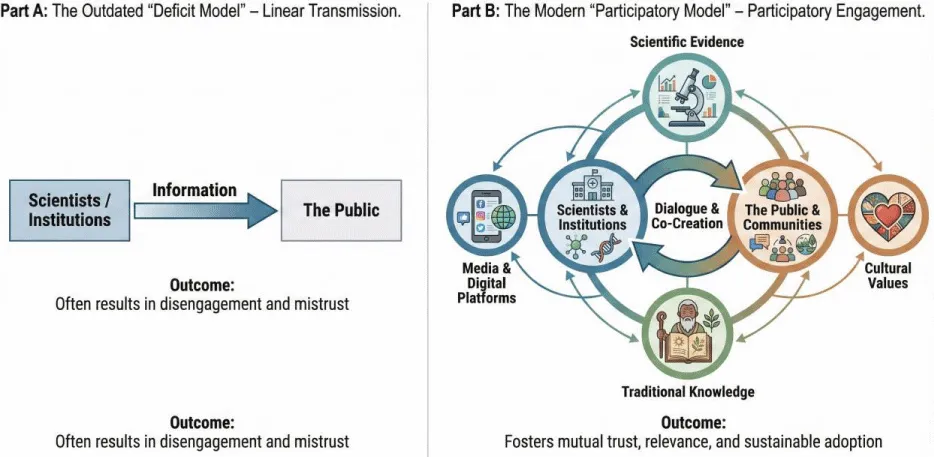
Health communication, the interdisciplinary science of disseminating health information to influence personal and community choices, provides a vital framework for bridging this gap [9]. However, communicating plant science is not merely a matter of translating technical jargon into plain language. It requires a nuanced, culturally sensitive approach that acknowledges the deep-seated cultural beliefs, traditional knowledge systems, and personal values that shape public perception of plant-based solutions [10,11]. Success hinges on moving beyond a unidirectional "deficit model" of communication towards participatory dialogues that build public trust and foster botanical literacy [12].
This review, therefore, examines the critical intersection of plant science and health communication in the era of botanical innovation. We synthesize current literature to address a central question: How can strategic health communication be leveraged to enhance public understanding, trust, and engagement with plant science, thereby maximizing its societal impact for human and planetary health? To this end, we will:
- Trace the evolution of plant-based medicine to contextualize modern innovations within a rich historical and cultural tapestry.
- Analyze key health communication theories and identify barriers to effectively conveying plant science.
- Explore strategies for tailoring messages to diverse audiences and navigating the digital media landscape.
- Investigate the complex factors shaping public perception and the urgent challenge of combating misinformation.
- Propose a forward-looking agenda for interdisciplinary collaboration to foster a plant-literate society capable of addressing the pressing global challenges of the 21st century. By integrating perspectives from botany, communication science, public health, and sociology, this review aims to provide a roadmap for transforming plant science communication from an academic exercise into a catalyst for informed societal action.
The Symbiosis of Traditional Knowledge and Modern Innovation in Plant-Based Medicine
The relationship between humans and medicinal plants is a foundational thread in the fabric of human history, reflecting a deep, co-evolutionary bond that spans cultures and millennia. This enduring connection represents a vast repository of socio-ecological knowledge, yet its full potential for addressing contemporary health challenges remains untapped without effective communication and scientific integration.
Historical foundations and enduring ethnobotanical knowledge
The use of plants for healing is a universal human heritage. Archaeobotanical evidence, such as the presence of medicinal plants like Achillea and Ephedra in Neanderthal burial sites dating back 60,000 years, suggests a deep-time relationship with the botanical world [13]. This knowledge was systematically developed and documented by ancient civilizations, from the Sumerian clay tablets (c. 3000 BCE) to the Egyptian Ebers Papyrus (c. 1550 BCE) and the Chinese Shennong Bencao Jing (c. 1st century CE) [14]. Systems like Ayurveda, Traditional Chinese Medicine (TCM), and Unani are not merely historical footnotes; they are living traditions that have preserved intricate pharmacopeias, representing millennia of observational science and cultural adaptation [15].
This traditional knowledge is a cornerstone of biocultural diversity, but its integration into mainstream global health has been hampered by a historical disconnect from Western scientific paradigms. Respectfully bridging this gap is not only a matter of scientific validation but also of cultural justice and a pragmatic strategy for biodiversity conservation and sustainable health solutions [16]. The success stories of plant-derived medicines are, at their core, successes of ethnobotanical leads (Table 1).
| Table 1: Exemplary plant-derived medicines and their societal impact. | ||||
| Compound | Source Plant | Traditional use / discovery lead | Modern Therapeutic Application | Key Societal Impact |
| Artemisinin | Artemisia annua | Used in TCM for fevers [17] | First-line treatment for malaria | Revolutionized malaria treatment, saving millions of lives globally. |
| Metformin | Galega officinalis | Used in medieval Europe for diabetes symptoms | First-line oral therapy for type 2 diabetes | Most widely prescribed drug for a global chronic disease epidemic. |
| Vincristine | Catharanthus roseus | Investigated for folk use against diabetes [18] | Treatment for leukemia and lymphoma | Dramatically improved childhood leukemia survival rates. |
| Aspirin (from Salicin) | Salix alba (Willow) | Used for pain and fever since antiquity | Antiplatelet, analgesic, anti-inflammatory | Ubiquitous, low-cost preventative and treatment medicine. |
| Paclitaxel (Taxol) | Taxus brevifolia | Investigated based on natural product screening [19] | Chemotherapy for various cancers | Critical drug in oncology; highlights value of conserving wild species. |
From Traditional Use to Evidence-Based Phytotherapy
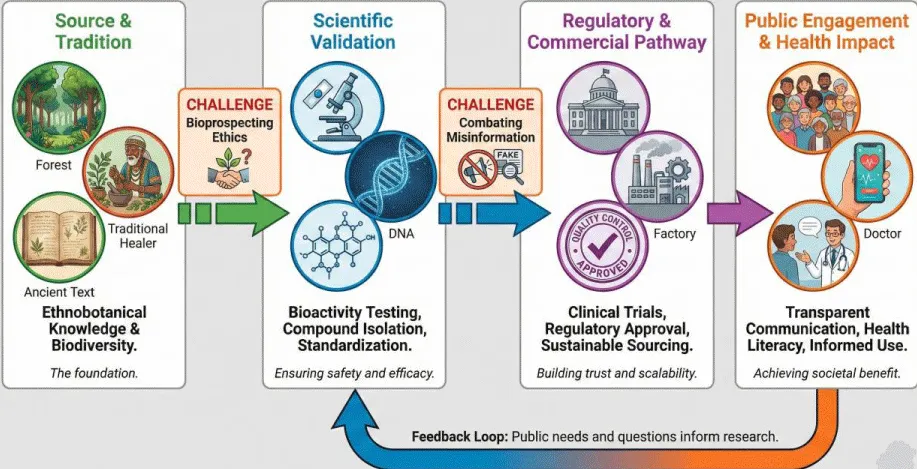
The 19th and 20th centuries marked a pivotal shift with the isolation of pure active compounds, such as morphine from opium poppy and quinine from cinchona bark. This demonstrated that plant-derived molecules could be standardized and studied with scientific rigor. Today, technological advancements have accelerated this process. High-throughput screening, metabolomics, and molecular docking allow researchers to rapidly identify and characterize bioactive compounds from complex plant extracts, validating traditional claims and discovering novel mechanisms of action [20,21].
The impact is profound: over 25% of modern prescription drugs are derived directly from plants or are synthetic analogues inspired by plant compounds [19]. Beyond single-molecule drugs, the concept of Phytotherapy using standardized plant extracts is gaining traction for managing chronic conditions like inflammation, metabolic syndrome, and stress, often with a more holistic approach [22]. Furthermore, innovative applications such as plant-based vaccines and nutraceuticals offer promising, cost-effective strategies for preventive healthcare, particularly in resource-limited settings [23].
Ensuring safety, efficacy, and trust through standardization
The growing market for botanical products brings a critical challenge: ensuring they are safe, effective, and consistent. This is where modern science plays a crucial role in building public trust.
Green extraction technologies: Methods like supercritical fluid and ultrasound-assisted extraction improve the yield and purity of phytochemicals while reducing environmental impact, aligning with sustainable development goals [24,25].
Authentication and quality control: DNA barcoding and chemometric fingerprinting provide powerful tools to authenticate plant species and guarantee the presence of key bioactive compounds, combating adulteration and mislabeling in the global supply chain [16,26]. Regulatory bodies like the WHO, EMA, and USFDA have developed specific guidelines for botanical drugs, emphasizing the need for rigorous quality control [27]. This regulatory evolution is not just a scientific necessity but a communication opportunity. Clear labeling and public education about what standardization means can empower consumers to distinguish between evidence-based products and unverified supplements, thereby fostering trust and ensuring safer use (Figure 1).
Bridging the Gap: Health Communication as a Catalyst for Public Engagement with Plant Science
For botanical innovations to achieve their full societal potential, they must be understood, trusted, and adopted by the public. Health communication provides the critical framework for this process. It is the interdisciplinary science of crafting and delivering information to influence and empower personal and community health decisions [9]. In the context of plant science, this moves beyond simply transmitting facts about a new crop or medicine; it involves a strategic process of engagement that builds trust, navigates complex cultural landscapes, and equips people to make informed choices for their health and the environment.
From theory to practice: strategic frameworks for plant science messaging
Effective communication is not guesswork; it is guided by established theoretical models that predict and explain how people process information and make decisions. Relying on a simplistic "deficit model" assuming public resistance stems only from a lack of information has proven ineffective [12]. Instead, successful strategies use more nuanced frameworks that consider psychological and social influences (Figure 2, table 2).
| Table 2: Key health communication models and their application to plant science. | ||
| Theoretical Model | Core Concept | Application to Plant Science Communication |
| Theory of planned behavior [28] | Behavior is driven by Attitudes, Subjective Norms (social pressure), and Perceived Behavioral Control. | To promote a new biofortified crop: highlight its taste and nutrition (positive attitude), use testimonials from respected community leaders (subjective norms), and ensure seeds are affordable and accessible (behavioral control). |
| Health belief model [29] | People take action if they perceive a serious threat and believe the recommended action is beneficial and easy to do. | For herbal safety: communicate risks of unregulated supplements (perceived threat) while clearly explaining the benefits and safety of standardized, evidence-based products (benefits/barriers). |
| Social cognitive theory [30]. | Learning occurs through observation and is influenced by a belief in one's own ability (self-efficacy) | Use documentaries or social media stories showing farmers successfully using sustainable practices, or individuals improving health with plant-based diets, to build observational learning and self-efficacy. |
| Diffusion of innovations [31]. | New ideas spread through social systems, adopted by different groups at different rates (Innovators, Early Adopters, Early Majority, Late Majority, Laggards) | Target "Early Adopters" (e.g., health influencers, progressive farmers) with in-depth technical data. For the "Early Majority," focus on practical benefits, peer testimonials, and simplicity. |
Navigating the barriers: why communicating plant science is uniquely challenging
Despite these robust frameworks, communicating plant science faces distinct and significant hurdles that must be strategically overcome.
The complexity barrier: The science behind phytochemical mechanisms, genomic editing, or clinical trial data is inherently complex [32]. Without careful translation, this complexity can alienate the public or be oversimplified into misinformation.
The cultural and credibility barrier: Plant-based health sits at a delicate intersection. On one hand, there is deep-seated traditional knowledge; on the other, modern evidence-based science. A credibility gap can emerge if scientific messages dismiss traditional practices or if traditional claims are made without evidence, leading to public confusion and mistrust [33].
The digital misinformation barrier: The digital ecosystem is a double-edged sword. While it offers powerful tools for outreach, it also allows pseudoscientific claims about "miracle cures" or fear-based narratives about GMOs to spread rapidly and unchecked, often outpacing and drowning out credible scientific voices [34,7].
The institutional capacity barrier: Many plant scientists are not trained in public communication or media engagement, limiting their ability to effectively share their work and counter misinformation directly [35].
A pathway forward: principles for effective communication
To effectively overcome communication barriers, a fundamental shift from one-way dissemination to genuine dialogue is essential. This requires embracing participatory models that involve communities, traditional knowledge holders, and farmers from the outset, fostering mutual respect and ensuring cultural relevance. Concurrently, prioritizing message tailoring is critical, as there is no universal message; content must be customized for specific audiences from policymakers to rural communities addressing their distinct values, concerns, and media habits to ensure resonance and impact [36].
Strengthening this ecosystem demands strategic investment in both people and processes. Equipping plant scientists with dedicated communication training empowers them to become credible public faces for their work and engage effectively with non-specialist audiences. Furthermore, a proactive approach to countering misinformation is vital, which involves developing rapid-response systems to correct false claims with clear, accurate information and collaborating with trusted community influencers and professionals to amplify credible messages and build lasting trust.
Crafting Impact: Strategies for Communicating Botanical Innovations
For botanical innovations to transition from the laboratory to society, a strategic communication plan is as crucial as the scientific research itself. This involves moving beyond a one-size-fits-all approach to a nuanced, multi-pronged strategy that is audience-specific, digitally savvy, and fundamentally trust-building (Table 3).
| Table 3: Tailoring communication strategies for different stakeholder groups. | |||
| Stakeholder Group | Primary Concerns & Values | Effective Messaging Framing | Optimal Communication Channels |
| Policymakers & government | Economic impact, public health outcomes, food security, regulatory compliance, electoral appeal. | Frame innovations in terms of cost-benefit analysis, job creation, achievement of SDGs, and national health security. | Policy briefs, white papers, high-level seminars, direct consultations with ministry officials. |
| Healthcare professionals | Patient safety, clinical efficacy, drug interactions, evidence-based practice. | Emphasize clinical trial data, mechanism of action, dosage protocols, and differentiation from unregulated supplements. | Continuing medical education (CME) sessions, peer-reviewed journals, professional association newsletters. |
| Local & indigenous communities | Cultural integrity, land rights, respect for traditional knowledge, immediate livelihood impact, accessibility. | Use participatory approaches; frame innovations as building upon or complementing traditional knowledge. Highlight local benefits and involve community leaders in dialogue. | Community meetings, storytelling, local radio, workshops led by trusted local figures. |
| General public (further segmented) | Personal/family health, cost, convenience, "naturalness," ethical production. | Use relatable narratives; focus on personal benefits (e.g., "boost immunity," "support local farming"). Be transparent about risks and benefits. | Social media, documentaries, mainstream media, school programs, interactive museum exhibits. |
| Farmers & agricultural producers | Crop yield, resilience to pests/drought, cost-effectiveness, soil health, market access. | Provide clear, practical demonstrations of benefits. Use success stories from other farmers. Focus on profitability and risk reduction. | On-farm demonstration plots, agricultural extension services, farmer field schools, dedicated apps. |
The principle of audience-centric communication
The first rule of effective communication is to know your audience. A message that resonates with a policy maker in an urban center may be irrelevant or even counterproductive for a subsistence farmer or a community of traditional healers. Effective strategies segment audiences not just by demographics, but by their values, prior knowledge, trusted information sources, and potential concerns [37].
Navigating the digital ecosystem: amplifiers and adversaries
Digital media is the modern agora for public discourse, offering powerful tools but also posing significant threats. Platforms like Instagram, YouTube, and WhatsApp can democratize knowledge, using visuals and stories to make complex science accessible [38]. They enable two-way dialogue, allowing scientists to receive feedback and address concerns in real-time.
However, this ecosystem is also a fertile ground for misinformation. The same algorithms that promote educational content can also rapidly spread sensationalized claims about "miracle cures" or unfounded fears about technologies like gene editing. The COVID-19 infodemic, with its rampant misinformation about botanical preventatives, is a stark example [6].
To navigate this landscape successfully, communicators must adopt a proactive rather than reactive approach by creating engaging, accurate, and visually appealing content that pre-emptively fills information voids. This strategy should be bolstered by collaborating with trusted intermediaries, such as healthcare influencers, science communicators, and local community leaders, who possess established credibility with target audiences. Furthermore, promoting digital media literacy is essential, which involves supporting educational initiatives that equip the public with the skills to identify credible sources and spot misinformation.
Building the foundation: scientific literacy and public trust
Ultimately, the long-term acceptance of botanical innovations rests on a foundation of public scientific literacy and trust. Scientific literacy in this context is not about memorizing facts, but about fostering a critical understanding of the scientific process how evidence is gathered, reviewed, and validated [39]. A literate public is better equipped to differentiate between a rigorously tested phytomedicine and a pseudoscientific health fad [40].
Trust is the currency of effective communication, built through a foundation of transparency, competence, integrity, and reciprocity. This requires openly sharing both the potential and limitations of new innovations, while also demonstrating a proven track record of reliable and beneficial science. Furthermore, trust is fostered by showing a genuine concern for public welfare and adhering to ethical principles, and by engaging in a reciprocal dialogue that acknowledges and respects traditional knowledge systems rather than delivering a one-way monologue [41,42].
Shaping the Future: Navigating Public Perception and Building a Plant-Centric Society
The ultimate success of botanical innovations hinges on a complex interplay of public perception, cultural context, and the strategic foresight of the scientific community.
The mosaic of public perception: culture, trust, and misinformation
Public perception is not a monolith but a mosaic, intricately patterned by cultural heritage, personal experience, and the digital information environment. In many regions across Asia, Africa, and Latin America, plant-based medicine is not an alternative but a primary healthcare reality, deeply embedded in cultural identity and intergenerational knowledge [43]. Here, trust is placed in tradition, but this does not automatically transfer to scientifically formulated phytopharmaceuticals, which can be perceived as disconnected or exploitative of cultural heritage [10].
Conversely, in Western contexts, the "natural" appeal of plant-based products often drives a wellness trend, but this can lead to an uncritical "natural = safe" fallacy and vulnerability to pseudoscientific marketing [44]. This duality where plants are seen as both cultural touchstones and lifestyle commodities creates a communication challenge that demands nuanced, culturally intelligent strategies, as previously outlined in table 3 of Section 4.
Compounding this complexity is the pervasive threat of digital misinformation. The rapid spread of unsubstantiated claims about "miracle cures" or fear-based narratives about technologies like gene editing creates an "infodemic" that erodes public trust and poses real health risks [45]. To ensure a balanced public understanding, it is crucial to proactively counter several common misconceptions, including the belief that "natural" inherently means "safe," which ignores critical factors of dosage, toxicity, and potential drug interactions. Another misconception is the assumption that a history of traditional use alone guarantees efficacy for all indicated conditions without further validation. Furthermore, a widespread lack of understanding about the critical importance of standardization and rigorous regulatory oversight for botanical products must also be addressed to promote informed consumer choices.
A Strategic roadmap for future engagement and policy impact
To navigate this complex perceptual landscape and secure the role of plant science in achieving the SDGs, a proactive and multi-level strategy is essential. The following roadmap outlines key priorities for research, communication, and policy (Table 4).
Integrating the pillars: towards a holistic vision
The pillars outlined in the roadmap are not isolated; they are interconnected and mutually reinforcing. For instance, Technology-Enabled Engagement (Pillar 3) can deliver the content developed through Interdisciplinary Collaboration (Pillar 2), while Infodemic Resilience (Pillar 5) protects the public trust built by Foundational Education (Pillar 1).
A central, cross-cutting imperative is the ethical and respectful integration of traditional knowledge. This is not merely about citing sources but about fostering equitable partnerships where Indigenous and local communities are recognized as co-creators of knowledge and beneficiaries of ensuing innovations (Figure 3). This approach is fundamental to justice and a powerful strategy for building trust and ensuring the cultural relevance of botanical innovations.
Conclusion
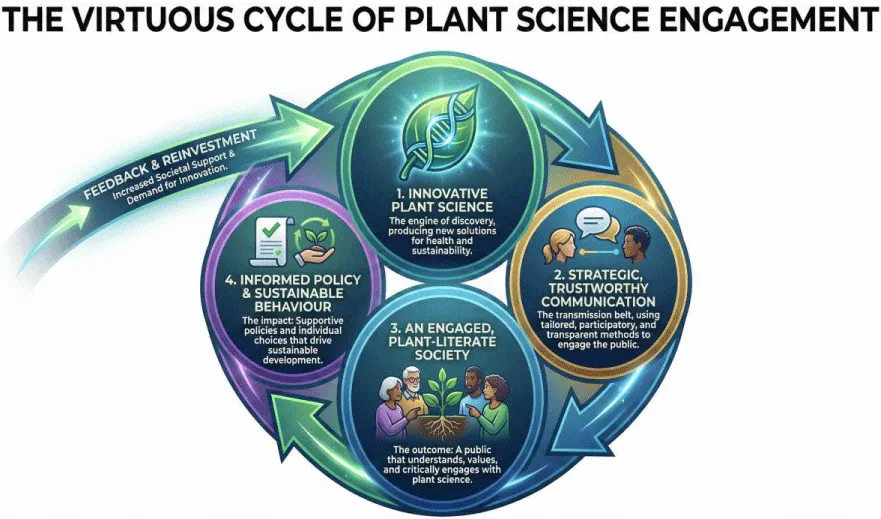
The journey of a botanical innovation is incomplete at the laboratory bench. Its true measure of success is its integration into the fabric of society, where it can improve human health, foster sustainable practices, and contribute to ecological resilience. This review has argued that this crucial transition from "lab to life" is fundamentally dependent on strategic and effective health communication. We have demonstrated that the challenges including deep-seated plant awareness disparity, complex cultural perceptions, and a volatile digital information landscape are significant but not insurmountable.
The path forward requires a concerted, interdisciplinary effort. It demands that we move beyond outdated, one-way communication models and embrace dynamic, participatory engagement. This involves tailoring messages to resonate with the specific values and concerns of diverse audiences, from policymakers and healthcare professionals to local communities and farmers. It necessitates a proactive and strategic presence in digital spaces, leveraging technology for education while building societal resilience to misinformation. Most importantly, it is built on the bedrock of trust, which is earned through transparency, ethical collaboration with traditional knowledge holders, and a sustained commitment to public education.
The roadmap we have presented spanning foundational education, interdisciplinary collaboration, technology-enabled engagement, participatory policy, and infodemic resilience provides a actionable framework for creating a virtuous cycle. In this cycle, innovative plant science, when communicated effectively, leads to an engaged and plant-literate society. This, in turn, generates informed public support and sound policies that enable further innovation and sustainable practices. By championing this holistic approach, we can transform the relationship between people and plants, ensuring that botanical science fulfills its transformative potential as a cornerstone of a healthier, more sustainable, and equitable future for all.
Funding
This review did not receive any specific grant from funding agencies in the public, commercial, or not-for-profit sectors.
Data Availability
All the data is provided within the manuscript.
Declarations
Ethical approval
Not applicable. This article is a systematic review of previously published studies and does not involve any new studies with human participants or animals performed by any of the authors.
Consent to participate
Not applicable. This study is a review of existing literature and did not involve direct participation of human subjects.
Consent to publish
Not applicable. This manuscript does not contain any individual person’s data in any form.
Competing interests
The authors declare no competing interests.
References
- Archer M, de la Cruz LP, King R. Rethinking plant communication in the Anthropocene. Journal of Environmental Communication. 2023;17(1):45-59. doi: 10.1080/17524032.2023.2164532.
- Vazquez R, Rodríguez JMR, Morales M. Plants and the circular bioeconomy: Communication challenges in public engagement. Sustainability. 2022;14(9):5496. doi: 10.3390/su14095496.
- Kramer AT, Fant JB, Havens K. Addressing plant awareness disparity in science education. Bioscience. 2023;73(2):110-121. doi: 10.1093/biosci/biac118.
- Rai M, Kon K, Duran, N. Current trends in plant-based drug discovery. Biotechnology Advances, 2023;61:108088. doi: 10.1016/j.biotechadv.2023.108088.
- Parsley KM. Plant awareness disparity: A framework for understanding plant blindness. Plants, People, Planet. 2020;2(6):598-601. doi: 10.1002/ppp3.10153.
- González PD, Arriagada A, Riveros M. COVID-19, infodemics and plant-based misinformation on social media. Media, Culture & Society. 2022;44(8):1497-1515. doi: 10.1177/01634437221082943.
- Wang Y. Characterizing the dissemination of misinformation about herbal medicine on Twitter. Plos One. 2022;17(7):e0268980. doi: 10.1371/journal.pone.0268980.
- Shree P, Mishra P, Tripathi YB. Plant-based compounds in COVID-19 management: A communication challenge. Phytotherapy Research. 2022;36(1):393-406. doi: 10.1002/ptr.7301.
- Schiavo R. Health communication: From theory to practice. 2nd ed. Jossey-Bass; 2014.
- Balick MJ, Cox PA. Plants, people, and culture: The science of ethnobotany. Garland Science. 2nd ed. New York: Garland Science; 2020.
- Reid SJ, Cunningham M. Storytelling and narrative in plant science communication. Plants, People, Planet. 2021;3(5):429-437. doi: 10.1002/ppp3.10214.
- Stilgoe J, Lock SJ, Wilsdon J. Why should we promote public engagement with science? Public Underst Sci. 2014 Jan;23(1):4-15. doi: 10.1177/0963662513518154. PMID: 24434705; PMCID: PMC5753839.
- Hardy K, Stephen B, Michael H. Neanderthal self-medication in context. Naturwissenschaften. 2012;99(8):617-626. doi: 10.1007/s00114-012-0942-0.
- Zhou S, Shennong’s Herbal Classic and the development of Chinese herbal medicine. Frontiers in Pharmacology. 2020;11:616035. doi: 10.3389/fphar.2020.616035.
- Ekor M. The growing use of herbal medicines: issues relating to adverse reactions and challenges in monitoring safety. Front Pharmacol. 2014 Jan 10;4:177. doi: 10.3389/fphar.2013.00177. PMID: 24454289; PMCID: PMC3887317.
- Heinrich M. Ethnopharmacology and traditional knowledge: Issues, challenges, and importance in the global context. Journal of Ethnopharmacology. 2022;289:115018. doi: 10.1016/j.jep.2021.115018.
- Tu Y. Artemisinin-A Gift from Traditional Chinese Medicine to the World (Nobel Lecture). Angew Chem Int Ed Engl. 2016 Aug 22;55(35):10210-26. doi: 10.1002/anie.201601967. Epub 2016 Aug 4. PMID: 27488942.
- Noble RL. The discovery of the vinca alkaloids--chemotherapeutic agents against cancer. Biochem Cell Biol. 1990 Dec;68(12):1344-51. PMID: 2085431.
- Newman DJ, Cragg GM. Natural Products as Sources of New Drugs over the Nearly Four Decades from 01/1981 to 09/2019. J Nat Prod. 2020 Mar 27;83(3):770-803. doi: 10.1021/acs.jnatprod.9b01285. Epub 2020 Mar 12. PMID: 32162523.
- Atanasov AG, Zotchev SB, Dirsch VM; International Natural Product Sciences Taskforce; Supuran CT. Natural products in drug discovery: advances and opportunities. Nat Rev Drug Discov. 2021 Mar;20(3):200-216. doi: 10.1038/s41573-020-00114-z. Epub 2021 Jan 28. PMID: 33510482; PMCID: PMC7841765.
- Zani CL. Systems biology and AI-driven approaches in medicinal plant research. Frontiers in Pharmacology. 2022;13:879423. doi: 10.3389/fphar.2022.879423.
- Sasidharan S. Phytochemicals and their role in modulating inflammation: A review. Current Topics in Medicinal Chemistry. 2022;22(2):88-101. doi: 10.2174/1568026621666220207112536.
- Khor KZ, Misbah SA. Plant-based vaccines: Recent advances and global perspectives. Biotechnology Advances. 2023;61:108095. doi: 10.1016/j.biotechadv.2023.108095.
- Zhao Y. Green extraction techniques and their application in plant bioactive compound recovery. Critical Reviews in Food Science and Nutrition. 2022;62(12):3214-3232. doi: 10.1080/10408398.2020.1859187.
- Chemat F. Recent advances in eco-friendly extraction of natural products. Trends in Analytical Chemistry. 2023;157:116837. doi: 10.1016/j.trac.2022.116837.
- Manolica RAC. DNA-based authentication of herbal products in the marketplace. Scientific Reports. 2022;12(1):6504. doi: 10.1038/s41598-022-10244-1.
- Chen S. Regulatory approaches for botanical drug development. Drug Discovery Today. 2021;26(7):1690-1696. doi: 10.1016/j.drudis.2021.02.006.
- Ajzen I. The theory of planned behavior. Organizational Behavior and Human Decision Processes. 1991;50(2):179-211. doi: 10.1016/0749-5978(91)90020-T.
- Rosenstock IM. Historical origins of the health belief model. Health Education Monographs. 1974;2(4):328-335. doi: 10.1177/109019817400200403.
- Bandura A. Social foundations of thought and action: A social cognitive theory. Prentice-Hall. 1986.
- Rogers EM. Diffusion of innovations. 5th ed. Free Press. 2023.
- Jensen JD. Complexity of health information on the Internet and its impact on health literacy. Journal of Health Communication. 2018;23(8):740-748. doi: 10.1080/10810730.2018.1511013.
- Barnes J, Anderson LA, Phillipson JD. Herbal medicines. Pharmaceutical Press. 2019.
- Vraga EK, Bode L. Correction as a solution for health misinformation on social media. American Journal of Health Education. 2020;51(1):14-23. doi: 10.1080/19325037.2019.1703871.
- Besley JC, Dudo A, Yuan S. Scientists’ views about communication training. Public Understanding of Science. 2021;30(5):552-568. doi: 10.1177/09636625211003397.
- Davies SR, Horst M. Science communication: Culture, identity and citizenship. Palgrave Macmillan. 2016. doi: 10.1057/978-1-137-50366-4.
- Jacob DE, Izah SC, Nelson IU, Daniel KS. Indigenous knowledge and phytochemistry: deciphering the healing power of herbal medicine. In: Herbal Medicine Phytochemistry. Applications and Trends. Cham: Springer International Publishing; 2024;1953-2005.
- McDaid B. Characterising the use of botanical food supplements among prevalent food supplement users and on social media. Doctoral dissertation, Queen's University Belfast. 2023.
- Rababah JA. Concept analysis of climate science literacy: Implications to nursing and healthcare professions education. Teaching and Learning in Nursing. 2025;20(2):113-120.
- Bhattacharjee B, Sandhanam K, Ghose S, Barman D, Sahu RK. Market overview of herbal medicines for lifestyle diseases. In Role of Herbal Medicines: Management of Lifestyle Diseases. Singapore: Springer Nature Singapore; 2024. pp.597-614.
- Negowetti NE. Taking (animal-based) meat and ethics off the table: Food labeling and the role of consumers as agents of food systems change. Or L Rev. 2020;99-91.
- Athuman JJ. Fostering sustainable agriculture through integrated agricultural science education: General overview and lessons from studies. Research and Reviews in Agriculture Science Volume I.
- Kasilo OM, Wambebe C. Traditional and complementary medicine in global health care. In: Handbook of Global Health. Cham: Springer International Publishing; 2021. pp.1459-1505.
- Sandua D. The plant-based revolution. David Sandua. 2024.
- Hugman B, Skalli S. Pharmacovigilance and risk communication for the safe use of herbal and traditional medicines: How to promote evidence and keep people safe. In: Pharmacovigilance for herbal and traditional medicines: advances, challenges and international perspectives. Cham: Springer International Publishing; 2022. pp. 261-276.




Content Alerts
SignUp to our
Content alerts.
 This work is licensed under a Creative Commons Attribution 4.0 International License.
