
2025 December 16;6(12):1897-1901. doi: 10.37871/jbres2238.
-
Subject area(s):

 |
|
 |
|
 |
|

 Case Report
A Rare Case of Kikuchi-Fujimoto Disease
Pokhrel N* and Paudyal S
- Kikuchi-fujimoto
- Histiocytic necrotizing lymphadenitis
- Cervical lymphadenopathy
- Self-limiting
Abstract
Kikuchi-Fujimoto Disease is a rare, benign, self-limiting cause of lymphadenopathy, typically characterized by fever and tender cervical lymph nodes, affecting mostly young women. Clinicians should consider Kikuchi disease in the differential diagnosis of causes of lymphadenopathy to avoid misdiagnosis as lymphoma, systemic lupus erythematosus, tuberculosis or infectious mononucleosis, thereby preventing unnecessary aggressive treatments.
Introduction
Kikuchi-Fujimoto is a rare and self-limiting inflammatory condition which usually presents with fever and regional lymphadenopathy, affecting mostly young patient. It was initially described in Japan in 1972. Its etiology is unknown, however infectious and autoimmune theories have been proposed. Diagnosis is made by obtaining a biopsy from affected lymph node that shows characteristic histopathological findings.
Case History/Examination
A 19-year-old, female patient who presented in Out Patient Department with the complain of bilateral posterolateral neck swelling for 2 weeks and fever for 1 week. The swelling was acute in onset, first noticed on right side of neck, swelling on left side of neck was noticed one week later, painful and enlarging progressively. The patient also complained of fever for 1 week which was sudden in onset, continuous, with maximum temperature documented to be 1010F, transiently relieved by paracetamol, not associated with chills and rigors. The patient denied any history of nausea, abdominal pain, sore throat, decrease in appetite, weight loss, joint pain, rashes and bleeding manifestations. There was no any history of recent travel. There was no any history of cat bite or scratch. There was no any history of co-morbidity.
Vitals of the patient were Pulse rate- 76bpm, BP (Blood Pressure)- 80/50 mmHg, Temperature- 98.60F, Respiratory rate- 20 per minute, SpO2- 94% at room air. On local examination, multiple bilateral cervical group lymph nodes were enlarged, tender, mobile and unmatted. There were no axillary and inguinal lymphadenopathy. Systemic examination was essentially normal.
The differential diagnosis based on presentation includes:
- Infectious mononucleosis,
- Tuberculous lymphadenitis,
- Systemic Lupus Erythematosus(SLE)
- Malignancies like lymphoma (Hodgkin and Non-Hodgkin)
Investigations were carried out. Haemoglobin was 12.7 mg/dL, total white blood cell count was 3600 cells/mm³ (neutrophils 54%, lymphocytes 39%, monocytes 6%, eosinophils 1%), and platelet count was 168,000 cells/mm³. The Mantoux test was positive with an induration of 13 mm. Serum LDH (Lactate Dehydrogenase) was mildly elevated at 700 IU/L. Peripheral blood smear showed normochromic normocytic red cells, reduced white blood counts with normal morphology, and a few large platelets. Renal function tests, liver function tests, PT/INR (Prothrombin Time/International normalized ratio), ESR (Erythrocyte Sedimentation rate), reticulocyte count, serum uric acid, and iron profile were all within normal limits.
Tests for malaria, brucellosis, scrub typhus, kala-azar, leptospirosis, dengue, and ANA (Antinuclear Antibody) were negative. Urine and stool routine examinations showed no abnormalities, and serology was also negative. Abdominal and pelvic ultrasonography revealed no significant findings, while neck ultrasonography showed multiple enlarged lymph node with loss of fatty hilum noted in bilateral cervical region of neck, largest measuring 7x8 mm2 at level V on right side, 8x5 mm2 at level V on left side (Figure 1). Doppler ultrasound showing central hilar blood flow within enlarged lymph node suggesting benign nature of lymph node (Figure 2).
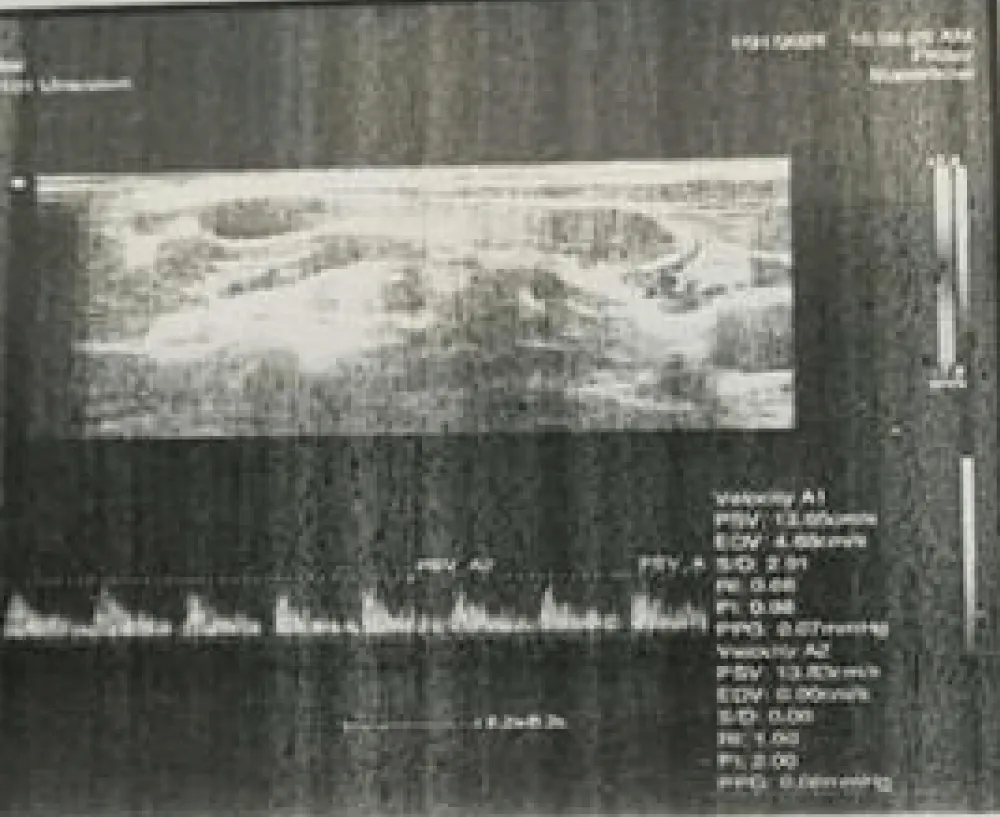
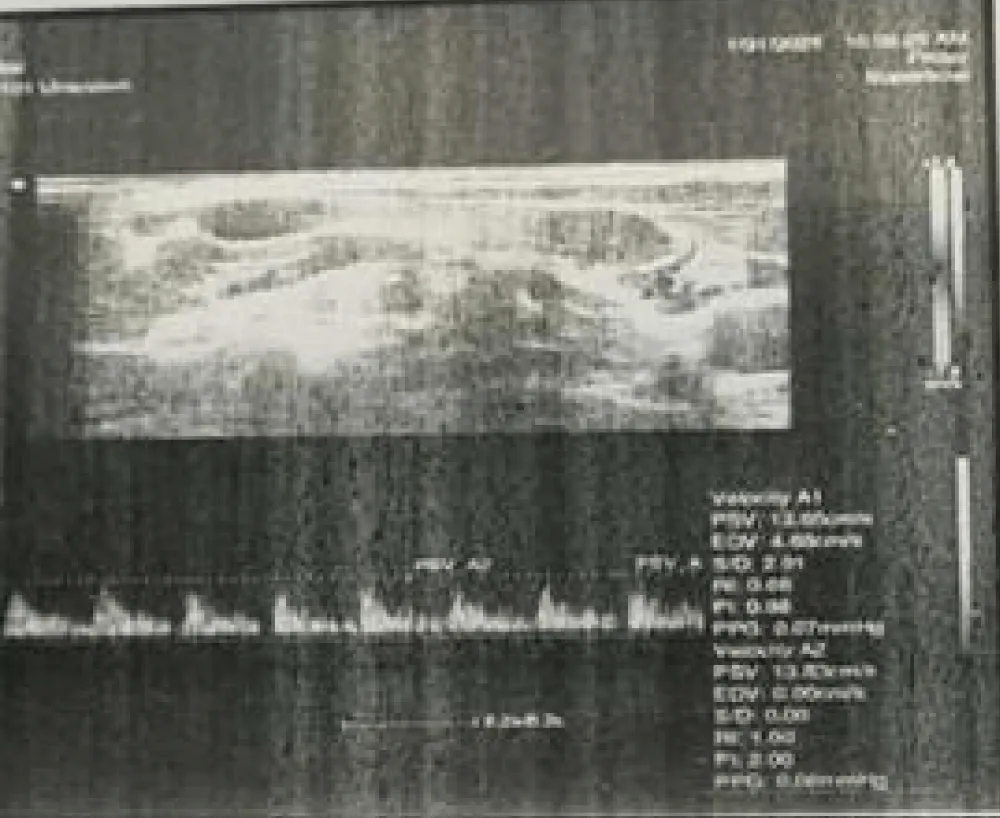
Given the presenting complaints, the patient was admitted for further evaluation. Infectious lymphadenopathy was suspected, but malignancy or tuberculosis needed to be excluded. An excision biopsy of a lymph node was performed, and the report was awaited. During hospitalization, she received antibiotics, antipyretics, and supportive care. Her clinical condition improved, and she was discharged after one week with instructions to follow up with the biopsy results.
On follow up, she didn’t have any episode of fever, bilateral neck swellings were not palpable. Histopathological report revealed lymphoid tissue comprising of pale and dark areas. Pale areas composed of necrosis, abundant karyorrhectic debris and histiocytic cells. Crescentic macrophages were seen. Dark areas were composed of small lymphocytes and large lymphoid cells. Granulomas were not found. Findings were consistent with Kikuchi lymphadenitis.
Discussion
Kikuchi-Fujimoto disease, also known as histiocytic necrotizing lymphadenitis is a rare self-limiting inflammatory condition. This disease primarily affects young and pediatric female patients. It was initially documented by Japanese pathologist Kikuchi and Fujimoto in Japan in 1972 [1].
Kikuchi-Fujimoto disease is very rare condition, so the incidence of the disease is uncertain [2]. The disease usually affects young individual but individual of any age group can also be affected. Although there was initially a female predominance, more recent studies in Asian populations have suggested a nearly equal ratio of affected males and females [3,4]. The disease is most commonly prevalent in Asian population however cases has been reported in individuals of different racial and ethnic backgrounds.
The etiology of Kikuchi-Fujimoto disease is unknown, however infectious and autoimmune mechanisms have been proposed. Various infectious agents, including viral and bacterial have been proposed as potential triggers for the disease. However, no any conclusive evidence has been established. Specific Human Leucocyte Antigens (HLAs) have been identified in populations with higher susceptibility to Kikuchi-Fujimoto disease. Specifically, HLA class II alleles, HLA-DPA1 and HLA-DPB1 are prevalent in Asian population, with a higher disease prevalence [5]. The disease has also been associated with various autoimmune conditions like Systemic Lupus Erythematous, Rheumatoid Arthritis, Still disease, Sjogren syndrome and GPA (Granulomatosis Polyangitis) [6].
The most common manifestation of the disease is lymphadenopathy, unilateral (60 to 90% of cases) or bilateral or sometimes generalized (22% of cases), most commonly involving cervical lymph node followed by supraclavicular and axillary nodes [7-9]. Other associated symptoms are fever, night sweats, headache, fatigue, sore throat, nausea, vomiting, weight loss, non-specific rash, joint pain, hepatomegaly and splenomegaly. Neurologic symptoms such as ataxia, tremors and aseptic meningitis have also been seen in some patients.
The diagnosis of Kikuchi disease is made by excisional biopsy of enlarged lymph node which shows characteristic histopathological findings suggestive of Kikuchi lymphadenitis. Leucopenia has been reported in 43% of cases [10,11] and Atypical lymphocytes in up to 25% of cases [12]. Serologic tests for infection are performed to rule out other diagnosis. Autoimmune antibodies tests are carried out to rule out autoimmune condition, which are generally negative. An increase in macrophages without atypical cells is the most common bone marrow finding [13].
Diseases like Infectious mononucleosis, tuberculous lymphadenitis, SLE, malignancies like lymphoma (Hodgkin and Non-Hodgkin) has to be ruled out in a patient with fever and lymphadenopathy.
There is no specific treatment for the disease. The disease has self-limited course with spontaneous resolution occurring within 1 to 4 or 6 months [14]. The main stage of management is usually supportive. Glucocorticoid alone or high dose glucocorticoid with intravenous immunoglobulin has shown benefit in severe cases [15,16]. The disease has recurrence rate of 3 to 4% [17].
Conclusion
Fever and lymphadenopathy are common presentation of most of the diseases affecting young children, clinicians should also keep Kikuchi disease in exclusion so that unnecessary investigations can be avoided and treatment would be prompt.
References
- Masab M, Surmachevska N, Farooq H. Kikuchi-Fujimoto Disease. In: StatPearls. Treasure Island (FL): StatPearls Publishing; 2025.
- Al-Maghrabi J, Kanaan H. Histiocytic necrotising lymphadenitis (Kikuchi-Fujimoto disease) in Saudi Arabia: clinicopathology and immunohistochemistry. Ann Saudi Med. 2005 Jul-Aug;25(4):319-23. doi: 10.5144/0256-4947.2005.319. PMID: 16212126; PMCID: PMC6148025.
- Perry AM, Choi SM. Kikuchi-Fujimoto Disease: A Review. Arch Pathol Lab Med. 2018 Nov;142(11):1341-1346. doi: 10.5858/arpa.2018-0219-RA. PMID: 30407860.
- Seo JH, Lee JS, Lee EJ, Lee JH, Kim JP, Woo SH, Ahn SK, Kwon OJ, Hwa JS, Park JJ. Comparison of clinical features and EBV expression in histiocytic necrotizing lymphadenitis of children and adults. Int J Pediatr Otorhinolaryngol. 2014 May;78(5):748-52. doi: 10.1016/j.ijporl.2014.02.001. Epub 2014 Feb 10. PMID: 24594231.
- Quadir A, Peacock K, Hsu P, Singh-Grewal D, Alexander S. A familial case of Kikuchi-Fujimoto disease in dizygotic twins. Pediatr Rheumatol Online J. 2020 Aug 10;18(1):62. doi: 10.1186/s12969-020-00457-2. PMID: 32778173; PMCID: PMC7418326.
- Al-Allaf AW, Yahia YM. Kikuchi-Fujimoto Disease Associated with Sjögren's Syndrome: A Case Report. Eur J Case Rep Intern Med. 2018 May 25;5(5):000856. doi: 10.12890/2018_000856. PMID: 30756036; PMCID: PMC6346929.
- Kellner D, Temelkovska T, Greeley A, Saito A. Kikuchi-Fujimoto Disease: A Case Report of Fever and Lymphadenopathy in a Young White Man. Fed Pract. 2023 Jan;40(1):22-27. doi: 10.12788/fp.0347. Epub 2023 Jan 16. PMID: 37223239; PMCID: PMC10201941.
- AlShieban S, Masuadi E, Alghamdi R, Alshalfan A, Alessa S, Alqarni AK, Alotaibe Z, Bamefleh H. Pathological Features and Clinical Characteristics of Kikuchi-Fujimoto Disease: A Tertiary Hospital Experience in Riyadh, Saudi Arabia. Cureus. 2023 Jan 12;15(1):e33683. doi: 10.7759/cureus.33683. PMID: 36643080; PMCID: PMC9835018.
- Rodríguez-Ferreras A, Maray I, Coya-Fernández C, Octavio-Bocigas MM, Fernández-Del Río MF, Casares-López S, Ruiz-Salazar J. Kikuchi-Fujimoto Disease: a rare type of lymphadenopathy and its plausible relationship with human papillomavirus vaccines. Rev Esp Quimioter. 2023 Aug;36(4):429-431. doi: 10.37201/req/140.2022. Epub 2023 May 3. PMID: 37130334; PMCID: PMC10336308.
- Asano S, Akaike Y, Jinnouchi H, Muramatsu T, Wakasa H. Necrotizing lymphadenitis: a review of clinicopathological, immunohistochemical and ultrastructural studies. Hematol Oncol. 1990 Sep-Oct;8(5):251-60. doi: 10.1002/hon.2900080503. PMID: 2249796.
- Song JY, Cheong HJ, Kee SY, Lee J, Sohn JW, Kim MJ, Seo SI, Kim IS, Kim WJ. Disease spectrum of cervical lymphadenitis: analysis based on ultrasound-guided core-needle gun biopsy. J Infect. 2007 Oct;55(4):310-6. doi: 10.1016/j.jinf.2007.06.004. Epub 2007 Aug 13. PMID: 17697715.
- Kucukardali Y, Solmazgul E, Kunter E, Oncul O, Yildirim S, Kaplan M. Kikuchi-Fujimoto Disease: analysis of 244 cases. Clin Rheumatol. 2007 Jan;26(1):50-4. doi: 10.1007/s10067-006-0230-5. Epub 2006 Mar 15. PMID: 16538388.
- Kuo TT. Kikuchi's disease (histiocytic necrotizing lymphadenitis). A clinicopathologic study of 79 cases with an analysis of histologic subtypes, immunohistology, and DNA ploidy. Am J Surg Pathol. 1995 Jul;19(7):798-809. doi: 10.1097/00000478-199507000-00008. PMID: 7793478.
- Ahmed Z, Quadir H, Hakobyan K, Gaddam M, Kannan A, Ojinnaka U, Mostafa JA. Kikuchi-Fujimoto Disease: A Rare Cause of Cervical Lymphadenopathy. Cureus. 2021 Aug 9;13(8):e17021. doi: 10.7759/cureus.17021. PMID: 34522502; PMCID: PMC8425500.
- Jang YJ, Park KH, Seok HJ. Management of Kikuchi's disease using glucocorticoid. J Laryngol Otol. 2000 Sep;114(9):709-11. doi: 10.1258/0022215001906561. PMID: 11091837.
- Lin DY, Villegas MS, Tan PL, Wang S, Shek LP. Severe Kikuchi's disease responsive to immune modulation. Singapore Med J. 2010 Jan;51(1):e18-21. PMID: 20200761.
- Sousa Ade A, Soares JM, Sá Santos MH, Martins MP, Salles JM. Kikuchi-Fujimoto disease: three case reports. Sao Paulo Med J. 2010 Jul;128(4):232-5. doi: 10.1590/s1516-31802010000400011. PMID: 21120436; PMCID: PMC10938983.




Content Alerts
SignUp to our
Content alerts.
 This work is licensed under a Creative Commons Attribution 4.0 International License.
