
2025 November 30;6(11):1810-1851. doi: 10.37871/jbres2232.
-
Subject area(s):

 |
|
 |
|
 |
|

 Review Article
RUCAM-Ascertained Immunology and Autoimmunity Specifics of Idiosyncratic Drug-Induced Liver Injury: A Complex Molecular Interplay
Rolf Teschke*
- Adaptive immune system
- ALDEN
- Autoimmune hepatitis
- DIAIH
- HLA-based immune iDILI
- Immune iDILI with SJS/TEN
- Idiosyncratic DILI
- Idiosyncratic drug-induced anti-CYP autoimmune hepatitis
- Immune iDILI by ICIs
- Innate immune system
- simplified AIH score
- Updated RUCAM
Abstract
Idiosyncratic Drug-Induced Liver Injury iDILI) is not a uniform disease but rather includes a variety of types based on immune, autoimmune, and clinical considerations. This review attempts to close information gaps regarding the role of immunity and autoimmunity involved in causing the different iDILI disease types. The analysis of the current literature with focus on iDILI reveals that compelling evidence suggests a pivotal role of immunity or autoimmunity in various types of iDILI. Among the autoimmune-triggered ones are the Drug-Induced Autoimmune Hepatitis (DIAIH) and the idiosyncratic drug-induced anti-CYP autoimmune hepatitis. As opposed, clearly immune-triggered are the Human Leucocyte Antigen (HLA)-based immune iDILI, the immune iDILI with Stevens-Johnson Syndrome (SJS) and Toxic Epidermal Necrolysis (TEN), and the immune iDILI by Immune Checkpoint Inhibitors (ICIs), but immune-triggered is only a part of the classic iDILI cases. For all these iDILI types, the use of the original or updated Roussel Uclaf Causality Assessment Method (RUCAM) allowed for confirming causality of the implicated drug, assisted by the simplified Autoimmune Hepatitis (AIH) score in the DIAIH cases and the Algorithm of Drug Causality for Epidermal Necrolysis (ALDEN) score in the cases of immune-based iDILI with SJS/TEN. All these diagnostic causality assessment algorithms are validated methods and helped define clinical features of the different iDILI types. The first treatment goal is the cessation of the suspected drug, which alone may lead to clinical and laboratory improvement and restoration of health. However, a therapy with immunosuppressant agents is often needed to treat the injury caused by immune and autoimmune processes and can lead to complete remission in all iDILI types with the exemption of the classic IDILI where only parts of the patients achieve remission. At the molecular pathomechanistic level, there is a complex interplay mostly related to the adaptive innate immune system activated by the innate system. In sum, immunology and autoimmunity specifics in cases of RUCAM-ascertained iDILI types remain a challenging topic that can be deepened by future cases if validated diagnostic algorithms are applied.
Introduction
Idiosyncratic Drug-Induced Liver Injury (iDILI) received recently much attention because of immune and autoimmune variabilities involved in the emerging disease, suggesting that mechanistically and clinically iDILI is not a uniform and homogenous liver disease but rather consists of several types [1-4]. This heterogeneity calls for a thorough evaluation of each type primarily regarding individual causality assessment methods to verify the diagnosis, because some of the iDILI types consist of two parts that have to be evaluated by different causality assessment methods in addition to the original Roussel Uclaf Causality Assessment Method (RUCAM) [5,6] or its updated version [7] that are the obligatory diagnostic methods applicable to all iDILI types [4,8-10]. In general, causality assessment methods facilitate forming homogeneity of iDILI study cohorts through replacing difficult evaluable heterogenous study cohorts, which often contain cases due to alternative non-drug causes that have nothing to do with chemical medications incriminated in iDILI types [10]. Homogenous iDILI type cohorts help to better characterize specific clinical features and pathogenetic steps including not only simple immune reactions but also autoimmune specifics.
Of concern is the observation that the clinical differentiation of the iDILI types was often neglected and led to incorrect final diagnoses [8]. This neglect applies to case reports, case series, national European DILI case registries, the US DILI network, and the US LiverTox database in addition to abundant other worldwide databases with focus on iDILI. Mixing all iDILI types is crucial in correct medical science and prevents good case and cohort characterization.
This review attempts to close existing information gaps related to iDILI types. The focus is on disease type classification based on results obtained from causality assessments by validated diagnostic algorithms. An additional aim is to replace the heterogenous iDILI by homogenous iDILI types.
Strategy of Literature Search
The literature search involved the PubMed database and Google Science. The following terms were used: DIAIH, autoimmune DILI, haptens, immune-mediated DILI, DILI with autoimmune features, DIALH, AIH anti-cytochrome P45 (CYP) antibodies, Human Leukocyte Antigens (HLAs), Stevens- Johnson Syndrome (SJS), and Toxic Epidermal Necrosis (TEN). The search was completed on 22 September 2025. Preference was given to cases evaluated by validated causality assessment methods.
Classification and Standardization
Intrinsic drug-induced liver injury results from drugs used in doses above recommendations and must be differentiated from iDILI that develops after treatment with drugs used in recommended doses but lacks a clear dose dependence [7]. Based on various causality assessment methods [5-7,11,12] and at the molecular pathomechanistic level, many iDILI cases were triggered by immunity or autoimmunity processes (Table 1).
| Table 1: Listing of iDILI types. | |||
| Definition | Immunity or Autoimmunity | Characteristic case features and treatment efficacy | Causality assessment |
| Classic idiosyncratic DILI (iDILI) | Immunity +/- | Lack of serum autoimmune parameters but in a few iDILI cases, liver histology signified immunology. Response to immunosuppressants was ineffective in some iDILI patients, possibly reflecting lacking immune involvement in these cases. | RUCAM [5-7] |
| Drug-induced autoimmune hepatitis (DIAIH) | Autoimmunity + | Combined features of iDILI plus those of AIH with increased titers of serum autoimmune parameters. . Complete remission with immunosuppressants is achievable. | RUCAM [5-7] combined with the simplified AIH score [11] |
| Idiosyncratic drug-induced anti-CYP autoimmune hepatitis | Autoimmunity + | Autoimmunity verified by detection of serum anti-CYP antibodies. Complete remission following therapy with immunosuppressant agents is achievable. | RUCAM [5-7] |
| HLA-based immune iDILI | Immunity + | Serum human leukocyte antigens (HLA) and signs of immunity in serum and liver. Complete remission under immunosuppressants is achievable. | RUCAM [5-7] |
| Immune iDILI with SJS/TEN | Immunity + | A continuous iDILI disease spectrum with the Stevens- Johnson syndrome (SJS), the milder form as compared with the epidermal necrolysis (TEN), the more serious one. Complete remission using tree immunosuppressant agents is achievable. | RUCAM [5-7] for DILI and the ALDEN score [12] for SJS and T SJS TEN |
| Immune iDILI by ICIs | Immunity + | Immune checkpoint inhibitors represent monoclonal antibodies and are used to treat patients with cancer. Apart from clinical efficacy, immune based iDILI can develop. Complete remission under treatment with immunosuppressant agents is achievable. | RUCAM [5-7] [12-5-[5-7] |
Currently, six iDILI types have been identified, all with verified causality by RUCAM alone or combined with another diagnostic algorithm, algorithms used were all validated methods [5-7,11,12]. This list of the immune iDILI types was modified and derived from previous reports published in an open-access journal [4]. Treatment efficacy refers to conditions after drug cessation. Abbreviations: ALDEN, Algorithm of Drug Causality for Epidermal Necrolysis: AIH, autoimmune hepatitis; CYP, cytochrome P450; ICI, immune checkpoint inhibitor; iDILI, idiosyncratic drug-induced liver injury; RUCAM, Roussel Uclaf Causality Assessment Method; SJS, Stevens-Johnson syndrome; TEN, toxic epidermal necrolysis.
Causality Assessment Algorithm Methods used for iDILI Types
RUCAM
RUCAM in its original version [5,6] or now better as its update of 2016 [7] are the preferred standard tools evaluating the causality for suspected drugs [9,10]. The advantages of RUCAM include the internal method validation [6] supported by subsequent external validation [13-15] as summarized [9]. RUCAM was appreciated by the US LiverTox database, which classified the RUCAM system as a method of assigning points for clinical, serological, biochemical, and radiological characteristics of liver injury [16]. The database also details that the RUCAM system provides an overall assessment score by reflecting the likelihood that the hepatic injury occurred due to a specific medication [16]. In addition, it confirmed that the RUCAM is now widely used to assess the causality of DILI, both in the published literature and in support of regulatory decisions regarding medications implicated in causing hepatic injury. The LiverTox database specified that the RUCAM has been evaluated for accuracy, reproducibility, and intraobserver variability. Because the RUCAM score is based upon objective criteria, there should actually be little or no variation in the final scores obtained by different investigators as clarified by the LiverTox database [16]. Indeed, RUCAM is also known for its transparency, liver injury specificity, objectivity [5,7,9], worldwide use with top ranking [17], and its scoring system that provides causality gradings from excluded to highly probable [7,9]. Limitations have been described if assessors preferred neglecting the principles of good clinical practice and manipulated RUCAM scores [9]. Such disturbing mismanagement attempts as uncovered and plead guilty in front of a US court are not compensable and not preventable by RUCAM.
Simplified AIH score
The simplified AIH score is also a validated diagnostic algorithm but directed to the autoimmune specifics of DIAIH [11]. It is a worldwide used scoring system that provides causality gradings from excluded up to definite.
ALDEN
ALDEN is privileged to assess causality of drugs in cases of suspected iDILI connected with the Stevens-Johnson syndrome and toxic epidermal necrolysis [12]. It is a scoring algorithm that clearly provides causality gradings.
Classic iDILI
Basic aspects
Classic syn traditional iDILI cases were early collected to provide the basis for inauguration of the original RUCAM of 1993 [5] and submitted subsequently to national DILI registries, whereby all cases received professional RUCAM evaluations by DILI and RUCAM experts [13,18]. Similarly, 81,856 iDILI cases assessed by RUCAM were published worldwide up to mid-2020, outnumbering any other tool regarding case numbers [19]. Per RUCAM algorithm definition, cases were excluded if increased serum autoimmune parameter were detected [5,7], classifying all RUCAM-based cases by tradition primarily as classic non-immune iDILI [5,7,13,17-19].
The top rankings on drugs implicated in iDILI were variable among different countries and regions. An analysis of international RUCAM-based iDILI reports provided a ranking of top drugs causing iDILI (Table 2) [10].
| Table 2: List of drugs most implicated in causing DILI with verified diagnosis using RUCAM to assess causality. | |
| Drugs and drug classes | RUCAM-based iDILI cases (n) |
| 1. Amoxicillin-clavulanate | 333 |
| 2. Flucloxacillin | 130 |
| 3. Atorvastatin | 50 |
| 4. Disulfiram | 48 |
| 5. Diclofenac | 46 |
| 6. Simvastatin | 41 |
| 7. Carbamazepine | 38 |
| 8. Ibuprofen | 37 |
| 9. Erythromycin | 27 |
| 10. Anabolic steroids | 26 |
| 11. Phenytoin | 22 |
| 12. Sulfamethoxazole/Trimethoprim | 21 |
| 13. Isoniazid | 19 |
| 14. Ticlopidine | 19 |
| 15. Azathioprine/6-Mercaptopurine | 17 |
| 16. Contraceptives | 17 |
| 17. Flutamide | 17 |
| 18. Halothane | 15 |
| 19. Nimesulide | 13 |
| 20. Valproate | 13 |
| 22. Nitrofurantoin | 11 |
| 23. Methotrexate | 6 |
| 24. Rifampicin | 7 |
| 25. Sulfasalazine | 7 |
| 26. Pyrazinamide | 5 |
| 27. Natriumaurothiolate | 5 |
| 28. Sulindac | 5 |
| 29. Amiodarone | 4 |
| 30. Interferon beta | 3 |
| 31. Propylthiouracil | 2 |
| 32. Allopurinol | 1 |
| 33. Hydralazine | 1 |
| 34. Infliximab | 1 |
| 35. Interferon alpha/Peginterferon | 1 |
| 36. Ketoconazole | 1 |
The table was used from a previous report published in an open access journal [10]. The RUCAM-based DILI cases represent the total number of cases by drugs or drug class and were retrieved from the international literature as specified earlier [20]. Abbreviations: iDILI, idiosyncratic drug-induced liver injury; RUCAM, Roussel Uclaf Causality Assessment Method.
Diagnosis
Traditionally, the diagnosis of iDILI was successfully assessed by the original RUCAM in DILI registries [13,18] and by the updated RUCAM in recent reports with clarification already in the title [19-42]. Alternative causes are a problem of iDILI cohorts but easily recognized by RUCAM [43].
Clinical presentations
The RUCAM-based Spanish DILI registry mentioned under clinical presentation jaundice occurring in 69% of IDILI patients [18], whereas other reports included in addition to jaundice also abdominal pain, malaise, encephalopathy, bruising, and bleeding [44] and dark urine, fever, nausea, pruritus, vomiting, and pain in the right upper quadrant of the abdomen [45], while asymptomatic clinical courses can be observed concomitant with low ALT values [46].
Laboratory data
Details of laboratory data can be retrived from various RUCAM-based reports of the Spanish DILI registry [18]: when expressed as multiple of ULN, ALT was up to 203, ALP up to 32.7, and total bilirubin up to 45.6. Somewhat lower values were presented for RUCAM-based DILI cases included in the Swedish DILI registry [13].
Liver histology
Liver histology results in RUCAM-based DILI cases of the Spanish DILI registry revealed cholestasis (48%) and hepatocellular necrosis (27%) as the predominant features [18]. Of note, liver histology data lack specificity and diagnostic value in suspected iDILI cases [7]. However, using laboratory data and the RUCAM-based ratio (R) value, hepatocellular injury was found in 58% cases, cholestatic injury in 20%, and mixed hepatocellular and cholestatic injury in 22% cases [18].
Treatment and prognosis
Clearly, the use of the offending drug must be stopped as soon as iDILI is suspected [47]. If drug cessation fails to improve clinical signs and laboratory results, glucocorticoids (GCs) are commonly used as first option used [38,47-51]; however, whether they are beneficial to patients remains controversial [38,47,52]. There was no uniform standard for the timing, dosage, and population selection of GCs, which mainly depend on the clinician's experience [48]. In addition, prevailing cohort heterogeneity impaired clear conclusions: highlighted as an international, multicenter, propensity score-matched analysis, the study protocol was disappointing, because one of the included cohorts has been evaluated by a non-validated tool representing an outdated approach, cohorts ignored the mandatory differentiation of the non-immune iDILI from the DIAIH based clearly on autoimmunity as evidenced by positive autoimmune titers in up to 48% cases, and inclusion of cases with a merely possible causality grading that support the suspicion that cases submitted to the network and registry do not represent prospective studies which would have excluded possible cases a priori [49]. Patients with cholestatic iDILI commonly were treated with ursodeoxycholic acid [47].
Chronicity was described in 10% iDILI cases based on RUCAM [18] but, on theoretical grounds, this can well be due to missed alternative causes, pre-existing liver disease, or newly developing flares characterized by autoimmune parameters in the sense of DIAIH. Indeed, many RUCAM-based iDILI cases with a chronic course had a persistent alcohol issue or even hypersensitivity signs like fever, rash, and/or eosinophilia, associated with a normal or increased titers of autoimmune parameters, likely determined not sequentially to confirm or exclude DIAIH rather than iDILI [18]. Acute liver failure occurred in 2% RUCAM-based iDILI cases, liver transplantation was necessary in 2%, and death occurred in 5% of iDILI patients [18].
Molecular pathomechanisms
Immunity and iDILI remains a complex condition as shown and qualified with +/- above (Table1) and calls for a refining and completing the theories of pathomechanisms leading to the iDILI [1-3,53]. By its definition, iDILI is traditionally classified as a non-immune and non-autoimmune disorder, a diagnosis established using RUCAM which removed suspected iDILI cases if autoimmune parameters were detected in the serum of patients [5,7]. Fever, rush and blood eosinophilia are unspecific features and observed in only part of iDILI patients, not suitable to attribute all iDILI cases to immunity in line with positive re-exposure data that are restricted to the implicated drug [18]. More specifically, the iDILI community is confronted with the proposal that immunity plays a role in part of the iDILI cases [1,3] or even in all [2]. As GCs are efficient in only some patients with iDILI [47-51], an immunology role can be anticipated at best only for those responding to GCs, but valid percentage data of responders and non-responders are currently not available [1-3,13,18,47-52].
Following uptake by the liver, many drugs are degraded via CYP pathways (58%) or non-CYP routes (42%) to toxic reactive metabolites causing iDILI with valid diagnoses verified by RUCAM [3]. At least for drugs metabolized via CYP pathways, circumstantial evidence suggests that the sequelae leading to iDILI start by drug approaching the catalytic CYP cycle and binding to one of its CYP isoforms in its oxidized form [3,10]. Electrons are available from NADPH + H+ via the NADPH CYP reductase, and introduction of molecular oxygen leads to the reduced form of CYP, which becomes oxidized again after splitting off the oxidized drug. The oxidized CYP is then again free for the next drug to be oxidized. Under normal conditions, this enzymatic process proceeds smoothly, converting a drug as substrate to the oxidized drug (Figure 1) [10].
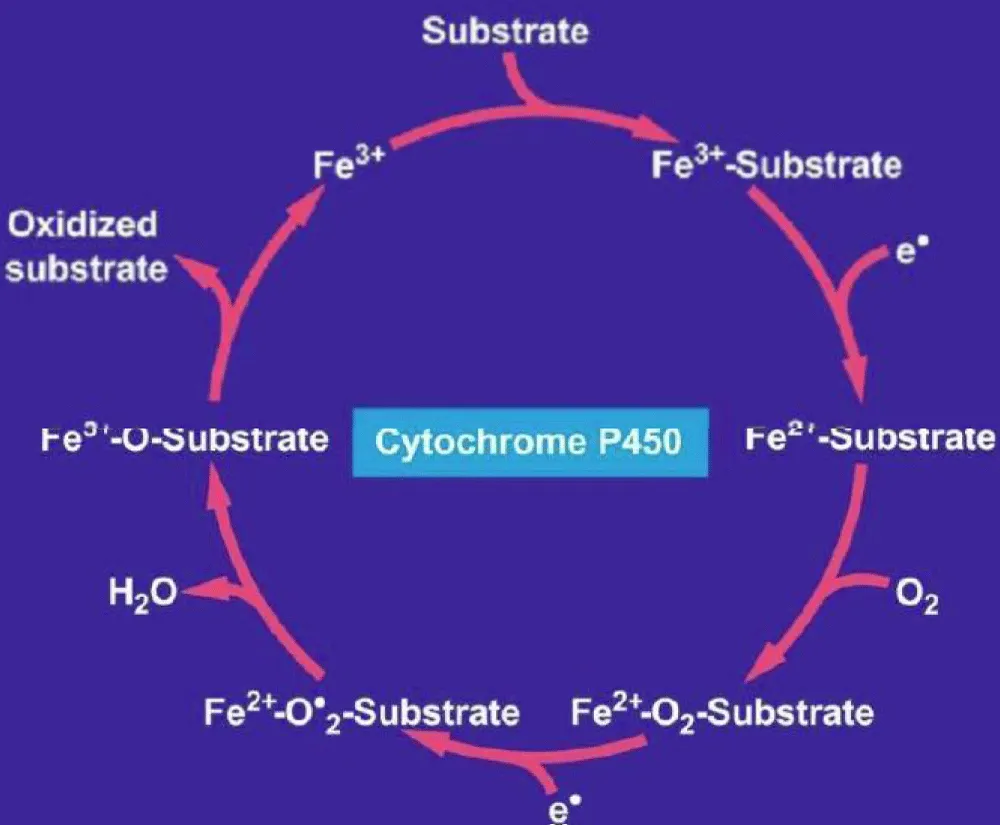
This figure was derived from a previous report published in an open access journal [10].
In the course of incomplete oxygen split during the drug metabolism via the catalytic CYP cycle Reactive Oxygen Species (ROS) are generated as shown on the lower part of the CYP cycle (Figure 1). Part of the ROS will be used for carrying out the metabolism of drugs but, if produced in excess by induction of the CYP-dependent hepatic microsomal drug-metabolizing enzymes [10], ROS may initiate iDILI, whereby several toxic metabolites are involved (Table 3).
| Table 3: Potentially toxic metabolites of the reactive oxygen species (ROS) generated during the drug metabolism via the hepatic microsomal cytochrome P450. |
| Various reactive O2-species |
| Singlet radical 1O2 Superoxide radical HO.2 Hydrogen peroxide H2O2 Hydroxyl radical HO• Alkoxyl radical RO. Peroxyl radical ROO• Lipid peroxides |
These toxic intermediates are injurious to metabolic pathways within the hepatocytes, bind to and react with structural phospholipids and proteins as membranous components of subcellar organelles [2,3,10,53]. Covalent binding to proteins forms in turn neoantigens in some but certainly not all iDILI cases [2]. Based on theoretical considerations, drugs or their metabolites can trigger ROS and facilitate hepatocellular cellular oxidative stress. In this setting, iDILI by various drugs develops during an adaptive immune reaction involving CD8 cytotoxic T cells in the liver, leading finally to hepatocyte cell death [2]. The adaptive immune system leading to iDILI requires an activation by the innate immune system and is achieved by Antigen Presenting Cells (APCs). Finally, extra-vesicular Damage-Associated Molecular Pattern Molecules (DAMPs) released from the injured hepatocytes may play a role [1-3,53]. In addition to innate and adaptive lymphocytes, other immune cells are present in the liver like infiltrating monocyte-derived macrophages, hepatic Kupffer cells, hepatic stellate cells, and liver sinusoidal endothelial cells, closely connected with each other via mediators by processes known as crosstalk, trafficking, or interplay [3,54,55]. In more detail, the resident innate immune cells in the liver comprise Kupffer cells, dendritic cells, neutrophils, natural killer cells, and natural killer T cells [54,55]. As opposed, CD4 and CD8 T cells represent the adaptative immune system [56]. The unique blood supply of the liver also allows for the recruitment of circulating leukocytes upon activation of relevant signaling pathways [55,57]. Consequently, mediators originating in the liver of patients with iDILI could theoretically serve as serum diagnostic immune biomarkers.
Profiles of serum cytokines, chemokines, and growth factors were analyzed in cases of suspected acute iDILI and described as model of immune response, differentiating the innate immune system from the adaptive immune system [58]. According to this theory and in context of the innate system, immune stimuli derived from damaged tissue initiate NFκB nuclear translocation and early innate cytokine production (IL-1β, IL-6, TNF-α). Persistence of this early inflammatory state of innate immunity activates adaptive immune processes favoring cellular (T-box transcription factor TBX21, (e.g., T-bet)-dependent / TH1-type: IL-12p70, IFNγ, IL-2, IL-15, or humoral (Gata3-dependent /TH2-type: IL-4, IL-5, IL-13 responses. The final study cohort consisted of 32 patients, most of these showed an innate immune profile, an adaptive immune profile, or combinations thereof. However, 8/32 (36%) patients displayed a normal immune system [58]. These data can be interpreted as immunological involvement in around two thirds of the iDILI patients while in around one third iDILI might have no immune background, in support of earlier contentions that immunology is responsible for most iDILI cases but not for all cases [1]. However, limitations must be considered, as the study under consideration was based on cases assessed by the DILIN method [58], a tool known for missing method validation, arbitrary percentage causality gradings, and subjective evaluations [9]. In addition, other iDILI cohorts evaluated by the disputed DILIN method lack case homogeneity because cases are included with overt autoimmune parameters likely to be attributed to DIAIH rather than iDILI heavily confounding DILIN results [59,60]. Cytokine with preference of serum IL-17 and autoimmune patterns were described in acute liver failure due to iDILI assessed by the disputed DILIN method, a topic contradictory in itself because IDILI is defined without antibody patterns, and if these are present, DIAIH rather than iDILI would be the appropriate term provided the simplified AIH score of 2008 would have been applied but the use of this elementary tool was neglected [59]. In general, acute liver failure due to iDILI were broadly published without any robust causality assessment method [61]. Critical is another DILIN based report of increased IL-4 in clinical iDILI due to volatile anesthetics, because cases are characterized by trifluoroacetyl and CYP2E1 antibodies that makes the cases to DIAIH rather than iDILI [60].
DIAIH
Basic aspects
Case numbers of DIAIH follow on rank #2 after those of the classic iDILI [19]. DIAIH consists of two parts, one reflects the iDILI part and the other one the AIH part [8]. While the iDILI part has well been analyzed above for the classic iDILI, AIH features requires thorough discussion. In the past, DIAIH evaluation was largely neglected and often not differentiated from other immune iDILI types [8].
Diagnosis
The use of the updated RUCAM [7] and the simplified AIH score [11] is mandatory to establish the DIAIH diagnosis [8]. Because the simplified AIH score calls for a liver histology to be obtained by a liver biopsy, an invasive procedure, the simplifies AIH score should be used after the updated RUCAM confirmed the iDILI diagnosis to avoid unnecessary liver biopsy in case of non-verified iDILI part [8]. Applying both diagnostic algorithms, specific drugs are listed causing DIAIH with verified diagnosis (Table 4) [62-73].
Table 4: Drugs and drug groups implicated in published DIAIH cases with diagnosis verified using the validated causality algorithms of both the RUCAM and the simplified AIH score. |
||
| Drugs and drug groups | Cases (n) | References |
| Adalimumab | 1 1 | Martínez-Casas, 2018 [62] Chung, 2024 [63] |
| Allopurinol | 1 | Chung, 2024 [63] |
| Amitriptyline | 1 | Weber, 2019 [64] |
| Amoxicillin-Clavulanate | 2 | García-Cortés, 2023 [65] |
| Amoxicillin-Clavulanate + Ceftriaxone | 3 | Licata, 2014 [66] |
| Amoxicillin + Erythromycin | 1 | Chung, 2024 [63] |
| Amoxicillin + Metronidazole | 1 | Chung, 2024 [63] |
| Anabolic steroid | 1 | Chung, 2024 [63] |
| Atorvastatin | 2 2 2 1 1 | Yeong, 2016 [67] Weber, 2019 [64] García-Cortés, 2023 [65] Tan, 2022 [68] Tse, 2023 [69] |
| Candesartan | 1 | Hassoun, 2023 [70] |
| Cephalexin + Amoxicillin | 1 | Chung, 2024 [63] |
| Ciprofloxacin | 1 1 | García-Cortés, 2023 [65] Chung, 2024 [63] |
| Cyproterone acetate | 2 | García-Cortés, 2023 [65] |
| Dabigatran | 1 | Weber, 2019 [64] |
| Dexketoprofen | 1 | García-Cortés, 2023 [65] |
| Diclofenac | 1 2 3 | Yeong, 2016 [67] Martínez-Casas, 2018 [62] Weber, 2019 [64] |
| Ebrotidine | 1 | García-Cortés, 2023 [65] |
| Efalizumab | 1 | García-Cortés, 2023 [65] |
| Enalapril maleate | 1 | Hassoun, 2023 [70] |
| Etanercept | 1 | Valgeirsson, 2019 [71] |
| Ezetimibe | 1 | García-Cortés, 2023 [65] |
| Fluvastatin | 4 | García-Cortés, 2023 [65] |
| Fosfomycin | 1 | Hassoun, 2023 [70] |
| Ibandronate | 1 | Hassoun, 2023 [70] |
| Ibuprofen | 5 1 | Hassoun, 2023 [70] García-Cortés, 2023 [65] |
| Imatinib | 1 1 1 | Björnsson, 2017 [72] Weber, 2019 [64] Valgeirsson, 2019 [71] |
| Infliximab | 8 7 1 1 1 | Björnsson, 2017 [72] Valgeirsson, 2019 [71] Chung, 2024 [63] García-Cortés, 2023 [65] Weber, 2019 [64] |
| Interferon beta | 1 | Weber, 2019 [64] |
| Irbesartan | 1 | García-Cortés, 2023 [65] |
| Isotretinoin | 1 | García-Cortés, 2023 [65] |
| Lansoprazole | 1 | Chung, 2024 [63] |
| Lymecycline | 2 | Chung, 2024 [63] |
| Mefenamic acid | 1 | Hassoun, 2023 [70] |
| Menotropin | 1 | Alqrinawi, 2019 [73] |
| Metamizole | 3 | Weber, 2019 [64] |
| Methocarbamol | 1 | Weber, 2019 [64] |
| Nimesulide + Ketoprofen | 6 | Licata, 2014 [66] |
| Minocycline | 4 4 1 | García-Cortés, 2023 [65] Chung, 2024 [63] Weber, 2019 [64] |
| NSAIDs + Antibiotics | 1 | Chung, 2024 [63] |
| Natalizumab | 1 | Valgeirsson, 2019 [71] |
| Nitrofurantoin | 8 7 5 4 3 1 | Martínez-Casas, 2018 [62] Chung, 2024 [63] García-Cortés, 2023 [65] Yeong, 2016 [67] Björnsson, 2017 [72] Hassoun, 2023 [70] |
| Olmesartan | 1 | Hassoun, 2023 [70] |
| Orlistat | 1 | García-Cortés, 2023 [65] |
| Pembrolizumab | 1 | Weber, 2019 [64] |
| Propylthiouracil | 1 | Martínez-Casas, 2018 [62] |
| Rivaroxaban | 1 | Weber, 2019 [64] |
| Rosuvastatin | 1 | García-Cortés, 2023 [65] |
| Simvastatin | 1 1 | Yeong, 2016 [67] García-Cortés, 2023 [65] |
| Sorafenib | 1 | Tan, 2022 [68] |
| Trazodone | 2 | Hassoun, 2023 [70] |
| Valsartan | 1 | Hassoun, 2023 [70] |
Compilation of selected drugs implicated in causing DIAIH, whereby RUCAM assessing the DILI part commonly and correctly stands for the original version [5] or its updated version [7], and the AIH part is commonly evaluated by the simplified criteria of the AIH score [11] or rarely by one of its modif8cations. The table was modified from a previous report published by an open access journal [2]. Abbreviations: DIAIH, Drug induced Autoimmune Hepatitis; NSAIDs, Nonsteroidal anti-inflammatory drugs; RUCAM, Roussel Uclaf Causality Assessment Method.
Twenty DIAIH reports were initially analyzed [8], providing 12/20 reports (60%) that were correctly assessed by the RUCAM and the simplified AIH score (Table 3). This shows that the majority of initially suspected DIAIH cases finally received a firm diagnosis, a fairly good result in face of the cohort heterogeneity [8]. On the contrary, reports were published partially or not at all correctly assessed by the mandatory algorithms [5,7,11], making the results questionable as published in these reports (Table 5) [74-81].
| Table 5: Selected drugs implicated in suspected but not verified DIAIH with unverified diagnosis. | |||||
| Drugs | Cases (n) | RUCAM causality algorithm used | Simplified criteria of AIH score used | DIAIH diagnosis verified by both the RUCAM and the simplified AIH score | References |
| Adalimumab | 1 1 | YES NO | NO YES | NO NO | Ghabril, 2013 [74] Rodrigues, 2015 [75] |
| Atorvastatin | 1 | YES | NO | NO | Khan, 2020 [76] |
| Cephalexin | 1 | NO | YES | NO | Björnsson, 2010 [77] |
| Etanercept | 2 | YES | NO | NO | Ghabril, 2013 [74] |
| Hydralazine | 7 | NO | NO | NO | de Boer, 2017 [78] |
| Infliximab | 25 8 3 | YES NO YES | NO YES NO | NO NO NO | Björnsson, 2022 [79] Rodrigues, 2015 [75] Ghabril, 2013 [74] |
| Methyldopa | 10 | NO | NO | NO | de Boer, 2017 [78] |
| Minocycline | 19 10 1 | NO NO NO | NO YES NO | NO NO NO | de Boer, 2017 [78] Björnsson, 2010 [77] Harmon, 2018 [80] |
| Nitrofurantoin | 24 10 | NO NO |
NO YES | NO NO |
de Boer, 2017 [78] Björnsson, 2010 [77] |
| Pirfenidone | 1 | YES | NO | NO | Fortunati, 2024 [81] |
| Prometrium | 1 | NO | YES | NO | Bjornsson, 2010 [77] |
Compilation of suspected drugs implicated in causing DIAIH but without complete diagnostic causality verification by valid methods. For some patients, the DILI part of DIAH was causally evaluated solely by the original RUCAM [5] or the updated RUCAM [7], while other cases were submitted merely to the assessment of the AIH part by the simplified criteria of the AIH score [11] or rarely by one of its modifications. A group of DIAIH patients were evaluated by none of the methods. The table was modified and derived from a previous report published by an open access journal [8]. Abbreviations: DIAIH, Drug induced Autoimmune Hepatitis; NSAIDs, Nonsteroidal anti-inflammatory drugs; RUCAM, Roussel Uclaf Causality Assessment Method.
From the initially analyzed 20 studies of suspected DIAIH [8], in 4/20 reports (20%) only RUCAM was used [74,76,79,81], and 2/20 reports (10%) applied only the simplified AIH score [75,77] with the consequence that these evaluations did not allow for a valid DIAIH diagnosis in these 6 reports (Table 5). Irritating was the observation that 2/20 reports (10%) came along without any of the two causality algorithms [78,80] and presented therefore elusive feature data of DIAIH lacking any scientific or clinical value. Due to these methodology faults, several reports are to be excluded for further DIAIH characterization [74-81].
Clinical manifestations
Issue of non-drug causes: Expectations to establish a correct DIAIH diagnosis are high because the risk of missed diagnoses is high if alternative causes were not correctly excluded [64,67,71], a problem also connected to iDILI [43]. More specifically, non-drug competing diagnoses have been detected in the course of DIAIH case evaluation [64,67,71]. As an example, a careful DIAIH study showed alternative causes in 35.5 % of patients, on top AIH (10.5%), followed by cholangitis and cholelithiasis (5.2%), hepatitis E virus (4.2%), alcohol (3.5%), cardiac failure (2.8%), secondary sclerosing cholangitis (2.1%), non-alcoholic steatohepatitis, now known as metabolic dysfunction-associated steatohepatitis (1.7%), other autoimmune diseases (1.7%), metabolic disorders of Wilson disease and hemochromatosis (1.4%), primary biliary cholangitis (1.4%), primary sclerosing cholangitis (1.1%), non-viral infections like abscesses and echinococcus (1.1%), hepatitis A virus (0.7%), human herpes virus (0.7%), Epstein-Barr virus (0.7%), cytomegalovirus (0.4%), malignant infiltration (0.4%), and others (1.1%) 64]. Overall, on top was AIH (10.5%), followed by cholangitis/cholelithiasis (5.2%), hepatitis E virus (4.2%), alcohol (3.5%), and cardiac failure (2.8%), secondary sclerosing cholangitis (2.1%), and metabolic dysfunction-associated steatohepatitis (1.7%) [64,67,71].
Causality gradings: Describing the clinical specifics of DIAIH requires a careful selection of reported cohorts that included cases of patients with an established diagnosis using both the RUCAM and the simplified AIH score to ensure robust causality for the implicated drug (Table 3), For these reasons, selected were cases from well-evaluated DIAIH reports that included 49 different drugs, drug groups, and drug combinations in a total of 25 DIAIH cases (Table 3). In these cases, RUCAM scores were up to 10 [62,64] or 6-8 [67], and AIH scores were determined with up to 14 [62,64] or 10-17 [67]. In other words, for all evaluated cases a causality grading of probable or highly probable was attributed.
Symptoms and clinical specifics: Many RUCAM-based DIAIH cases were included in study cohorts (Table 3). However, the aim of these reports was not necessarily directed to symptoms and clinical presentation of patients experiencing DIAIH. A better approach is likely the search for clinical details published in reports of single patients. As an example, there is a report on a patient who was diagnosed with DIAIH due to a therapy by menotrophin and developed pale stool and dark urine [73]. Such symptoms are viewed as unspecific features similar to various other hepato-biliary disorders that may confound the DIAIH diagnosis. This uncertainty calls for a robust causality assessment by RUCAM that helps search and exclude alternative causes. Scleral icterus associated with otherwise unremarkable clinical presentation was described in another patient with DIAIH due to sorafenib [68], and general jaundice was reported in another DIAIH patient observed following treatment by atorvastatin [69]. In another report of 28 patients with DIAIH by various drugs, jaundice/pruritus was observed in 20 cases, fatigue/malaise in 7 patients, abdominal pain in 3 patients, and arthralgia in 1 patient [63]. Jaundice at onset was mentioned in 8/12 patients diagnosed with DIAIH [66].
Laboratory data
Increased titers of serum autoimmune parameters are fundamental elements of the simplified AIH score [11] and help establish the diagnosis of DIAIH [8]. Parameters include IgG, ANA, ASMA, and SLA, but they were often not specified. ANA is the most frequent autoimmune parameter found with positive titers in 77.3% of DIAIH patients [64]. Laboratory data and autoimmune parameters are listed as reported for a few patients with DIAIH caused by selected drugs (Table 6) [62-73].
| Table 6: ALT and ALP values as well as autoimmune parameters as described in cases of DIAIH caused by specific drugs and drug groups. | |||||
| Drugs | Cases (n) | ALT (U/L) | ALP (U/L) | Autoimmune parameters | References |
| Adalimumab | 1 | 562 | NR | ANA | Martínez-Casas, 2018 [62] |
| Amitriptyline | 1 | NR | NR | Not specified | Weber, 2019 [64] |
| Amoxicillin-Clavulanate | 2 | NR | NR | Not specified | García-Cortés, 2023 [65] |
| Amoxicillin-Clavulanate + Ceftriaxone | 3 | NR | NR | Not specified | Licata, 2014 [66] |
| Amoxicillin + Erythromycin | 1 | NR | NR | Not specified | Chung, 2024 [63] |
| Amoxicillin + Metronidazole | 1 | NR | NR | Not specified | Chung, 2024 [63] |
| Anabolic steroid | 1 | NR | NR | Not specified | Chung, 2024 [63] |
| Atorvastatin | 2 2 2 1 1 | 721 NR NR 696 385 | NR NR NR 107 163 | ANA, ASMA Not specified Not specified Unremarkable ANA | Yeong, 2016 [67] Weber, 2019 [64] García-Cortés, 2023 [65] Tan, 2022 [68] Tse, 2023 [69] |
| Candesartan | 1 | NR | NR | Not specified | Hassoun, 2023 [70] |
| Cefalexin + Amoxicillin | 1 | NR | NR | Not specified | Chung, 2024 [63] |
| Ciprofloxacin | 1 | NR | NR | Not specified | García-Cortés, 2023 [65] |
| Cyproterone acetate | 2 | NR | NR | Not specified | García-Cortés, 2023 [65] |
| Dabigatran | 1 | NR | NR | Not specified | Weber, 2019 [64] |
| Dexketoprofen | 1 | NR | NR | Not specified | García-Cortés, 2023 [65] |
| Diclofenac | 1 2 3 | 3489 1491 NR | NR NR NR | ANA, ASMA ANA, ASMA, SLA Not specified | Yeong, 2016 [67] Martínez-Casas, 2018 [62] Weber, 2019 [64] |
| Ebrotidine | 1 | NR | NR | Not specified | García-Cortés, 2023 [65] |
| Efalizumab | 1 | NR | NR | Not specified | García-Cortés, 2023 [65] |
| Ezetimibe | 1 | NR | NR | Not specified | García-Cortés, 2023 [65] |
| Enalapril maleate | 1 | NR | NR | Not specified | Hassoun, 2023 [70] |
| Fluvastatin | 4 | NR | NR | Not specified | García-Cortés, 2023 [65] |
| Fosfomycin | 1 | NR | NR | Not specified | Hassoun, 2023 [70] |
| Ibandronate | 1 | NR | NR | Not specified | Hassoun, 2023 [70] |
| Ibuprofen | 5 1 | NR NR | NR NR | Not specified Not specified | Hassoun, 2023 [70] García-Cortés, 2023 [65] |
| Imatinib | 1 1 | 1212 NR | 205 NR | ANA Not specified | Björnsson, 2017 [72] Weber, 2019 [64] |
| Infliximab | 10 8 1 1 | 1658 NR NR NR | 493 NR NR NR | ANA ASMA Not specified Not specified | Björnsson, 2017 [72] Valgeirsson, 2019 [71] García-Cortés, 2023 [65] Weber, 2019 [64] |
| Interferon beta | 1 | NR | NR | Not specified | Weber, 2019 [64] |
| Irbesartan | 1 | NR | NR | Not specified | García-Cortés, 2023 [65] |
| Isotretionin | 1 | NR | NR | Not specified | García-Cortés, 2023 [65] |
| Lansoprazole | 1 | NR | NR | Not specified | Chung, 2014 [63] |
| Lymecycline | 2 | NR | NR | Not specified | Chung, 2024 [63] |
| Mefenamic acid | 1 | NR | NR | Not specified | Hassoun, 2023 [70] |
| Menotropin | 1 | 504 | 366 | ANA | Alqrinawi, 2019 [73] |
| Metamizole | 3 | NR | NR | Not specified | Weber, 2019 [64] |
| Methocarbamol | 1 | NR | NR | Not specified | Weber, 2019 [64] |
| Minocycline | 4 4 1 | NR NR NR | NR NR NR | Not specified Not specified Not specified | García-Cortés, 2023 [65] Chung, 2024 [63] Weber, 2019 [64] |
| Nimesulide + Ketoprofen | 6 | NR | NR | Not specified | Licata, 2014 [66] |
| Nitrofurantoin | 8 7 5 4 3 1 | 2059 NR NR 587 1974 NR | NR NR NR NR 204 NR | ANA, ASMA, Not specified Not specified ANA, ASMA ANA Not specified | Martínez-Casas, 2018 [62] Chung, 2024 [63] García-Cortés, 2023 [65] Yeong, 2016 [67] Björnsson, 2017 [72] Hassoun, 2023 [70] |
| NSAIDs + Antibiotics | 1 | NR | NR | Not specified | Chung, 2024 [63] |
| Olmesartan | 1 | NR | NR | Not specified | Hassoun, 2023 [70] |
| Orlistat | 1 | NR | NR | Not specified | García-Cortés, 2023 [65] |
| Pembrolizumab | 1 | NR | NR | Not specified | Weber, 2019 [64] |
| Propylthiouracil | 1 | 754 | NR | ANA | Martínez-Casas, 2018 [62] |
| Rivaroxaban | 1 | NR | NR | Not specified | Weber, 2019 [64] |
| Rosuvastatin | 1 | NR | NR | Not specified | García-Cortés, 2023 [65] |
| Simvastatin | 1 1 | 1245 NR | NR NR | ANA, ASMA Not specified | Yeong, 2016 [67] García-Cortés, 2023 [65] |
| Sorafenib | 1 | 1004 | 190 | Unremarkable | Tan, 2022 [68] |
| Trazodone | 2 | NR | NR | Not specified | Hassoun, 2023 [70] |
| Valsartan | 1 | NR | NR | Not specified | Hassoun, 2023 [70] |
Compilation of selected drugs and drug groups implicated in causing DIAIH, whereby RUCAM assessing the DILI part commonly and correctly stands for the original version [5] or its updated version [7], and the AIH part is commonly evaluated by the simplified criteria of the AIH score [11] or rarely by one of its modifications. The list was derived from a previous report published in an open access journal [8]. Abbreviations: ANA, anti-nuclear antibodies; ASMA, anti-smooth muscle antibodies; DIAIH, Drug induced autoimmune hepatitis; NR, Not reported; NSAIDs, Nonsteroidal anti-inflammatory drugs; RUCAM, Roussel Uclaf Causality Assessment Method; SLA, soluble liver antigen antibodies.
Current knowledge on autoimmune parameters in DIAIH is scattered (Table 4), especially since there are no closely sequential data at the beginning of the DIAIH. It is unclear whether autoimmune parameters are detectable concomitantly with the increased ALT values or later on, meaning that the autoimmune process emerges retarded.
Liver histology
Liver histological data are among the most important diagnostic cornerstones of the simplified AIH score to establish the diagnosis of DIAIH [15] but they were rarely included in the reports (Table 3). Detailed histological lesions of DIAIH were available from a few published reports, all assessed by RUCAM and the simplified AIH score [63,65,66,68-70]: portal and lobular inflammation with lobular disarray [68], lobular hepatitis [63,70], chronic inflammation [68], mixed periportal necroinflammatory infiltrate with increased plasma cells and ductular reaction [69], multiacinar parenchymal loss with ductular reactions and inflammatory infiltrates [63], confluent necrosis [70], entrapped hepatocytes with rosette architecture [63,70], rosettes [65], ballooned hepatocytes [65], hepatocytes with rosetting Councilman bodies and hepatocyte drop-outs [68], plasma cell infiltrates [63,68], lymphoplasmacytic infiltrates [65,66,68,70], monocytic infiltration [65], features of chronic active hepatitis [63], interface hepatitis [65,68,70], portal inflammation [66], portal tract expansion with inflammatory infiltrate, associated with interface hepatitis and plasma cell aggregates [63], portal tract with aggregated eosinophiles [63], rare eosinophilia [65,68], fibrosis [65], and mild steatosis [66].
Treatment and prognosis
Therapy starts with cessation of the drug as soon as DIAIH is suspected [8]. Ff cessation lacks therapeutic efficacy, immunosuppressant agents are needed (Table 7).
| Table 7: Selected drugs implicated in DIAIH with treatment response of cessation of the suspect drug or after immunosuppressive therapy. | |||
| Drugs | Cases (n) | Response of drug stop or therapy | References |
| Adalimumab | 1 1 | CR with PRED/AZA CR with cessation of the culprit drug | Martínez-Casas, 2018 [62] Chung, 2024 [63] |
| Allopurinol | 1 | CR with IS | Chung, 2024 [63] |
| Amoxicillin + Erythromycin | 1 | CR with IS | Chung, 2024 [63] |
| Amoxicillin + Metronidazole | 1 | CR with IS | Chung, 2024 [63] |
| Anabolic steroid | 1 | CR with IS | Chung, 2024 [63] |
| Atorvastatin | 1 2 | CR with PRED CR with cessation of the culprit drug | Tan, 2022 [68] Tse, 2023 [69] |
| Cefalexin + Amoxicillin | 1 | CR with IS | Chung, 2024 [63] |
| Ciprofloxacin | 1 | CR with IS | Chung, 2024 [63] |
| Diclofenac Diclofenac + Ibuprofen | 1 1 | CR with PRED/AZA IR with PRED/AZA/ TAC/UCDA | Martínez-Casas, 2018 [62] Chung, 2024 [63] |
| Infliximab | 1 2 | CR with IS CR with cessation of the culprit drug | Chung, 2024 [63] Chung, 2024 [63] |
| Lansoprazole | 1 | CR with IS | Chung, 2024 [63] |
| Menotropin | 1 | CR with PRED/AZA | Agrinawi, 2019 [73] |
| Minocycline | 1 | CR with IS | Chung, 2024 [63] |
| NSAIDs + Antibiotics | 1 | CR with IS | Chung, 2024 [63] |
| Nitrofurantoin | 8 7 | CR with PRED/AZA CR with IS | Martínez-Casas, 2018 [62] Chung, 2024 [63] |
| Propylthiouracil | 1 | CR with PRED/AZA | Martínez-Casas, 2018 (62] |
| Sorafenib | 1 | CR with cessation of the culprit drug | Tan, 2022 [68] |
Compilation of selected drugs implicated in causing DIAIH with specification of therapy modalities and their efficacies. The DILI part of DIAIH was assessed by the original RUCAM [5] or its updated version [7], while the AIH part was evaluated by the simplified AIH score [11] or rarely by one of its modifications. The table was modified from a previous report published in an open access journal [8].Abbreviations: AZA, Azathioprine; CR, complete response; DIAIH, Drug induced autoimmune hepatitis; IR, incomplete response; IS, Immunosuppressants, not further specified; NSAIDs, Nonsteroidal anti-inflammatory drugs; PRED, Prednisolone; RUCAM, Roussel Uclaf Causality Assessment Method; TAC, Tacrolimus; UCDA, Ursodeoxycholic acid.
Notably, the observation that a few DIAIH patients experienced complete remission just by cessation of the causative drug (Table 7), conditions also known from other iDILI types. Remission by drug cessation only was found in cases of DIAIH due to adalimumab [62] atorvastatin [69], infliximab [63], and sorafenib [68]. Cessation obviously helps not only the acute liver injury part but surprisingly also the AIH part. Other patients with DIAIH commonly received after cessation of the suspect drug an induction therapy with immunomodulators like steroids such as prednisolone (PRED) [62] or methylprednisolone [64] combined with azathioprine (AZA) [62], while AZA alone is used as maintenance therapy [62]. Treatment with tacrolimus and ursodeoxycholic acid was rare [63]. The time interval until initiation of corticosteroids was reported with 19.5 days as mean and a range from 7 to 195 days [64].
The response of induction and maintenance treatment was commonly favorable [62-64], acute liver failure with the need of a liver transplantation was variable among DIAIH patients with 4.6 % [54] and 14.3% [63] of cases or not reported [62]. For 7.1% of the DIAIH patient’s outcome was poor leading to death [63].
Molecular pathomechanisms
In brief summarized, reactive metabolites generated from hepatic metabolism of drugs bind to cellular proteins such as components of CYP [82], which is then recognized as neoantigens by heightened immunological response leading to the AIH part of DIAIH [68,82] as a result of misdirected immune response [68].
DILI part of DIAIH: Molecular and mechanistic steps leading to the DILI part of DIAIH are likely similar to those described above for iDILI with focus on roles of CYP-dependent and non-CYP-dependent pathways, ROS, immune and non-immune systems, innate and adaptive immune reactions, hepatic immune cells, and cross talking of mediators.
Autoimmune part of DIAIH: Evaluating the immunology steps provoking the autoimmune features of DIAIH requires a look on mechanistic details of the idiopathic AIH including its genetics [82-85]. Genetic predisposition plays a pivotal role in the development of AIH as evidenced by a substantial association with specific HLA types, in particular HLA-DRB1*0301 [83]. However, this genetic condition cannot be transferred as trigger to the AIH part of DIAIH, for which serum HLA data are not available among the large list of DIAIH cases with robust DIAIH diagnosis (Table 4) [62-73]. However, it was mentioned that DIAIH is related to genetic polymorphism, a claim not substantiated by appropriate studies, and in contradiction to the negativity of a specific HLA haplotype [85] in reference to published reports of experimental and clinical studies [62,86,87]. Thus, while DIAIH develops without genetic predisposition and in the absence of HLA, AIH is genetically determined with HLA as a prominent trigger. The involvement of T cells in AIH [83] is shared with iDILI [2] and therefore likely with the DILI part of DIAIH. As T cells-driven diseases, AIH is triggered by HLA [83] and the DILI part of DIAIH is likely initiated by toxic radical metabolites of the drug, conditions that result in newly emerged serum autoimmune parameters in high titers in both AIH [83-85] and DIAIH (Table 6) [62-73].
Encouraging pathophysiological insights from the two injurious flares in DIAIH: New and encouraging insights in the pathophysiology of DIAIH can be derived from DIAIH case reports [74,88] with the two flare phenomenon consisting of a first injurious flare classified as the acute liver injury part of DIAIH and followed by the second injurious autoimmune flare with progression to clinical autoimmunity [89]. The first and the most impressing DIAH case was due to the use of the smoking cessation agent varenicline [88], and the second DIAIH case was ascribed to treatment with intravenous infliximab for ankylosing spondylitis [74].
DIAIH by varenicline: The varenicline DIAIH case from Japan was based on an excellent clinical and diagnostic analysis with diagnosis ascertained by a modified RUCAM and the simplified AIH score and important clinical details [88]: (1) the liver injury started 5 days after daily treatment with varenicline in recommended doses with increased serum ALT values of 886 U/L and ALP of 419 U/L as well as normal total bilirubin values of 1.3 mg/dL in the absence of viral/autoimmune responses, whereas withdrawal of varenicline and treatment with ursodeoxycholic acid lowered the increase in the levels of liver enzymes immediately as shown in their Figure 1 with ALT of around 80 U/L and ALP of around 200 U/L; and (2) surprisingly, the patient was re-admitted to the hospital four weeks after the previous hospitalization because of increased serum aminotransferases detected in the course of a control examination; and while physical evaluation was again unremarkable, ALT was 588 U/L and total bilirubin of 0.7 mg/dL but serum ANA titers became now positive and signified new AIH features under conditions of unchanged serum IgG levels [88]. Notably, the scientific advisors of the NIH financed US LiverTox database included the varenicline case as a smallipping narrative without own analysis of the exciting clinical news, ignored data of causality assessments and, even worse, failed to classify the case as DIAIH, ignoring not only the brisance of the finding but also new developments that emerged in this special DIAIH field [90].
At the pathophysiological level, varenicline can cause not only DIAIH [88] but also iDILI [88,89]; it belongs to the minor group of drugs (41.7%) that are metabolized by non-CYP pathways [88,89,91] and represent drugs known for causing iDILI with verified diagnosis by RUCAM [3]. Among the drugs not metabolized by CYP isoforms are, in addition to varenicline [88,89,91], also allopurinol [92], amoxicillin-clavulanate [93], azathioprine/6-mercaptopurine [94], busulfan [95], dantrolene [96], didanosine [97], floxuridine [98], hydralazine [99], infliximab [100], interferon alpha/ peginterferon [101], interferon beta [102], ketoconazole [103], methotrexate [104], minocycline [105], natriumaurothiolate [13], nitrofurantoin [106], pyrazinamide [107], rifampicin [108], sulfasalazine [109], and thioguanine [110], and some of these drugs cause also DIAIH (Table 4). Upon CYP-independent degradation, varenicline or its ROS-mediated toxic radicals will initiate the acute liver injury attack as the first flare of DIAIH through process likely similar to those observed in iDILI caused by CYP-dependent drugs as proposed above (Figure 1, Table 3) and in detail previously [3,89]. For the first flare in the current varenicline case, a role of immune or autoimmune events is far away from evidence; instead, the autoimmunity process developed long after the first flare in the varenicline patient under consideration [88]. The long interval can be explained by the high systemic availability of varenicline due to its slow degradation [89,91,111-115]. Presumably on a long run, neo-antigens are gradually formed in the hepatocytes through covalent binding of the modified parent drug or reactive varenicline metabolites and ROS with cellular proteins, and covalent binding occurs at the site of membrane constituents of liver mitochondria and the endoplasmic reticulum that corresponds to the microsomal fraction of the biochemists [89]. Neoantigens are responsible for the antibody response, and autoimmune reactions eventually manifest a second flare of DIAIH with detectable of newly emerging autoimmune parameters in the blood like in the patient following varenicline treatment [88,89]. However, the individual neo-antigen(s) responsible for the second flare of DIAIH by varenicline remained undetermined [89]. While AIH is governed genetically by HLA [83], this does not apply to the autoimmunity of the second flare [88]. ALT levels were higher at the first flare compared with the second flare, indicating the autoimmune injurious attack is weaker.
DIAIH by infliximab: In another patient, treatment with infliximab, a TNF-a antagonist, caused DIAIH with two flares [74] with data similar to the varenicline DIAIH patient from Japan [88]. The two DIAIH flares were described in a male patients from the US with ankylosing spondylitis after the use of intravenous infliximab with ALT of 1270 U/L at the first flare [74]. After drug cessation, ALT fell to 198 U/L by two months after the last infusion but rose again to 1167 U/L, indicating a lower injurious attack by autoimmunity. Initially, the serum ANA titer was negative but became positive one month later at the second flare. Prednisone was started, and serum ALT normalized within 2 months, associated with serum ANA that reverted to negative. Using RUCAM, a possible causality for infliximab was calculated while attempts to apply their DILIN methods remained highly questionable [74] as this tool lacks internal and external validation [9]. Difficult to reconcile was the fact that the simplified AIH score of 2008 [11] was not used; therefore, the case has to be categorized as possible DIAIH. At the time of publication of this infliximab report in 2013, the eleven authoring DILIN members obviously were not yet familiar with DIAIH and the requirements to obtain a robust diagnosis [74] based on evidence such as the simplified AIH score [11]. Under pathophysiological aspects, the note is of interest that infliximab, as a monoclonal antibody and thereby as a protein [100], is not metabolized by hepatic CYPs or other oxidoreductases but most probably by unspecific proteases [89,116]. The metabolic disposition of infliximab is slow, and there is no evidence that Infliximab itself does undergo otherwise significant metabolic transformation in the liver; the specific breakdown products are unknown and possibly excreted via the reticuloendothelial system, primarily through macrophages and other immune cells [89,117,118]. Serum antidrug antibodies to infliximab in patients under infliximab therapy are signs of active immune reactions [118-121]. Overall, however, substantial information gaps exists of possible specific infliximab metabolites and how they and infliximab as the parent drug interact with the native end adaptive immune system that eventually trigger the autoimmune events leading to the second flare of the DIAIH following the intravenous injection of infliximab [74,89].
Idiosyncratic Drug-Induced Anti-Cyp Autoimmune Hepatitis
Basic aspects
As a reminder, among the drugs implicated in causing iDILI, 58.3% are metabolized by CYP isoforms, with drug metabolism via CYP being closely associated with RUCAM-based iDILI [3], and autoimmune reactions related to some CYP isoforms as anti-CYP antibodies are to be expected [4,10]. This applies to a few drugs metabolized by the CYP isoform CYP1A2, CYP2C9, CYP2E1, and CYP3A [10]. This allows for idiosyncratic drug-induced anti-CYP autoimmune hepatitis as a separate type of iDILI (Table 1). However, not all cases of suspected idiosyncratic drug-induced anti-CYP autoimmune hepatitis were assessed for causality by RUCAM [4,10].
Serum anti-CYP antibodies are the hallmark of cases classified as drug-induced anti-CYP autoimmune hepatitis with diagnosis verified by RUCAM and established causality of sevoflurane and desflurane [10]. Among the few other suspected drugs or drug groups known to cause this type of iDILI are in alphabetical order antiepileptic drugs, dihydralazine, halothane, isoflurane, isoniazid, and tienilic acid, but none of their cases benefitted from causality assessment by RUCAM (Table 8) [10,15,122-130].
| Table 8: Serum anti-CYP antibodies in patients with idiosyncratic drug-induced RUCAM-based DILI following use of volatile anesthetics. | ||
| RUCAM used | Details of idiosyncratic drug-induced anti-CYP autoimmune hepatitis | References |
| NO | Narratives with disputable results due to missing exclusion of any alternative causes and lacking causality assessment by RUCAM. | Meunier, 2019 [122] Obermayer-Straub, 2000 [123] |
| NO | Narratives with disputable results due to missing exclusion of any alternative causes and lacking causality assessment by RUCAM. | Meunier, 2019 [122] Obermayer-Straub, 2000 [123] |
| NO | Narratives with disputable results due to missing exclusion of any alternative causes and lacking causality assessment by RUCAM. Halothane is now rarely used. | Jee, 2021 [126] Njoku, 2002 [127] Njoku, 2006 [128] Bourdi, 1996 [129] Kenna, 1987 [130] |
| NO | Narrative with disputable results due to missing exclusion of any alternative causes and lacking causality assessment by RUCAM. | Njoku,2002 [127] |
| NO | Narrative comprising interesting, suspected cases but lacking assessment by RUCAM. In the INH cohort, 11 patients had anti-CYP2E1 antibodies, 14 had antibodies against CYP2E1 modified by INH, 14 had anti-CYP3A4 antibodies, and 10 had anti-CYP2C9 antibodies. Anti-INH antibodies were present in 8 patients. | Metushi, 2014 [124] |
| YES | A highly probable RUCAM-based causality grading was determined in 4 patients with positive titers of serum anti-CYP2E1 antibodies and anti-TFA antibodies following application of sevoflurane, a volatile anesthetic. These cases are to be classified as typical idiosyncratic drug-induced anti-CYP autoimmune hepatitis. Proper exclusion of alternative causes. | Nicoll, 2012 [125] |
| YES | A highly probable RUCAM-based causality grading was determined for 3 patients and a probable causality for 5 patients, in most of these sevoflurane was applied alone, with a few patients receiving desflurane alone or combined with sevoflurane, but increased serum titers of anti-CYP2E1 antibodies and anti-TFA antibodies were found in only a few patients of this prospective study. In these few patients, the final diagnosis of idiosyncratic drug-induced anti-CYP autoimmune hepatitis was confirmed. Special care focused on considering alternative causes like infections, trauma, sepsis, hypotension, and DILI by APAP or antibiotics. | Bishop, 2019 [15] |
| NO | Narrative with disputable results due to missing exclusion of alternative causes and lacking causality assessment by RUCAM. | Meunier, 2019 [122] |
The table was modified and derived from a previous open access article [10]. Abbreviations: APAP, N-acetyl-para-aminophenol, better known as acetaminophen or paracetamol; CYP, Cytochrome P450; DILI, drug-induced liver injury; RUCAM, Roussel Uclaf Causality Assessment Method; TFA, Trifluoroacetyl.
Idiosyncratic drug-induced anti-CYP autoimmune hepatitis was described for various drugs as causative compound, but not all cases were assessed for causality using RUCAM, making the published data fragile (Table 8) because of the common knowledge that many iDILI were not caused by drugs but were attributable to alternative, non-drugs causes [43]. However, only sevoflurane cases received a perfect assessment and provided a good overview on the special type of iDILI [15,125].
Clinical manifestations
Clinical features with the required robustness were rarely described in patients with idiosyncratic drug-induced anti-CYP autoimmune hepatitis unless RUCAM was used (Table 8). Limited to RUCAM based cases due to sevoflurane, perfect clinical features were described [15,125]. Manifestations include fever, jaundice, flu-like symptoms, and vomiting, right upper quadrant abdominal pain, rash, reduced appetite, and myalgias after the second anesthesia [125] and rarely fever [15].
Laboratory data
For RUCAM-based cases of idiosyncratic anti-CYP autoimmune hepatitis by sevoflurane, maximum serum activities were achieved for ALT with 204 U/L [15] and 429 U/L [125]. The analysis of all RUCAM-based cases due to sevoflurane [15,125,131] revealed that in some patient’s serum titers of anti-CYP2E1 antibodies were not detectable [15,131].
Liver histology
Liver biopsy was rarely performed to obtain hepatic histology, which is known for its missing specificity in iDILI cases and therefore it is not a RUCAM element without requirement for RUCAM assessment [5,7]. In rare sevoflurane cases with acute or prolonged clinical courses, liver histology showed in one patient acute hepatitis with centrilobular necrosis, hemorrhage, rosetting of liver cells, minimal interface hepatitis, and bridging necrosis, while in second patient eight months after anesthesia resolving liver injury was reported, and in a third patient eight months after the last anesthesia signs of mild lobular and periportal inflammation with mild fibrosis prevailed [125].
Treatment and prognosis
RUCAM-based idiosyncratic drug-induced anti-CYP autoimmune hepatitis commonly resolves after the acute phase with good prognosis, but a few patients experience prolonged clinical courses of chronic hepatitis with transition to cirrhosis preferentially resulting from repeated sevoflurane anesthesias or occupational exposures [15,125]. Patients with persisting increased serum activities of ALT are commonly treated with immunosuppressant agents such as prednisolone, azathioprine, and rituximab [125].
Molecular pathomechanisms
Sevoflurane is predominantly metabolized by the hepatic microsomal CYP2E1 isoform and undergoes biotransformation to organic and inorganic fluoride metabolites [132,133]. Due to its specific chemical structure and unique hepatic low metabolic rate, it was proposed that sevoflurane does not result in the formation of trifluoroacetylated liver proteins and therefore cannot stimulate the formation of antitrifluoroacetylated protein antibodies, in line with published work on the absence of sevoflurane modification of liver proteins by covalent binding but this condition may be attributed to methodological problems by not catching low intermediate amounts [132]. These theoretical considerations on trifluoro acetyl (TFA) are seemingly now outdated in view of the clinical observation that sevoflurane causes not only liver injury but also serum anti-TFA antibodies and anti-CYP2E1 antibodies (Table 8) [15,125]. These antibodies were seen in only part of the patients at admission, and it may take more time for the autoantibodies to be generated at detectable levels [15]. There is now sufficient evidence that sevoflurane can produce antibodies to both trifluoroacetylated phospholipid lipid and protein adducts, and CYP2E1 as basic requirement for the idiosyncratic drug-induced anti-CYP autoimmune hepatitis due to sevoflurane [15,125].
HLA-based Immune iDILI
Basic aspects
A minor part of iDILI cases is due to genetic factors related to the human leucocyte antigen (HLA) allele variability and classified as a special type of iDILI termed HLA-based immune iDILI [134] and to be differentiated from the other immune and autoimmune iDILI types (Table 1).
Diagnosis
HLA genetics were verified for 19 drugs and 1 drug class in overall 900 cases of HLA-based immune iDILI with causal evidence based on RUCAM as reported in 16 publications (Table 9) [135-151].
| Table 9: Drugs implicated in HLA-based immune iDILI with RUCAM-based causality. | ||||
| DRUG | HLA allele | RUCAM-based iDILI cases (n) | RUCAM-based causality grading | First author |
| Amoxicillin | A*01:01 C*03:02 B*58:01 DPB1*01:01 | 15 | Not specified | Nicoletti, 2019 [135] |
| Amoxicillin- Clavulanate | A*02:01 DQB1*06:02 | 201 | 14/201 patients had a possible causality, and 187 a probable or highly probable causality grading | Lucena, 2011 [136] |
| Amoxicillin- Clavulanate | A*30:02 B*18:01 DRB1*15:01 DQB1*06:02 | 75 | Possible causality and higher gradings | Stephens, 2013 [137] |
| Amoxicillin- Clavulanate | DRB1*15:01 | 14 | Not specified | O’Donohue, 2000 [138] |
| Antituberculotics + antiretrovirals | B*57:02 B*57:03 | 46 | 4/46 patients had a possible causality grading, 12 a probable, and 30 a highly probable causality | Petros, 2017 [139] |
| Carbamazepine | A*31:01 | 29 | All patients had a possible causality and higher | Nicoletti, 2019 [140] |
| Dapsone | B*13:01 | 4 | Highly probable causality | Devarbhavi, 2022 [141] |
| Enalapril | A*33:01 | 4 | Not specified | Nicoletti, 2017 [142] |
| Erythromycin | A*33:01 | 10 | Not specified | Nicoletti, 2017 [142] |
| Fenofibrate | A*33:01 | 7 | Not specified | Nicoletti, 2017 [142] |
| Flucloxacillin | B*5701 | 51 | 4/51 patients had a possible causality, 18 a probable causality, and 29 a highly probable causality grading | Daly, 2009 [143] |
| Flucloxacillin | B*57:01 | 6 | 2/6 patients had a possible causality, 2 a probable, and 2 a highly probable causality | Monshi, 2013 [144] |
| Flucloxacillin | B*57:01 | 197 | 22/197 patients had a possible causality, 90 a probable, and 85 a highly probable causality grading | Nicoletti, 2019 [135] |
| Flucloxacillin | B*57:01 | 1 | Score 8, probable causality | Teixera, 2020 [145] |
| Flupirtine | DRB1*16:01DQB*05:02 | 11 | 1/11 patients had an unlikely causality grading, 5 a possible, and 5 a probable causality grading | Nicoletti, 2016 [146] |
| Infliximab | B*39:01 | 18 | Not specified | Bruno, 2020 [147] |
| Isoxazolyl penicillins | C*07:04 DQB1*06:09 | 6 | Not specified | Nicoletti, 2019 [135] |
| Methimazole | C*03:02 | 40 | 1/40 patients had a possible causality grading, 37 a probable, and 2 a highly probable causality grading | Li, 2019 [148] |
| Methyldopa | A*33:01 | 4 | Not specified | Nicoletti, 2017 [142] |
| Minocycline | B*35:02 | 25 | Not specified | Urban, 2017 [149] |
| Nitrofurantoin | A*33:01 DQB1*02:02 A*30:02 DQA1*02:01 DRB1*07:01 DPB1*16:01 C*06:02 | 26 | 18/26 patients had a score of above 6, in line with a probable or highly probable causality | Daly, 2023 [150] |
| Sertaline | A*33:01 | 5 | Not specified | Nicoletti, 2017 [142] |
| Terbinafine | A*33:01 | 14 | Not specified | Nicoletti, 2017 [142] |
| Ticlopidine | A*33:01 | 5 | Not specified | Nicoletti, 2017 [142] |
| Trimethoprim- sulfamethoxazole | B*14:01 B*14:02 B*35:01 | 86 | Not specified | Li, 2021 [151] |
The table is retrived from an earlier report published in an open-access journal [134]. Abbreviations; iDILI, idiosyncratic drug induced liver injury; HLA, Human leucocyte antigen; RUCAM, Roussel Uclaf Causality assessment method.
In 683/900 iDILI cases (76%), RUCAM-based final scores or causality gradings were presented, ranging from possible to highly probable causality gradings in most study cohorts (Table 9). The inclusion of cases with a possible causality ranking remains problematic as this confounds valid cohort results obtained from cases with a probable or highly probable causality level. Possible causality levels commonly are due to a retrospective study protocol with incomplete data collection and neglecting alternative causes, thus calling for prospective studies as the best analytical approach [7]. On top of the drugs most implicated in RUCAM-based iDILI with HLA analysis was amoxicillin clavulanate, followed by flucloxacillin, trimethoprim-sulfamethoxazole, methimazole, carbamazepine, and nitrofurantoin, with case numbers ranging from 1 to 201 (Table 9).
Drugs causing iDILI cases with unverified diagnosis and suspected HLA association
Highly problematic were studies on HLA alleles in cases of iDILI not at all assessed for causality by RUCAM but assessed or by the disputed as not validated Drug-Induced Liver Injury Network (DILIN) method based on arbitrary subjective opinion (Table 10) [93,152-162].
| Table 10: Drugs causing iDILI evaluated for underlying HLA association but not assessed by RUCAM. | ||||
| DRUG | HLA allele | iDILI cases (n) | Causality assessment method | First author |
| Allopurinol | A*34:02 B*53:01 B*58:01 | 11 | No RUCAM but DILIN method | Fontana, 2021 [152] |
| Allopurinol | B*58:01 | 3 | None | Kim, 2017 [153] |
| Amoxicillin- Clavulanate | DRB1*1501 DQB1*0602 | 35 | None | Hautekeete, 1999 [93] Meng, 2016 [154] |
| Halothane | DR2 | 14 | None | Otsuka, 1985 [155] |
| Lapatinib | DRB1*07:01 | 65 | None | Tangamornsuksan, 2020 [156] |
| Lumiracoxib | DRB1*15:01 | 139 | None | Singer, 2010 [157] |
| Nitrofurantoin | DRB1*11:04 | 78 | No RUCAM but DILIN method | Chalasani, 2023 [158] |
| Pazopanib | B*57:01 C*04:01 C*06:02 | 2,190 | None | Xu, 2016 [159] |
| Terbinafine | A*33:01 | 15 | No RUCAM but DILIN method | Fontana, 2018 [160] |
| Ticlopidine | A*33:03 | 22 | None | Hirata, 2008 [161] |
| Ximelagatran | DRB1*07 DQA1*02 | 74 | None | Kindmark, 2008 [162] |
Some cases were characterized by severe cutaneous adverse reactions (SCARs) like Stevens-Johnson syndrome (SJS), toxic epidermal necrolysis (TEN), drug reaction with eosinophilia and systemic symptoms (DRESS) [134]. Abbreviations: DILIN, Drug-induced liver injury network; iDILI, idiosyncratic drug induced liver injury; HLA; human leucocyte antigen; RUCAM, Roussel Uclaf Causality Assessment Method.
It is obvious that data derived from publications of suspected HLA-based immune iDILI lacking a robust causality assessment cannot be used for scientific and clinical discussions (Table 10). Indeed, such reports are a waste of energy and financial resources provided by governmental agencies, institutes, and hospitals.
Although cases of iDILI due to many drugs showed an association and possibly a causal relationship with HLAs (Table 9) [135-150,163], there was no significant HLA association detectable for some drugs and drug classes implicated in causing iDILI as discussed, and referenced before [134] (Table 11).
| Table 11: Drugs causing iDILI with lack of detectable HLA association. |
| DRUGS WITH iDILI AND NO DETECTABLE SIGNIFICANT SIGNAL IN HLA REGION |
| Atorvastatin and other statins Fasiglifam (TAK-875) Azathioprine and other thiopurines Interferon beta Ciprofloxacin and other fluoroquinolones Isoniazid Diclofenac Nimesulide |
Clinical manifestations
Clinical features of HLA-based immune iDILI were rarely described in large cohorts with focus on HLA details and known for their heterogeneity of various drugs and drug classes included in the study cohorts but are best described using data of single case reports assessed by RUCAM with reference to a single drug. As an example, asthenia, anorexia, nausea, abdominal discomfort, fever, jaundice, pruritus, and choluria was reported in a patient with HLA-based immune iDILI due to flucloxacillin treatment was reported with HLA-B* 5701 allele association and a RUCAM score of 8 in line with a probable causality grading [145]. The cohort consisting of patients with HLA-based immune iDILI due to amoxicillin-clavulanate, jaundice was reported in 21/75 cases (28%) [137].
Laboratory data
In the flucloxacillin patient serum activity of ALT was 646 U/L and total bilirubin was 3.3 mg/dL ascertained by RUCA [145]. The HLA-based immunome iDILI cohort comprising amoxicillin-clavulanate cases reported multiples of the upper limit of normal (ULN) for ALT with 19.5x ULN and for ALP of 2.3x ULN, while total bilirubin of 10.4 mg/dL was presented as mean value [137]. In this study HLA alleles varied with A*30:02, B*18:01, DRB1*15:01, and DQB1*06:02.
Liver histology
Upon liver biopsy, liver histology in the flucloxacillin patient showed apart from slight multifocal, accentuated changes in the centrilobular areas like sinusoidal dilatation, marked congestion, hemorrhage, and multifocal collapse of hepatocytes, and in the portal areas not only bridges but also proliferated bile ducts and inflammatory infiltrate of variable density, predominantly of the mononuclear type [145].
Treatment and prognosis
The analysis of HLA-based autoimmune iDILI cases with verified diagnosis by RUCAM revealed little robust data of treatment modalities and prognosis (Table 9) [135-151]. In suspected cases, cessation of the assumed responsible drug is recommended as initial approach in line with other iDILI types. In the amoxicillin-clavulanate study, clinical outcome was described as severe damage that included acute liver failure and liver transplantation in in 2/75 cases (2.7%) [137].
Molecular pathomechanisms
Mechanistic and molecular sequelae for the HLA-based immune iDILI by flucloxacillin were thoroughly analyzed as this drug is among the top ranking causes of iDILI [144,163]. With respect to the hepatocellular iDILI due to flucloxacillin with evidence based on RUCAM, there is much cross-talking among the HLA B*57:01, the metabolic CYP 3A4/3A7 pathway involved in flucloxacillin degradation, and immune mechanisms leading to the HLA-based immune iDILI s [163]. Studes were expanded to the HLA-B*57:01-restricted activation of drug-specific T cells, which provides the immunological basis for flucloxacillin-induced liver injury [144]. For flucloxacillin, a delay in the reaction onset and identification of HLA-B*57:01 as a susceptibility factor are suggestive of an immune pathogenesis. Characterization of flucloxacillin-responsive CD41 and CD81 T cells from patients with liver injury revealed that naive CD45RA1CD81 T cells from volunteers expressing HLA-B*57:01 are activated with flucloxacillin when dendritic cells present the drug antigen. T-cell clones expressing CCR4 and CCR9 migrated toward CCL17 and CCL 25, and secreted interferon-gamma (IFN-c), T helper (Th)2 cytokines, perforin, granzyme B, and FasL following drug stimulation. Flucloxacillin bound covalently to selective lysine residues on albumin in a time-dependent manner and the level of binding correlated directly with the stimulation of clones. Activation of CD81 clones with flucloxacillin was processing-dependent and restricted by HLA-B*57:01 and the closely related HLA-B*58:01. Clones displayed additional reactivity against b-lactam antibiotics including oxacillin, cloxacillin, and dicloxacillin, but not abacavir or nitroso sulfamethoxazole [144]. This study provides the immune basis for flucloxacillin-induced liver injury and links the genetic association to the disease.
Immune iDILI with SJS/TEN
Basic aspects
Drugs can trigger the immune iDILI with the Stevens-Johnson syndrome (SJS) and toxic epidermal necrolysis (TEN) as a special type of iDILI (Table 1), representing immune-based variant disorders within a continuous spectrum, classifying milder forms as SJS and SJS/TEN overlap while determining TEN as the most serious form [164]. For reasons of simplicity, the term SJS/TEN is commonly now used, which includes SJS, the SJS/TEN overlap, and TEN. SJS is termed when the skin reaction involves less than 10% of the body surface area (BSA), whereas TEN is known for skin reactions when more than 30% of the BSA involved, while the intermediate form is classified when the skin involvement is 10-30% [165-168]. With the exception of the BSA extension and severity grade, many features are similar among SJS, SJS/TEN overlap, and TEN, and this is why the three entities collectively are now best called SJS/TEN [165,169,170]. Agreement exists that the previously termed intermediate form should now be named SJS/TEN overlap [166,171-173].
Diagnosis
The immune iDILI with SJS and TEN is composed of two major diseases, the iDILI and collectively the SJS/TEN, requiring two different diagnostic algorithms to ascertain causality for the implicated drug [164]. The iDILI part is now best assessed by the updated RUCAM [7], whereas the diagnostic ALDEN algorithm published in 2010 is commonly used for the SJS/TEN part [12]. Retrived from cases with diagnosis all ascertained by the RUCAM and virtually all verified in addition by the ALDEN diagnostic method, a list of drugs is provided implicated in immune-based iDILI with SJS/TEN (Table 12) [174-179].
| Table 12: Selected drugs implicated in immune iDILI with SJS/TEN. | ||||
| Drugs/ drug classes | Cases (n) | Causality algorithm | Outcome | References |
| Allopurinol | 2 | RUCAM + ALDEN + | All 2 survived | Devarbhavi, 2016 [174] |
| Allopurinol | 1 | RUCAM + ALDEN + | N.A. | Zhang, 2020 [175] |
| Amoxicillin | N.A. | RUCAM + ALDEN - | Cases of acute liver failure | Ortega-Alonso, 2017 [176] |
| Ampicillin | N.A. | RUCAM + ALDEN - | Cases of acute liver failure | Ortega-Alonso, 2017 [176] |
| Aspirin | 1 | RUCAM + ALDEN + | N.A. | Zhang, 2020 [175] |
| Carbamazepine | 2 | RUCAM + ALDEN + | 2/2 died | Devarbhavi, 2016 [174] |
| Carbamazepine | 8 | RUCAM + ALDEN + | N.A. | Zhang, 2020 [175] |
| Carbamazepine | 36 | RUCAM + ALDEN + | 4/36 died | Devarbhavi, 2023 [177] |
| Ceftazidime | 1 | RUCAM + ALDEN + | N.A. | Zhang, 2020 [175] |
| Ceftriaxone | 1 | RUCAM + ALDEN + | Lethal outcome | Devarbhavi, 2016 [174] |
| Ceftriaxone | 1 | RUCAM + ALDEN + | N.A. | Zhang, 2020 [175] |
| Celecoxib | N.A. | RUCAM + ALDEN - | No cases of acute liver failure | Ortega-Alonso, 2017 [176] |
| Clobazam | 2 | RUCAM + ALDEN + | 1/3 died | Devarbhavi, 2023 [176] |
| Clonazepam | 2 | RUCAM + ALDEN + | All survived | Devarbhavi, 2023 [176] |
| Cotrimoxazole | 3 | RUCAM + ALDEN + | All 3 survived | Devarbhavi, 2016 [174] |
| Dapsone | 5 | RUCAM + ALDEN + | 3/5 died | Devarbhavi, 2016 [174] |
| Fluoxetine | 1 | RUCAM + ALDEN + | Survived | Agrawal, 2019 [178] |
| Gabapentin | 1 | RUCAM + ALDEN + | Survived | Devarbhavi, 2023 [177] |
| Ibuprofen | N.A. | RUCAM + ALDEN - | Cases of acute liver failure | Ortega-Alonso, 2017 [176] |
| Lamotrigine | 1 | RUCAM + ALDEN + | Lethal outcome | Devarbhavi, 2016 [174] |
| Lamotrigine | 1 | RUCAM + ALDEN + | N.A. | Zhang, 2020 [175] |
| Lamotrigine | 3 | RUCAM + ALDEN + | 1/3 died | Devarbhavi, 2023 [177] |
| Leflunomide | 3 | RUCAM + ALDEN + | All 3 died | Devarbhavi, 2016 [174] |
| Leflunomide | 2 | RUCAM + ALDEN + | N.A. | Zhang, 2020 [175] |
| Levitericetam | 1 | RUCAM + ALDEN + | Lethal outcome | Devarbhavi, 2016 [174] |
| Levitericetam | 3 | RUCAM + ALDEN + | All survived | Devarbhavi, 2023 [177] |
| Levofloxacin | 1 | RUCAM + ALDEN + | Survived | Devarbhavi, 2016 [174] |
| Nevirapine | 6 | RUCAM + ALDEN + | All survived | Devarbhavi, 2016 [174] |
| Omeprazole | 1 | RUCAM + ALDEN + | N.A. | Zhang, 2020 [175] |
| Oxacarbazepine | 1 | RUCAM + ALDEN + | Survived | Devarbhavi, 2016 [174] |
| Oxacarbazepine | 2 | RUCAM + ALDEN + | N.A. | Zhang, 2020 [175] |
| Paracetamol | 1 | RUCAM + ALDEN + | N.A. | Zhang, 2020 [175] |
| Penicillin | 1 | RUCAM + ALDEN + | N.A. | Zhang, 2020 [175] |
| Phenobarbitone | 2 | RUCAM + ALDEN + | 1/2 died | Devarbhavi, 2016 [174] |
| Phenobarbitone | 1 | RUCAM + ALDEN + | N.A. | Zhang, 2020 [175] |
| Phenobarbitone | 8 | RUCAM + ALDEN + | 2/8 died | Devarbhavi, 2023 [177] |
| Phenylbutazone | 2 | RUCAM + ALDEN + | N.A. | Zhang, 2020 [175] |
| Phenytoin | 2 | RUCAM + ALDEN + | 1/2 died | Devarbhavi, 2016 [174] |
| Phenytoin | 1 | RUCAM + ALDEN + | N.A. | Zhang, 2020 [175] |
| Phenytoin | 71 | RUCAM + ALDEN + | 4/71 died | Devarbhavi 2023 [177] |
| Tegafur | 1 | RUCAM + ALDEN + | N.A. | Zhang, 2020 [175] |
| Terbinafine | N.A. | RUCAM + ALDEN - | Cases of acute liver failure | Ortega-Alonso, 2017 [176] |
| Topiramate | 1 | RUCAM + ALDEN + | Survived | Devarbhavi, 2023 [177] |
| Valproate | 14 | RUCAM + ALDEN + | 1/14 died | Devarbhavi, 2023 [177] |
| Warfarin | 1 | RUCAM + ALDEN + | Survived | Xiong 2021 [179] |
| Zonisamide | 1 | RUCAM + ALDEN + | Survived | Devarbhavi, 2023 [177] |
Compilation of selected drugs implicated in causing immune iDILI with SJS and TEN. For all listed drugs causality of DILI for the culprit drug was verified using the scoring RUCAM algorithm, and for most of the drugs the diagnosis of SJS/TEN was verified by the scoring ALDEN algorithm. Listing was confined on conventional drugs excluding herbal medicines like herbal Traditional Chinese Medicines (TCM), because these non-drugs cause herb-induced liver injury (HILI) rather than DILI. The + sign indicated that the specific diagnostic algorithm was used to verify the diagnosis as opposed to the – sign that signified that the specific algorithm was not applied. Abbreviations: ALDEN, Algorithm for Drug Causality for Epidermal Necrolysis; N.A., Not available; RUCAM, Roussel Uclaf Causality Assessment Method.
The analysis of published case data revealed convincingly that for the clinically important cohort of immune-based iDILI with SJS/TEN, RUCAM and ALDEN were used together in 5/6 reports (83.3%) and provided good results for the diagnosis (Table 12) [174-179] This approach provided for 203 cases firm evidence that the suspected drugs were indeed the culprit medication. The listing also shows which drugs have a high risk leading to death in patients as consumers (Table 12). The single study, which applied RUCAM only, ignored the value of the ALDEN use and thereby provided results not based on evidence (Table 12) [176]. Thus, for reasons of completeness and strong evidence, in SJS/TEN patients with suspected iDILI the use of both algorithms, the updated RUCAM and the ALDEN method should be obligatory in future studies and appreciated as the primary gold standard.
There were also reports of drugs viewed as causatives or non-causatives of SJS/TEN assessed by the ALDEN tool only [164] but as a cautionary note, these cases are different from the cohort of immune-based iDILI with SJS/TEN because they were not assessed with RUCAM (Table 13) [12,180].
| Table 13: Drugs implicated or not implicated in SJS or TEN as verified by ALDEN. | |||
| Drugs/ drug classes | Cases (n) | Causality method | References |
| ACE Inhibitors | 0 | ALDEN + | Sassolas, 2020 [12] |
| Acetylsalicylic acid | 0 | ALDEN + | Sassolas, 2010 [12] |
| Acetaminophen | 8 | ALDEN + | Sassolas, 2010 [12] |
| Allopurinol | 5 | ALDEN + | Sassolas, 2010 [12] |
| Allopurinol | 11 | ALDEN + | Gronich, 2022 [180] |
| Amoxicillin | 6 | ALDEN + | Gronich, 2022 [180] |
| Amoxicillin-clavulanate | 4 | ALDEN + | Gronich, 2022 [180] |
| Acyclovir | 1 | ALDEN + | Gronich, 2022 [180] |
| Bendamustine | 2 | ALDEN + | Gronich, 2022 [180] |
| Benzodiazepines | 0 | ALDEN + | Sassolas, 2010 [12] |
| Beta-Blockers | 0 | ALDEN + | Sassolas, 2010 [12] |
| Calcium channel blockers | 0 | ALDEN + | Sassolas, 2010 [12] |
| Cabozantinib | 1 | ALDEN + | Gronich, 2022 [180] |
| Carbamazepine | 2 | ALDEN + | Gronich, 2022 [180] |
| Carfilzomib | 1 | ALDEN + | Gronich, 2022 [180] |
| Cefazolin | 1 | ALDEN + | Gronich, 2022 [180] |
| Ceftriaxone | 1 | ALDEN + | Gronich, 2022 [180] |
| Cefuroxime | 4 | ALDEN + | Gronich, 2022 [180] |
| Celecoxib | 1 | ALDEN + | Gronich, 2022 [180] |
| Ciprofloxacin | 6 | ALDEN + | Gronich, 2022 [180] |
| Citalopram | 1 | ALDEN + | Sassolas, 2010 [12] |
| Citalopram | 1 | ALDEN + | Gronich, 2022 [180] |
| Clindamycin | 4 | ALDEN + | Gronich, 2022 [180] |
| Codeine | 1 | ALDEN + | Gronich, 2022 [180] |
| Corticosteroids | 7 | ALDEN + | Sassolas, 2010 [12] |
| Dipyrone | 3 | ALDEN + | Gronich, 2022 [180] |
| Etodolac | 3 | ALDEN + | Gronich, 2022 [180] |
| Etoricoxib | 5 | ALDEN + | Gronich, 2022 [180] |
| Fluconazole | 2 | ALDEN + | Sassolas, 2010 [12] |
| Fluoxetine | 2 | ALDEN + | Sassolas, 2010 [12] |
| H1 anti-histamine | 0 | ALDEN + | Sassolas, 2010 [12] |
| HMG-CoA reductases, statins | 0 | ALDEN + | Sassolas, 2010 [12] |
| Hydrochloroquine | 1 | ALDEN + | Gronich, 2022 [180] |
| Ibuprofen | 0 | ALDEN + | Sassolas, 2010 [12] |
| Ibuprofen | 1 | ALDEN + | Gronich, 2022 [180] |
| Ketoprofen | 3 | ALDEN + | Sassolas, 2010 [12] |
| Lamotrigine | 1 | ALDEN + | Sassolas, 2010 [12] |
| Lamotrigine | 9 | ALDEN + | Gronich, 2022 [180] |
| Levomepromazine | 1 | ALDEN + | Gronich, 2022 [180] |
| Macrogol | 1 | ALDEN + | Gronich, 2022 [180] |
| Leflunomide | 1 | ALDEN + | Sassolas, 2010 [12] |
| Metamizole | 2 | ALDEN + | Sassolas, 2010 [12] |
| Metronidazole | 1 | ALDEN + | Sassolas, 2010 [12] |
| Naproxen | 1 | ALDEN + | Sassolas, 2010 [12] |
| Nimesulide | 1 | ALDEN + | Sassolas, 2010 [12] |
| Nitrates | 0 | ALDEN + | Sassolas, 2020 [12] |
| Nitrofurantoin | 1 | ALDEN + | Gronich, 2022 [180] |
| Ofloxacin | 1 | ALDEN + | Gronich, 2022 [180] |
| Paroxetine | 1 | ALDEN + | Sassolas, 2010 [12] |
| Phenylbutazone | 1 | ALDEN + | Sassolas, 2010 [12] |
| Phenylbutazone and kebuzone | 3 | ALDEN + | Sassolas, 2010 [12] |
| Phenytoin | 1 | ALDEN + | Sassolas, 2010 [12] |
| Phenytoin | 8 | ALDEN + | Gronich, 2022 [180] |
| Pralatrexate | 1 | ALDEN + | Gronich, 2022 [180] |
| Pregabalin | 1 | ALDEN + | Gronich, 2022 [180] |
| Pyrazolone analgesics | 6 | ALDEN + | Sassolas, 2010 [12] |
| Quetiapine | 1 | ALDEN + | Gronich, 2022 [180] |
| Roxithromycin | 3 | ALDEN + | Gronich, 2022 [180] |
| Spironolactone | 0 | ALDEN + | Sassolas, 2010 [12] |
| Sulfamethoxazole | 1 | ALDEN + | Sassolas, 2010 [12] |
| Sulfasalazine | 1 | ALDEN + | Gronich, 2022 [180] |
| Sulfonylurea antidiabetics | 0 | ALDEN + | Sassolas, 2010 [12] |
| Sunitinib | 1 | ALDEN + | Gronich, 2022 [180] |
| Terbinafine | 1 | ALDEN + | Gronich, 2022 [180] |
| Thiabendazole | 2 | ALDEN + | Sassolas, 2010 [12] |
| Thiazide diuretics | 0 | ALDEN + | Sassolas, 2010 [12] |
| Thioacetazone | 1 | ALDEN + | Sassolas, 2010 [12] |
| Topiramate | 1 | ALDEN + | Gronich, 2022 [180] |
| Tramadol | 0 | ALDEN + | Sassolas, 2010 [12] |
| Trimethoprim-sulfamethoxazole | 4 | ALDEN + | Gronich, 2022 [180] |
| Valproic acid | 4 | ALDEN + | Gronich, 2022 [180] |
| Valproic acid | 3 | ALDEN + | Sassolas, 2010 [12] |
| Vancomycin | 3 | ALDEN + | Gronich, 2022 [180] |
| Vasodilators | 0 | ALDEN + | Sassolas, 2010 [12] |
List of drugs, most were implicated in SJS/TEN [12,180] as assessed by the ALDEN tool [12]. The + sign indicates that the ALDEN tool was used to verify the diagnosis of SJS/TEN. Table taken from a previous report published in an open-access journal [164]. Abbreviation: ALDEN, Algorithm for Drug Causality for Epidermal Necrolysis.
Theoretically, cases assessed by the ALDEN tool only may have an iDILI part (Table 13) [12,180], not recognized due to lacking application of RUCAM [5-7]. Additional assessment by RUCAM might have substantially enlarged the current drug number of immune-based iDILI with SJS and TEN as listed above (Table 12). There were other cohorts of drugs causing suspected but unverified immune-based iDILI with SJS and TEN with lacking or use of problematic causality assessment tools not validated like by positive exposure results [164] as done for RUCAM in 1993 [5,6].
Clinical manifestations
Clinical features of immune-based iDILI with SJS/TEN were described in most reports providing cases with firm diagnosis (Table 1) [174-179]. Clinical manifestations included jaundice, ascites, and encephalopathy as signs of severe liver injury in addition to dermal features in connection with SJS/TEN [174] and fatigue, inappetence. Yellow coloration of urine, skin itching, fever, skin and sclera yellow staining [175].The interval between drug exposure and onset of skin reaction was variable and up to 50 days, an important clinical information to avoid missing the diagnosis [174]. A major diagnostic issue remains for the immune-based iDILI with SJS/TEN and all cases of SJS/TEN because many non-drug compounds may confound the diagnosis (Table 14) [164,181-189].
| Table 14: Non-drug culprits implicated in causing SJS/TEN. | |||
| Non-drug culprit | Cases (n) | Comments | References |
| Acetochlor | 1 | Industrial chemical | Yang, 2018 [181] |
| Arsenic | 1 | Heavy metal | Yang, 2018 [181] |
| Biological | 2 | Vaccine | Wang, 2022 [182] |
| Carbamate | 1 | Occupational exposure to this insecticide | Lim, 2010 [183] |
| Cardiac catheterization dye | 1 | Not further specified | Wang, 2022 [182] |
| Chemical substance | 10 | Arsenic (2x) Dimethyl cyanocarbonimido-dithionate (1x) Carbamate insecticide (2x) Gangliosides (1x) Iodine (1x) Mercury (1x) Organophosphate insecticide (1x) Trichloroethylene (1x) | Wang, 2022 [182] |
| Chinese patent medicines | 18 | Not specified | Wang, 2022 [182] |
| Contrast medium as diagnostic | 9 | Not further specified | Wang, 2022 182 [182] |
| Coxsackie virus A6 | 8 | Identified as CVA 6 in blistering skin lesions (6x) and isolated by a throat swab (2x) | Chung, 2013 [184] |
| Diatrizoate meglumine-diatrizoate sodium | 1 | Known as Gastrografin, used for oral radiographic examination of esophagus, stomach, proximal small intestine, and colon | Wang, 2022 [182] |
| Enterovirus | 1 | Acquired in a stable | De Guido, 2020 [185] |
| Glyphosate | 1 | Following inhalation of this herbicide, short treatment with aspirin, paracetamol, and chlorpheniramine | Voltan, 2010 [186] |
| Hair dry | 1 | Not specified | Kim, 2012 [187] |
| Hepatitis A | 1 | Hepatitis A virus (HAV) was assumed by error as cause of cirrhosis. However, acute HAV never causes chronic liver disease like incipient cirrhosis | Zang, 2023 [188] |
| Herbal medicines | 44 5 | Not further specified Not further specified | Wang, 2022 [182] Kim, 2012 [188] |
| Herbal medicines | 7 | Ayurvedic medicines (3x) Golden health blood purifying tablets [1x) Moringa oleifera (1x) Ophiopogonis tuber (1x) Traditional Chinese Medicines (TCM) (1x) | Wang, 2022 [182] |
| Infections | 25 | Brucella melitensis (1x) Cytomegalovirus infection (1x) Dengue virus (1x) Enterovirus (1x) Epstein-Barr virus infection (1x) Herpes simplex virus (4x) Influenza B infection (2x) Mucor infection (1x) Parvovirus infection (1x) Pneumonia infection (1x) Psittacosis (1x) Respiratory infection (2x) Staphylococcus septicemia (1x) Upper respiratory infection (1x) Varicella infection (1x) Varicella-zoster virus (1x) Viral hepatitis A (1x) Viral illness (2x) Yersinia enterocolica infection (1x) | Wang, 2022 [182] |
| Mycoplasma pneumonia infection | 44 | Highest frequency in patients with Stevens-Johnson Syndrome | Wang, 2022 [182] |
| Naphthalenedisulfonic acid dimethyl ester | 1 | Industrial chemical | Yang, 2018 [181] |
| Others | 25 | Various diseases and other causes specified | Wang, 2022 [182] |
| Others | 39 | Not specified | Kim, 2012 [187] |
| Radiotherapy | 29 | Brain radiotherapy (15x) Unspecified radiotherapy (1x) and associated with drug use in 20 patients | Wang, 2022 [182] |
| Trichloroethylene | 1 | Industrial chemical | Yang, 2018 [181] |
| Vaccines | 9 | Vaccine against: Anthrax (1x) Hanta virus (1x) Measles (1x) MPR (1x) Rabies (1x) Small pox (1x) Tetanus (1x) Varicella zoster virus (1x) Yellow fever (1x) | Wang, 2022 [182] |
| Vitamins | 3 | Pyritinol (1x) Supradyn (1x) Vitamin B complex (1x) | Wang, 2022 [182] |
| Ultraviolet radiation | 13 | Combined with these drugs: Carbamazepine (1x) Chloroquine (1x) Ciprofloxacin (1x) Hydroxychloroquine (3x) Ibuprofen (1x) Itraconazole (1x) Lamotrigine (2x) Naproxene (1x) Sulfasalazine (1x) Tramadol (1x) | McKinley, 2023 [189] |
Table taken from a previous report published in an open-access journal [164]. Abbreviations: MPR, Measles, parotitis, and rubella; NSAIDs, Non-steroidal anti-inflammatory drugs; SJS/TEN, Stevens-Johnson Syndrome/Toxic Epidermal Necrolysis.
Clinical manifestations are often described in cases with unidentified culprits to be viewed as confounders due to the fact that 5-35% of cases remain idiopathic [12,168,190-192]. Many tests are warranted to identify the cause of SJS to clarify the etiology of SJS yet classified as idiopathic [193]. An overview of reports dealing with unidentified causes in SJS/TEN is given in a listing (Table 15) [12,168,185,129,191,194-196].
| Table 15: Unidentified culprits in SJS/TEN. | ||||
| References | SJS, TEN alone, or together | Cases (n) | Diagnostic causality algorithm | Details and comments |
| Zimmerman, 2019 [168] Wolff, 2012 [190] | SJS/TEN | N.A. | N.A. | Discussed is the fact that 5-20% of cases remain idiopathic |
| Sassolas, 2010 [12] | SJS TEN | N.A. | ALDEN | In 65% of SJS and TEN, drugs were implicated as opposed to 35% with non-drug unidentified culprits |
| Diphoorn, 2016 [191] | SJS/TEN | 76 | ALDEN | No drug a causative was found in 6.6% of cases |
| Bang, 2012 [192] | SJS | N.A. | SCORTEN Naranjo |
More than 80% of SJS were caused by drugs and 20% by non-drug unidentified culprits |
| De Guido, 2020 [193] | SJS | N.A. | N.A. | Discussed is the role of drugs in 53-95% of cases, of infections in 5-31%, and idiopathic in 5-18% |
| Nozaki, 2015 [194] | SJS | 8 | SCORTEN | Therapy study was done in all non-drug cases |
| Shanbhag, 2020 [195] | SJS/TEN | N.A. | N.A. | Mentioned is the fact that no drug origin could be identified in 15% of cases |
| Cheung, 2024 [196] | SJS/TEN | 124 | ALDEN | No cause was identified in 4.8% of cases |
Table taken from a previous report published in an open-access journal [164]. Abbreviations: ALDEN, Algorithm of Drug Causality for Epidermal Necrolysis; N.A., Not available; SCORTEN, Score of Toxic Epidermal Necrolysis; SJS, Stevens-Johnson Syndrome; SJS/TEN, Stevens-Johnson Syndrome/Toxic Epidermal Necrolysis; TEN, Toxic Epidermal Necrolysis.
SJS/TEN presents with five different cohort types [164]: SJS/TEN type 1, which refers to a cohort of SJS/TEN caused by drugs, as assessed by both ALDEN and RUCAM (Table 12); type 2, representing SJS/TEN due to drugs and assessed by ALDEN only, but not by RUCAM (Table 13); type 3, which includes a cohort of SJS/TEN caused by drugs, assessed by non-ALDEN and non-RUCAM tool (Table 14); type 4, which focuses on a cohort of SJS/TEN caused by non-drug culprits, assessed by various tools (Table 15); and type 5, which considers a cohort of SJS/ TEN caused by unknown culprits [164]. Using this new SJS/TEN typology will help better characterize individual features, personalize treatment, and clarify pathogenetic specifics for each of the five disease types. The new SJS/TEN typology provides clarity by replacing issues of heterogeneity with cohort homogeneity.
Laboratory data
As expected, LTs were abnormal: serum activities of ALT were up to 1207 U/L, AST were up to 1454 U/L, and ALP were up to 3120 U/L, with total bilirubin being up to 17.2 mg/dL [174]. Somewhat lower values were published in another study [175].
Liver histology
Because liver histology is not a diagnostic element of the RUCAM [5--7] and the ALDEN algorithm [12], respective data during the clinical evaluation are not commonly to be expected [174-179]. However, liver histology data were obtained through a post mortem liver biopsy of a patient with immune-based iDILI with SJS/TEN due to lamotrigine that revealed cholestasis and scanty infiltrate, and in another patient treated with carbamazepine with post mortem signs of severe portal inflammation with lymphocytes, polymorphs, plasma cells, and occasional eosinophils [174].
Treatment and prognosis
Therapy was initiated by immediate cessation of all suspected drugs, followed by intravenous methylprednisolone at a daily dose of 40–100 mg/d in the early stage, and gradually decreased to oral corticosteroids until drug withdrawal, and some patients were given an intravenous immunoglobulin (IVIG) dose of 400 mg/kg/day for five days [175]. Overall lethality was 36%, which increased to 45.5% in the presence of jaundice but was lower in children (11%) and in patients infected with the human immunodeficiency virus (12.5%) [174] in another study, the lethality rate was 10% [175]. Outcome differed from drug to drug from survival to lethality (Table 12) depending also on the severity of the disease spectrum to be assessed by the Score of Toxic Epidermal Necrolysis (SCORE) [171]. However, the optimum therapy is still controversial [197-199].
Molecular pathomechanisms
SJS/TEN is a complex disease spectrum [197-199] characterized by disruption with targeting primarily the skin and secondarily non-skin organs including the liver (50%), respiratory system including lungs (40%), and kidneys (21%) [199]. Based on the clinical observation that in one-third of SJS/TEN patients malaise, fever, sore throat, and cough precede the onset of the typical skin manifestations by a few days [197-199], there is compelling evidence for the skin as the primary organ with its triggering role of the complex disease spectrum. However, a knowledge gap exists between the drug-induced skin alterations and the liver injury in the context of the overall immune-based iDILI with SJS/TEN [164]. On theoretical ground, it seems that the disruptive liver injury observed in part of SJS/TEM patients is causally related to several cytokines and cytotoxic proteins that have been shown to be elevated in the blood blister fluids, and skin tissue of patients with SJS/TEN, and a cytokine storm can trigger the liver injury [200-220]. Open questions relate to the observation that in only half of the SJS/TEN patient’s iDILI developed [199]. The lack of iDILI features can be realistic or may have been overlooked due to development after a longer interval from the initial skin disruption. Another interesting finding was the occurrence of SJS/TEN triggered by ultraviolet radiation due to sun or tanning bed exposure in patients under a drug therapy in the absence of concomitant iDILI [189,201-212]. UV radiation may lead to epidermal ROS overproduction, local cytotoxicity, and activation of the immune system to attract T cells and produce ROS [189].
Starting with events occurring in the skin of patients experiencing SJS/TEN, several models of immunopathogenesis involving T cell activation are under discussion [197-199,213-220] with focus on three models [197]: (1) In the hapten/pro-hapten model, drugs or metabolites generated through non-CYP or CYP pathways form a complex with carrier proteins and are presented as haptenated peptides in the peptide-binding groove of the HLA molecules [197]. In the epidermis, mRNA expression levels of CYP1A2, CYP3A4, and CYP3A5 were found in Japanese individuals [220], and epidermal CYP isoforms may generate toxic metabolites via the catalytic circle known from the drug metabolism in the liver [3,10]; (2) According to the p-i concept, drugs bind directly to HLA and to T Cell Receptors (TCRs) non-covalently [197]; (3) The altered peptide model focuses on drugs, which bind to the peptide-binding groove of HLA, resulting in the alteration of the HLA-binding peptide repertoire [197].
In more detail, most drugs and their metabolic intermediates are pro-haptens rather than haptens [197]. They acquire the immunogenicity by covalently binding to carrier proteins generating hapten antigens, which form a complex with HLA in Antigen-Presenting Cells (APCs) and are recognized by TCRs. This process activates the drug-specific T cells. Antigenic drugs are covalently bound to peptides presented by HLA molecules to TCRs. As opposed, some drugs can non-covalently bind directly to HLA and TCRs, a binding type termed the p-i concept. The TCR profile is also associated with the development of SJS/TEN. In the early stages of SJS/TEN, cytotoxic CD8+ T cells mainly infiltrate blister fluid and the epidermis, and CD4+ T cells mostly infiltrate the dermis. Monocytes are present in the epidermis of TEN patients and play an important role in epidermal damage, probably by enhancing the cytotoxicity of CD8+ T cells. In the serum and blister fluid of SJS/TEN patients, increased levels of soluble IL-2 receptors were found and viewed as a marker for activated T cells [197]. These data indicate the importance of activated cytotoxic CD8+ T cells in the pathogenesis of SJS/TEN and the overall condition of the immune-based iDILI with SJS/TEN.
Immune iDILI by ICIs
Basic aspects
Immunotherapy using humanized immune checkpoint inhibitors (ICIs) is an emerging therapeutic option for patients with malignancies in the past decade [221-226]. In healthy individuals, immune checkpoints are designed to moderate immune responses within the body at a physiological level through restoring host T cell immunity against cancer cells that have adapted toward immune evasion [221]. ICIs are monoclonal antibodies that achieve immune activation by inhibiting key regulatory mechanisms known as checkpoints involved in cytotoxic CD8 T cell–mediated immunity [221-226]. The monoclonal antibodies function by upregulating effector T cell activation through inhibitions of the pathways that moderate their production [221]. By targeting immune checkpoint proteins ICIs were used in patients with metastatic melanoma, non-small cell lung cancer, pancreatic cancer, renal cell carcinoma, metastatic hormone-resistant prostate carcinoma, and endometrial cancer, glioblastoma, and neck cancers [221,226]. The US Federal Drug Administration (FDA) approved three different categories of immune checkpoint inhibitors (ICIs) [221,223,226]: (1) programmed cell death protein [PD-1) inhibitors (nivolumab, pembrolizumab, and cemiplimab), (2) programmed death-ligand (PDL-1) inhibitors (atezolimumab, durvalumab and avelumab), and (3) cytotoxic T-lymphocyte antigen (CTLA-4) inhibitor (ipilimumab).
ICIs as monotherapy are not beneficial to all patients with a malignancy, who then may require a combination of ICIs [226]. In analogy to many other treatment modalities, drug adverse reactions (ADRs) by ICIs are not uncommon and include the immune iDILI by ICIs (Table 1) [9,47].
Diagnosis
Immune iDILI by ICIs is characterized by heterogeneity of study cohorts and is found in a minority of cancer patients treated with ICIs, but a firm diagnosis is essential for a good clinical management of the patients experiencing this disruptive liver injury [27,36]. In this context, the use of a causality assessment by robust diagnostic algorithms like RUCAM [5-7] is strongly recommended to ascertain the diagnosis and exclude alternative causes commonly observed in the cancer cohort [27,36]. Whereas part of the cases were perfectly evaluated for causality by RUCAM, other cases have to be classified as suspected due to missing use of RUCAM (Table 16) [26,27,227-233].
| Table 16: Selected immune checkpoint inhibitors implicated or not implicated in immune iDILI by ICIs as verified by RUCAM. | |||
| Immune checkpoint inhibitors | Immune iDILI by ICIs, cases (n) | RUCAM used as causality method | References |
| Adebrelimab | 1 | YES | Gao, 2015 [230] |
| Atezolizumab | 1 | YES | Tzadok, 2022 [26] |
| Atezolizumab | 21 | YES | Hountondji, 2024 [27] |
| Atezolizumab | 458 | NO | Liu, 2023 [229] |
| Atezolizumab | 2 | NO | Meunier, 2024 [228] |
| Avelumab | 55 | NO | Liu, 2023 [229] |
| Camrelizumab | 12 | YES | Gao, 2025 [230] |
| Cemiplimab | 733 | NO | Liu, 2023 [229] |
| Cemiplimab | 1 | NO | Meunier, 2024 [228] |
| Durvalumab | 345 | NO | Liu, 2023 [229] |
| Durvalumab | 3 | NO | Meunier, 2024 [228] |
| Durvalumab + other ICIs or non-ICIs | 6 | YES | Swanson 2022 [232] |
| Ipilimumab | 535 | NO | Liu, 2023 [229] |
| Ipilimumab + Nivolumab | 9 | YES | Hountondji, 2023 [227] |
| Ipilimumab + Nivolumab | 1418 | NO | Liu, 2023 [229] |
| Nivolumab | 6 | YES | Hountondji, 2023 [227] |
| Nivolumab | 29 | NO | Meunier, 2024 [228] |
| Nivolumab + Ipilimumab | 773 | NO | Liu, 2023 [229] |
| Nivolumab + Ipilimumab | 2 | NO | Meunier, 2024 [228] |
| Nivolumab + Ipilimumab | 28 | YES | Hountondji, 2024 [27] |
| Pembrolizumab | 70 | YES | Tsung, 2019 [231] |
| Pembrolizumab | 1 | YES | Gao, 2025 [230] |
| Pembrolizumab | 3 | YES | Hountondji, 2023 [227] |
| Pembrolizumab | 95 | YES | Hountondji, 2024, [27] |
| Prembrolizumab | 1169 | NO | Liu, 2023 [229] |
| Pembrolizumab | 11 | NO | Meunier, 2024 [228] |
| Pembrolizumab + Ipilimumab | 435 | NO | Liu, 2023 [229] |
| Sintilimab | 71 | YES | Zheng, 2023 [233] |
| Sintilimab | 8 | YES | Gao, 2025 [230] |
| Tislelizumab | 11 | YES | Gao, 2025 [230] |
Abbreviations: ICIs, immune checkpoint inhibitors; iDILI, idiosyncratic drug-induced liver injury; RUCAM, Roussel Uclaf Causality Assessment method.
Patients with suspected immune iDILI by ICIs were perfectly evaluated and received the correct treatment if their cases were assessed for causality using the RUCAM (Table 16) [26,27,22,230-233]. A good example for professional evaluation was a case report published with the title: acute liver failure following a single dose of atezolizumab, as assessed for causality using the updated RUCAM [26]. As opposed, with missing RUCAM causality assessment remain problematic because the correct diagnosis may have been missed by ignoring alternative causes [228,229]. Open questions relate also to other reports which left RUCAM unconsidered [234,235]. More specifically, in a best practice paper on the ICI subject, RUCAM was ignored, making the so-called best practice proposals less practicable and irrelevant [234]. RUCAM was also not mentioned in a safety paper, its conclusions therefore remaining vague [235]. The issue of missing use of RUCAM was discussed in another publication [236]. As a result, each patient with suspected DILI in connection with the use of ICIs should be assessed by RUCAM regarding causality for the suspected drug. Indeed, patients with malignancies and increased LTs under a therapy with ICIs represent a challenging cohort because the diagnosis of the immune iDILI may be confounded related to the invasive nature of the underlying cancer and the significant comorbidities associated with their higher age requiring often polymedication. This issue was perfectly outlined in a carefully performed RUCAM-based study, which showed that the most commonly identified alternative causes among 50 liver injury cases were progressive liver tumor metastases (56%), while other etiologies included malignant biliary obstruction (4%), non-hepatic diseases (9%), and other biliary obstructions or unknown reasons [221]. Apart from tumor infiltration, additional alternative causes included other DILI, hepatitis B and E virus infections, and missing data [227].
Clinical manifestations
Clinical features immune iDILI by ICIs are best described using data derived from studies that applied RUCAM [27,233]. Accordingly, there is a predominance of males over females by a factor of up to 1.5 [27] or by 4.1 [233]. Symptoms include jaundice with hepatic encephalopathy in 26.3% of cases [27].
A severity classification of the immune iDILI by ICIs was recommended by the Common Terminology Criteria for Adverse Events (CTCAE) [237-240] but a better classification to predict the severity was suggested aiming to include the traditional causality assessment of the updated RUCAM [27] referring to a previous report [7]. Based on 100 patients presenting various iDILI patterns with a median time to onset of 20 days after treatment with ICIs, severity gradings were inconsistent and varied significantly among the classifications used that give equal weight to jaundice and elevated aminotransferases [27]. In this context, efficacy of the CTCAE was verified by cases assessed by the validated updated RUCAM, which helps define characteristics of immune iDILI by ICIs not achieved by any other non-validated procedure.
Laboratory data
In RUCAM-based cases serum activities of ALT were up to 3111 U/L and those of ALP were up to 2459 U/L, while total bilirubin was up to 300 μmol/L [27]. Similar results were published in another report [233]. RUCAM-based liver injury pattern considering values of serum ALT and ALP [7] was hepatocellular (42%),cholestatic (39%), and mixed (19%) in one study [27] and 23.9% (hepatocellular), 45.1% (cholestatic), and 31.0% (mixed in another report [233].
Liver histology
Liver histology obtained in cases with RUCAM-based assessment showed biliary injury (48.6%), interface hepatitis (13.5%), and bridging necrosis (13.5%) [27]. In addition, liver specimens showed upon histology evaluation enrichment of CD8+cytotoxic T-cell acute inflammatory infiltration and more mixed CD8+/CD4 T-cells [241] based on a real-world experience that is unfortunately outside of the RUCAM world [242].
Treatment and prognosis
Cessation of the suspected ICI is recommended as soon as the diagnosis is assumed [241]. Corticosteroid therapy is the first-line therapy [225,241] and commonly tailored to the severity of the immune IDILI by ICIs [225]. In steroid-refractory cases of immune iDILI by ICIs, mycophenolate mofetil (MMF), MMF is commonly used as a successful second-line therapy, while third-line therapy remains controversial [225]. Reintroduction of ICI immunotherapy after the immune iDILI possible in some patients based on a case-by-case conditions involving a multidisciplinary team. In cholestatic cases ursodeoxycholic acid may be considered [27].
Overall prognosis depends on the severity of the immune iDILI by ICIs, efficacy achieved by immunosuppressants, and progress of the underlying malignancy. During follow-up, 22% patients died, mostly after progress of the cancer, and a few patients succumbed due to acute liver failure [27]. The 3-months lethality was significantly associated with the iDILI and hepatic encephalopathy.
Molecular pathomechanisms
The pathogenesis of immune iDILI by ICIs was broadly discussed in the literature [243-247] considering also aspects of the tumor environment, liver histology, the microbiome, and the role of hepatocytes and non-hepatocytes that become sensitized in the course of the liver injury [243]. However, the injurious effects be traced back to the immune activation of ICIs primarily against hepatocytes which leads to a T-cell mediated hepatitis and hepatocyte death [243,244]. More specifically, the activation of cytotoxic T-cells that inadvertently target the liver can also modify the functions of other cells like B cells and T helper cells, and even innate immune cells such as macrophages and dendritic cells, viewed as a complex interplay with cross-talking among different cells [225]. In addition, ICIs modify the tumor microenvironment and circulating chemokines and cytokine levels [243] with upregulation of interleukin (IL)- 6, IL1b, interferon (IFN)-γ, tumor necrosis factor (TNF)-α, and chemokines including CXCL9, CXCL10, CXCL11, and CXCL13 [225] leading to excessive cytokine secretion in the sense of a cytokine storm [225,244]. In fact, the activation of immune cells with liver-infiltrating CD8+ T cells, monocytes and macrophages contribute to tissue inflammation as shown in patients with immune iDILI by ICIs [243,246]. Finally, there may be cross-reactivity with the microbiome, hypersensitivity and a specific effect of programmed cell death protein ligand 2 (PD-L2) [243,247].
Conclusions
This critical analysis of current literature revealed the existence of six immune or autoimmune iDILI types. There is now encouraging progress because cases of all types were assessed for causality using the traditional or updated RUCAM that clearly verified the diagnosis. Based on this strong evidence, this allowed for correct description of various characteristics including clinical manifestations, genetic risk factors, laboratory data results, liver histology, treatment modalities, and prognosis. Mechanistic intrahepatic steps leading to the immune and autoimmune iDILI are broadly quite similar. In addition to non-CYP pathways, most drugs implicated in iDILI are degraded or toxified in the liver as the major metabolic organ although most iDILI cases are likely triggered by processes involving immunology or autoimmunity pathways exemptions must be considered. In general, immunity and autoimmunity develops through activation of the innate immune system to the adaptive immune system. Apart from hepatic parenchymal cells, a variety of non-parenchymal cells are involved in the evolution of the iDILIs. Among these different cells there is much cross talking viewed as a complex interplay under participation of mediators such as interleukins.
Funding: there was no funding of this invited article.
Conflict of Interest: The author declares that he has no conflict of interest regarding this article.
References
- Uetrecht J. Mechanisms of idiosyncratic drug-induced liver injury. Adv Pharmacol. 2019;85:133-163. doi: 10.1016/bs.apha.2018.12.001. Epub 2019 Jan 18. PMID: 31307585.
- Uetrecht J. DILI prediction in drug development: present and future. Expert Opin Drug Metab Toxicol. 2025 Jun;21(6):665-676. doi: 10.1080/17425255.2025.2495955. Epub 2025 Apr 20. PMID: 40253704.
- Teschke R, Uetrecht J. Mechanism of idiosyncratic drug induced liver injury (DILI): unresolved basic issues. Ann Transl Med. 2021 Apr;9(8):730. doi: 10.21037/atm-2020-ubih-05. PMID: 33987428; PMCID: PMC8106057.
- Teschke R. Immunology highlights of four major idiosyncratic DILI subtypes verified by the RUCAM: a new evidence-based classification. Livers. 2025; 5: 8. doi: 10.3390/livers5010008.
- Danan G, Benichou C. Causality assessment of adverse reactions to drugs--I. A novel method based on the conclusions of international consensus meetings: application to drug-induced liver injuries. J Clin Epidemiol. 1993 Nov;46(11):1323-30. doi: 10.1016/0895-4356(93)90101-6. PMID: 8229110.
- Benichou C, Danan G, Flahault A. Causality assessment of adverse reactions to drugs--II. An original model for validation of drug causality assessment methods: case reports with positive rechallenge. J Clin Epidemiol. 1993 Nov;46(11):1331-6. doi: 10.1016/0895-4356(93)90102-7. PMID: 8229111.
- Danan G, Teschke R. RUCAM in Drug and Herb Induced Liver Injury: The Update. Int J Mol Sci. 2015 Dec 24;17(1):14. doi: 10.3390/ijms17010014. PMID: 26712744; PMCID: PMC4730261.
- Teschke R, Eickhoff A, Danan G. Drug-Induced Autoimmune Hepatitis: Robust Causality Assessment Using Two Different Validated and Scoring Diagnostic Algorithms. Diagnostics (Basel). 2025 Jun 23;15(13):1588. doi: 10.3390/diagnostics15131588. PMID: 40647587; PMCID: PMC12249124.
- Teschke R, Danan G. Idiosyncratic DILI and RUCAM under one hat: the global view. Livers. 2023; 3: 397-434. doi: 10.3390/livers3030030.
- Teschke R, Danan G. Advances in Idiosyncratic Drug-Induced Liver Injury Issues: New Clinical and Mechanistic Analysis Due to Roussel Uclaf Causality Assessment Method Use. Int J Mol Sci. 2023 Jun 29;24(13):10855. doi: 10.3390/ijms241310855. PMID: 37446036; PMCID: PMC10341975.
- Hennes EM, Zeniya M, Czaja AJ, Parés A, Dalekos GN, Krawitt EL, Bittencourt PL, Porta G, Boberg KM, Hofer H, Bianchi FB, Shibata M, Schramm C, Eisenmann de Torres B, Galle PR, McFarlane I, Dienes HP, Lohse AW; International Autoimmune Hepatitis Group. Simplified criteria for the diagnosis of autoimmune hepatitis. Hepatology. 2008 Jul;48(1):169-76. doi: 10.1002/hep.22322. PMID: 18537184.
- Sassolas B, Haddad C, Mockenhaupt M, Dunant A, Liss Y, Bork K, Haustein UF, Vieluf D, Roujeau JC, Le Louet H. ALDEN, an algorithm for assessment of drug causality in Stevens-Johnson Syndrome and toxic epidermal necrolysis: comparison with case-control analysis. Clin Pharmacol Ther. 2010 Jul;88(1):60-8. doi: 10.1038/clpt.2009.252. Epub 2010 Apr 7. PMID: 20375998.
- Björnsson E, Olsson R. Outcome and prognostic markers in severe drug-induced liver disease. Hepatology. 2005 Aug;42(2):481-9. doi: 10.1002/hep.20800. PMID: 16025496.
- Naseralallah LM, Aboujabal BA, Geryo NM, Al Boinin A, Al Hattab F, Akbar R, Umer W, Abdul Jabbar L, Danjuma MI. The determination of causality of drug induced liver injury in patients with COVID-19 clinical syndrome. PLoS One. 2022 Sep 1;17(9):e0268705. doi: 10.1371/journal.pone.0268705. PMID: 36048762; PMCID: PMC9436150.
- Bishop B, Hannah N, Doyle A, Amico F, Hockey B, Moore D, Sood S, Gorelik A, Liew D, Njoku D, Nicoll A. A prospective study of the incidence of drug-induced liver injury by the modern volatile anaesthetics sevoflurane and desflurane. Aliment Pharmacol Ther. 2019 Apr;49(7):940-951. doi: 10.1111/apt.15168. Epub 2019 Feb 13. PMID: 30761577.
- LiverTox: Clinical and Research Information on Drug-Induced Liver Injury [Internet]. Bethesda (MD): National Institute of Diabetes and Digestive and Kidney Diseases; 2012–. PMID: 31643176.
- Ke L, Lu C, Shen R, Lu T, Ma B, Hua Y. Knowledge Mapping of Drug-Induced Liver Injury: A Scientometric Investigation (2010-2019). Front Pharmacol. 2020 Jun 5;11:842. doi: 10.3389/fphar.2020.00842. PMID: 32581801; PMCID: PMC7291871.
- Andrade RJ, Lucena MI, Fernández MC, Pelaez G, Pachkoria K, García-Ruiz E, García-Muñoz B, González-Grande R, Pizarro A, Durán JA, Jiménez M, Rodrigo L, Romero-Gomez M, Navarro JM, Planas R, Costa J, Borras A, Soler A, Salmerón J, Martin-Vivaldi R; Spanish Group for the Study of Drug-Induced Liver Disease. Drug-induced liver injury: an analysis of 461 incidences submitted to the Spanish registry over a 10-year period. Gastroenterology. 2005 Aug;129(2):512-21. doi: 10.1016/j.gastro.2005.05.006. Erratum in: Gastroenterology. 2005 Nov;129(5):1808. PMID: 16083708.
- Teschke R, Danan G. Worldwide Use of RUCAM for Causality Assessment in 81,856 Idiosyncratic DILI and 14,029 HILI Cases Published 1993-Mid 2020: A Comprehensive Analysis. Medicines (Basel). 2020 Sep 29;7(10):62. doi: 10.3390/medicines7100062. PMID: 33003400; PMCID: PMC7600114.
- Teschke R. Top-ranking drugs out of 3312 drug-induced liver injury cases evaluated by the Roussel Uclaf Causality Assessment Method. Expert Opin Drug Metab Toxicol. 2018 Nov;14(11):1169-1187. doi: 10.1080/17425255.2018.1539077. Epub 2018 Oct 29. PMID: 30354694.
- Abeles RD, Foxton M, Khan S, Goldin R, Smith B, Thursz MR, Verma S. Androgenic anabolic steroid-induced liver injury: two case reports assessed for causality by the updated Roussel Uclaf Causality Assessment Method (RUCAM) score and a comprehensive review of the literature. BMJ Open Gastroenterol. 2020 Nov;7(1):e000549. doi: 10.1136/bmjgast-2020-000549. PMID: 33214235; PMCID: PMC7678230.
- Andújar-Vera F, Alés-Palmer ML, Muñoz-de-Rueda P, Iglesias-Baena I, Ocete-Hita E. Metabolomic Analysis of Pediatric Patients with Idiosyncratic Drug-Induced Liver Injury According to the Updated RUCAM. Int J Mol Sci. 2023 Sep 1;24(17):13562. doi: 10.3390/ijms241713562. PMID: 37686369; PMCID: PMC10487599.
- Chamay S, Alter A, Parikh R, Khatri S, Budh D, Spinnell M. Methimazole-induced cholestasis initially obscured by an incidental finding of a large periampullary diverticulum: A case report with reference to the updated RUCAM of 2016. JGH Open. 2025 Feb 24;9(2):e13042. doi: 10.1002/jgh3.13042. PMID: 40007940; PMCID: PMC11850431.
- Chen Y, Wang C, Yang H, Huang P, Shi J, Tong Y, Jiang J, Zhang X, Chen W, Xuan Z. Epidemiology of Drug- and Herb-Induced Liver Injury Assessed for Causality Using the Updated RUCAM in Two Hospitals from China. Biomed Res Int. 2021 Feb 24;2021:8894498. doi: 10.1155/2021/8894498. PMID: 33954202; PMCID: PMC8067772.
- Danjuma MI, Almasri H, Alshokri S, Khir FK, Elmalik A, Battikh NG, Abdallah IMH, Elshafei M, Fatima H, Mohamed MFH, Maghoub Y, Hussain T, Kamal I, Anwer Z, Bidmos MA, Elzouki AN. Avoidability of drug-induced liver injury (DILI) in an elderly hospital cohort with cases assessed for causality by the updated RUCAM score. BMC Geriatr. 2020 Sep 14;20(1):346. doi: 10.1186/s12877-020-01732-3. PMID: 32928134; PMCID: PMC7489200.
- Díaz-Orozco L, Quiroz-Compean F, Aquino-Matus J, Teschke R, Méndez-Sánchez N. Severe DILI in a patient under polypharmacy including rosuvastatin: diagnostic challenges and lessons from a case report assessed using the updated RUCAM algorithm. Int J Gastroenterol Hepatol Dis. 2022; 10: e250422203997. doi: 10.2174/2666290601666220425104715.
- Hountondji L, Faure S, Palassin P, Viel PWD, Dupuy M, Larrey D, Lamoureux A, Coustal C, Pureur D, Lesage C, Assenat É, Rivière B, Faillie JL, Quantin X, Pageaux GP, Maria ATJ, Meunier L. Time to use the right classification to predict the severity of checkpoint inhibitor-induced liver injury, as assessed for causality using the updated RUCAM. Aliment Pharmacol Ther. 2024 Dec;60(11-12):1561-1572. doi: 10.1111/apt.18276. Epub 2024 Sep 24. PMID: 39315730; PMCID: PMC11599793.
- Kobayashi T, Iwaki M, Nogami A, Yoneda M. Epidemiology and Management of Drug-induced Liver Injury: Importance of the Updated RUCAM. J Clin Transl Hepatol. 2023 Oct 28;11(5):1239-1245. doi: 10.14218/JCTH.2022.00067S. Epub 2023 Apr 28. PMID: 37577239; PMCID: PMC10412691.
- Lischka W, Kriegshäuser G. Drug-induced liver injury as assessed by the updated Roussel Uclaf Causality Assessment Method following mild COVID-19 in a patient under anastrozole therapy-A case report. Cancer Rep (Hoboken). 2024 Apr;7(4):e2028. doi: 10.1002/cnr2.2028. PMID: 38577842; PMCID: PMC10995933.
- Mascherona I, Maggioli C, Biggiogero M, Mora O, Marelli L. A Severe Case of Drug-Induced Liver Injury after Gemcitabine Administration: A Highly Probable Causality Grading as Assessed by the Updated RUCAM Diagnostic Scoring System. Case Reports Hepatol. 2020 Oct 1;2020:8812983. doi: 10.1155/2020/8812983. PMID: 33083070; PMCID: PMC7556098.
- Plüß M, Tampe D, Schwörer H, Bremer SCB, Tampe B. Case report: Kinetics of human leukocyte antigen receptor HLA-DR during liver injury induced by potassium para-aminobenzoate as assessed for causality using the updated RUCAM. Front Pharmacol. 2022 Aug 17;13:966910. doi: 10.3389/fphar.2022.966910. PMID: 36059975; PMCID: PMC9428317.
- Qin FL, Sang GY, Zou XQ, Cheng DH. Drug-Induced Liver Injury during Consolidation Therapy in Childhood Acute Lymphoblastic Leukemia as Assessed for Causality Using the Updated RUCAM. Can J Gastroenterol Hepatol. 2022 Mar 24;2022:5914593. doi: 10.1155/2022/5914593. PMID: 35369115; PMCID: PMC8970867.
- Shi H, Chen R, Li M, Ge J. Acute hepatotoxicity of intravenous amiodarone in a Becker muscular dystrophy patient with decompensated heart failing and ABCB4 gene mutation: as assessed for causality using the updated RUCAM. J Cardiothorac Surg. 2024 Jul 23;19(1):464. doi: 10.1186/s13019-024-02869-7. PMID: 39044225; PMCID: PMC11265456.
- Shi X, Zuo C, Yu L, Lao D, Li X, Xu Q, Lv Q. Real-World Data of Tigecycline-Associated Drug-Induced Liver Injury Among Patients in China: A 3-year Retrospective Study as Assessed by the Updated RUCAM. Front Pharmacol. 2021 Nov 2;12:761167. doi: 10.3389/fphar.2021.761167. PMID: 34795591; PMCID: PMC8594628.
- Tewkesbury D, Jones AM, Bright-Thomas R, Cratchley A, Hanley KP, Wyatt J, Athwal V, Barry PJ. Aetiology of Significant Liver Test Abnormalities in a Single-Centre Cohort of People with Cystic Fibrosis Exposed to Elexacaftor/Tezacaftor/Ivacaftor, Utilizing the Updated RUCAM. Drugs. 2023 Dec;83(18):1699-1707. doi: 10.1007/s40265-023-01969-3. Epub 2023 Nov 15. PMID: 37966582.
- Tzadok R, Levy S, Aouizerate J, Shibolet O. Acute Liver Failure following a Single Dose of Atezolizumab, as Assessed for Causality Using the Updated RUCAM. Case Rep Gastrointest Med. 2022 Mar 23;2022:5090200. doi: 10.1155/2022/5090200. PMID: 35368450; PMCID: PMC8967548.
- Wang MG, Wu SQ, Zhang MM, He JQ. Urine metabolomics and microbiome analyses reveal the mechanism of anti-tuberculosis drug-induced liver injury, as assessed for causality using the updated RUCAM: A prospective study. Front Immunol. 2022 Nov 22;13:1002126. doi: 10.3389/fimmu.2022.1002126. PMID: 36483548; PMCID: PMC9724621.
- Wang P, Guo G, Jiang S, Ding D, Yang J, Lu Y, Han Y, Zhou X. Glucocorticoids accelerate the reduction of disease severity and biochemical parameters in drug-induced liver injury: Assess the causal relationship using the updated RUCAM scale. Clin Res Hepatol Gastroenterol. 2025 Jul-Aug;49(7):102635. doi: 10.1016/j.clinre.2025.102635. Epub 2025 Jun 7. PMID: 40490247.
- Wurzburger R. A Case of Delayed Hepatic Injury Associated with Teriflunomide Use as Assessed for Causality Using the Updated RUCAM. Case Reports Hepatol. 2022 Jun 15;2022:6331923. doi: 10.1155/2022/6331923. PMID: 35756947; PMCID: PMC9217622.
- Yang H, Guo D, Xu Y, Zhu M, Yao C, Chen C, Jia W. Comparison of Different Liver Test Thresholds for Drug-Induced Liver Injury: Updated RUCAM versus Other Methods. Front Pharmacol. 2019 Jul 19;10:816. doi: 10.3389/fphar.2019.00816. PMID: 31379581; PMCID: PMC6658872.
- Ye L, Feng Z, Huang L, Guo C, Wu X, He L, Tan W, Wang Y, Wu X, Hu B, Li T, Yang G, Chengxian G, He Q. Causality Evaluation of Drug-Induced Liver Injury in Newborns and Children in the Intensive Care Unit Using the Updated Roussel Uclaf Causality Assessment Method. Front Pharmacol. 2021 Dec 20;12:790108. doi: 10.3389/fphar.2021.790108. PMID: 34987403; PMCID: PMC8721278.
- Zhang B, Jiang G, Wang L, Li X, Zhao C, Tan Q, Kang W, Feng Y, Han X, Raza HK, Mao Y. An analysis of silybin meglumine tablets in the treatment of drug-induced liver injury as assessed for causality with the updated Roussel Uclaf Causality Assessment Method using a nationwide database. Br J Clin Pharmacol. 2023 Apr;89(4):1329-1337. doi: 10.1111/bcp.15575. Epub 2022 Nov 10. PMID: 36278948.
- Teschke R, Danan G. Drug induced liver injury with analysis of alternative causes as confounding variables. Br J Clin Pharmacol. 2018 Jul;84(7):1467-1477. doi: 10.1111/bcp.13593. Epub 2018 May 14. PMID: 29607530; PMCID: PMC6005631.
- Hosack T, Damry D, Biswas S. Drug-induced liver injury: a comprehensive review. Therap Adv Gastroenterol. 2023 Mar 21;16:17562848231163410. doi: 10.1177/17562848231163410. PMID: 36968618; PMCID: PMC10031606.
- Saleh AK, El-Masry TA, El-Kadem AH, Ashour NA, El-Mahdy NA. Exploring drug-induced liver injury: comprehensive insights into mechanisms and management of hepatotoxic agents. Futur J Pharm Sci. 2025; 11: 38. doi: 0.1186/s43094-025-00788-5.
- Allison R, Guraka A, Shawa IT, Tripathi G, Moritz W, Kermanizadeh A. Drug induced liver injury - a 2023 update. J Toxicol Environ Health B Crit Rev. 2023 Nov 17;26(8):442-467. doi: 10.1080/10937404.2023.2261848. Epub 2023 Oct 19. PMID: 37786264.
- Teschke R. Treatment of drug-induced liver injury. In Special Issue: Liver Disease and Therapy, Guest Editor: Nahum Méndez-Sánchez. Biomedicines. 2023; 11: 15. doi: 10.3390/biomedicines11010015.
- Li M, Luo Q, Tao Y, Sun X, Liu C. Pharmacotherapies for Drug-Induced Liver Injury: A Current Literature Review. Front Pharmacol. 2022 Jan 5;12:806249. doi: 10.3389/fphar.2021.806249. PMID: 35069218; PMCID: PMC8766857.
- Niu H, Ma J, Medina-Caliz I, Robles-Diaz M, Bonilla-Toyos E, Ghabril M, Lucena MI, Alvarez-Alvarez I, Andrade RJ. Potential benefit and lack of serious risk from corticosteroids in drug-induced liver injury: An international, multicentre, propensity score-matched analysis. Aliment Pharmacol Ther. 2023 Apr;57(8):886-896. doi: 10.1111/apt.17373. Epub 2022 Dec 22. PMID: 36547393.
- Hu PF, Wang PQ, Chen H, Hu XF, Xie QP, Shi J, Lin L, Xie WF. Beneficial effect of corticosteroids for patients with severe drug-induced liver injury. J Dig Dis. 2016 Sep;17(9):618-627. doi: 10.1111/1751-2980.12383. PMID: 27426618.
- Wu H, Yan W, Liu K, Jing J, Ye W. Propensity score matching-based analysis of the effect of corticosteroids in treating severe drug-induced liver injury. Clin Res Hepatol Gastroenterol. 2024 Nov;48(9):102472. doi: 10.1016/j.clinre.2024.102472. Epub 2024 Sep 25. PMID: 39332764.
- Qi X, Liu X. Introductory chapter: Glucocorticoids for acute severe drug-induced liver injury. current controversy. In: Qi X, Liu X, editors. Understanding Hepatotoxicity – Causes, Symptoms and Prevention. IntechOpen. 2025. doi: 10.5772/intechopen.1010605.
- Teschke R, Danan G. Idiosyncratic Drug Induced Liver Injury, Cytochrome P450, Metabolic Risk Factors and Lipophilicity: Highlights and Controversies. Int J Mol Sci. 2021 Mar 26;22(7):3441. doi: 10.3390/ijms22073441. PMID: 33810530; PMCID: PMC8037096.
- Tasnim F, Huang X, Lee CZW, Ginhoux F, Yu H. Recent Advances in Models of Immune-Mediated Drug-Induced Liver Injury. Front Toxicol. 2021 Apr 27;3:605392. doi: 10.3389/ftox.2021.605392. PMID: 35295156; PMCID: PMC8915912.
- Liaskou E, Wilson DV, Oo YH. Innate immune cells in liver inflammation. Mediators Inflamm. 2012;2012:949157. doi: 10.1155/2012/949157. Epub 2012 Aug 9. PMID: 22933833; PMCID: PMC3425885.
- Waddington J C, Meng X, Naisbitt DJ, Park BK. Immune drug-induced liver disease and drugs. Curr Opin Toxicol. 2018; 10: 46–53. doi: 10.1016/j.cotox.2017.12.006.
- Mak A, Uetrecht J. Immune mechanisms of idiosyncratic drug-induced liver injury. J Clin Transl Res. 2017 Feb 12;3(1):145-156. PMID: 30873473; PMCID: PMC6410666.
- Steuerwald NM, Foureau DM, Norton HJ, Zhou J, Parsons JC, Chalasani N, Fontana RJ, Watkins PB, Lee WM, Reddy KR, Stolz A, Talwalkar J, Davern T, Saha D, Bell LN, Barnhart H, Gu J, Serrano J, Bonkovsky HL. Profiles of serum cytokines in acute drug-induced liver injury and their prognostic significance. PLoS One. 2013 Dec 27;8(12):e81974. doi: 10.1371/journal.pone.0081974. PMID: 24386086; PMCID: PMC3873930.
- Li J, Zhu X, Liu F, Cai P, Sanders C, Lee WM, Uetrecht J. Cytokine and autoantibody patterns in acute liver failure. J Immunotoxicol. 2010 Jul-Sep;7(3):157-64. doi: 10.3109/15476910903501748. PMID: 20039781; PMCID: PMC4937798.
- Liu MN, Au M, Bishara M, Worland T, Con D, Chew S, McNiece A, Gronbaek H, Sluka P, Nicoll AJ. Serum interleukin-4 is elevated in clinical drug-induced liver injury. Scand J Gastroenterol. 2023 Jul-Dec;58(12):1499-1504. doi: 10.1080/00365521.2023.2237154. Epub 2023 Jul 18. PMID: 37464727.
- Teschke R, Eickhoff A. Acute liver failure due to assumed drug induced liver injury but lack of any validated diagnostic causality algorithm: evidence by 36 cohort reports with 21,709 cases. In Special Issue: Diagnostic requirements including algorithms and biomarkers in liver transplantation, Guest Editor Rolf Teschke. OBM Transplantation. 2025; 9: 234. doi:10.21926/obm.transplant.2501234.
- Martínez-Casas OY, Díaz-Ramírez GS, Marín-Zuluaga JI, Muñoz-Maya O, Santos O, Donado-Gómez JH, Restrepo-Gutiérrez JC. Differential characteristics in drug-induced autoimmune hepatitis. JGH Open. 2018 May 24;2(3):97-104. doi: 10.1002/jgh3.12054. PMID: 30483571; PMCID: PMC6207017.
- Chung Y, Morrison M, Zen Y, Heneghan MA. Defining characteristics and long-term prognosis of drug-induced autoimmune-like hepatitis: A retrospective cohort study. United European Gastroenterol J. 2024 Feb;12(1):66-75. doi: 10.1002/ueg2.12499. Epub 2023 Dec 2. PMID: 38041550; PMCID: PMC10859714.
- Weber S, Benesic A, Rotter I, Gerbes AL. Early ALT response to corticosteroid treatment distinguishes idiosyncratic drug-induced liver injury from autoimmune hepatitis. Liver Int. 2019 Oct;39(10):1906-1917. doi: 10.1111/liv.14195. Epub 2019 Aug 5. PMID: 31319011.
- García-Cortés M, Ortega-Alonso A, Matilla-Cabello G, Medina-Cáliz I, Castiella A, Conde I, Bonilla-Toyos E, Pinazo-Bandera J, Hernández N, Tagle M, Nunes V, Parana R, Bessone F, Kaplowitz N, Lucena MI, Alvarez-Alvarez I, Robles-Díaz M, Andrade RJ. Clinical presentation, causative drugs and outcome of patients with autoimmune features in two prospective DILI registries. Liver Int. 2023 Aug;43(8):1749-1760. doi: 10.1111/liv.15623. Epub 2023 Jun 3. PMID: 37269163.
- Licata A, Maida M, Cabibi D, Butera G, Macaluso FS, Alessi N, Caruso C, Craxì A, Almasio PL. Clinical features and outcomes of patients with drug-induced autoimmune hepatitis: a retrospective cohort study. Dig Liver Dis. 2014 Dec;46(12):1116-20. doi: 10.1016/j.dld.2014.08.040. Epub 2014 Sep 16. PMID: 25224696.
- Yeong TT, Lim KH, Goubet S, Parnell N, Verma S. Natural history and outcomes in drug-induced autoimmune hepatitis. Hepatol Res. 2016 Mar;46(3):E79-88. doi: 10.1111/hepr.12532. Epub 2015 May 25. PMID: 25943838.
- Tan CK, Ho D, Wang LM, Kumar R. Drug-induced autoimmune hepatitis: A minireview. World J Gastroenterol. 2022 Jun 28;28(24):2654-2666. doi: 10.3748/wjg.v28.i24.2654. PMID: 35979160; PMCID: PMC9260871.
- Tse J, Natla S, Mekala R, Crumm I, Olken MH. Atorvastatin-Induced Autoimmune Hepatitis: A Case Report. Cureus. 2023 Oct 27;15(10):e47807. doi: 10.7759/cureus.47807. PMID: 38021877; PMCID: PMC10679798.
- Hassoun J, Goossens N, Restellini S, Ramer L, Ongaro M, Giostra E, Hadengue A, Rubbia-Brandt L, Spahr L. Discontinuation of immunosuppression in patients with immune-mediated drug-induced liver injury or idiopathic autoimmune hepatitis: A case-control study. JGH Open. 2023 Jan 11;7(2):135-140. doi: 10.1002/jgh3.12862. PMID: 36852147; PMCID: PMC9958343.
- Valgeirsson KB, Hreinsson JP, Björnsson ES. Increased incidence of autoimmune hepatitis is associated with wider use of biological drugs. Liver Int. 2019 Dec;39(12):2341-2349. doi: 10.1111/liv.14224. Epub 2019 Aug 30. PMID: 31436903.
- Björnsson ES, Bergmann O, Jonasson JG, Grondal G, Gudbjornsson B, Olafsson S. Drug-Induced Autoimmune Hepatitis: Response to Corticosteroids and Lack of Relapse After Cessation of Steroids. Clin Gastroenterol Hepatol. 2017 Oct;15(10):1635-1636. doi: 10.1016/j.cgh.2017.05.027. Epub 2017 May 20. PMID: 28535988.
- Alqrinawi SH, Akbar N, AlFaddag H, Akbar S, Akbar L, Butt SA, Aljawad M. Menotrophin Induced Autoimmune Hepatitis. Case Rep Gastrointest Med. 2019 Sep 2;2019:7343805. doi: 10.1155/2019/7343805. PMID: 31565446; PMCID: PMC6745122.
- Ghabril M, Bonkovsky HL, Kum C, Davern T, Hayashi PH, Kleiner DE, Serrano J, Rochon J, Fontana RJ, Bonacini M; US Drug-Induced Liver Injury Network. Liver injury from tumor necrosis factor-α antagonists: analysis of thirty-four cases. Clin Gastroenterol Hepatol. 2013 May;11(5):558-564.e3. doi: 10.1016/j.cgh.2012.12.025. Epub 2013 Jan 17. PMID: 23333219; PMCID: PMC3865702.
- Rodrigues S, Lopes S, Magro F, Cardoso H, Horta e Vale AM, Marques M, Mariz E, Bernardes M, Lopes J, Carneiro F, Macedo G. Autoimmune hepatitis and anti-tumor necrosis factor alpha therapy: A single center report of 8 cases. World J Gastroenterol. 2015 Jun 28;21(24):7584-8. doi: 10.3748/wjg.v21.i24.7584. PMID: 26140007; PMCID: PMC4481456.
- Khan AA, Ahmed S, Mohammed A, Elzouki AY. Autoimmune-like Drug-induced Liver Injury Caused by Atorvastatin and Demonstration of the Safety Profile of Pravastatin: A Case Report and Literature Review. Cureus. 2020 Mar 17;12(3):e7299. doi: 10.7759/cureus.7299. PMID: 32313740; PMCID: PMC7163344.
- Björnsson E, Talwalkar J, Treeprasertsuk S, Kamath PS, Takahashi N, Sanderson S, Neuhauser M, Lindor K. Drug-induced autoimmune hepatitis: clinical characteristics and prognosis. Hepatology. 2010 Jun;51(6):2040-8. doi: 10.1002/hep.23588. PMID: 20512992.
- de Boer YS, Kosinski AS, Urban TJ, Zhao Z, Long N, Chalasani N, Kleiner DE, Hoofnagle JH; Drug-Induced Liver Injury Network. Features of Autoimmune Hepatitis in Patients With Drug-induced Liver Injury. Clin Gastroenterol Hepatol. 2017 Jan;15(1):103-112.e2. doi: 10.1016/j.cgh.2016.05.043. Epub 2016 Jun 14. PMID: 27311619; PMCID: PMC5370577.
- Björnsson HK, Gudbjornsson B, Björnsson ES. Infliximab-induced liver injury: Clinical phenotypes, autoimmunity and the role of corticosteroid treatment. J Hepatol. 2022 Jan;76(1):86-92. doi: 10.1016/j.jhep.2021.08.024. Epub 2021 Sep 3. PMID: 34487751.
- Harmon EG, McConnie R, Kesavan A. Minocycline-Induced Autoimmune Hepatitis: A Rare But Important Cause of Drug-Induced Autoimmune Hepatitis. Pediatr Gastroenterol Hepatol Nutr. 2018 Oct;21(4):347-350. doi: 10.5223/pghn.2018.21.4.347. Epub 2018 Oct 10. PMID: 30345250; PMCID: PMC6182477.
- Fortunati F, Froidure A, Baldin P, Horsmans Y, Lanthier N, Dahlqvist G, Delire B. Pirfenidone-induced liver injury, a case report of a rare idiosyncratic reaction. Ther Adv Drug Saf. 2024 Sep 14;15:20420986241270866. doi: 10.1177/20420986241270866. PMID: 39286238; PMCID: PMC11403680.
- Qu LM, Wang SH, Yang K, Brigstock DR, Sun L, Gao RP. CD4+Foxp3+CD25+/- Tregs characterize liver tissue specimens of patients suffering from drug-induced autoimmune hepatitis: A clinical-pathological study. Hepatobiliary Pancreat Dis Int. 2018 Apr;17(2):133-139. doi: 10.1016/j.hbpd.2018.02.004. Epub 2018 Feb 19. PMID: 29551296.
- Heneghan MA, Lohse AW. Update in clinical science: Autoimmune hepatitis. J Hepatol. 2025 May;82(5):926-937. doi: 10.1016/j.jhep.2024.12.041. Epub 2025 Jan 27. PMID: 39864459.
- Sirbe C, Simu G, Szabo I, Grama A, Pop TL. Pathogenesis of Autoimmune Hepatitis-Cellular and Molecular Mechanisms. Int J Mol Sci. 2021 Dec 17;22(24):13578. doi: 10.3390/ijms222413578. PMID: 34948375; PMCID: PMC8703580.
- Fan JH, Liu GF, Lv XD, Zeng RZ, Zhan LL, Lv XP. Pathogenesis of autoimmune hepatitis. World J Hepatol. 2021 Aug 27;13(8):879-886. doi: 10.4254/wjh.v13.i8.879. PMID: 34552694; PMCID: PMC8422914.
- Thomas D, Wu TY, Cottagiri M, Nyandjo M, Njoku DB. Induction of Drug-Induced, Autoimmune Hepatitis in BALB/c Mice for the Study of Its Pathogenic Mechanisms. J Vis Exp. 2020 May 29;(159). doi: 10.3791/59174. PMID: 32538903.
- Harmon EG, McConnie R, Kesavan A. Minocycline-Induced Autoimmune Hepatitis: A Rare But Important Cause of Drug-Induced Autoimmune Hepatitis. Pediatr Gastroenterol Hepatol Nutr. 2018 Oct;21(4):347-350. doi: 10.5223/pghn.2018.21.4.347. Epub 2018 Oct 10. PMID: 30345250; PMCID: PMC6182477.
- Sakakibara M, Ohkawa K, Nawa T, Abe Y, Kusakabe A, Imai T, Katayama K. Two-step progression of varenicline-induced autoimmune hepatitis. Clin J Gastroenterol. 2018 Jun;11(3):184-187. doi: 10.1007/s12328-018-0824-x. Epub 2018 Jan 30. PMID: 29383494.
- Teschke R. Drug-Induced Autoimmune Hepatitis by Varenicline and Infliximab as a Continuous Disease Spectrum with Two Different Flares: Acute Liver Injury Followed by Hepatic Autoimmunity. Int J Mol Sci. 2025 Sep 30;26(19):9574. doi: 10.3390/ijms26199574. PMID: 41096839; PMCID: PMC12525297.
- LiverTox: Clinical and Research Information on Drug-Induced Liver Injury [Internet]. Bethesda (MD): National Institute of Diabetes and Digestive and Kidney Diseases; 2012-. Varenicline. [Updated 2020 Jul 22]. Accessed 29 September 2025. https://www.ncbi.nlm.nih.gov/books/NBK548100/
- Obach RS, Reed-Hagen AE, Krueger SS, Obach BJ, O'Connell TN, Zandi KS, Miller S, Coe JW. Metabolism and disposition of varenicline, a selective alpha4beta2 acetylcholine receptor partial agonist, in vivo and in vitro. Drug Metab Dispos. 2006 Jan;34(1):121-30. doi: 10.1124/dmd.105.006767. Epub 2005 Oct 12. PMID: 16221753.
- Turnheim K, Krivanek P, Oberbauer R. Pharmacokinetics and pharmacodynamics of allopurinol in elderly and young subjects. Br J Clin Pharmacol. 1999 Oct;48(4):501-9. doi: 10.1046/j.1365-2125.1999.00041.x. PMID: 10583019; PMCID: PMC2014375.
- Hautekeete ML, Horsmans Y, Van Waeyenberge C, Demanet C, Henrion J, Verbist L, Brenard R, Sempoux C, Michielsen PP, Yap PS, Rahier J, Geubel AP. HLA association of amoxicillin-clavulanate--induced hepatitis. Gastroenterology. 1999 Nov;117(5):1181-6. doi: 10.1016/s0016-5085(99)70404-x. PMID: 10535882.
- Johansson I, Ingelman-Sundberg M. Genetic polymorphism and toxicology--with emphasis on cytochrome p450. Toxicol Sci. 2011 Mar;120(1):1-13. doi: 10.1093/toxsci/kfq374. Epub 2010 Dec 13. PMID: 21149643.
- Myers AL, Kawedia JD, Champlin RE, Kramer MA, Nieto Y, Ghose R, Andersson BS. Clarifying busulfan metabolism and drug interactions to support new therapeutic drug monitoring strategies: a comprehensive review. Expert Opin Drug Metab Toxicol. 2017 Sep;13(9):901-923. doi: 10.1080/17425255.2017.1360277. Epub 2017 Aug 17. PMID: 28766962; PMCID: PMC5584057.
- Amano T, Fukami T, Ogiso T, Hirose D, Jones JP, Taniguchi T, Nakajima M. Identification of enzymes responsible for dantrolene metabolism in the human liver: A clue to uncover the cause of liver injury. Biochem Pharmacol. 2018 May;151:69-78. doi: 10.1016/j.bcp.2018.03.002. Epub 2018 Mar 6. PMID: 29522712.
- Andrade C, Freitas L, Oliveira V. Twenty-six years of HIV science: an overview of anti-
- HIV drugs metabolism. Braz J Pharmaceut Sci. 2011; 47: 209-230. doi: 10.1590/S1984-82502011000200003.
- Landowski CP, Song X, Lorenzi PL, Hilfinger JM, Amidon GL. Floxuridine amino acid ester prodrugs: enhancing Caco-2 permeability and resistance to glycosidic bond metabolism. Pharm Res. 2005 Sep;22(9):1510-8. doi: 10.1007/s11095-005-6156-9. Epub 2005 Aug 24. PMID: 16132363.
- Talseth T. Kinetics of hydralazine elimination. Clin Pharmacol Ther. 1977 Jun;21(6):715-20. doi: 10.1002/cpt1977216715. PMID: 862310.
- LiverTox. Clinical and research information on drug-induced liver injury. Bethesda (MD): National Institute of Diabetes and Digestive and Kidney Diseases; 2012. infliximab. Last updated 10 February 2017. https//www.nbci. nim.nih.gov/books/. Accessed 25 September 2025.
- Okuno H, Kitao Y, Takasu M, Kano H, Kunieda K, Seki T, Shiozaki Y, Sameshima Y. Depression of drug metabolizing activity in the human liver by interferon-alpha. Eur J Clin Pharmacol. 1990;39(4):365-7. doi: 10.1007/BF00315411. PMID: 2076719.
- Bertz RJ, Granneman GR. Use of in vitro and in vivo data to estimate the likelihood of metabolic pharmacokinetic interactions. Clin Pharmacokinet. 1997 Mar;32(3):210-58. doi: 10.2165/00003088-199732030-00004. PMID: 9084960.
- Kim JH, Choi WG, Lee S, Lee HS. Revisiting the Metabolism and Bioactivation of Ketoconazole in Human and Mouse Using Liquid Chromatography-Mass Spectrometry-Based Metabolomics. Int J Mol Sci. 2017 Mar 13;18(3):621. doi: 10.3390/ijms18030621. PMID: 28335386; PMCID: PMC5372636.
- Donehower RC. Metabolic conversion of methotrexate in man. Recent Results Cancer Res. 1980;74:37-41. doi: 10.1007/978-3-642-81488-4_5. PMID: 7444148.
- Nelis HJ, De Leenheer AP. Metabolism of minocycline in humans. Drug Metab Dispos. 1982 Mar-Apr;10(2):142-6. PMID: 6124399.
- Wang Y, Gray JP, Mishin V, Heck DE, Laskin DL, Laskin JD. Role of cytochrome P450 reductase in nitrofurantoin-induced redox cycling and cytotoxicity. Free Radic Biol Med. 2008 Mar 15;44(6):1169-79. doi: 10.1016/j.freeradbiomed.2007.12.013. Epub 2007 Dec 23. PMID: 18206659; PMCID: PMC5793909.
- Shih TY, Pai CY, Yang P, Chang WL, Wang NC, Hu OY. A novel mechanism underlies the hepatotoxicity of pyrazinamide. Antimicrob Agents Chemother. 2013 Apr;57(4):1685-90. doi: 10.1128/AAC.01866-12. Epub 2013 Jan 28. PMID: 23357778; PMCID: PMC3623344.
- Acocella G. Pharmacokinetics and metabolism of rifampin in humans. Rev Infect Dis. 1983 Jul-Aug;5 Suppl 3:S428-32. doi: 10.1093/clinids/5.supplement_3.s428. PMID: 6356276.
- Das KM, Chowdhury JR, Zapp B, Fara JW. Small bowel absorption of sulfasalazine and its hepatic metabolism in human beings, cats, and rats. Gastroenterology. 1979 Aug;77(2):280-4. PMID: 36326.
- Choughule KV, Barnaba C, Joswig-Jones CA, Jones JP. In vitro oxidative metabolism of 6-mercaptopurine in human liver: insights into the role of the molybdoflavoenzymes aldehyde oxidase, xanthine oxidase, and xanthine dehydrogenase. Drug Metab Dispos. 2014 Aug;42(8):1334-40. doi: 10.1124/dmd.114.058107. Epub 2014 May 13. PMID: 24824603; PMCID: PMC4109211.
- Sprague D, Bambha K. Drug-induced liver injury due to varenicline: a case report. BMC Gastroenterol. 2012 Jun 8;12:65. doi: 10.1186/1471-230X-12-65. PMID: 22681894; PMCID: PMC3407017.
- Mogensen H, Björnsson ES. Varenicline-induced acute liver injury with jaundice. Hepatology. 2015 Jun;61(6):2110-1. doi: 10.1002/hep.27809. Epub 2015 Apr 27. PMID: 25820383.
- Franck AJ, Sliter LR. Acute hepatic injury associated with varenicline in a patient with underlying liver disease. Ann Pharmacother. 2009 Sep;43(9):1539-43. doi: 10.1345/aph.1M131. Epub 2009 Jul 28. PMID: 19638471.
- Faessel HM, Obach RS, Rollema H, Ravva P, Williams KE, Burstein AH. A review of the clinical pharmacokinetics and pharmacodynamics of varenicline for smoking cessation. Clin Pharmacokinet. 2010 Dec;49(12):799-816. doi: 10.2165/11537850-000000000-00000. PMID: 21053991.
- Singh D, Saadabadi A. Varenicline. [Updated 2024 Oct 5]. In: StatPearls [Internet]. Treasure Island (FL): StatPearls Publishing; 2025 Jan-. Accessed 19 August 2025. https://www.ncbi.nlm.nih.gov/sites/books/NBK534846
- Klotz U, Teml A, Schwab M. Clinical pharmacokinetics and use of infliximab. Clin Pharmacokinet. 2007;46(8):645-60. doi: 10.2165/00003088-200746080-00002. PMID: 17655372.
- Choquette D, Faraawi R, Chow A, Rodrigues J, Bensen WJ, Nantel F. Incidence and Management of Infusion Reactions to Infliximab in a Prospective Real-world Community Registry. J Rheumatol. 2015 Jul;42(7):1105-11. doi: 10.3899/jrheum.140538. Epub 2015 Jun 15. PMID: 26077415.
- Anwar R. Infliximab pharmacokinetics: an in-depth analysis. J Pharmacokinet Exp
- Ther. 2024; 8: 275. doi: 10.4172/jpet.1000275
- Mc Gettigan N, Afridi AS, Harkin G, Lardner C, Patchett S, Cheriyan D, Harewood G, Boland K, O'Toole A. The optimal management of anti-drug antibodies to infliximab and identification of anti-drug antibody values for clinical outcomes in patients with inflammatory bowel disease. Int J Colorectal Dis. 2021 Jun;36(6):1231-1241. doi: 10.1007/s00384-021-03855-4. Epub 2021 Jan 29. PMID: 33515082.
Wadhwa M, Cludts I, Atkinson E, Rigsby P. The first WHO reference panel for Infliximab anti-drug antibodies: a step towards harmonizing therapeutic drug monitoring. Front Immunol. 2025 Mar 20;16:1550655. doi: 10.3389/fimmu.2025.1550655. PMID: 40181987; PMCID: PMC11965635. - Moots RJ, Xavier RM, Mok CC, Rahman MU, Tsai WC, Al-Maini MH, Pavelka K, Mahgoub E, Kotak S, Korth-Bradley J, Pedersen R, Mele L, Shen Q, Vlahos B. The impact of anti-drug antibodies on drug concentrations and clinical outcomes in rheumatoid arthritis patients treated with adalimumab, etanercept, or infliximab: Results from a multinational, real-world clinical practice, non-interventional study. PLoS One. 2017 Apr 27;12(4):e0175207. doi: 10.1371/journal.pone.0175207. Erratum in: PLoS One. 2017 Jun 5;12(6):e0179308. doi: 10.1371/journal.pone.0179308. PMID: 28448562; PMCID: PMC5407581.
- Meunier L, Larrey D. Drug-Induced Liver Injury: Biomarkers, Requirements, Candidates, and Validation. Front Pharmacol. 2019 Dec 11;10:1482. doi: 10.3389/fphar.2019.01482. PMID: 31920666; PMCID: PMC6917655.
- Obermayer-Straub P, Strassburg CP, Manns MP. Target proteins in human autoimmunity: cytochromes P450 and UDP- glucuronosyltransferases. Can J Gastroenterol. 2000 May;14(5):429-39. doi: 10.1155/2000/910107. PMID: 10851284.
- Metushi IG, Sanders C; Acute Liver Study Group; Lee WM, Uetrecht J. Detection of anti-isoniazid and anti-cytochrome P450 antibodies in patients with isoniazid-induced liver failure. Hepatology. 2014 Mar;59(3):1084-93. doi: 10.1002/hep.26564. Epub 2014 Jan 27. PMID: 23775837; PMCID: PMC4940023.
- Nicoll A, Moore D, Njoku D, Hockey B. Repeated exposure to modern volatile anaesthetics may cause chronic hepatitis as well as acute liver injury. BMJ Case Rep. 2012 Nov 6;2012:bcr2012006543. doi: 10.1136/bcr-2012-006543. PMID: 23131606; PMCID: PMC3666850.
- Jee A, Sernoskie SC, Uetrecht J. Idiosyncratic Drug-Induced Liver Injury: Mechanistic and Clinical Challenges. Int J Mol Sci. 2021 Mar 14;22(6):2954. doi: 10.3390/ijms22062954. PMID: 33799477; PMCID: PMC7998339.
- Njoku DB, Greenberg RS, Bourdi M, Borkowf CB, Dake EM, Martin JL, Pohl LR. Autoantibodies associated with volatile anesthetic hepatitis found in the sera of a large cohort of pediatric anesthesiologists. Anesth Analg. 2002 Feb;94(2):243-9, table of contents. doi: 10.1097/00000539-200202000-00003. PMID: 11812677.
- Njoku DB, Mellerson JL, Talor MV, Kerr DR, Faraday NR, Outschoorn I, Rose NR. Role of CYP2E1 immunoglobulin G4 subclass antibodies and complement in pathogenesis of idiosyncratic drug-induced hepatitis. Clin Vaccine Immunol. 2006 Feb;13(2):258-65. doi: 10.1128/CVI.13.2.258-265.2006. PMID: 16467335; PMCID: PMC1391926.
- Bourdi M, Chen W, Peter RM, Martin JL, Buters JT, Nelson SD, Pohl LR. Human cytochrome P450 2E1 is a major autoantigen associated with halothane hepatitis. Chem Res Toxicol. 1996 Oct-Nov;9(7):1159-66. doi: 10.1021/tx960083q. PMID: 8902272.
- Kenna JG, Neuberger J, Williams R. Identification by immunoblotting of three halothane-induced liver microsomal polypeptide antigens recognized by antibodies in sera from patients with halothane-associated hepatitis. J Pharmacol Exp Ther. 1987 Aug;242(2):733-40. PMID: 3302210.
- Cheron C, Hoet P, Renard N, Vanderweerden G, Miscu C, Komuta M, Laterre PF, Hantson P. Fulminant Hepatic Failure in the Course of an Outpatient Anesthetic Procedure: Sevoflurane among Other High-Risk Factors. Case Rep Anesthesiol. 2020 Jun 29;2020:5124098. doi: 10.1155/2020/5124098. PMID: 32685214; PMCID: PMC7341414.
- Kharasch ED. Biotransformation of sevoflurane. Anesth Analg. 1995 Dec;81(6 Suppl):S27-38. doi: 10.1097/00000539-199512001-00005. PMID: 7486145.
- Wandel C, Neff S, Keppler G, Böhrer H, Stockinger K, Wilkinson GR, Wood M, Martin E. The relationship between cytochrome P4502E1 activity and plasma fluoride levels after sevoflurane anesthesia in humans. Anesth Analg. 1997 Oct;85(4):924-30. doi: 10.1097/00000539-199710000-00038. PMID: 9322481.
- Teschke R, Danan G. Human Leucocyte Antigen Genetics in Idiosyncratic Drug-Induced Liver Injury with Evidence Based on the Roussel Uclaf Causality Assessment Method. Medicines (Basel). 2024 Apr 11;11(4):9. doi: 10.3390/medicines11040009. PMID: 38667507; PMCID: PMC11052120.
- Nicoletti P, Aithal GP, Chamberlain TC, Coulthard S, Alshabeeb M, Grove JI, Andrade RJ, Bjornsson E, Dillon JF, Hallberg P, Lucena MI, Maitland-van der Zee AH, Martin JH, Molokhia M, Pirmohamed M, Wadelius M, Shen Y, Nelson MR, Daly AK; International Drug-Induced Liver Injury Consortium (iDILIC). Drug-Induced Liver Injury due to Flucloxacillin: Relevance of Multiple Human Leukocyte Antigen Alleles. Clin Pharmacol Ther. 2019 Jul;106(1):245-253. doi: 10.1002/cpt.1375. Epub 2019 Mar 19. PMID: 30661239.
- Lucena MI, Molokhia M, Shen Y, Urban TJ, Aithal GP, Andrade RJ, Day CP, Ruiz-Cabello F, Donaldson PT, Stephens C, Pirmohamed M, Romero-Gomez M, Navarro JM, Fontana RJ, Miller M, Groome M, Bondon-Guitton E, Conforti A, Stricker BH, Carvajal A, Ibanez L, Yue QY, Eichelbaum M, Floratos A, Pe'er I, Daly MJ, Goldstein DB, Dillon JF, Nelson MR, Watkins PB, Daly AK; Spanish DILI Registry; EUDRAGENE; DILIN; DILIGEN; International SAEC. Susceptibility to amoxicillin-clavulanate-induced liver injury is influenced by multiple HLA class I and II alleles. Gastroenterology. 2011 Jul;141(1):338-47. doi: 10.1053/j.gastro.2011.04.001. Epub 2011 Apr 12. PMID: 21570397; PMCID: PMC3129430.
- Stephens C, López-Nevot MÁ, Ruiz-Cabello F, Ulzurrun E, Soriano G, Romero-Gómez M, Moreno-Casares A, Lucena MI, Andrade RJ. HLA alleles influence the clinical signature of amoxicillin-clavulanate hepatotoxicity. PLoS One. 2013 Jul 9;8(7):e68111. doi: 10.1371/journal.pone.0068111. Erratum in: PLoS One. 2014;9(10):e112165. PMID: 23874514; PMCID: PMC3706603.
- O'Donohue J, Oien KA, Donaldson P, Underhill J, Clare M, MacSween RN, Mills PR. Co-amoxiclav jaundice: clinical and histological features and HLA class II association. Gut. 2000 Nov;47(5):717-20. doi: 10.1136/gut.47.5.717. PMID: 11034591; PMCID: PMC1728095.
- Petros Z, Kishikawa J, Makonnen E, Yimer G, Habtewold A, Aklillu E. HLA-B*57 Allele Is Associated with Concomitant Anti-tuberculosis and Antiretroviral Drugs Induced Liver Toxicity in Ethiopians. Front Pharmacol. 2017 Feb 27;8:90. doi: 10.3389/fphar.2017.00090. PMID: 28289388; PMCID: PMC5326775.
- Nicoletti P, Barrett S, McEvoy L, Daly AK, Aithal G, Lucena MI, Andrade RJ, Wadelius M, Hallberg P, Stephens C, Bjornsson ES, Friedmann P, Kainu K, Laitinen T, Marson A, Molokhia M, Phillips E, Pichler W, Romano A, Shear N, Sills G, Tanno LK, Swale A, Floratos A, Shen Y, Nelson MR, Watkins PB, Daly MJ, Morris AP, Alfirevic A, Pirmohamed M. Shared Genetic Risk Factors Across Carbamazepine-Induced Hypersensitivity Reactions. Clin Pharmacol Ther. 2019 Nov;106(5):1028-1036. doi: 10.1002/cpt.1493. Epub 2019 Jul 3. PMID: 31066027; PMCID: PMC7156285.
- Devarbhavi H, Patil M, Menon M. Association of human leukocyte antigen-B*13:01 with dapsone-induced liver injury. Br J Clin Pharmacol. 2022 Mar;88(3):1369-1372. doi: 10.1111/bcp.15054. Epub 2021 Sep 9. PMID: 34427944.
- Nicoletti P, Aithal GP, Bjornsson ES, Andrade RJ, Sawle A, Arrese M, Barnhart HX, Bondon-Guitton E, Hayashi PH, Bessone F, Carvajal A, Cascorbi I, Cirulli ET, Chalasani N, Conforti A, Coulthard SA, Daly MJ, Day CP, Dillon JF, Fontana RJ, Grove JI, Hallberg P, Hernández N, Ibáñez L, Kullak-Ublick GA, Laitinen T, Larrey D, Lucena MI, Maitland-van der Zee AH, Martin JH, Molokhia M, Pirmohamed M, Powell EE, Qin S, Serrano J, Stephens C, Stolz A, Wadelius M, Watkins PB, Floratos A, Shen Y, Nelson MR, Urban TJ, Daly AK; International Drug-Induced Liver Injury Consortium, Drug-Induced Liver Injury Network Investigators, and International Serious Adverse Events Consortium. Association of Liver Injury From Specific Drugs, or Groups of Drugs, With Polymorphisms in HLA and Other Genes in a Genome-Wide Association Study. Gastroenterology. 2017 Apr;152(5):1078-1089. doi: 10.1053/j.gastro.2016.12.016. Epub 2016 Dec 30. PMID: 28043905; PMCID: PMC5367948.
- Daly AK, Donaldson PT, Bhatnagar P, Shen Y, Pe'er I, Floratos A, Daly MJ, Goldstein DB, John S, Nelson MR, Graham J, Park BK, Dillon JF, Bernal W, Cordell HJ, Pirmohamed M, Aithal GP, Day CP; DILIGEN Study; International SAE Consortium. HLA-B*5701 genotype is a major determinant of drug-induced liver injury due to flucloxacillin. Nat Genet. 2009 Jul;41(7):816-9. doi: 10.1038/ng.379. Epub 2009 May 31. PMID: 19483685.
- Monshi MM, Faulkner L, Gibson A, Jenkins RE, Farrell J, Earnshaw CJ, Alfirevic A, Cederbrant K, Daly AK, French N, Pirmohamed M, Park BK, Naisbitt DJ. Human leukocyte antigen (HLA)-B*57:01-restricted activation of drug-specific T cells provides the immunological basis for flucloxacillin-induced liver injury. Hepatology. 2013 Feb;57(2):727-39. doi: 10.1002/hep.26077. PMID: 22987284.
- Teixeira M, Macedo S, Batista T, Martins S, Correia A, Matos LC. Flucloxacillin-Induced Hepatotoxicity - Association with HLA-B*5701. Rev Assoc Med Bras (1992). 2020 Feb 27;66(1):12-17. doi: 10.1590/1806-9282.66.1.12. PMID: 32130375.
- Nicoletti P, Werk AN, Sawle A, Shen Y, Urban TJ, Coulthard SA, Bjornsson ES, Cascorbi I, Floratos A, Stammschulte T, Gundert-Remy U, Nelson MR, Aithal GP, Daly AK; International Drug-induced Liver Injury Consortium. HLA-DRB1*16: 01-DQB1*05: 02 is a novel genetic risk factor for flupirtine-induced liver injury. Pharmacogenet Genomics. 2016 May;26(5):218-24. doi: 10.1097/FPC.0000000000000209. PMID: 26959717.
- Bruno CD, Fremd B, Church RJ, Daly AK, Aithal GP, Björnsson ES, Larrey D, Watkins PB, Chow CR. HLA associations with infliximab-induced liver injury. Pharmacogenomics J. 2020 Oct;20(5):681-686. doi: 10.1038/s41397-020-0159-0. Epub 2020 Feb 6. PMID: 32024945.
- Li X, Jin S, Fan Y, Fan X, Tang Z, Cai W, Yang J, Xiang X. Association of HLA-C*03:02 with methimazole-induced liver injury in Graves' disease patients. Biomed Pharmacother. 2019 Sep;117:109095. doi: 10.1016/j.biopha.2019.109095. Epub 2019 Jun 12. PMID: 31202168.
- Urban TJ, Nicoletti P, Chalasani N, Serrano J, Stolz A, Daly AK, Aithal GP, Dillon J, Navarro V, Odin J, Barnhart H, Ostrov D, Long N, Cirulli ET, Watkins PB, Fontana RJ; Drug-Induced Liver Injury Network (DILIN); Pharmacogenetics of Drug-Induced Liver Injury group (DILIGEN); International Serious Adverse Events Consortium (iSAEC). Minocycline hepatotoxicity: Clinical characterization and identification of HLA-B∗35:02 as a risk factor. J Hepatol. 2017 Jul;67(1):137-144. doi: 10.1016/j.jhep.2017.03.010. Epub 2017 Mar 18. PMID: 28323125; PMCID: PMC5634615.
- Daly AK, Bjornsson ES, Lucena MI, Andrade RJ, Aithal GP. Drug-induced liver injury due to nitrofurantoin: Similar clinical features, but different HLA risk alleles in an independent cohort. J Hepatol. 2023 May;78(5):e165-e166. doi: 10.1016/j.jhep.2022.11.022. Epub 2022 Nov 30. PMID: 36460164.
- Li YJ, Phillips EJ, Dellinger A, Nicoletti P, Schutte R, Li D, Ostrov DA, Fontana RJ, Watkins PB, Stolz A, Daly AK, Aithal GP, Barnhart H, Chalasani N; Drug-induced Liver Injury Network. Human Leukocyte Antigen B*14:01 and B*35:01 Are Associated With Trimethoprim-Sulfamethoxazole Induced Liver Injury. Hepatology. 2021 Jan;73(1):268-281. doi: 10.1002/hep.31258. PMID: 32270503; PMCID: PMC7544638.
- Fontana RJ, Li YJ, Phillips E, Saeed N, Barnhart H, Kleiner D, Hoofnagle J; Drug Induced Liver Injury Network. Allopurinol hepatotoxicity is associated with human leukocyte antigen Class I alleles. Liver Int. 2021 Aug;41(8):1884-1893. doi: 10.1111/liv.14903. Epub 2021 May 7. PMID: 33899326; PMCID: PMC8286350.
- Kim EY, Seol JE, Choi JH, Kim NY, Shin JG. Allopurinol-induced severe cutaneous adverse reactions: A report of three cases with the HLA-B*58:01 allele who underwent lymphocyte activation test. Transl Clin Pharmacol. 2017 Jun;25(2):63-66. doi: 10.12793/tcp.2017.25.2.63. Epub 2017 Jun 15. PMID: 32133321; PMCID: PMC7042004.
- Meng X, Earnshaw CJ, Tailor A, Jenkins RE, Waddington JC, Whitaker P, French NS, Naisbitt DJ, Park BK. Amoxicillin and Clavulanate Form Chemically and Immunologically Distinct Multiple Haptenic Structures in Patients. Chem Res Toxicol. 2016 Oct 17;29(10):1762-1772. doi: 10.1021/acs.chemrestox.6b00253. Epub 2016 Sep 21. PMID: 27603302.
- Otsuka S, Yamamoto M, Kasuya S, Ohtomo H, Yamamoto Y, Yoshida TO, Akaza T. HLA antigens in patients with unexplained hepatitis following halothane anesthesia. Acta Anaesthesiol Scand. 1985 Jul;29(5):497-501. doi: 10.1111/j.1399-6576.1985.tb02242.x. PMID: 3862324.
- Tangamornsuksan W, Kongkaew C, Scholfield CN, Subongkot S, Lohitnavy M. HLA-DRB1*07:01 and lapatinib-induced hepatotoxicity: a systematic review and meta-analysis. Pharmacogenomics J. 2020 Feb;20(1):47-56. doi: 10.1038/s41397-019-0092-2. Epub 2019 Aug 6. PMID: 31383939.
- Singer JB, Lewitzky S, Leroy E, Yang F, Zhao X, Klickstein L, Wright TM, Meyer J, Paulding CA. A genome-wide study identifies HLA alleles associated with lumiracoxib-related liver injury. Nat Genet. 2010 Aug;42(8):711-4. doi: 10.1038/ng.632. Epub 2010 Jul 18. PMID: 20639878.
- Chalasani N, Li YJ, Dellinger A, Navarro V, Bonkovsky H, Fontana RJ, Gu J, Barnhart H, Phillips E, Lammert C, Schwantes-An TH, Nicoletti P, Kleiner DE, Hoofnagle JH; Drug Induced Liver Injury Network. Clinical features, outcomes, and HLA risk factors associated with nitrofurantoin-induced liver injury. J Hepatol. 2023 Feb;78(2):293-300. doi: 10.1016/j.jhep.2022.09.010. Epub 2022 Sep 22. PMID: 36152763; PMCID: PMC9852026.
- Xu CF, Johnson T, Wang X, Carpenter C, Graves AP, Warren L, Xue Z, King KS, Fraser DJ, Stinnett S, Briley LP, Mitrica I, Spraggs CF, Nelson MR, Tada H, du Bois A, Powles T, Kaplowitz N, Pandite LN. HLA-B*57:01 Confers Susceptibility to Pazopanib-Associated Liver Injury in Patients with Cancer. Clin Cancer Res. 2016 Mar 15;22(6):1371-7. doi: 10.1158/1078-0432.CCR-15-2044. Epub 2015 Nov 6. PMID: 26546620; PMCID: PMC7444994.
- Fontana RJ, Cirulli ET, Gu J, Kleiner D, Ostrov D, Phillips E, Schutte R, Barnhart H, Chalasani N, Watkins PB, Hoofnagle JH. The role of HLA-A*33:01 in patients with cholestatic hepatitis attributed to terbinafine. J Hepatol. 2018 Dec;69(6):1317-1325. doi: 10.1016/j.jhep.2018.08.004. Epub 2018 Aug 21. PMID: 30138689; PMCID: PMC6472700.
- Hirata K, Takagi H, Yamamoto M, Matsumoto T, Nishiya T, Mori K, Shimizu S, Masumoto H, Okutani Y. Ticlopidine-induced hepatotoxicity is associated with specific human leukocyte antigen genomic subtypes in Japanese patients: a preliminary case-control study. Pharmacogenomics J. 2008 Feb;8(1):29-33. doi: 10.1038/sj.tpj.6500442. Epub 2007 Mar 6. PMID: 17339877.
- Kindmark A, Jawaid A, Harbron CG, Barratt BJ, Bengtsson OF, Andersson TB, Carlsson S, Cederbrant KE, Gibson NJ, Armstrong M, Lagerström-Fermér ME, Dellsén A, Brown EM, Thornton M, Dukes C, Jenkins SC, Firth MA, Harrod GO, Pinel TH, Billing-Clason SM, Cardon LR, March RE. Genome-wide pharmacogenetic investigation of a hepatic adverse event without clinical signs of immunopathology suggests an underlying immune pathogenesis. Pharmacogenomics J. 2008 Jun;8(3):186-95. doi: 10.1038/sj.tpj.6500458. Epub 2007 May 15. PMID: 17505501.
- Teschke R. Idiosyncratic Hepatocellular Drug-Induced Liver Injury by Flucloxacillin with Evidence Based on Roussel Uclaf Causality Assessment Method and HLA B*57:01 Genotype: From Metabolic CYP 3A4/3A7 to Immune Mechanisms. Biomedicines. 2024 Sep 27;12(10):2208. doi: 10.3390/biomedicines12102208. PMID: 39457521; PMCID: PMC11504411.
- Teschke R. Liver Injury in Immune Stevens-Johnson Syndrome and Toxic Epidermal Necrolysis: Five New Classification Types. J Clin Transl Hepatol. 2025 Apr 28;13(4):339-357. doi: 10.14218/JCTH.2024.00402. Epub 2025 Jan 17. PMID: 40206276; PMCID: PMC11976437.
- Devarbhavi H, Raj S, Aradya VH, Rangegowda VT, Veeranna GP, Singh R, Reddy V, Patil M. Drug-induced liver injury associated with Stevens-Johnson syndrome/toxic epidermal necrolysis: Patient characteristics, causes, and outcome in 36 cases. Hepatology. 2016 Mar;63(3):993-9. doi: 10.1002/hep.28270. Epub 2015 Nov 26. PMID: 26439084.
- Frantz R, Huang S, Are A, Motaparthi K. Stevens-Johnson Syndrome and Toxic Epidermal Necrolysis: A Review of Diagnosis and Management. Medicina (Kaunas). 2021 Aug 28;57(9):895. doi: 10.3390/medicina57090895. PMID: 34577817; PMCID: PMC8472007.
- Labib A, Milroy C. Toxic Epidermal Necrolysis. [Updated 2023 May 8]. StatPearls [Internet]. Treasure Island (FL) :StatPearls Publishing; 2024-. doi: 10.3390/medicina57090895.
- Zimmerman D, Dang NH. Stevens-Johnson Syndrome (SJS) and Toxic Epidermal Necrolysis (TEN): Immunologic reactions. Oncologic Critical Care. Columbus, OH, USA: Springer International Publishing; 2019: 267-280. doi: 10.1007/978-3-319-74588-6_195.
- Harr T, French LE. Toxic epidermal necrolysis and Stevens-Johnson syndrome. Orphanet J Rare Dis. 2010 Dec 16;5:39. doi: 10.1186/1750-1172-5-39. PMID: 21162721; PMCID: PMC3018455.
- Wang L, Varghese S, Bassir F, Lo YC, Ortega CA, Shah S, Blumenthal KG, Phillips EJ, Zhou L. Stevens-Johnson syndrome and toxic epidermal necrolysis: A systematic review of PubMed/MEDLINE case reports from 1980 to 2020. Front Med (Lausanne). 2022 Aug 24;9:949520. doi: 10.3389/fmed.2022.949520. PMID: 36091694; PMCID: PMC9449801.
- Bastuji-Garin S, Fouchard N, Bertocchi M, Roujeau JC, Revuz J, Wolkenstein P. SCORTEN: a severity-of-illness score for toxic epidermal necrolysis. J Invest Dermatol. 2000 Aug;115(2):149-53. doi: 10.1046/j.1523-1747.2000.00061.x. PMID: 10951229.
- Chen CB, Wang CW, Chung WH. Stevens-Johnson Syndrome and Toxic Epidermal Necrolysis in the Era of Systems Medicine. Methods Mol Biol. 2022;2486:37-54. doi: 10.1007/978-1-0716-2265-0_3. PMID: 35437717.
- Erduran F, Adışen E, Emre S, Hayran Y, Başkan EB, Yazıcı S, Bilgiç A, Alpsoy E, Günaydın SD, Elmas L, Akyol M, Güner R, Arıca DA, Aypek Y, Ergun T, Karavelioğlu D, Yazıcı AC, Aydoğan K, Bayramgürler D, Kıran R, Erdoğan HK, Acer E, Aktaş A. Evaluation of the Factors Influencing Mortality in Patients with Stevens-Johnson Syndrome and Toxic Epidermal Necrolysis: A Multicenter Study of 166 Patients. Dermatol Ther (Heidelb). 2024 Jun;14(6):1547-1560. doi: 10.1007/s13555-024-01180-6. Epub 2024 May 17. PMID: 38758423; PMCID: PMC11169098.
- Devarbhavi H, Raj S, Aradya VH, Rangegowda VT, Veeranna GP, Singh R, Reddy V, Patil M. Drug-induced liver injury associated with Stevens-Johnson syndrome/toxic epidermal necrolysis: Patient characteristics, causes, and outcome in 36 cases. Hepatology. 2016 Mar;63(3):993-9. doi: 10.1002/hep.28270. Epub 2015 Nov 26. PMID: 26439084.
- Zhang Z, Li S, Zhang Z, Yu K, Duan X, Long L, Zhang S, Jiang M, Liu O. Clinical Features, Risk Factors, and Prognostic Markers of Drug-Induced Liver Injury in Patients with Stevens-Johnson Syndrome/Toxic Epidermal Necrolysis. Indian J Dermatol. 2020 Jul-Aug;65(4):274-278. doi: 10.4103/ijd.IJD_217_19. PMID: 32831367; PMCID: PMC7423232.
- Ortega-Alonso A, Stephens C, Lucena MI, Andrade RJ. Case Characterization, Clinical Features and Risk Factors in Drug-Induced Liver Injury. Int J Mol Sci. 2016 May 12;17(5):714. doi: 10.3390/ijms17050714. PMID: 27187363; PMCID: PMC4881536.
- Devarbhavi H, Sridhar A, Kurien SS, Gowda V, Kothari K, Patil M, Singh R. Clinical and Liver Biochemistry Phenotypes, and Outcome in 133 Patients with Anti-seizure Drug-Induced Liver Injury. Dig Dis Sci. 2023 May;68(5):2099-2106. doi: 10.1007/s10620-022-07777-1. Epub 2022 Dec 9. PMID: 36484972.
- Agrawal R, Almoghrabi A, Attar BM, Gandhi S. Fluoxetine-induced Stevens-Johnson syndrome and liver injury. J Clin Pharm Ther. 2019 Feb;44(1):115-118. doi: 10.1111/jcpt.12760. Epub 2018 Oct 8. PMID: 30296343.
- Xiong H, Liu T, Xiao J, Wan J, Yang J, Huang G, Han Y, Liu G, Dong X. Warfarin-induced Stevens-Johnson syndrome with severe liver injury. J Int Med Res. 2021 Jul;49(7):3000605211033196. doi: 10.1177/03000605211033196. PMID: 34311601; PMCID: PMC8320577.
- Gronich N, Maman D, Stein N, Saliba W. Culprit Medications and Risk Factors Associated with Stevens-Johnson Syndrome and Toxic Epidermal Necrolysis: Population-Based Nested Case-Control Study. Am J Clin Dermatol. 2022 Mar;23(2):257-266. doi: 10.1007/s40257-021-00661-0. Epub 2022 Feb 4. PMID: 35119606; PMCID: PMC8814784.
- Yang SC, Hu S, Zhang SZ, Huang JW, Zhang J, Ji C, Cheng B. The Epidemiology of Stevens-Johnson Syndrome and Toxic Epidermal Necrolysis in China. J Immunol Res. 2018 Feb 11;2018:4320195. doi: 10.1155/2018/4320195. Erratum in: J Immunol Res. 2018 Jun 28;2018:4154507. doi: 10.1155/2018/4154507. PMID: 29607330; PMCID: PMC5828103.
- Wang L, Varghese S, Bassir F, Lo YC, Ortega CA, Shah S, Blumenthal KG, Phillips EJ, Zhou L. Stevens-Johnson syndrome and toxic epidermal necrolysis: A systematic review of PubMed/MEDLINE case reports from 1980 to 2020. Front Med (Lausanne). 2022 Aug 24;9:949520. doi: 10.3389/fmed.2022.949520. PMID: 36091694; PMCID: PMC9449801.
- Lim JH, Kim HS, Kim HO, Park YM. Stevens-Johnson syndrome following occupational exposure to carbamate insecticide. J Dermatol. 2010 Feb;37(2):182-4. doi: 10.1111/j.1346-8138.2009.00784.x. PMID: 20175856.
- Chung WH, Shih SR, Chang CF, Lin TY, Huang YC, Chang SC, Liu MT, Ko YS, Deng MC, Liau YL, Lin LH, Chen TH, Yang CH, Ho HC, Lin JW, Lu CW, Lu CF, Hung SI. Clinicopathologic analysis of coxsackievirus a6 new variant induced widespread mucocutaneous bullous reactions mimicking severe cutaneous adverse reactions. J Infect Dis. 2013 Dec 15;208(12):1968-78. doi: 10.1093/infdis/jit383. Epub 2013 Jul 31. PMID: 23904296.
- De Guido C, Calderaro A, Ruozi MB, Maffini V, Varini M, Lapetina I, Rubini M, Montecchini S, Caffarelli C, Dodi I. An unusual cause of Steven-Johnson Syndrome. Acta Biomed. 2020 Mar 19;91(1):128-131. doi: 10.23750/abm.v91i1.7692. PMID: 32191666; PMCID: PMC7569570.
- Voltan A, Azzena B. A case of toxic epidermal necrolysis (ten) with severe chronic ocular complications in a healthy 46-year-old woman. Ann Burns Fire Disasters. 2010 Jun 30;23(2):81-7. PMID: 21991203; PMCID: PMC3188249.
- Kim HI, Kim SW, Park GY, Kwon EG, Kim HH, Jeong JY, Chang HH, Lee JM, Kim NS. Causes and treatment outcomes of Stevens-Johnson syndrome and toxic epidermal necrolysis in 82 adult patients. Korean J Intern Med. 2012 Jun;27(2):203-10. doi: 10.3904/kjim.2012.27.2.203. Epub 2012 May 31. PMID: 22707893; PMCID: PMC3372805.
- Zang X, Chen S, Zhang L, Zhai Y. Toxic epidermal necrolysis in hepatitis A infection with acute-on-chronic liver failure: Case report and literature review. Front Med (Lausanne). 2022 Sep 23;9:964062. doi: 10.3389/fmed.2022.964062. PMID: 36213642; PMCID: PMC9537471.
- McKinley BJ, Allen ME, Michels N. Photodistributed Stevens-Johnson syndrome and toxic epidermal necrolysis: a systematic review and proposal for a new diagnostic classification. Eur J Med Res. 2023 Jun 12;28(1):188. doi: 10.1186/s40001-023-01142-2. PMID: 37303053; PMCID: PMC10259004.
- Wolff K, Johnson R, Saavedra AP, Roh EK. The acutely ill and hospitalized patient. In: Fitzpatrick’s color atlas and synopsis of clinical dermatology, 8e. New York; 2012. Accessed 23 September 2025. http://accessmedicine.mhmedical.com/content.aspx?bookid=2043§ionid=154897923.
- Diphoorn J, Cazzaniga S, Gamba C, Schroeder J, Citterio A, Rivolta AL, Vighi GD, Naldi L; REACT-Lombardia study group. Incidence, causative factors and mortality rates of Stevens-Johnson syndrome (SJS) and toxic epidermal necrolysis (TEN) in northern Italy: data from the REACT registry. Pharmacoepidemiol Drug Saf. 2016 Feb;25(2):196-203. doi: 10.1002/pds.3937. Epub 2015 Dec 21. PMID: 26687641.
- Bang D, Shah T, Thakker D, Shah Y, Raval AD. Drug-induced Stevens-Johnson syndrome: case series from tertiary care centre in Gujarat. Pharmacoepidemiol Drug Saf. 2012 Apr;21(4):384-95. doi: 10.1002/pds.3212. Epub 2012 Feb 28. PMID: 22374707.
- De Guido C, Calderaro A, Ruozi MB, Maffini V, Varini M, Lapetina I, Rubini M, Montecchini S, Caffarelli C, Dodi I. An unusual cause of Steven-Johnson Syndrome. Acta Biomed. 2020 Mar 19;91(1):128-131. doi: 10.23750/abm.v91i1.7692. PMID: 32191666; PMCID: PMC7569570.
- Nozaki Y, Fujita H, Okada R, Kou K, Aihara M. Non-drug-induced Stevens-Johnson syndrome successfully treated with high-dose i.v. immunoglobulin. J Dermatol. 2015 Apr;42(4):439-40. doi: 10.1111/1346-8138.12819. Epub 2015 Mar 7. PMID: 25753003.
- Shanbhag SS, Chodosh J, Fathy C, Goverman J, Mitchell C, Saeed HN. Multidisciplinary care in Stevens-Johnson syndrome. Ther Adv Chronic Dis. 2020 Apr 28;11:2040622319894469. doi: 10.1177/2040622319894469. PMID: 32523661; PMCID: PMC7236394.
- Cheung CMT, Chang MM, Li JJX, Chan AWS. Stevens-Johnson syndrome and toxic epidermal necrolysis in Hong Kong. Hong Kong Med J. 2024 Apr;30(2):102-109. doi: 10.12809/hkmj2210131. Epub 2024 Mar 26. PMID: 38531617.
- Hasegawa A, Abe R. Recent advances in managing and understanding Stevens-Johnson syndrome and toxic epidermal necrolysis. F1000Res. 2020 Jun 16;9:F1000 Faculty Rev-612. doi: 10.12688/f1000research.24748.1. PMID: 32595945; PMCID: PMC7308994.
- Justice J, Mukherjee E, Martin-Pozo M, Phillips E. Updates in the pathogenesis of SJS/TEN. Allergol Int. 2025 Jul;74(3):361-371. doi: 10.1016/j.alit.2025.05.002. Epub 2025 Jun 4. PMID: 40473510; PMCID: PMC12256649.
- Yao LM, Su X, Liu LL, Qi YN, Wei B, Ma R, Du XQ. Recent developments in the research of Stevens-Johnson syndrome and toxic epidermal necrolysis: pathogenesis, diagnosis and treatment. Eur J Med Res. 2025 Jun 5;30(1):453. doi: 10.1186/s40001-025-02664-7. PMID: 40474234; PMCID: PMC12139062.
- Stewart TJ, Farrell J, Frew JW. A systematic review of case-control studies of cytokines in blister fluid and skin tissue of patients with Stevens Johnson syndrome and toxic epidermal necrolysis. Australas J Dermatol. 2024 Sep;65(6):491-504. doi: 10.1111/ajd.14329. Epub 2024 Jun 3. PMID: 38831709.
- Redondo P, Vicente J, España A, Subira ML, De Felipe I, Quintanilla E. Photo-induced toxic epidermal necrolysis caused by clobazam. Br J Dermatol. 1996 Dec;135(6):999-1002. doi: 10.1046/j.1365-2133.1996.d01-1111.x. PMID: 8977728.
- Ortel B, Sivayathorn A, Hönigsmann H. An unusual combination of phototoxicity and Stevens-Johnson syndrome due to antimalarial therapy. Dermatologica. 1989;178(1):39-42. doi: 10.1159/000248385. PMID: 2917679.
- Suárez Moro R, Trapiella Martínez L, Avanzas González E, Salas Puig J, Fernández Fernández C. Síndrome de Stevens-Johnson secundario a carbamazepina mediado por fotosensibilidad [Stevens-Johnson syndrome secondary to carbamazepine mediated by photosensitivity]. An Med Interna. 2000 Feb;17(2):105-6. Spanish. PMID: 10829471.
- Borrás-Blasco J, Navarro-Ruiz A, Matarredona J, Devesa P, Montesinos-Ros A, González-Delgado M. Photo-induced Stevens-Johnson syndrome due to sulfasalazine therapy. Ann Pharmacother. 2003 Sep;37(9):1241-3. doi: 10.1345/aph.1C271. PMID: 12921507.
- Mansur AT, Aydingöz IA. A case of toxic epidermal necrolysis with lesions mostly on sun-exposed skin. Photodermatol Photoimmunol Photomed. 2005 Apr;21(2):100-2. doi: 10.1111/j.1600-0781.2005.00149.x. PMID: 15752129.
- Callaly EL, FitzGerald O, Rogers S. Hydroxychloroquine-associated, photo-induced toxic epidermal necrolysis. Clin Exp Dermatol. 2008 Aug;33(5):572-4. doi: 10.1111/j.1365-2230.2008.02704.x. Epub 2008 May 12. PMID: 18477009.
- Huang HT, Chang CL, Tzeng DS. Toxic epidermal necrolysis after sun-exposure probably due to lamotrigine and chlorpromazine. Asian J Psychiatr. 2010 Dec;3(4):240-2. doi: 10.1016/j.ajp.2010.09.002. Epub 2010 Oct 16. PMID: 23050897.
- Gatson NT, Travers JB, Al-Hassani M, Warren SJ, Hyatt AM, Travers JB. Progression of toxic epidermal necrolysis after tanning bed exposure. Arch Dermatol. 2011 Jun;147(6):719-23. doi: 10.1001/archdermatol.2011.13. Epub 2011 Feb 21. PMID: 21339416; PMCID: PMC3119720.
- Moghaddam S, Connolly D. Photo-induced Stevens-Johnson syndrome. J Am Acad Dermatol. 2014 Sep;71(3):e82-3. doi: 10.1016/j.jaad.2014.02.033. PMID: 25128136.
- Eloranta K, Karakorpi H, Jeskanen L, Kluger N. Photo-distributed Stevens-Johnson syndrome associated with oral itraconazole. Int J Dermatol. 2016 Sep;55(9):e508-10. doi: 10.1111/ijd.13278. Epub 2016 Mar 29. PMID: 27028785.
- Dean J, Biswas N, Robertson I. Photodistributed Stevens-Johnson syndrome associated with lamotrigine. Australas J Dermatol 2018; 59: 32–129.
- Russomanno K, DiLorenzo A, Horeczko J, Deng M, Cardis M, Petronic-Rosic V, Johnson LS, Pasieka HB. Photodistributed toxic epidermal necrolysis in association with lamotrigine and tanning bed exposure. JAAD Case Rep. 2021 Jun 2;14:68-71. doi: 10.1016/j.jdcr.2021.05.015. PMID: 34277913; PMCID: PMC8263525.
- Ogiji ED, Aboheimed N, Ross K, Voller C, Siner R, Jensen RL, Jolly CE, Carr DF. Greater mechanistic understanding of the cutaneous pathogenesis of Stevens-Johnson syndrome/toxic epidermal necrolysis can shed light on novel therapeutic strategies: a comprehensive review. Curr Opin Allergy Clin Immunol. 2024 Aug 1;24(4):218-227. doi: 10.1097/ACI.0000000000000993. Epub 2024 May 17. PMID: 38753537; PMCID: PMC11213502.
- Oakley AM, Krishnamurthy K. Stevens-Johnson Syndrome. 2023 Apr 10. In: StatPearls [Internet]. Treasure Island (FL): StatPearls Publishing; 2024.
- Ueta M. Pathogenesis of Stevens-Johnson Syndrome/Toxic Epidermal Necrolysis With Severe Ocular Complications. Front Med (Lausanne). 2021 Nov 17;8:651247. doi: 10.3389/fmed.2021.651247. PMID: 34869401; PMCID: PMC8635481.
- Saito Y, Abe R. New insights into the diagnosis and management of Stevens-Johnson syndrome and toxic epidermal necrolysis. Curr Opin Allergy Clin Immunol. 2023 Aug 1;23(4):271-278. doi: 10.1097/ACI.0000000000000914. Epub 2023 Jun 6. PMID: 37284785.
- Okamoto-Uchida Y, Nakamura R, Sai K, Imatoh T, Matsunaga K, Aihara M, Saito Y. Effect of Infectious Diseases on the Pathogenesis of Stevens-Johnson Syndrome and Toxic Epidermal Necrolysis. Biol Pharm Bull. 2017;40(9):1576-1580. doi: 10.1248/bpb.b17-00207. PMID: 28867742.
- Sadek M, Iqbal O, Siddiqui F, Till S, Mazariegos M, Campbell E, Mudaliar K, Speiser J, Bontekoe E, Kouta A, Farooqui A, Daravath B, Qneibi D, Sadek R, Hoppensteadt D, Fareed J, Bouchard C. The Role of IL-13, IL-15 and Granulysin in the Pathogenesis of Stevens-Johnson Syndrome/Toxic Epidermal Necrolysis. Clin Appl Thromb Hemost. 2021 Jan-Dec;27:1076029620950831. doi: 10.1177/1076029620950831. PMID: 33560872; PMCID: PMC7876748.
- Shah H, Parisi R, Mukherjee E, Phillips EJ, Dodiuk-Gad RP. Update on Stevens-Johnson Syndrome and Toxic Epidermal Necrolysis: Diagnosis and Management. Am J Clin Dermatol. 2024 Nov;25(6):891-908. doi: 10.1007/s40257-024-00889-6. Epub 2024 Sep 15. PMID: 39278968; PMCID: PMC11511757.
- Makihara H, Maezawa M, Kaiga K, Satake T, Muto M, Tsunoda Y, Shimada T, Akase T. mRNA expression levels of cytochrome P450 CYP1A2, CYP3A4, and CYP3A5 in the epidermis: a focus on individual differences among Japanese individuals. Xenobiotica. 2024 May;54(5):226-232. doi: 10.1080/00498254.2024.2344664. Epub 2024 Apr 24. PMID: 38646717.
- Shiravand Y, Khodadadi F, Kashani SMA, Hosseini-Fard SR, Hosseini S, Sadeghirad H, Ladwa R, O'Byrne K, Kulasinghe A. Immune Checkpoint Inhibitors in Cancer Therapy. Curr Oncol. 2022 Apr 24;29(5):3044-3060. doi: 10.3390/curroncol29050247. PMID: 35621637; PMCID: PMC9139602.
- Tan S, Day D, Nicholls SJ, Segelov E. Immune Checkpoint Inhibitor Therapy in Oncology: Current Uses and Future Directions: JACC: CardioOncology State-of-the-Art Review. JACC CardioOncol. 2022 Dec 20;4(5):579-597. doi: 10.1016/j.jaccao.2022.09.004. PMID: 36636451; PMCID: PMC9830229.
- Arafat Hossain M. A comprehensive review of immune checkpoint inhibitors for cancer treatment. Int Immunopharmacol. 2024 Dec 25;143(Pt 2):113365. doi: 10.1016/j.intimp.2024.113365. Epub 2024 Oct 23. PMID: 39447408.
- Mc Neil V, Lee SW. Advancing Cancer Treatment: A Review of Immune Checkpoint Inhibitors and Combination Strategies. Cancers (Basel). 2025 Apr 23;17(9):1408. doi: 10.3390/cancers17091408. PMID: 40361336; PMCID: PMC12071127.
- Dara L, De Martin E. Immune-Mediated Liver Injury From Checkpoint Inhibitor: An Evolving Frontier With Emerging Challenges. Liver Int. 2025 Feb;45(2):e16198. doi: 10.1111/liv.16198. PMID: 39868913; PMCID: PMC11771569.
- Marei HE, Hasan A, Pozzoli G, Cenciarelli C. Cancer immunotherapy with immune checkpoint inhibitors (ICIs): potential, mechanisms of resistance, and strategies for reinvigorating T cell responsiveness when resistance is acquired. Cancer Cell Int. 2023 Apr 10;23(1):64. doi: 10.1186/s12935-023-02902-0. PMID: 37038154; PMCID: PMC10088229.
- Hountondji L, Ferreira De Matos C, Lebossé F, Quantin X, Lesage C, Palassin P, Rivet V, Faure S, Pageaux GP, Assenat É, Alric L, Zahhaf A, Larrey D, Witkowski Durand Viel P, Riviere B, Janick S, Dalle S, Maria ATJ, Comont T, Meunier L. Clinical pattern of checkpoint inhibitor-induced liver injury in a multicentre cohort. JHEP Rep. 2023 Mar 7;5(6):100719. doi: 10.1016/j.jhepr.2023.100719. PMID: 37138674; PMCID: PMC10149360.
- Meunier L, Hountondji L, Jantzem H, Faillie JL, Maria A, Palassin P; MonRIO group. Cholangitis Induced by Immune Checkpoint Inhibitors: Analysis of Pharmacovigilance Data. Clin Gastroenterol Hepatol. 2024 Jul;22(7):1542-1545.e4. doi: 10.1016/j.cgh.2023.12.008. Epub 2023 Dec 16. PMID: 38110061.
- Liu Z, Zhu Y, Xie H, Zou Z. Immune-mediated hepatitis induced by immune checkpoint inhibitors: Current updates and future perspectives. Front Pharmacol. 2023 Jan 9;13:1077468. doi: 10.3389/fphar.2022.1077468. PMID: 36699050; PMCID: PMC9868416.
- Cao R, Zhang S, Zhang J, Zhao Y, Zhang X, Guo Z. Treatment experience in managing severe immune-mediated hepatotoxicity induced by immune checkpoint inhibitors. Front Oncol. 2025 Oct 10;15:1657332. doi: 10.3389/fonc.2025.1657332. PMID: 41142624; PMCID: PMC12549241.
- Tsung I, Dolan R, Lao CD, Fecher L, Riggenbach K, Yeboah-Korang A, Fontana RJ. Liver injury is most commonly due to hepatic metastases rather than drug hepatotoxicity during pembrolizumab immunotherapy. Aliment Pharmacol Ther. 2019 Oct;50(7):800-808. doi: 10.1111/apt.15413. Epub 2019 Jul 15. PMID: 31309615.
- Swanson LA, Kassab I, Tsung I, Schneider BJ, Fontana RJ. Liver injury during durvalumab-based immunotherapy is associated with poorer patient survival: A retrospective analysis. Front Oncol. 2022 Oct 24;12:984940. doi: 10.3389/fonc.2022.984940. PMID: 36353563; PMCID: PMC9637844.
- Zheng C, Huang S, Lin M, Hong B, Dai H, Yang J. Development and Validation of a Clinical Risk Score to Predict Immune-mediated Liver Injury Caused by Sintilimab: Assessed for Causality Using Updated RUCAM. J Clin Transl Hepatol. 2023 Nov 28;11(6):1387-1396. doi: 10.14218/JCTH.2023.00124. Epub 2023 Jul 7. PMID: 37719962; PMCID: PMC10500293.
- Regev A, Avigan MI, Kiazand A, Vierling JM, Lewis JH, Omokaro SO, Di Bisceglie AM, Fontana RJ, Bonkovsky HL, Freston JW, Uetrecht JP, Miller ED, Pehlivanov ND, Haque SA, Harrison MJ, Kullak-Ublick GA, Li H, Patel NN, Patwardhan M, Price KD, Watkins PB, Chalasani NP. Best practices for detection, assessment and management of suspected immune-mediated liver injury caused by immune checkpoint inhibitors during drug development. J Autoimmun. 2020 Nov;114:102514. doi: 10.1016/j.jaut.2020.102514. Epub 2020 Aug 5. PMID: 32768244.
- Weber JS, Hodi FS, Wolchok JD, Topalian SL, Schadendorf D, Larkin J, Sznol M, Long GV, Li H, Waxman IM, Jiang J, Robert C. Safety Profile of Nivolumab Monotherapy: A Pooled Analysis of Patients With Advanced Melanoma. J Clin Oncol. 2017 Mar;35(7):785-792. doi: 10.1200/JCO.2015.66.1389. Epub 2016 Nov 14. PMID: 28068177.
- Da Cunha T, Wu GY, Vaziri H. Immunotherapy-induced Hepatotoxicity: A Review. J Clin Transl Hepatol. 2022 Dec 28;10(6):1194-1204. doi: 10.14218/JCTH.2022.00105. Epub 2022 Jul 22. PMID: 36381098; PMCID: PMC9634765.
- Haanen J, Obeid M, Spain L, Carbonnel F, Wang Y, Robert C, Lyon AR, Wick W, Kostine M, Peters S, Jordan K, Larkin J; ESMO Guidelines Committee. Electronic address: [email protected]. Management of toxicities from immunotherapy: ESMO Clinical Practice Guideline for diagnosis, treatment and follow-up. Ann Oncol. 2022 Dec;33(12):1217-1238. doi: 10.1016/j.annonc.2022.10.001. Epub 2022 Oct 18. PMID: 36270461.
- Common Terminology Criteria for Adverse Events (CTCAE) v 5.0. 2017. Accessed 21 October 2025. https://ctep.cancer.gov/protocoldevelopment/electronic_applications/ctc.htm
Schneider BJ, Naidoo J, Santomasso BD, Lacchetti C, Adkins S, Anadkat M, Atkins MB, Brassil KJ, Caterino JM, Chau I, Davies MJ, Ernstoff MS, Fecher L, Ghosh M, Jaiyesimi I, Mammen JS, Naing A, Nastoupil LJ, Phillips T, Porter LD, Reichner CA, Seigel C, Song JM, Spira A, Suarez-Almazor M, Swami U, Thompson JA, Vikas P, Wang Y, Weber JS, Funchain P, Bollin K. Management of Immune-Related Adverse Events in Patients Treated With Immune Checkpoint Inhibitor Therapy: ASCO Guideline Update. J Clin Oncol. 2021 Dec 20;39(36):4073-4126. doi: 10.1200/JCO.21.01440. Epub 2021 Nov 1. Erratum in: J Clin Oncol. 2022 Jan 20;40(3):315. doi: 10.1200/JCO.21.02786. PMID: 34724392. - Colevas AD, Setser A. The NCI Common Terminology Criteria for Adverse Events (CTCAE) v 3.0 is the new standard for oncology clinical trials. J Clin Oncol. 2004; 22: 6098. doi: 10.1200/jco.2004.22.90140.6098.
- Clinton JW, Kiparizoska S, Aggarwal S, Woo S, Davis W, Lewis JH. Drug-Induced Liver Injury: Highlights and Controversies in the Recent Literature. Drug Saf. 2021 Nov;44(11):1125-1149. doi: 10.1007/s40264-021-01109-4. Epub 2021 Sep 17. PMID: 34533782; PMCID: PMC8447115.
- Cheung V, Gupta T, Payne M, Middleton MR, Collier JD, Simmons A, Klenerman P, Brain O, Cobbold JF. Immunotherapy-related hepatitis: real-world experience from a tertiary centre. Frontline Gastroenterol. 2019 Oct;10(4):364-371. doi: 10.1136/flgastro-2018-101146. Epub 2019 Mar 22. PMID: 31656561; PMCID: PMC6788136.
- Malnick SDH, Abdullah A, Neuman MG. Checkpoint Inhibitors and Hepatotoxicity. Biomedicines. 2021 Jan 21;9(2):101. doi: 10.3390/biomedicines9020101. PMID: 33494227; PMCID: PMC7909829.
- Remash D, Prince DS, McKenzie C, Strasser SI, Kao S, Liu K. Immune checkpoint inhibitor-related hepatotoxicity: A review. World J Gastroenterol. 2021 Aug 28;27(32):5376-5391. doi: 10.3748/wjg.v27.i32.5376. PMID: 34539139; PMCID: PMC8409159.
- König D, Läubli H. Mechanisms of Immune-Related Complications in Cancer Patients Treated with Immune Checkpoint Inhibitors. Pharmacology. 2021;106(3-4):123-136. doi: 10.1159/000509081. Epub 2020 Jul 28. PMID: 32721966.
- Triantafyllou E, Gudd CLC, Possamai LA. Immune-mediated liver injury from checkpoint inhibitors: mechanisms, clinical characteristics and management. Nat Rev Gastroenterol Hepatol. 2025 Feb;22(2):112-126. doi: 10.1038/s41575-024-01019-7. Epub 2024 Dec 11. PMID: 39663461.
- Ahmed M. Checkpoint inhibitors: What gastroenterologists need to know. World J Gastroenterol. 2018 Dec 28;24(48):5433-5438. doi: 10.3748/wjg.v24.i48.5433. PMID: 30622372; PMCID: PMC6319137.




Content Alerts
SignUp to our
Content alerts.
 This work is licensed under a Creative Commons Attribution 4.0 International License.
