
2025 November 29;6(11):1794-1809. doi: 10.37871/jbres2231.
-
Subject area(s):

 |
|
 |
|
 |
|

 Review Article
A Theoretical and Numerical Analysis of the Axial Flow Fan with a Conical Hub, Guide Vanes and Rectifier Vanes
Song UP1, Thak PJ1*, Nam OY2, Pak HT3, Kim RM4 and Choe HS5
2Department of Electrical Engineering, Kim Chaek University of Technology, 999093 Pyongyang, DPRK, Korea
3Faculty of Chemistry, Kim Il Sung University, 999093 Pyongyang, DPRK, Korea
4Faculty of Polymer Chemical Engineering, Hamhung University of Chemical Engineering, 999092 Hamhung, DPRK, Korea
5Information Faculty, Pyongbuk University, 999095 Sinuiju, DPRK, Korea
- Axial fan
- Conical hub
- CFD analysis
- Guide vanes
- Optimization
- Rectifier vanes
Abstract
In order to maintain the outer diameter without increasing the number of stages of the fan at a given outer diameter and rotational speed of the axial fan, the theoretical analysis and CFD analysis of the fan with conical hub are carried out. Theoretical analysis confirmed that the fan of this configuration can increase the pressure compared to the conventional fan of the same size (With a cylindrical boss) and compared with CFD analysis results. To further increase the pressure of the fan, a pilot and a rectifier vane were planned on the runner with a conical hub, and theoretical and CFD analyses were carried out for each case. According to the results, the runner with guide vanes and conical hubs and the rectifier vanes were designed, the axial fan with conical hubs and guide and rectifier vanes was constructed, and the characteristics of this axial fan were confirmed by CFD analysis. The results showed that this axial fan has a relatively wide stability zone near the operating point with a pressure of 710 Pa (28.77%) and an efficiency of 5.6% higher than the conventional axial fan.
Introduction
Axial flow fans are widely used in many fields such as dryers, cooling devices and air conditioning systems due to their simple structure, small shell dimensions and large flow rate. Nowadays, the demand for aerodynamic performance and other specifications of the axial flow fan has become higher and more diverse.
The rapid development of Computational Fluid Dynamics (CFD) has made it possible to analyse in detail the flow characteristics of the axial flow fan and to study the influence of different parameters on the fan performance. Many researchers have studied the aerodynamic performance of axial flow fans using CFD method. For example, [1] studied the effect of blade thickness on the performance of axial flow fans and showed that a fan with thick blades has a broader operating range but lower efficiency than a thin-blade fan [2] investigated the influence of blade angle on the performance of the axial flow fan and confirmed that the abnormal blade angle due to blade deformation deteriorates the aerodynamic performance and increases the axial flow fan noise. Moreover, abnormal blade angles clearly result in a random distribution of the total pressure along the blade [3] studied the effect of unequal circumferential blade spacing on the performance of an axial flow fan and showed that the fan with the optimum uneven spacing reduces the discrete noise at the near-field monitoring point [4] applied a separating blade to an axial flow fan and confirmed that the separating blades improve the static pressure of the axial flow fan and reduce the pressure fluctuation on the main blade surface [5] investigated the effect of chord length of split blades on the performance of an axial flow fan, and their results showed that split blades with appropriate chord length have some influence on enhancing static characteristics and improving aerodynamic noise characteristics [6] investigated the influence of convex grooves on the blade pressure profile and the waveform tracking edge on the performance of the axial flow fan. Their results showed that the convex grooves on the blade pressure side change the turbulent structure near the wall and the wave-shaped trailing edge changes the flow direction of the vortex, reducing the influence of the vortex on the far-field area [7] analysed the influence of blade drilling on the internal flow field and aerodynamic noise characteristics. The results showed that the perforated blade improves the flow of the axial flow fan and reduces the pressure pulse amplitude produced by the turbulence of the blade surface boundary layer [8] investigated the effect of streamline geometry on the efficiency of an axial flow fan and showed that the efficiency is improved with a specific streamline length because the flow separation near the streamline is reduced.
The influence of the tip clearance on the flow characteristics of the axial flow fan has also stimulated the interest of researchers. For example, [9] paid attention to the influence of the tip clearance on the time average and instantaneous flow field of an axial flow fan and found that the reduction of the tip clearance reduces the displacement amplitude of the tip vortex [10] proposed five blade tip shapes and investigated their effect on the performance of the axial flow fan. The results showed that the leakage flow rate obviously decreased and the mixing loss between the leakage flow and the main flow decreased in the presence of the blade tip groove [11] analysed the tip leakage flow in an axial flow fan; the results showed that increasing the tip clearance increases the diameter and intensity of the main tip vortex and decreases the efficiency of the fan [12] studied the development of tip leakage vortices in low-pressure axial flow fans using a digital particle image velocimetry and found that the vortex development downstream is greatly affected by the inlet flow velocity. Axial flow fan blades are usually of different section blades along the span direction; therefore, many studies have focused on the superposition of the blades. For example, [13], investigated the influence of the superposition line on the performance of the axial flow fan, and the results showed that the forward and backward bending blades did not significantly affect the overall performance of the blades at the design flow rate. However, at low flow rates, the forward and backward curved blades have positive and negative effects on the blade performance, respectively [14] compared the effect of undrained, forward-curved blades on the performance of the axial flow fan and reported that the forward-curved blade fan has the best aerodynamic performance over a wide operating range [12] increased the volumetric flow rate of the axial flow fan by 33% under given static pressure conditions by optimizing the blade shape by genetic algorithm coupled with neural network.
The characteristics of the axial flow fan are low pressure and high flow rate. In many cases, it is required to increase the pressure of the axial flow fan more within a limited diameter dimension. The simplest and most common way to increase the pressure of the axial flow fan without increasing the rotational speed and diameter is to use a two-axis flow fan. [15] Studied in relatively detail the relationship between the fan control number and performance in a two-axis flow fan. They analysed in detail the effect of the structural parameters changes of the axial flow fan on its performance, such as suction pipe, blade, structure type and arrangement of the rectifier vanes, and modified the bending angle of the suction pipe, and increased both efficiency and pressure coefficient. Also, the results of the pressure rise achieved by changing the blade pitch and the angle of rotation were introduced [16] conducted a study on the rotor blades of a two-stage jet axial flow fan for road tunnel ventilation. They have made some changes in the parameters that define the blade shape to form the blade shape that can achieve better performance under bidirectional operation and have confirmed the performance improvement through performance measurement tests and numerical analysis [17] conducted a numerical study of the unsteady flow for a two-stage inlet axial turbine, analysed the entropy production at different sections, and showed that the maximum entropy moves tangentially as it moves downstream [18] discussed in detail the design of a turbine that uses a new miniature fast response sensor for single- and two-stage current turbines to perform unsteady entropy measurements and quantify losses by means of entropy loss coefficients [19-21] studied the rotating stall process in a two-stage variable pitch axial flow fan by numerical simulation of entropy generation.
The essential disadvantage of a two-stage flow fan is the high demand for the installation assembly, including concentric and balance, and the interference of the each -stage flow with each other, making a large noise.
One way to increase the pressure of the axial flow fan is the axial flow fan with meridian accelerating flow. Axial flow fan with meridian accelerating flow is a conical shape of the hub to allow the air flow to accelerate from the inlet to the outlet, thus achieving the effect of increasing pressure.
The purpose of this paper is to conduct theoretical and numerical analyses of axial flow fans that can produce higher pressures under limited diameter dimensions and rotational speed conditions and to confirm their applicability. In order to increase the pressure of the axial flow fan without increasing the number of fan stages, theoretical and CFD analyses were carried out for the axial flow fan with a conical hub structure, confirming the potential for pressure increase, and designing guide vanes and rectifier vanes.
In Section 2, we consider the velocity triangle for an axial flow fan with a conical hub, theoretically determine the pressure increment relative to a conventional axial flow fan, and compare the characteristics of an axial flow fan with a conventional axial flow fan and a conical hub by CFD analysis. In Section 3, the basic formulas for the design calculation in the case of guide and rectifier vanes are derived and based on them, the guide vanes and conical hub impellers and rectifier vanes are designed. In Section 4, CFD analysis of the three types of guide vanes + impeller, impeller + rectifier vanes, guide vanes + impeller + rectifier vanes are carried out, and the characteristics are compared and analyzed to construct an axial flow fan system in the form of guide vanes + impeller + rectifier vanes. The results showed that under the rotational speed limit of 3,500rpm and the outer diameter limit of 380mm, the total pressures increased by 710Pa (28.77%) compared to the conventional axial flow fan. In addition, efficiency of the axial flow fan was also increased at different volumetric flow rates and increased by 5.6% (Relative increment 7.1%) at the highest efficiency point.
Characteristic analysis of an axial flow fan with a conical hub
Determination of pressure increase over the conventional axial flow fan in the blade rotator of the axial flow fan with a conical hub
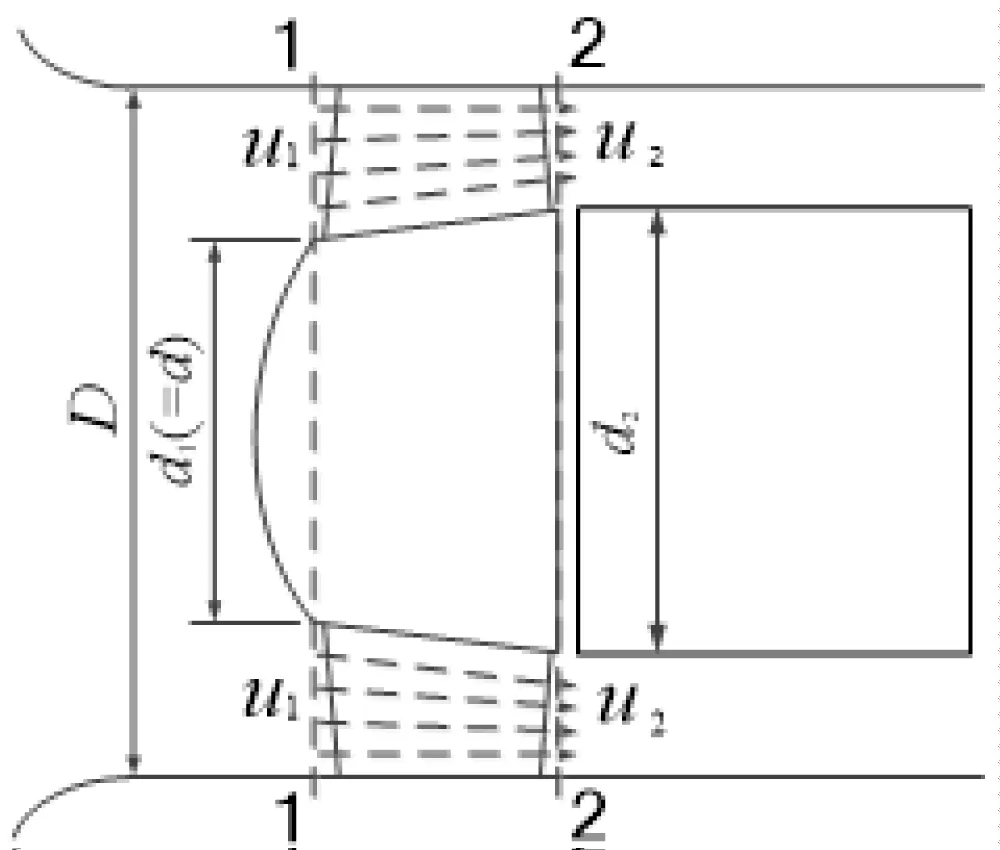
Figures 1,2 show the meridional plane shape and section notation of the conventional axial flow fan and axial flow fan with conical hub. In the figures, the section 1-1 is the blade inlet section, the section 2-2 is the blade outlet section, and , are the circumferential mean velocities of the air flow in the inlet section and outlet section, respectively.
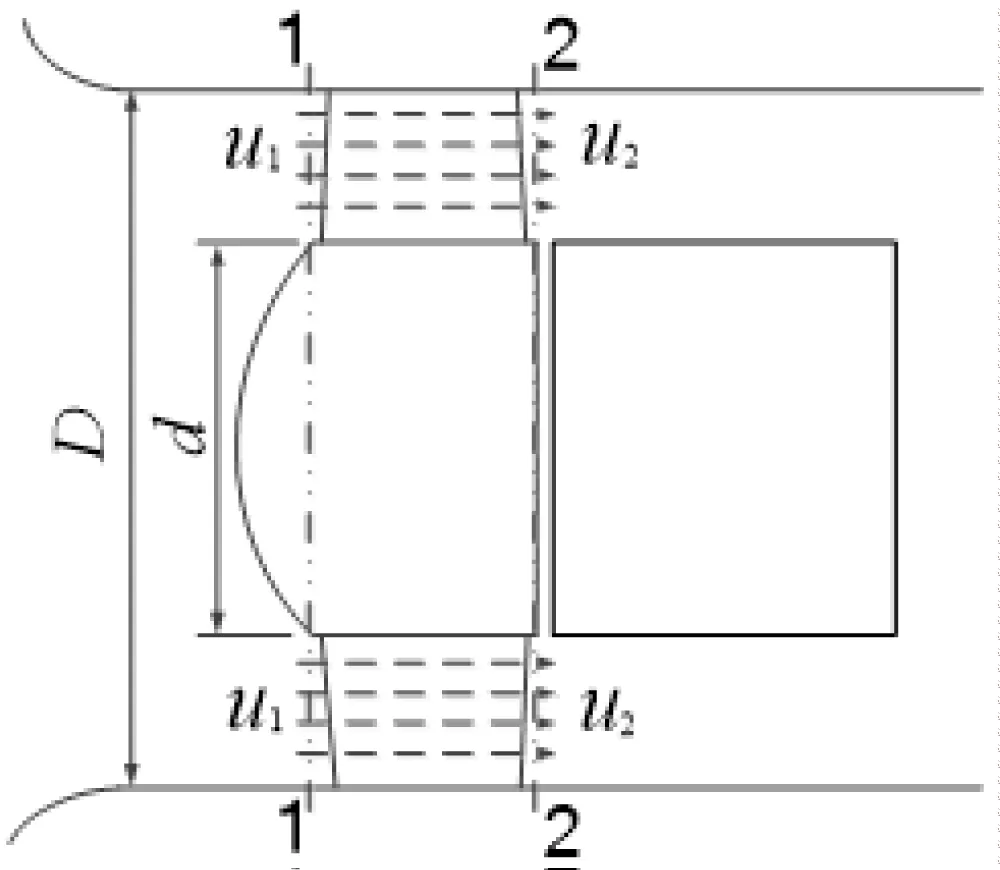
The outer diameter is D and the inner diameter is d of the conventional axial flow fan, which does not change from inlet to outlet.
The axial flow fan with a conical hub, so the outer and inner diameters at the inlet are the same as those in the conventional axial flow fan, but the inner diameters at the outlet are different from d2. Therefore, in an axial flow fan with a conical hub, the inlet and outlet have different hub ratios, denoted by the following equations, respectively.
Let us consider the theoretical total pressure equation to compare the pressure in a conventional axial flow fan and axial flow fan with a conical hub. The theoretical total pressure equation of the axial flow fan is expressed as follows.
where
- theoretical total pressure of fan
- gas density
, - the circumferential velocities at the inlet and outlet, respectively
When without the guide vanes as , the equation (2) at conventional and conical axial flow fan are as follows, respectively,
where
– the theoretical total pressure at conventional and conical axial flow fan, respectively.
- the circumferential velocities at the outlet of conventional and conical axial flow fan, respectively.
- the circumferential component of the absolute velocity at the outlet of conventional and conical axial flow fan, respectively.
In the axial flow fan with a conical hub, u1 and u2 are the same only at the blade tip and are different in each other blade section. Therefore, the circumferential velocity for the mean radius should be used to compare with the conventional axial flow fan. The inlet and outlet mean radius are
and considering
(n– number of rotation of fan), we get
The circumferential mean velocity at the inlet of the conventional axial flow fan is equal to the circumferential mean velocity at the outlet , and circumferential mean velocity at the inlet of the axial flow fan with a conical hub equal to the , so it can be written from Equations (4) and (6) as follows.
Consider the velocity triangle of a conventional axial flow fan and axial flow fan with a conical hub. Figure 3 shows the velocity triangle at the inlet and outlet together in the two cases. The dashed section in figure 4 is the speed triangle at the inlet, and equal each to other.
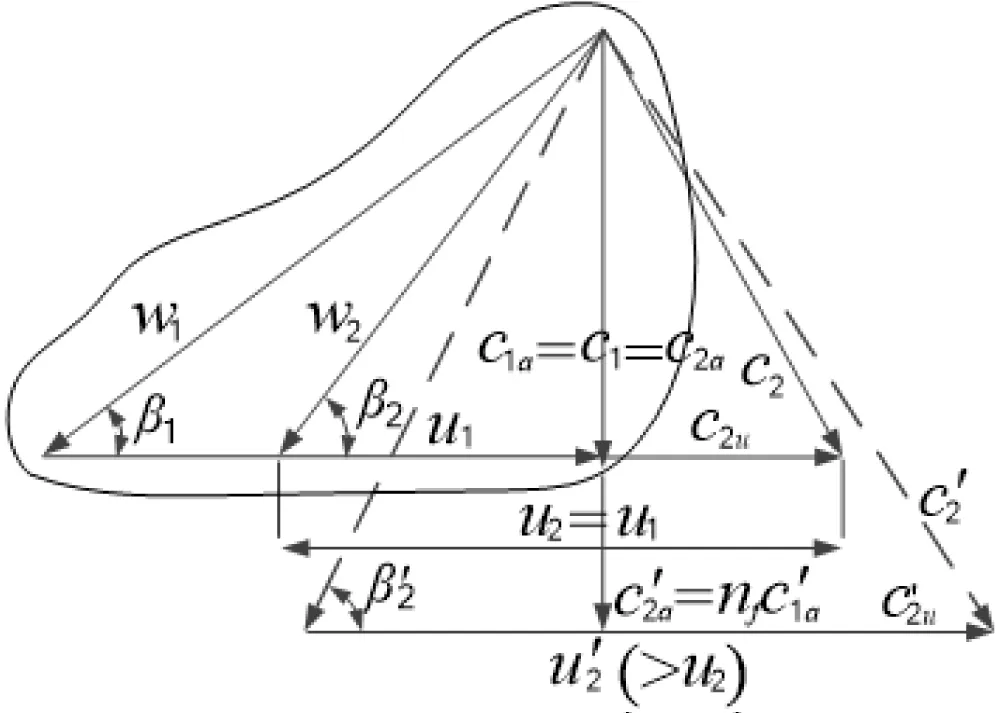
Since there is only a blade, . As shown in the figure, we can write the following expression,
where - meridional velocity increase ratio
In the conventional axial flow fan and in the axial flow fan with a conical hub .
Since the hub ratio of the conventional axial flow fan and the inlet hub ratio in the axial flow fan with a conical hub are the same, so , therefore from the equation (6) and (8),
Substitute (9) into the (7), we set
Substitute (9) into the (7), we set
The equation (10) allows determined the pressure increase of axial flow fan with a conical hub in comparison with conventional axial flow fan when given the designing indices are given.
Analysis for the detail examples
For comparison of the characteristics of axial flow fans with conical hubs and conventional axial flow fans, an electric locomotive traction motor cooling axial flow fans is given in detail. The designing indices of axial flow fans required for traction motor cooling is shown in table 1.
| Table 1: The designing indices of axial flow fans required for traction motor cooling. | |||
| Flow rate (m3/min) | Pressure (Pa) | Number of rotation (r/min) | Out diameter (mm) |
| 120 | 2 400 | 3 500 | 380 |
The pressure increments are estimated by equation (10) for a conventional axial flow fan and an axial flow fan with a conical hub designed according to the designing indices as shown in table 1. According to the above designing indices, the circumferential velocity and axial velocity at the inlet mean section are .
When the hub ratio of the conventional axial flow fan is 0.562, the inlet hub ratio of the axial flow fan with a conical hub is equal to the hub ratio of the conventional axial flow fan, so that and the outlet hub ratio is expressed by the meridional velocity increase ratio as follows,
As shown in equation (10), when the meridional velocity increase ratio and inlet/outlet hub ratio ,are determined, the pressure increments of the axial flow fan with the conical hub compared to the conventional axial flow fan at a given designing indices depends on the impeller outlet angle, ,. In an axial flow fan with a conical hub, the outlet angle is denoted by a abecause it is large compared to the outlet angle in a conventional axial flow fan.
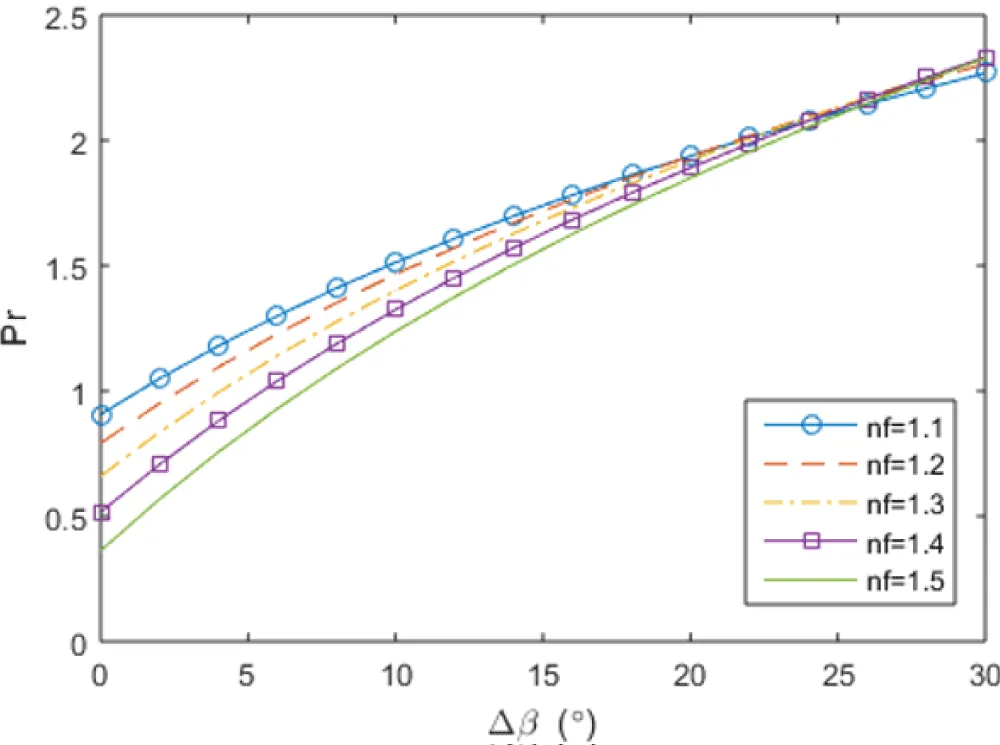
We now take nf = 1.1, 1.2, 1.3, 1.4, and 1.5, and calculate a using equation (11) and then plot the change relation of with by (10) by changing from 0° to 20° with interval 2°. The relationship is shown in figure 4. Value of so that is shown in table 2.
| Table 2: Value of so that Pr= 1 in different value of nf. | |||||
| nf = 1.1 | nf = 1.2 | nf = 1.3 | nf = 1.4 | nf = 1.5 | |
| (°) | 1.82 | 2.75 | 4.36 | 5.79 | 7.17 |
As shown in figure 4, the pressure increments also increase with the increase of Δβ. In the given case, the pressure increase of the axial flow fan with a conical hub compared to the conventional axial flow fan is achieved above the value of Δβ shown in table 2. The pressure increase ratio gets higher as nf becomes larger and pressure increments are larger compared to when it is small nf with the value of above . For small values of nf, the pressure increments is large up to a , but the increase ratio is slow and the pressure increments decreases from above Δβ compared to higher values of nf.
The pressure increment increases by almost two times at , but this is a two-dimensional theoretical result based on the velocity triangle and differs from the actual result where different factors act in the 3-dimensions. Also, since the inlet hub ratio of the axial flow fan with a conical hub is generally not equal to hub ratio of the conventional axial flow fan, result from the above are only true for some particular cases.
Off-design and 3D modelling of axial flow fan
With a given designing indices in table 1, according to the calculation formula presented in [20], we perform off-design of an axial flow fan and a conventional axial flow fan with a conical hub (Detailed calculations are not given here again).
The parameters and their values taken by the designer by the diagram or experience during the off-design are shown in table 3. The 3D model developed in the design application SolidWorks in terms of the impeller geometry obtained according to the off-design is shown in figure 5.
| Table 3: The Parameters selected by designer, and its value. | ||
| Parameters | Symbol | Value |
| Meridional velocity increase ratio | 1.25 | |
| Outlet hub ratio | 0.702 | |
| Number of blade | 14 | |
| Circulation decreases coefficient | 0.92 | |
| Joukowsky coefficient(blade tip) | 0.05 | |
| Joukowsky coefficient(blade root) | 0.1 | |
| Twist speed ratio at inlet | -0.36 | |
| Number of guide vanes | 13 | |
| Compactness of guide vanes | 0.95 | |
| Twist speed ratio at outlet | 0.21 | |
| Number of rectifier vanes | 23 | |
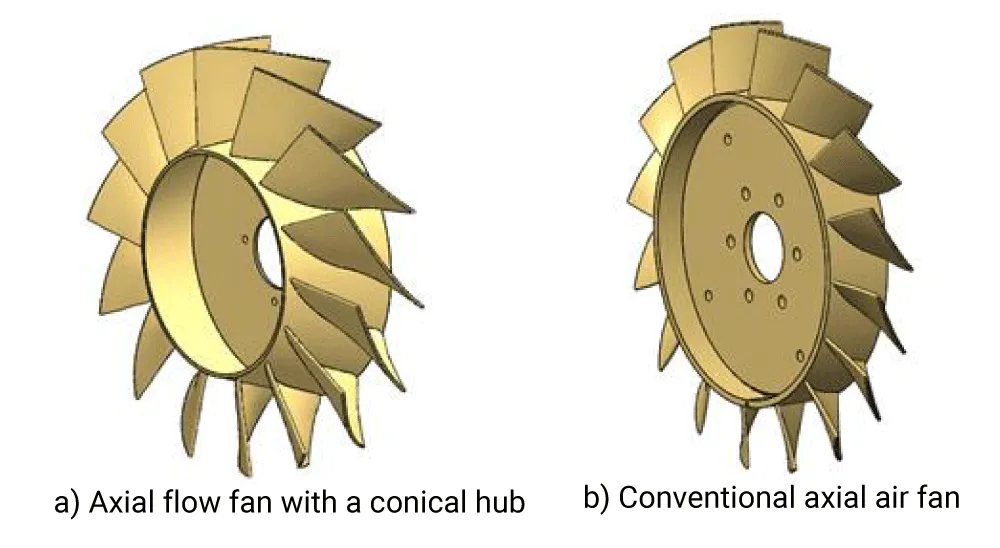
Comparison of characteristics by CFD analysis
Comparison of the characteristics of an axial flow fan with a conical hub and a conventional axial flow fan is performed by obtaining and comparing the characteristic curves by CFD analysis.
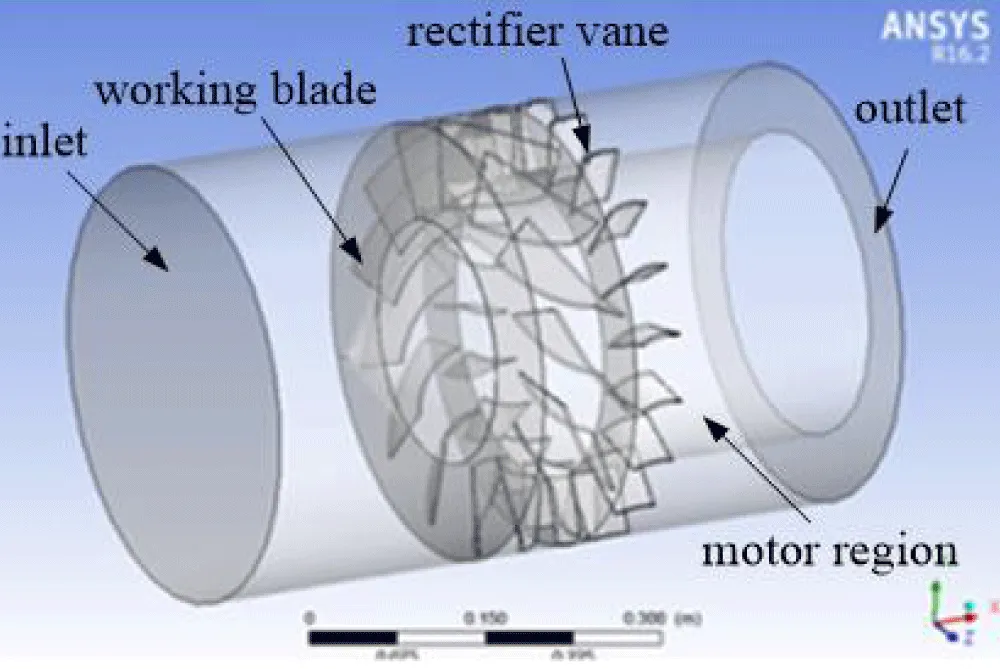
Geometric modelling and meshing: For the CFD analysis, the 3D geometric model of the axial flow fan with a conical hub and the conventional axial flow fan shown above is built in SolidWorks and meshed in ANSYS FLUENT. The geometrical model and computational domain are shown in figures 6,7, both of which are divided into inlet channel region, impeller region, outlet channel region and motor region. The motor region is the region where the fan motor is installed, which is simply approximated as a cylinder. To ensure computational accuracy, the pressure and suction surfaces on all blades are meshed using a Size Function, and the boundary layer mesh is formed on the blade surface. The meshing model is shown in figures 8,9. In the figures, a) is the meshing model of the whole computational domain, and b) is the enlarged view of the boundary layer mesh around the blade marked by the dashed line in a).
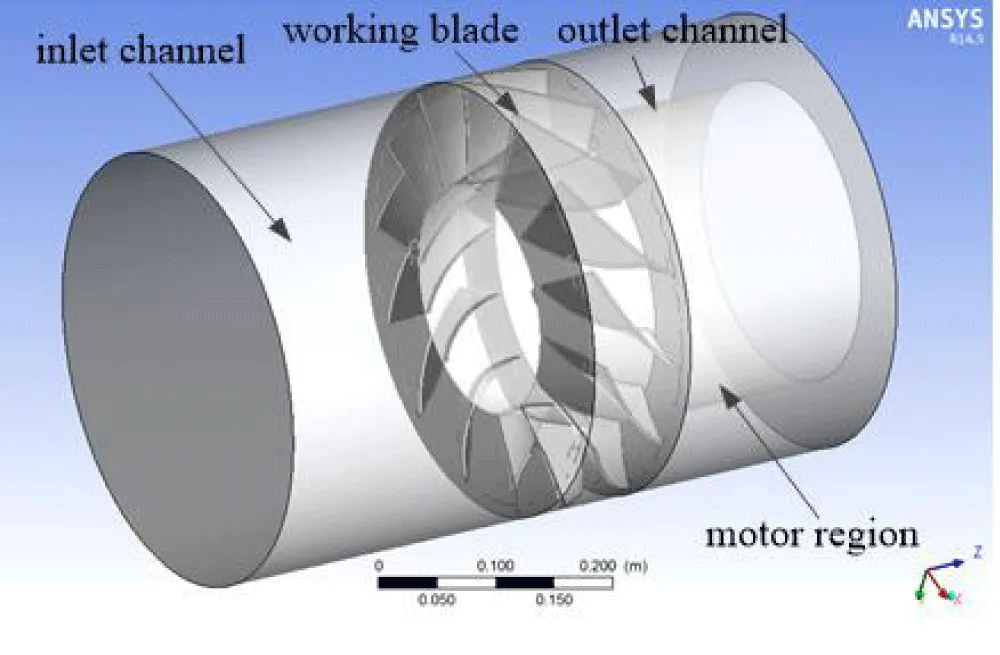
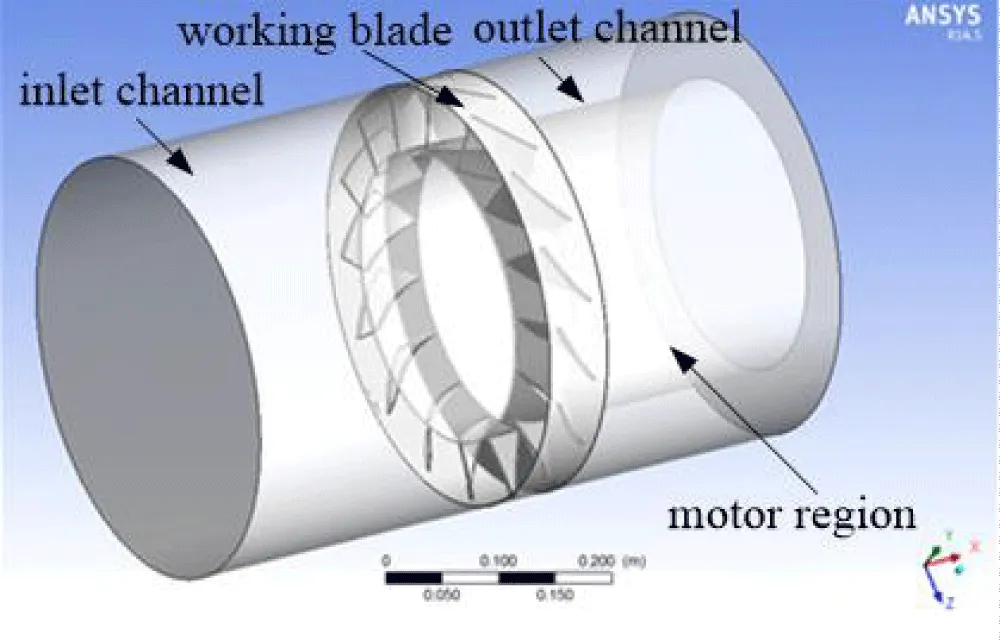
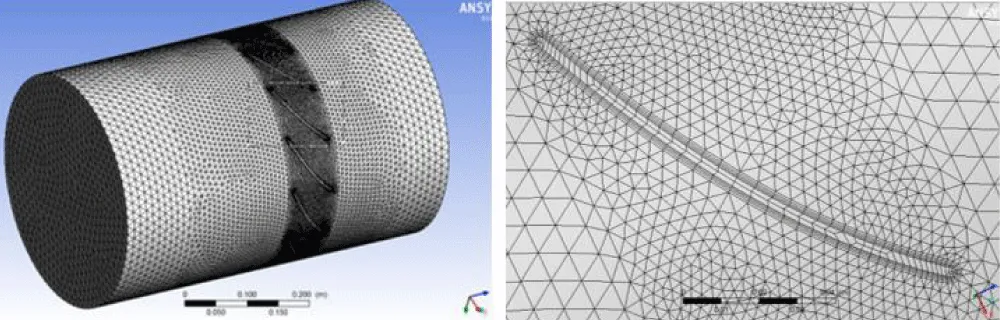
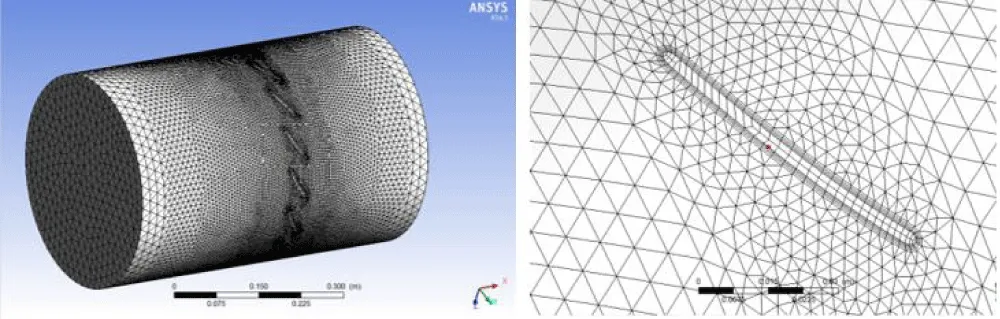
The structure of the inlet and outlet channels is simple, so it is slightly sparse (number of elements is 286 947); the blade section has a complex curved blade shape as the main work piece, so it is densely divided (number of elements is 725 853). The total number of elements is 1,012,800 in the fan with a conical hub and 1,020,788 in the conventional axial flow fan. According to the grid independence test, the flow rate change at this number of elements meets the precision requirement.
The governing equation: The flow in the axial flow fan can be treated as three-dimensional steady turbulence flow, in which case the governing equation consists of the continuity equation, the three-dimensional steady Reynolds-Averaged Navier-Stokes (RANS) equation, and the turbulence model. The convective, diffusive, and turbulent viscosity terms are all discretized in the second-order wind scheme. The Realizable k-e model, which is now widely used in axial flow fan flow analysis, is applied because this model can effectively simulate the complex flow in the tip clearance and rotational motion. The combination of velocity and pressure uses the SIMPLE algorithm.
The Multiple Reference Frame (MRF) model is widely used in fluid mechanical analysis as an effective way to simulate steady flow in a short computational time, taking into account the interference at the interface between the rotational and stationary regions. We use this model to combine the impeller, casing and other stall parts.
Boundary conditions: The inlet surface of the inlet channel is set to Velocity Inlet condition with the inlet of the whole flow field, and the outlet surface of the outlet channel is set to pressure outlet condition with the outlet of the whole flow field.
The impeller blade surface and the hub surface are treated as rotating surfaces and the rest as stationary surfaces. The interface between adjacent regions is defined as Interface. Every wall is endowed with a non-slip boundary shape, and a standard wall function is applied near the wall. The air is assumed to be incompressible and the physical parameters are constant; the effects of heat transfer and gravity and wall roughness between the air and the wall/blade are neglected. Set the number of iterations to 3,000 and perform the analysis. Convergence is considered to be achieved when the residuals of the parameters including velocity, k and e in all directions of the inlet and outlet are less than 104.
By calculating the pressure difference at the inlet and outlet sections while varying the inlet velocity between 10 and 22m/s, the fan pressure rise is obtained and the characteristic curve is plotted.
Comparison of analytical results and characteristics: According to the above procedure, the analysis is carried out in ANSYS FLUENT and the flow field characteristics are obtained. We compare the velocity vector profiles in the axial section of the axial flow fan with a conical hub and the conventional axial flow fan in figures 10,11. As shown in the figures, it can be seen that in the conventional axial flow fan, the flow velocity behind the blade increases compared to the front of the blade, but the area of increase decreases gradually. In comparison, it can be seen that in the axial flow fan with conical hub, the region of increasing flow velocity is almost maintained at the trailing edge and exits at increased velocity.
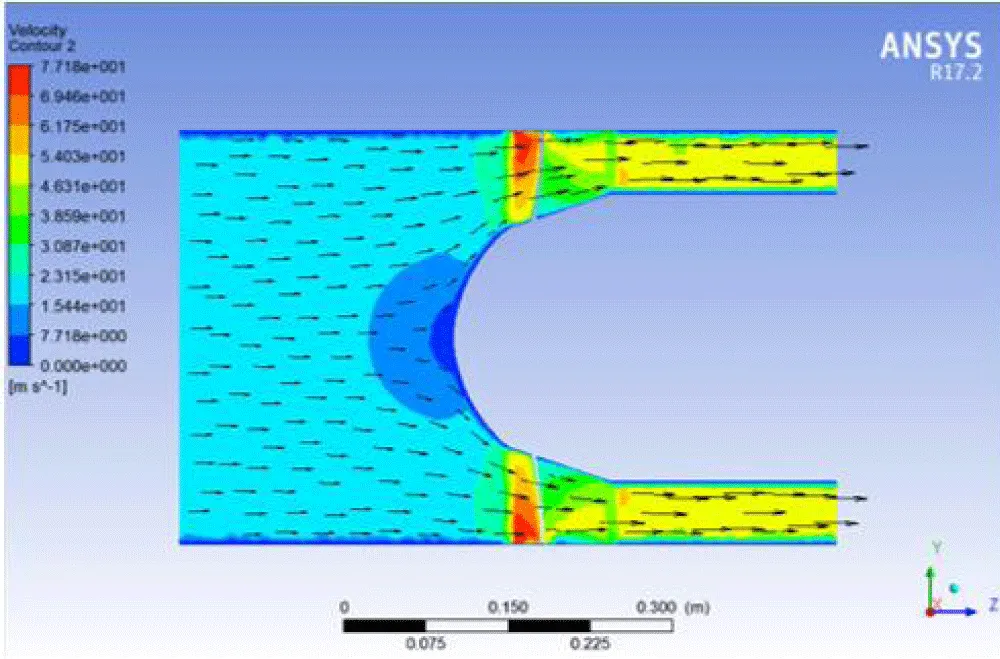
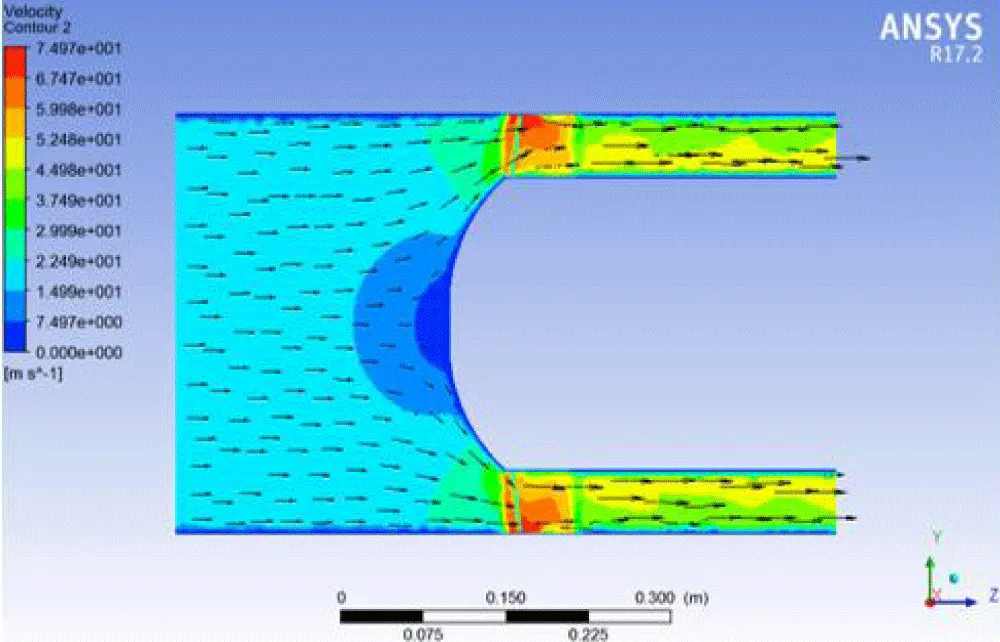
In the conventional axial flow fan with a cylindrical hub, fluid flow velocity beyond impeller decreases due to the loss in channel. In the axial flow fan with a conical hub, fluid is accelerated due to the flow cross-section gradually contrast, do not generate diffusion and decelerating action. Therefore, we can take the lager outlet angle β2 with the result that total pressure increases. The velocity vector diagram obtained by CFD analysis intuitively shows this.
We compare the pressure contour in the axial section of the axial flow fan with a conical hub and the conventional axial flow fan figures 12,13. As shown in the figures, the pressure increases from inlet to outlet in both cases, and the pressure rise is greater in the axial flow fan with a conical hub than in the conventional axial flow fan. It can also be seen that the pressure rise region is larger in the axial flow fan with a conical hub, which remains almost constant up to the channel outlet.
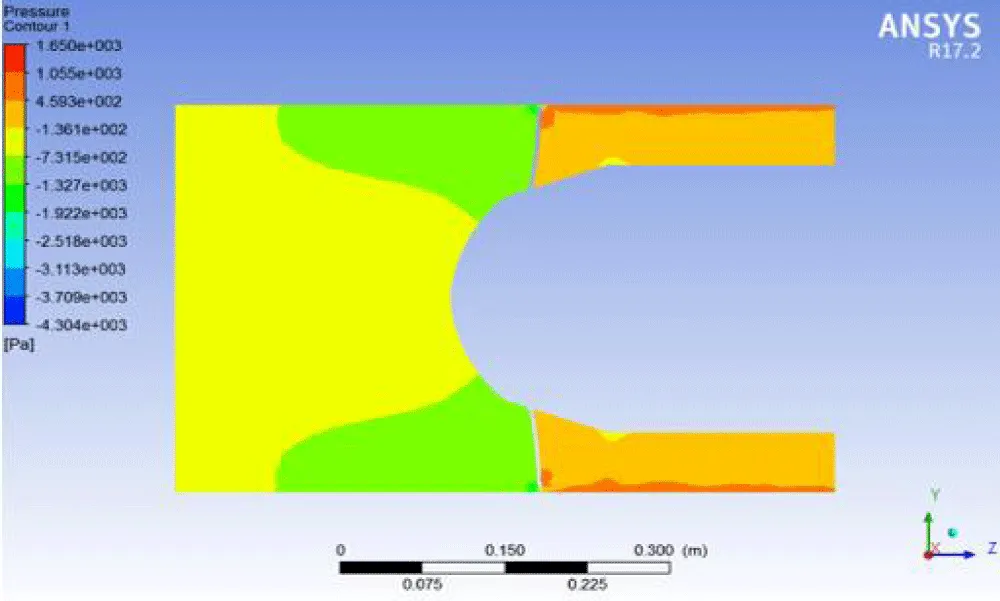
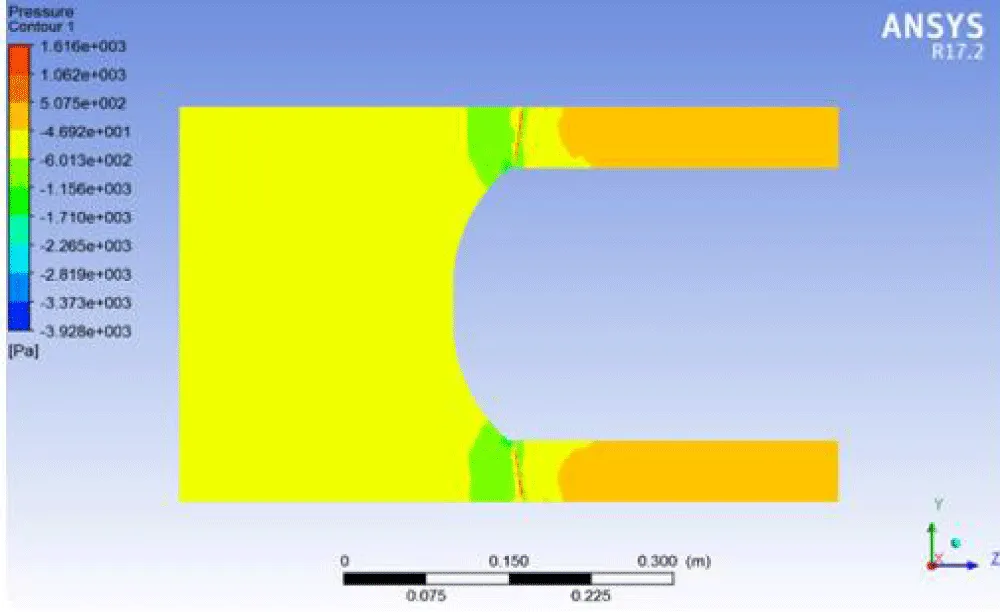
The pressure of conventional axial flow fan at rated flow rate 120m3/min is 1,573Pa, the one of the axial flow fan with a conical hub is 2,340Pa at the same flow rate, and pressure increase ratio . This result shows good agreement with the result in figure 4 when
By repeating the analysis by changing the flow rate (i.e., inlet velocity) at the fan inlet and calculating the inlet and outlet pressure difference for each flow rate, the characteristic curve of the fan can be obtained by obtaining the pressure rise value at the fan.
The efficiency is calculated by the following equation,
where Q - flow rate, m3/s
P - pressure rise in axial flow fan, Pa.
T - the torque of the impeller shaft, Nm.
Ω - angle velocity of the impeller shaft, rad/s.
CFD analysis results to obtain P, Q and T and calculate h by Equation (12).
Figure 14 shows the pressure-flow characteristic curves of the axial flow fan with a conical hub and the conventional axial flow fan, and figure 15 shows the efficiency characteristic curves in one coordinate plane. The pressure-flow rate characteristics of the conventional axial flow fan is calculated at given outer diameter and number of rotation.
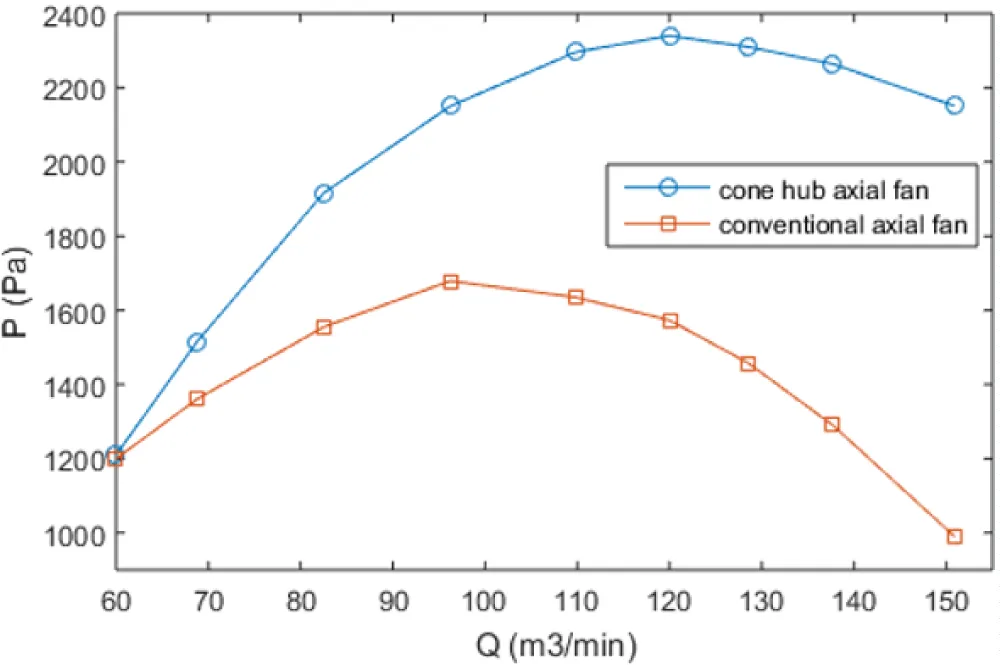
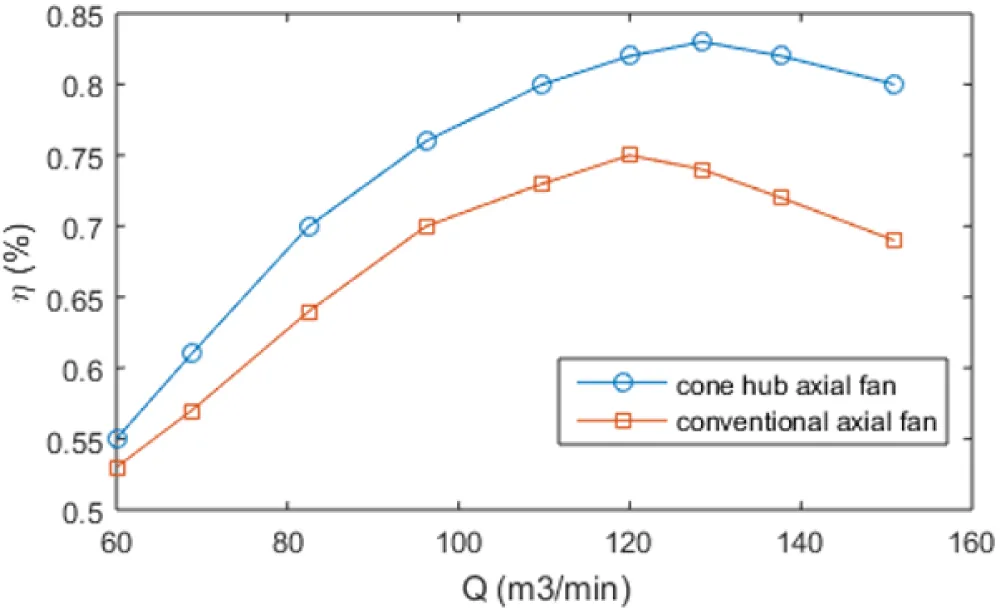
From the characteristic curves, it can be seen that the pressure of the axial flow fan with conical hub increases from about 60m3/min, the highest at 120.2m3/min, and the increase of the pressure increments to the increase of flow rate as compared to the conventional axial flow fan. It can also be seen that when the outer diameter is limited to 380 mm, the conventional axial flow fan produces a maximum pressure of 1,679Pa at a flow rate of 96.2m3/min and does not reach the design pressure of 2,400 Pa.
Comparing the efficiency curves, the overall efficiency of the axial flow fan with a conical hub is high.
Axial flow fan design with conical hubs having guide vanes and rectifier vanes
Theoretical consideration of an axial flow fan with a conical hub having guide vanes and rectifier vanes
As seen above, the axial flow fan with a conical hub with only impeller increases the pressure compared to the conventional axial flow fan, but does not yet reach the desired pressure 2,400Pa at the desired flow rate 120m3/min. Hence, this problem is solved by installing the guide vanes and the rectifier vanes.
The airflow in the impeller of the axial flow fan with a conical hub is different from that in the conventional axial flow fan, where the hub is cylindrical. In the airflow calculation of conventional axial flow, the axial and circumferential velocity at the inlet and outlet are constant since the airflow cross-sectional area from the inlet to the outlet is constant. However, in the impeller of the axial flow fan with a conical hub, the axial velocity increases because the hub is conical and the airflow cross-sectional area decreases from inlet to outlet, and the circumferential velocity is also different at inlet and outlet. Therefore, the flow parameters and parameter calculation formulas derived for the conventional axial flow fan are not available as they are, considering the constant axial and circumferential velocities.
In an axial flow fan with conical hub and guide and rectifier vanes, the flow calculation must also be performed to match the impeller characteristics where the flow cross-sectional area varies in the axial direction, and the parameters must be determined.
Let us start with the fan theoretical total pressure equation (2).
For a conventional axial flow fan is , then Eq. (2) as follows,
The calculation of the gas flow parameters and other parameters of the impeller in a conventional axial flow fan is used with the expressions derived on the basis of (13).
In an axial flow fan with a conical hub, when dividing the blade inlet and outlet with equal distance, the radius at the inlet and outlet of the same divided section are different, so the circumferential velocities are not the same; the circumferential velocities are the same only at the tip of the blade since the outer diameter is the same. That is, the mean velocity values of the circumferential velocity at the blade inlet and outlet sections are different. The calculation of the flow in an axial flow fan with a conical hub should take this into account.
From Eq. (2), we can get the following,
where, u1 and u2 are the circumferential velocities at the inlet and outlet of the axial-flow fan impeller with a conical hub, equal to u1m and u2m seen above, are generated by the guide vanes and when there is no guide vanes.
The quantity that characterizes the twist speed ratio in an axial flow fan with guide vanes,
we can denote the as the following,
We also obtain from Eqs. (14) and (16)
and substitute this into Eq. (14), and get
Usually, the twist direction of the guide vanes is negative as opposed to the impeller rotation direction ( ); then, from (2), the theoretical total pressure increases, which is why the guide vanes acts to increase the total pressure.
Equations (17) and (18) are the basic design equations of the axial flow fan with a conical hub with guide vanes and rectifier vanes. When u1= u2, these expressions are transferred to those in the conventional axial flow fan.Guide vanes design
Based on the above theoretical analysis, the design of the axial flow fan with conical hub, guide vanes and rectifier vanes is carried out. The designing indices of the fan to be designed are shown in table 1.
First, the guide vanes are designed by modelling it as a miniature blasé cascade according to the procedure presented in [20] (Detailed formulas and design procedures are outlined). The calculated guide vanes parameters are shown in table 4.
| Table 4: Results of guide vanes parameters calculation according to section. | ||||||
| Parameters | Unit | Calculation section | ||||
| Ⅰ | Ⅱ | Ⅲ | Ⅳ | Ⅴ | ||
| Radius of vanes section | m | 0.190 | 0.169 | 0.148 | 0.127 | 0.107 |
| Installation angle | o | 94.493 | 94.803 | 95.154 | 95.555 | 96.015 |
| Vanes width | m | 0.087 | 0.078 | 0.068 | 0.058 | 0.049 |
| Vanes profile radius of median line | m | 0.089 | 0.0780 | 0.075 | 0.088 | 0.184 |
| The number of vanes is 13. | ||||||
Impeller design
The impeller design of the hub-conical rotor follows the equations presented in [20]; the designing indices are as shown in table 1, while the calculation of is calculated by (17)-(18). Table 5 shows the obtained impeller parameters. The number of blades of the impeller is 14.
| Table 5: Results of impeller parameters calculation according to section. | ||||||
| Parameters | Unit | Calculation section | ||||
| Ⅰ | Ⅱ | Ⅲ | Ⅳ | Ⅴ | ||
| Inner diameter | m | 0.190 | 0.169 | 0.148 | 0.127 | 0.107 |
| Outer diameter | m | 0.190 | 0.176 | 0.162 | 0.148 | 0.134 |
| Mean pitch | m | 0.083 | 0.077 | 0.071 | 0.064 | 0.056 |
| Blade width | m | 0.098 | 0.088 | 0.078 | 0.067 | 0.057 |
| Installation angle | o | 30.308 | 33.638 | 37.862 | 43.339 | 50.535 |
| Blade curvature radius | mm | 228.090 | 175.230 | 129.730 | 91.930 | 62.000 |
Rectifier vanes design
The rectifier vanes are mainly designed in the same way as the impeller blades, and there is a method by the single blade profile theory and a method by the cascade theory. We design the rectifier vanes according to the method of the cascade theory. The calculation of the rectifier vanes parameters follows the procedure presented in [20] the calculated rectifier vanes parameters are shown in table 6.
| Table 6: Rectifier vanes parameter calculation formula and calculation values. | ||||||
| Parameters | Unit | Calculation section | ||||
| Ⅰ | Ⅱ | Ⅲ | Ⅳ | Ⅴ | ||
| Outer diameter | 0.38 | 0.38 | 0.38 | 0.38 | 0.38 | |
| Radius of vanes section | m | 0.19 | 0.1759 | 0.1618 | 0.1476 | 0.1335 |
| Vanes width | m | 0.0377 | 0.039 | 0.0405 | 0.0425 | 0.045 |
| Installation angle | o | 83.0293 | 81.0459 | 78.879 | 76.4828 | 73.8057 |
| Vanes profile radius of median line | m | 0.0445 | 0.0459 | 0.0475 | 0.0496 | 0.0522 |
| The number of blades of the rectifier is 23. | ||||||
Characteristic Analysis of Axial Flow Fans with a Conical Hubs and Guide and Rectifier Vanes
Now, the axial flow fan in the form of guide vanes + impeller, impeller + rectifiers, and guide vanes + impeller + rectifiers are analysed, respectively, and their characteristics are compared to select the appropriate form.
Characteristic analysis of guide vanes + impeller type
Figure 16 shows the computational domain for the CFD analysis and the geometric model of the axial flow fan with the conical hub-impeller and guide vanes.
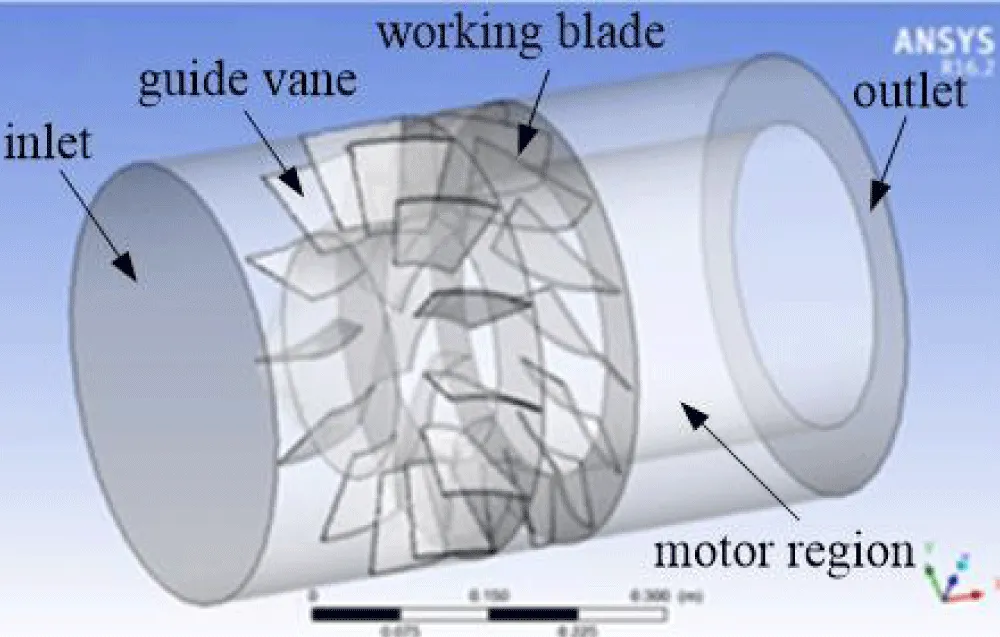
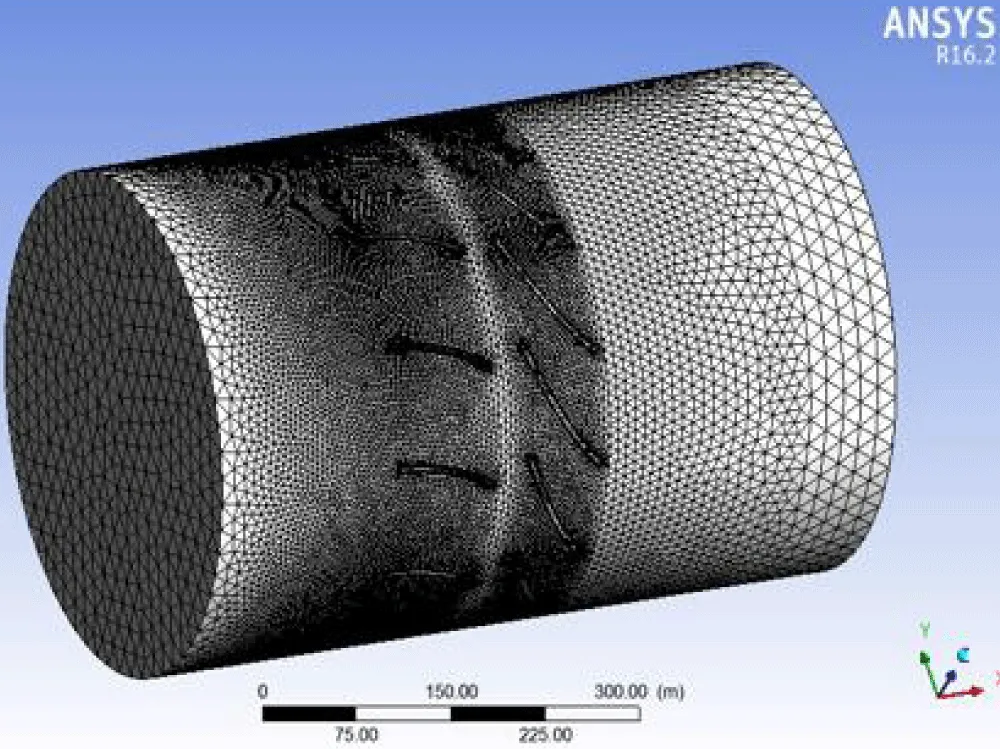
Figure 17 shows the meshing model corresponding to the geometry of figure 16 each blade is equipped with a boundary layer, and the number of elements is 1,080,000 in the impeller region and 780,000 in the inlet and outlet region including the guide vanes.
The CFD analysis follows the procedure presented in Section 2. The analytical conditions are the same as in Section 2.
The characteristic curve of this type of axial flow fan obtained from the analysis is shown in figure 18. Comparing figure 18 with figure 14, it can be seen that when the guide vanes are installed in front of the impeller, the characteristic curve moves to the right and the pressure at the rated flow rate (120m3/min) increases.
Characteristic analysis of impeller + rectifier vanes type
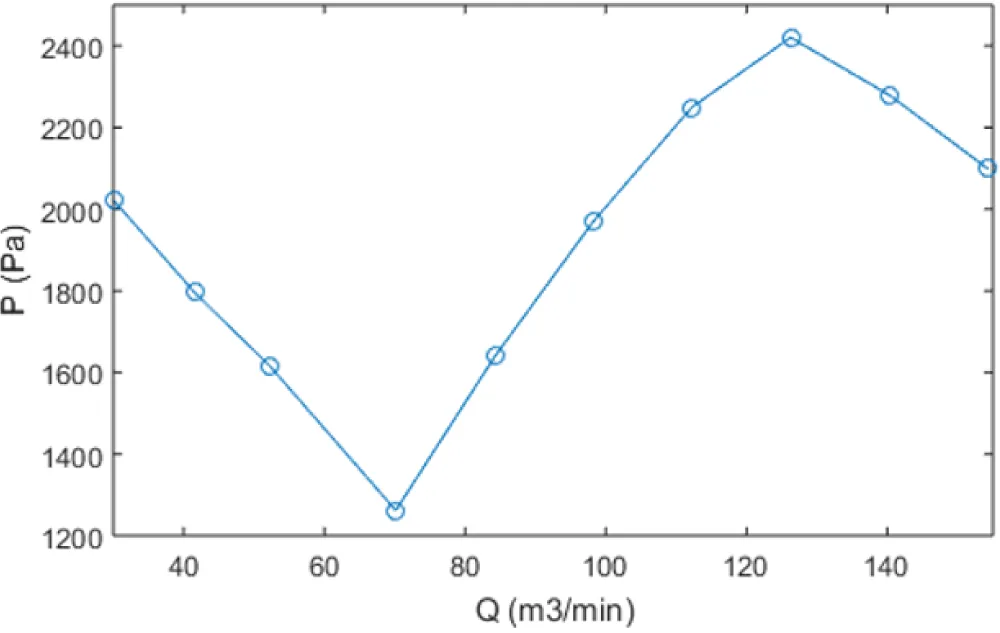
Figures 19,20 show the geometrical and meshing models for the axial flow fan in the form of impeller + rectifiers vanes; the number of elements is 1,260,000 in the inlet region containing the impeller and 560,000 in the outlet region containing the rectifier vanes. Obtaining the characteristic curves in the same way as above is shown in figure 21.

In the diagram, when the rectifier vanes are installed pressure at the working point decreased in comparison with the case of guide vanes + impeller type. This is due to the pressure loss in the rectifier vanes. However, there is an advantage that the characteristic does not change significantly during the change of the working point due to external perturbation, since the peak near the working point is flat.
Characteristic analysis of guide vanes + impeller + rectifier vanes type
From the above analysis, it can be seen that installing the guide vanes increases the axial flow fan pressure and installing the rectifier vanes widens the stable working point region. Hence, by taking advantage of both cases, the axial flow fan in the form of guide vanes + impeller + rectifier vanes are constructed and its characteristics are analysed.
Figure 22 shows the computational domain for the CFD analysis and the geometric model of the axial flow fan with guide vanes + impeller + rectifier vanes.

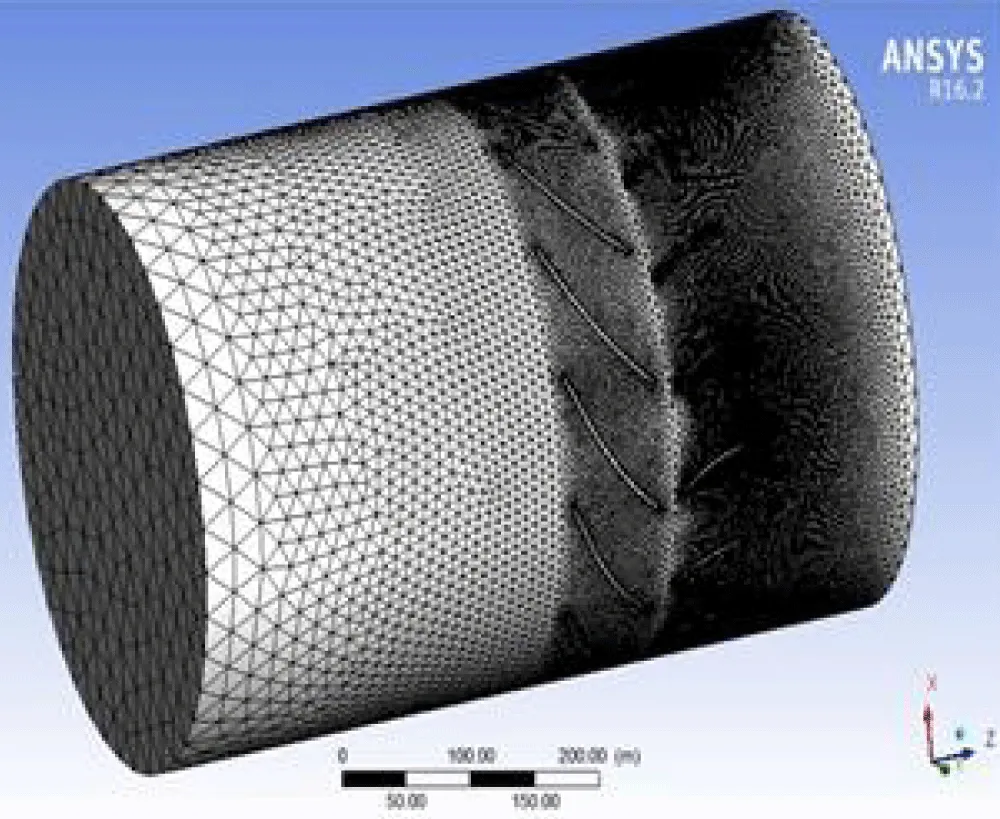
Figure 23 shows the meshing model corresponding to the geometry of figure 22 each blade is equipped with a boundary layer, and the number of elements is 1,020,000 in the impeller region, 680,000 in the inlet region containing the guide vanes, and 460,000 in the outlet region containing the rectifier vanes.

The characteristic curves obtained by CFD analysis in the same way as above are shown in figure 24.

Compared with the characteristic curves in the above two cases, it can be seen that in this case the characteristic curve reached the desired working pressure at the desired ventilation volume of 120m3/min with a pressure of 2,480 Pa, flatted near the pick and the stable working region widened.
Thus, the electric locomotive traction motor cooling fan is composed of an axial flow fan with a conical hub in the form of guide vanes + impeller + rectifier vanes.
The three-dimensional model of the axial flow fan with a conical hub in the form of guide vanes + impeller + rectifier vanes designed as above is shown in figure 25.

Compare of characteristics with the conventional axial flow fan
For the performance comparison of designed axial flow fan with a conical hub with the conventional axial flow fan, a conventional axial flow fan of the guide vanes + impeller + rectifier vanes type is designed and a three-dimensional model is developed to perform CFD analysis. The design follows the conventional axial flow fan design procedure according to the design index of table 1, and the CFD analysis follows the procedure presented in section 2.
Figure 26 shows the geometry and computational domain of the conventional axial flow fan with guide vanes and rectifier vanes. Figure 27 shows the meshing model. Figure 28 shows the characteristic curves of the axial-flow fan with a conical hub of the guide vanes + impeller + rectifier vanes type and the characteristic curves of the conventional axial-flow fan in the one-coordinate plane.


As shown in the curve, the axial flow fans with a conical hub have superior performance to conventional axial flow fan.
The comparison of pressure and efficiency characteristics of axial flow fan with a conical hub of guide vanes + impeller + rectifier vanes type with one of conventional axial flow fan of guide vanes + impeller + rectifier vanes type at 120m3/min flow rate are shown in table 7.
| Table 7: Comparison of characteristics of axial flow fans with conical hub with one of conventional axial flow fan. | |||
| Characteristics | Axial flow fans with conical hub | Conventional axial flow fan | Increments, % |
| Efficiency, % | 84.2 | 78.6 | 5.6 |
| Pressure, Pa | 2,468 | 1,758 | 28.77 |
Conclusion
If a hub shape is cone, the meridional fluid flow is accelerated due to the flow cross-section gradually contrast, as a result of this suppressed diffusion and decelerating action, finally, is possible raised of pressure and efficiency.
In order to increase the pressure of the axial flow fan, a theoretical and numerical analysis study of the axial flow fan with a conical hub was carried out. The total pressure equations of the axial flow fan with a conical hub were considered, the pressure increase expression compared to the conventional axial flow fan was determined, and the effectiveness was verified by CFD analysis. The relative tolerance between the pressure increases by theoretical and CFD analysis is 2.8%, comparatively good agree.
In order to provide the required pressure for the electric locomotive traction motor fan, the theoretical considerations for the case of the installation of guide vanes and rectifier vanes on the impeller with the conical hub were made to provide the theoretical basis for the design of the parameters of each blade, and based it designed the axial flow fan of guide vanes + impeller, impeller + rectifier vanes, guide vanes + impeller + rectifier vanes type, respectively. For each case, the characteristics were plotted and compared by CFD analysis, and accordingly the axial flow fan structure of the guide vanes + impeller + rectifier vanes type was identified. The performance of designed axial flow fan with a conical hub was compared with the performance of conventional axial flow fan to verify its effectiveness.
The analysis confirmed that the designed axial flow fan increased 710Pa (28.77%) and 5.6% (relative increment 7.1%) efficiency compared to the conventional axial flow fan at the same number of revolutions and outside diameter.
The results of the analysis confirm that the proposed theoretical analysis and parametric determination methods are valid and can be applied to the design of axial flow fans where high pressures are required.
Author Contributions
SUP and Ph J Th. developed the conceptual framework and designed the methodology. Ph J Th carried out mathematical modeling and analyzed the results. Y. N. O. and H.T. P. developed a 3D model for a new structure axial fan and carried out CFD analysis. RMK and HS Ch wrote the initial draft of the manuscript. PSU reviewed and edited the manuscript for final submission. Ph J Th read and approved the final manuscript.
Declarations
Competing interest, the authors declare that they have no known competing financial interests or personal relationships that could have appeared to influence the work reported in this paper.
Acknowledgement
This research did not receive any specific grant from funding agencies in the public, commercial, or not-for-profit sectors.
References
- Sarraf C, Nouri H, Ravelet F, Bakir F. Experimental study of blade thickness effects on the overall and local performances of a Controlled Vortex Designed axial-flow fan. Experimental Thermal and Fluid Science. 2011;35:684-693. doi: 10.1016/j.expthermflusci.2011.01.002
- Li CX, Lin Q, Ding XL, Ye XM. Performance, aeroacoustics, and feature extraction of an axial flow fan with abnormal blade angle. Energy. 2016;103:322-339. doi: 10.1016/j.energy.2016.02.147.
- Liu Y, Lin Z, Lin PF, Jin YZ. Effect of the uneven circumferential blade space on the performance of a small axial flow fan. Journal of Thermal Science. 2016;25:495-500. doi: 10.1007/s11630-016-0890-7.
- Zhu LF, Jin YZ, Li Y, Jin YZ. Numerical and experimental study on aerodynamic performance of a small axial flow fan with splitter blades. Journal of Thermal Science. 2013;22:333-339. doi: 10.1007/s11630-013-0632-z.
- Li GQ, Zhu LF, Hu YJ, Jin YZ. Influence of chord lengths of splitter blades on performance of a small axial flow fan. Open Mechanical Engineering Journal. 2015;9:361-370. doi: 10.2174/1874155X01509010361.
- Zhang L, Jin YZ, Jin YZ. An Investigation on the effects of irregular airfoils on the aerodynamic performance of small axial flow fans. Journal of Mechanical Science and Technology. 2013;27:1677-1685. doi: 10.1007/s12206-013-0416-0.
- Yang XL, Wu CH, Wen HB, Zhang LL. Numerical simulation and experimental research on the aerodynamic performance of a large marine axial flow fan with perforated blades. Journal of Low Frequency Noise, Vibration & Active Control. 2018;37:410-421. doi: 10.1177/0263092317714697.
- Jung JH, Joo WG. The effect of the entrance hub geometry on the efficiency in an axial flow fan. International Journal of Refrigeration. 2019;101:90-97. doi: 10.1016/j.ijrefrig.2019.02.026.
- Pogorelov A, Meinke M, Schröder W. Effects of tip-gap width on the flow field in an axial fan. International Journal of Heat and Fluid Flow. 2016;61:466-481. doi: 10.1016/j.ijheatfluidflow.2016.06.009.
- Ye XM, Zhang JK, Li CX. Effect of blade tip pattern on performance of a twin-stage variable-pitch axial fan. Energy. 2017;126:535-563. doi: 10.1016/j.energy.2017.03.057.
- Moghadam SMA, Meinke M, Schröder W. Analysis of tip-leakage flow in an axial fan at varying tip-gap sizes and operating conditions. Computers and Fluids. 2019;183:107-129. doi: 10.1016/j.compfluid.2019.01.014.
- Yingkun Z, Yu W, Tao L, Jingyin L. Volume flow rate optimization of an axial fan by artificial neural network and genetic algorithm. Open Journal of Fluid Dynamics. 2019;9:207-223. doi: 10.4236/ojfd.2019.93014.
- Nazmi LA, Ayder E. Influence of the sweep stacking on the performance of an axial fan. Journal of Turbomachinery. 2014;137(6):061004. doi: 10.1115/1.4028767.
- Krömer FJ, Moreau S, Becker S. Experimental investigation of the interplay between the sound field and the flow field in skewed low-pressure axial fans. Journal of Sound and Vibration. 2019;442:220-236. doi: 10.1016/j.jsv.2018.10.058
- Xue L. Experimental and numerical simulation investigations of an axial flow fan performance in high-altitude environments. Energy. 2021;234:121281. doi: 10.1016/j.energy.2021.121281.
- Michihiro N. A study on rotor blades for a two-stage jet fan. The 4th International Symposium on Fluid Machinery and Fluid Engineering. 2008;27:249-254. doi: 10.1007/978-3-540-89749-1_37.
- Hushmandi NB. Numerical study of unsteady flow phenomena in a partial admission axial steam turbine. ASME Turbo Expo. 2009:713-722. doi: 10.1115/GT2008-50538.
- Mansour M. Impact of time-resolved entropy measurement on a one-and-1/2-stage axial turbine performance. ASME Turbo Expo. 2008;3:1289-1300. doi: 10.1115/GT2008-50807.
- Lei Z. Simulation of entropy generation during the evolution of rotating stall in a two-stage variable-pitch axial fan. Advances in Mechanical Engineering. 2019;11:1-12. doi: 10.1177/10.1177/1687814019846998.
- Zhang Y. 2011. Design and selection of ventilators. Chemical Industry Press. 2011;15:221-225.
- Lee HK, Park KT, Choi H. Experimental investigation of tip-leakage flow in an axial flow fan at various flow rates. Journal of Mechanical Science & Technology. 2019;33:1271-1278. doi: 10.1007/s12206-019-0227-z.





Content Alerts
SignUp to our
Content alerts.
 This work is licensed under a Creative Commons Attribution 4.0 International License.
