
2025 November 05;6(11):1643-1654. doi: 10.37871/jbres2217.
-
Subject area(s):

 |
|
 |
|
 |
|

 Review Article
The Cellular Crosstalk between the Endothelial Cells and Immune Cells in the Metastasis of NSCLC
Wang J1, Huang Y2, Jin Y3*# and Liu G1#
2Department of Pulmonary Diseases, Institute of Respiratory Diseases of Sun Yat-sen University, The Third Affiliated Hospital of Sun Yat-sen University, Guangzhou, China
- Non-small cell lung cancer
- Endothelial cells
- Single cell analysis
- Tumor microenvironment
- Immune cells
Abstract
Background: Bone and brain metastasis are common in the NSCLC, and tumor environment has played a vital role in the metastasis, endothelial cells are a key component of the tumor microenvironment and its role in the development need to be investigated.
Methods: We collected three scRNA‑Seq datasets: GSE254379, GSE131907 and GSE225209 associated with the metastasis of lung cancer, and we integrated three datasets. Dimensionality reduction, clustering, and visualization (t - SNE, UMAP) were conducted, leading to the annotation of six major cell types (T cells, B/plasma cells, ECs, myeloid cells, fibroblasts, epithelial cells) using canonical markers. Subpopulation analysis, differential gene expression, and enrichment analysis were performed for each major cell type using the SCP package, with cell clusters annotated via established marker databases (CellMarker, PanglaoDB). The distribution preference of cell categories across tissues was assessed using odds ratios. Cell-cell communication was inferred using CellChat, analysing multiple signalling categories.
Results: We integrated three single-cell databases of metastasis-related NSCLC (GSE254379, GSE131907 and GSE225209). And we found that he arterial ECs, CD8 + T cycling T cells, MZB1 + plasma cells, MMP9 + macrophages were most associated with the bone metastasis. The CD8 + T GZMB cells, RPL + B cells, RPL + B cells were more abundant in the brain metastasis tissue. Compared with other immune cells, bidirectional interactions became much more in ECs and B cells. In cellular interactions, APP-CD74 plays an important role in immune cells and tumors.
Conclusion: APP - CD74 might mediate B cells and endothelial cells to play a vital role in tumor development.
Introduction
Lung cancer remains the most prevalent type of cancer globally, with Non-Small Cell Lung Cancer (NSCLC) constituting over 85% of all lung cancer cases [1]. Surgical intervention is the primary treatment modality for early-stage tumors; however, recurrence and metastasis of various tumors post-surgery continue to pose significant challenges. Despite advancements in chemotherapy and targeted therapies, the metastasis of malignant tumors, particularly lung cancer, remains a critical issue in contemporary treatment approaches and exerts considerable societal burdens. Metastasis is a leading cause of mortality across various cancer types, with the bones and brain frequently serving as common sites for non-small cell metastasis [2]. One of the most primary lesions for bone metastasis is the lung [3]. More than 30% patients with metastatic lung cancer develop bone metastases [4]. The occurrence of bone metastasis and brain metastasis was closely related to the Tumor Microenvironment (TME) [5].
The Tumor Microenvironment (TME) encompasses the immune milieu surrounding tumor cells and is characterized by a diverse array of cellular constituents, including tumor cells, Endothelial Cells (ECs), fibroblasts, and immune cells. The cell composition and cell crosstalk and their interactions had contribute a lot the development of the tumor [6]. The TME has been closely linked to poor prognostic outcomes in NSCLC and is recognized as a critical regulator of tumor metastasis and progression. Numerous studies have concentrated on the various subtypes of fibroblasts, given that they represent one of the most prevalent cell types within the TME. For instance, Cancer-Associated Fibroblasts (CAFs) have been attracted attention of various researchers. And it was suggested that CAFs exhibit different subtypes in the tumor microenvironment, which including my CAF, iCAF, apCAF, pericyte, cycling fibroblast [2]. CAFs could influence the anticancer function of T cells in the TME. In recent years, research on the TME has continued, and the interaction between fibroblasts and immune cells has received various attention of researchers. Growing evidence underscores the pivotal role of ECs within the TME in cancer progression and metastasis [7]. Tumorigenesis is a complex process including cell-cell interactions allowed tumor cells to proliferate and metastasis. Tumor vasculature has played important role in the development of the cancer and it was a key component of TME8. As a key component of tumor vasculature, ECs interact with tumor cells throughout all stages of the disease, regulating immunity and angiogenesis. But their specific functions in tumor remain incompletely understood. Our study tried to elucidate the role of ECs in the NSCLC.
Methods
scRNA‑Seq lung cancer metastasis cohorts
To investigate the differences in tumor microenvironments among different metastatic sites of lung cancer, especially the characteristics of ECs, we collected three scRNA‑Seq datasets: GSE254379, GSE131907 and GSE225209.
scRNA‑Seq data analysis
Cells with fewer than 200 or more than 5,000 genes, as well as those with a mitochondrial gene proportion exceeding 20% (Calculated by the Percentage Feature Set function), were all filtered out. The genes expressed in fewer than 3 cells were removed. After quality control, gene expression matrices were normalized by applying the Normalize Data function. A droplet contains more than one cell in single cell capture called doublets, which were removed through Doublet Finder R package (Version 2.0.3).
The Seurat v5 was employed for batch correction and “RPCA Integration” was selected as the method for analysis. Dimension reduction starts with screening out the 2000 highly variable genes applying Find Variable Features function. And then Principal Component Analysis (PCA) was performed for these highly variable genes. We constructed a shared nearest neighbor graph with the find neighbor function and identified clusters (Resolution = 0.6) with Find Clusters Function. Then, the results were visualized by t - distributed Stochastic Neighbor Embedding (tSNE) and Uniform Manifold Approximation and Projection (UMAP) methods. Subsequently, clusters were annotated by classical cell surface markers. Six major cell types were identified: T cells (CD2, CD3D and CD3E), B cells and plasma cells (MS4A1, MZB1), endothelial cells (CDH5, ENg and vwf), myeloid cells (CD163, MARCO and CD14), fibroblasts (LUM and COL6A3) and epithelial cells (KRT7, KRT19 and EPCAM).
Cell cluster annotation
For each major cell type, we conducted a more detailed subpopulation analysis and annotation. We used the SCP R package for the analysis. The Run DE test function was employed to identify differential genes for each cell subpopulation, with a log 2 (Fold change) greater than 1 and adjusted p - values considered as feature genes. The Run Enrichment function was used for enrichment analysis of the feature genes, while the Enrichment Plot function visualized the enrichment results. We utilized experimentally validated marker genes, as determined by Scanpy, to annotate cell clusters. Genes that exhibited high and specific expression within each cluster were designated as marker genes. To identify the cell types associated with these marker genes, we referenced the Cell Marker and Panglao DB databases.
Distribution preference of cell categories
To describe the distribution of cell types in different groups, Odds Ratios (ORs) were computed, and preferences were shown. For each possible combination of cell type i and category j, i × j table of contingencies was formed. Then, the OR were calculated on the contingency table. A greater OR value implies that cell type i is more likely to be present in tissue j, whereas a smaller OR value suggests that cell type i is less likely to be present in tissue j.
Cell interaction analyses
We employed Cell Chat to analyse cell–cell interactions among immune cell subsets. The Cell Chat package features an extensive database of signalling molecule interactions, incorporating the structural details of receptor-ligand interactions, including multimetric complexes, soluble agonists and antagonists, and stimulatory or inhibitory membrane-bound co-receptors. This analysis involves identifying differentially expressed signalling genes, calculating the ensemble average expression and intercellular communication probabilities, and pinpointing statistically significant intercellular communications. We analysed four categories of databases: Secreted Signalling, ECM Receptor, Cell-Cell Contact, and Non-protein Signalling. We set min.cells = 5 in the Filter Communication Function, which is the minimum number of cells required in each cell group for cell-cell communication. Other parameters were configured according to the authors' recommendations.
Statistical analysis
Quality control of cells was performed using filtering thresholds based on the number of genes detected per cell and the mitochondrial gene percentage. Gene expression matrices were normalized using the Normalize Data function. Batch effect correction was conducted using the RPCA. Integration method in Seurat v5. Cell clustering was performed by constructing a shared nearest neighbour graph with the Find neighbours Function and applying the Find Clusters function at a resolution of 0.6. Major cell types were annotated based on the expression of classical marker genes. Subpopulation analysis for each major cell type was performed using the SCP R package. Differentially expressed genes for subpopulations were identified using the Run DE test function, with a log 2 fold change greater than 1 and an adjusted p - value less than 0.05 set as the significance threshold. The distributional preference of cell types across different tissue categories was assessed by calculating Odds Ratios (ORs). Cell-cell communication analysis was performed using the Cell Chat package, analysing four major signalling databases: Secreted Signalling, ECM-Receptor, Cell-Cell Contact, and Non-protein Signalling. The filter communication function was applied with min.cells = 5. All statistical analyses were performed using R software (version 4.0.3). A p - value (or adjusted p - value where specified) of less than 0.05 was considered statistically significant.
Results
Generation of a core dataset of NSCLC
To explore the differences in the immune microenvironment of different metastases and carcinoma in situ in the lung, we integrated three single-cell databases of metastasis-related non-small cell lung cancer (GSE254379, GSE131907 and GSE225209) (Figure1A). Single cell analysis was performed on the integrated dataset. Unsupervised clustering analysis was performed on a total of 6407 cells were detected in the integrated datasets. We clustered the detected cells of dataset into 10 clusters (Figures 1B,C).
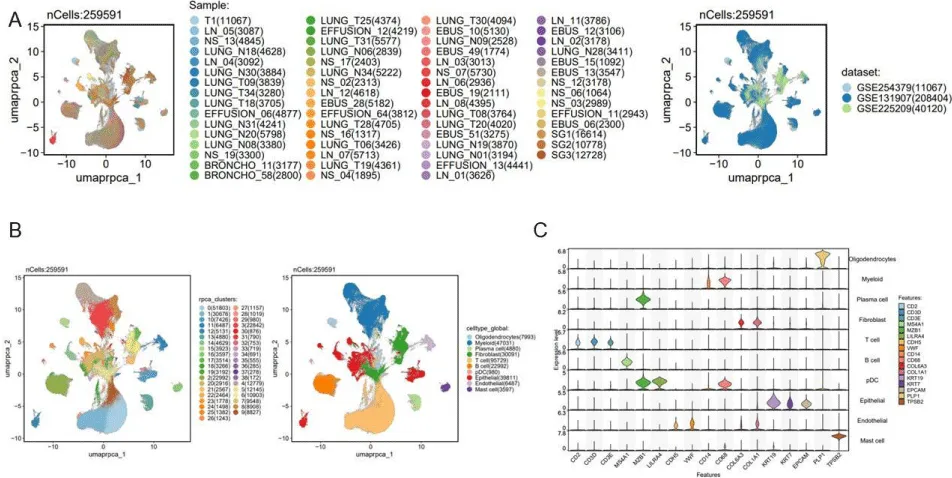
(A) UMAP visualization of 259,591 single cells derived from lung tissue, lymph node, pleural effusion, bronchoalveolar lavage, and EBUS samples, annotated by sample origin (left) and dataset source (right). Each dot represents a single cell, and colors correspond to individual patient/sample identifiers or GEO datasets (GSE245397, GSE211907, GSE225209).
(B) UMAP clustering of the same dataset showing unsupervised cell clusters (left) and major immune and stromal cell type assignments based on marker gene expression (right).
(C) Violin plots displaying the expression distribution of canonical marker genes across major cell populations, including T cells, myeloid cells, fibroblasts, epithelial cells, B cells, mast cells, NK cells, and plasma cells.
Identification of subtypes of endothelial cell
We compared the distribution of ECs, fibroblasts, smooth muscle cells, and immune cells in original cancers and different metastatic parts. We identified 7 endothelial cells clusters, including Stalk ECs, Cycling ECs, Lymphatic ECs,Tip like ECs, VSMC derived ECs, Tumor ECs (Figures 2A,B). Among them, Stalk ECs mainly expressed ACKR1, MYRIP, Cyclying ECs expressed BRAK1, POLQ, Lymphatic ECs expressed CCL21, TFF3, Tip like ECs expressed CLDN5 and RAP2 and Arterial ECs expressed RUNX2. VSMC-1 expressed COL3A1, VSMC-2 expressed PRRX1 (Figure 2C). Compared with normal lung tissue, ECs may be closely related to the process of bone metastasis, among the 7 subtypes of ECs, Arterial ECs, Cycling ECs, VSMCs and Tumor ECs were abundant in the Bone metastasis of lung cancer. The arterial ECs were most associated with the bone metastasis (Figure 2D).We performed the GO analysis of different subtypes of ECs, GO analysis showed that stalk ECs were associated with the cell junction assembly and epithelial cell migration. Cycling ECs were associated with Chromosome segregation. VSMCs were associated with the ubiquitin dependent protein catabolic process. GO analysis revealed that Lympatic ECs and Tip-like ECs were involved in the AYP synthes
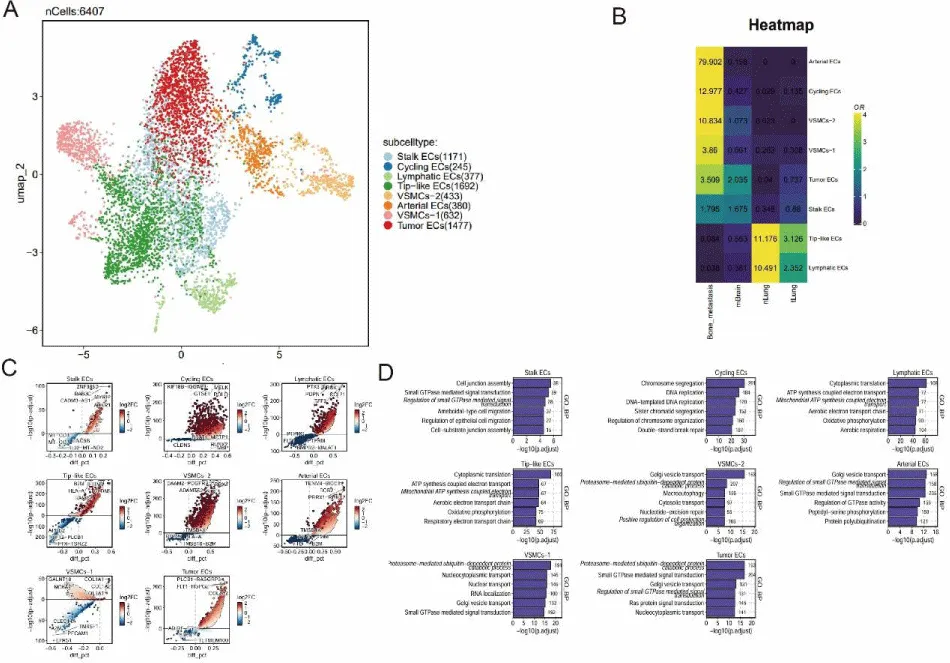
(A) UMAP plot showing 6,407 cells grouped into eight EC-related subtypes: Stalk, Cycling, Lymphatic, Tip-like, Arterial, vSMCs, VSMCs+, and Tumor ECs. (B) Heatmap of pathway enrichment scores across EC subtypes, highlighting differences in metabolism, angiogenesis, immune signaling, and ECM remodeling. (C) Scatter plots showing subtype-specific differential gene expression, with key marker genes labeled.
(D) GO enrichment analysis of each EC subtype, displaying top biological processes based on adjusted significance (–log10 p-value).
The different subtype of the immune cells in the tissues of different metastasis
We compared the distribution characteristics of different immune cells in the metastatic part, including macrophages, lymphocytes, T cells, B cells, etc. As for the T cells, we clustered the T cells into 11 clusters (Figure 3A).The CD8 + T cycling T cells were most abundant in the bone metastasis, and in the brain metastasis, the CD8 + T GZMB cells were more abundant. Figure 3B showed the different subtypes of T cells are classified based on different markers. The GO analysis results showed that the CD8 + T cycling T cells were associated with Chromosome segregation and RNA splicing. CD8 + T GZMB cells were associated with RNA splicing and immune response (Figures 3C,D).
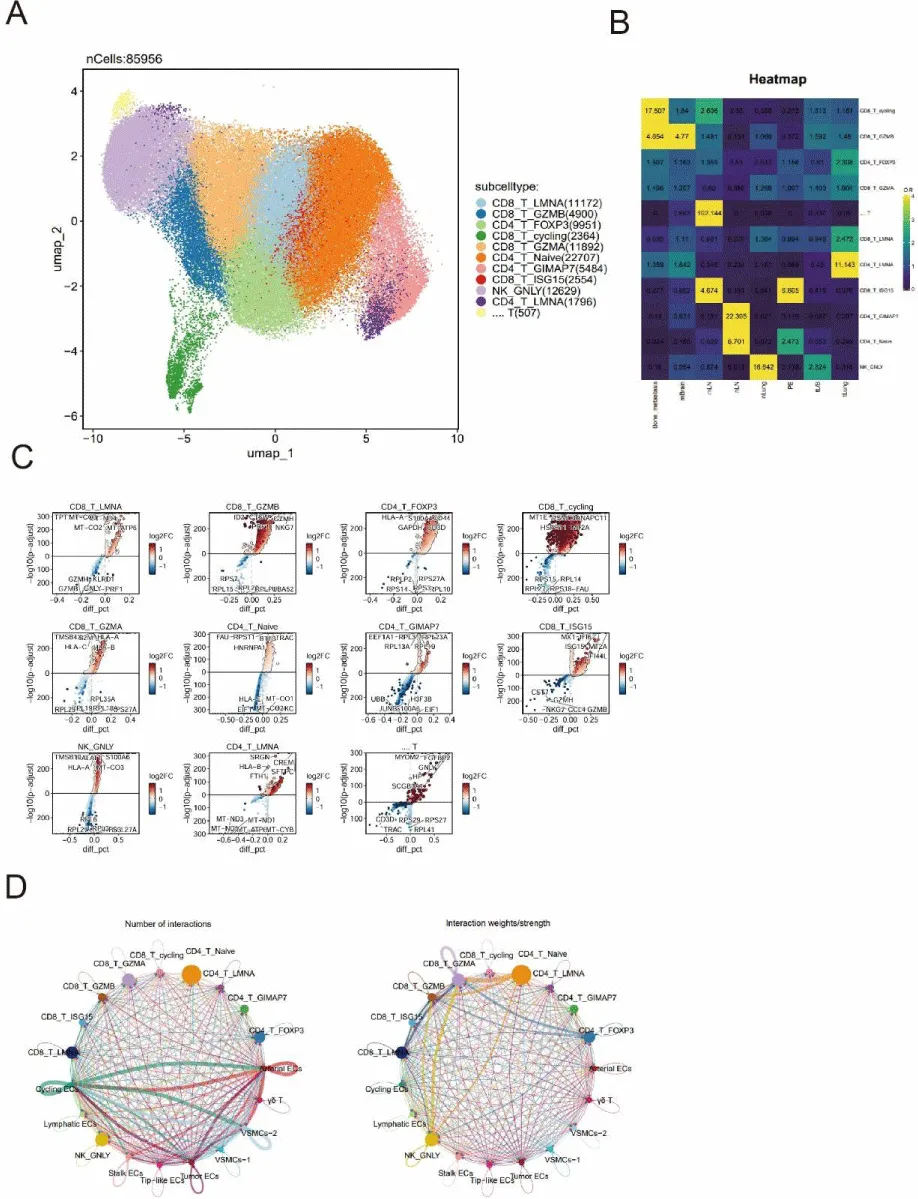
(A) UMAP plot showing 6,407 endothelial cells classified into seven transcriptionally distinct subtypes: stalk ECs, cycling ECs, lymphatic ECs, tip-like ECs, venous ECs, arterial ECs, vascular smooth muscle cells (VSMCs), and tumor-associated ECs. Each color represents a unique endothelial lineage or state.
(B) Heatmap depicting the enrichment of endothelial subtypes across major tissue sources, showing subtype-specific predominance in tumor, lymph node, effusion, and lung samples. Color scale indicates odds ratio (OR) of abundance.
(C) Scatter plots showing differential gene expression patterns across endothelial subtypes, highlighting key upregulated markers (e.g., KDR, PECAM1, FABP4) and signaling signatures. (D) Bar plots displaying top Gene Ontology (GO) biological processes enriched in each endothelial subtype, including angiogenesis, chromosomal segregation, mitochondrial ATP synthesis, immune modulation, and cytoskeletal organization.
As for the B cells, we clustered the B cells into 11 types, including the RPL+ plasma cells, MZB1 + plasma cells, follicular B cells, RPL + B cells, cycling B cells, FCER2 + B cells,TNFRSF13 + B cells, RGS13 + B cells (Figure 4A). The heat map showed that MZB1 + plasma cells were most abundant in the bone metastasis. And RPL + B cells were most abundant in the brain metastasis (Figure 4B). Figure 4C showed that the clustering of B/plasma cells was based on the expression of different markers. Figure 4D suggested that compared with T cells, the bidirectional interactions became much more.
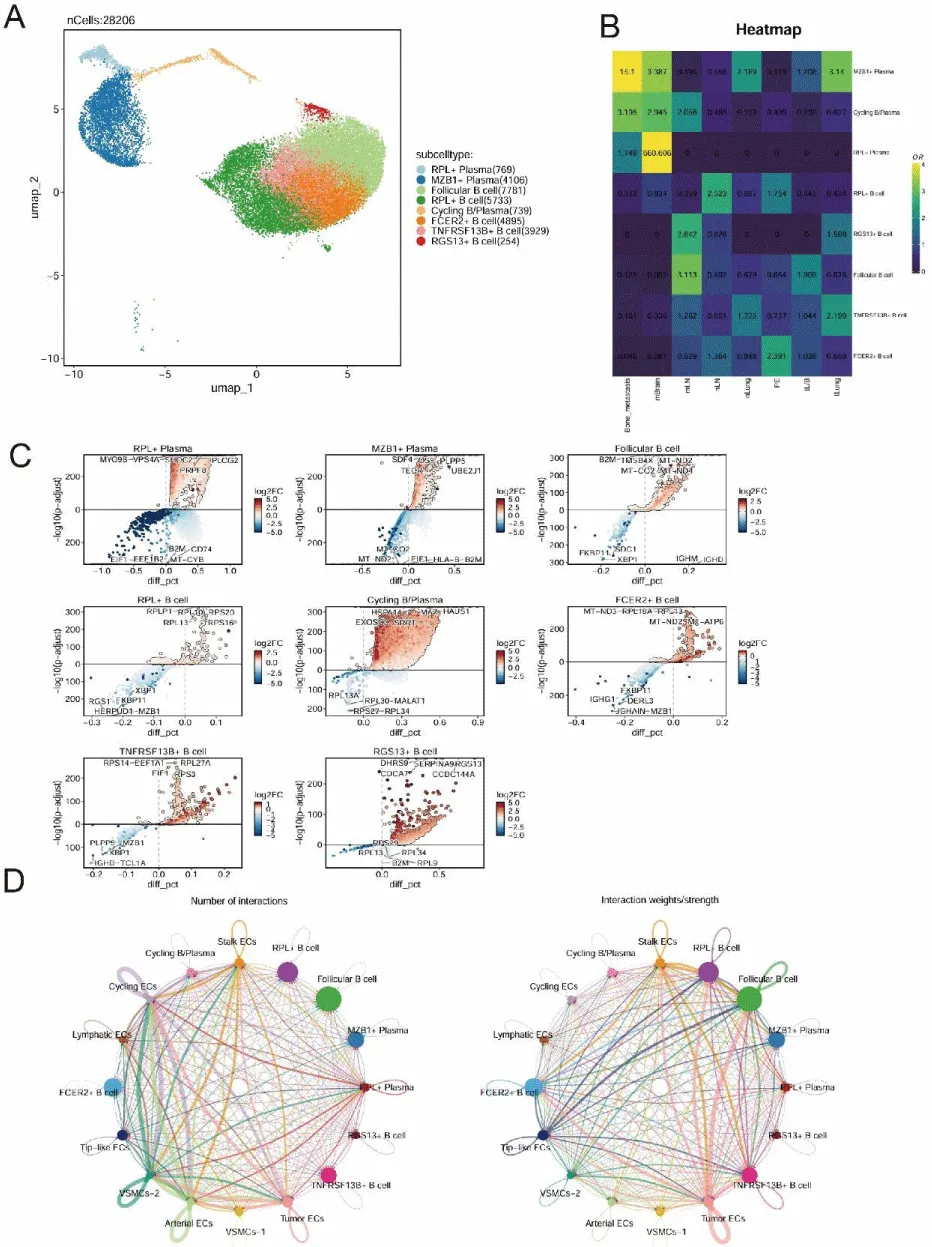
(A) UMAP embedding of 28,206 B-lineage cells showing eight transcriptionally defined subsets, including RPL-high plasma cells, MZB1+ plasma cells, follicular B cells, cycling B/plasma cells, FCER2+ B cells, TNFRSF13B+ B cells, and RGS13+ B cells. Colors represent distinct molecular states.
(B) Heatmap illustrating the enrichment of B-cell subtypes across tumor, lymph node, lung, and pleural effusion samples, quantified by odds ratio (OR).
(C) Volcano plots showing differentially expressed genes (DEGs) for each B-cell subset, with key marker genes highlighted. Red indicates upregulation and blue indicates downregulation relative to all other B-cell populations.
(D) Cell–cell communication networks between endothelial subpopulations and B-cell subtypes, visualized by number of interactions (left) and interaction strength (right). Node size reflects connectivity; edge thickness represents ligand–receptor interaction weights.
As for the Myeloid cells, figure 5A showed that we clustered the myeloid cells into 12 subtypes. MMP9 + macrophages were most abundant in the bone metastasis. And in the brain metastasis, the microglia and inflammatory macrophages were important (Figure 5B). Microglia is figured by high expression of TFF3. Inflammatory macrophages is figured by high expression of SLC9A9 and FCHSD2 (Figure 5C). And the intensity and strength of cellular communications between ECs and macrophage was relatively weak (Figure5D)
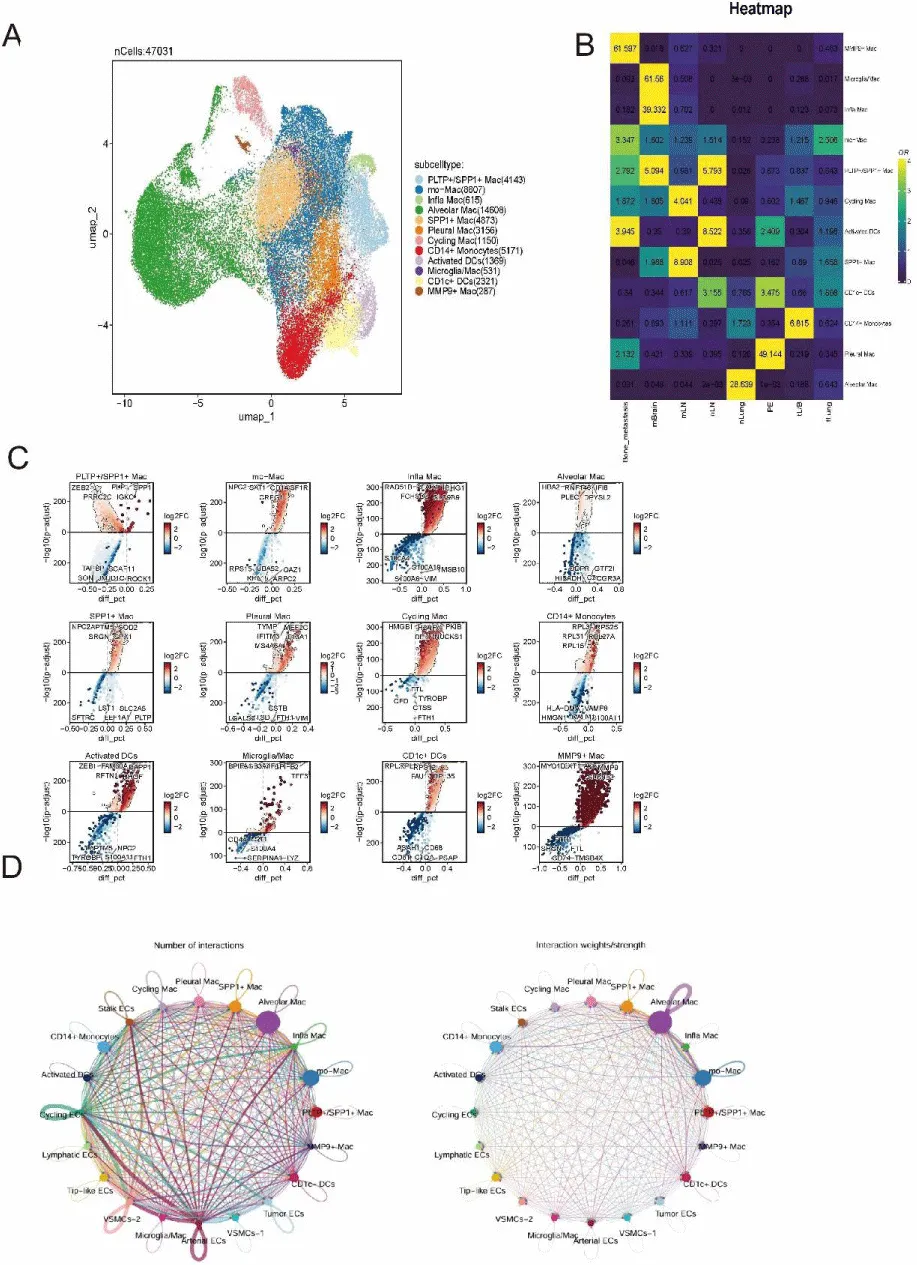
(A) UMAP visualization of 47,031 single cells showing distinct immune cell subtypes identified by unsupervised clustering. Each color represents a specific macrophage or immune-related subtype, including PLTP+/SFTPB+ macrophages, IFN–macrophages, Inflam-macrophages, alveolar macrophages, SPP1 macrophages, perivascular macrophages, cycling macrophages, activated dendritic cells, microglia-like macrophages, CD14+ monocytes, MMP9+ macrophages, and others.
(B) Heatmap displaying the average expression values of representative marker genes across identified macrophage and immune subpopulations. The color scale represents normalized gene expression intensity, highlighting transcriptional similarities and differences between clusters.
(C) Volcano plots showing differentially expressed genes (DEGs) for each macrophage and dendritic cell subtype compared with others. Red dots represent upregulated genes, blue dots indicate downregulated genes, and labeled points highlight key marker or functionally relevant genes within each cluster.
(D) Cell–cell communication networks among macrophage and endothelial subpopulations. The left panel shows the number of ligand–receptor interactions per cell type, while the right panel illustrates interaction strength (weighted by expression intensity). Node size corresponds to interaction degree, and edge thickness indicates interaction strength.
APP-CD74 might be vital for cell crosstalk between the immune cells and ECs
As shown in the figure 6, the results suggested that the APP - CD74 might play important roles in the interactions between ECs and other immune cells.
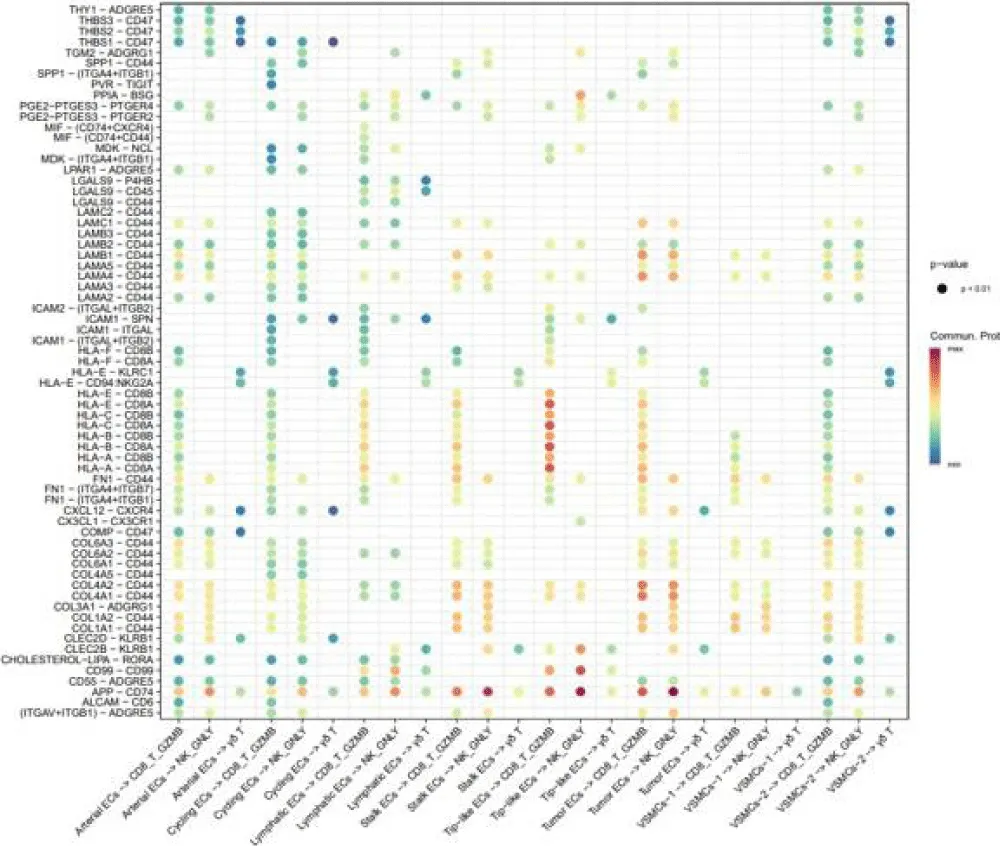
Bubble plot displaying significant ligand–receptor pairs mediating intercellular communication among endothelial (ECs) and immune cell subtypes. Each row represents a ligand–receptor pair, while each column corresponds to a specific interacting cell type pair. The size of each bubble indicates the statistical significance (p < 0.01), and the color scale reflects the communication probability (interaction strength) from minimum (blue) to maximum (red). This analysis highlights key adhesion molecules, chemokines, and extracellular matrix interactions contributing to endothelial–immune crosstalk within the tissue microenvironment.
Discussion
TME has played important roles in the tumor metastasis, which consisted of endothelial cells, fibroblasts, and various immune cells. As CAFs were the most common components of the TME, various previous studies have focused on the role of CAFs [8,9]. Its importance in regulating the anti-tumor response has been commonly discussed [10]. CAFs had different heterogeneity, and it played an important role in the tumor neogenesis, persistence, and metastasis [11]. The crosstalk between the CAFs and immune cells, including the macrophages were critical for in the development of the tumor.
ECs were identified as another vital component of TME. As angiogenin is critical for tumor progression, ECs line in the inner line of the vessel, and it has been had played important roles in TME, which was identified as a key to development of cancer. But its role in the development of tumor still needs to be further discussed .We tried to identify the role of ECs in the metastasis of NSCLC.
Metastasis is closely associated with the poor prognosis of the tumor. Brain metastasis and bone metastasis are common events in the advanced NSCLC, impacting the mortality and morbidity of NSCLC patients [12]. Vessel infiltration is important event in the metastasis of tumor, and the angiogenesis is the main feature of cancer [13].The vessels offered the tumor with nutrients and oxygen’s, and they are composed of the tumor environment. Angiogenesis is the key event of tumor metastasis, which might suggest the importance of ECs. ECs played important roles in the development of the tumors, and it were associated with the metastasis of tumor. But various treatment suggest that the effect of anti-angiogenesis treatment for different tumor was limited, which might suggest that the mechanism of angiogenesis in tumors needs further exploration, it may also be due to the heterogeneity of endothelial cells, but this is less explored in the literature. Our study also found that the distribution of different subtypes of endothelial cells was inconsistent in different metastatic lesions.
Besides, various studies have shown that tumor associated immune cells including macrophages, NK cells played distinct roles in the development of NSCLC. CD8 + T cells, B cells, NK cells were abundant in the tumor tissue. The infiltration of immune cells were strongly associated with the prognosis of NSCLC. NK cells were suggested to be capable of identifying and eliminating the tumor cells [14]. Macrophages are one of the most abundant immune cells in the immune environment of NSCLC. Tumor associated macrophages promoted tumor growth through promoting genetic instability and were associated with the poor prognosis of tumor [15]. Macrophages influence the immune microenvironment by secreting cytokines, including basic fibroblast growth factor-2, TGF - β, Platelet Derived Growth Factor (PDGF). B cells were common in the solid tumors, and it was suggested that B cells B cells are not well studied in the metastasis of lung cancer. The research on the crosstalk between the B cells and the ECs were still limited.
Bone is a hypoxia organ which had a special TME, and the proportion of T cells and NK cells were small [6]. The bone metasistasis was separated into three processes, including tumor invasion, tumor cell migration and bone invasion. A dense, interconnected vascular system maintained the osteogenesis. Different subtypes of endothelial crosstalk had been identified in the TME in the bone. Besides, the immune cells had played important roles in the bone metastasis. Emerging evidence suggested that tumor associated macrophages are important in regulating in tumor metastasis, it was suggested that compared with the primary breast cancer site, the bone metastasis had a less active immune microenvironment. But the immune cells still played important roles in the metastatic tumor. The infiltration of several immune cells including macrophage M1 in the metastatic site predicted the worse outcome. Except for T cells and macrophages, B cells played important roles in the development of tumor through promoting tumor progression [16].
In TME of NSCLC, cell crosstalk has played important roles in the development of NSCLC. The cell crosstalk between the T cell and CAF’s has been studied before. Various studies suggested that CAFs could impair the function of T cells and other immune cells, including the DC cells. ECs played important roles in the development of the tumor and it were associated with the metastasis of tumor [17].
In TME, the crosstalk between the tumor cells, ECs and immune cells are complex. ECs are important mediators between of immune surveillance and immune escape. ECs were relative to the importance of the function of immune cell, including the immune cell infiltration. Studies suggested that the ECs could promote the infiltration of lymphocytes in the tumor. But the communication between the ECs and immune cells in the NSCLC still need to be further discussed.
App - CD74 was up regulated in the various tumor tissue, which had played important roles in the tumor development [18]. CD 74 was a non-polymorphic transmembrane glycoprotein which was associated with the inflammation and poor outcome. It is a receptor for macrophage Migration Inhibitory Factors (MIF) which influence macrophage function and polarization [19]. CD74 played important in the regulation of NF - κB dependent gene transcription. Also, CD74 would influence the inflammation through activating the NF - κB pathway [20]. It was suggested that in the testicular tumors, APP - CD74 were enriched between the tumor and the T cells [21]. The TME factors might promoted the metastasis via the SPP1 - CD44 axis [22]. APP - CD74 could activate the phagocytosis of tumor associated macrophages in the glioblastoma multiforme. Besides, APP - CD74 would media the communication between the macrophages and the tumor [23]. Studies had suggested that the Cd74 was abundantly expressed in various cardiovascular cell [21]. And it has been suggested that APP - CD74 mediated the crosstalk between the ECs and macrophages [20]. But still limited studies had investigated the role of APP - CD74 in the metastasis of the tumor.
Ethics Approval
This study was approved by the Ethics Committee for Human Research of the Third Affiliated Hospital of Sun Yat-sen University. All the participants provided written informed consent.
Author Contributions
HYX and ZWT recruited the participants and collected samples from patients with PAH. HYX collected and assembled the data, and edited the manuscript. All authors were involved in the experimental design, data interpretation, and manuscript preparation. All the authors have read and approved the last version of this manuscript.
Funding
This project was funded by Xuzhou Municipal Health Commission 2024 Medical Science and Technology Innovation Project (XWKYSL20240471).
References
- Claesson-Welsh L, Dejana E, McDonald DM. Permeability of the Endothelial Barrier: Identifying and Reconciling Controversies. Trends Mol Med. 2021 Apr;27(4):314-331. doi: 10.1016/j.molmed.2020.11.006. Epub 2020 Dec 10. PMID: 33309601; PMCID: PMC8005435.
- Xu K, Wang H, Zou YX, Zhang HH, Wang YN, Ren XR, Wang HQ, Xu YH, Li JJ, Tang H, He C, Wei S, Tian T, Li LL, Zhou H, Xu LJ, Fang JW, Guo C, Yang JX, Zhou YY, Zhang ZH, Pan YY. Distinct fibroblast subpopulations associated with bone, brain or intrapulmonary metastasis in advanced non-small-cell lung cancer. Clin Transl Med. 2024 Mar;14(3):e1605. doi: 10.1002/ctm2.1605. PMID: 38445456; PMCID: PMC10915739.
- Wang Y, Chen R, Wa Y, Ding S, Yang Y, Liao J, Tong L, Xiao G. Tumor Immune Microenvironment and Immunotherapy in Brain Metastasis From Non-Small Cell Lung Cancer. Front Immunol. 2022 Feb 17;13:829451. doi: 10.3389/fimmu.2022.829451. PMID: 35251014; PMCID: PMC8891382.
- Brouns AJWM, Hendriks LEL, Robbesom-van den Berge IJ, Driessen AJHM, Roemen GMJM, van Herpen BLJ, Dekkers Z, Heitzer B, Leunissen DJG, Moonen L, Lunde R, Westenend M, van Driel M, Speel EM, Dingemans AC. Association of RANKL and EGFR gene expression with bone metastases in patients with metastatic non-small cell lung cancer. Front Oncol. 2023 May 5;13:1145001. doi: 10.3389/fonc.2023.1145001. PMID: 37213294; PMCID: PMC10196450.
- Mashouri L, Yousefi H, Aref AR, Ahadi AM, Molaei F, Alahari SK. Exosomes: composition, biogenesis, and mechanisms in cancer metastasis and drug resistance. Mol Cancer. 2019 Apr 2;18(1):75. doi: 10.1186/s12943-019-0991-5. PMID: 30940145; PMCID: PMC6444571.
- Su D, Wu G, Xiong R, Sun X, Xu M, Mei Y, Wu X. Tumor Immune Microenvironment Characteristics and Their Prognostic Value in Non-Small-Cell Lung Cancer. Front Oncol. 2021 Mar 3;11:634059. doi: 10.3389/fonc.2021.634059. PMID: 33747957; PMCID: PMC7966704.
- Zhang W, Xu J, Fang H, Tang L, Chen W, Sun Q, Zhang Q, Yang F, Sun Z, Cao L, Wang Y, Guan X. Endothelial cells promote triple-negative breast cancer cell metastasis via PAI-1 and CCL5 signaling. FASEB J. 2018 Jan;32(1):276-288. doi: 10.1096/fj.201700237RR. Epub 2017 Sep 12. PMID: 28899878.
- Bejarano L, Kauzlaric A, Lamprou E, Lourenco J, Fournier N, Ballabio M, Colotti R, Maas R, Galland S, Massara M, Soukup K, Lilja J, Brouland JP, Hottinger AF, Daniel RT, Hegi ME, Joyce JA. Interrogation of endothelial and mural cells in brain metastasis reveals key immune-regulatory mechanisms. Cancer Cell. 2024 Mar 11;42(3):378-395.e10. doi: 10.1016/j.ccell.2023.12.018. Epub 2024 Jan 18. PMID: 38242126.
- Mao X, Xu J, Wang W, Liang C, Hua J, Liu J, Zhang B, Meng Q, Yu X, Shi S. Crosstalk between cancer-associated fibroblasts and immune cells in the tumor microenvironment: new findings and future perspectives. Mol Cancer. 2021 Oct 11;20(1):131. doi: 10.1186/s12943-021-01428-1. PMID: 34635121; PMCID: PMC8504100.
- Maia A, Schöllhorn A, Schuhmacher J, Gouttefangeas C. CAF-immune cell crosstalk and its impact in immunotherapy. Semin Immunopathol. 2023 Mar;45(2):203-214. doi: 10.1007/s00281-022-00977-x. Epub 2022 Dec 8. PMID: 36480035; PMCID: PMC10121542.
- Baker AT, Abuwarwar MH, Poly L, Wilkins S, Fletcher AL. Cancer-Associated Fibroblasts and T Cells: From Mechanisms to Outcomes. J Immunol. 2021 Jan 15;206(2):310-320. doi: 10.4049/jimmunol.2001203. PMID: 33397745.
- Luo G, He Y, Yu X. Bone Marrow Adipocyte: An Intimate Partner With Tumor Cells in Bone Metastasis. Front Endocrinol (Lausanne). 2018 Jun 22;9:339. doi: 10.3389/fendo.2018.00339. PMID: 30013512; PMCID: PMC6036292.
- Alameddine RS, Hamieh L, Shamseddine A. From sprouting angiogenesis to erythrocytes generation by cancer stem cells: evolving concepts in tumor microcirculation. Biomed Res Int. 2014;2014:986768. doi: 10.1155/2014/986768. Epub 2014 Aug 4. PMID: 25162040; PMCID: PMC4138761.
- Sivori S, Pende D, Quatrini L, Pietra G, Della Chiesa M, Vacca P, Tumino N, Moretta F, Mingari MC, Locatelli F, Moretta L. NK cells and ILCs in tumor immunotherapy. Mol Aspects Med. 2021 Aug;80:100870. doi: 10.1016/j.mam.2020.100870. Epub 2020 Aug 13. PMID: 32800530.
- Pritchard A, Tousif S, Wang Y, Hough K, Khan S, Strenkowski J, Chacko BK, Darley-Usmar VM, Deshane JS. Lung Tumor Cell-Derived Exosomes Promote M2 Macrophage Polarization. Cells. 2020 May 24;9(5):1303. doi: 10.3390/cells9051303. PMID: 32456301; PMCID: PMC7290460.
- Guo X, Xu L, Nie L, Zhang C, Liu Y, Zhao R, Cao J, Tian L, Liu M. B cells in head and neck squamous cell carcinoma: current opinion and novel therapy. Cancer Cell Int. 2024 Jan 20;24(1):41. doi: 10.1186/s12935-024-03218-3. PMID: 38245714; PMCID: PMC10799521.
- Heidegger I, Fotakis G, Offermann A, Goveia J, Daum S, Salcher S, Noureen A, Timmer-Bosscha H, Schäfer G, Walenkamp A, Perner S, Beatovic A, Moisse M, Plattner C, Krogsdam A, Haybaeck J, Sopper S, Thaler S, Keller MA, Klocker H, Trajanoski Z, Wolf D, Pircher A. Comprehensive characterization of the prostate tumor microenvironment identifies CXCR4/CXCL12 crosstalk as a novel antiangiogenic therapeutic target in prostate cancer. Mol Cancer. 2022 Jun 18;21(1):132. doi: 10.1186/s12943-022-01597-7. PMID: 35717322; PMCID: PMC9206324.
- Ma R, Zhou X, Zhai X, Wang C, Hu R, Chen Y, Shi L, Fang X, Liao Y, Ma L, Jiang M, Wu J, Wang R, Chen J, Cao T, Du G, Zhao Y, Wu W, Chen H, Li S, Lian Q, Guo G, Xiao J, Hutchins AP, Yuan P. Single-cell RNA sequencing reveals immune cell dysfunction in the peripheral blood of patients with highly aggressive gastric cancer. Cell Prolif. 2024 May;57(5):e13591. doi: 10.1111/cpr.13591. Epub 2024 Feb 6. PMID: 38319150; PMCID: PMC11056698.
- Wang Z, Wang B, Feng Y, Ye J, Mao Z, Zhang T, Xu M, Zhang W, Jiao X, Zhang Q, Zhang Y, Cui B. Targeting tumor-associated macrophage-derived CD74 improves efficacy of neoadjuvant chemotherapy in combination with PD-1 blockade for cervical cancer. J Immunother Cancer. 2024 Aug 6;12(8):e009024. doi: 10.1136/jitc-2024-009024. PMID: 39107132; PMCID: PMC11308911.
- Liu B, Li F, Wang Y, Gao X, Li Y, Wang Y, Zhou H. APP-CD74 axis mediates endothelial cell-macrophage communication to promote kidney injury and fibrosis. Front Pharmacol. 2024 Sep 16;15:1437113. doi: 10.3389/fphar.2024.1437113. PMID: 39351084; PMCID: PMC11439715.
- Chen G, Wang W, Wei X, Chen Y, Peng L, Qu R, Luo Y, He S, Liu Y, Du J, Lu R, Li S, Fan C, Chen S, Dai Y, Yang L. Single-cell transcriptomic analysis reveals that the APP-CD74 axis promotes immunosuppression and progression of testicular tumors. J Pathol. 2024 Nov;264(3):250-269. doi: 10.1002/path.6343. Epub 2024 Aug 19. PMID: 39161125.
- Xuan Z, Wu Z, Cheng L, Jiang J, Zhang Y, Xia Y. SCGB3A1-Epi and KLK10-Epi Crosstalk With Fibroblasts Promotes Liver Metastasis of Breast Cancer and Pancreatic Ductal Adenocarcinoma. Cancer Med. 2025 May;14(9):e70904. doi: 10.1002/cam4.70904. PMID: 40357856; PMCID: PMC12070254.
- Ma C, Chen J, Ji J, Zheng Y, Liu Y, Wang J, Chen T, Chen H, Chen Z, Zhou Q, Hou C, Ke Y. Therapeutic modulation of APP-CD74 axis can activate phagocytosis of TAMs in GBM. Biochim Biophys Acta Mol Basis Dis. 2024 Dec;1870(8):167449. doi: 10.1016/j.bbadis.2024.167449. Epub 2024 Aug 5. PMID: 39111632.





Content Alerts
SignUp to our
Content alerts.
 This work is licensed under a Creative Commons Attribution 4.0 International License.
