
Biology Group 2025 May 17;6(5):492-502. doi: 10.37871/jbres2105.





 Research Article
Whole-Picture of Human Recognition-Behavioral Adaptation System Analyzed via Multidisciplinary Scientific Procedure
Yutaka Masuda*
- Adaptation systems
- Human intelligence
- Language
- Modeling-codes
- Scientific procedure
- Self
- World
Abstract
Human recognition-behavioral adaptation system, which corresponds to the physical adaptation system, maintains homeostasis of Human Intelligence, the recognition-behavioral Self and the recognition-behavioral World. The recognition-behavioral adaptation system was studied in the various research fields, however, it was not clearly integrated. Structuralism provides a qualitative research method to analyze the underlying structural patterns of human recognition-behavioral adaptation in the humanities. Systems theory provides a quantitative research method to analyze performance of meta-systems consisting of interrelated and interdependent single-systems in the biological sciences. In the present study, the adaptation system was analyzed via the multidisciplinary scientific procedure integrating the qualitative research method and the quantitative research method. The adaptation system of Human Intelligence was considered to be the language-metabolism system utilizing the single-modeling-codes and the meta-modeling-codes which are formed in Neuronal Network of the brain. The Self is structured corresponding to the complex-network meta-modeling-code and the centroid-hierarchy meta-modeling-code, and it involves the cybernetic feedback system in the structure. The Intelligence-module, the core of the Self, works corresponding to the syllogistic meta-modeling-code. The adaptation system of the World was considered to be the self-reference adaptation system working corresponding to the complex-network meta-modeling-code and the ascending nest-hierarchy meta-modeling-code. Reality of Psychotherapy was reductively explained with the cybernetic feedback system and the self-reference system. Finally, it was concluded that human recognition-behavioral adaptation system is reductively and holistically analyzed via the multidisciplinary scientific procedure.
Abbreviations
HI: Human Intelligence; AI: Artificial Intelligence; C: Cholinergic Neuronal Module; A: Adrenergic Neuronal Module; S: Serotonergic Neuronal Module; D: Dopaminergic Neuronal Module; ASD: Autism-Spectrum Disorder; ADHD: Attention-Deficit Hyperactivity Disorder
Introduction
Methodology, the study of research methods, divides the research methods into qualitative ones which perform less numerical measurements by using terms, and quantitative ones which require precise numerical measurements for using formulas. The qualitative methods, coming from Analogy and Pattern-recognition, have validly explained the phenomenon observed in the frames of the humanities. The quantitative methods, coming from Pattern-recognition and Algorism, have reproducibly explained the phenomenon observed in the frames of the biological sciences. Scientific procedure, which includes syllogistic steps of observation via Analogy, hypothesis-formation via Pattern-recognition, and hypothesis-testing via Algorism, is considered to be the research system that unites the qualitative method and the quantitative method in the common frame. Structuralism, which provides the qualitative research method to analyze structural patterns involved in human recognition-behaviors, has developed in the frames of the humanities of Semiology, Anthropology, and Psychology. Systems theory, which provides the quantitative research method to analyze performance of meta-systems consisting of interrelated and interdependent single-systems, has developed in the frames of the natural sciences of Physiology, Biology, Medicine, and Ecology. Human being involves the biological adaptation systems to maintain the homeostasis, and the recognition-behavioral adaptation system is involved in Human Intelligence, the Self, and the World. In the present study, whole picture of the recognition-behavioral adaptation system is analyzed via the multidisciplinary scientific procedure in the frames of the Structuralism and the Systems theory.
Adaptation System of Human Intelligence
Language-metabolism system of human intelligence
Human being has adaptation systems to maintain the homeostasis under the biological principle. Human Intelligence (HI) maintains the recognition-behavioral homeostasis corresponding to the codes formed in the brain, as the substance-metabolism system maintains the physical homeostasis corresponding to the codes installed in the gene. Animals operatively abstract circumstantial information, and they replace the information to a meaningful signal via the first signaling-system of Conditioning-reflection. HI performs the second signaling-system via the language-modeling system working corresponding to the single-modeling-codes and the meta-modeling-codes. The meaningful signals are integrated into the natural language single-models of terms/figures, and/or, the mathematical single-models of formulas/graphs corresponding to the single-modeling-codes. The single-models are integrated into the meta-model of concept corresponding to the meta-modeling-codes. HI involves the inferences of Analogy, Algorism and Pattern-recognition. Analogy is an inductive inference of homology and simplification to treat analogues having qualitative connotation. Algorism is a deductive inference of operation to treat digitals having quantitative connotation. Pattern-recognition is an inductive/deductive inference of clustering to exchange analogues and digitals. HI was simulated by Artificial Intelligence (AI). AI is defined as a vertical algorism unit which consists of artificial neurons, artificial synapses and artificial weights for information stream, and the components function similarly to those of a Neuronal Network. AI of Deep Neural Network, has multiple layers between the input and output layers, and it is trained on the Algorism via multiple times of vertical information-transverse between the input and output layers. AI of Recurrent Neural Networks, in which data can flow in a horizontal direction, is used for language modeling followed by Machine Reading Catalog, which performs clustering corresponding to human Pattern-recognition. AI of Generative Pre-trained Transformer works as a language generator followed by a Corpus of sentence model catalogue provided by human Analogy. Namely, AI does not have the original data-editing single-modeling-codes of the Analogy and the Pattern-recognition, and it solely performs the Algorism by bit-calculating corresponding to the mathematical sign-codes installed in the artificial Neuronal Network beforehand, furthermore, it does not produce any concepts without the meta-modeling-codes. HI has been nurtured in the living brain with the enormous learning and experience to perform the recognition-behavioral adaptation, and it have provided the catalogue of single-modeling-codes which were empirically formed in the Neuronal Network as the data-editing standard of the Analogy and the Pattern-recognition. HI further hyper-structures the single-models into the meta-model of concept corresponding to the meta-modeling-codes which have been transferred via the cultures. The meta-modeling-codes are represented as symbolic figures shared in the cultures. The opposite but interconnected forces meta-modeling-code is represented as the Yin-Yang Taiji of Chinese philosophy. The complex-network meta-modeling-code is represented as Wu Xing of Chinese medicine. The causality-sequence diagram meta-modeling-code is represented as the Sefirot (tree of life) of Kabbalah. The syllogism meta-modeling-code is represented as the Trimurti (trinity of supreme divinity) of Hinduism. Mandala of Buddhism symbolizes the centroid-hierarchy meta-modeling-code of the spiritual world, and Mount Meru of Indian world-idea symbolizes the ascending-nest hierarchy meta-modeling-code of the spirit-evolution.
Performance of HI
The Algorism ability of HI is inferior to that of AI. HI has inductively introduced a mathematical idea of a Turing-machine, on the other hand, AI unlimitedly performs the deductive procedure. Déjà vu phenomenon is observed in a previously-experienced recognition-situation. HI works under the thinking frame of the First principle which was introduced by the Déjà vu phenomenon. Furthermore, HI persists in a previously-successful frame, and it easily accepts the Pre-established Harmony in the different frames. Namely, HI works with the economical and stubborn Priming manner. Meme, working like Gestalt, is a term/figure inspired by the cultural connotation. Creators tells/revises the Narratives, whose prototypes are transferred via the cultures, by incorporating the currently-popular memes. Researchers also study the meme of the research model with the economical and stubborn Priming manner.
Multidisciplinary scientific procedure
Scientific procedure includes syllogistic steps of observation via the Analogy, hypothesis-formation via the Pattern-recognition, and hypothesis-testing via the Algorism. The validity of the hypothesis is verified by the Analogy and the Pattern-recognition, and the reproducibility is assessed by the Pattern-recognition and the Algorism. Methodology, studying research methods of the scientific procedure, divides the research methods into qualitative ones that perform less numerical measurements by using terms, and quantitative ones that require precise numerical measurements for using formulas. The qualitative methods, coming from the Analogy and the Pattern-recognition, have explained the research model in the frames of the humanities. Qualitative researchers assess the validity with Statistic analysis, however, their HI might induce Selection bias and Cognitive dissonance because of the economic and stubborn Priming. These recognition-distortions would lead the earnest qualitative researchers into Pseudoscience that verifies the validity of the research model by putting in ad-hoc hypotheses, and/or, into Fanaticism that verifies the validity by premising the super natures. The quantitative methods, coming from the Pattern-recognition and the Algorism, have explained the research model in the frames of the natural sciences. Quantitative researchers analyze the research model in the mono frame strictly-defined with the Terminology, nevertheless, some of the researchers perform Thinking-experiments to examine the generality of the research model in the different frames. Multidisciplinary scientific procedure unites the qualitative research method and the quantitative research method. Researchers utilizing the multidisciplinary scientific procedure, analyze the universal research model in the multiple frames clearly-defined with the Terminologies. Philosophical researchers study the universal phenomenon in the multiple frames, but their representations are not always understandable. This comes from that they did not consider the observed phenomenon to the research model, and that they used the confused Terminologies.
Adaptation System of Self
Physical self
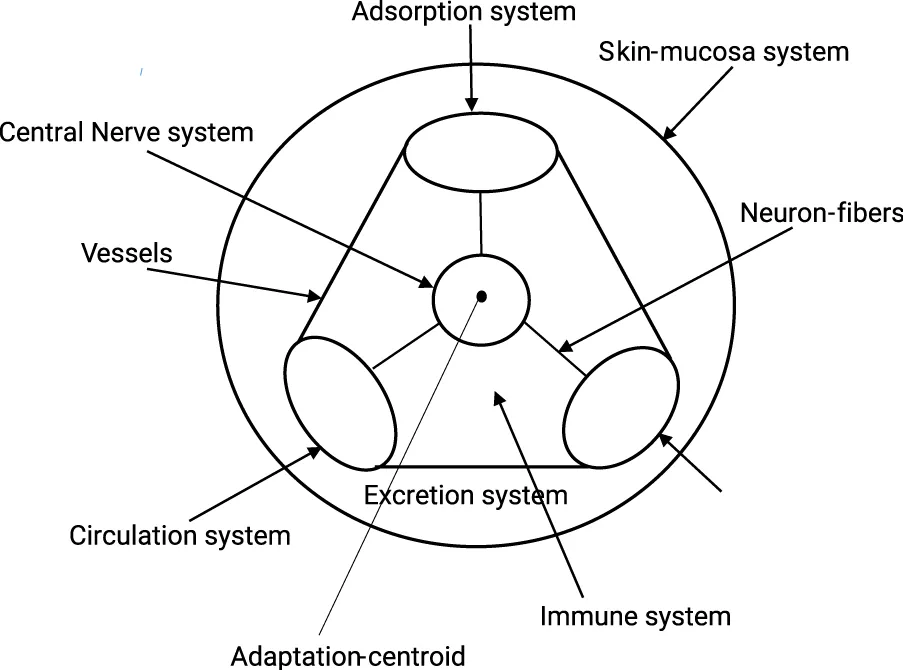
Physical Self maintains the physical homeostasis which is defined in the physical frame. The physical Self is organized as a complex-network of Circulation system, Adsorption system, Excretion-system, and Central Nerve system, which are tied with the vessels, and is protected with Immune-system filling the space and Skin-mucosa-system covering it. Central Nerve-system is placed at the center of the complex-network to integrate the physical systems via the neuron-fibers, and the centroid is distinguished to Adaptation-centroid. The physical Self is symbolically schemed in figure 1.
Neurological self
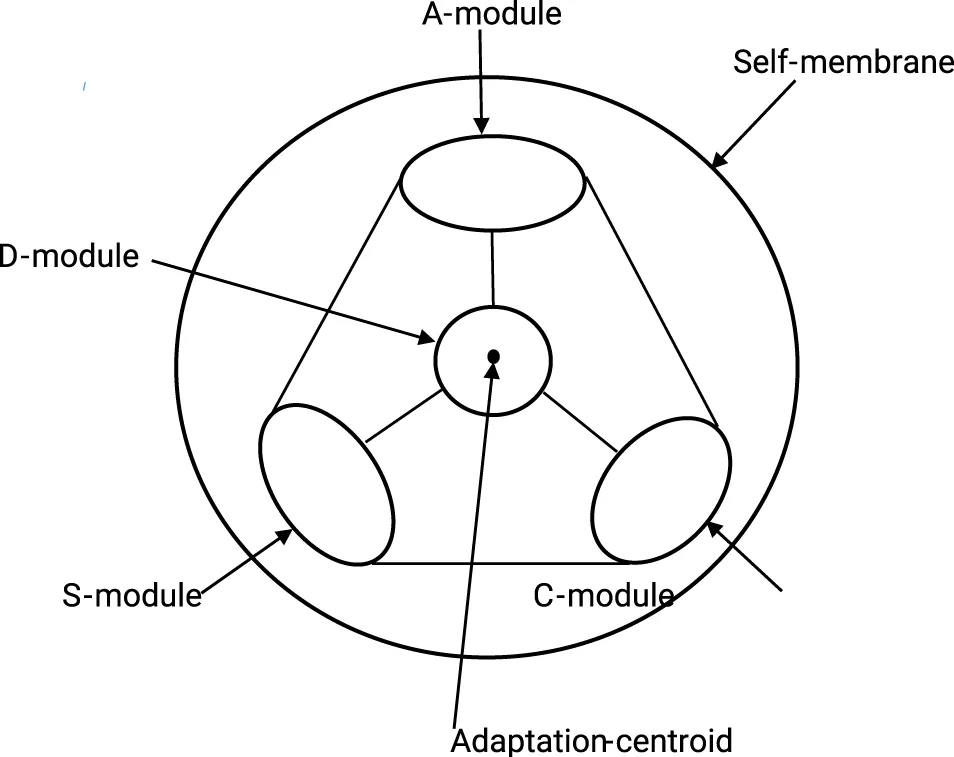
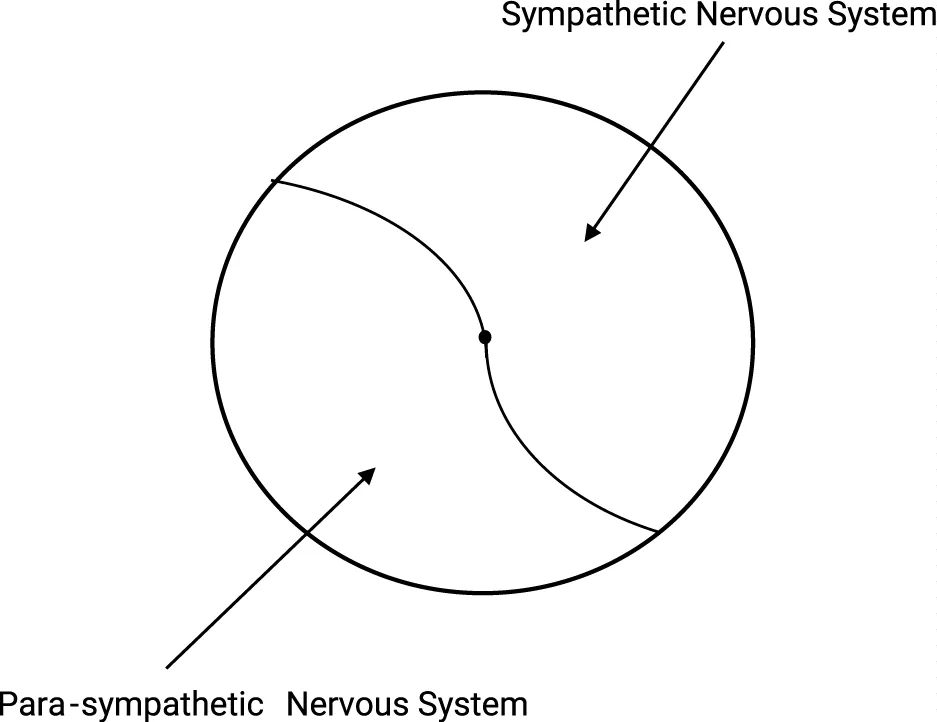
Neurological Self is in the Central Nerve system. Neuroscientific studies have reported that the mammalian brain works mainly via a complex-network of adrenergic neuronal, serotonergic neuronal, cholinergic neuronal, and dopaminergic neuronal modules, and the activities are followed by humoral glycolipids [1-4]. The neuronal module is a single system performing neurological information processing, and the neurological Self is a meta-system complex-networking the single-systems defined in the neurological frame. The neurological Self works to maintain the neurological adaptation; the cholinergic neuronal module (C-module) preserves stress-coping memories, the adrenergic neuronal module (A-module) induces stress-coping behaviors, and the serotonergic neuronal module (S-module) keeps physical strength for stress-coping. The dopaminergic neuronal module (D-module), which is placed at the Adaptation-centroid of the CAS-triangle, integrates these module-functions. The D-(C-A-S) is covered by the Self-membrane. The SELF, working corresponding to the complex-network meta-modeling-code and the centroid-hierarchy meta-modeling-code, is symbolically schemed in figure 2. The modules are responsible for neurological symptoms; the S-module is responsible for Fatigue and Depression, and the C-module is responsible for Anxiety resulting in Panic-disorder. The A-module is responsible for Obsession/Compulsion, furthermore, A-module setting-on the flight, induces Dissociation/Conversion, and the A-module setting-on the fight, induces Aggression. The D-module induces Self-injuring for getting the prompt dopaminergic satisfaction. The A-C-D circuit works as the cybernetic feedback system to control Conditionings, the C-S-D circuit works as the cybernetic feedback system to control Emotional behaviors, and the S-A-D circuit works as the cybernetic feedback system to control Instinctive behaviors. The D-(C-A-S) circuit, involving the Reward system, induces the Voluntary learning to gain successful stress-coping. The D-module, the core of the feedback systems, verifies the successful stress-coping as increase of the dopaminergic neuronal activity. The D-module also integrates the Autonomic nerve system consisting of the Sympathetic nerve system and the Para-sympathetic nerve system, and a dysfunctional D-module induces Autonomic dystonia. The D-module, coming from the opposite but interconnected forces meta-modeling-code, is symbolically schemed in figure 3.
Neuro-psychiatric self
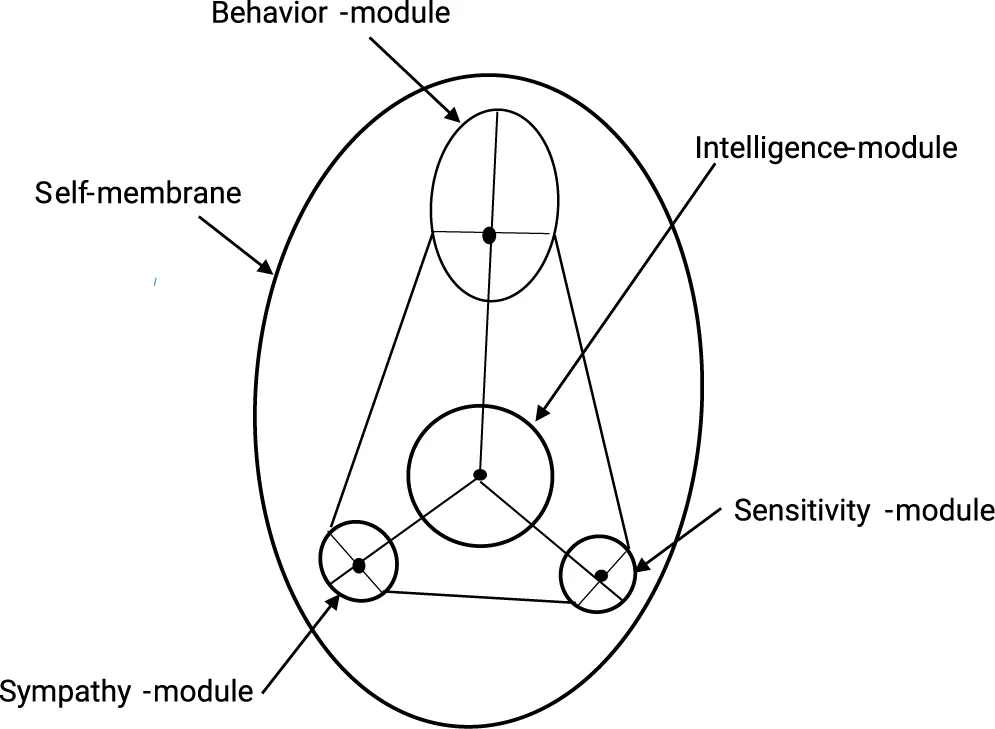
The neurological Self develops into Neuro-psychiatric Self to maintain the neuro-psychiatric adaptation. The C-module and the A-module of the neurological Self are united into Sensitivity-module, the A-module and the S-module are united into Behavior-module, and the S-module and the C-module are united into Sympathy-module. Intelligence-module, which is placed at the Adaptation-centroid, regulates the module-functions. The neuro-psychiatric Self is symbolically schemed in figure 4. The Intelligence-module, developing from the D-module by acquiring the language-usage, verifies the dopaminergic recognition-behavioral validity, it also verifies the thinking reproducibility corresponding to the syllogism meta-modeling-code. The structure of the Intelligence-module is symbolically represented in figure 5. The Behavior-module, controlling social fight or flight, is responsible for Hyperactivity and Inattention of Attention-Deficit Hyper-Activity Disorder (ADHD) [5]. The Sympathy-module, working for social communication, is responsible for the Autism-Spectrum Disorder (ASD). The Sensitivity-module, controlling input of stress-information, is responsible for Exceed Stimulation-amplify of ASD [6]. The Intelligence-module is responsible for Intellectual Disabilities and Selective Learning Disability [7]. Symptoms of a neuro-psychiatric disease, such as Bipolar-disorder, are holistically explained via the meta-model system. The patients first show Exceed Stimulation-amplify coming from hypersensitivity of the Sensitivity-module. The Exceed Stimulation-amplify is not comfortable. The patients are required to do fight or flight to decease the discomfort. Failure of the fight results in Depression, and failure of the flight results in Abuses of substances and love affairs, Over-eating, and Self-injury, which induce quick and temporary dopaminergic pleasure by stimulating the Intelligence-module. The patients, who are exposed to serious discomfort, might try to commit Suicide via Agitation coming from the Behavior-module, and the patients, who are tormented by Anxiety with un unknown origin, would represent Hallucination and Delusion to explain the origin of Anxiety compatibly. The dysfunctional Intelligence-module also induces Autonomic dystonia with Depression. The Intelligence-module, verifying the dopaminergic activity, is customized not only via the genetic factors but also via the acquired learning and experiences, so, the patients suffering from Bipolar-disease often fall into Dependence. The neuro-psychiatric medication is a pharmacological treatment for the dysfunctional modules, and the effect of the anti-epileptics on Bipolar-disorder was also holistically explained via the structure of the Self [8].


Personality-psychological self
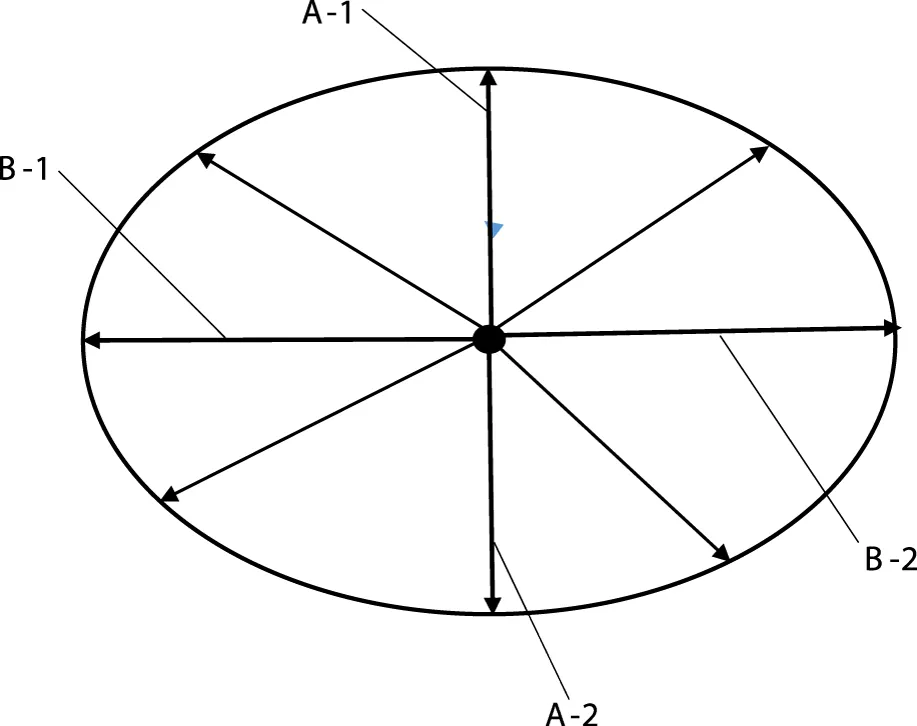
The neuro-psychiatric Self develops into Personality-psychological Self defined in the psychological frame. Researchers of Personality-psychology quantitatively investigated the psychometrical provisions via the questionnaires to find Big Five personality traits of Neuroticism, Openness, Extroversion, Conscientiousness and Agreeableness. They represented the module of the Self as a graph of 2demensional vector space by placing the traits to the modules (Figure 6). Notorious Evil personality is represented as a deformed shape of the Self (Figure 7). Social adaptation strategies of persons having the deformed personality, were holistically explained via the structure of the Self [9].
Socio-psychological self
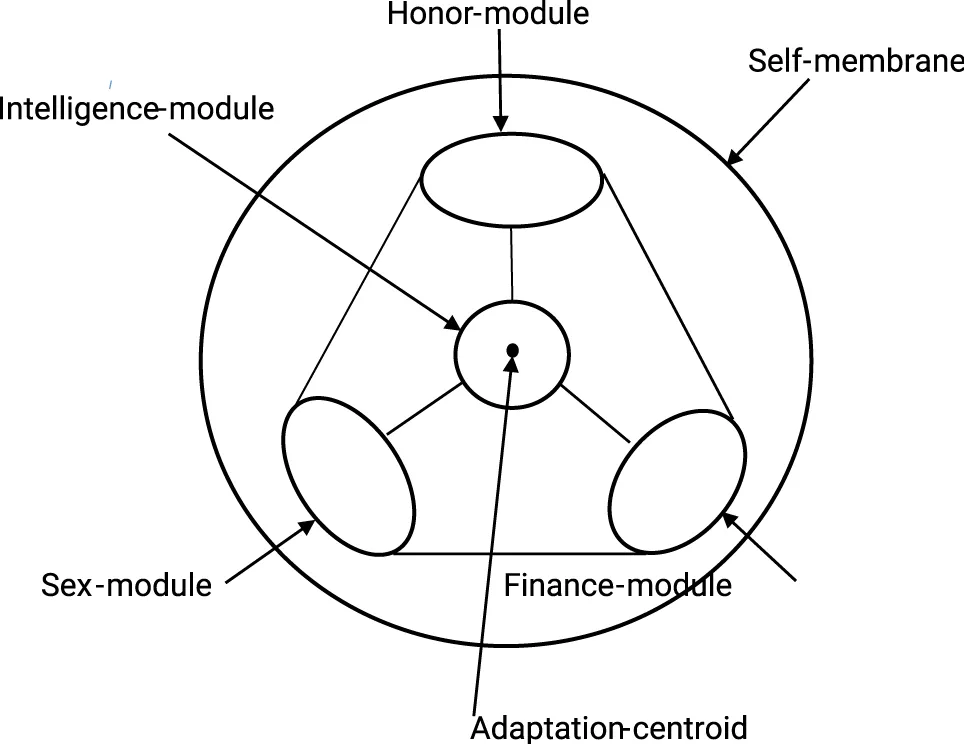
Human constructs societies of families, communities, and nations for collectively-satisfying the desires for living, and the societies decide the rules and roles to be obeyed for maintaining the social homeostasis. The neuro-psychiatric SELF develops into Socio-psychological self defined in the socio-psychological frame. The Self has a Sex-module, a Finance-module and an Honor-module corresponding to the social desires. The Sex-module, coming from the Sympathy-module of the neuro-psychiatric Self, is responsible for the sexual charm relating to the reproduction. The Finance-module, coming from the Sensitivity-module, is responsible for the financial power. The Honor-module, coming from the Behavior-module, is responsible for the social hierarchy. The Intelligence-module is placed at the Adaptation-centroid of the modules-triangle (Figure 8). Societies estimate the activities of the Sex-module, the Finance-module and the Honor-module, corresponding to the social standards. The positive estimation gives the compatible social acceptance to the Self, but the negative estimation gives the social selection pressure to the Self. The Intelligence-module of the Self is requested to mature by incorporating the social standards. The Self, who’s Intelligence-module has successfully incorporated the social standards, would participate in the society with an innovative or a conservative attitude. On the other hand, the Self, whose Intelligence-module has failed to incorporate the social standards, might retreat from the society as a recluse does, or might use sophistry to maintain the validity of the social adaptation. In any case, the Intelligence-module which did not satisfy the desire for social recognition, falls the Self into an Adjustment-disorder accompanied by an Anxiety-disorder.
Adaptation System of World
Structure of the recognition-behavioral World
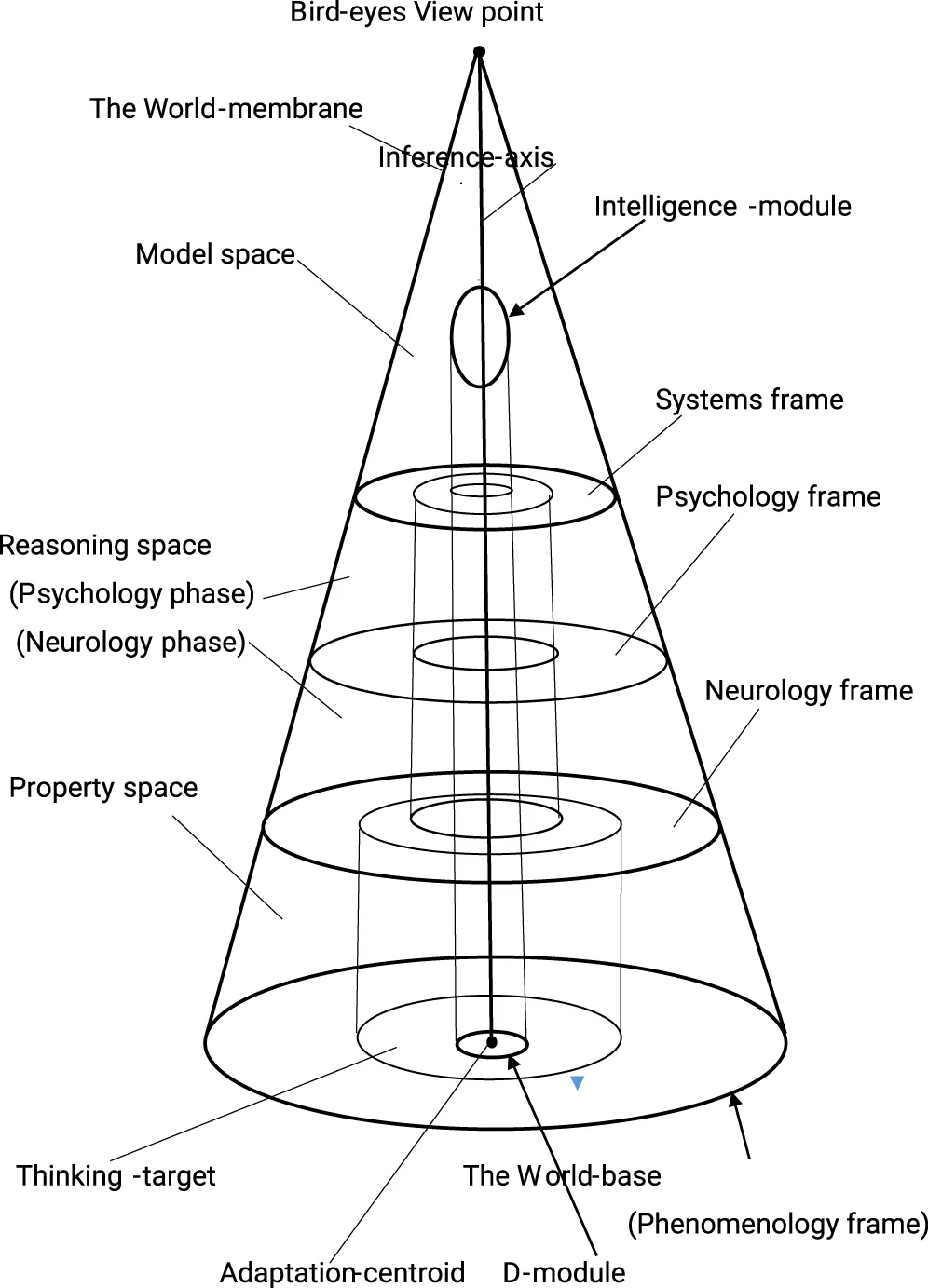
The Intelligence-module, the core of the recognition-behavioral Self, constructs the recognition-behavioral World by developing the Self. The Adaptation centroid of the Self extends to the Bird-eyes view point, and the extension-line is distinguished as the Inference-axis that involves ascending Induction and descending Deduction. The Intelligence-module, which moves on the Inference-axis, organizes the World along the Inference axis. The World differs in the 3spaces-hierarchy of Property space, Reasoning space, and Model space. The Property space involves the association-network of the words/signs. The Reasoning-space involves the association-network of terms/formulas. The Model space involves the association-network of the meta-models of the concepts. The association-networks hierarchy is covered by the World-membrane which intakes information for maintaining the World. The structure of the World is represented corresponding to the ascending nest-hierarchy meta-modeling-code (Figure 9).
Self-reference adaptation system of the World
Animals emergently maintain the harmony of the immunological World via the Immune system distinguishing the selfness and the otherness. The recognition-behavioral World also involves the emergent self-reference adaptation system to maintain the harmony in spite of the Qualia. Information about the thinking target is abstracted at Phenomenology frame of the World-base, and the Intelligence-module changes the information into a meaningful word/sign by giving connotation in the Property space. This corresponds to the Antigen presentation of the Immune system. The words/signs are abstracted at Neurology frame, or at Psychology frame, and the Intelligence-module changes them into functional single-models of terms/formulas by giving the special connotation in reasoning space. This corresponds to Antibody production of the Immune system. The terms/formulas are abstracted at the Systems frame, and the Intelligence-module further integrates them into the meta-models of the concepts networked in the Model space. This corresponds to the Epitope memorization of the Immune system that was suggested by an immunologist Niels Kaj Jerne. Namely, the World involves the self-reference adaptation system like the Immune system. In fact, the self-reference adaptation system produces Self-reference paradox in the recognition-behavioral World, as the Immune system produces Auto-immune diseases in the immunological World.
Reality of the World
The association-network of the Reasoning space, is structured for hubs of key-terms/key-formulas corresponding to the complex-network meta-modeling-code and the causality-sequence diagram meta-modeling-code, as a Mind map is structured. The Intelligence-module, catching a hub of the Mind map on the Inference-axis, reductively analyzes the hub with the scientific procedure. Some researchers persist in their hub, nevertheless, the persistence might produce the Eureka effect. Serendipity occurs when the researchers find another hub in their Mind map. The Intelligence-module, catching the center hub of the Mind map, holistically analyzes the center hub with the scientific procedure. Synchronicity occurs when the researchers look down at their 3dimendional Mind map from the Bird-eyes view point. The recognition-behavioral World of the researcher is identified with the density of the association-network nurtured via the learning, and with the ability of the inference acquired via the experiences. The Developmental task of the scientific researcher is followed by the steps of the phenomenological verbalization in the Property space, the intuitive hypothesis-forming in the Model space, and the sound hypothesis-testing in the Reasoning-space. Representations of the grown researchers develop into the syllogistic form.
Adaptation System of Psychotherapy
Nature of psychotherapy
The recognition-behavioral Self and the recognition-behavioral World are required to cope with the stresses shaking the homeostasis. Psychotherapy is defined to the recognition-behavioral methods to treat Autonomic dystonia induced by the neuro-psychiatric stresses, and Adjustment-disorder induced by the socio-psychological stresses. The Self treats the Autonomic dystonia via the cybernetic feedback system, and the World treats the Adjustment-disorder via the self-reference system.
Psychotherapeutic methods featuring the cybernetic feedback system
Researchers of Behaviorism, who pointed-out significance of the first signal-system of the conditioning-reflection by investigating animal behaviors, advocated Behavioral Therapy which deals with the first signal-system. Researchers of Cognitive psychology, who emphasized the significance of the second signal-system, advocated Cognitive Therapy which deals with the second signal-system in the social situation. Cognitive destruction tries to delete the rigid conditioning-reflection inducing invalid social behaviors. Cognitive-Behavioral Sciences have integrated Behaviorism and Cognitive psychology. Social Skill Training is a social operant-conditioning method to treat Autonomic dystonia by enhancing self-estimation. The reproducibility of these psychotherapies is positively verified because of the cybernetic feedback system. A psychotherapy Mindfulness has integrated the Cognitive behavioral therapy and Meditation. The Meditation, which has been induced from the knowledge of classical Taoist, Buddhist and Traditional Chinese medicine, is a physical technique which gives absolute self-acceptance and higher self-estimation to the Intelligence-module under the transcendent tranquility of the psychological Flow. The Meditation is also handled as the main psychotherapeutic method of Japanese Naikan therapy coming from Buddhism Zen. The Naikan therapists intuitively recognize that the Meditation utilizes the cybernetic feedback system, however, they did not daringly verbalize the mechanism because that the Meditation functions not via the linguistic learning but via the physical experiences. A psychologist Eric Berne, who suggested the communicators maintaining human social interactions in his Transactional Analysis, reduced his research model into the triangle module-network graph involved in the socio-psychological SELF. On the other hand, a psychoanalyst Wilhelm Reich, adhering to Orgone energy produced in the sexual Flow, might not know the dopaminergic cybernetic feedback system of the neuro-psychiatric SELF.
Psychotherapeutic methods coming from Psychoanalysis
Adjustment-disorder, induced via socio-psychological stresses, is closely related with the social desires and the social acceptance. The great psychologist, Sigmund Freud, who listened to narratives of clients showing the socio-psychological dis-adaptation, hypothesized a common socio-psychological adaptation system. He and his colleagues advocated that Psychoanalysis could reductively analyze human socio-psychological dis-adaptation via the adaptation system. S. Freud, who focused on social role of the sex, figured the Freud’s model of the floating-iceberg symbolizing Id, Ego, and Super-Ego. Alfred Adler, who focused on the social role of the honor hierarchy, analyzed the sense of inferiority in his Individual Psychology. Carl G. Jung, who knew the spiritual Mandala, analyzed Archetypes, which might come from the centroid-hierarchy meta-modeling-code, in his Cognitive psychology. Anna Freud and Melanie Klein, who were psychoanalysts, followed the Freud’s idea by increasing Psychoanalysis Terminology. A psychoanalyst Jacques Lacan, who avouched himself as a justifiable successor of S. Freud, figured Schema L like the Freud’s model. Psychotherapists belonging to Psychoanalysis party recommend for the clients to identify their selves in the society. Supporting Psychotherapy recommends for the clients to change the stressful interpersonal relationship to the stress-less one via the verbalization. Schema Therapy suggests that the social adaptation-manner of the client is formed by maintaining the social roles in the belonging society. Family therapy, which points out the double-binding in the troubled family, considers the family as one of the societies belonging to the patients. Namely, psychotherapies of Psychoanalysis provide the systematic persuasion for the clients to recover the harmony in their recognition-behavioral World via the socio-psychological adaptation system, however, the adaptation system has not been formulized/made graphic.
Psychotherapeutic method coming from Humanistic psychology
A psychoanalyst Erik H. Erikson reductively analyzed the social Developmental tasks. His research model looks to come from the ascending nest-hierarchy meta-modeling-code of Mount Meru. A psychologist Abraham H. Maslow, who was considered to integrate Cognitive-Behavioral Sciences and Psychoanalysis, represented the emergent Maslow’s hierarchy of needs in his Humanistic psychology. His research model also looks to come from the ascending nest-hierarchy meta-modeling-code. A Humanistic psychologist Elisabeth Kübler-Ross, who studied Near-death sequence, found the five stages of grief known as the Kübler-Ross model. Psychotherapists belonging to Humanistic psychology party, positively estimate the client’s social World as it is. Open dialogue tries to give social positive approval and estimation to schizophrenic patients by listening to their narratives closely. Group therapy tries to increase co-estimation among the client members by utilizing arts and sports. Namely, psychotherapies of Humanistic psychology provide the systematic role-playing for the clients to recover the harmony in their recognition-behavioral World via the self-reference adaptation system, and the self-reference adaptation system might be formulized via Topology.
Discussion and Conclusion
Structuralism provided the qualitative research method to analyze the underlying structural patterns of human recognition-behavioral adaptation. Since the early 20th century, Structuralism mainly functions as the meme of the humanities. A semiologist Ferdinand de Saussure, who conceived language and society as a system of relations, represented the fundamental idea of the Structuralism in his works. An anthropologist Claude Lévi-Strauss extracted a common cultural structure from the different societies. A psychiatrist Jacques Lacan applied Structuralism to Psychoanalysis by blending Freud’s idea and Saussure’s idea. A psychologist Jean Piaget applied the Structuralism to the psychological study of the social adaptation development. Researchers of Structuralism have tried to reduce the thinking model into the single-formula/graph, at present, the trials look to be successful in the Semiology and the Anthropology, but not in the Psychiatry and the Psychology. Systems theory provided the quantitative research method to analyzes performance of meta-systems consisting of interrelated and interdependent single-systems. Since the mid of 20th century, Systems theory mainly functions as the meme of the biological sciences. A biologist Ludwig von Bertalanffy represented his famous equation describing the growth of a biological organism consisting of the cells. A mathematician Norbert Wiener found a feedback system of Cybernetics that describes a communication-pattern in an organism consisting of the organs and/or the components. A physician Alexander Bogdanov thought that the Cybernetics is the core of the physiological adaptation system. An ecologist Howard T. Odum, who indicated that the ecological system is reduced to a biological meta-system complex-networking the biological single-models, further indicated that an emergent ecological standard-shift is explained by topologically-figuring the ecological meta-model. In the present study, the human recognition-behavioral adaptation system of HI, the recognition-behavioral Self, and the recognition-behavioral World, was analyzed via the multidisciplinary scientific procedure integrating the qualitative research method and the quantitative research method in the frames defined with the Terminologies. The recognition-behavioral adaptation system of HI is considered to be the language-metabolism system utilizing the single-/meta-modeling-codes formed in the Neuronal Network of the brain empirically. The Self is structured corresponding to the complex-network meta-modeling-code and the centroid-hierarchy meta-modeling-code, and it involves the adaptation system of the cybernetic feedback in the structure. The Intelligence-module works corresponding to the scientific procedure coming from the syllogistic meta-modeling-code. The recognition-behavioral World corresponds to the immune World, and the Worlds involve the self-reference adaptation system coming from the complex-network meta-modeling-code and the ascending nest-hierarchy meta-modeling-code. Reality of the Psychotherapy was reductively explained with the cybernetic feedback system and the self-reference system. Now, Orient societies, which are familiar with an ideograph like Chinese characters, have maintained the opposite but interconnected forces meta-modeling-code of Yin-Yang Taiji, the complex-networking meta-modeling-code of Wu Xing, and the centroid-hierarchy meta-modeling-code of Mandala. These meta-modeling-codes would give the holistic world-view to researchers belonging to these societies. Occident societies, which are not so familiar with the ideograph, have maintained the syllogistic meta-modeling-code of Trimurti, the causality-sequence diagram meta-modeling-code of Sefirot, and the ascending nest-hierarchy meta-modeling-code of Mount Meru. These meta-modeling-codes would give the reductive world-view to researchers belonging to these societies. Finally, it was concluded that human recognition-behavioral adaptation system is holistically and reductively analyzed via the multidisciplinary scientific procedure. Human thinking, which produces sciences in all of the research fields, is under the recognition-behavioral adaptation system. The research models of the sciences could be analyzed via the multidisciplinary scientific procedure.
References
- Bullmore E, Sporns O. The economy of brain network organization. Nat Rev Neurosci. 2012 Apr 13;13(5):336-49. doi: 10.1038/nrn3214. PMID: 22498897.
- Sarnyai Z, Kovács GL. Role of oxytocin in the neuroadaptation to drugs of abuse. Psychoneuroendocrinology. 1994;19(1):85-117. doi: 10.1016/0306-4530(94)90062-0. PMID: 9210215.
- Fletcher JM, Francis DJ, Morris RD, Lyon GR. Evidence-based assessment of learning disabilities in children and adolescents. J Clin Child Adolesc Psychol. 2005 Sep;34(3):506-22. doi: 10.1207/s15374424jccp3403_7. PMID: 16083392.
- Masuda Y. Meta-model of human recognition-behavioural adaptation system. Integrative Psychological and Behavioral Science. 2024;58:149-159. doi: 10.1007/s12124-023-09781-0.
- Perona MT, Waters S, Hall FS, Sora I, Lesch KP, Murphy DL, Caron M, Uhl GR. Animal models of depression in dopamine, serotonin, and norepinephrine transporter knockout mice: prominent effects of dopamine transporter deletions. Behav Pharmacol. 2008 Sep;19(5-6):566-74. doi: 10.1097/FBP.0b013e32830cd80f. PMID: 18690111; PMCID: PMC2644662.
- Masuda Y. Human self: Structure of the recognition-behavioural model-system working with language-metabolism and Significance induced by symbolical figuring. International Journal of Psychological and Brain Science. 2024;9:30-37. doi: 10.11648/j.ijpbs.20240903.11.
- Masuda Y. Significance of humoral glycolipids produced by patients with a symptomatic diagnosis of major psychoses. Journal of Neuroscience Neuropsychology. 2020;3:108.
- Tarver J, Vitoratou S, Mastroianni M, Heaney N, Bennett E, Gibbons F, Fiori F, Absoud M, Ramasubramanian L, Simonoff E, Santosh P. Development and Psychometric Properties of a New Questionnaire to Assess Mental Health and Concerning Behaviors in Children and Young People with Autism Spectrum Disorder (ASD): The Assessment of Concerning Behavior (ACB) Scale. J Autism Dev Disord. 2021 Aug;51(8):2812-2828. doi: 10.1007/s10803-020-04748-1. Epub 2020 Oct 14. PMID: 33051784; PMCID: PMC8254716.
- Keulers EHH, Hurks PPM. Psychometric properties of a new ADHD screening questionnaire: Parent report on the (potential) underlying explanation of inattention in their school-aged children. Child Neuropsychol. 2021 Nov;27(8):1117-1132. doi: 10.1080/09297049.2021.1937975. Epub 2021 Jun 11. PMID: 34114931.




Content Alerts
SignUp to our
Content alerts.
 This work is licensed under a Creative Commons Attribution 4.0 International License.
