
Environmental Sciences Group 2025 May 19;6(5):503-529. doi: 10.37871/jbres2106.





 Research Article
Multidisciplinary Evaluation of the Pyramid-Shaped Formation near Visoko, Bosnia-Herzegovina: A Case for Anthropogenic Construction
Sam Osmanagich*
- Bosnian pyramid of the sun
- Geomorphology
- Geodesy
- Geophysical survey
- Spatial geometry
- Archaeological excavation
- Bosnian valley of the pyramids
- Visoko, Bosnia-Herzegovina
Abstract
This study presents a multidisciplinary investigation of the pyramid-shaped formation known as the Bosnian Pyramid of the Sun (Visočica Hill) located in central Bosnia-Herzegovina. Integrating geodetic, geomorphological, geological, archaeological, electromagnetic, and geometrical data, the analysis examines whether the formation’s distinctive features can be fully explained by natural processes or whether anthropogenic activity may have played a role in its current structure. High-resolution topographic surveys reveal precise orientation of the northern slope toward true north, within ±0° 0′ 12″, comparable to other ancient pyramid structures. Remote sensing and LiDAR data show symmetry and uniformity in slope angles, while archaeological excavation over multiple field seasons has uncovered artificially arranged large blocks composed of breccia, clay binders, and sandstone - exhibiting compressive strength exceeding that of modern concrete. Geophysical measurements detect consistent emissions in the 28-30 kHz range and unusual electromagnetic behavior, especially during lunar events. Geometrical overlays, including Fibonacci spirals and Golden Ratio proportions, further highlight intentional design. These multiple lines of evidence are evaluated in support of the hypothesis that the Bosnian Pyramid of the Sun represents a large-scale, artificially enhanced formation with unknown function, possibly rooted in pre-classical engineering and geospatial knowledge. These observations align with previous findings in comparative spiral geometry research involving both Egyptian and Bosnian pyramids.
Introduction
The hypothesis of an artificial pyramid complex in Visoko, Bosnia-Herzegovina, gained international attention in 2005 when Dr. Sam Osmanagich proposed that the prominent Visočica Hill-later named the Bosnian Pyramid of the Sun-exhibited geometric regularity, orientation to cardinal directions, and evidence of construction techniques consistent with ancient monumental architecture. This claim has since spurred nearly two decades of multidisciplinary research involving geodesy, geomorphology, archaeology, materials analysis, remote sensing, and geophysics [1,2].
Geodetic surveys conducted by Eng. Enver Buza using GNSS and Total Station equipment confirmed a north-facing alignment within 0°00′12″-A level of precision comparable to the Great Pyramid of Giza [3-13]. LiDAR analysis was performed in 2015 by Airborne Technologies GmbH (Austria), while early geophysical analyses were conducted by geophysicist Dr. Amer Smailbegović (USA) [14] in 2006, both revealing consistent slope angles (42°-45°) and topographical regularity across all visible faces. High-resolution elevation models by Engineer Senad Bahor (Bosnia-Herzegovina) [15] supported these findings. Excavations revealed large, concrete-like blocks with compressive strength ranging from 94 to 155 MPa-exceeding typical modern concrete [16].
Geophysical surveys by Engineer Goran Marjanović (Serbia) [17], Engineer Slobodan Mizdrak (Croatia) [18] and Professor Paolo DeBertolis (Italia) [19], registered consistent electromagnetic emissions at 28–30 kHz from the pyramid's apex, with enhanced activity during lunar events, suggesting sensitivity to celestial alignments [17]. Geometric studies confirm spatial coordination with other pyramid-shaped hills in the Visoko Valley, such as the Pyramids of the Moon and Dragon, forming equilateral and triangular geometries with internal angles close to 60° [1,2,14,20-22].
This article aims to reassess the anthropogenic hypothesis by synthesizing two decades of evidence and responding to critiques posed by the archaeological establishment. We argue that the converging data from disparate scientific fields support the classification of the Bosnian Pyramid of the Sun as a deliberately modified or constructed feature with significant cultural, technological, and historical implications.
Scientific Debate and Critical Reception
Despite growing empirical support, the Bosnian Pyramid project has faced persistent criticism since its inception. Key archaeological institutions, such as the Council for British Archaeology, the German Archaeological Institute, and the European Association of Archaeologists (EAA), have condemned the project as pseudoscientific [23]. These positions have been widely disseminated, including on[24-26] and are often cited as consensus views despite lacking field data or peer-reviewed counter-analyses.
Notably, Dr. Zahi Hawass, [23] former Egyptian Minister of Antiquities, dismissed the claims in 2006, asserting that the blocks found at the site were too massive to be moved by humans, suggesting hallucination rather than construction. Similarly, Dr. Robert Schoch, who briefly visited the site in 2006, concluded the formations were modified natural hills but has not published any peer-reviewed critique addressing the extensive evidence collected since.
Dr. Brian Stewart from the University of Michigan raised ethical concerns in 2015, alleging that excavations may have disrupted authentic medieval layers. However, Stewart’s critique was not based on direct observation and no supporting archaeological damage reports have been filed. Additionally, repeated public criticism by archaeologists from the Department of Archaeology, Faculty of Philosophy, University of Sarajevo, and curators at the National Museum in Sarajevo, has not been supported by fieldwork or peer-reviewed publications [23].
Popular alternative researchers—including Andrew Collins, David Hatcher Childress, and Graham Hancock-have also expressed doubt, although none have undertaken formal investigation or site-based publication. While skepticism is a cornerstone of scientific inquiry, its value lies in evidence-based rebuttal, not public dismissal. To date, no critic has published a peer-reviewed article refuting the core findings of the Bosnian Pyramid project.
By contrast, experts who have studied the site directly have presented favorable assessments. Egyptologist Dr. Nabil Swelim concluded that the Bosnian Pyramid of the Sun is the largest pyramid in the world and supported its artificial origin[27]. Geophysicists Dr. Oleg Khavroshkin and Dr. Vladislav Tsyplakov from the Schmidt Institute of the Russian Academy of Natural Sciences noted seismic profiles and geometry consistent with pyramid construction [28]. Dr. Aly Abdulah Barakat [3], a geologist from EMRA, Cairo, Egypt, after three field visits (2006-2008), also confirmed the anthropogenic nature of the formation in his geological report [29].
Further, researchers from Cairo University’s Department of Conservation, Faculty of Archaeology-Prof. Dr. Mona F. Ali and Prof. Dr. Abubakr M. Mussa—analyzed cement materials from the pyramid complex and concluded that "analysis of cement material between the conglomerate blocks proved their artificial origin" [30].
Supporters such as Paul von Ward (USA), archaeologist Prof. Ezra Zubrow (Buffalo State University), astrophysicist Dr. Paul La Violette (USA) and Russian geophysicist Prof. Konstantin Korotkov[31] have all advocated for continued scientific study, citing the uniqueness and potential historical importance of the site. The late Philip Coppens wrote extensively on the Bosnian Pyramids after multiple visits, dedicating a full section to them in his broader work on European pyramid phenomena [32].
Researchers affiliated with the Archaeological Park: Bosnian Pyramid of the Sun Foundation have produced extensive data and conference proceedings, ranging from geophysical anomalies and concrete characterization to archaeoacoustic patterns and geometric modeling. These findings merit continued, transparent scientific investigation rather than wholesale dismissal.
Geodetic, Topographic, and Satellite Analysis
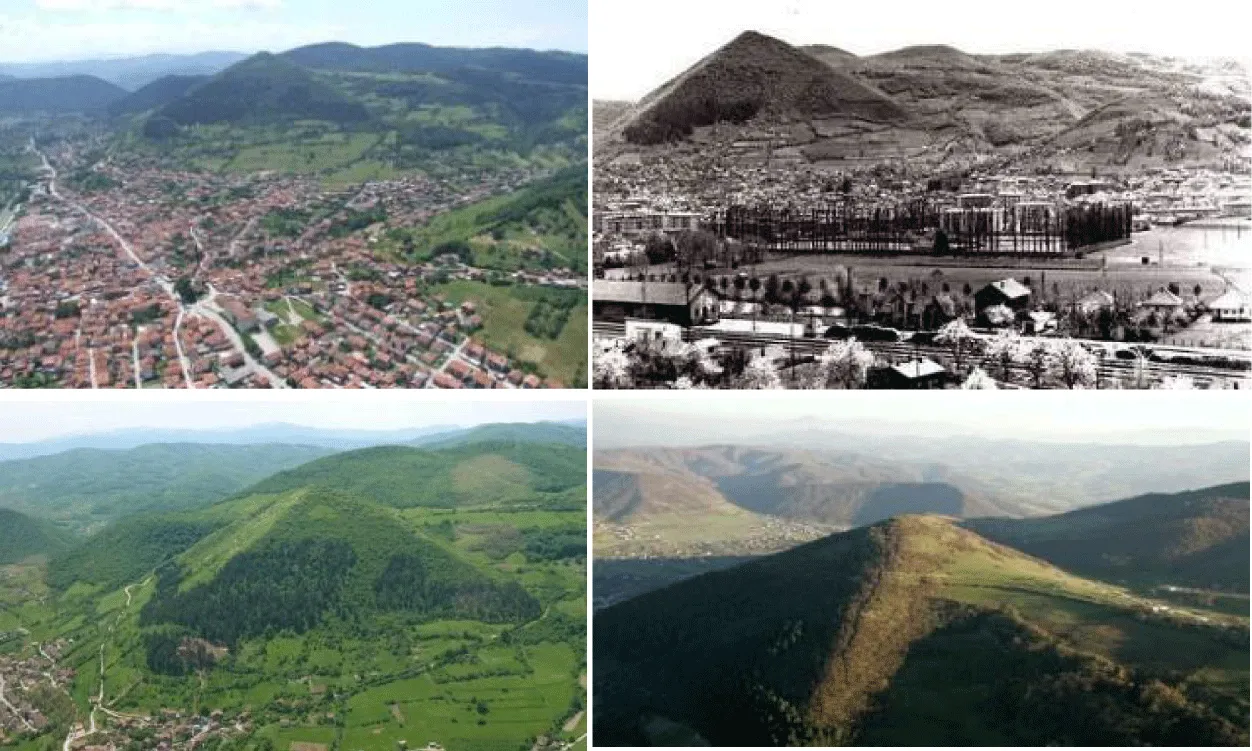
The Bosnian Pyramid of the Sun exhibits spatial and geometric features that differentiate it markedly from surrounding natural landforms in the central Bosnian landscape. A comprehensive series of geodetic surveys, topographic models, and satellite analyses have produced converging evidence of angular regularity, precise orientation, and structural symmetry-features that align more closely with intentional construction than with random geological processes (Figures 1,2).
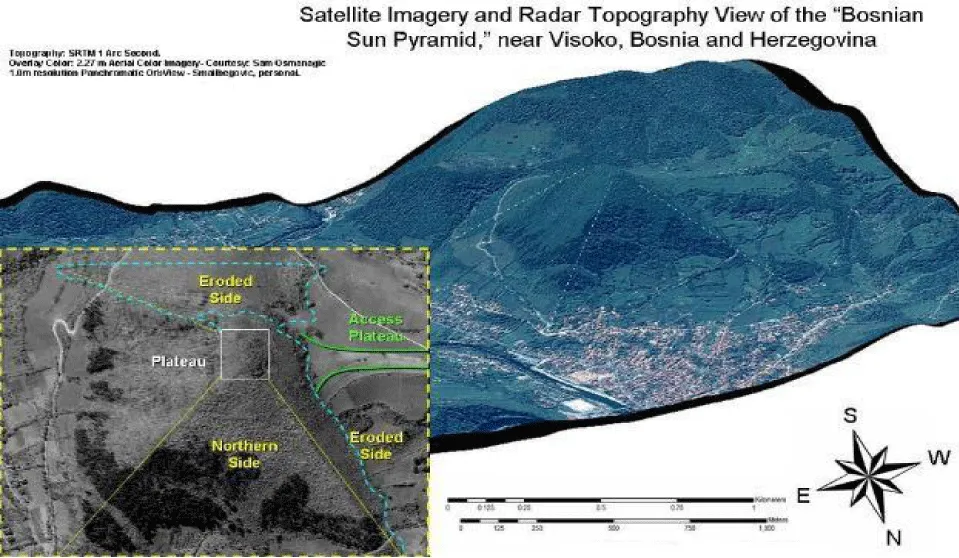
This composite visualization integrates high-resolution 2.27 m aerial color imagery with 1.0 panchromatic OrbView satellite data and NASA’s SRTM 1 Arc Second radar elevation model. The image emphasizes the sharply defined northern face of the pyramid-shaped formation and shows erosion on adjacent flanks, as well as the summit plateau and access terrace.
Topography: SRTM 1 Arc Second. Overlay: 2.27 m aerial color imagery (courtesy: Dr. Sam Osmanagich). OrbView satellite data: 1.0 m panchromatic (courtesy: Dr. Amer Smailbegović). Originally published in: Smailbegović A. Geophysical Analysis of the Pyramid-Shaped Structure in Visoko, Bosnia-Herzegovina. 2006.
Also published in: Osmanagich S. Bosnian Pyramid of the Sun: Discovery of the First European Pyramid (2nd ed.). Mauna-Fe Publishing, Sarajevo. 2007.
Initial geodetic surveys conducted in 2006 by Eng. Enver Buza of the State Institute for Geodesy of Bosnia and Herzegovina utilized GNSS and TS 600-Topcon Total Station instruments to determine the cardinal orientation of the structure. These measurements confirmed that the northern face of the pyramid is aligned to true north with a deviation of just +0°00′12″-a level of precision comparable to the Great Pyramid of Giza, which deviates by approximately 0°03′00″ [3,4,33]. These results were published in the official proceedings of the First International Scientific Conference on the Bosnian Valley of the Pyramids (Figures 3,4).

The geodetic alignment of this northern slope was measured by the State Institute for Geodesy of Bosnia and Herzegovina under the leadership of Eng. Enver Buza, using a TS 600-Topcon Total Station. The northern side of the structure was found to align with true north with a deviation of only 12 arcseconds to the right (positive deviation), indicating a level of precision comparable to the Great Pyramid of Giza.
This result was presented and published in: Buza E. “Geodetic Survey of the Northern Face of the Bosnian Pyramid of the Sun.” In First International Scientific Conference on the Bosnian Valley of the Pyramids. 2007;58-65.
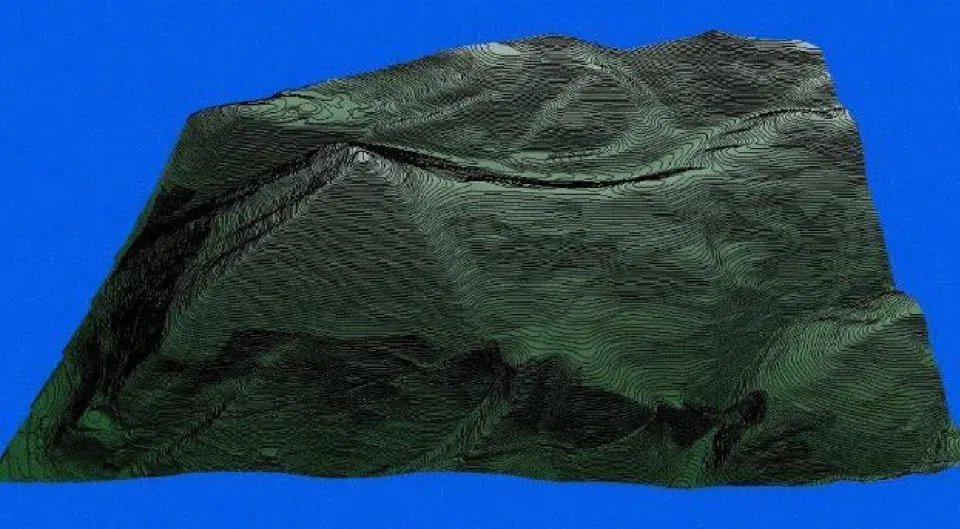
This geodetic model was produced by the State Institute for Geodesy of Bosnia and Herzegovina in 2006 and provides a high-resolution visualization of topographic symmetry. The contour lines reveal the flatness and orientation of the northern slope with striking regularity. When compared with geodetic data from the Great Pyramid of Giza-which aligns with true north with an average deviation of 2’54” (3 arcminutes) according to Petrie’s survey and subsequent confirmations-The Bosnian Pyramid of the Sun demonstrates an even higher precision with a measured deviation of just 12 arcseconds to the right (Figure 3) (Petrie WMF, [7], Dash G, [4]).
Sources:
- State Institute for Geodesy of Bosnia and Herzegovina. 2006.
- Buza E. Geodetic survey of the northern face of the Bosnian pyramid of the sun. In First International Scientific Conference on the Bosnian Valley of the Pyramids. ICBP book; 2008:58-65.
- Petrie WMF. The Pyramids and Temples of Gizeh. London: Field & Tuer. 1883.
- Dash G. The orientation of the pyramids. Journal of Ancient Egyptian Architecture. 2013;1, 1–7
Topographic contour mapping and elevation modeling, performed by the State Institute and independent researchers, have consistently revealed geometric symmetry across all visible faces. Despite partial erosion on the western and southern flanks, contour interval spacing remains regular and triangulated across the most prominent faces (Figures 4-6). An elevation profile generated by the Geodetic Institute (Figure 7) shows a linear slope pattern with minimal deviation on the northern face, further suggesting purposeful shaping of the terrain [3].
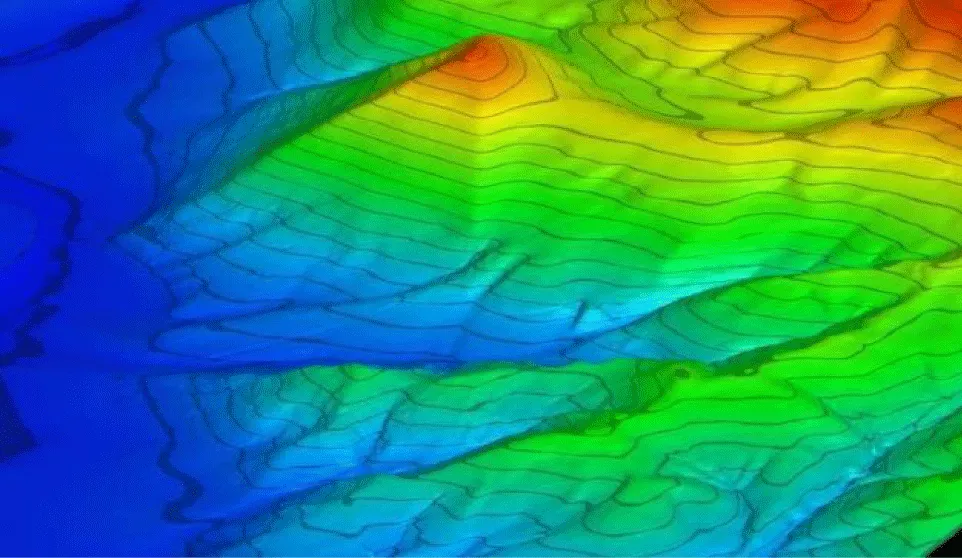
This colored Digital Elevation Model (DEM), enhanced with contour lines, and reveals the distinctly angular shape of the Bosnian Pyramid of the Sun. The coloration-from blue (lowest elevation) to red (highest)- Accentuates the geometric symmetry of the formation. The northern face is particularly striking, forming a near-triangular slope that ascends to a sharp apex, visually reinforcing the hypothesis of artificial modification.
The State Institute for Geodesy, under the direction of Eng. Enver Buza, conducted a comprehensive topographic analysis of the formation in 2006. Their official interpretation described the Bosnian Pyramid of the Sun as an “unfinished or possibly damaged pyramid structure,” due to its highly regular form interrupted by apparent erosional damage on some flanks. This observation, along with precisely calculated contour spacing and orientation, led to continued geodetic and archaeological investigations.
Source: Buza E. Geodetic survey of the northern face of the bosnian pyramid of the sun. In: First International Scientific Conference on the Bosnian Valley of the Pyramids. 2007:58-65. Archaeological Park: Bosnian Pyramid of the Sun Foundation. Sarajevo, Bosnia-Herzegovina.
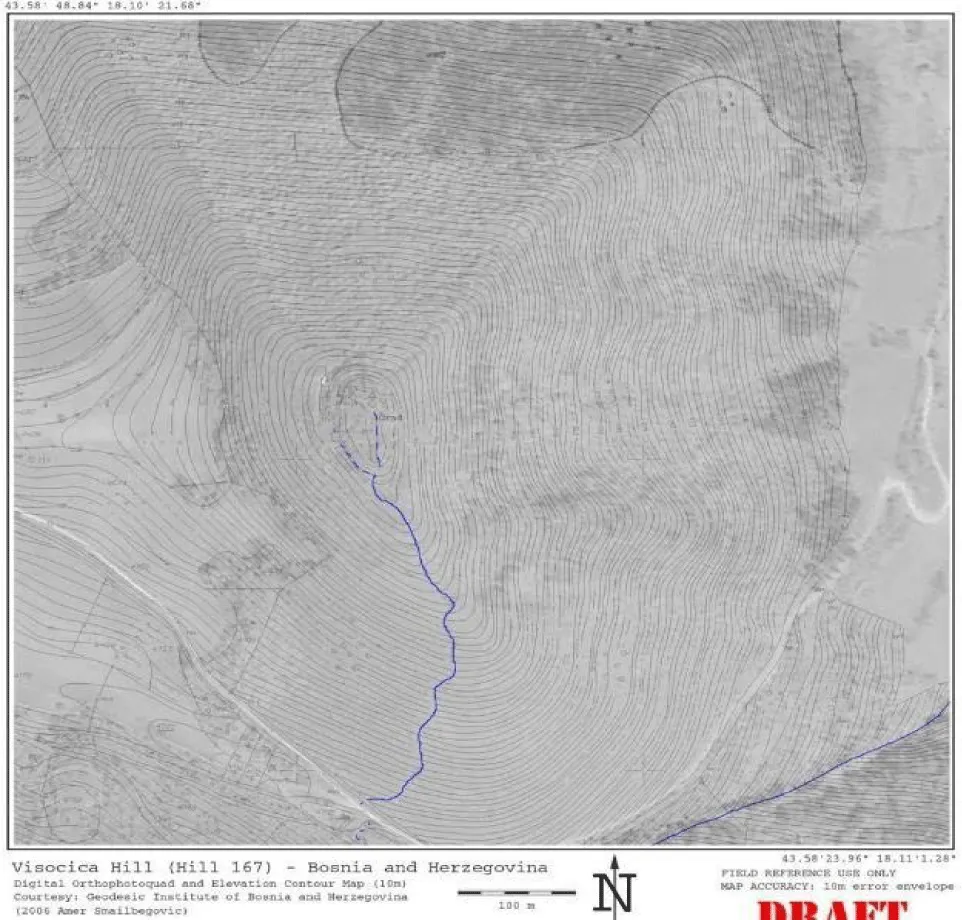
This draft geospatial map integrates grayscale orthophotography with overlaid 10-meter elevation contours to provide an objective terrain model of the Bosnian Pyramid of the Sun (Visočica). The image reveals a highly regular, stepped contour pattern along the northern and northeastern slopes of the hill, suggesting consistent slope geometry and sharp angular transitions indicative of large-scale artificial modification. The central peak is tightly circled by elevation lines, emphasizing the geometric concentration of altitude at the summit.
The terrain model was produced using aerial imaging and elevation data by the Geodetic Institute of Bosnia and Herzegovina. The blue line marks a natural drainage channel, yet no evidence of significant natural erosion features appears on the most symmetrical pyramid faces, further supporting the hypothesis of anthropogenic shaping.
Source: Smailbegović A. Satellite and radar geospatial evaluation of the pyramid-shaped formation in Visoko, Bosnia and Herzegovina. 2006. Published in part on www.piramidasunca.ba and In: Osmanagich S. Bosnian pyramid of the sun: Discovery of the first European Pyramid. 2nd ed. Mauna-Fe Publishing. Sarajevo. 2007.
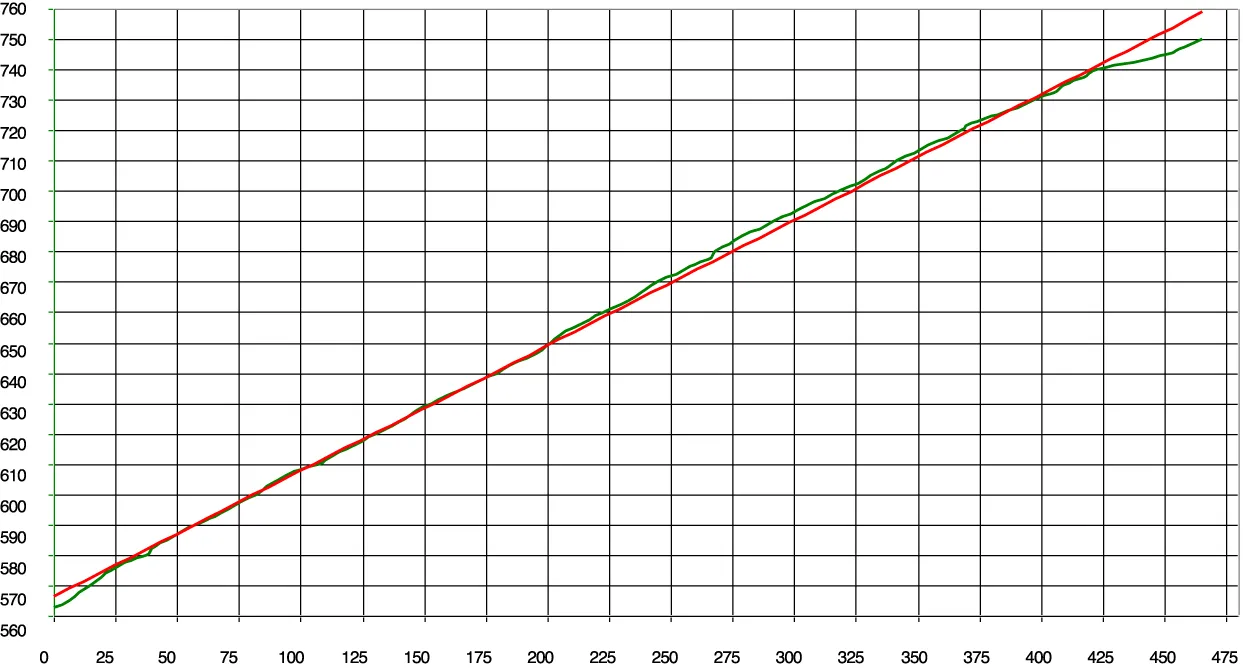
This graph represents a topographic elevation cross-section generated by the State Institute for Geodesy of Bosnia and Herzegovina in 2006, based on field measurements using a TS 600- Topcon Total Station. The profile documents the slope of the northern face of the Bosnian Pyramid of the Sun, aligning closely with a straight linear regression line (red). The green curve denotes actual elevation data points, while the red line demonstrates a mathematical best-fit line across the sampled surface points.
The minimal deviation between actual terrain (green) and the ideal geometric slope (red) underscores the angular regularity and intentionality of the northern face. This level of slope uniformity is exceedingly rare in natural geomorphology, supporting arguments for artificial construction or modification. The profile confirms a high level of geometric symmetry over a sustained horizontal distance, extending from base to apex of the structure.
Source: Buza E. Geodetic survey of the northern face of the Bosnian pyramid of the sun. In: First international scientific conference on the Bosnian valley of the pyramids. State Institute for Geodesy of Bosnia and Herzegovina; 2006. p.58-65.
High-resolution satellite imagery and radar topography (Figure 2) and analysis by geophysicist Dr. Amer Smailbegović using SRTM and OrbView data, revealed planar surfaces and angular summit convergence [14]. Smailbegović’s automated lineament extraction using LINANAL™ software detected statistically significant radiating features from the apex in both cardinal and intercardinal directions (Figure 8), coinciding with observed terrace and ridge alignments. The consistent appearance of these radiating lines across datasets suggests a non-random, structural layout not typically seen in naturally formed hills (Figures 9,10).
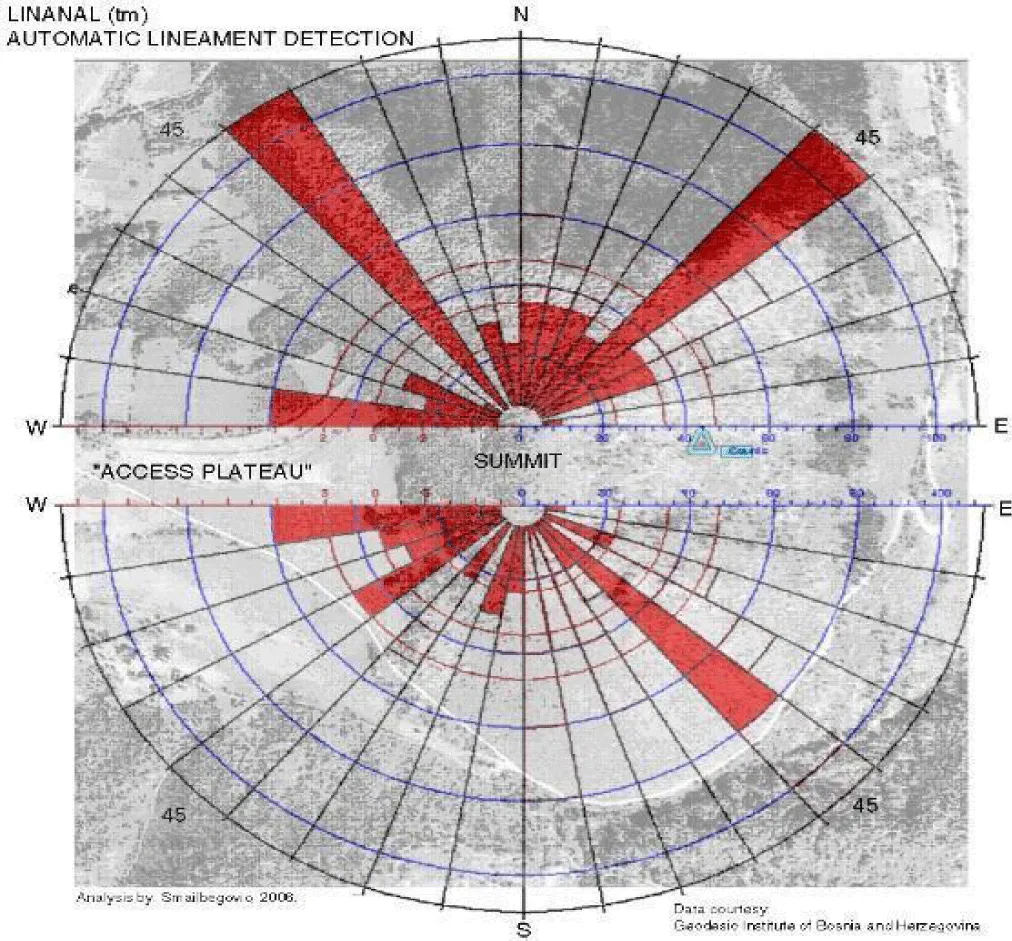
This radial map was generated through the LINANAL (tm) software algorithm, using high- resolution topographic and satellite data provided by the Geodetic Institute of Bosnia and Herzegovina. The analysis, conducted by Dr. Amer Smailbegović in 2006, confirms the geometric regularity of the structure’s four lateral faces despite partial erosion.
The concentration of detected lineaments in cardinal and diagonal alignments (notably at 0°, 90°, 180°, and 270°) reinforces the presence of a near-perfect quadrilateral pyramid layout. Clear apex-centered linear zones indicate preserved corners and edge continuity, which provide key support for hypotheses of intentional geometric construction.
Source: Smailbegović A. Analysis based on data from the Geodetic Institute of Bosnia and Herzegovina. Published at www.piramidasunca.ba. 2006. And included In: Osmanagich S. Bosnian pyramid of the sun - Discovery of the first european pyramid 2nd ed. Mauna-Fe Publishing. Sarajevo; 2007.
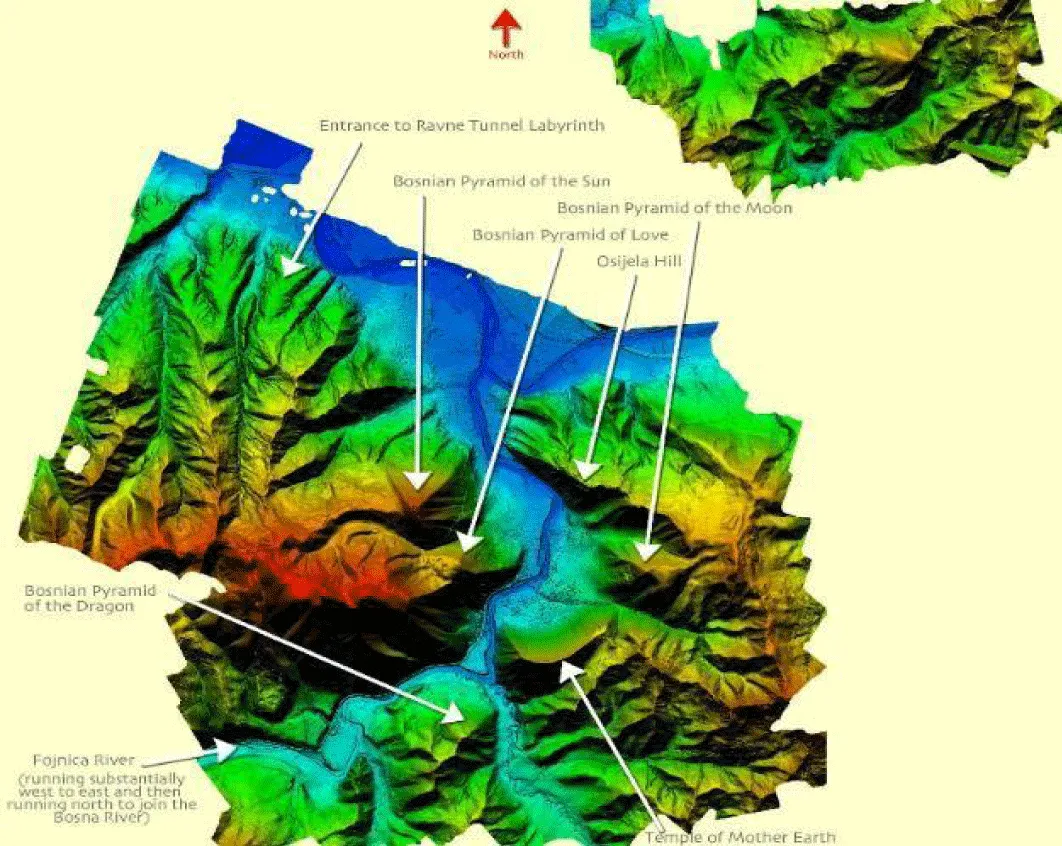
The Ravne Tunnel Labyrinth, which extends underground toward the Bosnian Pyramid of the Sun, is marked near the upper left of the image. The Fojnica River can be seen curving around the southern perimeter of the valley before joining the Bosna River to the northeast. This detailed visualization was generated through airborne LiDAR scanning conducted by Airborne Technologies GmbH (Austria) under contract to the Archaeological Park: BPS Foundation (2015), enabling high-resolution modeling of topographic structures and potential anthropogenic features.
Source: Adapted from Osmanagich S, Hoyle R, Agić A, Delibašić H. Ravne 3 tunnels. 1st ed. Visoko: Archaeological park: BPS foundation. Figure prepared by Richard Hoyle using LIDAR data under license by the Foundation. 2023.
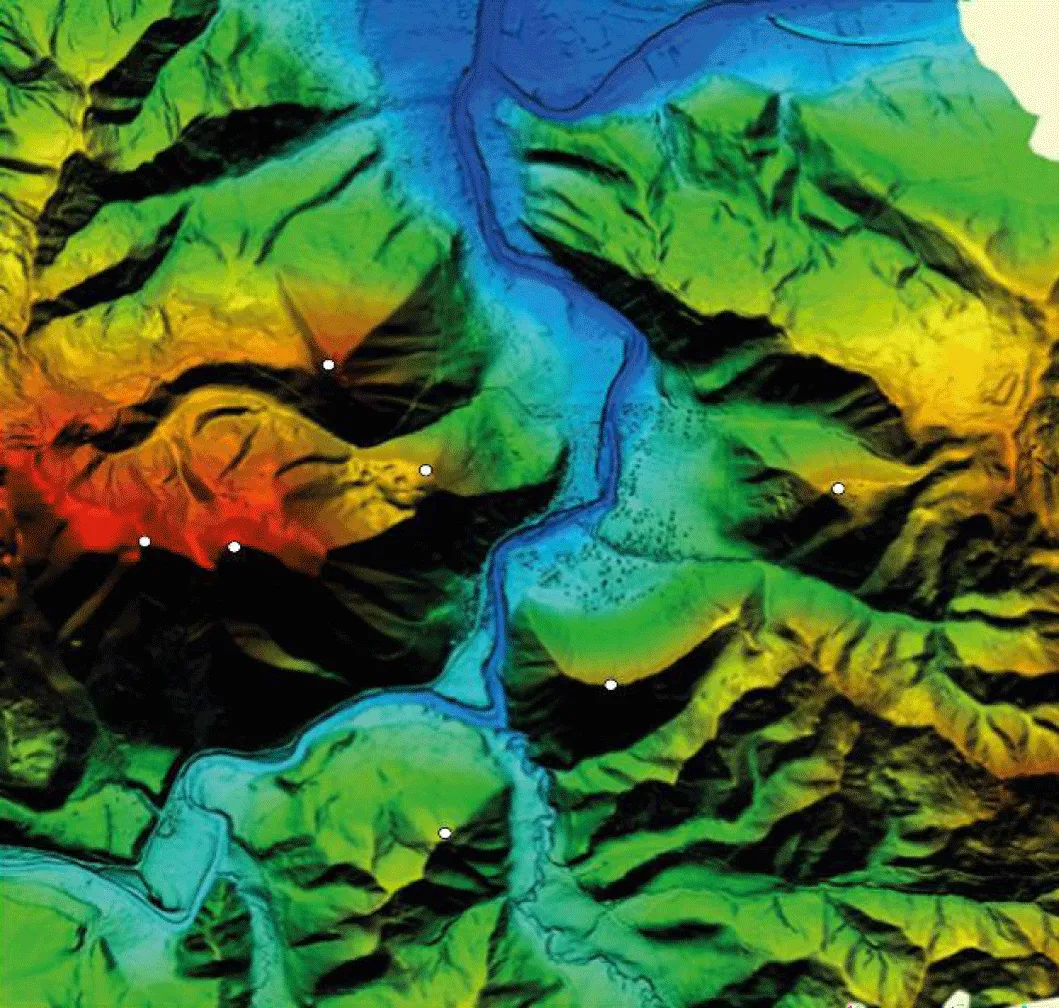
The Bosnian Pyramid of the Sun is clearly visible in the upper left quadrant of the model, showing a sharp-edged northern face and prominent slope planes consistent with artificial geometry. These elevation peaks form measurable relationships in distance and angle, which have been subjected to geometric evaluation-including equilateral triangle formations and Fibonacci sequence modeling-presented in subsequent sections.
This figure is adapted from research conducted by Richard Hoyle, Sam Osmanagich, first presented in: Osmanagich S, Hoyle R, Agić A, Delibašić H. Ravne 3 tunnels. 1st ed. 2023.Archaeological Park: BPS Foundation. The data used was collected during a LiDAR survey performed by Airborne Technologies GmbH (Austria) under contract to the Foundation in 2015.
Note on accuracy: The LiDAR dataset used for this DEM has a horizontal positional accuracy of ±0.3 m and a vertical accuracy of ±0.15 m under standard conditions which is sufficient for general terrain morphology and elevation modeling.
LiDAR data acquired by Airborne Technologies GmbH in 2015 yielded a digital elevation model with sub-meter accuracy [34], further reinforcing the presence of clear angular slopes, terrace boundaries, and summit flatness [35]. These results are supported by terrain modeling by Senad Bahor [15], whose four-dimensional visualization methodology confirmed the summit height of 767 meters and the eastern base elevation of approximately 399 meters-yielding a total vertical rise of 368 meters, more than double that of the Great Pyramid of Giza (Figure 11).

Source: Bahor S. The Four Dimensional Visualization of the Bosnian Valley of the Pyramids – New Methodology for the Reconstruction of the Cultural Heritage Site, Master’s thesis, Sarajevo School of Science and Technology. 2015.
Further supporting the hypothesis of artificial design, geodetic triangulation between the summits of the Pyramids of the Sun, Moon, and Dragon revealed a near-perfect equilateral triangle, with each side measuring approximately 2.18 kilometers and internal angles averaging 60° ± 2° (Figure 12) [2]. These spatial relationships, confirmed by cadastral maps and verified through GNSS positioning, suggest coordinated planning within the broader Visoko valley (Figure 13).
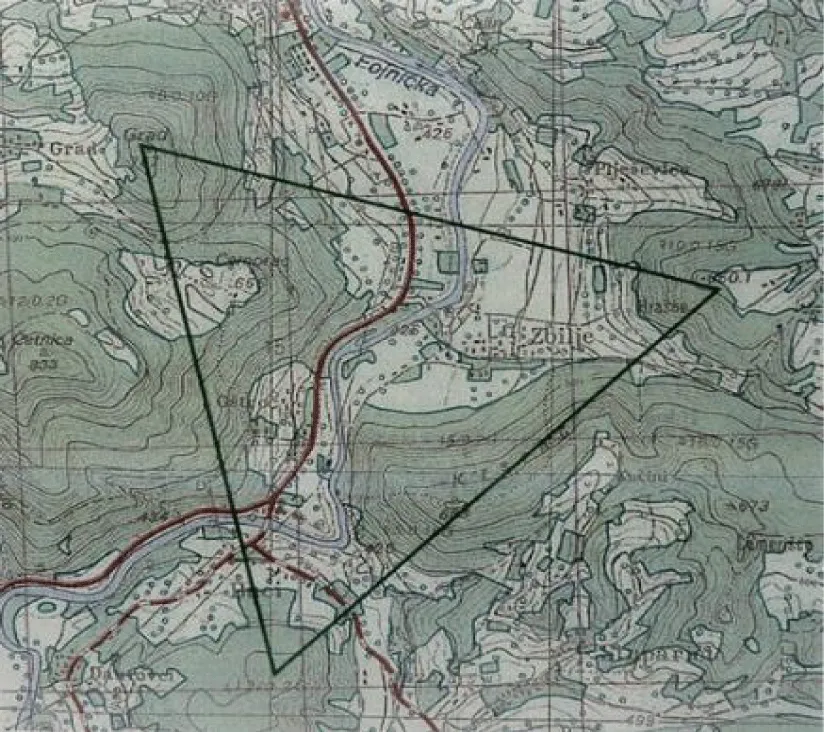
The base layer is a cadastral topographic map issued by the Cadastral Office of Visoko, produced during the Yugoslav period (1:25,000 scale). The triangle was superimposed using summit coordinates obtained through on-site geodetic GPS measurements, verified with LiDAR and total station data collected by the Foundation between 2006 and 2015.
Such geometric consistency has been referenced as part of broader hypotheses regarding sacred geometry, intentional design, and astronomical or energetic function within the Bosnian Pyramid.
Complex (Osmanagich S, [1]; Hoyle, et al., 2023). The spatial relationship depicted here also corresponds to geospatial patterns identified by the LiDAR-based terrain renderings shown in Figures 11 and 12.
Source: Adapted from archival material of the Cadastral Office of Visoko. Geometric interpretation and overlay prepared by Dr. Sam Osmanagich and Richard Hoyle, published in Ravne 3 Tunnels (Osmanagich, et al., 2023), p. 145.
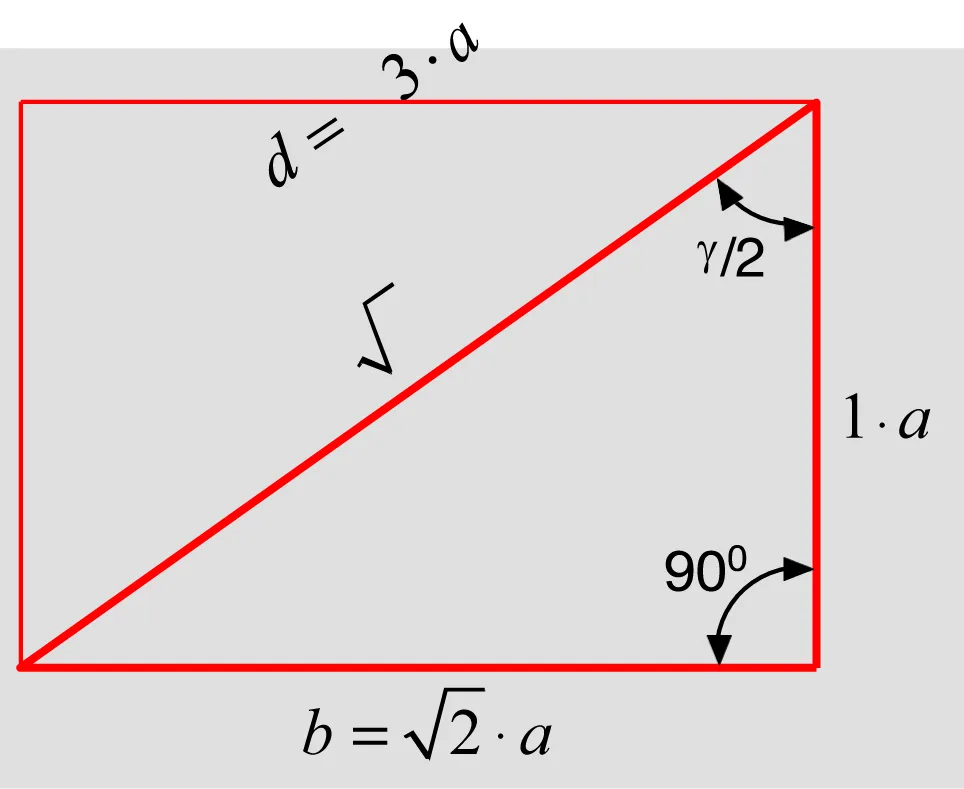
The Bosnian Pyramid of the Sun demonstrates congruent geometric logic: slope angles of 35°, 45°, and 30° closely match √2 and √3 triangle relationships, as emphasized in the work of Eng. Ivan Šimatović (2006), whose presentation formed part of the proceedings of the First International Scientific Conference on the Bosnian Valley of the Pyramids (ICBP, 2007).
While the golden ratio (φ) and π are not yet firmly established within the Visoko site, they present promising directions for future inquiry.
Additionally, engineer Ivan Šimatović analyzed slope measurements of the pyramid and identified angles approximating √2 and √3, particularly along the eastern and southern faces [36]. These values correspond to mathematical constants used in ancient pyramid construction, including that of the Great Pyramid of Giza. Šimatović’s findings, presented at the First International Scientific Conference, indicate that these ratios are deliberately encoded within the formation’s geometry (Figure 13, table 1).
| Table 1: Comparison of irrational ratios in the geometric design of the Bosnian and Egyptian pyramids. | ||
| Irrational Number | Great Pyramid of Giza | Bosnian Pyramid of the Sun |
| √2 ≈ 1.414 | Present in diagonal face-to-base proportions | Represented in lateral slope (east–west) |
| √3 ≈ 1.732 | Occasionally present in slope ratios | Present in diagonal ridge line and plane angles |
| π ≈ 3.1416 | Perimeter to height ratio approximates 2π | No confirmed correlation |
| φ (Golden Ratio) ≈ 1.618 | Slant height to half base encodes the golden ratio | Suggested in spatial relationships (under review) |
This comparative framework illustrates how sacred geometry may have informed the shaping of both structures. While additional work is required to confirm π and φ in the Bosnian pyramid context, the presence of √2 and √3 supports the interpretation of deliberate mathematical encoding.
Thermal imaging studies using Apparent Thermal Inertia (ATI) mapping (Figure 14) revealed distinctive surface anomalies on the Bosnian Pyramid of the Sun that were absent in surrounding natural hills [14]. These anomalies suggest variable heat retention rates, potentially indicating subsurface chambers, differing construction materials, or artificial layering.
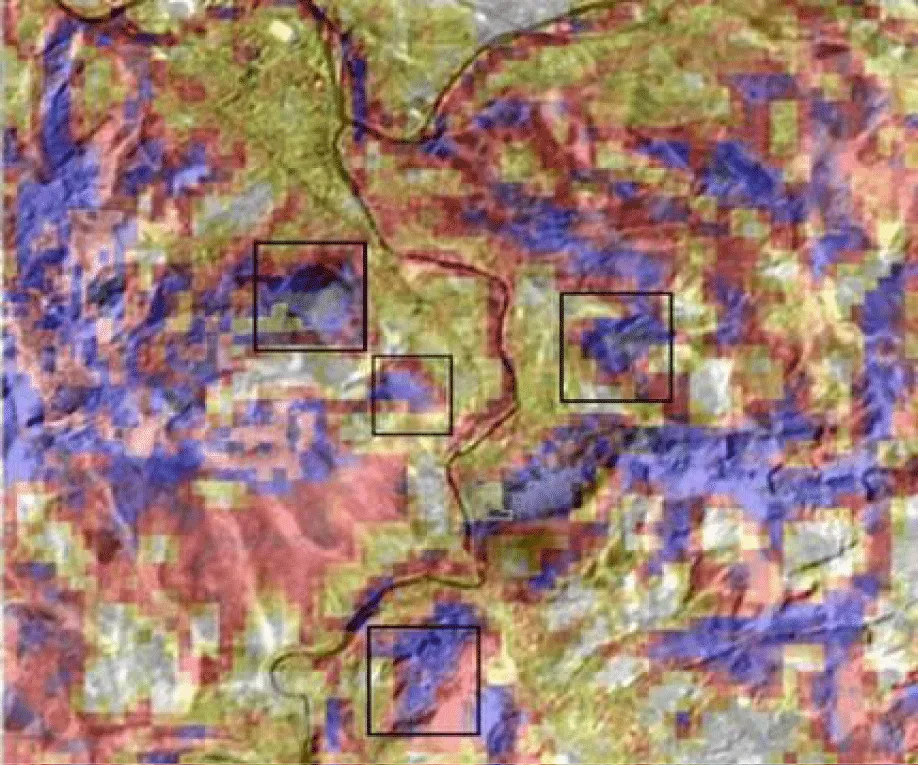
This thermal analysis was conducted using daytime imagery (1142 GMT pass) and nighttime imagery (2137 GMT pass), enabling the application of the ATI technique despite a relatively large temporal gap between scenes. Digital Terrain Model (DTM) correction and vegetation masking (via VNIR bands) were used to refine interpretation. The results suggest that the Bosnian Pyramid of the Sun and surrounding structures may consist of less consolidated materials compared to nearby hills, producing faster radiative cooling rates.
Source: Smailbegović A. Survey of Remote Sensing Techniques Used for the Anomaly Detection at the Presumed Pyramid Locality near Visoko, Bosnia and Herzegovina. Revision 1.3. Reno, Nevada, USA. 2006.
Taken collectively, the orientation, elevation uniformity, slope geometry, and inter-pyramid spatial relationships documented through geodetic, satellite, and LiDAR analyses strongly support the hypothesis that the Bosnian Pyramid of the Sun is not a product of natural geomorphic processes, but a deliberately shaped, possibly constructed, megastructure [3,14] (Figures 15,16).
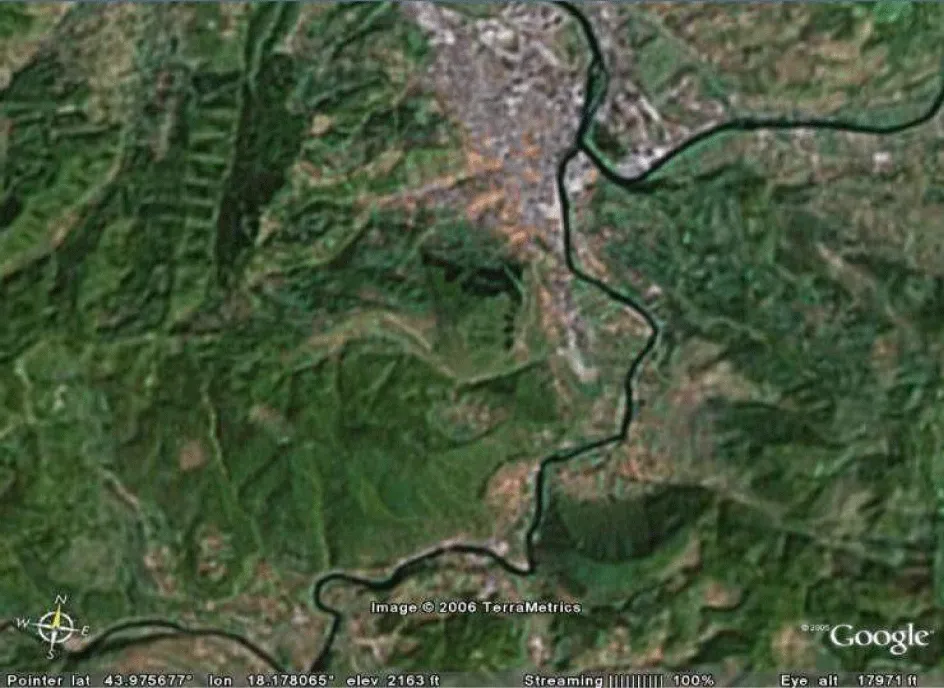
Source: Smailbegović A. Geophysical analysis of the bosnian pyramid of the sun [Internal report]. Archaeological Park: Bosnian pyramid of the sun foundation. Satellite base image: TerraMetrics / Google Earth. 2006.
Source: Buza E. Geodetic survey of the northern face of the Bosnian pyramid of the sun. In Proceedings of the First International Scientific Conference on the Bosnian Valley of the Pyramids. Geodetic Institute of Bosnia and Herzegovina, Sarajevo. 2007:58-65.
Geospatial Evidence of Geometric Consistency
The Bosnian Pyramid of the Sun (BPS) exhibits morphometric characteristics that stand apart from surrounding natural hills, particularly in terms of slope regularity, summit elevation, and spatial relationships with nearby pyramid-shaped structures. While regional geomorphology in central Bosnia includes various conical and pseudo-pyramidal hills, comparative analysis underscores the unusual geometric consistency observed in the BPS (Figure 17).

Upper right: Mount Mayon, an active stratovolcano in the Philippines, is often cited for its symmetry, yet exhibits no regular geometry consistent with human-made pyramids.
Bottom left: Mount Fuji, Japan, a sacred volcano revered for its conical beauty, shows no evidence of artificial structuring.
Bottom right: The Flatirons in Boulder, Colorado, consist of slanted sedimentary rock formations with no pyramid-like geometry or orientation.
These natural formations differ markedly from the Bosnian Pyramid of the Sun in terms of symmetry, cardinal alignment, internal structure, and material composition.
Source: Osmanagich S. My conversation with the artificial intelligence. Archaeological Park: Bosnian Pyramid of the Sun Foundation, Visoko. 2024.
The total height of the Bosnian Pyramid of the Sun, from its eastern base at approximately 399 meters above sea level to its apex at 767 meters, is 368 meters-making it significantly taller than the Great Pyramid of Giza (146.6 m) [7]. This value has been independently verified using GNSS field measurements and digital elevation models produced from satellite terrain data [3,14,15] (Figure 16).
High-resolution 3D visualization conducted by engineer Senad Bahor [11] confirmed that the northern and eastern faces of the BPS demonstrate planar slope characteristics with consistent angularity ranging between 42° and 45° (Figures 4-6). These geometrical patterns were later validated by LiDAR scans performed in 2015 by Airborne Technologies GmbH (Austria), which produced sub-meter resolution digital elevation models. The LiDAR data reaffirmed the presence of linear terraces, sharply defined edges, and a flattened summit plateau-all features atypical of the erosional profiles found in naturally formed hills [35].
Geospatial triangulation between the BPS and the nearby Pyramid of the Moon and Pyramid of the Dragon revealed that their summit points form a near-equilateral triangle, with sides ranging from 2.18 to 2.23 kilometers and internal angles approaching 60° ± 1° (Figure 13). These spatial arrangements-confirmed by cadastral data and GNSS measurements-suggest intentional positioning and raise the possibility of broader planning across the Visoko Valley [14,21,22].
Automated lineament extraction from satellite imagery using LINANAL™ software was conducted by Dr. Amer Smailbegović [14] in 2006 (Figure 8). The analysis identified statistically significant radiating features from the BPS apex aligned along cardinal and intercardinal axes. These lineaments correspond to observable slope boundaries and terrace edges, reinforcing the hypothesis of deliberate alignment at the macro-structural level [14].
To contextualize the uniqueness of the BPS, figure 36 presents an overview of natural pyramid-shaped hills from various global locations, including formations in Japan, the Philippines, and the Tibet. While these landforms exhibit superficial morphological similarities, they lack the internal symmetry, cardinal orientation, and inter-site geometrical relationships characteristic of the Visoko complex. Their irregular slopes, undefined apexes, and lack of terrace stratification provide a baseline against which the engineered appearance of the BPS can be evaluated.
Overall, the measured slope geometry, spatial relationships, and preserved angularity of the Bosnian Pyramid of the Sun-when contrasted with naturally occurring pyramid-like hills-support the interpretation of intentional modification or artificial enhancement.The combination of geodetic, satellite, and comparative geomorphological data continues to strengthen the case for anthropogenic intervention in the shaping of this formation.
Archaeological Excavations and Structural Characteristics of the Concrete Blocks
Following the initial discovery and orientation measurements of the Bosnian Pyramid of the Sun (BPS), a comprehensive archaeological program was initiated in 2005 under the leadership of Dr. Sam Osmanagich. Over the course of two decades (2005–2025), systematic excavations were carried out across twenty identified trenches on all four sides of the pyramid. These operations were conducted under valid permits issued by the Government of Zenica-Doboj Canton, including a long-term multidisciplinary research authorization granted in 2012 by the Ministry of Physical Planning. This permit covered geodetic, archaeological, geophysical, geological, and related investigations throughout the Visoko Valley, excluding a protected zone that encompasses approximately 70% of the pyramid.
Excavation sites were selected based on preliminary remote sensing results. Ground-penetrating radar (GPR) surveys conducted in 2007 by LGA Bautechnik GmbH (TÜV Rheinland ISO 9001 certified) identified more than 44 subsurface anomalies consistent with artificial structuring (Figure 18). These anomalies were dispersed over an area exceeding 10,000 m² and became the basis for selecting key excavation zones. Further GPR campaigns by Dr. Dejan Vučković of the University of Belgrade (Figure 19) and RTGPR (Czech Republic, figure 20) confirmed the presence of geometrically regular features-particularly on the northern slope-validating the stratigraphic excavation strategy [37,38].

The final report (BBMT0600183), dated February 7, 2007, concluded that the GPR measurements were successful in delineating areas of interest and encouraged further interdisciplinary study of the marked zones.
Source: LGA Bautechnik GmbH, Report BBMT0600183. Courtesy: Archaeological Park: Bosnian Pyramid of the Sun Foundation. 2007.
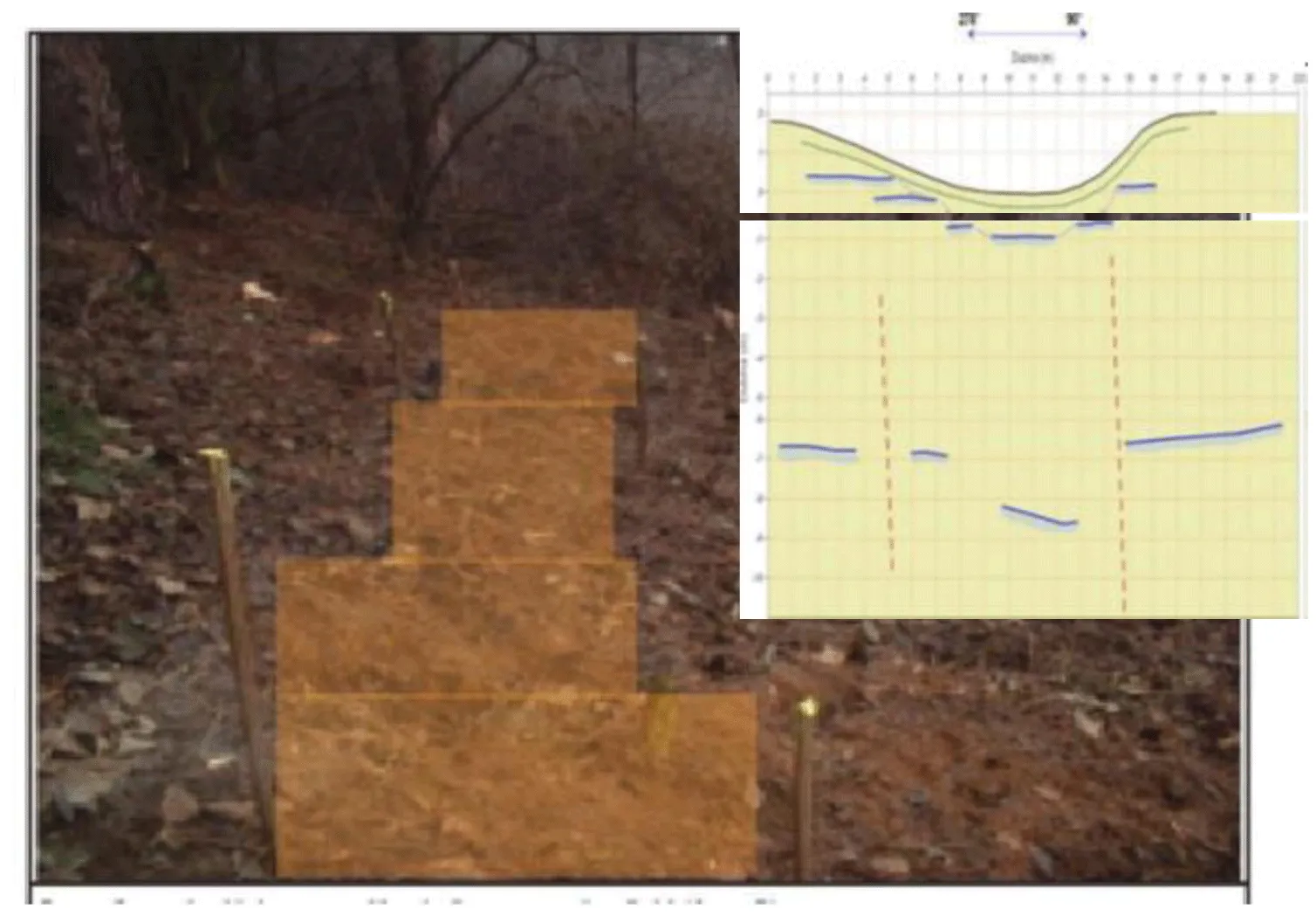
Source: Institute for Physics, University of Belgrade, Geophysical Survey Report. Archaeological Park: Bosnian Pyramid of the Sun Foundation Documentation Archive. 2006.
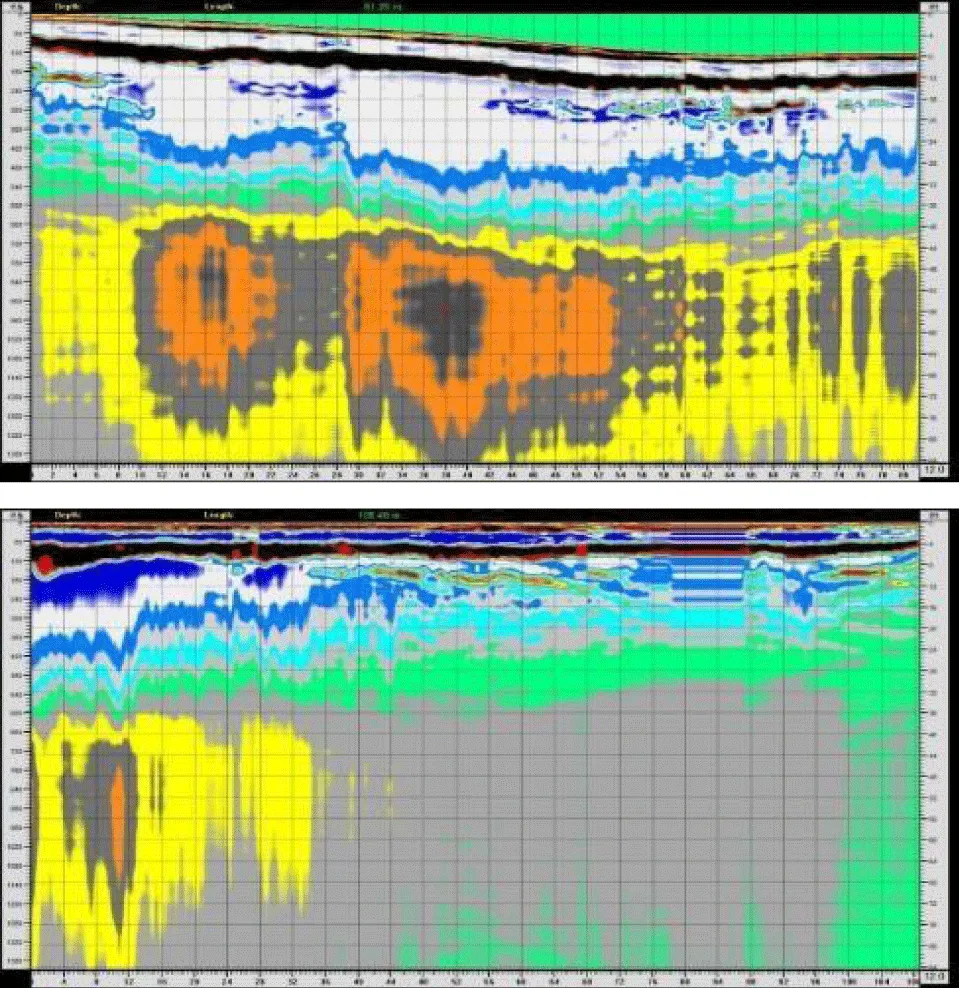
Source: RTGPR Company, Czech Republic. Official documentation, project collaboration with Archaeological Park: Bosnian Pyramid of the Sun Foundation. 2023.
Fieldwork was conducted by over 65 archaeologists and volunteers from Bosnia-Herzegovina, Egypt, Croatia, Serbia, the UK, Italy, Malaysia, Jordan, and Turkey. These teams uncovered massive block structures arranged in both horizontal and sloped alignments (Figures 21,22). One of the most revealing excavations occurred at the northeast corner trench (Figure 22, upper left), where an angular intersection of two paved sides was found beneath a 90 cm-thick overburden. This junction formed a visibly precise corner with six planar surfaces meeting at approximately 90° angles, accompanied by clear stratification. The mechanical regularity and block patterning in this context are incompatible with natural sedimentary breccia or erosion-based formations [39].
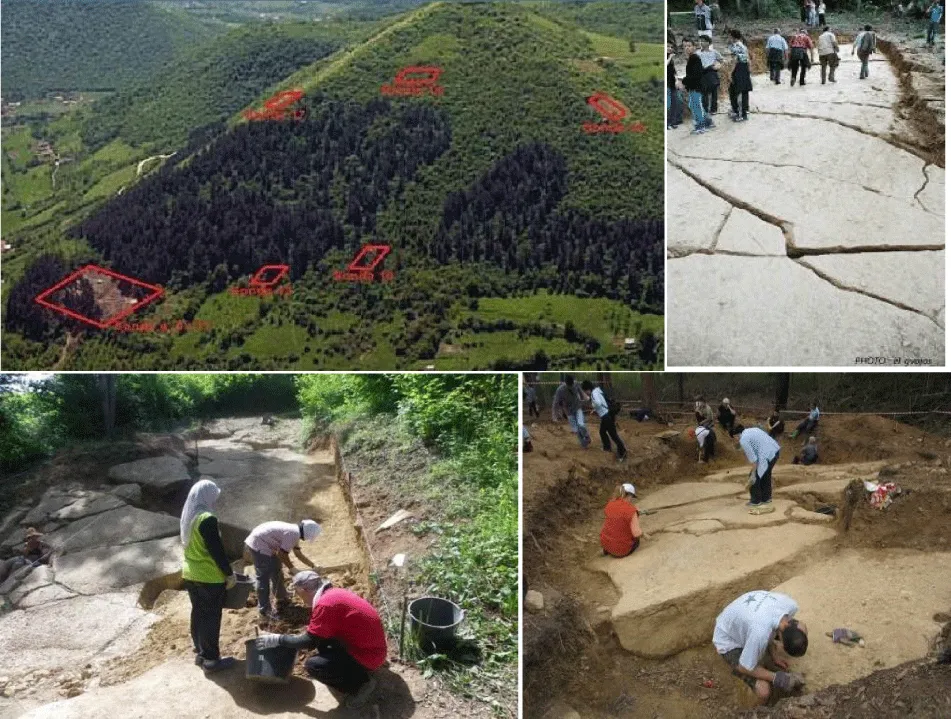
Excavations revealed large, well-formed slabs composed of concrete-like material arranged in layers, indicative of artificial construction.
Source: Archaeological Park: Bosnian Pyramid of the Sun Foundation, excavation records 2005-2025.
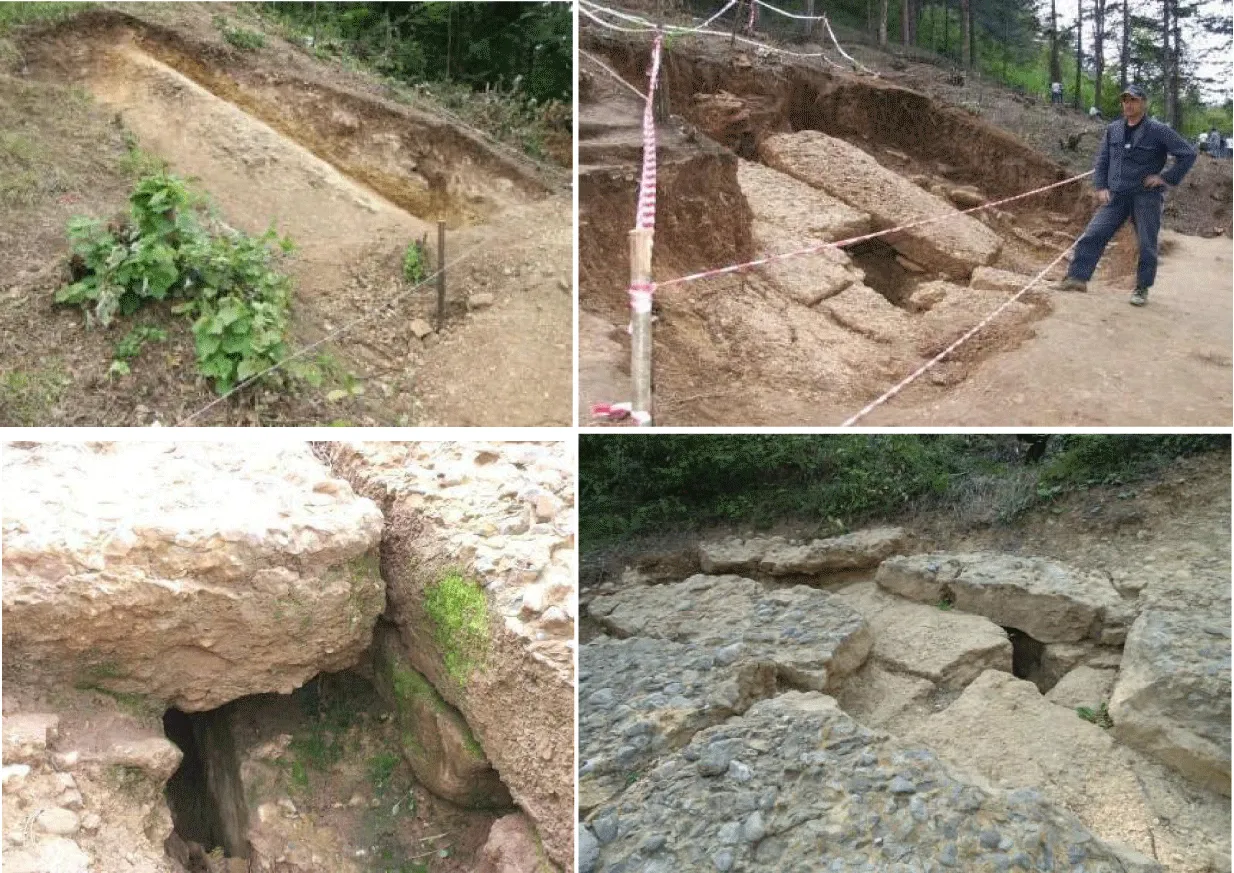
The remaining images display northern face trenches, where large, multi-layered concrete-like slabs were unearthed. Several slabs exhibit angular geometry, with six visible faces and orthogonal breaks, characteristic of artificial construction. The stratified arrangement and structural coherence across layers reinforce the hypothesis of intentional block placement.
Source: Osmanagich S. Pyramids around the world & lost pyramids of Bosnia. 3rd ed. Archaeological Park: Bosnian Pyramid of the Sun Foundation, Visoko, Bosnia- Herzegovina. 2016.
Over 100 material samples were submitted to a range of institutions for mechanical and chemical testing, including the Institute for Construction Materials at the University of Zenica, as well as laboratories at the University of Sarajevo, University of Tuzla, Politecnico di Torino, and facilities in Slovakia and the Czech Republic. Tests revealed exceptional durability, low porosity, and high compressive strength far beyond typical values for natural sedimentary rock [38-40] (Table 2).
| Table 2: Chemical composition of the binding matrix in concrete blocks from BPS [39]. | |
| Oxide Component | Percentage by Weight (%) |
| SiO₂ | 48.46 |
| Al₂O₃ | 16.95 |
| Fe₂O₃ | 3.03 |
| CaO | 32.20 |
| MgO | 9.96 |
| Na₂O | 0.16 |
| K₂O | 1.32 |
| MnO | 0.04 |
| TiO₂ | 0.91 |
| Ignition Loss | 7.41 |
- Mechanical compressive strength tests conducted on 5 cm³ block samples yielded values as follows94.0 MPa
- 116.0 MPa
- 133.8 MPa
- Peak value: 155 MPa
By comparison, standard modern concrete used in structural construction generally ranges between 35 and 70 MPa. Additionally, water absorption in the BPS samples was measured at less than 1%, significantly lower than the 3% threshold typically observed in durable construction materials-suggesting high impermeability and weather resistance.
Professor Pašić concluded in his 2009 report that the binder matrix was intentionally fabricated using thermally treated clay combined with locally sourced gravel. The presence of transformed silicates and carbonates was interpreted as the result of controlled chemical processes rather than natural diagenesis. These findings support the classification of the material as a form of ancient geopolymer concrete [39].
In sum, the structural blocks exposed across the Bosnian Pyramid of the Sun exhibit artificial composition, high strength, and architectural layout. (Figures 23,24) The cumulative evidence from excavation, laboratory analysis, and structural modeling provides strong support for the hypothesis that the pyramid is an engineered formation constructed using advanced knowledge of materials and large-scale design.

A total of over 100 core and plate samples were extracted from various trenches and sent to multiple institutions for material analysis, including:
- Institute “Kemal Kapetanović”, University of Zenica
- Institutes for Construction at the Universities of Sarajevo and Tuzla
- Politecnico di Torino (Italy)
- Research institutes in the Czech Republic and Slovakia The comprehensive results across these institutions revealed:
- Compressive strength values ranging from 73.6 MPa to a peak of 155 MPa, far exceeding modern construction standards (typically 30-60 MPa).
- Water absorption as low as 1.07%, significantly below modern concrete’s standard threshold of 3% for high-quality, low-porosity applications.
- Material composition included well-sorted quartzite, feldspar, and carbonate aggregates in a high-performance binder matrix rich in calcium carbonate and silica.
- Porosity and permeability values indicating near-zero water infiltration and extremely dense compaction.
These results provide strong empirical support for the anthropogenic origin of the BPS structure. The compressive strength, low porosity, and the construction-like geometry of the plates suggest that an ancient concrete or geopolymer technology was utilized to form durable, highly engineered structural components.
These findings were first presented by Prof. Muhamed Pašić in the ICBP 2009 Proceedings, and further discussed in Dr. Sam Osmanagich’s book:
Osmanagich S. Pyramids around the world & lost pyramids of Bosnia. 3rd ed. Visoko: Archaeological Park: Bosnian Pyramid of the Sun Foundation. 2016.
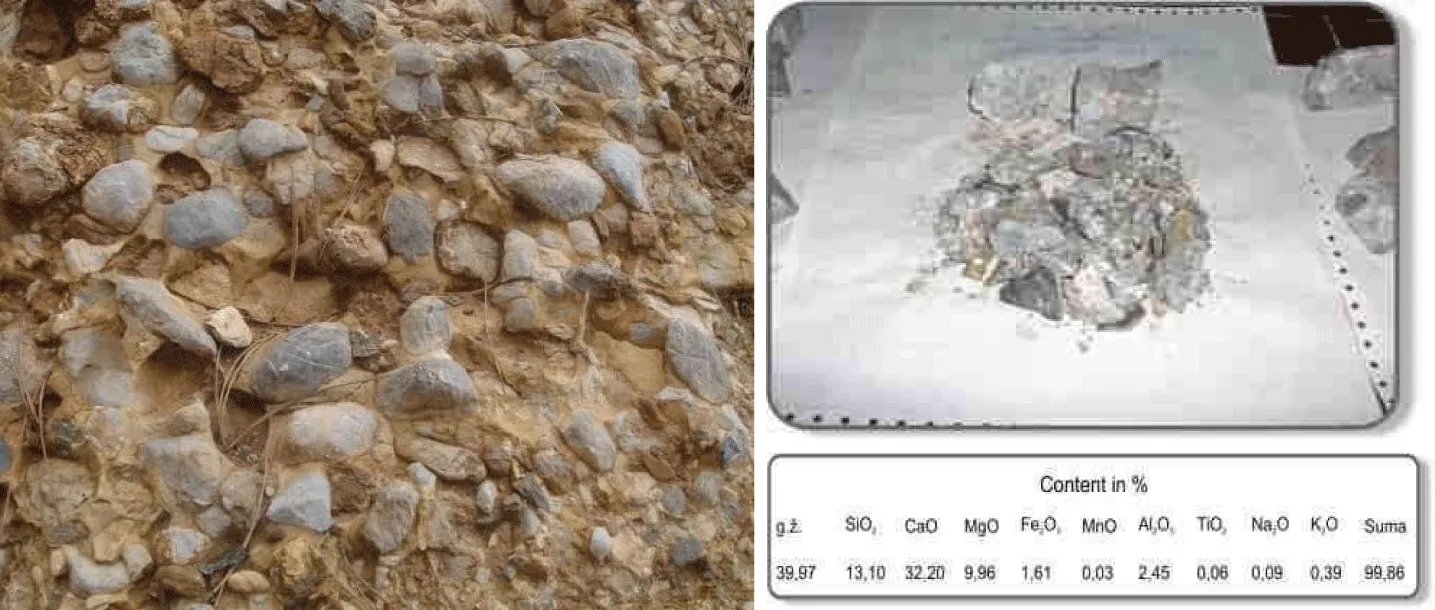
- Top left: Section of a structural plate on the northern slope, showing exposed aggregate layers made of crushed pebbles and a compacted light-brown clay matrix, interpreted as a man-made binding agent.
- Top right: Laboratory preparation table with layout of test cubes derived from thin- grain conglomerate samples collected from the covering layer. This photo shows the crushed state of the cubes after compressive strength testing, illustrating internal fragmentation patterns.
- Bottom: Chemical analysis results from a separated sample of the binding material, indicating a high proportion of CaO and SiO₂, along with additional oxides commonly found in low-temperature geopolymeric mixtures. The analysis is titled:
"Chemical analysis of the separated binder of artificial building material of thin grain gravel conglomerate from Bosnian Pyramid of the Sun-Visoko", conducted in 2008.
The compressive strength values for these samples ranged from 94.0 MPa to 133.8 MPa, significantly higher than the modern engineering standard for structural concrete, which typically averages 30-50 MPa. In addition, water absorption was consistently below 1%, well within modern waterproofing criteria (standard: <3%)-further supporting the interpretation of deliberate material engineering.
Source: Institute “Kemal Kapetanović”, University of Zenica; excerpts from Pašić, M. (2009). A Contribution to the Characterization of Solid Building Material from Gravel Conglomerate from the Bosnian Pyramid of the Sun, Visoko. In ICBP Proceedings; also republished in Osmanagich S. Pyramids around the world & lost pyramids of bosnia. 3rd edition. Foundation AP BPS. 2016.
Astronomical Features
The Bosnian Pyramid of the Sun (BPS) exhibits several astronomical phenomena that appear to reflect deliberate design choices aligned with solar and lunar cycles. Observations recorded over multiple years demonstrate interactions between the pyramid's form, shadow projections, and celestial events—suggesting that its builders may have incorporated astronomical knowledge into its construction.
One of the most visually compelling phenomena occurs on the summer solstice (June 21st). Just before sunset on this date, the shadow of the Bosnian Pyramid of the Sun extends westward and forms a near-perfect triangle that aligns with the western slope of the Bosnian Pyramid of the Moon (Figure 25). The tip of the shadow reaches the summit of the Moon Pyramid, while the base aligns with its foundation-producing a geometrically precise projection. This event, visible from the summit of the BPS, suggests that the structure may have functioned as an ancient solar observatory, with the solstice shadow serving to mark the beginning of summer.
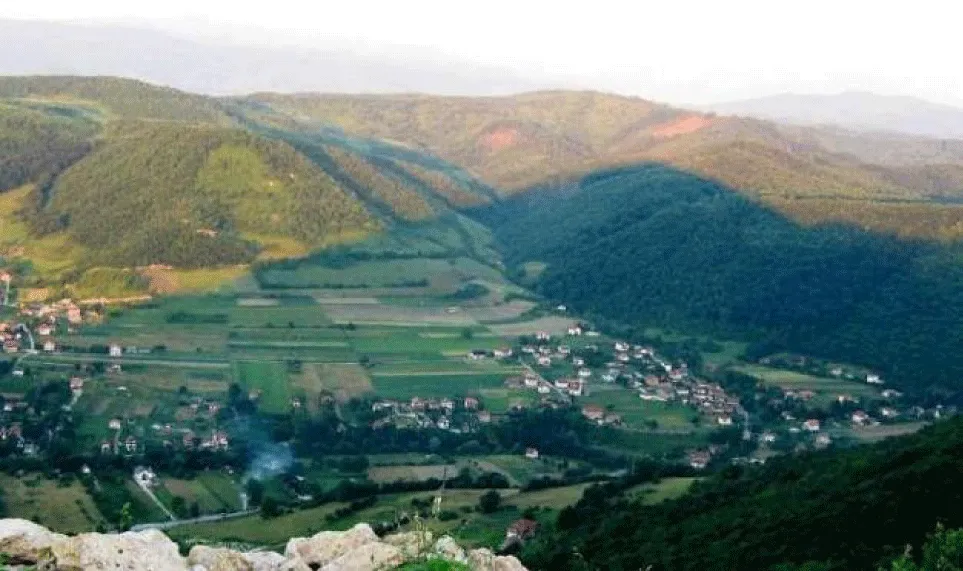
Source: Author’s archival photographic documentation.
A related phenomenon occurs in late August, as the Sun’s position shifts slightly from its solstitial azimuth. A sequence of photographs taken from the top of the Bosnian Pyramid of the Sun shows the progression of its shadow during the late afternoon (Figure 26). Initially, the shadow approaches the western slope of the Bosnian Pyramid of the Moon. Just before sunset, it fully envelops the slope, with the apex of the shadow precisely touching the summit. This alignment-visible only from the summit of the BPS-suggests a designed vantage point and further supports the interpretation of the pyramid as a functional astronomical instrument.
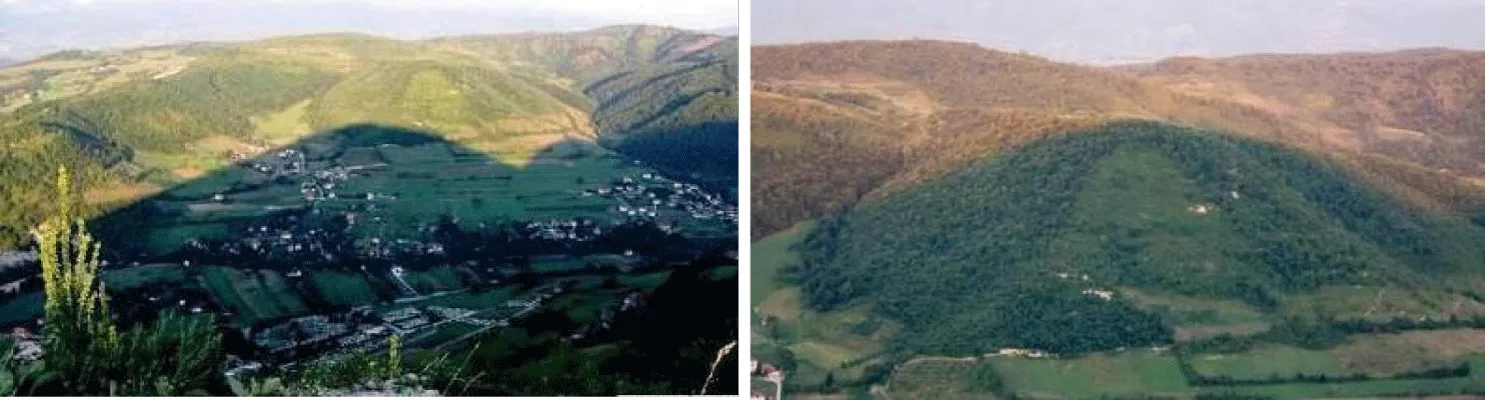
Source: Author’s photographic documentation, August 2018.
In addition to solar interactions, the BPS has shown responses to lunar phenomena, particularly during a total lunar eclipse on July 27, 2018. During this event, a significant increase in electromagnetic activity was recorded at the BPS. Measurements by physicist Goran Marjanović detected enhanced intensity and altered frequency characteristics in the local electric field ("E" field) during the eclipse (Figure 27). These results indicate that the pyramid may be sensitive to celestial alignments and events-not only optically, but electromagnetically-introducing a new dimension of inquiry into its possible function.
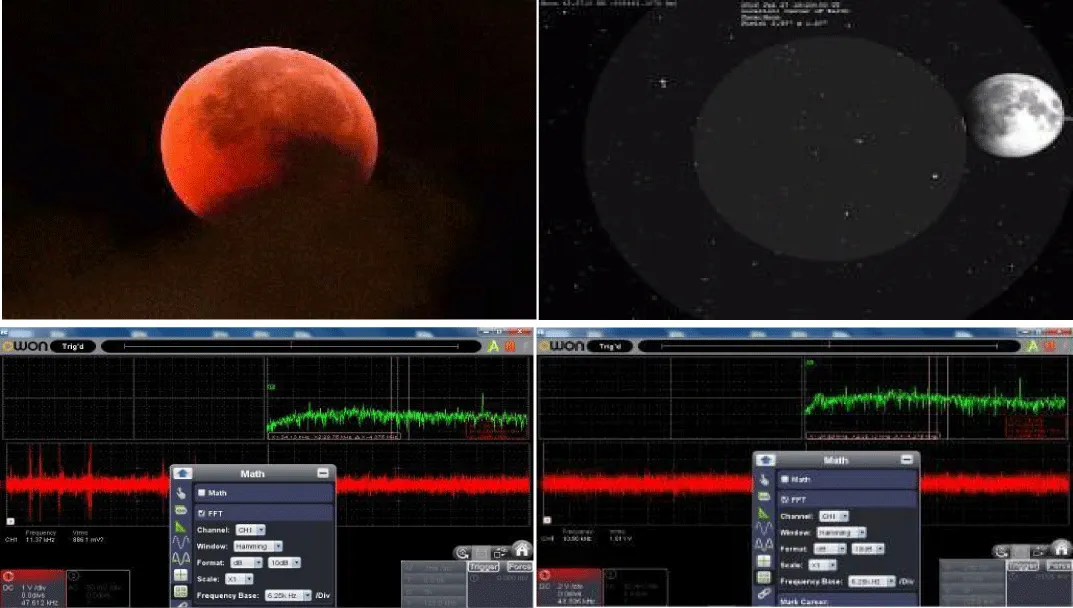
The total lunar eclipse on July 27, 2018, coincided with a significant enhancement in electromagnetic activity at the Bosnian Pyramid of the Sun. Measurements conducted by researcher Goran Marjanović revealed notable changes in the electric field ("E" field) intensity and frequency characteristics during the eclipse.
Measurement Details:
- Before the Eclipse (17:04 h):
- Electric Field (E): 10 V/m
- Magnetic Field at 50 Hz (H₅₀Hz): 5 nT
- Magnetic Field (H): 0.7 mG
- Temperature: 22°C
- Humidity: 55%
- Noise Level: –15 dBrel
- During the Eclipse (21:15 h):
- Electric Field (E): 20 V/m
- Magnetic Field at 50 Hz (H₅₀Hz): 4 nT
- Magnetic Field (H): 0.6 mG
- Temperature: 16°C
- Humidity: 60%
- Noise Level: 0 dBrel
These results show a doubling of the dynamic electric field during the eclipse, along with an increase in voltage amplitude from 886 mV to 1.6 V (a factor of 1.8). A more pronounced signal was also recorded at the frequency of 28.8 kHz, suggesting a marked energetic shift.
This phenomenon likely correlates with the rare astronomical alignment occurring on the same date-when the Sun, Venus, Earth, Moon, and Mars were positioned in a nearly straight line. This alignment may have amplified electromagnetic interactions at the site, reinforcing the pyramid’s role as a focus of energetic anomalies.
Source: Goran Marjanović, “Magnetotelluric Research, July 2018, Mission: Lunar Eclipse, ‘Pyramid of the Sun’, Visoko, Bosnia and Herzegovina” (“Magnetotelurska istraživanja, jul 2018, misija: Mesečeva eklipsa, ‘Piramida Sunca’, Visoko, BiH”*), Archaeological Park: Bosnian Pyramid of the Sun Foundation.
Effect of the total Moon Eclipse from July 27, 2018 to the energy beam: the presence of far greater number of "E" signals and nearly double "stronger" "E" fields (886 mV / 1.6V = 1.8) with a more pronounced signal of 28.8 kHz. This is also supported by the measurement with the equipment which shows that the dynamic electric field was twice as strong during the Moon's eclipse ("E" = 10 V / m before and 20 V / m during the eclipse.
Taken together, these solar and lunar interactions suggest a sophisticated understanding of celestial cycles. The annual solstice alignment, the seasonal shadow tracking, and the electromagnetic variation during a lunar eclipse all point to intentional relationships between the Bosnian Pyramid of the Sun and key astronomical events [41]. These observations reinforce the idea that the pyramid was not only an architectural monument but also an integrated part of an ancient observational system.
Energetic Phenomena at the Bosnian Pyramid of the Sun: Evidence from Electromagnetic and Acoustic Measurements
The Bosnian Pyramid of the Sun exhibits measurable anomalies that distinguish it from natural hills, suggesting the presence of non-natural, possibly engineered, energy phenomena. Scientific investigations have uncovered consistent patterns in both electromagnetic field activity and ultrasound emissions, indicating that the pyramid may function as an energetic amplifier or emitter (Figure 37).
Structured energy beam emission
Research conducted by physicist Goran Marjanović has revealed the presence of a focused energy beam emanating from the apex of the Bosnian Pyramid of the Sun. This beam, consistently measured at a frequency of approximately 28 kHz, is highly localized-detectable only within a narrow radius of 4.5 meters at the very top of the structure (Figure 28) [17]. Measurements were confirmed, in different time periods, by the team of engineers and physicists from Italy (Prof. Debertolis), Croatia (Eng. Mizdrak) and Finland (Eng. Savolainen) [18,19].
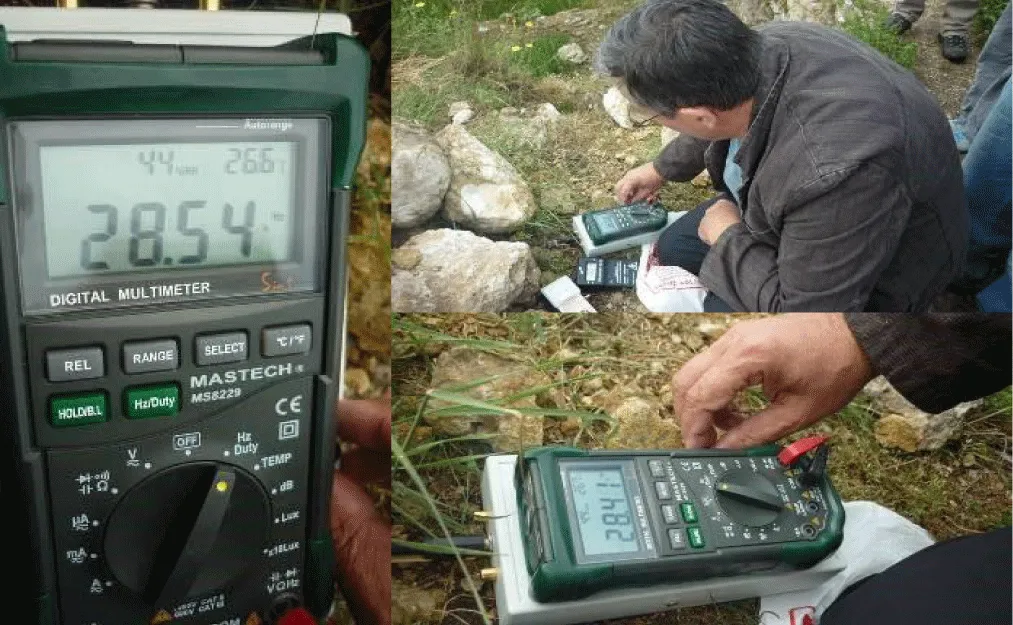
This figure documents the groundbreaking measurements conducted by electrical engineer Goran Marjanović (Serbia), who independently confirmed the existence of a stable electromagnetic frequency of 28.5 kHz on the summit of the Bosnian Pyramid of the Sun, using digital multimeters and calibrated detection equipment. This non-random frequency corresponds directly with the operating frequency of Nikola Tesla’s Wardencliffe Tower in New York (constructed between 1901 and 1917), which was also tuned to 28 kHz. Tesla’s tower was intended for wireless energy transmission, trans-Atlantic broadcasting, and telecommunications.
Multiple independent research teams between 2010 and 2011 detected ultrasound and electromagnetic emissions ranging from 28–30 kHz not only at the pyramid summit but also in the underground Ravne tunnel complex, suggesting that this frequency is not an isolated anomaly but part of a larger energy phenomenon connected to the pyramid structure.
Marjanović hypothesized that this electromagnetic emission may be evidence of ancient advanced technologies utilizing principles analogous to Tesla’s magnifying transmitter, especially given the virtual height of the pyramid structure (782 m) aligning closely with the wire length of Tesla’s Extra Coil (778 m) and the Tesla transformer’s secondary coil (781 m) - values crucial to tuning the resonance frequency of the system .
The third panel of the figure shows the equipment used, including:
- Teslameter TM 40, Trifield 100XE, and VF-Broadband amplifiers for field strength and signal detection,
- OWON VDS1022 oscilloscope for waveform analysis,
- Experimental Life Meter (Heliognosis LM3) for fine-tuned signal range deviation.
These instruments allowed for precise measurement of magnetotelluric fields and EM resonance effects, supporting the hypothesis that the pyramid behaves as a passive energy amplifier or transmitter, capable of emitting coherent electromagnetic signals — a property that aligns with ionospheric resonance theory and magnetotelluric exploration models used in geophysical studies.
Source: Osmanagich S. Pyramids around the world and lost pyramids of Bosnia. Foundation: Archaeological Park – Bosnian Pyramid of the Sun, Visoko, Bosnia-Herzegovina. 2012.
Marjanović G. Protection of the Technical and Technological Heritage of Bosnia and Herzegovina – The Case of the Bosnian Valley of the Pyramids. 2019.
Šimatović I. In: ICBP Proceedings, Second International Scientific Conference on the Bosnian Pyramids. 2009.
Advanced electromagnetic measurements show that this energy beam forms a multi-layered ellipsoidal field, with its highest intensity at the virtual apex of the pyramid, slightly inclined toward the south-southwest. The consistent and directional nature of this emission points strongly to a non-natural origin. Furthermore, the spatial layout of the pyramid and its surrounding structures resembles the configuration of a Yagi antenna, suggesting that the complex may have been designed to amplify and direct energy through constructive interference [17].
Electromagnetic variations during the total lunar eclipse (July 27, 2018)
During the total lunar eclipse of July 27, 2018, the energy beam exhibited notable amplification. Measurements taken before and during the eclipse show that the dynamic electric field intensity doubled-from 10 V/m to 20 V/m. Simultaneously, oscilloscope readings revealed a voltage increase from 886 mV to 1.6 V, along with a pronounced spike at 28.8 kHz-a frequency consistent with previous recordings of the pyramid’s beam [41].
These changes occurred under a rare and powerful celestial alignment involving five cosmic bodies: the Sun, Venus, Earth, Moon, and Mars. Such an alignment likely amplified cosmic influences on the Earth’s energetic fields and may have resonated with the pyramid's structure, enhancing its emission capacity. These observations support the view that the Bosnian Pyramid of the Sun is sensitive to astronomical conditions, particularly those involving aligned gravitational and energetic fields [41].
Ultrasound “Blocks” and artificial signal regularity
Between 2010 and 2012, Professor Paolo Debertolis of the University of Trieste conducted archaeoacoustic investigations at the top of the Bosnian Pyramid of the Sun. Using professional-grade recording equipment, he detected a persistent ultrasound signal centered around 28.4 kHz, emitted in regular "blocks" spaced at precise 9.3333 Hz intervals (Figure 29) [19].
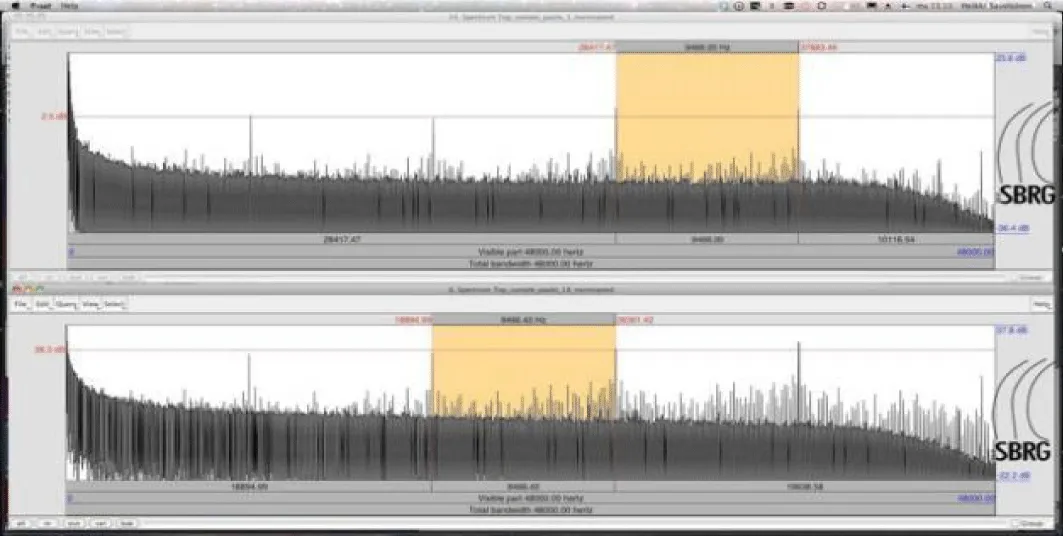
The figure presents a spectral analysis of ultrasound signals recorded in March 2012 at the top of the Bosnian Pyramid of the Sun. Conducted by Professor Paolo Debertolis from the University of Trieste, Italy, this study was part of a broader archaeaoacoustic investigation between 2010 and 2012.
Using professional-grade equipment, Professor Debertolis detected a persistent ultrasound signal centered around 28,400 Hz. More remarkably, the spectral analysis revealed a regular block structure within the signal, with components spaced at precise intervals of 9.3333 Hz. This high degree of regularity and the stable frequency components strongly suggest that the ultrasound emissions are not of natural origin, but are instead generated by an artificial or engineered source.
The beam of ultrasound, estimated to have a radius of 5 to 15 meters, is consistently detectable only at the very top of the pyramid, reinforcing the hypothesis that the Bosnian Pyramid of the Sun functions as a focused emitter of high-frequency energy.
This phenomenon remains one of the key anomalies supporting the notion that the pyramid may be a complex energy machine, rather than a random geological formation.
Source: Professor paolo debertolis, University of Trieste - Archaeoacoustic research on the Bosnian Pyramid Complex. Pyramids around the World & Lost Pyramids of Bosnia. . 2012:302.
This mathematical regularity is uncharacteristic of natural acoustic environments and strongly suggests artificial generation. The beam was detectable only within a 5-15 meter radius at the pyramid’s summit. The stability and frequency structure of the signal reinforce the hypothesis that the pyramid was intentionally designed to emit or manipulate high-frequency energy [19].
Control comparisons: Natural hills and monte pavione
To determine whether similar ultrasound emissions might be produced by natural formations with pyramid-like geometry, recordings were taken from natural hills around Visoko and from Monte Pavione, a pyramid-shaped mountain in the Italian Alps. The comparative results were conclusive: none of these sites exhibited the structured ultrasound signals, nor the 28.4 kHz frequency measured at the Bosnian pyramid (Figure 30) [19].
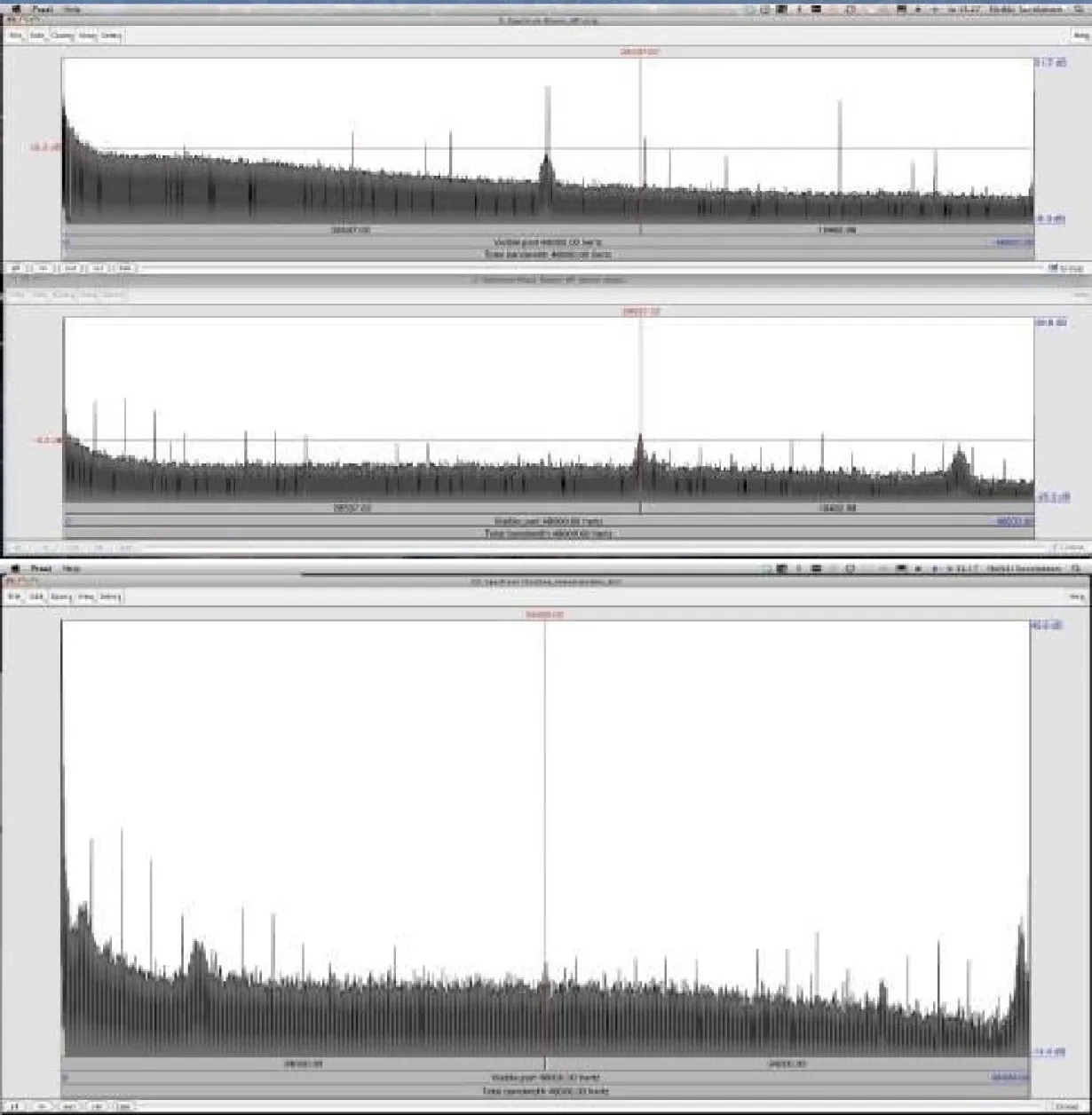
The graphs display spectral analyses of ultrasound recordings from different natural locations. The top two panels represent ultrasound measurements taken at natural hills surrounding Visoko, Bosnia and Herzegovina. The bottom panel shows data from Monte Pavione, a prominent pyramid-shaped hill in the Italian Alps.
In all of these natural locations, there is a notable absence of the structured "block" patterns- such as the regularly spaced frequency components with 9.3333 Hz intervals-that characterize the ultrasound emissions from the Bosnian Pyramid of the Sun (Figure 35). Also missing is the persistent 28.4 kHz frequency that has been measured at the pyramid.
This comparison highlights that natural formations, regardless of their shape, do not emit the same organized ultrasonic signal. The distinctive, repeating patterns found only at the Bosnian Pyramid of the Sun suggest the presence of an artificially generated energy phenomenon, further supporting hypotheses of technological or intentional design embedded within the pyramid complex.
Source: Professor paolo debertolis, University of Trieste, Report on Archaeoacoustic Investigations. In: Pyramids Around the World & Lost Pyramids of Bosnia. 303.
This finding confirms that shape alone does not produce the observed phenomena. Even when natural formations exhibit near-pyramidal geometry, they do not emit the structured energy signals present at the Bosnian Pyramid of the Sun-further suggesting that this pyramid operates as a technological or energetically functional construct [19].
Conclusion
The evidence presented in this section confirms that the Bosnian Pyramid of the Sun is far more than a geological curiosity. The pyramid emits a focused, high-frequency energy beam with measurable structure and directionality. This beam responds to cosmic events and aligns with known physical principles used in modern electromagnetic devices, such as antennas and resonators.
Furthermore, the structured ultrasound signal-absent in natural controls-adds weight to the hypothesis that the pyramid was constructed with energetic or technological purposes in mind. These findings invite continued research and cross-disciplinary exploration into the pyramid’s materials, geometry, and interaction with both Earth-based and cosmic energy systems.
Discussion
The Bosnian Pyramid of the Sun, located in the town of Visoko, Bosnia and Herzegovina, challenges conventional archaeological classification due to a convergence of geophysical, geodetic, geomorphological, archaeological, and energetic anomalies that cannot be easily dismissed as natural coincidences.
Geophysical and geomorphological evidence
Geophysical surveys-including satellite radar imaging, Ground-Penetrating Radar (GPR), and seismic profiling-have revealed rectilinear subsurface features, cavities, and reflective surfaces consistent with artificial structuring. Notably, the LGA Bautechnik (2007) and RTGPR (2023) campaigns identified over 44 anomalies beneath the surface of the pyramid’s slopes, many of which aligned in linear patterns and exhibited reflective contrasts suggesting chambers or constructed voids [38] (Figures 17-19).
Geomorphological analysis shows that the Bosnian Pyramid of the Sun features triangular faces, straight ridges, and terrace-like formations. The slope angles average 45 degrees across multiple facets0-far more regular than those seen in natural erosion of sedimentary hills. Core drilling and excavation exposed interlocking stone blocks and stratified material layers that further support a non-natural origin.
Geodetic and positional alignments
Precision geodetic surveys by Eng. Enver Buza using GNSS and Total Station technology recorded that the northern face of the pyramid is oriented within 0° 0′ 12″ of true north, a precision comparable to the Great Pyramid of Giza. Such accuracy, especially in a supposed natural hill, suggests sophisticated surveying or astronomical techniques [3-33].
Moreover, the layout of the Bosnian Pyramid of the Sun aligns with surrounding structures such as the Pyramid of the Moon and the Pyramid of the Dragon, forming equilateral and equiangular geometric patterns visible in satellite and LiDAR imagery (Figures 9,10,12,31). These relationships imply intentional spatial organization [32].
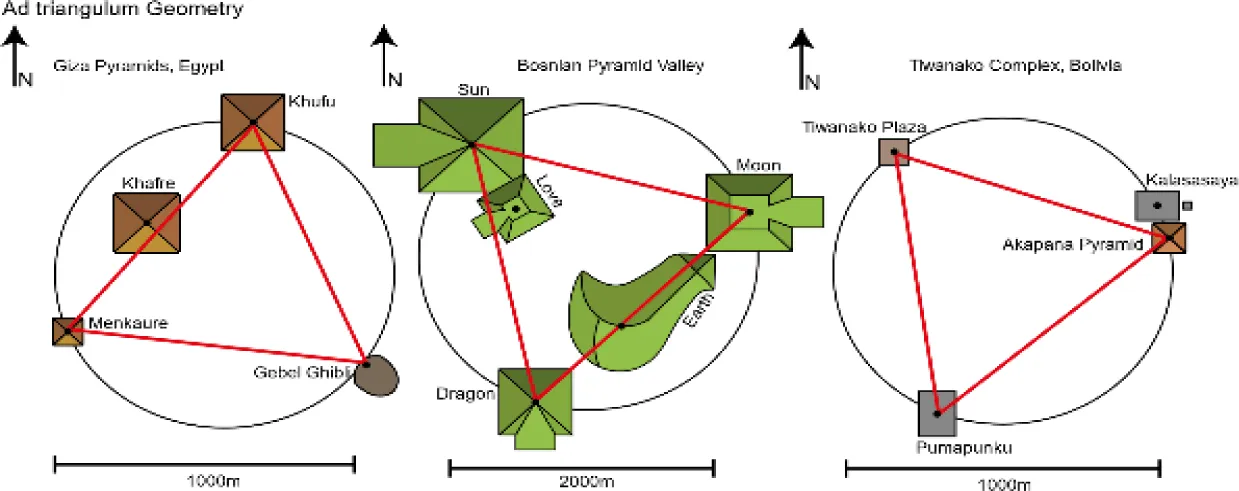
• Sun–Moon: 2,180 m
• Moon–Dragon: 2,170 m
• Dragon–Sun: 2,180 m
These values reflect a deviation of less than 1%, which indicates a deliberate geometric planning principle consistent with other ancient civilizations known for sacred or astronomical spatial design. The concept and visualization were developed by Richard Hoyle and first presented in:
Hoyle R. In: Osmanagich S, Hoyle R, Agić A, Delibašić H. Ravne 3. Visoko: Archaeological Park: Bosnian Pyramid of the Sun Foundation. 2023
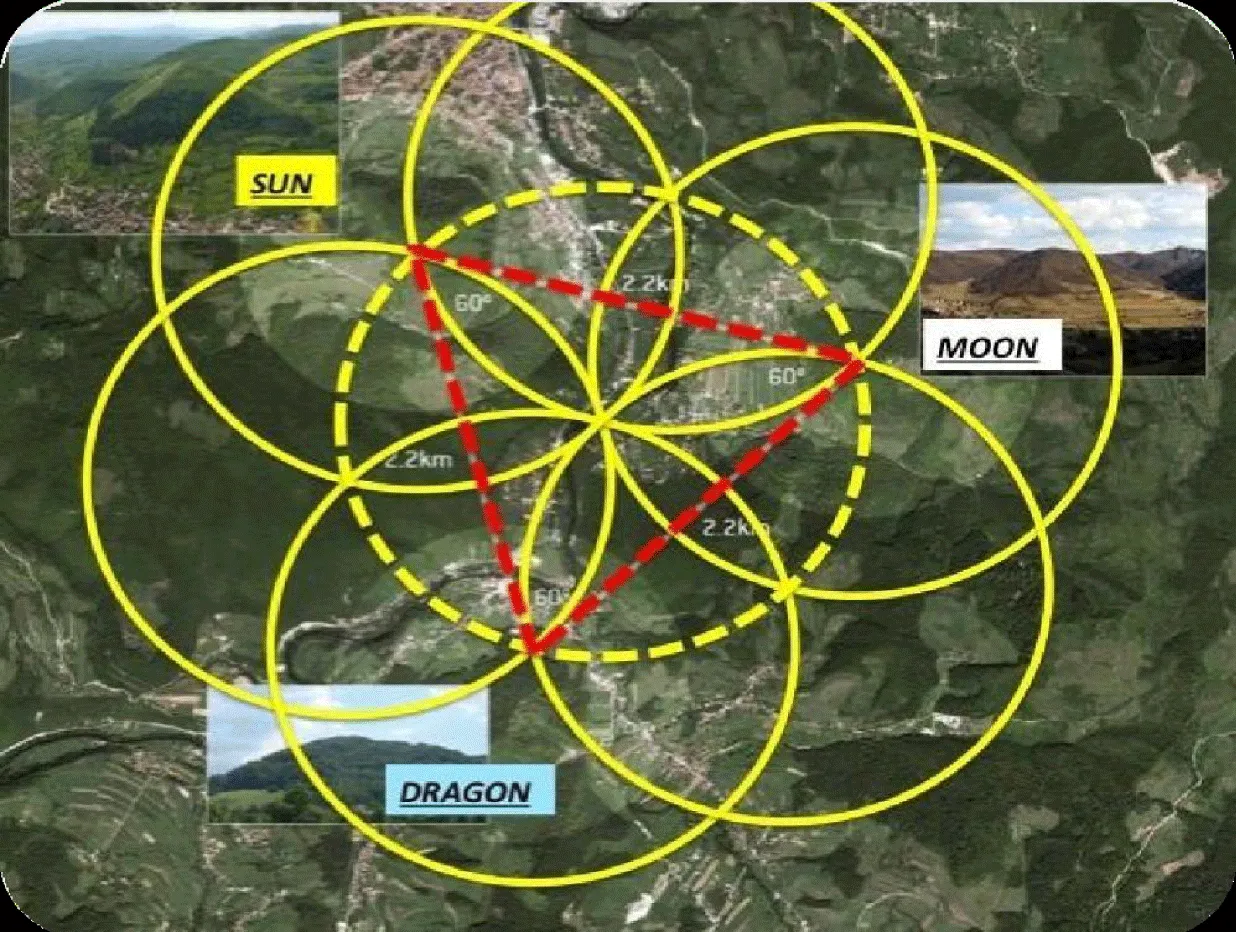
This geometric interpretation was introduced by Richard Hoyle and further analyzed in: Hoyle
R. In: Osmanagich S, Hoyle R, Agić A, Delibašić H. Ravne 3. Visoko: Archaeological Park: Bosnian Pyramid of the Sun Foundation. 2023.
Archaeological observations
Excavations since 2005 have uncovered large slabs of breccia and concrete-like material arranged in flat, stepped surfaces. Analysis from the University of Zenica and other international laboratories confirms compressive strengths of 94 to 155 MPa, well above modern structural concrete. In addition to surface excavations, the Ravne Tunnel Complex beneath the pyramid includes dry-stack walls, megalithic blocks, and symbolic artifacts with inscriptions suggestive of a proto-script [42-46] (Figures 3-5).
These tunnels show sophisticated planning, including ventilation shafts, junction chambers, and possible geomantic positioning at energy node intersections. Pottery fragments, carvings, and tool marks reinforce the hypothesis of prolonged, intentional human modification predating established Balkan Neolithic timelines [47-49].
Energetic anomalies and interpretations
Multiple field campaigns led by Goran Marjanović recorded a consistent electromagnetic beam at ~28 kHz emerging from the pyramid’s apex (Figure 32). This beam remains focused within a narrow 4.5-meter radius, forming a coherent standing wave structure. During the total lunar eclipse on July 27, 2018, measurements showed the beam’s electric field intensity doubled from 10 V/m to 20 V/m, with a 1.8-fold voltage increase and spike at 28.8 kHz.
Complementing this, Prof. Paolo Debertolis (University of Trieste) documented ultrasound emissions at 28.4 kHz, repeating in intervals of 9.333 Hz, with similar block-like modulation patterns found only at the pyramid site-not on natural formations such as Monte Pavione. These findings suggest resonant interaction between the pyramid’s material structure and electromagnetic or acoustic fields (Figures 33-37).
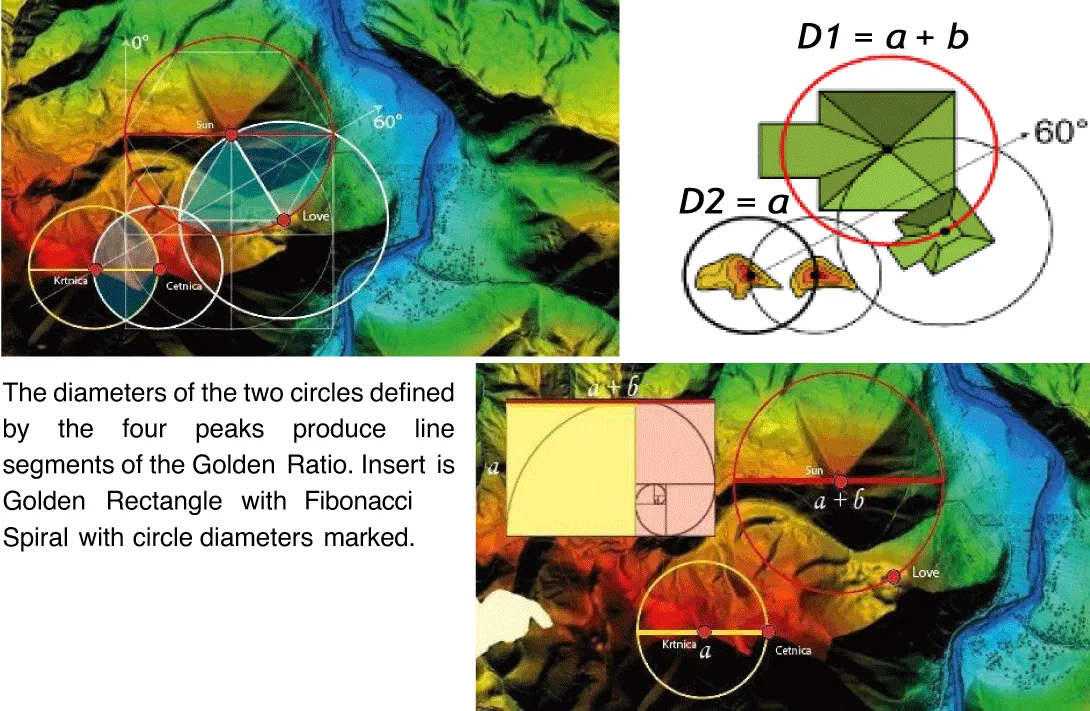
The equilateral triangle formed by the Sun and Love pyramid peaks (with a 60° angle) aligns symmetrically with the surrounding terrain, suggesting deliberate spatial planning or, at minimum, a remarkable example of natural geometric coincidence with symbolic resonance.
Source: Hoyle R, In: Osmanagich S, Hoyle R, Agić A, Delibašić H. Ravne 3. Visoko: Archaeological Park: Bosnian Pyramid of the Sun Foundation. 2023.
The Golden ratio: The spatial arrangement and underlying geometry between the four peaks of the Bosnian Pyramid of Sun & Love, and the highest named hills Krtnica and Cetnica.
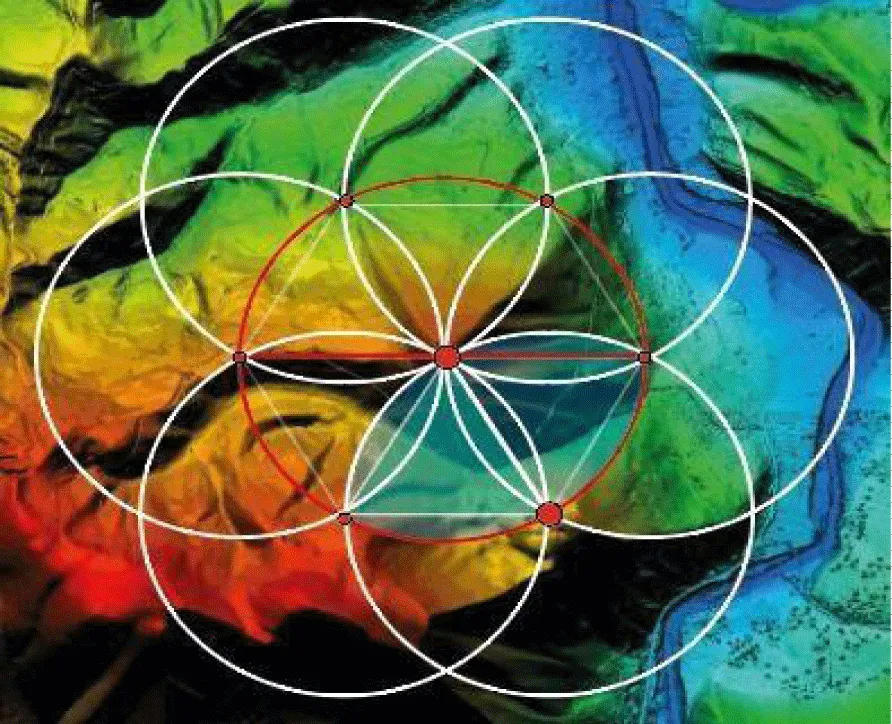
- The peak of the Bosnian Pyramid of Love, serving as one of the primary centering points.
- The southeast tip of the vesica piscis formed between the Sun and Love pyramids.
- The eastern and western extents of the red circle’s diameter, with the eastern point aligning to the northeast tip of the Sun-Love vesica piscis.
- The northwest corner of the Sun Pyramid, corresponding approximately to a vertex of the inner hexagon inscribed within the seed structure.
This spatial analysis suggests intentional or significant symbolic geometry encoded in the layout of the pyramids, echoing ancient sacred geometrical motifs known from Egyptian, Mesopotamian, and early European traditions. Research and visualization by Richard Hoyle (Foundation’s field geologist), 2019.
Source: Hoyle R. In: Osmanagich S, Hoyle R, Agić A, Delibašić H. Ravne 3. Archaeological Park: Bosnian Pyramid of the Sun Foundation. 2023.
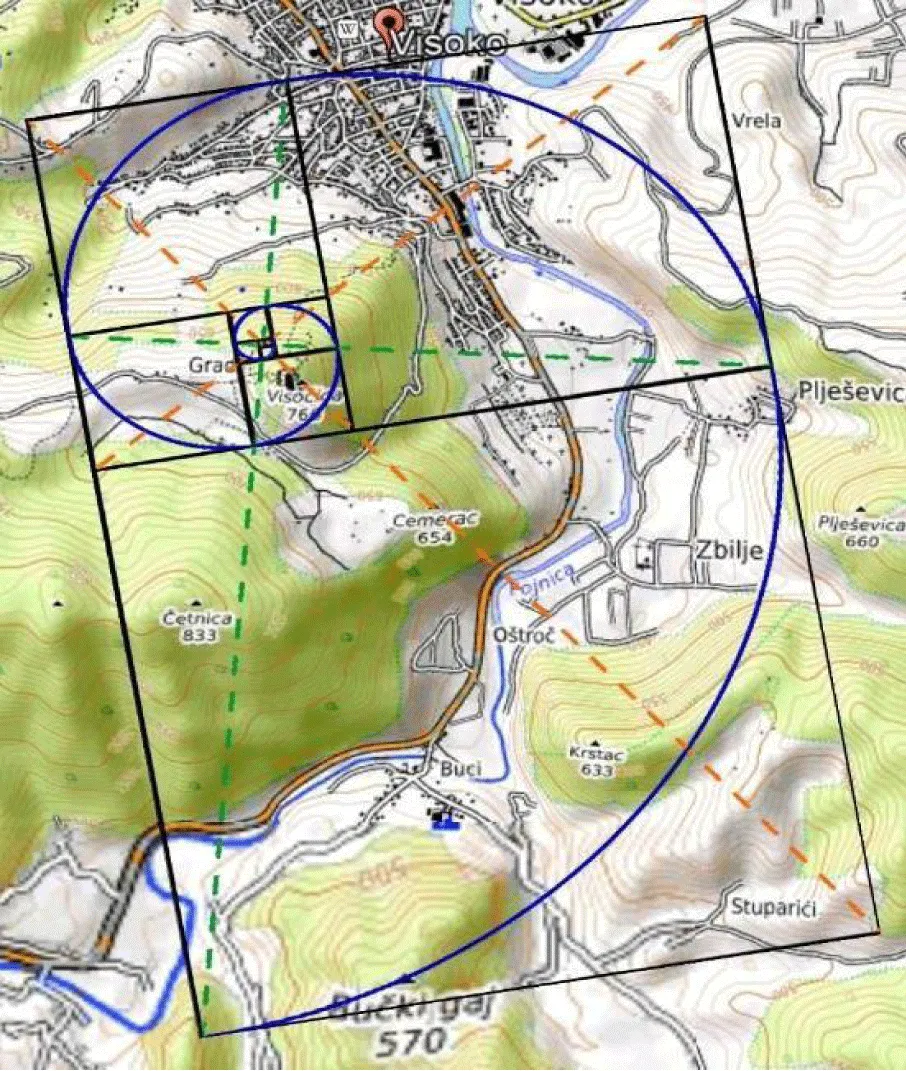
The Fibonacci spiral (in blue), emerging from the pyramid summit, expands outward across the Visoko Valley. Notably, it intersects the summit of the Temple of Mother Earth and the Pyramid of the Dragon, both key elements of the wider Bosnian Pyramid Complex. This alignment suggests purposeful geometric planning in the spatial arrangement of the monuments.
The golden rectangle is carefully oriented along cardinal axes, with its diagonals and edges aligning with major topographic and archaeological landmarks, including Cetnica Hill (833 m) and the Fojnica River corridor. The overlay also matches natural ridge lines and pathways, adding further plausibility to intentional layout.
This analysis originates from research by Richard Hoyle and colleagues, and was published in the volume Ravne 3 (2023), supporting the hypothesis that the Bosnian pyramid structures were constructed within a larger framework of sacred geometry and symbolic cosmology.
Source: Hoyle R. In: Osmanagich S, Hoyle R, Agić A, Delibašić H. Ravne 3. Archaeological Park: Bosnian Pyramid of the Sun Foundation, Visoko. 2023.
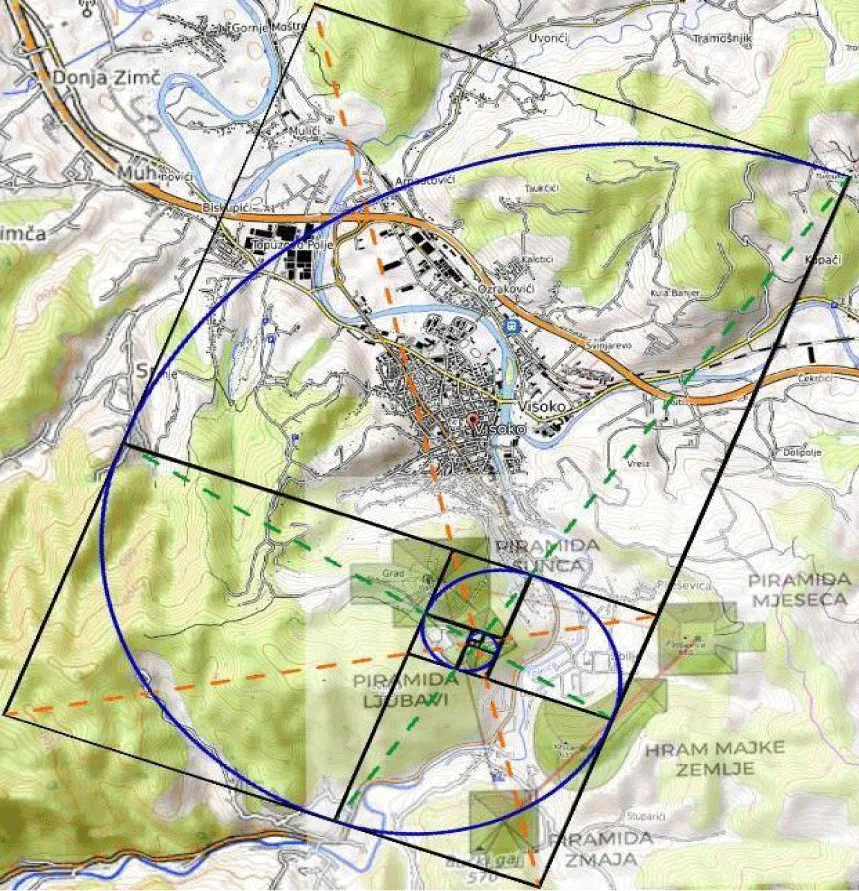
The model combines multiple golden rectangles and Fibonacci spirals, nested concentrically and scaled systematically, anchored at the summit of the Bosnian Pyramid of the Sun (767 m).
This spatial framework demonstrates at least five major intersections of key geometric elements with pyramid summits and cultural landmarks:
- The Bosnian Pyramid of Love, Moon, Dragon, and Temple of Mother Earth all lie on or within the armature of the geometric construction.
- The Fibonacci arcs pass through pyramid peaks and sacred topographical features, suggesting deliberate positioning in accordance with golden ratio alignments (φ ≈ 1.618).
- The diagonal grid, nested rectangles, and expanding spiral curves all intersect to highlight the pyramid valley as a single, coherent layout.
The use of topographic maps and cadastral references—overlaying the modern infrastructure of Visoko with ancient geometric rules-illustrates that the pyramid network is not randomly distributed but instead follows ad triangulum and ad quadratum layout principles, known to have been used in ancient and sacred architecture globally.
This configuration has been interpreted by the research team led by Richard Hoyle as a "genius example of spatial geometry", consistent with sacred geometry traditions found in Giza, Teotihuacan, and Tiwanaku.
Source: Hoyle R. In: Osmanagich S, Hoyle R, Agić A, Delibašić H. Ravne 3. Archaeological Park: Bosnian Pyramid of the Sun Foundation, Visoko.
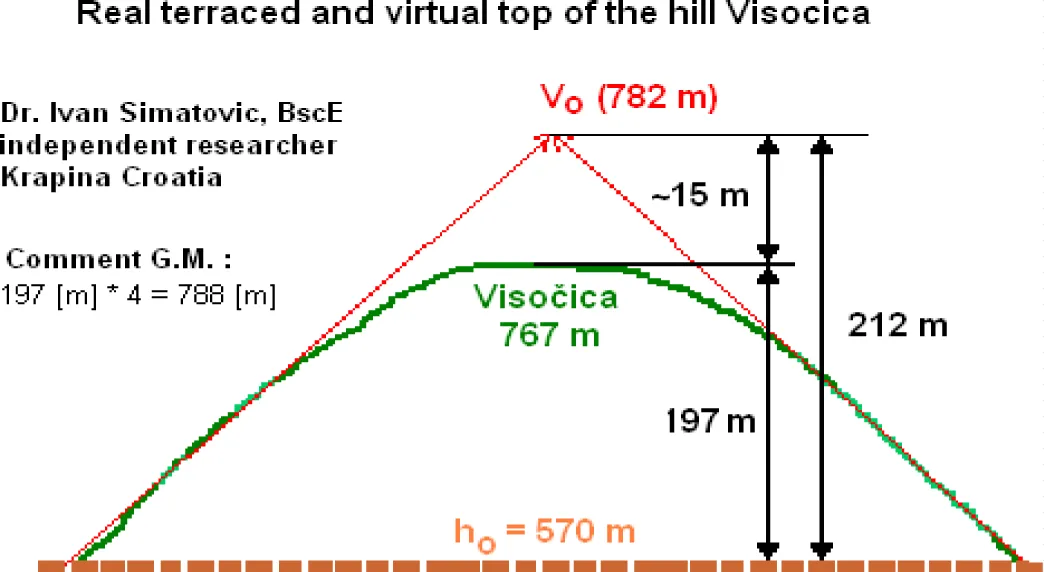
Sources: Šimatović I. ICBP Proceedings. 2009.
Marjanović G. Electromagnetism and topography of the Bosnian valley of the pyramids. 2019.
Conclusion
The Bosnian Pyramid of the Sun stands at the intersection of science, history, and unexplained phenomena. The integration of multidisciplinary research-spanning geophysics, geometry, archaeology, energy science, and remote sensing-presents a unified case for its non-natural origin.
Its geometric structure, cardinal alignment, and internal features-alongside artificially bonded concrete, tunnel engineering, and symbolic inscriptions-strongly suggest intentional design and human involvement. Perhaps most compelling is the pyramid's measurable energetic activity, including standing EM waves, lunar-responsive field intensification, and ultrasound emissions-features not found in natural hills.
These combined observations challenge orthodox historical narratives and call for expanded, open-minded scientific inquiry. The Bosnian Pyramid of the Sun may not only be the largest pyramid by volume in the world, but also one of the most enigmatic. If its construction indeed predates known civilizations, it redefines our understanding of prehistoric capabilities in engineering, astronomy, and energy science.
Epilogue
The empirical anomalies of the Bosnian Pyramid of the Sun warrant continued multidisciplinary investigation. Grounded in data, the findings demand engagement rather than dismissal. Ongoing research, validation, and publication across the fields of archaeology, physics, materials science, and acoustics will be critical to unlocking the full scope of this complex.
The site represents a profound opportunity: not only to revise historical paradigms, but also to rediscover forgotten knowledge systems-rooted in harmony between humanity, Earth, and the cosmos.
Acknowledgement
The author extends sincere gratitude to all researchers, collaborators, and contributors whose work has been referenced and discussed throughout this article. Their dedication to investigating the Bosnian Pyramid of the Sun has been invaluable to the advancement of this study.
Conflicts of Interest
The author declares no conflicts of interest related to this research.
Funding
This research did not receive any specific grant from funding agencies in the public, commercial, or not-for-profit sectors.
Author Contributions
The author was solely responsible for the conceptualization, data compilation, analysis, and writing of this article.
Data Availability
All data and materials referenced in this article are publicly available through the cited sources. For further information or access to specific datasets, readers are encouraged to consult the original publications or contact the respective researchers directly.
References
- Osmanagich S. Bosnian pyramids, my story,archaeological park: Bosnian Pyramid of the Sun Foundation, Visoko. 2023;14.
- Osmanagich S. Spiral geometry in ancient design: Evidence of Fibonacci proportions in the Egyptian and Bosnian pyramids. Acta Scientific Environmental Science Journal. 2025;2(1):1-30.
- Buza E. The analysis of the landscape and topography, ICBP proceedings of the first international scientific conference on the Bosnian valley of the pyramids, Visoko. Archaeological Park: Bosnian Pyramid of the Sun Foundation. 2009;14:58-65.
- Dash G. On the orientation of the Giza pyramids. Journal of Ancient Egyptian Architecture. 2012;1:1-12.
- Belmonte JA. On the orientation of ancient Egyptian temples: (1) Upper Egypt and lower Nubia. Journal for the History of Astronomy. 2001;32(27):1-20. doi: 10.1177/002182860503600302.
- Bauval R, Gilbert A. The Orion mystery: Unlocking the secrets of the pyramids. London: Crown Publishing Group; 1994.
- Petrie WMF. The pyramids and temples of gizeh. London: Field & Tuer. 1883.
- West JA. Serpent in the sky: The high wisdom of ancient Egypt. Wheaton IL, editor. Quest Books; 1993.
- Wittaker A. Sacred geometry and the construction of ancient sites. London: Thames & Hudson. 2003.
- Edwards IES. The pyramids of Egypt (Rev. ed.). London: Penguin Books; 1993.
- Krupp EC. Echoes of the ancient skies: The astronomy of lost civilizations. New York: Dover Publications; 2003.
- Lehner M. The complete pyramids: Solving the ancient mysteries. London: Thames & Hudson. 1997.
- Livio M. The golden ratio: The story of phi, the world’s most astonishing number. New York: Broadway Books; 2002.
- Smailbegović A. Satellite imagery and terrain analysis of the Bosnian pyramid of the sun. 2006. In: Osmanagich S. Pyramids around the world & lost pyramids of Bosnia. 2014. Archaeological Park: Bosnian pyramid of the sun foundation, Sarajevo. 2025.
- Bahor S. The four-dimensional visualization of the Bosnian Valley of the Pyramids – New methodology for the reconstruction of the cultural heritage site. 2015. Master’s thesis. Sarajevo School of Science and Technology. In: Osmanagich S. Pyramids around the world & lost pyramids of Bosnia. Archaeological Park. 2014. Bosnian pyramid of the sun Foundation. Sarajevo. 2025:309-311.
- Pašić M. A contribution to the characterization of solid building material from gravel conglomerate from the Bosnian pyramid of the sun, Visoko. University of Zenica. In: ICBP proceedings, Second International Conference on the Bosnian Pyramids. 2009:145-155, Archaeological Park: Bosnian Pyramid of the Sun Foundation. Sarajevo.
- Marjanović G. Electromagnetism and topography of the Bosnian valley of the pyramids. Academia edu. 2016.
- Mizdrak S. Energy beam consistently measured in the Bosnian valley of the pyramids, Field Repor. 2010.In: Osmanagich S. Pyramids around the world & lost pyramids of Bosnia. Archaeological Park. 2014: Bosnian pyramid of the sun foundation. Sarajevo. 2025:255-256
- Debertolis P, Bisconti N, Gullà G. Archaeoacoustic analysis of the Bosnian pyramidal complex. Journal of Anthropology and Archaeology. 2013;1(1):59-79.
- Osmanagić S. Bosnian pyramid of the sun: Discovery of the first European Pyramid. Sarajevo. Mauna Fe Publishing; 2005.
- Hoyle R. Geoarchaeological summary report. In: Osmanagić S, Hoyle R, Agić A, Delibašić H, editors. Ravne 3 tunnels. Visoko: Archaeological Park: Bosnian pyramid of the sun Foundation. 2023.
- Osmanagić S. Investigating the Bosnian pyramid of the moon: Archaeological excavations, astronomical orientation and archaeoacoustic properties. Journal of Environmental Science, Sustainability and Green Innovations. 2025.
- Bosnian pyramid claims. 2025.
- Colin W. The Great Pyramids of ... Bosnia? 2007.
- Olav Hammer, Karen Swartz. The Bosnian Pyramid Phenomenon. 2020;23(4):94-110. doi: 10.1525/nr.2020.23.4.94.
- Bosnia’s rich heritage. 2025.
- Swelim N. The pyramid hills: Visočica hill and plješevica hrašće. ICBP Proceedings of the First International Scientific Conference on the Bosnian Valley of the Pyramids. 2009:341-384.
- Khavroshkin O, Tsyplakov V. The first general report of the pyramid research in visoko, Bosnia-Herzegovina. ICBP Proceedings of the First International Scientific Conference on the Bosnian Valley of the Pyramids. 2009:385-408.
- Barakat A. The Geological and geo-archaeological observations on the Bosnian pyramids in visoko (Report 2006). ICBP Proceedings of the First International Scientific Conference on the Bosnian Valley of the Pyramids. 2009:485-494.
- Fouad MA, Moussa AM. Diagnosis of cement materials between conglomerates blocks in the Bosnian valley of the pyramids. ICBP Proceedings of the First International Scientific Conference on the Bosnian Valley of the Pyramids. 2009;589-596
- Korotkov K. Bosnian Impressions. 2017.
- https://www.amazon.com/New-Pyramid-Age-Worldwide-Discoveries/dp/184694046X; 2025.
- Osmanagich S. True north across civilizations: Somparative study of pyramid alignments in five continents. Acta Scientific Environmental Sciences Journal. 2025:2(1).
- Dor E, Goren-Inbar N, Berman Y. Automatic detection of archaeological features using high-resolution LiDAR data: A case study from Israel. Journal of Archaeological Science. 2016;75:94-103.
- Lidar Scann. Report from airborne technologies GmbH (Austria) under contract to the Archaeological Park. 2015. Bosnian pyramid of the sun foundation enabling high-resolution modeling of topographic structures and potential anthropogenic features.In: Osmanagić S, Hoyle R, Agić A, Delibašić H, editors. Ravne 3 Tunnels. Visoko: Archaeological Park: Bosnian Pyramid of the Sun Foundation. 2023.
- Šimatović I. Visočica- Bosnian pyramid of the sun: Inclining angles, proportions and analysis indicate the existence of the artificial pyramid-shaped structure. ICBP Proceedings of the First International Scientific Conference on the Bosnian Valley of the Pyramids. 2009:409-430.
- Đorđević A, Vučković D, Krmpotić S, Milošević D, Sretković. Report of the geophysical measurements and its interpretation at the archaeological localities vratnica and visočica. 2006. ICBP Proceedings of the First International Scientific Conference on the Bosnian Valley of the Pyramids. 2009:513-532.
- Hasenstab A, Juričević D. Radar measurements for the Bosnian pyramid of the sun, finding inhomogenities in the ground near visoko. 2007. ICBP Proceedings of the First International Scientific Conference on the Bosnian Valley of the Pyramids. 2009:435-440.
- Pašić M, Pihura D. Specific of composition, structure and material properties of the Bosnian pyramid of the sun and Bosnian pyramid of the moon near visoko and kralupi hill comparing to surrounding material. ICBP Proceedings of the First International Scientific Conference on the Bosnian Valley of the Pyramids. 2009:447-464.
- Imamović A, Omanović H, Begić Z, Salkić Z, Babić E, Radeljić A, Hodžić Z. Report of the Geo-mechanical and chemical investigation and binding materials of the stone plates samples taken from the locations visočica and plješevica. 2006. ICBP Proceedings of the First International Scientific Conference on the Bosnian Valley of the Pyramids. 2009:533-540.
- Kurtović A, Zlatar M, Madžarević M. Results of mineral petrography, chemical and geo-mechanical testing of the Tumulus (TB-)5 and Bosnian Pyramid of the Sun (BPS-1). 2009. ICBP Proceedings of the First International Scientific Conference on the Bosnian Valley of the Pyramids. 2007:541-548
- Marjanović G. Magnetotelluric research. 2018, Mission: Lunar eclipse, 'Pyramid of the Sun', Visoko, Bosnia and Herzegovina". 2025.
- Osmanagich S. Archaeological stratigraphy and environmental analysis of the ravne 3 tunnel complex. Acta Scientific: Environmental Sciences Journal. 2025:2(1).
- Osmanagich S. Environmental ionization in enclosed geospheres: Comparative study of global and local measurements (2018-2025). Journal of Advanced Artificial Intelligence, Engineering and Technology. 2025.
- Osmanagich S. Ravne tunnels as a regenerative environment: Scientific measurements and human testimonials. Acta Scientific Medical Sciences Journal. 2025.
- Korotkov KG, Osmanagich S. Pyramids: The influence of form on the environment. Part II. Bosnian Pyramids. Acta Scientific Medical Sciences Journal. 2024;8(11).
- Osmanagich S. A new class of subterranean dry-stone structures: River pebble walls in the ravne tunnel complex, Bosnia-Herzegovina. Journal of Environment and Biological Science. 2025.
- Osmanagich S. Investigating the Bosnian pyramid of the moon: Archaeological excavations, astronomical orientation and archaeoacoustic properties. Journal of Environmental Science Sustainability and Green Innovations. 2025.
- Osmanagich S. Before writing: Classification of the bosnian pyramid inscripitons in comparative context with vinča and runic traditions, Journal of Advanced Artificial Intelligence, Engineering and Technology. 2025.




Content Alerts
SignUp to our
Content alerts.
 This work is licensed under a Creative Commons Attribution 4.0 International License.
