
Medicine Group. 2024 August 10;5(8):921-948. doi: 10.37871/jbres1972.





 Review Article
Plants from South America: A Systematic Review of Their Antiplasmodial and Antimalarial Activities Based on Ethnopharmacological Use
Isabela Penna Ceravolo*, Rita de Cássia Cardoso Arcas# and Antoniana Ursine Krettli#
#These authors are contributed equally
- Malaria
- Antimalarial
- Ethnopharmacology
- South America
- Traditional knowledge
- Medicinal plants
Abstract
Malaria remains one of the most important diseases in the world, being lethal to 610 thousand individuals annually. The widespread resistance of P. falciparum to antimalarials emphasizes the urgent need for new therapies, as treatment remains the primary strategy to control the disease. Although combinations of synthetic drugs are used in treatment, medicinal plants are often utilized in folk medicine as a complement and/or alternative to treat human malaria, especially in poor endemic areas. This systematic review evaluates the antiplasmodial and/or antimalarial activities, as well as the ethnopharmacological use of plant species by traditional communities from South America, through a search in the PubMed Central and Science Direct databases. Among 346 articles selected using the keywords “Malaria”, “Plants”, “Traditional”, “Knowledge”, “Antimalarial” and “Amazon”, 27 were considered eligible. Plant species with no activities were used to a new search on Google, PubMed, and Science Direct. Of the 389 species or genera from 88 botanical families evaluated, most studies were conducted in Peru, with leaves being the primary plant part used for treatment and/or prevention. Out of the analyzed species, excluding 30 mentioned only by genus, 185 had their extracts, fractions, or pure substances assessed, and only nine species had both in vitro and in vivoactivity. Among the 174 species cited by traditional communities evaluated, with no data for activity, 66 presented results when a new literature search was performed. The Chayahuita ethnicity was the community providing more traditional knowledge about malaria treatment. Most plant species mentioned in the articles indicated for treatment and/or prevention of malaria have not yet been evaluated for antiplasmodial and antimalarial activities. Collecting ethnopharmacology information of plants is important, since their use for malaria treatment significantly increases the chances of finding a plant to be used as antimalarial substitutes.
Introduction
Malaria is a global health problem with an estimated 249 million cases in 85 endemic countries, with 610,000 deaths reported in 2022, the majority occurring in Africa among children aged under five years [1]. Different measures are essential for malaria control, but drug treatment remains the main control strategy, and the most important tool to prevent morbidity and death from the disease.
Drug chemotherapy has a strong historical link to the use of traditional plant infusions in various cultures. Research based on such knowledge has yielded the two most important drugs used in malaria treatment: the alkaloid quinine, present in the Cinchona species, and artemisinin, from Artemisia annua [2]. These discoveries were both based on traditional use and ethnomedicine [3-5]. Currently, Artemisinin-based Combination Therapies (ACTs) are recommended by the World Health Organization (WHO) as the first and second-line treatment for uncomplicated P. falciparum malaria, as well as for chloroquine-resistant P. vivax malaria [6]. However, resistance to ACT has already been described in Southeast Asia and in some regions of Africa [7]. Additionally, due to the high cost of antimalarials, especially ACTs, the poor populations in Africa continue to use herbal medicines for the treatment of malaria [8] and in countries like Brazil [9], China [10,11], India [12], and Papua [13].
According to the WHO, traditional and complementary medicine is used by at least 80% of the global population [14]. However, it is estimated that less than 10% of the approximately 250,000 plants used in folk medicine have had their pharmacological activities studied [15]. Natural substances have long served as sources of therapeutic drugs and provide important leads against various pharmacological targets [16]. About one-third of the best-selling drugs in the world are either natural products or their derivatives [17].
In Brazil, 131,224 cases of malaria were notified in 2022, with 99% of transmission occurring in the Amazon region. Of these, 15.8% were caused by P. falciparum or mixed infection, and the remaining cases attributed to P. vivax and other parasitic species [18]. Although synthetic drug combinations form the basis for malaria treatment in Brazil, in the Amazon region, where malaria is endemic, the use of medicinal plants against fever and/or malaria is common [19,20].
The search for new compounds derived from plants remains an excellent strategy for drug development. Considering that the Amazon has one of the richest and most diverse biodiversities, plus the necessity of discovering new drugs due to the reports of resistance to ACTs [21], the present study reviews the literature on antiplasmodial and antimalarial activities of plants from South America and their ethnopharmacological use for the treatment and prevention of malaria, based on a bibliographic survey using PubMed and Science Direct databases, with the aim of finding new antimalarials that could help control the emergence of drug-resistant parasites.
Materials and Methods
To conduct this study, a bibliographic survey in the PubMed and Science Direct databases was initially carried out on September 25, 2023, in the health-related databases PubMed Central® and Science Direct® using the keywords “Malaria”; “Plants”; “Traditional”; “Knowledge”; “Anti-malarial”; “Amazon”. The relevant literature was examined on the antiplasmodial and/or antimalarial activities of plants demonstrated in bioassays or reported in traditional use. No filter was applied regarding the years of publications, but all articles searched were in English.
The articles listed in the search from the two databases were obtained through a selection process, where only publications undertaken in South America were selected and considered potentially eligible. If information about the country was not included in the title, the abstracts or the full text of each article were evaluated. Articles were excluded when focused on: (i) historical aspects; (ii) qualitative studies; (iii) subjects unrelated to malaria and/or medicinal plants; (iv) citation of data from other authors as to prevent duplication of data; (v) reviews; (vi) book chapters, conference abstracts, glossaries and symposium papers; (vii) plants used as repellents or with activity against the vector; and (viii) tests conducted on exoerythrocytic forms.
The search conducted resulted in 346 articles, with 190 found in PubMed and 156 in Science Direct (Figure 1). Of the articles listed in PubMed, six were excluded because they were duplicates of those found in Science Direct. After removing the duplicates, the total was 340 articles, with 184 from PubMed and 156 from Science Direct. Of these, 168 from PubMed and 136 from Science Direct were excluded because they did not meet the minimum criteria established, resulting in 36 full text articles evaluated. However, as nine of these articles presented data from other authors, or addressed historical aspects or the vector, they were also removed.
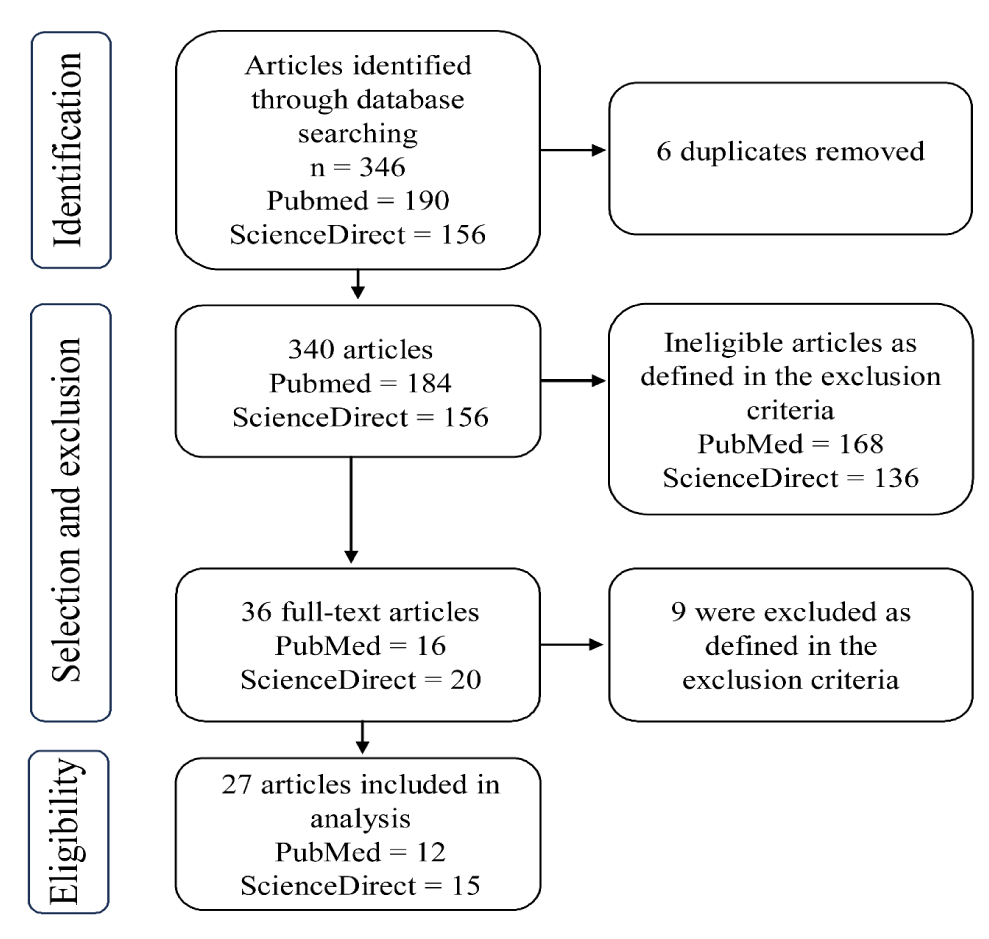
When considering articles from both databases, a total of 27 complete articles met the established minimum requirements, and their data on antiplasmodial and antimalarial activities were annotated in a spreadsheet. The steps through which eligible articles were selected from the two databases are shown in figure 1.
From the selection of 27 eligible articles the following information was annotated for each plant: reference; link; country; scientific and popular names of the plant; botanical family; part of the plant used; whether the traditional knowledge was cited; method used to obtain data (interview or experimental); medicinal use of the plant; results of cytotoxicity in vitro and in vivo; toxicity data in vivoand whether pure substances had been isolated and tested. All the information collected were summarized and arranged in an Excel spreadsheet. The tables were organized in alphabetical order of families and species. When the same plant species was studied by more than one author, it was cited only once.
The criterion adopted to determine plant activity in vitro was based on literature articles. Only species that inhibited 50% of parasite growth (IC50) at a value ≤ 10 µg/mL were considered active [22-24]. For the evaluation of in vivoactivity, the plants had to reduce parasitemia by ≥ 30% [25-35]. After surveying plant species that presented antiplasmodial and/or antimalarial activities in the eligible articles, the species with no data were used for a new search on the Google platform, PubMed and Science Direct databases using “the name of the plant species researched” and the keywords “malaria” or “Plasmodium”.
Results
In the first analysis of the eligible articles, a survey of the botanical classification, the plant parts used, their ethnomedical uses, and location/origin were carried out, as shown in table 1.
| Table 1: Botanical classification, ethnomedical use, and location of plants from South America cited by the authors. | |||||
| Botanic family | Plant species | Plant parts used | Traditional use | Countries | Reference |
| Acanthaceae | Hygrophila guianensis | Aerial parts | Others | Colombia | [41] |
| Justicia appendiculata | Whole plant | Malaria | Peru | [40] | |
| Ruellia ruiziana | Leaves | Others | Peru | [3] | |
| Sanchezia oblonga | Leaves | Others | Peru | [3] | |
| Adiantaceae | Pityrogramma calomelanos | Leaves | Others | Peru | [3] |
| Amaranthaceae | Alternanthera braziliana | Leaves, NS | Malaria | Peru | [38] |
| Chenopodium ambrosioides | Aerial parts | Malaria | Peru | [36] | |
| Iresine diffusa | Whole plant | Malaria | Peru | [3] (a); [40] (b) | |
| Amaryllidaceae | Allium sativum | Roots | Malaria | Bolivia, Peru | [37] (a); [38] (b) |
| Anacardiaceae | Anacardium occidentale | Bark, Leaves, NS | Malaria | Peru (2), Brazil | [38] (a); [36] (b); [47] (c) |
| Campnosperma panamense | Leaves | Others | Colombia | [41] | |
| Mangifera indica | Bark, NS | Malaria | Brazil, Peru, Bolivia | [20] (a); [38] (b); [37] (c) | |
| Spondias mombin | Leaves, NS | Malaria | Peru | [38] | |
| Tapirira guianensis | Bark | Malaria | Bolivia | [37] | |
| Annonaceae | Guatteria amplifolia | Aerial parts | Others | Colombia | [41] |
| Rollinia mucosa | Leaves | Others | Peru | [3] | |
| Xylopia amazonica | Leaves, Branches | Malaria | Brazil | [47] | |
| Apiaceae | Coriandrum sativum | NS | Malaria | Peru | [38] |
| Daucus montanus | Roots | Others | Peru | [3] | |
| Eryngium foetidum | Whole plant, NS | Malaria | Peru (2), French Guiana | [38] (a); [39] (b); [36] (c) | |
| Apocynaceae | Aspidosperma megalocarpon | Bark, roots, seeds | Malaria | Colombia, Bolivia | [41] (a); [37] (b) |
| Aspidosperma nitidum | Wood bark, leaves, branches, NS | Malaria | Peru, Brazil | [38] (a); [27] (b) | |
| Aspidosperma rigidum | Bark | Malaria | Brazil | [20] | |
| Aspidosperma pyrifolium | Stalk, roots, Leaves | Others | Brazil | [48] | |
| Aspidosperma vargasii | Bark | Malaria | Brazil | [49] | |
| Geissospermum laeve | Inner bark | Malaria | French Guiana | [39] | |
| Geissospermum reticulatum | Bark | Malaria | Bolivia | [37] | |
| Himatanthus articulatus | Bark, Stalk | Malaria | Brazil | [50] | |
| Himatanthus sucuuba | Whole plant, exudate | Malaria | Peru (2), Bolivia | [36] (a); [40] (b); [37] (c ) | |
| Tabernaemontana linkii | Bark, leaves, roots | Malaria | Bolivia | [37] | |
| Tabernaemontana obliqua | Leaves | Others | Colombia | [41] | |
| Tabernaemontana sananho | Bark | Others | Peru | [3] | |
| Araceae | Anthurium croatii | Stalk | Others | Peru | [3] |
| Anthurium dombeyanum | Whole plant | Malaria | Peru | [40] | |
| Anthurium ernestii | Leaves, roots | Others | Peru | [3] | |
| Dieffenbachia sp. | Stalk | Others | Peru | [36] | |
| Dieffenbachia seguine | Aerial parts | Others | Peru | [43] | |
| Dieffenbachia williamsii | Stalk | Others | Peru | [3] | |
| Dracontium spruceanum | Tuber | Others | Peru | [43] | |
| Homalomena picturata | Rhizome | Others | Peru | [36] | |
| Monstera lechleriana | Stalk | Others | Peru | [36] | |
| Philodendron ernestii | Stalk | Others | Peru | [3] | |
| Philodendron plowmanii | Whole plant | Malaria | Peru | [40] | |
| Xanthosoma poeppigii | Stalk | Others | Peru | [36] | |
| Xanthosoma sagittifolium | Tuber | Others | Peru | [36] | |
| Arecaceae | Cocos nucifera | Fruit water, NS | Malaria | Peru (2) | [38] (a); [36] (b) |
| Desmoncus mitis | Leaves | Fever | Peru | [36] | |
| Euterpe oleraceae | Roots, pulp | Malaria | Brazil (2), French Guiana | [20] (a); [39] (b); [51] (c) | |
| Euterpe precatoria | Roots | Malaria | Peru | [38] | |
| Iriartea deltoidea | Whole plant | Malaria | Peru (2) | [43] (a); [40] (b) | |
| Oenocarpus bataua | NS | Malaria | Peru | [38] | |
| Socratea exorrhiza | Roots | Others | Peru | [36] | |
| Aristolochiaceae | Aristolochia stahelii | Stalk | Malaria | French Guiana | [39] |
| Aristolochia trilobata | Leaves | Malaria | French Guiana | [39] | |
| Aspleniaceae | Asplenium spp. | Whole plant | Malaria | Peru | [40] |
| Asteraceae | Artemisia spp. | Leaves | Malaria | French Guiana | [39] |
| Ayapana lanceolata | Leaves | Malaria | Peru | [38] | |
| Ayapana triplinervis | Aerial parts, leaves | Malaria | French Guiana, Peru | [39] (a); [36] (b) | |
| Bidens spp. | Whole plant | Malaria | Peru | [40] | |
| Bidens cynapiifolia | Leaves | Others | Peru | [36] | |
| Calea montana | Leaves | Others | Peru | [3] | |
| Chaptalia nutans | Whole plant | Malaria | Peru | [40] | |
| Clibadium sylvestre | Whole plant | Malaria | Peru | [40] | |
| Elephantopus mollis | Leaves | Fever | Peru | [36] | |
| Gymnanthemum amygdalinum | Leaves | Malaria | Brazil, French Guiana | [20] (a); [39] (b) | |
| Hebeclinum macrophyllum | Whole plant | Malaria | Peru | [40] | |
| Mikania guaco | Leaves | Malaria | French Guiana | [39] | |
| Munnozia hastifolia | Whole plant | Malaria | Peru (2) | [3] (a); [40] (b) | |
| Tagetes erecta | Whole plant | Malaria | Peru (3) | [38] (a); [36] (b); [40] (c) | |
| Tessaria integrifolia | Leaves | Fever | Peru | [43] | |
| Trixis divaricata | Whole plant | Malaria | Peru | [40] | |
| Vernonanthura patens | Leaves | Others | Peru | [3] | |
| Begoniaceae | Begonia glabra | Leaves | Others | Peru | [3] |
| Begonia parviflora | Leaves | Malaria | Peru | [3] | |
| Bignoniaceae | Arrabidaea platyphylla | Roots | Malaria | Bolivia | [37] |
| Ceratophytum tetragonolobum | Whole plant | Malaria | Bolivia | [37] | |
| Crescentia cujete | Leaves | Malaria | Peru | [38] | |
| Handroanthus impetiginosus | Bark | Malaria | Peru | [43] | |
| Handroanthus serratifolius | Bark | Malaria | Peru | [43] | |
| Jacaranda caucana | Leaves | Others | Colombia | [41] | |
| Jacaranda copaia | Whole plant | Malaria | Peru (2) | [3] (a); [40] (b) | |
| Mansoa alliacea | Whole plant, NS | Malaria | Peru (4) | [38] (a); [3] (b); [36] (c); [40] (d) | |
| Mussatia hyacinthina | Bark | Others | Peru | [36] | |
| Tynanthus panurensis | Bark, sap | Others | Peru | [36] | |
| Bixaceae | Bixa orellana | Leaves, roots, exudate, seeds | Malaria | Peru (2), Bolivia | [38] (a); [36] (b); [37] (c) |
| Bombacaceae | Ceiba pentandra | NS | Malaria | Peru | [38] |
| Huberodendron patinoi | Bark | Others | Colombia | [41] | |
| Burseraceae | Tetragastris panamensis | Bark | Others | Peru | [3] |
| Protium amplum | Fruits | Others | Colombia | [41] | |
| Protium puncculatum | Branches, leaves | Malaria | Brazil | [52] | |
| Capparaceae | Capparis coimbrana | Bark | Malaria | Bolivia | [37] |
| Capparis osmantha | Bark | Others | Peru | [36] | |
| Cardiopteridaceae | Citronella spp. (cf. melliodora or incanum) | Tuber | Malaria | Peru | [36] |
| Caricaceae | Carica papaya | Leaves, stalk, roots, flowers, fruits | Malaria | Peru (3), French Guiana | [38] (a); [39] (b); [3] (c); [36] (d) |
| Cecropiaceae | Cecropia latiloba | Leaves | Others | Peru | [3] |
| Celastraceae | Maytenus spp. | Bark, roots | Malaria | Peru | [36] |
| Maytenus krukovii | Bark, roots | Malaria | Peru | [36] | |
| Maytenus macrocarpa | Bark, NS | Malaria | Peru (2) | [38] (a); [43] (b) | |
| Chloranthaceae | Hedyosmum lechleri | Leaves | Others | Peru | [3] |
| Clusiaceae | Clusia hammeliana | Leaves | Others | Peru | [3] |
| Clusia trochiformis | Leaves | Others | Peru | [3] | |
| Marila laxiflora | Leaves | Others | Colombia | [41] | |
| Combretaceae | Buchenavia viridiflora | Branches, leaves | Others | Brazil | [53] |
| Terminalia spp. | Whole plant | Malaria | Peru | [40] | |
| Commelinaceae | Tripogandra serrulata | Leaves | Others | Peru | [3] |
| Convolvulaceae | Ipomoea batatas | Tuber, whole plant | Malaria | Peru, Bolivia | [36] (a); [37] (b) |
| Operculina hamiltonii | Tuber | Malaria | Brazil | [20] | |
| Costaceae | Costus spp. | Whole plant | Malaria | Peru | [40] |
| Costus spp. | Whole plant | Malaria | Peru | [40] | |
| Costus arabicus | Stalk | Malaria | Peru | [38] | |
| Costus curvibracteatus | Stalk, leaves | Fever | Peru | [43] | |
| Costus guanaiensis | Stalk | Fever | Peru | [36] | |
| Costus scaber | Stalk | Fever | Peru | [36] | |
| Cucurbitaceae | Citrullus lanatus | Seeds | Malaria | Brazil | [20] |
| Gurania lobata | Leaves | Others | Peru | [3] | |
| Luffa operculata | Fruits | Malaria | Brazil | [20] | |
| Momordica charantia | Whole plant | Malaria | Peru, Brazil | [40] (a); [42] (b) | |
| Cyclanthaceae | Cyclanthus bipartitus | Whole plant | Malaria | Peru | [40] |
| Carludovica palmata | Whole plant | Malaria | Peru | [40] | |
| Cyperaceae | Cyperus spp. | Whole plant, seeds | Malaria | Bolivia | [37] |
| Dilleniaceae | Curatella americana | Bark | Malaria | Bolivia | [37] |
| Elaeocarpaceae | Sloanea schomburgki | Bark | Malaria | Peru | [43] |
| Ericaceae | Satyria panurensis | Leaves | Others | Peru | [3] |
| Euphorbiaceae | Acalypha macrostachya | Leaves | Others | Peru | [3] |
| Acalypha mapirensis | Aerial parts | Others | Peru | [3] | |
| Alchornea castaneifolia | Leaves | Fever | Peru | [43] | |
| Alchornea triplinervia | Bark | Malaria | Peru (2) | [43] (a); [38] (b) | |
| Caryodendron orinocense | Leaves | Others | Peru | [36] | |
| Croton spp. | Leaves, whole plant | Malaria | Bolivia | [37] | |
| Croton cajucara | Bark | Malaria | Brazil | [20] | |
| Croton cajucara (white variety) WV) | Bark, leaves | Malaria | Brazil | [47] | |
| Croton cajucara (red variety) RV) | Bark, leaves | Malaria | Brazil | [47] | |
| Croton lechleri | Latex | Malaria | Peru | [36] | |
| Croton sacaquinha | Bark | Malaria | Brazil | [20] | |
| Euphorbia heterophylla | Leaves | Others | Peru | [3] | |
| Hevea braziliensis | Leaves, bark, exudate | Malaria | Bolivia | [37] | |
| Hevea guianensis | Bark | Malaria | Peru | [43] | |
| Hura crepitans | Latex, bark | Others | Peru | [36] | |
| Jatropha curcas | Leaves, latex | Malaria | Peru, Bolivia | [36] (a); [37] (b) | |
| Jatropha gossypifolia | Leaves | Malaria | Peru | [38] | |
| Manihot esculenta | Leaves | Others | Peru | [36] | |
| Phyllanthus amarus | Whole plant | Malaria | French Guiana | [39] | |
| Phyllanthus niruri | Whole plant | Malaria | Peru (2) | [38] (a); [40] (b) | |
| Ricinus communis | Whole plant | Malaria | Peru | [40] | |
| Fabaceae | Abrus arboreus | Bark | Malaria | Peru | [43] |
| Acrocarpus fraxinifolius | Bark | Others | Peru | [3] | |
| Albizia niopoides | Bark | Fever | Peru | [43] | |
| Amburana cearensis | Bark, Leaves | Malaria | Bolivia | [37] | |
| Bauhinia spp. | Stalk | Malaria | Peru | [36] | |
| Bauhinia herrerae | Leaves | Fever | Peru | [43] | |
| Campsiandra angustifolia | Bark, NS | Malaria | Peru (2) | [43] (a); [38] (b) | |
| Copaifera paupera | Bark | Others | Peru | [43] | |
| Dalbergia riedelii | Bark | Malaria | Brazil | [20] | |
| Derris floribunda | Bark, Leaves | Malaria | Brazil | [47] | |
| Desmodium spp. | Whole plant | Malaria | Peru | [40] | |
| Desmodium adscendens | Whole plant | Others | Peru | [3] | |
| Erythrina poeppigiana | Bark | Others | Peru | [36] | |
| Hymenaea courbaril | Bark, seeds, NS | Malaria | Peru, Bolivia | [38] (a); [37] (b) | |
| Inga spp. | Whole plant | Malaria | Peru | [40] | |
| Inga sertulifera | Bark | Malaria | Peru | [43] | |
| Libidibia ferrea | Fruits | Malaria | Brazil | [54] | |
| Machaerium acutifolium | Roots | Malaria | Bolivia | [37] | |
| Machaerium ferox | Stalk | Malaria | Brazil | [20] | |
| Myroxylon balsamum | Bark | Malaria | Peru | [36] | |
| Ormosia costulata | Bark, leaves | Malaria | Peru | [43] | |
| Ormosia nobilis | Bark, seeds | Malaria | Bolivia | [37] | |
| Parkia nitida | Bark, seeds | Malaria | Brazil | [47] | |
| Senna alata | Roots | Malaria | French Guiana | [39] | |
| Senna hirsuta | Aerial parts | Malaria | Peru | [36] | |
| Senna reticulata | Leaves, roots, NS | Malaria | Peru | [38] | |
| Senna ruiziana | Leaves | Others | Peru | [3] | |
| Swartzia simplex | Bark | Malaria | Peru | [43] | |
| Tachigali polyphylla | Bark | Fever | Peru | [43] | |
| Flacourtiaceae | Banara guianensis | Leaves | Malaria | French Guiana | [39] |
| Gentianaceae | Chelonanthus alatus | Aerial parts | Malaria | Peru | [43] |
| Coutoubea spicata | Whole plant | Malaria | French Guiana | [39] | |
| Deianira erubescens | Roots, leaves | Malaria | Brazil | [26] | |
| Irlbachia alata | Leaves | Malaria | Peru | [3] | |
| Gesneriaceae | Columnea guttata | Leaves | Others | Peru | [3] |
| Corytoplectus speciosus | Whole plant | Malaria | Peru | [40] | |
| Gloxinia sylvatica | Leaves | Others | Peru | [3] | |
| Haemodoraceae | Xiphidium caeruleum | Stalk | Others | Peru | [3] |
| Humiriaceae | Endopleura uchi | Bark | Malaria | Brazil | [20] |
| Hypericaceae | Vismia spp. | Stalk | Others | Peru | [3] |
| Vismia baccifera | Bark | Others | Peru | [3] | |
| Vismia macrophylla | Leaves, seeds, bark, stem, exudate | Malaria | Bolivia | [37] | |
| Vismia pozuzoensis | Leaves | Others | Peru | [3] | |
| Icacinaceae | Leretia cordata | Roots | Malaria | Peru | [36] |
| Lamiaceae | Cornutia spp. | Leaves | Malaria | Peru | [36] |
| Hyptis lacustris | Leaves | Others | Peru | [3] | |
| Hyptis pectinata | Leaves | Malaria | French Guiana | [39] | |
| Leonotis nepetifolia | Leaves | Malaria | French Guiana | [39] | |
| Liabum eriocaulon | Leaves | Fever | Peru | [3] | |
| Marsypianthes chamaedrys | Aerial parts | Fever | Peru | [36] | |
| Ocimum basilicum | Whole plant | Malaria | Peru | [40] | |
| Ocimum campechianum | Leaves | Malaria | French Guiana | [39] | |
| Plectranthus barbatus | Leaves | Malaria | French Guiana | [39] | |
| Lauraceae | Cinnamomum verum | Leaves | Malaria | Brazil | [20] |
| Nectandra cuspidata | Bark | Others | Peru | [3] | |
| Persea americana | Leaves, NS | Malaria | Peru | [38] | |
| Persea peruviana | Bark | Others | Peru | [3] | |
| Lecythidaceae | Bertholletia excelsa | Fruit peel, bark | Malaria | Brazil | [20] |
| Couroupita guianensis | Roots, flowers, Fruits | Malaria | Peru (2) | [38] (a); [36] (b) | |
| Grias newberthii | Bark, NS | Malaria | Peru (2) | [38] (a); [43] (b) | |
| Gustavia angustifolia | Bark | Fever | Peru | [43] | |
| Linaceae | Roucheria columbiana | Bark | Malaria | Peru | [43] |
| Loganiaceae | Strychnos pseudoquina | Bark | Malaria | Brazil | [26] |
| Potalia resinifera | Leaves, roots, NS | Malaria | Peru | [38] | |
| Loranthaceae | Phoradendron crassifolium | Leaves | Others | Peru | [3] |
| Malpighiaceae | Banisteriopsis caapi | NS | Malaria | Peru | [38] |
| Stigmaphyllon sinuatum | Leaves | Malaria | Brazil | [47] | |
| Malvaceae | Abelmoschus moschatus | Seeds, leaves | Fever | Peru | [36] |
| Eriotheca spp. | Bark | Malaria | Bolivia | [37] | |
| Malachra alceifolia | Leaves | Malaria | Peru (2) | [38] (a); [36] (b) | |
| Pseudobombax septenatum | Leaves | Malaria | Bolivia | [37] | |
| Quararibea guianensis | Bark | Malaria | Brazil | [20] | |
| Sabdariffa rubra | Leaves | Malaria | Peru | [36] | |
| Scleronema micranthum | Branches, leaves | Malaria | Brazil | [52] | |
| Theobroma speciosum | Leaves, fruits, flowers | Malaria | Bolivia | [37] | |
| Melastomataceae | Clidemia hirta | NS | Malaria | Peru | [38] |
| Clidemia bullosa | Leaves, branches | Malaria | Brazil | [47] | |
| Miconia albicans | Not mentioned | Malaria | Bolivia | [37] | |
| Miconia nervosa | Bark, leaves | Malaria | Brazil | [47] | |
| Meliaceae | Carapa guianensis | Seeds | Malaria | Brazil | [20] |
| Cedrela fissilis | Leaves, bark | Malaria | Bolivia | [37] | |
| Cedrela odorata | Bark, stalk, NS | Malaria | Brazil; Peru (2) | [20] (a); [43] (b); [55] (c) | |
| Guarea guidonia | Bark, seeds | Malaria | Peru, Colombia | [43] (a); [41] (b) | |
| Guarea polymera | Leaves, bark | Others | Colombia | [41] | |
| Menispermaceae | Abuta curarea | Stalk | Malaria | Peru | [36] |
| Abuta rufescens | NS | Malaria | Peru | [38] | |
| Curarea toxicofera | Branches | Malaria | Colombia | [56] | |
| Tinospora crispa | Stalk | Malaria | French Guiana | [39] | |
| Moracaceae | Brosimun rubescens | NS | Malaria | Peru | [38] |
| Moraceae | Clarisia biflora | Bark | Others | Peru | [43] |
| Clarisia racemosa | Bark | Others | Peru | [43] | |
| Ficus spp. | Bark, exudate, stem | Malaria | Bolivia | [37] | |
| Ficus insipida | Bark, raiz | Malaria | Peru (2) | [43] (a); [38] (b) | |
| Ficus mathewsii | Bark, exudate, stem | Malaria | Bolivia | [37] | |
| Parahancornia fasciculata | Latex | Malaria | Brazil | [20] | |
| Pseudolmedia laevis | Leaves | Others | Peru | [3] | |
| Myristicaceae | Otoba novogranatensis | Leaves, fruits | Did not mention | Colombia | [41] |
| Otoba parviflora | Bark | Others | Colombia | [41] | |
| Virola spp. | Bark | Others | Peru | [3] | |
| Virola calophylla | Bark | Malaria | Peru | [43] | |
| Virola surinamensis | Bark | Others | Peru | [43] | |
| Myrtaceae | Campomanesia aromatica | Leaves | Malaria | French Guiana | [39] |
| Myrciaria dubia | Leaves, NS | Malaria | Peru | [38] | |
| Psidium acutangulum | Branches, leaves, fruits | Malaria | French Guiana | [57] | |
| Psidium guajava | Bark, leaves | Malaria | Bolivia, Peru | [37] (a); [38] (b) | |
| Nyctaginaceae | Neea spp. | Whole plant | Malaria | Peru | [40] |
| Olacaceae | Minquartia guianensis | Bark, NS | Malaria | Peru (3) | [38] (a); [36] (b); [43] (c) |
| Oxalidaceae | Oxalis boliviana | Leaves | Others | Peru | [3] |
| Passifloraceae | Passiflora quadrangularis | Leaves | Malaria | Peru | [43] |
| Pedaliaceae | Sesamum indicum | Seeds | Malaria | Brazil | [20] |
| Phytolaccaceae | Petiveria alliacea | Leaves | Malaria | Peru (2), French Guiana | [38] (a); [39] (b); [36] (c) |
| Phytolacca rivinoides | Fruits | Others | Peru | [3] | |
| Piperaceae | Peperomia distachya | Leaves | Others | Peru | [3] |
| Piper spp. | Leaves | Fever | Peru | [3] | |
| Piper spp. | Whole plant | Malaria | Peru | [40] | |
| Piper acutilimbum | Leaves, stalk | Malaria | Peru | [10] | |
| Piper aduncum | Whole plant | Malaria | Peru (3) | [3] (a); [36] (b); [40] (c) | |
| Piper armatum | Leaves, stalk, aerial parts | Malaria | Peru | [58] | |
| Piper braziliense | Leaves, stalk, aerial parts | Malaria | Peru | [58] | |
| Piper bullatum | Leaves, stalk, aerial parts | Malaria | Peru | [58] | |
| Piper callosum | Leaves, stalk | Fever | Peru | [10] | |
| Piper calvescentinerve | Leaves, stalk, aerial parts | Malaria | Peru | [58] | |
| Piper casapiense | Leaves, stalk, aerial parts | Malaria | Peru (2) | [10] (a); [58] (b) | |
| Piper cordatomentosa | Leaves, stalk, Aerial parts | Malaria | Peru | [58] | |
| Piper coruscans | Leaves, stalk, Aerial parts | Others | Peru (2) | [10] (a); [43] (b) | |
| Piper crassinervium | Whole plant | Malaria | Peru (2) | [3] (a); [58] (b) | |
| Piper dennisii | Leaves | Others | Peru | [3] | |
| Piper divaricatum | Leaves, stalk, Aerial parts | Malaria | Peru | [58] | |
| Piper dumosum | Leaves, stalk | Malaria | Peru | [10] | |
| Piper glabribaccum | Leaves, stalk, aerial parts | Malaria | Peru | [58] | |
| Piper gratum | Leaves, stalk | Fever | Peru | [10] | |
| Piper guianense | Leaves, stalk | Malaria | Peru | [10] | |
| Piper heterophyllum | Leaves, stalk, aerial parts | Malaria | Peru | [58] | |
| Piper jalapense | Leaves, stalk | Fever | Peru | [10] | |
| Piper laevilimbum | Leaves, stalk | Malaria | Peru | [10] | |
| Piper lanceolatum | Leaves, stalk | Fever | Peru | [10] | |
| Piper lehmannianum | Leaves, stalk | Malaria | Peru | [10] | |
| Piper lineatum | Leaves, stalk | Others | Peru | [10] | |
| Piper longestylosum | Whole plant | Malaria | Peru | [40] | |
| Piper marginatum | Leaves | Malaria | French Guiana | [39] | |
| Piper nudilimbum | Leaves, stalk | Others | Peru | [10] | |
| Piper oblongum | Leaves, stalk, aerial parts | Malaria | Peru | [58] | |
| Piper obtusilimbum | Leaves, stalk | Malaria | Peru | [10] | |
| Piper peltatum | Leaves | Malaria | Peru | [38] | |
| Piper politaereum | Leaves | Others | Peru | [3] | |
| Piper pseudoarboreum | Leaves, stalk, aerial parts | Malaria | Peru (2) | [10] (a); [58] (b) | |
| Piper reticulatum | Leaves, stalk, aerial parts | Malaria | Peru | [58] | |
| Piper sancti-felici | Leaves, stalk, aerial parts | Malaria | Peru | [58] | |
| Piper stellipilum | Leaves, stalk, aerial parts | Malaria | Peru | [58] | |
| Piper strigosum | Leaves, stalk, aerial parts | Malaria | Peru (2) | [10] (a); [58] (b) | |
| Piper tenuistylum | Leaves, stalk | Malaria | Peru | [10] | |
| Piper tridentipilum | Leaves, stalk | Malaria | Peru | [10] | |
| Piper trigonum | Leaves, stalk, aerial parts | Malaria | Peru | [58] | |
| Piper umbellatum | Leaves | Others | Peru | [3] | |
| Piper verruculosum | Leaves, stalk, aerial parts | Malaria | Peru | [58] | |
| Piper xanthostachyum | Leaves, stalk, aerial parts | Malaria | Peru | [58] | |
| Pleiostachyopiper nudilimbum | Leaves, stalk | Malaria | Peru | [10] | |
| Poaceae | Andropogon leucostachyus | Aerial parts | Malaria | Brazil | [47] |
| Cymbopogon citratus | Leaves, NS | Malaria | Peru (2), French Guiana, Bolivia | [38] (a); [39] (b); [36] (c); [37] (d) | |
| Saccharum officinarum | Stalk | Malaria | Peru | [38] | |
| Polygonaceae | Triplaris americana | Leaves, seeds, bark | Malaria | Bolivia | [37] |
| Triplaris poeppigiana | Bark | Malaria | Peru | [36] | |
| Triplaris weigeltiana | Bark | Others | Peru | [43] | |
| Proteaceae | Oreocallis grandiflora | Leaves | Others | Peru | [3] |
| Pteridaceae | Duroia hirsuta | Leaves | Malaria | Peru | [36] |
| Rhamnaceae | Ampelozizyphus amazonicus | Bark | Malaria | Brazil | [20] |
| Rubiaceae | Calycophyllum multiflorum | Bark | Others | Peru | [43] |
| Capirona decorticans | Bark | Malaria | Peru | [43] | |
| Cephaelis tomentosa | Bark | Fever | Peru | [43] | |
| Coffea arabica | Leaves | Malaria | Peru | [38] | |
| Coutarea hexandra | Whole plant | Malaria | Bolivia | [37] | |
| Hamelia patens | Whole plant | Malaria | Peru (2) | [3] (a); [40] (b) | |
| Isertia hypoleuca | Bark | Malaria | Peru | [43] | |
| Ladenbergia oblongifolia | Leaves | Malaria | Peru | [43] | |
| Psychotria poeppigiana | Leaves, bark | Malaria | Peru (2) | [3] (a); [40] (b) | |
| Remijia ferruginea | Bark | Malaria | Brazil | [26] | |
| Uncaria guianensis | Bark, Stalk, NS | Malaria | Brazil; Peru (2) | [20] (a); [38] (b); [36] (c) | |
| Warszewiczia coccinea | Bark | Others | Peru | [3] | |
| Rutaceae | Citrus sp. (lemon) | Roots, Leaves | Malaria | French Guiana | [39] |
| Citrus sp. (orange) | Leaves | Malaria | French Guiana | [39] | |
| Citrus aurantiifolia | Leaves, fruits, seeds, roots, bark | Malaria | Peru, Bolivia | [36] (a); [37] (b) | |
| Citrus limetta | Roots | Malaria | Bolivia | [37] | |
| Citrus limon | Roots, NS | Malaria | Peru | [38] | |
| Citrus medica | Leaves | Malaria | Peru | [38] | |
| Citrus paradisi | Roots, fruits, bark, leaves, NS | Malaria | Peru, Bolivia | [38] (a); [37] (b) | |
| Esenbeckia febrifuga | Stalk | Malaria | Brazil | [59] | |
| Ruta graveolens | Aerial parts | Malaria | Brazil | [20] | |
| Swinglea glutinosa | Bark | Malaria | Colombia | [41] | |
| Zanthoxylum djalma-batistae | Leaves, branches | Malaria | Brazil | [47] | |
| Zanthoxylum rhoifolium | Inner bark | Malaria | French Guiana | [39] | |
| Sapindaceae | Paullinia cupana | Leaves, fruits, branches | Malaria | Brazil | [47] |
| Sapotaceae | Ecclinusa ramiflora | Leaves | Malaria | Peru | [36] |
| Pouteria caimito | Leaves | Malaria | Peru | [38] | |
| Pouteria guianensis | Bark, leaves, roots | Malaria | Peru | [43] | |
| Prieurella prieurii | Bark | Malaria | Peru | [43] | |
| Scrophulariaceae | Conobea scoparioides | Leaves | Others | Colombia | [41] |
| Scoparia dulcis | Leaves, NS | Malaria | Peru | [38] | |
| Selaginellaceae | Selaginella conduplicata | Leaves | Fever | Peru | [3] |
| Simaroubaceae | Picrolemma huberi | Stem bark | Malaria | Colombia | [60] |
| Picrolemma pseudocoffea | Stalk, leaves, roots | Malaria | French Guiana | [39] | |
| Quassia amara | Leaves | Malaria | French Guiana | [39] | |
| Simaba cedron | Bark | Malaria | Brazil | [20] | |
| Simarouba amara | Bark, fruit, leaves | Malaria | Peru, Bolivia | [43] (a); [37] (b) | |
| Siparunaceae | Siparuna aspera | Bark, leaves | Fever | Peru (2) | [36] (a); [3] (b) |
| Siparuna guianensis | Bark, leaves | Malaria | Peru, Bolivia, French Guiana | [36] (a); [37] (b); [39] (c) | |
| Siparuna radiata | Leaves | Fever | Peru | [3] | |
| Solanaceae | Brunfelsia grandiflora | Roots, whole plant | Malaria | Peru (2) | [38] (a); [40] (b) |
| Cestrum sp. | Leaves | Malaria | Peru | [36] | |
| Cestrum hediondinum | Whole plant | Malaria | Peru | [40] (b) | |
| Cestrum megalophyllum | Leaves | Malaria | Peru | [38] | |
| Cestrum racemosum | Leaves | Malaria | Peru | [3] | |
| Cyphomandra sp. | Leaves | Malaria | Peru | [36] | |
| Cyphomandra pendula | Not mentioned | Malaria | Peru | [36] | |
| Nicotiana tabacum | Whole plant | Malaria | Peru | [40] | |
| Physalis angulata | Aerial parts, leaves, NS | Malaria | Peru (2) | [38] (a); [36] (b) | |
| Solanum betaceum | Bark | Malaria | Bolivia | [37] | |
| Solanum leucocarpon | Leaves | Malaria | French Guiana | [39] | |
| Solanum peruvianum | Aerial parts | Others | Peru | [3] | |
| Thelypteridaceae | Thelypteris spp. | Leaves | Malaria | Peru | [36] |
| Tliaceae | Apeiba tibourbou | Bark | Others | Peru | [43] |
| Heliocarpus americanus | Bark | Malaria | Peru | [3] | |
| Trigoniaceae | Trigonia killipii | Bark | Malaria | Bolivia | [37] |
| Urticaceae | Laportea aestuan | Roots, leaves, stalk | Malaria | Peru | [38] |
| Urera baccifera | Whole plant | Malaria | Peru (2), Bolivia | [3] (a); [40] (b); [37] (c) | |
| Urera capitata | Whole plant | Malaria | Peru | [40] | |
| Urera laciniata | Whole plant | Malaria | Peru | [40] | |
| Verbenaceae | Lantana spp. | Leaves | Malaria | Peru | [3] |
| Lantana camara | Leaves | Malaria | French Guiana | [39] | |
| Lantana cujabensis | Leaves, bark, flower | Malaria | Bolivia | [37] | |
| Lantana trifolia | Bark | Malaria | Bolivia | [37] | |
| Lippia alba | Whole plant | Malaria | French Guiana, Peru | [39] (a); [40] (b) | |
| Phyla spp. | Whole plant | Malaria | Peru | [40] | |
| Stachytarpheta cayennensis | Leaves, aerial parts | Malaria | Peru (3), Bolivia | [36] (a); [43] (b); [37] (c) [3] (d) | |
| Stachytarpheta straminea | Leaves | Malaria | Peru | [38] | |
| Verbena spp. | Whole plant | Others | Peru | [40] | |
| Verbena littoralis | Aerial parts, leaves | Malaria | Peru (2) | [3] (a); [38] (b) | |
| Violaceae | Rinoreocarpus ulei | Bark | Malaria | Bolivia | [37] |
| Viscaceae | Phthirusa robusta | Leaves | Others | Peru | [3] |
| Phthirusa stelis | Leaves | Others | Peru | [3] | |
| Zingiberaceae | Alpinia nutans | Leaves | Malaria | Peru | [38] |
| Curcuma longa | Roots, rhizome | Malaria | Peru (2), French Guiana | [38] (a); [36] (b); [39] (c) | |
| Hedychium coronarium | Rhizome | Others | Peru | [3] | |
| Renealmia alpinia | Rhizome | Others | Peru | [3] | |
| Renealmia thyrsoidea | Rhizome | Others | Peru | [3] | |
| Zingiber officinale | Rhizome, leaves | Fever | Peru | [36] | |
| *NS = non specified; plants parts that these were not specified by the authors. **Numbers cited in parentheses refer to the number of plant studies conducted in each country by the respective author. ***The letters in parentheses refer to the identification of the authors who were responsible for the studies also mentioned in tables 2-4. | |||||
As shown in table 1, 88 botanical families and 389 plants were cited in the 27 articles analyzed. Of these, 30 had only the genus mentioned, so only 359 plant species were listed in tables 2-4. The botanical family that presented the largest number of specimens was Piperaceae (n = 45), followed by the families Fabaceae (n = 29), Euphorbiaceae (n = 21), and Asteraceae (n = 17). Among the ethnopharmacological uses cited by traditional medicine, plants to prevent or treat malaria were the most cited (n = 271; 69.7%). The indication for fever not related to malaria represented 6.2% (n = 93), while 23.9% (n = 93) were for other purposes, including symptoms such as headache, diarrhea, flu, chills, feeling cold, anemia, stomach pain, body pain, rheumatism, bronchitis, infected wounds, ulcers, among others, and 0.2% (n = 1) did not have their use mentioned (Figure 2A).
The plant part mostly used were leaves (n = 183; 34.1%), followed by barks (n = 107; 19.9%), stalks (n = 60; 11.2%), whole plants (n = 52; 9.7%), aerial parts (n = 34; 6.3%), and roots (n = 31; 5.8%). The other parts used (n = 74; 13.8%) included seeds, fruits, branches, exudate, rhizomes, flowers, stems, latex, tuber, sap, inner barks, pulps, stem barks, and fruit peels (Figure 2B).
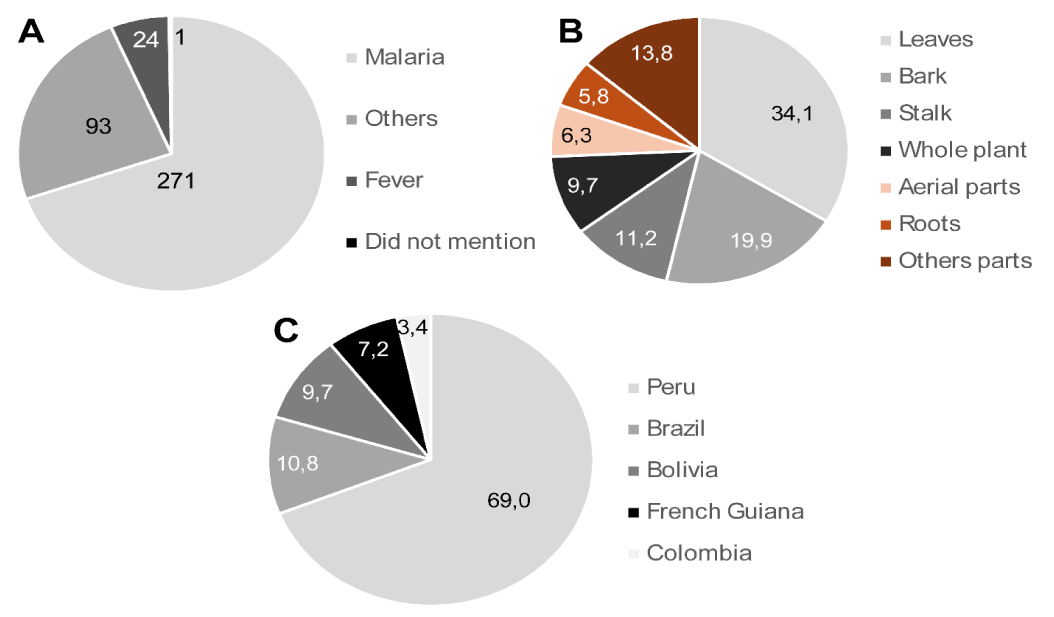
Regarding the location where the plants were studied, the majority of the 474 citations of plant species were in Peru (68.8%), followed by Brazil (11%), Bolivia (9.7%), French Guiana (7.2%), and Colombia (3.4%). Some plant species/genera were cited by more than one author (Figure 2C).
The next step was to identify whether the plants cited in the studies had antiplasmodial and antimalarial activities described, and/or the cytotoxicity assessed, as shown in table 2.
Among the extracts or fractions from 359 plant species studied (Tables 2-4), 185 had the antiplasmodial and/or antimalarial activities evaluated (Tables 2,3). However, pure substances were isolated only in a few of them (n = 5). A total of 180 species were tested in vitro against blood forms of P. falciparum, 12 were tested in a murine experimental model of P. berghei and nine were tested in vitro and in vivo. Of all these evaluated species, 51 showed anti-P. falciparum activity in vitro and nine species against P. berghei in mice. Six species were active In vitro and In vivo (Andropogon leucostachyus, Aspidosperma nitidum, Aspidosperma pyrifolium, Curarea toxicofera, Psidium acutangulum and Xylopia amazonica). Among the active samples tested in vitro, 34 had their cytotoxicity assessed; thus, the selectivity index could be determined. None of the plant species had its acute toxicity in vivoevaluated (Tables 2,3).
| Table 2: Antiplasmodial and antimalarial activities, cytotoxicity, and selectivity index of plants from South America. | |||
| Plant species | P. falciparum strains, In vitro IC50 values (µg/mL)*,a | Cytoxicity (µg/mL) and/or Selectivity indexa | In vivotest (tested dose and % parasitemia reduction) |
| Abrus arboreus | 3D7: > 10 | NT | NT |
| Abuta rufescens | FCR-3: 5.9 | NT | NT |
| Acalypha macrostachya | FCR-3: 24.7 | NT | NT |
| Acrocarpus fraxinifolius | FCR- 3: 49.8 | NT | NT |
| Albizia niopoides | 3D7: > 10 | NT | NT |
| Alchornea castaneifolia | 3D7: > 10 | NT | NT |
| Alchornea triplinervia | 3D7: 0.38; with filtration 3D7: 0.62; W2: 0.72 (a) | CC50: 100.0 | NT |
| Alternanthera brasiliana | FCR-3: > 10 | NT | NT |
| Ampelozizyphus amazonicus | W2: Aq: > 50 | NT | NT |
| Anacardium occidentale | W2: bark CHCl3: 36.6; K1 EtOH > 50; Aq > 50; leaves CHCl3 W2 43.9; K1 EtOH > 50; W2 Aq 45.0 (c) | CC50 Macrophages: bark CHCl3, leaf CHCl3 and Aq: > 200/SI = bark CHCl3: > 5.5/ leaf CHCl3: > 4.6/ Aq: > 4.4 | NT |
| Andropogon leucostachyus | K1: CHCl3: > 50/ W2 Aq: 45.4/ MeOH: 7.1 | CC50 Macrophages: > 200; SI = Aq: > 4.4 / MeOH: > 28.2 | 250 mg/kg, aerial parts: Day 5: 71% suppression/ Day 7: 48% suppression. |
| Anthurium ernestii | FCR-3: Leaves 22.9; roots 27.0 | NT | NT |
| Apeiba tibourbou | 3D7: > 10 | NT | NT |
| Aspidosperma megalocarpon | F32: MeOH: 25; D2: MeOH: 8 (a) | CC50 U-937: 0.4. SI F32: 0.02/ SI D2: 0.05 | NT |
| Aspidosperma nitidum | P. falciparum W2: Bark: EtOH: 4.6-7/ MeOH-A: 8.3-10.7/ MeOH-B: 6.6-10/ MeOH-C: 10.8-12.4/ Fractions from MeOH-C: Fraction FO III: 1.6-2.3/ Fraction FO IV: 3.3-4.8/ Precipitate: 5.5-7.6/ Leaves: EtOH: 22-25.3/ Acetonic: ≥ 50 /Aq: ≥ 50/ Branches extracts: EtOH: ≥ 50/Aq: ≥50 (b) | CC50: EtOH: BGM: ≥ 2000, HepG2: 654; MeOH-A: BGM: 964, HepG2: 255; MeOH-B: BGM ≥ 2000, HepG2 ≥ 1000; MeOH-C: BGM 427, HepG2 600; Fractions from MeOH-C - Fraction FO III: BGM 301; HepG2: 62; Fraction FO IV: BGM 89, HepG2 169; Precipitate: BGM ≥2000, HepG2 1,103; Leaves extracts: EtOH, acetonic and Aq: BGM ≥ 2000, HepG2 ≥ 1000; Branches extracts: EtOH: BGM ≥ 2000, HepG2 280; Aq: BGM ≥ 2000, HepG2 ≥ 1000/ SI: Bark extracts EtOH: BGM: 286-435/HepG2: 83-126/ MeOH-A: BGM: 116-90/HepG2: 31-24 /MeOH-B: BGM: 200-303/HepG2:100-152/MeOH-C: BGM: 34-40/ HepG2:48-56 /Fractions from MeOH-C: Fraction FO III: BGM: 188-70/HepG2: 39-30 /Fraction FO IV: BGM: 30-19/HepG2: 51-35 /Precipitate: BGM: 364-263/HepG2: 201-145/ Leaves extracts EtOH: BGM: 91-79/HepG2: 29-25 /Acetonic and Aq: Inactive/ Branches extracts EtOH and Aq: Inactive. | Wood bark MeOH 100 mg/Kg 67%; Fraction FO III 50-100 mg/Kg: 66-48%; Fraction FO IV: 50-100: 65-54%; Precipitate: 50-100 mg/Kg 57-53% (b) |
| Aspidosperma pyrifolium | W2: Stem bark extracts: 3.0/ Stem: 17.0 /Root bark: 14.0/ Roots: 18.0 /Leaves: 12.0/ Stem bark fractions: ETOAC: 9.0 /Aq: 20.0/ Stem fractions: ETOAC: 6.0 /Alkaloid-rich: 5.0 /Aq: ≥ 50 /BUT: ≥ 40/ Aq: 27.0 | CC50: BGM: 287- ≥ 1000/ HepG2: 316 - ≥ 1000/ PBMC: 145 - ≥ 1000/ SI: Stem bark: HepG2: 137/ BGM e PBMC: 333; Aq: HepG2: 32/ BGM e PBMC: 50/ ETOAC: HepG2: 54/ BGM: 111/ PBMC: 48/ Stem: HepG2: 24/ BGM: 59/ PBMC: 24/ ETOAC: HepG2: 53/ BGM: 167/ PBMC: 26/ Alkaloid-rich: HepG2: 84/ BGM: 200/ PBMC: 29/ Root bark: HepG2: 29/ BGM and PBMC: 21/ Root: HepG2: 23/ BGM: 56/ PBMC: 22/ Leaves: HepG2:41/ BGM: 37/ PBMC: 46 | Extracts: Root bark: Day 5: 79%/ Day 10: 29% /Root: Day 5:75%/ Day 10: 52%/Leaves: Day 5: 23%/Day 10: 40% / Fractions: Aqueous: Day 5: 93% /Day 10: 57%/ ETOAC: Day 5: 0% /Day 10: 34%/ Alkaloid-rich: Day 5: 79%/Day 10: 57% |
| Aspidosperma rigidum | W2: EtOH: 6.0; DCM: 2.5; BUT: 2.5; Aq: 10.2 | NT | NT |
| Ayapana lanceolata | FCR-3: 8.2 | NT | NT |
| Bauhinia herrerae | 3D7: > 10 | NT | NT |
| Begonia glabra | FCR-3: 22.1 | NT | NT |
| Bertholletia excelsa | W2: EtOH fruit peel = 4.5; EtOH bark = 2.0; Sap = 7.5 | NT | NT |
| Buchenavia viridiflora | 3D7 e Dd2: Lignin branch: 14.08; Lignin leaves: 3D7: 350.20 | Jurkat: IC50: Lignin branch: 21.37; SI: 1.33/ MCF-7: IC50: 12.63; SI: 1.14/ DU145: IC50: 37.56; SI: 0.80/ T47D: IC50: 25.46; SI: 1.12/ HepG2: IC50: > 100; SI: < 0.28/ Lignin leaves: Jurkat: IC50: 25.76; SI: 0.03/MCF-7: IC50:24.88; SI: 0.91/DU145: IC50: 41.65; SI: 0.54/ T47D: IC50: 47.74; SI: 0.47/ HepG2:IC50: > 100; SI: < 0.22 | NT |
| Calea montana | 3D7: > 10 | NT | NT |
| Calycophyllum multiflorum | 3D7: > 10 | NT | NT |
| Campnosperma panamense | F32: DCM: 3/ MeOH: 15; D2: DCM: 35/ MeOH: 5 | CC50 U-937: DCM: 172.5/ MeOH: 653.5/ SI F32: DCM: 5,6/ MeOH: 43,6. SI D2: DCM: 0,5/ MeOH: 130.7 | NT |
| Campsiandra angustifolia | 3D7: > 10 (a); FCR-3: 8,8 (b) | NT | NT |
| Capirona decorticans | 3D7: > 10 | NT | NT |
| Carapa guianensis | W2: Oil > 50 | NT | NT |
| Carica papaya | FCR-3: 19.8 (c) | NT | NT |
| Cecropia latiloba | FCR-3: 45.2 | NT | NT |
| Cedrela odorata | 3D7: > 10 (b) | NT | NT |
| Cephaelis tomentosa | 3D7: > 10 | NT | NT |
| Cestrum megalophyllum | FCR-3: > 10 | NT | NT |
| Chelonanthus alatus | 3D7: > 10 | NT | NT |
| Citrus limon | FCR-3: F 4.9; R > 10 | NT | NT |
| Citrus paradisi | FCR-3: F = 4.0, Leaf: > 10, Roots: > 10, Stem: >10 | NT | NT |
| Clarisia biflora | 3D7: > 10 | NT | NT |
| Clarisia racemosa | 3D7: > 10 | NT | NT |
| Clidemia bullosa | K1: Leaf: CHCl3: >50/ MeOH: >50/ K1 Aq: 26.2. Branch: CHCl3: 13.5/ Aq: 21.2/ K1 MeOH: > 50 | CC50 Macrophages: > 200/ SI: Leaf Aq > 7.6/ Branch CHCl3 > 14.8 | NT |
| Clusia trochiformis | FCR-3: 30.4 | NT | NT |
| Conobea scoparioides | F32: > 50; D2: > 50 | CC50 U-937: 63.4 | NT |
| Copaifera paupera | 3D7: > 10 | NT | NT |
| Coriandrum sativum | FCR-3: > 10 | NT | NT |
| Costus curvibracteatus | 3D7: stem: > 10, leaves: 1.39. Polyamide filtered: W2: 1.16. C6H12: 42.43/ DCM: 40.15/ ETOAC: 30.14/ 1-BUT: 46.18/ Aq: 3.02 | CC50: C6H12 > 100/SI: 2.36/ DCM: 13.75/ SI: 0.34/ ETOAC: > 100/ SI: >3.32/ 1-BUT > 100/ SI: >2.17/ Aq: 17.78/ SI: 5.89 | NT |
| Couroupita guianensis | FCR-3: > 10 (a) | NT | NT |
| Croton cajucara (red variety-RV) | W2: Bark: CHCl3 32.2/ EtOH K1 > 50/ Aq > 50/ Leaf: CHCl3: W2 6.4/ EtOH: 13.3/ K1 Aq: >50 | CC50 Macrophages: bark: > 200; Leaf: 40.6 and > 200/ Bark: SI: CHCl3: > 6.2/ Leaf: SI: CHCl3: 6.3/ EtOH: > 15.0 | 250 mg/kg. Leaf: CHCl3: 19% day 5/ 0% day 7 |
| Croton cajucara (white variety-WV) | W2: bark CHCl3: 29.1/ EtOH: 17.2/ K1 Aq: > 50/ Leaf CHCl3: W2 11.3/ EtOH: 16.3/ K1 Aq: > 50 | CC50 Macrophages: Bark: 43.1 and 127; Leaf > 200/ Bark: SI: CHCl3: 1.5 EtOH: 7.4/ Leaf: SI: CHCl3: > 17.7 EtOH: > 12.3 | NT |
| Curarea toxicofera | FCR-3: 7.3 | NT | 350 mg/ kg: ≈ 49%/ 1.020 mg/kg: ≈ 69%/ 200 mg/kg: ≈ 11% |
| Cymbopogon citratus | FCR-3: > 10 | NT | NT |
| Daucus montanus | FCR-3: 28.6 | NT | NT |
| Deianira erubescens | NT | NT | Leaves 1.000 and 500 mg/Kg 0%; roots 1.000 mg/kg: 0%; 500 mg/Kg 18% |
| Derris floribunda | K1: Bark: CHCl3 > 50 / Aq > 50/ MeOH >50/ Leaf: CHCl3 W2 47.4/ K1 Aq 27.5/ MeOH > 50 | CC50 Macrophages: > 200/ Leaf: SI CHCl3: > 4.2 | NT |
| Dieffenbachia seguine | 3D7: aerial parts: 0.7. Polyamide filtered: W2: 0.01 | CC50: 62.2 | NT |
| Dracontium spruceanum | 3D7: > 10 | NT | NT |
| W2: Aq: > 50 | NT | NT | |
| Eryngium foetidum | FCR-3: > 10 (a) | NT | NT |
| Esenbeckia febrifuga | W2: 15.5; 3D7: 21.0 | NT | NT |
| Euterpe oleraceae | W2: EtOH > 50 (a); 20,0 mg/L gallic acid equivalent (GAE) 1 e 3 inativo/ 10mg/L (GAE) DNA content HB3 76.5% and Dd2 65.1%/ 20mg/L (GAE) DNA content HB3 65.8%, Dd2 61.7% (c) | The 1, 2, and 3 fractions did not negatively influence viability of RAW264 (c) | Polyphenolic açaí pulp fractions, 20 mg/kg: 86.8 % inhibition at day 5, 89.4% at day 6, 77.5% at day 7, 42.5% at day 8 (c) |
| Euterpe precatoria | FCR-3: > 10 | NT | NT |
| Ficus insipida | 3D7: > 10 | NT | NT |
| Gloxinia sylvatica | FCR-3: 22.9 | NT | NT |
| Grias newberthii | FCR-3: > 10 (a); 3D7: 0.04; Polyamide filtered: 3D7: 0.03; W2: 0.03. 3D7: Fractionation: C6H12: 39.82; DCM > 100/ ETOAC: 0.58; 1-BUT: 56.35; Aq > 100 (b) | CC50: 100.0 HUVEC cells: C6H12: CC50: >100/ SI: > 2.51/ DCM: CC50: > 100/ SI: > 1/ ETOAC: CC50: 12.40 / SI 21.38/ 1-BUT: CC50: 50.83 / SI: 0.9/ Aq: CC50:18.51 / SI: 0.19 (b) | NT |
| Guarea guidonia | 3D7: > 10 (a); F32: 10; D2: 10 (b) | CC50 U-937: 28.8/ SI F32 and D2: 2.9 (b) | NT |
| Guarea polymera | F32: > 50 D2: > 50 | CC50 U-937: 6.1 | NT |
| Guatteria amplifolia | F32: MeOH: 1.9; D2: MeOH: 1.5 | CC50 U-937: 75.7. SI (F32): 39.8. SI (D2): 50.5 | NT |
| Gurania lobata | FCR-3: 23.5 | NT | NT |
| Gustavia angustifolia | 3D7: > 10 | NT | NT |
| Handroanthus impetiginosus | 3D7: > 10 | NT | NT |
| Handroanthus serratifolius | 3D7: > 10 | NT | NT |
| Hedychium coronarium | FCR-3: 26.3 | NT | NT |
| Hedyosmum lechleri | FCR-3: 25.7 | NT | NT |
| Hevea guianensis | 3D7: 7.41; Polyamide filtered: 3D7: 0.08/ W2: 4.94 | CC50: 88.8 | NT |
| Himatanthus articulatus | W2: Three fractions the lyophilized ethanol extract from H. articulatus stem barks: DCM: 22.9; ETOAC (plumieride) and the MeOH fractions were inactive | H. articulatus showed low cytotoxicity to HepG2 cells in the concentrations used (CC50 > 1000 μg/mL) | MeOH: reduced parasitaemia by 35.4% at a dose of 200 mg/kg |
| Huberodendron patinoi | F32: MeOH: 3.0; D2: MeOH: 18.0 | CC50 U-937: 501. SI F32: 167.0 / SI D2: 27.8 | NT |
| Hygrophila guianensis | F32: > 50; D2: > 50 | CC50 U-937: 101.8 | NT |
| Inga sertulifera | 3D7: > 0 | NT | NT |
| Iriartea deltoidea | 3D7: > 10 (a) | NT | NT |
| Isertia hypoleuca | 3D7: > 10 | NT | NT |
| Jacaranda caucana | F32: MeOH: 14 / D2: MeOH: 4.6 | CC50 U-937: 281.7. SI F32: 20.1 / SI D2: 61.2 | NT |
| Jacaranda copaia | FCR-3: 8.1 (a) | NT | NT |
| Ladenbergia oblongifolia | 3D7: > 10 | NT | NT |
| Libidibia ferrea | W2: HA: 11.10 | CC50 human cell line WI-26-VA-4 > 100/ SI: 9.0 | NT |
| Machaerium ferox | W2: EtOH: 20 | NT | NT |
| Malachra alceifolia | FCR-3: > 10 (a) | NT | NT |
| Mangifera indica | W2: EtOH > 50 (a) | NT | NT |
| Mansoa alliacea | FCR-3: > 10 (a); 24.5 (b) | NT | NT |
| Marila laxiflora | F32: DCM: 20; D2: DCM: 28 | CC50 U-937: 203.1 / SI: F32: 10.2/ SI D2: 7.3 | NT |
| Maytenus macrocarpa | 3D7: 1.49. Polyamide filtered: 3D7: 0.02 / W2: 0.02 | CC50 HUVEC cells: 44.1 | NT |
| Miconia nervosa | W2: Bark: CHCl3 13.3/ K1 Aq > 50/ MeOH > 50/ Leaf: CHCl3 W2 12.4/ Aq 10.2/ MeOH 9.9. | CC50 Macrophages: Bark: 46.6; Leaf: 70.6, > 200 and 95.9/ SI CHCl3 bark: 3,5 / SI Leaf: CHCl3: 5,7/ SI Aq: > 19,6/ SI MeOH: 9,7 | NT |
| Minquartia guianensis | FCR-3: 4.2 (a); 3D7: >10 (c) | NT | NT |
| Munnozia hastifolia | FCR-3: 26.3 (a) | NT | NT |
| Myrciaria dubia | FCR-3: > 10 | NT | NT |
| Operculina hamiltonii | W2: Aq: > 50 | NT | NT |
| Ormosia costulata | 3D7: > 10 | NT | NT |
| Otoba novogranatensis | F32: leaves: > 50; D2: > 50 and 26. F32: 20; Fruits: F32: > 50; D2: > 50 | CC50 U-937: leaves DCM: 27.6; MeOH: 76.6; fruits DCM: 28.5; MeOH: 38.1; SI leaves: F32: 28.4; D2: 21.9 | NT |
| Otoba parviflora | F32: > 50; D2: > 50 | CC50 U-937: 233.7 | NT |
| Oxalis boliviana | FCR-3: 34.9 | NT | NT |
| Parkia nitida | K1: Bark: CHCl3 > 50/ Aq > 50/ MeOH > 50/ Leaf: CHCl3 >50/ Aq > 50 / MeOH > 50 | NT | NT |
| Passiflora quadrangularis | 3D7: > 10 | NT | NT |
| Paullinia cupana | K1: Leaf: CHCl3 > 50/ Aq > 50/ MeOH > 50/ W2 Fruit: CHCl3 19.3/ K1 Aq > 50/ MeOH >50/ Branch: CHCl3 W2 19.3/ K1 Aq > 50/ MeOH > 50 | CC50 Macrophages: Fruit: > 200, Branch: 62.9/ Fruit CHCl3 SI: > 10.4/ Branch CHCl3 SI: 3.3 | NT |
| Peperomia distachya | FCR-3: 22.1 | NT | NT |
| Persea americana | FCR-3: > 10 | NT | NT |
| Petiveria alliacea | FCR-3: > 10 (a) | NT | NT |
| Philodendron ernestii | FCR-3: 28.5 | NT | NT |
| Phthirusa robusta | FCR-3: 23.9 | NT | NT |
| Physalis angulata | FCR-3: 4.6 (b) | NT | NT |
| Phytolacca rivinoides | FCR-3: 26.4 | NT | NT |
| Piper acutilimbum | 3D7: HEX: 33.29; DCM: 26.89; Aq: 33.18. W2: HEX: > 100; DCM: 49.08; Aq: 41.84 | CC50 HUVEC: HEX: 19.11; DCM: 18.1; Aq: 54.44/ SI 3D7: HEX: 0.57/ DCM: 0.67/ Aq: 1.64 | NT |
| Piper aduncum | FCR-3: 9.6 (a); P. falciparum (Ghana): 1.3 (d) | NT (a); MRC-5 cells: EO inhibited cell growth, with an IC50 value of 5,1 µg/mL (d) | NT |
| Piper armatum | 3D7: HEX: > 100/ DCM: > 100/ MeOH: > 100 | CC50 HUVEC: HEX > 100; DCM: 55.31; MeOH: 35.86; SI: HEX: ≤ 1/ DCM: 0.55/ MeOH: 0.36 | NT |
| Piper brasiliense | 3D7: HEX: > 100, DCM: 20.19 | CC50 HUVEC: HEX > 100; DCM: 20.19; SI: HEX: ≤ 1/ DCM: 1.00 | NT |
| Piper bullatum | 3D7: HEX: > 100/ DCM: >100/ MeOH: >100 | CC50 HUVEC: H >100; DCM: 43.79; MeOH: 25.09/ SI: HEX: ≤ 1/ DCM: 0.44/ MeOH: 0.25 | NT |
| Piper callosum | 3D7: MeOH = 24.49; HEX = 25.31; DCM = 8.77. W2: MeOH: 26.13; HEX: 22.74; DCM: 12.86 | CC50 HUVEC: MeOH: > 100, HEX: > 100, DCM: 46,45/ SI 3D7: MeOH: 4.08; HEX: 3,95 e DCM: 5,30. | NT |
| Piper calvescentinerve | 3D7: HEX: > 100/ DCM: > 100/ MeOH: > 100 | CC50 HUVEC: HEX > 100; DCM: 38.83; MeOH: 38.55; SI: HEX: ≤ 1/ DCM: 0.39/ MeOH: 0.39 | NT |
| Piper casapiense | 3D7: EtOH: 12.27. W2: > 100. DCM: 9.4; W2 > 100 (a); 3D7 > 100 HEX, DCM and MeOH (b) | CC50 HUVEC: EtOH: 24.26, DCM: 50.93/ 3D7 SI: EtOH: 1.98/ DCM: 5.42 (a)/ HUVEC CC50: H > 100; DCM: 45.31; MeOH: 30.48; SI HEX: ≤ 1; SI DCM: 0.45; SI MeOH: 0.30 (b) | NT |
| Piper cordatomentosa | 3D7: HEX, DCM and MeOH > 100 | CC50 HUVEC: HEX > 100; DCM: 58.32; MeOH: 61.50/ SI: HEX: ≤ 1/ DCM: 0.58/ MeOH: 0.62 | NT |
| Piper coruscans | 3D7: EtOH: 1.36; Aq: 41.27/ W2: EtOH: 2.33; Aq: > 100 (a); 3D7: 1.36. Polyamide filtered: W2: 2.33 (b) | CC50 HUVEC: EtOH: 43.60; Aq: 3.09/ SI: EtOH: 32.06; Aq: 0.07 (a)/ Cytotoxicity (% of living cells): 43.6 (b) |
NT |
| Piper crassinervium | FCR-3: 33.5 (a); MeOH > 100; HEX = 5.66; DCM = 7.41 (b) | NT (a); CC50 HUVEC: MeOH: 15.28/ HEX: 3.51/ DCM: > 100; SI H: 0.62; DCM: 13.50; MeOH: 0.15 (b) | NT |
| Piper dennisii | FCR-3: 21.4 | NT | NT |
| Piper divaricatum | 3D7: HEX and DCM: >100 | CC50 HUVEC: HEX: 30.04; DCM: > 100; 3D7: SI: HEX: 0.30/ DCM: ≤1 | NT |
| Piper dumosum | 3D7: HA: 9.74; W2: 29.28 | CC50 HUVEC: 18.77; SI 3D7: 1.93 | NT |
| Piper glabribaccum | 3D7: HEX, DCM and MeOH > 100 | CC50 HUVEC: HEX > 100; DCM: 35.62; MeOH: 84.72; SI: HEX: ≤ 1/ DCM: 0.36/ MeOH: 0.85 | NT |
| Piper gratum | 3D7: HEX :12.82; W2: 48.69/ DCM: 3D7: 8.64; W2: 49.93 | CC50 HUVEC: HEX: 38.03; DCM: 55.47. SI 3D7 HEX: 2.97; SI 3D7 DCM: 6.42 | NT |
| Piper guianense | HA: 3D7: 27.04; W2: > 100 | CC50 HUVEC: 53.25/ SI: 1.97 | NT |
| Piper heterophyllum | 3D7: HEX and DCM > 100 | CC50 HUVEC: HEX: 81.67; DCM: 17.14; SI: HEX: 0.82/ DCM: 0.17 | NT |
| Piper jalapense | 3D7: HEX = 26.67; DCM = 10.34. W2: HEX: 25.48; DCM: 12.3 | CC50 HUVEC: HEX >100, SI: 3.75. DCM CC50: HUVEC: 49.91, SI: 4.83 | NT |
| Piper laevilimbum | 3D7: HEX: 10.43; DCM: 6.94; Aq: 2.3. W2: HEX: 22.57; DCM: > 100; Aq: > 100 | CC50 HUVEC: HEX: 32.69; DCM: 24.8; Aq: > 100. SI HEX: 3.13; DCM: 3,57; Aq: 43.48 | NT |
| Piper lanceolatum | 3D7: MeOH = 25.26; EtOH = 11.42; HEX = 27.59; DCM = 18.63; MeOH = 22.2. W2: MeOH: 22.38; EtOH: 13.63; HEX: 25.29; DCM: 12.83; MeOH: > 100. | CC50 HUVEC: MeOH: > 100, EtOH: 58.06, HEX: 23.88, DCM: 52.55, MeOH: 43.41/ SI 3D7: MeOH: 3.96/ EtOH: 5.08/ HEX: 0.87/ DCM: 2.82/ MeOH: 1.96 | NT |
| Piper lineatum | 3D7: DCM: 2.81. W2: DCM: 43.21 | CC50 HUVEC: 16.08/ SI DCM: 5.72 | NT |
| Piper nudilimbum | 3D7: HA: 22.31; W2: 34.87 | CC50 HUVEC: 53.19/ SI 3D7: HA: 2.38 | NT |
| Piper oblongum | 3D7: HEX, DCM and MeOH > 100 | CC50 HUVEC: HEX: 48.32; DCM: 26.23; MeOH: 21.43; SI: HEX: 0.48/ DCM: 0.26/MeOH: 0.21 | NT |
| Piper obtusilimbum | 3D7: HA: 23.89; W2: 26.37 | CC50 HUVEC: 26.58/ SI 3D7: HA: 1.11 | NT |
| Piper pseudoarboreum | 3D7: HEX:11.23; DCM: 5.7; MeOH: 6.81; W2: HEX: 18.27; DCM: 4.81; MeOH: 8.95 (a); 3D7: HEX, DCM and MeOH: > 100 (b) | CC50 HUVEC: HEX: 58.77; DCM: 6.35; MeOH: 52.00/ SI 3D7: HEX: 5.23/DCM: 1.11/MeOH: 7.64 (a); HUVEC CC50: HEX: 61.94; DCM: 40.21; MeOH: 25.49; SI 3D7: HEX: 0.62/ DCM: 0.40/ MeOH: 0.25 (b) | NT |
| Piper reticulatum | 3D7: HEX, DCM and MeOH > 100 | CC50 HUVEC: HEX, DCM and MeOH: > 100; SI: HEX, DCM and MeOH ≤ 1 | NT |
| Piper sancti-felicis | 3D7: HEX, DCM and Aq > 100 | CC50 HUVEC: HEX: > 100; DCM: 49.40; Aq: 72.22; SI: HEX: ≤ 1 / DCM: 0.49/ Aq: 0.72 | NT |
| Piper stellipilum | 3D7: MeOH: 8.22; HEX > 100; DCM: 13.44 | CC50 HUVEC: HEX: >100; DCM: 18.05; MeOH: 25.03; SI HEX ≤1 / SI DCM = 1,34 / SI MeOH = 3,04 | NT |
| Piper strigosum | 3D7: HEX: 24.58; DCM: 11.74; MeOH: 8.85; W2: HEX: 40.1; DCM: 29.99; MeOH: 53.81 (a); IC50 > 100 (HEX, DCM and MeOH extracts) (b) | CC50 HUVEC: HEX: 26.72; DCM: 58.77; MeOH: 59.83/ SI 3D7: HEX: 1.09/DCM: 5.0/MeOH: 6.76 (a); CC50 HUVEC: HEX > 100; DCM: 41.66; MeOH: 51.22; SI 3D7: HEX: ≤ 1/ DCM: 0.42/ MeOH: 0.51 (b) | NT |
| Piper tenuistylum | 3D7: EtOH: 11.07; W2: 21.69 | CC50 HUVEC: 17.26/ SI 3D7: EtOH: 1.56 | NT |
| Piper tridentipilum | 3D7: EtOH: 22.28; W2: >100 | CC50 HUVEC: 23.96/ SI 3D7: EtOH: 1.08 | NT |
| Piper trigonum | 3D7: HEX, DCM and MeOH > 100 | CC50 HUVEC: HEX: > 100; DCM: 30.51; MeOH > 100; SI: HEX: ≤ 1/ DCM: 0.31/ MeOH: ≤ 1 | NT |
| Piper umbellatum | FCR-3: 19.2 | NT | NT |
| Piper verruculosum | 3D7: HEX, DCM and MeOH > 100 | CC50 HUVEC: HEX, DCM and MeOH: > 100; SI: HEX, DCM and MeOH ≤ 1 | NT |
| Piper xanthostachyum | 3D7: HEX > 100; DCM: 6.33; HA > 100 | CC50 HUVEC: HEX > 100; DCM: 6.18; HA: 49.84; SI: HEX: ≤ 1/ DCM: 0.98/ HA: 0.50 | NT |
| Pityrogramma calomelanos | FCR-3: 49.9 | NT | NT |
| Potalia resinifera | FCR-3: (B) 6.2; (L) > 10; (R) 8.3 | NT | NT |
| Pouteria guianensis | 3D7: > 10 | NT | NT |
| Prieurella prieurii | 3D7: > 10 | NT | NT |
| Protium amplum | F32: DCM: 32; D2: DCM: 50 | CC50 U-937: 56.8 /SI F32: 1.8/ D2: 1.1 | NT |
| Protium puncticulatum | 3D7 and Dd2: Low inhibition values: < 20% and < 5% | CC50: Macrophage J774 branches: 34.20; leaves: 36.51/ Fibroblast (V79): branches: 94.56; leaves: 96.45/ Vero Cell: branches: 95.0; leaves: 97.0/ HepG2 branches and leaves: > 100 | NT |
| Pseudolmedia laevis | FCR-3: 22.3 | NT | NT |
| Psidium acutangulum | FcB1: 3.3; NF54: 10.3; 7G8: 19.0 | Reduction at a concentration of 50 mg/mL. TNFα (18%), IL-1β (58%), IL-6 (32%), IL-8 (21%). The decoction was non-cytotoxic against L6 cells, RAW cells and PBMC: > 100 mg/mL. | Decoction of P. acutangulum aerial parts: 350 mg/Kg/day 39.7% |
| Remijia ferruginea | NT | NT | Bark 1.000 mg/Kg 48%; 500 mg/Kg 34 % |
| Renealmia alpinia | FCR-3: 10 | NT | NT |
| Renealmia thyrsoidea | FCR-3: 6.8 | NT | NT |
| Rollinia mucosa | FCR-3: 12.8 | NT | NT |
| Roucheria columbiana | 3D7: > 10 | NT | NT |
| Ruellia ruiziana | FCR-3: 33.7 | NT | NT |
| Sanchezia oblonga | FCR-3: 26.8 | NT | NT |
| Scleronema micranthum | 3D7 and Dd2: Low inhibition values: < 20 % and < 5% | CC50: Macrophage J774 branches: 34.20; leaves: 36.51/ Fibroblast (V79): branches: 94.56; leaves: 96.45/ Vero Cell: branches: 95.0; leaves: 97.0/HepG2 branches and leaves: > 100 | NT |
| Scoparia dulcis | FCR-3: 6.6 | NT | NT |
| Senna reticulata | FCR-3: > 10 | NT | NT |
| Senna ruiziana | FCR-3: 25.4 | NT | NT |
| Simaba cedron | W2: 1.6 | NT | NT |
| Simarouba amara | 3D7: > 10 (a) | NT | NT |
| Siparuna aspera | FCR-3: 6.4 (b) | NT | NT |
| Siparuna radiata | FCR-3: 21.7 | NT | NT |
| Sloanea schomburgki | 3D7: 1.52. Filtrated on polyamide: 3D7: 0.36/ W2: 0.7 | CC50: 90.3. SI 3D7: 59,4/ SI 3D7 filtrated 250.8/ SI W2: 129 | NT |
| Solanum peruvianum | FCR-3: 26.9 | NT | NT |
| Stachytarpheta cayennensis | 3D7: >10 (b) | NT | NT |
| Stigmaphyllon sinuatum | K1: CHCl3 > 50/ EtOH > 50/ Aq > 50 | NT | NT |
| Strychnos pseudoquina | NT | NT | Bark 1.000 mg/Kg 10%; 500 mg/Kg 0% |
| Swartzia simplex | 3D7: 0.12/ filtrated on polyamide 3D7: 0.07/ W2: 0.77 | CC50: 100 | NA |
| Tabernaemontana obliqua | F32: MeOH: 25/ D2: MeOH: 40 | CC50 U-937: 231.6/ SI F32: 9.3 / SI D2: 5.8 | NA |
| Tachigali polyphylla | 3D7: 0.04. Filtrated on polyamide: 3D7: 2.51/ W2: 2.66 | CC50: 86.1. SI 3D7: 2.152/ SI 3D7 filtrado: 34.3 / SI W2: 32.3 | NT |
| Tessaria integrifolia | 3D7: > 10 | NT | NT |
| Triplaris weigeltiana | 3D7: > 10 | NT | NT |
| Uncaria guianensis | W2: Aq: > 50 (a) | NT | NT |
| Verbena littoralis | FCR-3: 23.5 (a); > 10 (b) | NT | NT |
| Vernonanthura patens | FCR-3: 38.7 | NT | NT |
| Virola calophylla | 3D7: > 10 | NT | NT |
| Virola surinamensis | 3D7: > 10 | NT | NT |
| Vismia pozuzoensis | 3D7: 22.9 | NT | NT |
| Xylopia amazonica | W2: CHCl3 7.3/ Aq 10.5/ EtOH > 50/ CHCl3 19.5/ Aq > 50/ EtOH 9.8 | CC50 macrophages: Leaf: 33.9, > 200; branch: 29.2 and 6.9/ leaves SI CHCl3: 4,6/ SI Aq: > 19.0/ branches SI CHCl3: 1.5/ SI EtOH: 0.7 | Leaf: CHCl3 250 mg/Kg/day: 52% day 5, and 11% day 7 |
| Zanthoxylum djalma-batistae | W2: CHCl3 40.2/ Aq 15.6/ MeOH >50/ CHCl3 17.4/ Aq 32.5/ MeOH 21.8 | CC50 macrophages: leaf > 200; branch: 24.7 and > 200/ leaves SI CHCl3: > 5 / Aq: > 12.8/ Branches CHCl3: 1.4/ Aq: > 6.2/ EtOH: > 9.2 | NT |
| NT = not tested. aLetters mentioned in the plant parts column were not specified by the authors. Plant extracts or fractions: Aq = Aqueous; BUT = Butanol; CHCl3 = Chloroform; DCM = Dichloromethane; EtOH = Ethanol; ETOAC = Ethyl acetate; FO = Organic Fraction; HA = Hydroalcoholic; HEX = Hexane; MeOH = Methanol. IC50 = Concentration required to Inhibit 50% of parasite growth. Strains or clones of P. falciparum: 3D7, F32, D2, Dd2, HB3, FcB1, NF54, 7G8, W2 and Ghana. CC50 = value corresponding to the cytotoxicity to 50% of the cells. Cell lines: HepG2, BGM, Jurkat, MCF-7, DU145, T47D, U-937, MRC-5, L6 cells, J774, V79, Vero, HUVEC and Peripheral Blood Mononuclear Cells (PBMC). SI = Selectivity Index, that correspond to the ratio of the concentration toxic to host cells to the concentration that inhibits parasite growth. The letters in parentheses refer to the authors who were responsible for the studies and are mentioned in table 1. | |||
| Table 3: Pure substances described in plants from South America with their antiplasmodial and/or antimalarial activities evaluated. | |||
| Compounds | Plant Species | P. falciparum strain and in vitro IC50 value (µg/mL)* | Reference |
| Brazniditumine | Aspidosperma nitidum | W2, inactive (data not shown) | [27] |
| Ellipticine | Aspidosperma vargasii | K1: 0.19; 3D7: 0.085 | [49] |
| Olivacine | K1: 0.35; 3D7: 0.29 | ||
| 9-bromoellipticine + 7,9-dibromoellipticine | K1: 0.30; 3D7: 0.20 | ||
| 7,8,9-tribromoellipticine | NT | ||
| 9-nitroellipticine | K1: 0.20; 3D7: NT | ||
| 7-nitroellipticine | K1: 3.9; 3D7: 4.9 | ||
| 2-methyl-1,2,3,4-tetrahydroellipticine | K1: 1.1; 3D7: 3.5 | ||
| Flindersiamine 3 | Esenbeckia febrifuga | 3D7: 72.5/ W2: 95.0 | [59] |
| Skimmiamine 5 | 3D7: 43.0/ W2: 19.5 | ||
| g-Fagarine 6 | 3D7: 25.0/ W2: 36.0 | ||
| Alkaloid 7 | 3D7 e W2 >100 | ||
| Rutaevine 8 | 3D7 e W2 > 100 | ||
| Plumieride | Himatanthus articulatus | Inactive | [50] |
| Huberine | Picrolemma huberi | FCR-3, inactive | [60] |
| 1-Hydroxy-canthin-6-one | FCR-3, inactive | ||
| Canthin-6-one | FCR-3, inactive | ||
| IC50 = Concentration of the sample required to inhibit 50% of parasite growth. Strains or clones of P. falciparum: W2, K1, 3D7 and FCR-3. NT = Not Tested. | |||
| Table 4: Plants from South America used in traditional medicine with no data of antiplasmodial or antimalarial activities described in the eligible articles. | ||
| Plant Species | Ethnopharmacological uses | Reference in literature |
| Abelmoschus moschatus | Chayahuita | Not found |
| Abuta curarea | Chayahuita | [56] |
| Acalypha mapirensis | Yanesha communities | Not found |
| Allium sativum | Chácobo (a); Indigenous and Mestizo Amazonian groups (b) | [61] |
| Alpinia nutans | Indigenous and Mestizo Amazonian groups | Not found |
| Amburana cearensis | Chácobo | [62] |
| Anthurium croatii | Yanesha communities | Not found |
| Anthurium dombeyanum | Asháninka | Not found |
| Aristolochia stahelii | Crioulo, Palikur, Galibi, Brazilian, Hmong and European groups | Not found |
| Aristolochia trilobata | Crioulo, Palikur, Galibi, Brazilian, Hmong and European groups | Not found |
| Arrabidaea platyphylla | Chácobo | Not found |
| Ayapana triplinervis | Crioulo, Palikur, Galibi, Brazilian, Hmong and European groups (a); Chayahuita (b) | Not found |
| Banara guianensis | Crioulo, Palikur, Galibi, Brazilian, Hmong and European groups | Not found |
| Banisteriopsis caapi | Indigenous and Mestizo Amazonian groups | [63] |
| Begonia parviflora | Yanesha communities | Not found |
| Bidens cynapiifolia | Chayahuita | Not found |
| Bixa orellana | Indigenous and Mestizo Amazonian groups (a); Chayahuita (b); Chácobo (c) | [64] |
| Brosimun rubescens | Indigenous and Mestizo Amazonian groups | [65] |
| Brunfelsia grandiflora | Indigenous and Mestizo Amazonian groups (a); Asháninka (b) | Not found |
| Calea montana | Yanesha communities | Not found |
| Campomanesia aromatica | Crioulo, Palikur, Galibi, Brazilian, Hmong and European groups | Not found |
| Capparis coimbrana | Chácobo | Not found |
| Capparis osmantha | Chayahuita | Not found |
| Carludovica palmata | Asháninka | Not found |
| Caryodendron orinocense | Chayahuita | Not found |
| Cedrela fissilis | Chácobo | Not found |
| Ceiba pentandra | Indigenous and Mestizo Amazonian groups | [66] |
| Ceratophytum tetragonolobum | Chácobo | Not found |
| Cestrum hediondinum | Asháninka | Not found |
| Cestrum racemosum | Yanesha communities | Not found |
| Chaptalia nutans | Asháninka | Not found |
| Chenopodium ambrosioides | Chayahuita | [67] |
| Cinnamomum verum | Quilombola community | [68] |
| Citrullus lanatus | Quilombola community | [69] |
| Citrus aurantiifolia | Chayahuita (a)/ Chácobo (b) | Not found |
| Citrus limetta | Chácobo | [70] |
| Citrus medica | Indigenous and Mestizo Amazonian groups | Not found |
| Clibadium sylvestre | Asháninka | Not found |
| Clidemia hirta | Indigenous and Mestizo Amazonian groups | [47] |
| Clusia hammeliana | Yanesha communities | Not found |
| Cocos nucifera | Indigenous and Mestizo Amazonian groups (a); Chayahuita (b) | [71] |
| Coffea arabica | Indigenous and Mestizo Amazonian groups | [72] |
| Columnea guttata | Yanesha communities | Not found |
| Corytoplectus speciosus | Asháninka | Not found |
| Costus arabicus | Indigenous and Mestizo Amazonian groups | [73] |
| Costus guanaiensis | Chayahuita | Not found |
| Costus scaber | Chayahuita | Not found |
| Coutarea hexandra | Chácobo | Not found |
| Coutoubea spicata | Crioulo, Palikur, Galibi, Brazilian, Hmong and European groups | Not found |
| Crescentia cujete | Indigenous and Mestizo Amazonian groups | [74] |
| Croton cajucara | Quilombola community | [75] |
| Croton lechleri | Chayahuita | [76] |
| Croton sacaquinha | Quilombola community | [77] |
| Curatella americana | Chácobo | Not found |
| Curcuma longa | Indigenous and Mestizo Amazonian groups (a); Crioulo, Palikur, Galibi, Brazilian, Hmong and European groups (b); Chayahuita (c) | [78] |
| Cyclanthus bipartitus | Asháninka | Not found |
| Cyphomandra pendula | Chayahuita | Not found |
| Dalbergia riedelii | Quilombola community | Not found |
| Desmodium adscendens | Yanesha communities | Not found |
| Desmoncus mitis | Chayahuita | Not found |
| Dieffenbachia williamsii | Yanesha communities | Not found |
| Duroia hirsuta | Chayahuita | Not found |
| Ecclinusa ramiflora | Chayahuita | Not found |
| Elephantopus mollis | Chayahuita | [79] |
| Erythrina poeppigiana | Chayahuita | [80] |
| Euphorbia heterophylla | Yanesha communities | [81] |
| Ficus mathewsii | Chácobo | Not found |
| Geissospermum laeve | Crioulo, Palikur, Galibi, Brazilian, Hmong and European groups | [82] |
| Geissospermum reticulatum | Chácobo | Not found |
| Gymnanthemum amygdalinum | Quilombola community (a); Crioulo, Palikur, Galibi, Brazilian, Hmong and European groups (b) | [83] |
| Hamelia patens | Yanesha communities | Not found |
| Hebeclinum macrophyllum | Asháninka | Not found |
| Heliocarpus americanus | Yanesha communities | [82] |
| Hevea brasiliensis | Chácobo | Not found |
| Himatanthus sucuuba | Chayahuita (a); Asháninka (b); Quilombola community (c) | [84] |
| Homalomena picturata | Chayahuita | Not found |
| Hura crepitans | Chayahuita | [85] |
| Hymenaea courbaril | Indigenous and Mestizo Amazonian groups (a); Chácobo (b) | Not found |
| Hyptis lacustris | Yanesha communities | Not found |
| Hyptis pectinata | Crioulo, Palikur, Galibi, Brazilian, Hmong and European groups | [86] |
| Ipomoea batatas | Chayahuita (a); Chácobo (b) | Not found |
| Iresine diffusa | Yanesha communities | Not found |
| Irlbachia alata | Yanesha communities | Not found |
| Jatropha curcas | Chayahuita (a); Chácobo (b) | [87] |
| Jatropha gossypifolia | Indigenous and Mestizo Amazonian groups | [88] |
| Justicia appendiculata | Asháninka | Not found |
| Lantana camara | Crioulo, Palikur, Galibi, Brazilian, Hmong and European groups | [81] |
| Lantana cujabensis | Chácobo | [89] |
| Lantana trifolia | Chácobo | [90] |
| Laportea aestuan | Indigenous and Mestizo Amazonian groups | Not found |
| Leonotis nepetifolia | Crioulo, Palikur, Galibi, Brazilian, Hmong and European groups | [81] |
| Leretia cordata | Chayahuita | Not found |
| Liabum eriocaulon | Yanesha communities | Not found |
| Lippia alba | Crioulo, Palikur, Galibi, Brazilian, Hmong and European groups (a); Asháninka (b) | [91] |
| Luffa operculata | Quilombola community | Not found |
| Machaerium acutifolium | Chácobo | Not found |
| Manihot esculenta | Chayahuita | Not found |
| Marsypianthes chamaedrys | Chayahuita | Not found |
| Maytenus krukovii | Chayahuita | Not found |
| Miconia albicans | Chácobo | Not found |
| Mikania guaco | Crioulo, Palikur, Galibi, Brazilian, Hmong and European groups | Not found |
| Momordica charantia | Asháninka (a); traditional communities (b) | [82] |
| Monstera lechleriana | Chayahuita | Not found |
| Mussatia hyacinthina | Chayahuita | Not found |
| Myroxylon balsamum | Chayahuita | Not found |
| Nectandra cuspidata | Yanesha communities | [82] |
| Nicotiana tabacum | Asháninka | [92] |
| Ocimum basilicum | Asháninka | [93] |
| Ocimum campechianum | Crioulo, Palikur, Galibi, Brazilian, Hmong and European groups | Not found |
| Oenocarpus bataua | Indigenous and Mestizo Amazonian groups | Not found |
| Oreocallis grandiflora | Yanesha communities | Not found |
| Ormosia nobilis | Chácobo | Not found |
| Parahancornia fasciculata | Quilombola community | [94] |
| Persea peruviana | Yanesha communities | Not found |
| Philodendron plowmanii | Asháninka | Not found |
| Phoradendron crassifolium | Yanesha communities | Not found |
| Phthirusa stelis | Yanesha communities | Not found |
| Phyllanthus amarus | Crioulo, Palikur, Galibi, Brazilian, Hmong and European groups | [95] |
| Phyllanthus niruri | Indigenous and mestizo amazonian groups (a); Asháninka (b) | [96] |
| Picrolemma pseudocoffea | Crioulo, Palikur, Galibi, Brazilian, Hmong and European groups | [97] |
| Piper lehmannianum | Shawi and mestizos | Not found |
| Piper longestylosum | Asháninka | Not found |
| Piper marginatum | Crioulo, Palikur, Galibi, Brazilian, Hmong and European groups | [98] |
| Piper peltatum | Indigenous and mestizo Amazonian groups | [82] |
| Piper politaereum | Yanesha communities | Not found |
| Plectranthus barbatus | Crioulo, Palikur, Galibi, Brazilian, Hmong and European groups | [73] |
| Pleiostachyopiper nudilimbum | Shawi and mestizos | Not found |
| Pouteria caimito | Indigenous and mestizo amazonian groups | [99] |
| Pseudobombax septenatum | Chácobo | [100] |
| Psychotria poeppigiana | Yanesha communities | [101] |
| Psidium guajava | Indigenous and mestizo amazonian groups (a); Chácobo (b) | [102] |
| Quararibea guianensis | Quilombola community | Not found |
| Quassia amara | Crioulo, Palikur, Galibi, Brazilian, Hmong and European groups | [103] |
| Ricinus communis | Asháninka | [81] |
| Rinoreocarpus ulei | Chácobo | Not found |
| Ruta graveolens | Quilombola community | Not found |
| Sabdariffa rubra | Chayahuita | Not found |
| Saccharum officinarum | Indigenous and Mestizo Amazonian groups | [104] |
| Satiria panurensis | Yanesha communities | Not found |
| Selaginella conduplicata | Yanesha communities | Not found |
| Senna alata | Crioulo, Palikur, Galibi, Brazilian, Hmong and European groups | [105] |
| Senna hirsuta | Chayahuita | [106] |
| Sesamum indicum | Quilombola community | [107] |
| Siparuna guianensis | Chayahuita (a); Chácobo (b); Crioulo, Palikur, Galibi, Brazilian, Hmong and European groups (c) | [108] |
| Socratea exorrhiza | Chayahuita | [85] |
| Solanum betaceum | Chácobo | Not found |
| Solanum leucocarpon | Crioulo, Palikur, Galibi, Brazilian, Hmong and European groups | Not found |
| Spondias mombin | Indigenous and Mestizo Amazonian groups | Not found |
| Stachytarpheta straminea | Indigenous and Mestizo Amazonian groups | Not found |
| Swinglea glutinosa | Afro-Colombian communities | [109] |
| Tabernaemontana linkii | Chácobo | Not found |
| Tabernaemontana sananho | Yanesha communities | Not found |
| Tagetes erecta | Indigenous and mestizo amazonian groups (a); Chayahuita (b); Asháninka (c) | [110] |
| Tapirira guianensis | Chácobo | [55] |
| Tetragastris panamensis | Yanesha communities | Not found |
| Theobroma speciosum | Chácobo | Not found |
| Tinospora crispa | Crioulo, Palikur, Galibi, Brazilian, Hmong and European groups | [111] |
| Trigonia killipii | Chácobo | Not found |
| Triplaris americana | Chácobo | [82] |
| Triplaris poeppigiana | Chayahuita | Not found |
| Tripogandra serrulata | Yanesha communities | Not found |
| Trixis divaricata | Asháninka | Not found |
| Tynanthus panurensis | Chayahuita | Not found |
| Urera baccifera | Yanesha communities | Not found |
| Urera capitata | Asháninka | Not found |
| Urera laciniata | Asháninka | Not found |
| Vismia baccifera | Yanesha communities | Not found |
| Vismia macrophylla | Chácobo | Not found |
| Warszewiczia coccinea | Yanesha communities | Not found |
| Xanthosoma poeppigii | Chayahuita | Not found |
| Xanthosoma sagittifolium | Chayahuita | Not found |
| Xiphidium caeruleum | Yanesha communities | Not found |
| Zanthoxylum rhoifolium | Crioulo, Palikur, Galibi, Brazilian, Hmong and European groups | [112] |
| Zingiber officinale | Chayahuita | [113] |
| *The letters in parentheses refer to the authors who cited the study populations, as shown in table 1. | ||
Regarding the isolation and testing of pure substances, five plant species had their antiplasmodial and/or antimalarial activity evaluated: Aspidosperma nitidum, Aspidosperma vargasii, Esenbeckia febrifuga, Himatanthus articulates, and Picrolemma huberi (Table 3).
Among the 359 species found in the 27 articles, 174 that had been mentioned by 198 traditional communities lacked data on antiplasmodial and antimalarial activities. Considering this, a new search was conducted on the Google platform, PubMed, and Science Direct databases, and only 66 presented data on activity. The remaining 108 plant species have not yet had their activity evaluated in laboratory assays (Table 4).
Among the citations of the plant species by traditional communities, Chayahuita [36], an ethnic group from the Peruvian Amazon, was the most frequent (21.2%), followed by Chácobo (16.7%) [37], Yanesha (16.2%) [3], Indigenous and Mestizo Amazonian groups (13.1%) [38], Crioulo, Palikur, Galibi, Brazilian, Hmong and European groups (12.6%) [39], and Asháninka (11.6%) [40]. The other five communities were responsible for less than 10% of all citations [10,20,41-43].
Discussion
Human malaria remains one of the world's most significant parasitic diseases. It causes intense morbidity being lethal for over 600,000 people yearly. The emergence of P. falciparum resistance to available antimalarials, including artemisinin derivatives, and of P. vivax to chloroquine, highlights the urgent need for new therapies. Given that drug treatment remains the primary strategy to control the disease, the development of novel and effective antimalarial drugs is essential to combat this global health challenge.
Approximately 35% of medicines originate directly or indirectly from natural products, and about 25% of them from plants, proving to be an important resource for global pharmaceutical companies working on the development of new drugs [17]. Studies that analyze bioactive compounds from plants are therefore of great relevance for the discovery and development of new medicines for malaria and other diseases. This review evaluates the antiplasmodial and antimalarial activities, as well as the ethnopharmacology use of 389 plants from South America. The leaves were the plant part most frequently used probably because plants are ingested in the form of tea [40].
The ethnomedicinal indication of plants against malaria and fever represents 75.9% of all those mentioned. This is particularly interesting, since there is a greater chance of finding a plant with good activity when traditional knowledge is used. In contrast, the probability is around 1% to discover such activity through random selection of plant species [44].
As described in the present review, Peru was the country where most plants studies were carried out, followed distantly by Brazil and Bolivia. All three countries have the Amazon rainforest within their territories which offers a vast array of plant species with potential medicinal properties. The difference in the quantity of studies among them is likely to be a result of excessive bureaucracy and the high amount of investment necessary to develop qualified research. These challenges potentially hinder research efforts and limit the exploration of the full potential of the region’s biodiversity. Addressing these barriers is crucial to promoting further research and exploring the potential of plants found in the Amazon rainforest in the development of new therapies.
Among the 359 plant species evaluated, 185 had extracts and fractions evaluated in vitro and/or in vivoassays. Only six species were active in vitro and in vivo(Andropogon leucostachyus, Aspidosperma nitidum, Aspidosperma pyrifolium, Curarea toxicofera, Psidium acutangulum and Xylopia amazonica) which represents a low number of species compared to those that were tested in vitro. However, pure substances were rarely described. In addition, a larger number of plant species mentioned in the eligible articles have not yet had their antiplasmodial and/or antimalarial activity evaluated, thus encouraging the search for potential antimalarials among these species.
Among the active species evaluated in vitro, not all had their cytotoxicity assessed, which is a minimum requirement to determine the selectivity index of a given sample. Assessing cytotoxicity is critical for understand the safety profile of potential antimalarial compounds. This helps to determine whether the plant species selectively targets the parasite while being harmless to the host cells, ensuring a more comprehensive evaluation of their pharmacological properties.
By assessing acute toxicity early, researchers can mitigate human risks and ensure that only compounds with favorable safety profiles progress to further stages of development [45]. However, none of the plant species in the analyzed articles had their acute toxicity tested, which is different from what has been observed before in other studies [2]. Incorporating acute toxicity tests in preclinical studies of potential antimalarial compounds is essential to ensure the safety and efficacy of future treatments.
In most countries, combinations of antimalarials are used to treat malaria, although plants are often used as popular medicine in poor and endemic areas for treatment and as prophylaxis of this disease. Indeed, it is estimated that less than 10% of plant species have been studied for their pharmacological properties [46]. Therefore, using traditional knowledge can be an excellent strategy to search for new medicines, saving many steps in the investigation of new therapeutic options to combat malaria.
Acknowledgment
We are deeply thankful to Dr. Milena Botelho Pereira Soares for her English review.
Conflicts of interest
The authors declare no conflict of interest.
Author contributions
IPC conceived and led the study, wrote the text, designed the figures, helped to construct the tables; RCCA performed the bibliographic survey of the articles and prepared the tables; AK helped in the English correction and gave suggestions for improving the final work.
Funding
This work was supported by funds from the Fundação de Amparo à Pesquisa do Estado de Minas Gerais (FAPEMIG, N°APQ-01861-18), by the Instituto René Rachou, Fundação Oswaldo Cruz, Brazil, and for the author CNPq fellowship.
References
- WHO: world malaria report. 2023.
- Ceravolo IP, Aguiar AC, Adebayo JO, Krettli AU. Studies on Activities and Chemical Characterization of Medicinal Plants in Search for New Antimalarials: A Ten Year Review on Ethnopharmacology. Front Pharmacol. 2021 Sep 22;12:734263. doi: 10.3389/fphar.2021.734263. PMID: 34630109; PMCID: PMC8493299.
- Valadeau C, Pabon A, Deharo E, Albán-Castillo J, Estevez Y, Lores FA, Rojas R, Gamboa D, Sauvain M, Castillo D, Bourdy G. Medicinal plants from the Yanesha (Peru): evaluation of the leishmanicidal and antimalarial activity of selected extracts. J Ethnopharmacol. 2009 Jun 25;123(3):413-22. doi: 10.1016/j.jep.2009.03.041. PMID: 19514108.
- Mueller I, Namuigi P, Kundi J, Ivivi R, Tandrapah T, Bjorge S, Reeder JC. Epidemic malaria in the highlands of Papua New Guinea. Am J Trop Med Hyg. 2005 May;72(5):554-60. PMID: 15891129.
- Farnsworth NR. Ethnopharmacology and drug development. Ciba Found Symp. 1994;185:42-51; discussion 51-9. doi: 10.1002/9780470514634.ch4. PMID: 7736861.
- WHO: world malaria report. 2018.
- WHO: world malaria report. 2021.
- Adebayo JO, Krettli AU. Potential antimalarials from Nigerian plants: a review. J Ethnopharmacol. 2011 Jan 27;133(2):289-302. doi: 10.1016/j.jep.2010.11.024. Epub 2010 Nov 18. PMID: 21093570.
- Botsaris AS: Plants used traditionally to treat malaria in Brazil: the archives of Flora Medicinal. . Journal of Ethnobiology and Ethnomedicine 2007, 3:18.
- Vásquez-Ocmín PG, Gadea A, Cojean S, Marti G, Pomel S, Van Baelen AC, Ruiz-Vásquez L, Ruiz Mesia W, Figadère B, Ruiz Mesia L, Maciuk A. Metabolomic approach of the antiprotozoal activity of medicinal Piper species used in Peruvian Amazon. J Ethnopharmacol. 2021 Jan 10;264:113262. doi: 10.1016/j.jep.2020.113262. Epub 2020 Aug 18. PMID: 32818574.
- Liu S, Zhang B, Zhou J, Lei Q, Fang Q, Kennelly EJ, Long C. Herbal plants traded at the Kaili medicinal market, Guizhou, China. J Ethnobiol Ethnomed. 2021 Nov 29;17(1):67. doi: 10.1186/s13002-021-00495-4. PMID: 34844607; PMCID: PMC8628420.
- Bora U, Sahu A, Saikia AP, Ryakala VK, Goswami P. Medicinal plants used by the people of Northeast India for curing malaria. Phytother Res. 2007 Aug;21(8):800-4. doi: 10.1002/ptr.2178. PMID: 17533627.
- Budiarti M, Maruzy A, Mujahid R, Sari AN, Jokopriyambodo W, Widayat T, Wahyono S: The use of antimalarial plants as traditional treatment in Papua Island, Indonesia. Heliyon 2020, 6(12):e05562.
- WHO: Global report on traditional and complementary medicine. 2019.
- Bruce-Chwatt LJ. Qinghaosu: a new antimalarial. Br Med J (Clin Res Ed). 1982 Mar 13;284(6318):767-8. doi: 10.1136/bmj.284.6318.767. PMID: 6802219; PMCID: PMC1496377.
- Sen T, Samanta SK. Medicinal plants, human health and biodiversity: a broad review. Adv Biochem Eng Biotechnol. 2015;147:59-110. doi: 10.1007/10_2014_273. PMID: 25001990.
- Calixto JB. The role of natural products in modern drug discovery. An Acad Bras Cienc. 2019;91 Suppl 3:e20190105. doi: 10.1590/0001-3765201920190105. Epub 2019 Jun 3. PMID: 31166478.
- SVS: Boletim epidemiológico de malária. In: Ministério da Saúde. 2024.
- Krettli AU: Antimalarial drug discovery: screening of Brazilian medicinal plants and purified compounds. Expert Opin Drug Dis 2009, 4(2):95-108.
- Oliveira DR, Krettli AU, Aguiar AC, Leitão GG, Vieira MN, Martins KS, Leitão SG. Ethnopharmacological evaluation of medicinal plants used against malaria by quilombola communities from Oriximiná, Brazil. J Ethnopharmacol. 2015 Sep 15;173:424-34. doi: 10.1016/j.jep.2015.07.035. Epub 2015 Jul 29. PMID: 26231451.
- WHO: Status report: Artemisinin and artemisinin-based combination therapy resistance. 2018.
- Mahmoudi N, de Julián-Ortiz JV, Ciceron L, Gálvez J, Mazier D, Danis M, Derouin F, García-Domenech R. Identification of new antimalarial drugs by linear discriminant analysis and topological virtual screening. J Antimicrob Chemother. 2006 Mar;57(3):489-97. doi: 10.1093/jac/dki470. Epub 2006 Jan 13. PMID: 16415127.
- Chierrito TP, Aguiar AC, de Andrade IM, Ceravolo IP, Gonçalves RA, de Oliveira AJ, Krettli AU. Anti-malarial activity of indole alkaloids isolated from Aspidosperma olivaceum. Malar J. 2014 Apr 14;13:142. doi: 10.1186/1475-2875-13-142. PMID: 24731256; PMCID: PMC4006081.
- Tinto H, Bonkian LN, Nana LA, Yerbanga I, Lingani M, Kazienga A, Valéa I, Sorgho H, Kpoda H, Guiguemdé TR, Ouédraogo JB, Mens PF, Schallig H, D'Alessandro U. Ex vivo anti-malarial drugs sensitivity profile of Plasmodium falciparum field isolates from Burkina Faso five years after the national policy change. Malar J. 2014 May 31;13:207. doi: 10.1186/1475-2875-13-207. PMID: 24885950; PMCID: PMC4049403.
- Carvalho LH, Brandão MG, Santos-Filho D, Lopes JL, Krettli AU. Antimalarial activity of crude extracts from Brazilian plants studied in vivoin Plasmodium berghei-infected mice and in vitro against Plasmodium falciparum in culture. Braz J Med Biol Res. 1991;24(11):1113-23. PMID: 1823001.
- Andrade-Neto VF, Brandão MG, Stehmann JR, Oliveira LA, Krettli AU. Antimalarial activity of Cinchona-like plants used to treat fever and malaria in Brazil. J Ethnopharmacol. 2003 Aug;87(2-3):253-6. doi: 10.1016/s0378-8741(03)00141-7. PMID: 12860318.
- Coutinho JP, Aguiar AC, dos Santos PA, Lima JC, Rocha MG, Zani CL, Alves TM, Santana AE, Pereira Mde M, Krettli AU. Aspidosperma (Apocynaceae) plant cytotoxicity and activity towards malaria parasites. Part I: Aspidosperma nitidum (Benth) used as a remedy to treat fever and malaria in the Amazon. Mem Inst Oswaldo Cruz. 2013 Dec;108(8):974-82. doi: 10.1590/0074-0276130246. PMID: 24402150; PMCID: PMC4005553.
- Induli M, Gebru M, Abdissa N, Akala H, Wekesa I, Byamukama R, Heydenreich M, Murunga S, Dagne E, Yenesew A. Antiplasmodial quinones from the rhizomes of Kniphofia foliosa. Nat Prod Commun. 2013 Sep;8(9):1261-4. PMID: 24273862.
- Musila MF, Dossaji SF, Nguta JM, Lukhoba CW, Munyao JM. In vivo antimalarial activity, toxicity and phytochemical screening of selected antimalarial plants. J Ethnopharmacol. 2013 Mar 27;146(2):557-61. doi: 10.1016/j.jep.2013.01.023. Epub 2013 Jan 29. PMID: 23376043.
- Nguta JM, Mbaria JM. Brine shrimp toxicity and antimalarial activity of some plants traditionally used in treatment of malaria in Msambweni district of Kenya. J Ethnopharmacol. 2013 Jul 30;148(3):988-92. doi: 10.1016/j.jep.2013.05.053. Epub 2013 Jun 17. PMID: 23791809.
- Bantie L, Assefa S, Teklehaimanot T, Engidawork E. In vivo antimalarial activity of the crude leaf extract and solvent fractions of Croton macrostachyus Hocsht. (Euphorbiaceae) against Plasmodium berghei in mice. BMC Complement Altern Med. 2014 Mar 1;14:79. doi: 10.1186/1472-6882-14-79. PMID: 24580778; PMCID: PMC3943266.
- Upadhyay HC, Sisodia BS, Agrawal J, Pal A, Darokar MP, Srivastava SK. Antimalarial potential of extracts and isolated compounds from four species of genus ammannia. Medicinal Chemistry Research. 2014;23:870-876. doi: 10.1007/s00044-013-0682-5.
- Aguiar AC, Cunha AC, Ceravolo IP, Gonçalves RA, Oliveira AJ, Krettli AU. Aspidosperma (Apocynaceae) plant cytotoxicity and activity towards malaria parasites. Part II: experimental studies withAspidosperma ramiflorum in vivoand in vitro. Mem Inst Oswaldo Cruz. 2015 Nov;110(7):906-13. doi: 10.1590/0074-02760150188. PMID: 26560981; PMCID: PMC4660620.
- Rocha e Silva LF, Nogueira KL, Pinto AC, Katzin AM, Sussmann RA, Muniz MP, de Andrade Neto VF, Chaves FC, Coutinho JP, Lima ES, Krettli AU, Tadei WP, Pohlit AM. In vivo antimalarial activity and mechanisms of action of 4-nerolidylcatechol derivatives. Antimicrob Agents Chemother. 2015;59(6):3271-80. doi: 10.1128/AAC.05012-14. Epub 2015 Mar 23. PMID: 25801563; PMCID: PMC4432218.
- Satish PVV, Sunita K. Antimalarial efficacy of Pongamia pinnata (L) Pierre against Plasmodium falciparum (3D7 strain) and Plasmodium berghei (ANKA). BMC Complement Altern Med. 2017 Sep 11;17(1):458. doi: 10.1186/s12906-017-1958-y. Retraction in: BMC Complement Med Ther. 2021 May 10;21(1):139. doi: 10.1186/s12906-021-03312-3. PMID: 28893216; PMCID: PMC5594526.
- Odonne G, Valadeau C, Alban-Castillo J, Stien D, Sauvain M, Bourdy G. Medical ethnobotany of the Chayahuita of the Paranapura basin (Peruvian Amazon). J Ethnopharmacol. 2013 Mar 7;146(1):127-53. doi: 10.1016/j.jep.2012.12.014. Epub 2012 Dec 21. PMID: 23266276.
- Paniagua Zambrana NY, Bussmann RW, Hart RE, Moya Huanca AL, Ortiz Soria G, Ortiz Vaca M, Ortiz Álvarez D, Soria Morán J, Soria Morán M, Chávez S, Chávez Moreno B, Chávez Moreno G, Roca O, Siripi E. Traditional knowledge hiding in plain sight - twenty-first century ethnobotany of the Chácobo in Beni, Bolivia. J Ethnobiol Ethnomed. 2017 Oct 10;13(1):57. doi: 10.1186/s13002-017-0179-2. PMID: 29017576; PMCID: PMC5634836.
- Ruiz L, Ruiz L, Maco M, Cobos M, Gutierrez-Choquevilca AL, Roumy V. Plants used by native Amazonian groups from the Nanay River (Peru) for the treatment of malaria. J Ethnopharmacol. 2011 Jan 27;133(2):917-21. doi: 10.1016/j.jep.2010.10.039. Epub 2010 Oct 30. PMID: 21040768.
- Vigneron M, Deparis X, Deharo E, Bourdy G. Antimalarial remedies in French Guiana: a knowledge attitudes and practices study. J Ethnopharmacol. 2005 Apr 26;98(3):351-60. doi: 10.1016/j.jep.2005.01.049. PMID: 15814272.
- Luziatelli G, Sørensen M, Theilade I, Mølgaard P. Asháninka medicinal plants: a case study from the native community of Bajo Quimiriki, Junín, Peru. J Ethnobiol Ethnomed. 2010 Aug 13;6:21. doi: 10.1186/1746-4269-6-21. PMID: 20707893; PMCID: PMC2933607.
- Weniger B, Robledo S, Arango GJ, Deharo E, Aragón R, Muñoz V, Callapa J, Lobstein A, Anton R. Antiprotozoal activities of Colombian plants. J Ethnopharmacol. 2001 Dec;78(2-3):193-200. doi: 10.1016/s0378-8741(01)00346-4. PMID: 11694364.
- Bieski IG, Rios Santos F, de Oliveira RM, Espinosa MM, Macedo M, Albuquerque UP, de Oliveira Martins DT. Ethnopharmacology of medicinal plants of the pantanal region (mato grosso, Brazil). Evid Based Complement Alternat Med. 2012;2012:272749. doi: 10.1155/2012/272749. Epub 2012 Feb 26. PMID: 22474496; PMCID: PMC3303862.
- Vásquez-Ocmín P, Cojean S, Rengifo E, Suyyagh-Albouz S, Amasifuen Guerra CA, Pomel S, Cabanillas B, Mejía K, Loiseau PM, Figadère B, Maciuk A. Antiprotozoal activity of medicinal plants used by Iquitos-Nauta road communities in Loreto (Peru). J Ethnopharmacol. 2018 Jan 10;210:372-385. doi: 10.1016/j.jep.2017.08.039. Epub 2017 Sep 5. PMID: 28887215.
- Krettli AU, Andrade-Neto VF, Brandão MG, Ferrari WM. The search for new antimalarial drugs from plants used to treat fever and malaria or plants ramdomly selected: a review. Mem Inst Oswaldo Cruz. 2001 Nov;96(8):1033-42. doi: 10.1590/s0074-02762001000800002. PMID: 11784919.
- Nogueira F, Rosário VED. Methods for assessment of antimalarial activity in the different phases of the plasmodium life cycle. Revista Pan-Amazônica de Saúde. 2010;1(3):109-124. Doi: 0.5123/S2176-62232010000300015.
- Farnesworth NR, Soejarto DD. Potential consequences of plant extinction in the United States in the current and future availability of prescription drugs. Econ Bot. 1991;39:231-240.
- Lima RB, Rocha e Silva LF, Melo MR, Costa JS, Picanço NS, Lima ES, Vasconcellos MC, Boleti AP, Santos JM, Amorim RC, Chaves FC, Coutinho JP, Tadei WP, Krettli AU, Pohlit AM. In vitro and in vivoanti-malarial activity of plants from the Brazilian Amazon. Malar J. 2015 Dec 18;14:508. doi: 10.1186/s12936-015-0999-2. PMID: 26682750; PMCID: PMC4683771.
- Ceravolo IP, Zani CL, Figueiredo FJB, Kohlhoff M, Santana AEG, Krettli AU. Aspidosperma pyrifolium, a medicinal plant from the Brazilian caatinga, displays a high antiplasmodial activity and low cytotoxicity. Malar J. 2018 Nov 26;17(1):436. doi: 10.1186/s12936-018-2568-y. PMID: 30477525; PMCID: PMC6257952.
- Montoia A, Rocha E Silva LF, Torres ZE, Costa DS, Henrique MC, Lima ES, Vasconcellos MC, Souza RC, Costa MR, Grafov A, Grafova I, Eberlin MN, Tadei WP, Amorim RC, Pohlit AM. Antiplasmodial activity of synthetic ellipticine derivatives and an isolated analog. Bioorg Med Chem Lett. 2014 Jun 15;24(12):2631-4. doi: 10.1016/j.bmcl.2014.04.070. Epub 2014 Apr 28. PMID: 24813729.
- Vale VV, Vilhena TC, Trindade RC, Ferreira MR, Percário S, Soares LF, Pereira WL, Brandão GC, Oliveira AB, Dolabela MF, De Vasconcelos F. Anti-malarial activity and toxicity assessment of Himatanthus articulatus, a plant used to treat malaria in the Brazilian Amazon. Malar J. 2015 Mar 27;14:132. doi: 10.1186/s12936-015-0643-1. PMID: 25888719; PMCID: PMC4379762.
- Ferreira LT, Venancio VP, Kawano T, Abrão LCC, Tavella TA, Almeida LD, Pires GS, Bilsland E, Sunnerhagen P, Azevedo L, Talcott ST, Mertens-Talcott SU, Costa FTM. Chemical Genomic Profiling Unveils the in Vitro and in Vivo Antiplasmodial Mechanism of Açaí (Euterpe oleracea Mart.) Polyphenols. ACS Omega. 2019 Sep 13;4(13):15628-15635. doi: 10.1021/acsomega.9b02127. PMID: 31572864; PMCID: PMC6761757.
- da Cruz Filho IJ, Duarte DMFA, da Conceição Alves de Lima D, Marques DSC, Dos Santos FAB, Alves LC, de Lima Aires A, Nogueira F, do Carmo Alves de Lima M. In vitro evaluation of alkaline lignins as antiparasitic agents and their use as an excipient in the release of benznidazole. Int J Biol Macromol. 2023 Mar 15;231:123339. doi: 10.1016/j.ijbiomac.2023.123339. Epub 2023 Jan 20. PMID: 36682648.
- Araújo DMF, da Cruz Filho IJ, Santos T, Pereira DTM, Marques DSC, da Conceição Alves de Lima A, de Aquino TM, de Moraes Rocha GJ, do Carmo Alves de Lima M, Nogueira F. Biological activities and physicochemical characterization of alkaline lignins obtained from branches and leaves of Buchenavia viridiflora with potential pharmaceutical and biomedical applications. Int J Biol Macromol. 2022 Oct 31;219:224-245. doi: 10.1016/j.ijbiomac.2022.07.225. Epub 2022 Aug 1. PMID: 35926677.
- Assis FFV, Almeida Junior JS, Moraes TMP, Varotti FP, Moraes CC, Sartoratto A, Moraes WP, Minervino AHH. Antiplasmodial Activity of Hydroalcoholic Extract from Jucá (Libidibia ferrea) Pods. Pharmaceutics. 2023 Apr 6;15(4):1162. doi: 10.3390/pharmaceutics15041162. PMID: 37111647; PMCID: PMC10145024.
- Roumy V, Gutierrez-Choquevilca AL, Lopez Mesia JP, Ruiz L, Ruiz Macedo JC, Abedini A, Landoulsi A, Samaillie J, Hennebelle T, Rivière C, Neut C. In vitro Antimicrobial Activity of Traditional Plant Used in Mestizo Shamanism from the Peruvian Amazon in Case of Infectious Diseases. Pharmacogn Mag. 2015 Oct;11(Suppl 4):S625-33. doi: 10.4103/0973-1296.172975. PMID: 27013805; PMCID: PMC4787099.
- Rodríguez YV, Arias MH, García JO, Deharo E, Garavito G. Pharmacological activity of Curarea toxicofera in combination with classical antimalarial treatments. J Ethnopharmacol. 2018 Aug 10;222:288-294. doi: 10.1016/j.jep.2018.04.008. Epub 2018 Apr 4. PMID: 29626674.
- Houël E, Fleury M, Odonne G, Nardella F, Bourdy G, Vonthron-Sénécheau C, Villa P, Obrecht A, Eparvier V, Deharo E, Stien D. Antiplasmodial and anti-inflammatory effects of an antimalarial remedy from the Wayana Amerindians, French Guiana: takamalaimë (Psidium acutangulum Mart. ex DC., Myrtaceae). J Ethnopharmacol. 2015 May 26;166:279-85. doi: 10.1016/j.jep.2015.03.015. Epub 2015 Mar 16. PMID: 25792015.
- Vásquez-Ocmín PG, Cojean S, Roumy V, Marti G, Pomel S, Gadea A, Leblanc K, Dennemont I, Ruiz-Vásquez L, Ricopa Cotrina H, Ruiz Mesia W, Bertani S, Ruiz Mesia L, Maciuk A. Deciphering anti-infectious compounds from Peruvian medicinal Cordoncillos extract library through multiplexed assays and chemical profiling. Front Pharmacol. 2023 Jun 5;14:1100542. doi: 10.3389/fphar.2023.1100542. PMID: 37342590; PMCID: PMC10278888.
- Dolabela MF, Oliveira SG, Nascimento JM, Peres JM, Wagner H, Póvoa MM, de Oliveira AB. In vitro antiplasmodial activity of extract and constituents from Esenbeckia febrifuga, a plant traditionally used to treat malaria in the Brazilian Amazon. Phytomedicine. 2008 May;15(5):367-72. doi: 10.1016/j.phymed.2008.02.001. Epub 2008 Mar 11. PMID: 18337075.
- López C, Pastrana M, Ríos A, Cogollo A, Pabón A. Huberine, a New Canthin-6-One Alkaloid from the Bark of Picrolemma huberi. Molecules. 2018 Apr 17;23(4):934. doi: 10.3390/molecules23040934. PMID: 29673229; PMCID: PMC6017910.
- Coppi A, Cabinian M, Mirelman D, Sinnis P. Antimalarial activity of allicin, a biologically active compound from garlic cloves. Antimicrob Agents Chemother. 2006 May;50(5):1731-7. doi: 10.1128/AAC.50.5.1731-1737.2006. PMID: 16641443; PMCID: PMC1472199.
- Bravo JA, Sauvain M, Gimenez T. A., Victoria Muñoz O, Callapa J, Le Men-Olivier L, Massiot G, Lavaud C. Bioactive phenolic glycosides from Amburana cearensis. Phytochemistry 1999;50(1):71-74. doi: 10.1016/S0031-9422(98)00497-X.
- Gachet MS, Schühly W. Jacaranda -an ethnopharmacological and phytochemical review. J Ethnopharmacol. 2009;121(1):14-27.
- Zhai B, Clark J, Ling T, Connelly M, Medina-Bolivar F, Rivas F. Antimalarial evaluation of the chemical constituents of hairy root culture of Bixa orellana L. Molecules. 2014 Jan 8;19(1):756-66. doi: 10.3390/molecules19010756. PMID: 24406786; PMCID: PMC6271036.
- Sandoval A, Patricia M, Suaréz C, Enrique L. Identificación de metabolitos secundarios de Brosimum rubescens (MORACEAE), determinación de actividad antimalárica. Universidad Tecnológica de Pereira, Colombia. 2007;13(33):129-131.
- Tran QL, Tezuka Y, Ueda JY, Nguyen NT, Maruyama Y, Begum K, Kim HS, Wataya Y, Tran QK, Kadota S. In vitro antiplasmodial activity of antimalarial medicinal plants used in Vietnamese traditional medicine. J Ethnopharmacol. 2003 Jun;86(2-3):249-52. doi: 10.1016/s0378-8741(03)00045-x. PMID: 12738095.
- Cysne DN, Fortes TS, Reis AS, de Paulo Ribeiro B, Dos Santos Ferreira A, do Amaral FM, Guerra RN, Marinho CR, Nicolete R, Nascimento FR. Antimalarial potential of leaves of Chenopodium ambrosioides L. Parasitol Res. 2016 Nov;115(11):4327-4334. doi: 10.1007/s00436-016-5216-x. Epub 2016 Aug 5. PMID: 27492200.
- Batiha GE, Beshbishy AM, Guswanto A, Nugraha A, Munkhjargal T, M Abdel-Daim M, Mosqueda J, Igarashi I. Phytochemical Characterization and Chemotherapeutic Potential of Cinnamomum verum Extracts on the Multiplication of Protozoan Parasites In Vitro and In Vivo. Molecules. 2020 Feb 24;25(4):996. doi: 10.3390/molecules25040996. PMID: 32102270; PMCID: PMC7070835.
- Ettebong EO, Inyang GB, Bassey AIL, Udobang JA, Thomas PS, Essien EG, Ubulom PE, Obot DN. In vivo antiplasmodial evaluation of methanol mesocarp extract of Citrillus lanatus in Plasmodium berghei berghei infected mice. The Journal of Phytopharmacology. 2021;10(2):84-88. doi: 10.31254/phyto.2021.10203.
- Mohanty S, Maurya AK, Jyotshna, Saxena A, Shanker K, Pal A, Bawankule DU. Flavonoids rich fraction of Citrus limetta fruit peels reduces proinflammatory cytokine production and attenuates malaria pathogenesis. Curr Pharm Biotechnol. 2015;16(6):544-52. doi: 10.2174/138920101606150407114023. PMID: 25860065.
- Tayler NM, De Jesús R, Spadafora R, Coronado LM, Spadafora C. Antiplasmodial activity of Cocos nucifera leaves in Plasmodium berghei-infected mice. J Parasit Dis. 2020 Jun;44(2):305-313. doi: 10.1007/s12639-020-01207-7. Epub 2020 Mar 9. PMID: 32499668; PMCID: PMC7244650.
- Zibi RDN, Tala VRS, Mbopi PY, Bayaga NH, Tcheuffa GMT, Ngoupayo J. Comparative Antiplasmodial and Cytotoxic Activities of Coffea arabica and Coffea canephora alkaloids extracts. International Journal of Pharmaceutical and Phytopharmacological Research (eIJPPR). 2022;12(1):54-59. doi: 10.51847/md2J5bMnQF.
- Al-Musayeib NM, Mothana RA, Matheeussen A, Cos P, Maes L. In vitro antiplasmodial, antileishmanial and antitrypanosomal activities of selected medicinal plants used in the traditional Arabian Peninsular region. BMC Complement Altern Med. 2012 Apr 20;12:49. doi: 10.1186/1472-6882-12-49. PMID: 22520595; PMCID: PMC3493369.
- Ibukunoluwa MR. In vivo anti-plasmodial activity and histopathological analysis of water and ethanol extracts of a polyherbal antimalarial recipe. Journal of Pharmacognosy and Phytotherapy Research 2017, 9(6):87-100. doi: 10.5897/JPP2017.0449.
- Souza AA. Princípios Antimaláricos de Croton cajucara Benth. (Euphorbiaceae). Manaus: Universidade Federal do Amazonas; 2016.
- Yapu DG, Mozombite DS, Salgado ER, Turba AG. Evaluación de la actividad antiplasmódica in vitro de extractos de Euterpe oleracea, Myrciaria dubia y Croton lechleri. BIOFARBO. 2008;16(1):16-20.
- Kienen JLP. Atividade antiplasmódica e composição química de óleos essenciais e extratos fixos de Croton sacaquinha Croizat. Manaus: Universidade Federal do Amazonas; 2022.
- Kvist LP, Christensen SB, Rasmussen HB, Mejia K, Gonzalez A. Identification and evaluation of Peruvian plants used to treat malaria and leishmaniasis. J Ethnopharmacol. 2006 Jul 19;106(3):390-402. doi: 10.1016/j.jep.2006.01.020. Epub 2006 Mar 3. PMID: 16517108.
- Gachet MS, Lecaro JS, Kaiser M, Brun R, Navarrete H, Muñoz RA, Bauer R, Schühly W. Assessment of anti-protozoal activity of plants traditionally used in Ecuador in the treatment of leishmaniasis. J Ethnopharmacol. 2010 Mar 2;128(1):184-97. doi: 10.1016/j.jep.2010.01.007. Epub 2010 Jan 11. PMID: 20064594.
- Herlina T, Aloanis AA, Kurnia D, Harneti D, Maharani R, ,, Supratman U. Prenylated Isoflavanonesfrom the Stem Bark of Erythrina poeppigiana (Leguminosae) and its Antimalarial Properties. Natural Product Communications. 2017;12(8):1249-1250. doi: 10.1177/1934578X1701200825.
- Clarkson C, Maharaj VJ, Crouch NR, Grace OM, Pillay P, Matsabisa MG, Bhagwandin N, Smith PJ, Folb PI. In vitro antiplasmodial activity of medicinal plants native to or naturalised in South Africa. J Ethnopharmacol. 2004 Jun;92(2-3):177-91. doi: 10.1016/j.jep.2004.02.011. PMID: 15137999.
- Muñoz V, Sauvain M, Bourdy G, Callapa J, Bergeron S, Rojas I, Bravo JA, Balderrama L, Ortiz B, Gimenez A, Deharo E. A search for natural bioactive compounds in Bolivia through a multidisciplinary approach. Part I. Evaluation of the antimalarial activity of plants used by the Chacobo Indians. J Ethnopharmacol. 2000 Feb;69(2):127-37. doi: 10.1016/s0378-8741(99)00148-8. PMID: 10687869.
- Bihonegn T, Giday M, Yimer G, Animut A, Sisay M. Antimalarial activity of hydromethanolic extract and its solvent fractions of Vernonia amygdalina leaves in mice infected with Plasmodium berghei. SAGE Open Med. 2019 May 13;7:2050312119849766. doi: 10.1177/2050312119849766. PMID: 31205692; PMCID: PMC6537240.
- Anjos DBd. Composição química e atividade antimalárica in vitro de endopleura uchi (huber) cuatrec e himatanthus sucuuba (spruce) wood. Manaus: Universidade Federal do Amazonas; 2021.
- Valdés BA. Estudio fitoquímico bio dirigido de Socratea exorrhiza (Mart.) Wendl.: University of Panama; 2005.
- Suzery M, Cahyono B, Amalina ND, Budiman C, Bayu I, Asy'ari M, Widayat W. Antiplasmodial activity of Hyptis pectinata extract and its analog against 3D7 Plasmodium falciparum through caseinolytic protease proteolytic (ClpP) inhibition. Thai Journal Pharmaceutical Sciences. 2021;45(6).
- Ankrah NA, Nyarko AK, Addo PG, Ofosuhene M, Dzokoto C, Marley E, Addae MM, Ekuban FA. Evaluation of efficacy and safety of a herbal medicine used for the treatment of malaria. Phytother Res. 2003 Jun;17(6):697-701. doi: 10.1002/ptr.1196. PMID: 12820245.
- Onyegbule FA, Bruce SO, Onyekwe ON, Onyealisi OL, Okoye PC. Evaluation of the in vivo antiplasmodial activity of ethanol leaf extract and fractions of Jatropha gossypifolia in Plasmodium berghei infected mice. Journal of Medicinal Plants Research 2019;13(11):269-279. doi: 10.5897/JMPR2019.6766.
- Okunade AL, Lewis WH. Oleanene constituents of Lantana cujabensis. Fitoterapia. 2004 Jun;75(3-4):327-31. doi: 10.1016/j.fitote.2004.02.005. PMID: 15158990.
- Seyfe S, Toma A, Etisso AA, Debela E, Fikru A, Eyado A. Phytochemical screening and in vivo antimalarial activities of crude extracts of Lantana trifolia root and Premna oligotricha leaves in plasmodium berghei infected mice. Journal of Medicinal Plants Research.2017;11(47):763-769. doi: 10.5897/JMPR2017.6519.
- Antoun MD, Ramos Z, Vazques J, Oquendo I, Proctor GR, Gerena L, Franzblau SG. Evaluation of the flora of Puerto Rico for in vitro antiplasmodial and antimycobacterial activities. Phytother Res. 2001 Nov;15(7):638-42. doi: 10.1002/ptr.880. PMID: 11746852.
- Adewale O, Oyeniyi T, Famodimu M, Adejoba A, Orubima C, Adeleke M. In vivo anti-plasmodial screening of Nicotiana tabacum and its effects on hepatic and renal function in swiss albino mice. Journal of Microbiology, Biotechnology and Food Sciences. 2013;3(2).
- Akono Ntonga P, Baldovini N, Mouray E, Mambu L, Belong P, Grellier P. Activity of Ocimum basilicum, Ocimum canum, and Cymbopogon citratus essential oils against Plasmodium falciparum and mature-stage larvae of Anopheles funestus s.s. Parasite. 2014;21:33. doi: 10.1051/parasite/2014033. Epub 2014 Jul 7. PMID: 24995776; PMCID: PMC4082313.
- Silva A. Estudo fitoquímico, avaliação da toxicidade oral aguda e da atividade antimalárica in vitro e in vivodas cascas de Parahancornia fasciculata (Poir.) Benoist (Apocynaceae). Belém: Universidade Federal do Pará; 2013.
- Aliyu K, Mohammed Y, Abdullahi IN, Umar AA, Bashir F, Sani MN, Kabuga AI, Adamu AY, Akande AO. In vitro antiplasmodial activity of Phyllanthus amarus against Plasmodium falciparum and evaluation of its acute toxicity effect in mouse model. Trop Parasitol. 2021 Jan-Jun;11(1):31-37. doi: 10.4103/tp.TP_78_20. Epub 2021 May 14. PMID: 34195058; PMCID: PMC8213120.
- Subeki S, Matsuura H, Takahashi K, Yamasaki M, Yamato O, Maede Y, Katakura K, Kobayashi S, Trimurningsih T, Chairul C, Yoshihara T. Anti-babesial and anti-plasmodial compounds from Phyllanthus niruri. J Nat Prod. 2005 Apr;68(4):537-9. doi: 10.1021/np0497245. PMID: 15844943.
- Fandeur T, Moretti C, Polonsky J. In vitro and in vivoassessement of the antimalarial activity of sergeolide. Planta Med. 1985 Feb;51(1):20-3. doi: 10.1055/s-2007-969382. PMID: 17340392.
- Moraes JC. Atividade antiplasmódica in vitro dos óleos essenciais de folhas e galhos de Piper marginatum jacq. (Piperaceae). Santarém: Universidade Federal do Oeste do Pará; 2018.
- Chalco N. Estudio fitoquímico preliminar de las hojas de Pouteria caimito y actividad antimalárica de su extracto clorofórmico. Lima: Universidad Nacional Mayor de San Marcos; 2017.
- Calderon AI, Angerhofer CK, Pezzuto JM, Farnsworth NR, Foster R, Condit R, Gupta MP, Soejarto DD. Forest plot as a tool to demonstrate the pharmaceutical potential of plants in a tropical forest of Panama. Econ Bot. 2000;54:278-294. doi: 10.1007/BF02864782.
- Gontijo DC, do Nascimento MFA, Rody HVS, Magalhães RA, Margalho LF, Brandão GC, de Oliveira AB. In vitro antiplasmodial activity, targeted LC-MS metabolite profiling, and identification of major natural products in the bioactive extracts of Palicourea and Psychotria species from the Amazonia and Atlantic Forest biomes, Brazil. Metabolomics. 2021 Sep 4;17(9):81. doi: 10.1007/s11306-021-01833-z. PMID: 34480651.
- Rajendran C, Begam M, Kumar D, Baruah I, Gogoi HK, Srivastava RB, Veer V. Antiplasmodial activity of certain medicinal plants against chloroquine resistant Plasmodium berghei infected white albino BALB/c mice. J Parasit Dis. 2014 Jun;38(2):148-52. doi: 10.1007/s12639-013-0252-2. Epub 2013 Feb 3. PMID: 24808642; PMCID: PMC4000368.
- Mishra K, Chakraborty D, Pal A, Dey N. Plasmodium falciparum: in vitro interaction of quassin and neo-quassin with artesunate, a hemisuccinate derivative of artemisinin. Exp Parasitol. 2010 Apr;124(4):421-7. doi: 10.1016/j.exppara.2009.12.007. Epub 2009 Dec 29. PMID: 20036657.
- Okokon JE, Mobley R, Edem UA, Bassey AI, Fadayomi I, Drijfhout F, Horrocks P, Li WW. In vitro and in vivoantimalarial activity and chemical profiling of sugarcane leaves. Sci Rep. 2022 Jun 17;12(1):10250. doi: 10.1038/s41598-022-14391-8. PMID: 35715548; PMCID: PMC9205285.
- Atanu FO, Rotimi D, Ilesanmi OB, Al Malki JS, Batiha GE, Idakwoji PA. Hydroethanolic Extracts of Senna alata Leaves Possess Antimalarial Effects and Reverses Haematological and Biochemical Pertubation in Plasmodium berghei-infected Mice. J Evid Based Integr Med. 2022 Jan-Dec;27:2515690X221116407. doi: 10.1177/2515690X221116407. PMID: 35929106; PMCID: PMC9358563.
- Agbafor KN. Glucose-6-phosphate dehydrogenase Activity in albino rats treated with aqueous extract of fresh leaves of Senna hirsuta. International Journal of Pharmacy & Life Sciences. 2015;6(10/11):4755-4759. doi: 10.5829/idosi.abr.2015.9.6.1019
- Girmaw F, Ashagrie G. Evaluation of the Anti-Malarial Activity of the Crude Root Extract and Solvent Fraction of Sesamum indicum (Fabaceae). J Exp Pharmacol. 2023 Mar 28;15:163-175. doi: 10.2147/JEP.S407557. PMID: 37013163; PMCID: PMC10066629.
- Fischer DC, de Amorim Gualda NC, Bachiega D, Carvalho CS, Lupo FN, Bonotto SV, Alves Mde O, Yogi A, Santi SM, Avila PE, Kirchgatter K, Moreno PR. In vitro screening for antiplasmodial activity of isoquinoline alkaloids from Brazilian plant species. Acta Trop. 2004 Nov-Dec;92(3):261-6. doi: 10.1016/j.actatropica.2004.08.009. PMID: 15533296.
- dos Santos DAP, Vieira PC, da Silva MFGF, Fernandes JB, Rattray L, Croft SL. Antiparasitic activities of acridone alkaloids from Swinglea glutinosa (Bl.) Merr. Journal of the Brazilian Chemical Society. 2009;20(4). doi: 10.1590/S0103-50532009000400008.
- Gupta P, Vasudeva N. In vitro antiplasmodial and antimicrobial potential of Tagetes erecta roots. Pharm Biol. 2010 Nov;48(11):1218-23. doi: 10.3109/13880201003695142. Epub 2010 Sep 6. PMID: 20818936.
- Nutham N, Sakulmettatham S, Klongthalay S, Chutoam P, Somsak V. Protective Effects of Tinospora crispa Stem Extract on Renal Damage and Hemolysis during Plasmodium berghei Infection in Mice. J Pathog. 2015;2015:738608. doi: 10.1155/2015/738608. Epub 2015 Oct 27. PMID: 26600953; PMCID: PMC4639667.
- Jullian V, Bourdy G, Georges S, Maurel S, Sauvain M. Validation of use of a traditional antimalarial remedy from French Guiana, Zanthoxylum rhoifolium Lam. J Ethnopharmacol. 2006 Jul 19;106(3):348-52. doi: 10.1016/j.jep.2006.01.011. Epub 2006 Feb 28. PMID: 16504432.
- Biruksew A, Zeynudin A, Alemu Y, Golassa L, Yohannes M, Debella A, Urge G, De Spiegeleer B, Suleman S. Zingiber Officinale Roscoe and Echinops Kebericho Mesfin Showed Antiplasmodial Activities against Plasmodium Berghei in a Dose-dependent Manner in Ethiopia. Ethiop J Health Sci. 2018 Sep;28(5):655-664. doi: 10.4314/ejhs.v28i5.17. PMID: 30607081; PMCID: PMC6308778.




Content Alerts
SignUp to our
Content alerts.
 This work is licensed under a Creative Commons Attribution 4.0 International License.
