
Biology Group. 2024 August 08;5(8):912-920. doi: 10.37871/jbres1971.





 Research Article
Genetic Identification of EBNA1 Gene in Cases of Infectious Mononucleosis (IM) in the Metropolitan Region of Belém, Pará, Brazil
Monteiro TAF1,2*, Costa IB1,2, Brasil-Costa I1,2, Coelho BMR2,3, Ramos FLP1,4, Monteiro JLF5, Sousa Junior EC1, Bandeira RS1, Gabbay YB1,3and Sousa RC3,6
2Evandro Chagas Institute, Virology Section, Epstein-Barr Laboratory, Ananindeua, PA, Brazil
3Instituto Evandro Chagas, Stricto Sensu Postgraduate Program in Virology, Ananindeua, PA, Brazil
4Evandro Chagas Institute, Unified Medical Assistance Sector, Ananindeua, PA, Brazil
5Medical Residency Program, Pará State University (UEPA), Belém, Pará
6Federal University of Para, Tropical Medicine Center, Belém, Pará, Brazil
- Epstein Barr virus
- EBNA1 Gene
- Infectious mononucleosis
- Molecular analysis
Abstract
Background: EBV Nuclear Antigen 1 (EBNA1) is a multifunctional protein of 641 amino acids. In host cells it is essential for the maintenance, replication and transcription of the EBV genome in expressed in both latent and lytic modes of infection. Objetive this study aimed to characterize the EBNA1 gene in cases of Infectious Mononucleosis (IM) in the metropolitan region of Belém/Pará/Brazil, period of 2005-2016.
Methods: The detection of the EBNA1 gene occurred in 26 positive cases of infectious mononucleosis were investigated by the Health Service of the Evandro Chagas Institute, using the Nested PCR and sequencing, these strains were analyzed, edited and compared with the prototype B95-8 (GenBank V01555.2) and MK540312.
Results: Phylogenetic analysis identified two EBNA1 variants, the P-ala with a rate of 23.1% (6/26) and V-Leu in 19.2% (5/26), and the subvariants V-LeuAg in 30.8% (8/26), P-Thr' in 11.5% (3/26), P-ala' in 7.7% (2/26) and V-alaiii in 7.7% (2/26). As for the origin of the sequenced cases, in the Belém strains (76.9% - 20/26) the presence of all types of EBNA1 was verified: P-ala and V-leu in 20% (4/20) each; V-LeuAg in 30.0% (6/20), P-Thr' in 15%, (3/20); P-ala' in 10% (2/20); and V-alaiii in 5% (1/20). Regarding the EBNA1 gene, of the 26 IM strains, six (23.1%) showed identical alignment to the B95-8 prototype sequence, with the others, a total of 17 amino acid alterations were observed.
Conclusion: The genetic identification of EBNA1 in the present study allowed for the first time to distinguish the molecular epidemiology and the circulation of these viral agents, highlighted its characteristic of viral persistence in clinical specimens of lymphocytes identified in IM strains coming from individuals of the northern Brazil.
Introduction
Although symptomatic Epstein Barr Virus (EBV) infections present in a benign form expressed as Infectious Mononucleosis (IM), these viruses have been implicated in the genesis of a variety of lymphoproliferative disorders and severe epithelial neoplasms with descriptions of associations with high-risk genetic variants or latency programs exploited by EBV, such as in Multiple Sclerosis [1,2], thyroid cancer [3]; nasopharyngeal carcinoma [4], Hodgkin's disease [5,6], gastric carcinoma [7]; leukemia linfocitica [8] and in periodontal sites of individuals with HIV [9].
EBNA1 (EBV nuclear antigen 1) is importante for the maintaining viral genome replication and transcriptional regulation throughout the life cycle of the virus and is expressed in all EBV-infected cells [10,11].
The EBNA 1 protein has 641 amino acids and is essential for the maintenance, replication and transcription of the EBV genome. The composition of the EBNA1 protein by unique amino-terminal (residues 1 to 89) and carboxy-terminal (residues 327 to 641) domains, connected by a large Glycine-Alanine repeat (90-326) [12]. This polymorphic internal repeat domain and unique regions fit all of the functional activities considered to be conserved across strains. Binding of the protein to DNA occurs by the carboxy-terminal domain (amino acids 459-487) to a palindromic consensus sequence: TAGCATATGCTA [13] with subsequent homodimerization [14].
Evaluating the amino acid at residue 487 of the EBNA1 gene, EBV isolates can be grouped into five subtypes, including two prototypes (P-ala and P-Thr) and three variants (V-val, V-leu and V-pro), in which the AA 487 site is composed of alanine, threonine, valine, leucine and proline, respectively [15,16].
The aim of thid study was to describe possible variants of the EBNA1 gene with punctual mutations in determinant antigenic epitopes through analysis of the Carboxy-terminal region of the EBNA1 gene, by sequencing obtained from Infectious Mononucleosis (IM) cases in the metropolitan area of Belém.
Materials and Methods
Type of study
Retrospective and cross-sectional study with the objective of outlining the molecular aspects of EBV detected in individuals referred to the Evandro Chagas Institute with suspected IM.
Ethical aspects
This study was approved by the research ethics committee with human beings of the Evandro Chagas Institute (IEC), Health Surveillance Secretariat (SVS), Ministry of Health, under CAE N° 65332717.2.0000.0019 with legal opinion N° 2098453, of June 4, 2017.
Identification of the EBV EBNA1 gene
Viral DNA was extracted from 69 lymphocyte specimens using the QIAmp viral DNA mini kit (Qiagen, Hilden, Germany), according to the manufacturer's instructions. The extracted viral DNA was stored at -20°C. The carboxy-terminal region of EBNA1 was first amplified by PCR using primers 5ꞌ-agatggtgagcctgacgtg-3ꞌ (109218-109236) and 5ꞌ-gctgaggt-tttgaaggatgc-3ꞌ (109663-109682). A second amplification (Nested-PCR) was performed using one microliter of the product obtained in the first PCR, the primers 5ꞌ-cccgcagatgacccaggaga-3ꞌ (109261-109280) and 5ꞌ-tttggaatggcccctggaccc-3ꞌ (109570-109590) and the same reagents [17].
Analysis of nested-PCR products on agarose gel
Analysis of Nested-PCR products was performed by electrophoresis on a 2% agarose gel (Gibco-BRL, Grand Island, NY), prepared in TE buffer 0.5 X pH 8 (Tris 10mM; EDTA 500mM) and 5µg/mL of ethidium bromide (Invitrogen) that was added before solidification.
DNA quantification
Subsequently, the quantification and standardization of the EBV target DNA fragments was performed based on a commercial molecular mass marker, the Low DNA Mass™ Ladder (Invitrogen - Life Technologies) as a reference.
The purified DNA was applied, together with bromophenol blue, on a 2% agarose gel with Syber Safe in 1X TBE with the molecular weight in another well. The bands of interest in the gel were compared with the molecular weight, according to their intensity, and the DNA concentration expressed in nanograms (ng), which will serve as a parameter for the sequencing reaction.
Nucleotide sequencing of the EBV EBNA1 gene (329 pb)
The methodology used is based on the biochemical synthesis of the DNA chain using ABI PRISM TM Dye Terminator Cycle Sequencing kit (Applied Biosystems) [18]. The DNA obtained after nested-PCR reaction, followed by purification was used for sequencing reaction with a final volume of 10 µL, as follows: 2 µL of BigDye Terminator cycle sequencing reaction,1 µL Buffer (5x) (Applied Biosystems®), 2 µL primer forward or Primer reverse (2.5 pmol) e 5 µL of target DNA.
Similarity dedogram
In order to evaluate possible diversities between the EBNA1 subtypes researched, sequence assembly was performed using the CAP3 software [19]. After this stage the sequences were aligned with Mafft software [20]. The sequence editing was done with Geneious [21]. In order to choose the best evolutionary model, IQ-Tree software was used [22]. For the phylogenetic inference FastTree software was used, using as statistical test of reliability of the clades 1000 bootstraps [23]. For phylogenetic tree visualization and final editing, the Web Server Evolview was used [24]. The sequences obtained from the selected samples were evaluated for the presence of nucleotide and amino acid substitutions, verifying the possible presence of polymorphism in the collected samples.
Results
Nested-PCR detection of the EBV EBNA1 gene
Analysis of the EBV EBNA1 gene was performed in 69 lymphocyte specimens, and the same was detected by nested-PCR in 40.6% (28/69) of the samples. The female sex (57.1%- 16/28) was the predominant one, and Belém (22 78.6) had the highest number of cases. The age of these cases ranged from 2 to 55 years (mean age 25.3 years), and the highest positivity was observed in those over 40 years (53.8%-7/13). However, this gene was detected in all age groups in percentages that ranged from 33.3 to 53.8.
Sequencing of the carboxy-terminal region of the EBV EBNA1 gene
Twenty-six strains were edited and compared with the prototype sequence B95-8 (GenBank V01555.2) and MK540312. Phylogenetic analysis identified two pure EBNA1 variants: P-ala and V-Leu and four sub-variants: P-ala', P-thr`, V-LeuAg and V-ala iii, according to the additional nucleotide substitutions present (Figure 1).
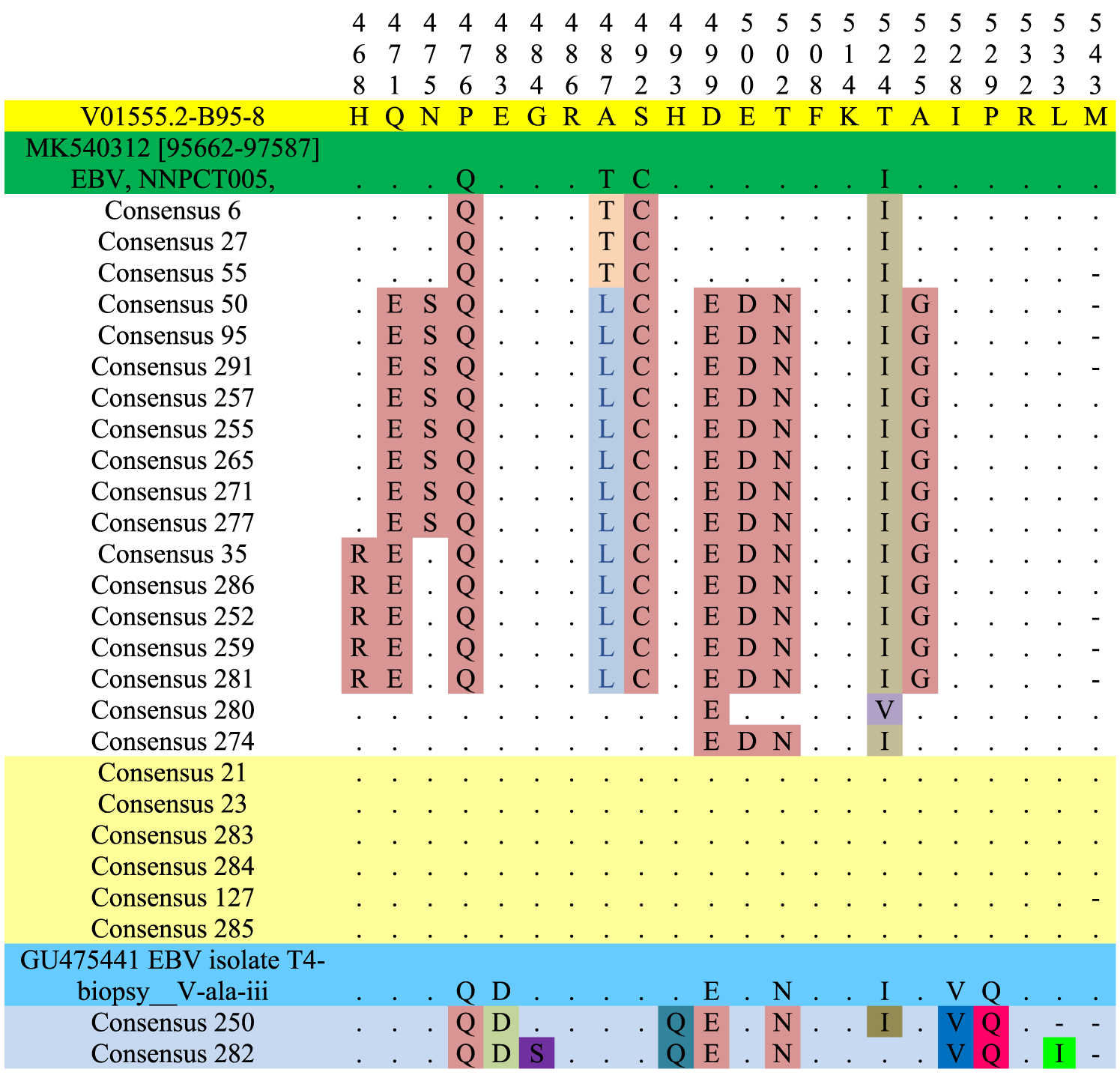
The EBNA1 subtypes, P-ala, were detected in 23.1% (6/26) of the samples and V-Leu in 19.2% (5/26). The most frequent subvariant was V-LeuAg in 30.8% (8/26), P-thr' in 11.5% (3/26), P-ala' and V-alaiii, both in 7, 7% (2/26) of cases. When the origin was verified, 20 (76.9%) of these strains came from Belém, being considered all types of EBNA1, and the others were from Ananindeua.
The V-leuAg subvariant of EBNA1, classified as the most frequent, showed greater positivity among children aged >5-10 years (11.5%- 3/26) and >30 to 40 years (7.7%- 2/ 26). The V-leu variant also exhibited three positive samples in those over 40 years of age and two in the >20-30 range, and an equal number of the latter was also verified for the P-ala subtype in >40 years.
The comparison between the prototype strain B95-8 (GenBank V01555.2) with the 26 samples studied showed a total of 17 amino acid alterations, the highest number observed in a material of 10 AA modifications and the lowest of 4 AA (Figure 1). As already mentioned, six samples were totally identical to the prototype and the MK540312 strain. Nine records showed the same AA mutations, and in two, these exchanges were also observed in the MK540312 strain. At position 487, some samples showed the same AA alteration as that of the MK540312 strain, and others, in greater numbers, showed another AA. Regarding position 524, 18 specimens had an AA change equal to strain MK540312, one exhibited another AA and the other was the same as the prototype B95-8. Records 250 and 282 classified as V-alaiii exhibited some changes similar to those of the other strains, but showed greater similarity with the sub-variant V-alaiii-GU475441.
Mutations present in the EBNA 1 gene of EBV
Regarding the EBNA1 gene, six (23.1%) of the 26 strains of MI showed identical alignment to the prototype sequence B95-8, without any mutation, all classified as P-ala variant. The five strains classified as V-leu variant of EBNA1 showed 10 amino acid changes in relation to the B95-8 prototype, as well as a silent change at residue 520 (Leu ---Leu). It is worth mentioning that these five samples showed complete similarity with the strain “GU475443 EBV isolate T6-biopsy_V-leu” (Table 1).
| Table 1: Amino acid alterations observed in strains classified as V-Leu subvariant of EBNA1, identified in IM individuals. | ||||
| EBNA1 variant | Strains | Mutation Position Nucleotide | Aminoacid Change | |
| V-leu | PST 035 PST 252 PST 259 PST 281 PST 286 | H468R | CAA → CGT | His → Arg |
| Q471E | CAA → GAG | Gln → Glu | ||
| P476Q | CCG → GAG | Pro → Gln | ||
| A487L | GCT → CTT | Ala → Leu | ||
| S492C | AGT → TGT | Ser → Cys | ||
| D499E | GAC → GAG | Asp → Glu | ||
| E500D | GAA → GAT | Glu → Asp | ||
| T502N | ACT→ AAT | Thr → Asn | ||
| L520L# | CTA → CTC | Leu ----Leu | ||
| T524I | ACT → ATT | Thr → Ile | ||
| A525G | GCC → GGC | Ala → Gly | ||
Subvariant V-leuAg was detected in 30.8% (8/26) of the specimens sequenced for the EBNA1 gene, referring to 10 mutations in relation to the B95-8 prototype and one more silent change at residue 520 (Leu --- Leu) (Table 2).
| Table 2: Amino acid alterations observed in strains classified as V-LeuAg subvariant of EBNA1, identified in IM individuals. | ||||
| EBNA1 variant | Strains | Mutation Position Nucleotide | Aminoacid Change | |
| V-Leu Ag | PST 050 PST 095 PST 255 PST 257 PST 265 PST 271 PST 277 PST 291 | Q471E | CAA→GAA | Gln→Glu |
| N475S | AAC→AGC | Asn→Ser | ||
| P476Q | CCG→CAG | Pro→Gln | ||
| A487L | GCT→CCT | Ala→ Leu | ||
| S492C | AGT→TGT | Ser→Cys | ||
| D499E | GAC→GAG | Asp→Glu | ||
| E500D | GAA→GAT | Glu→Asp | ||
| T502N | ACT→AAT | Thr→ Asn | ||
| L520L# | CTA→CTC | Leu-----Leu | ||
| T524I | ACT→ATT | Thr→Ile | ||
| A525G | GCC→GGC | Ala→Gly | ||
Two sequences (PST 280 and PST 274) classified as subvariant P-ala' showed different patterns of the prototype B95-8. In strain PST 280, two amino acid alterations were observed at residues 499 and 524. As for the PST 274 record, four alterations were observed at residues 499, 500, 502 and 524 (Table 3). However, when the two records were compared to the strain “GU475455 EBV isolate T18-biopsy P-ala'” there was total similarity with the PST 280 sample, however, three variations with PST274, the same as observed with the B95 prototype -8.
| Table 3: Amino acid alterations observed in strains classified as P-ala' sub-variant of EBNA1 identified in individuals with IM. | ||||
| EBNA1 variant | Strains | Mutation Position Nucleotide | Aminoacid Change | |
| P-ala’ | PST 280 | D499E | GAC→GAA | Asp→Glu |
| T524V | ACT→GTT | Thr→Val | ||
| PST 274 | D499E | GAC→GAG | Asp→Glu | |
| E500D | GAA→GAT | Glu→Asp | ||
| T502N | ACT→AAT | Glu→Ans | ||
| T524I | ACT→ATT | Thr→Ile | ||
Subtype V-alaiii was detected in 7.7% (2/26) of the specimens sequenced for the EBNA1 gene. With reference to the prototype B95-8, seven amino acid alterations were observed in both strains ST 250 and ST 282. Two more alterations were observed in strain ST 282 and one in ST 250. A silent alteration at residue 520 (Leu --- Leu) was found in both (Table 4). Comparing these two samples with the GU475441 EBV isolate T4-biopsy_V-ala iii strain, a modification was noted in AA 493 (His - Gln) in both records, in AA 524 (Thr -Asp) for ST 250 and in AA 484 (Gly - Ser) for the ST 282.
| Table 4: Amino acid alterations observed in strains classified as V-alaiii sub-variant of EBNA1 identified in individuals with IM. | ||||
| EBNA1 variant | Strains | Mutation Position Nucleotide | Aminoacid Change | |
| V-alaiii | PST 250 PST 282 | P476Q | CCG→CAG | Pro→ Gln |
| E483D | GAA→ GAC | Glu→ Asp | ||
| G484S* | GGT→ AGT | Gly→ Ser | ||
| H493Q | CAC→ CAG | His →Gln | ||
| D499E | GAC→ GAG | Asp→ Glu | ||
| T502N | ACT→ AAT | Thr→ Asn | ||
| 520# | ------- | Leu→Leu | ||
| T524I** | ACT→ATT | Thr→Ile | ||
| I528V | ATT→ GTT | Ile→ Val | ||
| P529Q | CCA→ TAA | Pro→Gln | ||
| L533I* | CTT→ ATT | Leu→ Ile | ||
Discussion
This study is the first carried out in the North region, which genetically characterized the EBNA1 variants in samples of infectious mononucleosis obtained from the metropolitan area of Belém, Para, with a description of six patterns, comprising two variants and four subvariants, and some changes were observed. in all these patterns. Point mutations in the C-terminal region of the EBNA1 gene of EBV have been described in different regions of the world, giving rise to theories of the association of certain polymorphisms in certain geographic regions, as well as their presence in tumor pathologies in different tissues of the host. The association could favor the development of possible neoplastic alterations [25].
One study, expression of EBNA1 in EBV-infected cells can block its recognition by positive cytotoxic T lymphocytes [26]. Probably, the repeat fragment (glycine-alanine) that composes the EBNA1 sequence limits the function of antigen recognition by the molecules of the major Histocompatibility Complex of Class I (HCM I), evading the control of the immune system. In addition, sequential changes may have a greater impact on the function of these important domains and, consequently, affect DNA replication, transcription, or the oncogenic potential of the virus [27]. A previous study, reports that latency-associated EBNA1 polymorphisms may correlate with possible cancer risk [28].
The P-ala variant of EBNA1 was identified in 23.1% (6/26) of the samples, and it has been presented both in healthy individuals (without malignancy) as well as in cases of neoplasms, as described by a study carried out in China, analyzing individuals with lymphomas, obtained a lower positivity rate for the P-ala variant (10.9%-12/110) [29].
In our research, the V-Leu variant of EBNA1 was described in 19.2% (5/26) of the clinical cases of IM investigated, differing from previous studies where the variant was observed only in patients with carcinoma from Africa, North and South America [15,16,30,31]. These authors postulated that the presence of the EBNA1 gene would possibly have a tissue tropism with certain polymorphisms associated with certain geographic regions. Another investigation reinforces the presence of the V-leu variant in Burkitt lymphoma samples, as well as in 58.3% (18/32) of control cases [32]. Analysis performed in Denmark and China, mentions the absence of the V-leu variant in the investigated specimens, being inferred that it possibly circulated in America and Africa both in individuals with acute infection and in those with EBV-associated neoplasms [33].
Pediatric studies conducted in Argentina describes that the V-leu variant was frequent in 46.7% of the MI samples [17]. On the other hand, in our series, the V-leu variant was not detected in young people up to 15 years of age, although the P-ala variant was described in 33.3% (2/6); PThr in 66.6% (2/3) and V-leuAg in 50.0% (4/8).
The identification in our study of the P-thrꞌ subvariant of EBNA1 in 11.5% (3/26) of the cases differs from the findings in China, who reported this subvariant in 15.5% (17/110) of samples from patients with nasopharyngeal cancer [29].
It is worth noting that the EBNA-1 protein has been identified in most neoplastic cases associated with EBV infection, where it apparently favors episomal genome replication, enabling the expression of viral oncogenic products in latently infected cells.
A study in China, mentions another subtype of EBNA1, V-Val, as being the most frequent in cases of Nasopharyngeal Carcinoma (NFC) among the Chinese population, as well as being responsible for 79.5% of episodes of CNF in individuals from Vietnam [34,35]. In Asia, the V-Val variant and the P-thr prototype have been described in individuals with IM, as well as in healthy adults [28,36], the same occurring in Europe [28,37,38]. These findings differ from those observed in the sequences analyzed in northern Brazil, as none of these EBNA1 variants (V-Val and V-Thr) were found.
Our phylogenetic analysis allowed us to identify EBNA1 V-alaiii in 7.7% (2/26) of the cases. This fact collaborates with previous studies, which demonstrated the apparent circulation of this subtype in South America, unlike the V-leu variant, which is the most widespread throughout America and Africa [33].
Previous studies report that latency-associated polymorphisms in EBNA1 may also correlate with possible cancer risk [28]. In addition, preclinical models have already been proposed to test possible assays with therapeutic drugs in vivo aimed at blocking the replication, differentiation and persistence phases caused by EBNA1 [39,40].
Recent research already postulates that the EBNA1 gene, due to its characteristic and because it is present in all EBV-infected cells, can be used as an effective therapeutic target. Thus, it is extremely important to carry out viral biology studies aiming at the effectiveness of possible antiviral drugs.
Our sequencing data for the EBV EBNA1 gene revealed 17 amino acid changes compared to the EBV prototype (B98-5), which was the first cultivated EBV cell line capable of secreting large amounts of viral particles into the medium. of culture, obtained from an individual with infectious mononucleosis [41].
The amino acid alterations are located in the functional domain of the EBNA1 gene, with an important role in DNA binding and dimerization, that is, EBNA-1 interacts with DNA through its nucleus domain (AA 461 -504) in the C-terminal region [42].
A study found that the use of toxicity assays to evaluate the characteristic of the EBNA1 sequence polymorphism in the recognition of T cells and Cytotoxic T Lymphocytes (CTL), generated by synthetic peptide stimulation, which confirmed an extensive genetic diversity within EBNA1, generating a significant impact on the immunological recognition of this antigen [43].
As for the amino acid alterations found in the P-alaꞌ subvariant in our study, these alterations were similar to those described in the strains (GU475455) of nasopharyngeal carcinoma. In 65.4% (17/26) of the MI strains studied, there was a mutation at residue 499 (D→E) and in 61.5% (16/26) at residue 502 (T→N) amino acid, located on the surface of EBNA1 at the DNA-binding interface that can modify possible interactions of this with other proteins. In our study 69.2% (18/26) of the alterations identified in residue 524 (T→I) were located on the surface of the protein, these alterations were also described in investigations carried out in Argentina that who suggest that there are no apparent implications for the overall structure of EBNA1 [17].
Previous studies report that latency-associated polymorphisms in EBNA1 may also be correlated with possible cancer risks [28]. Recent studies cite the use of this genetic variability present mainly in the C-terminal region as possible targets of viral epitopes to determine a treatment strategy, with the therapeutic use of adoptive immunotherapy of T cells specific for certain diseases such as EBV-associated lymphoma [44].
Sequential alterations originated at different stages of EBV infection can have a relevant impact, modifying the functions of these important domains that genetically compose the EBNA1 gene sequence, affecting DNA replication, transcription or the oncogenic potential of the virus [27].
Conclusion
Identification of EBNA1 subtypes in strains from individuals with IM, based on variations in EBNA-1 sequences: two variants (P-ala, identical to the prototype virus B95.8; and V-Leu), and four EBNA1 subvariants (P-ala`, P-Thr`, V-LeuAg and V-ala iii)
Genetic identification of EBNA1 in the present study made it possible to distinguish for the first time the molecular epidemiology and circulation of these viral agents, highlighting their characteristic of viral persistence in clinical specimens of lymphocytes with clinical relevance due to their oncogenic potential identified in strains of infectious mononucleosis coming from individuals from northern Brazil.
Authors Contribution
TAFM: Conception and design of the study, Analysis and interpretation of data, Drafting the article, Final approval of the version to be submitted; IBC: Analysis and interpretation of data; IBC:; BMRC: Analysis and interpretation of data, Drafting the article, Final approval of the version to be submitted; FLPR: clinical evaluation and interpretation of data; JLFM: Analysis and interpretation of data; ECSJ; RSB: Phylogenetic analysis; YBG: RCMS: Conception, design and analysis of data.
Acknowledgment
The authors are grateful to Evandro Chagas Institute (SVSA/MS/Brazil) and all Epstein-Barr virus laboratory team that provided technical support for the development and implementation of this study.
Funding
This work was supported by Evandro Chagas Institute. (SVSA/MS)
References
- Varvatsi D, Richter J, Tryfonos C, Pantzaris M, Christodoulou C. Association of Epstein-Barr virus latently expressed genes with multiple sclerosis. Mult Scler Relat Disord. 2021 Jul;52:103008. doi: 10.1016/j.msard.2021.103008. Epub 2021 May 7. PMID: 34010765.
- Afrasiabi A, Parnell GP, Swaminathan S, Stewart GJ, Booth DR. The interaction of multiple sclerosis risk loci with epstein-barr virus phenotypes implicates the virus in pathogenesis. Sci Rep. 2020;10(1):193. doi: 10.1038/s41598-019-55850-z.
- Wu YK, Jiang TT, Su YH, Mei L, Sun TK, Li YH, Wang ZD, Ji YY. The potential role of virus infection in the progression of thyroid cancer. World J Oncol. 2024;15(3):382-393. doi: 10.14740/wjon1830.
- Tsao SW, Tsang CM, Lo KW. Epstein-Barr virus infection and nasopharyngeal carcinoma. Philos Trans R Soc Lond B Biol Sci. 2017 Oct 19;372(1732):20160270. doi: 10.1098/rstb.2016.0270. PMID: 28893937; PMCID: PMC5597737.
- Bairwa R, Malhotra H, Tanwar VS, Soni S, Sai, R. Utility of plasma epstein-barr viral load in managing hodgkin’s lymphoma: A prospective study. Int J Acad Med Pharm. 2024;6(2):727-731.
- Monteiro TAF, Arnaud MVC, Barros VLS, Monteiro JLF, Vasconcelos PFC. Identificação do Gene EBER1 e EBNA1 do virus de Epstein Barr (EBV) em tecidos de pacientes com doença de Hodgkin na região Norte do Brasil. Rev Panam Infectol. 2014;16(1):17-24.
- Brasil-Costa I, de Souza CRT, Costa IB, Dos Santos LFP, Paixão LCF, Polaro AA, Monteiro TAF, Burbano RMR. Detection of Epstein-Barr virus in gastric adenocarcinoma: qPCR and FISH comparison. Med Microbiol Immunol. 2022 Feb;211(1):29-36. doi: 10.1007/s00430-021-00724-3. Epub 2021 Dec 3. PMID: 34862564; PMCID: PMC8860788.
- Vafapour Z, Tabatabaie FH, Hosseini SY, Haghighat S, Hashemi SMA, Moattari A, Sarvari J. Sequence variation of the Epstein-Barr virus nuclear antigen 1 (EBNA1) gene in chronic lymphocytic leukemia and healthy volunteer subjects. Arch Virol. 2023 Dec 8;169(1):1. doi: 10.1007/s00705-023-05933-0. PMID: 38063941.
- Jácome-Santos H, Amanajás TA, Gomes STM, Machado LFA, Pereira Neto ARL, Alves Junior SM, Pinheiro JJV, Alves BP, Amoras-Alves ACB. Epstein-Barr virus (EBV) in periodontal sites of human immunodeficiency virus (HIV)-positive individuals in North Brazil: a cross-sectional study. Quintessence Int. 2020;51(1):18-26. doi: 10.3290/j.qi.a43616. PMID: 31781689.
- Marcucci SB, Obeidat AZ. EBNA1, EBNA2, and EBNA3 link Epstein-Barr virus and hypovitaminosis D in multiple sclerosis pathogenesis. J Neuroimmunol. 2020 Feb 15;339:577116. doi: 10.1016/j.jneuroim.2019.577116. Epub 2019 Nov 20. PMID: 31805475.
- Frappier L. EBNA1. Curr Top Microbiol Immunol. 2015;391:3-34. doi: 10.1007/978-3-319-22834-1_1. PMID: 26428370.
- Baer R, Bankier AT, Biggin MD, Deininger PL, Farrell PJ, Gibson TJ, Hatfull G, Hudson GS, Satchwell SC, Séguin C, et al. DNA sequence and expression of the B95-8 Epstein-Barr virus genome. Nature. 1984 Jul 19-25;310(5974):207-11. doi: 10.1038/310207a0. PMID: 6087149.
- Ambinder RF, Mullen MA, Chang YN, Hayward GS, Hayward SD. Functional domains of Epstein-Barr virus nuclear antigen EBNA-1. J Virol. 1991 Mar;65(3):1466-78. doi: 10.1128/JVI.65.3.1466-1478.1991. PMID: 1847464; PMCID: PMC239927.
- Shah WA, Ambinder RF, Hayward GS, Hayward SD. Binding of EBNA-1 to DNA creates a protease-resistant domain that encompasses the DNA recognition and dimerization functions. J Virol. 1992 Jun;66(6):3355-62. doi: 10.1128/JVI.66.6.3355-3362.1992. PMID: 1316452; PMCID: PMC241114.
- Bhatia K, Raj A, Guitierrez MI, Judde JG, Spangler G, Venkatesh H, Magrath IT. Variation in the sequence of Epstein Barr virus nuclear antigen 1 in normal peripheral blood lymphocytes and in Burkitt's lymphomas. Oncogene. 1996 Jul 4;13(1):177-81. PMID: 8700544.
- Gutiérrez MI, Raj A, Spangler G, Sharma A, Hussain A, Judde JG, Tsao SW, Yuen PW, Joab I, Magrath IT, Bhatia K. Sequence variations in EBNA-1 may dictate restriction of tissue distribution of Epstein-Barr virus in normal and tumour cells. J Gen Virol. 1997 Jul;78 ( Pt 7):1663-70. doi: 10.1099/0022-1317-78-7-1663. PMID: 9225043.
- Lorenzetti MA, Altcheh J, Moroni S, Moscatelli G, Chabay PA, Preciado MV. EBNA1 sequences in Argentinean pediatric acute and latent Epstein-Barr virus infection reflect circulation of novel South American variants. J Med Virol. 2010 Oct;82(10):1730-8. doi: 10.1002/jmv.21871. PMID: 20827771.
- Sanger F, Air GM, Barrell BG, Brown NL, Coulson AR, Fiddes CA, Hutchison CA, Slocombe PM, Smith M. Nucleotide sequence of bacteriophage phi X174 DNA. Nature. 1977 Feb 24;265(5596):687-95. doi: 10.1038/265687a0. PMID: 870828.
- Huang X, Madan A. CAP3: A DNA sequence assembly program. Genome Res. 1999 Sep;9(9):868-77. doi: 10.1101/gr.9.9.868. PMID: 10508846; PMCID: PMC310812.
- Katoh K, Standley DM. MAFFT multiple sequence alignment software version 7: improvements in performance and usability. Mol Biol Evol. 2013 Apr;30(4):772-80. doi: 10.1093/molbev/mst010. Epub 2013 Jan 16. PMID: 23329690; PMCID: PMC3603318.
- Kearse M, Moir R, Wilson A, Stones-Havas S, Cheung M, Sturrock S, Buxton S, Cooper A, Markowitz S, Duran C, Thierer T, Ashton B, Meintjes P, Drummond A. Geneious Basic: an integrated and extendable desktop software platform for the organization and analysis of sequence data. Bioinformatics. 2012 Jun 15;28(12):1647-9. doi: 10.1093/bioinformatics/bts199. Epub 2012 Apr 27. PMID: 22543367; PMCID: PMC3371832.
- Nguyen LT, Schmidt HA, von Haeseler A, Minh BQ. IQ-TREE: a fast and effective stochastic algorithm for estimating maximum-likelihood phylogenies. Mol Biol Evol. 2015 Jan;32(1):268-74. doi: 10.1093/molbev/msu300. Epub 2014 Nov 3. PMID: 25371430; PMCID: PMC4271533.
- Price MN, Dehal PS, Arkin AP. FastTree: computing large minimum evolution trees with profiles instead of a distance matrix. Mol Biol Evol. 2009 Jul;26(7):1641-50. doi: 10.1093/molbev/msp077. Epub 2009 Apr 17. PMID: 19377059; PMCID: PMC2693737.
- Zhang H, Gao S, Lercher MJ, Hu S, Chen WH. EvolView, an online tool for visualizing, annotating and managing phylogenetic trees. Nucleic Acids Res. 2012 Jul;40(Web Server issue):W569-72. doi: 10.1093/nar/gks576. Epub 2012 Jun 13. PMID: 22695796; PMCID: PMC3394307.
- Bhatia K, Raj A, Guitierrez MI, Judde JG, Spangler G, Venkatesh H, Magrath IT. Variation in the sequence of Epstein Barr virus nuclear antigen 1 in normal peripheral blood lymphocytes and in Burkitt's lymphomas. Oncogene. 1996 Jul 4;13(1):177-81. PMID: 8700544.
- Levitskaya J, Coram M, Levitsky V, Imreh S, Steigerwald-Mullen PM, Klein G, Kurilla MG, Masucci MG. Inhibition of antigen processing by the internal repeat region of the Epstein-Barr virus nuclear antigen-1. Nature. 1995 Jun 22;375(6533):685-8. doi: 10.1038/375685a0. PMID: 7540727.
- Wilson JB, Manet E, Gruffat H, Busson P, Blondel M, Fahraeus R. EBNA1: Oncogenic Activity, Immune Evasion and Biochemical Functions Provide Targets for Novel Therapeutic Strategies against Epstein-Barr Virus- Associated Cancers. Cancers (Basel). 2018 Apr 6;10(4):109. doi: 10.3390/cancers10040109. PMID: 29642420; PMCID: PMC5923364.
- Wang Y, Liu X, Xing X, Cui Y, Zhao C, Luo B. Variations of Epstein-Barr virus nuclear antigen 1 gene in gastric carcinomas and nasopharyngeal carcinomas from Northern China. Virus Res. 2010 Feb;147(2):258-64. doi: 10.1016/j.virusres.2009.11.010. Epub 2009 Nov 24. PMID: 19941915.
- Sun L, Zhao Z, Liu S, Liu X, Sun Z, Luo B. Sequence Variation Analysis of Epstein-Barr Virus Nuclear Antigen 1 Gene in the Virus Associated Lymphomas of Northern China. PLoS One. 2015 Oct 13;10(10):e0140529. doi: 10.1371/journal.pone.0140529. PMID: 26460969; PMCID: PMC4604123.
- Bhatia K, Magrath I. EBNA-1 sequences in endemic and sporadic Burkitt's lymphoma. J Virol. 1999 Aug;73(8):7096-7. PMID: 10465649; PMCID: PMC112804.
- Gutiérrez MI, Spangler G, Kingma D, Raffeld M, Guerrero I, Misad O, Jaffe ES, Magrath IT, Bhatia K. Epstein-Barr virus in nasal lymphomas contains multiple ongoing mutations in the EBNA-1 gene. Blood. 1998 Jul 15;92(2):600-6. PMID: 9657761.
- Habeshaw G, Yao QY, Bell AI, Morton D, Rickinson AB. Epstein-barr virus nuclear antigen 1 sequences in endemic and sporadic Burkitt's lymphoma reflect virus strains prevalent in different geographic areas. J Virol. 1999 Feb;73(2):965-75. doi: 10.1128/JVI.73.2.965-975.1999. PMID: 9882297; PMCID: PMC103916.
- Sandvej K, Zhou XG, Hamilton-Dutoit S. EBNA-1 sequence variation in Danish and Chinese EBV-associated tumours: evidence for geographical polymorphism but not for tumour-specific subtype restriction. J Pathol. 2000 Jun;191(2):127-31. doi: 10.1002/(SICI)1096-9896(200006)191:2<127::AID-PATH614>3.0.CO;2-E. PMID: 10861570.
- Zhang XS, Wang HH, Hu LF, Li A, Zhang RH, Mai HQ, Xia JC, Chen LZ, Zeng YX. V-val subtype of Epstein-Barr virus nuclear antigen 1 preferentially exists in biopsies of nasopharyngeal carcinoma. Cancer Lett. 2004 Jul 28;211(1):11-8. doi: 10.1016/j.canlet.2004.01.035. PMID: 15194212.
- Thuan LD, Kha ND, Minh NT, Thuy L. Novel Patterns of the Epstein-Barr Nuclear Antigen (EBNA-1) V-Val Subtype in EBV-associated Nasopharyngeal Carcinoma from Vietnam. Balkan J Med Genet. 2019 Aug 28;22(1):61-68. doi: 10.2478/bjmg-2019-0011. PMID: 31523622; PMCID: PMC6714338.
- Ai J, Xie Z, Liu C, Huang Z, Xu J. Analysis of EBNA-1 and LMP-1 variants in diseases associated with EBV infection in Chinese children. Virol J. 2012 Jan 11;9:13. doi: 10.1186/1743-422X-9-13. PMID: 22236445; PMCID: PMC3269356.
- Do NV, Ingemar E, Phi PT, Jenny A, Chinh TT, Zeng Y, Hu L. A major EBNA1 variant from Asian EBV isolates shows enhanced transcriptional activity compared to prototype B95.8. Virus Res. 2008 Mar;132(1-2):15-24. doi: 10.1016/j.virusres.2007.10.020. Epub 2007 Dec 21. PMID: 18096263.
- Mai SJ, Ooka T, Li DJ, Zeng MS, Jiang RC, Yu XJ, Zhang RH, Chen SP, Zeng YX. Functional advantage of NPC-related V-val subtype of Epstein-Barr virus nuclear antigen 1 compared with prototype in epithelial cell line. Oncol Rep. 2007 Jan;17(1):141-6. PMID: 17143491.
- Münz C. Humanized mouse models for Epstein Barr virus infection. Curr Opin Virol. 2017 Aug;25:113-118. doi: 10.1016/j.coviro.2017.07.026. Epub 2017 Aug 22. PMID: 28837889.
- Zumwalde NA, Sharma A, Xu X, Ma S, Schneider CL, Romero-Masters JC, Hudson AW, Gendron-Fitzpatrick A, Kenney SC, Gumperz JE. Adoptively transferred Vγ9Vδ2 T cells show potent antitumor effects in a preclinical B cell lymphomagenesis model. JCI Insight. 2017 Jul 6;2(13):e93179. doi: 10.1172/jci.insight.93179. PMID: 28679955; PMCID: PMC5499361.
- Farrell PJ. Epstein-Barr virus. The B95-8 strain map. Methods Mol Biol. 2001;174:3-12. doi: 10.1385/1-59259-227-9:3. PMID: 11357658.
- Ambinder RF, Mullen MA, Chang YN, Hayward GS, Hayward SD. Functional domains of Epstein-Barr virus nuclear antigen EBNA-1. J Virol. 1991 Mar;65(3):1466-78. doi: 10.1128/JVI.65.3.1466-1478.1991. PMID: 1847464; PMCID: PMC239927.
- Bell MJ, Brennan R, Miles JJ, Moss DJ, Burrows JM, Burrows SR. Widespread sequence variation in Epstein-Barr virus nuclear antigen 1 influences the antiviral T cell response. J Infect Dis. 2008 Jun 1;197(11):1594-7. doi: 10.1086/587848. PMID: 18419576.
- Tschochner M, Leary S, Cooper D, Strautins K, Chopra A, Clark H, Choo L, Dunn D, James I, Carroll WM, Kermode AG, Nolan D. Identifying Patient-Specific Epstein-Barr Nuclear Antigen-1 Genetic Variation and Potential Autoreactive Targets Relevant to Multiple Sclerosis Pathogenesis. PLoS One. 2016 Feb 5;11(2):e0147567. doi: 10.1371/journal.pone.0147567. PMID: 26849221; PMCID: PMC4744032.





Content Alerts
SignUp to our
Content alerts.
 This work is licensed under a Creative Commons Attribution 4.0 International License.
