
2026 February 09;7(2):1-08. doi: 10.37871/jbres2263.
-
Subject area(s):

 |
|
 |
|
 |
|

 Research Article
Features of the Mechanism of Catalytic Oxidation of Carbon Monoxide on Pd/Al2O3 Catalysts
Kakhniashvili G1, Bakhtadze S2 and Nakhutsrishvili I1*
2Geoaeronavigation Company, Airport St., 0158Tbilisi, Georgia
- Carbon monoxide
- Alumina
- Palladium
Abstract
The mechanism of catalytic low-temperature oxidation of CO on Pd/Al2O3 was studied. A combined reaction mechanism through the formation and decomposition of carboxyl-type structures was proposed, in which adsorbed oxygen reoxidizes reduced palladium atoms and ensures the decomposition of carboxyl structures with the formation of CO2 and the regeneration of OH groups. It was shown that with a small addition of Pd the activity of the catalyst increases significantly. The positive effect is due to the activation of CO or a change in the state of oxygen on the surface of the catalyst. Palladium was estimated by the value of hydrogen adsorption at 70°C. The reaction rate of catalytic oxidation of carbon monoxide, as the main characteristic of the activity and efficiency of the studied catalysts, was measured on a circulation-static unit using the method of continuous analysis of the gas mixture. The higher SCA of supported palladium in comparison with massive palladium in the reaction of low-temperature oxidation of CO may be associated with the written-off mechanism. This assumption is consistent with the TDA data. Close values of the adsorption energy of CO on the compared objects indicate a practically identical state of adsorbed CO on supported and massive palladium. However, the concentration of this form of CO, active in the oxidation reaction, on Pd/Al2O3 is approximately two orders of magnitude higher. Pd black adsorbs CO mainly in a weakly bound, low-activity form, which is reversible already at 100°C. For Pd black, which has no hydroxyl coating, a mechanism is realized with the participation of CO molecules and adsorbed oxygen atoms in intermediate complexes. The decomposition of these complexes is consistent with the high activation energy. The effect of superadditive adsorption capacity for carbon monoxide and specific catalytic activity in the reaction of low-temperature oxidation of CO was found. It was also discovered that the low-temperature oxidation reaction of CO on catalysts of the Pd/Al2O3 system can proceed via a non-trivial mechanism, which includes the participation of hydroxyl groups of the Al2O3 surface, coordinated by palladium, in the reaction.
Introduction
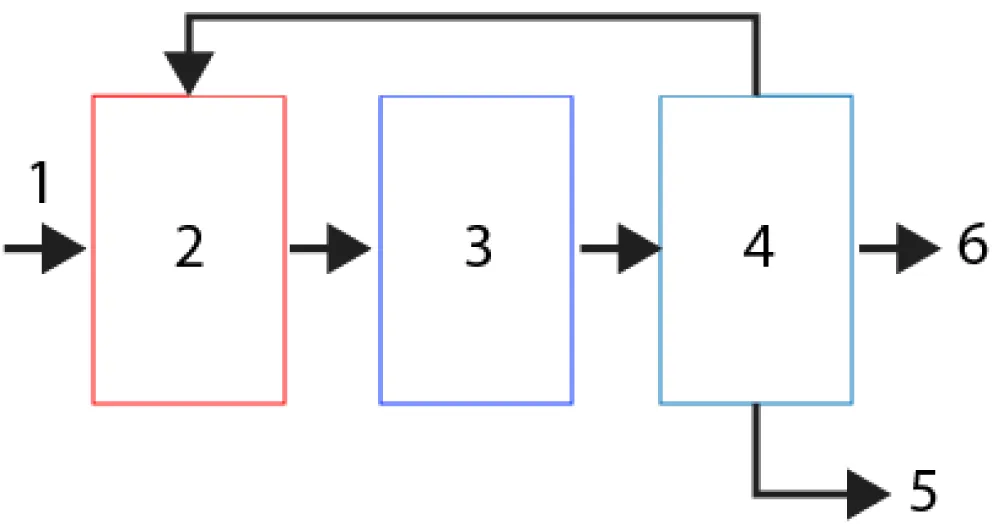
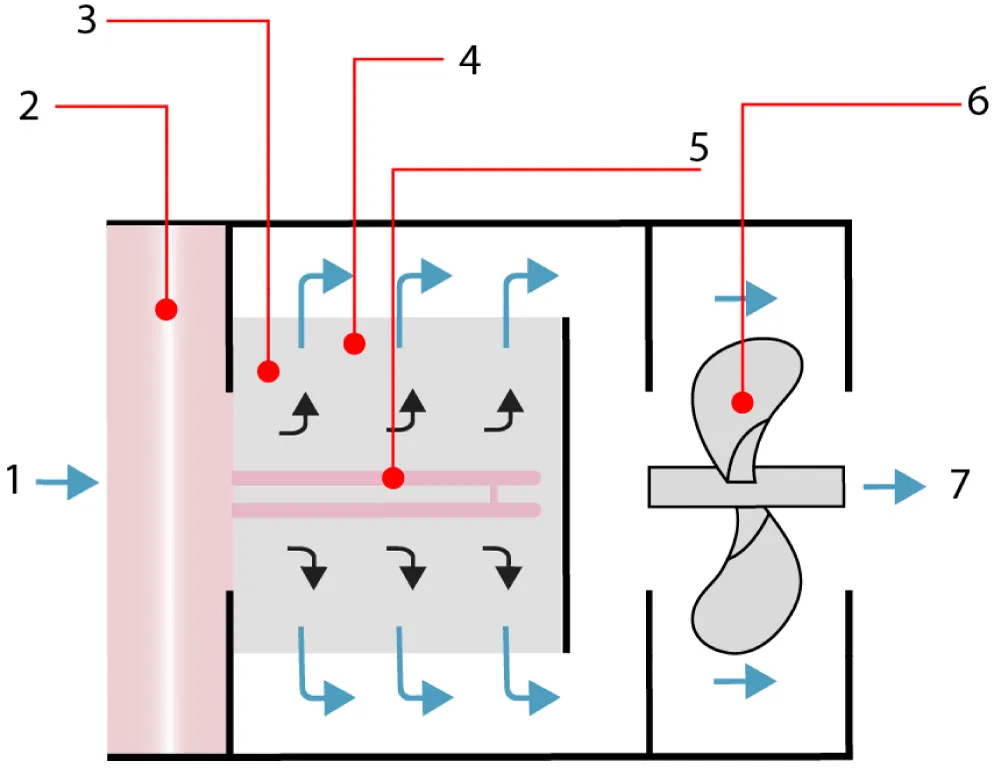
The “poison gas” CO gets into the air with gas emissions from industrial enterprises and motor vehicles, as a result of fires, volcanic eruptions, etc. To protect against it, respirators and gas masks with a catalyst for the oxidation of carbon monoxide to harmless dioxide are used. The positive effect is due to the activation of CO or a change in the state of oxygen on the surface of the catalyst. A large number of publications, both previously and recently, have been devoted to their development and study [1-6]. Figure 1 shows simplified diagram of catalytic gas purification.
Catalysts based on platinum metals (Pt, Pd, Rh) are often used [7-10]. These catalysts are effective in the processes of simultaneous neutralization of CO, NO and hydrocarbons, but are also quite expensive. A significant part of the annually mined platinum metals is spent on their manufacture
Therefore, minimizing the content of platinum metals in the composition of catalysts is currently one of the most important tasks of scientific research and practical development. The mechanism of carbon monoxide oxidation on palladium or platinum catalysts has been studied in a number of works [11-14].
Experimental
The reaction rate (r) of catalytic oxidation of carbon monoxide, as the main characteristic of the activity and efficiency of the studied catalysts, was measured on a circulation-static unit using the method of continuous analysis of the gas mixture with a mass spectrometric analyzer of partial pressures APDM-1.
Palladium was estimated by the value of hydrogen adsorption at 70°C. For comparison, palladium black was used, obtained by precipitation from a solution of RdCl2 with a 10% solution of sodium formate upon heating it to boiling. The oxidation reaction of CO was carried at (70-180)°C. The labeled oxygen (O2) content was 80 at. %. Analysis of the reaction mixture and the isotopic composition of the reagents was carried out during the reaction by mass-spectrometry. The reaction rate was calculated based on the dependence of the intensity of the mass spectrometric peak of CO on the reaction time. Differential Thermal Analysis (DTA) of the adsorbed phase was carried out at a constant heating rate (48°C/min) of the sample to 500°C in a cell continuously pumped out through the inlet valve of the mass spectrometer. DTA was carried out after the reaction or adsorption of reagents at 150°C, cooling the sample to 0°C and then pumping the cell down to a pressure of 10-7 mm Hg. The state of the adsorbed CO was characterized by the temperatures of the maxima of the thermal desorption peaks (Tmax), from which the desorption activation energy (Edes) was estimated using the equation:
(R - gas constant, υ≈5∙1012 c-1, b = dT/dτ, T – absolute temperatute, τ – time). The degree of coverage of the catalyst surface with adsorbed oxygen was estimated based on the material balance of the label in the Isotope Exchange (IE) reaction of oxygen in the O2*-catalyst system, carried out in the thermal desorption mode up to 200°C.
Results and Discussion
Aluminum oxide does not exhibit noticeable catalytic activity in the CO oxidation reaction at the temperatures studied. The Pd/Al2О3 catalyst is active at these temperatures. At t > 100°C, a virtually steady-state activity value is established in ~ 10 s. The initial velocity value remains unchanged with repeated injections. It does not change with preliminary injection of CO or O2 onto the sample, or in the presence of water vapor. The degree of utilization of the internal surface of the catalyst under the conditions studied is close to complete. Under these conditions, the specific (per unit palladium surface area) catalytic activity (SCA) of Pd/Al2O3 is significantly higher than that of Pd-black. The kinetic characteristics of the reaction on these catalysts are given in table 1.
| Table 1: The values of specific surface area (S), activation energy and rate of the process (E and r, respectively), reaction order (n). | |||||
| Sample | S, m2/g (Pd) | E, kJ/mol | r, molecCO/cm2 (Pd/c, 100oC) | n | |
| by CO | by O2 | ||||
| Pd/Al2O3 Pd/c |
30 3.3 |
29.3 40.1 |
(0.5-1)∙1014 1012 |
1 1 |
0 0 |
| Note: E was determined from the temperature dependence of r. | |||||
| Table 2: Thermal desorption after adsorption of CO (ads) and reaction (re) at t = 150oC, PCO = 2 mm Hg. | ||||||||
| Sample | CO (ads) | CO (re) | CO2 (re) | |||||
| tmax, oC | I, rel. un | Edes, kJ/mol | tmax, oC | I, rel. un | Edes, kJ/mol | tmax, oC | I, rel. un | |
| Pd/Al2O3 Pd/c |
90 70 |
100 1 |
97 91 |
0 80 |
100 1 |
97 94 |
100 150 |
1000 0.8 |
To test the possible influence of oxygen on the label content in the formed CO2, CO oxidation was carried out by freezing CO2 at the reactor outlet. No significant change in the value of aco occurred. This suggests the absence of a noticeable label transfer between CO2 and the catalyst under the reaction conditions. This assumption is confirmed by the data of experiments in which the change in aco was determined for one pass of CO2* through the catalyst bed, which was carried out by refreezing CO2 from a trap located in front of the reactor to a trap behind the reactor.
With CO labeled with oxygen, the αCO2 value remains unexpectedly low even with a relatively high oxygen consumption during the reaction. Since the label content in O2 and CO (αCO = 0.25 at. %) does not change, the low αCO2 value may be due either to the participation of the oxygen of the catalyst in the reaction, which initially had a natural isotopic composition (0.2% 18O), or to rapid isotopic exchange of oxygen between CO2 and the catalyst.
Thus, under the conditions of the CO oxidation reaction, it is possible to exclude a noticeable effect of the oxygen on the content of the label in CO2 formed in the reaction. Consequently, the low value of CO observed in the reaction can only be explained by the participation in the formation of CO2 of oxygen atoms of the catalyst, which had a natural isotopic composition before the start of the reaction. Such oxygen atoms can belong either to the supported palladium or to the carrier. According to the preparation conditions, palladium supported on Al2O3 should not contain noticeable amounts of adsorbed or dissolved oxygen, which is confirmed by the absence of oxygen between O2* and the catalyst at T ≤ 400°C, as well as the absence of oxygen peaks in the thermal desorption spectrum at T ≤ 450°C. The introduction of the reaction mixture onto Pd/Al2O3 is accompanied by the adsorption of CO and oxygen. The oxygen adsorbed under these conditions is removed during the TD process only in the form of CO2 (Table 3). The amount of this oxygen, according to the change of αO2* during Isotopic Exchange (IE), carried out in the TD mode of the adsorbed phase, corresponds approximately to a monolayer coating of the palladium surface. If CO interacts with adsorbed oxygen, then preliminary treatment of the catalyst with a mixture of CO + 16O2 can, in principle, reduce CO, with subsequent use of O2 in the reaction. However, the oxygen adsorbed on palladium is insufficient to explain the observed low value of CO, since already at (25-30) % conversion of CO, the adsorbed oxygen is renewed due to the gas phase more than 10 times. The presented facts allow us to conclude that in the case of Pd /Al2O3.
| Table 3: Effective concentration of reactive OH groups. | ||||
| t, oC | PCO | PCO2 | 10-17∙nOH, groups/m3 | nOH, % monolayer |
| mm Hg | ||||
| 102 102 169 |
3 9.3 3 |
21 62 80 |
3.16 3.01 3.04 |
6.3 6 6.1 |
Oxygen atoms entering the CO oxidation product do not directly belong to either gaseous, adsorbed, or dissolved oxygen and, therefore, are included in one form or another in the composition of the carrier. The participation of the catalyst oxygen in the oxidation of CO suggests the possibility of this reaction occurring in the mode of catalyst reduction with carbon monoxide. It turned out that the reaction of CO oxidation actually occurs on Pd/Al2O3 in the absence of oxygen in the gas phase, but its rate becomes noticeable only at t ≥ 350°C. It was also established that during CO oxidation in the mode of catalyst reduction, the formation of CO2 is accompanied by the release of hydrogen. This fact leads to the conclusion that the oxygen-containing form interacting with CO are hydroxyl groups Al2O3 [15,16]. It is natural to assume that in the catalytic mode, CO oxidation is also carried out with the participation of these OH groups. This assumption is supported by a certain effect that a change in the content of surface OH groups has on the activity of the catalyst as a result of vacuum training of the sample and its treatment with water vapor.
This conclusion is also supported by the results of an experiment in which the reaction CO + 16O2 was carried out on a standardly trained catalyst sample, pre-enriched with a label by treating it at 20°C with water vapor containing 75% 18O [17-19].
The concentration of the label in CO2 frozen out during the reaction was 36%. It is known that Al2O3 is characterized by the formation of hydrogen bonds between water molecules and OH groups of the oxide, i.e. the formation-oxidation reactions by a stepwise mechanism [20-23]. In the case under consideration, although the oxygen of the catalyst (OH groups of Al2O3) is included in the reaction product, this conclusion is contradicted by the large difference in CO oxidation temperatures with comparable rates in the catalysis and reduction modes and, consequently, the need (within the framework of the stepwise mechanism) to break strong O - H bonds at low catalysis temperatures. The reason for this difference is apparently that in the catalysis mode the reaction is carried out with the participation of molecular oxygen in the intermediate complex, although it is not included in the reaction product CO2. This circumstance removes the need to break O - H bonds during catalysis if the formation of CO2 and the regeneration of OH groups occur by redistribution of bonds in the intermediate complex. Under the studied conditions, when the first order of the reaction rate with respect to CO and zero order with respect to O2 is realized, it can be assumed that the rate-determining stage of the reaction is the adsorption of CO, accompanied by the formation of surface structures of the carboxyl type with the participation of OH groups. Under these conditions, the stages of oxygen adsorption and the subsequent decomposition of the intermediate complex are carried out as fast. The adsorbed oxygen reoxidizes the reduced palladium atoms and stimulates the decomposition of the carboxyl structure with the formation of CO2 and the regeneration of the OH group. The possibility of such a combined mechanism is consistent with a similar phenomenon of initiation of the decomposition of surface structures of the carbonate-carboxylate type by molecular oxygen [24,25]. This mechanism is consistent with the observed earlinerin [25,26] symbasis in the rates of consumption of CO and anion-radicals O2- on thesurface of Pd/Al2O3. With regard to one palladium atom, the reaction of CO oxidation on this catalyst can be represented in accordance with the proposed mechanism by the following scheme:
A similar mechanism of the reaction of CO oxidation with the participation of OH-groups is proposed for homogeneous catalysis by metal complexes [26]. The possibility of participation of OH-groups of the oxide surface in heterogeneous-catalytic oxidation has been established, for example, in the reaction of low-temperature oxidation of propylene to acetone in the presence of water vapor [26-29]. The higher SCA of supported palladium in comparison with massive palladium in the reaction of low-temperature oxidation of CO may be associated with the written-off mechanism. This assumption is consistent with the TDA data (Table 3). Close values of the adsorption energy of CO on the compared objects indicate a practically identical state of adsorbed CO on supported and massive palladium. However, the concentration of this form of CO, active in the oxidation reaction, on Pd/Al2O3 is approximately two orders of magnitude higher. Pd black adsorbs CO mainly in a weakly bound, low-activity form, which is reversible already at 100°C. For Pd black, which has no hydroxyl coating, a mechanism is realized with the participation of CO molecules and adsorbed oxygen atoms in intermediate complexes [30-34]. The decomposition of these complexes is consistent with the high activation energy.
Conclusion
For the Pd/Al2O3 system, relative to Pd black and Al2O3, the effect of superadditive adsorption capacity for carbon monoxide and specific catalytic activity in the reaction of low-temperature (T ≤ 423 K) oxidation of CO was found. It was also discovered that the low-temperature oxidation reaction of CO on catalysts of the Pd/Al2O3system can proceed via a non-trivial mechanism, which includes the participation of hydroxyl groups of the Al2O3 surface, coordinated by palladium, in the reaction.
It was also discovered that the low-temperature oxidation reaction of CO on catalysts of the Pd/Al2O3 system can proceed via a non-trivial mechanism, which includes the participation of hydroxyl groups of the Al2O3 surface, coordinated by palladium, in the reaction.
The magnitude of the specific catalytic activity of the supported palladium depends on both the nature of the carrier and the dispersion of the supported palladium (Appendix).
Conflict of Interest
The authors declare that there is no conflict of interest.
References
- Pekka S, Bredenberg J. Catalytic purification of tarry fuel gas. Fuel. 1990;69(10):1219-1225. doi: 10.1016/0016-2361(90)90280-4.
- Noskov AS. Catalytic purification of gases from organic admixtures and nitrogen oxides in the regime of a moving heat wave. Combust Explos Shock Waves. 1997;33:284-293. doi: 10.1007/BF02671867.
- Ivanenko O, Trypolskyi A, Dovholap S, Didenko O, Shabliy T, Karvatskii A, Mikulionok I, Krysenko T., Vahin A, Strizhak P. Development of an innovative catalyst for neutralization of carbon monoxide in multi-chamber kilns of electrode blanks. EUREKA: Physics and Engineering. 2024; 3:17-35. doi: 10.21303/2461-4262.2024.003398.
- Lyu F, Qiao J, Xu X, Zeng Y, Zhong Z, Xing W. Simple preparation of V2O5-WO3/TiO2/SiC catalytic membrane with highly efficient dust removal and no reduction. Separation and Purification Technology. 2024;343:127155. doi: 10.1016/j.seppur.2024.127155.
- Büker K, von Morstein O, Yildirim Ö, Daheim N, Frey A, Voss Ch, Geisbauer A. Purification of steel mill gases under changing feed stock conditions. Chemie Ingenieur Technic. 2024;96(9):1218-1223. doi: 10.1002/cite.202400031.
- Pfeifer S, Pasel Sh, Bläkeret Ch, Eckardt T, Klinkenberg N, Eggebrecht J, Gleichmann K, Bathen D. Catalytic COS Formation on Ion-Exchanged LTA Zeolites During Adsorption. Microporous and Mesoporous Materials 2025 February 1; 383: 113408. doi: https://doi.org/10.1016/j.micromeso.2024.11340
- Faber J, Brodzik K. Influence of Preparation and Analysis Methods on Determination of Rh, Pd and Pt Content in Automotive Catalysts Samples. Materials Science and Engineering 2018 421(4): 042018. doi: 10.1088/1757-899X/421/4/042018.
- Watanabe Y. Encyclopedia of interfacial chemistry: Surface science and electrochemistry, Elsevier Inc., Bonn; 2018. p.265.
- Salanov A, Serkova A, Isupova L, Tsybulya S, Parmon, V. Catalytic etching and oxidation of platinum group metals: Morphology, chemical composition and structure of Pt, Pd and Rh foils in the O2 atmosphere and during NH3 oxidation with Air at 1133 K. Catalysts. 2023;13;13(2):249. doi: 10.3390/catal13020249.
- Sharma H, Bisht A, Sethulakshmi N, Sharma S. Catalysis by substituted platinum (ionic Pt) catalysts. Hydrogen Energy, Part B. 2024;51:748-768. doi: 10.1016/j.ijhydene.2023.08.343.
- Kamalov GK, Povolotskii EY, Silant'eva OA, En Man C. Role of the support in the formation of the active phase of catalysts for the hydrogenation of carbon monoxide. Theoretical and Experimental Chemistry. 1991;27:487-493. doi: 10.1007/bf01372704.
- Soubaihi RL, Saoud KM, Awadallah-F A, Elkhatat AM, Al-Muhtaseb Sh-A, Dutta J. Investigation of palladium catalysts in mesoporous silica support for CO oxidation and CO2 adsorption. Heylon. 2023;9(7):e18354. doi: 10.1016/j.heliyon.2023.e18354.
- Zhang J, Shu M, Niu Y, Yi L, Yi H, Zhou Y, Zhao Sh, Tang X, Gao F. Advances in CO catalytic oxidation on typical noble metal catalysts: mechanism, performance and optimization. Chemical Enginering. 2024;495:153523. doi: 10.1016/j.cej.2024.153523.
- García-Martínez F, Turco E, Schiller F, Enrique Ortega JE. CO and O2 Interaction with kinked Pt surfaces. ACS Catalysis. 2024;14:6319-6327. doi: 10.1021/acscatal.4c00435.
- Melani G, Nagata Y, Saalfrank P. Vibrational Energy Relaxation of interfacial OH on a water-covered α-Al2O3(0001) surface: A non-equilibrium ab initio molecular dynamics study. PhysChemChemPhys. 2021;23(13):7714. doi: 10.1039/D0CP03777J.
- Prasetyo N, Hofer TS. Adsorption and dissociation of water molecules at the α-Al2O3(0001) surface: A 2-dimensional hybrid self-consistent charge density functional based tight-binding/molecular mechanics molecular dynamics (2D SCC-DFTB/MM MD) simulation study. Computational Materials Science. 2019;164:195-204. doi: 10.1016/j.commatsci.2019.04.006.
- Zhang X, Arges ChJ, Kumar MM. Computational investigations of the water structure at the α-Al2O3(0001)-water interface. Physical Chemistry C. 2023;127(31):15600-15610. doi: 10.1021/scs.jpcc.3c03243.
- Sun Sh, Yao H, Pan J, Xian Z. The bonded interfacial layer structure of α-Al2O3 (0001)/water at different pH values studied by sum frequency vibrational spectroscopy. Chemical Physics. 2024;16(21)1:214708. doi: 10.1063/5.0235695.
- 19. Kozerozhets IV, Semenov EA, Avdeeva VV, Ivakin YuD, Kupreenko SYu, Egorov AV, Kholodkova AA, Vasil'ev MG, Kozlova LO, Panasyuk GP. State and forms of water in dispersed aluminum oxides and hydroxide. Ceramics International. 2023;49(18):30381-30394. doi: 10.1016/j.ceramint.2023.06.300.
- Patra ShG, Meyerstein D. On the mechanism of heterogeneous water oxidation catalysis: A theoretical perspective. Inorganics. 2022;10(11):182. doi: 10.3390/inorganics10110182.
- Luo X, Wang Y, Wu B, Wang Y, Li C, Shao M, Liu B, Wei Z. A Stepwise Electrochemical Baeyer-Villiger Oxidation with Water as the Oxygen Source. J Phys Chem Lett. 2024 Oct 24;15(42):10435-10441. doi: 10.1021/acs.jpclett.4c02342. Epub 2024 Oct 10. PMID: 39388520.
- Yildiz I. Stepwise or concerted or a hybrid mechanism for berberine bridge enzyme?: A computational mechanistic study by QM-MM and QM methods. Molecular Structure. 2024;1300:137247. doi: 10.1016/j.molstruc.2023.137247.
- Pospíšil P, Prasad A, Rác M. Mechanism of the Formation of Electronically Excited Species by Oxidative Metabolic Processes: Role of Reactive Oxygen Species. Biomolecules. 2019 Jul 5;9(7):258. doi: 10.3390/biom9070258. PMID: 31284470; PMCID: PMC6681336.
- Vandenborre J, Truche L, Costagliola A, Craff E, Blain G, Baty V, Haddad F, Fattahi M. Carboxylate anion generation in aqueous solution from carbonate radiolysis. A potential route for abiotic organic acid synthesis on earth and beyond. Earth and Planetary Science Letters. 2021;564:116892. doi: 10.1016/j.epsl.2021.116892.
- Hu W, Liu Z, Chen L, Wang T, Hu Y, Long R, Liu D, Li B. Enhanced photocatalytic CO2 reduction to CH4via restorable surface Plasmon and Pdn–Wδ+ synergetic sites. Inorganic Chemistry Frontiers. 2024;15:4576-4589. doi: 10.1039/D4QI00812J.
- Duca G. Homogeneous catalysis with metal complexes: Fundamentals and applications. Springer: New York; 2012. p. 422.
- Rogers EM. Diffusion of innovations. 5th ed. Free Press; 2023. p. 236.
- Takita Y, Moro-oka Y, Ozaki A. Catalytic oxidation of olefins over oxide catalysts containing molybdenum: VI. Kinetics of propylene oxidation to form acetone over SnO2MoO3. Catalysis. 1978;52(1):95-101. doi: 10.1016/0021-9517(78)90126-4.
- Ai M, Ozaki A. Improvement of acetone yield in the oxidation of propylene. Bulletin of the Chemical Society of Japan. 1979;52(5):1454-1458. doi: 10.1246/bcsj.521454.
- Wang L, Zhang X, Sun Y, Xu M, Zhang J, Zhu Y, Zhu L, Qiao S, Ma J, Wei J, Lin F. Environmental water-mediated dual-mechanism regulation of PtCuδ-MnOx-catalyzed acetone oxidation: enhancement of MvK and inhibition of L-H mechanism. Environmental Chemical Engineering. 2024;12(5):113957. doi: 10.1016/j.jece.2024.113957.
- Li M, Shen J. Microkinetic Analysis for the selective oxidation of propylene to acetone over vanadia/titania. Applied Catalysis A: General .2003;246(2):351-363. doi: 10.1016/S0926-860X(03)00053-X.
- Mamusi F, Zarifnia Z, Farmanzadeh D. Theoretical investigation of carbon monoxide oxidation on two-dimensional aluminum carbide. Results in Chemistry. 2024;13:101962. doi: 10.1016/j.rechem.2024.101962.
- Iancu AC, Nicolaev A, Apostol NG, Abramiuc LE, Teodorescu CM. Reversible oxidation of ethylene on ferroelectric BaTiO3(001): An X-ray photoelectron spectroscopy study. Heliyon. 2024 Jul 23;10(15):e35072. doi: 10.1016/j.heliyon.2024.e35072. PMID: 39157359; PMCID: PMC11328086.
- Nagita K, Kamiya K, Nakanishi Sh, Hamamoto Y, Morikawa Y. CO hydrogenation promoted by oxygen atoms adsorbed onto Cu(100). Physical Chemistry C. 2024;128(11):4607-4615. doi: 10.1021/asc.jpcc.4c00666.
- Fujishima A, Rao TN, Tryk DA. Titanium dioxide photocatalysis. Photochemistry and photobiology c: photochemistry reviews. 2000;1(1):1-21. doi: 10.1016/S1389-5567(00)00002-2.
- Seifikar F, Habibi-Yangjeh A. Floating photocatalysts as promising materials for environmental detoxification and energy production: A review. Chemosphere. 2024 May;355:141686. doi: 10.1016/j.chemosphere.2024.141686. Epub 2024 Mar 19. PMID: 38513952.
- Ma Y, Wang M, Zhou X. First-principles investigation of β-Ge3N4 loaded with ruo2 cocatalysts for photocatalytic overall water splitting. Energy Chemistry. 2020;44(22):24-32. doi: 10.1016/j.jechem.2019.09.013.
- Sato J, Saito N, Yamada Y, Maeda K, Takata T, Kondo JN, Hara M, Kobayashi H, Domen K, Inoue Y. RuO2-loaded beta-Ge3N4 as a non-oxide photocatalyst for overall water splitting. J Am Chem Soc. 2005 Mar 30;127(12):4150-1. doi: 10.1021/ja042973v. PMID: 15783179.
- Lee Y, Watanabe T, Takata T, Hara M, Yoshimura M, Domen K. Effect of high-pressure ammonia treatment on the activity of Ge3N4 photocatalyst for overall water splitting. J Phys Chem B. 2006 Sep 7;110(35):17563-9. doi: 10.1021/jp063068v. PMID: 16942099.
- Maeda K, Domen K. New non-oxide photocatalysts designed for overall water splitting under visible light. Physical Chemistry C. 2007;111:7851-7861. doi: 10.021/jp070911w.




Content Alerts
SignUp to our
Content alerts.
 This work is licensed under a Creative Commons Attribution 4.0 International License.
