
2026 January 19;7(1):1-17. doi: 10.37871/jbres2256.
-
Subject area(s):

 |
|
 |
|
 |
|

 Research Article
Novel Oncoplastic Surgery for Long-Term Outcome and Prediction of Breast Cancer Survival beyond Serial Axillary Dissection – A Prospective Study
Mostaque AK1*, Kamal M2 and Shariful Alam AMM3
2Department of Pathology, Bangladesh Medial University, Dhaka, Bangladesh
3Clinical Oncology, Ahsania Mission Cancer and General Hospital, Uttara, Dhaka -1230, Bangladesh
- Novel axillary dissection oncoplastic surgery model
- Novel oncoplastic surgery efficacy
- Novel oncoplastic surgery long-term outcome
- Lymph node ratio breast cancer treatment stratification
- Lymph node ratio independent breast cancer survival predictor
Abstract
Study background: Axillary Lymph Node Dissection (ALND) maintains therapeutic value in high-risk Breast Cancer (BC), while sentinel lymph node biopsy is the standard for staging early-stage, clinically node-negative cases to forecast prognosis. Skin sparing oncologic resection, breast lift and ipsilateral ALND of Oncoplastic Surgery (OPS) should cause proactive enlargement of cancer affected breast creating balanced symmetry. The objectives of study were (1) to observe the long-term outcomes of this ethically sound novel ALND-OPS model to evaluate efficacy and long-term outcome of this surgical technique, (2) to observe power of assessment of stratification and prognosis of pathological Node (pN) stages and Lymph Node Ratio (LNR) subgroups.
Methods: This single-center unique prospective cohort study was conducted on 51 consecutively treated BC patients. Three BC patients treated with novel ALND- OPS model were included where their long-term follow-up data were collected for analysis. The data collected of 51 cases were total and positive axillary node counts, patient distribution as per pN stages and Lymph Node Ratio (LNR) subgroups, and survival functions of Disease Free Survival (DFS) and Overall Survival (OS) at follow-up date focusing on the most severe cases where all patients eventually died to understand their full survival journey.
Results: Novel skin sparing ALND model OPS indicated recurrence-free, balanced, healthy, and symmetrical breasts after > 6 years follow-up. The median DFS and OS were 49.23 and 52.63 months respectively. Significant difference of patients stratification between pN and LNR subgroups (p = 0.000001) observed. Significant difference was observed of estimated mean survival time of DFS between low- and high-risk (p < 0.001), and intermediate- and high-risk LNR (p < 0.001), and of OS between low- and high-risk (p < 0.001), and intermediate- and high-risk LNR (p < 0.001) subgroups.
Conclusions: Ipsilateral axillary dissection model oncoplastic surgery is a novel ethically/surgically sound proactive procedure. Axillary dissection is a powerful independent predictor of breast cancer prognosis
Introduction
The number of axillary Lymph Node Dissection (ALND) procedure was decreased after the introduction of radiotherapy [1] due to side effects like lymphedema, shoulder pain and sensory loss [2]. The traditional Oncoplastic Surgery (OPS) model is a bilateral lifting of cancer-affected and healthy breasts. This is the ethical concern of this study as standard OPS imposed invasive surgery on healthy breasts. Implementation of ipsilateral level-2 OPS (Resection/Reshaping of breast) alongside skin sparing breast surgery and ipsilateral ALND (ALND-OPS model) should standardize it as a novel surgery (i.e., innovative approach deigned to be less invasive, more precise, improved outcome, speedy recovery, and reduced patient trauma using new access method for a complex procedure) to solve the ethical issue of traditional symmetry surgery of OPS because ALND could be provider of size, and intact skin maintain and control shape of breast mound. The intact breast skin minimize severity of lymphedema effects too. The goal of this research were to observe proactive breast enlargement, to validate the oncologic safety by long-term follow-up, aesthetic superiority and functional outcomes and assess patient satisfaction with their breasts appearance, and psychosocial and sexual well-beings (i.e., stable state of happiness, physical and mental health, strong family and social relationships, and overall life satisfaction). The traditional OPS model has 2 steps: first step is oncologic resection, ipsilateral breast lift using volume displacement or replacement techniques, and excision of redundant breast skin. The second step is contralateral mastopexy of normal breast for symmetry. The proposed novel ALND-OPS model included (1) skin sparing oncologic resection of BC and (2) ipsilateral ALND resulting in proactive enlargement of the affected breast initiated by controlled fluid dynamics of post-lymphadenectomy state and subsequent stable tissue response by adipogenesis and fibrosis. Important postoperative task is that patient should understand the effect of lymphadenectomy and required long-term self-management of lymphedema for competent limb function and aesthetic chest. Patient should be aware of gross healthy tissue structure of breast. To ensure success of the ALND-OPS model, patient must change from passive recipient of care to an active manager of their physiological recovery. Close contact between the surgical team and patient should be maintained for a long time.
The ALND-OPS model should induces enlargement of the smaller reconstructed cancer affected breast to original size within months. It should de-escalate the need for symmetry surgery, reduce operation costs, resident training time, extra post-operative complications. his novel surgery induces manageable lymphedema and favorable pathophysiology for a stable new breast, and help conserve sensation and functions [3].
The second focus is to evaluate the prognosis of pathological lymph node (pN) status using two matrices following routine ALND. American Joint Committee on Cancer (AJCC) [4,5] uses the number of positive (+ve) axillary LNs to guide adjuvant therapy and forecast prognosis [6]. The number of +ve LNs determines pN stage of BC [7] and are pN0 when no +ve LN (best prognosis), pN1: 1 to 3 +ve LNs, pN2: 4 to 9 +ve LNs, and pN3: ≥ 10 +ve LNs (worst prognosis) [8]. Higher pN stage should correlate with worsening long term survival, shorter Disease-Free Survival (DFS) and Overall Survival (OS) [9].
The aims of study were (a) to describe easier and safer ALND-OPS model as an alternative to standard OPS and (b) to observe the power of stratification BCs and to assess power of expression of prognosis by pN stages and lymph node ratio (LNR) sub-groups. The objectives of this study were (1) to evaluate if the smaller reconstructed breast of ALND-OPS model could proactively induce spontaneous enlargement over time to achieve similar pair, (2) to observe the long-term outcomes of this ethically sound novel ALND-OPS model to evaluate efficacy, (3) to assess the logical distribution of patients across defined pN stages and LNR subgroups, (4) to observe the distribution of recurrences and deaths by the stages and subgroups, and (5) to estimate the survival functions of the pN stages and LNR subgroups, specifically after the deaths of all high-risk patients of any subgroup.
Material and Method
This prospective study (patients were followed forward to observe outcomes like possibility of an alternative OPS procedure, stratification, and prognosis of BC) was conducted on 51 consecutive BC patients representing all pN stages and LNR subgroups of BC patients treated in Ahsania Mission Cancer and General Hospital, Dhaka, Bangladesh. The study period was from August 2016 through December 2019. The patient’s information was collected from the hospital registry on a pretested research instrument after obtaining approval from the institutional ethical board of Ahsania Mission Cancer & General Hospital and informed consent of the patients. All patients who underwent BC surgery with ALND maintaining follow-up from the date of enrolment were included in this study. The number of Subjects for ALND-OPS were restricted because of integration of ALND in OPS. Patients with distant metastasis, inflammatory breast cancer, locally advanced cancer, associated life-threatening co-morbid conditions, and previous history of other cancer were excluded. Modified Radical Mastectomy (MRM) of Patey, OPS, and pedicled latissimus dorsi myocutaneous flap procedures were performed according to guidelines.
Data of basic sociodemographic, tumor characters, intervention and outcome related variables were collected. Data collected on BC stage according to TNM staging of 8th edition, types of surgical treatment given, pathological tumor (pT) stage (size of the largest tumor), number of dissected and examined Axillary Lymph Nodes (ALNs) and +ve ALN count, LNR (i.e. ratio of positive to dissected ALNs) divided into low- (≤ 0.2), intermediate- (0.21-0.65) and high-risk (> 0.65) subgroups [3], pN stages of TNM staging of BC [10], date of diagnosis of BC by fine needle aspiration cytology or histology (start-point of OS), date of surgical treatment of BC (start-point of DFS), date of diagnosis of recurrence (end-point of DFS) and deaths (end-point of OS), DFS and OS in months, site of recurrence (local or metastatic).
Data were analyzed based on 2 follow-up dates: (1) Last follow-up of ALND-OPS model was December 2025, and (2) for BC stratification and prognosis last follow-up was December 2022 due to deaths of all Subjects of high-risk LNR subgroup. Follow-up study continuing.
All treated BC patients were included. MRM performed in majority of cases. Most cases of Routine ALND was accomplished by Level I and II, and few cases had Level III dissection.
This was a unique comprehensive data with detailed stratification for prospective study were intended (1) to avoid selection bias, (2) to ensure prognosis assessment, and (3) to ensure accurate stratification to find homogeneous treatment group and prognosis.
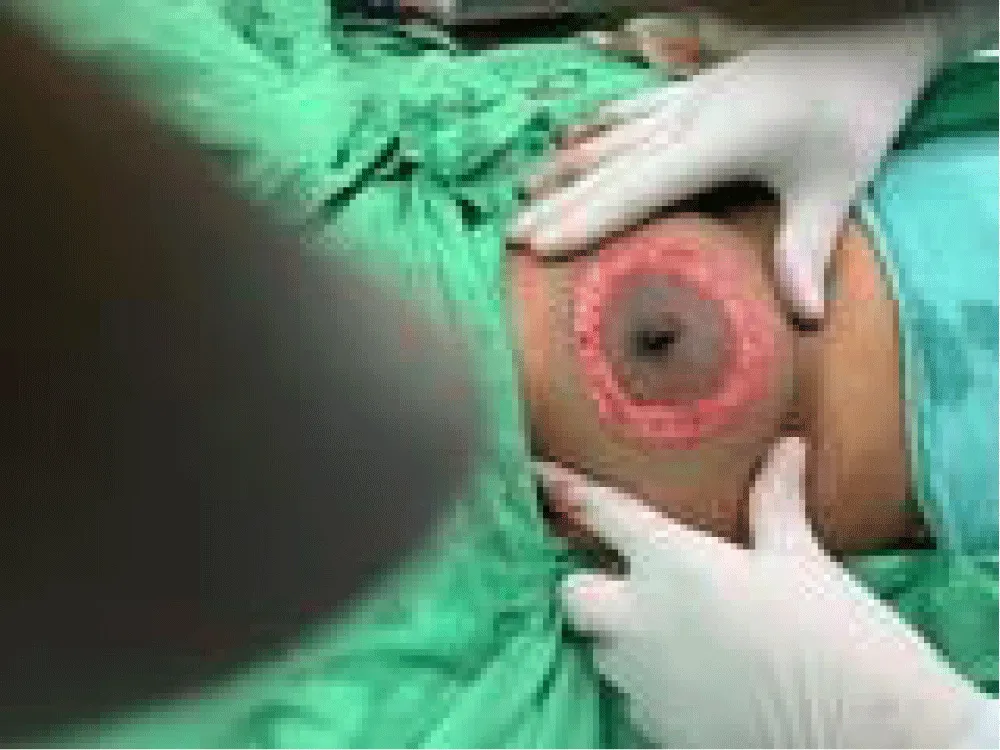
In all Subjects of ALND-OPS model had pre- and post-operative photograph in the record. Preoperative assessment done by physical examination and laboratory investigations as needed for general anesthesia with endotracheal intubation. Patients were placed at supine position with extension of shoulder of the affected side. Then scrapping and draping done keeping breast and axilla exposed for operation. Initially ipsilateral Level I and II ALND done through a small incision at the upper part of anterior axillary fold to find lateral border of pectoralis major muscle. Dissection continued down to fibro-fatty tissue of neurovascular bundle of axilla and continued down to outer surface of serratus anterior muscle up to long thoracic nerve. Fibro-fatty tissue in front of axillary vein was dissected to expose the vein and its tributaries and around thoracodorsal neurovascular bundle and extend upward to the upper-medial border of pectoralis minor muscle. All the fibro-fatty tissue was excised and preserved rapidly maintaining minimum cold ischemic time. Oncologic resection and volume displacement technique of cancer bearing breast done through periareolar double doughnut incision and de-epithelialization in between (Figure 1). Then incision was put on the exposed dermis along the outer border of the exposed dermis nearer to location of the tumor and undermining of the skin were attained to release breast tissue to allow adequate mobilization for oncologic resection of cancer and reshaping of breast. The resection ranged from 25% to 35% of breast tissue and tumor. Breast skin is preserved to provide room for future enlargement of breast, achievement of original size and similar shape. The remaining adequately mobilized breast tissue were repositioned to fill-up the cavity created after application of vascular clips around the cavity wall. A new smaller breast was created along with improvement of ptosis. Two separate drain tubes placed: one in the newly reconstructed breast and other in the dissected axilla and connected with a continuous negative suction for a defined period. Skin and areola was closed using continuous 4-0 poliglecaprone 25 suture. Other adjuvant therapy offered according to highly individualized protocol after removal of the drains and receiving detailed histological and immunohistochemical report providing wound were healthy.
The sliced mastectomy specimen and axillary soft tissue were fixed in 10% neutral buffered formalin maintaining and recording cold ischemic time. The specimen send to pathology laboratory where grossing of the specimen was performed according to set protocol. Tissue blocks taken were (1) four blocks from tumor, (2) one each from skin and nipple and (3) of any multifocal/multicentric tumor, (4) one or two from non-tumorous area of breast, (5) one each from deep and peripheral resection margins, (6) two from each > 2 cm ALNs and (7) one from each of other resected LNs. The blocks were processed for routine paraffin embedding. Sections were cut at 5µ thickness and stained with routine H and E staining methods. After mounting in a slide examined microscopically. Immunohistochemistry performed on tumor tissue and a combined reports provided.
Patients with OPS and MRM underwent regular combined follow up by surgical, medical and radiation oncology department. Follow-up schedule was 2 months interval local physical examination for first year, thereafter 3 monthly for next 4 years. Surgical oncology department maintain special follow-up schedule for OPS group for tracking the following features: feeling of heaviness of the operated breast, pitting edema, breast skin texture, any dermal condition, any lumpy-bumpiness of breast, or recurrent infection, anesthesia/paresthesia medial aspect of arm, painful shoulder movement. Psychosocial and sexual health were interviewed yearly.
Statistical analysis was performed using SPSS version 23 (IBM Corp, USA). Mean was expressed as mean ± SD (minimum-maximum) median values were recorded when possible to provide an accurate picture of distributions. Student’s t-test was used for continuous and chi-square test for categorical variables and ANOVA. Kaplan-Meier survivability estimate with log-rank test, and univariate and multivariate analysis of Cox regression model of fit is used to assess survival outcomes and to identify significance. P < 0.05 with 95% Confidence Interval (CI) were considered statistically significant.
Results
Out of three nipple-areola-skin sparing novel ALND-OPS model 2(4%) patients were alive till last follow-up on December 2025 and one patient died on November 2020. Both survivors were pre-menopausal woman one was overweight and other of healthy weight. The operation were at upper outer quadrant of left breasts after oncologic excision of 25% and 35% breast tissue respectively. The tumors were pT1 stage of infiltrating ductal carcinoma grade-II, pN0 (first case), and pN1 (second case) stage, hormone receptors positive, and Her-2 negative. Patients had no anesthesia/hypoesthesia at the medial side of left arms and no shoulder pain reported on last follow-up. Last follow-up indicated breast skin color returned to normal but had a feeling of heaviness of the treated breasts. Both patients were physically active than preoperative stage. Patients had high level of satisfaction and stable state of happiness with the operated breast because of similar sizes and symmetry, absence of pain and tenderness, however, operated breast was slightly firmer in first Subject. Their mean DFS was 6.5 years.
The dead postmenopausal woman himself requested for breast conserving surgery. She was 45 years old had single tumor of 3 cm size involving right breasts of infiltrating ductal carcinoma grade II, about 35% breast tissue were excised. Four out of 22 axillary nodes were positive (pN2 and low-risk LNR = 0.18), and was progesterone and Her-2 receptor positive. However, she did not received required adjuvant chemo, radiation, antihormone, and targeted-therapy. Her DFS and OS were 15.4 and 19.7 months respectively. The operated breast was free of recurrence and highly satisfied with her postoperative body image. Her death was due to widespread bilateral pulmonary and hepatic metastasis.
All three OPS patients achieved enlargement of operated breasts leading to proactive symmetrization (Figures 2,3).

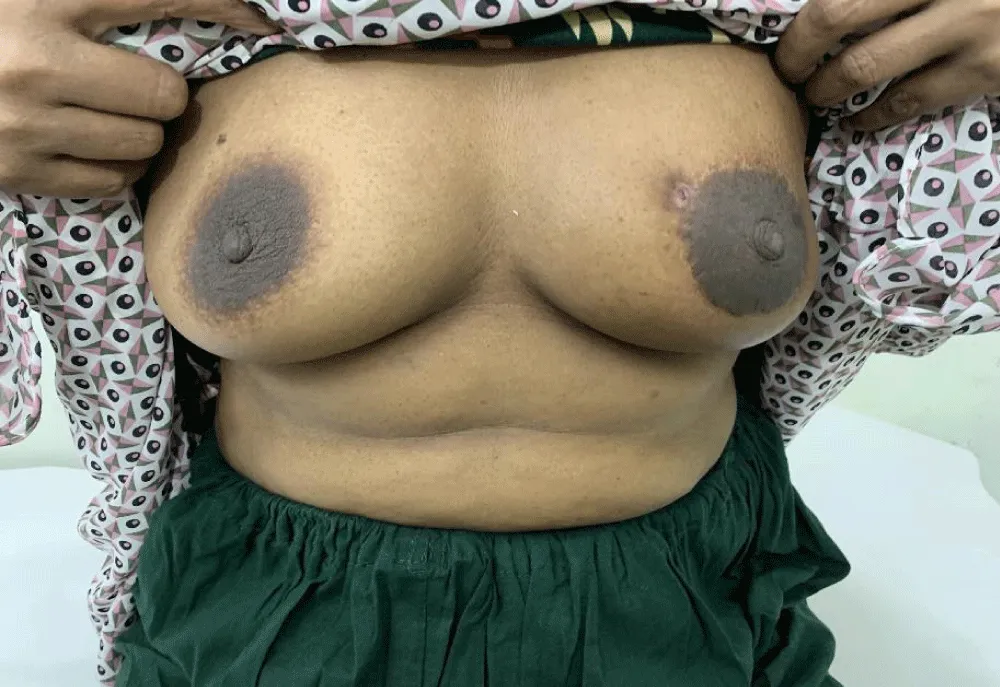
There was noticeable improvement of breast ptosis with healthy breast skin, areola and nipple, minimal edema at pectoral and shoulder region, subtle edema of left arm, and perfect breasts symmetrization. Image taken 20.73 months after surgery.
Minimal edema at pectoral region and perfect symmetrization. Natural color of breast skin, areola, and nipple and were healthy and improvement of ptosis. Image taken 19.27 months after surgery.
Overall median age of the patients were 48 years. Female patients were 50(98%), mean height was 1.52 ± 0.07(1.4 -1.78) meters. Median weight were 59 kg and mean body mass index was 25.71 ± 4.47(14.2 - 40.23) kg/m2. This data was published in an earlier report [11]. The –ve LN cases were 13(25.5 %) and +ve LN cases 38(74.5%). Median and mean ALNs dissected were 12 and 13.33 ± 5.23(6-26) LNs. Median and mean number of +ve LNs were 3 and 4.04 ± 4.67(0-20) LNs. Median and mean number of +ve LNs in Surgery-First group were 4 and 5.37 ± 4.69(1-20) LNs and of Neoadjuvant Chemotherapy (NAC) group were 4.33 and 4 ± 3.12(0-8) LNs respectively. This data was published in another earlier report [3].
The number of cases belong to pN0, pN1, pN2, and pN3 were 13(25.5%), 16(31.4%), 18 (35.3%), and 4(7.8%) and of low-, intermediate-, and high-risk LNR were 23(45.1%), 19(37.3%), and 9 (17.6%) respectively (Table 1). The difference was highly significant between groups (Chi-Square test, p < 0.001).
| Table 1: Distribution of recurrences and deaths of breast cancer subjects (n = 51). | ||||
| Lymph node status | Total number of cases (%) | p value | Number of recurrences (%) | Number of Deaths (%) |
| pN stages pN0 pN1 pN2 pN3 | 13 (25.5) 16 (31.4) 18 (35.3) 04 (7.8) (p < 0.001) | 0.000001 | 2 (3.9) 5 (9.8) 9 (17.6) 1 (2) (p = 0.232) | 03 (5.9) 05 (9.8) 10 (19.9) 03 (5.9) ( p = 0.129) |
| LNR subgroups Low-risk Intermediate-risk High-risk | 29 (45.1) 19 (37.3) 09 (17.6) (p < 0.001) | 6 (11.8) 5 (9.8) 6 (11.8) (p = 0.065) | 7 (13.7) 5 (9.8) 9 (17.6) (p = 0.000303) | |
| pN: pathological node, LNR: lymph node ratio. | ||||
The median and mean duration of follow-up (according to December 2022) were 55.30 and 53.04 ± 15.66 (15.60-81.23), of DFS 51.11 and 47.58 ± 16.70(13.6-73.63), and of OS 52.43 and 50.95 ± 14.69(15.57-74.80) months respectively.
Total number of recurrences were 17(33.3%). The distribution of recurrences of pN0, pN1, pN2, and pN3 were 2 (3.9%), 5(9.8%), 9(17.6%) and 1(2%) respectively with no significant difference (Chi-Square test, p =0.232). The number of recurrences of low-, intermediate-, and high-risk LNR were 6(11.8%), 5(9.8%), and 6(11.8%) respectively (Table 1) with no significant difference (Chi-Square test, p =0.065).
Total number of deaths were 21(41.20%): 17 deaths were due to BC, 1 sudden death was due to massive myocardial infarction, and 3 deaths due to COVID-19. The distribution of deaths among pN0, pN1, pN2, and pN3 were 3(5.9%), 5(9.8%), 10 (19.6%), and 3 (5.9%) respectively with no significant difference (Fisher Exact test, p =0.129). The death distribution among low-, intermediate- and high-risk LNR were 7(13.7%), 5(9.8%), and 9(17.6%) respectively (Table 1) with significant difference (Fisher’s Exact test, p <0.003).
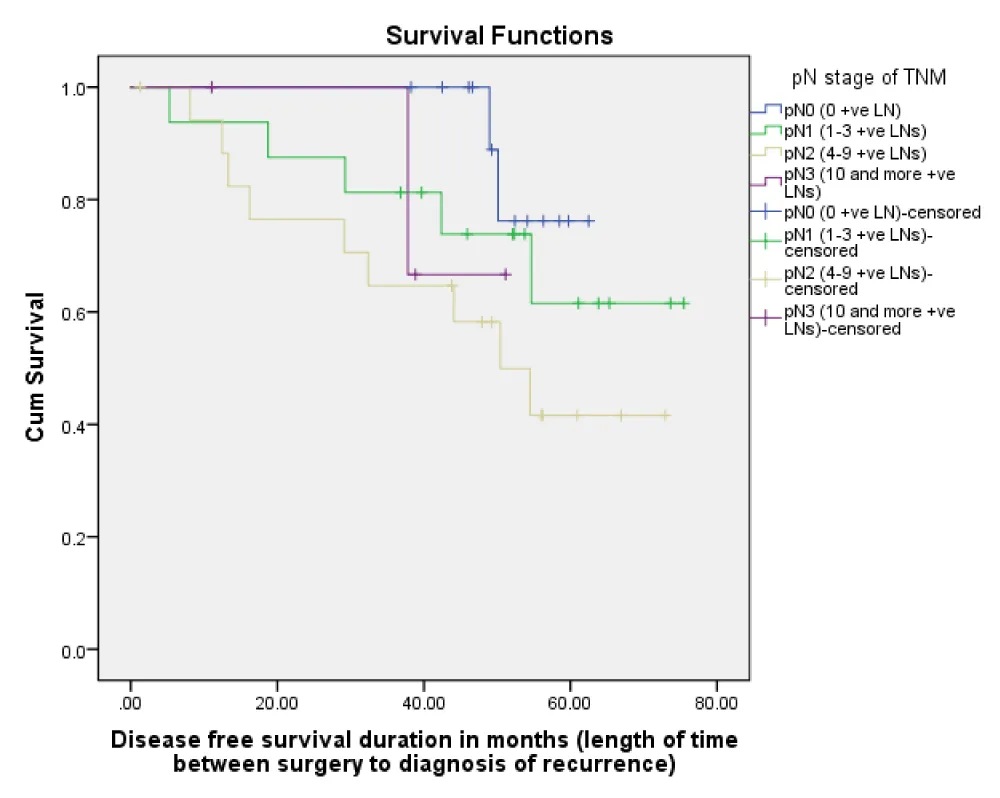
Kaplan-Meier survival functions estimate of mean survival time of DFS of pN0, pN1, pN2, and pN3 were 59.4 (CI 55.7 and 63.2), 59.6(CI 47.8 and 71.4), 48.5(CI 36.6 and 60.3), and 46.7(CI 39.6 and 53.0) months respectively. Pair wise comparisons (Log Rank test) of DFS of pN stages indicated marginal significant difference between pN0 and pN2(p = 0.048). However, survival functions curve of DFS for pN0 indicated best possible survival time while curves of pN1, pN2 and pN3 were similar and observed worst survival time (Figure 4).
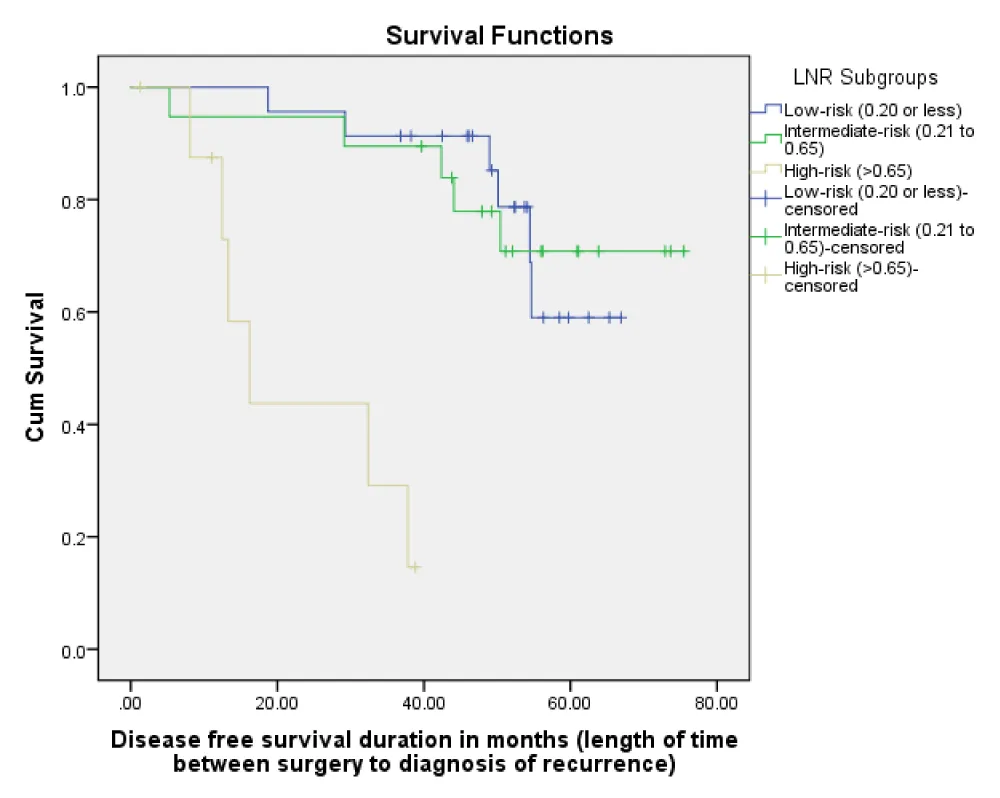
Kaplan-Meier survival functions estimate of mean survival time of DFS of low-, intermediate-, and high-risk LNR were 58.6(CI 52.8 and 64.3), 63.8(CI 54.6 and 73.1), and 23(CI 14.1 and 31.9) months respectively. Pair wise comparison (Log Rank test) indicated highly significant difference between low- and intermediate- risk (p =0.003), low- and high-risk (p < 0.003) and intermediate- and high-risk LNR (p < 0.001). The curves of low- and intermediate-risk LNR were similar with best, and high-risk LNR with worst survival time (Figure 5).
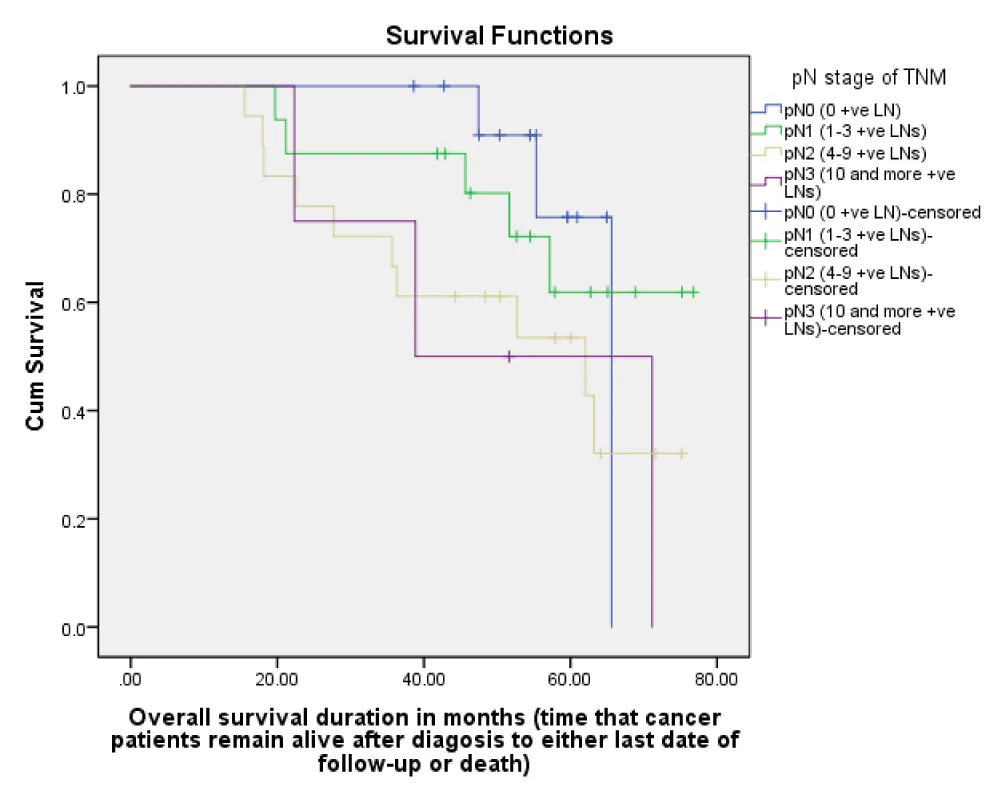
The Kaplan-Meier survival functions estimate of mean survival time of OS of pN0, pN1, pN2 and pN3 subgroups were 62.61(95% CI were 57.89 and 67.34), 66.61(95% CI 59.14 and 74.08), 52.77(95% CI 43.73 and 61.81), and 53.18(95% CI 26.08 and 80.28) months respectively. Overall comparison (Log Rank test) of survival function indicated no significant difference of OS within pN stages (Log rank test, p = 0.068). Pair wise comparisons indicated no significant difference. The survival function estimator of OS indicated curves of pN0 and pN1 were similar and the best survival time. On the other hand curves of pN2 and pN3 had similar but the worst survival (Figure 6).
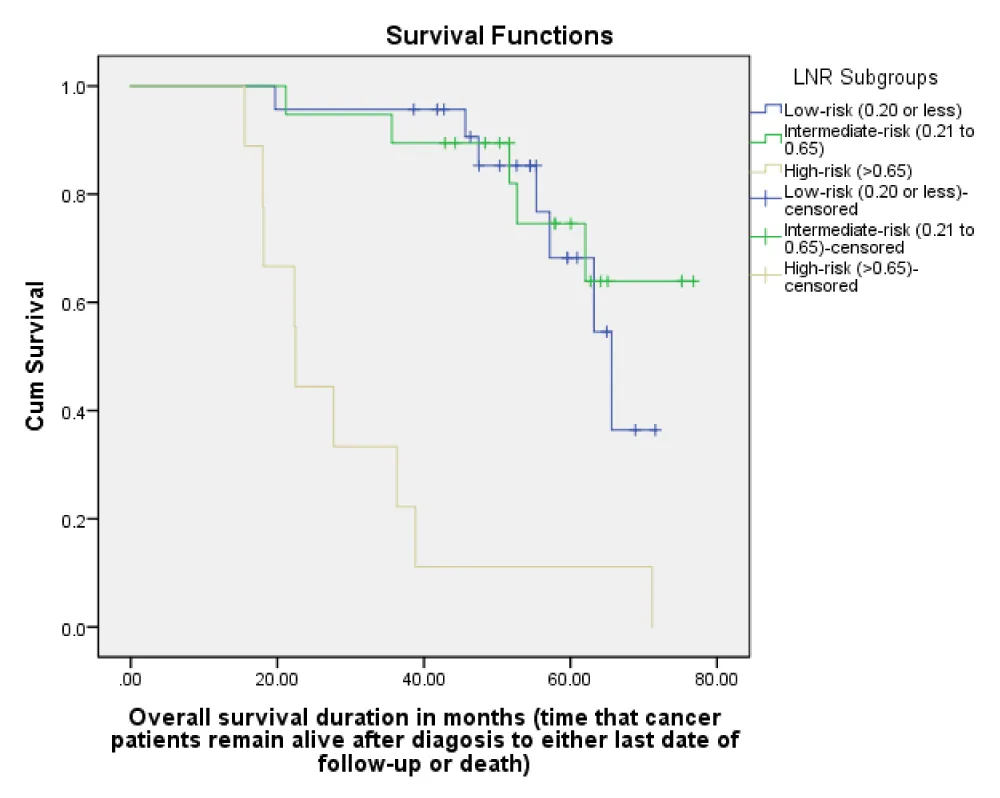
The Kaplan-Meier survival functions estimate of mean survival time of OS for LNR of low-, intermediate-, and high-risk LNR were 68.21(95% CI 60.97 and 75.93), 68.50(95% CI 62.08 and 74.93), and 37.35(95% CI 23.54 and 51.15) months respectively. The estimate median survival time of low- and high-risk LNR were 72.63(95% CI 5.75 and 89.51) and 27.7(95% CI 12.13 and 43.27) months respectively. Overall comparisons (Log Rank test) of survival functions of OS of LNR subgroups indicated highly significant difference (p < 0.001). Pair wise comparisons of OS of LNR subgroups indicated significant difference between low- and high-risk LNR (p < 0.001), and intermediate- and high-risk LNR (p < 0.001). The survival function estimator plots for OS indicated curves of low- and intermediate-risk LNR were similar with the best possible survival time. On the other hand curve of high-risk LNR indicated the worst survival (Figure 7).
The covariates like age in years, menopausal age groups, body weight, BMI, BMI categories, number of multicentric/multifocal breast tumor, maximum diameter of the tumor, pT stages, total number of ALNs dissected, number of positive ALN found, histological grade, pN stages, LNR, LNR subgroups, TNM stage group, and NAC status were analyzed using Cox regression model of fit. The univariate Cox regression analysis of DFS of pN stages with statistical significance were of BMI categories (p = 0.039, HR = 1.99, CI of HR 1.036 and 3.859), LNR (p = 0.003, HR = 11.109, CI of HR 2.286 and 53.995), LNR subgroups (p = 0.003, HR = 3.391, CI 1.531 and 7.51), and NAC status (p = 0.005, HR = 4.276, CI for HR 1.564 and 11.691). The multivariate Cox regression analysis of covariates for DFS were BMI categories, LNR and LNR subgroups indicated independent predictor variables were of Low-risk LNR (p = 0.012), Intermediate-risk LNR (p = 0.044,HR = 0.004, CI 0.000022 and 0.873), and High-risk LNR (p = 0.008, HR = 0.008, CI 0.00021 and 0.286). Univariate analysis of Cox regression model for OS with statistical significance were pT stages (p = 0.03, HR = 2.222, CI of HR 1.08 and 4.569), number of positive LNs (p = 0.022, HR = 1.08, CI of HR 1.011 and 1.154), pN stages (p = 0.044, HR = 1.634, CI 1.013 and 2.636), LNR (p = 0.001, HR = 7.751, CI 2.238 and 26.837), LNR subgroups (p = 0.001, HR = 2.02, CI 1.533 and 5.56), TNM stage grouping (p = 0.036, HR = 1.269, CI 1.015 and 1.587) and NAC status (p = 0.012, HR = 3.280, CI 1.298 and 8.289). Model coefficients of multivariate analysis of Cox regression survival model of OS of pT stages, number of positive ALNs, pN stages, LNR, LNR subgroups, and TNM stage grouping indicated independent covariates were Low-risk LNR (p = 0.007), Intermediate-risk LNR (p = 0.019, HR = 0.000077, CI 0.000 and 0.213), and High-risk LNR (p = 0.005, HR = 0.000122, CI 0.000 and 0.07).
Out of 51 Subjects, 10(19.61%) patients received Neoadjuvant Chemotherapy (NAC), of them pN0 was 1 (10%), pN1 were 4(40%), and pN2 were 5(50%), pN3 had no Subject (0%). The pairwise comparisons indicated no significant statistical difference between not-received-NAC and received-NAC groups in Kaplan-Meier (KM) survival functions estimate for DFS of pN stages. The overall estimate mean and median for survival time of DFS of pN stages of NAC group were 32.41(CI 18.22 and 46.59) and 29.27(CI 0.00 and 70.13) months respectively. The estimate means of survival time of pN0, pN1, pN2 were 62.8(CI 62.8 and 62.8), 32.8(CI 15.41 and 50.19), and 26.01(CI 15.41 and 50.19) months respectively. The estimate medians of N0, pN1, and pN2 were 62.8, 29.27 (CI 0.36 and 58.18), and 13.3 (CI 2.06 and 24.54) months respectively. Pairwise comparisons using Log Rank (Mantel-Cox) test indicated no statistically significant difference within pN stages. Survival functions estimate indicated discordant curves of pN1 and pN2. Distribution of number of Subjects of NAC group for DFS of low-, intermediate-, and high-risk LNR were 2(20%), 4(40%), and 4(40%) respectively. KM survival functions estimate of NAC group indicated overall estimate of mean and median survival time of DFS of LNR were 32.41(CI 18.22 and 46.59) and 29.27(CI 0.00 and 70.13) months respectively. The estimate means for survival time of DFS for low-, intermediate-, and high-risk LNR were 46.04 (CI 13.18 and 78.89), 39.53(CI 19.15 and 59.92), and 18.47(CI 0.00 and 40.39) months respectively and estimate medians for survival time of DFS were 29.27, 39.67 (CI 0.00 and 80.77), and 8.07 (CI 0.00 and 19.83) months respectively. Pairwise comparisons using Log Rank (Mantel-Cox) test indicated no statistically significant difference for survival time of DFS between LNR subgroups. Survival functions indicated low-risk LNR curve was discordant.
Total number of Subjects of OS of pN stages of NAC group was 8(15.69%), the distribution of them among pN0, pN1, and pN2 were 1(1.96%), 3(5.88%), and 4(7.84%) respectively. The KM survival functions estimate of NAC group of pN stages of OS indicated overall estimate of mean and median survival time of OS for pN stages were 44.56(CI 7.92 and 60.08) and 45.7(CI 11.19 and 80.21) months respectively. The estimate means for survival time of pN0, pN1 and pN2 were 72.63 (CI 72.63 and 72.63), 51.45(CI 40.18 and 62.72), and 30.48(CI 10.2 and 50.75) months respectively and medians were 72.63, 45.7, and 18.13(CI 6.24 and 30.02) months respectively. Pairwise comparisons using Log Rank (Mantel-Cox) test indicated no statistically significant difference within pN stages. Survival functions indicated discordant curves of N1 and pN2 stages. Total number of subjects of NAC group of OS for LNR subgroups were 8(15.69%), of them low-, intermediate-, and high-risk LNR were 2(3.92%), 2(3.92%), and 4(7.84%) respectively. The KM survival functions estimate of NAC group for OS of LNR subgroups indicated overall estimate of mean and median survival time were 44.56(CI 29.03 and 60.08) and 45.7(CI 11.19 and 80.21) months respectively. The estimate means for survival time of low-, intermediate-, and high- risk LNR were 59.17(CI 32.77 and 85.56), 57.2(CI 57.2 and 57.2), and 30.48(CI 10.2 and 50.75) months respectively and estimate medians were 45.7, 57.2, and 18.13(CI 6.24 and 30.02) months respectively. Pairwise comparisons using Log Rank (Mantel-Cox) test indicated no statistically significant differences within LNR subgroups. All survival function curves of LNR subgroups were discordant too.
Discussion
Nowadays Level 2 OPS is most frequent although labor intensive complex surgery where both plastic surgeon and surgical oncologist are involved of treatment of BC [12]. On the other hand manageable lymphedema of the upper extremity, pectoral region, and leftover breast is an effect of ALND-OPS model being less severe.Thus ipsilateral ALND an alternative of mastopexy of healthy breast [3] because total surgical activity is centered to the cancer affected breast. We should consider that regional lymphadenectomy is a surgical modality of treatment in BC. Six and a half years follow-up of this research report of skin sparing novel ALND-OPS model indicated least scaring of operated breast with mild lumpy-bumpiness at oncologic resection site, stable natural-looking breast mound, have intact sensation of nipple-areolar complex and mild edema at limited area of skin of operated breast, and skin color of the operated breast is normal. Patients are confident with high level of stable satisfaction about their body image. Patients are confident, more active, and progressively decreasing anxiety of chances of local recurrence in the reconstructed breasts of this new modality of oncoplastic surgery. They increases physical and social activity after cancer treatment. Patients has easy feeling during sexual activity. They are highly satisfied and happy with the operated breasts because breast achieved normal size, natural contour, skin color, and symmetrization. Patients are highly satisfied with the services provided by department of surgical oncology. They talk to other patient about success history and satisfaction of this type of surgery. We do not use any scoring system to assess patients’ well-beings.
This study observed significantly sizeable number patients were included in high-risk LNR subgroup compared to that of pN3 stage (p < 0.001) of BC patients. LNR showed prognostic superiority to pN stage for OS and should allow clinicians to stratify patients for highly individualized adjuvant therapies. Similar result was observed in other study [13]. Overall comparisons of DFS indicated powerful expression of LNR subgroups (p = 0.000006). Pair wise comparison of survival functions of DFS of pN stage indicated significant difference between pN0 and pN3 (p = 0.006), and between pN0 and pN2 (p =0.018), and survival plots of DFS indicated similar curves of pN1, pN2, and pN3. Thus pN0 indicated good prognosis with long survivability and curves of pN1, pN2 and pN3 belonged to similar worst prognosis group.
The overall comparisons of survival functions of DFS of LNR show powerful expression of survival time (p = 0.000066) than pN staging (p = 0.068). Pair wise comparisons indicated significant difference of survival functions of DFS between low- and high-risk LNR (p = 0.000001), and intermediate- and high-risk LNR (p = 0.000161) and no significant difference between low- and intermediate-risk LNR indicating powerful expression of DFS. The survival plots of low- and intermediate-risk LNR of DFS curves were similar indicating better survivability than that of worst survivability of high-risk LNR. The better predictive power of LNR than pN stages of DFS of BC patients was observed in another retrospective study [6].
Overall comparison of OS of LNR group indicated significant survival functions (p = 0.000006). Pair wise comparisons of survival function of OS of pN stage indicated significant difference between pN0 and pN2 (p = 0.048) only. The curves of the survival plot of pN1, pN2, and pN3 were similar indicating pN staging had weak expression of prognosis thus counting positive axillary lymph node only is not enough for prognostication. On the other hand, no significant difference of survival function of OS was observed between low- and intermediate-risk LNR subgroups (p = 0.819) and survival plot curves were similar too indicating best prognosis and that of high risk LNR had worst. Pair wise comparisons of OS indicated significant difference between low- and high-risk LNR (p = 0.000041), and that of intermediate- and high-risk LNR (p = 0.000161). High-risk LNR subgroup had worst survival time. It is indicated that assessment of prognosis of BC using LNR could be possible with precision and is powerful and thus routine ALND is a must. One retrospective study of OS indicated LNR is superior to pN stage for the determination of BC prognosis [14] and another meta-analysis indicated high LNR value is associated with short OS of BC patients after neoadjuvant chemotherapy [15]. The reality is with the increased rate of detection of early BC after introduction of screening program (40% T1 and 30% T2) [16] resulting in improvement of breast cancer-associated mortality [17] and along with declined number of ALND because of pN staging of TNM classification require positive LN counts only. One study in China indicated the use of ALND declined from 94% on 1998 to 36% on 2004 in BC surgery [18]. Another study in Spain indicated rate of ALND was 91% in 1998 that decreased to 34% within 2017 [19]. Currently surgical oncologists of breasts cherishing the idea that ALND should be performed in selected cases. On the other hand, Gastrointestinal (GI) oncologist give importance to extensive systemic LN dissection for carcinoma of the esophagus, stomach and colon. An analysis of Surveillance, Epidemiology, and End Results database showed that calculated OS increased by 7.6% for T1/2N0, 11% for T3N0, and 7% for T3N1 for every additional 10 LNs dissected and data provided support in favor of extended lymphadenectomy for superior survival [20]. ALND should be a routine procedure of BC therapy as in cases of gastrointestinal carcinoma.
This prospective small scale study of novel OPS and appreciable number of consecutive prospective ALND subjects indicated important observations e.g., therapeutic, cosmetic, accurate stratification of patient staging, and powerful prognostication of BC deserving large scale research on ALND.
Pair wise comparisons of survival functions indicated no significant difference between low- and intermediate-risk LNR in DFS (p = 0.772) and OS (p = 0.819). Survival functions estimator curves of DFS and OS also indicated low- and intermediate-risk LNR were similar. Above findings indicated that intermediate-risk subgroup should be incorporated in the low-risk LNR subgroup and LNR should be classified into low- and high-risk LNR. Low- and high-risk LNR subgrouping also adapted in other study [21].
The overall Cox regression coefficient model of fit for DFS indicated statistically significant (p = 0.001) improvement of the model after addition of following covariates and efficiently explained the data. Statistically significant negative Cox regression coefficient of the variables like age in year (p = 0.02) and the number of positive pN (p = 0.039) were observed indicating the covariates improved prognosis with increments. One study indicated younger BC age group exhibit more aggressive disease than older patient [22] and higher number of positive LNs were associated with shorter DFS [23]. Statistically significant increase of recurrences of BC and decreased DFS of postmenopausal women (p = 0.025) was observed in his study indicated an association that of other study [24]. Statistically significant positive regression coefficient of BMI (p = 0.024) of this study indicated obese patients experienced shorter DFS and was similar to other observation [25]. With the increase of pT stage (p = 0.007) there was increased hazard rate, increased recurrence and decreased DFS. Similar result was observed in other study [26]. Regression coefficient of histological grade was slightly positive indicating that increased histological grade there was slight increase of recurrence rate, however, the effect was minimal. Multivariate Cox regression analysis of LNR subgroups for DFS significantly fit in the model (p = 0.002) and indicated longer DFS in low-risk LNR than high-risk LNR. Similar result was observed in other study [27]. Intermediate- (p = 0.044) and high- risk (p = 0.008) LNR of DFS were observed as independent covariates like that of other study [27]. All NAC treated BC patients of this research presented with partial pathological response indicated statistically significant decreased DFS (p < 0.001) compared to the patients who did not received NAC. Similar result also observed in other study [28].
The overall Cox regression model of fit for OS indicated statistically significant (p < 0.001) improvement of the model after inclusion of defined covariates and efficiently explained the data. Slightly negative regression coefficient was observed for age in year, indicating that lower age is associated with higher hazard rate of OS, however, the effect is not statistically significant. Similar result was observed in another study [29]. Statistically significant negative regression coefficient was observed with Her 2 positive status (p < 0.001) indicating association with decreased hazard rate thus increased OS. Similar result observed in other study [30]. Statistically significant positive regression coefficient were observed with LNR (p = 0.001), indicating that as LNR increased hazard rate increased significantly and OS decreased. Similar result observed in other study [27]. Positive regression coefficient of number of patients receiving NAC was significant (p = 0.012) indicated that increased number of events (deaths) were associated with increased number of NAC patients compared to those not receiving NAC. Similar result observed in other study [31]. The multivariate Cox regression model analysis indicated that low-risk LNR was associated with increased DFS and OS. On the other hand intermediate- and high- risk LNRs were associated with decreased DFS and OS indicating ALND forecasts prognosis of breast cancer with precision. Similar result was observed in other study [27].
Stratification and power of assessment of prognosis of patients of NAC group could not possible by pN stages or LNR subgroups when majority patients belonged to partial response group.
The lymphedema breast resulting from ALND-OPS model should be viewed as a favorable development leading to a stable spontaneously symmetrical breast. The ALND induced enlarged breast is not simply a lymph-fluid filled bag but a stable structure where the initial lymph fluid is gradually replaced by fibrosis and adipogenesis. Thus lymphedema breast should not be considered as a focus of disease if dermal changes and fibrous tissue contracture of the extracellular matrix can be prevented. The features typically associated with severe chronic lymphedema (e.g., dry skin, hyperkeratosis, acanthosis, verrucae, inflammation, progressive fibrosis, and recurrent infection) were absent in this series. The pathophysiological mechanisms are initial lymphatic fluid collection is ultimately replaced by fibrosis an adipogenesis. Adipogenesis is a late feature of lymphedema, and the lymphatic fluid stasis (specifically, its fatty acid content) is thought to promote adipocyte proliferation and differentiation. Adeponectin is mentioned as a positive regulator marker of this process. Fibrosis and adipogenesis are hypothesized to create a self-controlled cycle of manageable lymphatic collection and prevents contraction of the newly generated fibrous issue, leading to stable structurally similar breast with near normal extracellular matrix in the reconstructed breast [31]. Skin sparing breast reconstruction is crucial in preventing severe lymphedema induced skin changes (dryness, thickening, hyperkeratosis, acanthosis etc.). Thus lymphedema of ipsilateral ALND and skin sparing breast reconstruction responded by fibrosis and adipogenesis is a favorable near-normal pathophysiological extracellular matrix changes within reconstructed breast leading to a stable symmetrical breast pair. It is also evident that fibrosis and adipogenesis create a self-controlled cycle of manageable lymphatic collection which again prevent contraction of newly generated fibrous tissue in the breasts and ipsilateral upper extremities. Patients were demonstrated the complete decongestive therapy techniques including: long term use of tight bra, increased physical activity, self-breast massage, reverse Butterfly stretching of pectoral region and careful erotic regular breast stimulation. All ALND patients in this series had well-controlled lymphedema of the arm, chest, and breast with no observed cases of lymphedema disease during follow-up [32]. Regenerative medicine using bio-scaffolds and stem cell therapy is the anticipated future direction for regenerating functional breast tissue [33].
This research study has unique comprehensive data with detailed stratification for the following reasons: (1) the collection of prospective data from routine ALND for all treated BC patients irrespective to type of surgery to ensure a more real-world, consecutive cohort thus avoid selection bias, (2) data included detailed pN stage and LNR subgroups thus fine sub-classifications that ensure prognosis assessment, (3) stage grouping based on Her-2 receptor status which is a predictive and prognostic biomarker and because of positive cases has different natural history than negative cancer thus crucial for accurate prognosis and for defining homogeneous treatment group, and (4) univariate and multivariate analysis of all covariates of BC. On the other hand most renowned prospective trials on ALNs were survival analysis of early sage BCs (T1 and T2 and sometimes T3 stages) with node negative or 1-2 sentinel node positive pN0/pN1 stages [34-37]. This article defined DFS and OS according to a published article [25].
This breast-skin-sparing novel ALND-OPS model is introduced with an ethical standard for Level-2 OPS standardization. Everyone should emphasize that partial excision of a normal external organ is not morally or ethically sound after introduction of a less invasive alternative procedure [38]. It is also a fact that total elimination of ALND is impossible and current trend is to minimize amount of anticancer drugs and radiation exposure. Routine ALND can assist us to make these objectives real and should prevent huge number unnecessary mutilating surgery.
Ipsilateral ALND-OPS procedure cause persistent proactive enlargement of the treated cancer-bearing breast due to organization of lymphedema leading to symmetrical breasts. This novel surgery minimizes post-operative complications such as scar formation and deformity. Long term follow-up of this very small volume research indicated promising result. The authors urged that dedicated oncoplastic surgeon should come forward to develop and standardize this novel model.
p>Greater number of high-risk breast cancer cases are exposed from routine axillary dissection. Prognosis assessment of axillary dissection in breast cancer allows lymph node ratio subgrouping is an efficient and powerful way to identify the best and worst prognosis cases with superior discrimination thus help planning appropriate adjuvant therapy through precise risk stratification to prevent under-treatment of breast cancers thus increase survivability. ALNDs are crucial factors in determining adjuvant therapies.In summary, the text is a brief description on recent research advocating routine ipsilateral ALND as a dual-purpose procedure: spontaneous symmetrization and prognostication for superior risk stratification via LNR
Acknowledgement
We acknowledge with sorrow the recent death of the author Professor Dr. M. Kamal due to liver cancer who contributed much in designing pathological methodology, in preparation of histology and immunohistochemistry reports and revision of manuscript. The authors declare that they have no competing interest. There is no financial arrangement with anyone. This prospective research work is continuing its’ long-term follow-up study. The dataset used during current study are available from corresponding author on reasonable request.
References
- Freeman MD, Gopman JM, Salzberg CA. The evolution of mastectomy surgical technique: from mutilation to medicine. Gland Surg. 2018 Jun;7(3):308-315. doi: 10.21037/gs.2017.09.07. PMID: 29998080; PMCID: PMC6006018.
- Giuliano AE, Ballman KV, McCall L, Beitsch PD, Brennan MB, Kelemen PR, Ollila DW, Hansen NM, Whitworth PW, Blumencranz PW, Leitch AM, Saha S, Hunt KK, Morrow M. Effect of Axillary Dissection vs No Axillary Dissection on 10-Year Overall Survival Among Women With Invasive Breast Cancer and Sentinel Node Metastasis: The ACOSOG Z0011 (Alliance) Randomized Clinical Trial. JAMA. 2017 Sep 12;318(10):918-926. doi: 10.1001/jama.2017.11470. PMID: 28898379; PMCID: PMC5672806.
- Mostaque AK, Mamun MAA, Kamal M, Alam AMMS, Chowdhury IU. Oncoplastic surgery and outcome prediction deserve axillary lymph node dissection – treatment results of 51 cases of breast cancer. IISJ. 2021.
- Arnone P, Zurrida S, Viale G, Dellapasqua S, Montagna E, Arnaboldi P, Intra M, Veronesi U. The TNM classification of breast cancer: need for change. Updates Surg. 2010 Oct;62(2):75-81. doi: 10.1007/s13304-010-0014-y. PMID: 20845013.
- Sawaki M, Shien T, Iwata H. TNM classification of malignant tumors (Breast Cancer Study Group). Jpn J Clin Oncol. 2019 Mar 1;49(3):228-231. doi: 10.1093/jjco/hyy182. PMID: 30541035.
- Xiao XS, Tang HL, Xie XH, Li LS, Kong YN, Wu MQ, Yang L, Gao J, Wei WD, Xie X. Metastatic axillary lymph node ratio (LNR) is prognostically superior to pN staging in patients with breast cancer--results for 804 Chinese patients from a single institution. Asian Pac J Cancer Prev. 2013;14(9):5219-23. doi: 10.7314/apjcp.2013.14.9.5219. PMID: 24175804.
- Chang JM, Leung JWT, Moy L, Ha SM, Moon WK. Axillary Nodal Evaluation in Breast Cancer: State of the Art. Radiology. 2020 Jun;295(3):500-515. doi: 10.1148/radiol.2020192534. Epub 2020 Apr 21. PMID: 32315268.
- Safavi A, Kaviani A, Mohammadzadeh N, Zand S, Krag DN. Breast cancer prognostication by pathologic node staging (pN-staging) system versus Lymph Node Ratio (LNR): A critical review of conflicts with number of nodes, Z-0011 trial, staging cut- points, neo-adjuvant therapy and survival estimation. Arch Breast Cancer. 2017 Nov;4(4):110-123. doi: 10.19187/abc.201744110-123.
- Zhao X, Wei J, Li X, Yang H, Wang P, Cao S. Increasing negative lymph node count predicts favorable OS and DSS in breast cancer with different lymph node-positive subgroups. PLoS One. 2018 Mar 19;13(3):e0193784. doi: 10.1371/journal.pone.0193784. PMID: 29554092; PMCID: PMC5858777.
- Koh J, Kim MJ. Introduction of a New Staging System of Breast Cancer for Radiologists: An Emphasis on the Prognostic Stage. Korean J Radiol. 2019 Jan;20(1):69-82. doi: 10.3348/kjr.2018.0231. Epub 2018 Dec 27. Erratum in: Korean J Radiol. 2022 May;23(5):570. doi: 10.3348/kjr.2022.0246. PMID: 30627023; PMCID: PMC6315072.
- Mostaque AK, Mamun MAA, Alam AMMS, Chowdhury IU, Sharif RB. Assessment of anthropometric measurements, time lag between diagnosis and surgery, postoperative recovery time, and outcome of oncoplastic surgery of treated breast cancer patients. J MAR Oncol. 2022.
- Thompson PW, Chatterge A, Losken A. Standards in oncoplastic breast-conserving surgery. Ann Breast Surg. 2021;6:37. doi: 10.21037/abs-21-33.
- Kar A, Ray S, Behera PK, Mohanty L, Das PK, Biswal P. Evaluation of lymph node ratios and log odds of positive nodes as prognostic indicators in primary organ malignancy. Med J Armed Forces India. 2025 Jul;81(Suppl 1):S126-S134. doi: 10.1016/j.mjafi.2024.08.012. Epub 2024 Oct 18. PMID: 40822071; PMCID: PMC12351035.
- Wu SG, He ZY, Li Q, Sun JY, Li FY, Lin Q, Lin HX, Guan XX. Prognostic value of metastatic axillary lymph node ratio for Chinese breast cancer patients. PLoS One. 2013 Apr 23;8(4):e61410. doi: 10.1371/journal.pone.0061410. PMID: 23626682; PMCID: PMC3634079.
- Liu J, Li Y, Zhang W, Yang C, Yang C, Chen L, Ding M, Zhang L, Liu X, Cui G, Liu Y. The prognostic role of lymph node ratio in breast cancer patients received neoadjuvant chemotherapy: A dose-response meta-analysis. Front Surg. 2022 Oct 26;9:971030. doi: 10.3389/fsurg.2022.971030. PMID: 36386510; PMCID: PMC9644128.
- Campanale A, Ventimiglia M, Alfò M, Cipriani M, Minella D, Lispi L, Iachino A. Current Knowledge on Breast Implant-Associated Anaplastic Large Cell Lymphoma: Evidence from Italian Ministry of Health Registry Data. Aesthetic Plast Surg. 2025 Mar;49(5):1304-1313. doi: 10.1007/s00266-024-04426-y. Epub 2024 Oct 14. PMID: 39402199.
- Trieu PDY, Mello-Thoms CR, Barron ML, Lewis SJ. Look how far we have come: BREAST cancer detection education on the international stage. Front Oncol. 2023 Jan 4;12:1023714. doi: 10.3389/fonc.2022.1023714. PMID: 36686760; PMCID: PMC9846523.
- Gou Z, Lu X, He M, Yu L. Trends in axillary surgery and clinical outcomes among breast cancer patients with sentinel node metastasis. Breast. 2022 Jun;63:9-15. doi: 10.1016/j.breast.2022.02.014. Epub 2022 Mar 1. PMID: 35245747; PMCID: PMC8892150.
- García-Novoa A, Acea-Nebril B, Casal-Beloy I, Bouzón-Alejandro A, Cereijo Garea C, Gómez-Dovigo A, Builes-Ramírez S, Santiago P, Mosquera-Oses J. The decline of axillary lymph node dissection in breast cancer. Evolution of its indication over the last 20 years. Cir Esp (Engl Ed). 2019 Apr;97(4):222-229. English, Spanish. doi: 10.1016/j.ciresp.2019.01.010. Epub 2019 Mar 8. PMID: 30857734.
- Smith DD, Schwarz RR, Schwarz RE. Impact of total lymph node count on staging and survival after gastrectomy for gastric cancer: data from a large US-population database. J Clin Oncol. 2005 Oct 1;23(28):7114-24. doi: 10.1200/JCO.2005.14.621. PMID: 16192595.
- Soran A, Ozmen T, Salamat A, Soybir G, Johnson R. Lymph Node Ratio (LNR): Predicting Prognosis after Neoadjuvant Chemotherapy (NAC) in Breast Cancer Patients. Eur J Breast Health. 2019 Oct 1;15(4):249-255. doi: 10.5152/ejbh.2019.4848. PMID: 31620684; PMCID: PMC6776131.
- Chen HL, Zhou MQ, Tian W, Meng KX, He HF. Effect of Age on Breast Cancer Patient Prognoses: A Population-Based Study Using the SEER 18 Database. PLoS One. 2016 Oct 31;11(10):e0165409. doi: 10.1371/journal.pone.0165409. PMID: 27798652; PMCID: PMC5087840.
- Tonellotto F, Bergmann A, de Souza Abrahão K, de Aguiar SS, Bello MA, Thuler LCS. Impact of Number of Positive Lymph Nodes and Lymph Node Ratio on Survival of Women with Node-Positive Breast Cancer. Eur J Breast Health. 2019 Apr 1;15(2):76-84. doi: 10.5152/ejbh.2019.4414. PMID: 31001608; PMCID: PMC6456272.
- Xie Y, Deng Y, Wei S, Huang Z, Li L, Huang K, Wei C, Xu J, Dong L, Zhang Q, Zhao J, Zou Q, Yang J. Age has a U-shaped relationship with breast cancer outcomes in women: a cohort study. Front Oncol. 2023 Oct 4;13:1265304. doi: 10.3389/fonc.2023.1265304. PMID: 37860197; PMCID: PMC10583555.
- Zangouri V, Balaneji SS, Golmoradi R, Kafili E, Bologhi S, Mousavi SA, Hesar AA, Amestejani M. Effects of BMI on prognosis, disease-free survival and overall survival of breast cancer. BMC Cancer. 2025 Feb 13;25(1):257. doi: 10.1186/s12885-025-13638-7. PMID: 39948483; PMCID: PMC11827321.
- Liu Y, He M, Zuo WJ, Hao S, Wang ZH, Shao ZM. Tumor Size Still Impacts Prognosis in Breast Cancer With Extensive Nodal Involvement. Front Oncol. 2021 Apr 9;11:585613. doi: 10.3389/fonc.2021.585613. PMID: 33898305; PMCID: PMC8064390.
- Solak M, Turkoz FP, Keskin O, Aksoy S, Babacan T, Sarici F, Kertmen N, Sever AR, Altundag K. The lymph node ratio as an independent prognostic factor for non-metastatic node-positive breast cancer recurrence and mortality. J BUON. 2015 May-Jun;20(3):737-45. PMID: 26214625.
- Gentile D, Sagona A, De Carlo C, Fernandes B, Barbieri E, Di Maria Grimaldi S, Jacobs F, Vatteroni G, Scardina L, Biondi E, Vinci V, Trimboli RM, Bernardi D, Tinterri C. Pathologic response and residual tumor cellularity after neo-adjuvant chemotherapy predict prognosis in breast cancer patients. Breast. 2023 Jun;69:323-329. doi: 10.1016/j.breast.2023.03.016. Epub 2023 Mar 28. PMID: 37001289; PMCID: PMC10070173.
- Sbaity E, Tamim H, El-Hajj Fuleihan G, Abbas J, Zahwe M, El Sayed R, Shamseddine A. Effect of young age (below 40 years) on oncologic outcomes in Lebanese patients with breast cancer: a matched cohort study. BMC Cancer. 2024 May 4;24(1):560. doi: 10.1186/s12885-024-11910-w. PMID: 38704543; PMCID: PMC11069273.
- Löb S, Linsmeier E, Herbert SL, Schlaiß T, Kiesel M, Wischhusen J, Salmen J, Kranke P, Quenzer A, Kurz F, Weiss C, Gerhard-Hartmann E, Wöckel A, Diessner J. Prognostic effect of HER2 evolution from primary breast cancer to breast cancer metastases. J Cancer Res Clin Oncol. 2023 Jul;149(8):5417-5428. doi: 10.1007/s00432-022-04486-0. Epub 2022 Dec 1. PMID: 36451043; PMCID: PMC10349762.
- Li CY, Kataru RP, Mehrara BJ. Histopathologic Features of Lymphedema: A Molecular Review. Int J Mol Sci. 2020 Apr 6;21(7):2546. doi: 10.3390/ijms21072546. PMID: 32268536; PMCID: PMC7177532.
- Donahue PM, Crescenzi R, Scott AO, Braxton V, Desai A, Smith SA, Jordi J, Meszoely IM, Grau AM, Kauffmann RM, Sweeting RS, Spotanski K, Ridner SH, Donahue MJ. Bilateral Changes in Deep Tissue Environment After Manual Lymphatic Drainage in Patients with Breast Cancer Treatment-Related Lymphedema. Lymphat Res Biol. 2017 Mar;15(1):45-56. doi: 10.1089/lrb.2016.0020. PMID: 28323572; PMCID: PMC5369395.
- Rauner G, Jin DX, Miller DH, Gierahn TM, Li CM, Sokol ES, Feng YX, Mathis RA, Love JC, Gupta PB, Kuperwasser C. Breast tissue regeneration is driven by cell-matrix interactions coordinating multi-lineage stem cell differentiation through DDR1. Nat Commun. 2021 Dec 10;12(1):7116. doi: 10.1038/s41467-021-27401-6. PMID: 34893587; PMCID: PMC8664951.
- Giuliano AE, Ballman KV, McCall L, Beitsch PD, Brennan MB, Kelemen PR, Cataliotti L, Westenberg AH, Klinkenbijl JHG, Orzalesi L, Bouma WH, Mijle HCJ, Nieuwenhuijzen GAP, Veltkamp SC, Slaets L, Duez N, Graaf PW, Dalen T, Marinelli A, Rijna H, Snoj M, Bundred NJ, Merkus JWS, Belkacemi Y, Petignat P, Schinagl DAX, Coens C, Messina CGM, Bogaerts J, Rutgers EJT. Effect of axillary dissection vs no axillary dissection on 10-year overall survival among women with invasive breast cancer and sentinel node metastasis: The ACOSOG Z0011 (Alliance) randomized clinical trial. JAMA. 2017 Nov;318(10):918-926. doi: 10.1001/jaa.2017.11470 PMID: 25439688 PMCID: PMC4291166
- Bartels SAL, Donker M, Poncet C, Sauvé N, Straver ME, van de Velde CJH, Mansel RE, Blanken C, Orzalesi L, Klinkenbijl JHG, van der Mijle HCJ, Nieuwenhuijzen GAP, Veltkamp SC, van Dalen T, Marinelli A, Rijna H, Snoj M, Bundred NJ, Merkus JWS, Belkacemi Y, Petignat P, Schinagl DAX, Coens C, van Tienhoven G, van Duijnhoven F, Rutgers EJT. Radiotherapy or Surgery of the Axilla After a Positive Sentinel Node in Breast Cancer: 10-Year Results of the Randomized Controlled EORTC 10981-22023 AMAROS Trial. J Clin Oncol. 2023 Apr 20;41(12):2159-2165. doi: 10.1200/JCO.22.01565. Epub 2022 Nov 16. PMID: 36383926.
- de Boniface J, Filtenborg Tvedskov T, Rydén L, Szulkin R, Reimer T, Kühn T, Kontos M, Gentilini OD, Olofsson Bagge R, Sund M, Lundstedt D, Appelgren M, Ahlgren J, Norenstedt S, Celebioglu F, Sackey H, Scheel Andersen I, Hoyer U, Nyman PF, Vikhe Patil E, Wieslander E, Dahl Nissen H, Alkner S, Andersson Y, Offersen BV, Bergkvist L, Frisell J, Christiansen P; SENOMAC Trialists’ Group; SENOMAC Trialists' Group. Omitting Axillary Dissection in Breast Cancer with Sentinel-Node Metastases. N Engl J Med. 2024 Apr 4;390(13):1163-1175. doi: 10.1056/NEJMoa2313487. PMID: 38598571.
- Lim GH, Al Shukairi AM, Lee YS, Teo SY, Yan Z, Tan QT, Gudi M, Ng RP, Wong FY. Targeted axillary dissection in breast cancer patients with metastatic nodal disease: a prospective study on localization techniques and oncological outcomes. Gland Surg. 2025 Aug 31;14(8):1529-1538. doi: 10.21037/gs-2025-166. Epub 2025 Aug 20. PMID: 40948928; PMCID: PMC12432960.
- Tayade MC, Dalvi SD. Fundamental Ethical Issues in Unnecessary Surgical Procedures. J Clin Diagn Res. 2016 Apr;10(4):JE01-4. doi: 10.7860/JCDR/2016/18958.7694. Epub 2016 Apr 1. PMID: 27190833; PMCID: PMC4866131.





Content Alerts
SignUp to our
Content alerts.
 This work is licensed under a Creative Commons Attribution 4.0 International License.
