
2026 January 19;7(1):1-11. doi: 10.37871/jbres2255.
-
Subject area(s):

 |
|
 |
|
 |
|

 Research Article
Methylene Blue Removal and Phytotoxicity Evaluation by Aspergillus niger
Mutlu G1 and Malkoç S1,2*
2Environmental Research Center (ÇEVMER), Eskişehir Technical University, Eskişehir, Turkey
- Aspergillus niger
- Biodegradation
- Phytotoxicity
- Methylene blue
Abstract
As the global population continues to grow rapidly, the textile industry, one of the most significant sectors, faces increasing challenges in treating wastewater contaminated with dyes. The widespread use of synthetic dyes in textile manufacturing has made traditional treatment methods inadequate, emphasizing the need for more advanced and sustainable cleanup strategies. Among various techniques for removing color from industrial effluents, biodegradation-based methods have gained significant attention due to their cost-effectiveness and environmentally friendly qualities.
In this study, Aspergillus niger was utilized to remove methylene blue, one of the most common dyes found in textile wastewater, through a biosorption-based remediation process. Experiments were conducted over seven days at temperatures ranging from 25 to 35 °C, using both live and dead fungal biomass, with initial dye concentrations of 10-100 mg/L. The highest removal efficiency of 88.7% was achieved on the fifth day. Under these optimal conditions, the temperature and initial dye concentration were determined to be 25 °C and 10 mg/L, respectively.
Subsequently, a phytotoxicity test was performed using green lentil (Lens culinaris) under optimized conditions. Seeds were irrigated with three different solutions: A 10 mg/L methylene blue solution, control water (tap water), and the post-biosorption treated solution. After seven days, germination rates were recorded as 90%, 100%, and 100%, respectively. The results showed that the biosorption process had no harmful effects on seed germination, indicating that the treated effluent posed no detectable phytotoxic risk.
Introduction
The rapidly increasing global population has led to significant sources of environmental pollution. Industrial wastewater poses significant threats to the environment and aquatic ecosystems. A growing variety of contaminants are constantly released into water bodies through industrial and municipal effluents. These wastewaters often contain a wide range of pollutants, including heavy metals, dyes, pesticides, and pharmaceutical compounds, in varying concentrations. Among these pollutants, synthetic dyes are one of the main contaminants contributing to water pollution and harming ecosystems. Synthetic dyes are extensively used in many industries, such as textiles, leather, cosmetics, paper, printing, and plastics [1].
The textile industry consumes more dyes than any other industrial sector. The heavy use of dyes in textile processes causes considerable contamination of water resources with dye compounds [2]. Because textile wastewater contains numerous pollutants, treating these effluents to meet environmental standards and safely discharging them into receiving bodies is crucial [3]. Although traditional treatment methods have been used to remove contaminants from wastewater, they are often ineffective. Therefore, alternative strategies have been developed to remove dyes from industrial effluents [4].
Removing dyes and other pollutants from water has become more challenging and costly in recent years [5]. Physical, chemical, and biological processes-including electrochemical treatment, coagulation, flocculation, sedimentation, membrane filtration, and adsorption-are common remediation methods [6]. However, synthetic dyes are highly resistant to biodegradation due to their complex and large molecular structures, making conventional wastewater treatment methods ineffective for their removal [7]. Among available options, adsorption has become one of the most practical methods for removing dyes from wastewater because of its low cost, ease of operation, and environmental friendliness.
Material and Method
Preparation of dye solutions
A stock solution of methylene blue (1 g/L) was prepared, and working solutions at concentrations of 10, 25, 50, and 100 mg/L were made through proper dilution for use in the experiments.
Preparation of aspergillus niger biomass
Both live and dead forms of A. niger were used in the study.
Live biomass: Live A. niger cultures were inoculated onto Potato Dextrose Agar (PDA) plates and incubated at 30 °C for 7 days.
Dead biomass: Dead fungal biomass was produced by cultivating A. niger in Potato Dextrose Broth (PDB) at 30 °C for 7 days in a shaking incubator. After incubation, the biomass was sterilized through autoclaving, filtered, and dried at 60 °C for 2 days. The dried biomass was then ground into a fine powder to obtain the dead biosorbent.
For verification, the same procedure was repeated. PDB medium was prepared and inoculated, followed by incubation at 30 °C for 7 days under continuous shaking. After autoclaving, the fungal biomass was filtered, dried at 60 °C for 48 hours, and ground in a mortar, resulting in the dead biosorbent.
Experimental Procedure
The experimental process was conducted as follows:
- Four methylene blue solutions with concentrations of 10, 25, 50, and 100 mg/L were prepared in 50 mL Erlenmeyer flasks.
- To determine contact time, equal amounts of biosorbent were added to the dye solutions, and the flasks were placed in a shaking incubator at 125 rpm. Daily measurements were taken to calculate the percentage removal efficiency.
- For experiments involving dead A. niger, 0.1 g of fungal biomass was added to each 50 mL flask containing the respective dye solutions. The mixtures were incubated at 125 rpm, and daily sampling was conducted to determine removal efficiency.
- Temperature experiments were performed at 25 °C, 30 °C, and 35 °C for both live and dead A. niger over a period of 7 days.
- The optimal conditions identified from these experiments were subsequently used for phytotoxicity testing.
Biosorption efficiency
Biosorption efficiency was calculated using Equation (1):
where:
c0: Initial dye concentration (mg/L)
ce.: Dye concentration after biosorption (mg/L)
Phytotoxicity assessment
Phytotoxicity tests were performed using green lentil (L. culinaris) to evaluate the environmental safety of the biosorption process. Germination tests were conducted under three conditions: tap water (Control), 10 mg/L methylene blue solution, and the 10 mg/L solution obtained after biosorption.
Green lentil (L. culinaris) seeds were first surface sterilized by immersion in bleach for 1 minute, rinsed thoroughly with sterile water, and then soaked in sterile water for 10 minutes. Sterile Petri dishes were prepared with filter papers, which were moistened with 10 mL of the test solutions. Seeds were placed evenly on the moistened filter papers.
Seed sets were irrigated daily with 5 mL of the respective solutions for 7 days. At the end of the experiment, germination and seedling development were evaluated. Shoot and root lengths were measured, and germination percentage was calculated using Equation (2):
Relative Growth Index (RGI) and Growth Index (GI) were calculated using Equations (3) and (4) [8]:
where:
RLS = Root length of the treatment group
RLC = Root length of the control group
where:
GSS = Number of germinated seeds in the treatment group
GSC = Number of germinated seeds in the control group
Results and Discussion
The removal of methylene blue-a dye that is both difficult and costly to treat and originates from the textile industry-was investigated using A. niger through a biosorption process. The effects of various parameters influencing biosorption efficiency, including temperature, contact time, initial dye concentration, and biomass state (Live or dead), were examined, and the experimental design was planned accordingly. The data obtained from these experiments are presented below to assess the effectiveness of the biosorption process and the influence of the tested parameters.
Biosorption efficiencies for live A. niger
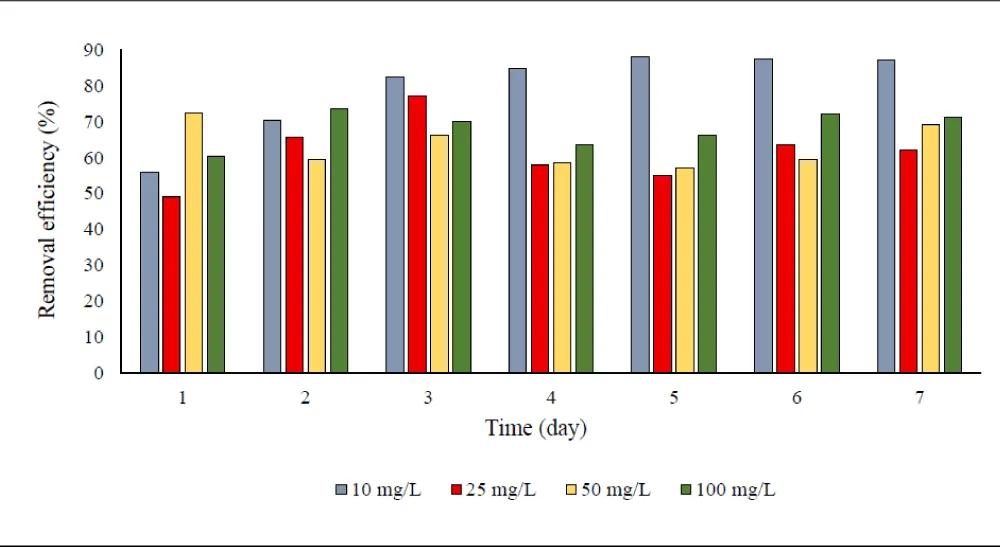
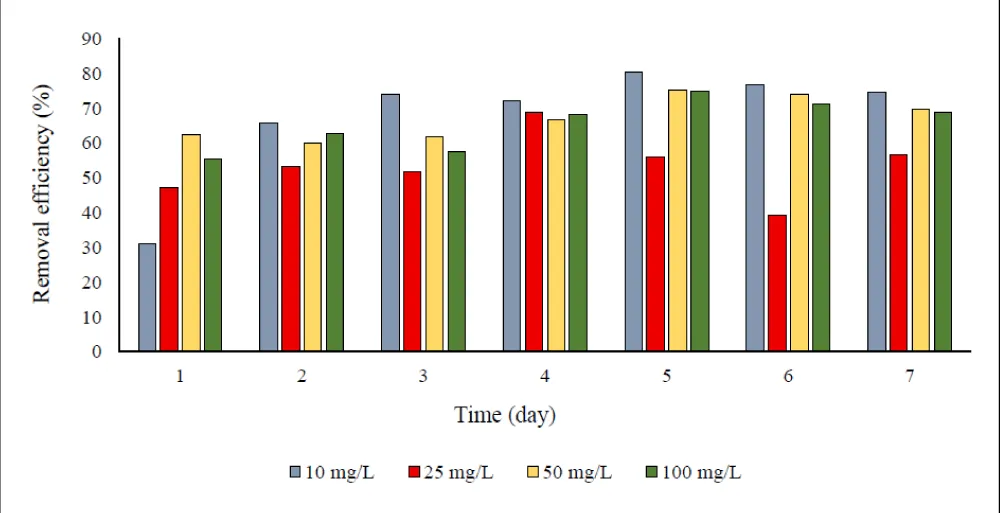
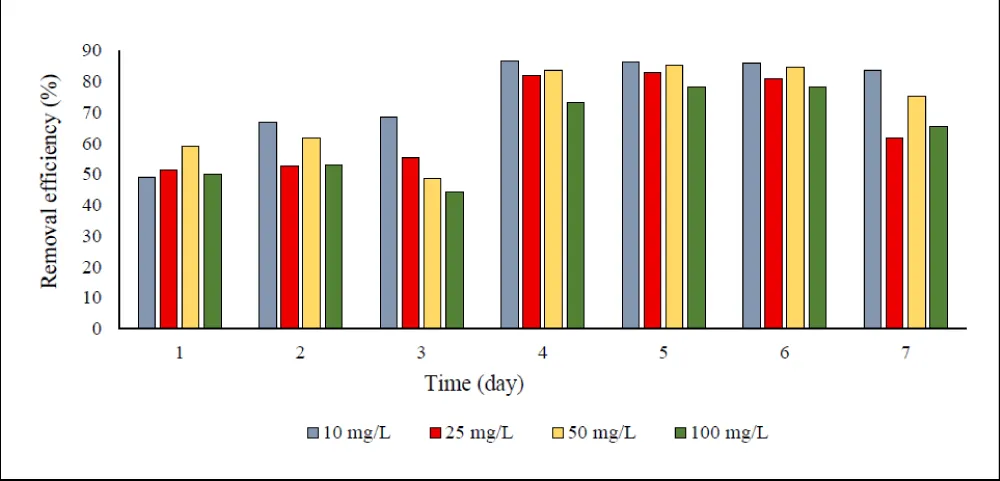
Biosorption efficiencies for methylene blue at concentrations of 10, 25, 50, and 100 mg/L were calculated using Equation (1) for temperature conditions of 25 °C, 30 °C, and 35 °C. Separate graphs were plotted to illustrate the effect of temperature on biosorption efficiency for live A. niger.
The highest removal efficiency for live A. niger was achieved at 25 °C with an initial methylene blue concentration of 10 mg/L, reaching 88.11%. The comparison of removal efficiencies for live A. niger at different temperatures relative to concentration is shown in figures 1-3.
Biosorption efficiencies for dead A. niger
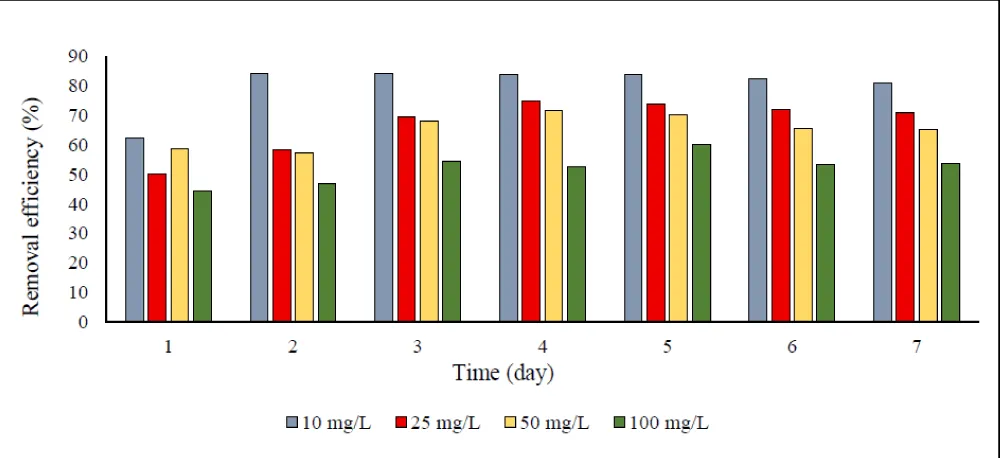
Biosorption efficiencies for methylene blue at concentrations of 10, 25, 50, and 100 mg/L were similarly calculated using Equation (1) for temperature conditions of 25 °C, 30 °C, and 35 °C. Graphical representations were created to illustrate temperature-dependent variations in biosorption efficiency for dead A. niger.
The highest removal efficiency for dead A. niger was observed at 25 °C with an initial methylene blue concentration of 10 mg/L, reaching 84.24%. The comparison of removal efficiencies for dead A. niger at different temperatures relative to concentration is shown in figures 4-6.
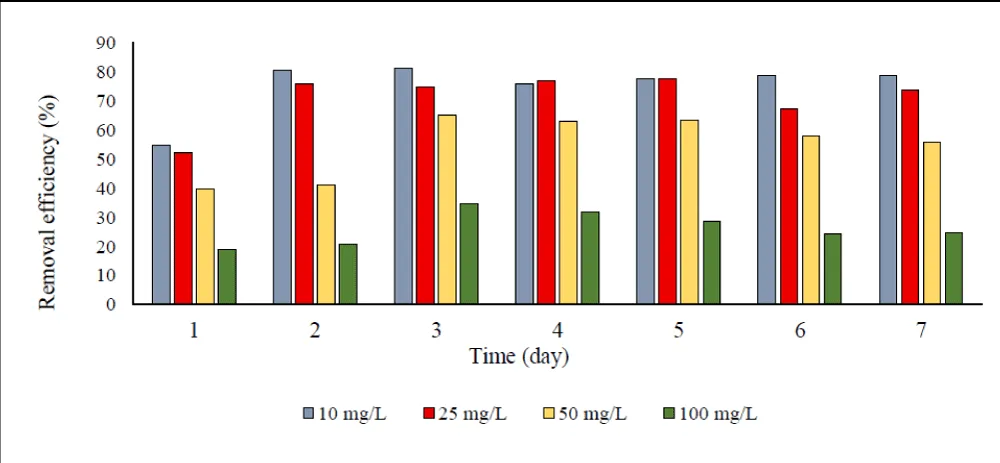
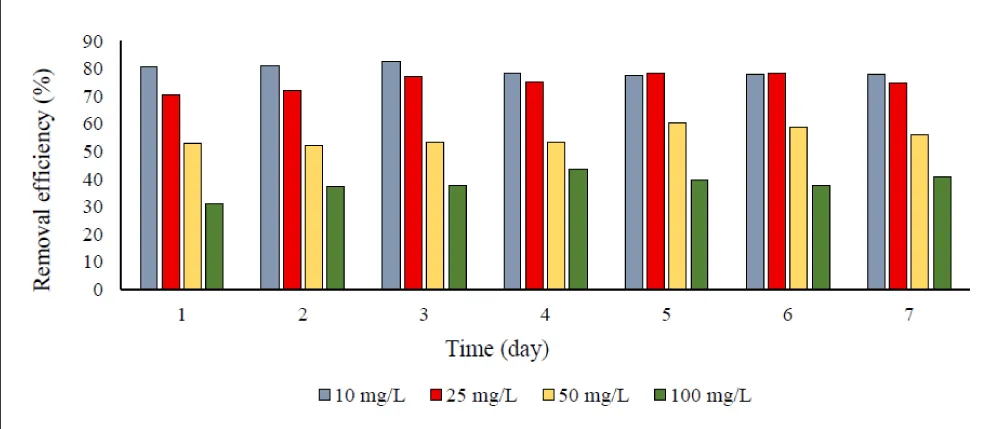
The temperature and removal efficiency of methylene blue using various adsorbents and biosorbents are presented in table 1.
A review of the studies listed in table 1 shows that the removal efficiencies of methylene blue vary widely depending on the type of adsorbent. In a study evaluating corn husk waste as a cost-effective and facile adsorbent for Methylene Blue (MB) removal [9], the influence of key operational parameters, including pH, initial dye concentration, contact time, and temperature, on the adsorption performance was systematically investigated. Optimal operating conditions were identified as pH 6, an initial MB concentration of 800 mg/L, a contact time of 60 min, and a temperature of 298 K, yielding an adsorption capacity of 41.06 mg/g. Kinetic analyses were conducted using pseudo-first-order, pseudo-second-order, intraparticle diffusion, and Elovich models. The results demonstrated that the adsorption kinetics were best described by the pseudo-second-order model, indicating a chemisorption-controlled mechanism. Furthermore, equilibrium data exhibited excellent agreement with the Langmuir isotherm model, suggesting monolayer adsorption on a homogeneous surface. Under laboratory-scale conditions, an MB removal efficiency of 99.79% was achieved (Table 1).
| Table 1: The temperatures and removal efficiencies of methylene blue dye using various adsorbents/biosorbents. | ||||
| Adsorbent/ Biosorbent | pH | Temperature (°C) | Removal Efficiency (%) | References |
| Activated corn husk waste | - | 26 | 99.79 | [9] |
| Lantana Camara L. | 6 | - | 53.46 | [10] |
| Modified peanut shell | 3 | - | 95 | [11] |
| Synthesis of materials from agricultural wastes | 7 | - | 98.84 | [12] |
| Embelia Schimperi | 7 | 30 | 99.2 | [13] |
| Pomegranate Peels | 12 | - | 95 | [14] |
| Cyanthilium cinereum | 7 | - | 98.15 | [15] |
| Aspergillus niger | - | 25 | 88.11 | Our study |
The adsorption performance of biochar derived from Lantana camara L. prepared at 600 °C for the removal of methylene blue from aqueous solutions, was investigated in another study [10]. Biochar samples were produced from both leaf and stem biomass, and the effects of contact time, pH (3-12), adsorbent dosage (100-400 mg/L), and initial dye concentration (5-20 mg/L) were evaluated. The findings revealed that solution pH exerted a dominant influence on adsorption efficiency. The interaction between MB molecules and the biochar surface followed pseudo-second-order kinetics, indicating chemisorption as the rate-limiting step. Moreover, the adsorption mechanism was identified as a multistep process involving surface adsorption and intraparticle diffusion. Overall, Lantana camara–derived biochar was demonstrated to be a promising, low-cost, and environmentally sustainable biosorbent for the treatment of dye-laden wastewater.
In a study assessing the applicability of peanut shell as an adsorbent for methylene blue removal, zinc chloride-activated peanut shell was employed to enhance adsorption capacity and kinetics [11]. The adsorption behavior of MB was examined under varying operational conditions, including pH, contact time, temperature, initial dye concentration, and adsorbent dosage, to determine optimal process parameters. Maximum adsorption efficiency was achieved at pH 3. Equilibrium data conformed well to the Freundlich isotherm model, indicating heterogeneous surface adsorption, while thermodynamic analysis revealed the adsorption process to be exothermic. Kinetic evaluation confirmed that MB adsorption followed a pseudo-second-order model, suggesting that chemisorption governed the overall adsorption process. These results highlight the potential of zinc chloride–activated peanut shell as an efficient, low-cost, and environmentally benign adsorbent for mitigating methylene blue contamination in aqueous systems.
The adsorption of methylene blue and other organic pigments from aqueous media was investigated using synthetic composite materials derived from agricultural waste and magnetically modified with Fe₃O₄ nanoparticles [12]. Comprehensive physicochemical characterization was performed using Fourier Transform Infrared Spectroscopy (FTIR), Scanning Electron Microscopy (SEM), X-Ray Diffraction (XRD), and nitrogen adsorption-desorption isotherm analyses. The results confirmed the successful integration of Fe₃O₄ with the agricultural waste-derived matrix, yielding a specific surface area of 3.594 m²/g and an average pore diameter of 49.713 nm. The effects of operational parameters, including pH, adsorbent dosage, initial dye concentration, contact time, and agitation speed, were systematically optimized for MB removal. The composite material exhibited a maximum adsorption capacity of 268.64 mg/g and an adsorption efficiency of 98.84%, underscoring its high potential for advanced wastewater treatment applications.
The use of Embelia schimperi fruit extract as a natural adsorbent for methylene blue removal from wastewater was also investigated [13]. The crude extracts were characterized by Atomic Force Microscopy (AFM) and Fourier Transform Infrared Spectroscopy (FTIR) to elucidate surface morphology and functional groups. The effects of extract dosage, contact time, pH, initial MB concentration, and temperature on adsorption performance were systematically evaluated. Under optimal conditions, the maximum MB removal efficiency reached 99.2%. In addition to its adsorption capability, the crude fruit extract exhibited pronounced antibacterial activity against both Gram-positive and Gram-negative bacteria. Agar diffusion assays demonstrated high susceptibility of Listeria monocytogenes and Staphylococcus aureus, followed by Escherichia coli and Salmonella typhi. These findings indicate that Embelia schimperi fruit extract represents a multifunctional, eco-friendly adsorbent capable of simultaneously removing organic dyes and pathogenic microorganisms from wastewater.
Activated carbon was synthesized via chemical activation of pomegranate peels obtained as waste from pomegranate syrup production, and the effects of initial dye concentration, temperature, and pH on methylene blue adsorption were systematically examined [14]. The results demonstrated that increasing temperature and initial dye concentration significantly enhanced adsorption capacity. Although previous studies reported an increase in MB adsorption at higher pH values, this effect was not statistically significant; nevertheless, a maximum adsorption efficiency of 95% was achieved at pH 12. Furthermore, adsorption capacity increased with temperature elevation from 25 °C to 35 °C and 45 °C. Higher initial MB concentrations resulted in greater dye uptake per unit mass of adsorbent at a constant dosage. Equilibrium adsorption data were well fitted by the Langmuir isotherm model, indicating monolayer adsorption behavior.
In a study exploring the biosorptive removal of methylene blue using the wild weed species Cyanthilium cinereum and Paspalum maritimum [15], the effects of biosorbent dosage (0.05-0.5 g), contact time (10-80 min), and initial dye concentration (10-50 mg/L) were systematically investigated. Morphological characterization by SEM, supported by FTIR analysis, confirmed the structural features and functional groups responsible for adsorption. According to pseudo-second-order kinetic modeling, equilibrium was attained within 50 min for both biosorbents. Adsorption isotherm analysis revealed that the equilibrium data for Paspalum maritimum were better described by the Langmuir model, with a maximum biosorption capacity of 56.18 mg/g, whereas Cyanthilium cinereum exhibited better conformity with the Freundlich model, yielding a maximum biosorption capacity of 76.34 mg/g.
In this study, the use of Aspergillus niger resulted in a removal efficiency of 88.11%, demonstrating that biosorption is an effective and feasible method.
Phytotoxicity results
Phytotoxicity tests were conducted using green lentil (L. culinaris) seeds to evaluate the toxic effects of methylene blue. The experiments were carried out under three conditions:
- Control Water: Tap water serves as a baseline for comparison.
- Methylene Blue (MB) Dye: 10 mg/L methylene blue solution.
- Post-Biosorption MB Dye: Methylene blue solution treated with A. niger through the biosorption process.
The results are detailed in figure 1. Germination, root, and shoot length data of green lentil (L. culinaris) seeds after 7 days are summarized in table 2 and figure 7. Germination percentages after 7 days were 100% for both the tap water and methylene blue after the biosorption process, whereas seeds exposed to 10 mg/L methylene blue showed a germination rate of 90%.
| Table 2: Toxicity results of Green lentil (Lens culinaris) seeds. | |||
| Tap water (Control) | 10 mg/L MB after biosorption (Sample) | 10 mg/L MB (After the biosorption process) | |
| Germination (%) | 100% | 90% | 100% |
| Shoots (cm) ± SD | 2.07 ± 0.77 | 1.33 ± 0.69 | 1.65 ± 0.45 |
| Roots (cm) ± SD | 4.80 ± 0.79 | 2.28 ± 1.20 | 3.21 ± 0.67 |
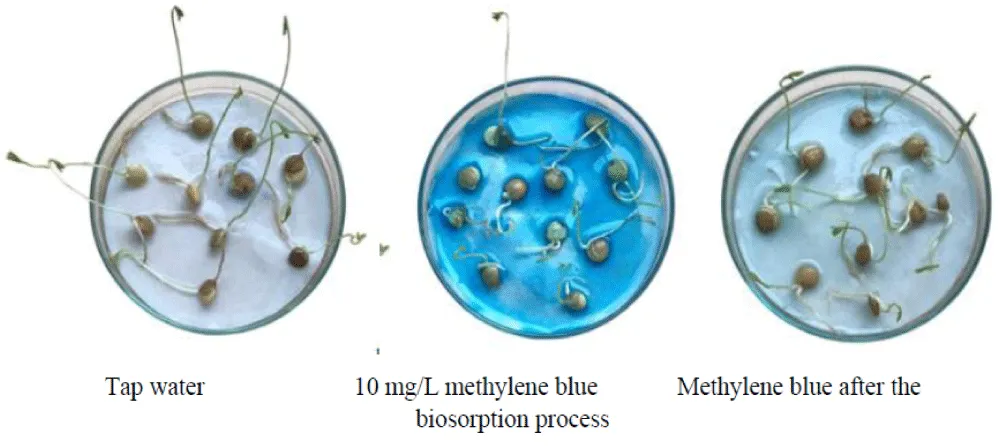
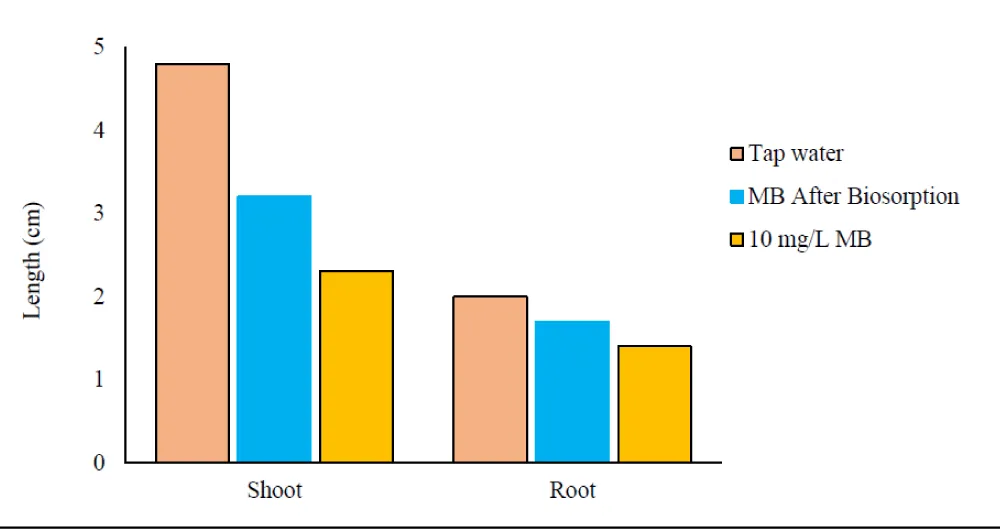
Root lengths were measured as 2.07 cm (control water), 1.33 cm (10 mg/L methylene blue), and 1.65 cm (post-biosorption methylene blue). Shoot lengths were 4.80 cm, 2.26 cm, and 3.21 cm, respectively. These results indicate that seed development was most inhibited in the 10 mg/L methylene blue treatment group. Seeds treated with post-biosorption methylene blue exhibited growth patterns similar to those irrigated with control water.
The Relative Growth Index (RGI) for seeds treated with 10 mg/L methylene blue was 0.55, while post-biosorption methylene blue-treated seeds exhibited an RGI of 0.82. Growth Index (GI) values were 0.61 and 0.82 for methylene blue-treated and post-biosorption methylene blue-treated seeds, respectively. According to RGI values, toxicity effects can be categorized as follows:
- Root growth inhibition (I): 0.0 < x < 0.8
- No significant effect (NSE): 0.8 < x < 1.2
- Root growth stimulation (S): x > 1.2
These findings demonstrate that seeds irrigated with post-biosorption methylene blue developed similarly to control seeds, whereas seeds exposed to 10 mg/L methylene blue exhibited slower growth. Moreover, germination of post-biosorption methylene blue-treated seeds reached 100%, with no adverse effects observed on growth.
The seeds were observed at the end of the 7th day, as shown in figure 7. The germination rate, shoot, and root lengths obtained from L. culinaris (green lentil) seeds are presented in table 2. The comparison of the root and shoot lengths of the seeds is shown in figure 8.
Discussion
Recent studies have confirmed that biomass-derived adsorbents and biosorbents offer effective and low-cost solutions for removing Methylene Blue (MB) from wastewater. Agricultural wastes such as corn husk and Lantana camara biochar exhibit high removal efficiencies governed predominantly by pseudo-second-order kinetics, indicating chemisorption as the controlling mechanism [9,10]. The adsorption behavior in these systems is strongly influenced by the solution pH, reflecting the role of electrostatic interactions and surface functional groups.
Chemical activation further enhances adsorption performance. Zinc chloride–activated peanut shell demonstrated improved MB uptake at acidic pH, with equilibrium data fitting the Freundlich isotherm, suggesting heterogeneous surface adsorption [11]. In contrast, activated carbon derived from pomegranate peel followed the Langmuir isotherm behavior and showed increased adsorption capacity with temperature, indicating monolayer adsorption and an endothermic process [14]. These differences highlight the influence of activation method and surface heterogeneity on adsorption mechanisms.
Advanced materials such as magnetically modified agricultural waste composites achieved exceptionally high adsorption capacity and efficiency, demonstrating the benefits of surface functionalization and improved recoverability [12]. Natural adsorbents also offer multifunctionality; Embelia schimperi fruit extract not only removed MB efficiently but also exhibited strong antibacterial activity, expanding its applicability in wastewater treatment [13]. Similarly, biosorption studies using Cyanthilium cinereum and Paspalum maritimum revealed rapid adsorption kinetics and variable isotherm behavior depending on surface characteristics [15].
In the present study, Aspergillus niger achieved an MB removal efficiency of 88.11%, confirming fungal biosorption as an effective and environmentally sustainable treatment approach. Although its efficiency is lower than that of some activated or composite adsorbents, the minimal processing requirements, renewable nature, and eco-friendly operation of fungal biomass make it a promising alternative. Overall, these findings demonstrate that while engineered adsorbents offer superior capacities, biosorption-based systems provide viable, sustainable solutions for dye-contaminated wastewater.
Conclusion
This study demonstrated that Aspergillus niger can be effectively employed as a biosorbent for the removal of methylene blue from aqueous solutions. Four key parameters: contact time, dye concentration, temperature, and biomass state (live or dead) were examined to determine the optimal biosorption conditions.
For live A. niger, experiments conducted at 25 °C, 30 °C, and 35 °C indicated that the highest removal efficiency was achieved at 25 °C with 10 mg/L methylene blue, reaching 88.11% on the fifth day. Dead A. niger biomass under the same conditions achieved a maximum removal efficiency of 84.24%.
Phytotoxicity tests using green lentil (L. culinaris) revealed that seeds irrigated with post-biosorption methylene blue showed germination and growth patterns comparable to control water, whereas seeds exposed to 10 mg/L methylene blue exhibited reduced growth. RGI and GI values further confirmed that the biosorption process did not exert any negative effects on seed germination or seedling development.
Overall, these results confirm that A. niger-based biosorption is an environmentally safe, effective, and promising method for the removal of methylene blue from aqueous environments.
References
- Bouras HD, Isik Z, Arikan EB, Yeddou AR, Bouras N, Chergui A, Dizge N. Biosorption characteristics of methylene blue dye by two fungal biomasses. International Journal of Environmental Studies. 2021;78(3):365-381. doi: 10.1080/00207233.2020.1745573.
- Katheresan V, Kansedo J, Lau SY. Efficiency of various recent wastewater dye removal methods: A review. Journal of Environmental Chemical Engineering. 2018;6(4):4676-4697. doi: https://doi.org/10.1016/j.jece.2018.06.060.
- Özturk E, Cinperi NC. Water efficiency and wastewater reduction in an integrated woolen textile mill. Journal of Cleaner Production. 2018;201:686-696. doi: 10.1016/j.jclepro.2018.08.021
- Keyikoğlu R, Can OT, Aygun A, Tek A. (2019). Comparison of the effects of various supporting electrolytes on the treatment of a dye solution by electrocoagulation process. Colloid and Interface Science Communications. 2019;33:100210. doi: 10.1016/j.colcom.2019.100210.
- Rafiq A, Ikram M, Ali S, Niaz F, Khan M, Khan Q, Maqbool M. Photocatalytic degradation of dyes using semiconductor photocatalysts to clean industrial water pollution. Journal of Industrial and Engineering Chemistry. 2021;97:111-128. doi: 10.1016/j.jiec.2021.02.017.
- Özer A. Öğütülmüş zeytin çekirdeği kullanılarak metil viyolet adsorpsiyonunun incelenmesi Yüksek Lisans Tezi, Sakarya Üniversitesi, Fen Bilimleri Enstitüsü. 2020.
- Salimi A, Roosta A. Experimental solubility and thermodynamic aspects of methylene blue in different solvents. Thermochimica Acta. 2019;675:134-139. doi: 10.1016/j.tca.2019.03.024
- Sadıç E. Light sigara izmarit suyunun fitotoksik, sitotoksit ve genotoksik etkisinin farklı test yöntemleri ile araştırılması, Yüksek Lisans Tezi, Aydın: Adnan Menderes Üniversitesi, Fen Bilimleri Enstitüsü. 2023.
- Handayani T, Ramadhani P, Zein R. Modelling studies of methylene blue dye removal using activated corn husk waste: Isotherm, kinetic and thermodynamic evaluation. South African Journal of Chemical Engineering. 2024;47:15-27. doi: 10.1016/j.sajce.2023.10.003.
- Kundu D, Sharma P, Bhattacharya S, Gupta K, Sengupta S, Shang, J. Study of methylene blue dye removal using biochar derived from leaf and stem of Lantana camara L. Carbon Research. 2024;3(1):22. doi: 10.1007/s44246-024-00108-1.
- Zhai QZ. Study on adsorption of methylene blue by modified peanut shell: adsorption kinetics, thermodynamics, isotherm properties. Chemical Engineering Communications 2024; 211(4): 633-646. doi: 10.1080/00986445.2023.2255533.
- Thi HA, Phuc LT, Van Trong N, Thuy TTT. Synthesis of materials from agricultural wastes combined with Fe3O4 for methylene blue adsorption and application to treat organic pollutants in water samples. Vietnam Journal of Chemistry. 2024;62(1):68-77. doi: 10.1002/vjch.202300120.
- Gebeyehu BT, Tadesse MG, Tedla A. Simultaneous removal of methylene blue dye and waterborne pathogens from wastewater using extract of Embelia schimperi fruits. Bulletin of the Chemical Society of Ethiopia. 2024;38(2):281-296. doi: 10.4314/bcse.v38i2.1.
- Yılmaz N, Alagöz O. Nar kabuklarından kimyasal aktivasyon ile hazırlanan aktif karbon üzerinde metilen mavisinin adsorpsiyonu. El-Cezeri. 2019;6(3):817-829. doi: 10.31202/ecjse.583102
- Silva F, Nascimento L, Brito M, da Silva K, Paschoal W Jr, Fujiyama R. Biosorption of Methylene Blue Dye Using Natural Biosorbents Made from Weeds. Materials (Basel). 2019 Aug 5;12(15):2486. doi: 10.3390/ma12152486. PMID: 31387319; PMCID: PMC6696254.



Content Alerts
SignUp to our
Content alerts.
 This work is licensed under a Creative Commons Attribution 4.0 International License.
