
2025 November 27;6(11):1723-1734. doi: 10.37871/jbres2225.
-
Subject area(s):

 |
|
 |
|
 |
|

 Mini Review
Polycyclic Aromatic Hydrocarbons (PAHs): The Role of Human Transport Systems in the Fate and Toxic Effects
Slobodan RP*
- Polycyclic aromatic hydrocarbons
- PAHs
- Metabolites
- Transporters
- Toxic effects
Abstract
Presented are the results of the analysis of the published data on the interaction of Polycyclic Aromatic Hydrocarbons (PAHs), known carcinogenic compounds, and their toxic metabolites, with human transporters. The results of the study show that¸ the compounds interact with human transporters as substrates (with 44% of the data), as inducers (with 24% of the data), and as inhibitors (with 32% of the data). PAH compounds metabolites are preferentially transported in the form of the highly polar glucuronides (Glu-conjugates), potentially toxic sulfate-conjugates (Sul-conjugates), and glutathione conjugates (mercapturic acids). Glucuronides and sulfate-conjugates are formed in reactions with OH-groups of the PAH metabolites, and glutathione conjugates react with the toxic epoxide metabolites, being excreted as mecapturic acids. The analysis of the published literature also shows major participation of hOAT transporters (33% of the reactions), MDR1 (P-gp), participate with 21%, and MRP transporters with 18%. The results obtained for the example PAHs and the metabolites are discussed, referring to their application, distribution, excretion, and toxicity to humans. The results also indicate that more research is needed on the transporters' role in the toxicity and fate of PAHs and metabolites in humans.
Introduction
Human transporters and drug/chemical interactions
The binding of a chemical, including drugs and their conjugates, to different blood and/or tissue proteins can significantly influence the compound's pharmacokinetic, therapeutic, and/or toxic effects, and is in many cases regulated by transporting proteins (Transporters). The members of the human ATP-binding transporters, the ABC transporter family, transport physiological compounds such as lipids, bile salts, peptides, and xenobiotic compounds such as drugs, toxins, and metabolites. The human genome carries 48 ABC transporter genes, which encode membrane transporters. They belong to seven distinct families (A, B, C, D, E, F, and G) and display a wide array of substrate specificity and functionality. The transporters are distributed and active in many organs and tissues, e.g., the brain, eyes, thyroid, lungs, heart, liver, spleen, skin, kidneys, GI tract, and reproductive organs. The Multiple Drug Resistance protein 1 (MDR1), also known as P-gp (P-glycoprotein), was first observed to have a role in cancer cells' resistance to drugs by pumping drugs out of the cells. It is accepted that MDR1, MRPs, and BCRP1 transporters are involved in clinical resistance to drugs in multidrug resistance of cancer cells, by promoting the efflux of certain chemotherapeutic drugs from cancer cells, thereby decreasing or abolishing their therapeutic efficacy. In transporting xenobiotic compounds, the involved transporters are preferentially members of the ABC and SLC superfamily, e.g., P-gp, BCRP, MRPs, and BSEP [1,2] (Tables 1-4).
| Table 1: Transporters participating in the transport of PAHs in humans (Tables 2-4). | |
| Protein | Gene |
| ATP - binding cassette sub-family B member 6 | ABCB6 |
| BCRP1, MXR, ABCP | ABCG2 |
| hNaS1, NaSi - 1, Na-sulphate co-transporter | SLC13A1 |
| hOAT1 | SLC22A6 |
| hOAT3 | SLC22A8 |
| hOAT4 | SLC22A11 |
| hSOAT | SLC10A6 |
| MDR1, P-glycoprotein, P-gp | ABCB1 |
| MRP1 | ABCC1 |
| MRP2 | ABCC2 |
| MRP3 | ABCC3 |
| MRP4 | ABCC4 |
| System x(c)(-), xCT antiporter | SLC7A11 |
| Table 2: PAHs, their metabolites, and effects as substrates of human transporters. | ||||
| Compound or metabolite | Compound category/ source /metabolite/toxic effects | Transporter | Reference | Remarks |
| (+)-anti-Benzo[a]pyrene-7,8-diol-9,10- epoxide |
B[a]P-metabolite | MRP2 | [23] | Human intestinal Caco-2 cells; apical efflux. Transported as GSH conjugate; the role of MRP2/ABCC2 in chemo protection is suggested in that toxic metabolites are transported as GSH conjugates, detoxification |
| 1,8-Dimethylpyrenyl mercapturic acid | !,8-Dimethylpyrene metabolite, Mercapturic acid conjugate | hOAT3 | [29] | hOAT3-HEK293 cells; participating in kidney cell damage |
| 1-Hydroxypyrene glucuronide | Pyrene, a coal tar compound, pyrene metabolite, Glu-conjugate, and/or sulfate | BCRP1, MXR, ABCP | [27,28] | Human small intestinal Caco-2 cells, apical efflux |
| 1-Hydroxypyrene sulfate | [27] | |||
| 1-Methylpyrenyl mercapturic acid, MPMA | 1-Methylpyrene mercapturic acid conjugate | hOAT1 | [29] | OAT3- and OAT1– human HEK293 cells; involvement in the renal excretion of mercapturic acids and related N-acetyl cysteine conjugates, uptake in hOAT3-HEK293 cells is associated with kidney cell damage |
| hOAT3 | ||||
| 1-Sulfooxymethylpyrene, 1-SMP | Pyrene metabolite, sulfate-conjugate | hOAT1 | [10] | Human epithelial kidney (HEK293) cells stably expressing a human transporter; predominant expression of SOATs in the testis may lead to electrophilic, adduct-forming pyrene sulfates; uptake via SOAT, which might be related to the risk of testicular cancer in tobacco smokers |
| hOAT3 | ||||
| 2-Sulfooxymethylpyrene, 2-SMP | hSOAT | [11] | Human embryonic kidney (HEK293) cells; suggested that the presence and expression of SOAT transporters in an organ (e.g., kidney and/or testis) might lead to the uptake of the reactive pyrene sulphate metabolites and be related to a risk of cancer in tobacco smokers | |
| 4-Sulfooxymethylpyrene, 4-SMP | hSOAT | [11] | ||
| hOAT1 | [10] | |||
| hOAT3 | ||||
| Benzo[a]pyrene, B[a]P | Environmental pollutants, incomplete combustion products of organic matter, coal tar, tobacco smoke, and charred foods (e.g., grilled meat), compounds | Transporter not determined | [8,9,18] | Transport across the placenta in the presence of albumin, maternal exposure to B[a]P leads to the exposure of the fetus to B[a]P and/or its metabolites, and the placenta itself can activate B[a]P to form DNA adducts |
| Benzo[a]pyrene-1-sulfate, B[a]P-1-sulfate | B[a]P-metabolite, SUL-conjugate | Transporter not determined, P-gp and MRP1 or MRP2 were not involved | [20,26] | Enterocytes and human intestinal Caco-2 cells; apically directed transport of B[a]P polar metabolites, non-metabolized B[a]P was not secreted |
| Benzo[a]pyrene-3-sulfate, B[a]P-3-sulfate | ||||
| Benzo[a]pyrene-3-glucuronide, B[a]P-3-G | B[a]P metabolite, Glu-conjugate | BCRP1, MXR, ABCP | [19] | Human intestinal Caco-2 cells; upical transport |
| Benzo[a]pyrene-3-sulfate, B[a]P-3-sulfate | B[a]P metabolite, Sulfo-conjugate | [19,21,22] | ||
| α-Naphthyl isocyanate | Research and industrial compounds | MRP2 | [23] | Human Caco-2 cells; transported as GSH conjugate |
| anti-BP-7,8-dihydrodiol-9,10-epoxide (BPDE) glutathione conjugate | B[a]P-metabolite, GLU-conjugate | MRP1 | [25] | Human Caco-2 cells; the ultimate carcinogen BPDE was excreted mainly to the apical and to a minor extent to the basolateral side of polarized Caco-2 monolayers |
| MRP2 | ||||
| (-)-Benzo[a]pyrene-7,8-dihydro-7,8-diol (-)-B[a]P-7,8-dihydrodiol | B[a]P-metabolite | MRP4 | [32] | Human bronchoalveolar H358 cells; up-regulation of MRP4 increased cellular efflux of (-)-B[a]P-7,8-dihydrodiol, attenuating the DNA-adduct formation |
| 1-Hydroxypyrene glucuronide | Pyrene, a coal tar compound, pyrene metabolite, Glu-conjugate | MRP4 | [28] | Recombinant enzymes; high transport rates, and apparent affinity |
| 1-Naphthol glucuronide | Industrial compound | |||
| 1-Hydroxypyrene glucuronide | Pyrene, a coal tar compound, pyrene metabolite, Glu-conjugate | MRP3 | ||
| 1-Naphthol glucuronide | Industrial compound | Low transport rates and apparent affinity. | ||
| Table 3: Examples of PAHs and their metabolites as inducers of human transporters. | ||||
| Compound or metabolite | Compound category/ source /metabolite/toxic effects | Transporter | Reference | Remarks |
| 3-Methylcholanthrene, 3MC | Environmental pollutants, incomplete burning organic compounds, products, coal tar, heavy-end petroleum compounds, cigarette smoke compounds, and research chemicals | ATP-binding cassette superfamily B member 6 | [13] | HepG2 and Huh7 cell lines; induction of expression in a dose- and time-dependent manner |
| MDR1, P-glycoprotein, P-gp | [30,39] | Primary hepatocytes; large interindividual differences in the induction of hepatic mRNA. | ||
| hNaS1, NaSi-1, Na-sulphate co-transporter | [40] | Renal cell line; induction of the NAS1 promoter, transcriptional activation | ||
| Benzo[a]pyrene 1,6-quinone, 1,6-BPQ | Environmental pollutants, benzo[a]pyrene metabolite | System x(c)(-), xCT antiporter | [41] | Human mammary epithelial cells; solute carrier family 7 (cationic amino acid transporter, y+ system) member 11k gene activated |
| Benzo[a]pyrene 3,6-quinone, 3,6-BPQ | ||||
| Benzo[a]pyrene, B[a]P | Environmental pollutants, incomplete combustion products of organic matter, coal tar, tobacco smoke, and charred foods (e.g., grilled meat), compounds | ATP-binding cassette sub-family B member 6 | [13] | HepG2 and Huh7 cells; induction of expression in a dose- and time-dependent manner |
| MDR1, P-glycoprotein, P -gp | [15-17] | CaCo-2 cells; inducer of mRNA expression, protein expression, and activity | ||
| Benzo[e]pyrene, B[e]P | Environmental pollutants, coal tar, cigarette smoke, and grilled foods compounds | MDR1, P-glycoprotein, P-gp | [15] | CaCo-2 cells; inducer of mRNA expression, protein expression, and activity, potent inducer |
| Benzo[k]fluoranthene, B[k]F | Environmental pollutants, incomplete combustion processes (e.g. fossil fuels or biomass burning), tobacco smoke compounds | MDR1, P-glycoprotein, P-gp | [16] | CaCo-2 cells; potent induction of MDR1 mRNA expression |
| BCRP1, MXR, ABCP | [19,21] | Caco-2 cells; after long-term treatment at 5 µM, induction of mRNA and transporter protein levels | ||
| Chrysene | Environmental pollutants, Coal tar, creosote, fossil fuels, forest fires, and tobacco smoke compound | MDR1, P-glycoprotein, P-gp | [16] | Caco-2 cells; induction of mRNA expression, a weak inducer |
| Dibenzo[a,l]pyrene, DB[a,l]P | Environmental pollutants, Tobacco smoke compounds | CaCo-2 cell; induction of mRNA expression, protein expression, and activity | ||
Although it is generally accepted that passive diffusion of many drugs or other chemicals in and out of the cells occurs, transporters may have an important role. The transporters may have major effects on the tissue selectivity and the final therapeutic or toxicological impact of the transporting compound. Generally, a xenobiotic compound (drug or environmental compound) can interact with a transporter as a substrate, inhibitor, or inducer of the activity of transporters. Using different methods and models, it was possible to follow and draw conclusions on the effects of the xenobiotic compounds, either used as drugs or acting as a toxicant, on the activity, and/or mRNA and protein expression of transporters, which might affect both, the compounds' fate in a tissue and/or organism, and the final toxic/therapeutic effect. Many physiological conditions (e.g., ageing and illnesses such as type II diabetes, and hypoxia) and external factors (e.g., clinical irradiations, physical exercise, and dietary habits) might affect the expression and activity of the transporters, but also the activity of enzymes (e.g., Cytochrome 450 enzymes, CYPs), which catalyse the reactions leading to the formation of the species responsible for the toxicity of the PAHs [3-5]. The PAHS are formed as products of incomplete combustion of organic materials like coal, oil, wood, and tobacco and can be find in charred foods and other sources as presented in tables 1-3.
Structure, metabolic reactions and toxification of PAHs
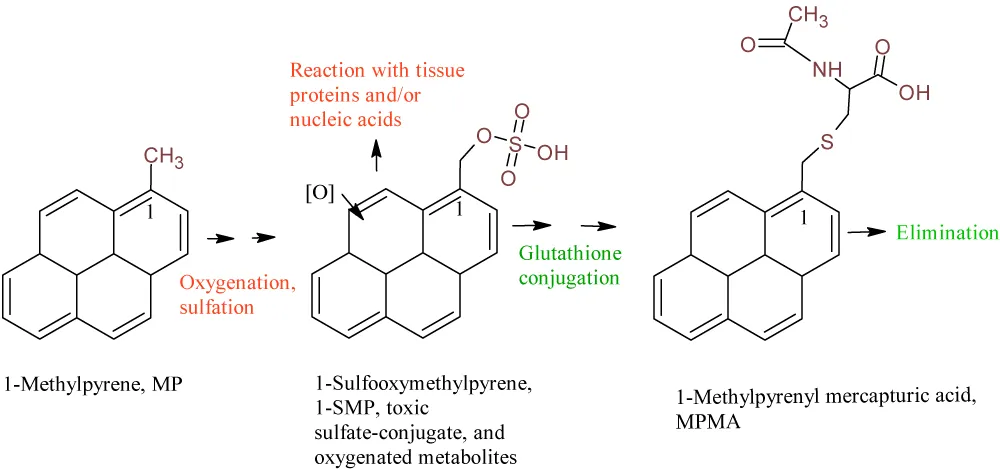
Polycyclic Aromatic Hydrocarbons (PAHs) are organic compounds composed of multiple fused aromatic rings consisting of carbon and hydrogen atoms with lipophilic, hydrophobic properties [1]. The PAHs are metabolized in humans to many metabolites, some of which are toxic to humans, e.g., oxygenated aromatic rings metabolites and 1-sulfooxymethylpyrene, which may react with tissue proteins and/or nucleic acids. Toxic 1-sulfofoxymethylpyrene is excreted as Glutathione (GSH) conjugate (Mercapturic acid) (Figure 1A).
PAHs are, by their properties, lipophilic and hydrophobic, and nontoxic; however, when they enter the body, as substrates of metabolizing enzymes, they may exert carcinogenic, mutagenic, and genotoxic properties (Figure 1B). The Environmental Protection Agency (EPA) developed relative toxic potency factors of selected PAHs based on mouse skin carcinogenesis model: dibenz[a,h]anthracene 1.11, benzo[a]pyrene 1.0, benzo[b]fluoranthene 0.167, benz[a]anthracene 0.145, benzo[k]fluoranthene 0.020, chrysene 0.0044, by which dibenz[a,h]anthracene 1.11 and benzo[a]pyrene 1.0 showed the most toxic potential (USPA 1003).
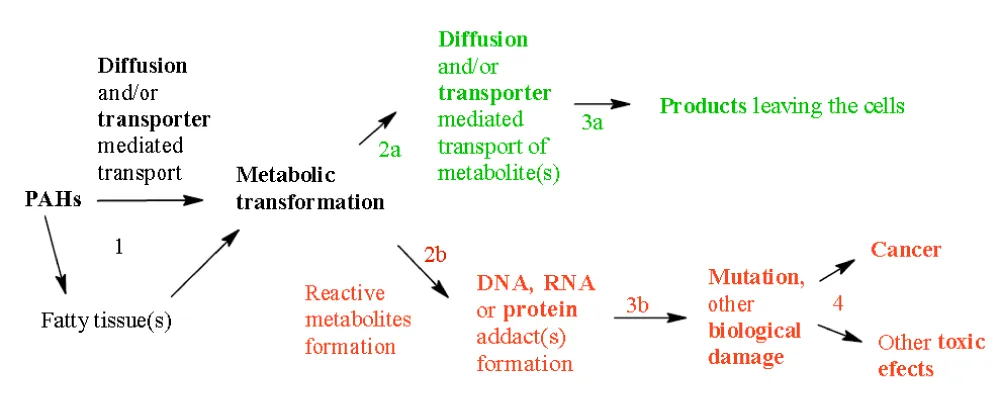
Like other xenobiotics, e.g., drugs, natural compounds, general chemicals, and inorganic compounds, PAHs can, depending on their chemical properties potentially diffuse into cells through the membranes, to be actively transported by the transport systems to enter the circulation and/or stored in fatty tissue(s) (Figure 1B).
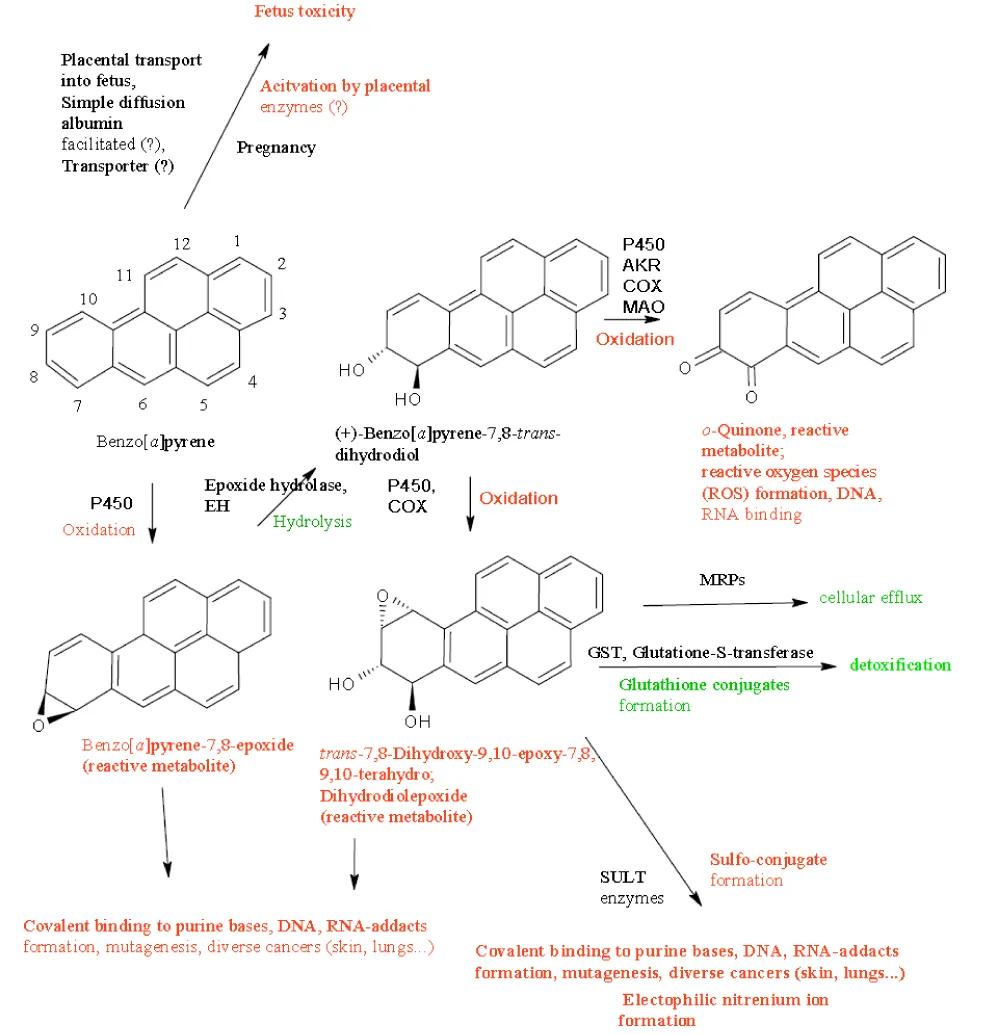
Entering the cells, depending on the structural characteristics, PAHs, and other xenobiotic compounds, participating as substrates in the reactions catalyzed by many enzymes, may form number of the products that either leave the cells, or be metabolized to products that might exert toxic effects as exeplified by the metabolism and toxication reactions of 1-methylpyrene and benzo[a]pyrene and metabolites (Figure 1A-1C) [3,4,6].
Thus, the products of the metabolic reactions, in which PAHs participate as substrates, being toxic or nontoxic, are more polar derivatives which may leave the cells/organs by diffusion or by a process facilitated by the transporters. The reactive products, when formed, might interact with cells' macromolecules (e.g., DNA, RNA, proteins), forming adducts by the processes, which may result in mutation(s) causing cancer(s), or other biological effects and reactions [4].
It was suggested that the transporters be assessed in the context of compound activities and their interactions with P450 enzymes, as the regulation of some transporters involves the same systems as P450 enzymes. For instance, P-glycoprotein and some of the P450 3A and 2C subfamilies of the enzymes are regulated by the pregnane X receptor (PXR). Analysis of the effects of diseases and external factors on human cytochrome P450 enzymes and transporters participating in the toxification of PAHs showed, for instance, that HIV-1 viral infections upregulated mRNA expression of ENT2, CNT1, CNT3, and Legionella pneumophila infections of MM6 cells affected the SLC1A5 transporter by upregulating mRNA expression up to 10-fold. Different types of cancers (e.g., lymphoblastic anemia, acute myeloid leukemia, prostate cancer, and bone marrow cancer samples) increase mRNA and protein expression of MXR, BCRP1, and ABCP transporters, and drug acetaminophen overdosis, for instance, increases the protein level and/or mRNA expression of BCRP1, MDR1, MRP1, and MRP4 transporters in injured and normal liver tissues. In the lungs and shear-stressed human aortic endothelial cells of smokers, an increase in mRNA protein expression and activity of P450 1A1, the enzyme responsible for the detoxification by PAHs, but the level of the P4503A protein appeared to be lower in active smokers, compared to non-smokers. Also, PAH-DNA adduct levels were higher in smokers' samples than in non-smokers' [6 and the references therein]. The data thus show that the formation of the toxic metabolites of PAHs, when related to their transport and metabolism, might be affected by various additional effectors, and that they may be organ and effector-dependent.
To exert toxic effects in another organ, when the activity of the gastrointestinal bacteria forms toxic metabolites of PAHs, and they need to be transported to the place of action by the activity of the transporters in the GI-tract membrane, or, depending on their chemical and/or structural properties, by simple diffusion. Similarly, when toxic metabolites are formed within the cells of an organ, the cell needs to be detoxified by the same processes. To approach these issues, the present report summarizes the data on the transporters (Table 1) and transport-related properties of PAHs and their metabolites in interactions with human transporters and effects (Tables 2-4).
Results and Discussion
PAHs as substrates of the transporters
Benzo[a]pyrene, B[a]P and metabolites: B[a]P is considered a prototype of human carcinogens to which humans are exposed. PAH-contaminated food and cigarette smoking are thought to be the main sources of exposure of the general population to B[a]P. Oral administration appears to lead to detoxification compared to intraperitoneal injection. This effect might be related to the high metabolic turnover of B[a]P in the gastrointestinal tract, as shown in the studies using experimental animals [7].
The toxicity of B[a]P results from its metabolism and activation by forming epoxides, dihydrodiol epoxides, quinones, and sulfate-conjugates (Figure 1C) [3]. Exposure of humans to B[a]P occurs primarily by smoking tobacco, polluted air, and food or water contaminated by combustion effluents. It was reported that under physiological concentrations of albumin, B[a]P crosses the perfused human placenta to the foetal circulation, and placental metabolism of B[a]P was observed. Thus, it was suggested that maternal exposure to B[a]P might lead to the exposure of the fetus to B[a]P and that the placenta itself can activate B[a]P to metabolites forming DNA adducts [8,9] (Table 2).
The most carcinogenic metabolite of B[a]P, (+/-) anti-BP-7,8-dihydrodiol-9,10-epoxide, BPDE (Figure 1C, table 2), which reacts with macromolecules such as DNA and proteins, is detoxified by the formation of glutathione conjugate, catalyzed by Glutathione S-Transferases (GSTs). Use of the human intestinal ABCC1, MRP1, and ABCC2, MRP2 Caco-2 cell line models demonstrated that MRP1 mediates the basolateral and MRP2, the apical excretion of BPDE glutathione conjugates. This process is suggested to resemble a transport into the feces and blood system in the in vivo situation [10-25] (Table 2).
The toxic B[a]P metabolites are highly polar (e.g., B[a]P-1-sulfate and B[a]P-3-sulfate) and are subject to an apically directed transport of the cells (Table 2). The flux was energy-dependent and increased after a-naphthoflavone induction of the B[a]P-metabolizing enzymes P450 1A1 and P450 1B1 in the Caco-2 cells. The chemical inhibition of P-glycoprotein (MDR1), MRP1, or MRP2 showed that these transporters were not involved in this polarized B[a]P-metabolites secretion and produced no effect on B[a]P-1- and -3-sulfate transportation rates. The B[a]P-1-sulfate and -3-sulfate flux was about 10-fold higher in the apical chamber (the luminal side) than in the basolateral chamber. Non-metabolized B[a]P was not secreted [20,26], (Table 2). The studies performed by using the human colon adenocarcinoma cell line Caco-2 and the selective BCRP inhibitors and inducers showed that BCRP1 is involved in the transport of B[a] P-3- and B[a]P-1-sulfate, and also B[a]P-3-glucuronide. Benzo[k]fluoranthene, B[k]F treatment of TC7-cells increased the amount of apically transported B[a]P-3-sulfate to as much as 180% of that in the controls. As flavonoids induced expression of BCRP1 transporter, it was suggested that flavonoid-containing dietary constituents might contribute to the detoxification of food-derived procarcinogens, and that BCRP1 attenuated transport is an important part of the intestinal barrier protecting the body from food-associated contaminants such as the carcinogen B[a]P [19], (Table 2).
Pyrene and metabolites: The major metabolite of pyrene, 1-hydroxypyrene, is excreted as glucuronide and sulphate. The glucuronide is reported as transported by BCRP1, MRP3, and MRP4 transporters. Both conjugates are dominantly transported over the apical membrane of Caco-2 cells, corresponding to an efflux into the intestinal lumen in the in vivo situation. PYR 1-sulfate transported by BCRP1 is detected in a 2-fold higher amount in the apical chamber compared to the basolateral compartment, while PYR 1-glucuronide was detected in very low amounts in both compartments. The apical transport of pyrene metabolites in the small intestine's enterocytes is suggested to detoxify the pyrene-contaminated food following oral administration [27,28], (Table 2).
Methylpyrenes and metabolites: Toxic sulfated 1, 2, and 4-hydroxylated metabolites of methylpyrenes, as well as mercapturic acid metabolites (e.g., 1,8-dimethylpyrenyl-, 1-methylpyrenyl mercapturic acids, and related N-acetylcysteine conjugates) are transported by human organic anion transporters (OATs, SOAT) (Table 2), but are also high-affinity inhibitors of the transporters [29], (Table 4). Studies using HEK293 cells stably expressing human transporter showed that OAT1 is involved in the renal excretion of mercapturic acids and related N-acetylcysteine conjugates, and that OAT3 could be another candidate transporter contributing to the basolateral uptake of mercapturic acids in the renal proximal tubule. Structural differences (the presence or absence of an additional methyl group in an alkylated PAH) can strongly direct the excretion route of mercapturic acids and their interaction with hOAT1 and, to a lesser extent, hOAT3. Of other compounds, a-naphthyl isocyanate, for instance, was transported as a GSH conjugate metabolite by the MRP2 transporter, suggesting its role in detoxification of toxic metabolites formed during its metabolism [23], (Table 2).
PAHs as inducers of transporters
As mentioned in the introductory part, PAHs, similarly to other drugs/other chemicals, can potentially diffuse into cells through the membranes or to be actively transported by the transport systems to enter the circulation.
When a PAH or metabolite is a substrate of the particular transporter in a specific organ or cells (Table 2), a change of the transporter's activity by induction of its activity might, depending on the compound's property, enhance its toxicity by bringing it to the place of action. Conversely, lowering the toxicity might result from enhanced removal of the toxic species from the place of action. For instance, induction of the transporter in the membrane of the gastrointestinal tract might lower the potential systemic toxicity of the toxic species by enhancing its elimination. Different experimental models are reported to be used when testing the induction properties of the PAHs and their metabolites, e,g, primary hepatocyte culture, HepG2 and Huh7 cell lines, renal cell lines, CaCo-2 cells and others, by measuring the time dependent expression of the mRNA, for instance (Table 3, and references therein).
MDR1, P-gp mRNA expression, and transport activities were, for instance, induced by treatment of the Human Caco-2 cell line with several carcinogenic PAHs, including B[a]P, 3MC, B[e]P, B[k]F, DB[a,l]P, and chrysene (Table 3). Induction by 3MC and B[a]P occured in time and dose dependent manner and increased the efflux transport of a model compound, Rho-123, whereas MRP2 mRNA expression was not changed. The large interindividual differences in the induction of hepatic MDR mRNA were observed, approximately fivefold differences in the induction by 3-MC (Table 3 and references therein).
It is also suggested that induction of expression of ABCB6 transporter by PAHs could be a potential contributing factor in PAH carcinogenicity by enhanced P450 1A1 metabolic activity and the metabolism of PAHs to epoxides (Figure 1C), thus promoting carcinogenesis [13]. In addition, as drugs are substrates in the P-gp transport, particularly those used in the treatment of critical illnesses such as leukemia, which are characterized by overexpression and by the enhanced efflux of P-gp substrates, it is expected that the induction of MDR1, P-gp by PAHs might interfere with the concomitant drug treatments in patients [30-31] (Table 3).
The hNaS1, SLC13A1, NaSi-1, Na-sulphate cotransporter can be transcriptionally activated by 3MC in renal cell line, thus implying that the control of renal (SO4)2- reabsorption via the regulation of NAS1transcription may be important for maintaining the sulphation potential for kidney PAH metabolism [4].
ABCB6: ABCB6, the ATP-binding cassette superfamily B member 6, transporter, was overexpressed in the hepatocellular carcinoma. High expression of the transporter was associated with a worse prognosis and has been reported to be associated with chemoresistance against multiple chemotherapeutics. The transporter is involved in the function of mitochondria and porphyrin transport, by exporting and importing heme and its precursors across the plasma and outer mitochondrial membrane. Data using human liver-derived HepG2 and Huh7 cell lines shows transcriptional activation of ABCB6 gene.
ABCG2, MXR, BCRP1, ABCP: The breast cancer resistance protein (MXR, BCRP1, ABCP) can actively transport a broad range of physiological and xenobiotic substrates across biological membranes. As it is present in the small intestine; it limits oral availability, affects hepatobiliary and renal excretion of its substrates, and influences the pharmacokinetics of many drugs [32-36] (Table 3). Flavonoids were reported to induce both mRNA and protein levels of the BCRP1 in human colon carcinoma cells, enhancing transport of toxic B[a]P-3-sulfate metabolite out of the cells, thus showing potential of detoxifying activity [21]. Benzo[k]fluoranthene, B[k]F, was reported to induce the expression of both BCRP1 and P-gp transporters in the human Caco-2 cell line, whereas MRP2 mRNA expression was not changed [19,21,16] (Table 3).
System x(c)(-), xCT, SLC7A11: The System x(c)(-), xCT transporter is a cysteine/glutamate antiporter, and a member of the amino acid transporter family, which imports cysteine for glutathione biosynthesis and antioxidant defence, and is overexpressed in multiple human cancers, promotes tumour growth, and is associated with tumour proliferation, invasion, metastasis, drug resistance, and Ferro ptosis [37,38]. B[a]P quinones (benzo[a]pyrene 1,6-quinone, 1,6-BPQ, and benzo[a]pyrene 3,6-quinone, 3,6-BPQ), metabolites of B[a]P, activate numerous pathways in human mammary epithelial cells including the System x(c)(-), xCT, SLC7A11, which are associated with increased cell growth and survival, the process that may play important roles in tumor promotion [39-41].
The data thus presented show multiple aspects of the induction properties of the PAHs and their metabolites, which might result in either potentiation or lowering of the potential toxic effects of the PAHs and/or their metabolites, and the effects on the current drug therapy.
PAHS as inhibitors of the transporting activity
Examples of PAHs and/or metabolites that act as inhibitors of the expression and/or activity of human transporters are presented in table 4. When a PAH or its metabolite is an inhibitor of the particular transporter in a specific organ or cells, a change of the transporter's activity might, when toxic, lower its toxicity by lowering/inhibiting its transport to the place of action. For instance, inhibition of the particular transporter in the gastrointestinal tract membrane might lower the potential toxicity of the toxic species in g.i. tract by inhibiting its elimination to the lumen of the tract. Reported are different experimental models used, e,g,, HEK293 cells and primary hepatocyte culture (Table 4).
Early inhibition experiments were used to study the functional role for P-glycoprotein efflux pump for benzo[a]pyrene in human breast cancer MCF-7 cells. The results supported the involvement of P-gp in drug resistance by the inhibition of azidopine binding to P-gp benzo[a]pyrene and the inhibition of benzo[a]pyrene efflux by Adriamycin and verapamil suggesting that P-gp may play a role in the cellular defense to carcinogens, as well as that the expression of P-gp and the modulation of its function may affect the susceptibility of normal tissues to carcinogens [14].
It should also be pointed out that a few of the metabolites of PAHs, such as toxic sulphated pyrene metabolites (2-SMP and 4-SMP), which are also substrates and transported by OAT and SOAT transporters (Table 2), are high-affinity SOAT inhibitors. As high-affinity SOAT inhibitors, sulphated toxic methylpyrene metabolites are also transported by SOATs and predominantly expressed in testes; it is presumed that the formation of electrophilic adducts by uptake via SOATs might even be related to the well-known risk of testicular cancer in tobacco smokers (11).
As inhibitors reported are also a-Nephthys sulphate (weak inhibitor of OAT4 and SOAT transporters (11), a-Nephthys b-glucuronide (weak inhibitor of OAT4 transporter), and mercapturic acid metabolites (Table 4).
Metabolic reactions of PAHs
The data presented in Tables 2-4 shows that PAHs and their metabolites interact with human transporters as substrates (calculated to 44% of the data), as inducers (Calculated to 24% of the data), and as inhibitors (Calculated to 32% of the data). As substrates (Table 2), PAH-metabolites are preferentially transported in the form of the highly polar glucuronides (Glu-conjugates), potentially toxic sulfate-conjugates (Sul-conjugates), and glutathione conjugates (mercapturic acids). Glucuronides and sulfate-conjugates are formed in reactions with OH-groups of the PAH metabolites. Glutathione conjugates, formed in the reactions with epoxide metabolites, are excreted as mecapturic acids.
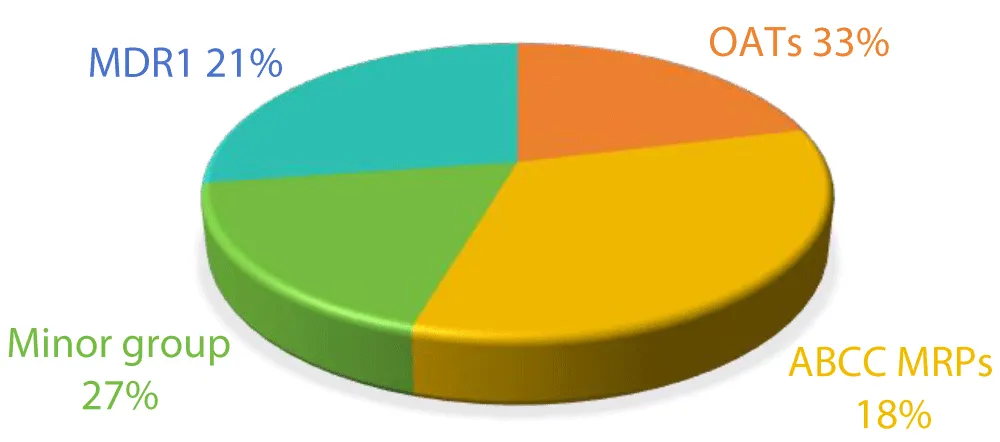
The analysis of the data presented as examples in tables 2-4 and figure 2 shows the major participation of hOATs in the interactions of PAHs and metabolites, participating in 33% of the reactions; MDR1, P-gp transporter, participates in 21%, and MRP transporters in 18% of the reactions. A group of minor participating transporters, composed of the ATP-binding cassette sub-family B member 6, hSOAT, hNAS1, and System x(c)(-), which participate together in 27% of the reactions (Figure 2).
Conclusion
As PAHs are not toxic per se to human organisms, they need to be transformed (metabolized) to reactive/toxic metabolites and/or intermediates. Activation/toxification of the compounds involves reactions catalyzed by multiple enzymes, and their metabolites are subjected to active transport mediated by the transport systems in cells of the organs, mediating their transport within an organism and/or their excretion. Of the 51 data presented on the interaction of PAHs with transport systems (Tables 2-4), 20 are related to the metabolite interactions. The data also show that PAHs and their metabolites interact with human transporters as substrates (44% of the data), inducers (24% of the data), and inhibitors (32% of the data).
As there are no data reported to the particular transporter that transports non-metabolized but potentially toxic B[a]P, it might be assumed that it passes through the organism by simple diffusion, being also stored in fatty tissues, and/or that its transport is facilitated by other tissue proteins, such as albumin, as suggested for the case of maternal exposure to B[a]P which might lead to its placental metabolism and exposure of the fetus to B[a]P and/or its toxic metabolites (Figure 1A) [8,9].
There might be multiple aspects of the role and inductions/inhibitions of the transporter's activity to the physiological status of the organism. The Multidrug Resistance 1 protein (MDR1, P-gp, and Breast Cancer Resistance Protein (BCRP1) are, for instance, abundant in the intestine, so they may transport diverse substrates, including (Toxic) metabolites of PAHs from the enterocytes into the intestinal lumen, restricting exposure to potentially harmful metabolites/substances. The results thus presented indicate that more research is needed on the role of transporters in the toxicity of PAHs and metabolites.
References
- Feng Y, Li Zhuo, Wenjing Li, Polycyclic Aromatic Hydrocarbons (PAHs): Environmental persistence and human health risks. Natural Product Communications. 2025;20(1):1-8. doi: 10.1177/1934578X241311451.
- Rendic S, Guengerich FP. Contributions of human enzymes in carcinogen metabolism. Chem Res Toxicol. 2012 Jul 16;25(7):1316-83. doi: 10.1021/tx300132k. Epub 2012 May 10. PMID: 22531028; PMCID: PMC3398241.
- Rendic SP, Guengerich FP. Development and Uses of Offline and Web-Searchable Metabolism Databases - The Case of Benzo[a]pyrene. Curr Drug Metab. 2018;19(1):3-46. doi: 10.2174/1389200219666171207123939. PMID: 29219051; PMCID: PMC5886801.
- Guengerich FP, Rendic S. Update information on drug metabolism systems--2009, part I. Curr Drug Metab. 2010 Jan;11(1):1-3. doi: 10.2174/138920010791110908. PMID: 20307256; PMCID: PMC4755716.
- Leslie EM, Deeley RG, Cole SP. Multidrug resistance proteins: role of P-glycoprotein, MRP1, MRP2, and BCRP (ABCG2) in tissue defense. Toxicol Appl Pharmacol. 2005 May 1;204(3):216-37. doi: 10.1016/j.taap.2004.10.012. PMID: 15845415.
- Rendic S, Guengerich FP. Update information on drug metabolism systems--2009, part II: summary of information on the effects of diseases and environmental factors on human cytochrome P450 (CYP) enzymes and transporters. Curr Drug Metab. 2010 Jan;11(1):4-84. doi: 10.2174/138920010791110917. PMID: 20302566; PMCID: PMC4167379.
- Robinson JR, Felton JS, Levitt RC, Thorgeirsson SS, Nebert DW. Relationship between "aromatic hydrocarbon responsiveness" and the survival times in mice treated with various drugs and environmental compounds. Mol Pharmacol. 1975 Nov;11(6):850-65. PMID: 54870.
- Mathiesen L, Rytting E, Mose T, Knudsen LE. Transport of benzo[alpha]pyrene in the dually perfused human placenta perfusion model: effect of albumin in the perfusion medium. Basic Clin Pharmacol Toxicol. 2009 Sep;105(3):181-7. doi: 10.1111/j.1742-7843.2009.00431.x. Epub 2009 Jun 5. PMID: 19508462.
- Karttunen V, Myllynen P, Prochazka G, Pelkonen O, Segerbäck D, Vähäkangas K. Placental transfer and DNA binding of benzo(a)pyrene in human placental perfusion. Toxicol Lett. 2010 Aug 16;197(2):75-81. doi: 10.1016/j.toxlet.2010.04.028. Epub 2010 May 11. PMID: 20466050.
- Bakhiya N, Stephani M, Bahn A, Ugele B, Seidel A, Burckhardt G, Glatt H. Uptake of chemically reactive, DNA-damaging sulfuric acid esters into renal cells by human organic anion transporters. J Am Soc Nephrol. 2006 May;17(5):1414-21. doi: 10.1681/ASN.2005080801. Epub 2006 Apr 5. PMID: 16597690.
- Geyer J, Döring B, Meerkamp K, Ugele B, Bakhiya N, Fernandes CF, Godoy JR, Glatt H, Petzinger E. Cloning and functional characterization of human sodium-dependent organic anion transporter (SLC10A6). J Biol Chem. 2007 Jul 6;282(27):19728-41. doi: 10.1074/jbc.M702663200. Epub 2007 May 9. PMID: 17491011.
- Phang JM, Poore CM, Lopaczynska J, Yeh GC. Flavonol-stimulated efflux of 7,12-dimethylbenz(a)anthracene in multidrug-resistant breast cancer cells. Cancer Res. 1993 Dec 15;53(24):5977-81. PMID: 7903198.
- Chavan H, Krishnamurthy P. Polycyclic aromatic hydrocarbons (PAHs) mediate transcriptional activation of the ATP binding cassette transporter ABCB6 gene via the aryl hydrocarbon receptor (AhR). J Biol Chem. 2012 Sep 14;287(38):32054-68. doi: 10.1074/jbc.M112.371476. Epub 2012 Jul 2. PMID: 22761424; PMCID: PMC3442536.
- Yeh GC, Lopaczynska J, Poore CM, Phang JM. A new functional role for P-glycoprotein: efflux pump for benzo(alpha)pyrene in human breast cancer MCF-7 cells. Cancer Res. 1992 Dec 1;52(23):6692-5. PMID: 1358437.
- Sugihara N, Toyama K, Okamoto T, Kadowaki M, Terao K, Furuno K. Effects of benzo(e)pyrene and benzo(a)pyrene on P-glycoprotein-mediated transport in Caco-2 cell monolayer: a comparative approach. Toxicol In Vitro. 2007 Aug;21(5):827-34. doi: 10.1016/j.tiv.2007.02.005. Epub 2007 Feb 24. PMID: 17408918.
- Lampen A, Ebert B, Stumkat L, Jacob J, Seidel A. Induction of gene expression of xenobiotic metabolism enzymes and ABC-transport proteins by PAH and a reconstituted PAH mixture in human Caco-2 cells. Biochim Biophys Acta. 2004 Nov 24;1681(1):38-46. doi: 10.1016/j.bbaexp.2004.09.010. PMID: 15566942.
- Sugihara N, Toyama K, Michihara A, Akasaki K, Tsuji H, Furuno K. Effect of benzo[a]pyrene on P-glycoprotein-mediated transport in Caco-2 cell monolayer. Toxicology. 2006 Jun 1;223(1-2):156-65. doi: 10.1016/j.tox.2006.03.011. Epub 2006 Mar 28. PMID: 16647797.
- Schuetz EG, Yasuda K, Arimori K, Schuetz JD. Human MDR1 and mouse mdr1a P-glycoprotein alter the cellular retention and disposition of erythromycin, but not of retinoic acid or benzo(a)pyrene. Arch Biochem Biophys. 1998 Feb 15;350(2):340-7. doi: 10.1006/abbi.1997.0537. PMID: 9473310.
- Ebert B, Seidel A, Lampen A. Identification of BCRP as transporter of benzo[a]pyrene conjugates metabolically formed in Caco-2 cells and its induction by Ah-receptor agonists. Carcinogenesis. 2005 Oct;26(10):1754-63. doi: 10.1093/carcin/bgi139. Epub 2005 May 25. PMID: 15917307.
- Buesen R, Mock M, Seidel A, Jacob J, Lampen A. Interaction between metabolism and transport of benzo[a]pyrene and its metabolites in enterocytes. Toxicol Appl Pharmacol. 2002 Sep 15;183(3):168-78. doi: 10.1006/taap.2002.9484. PMID: 12383708.
- Ebert B, Seidel A, Lampen A. Phytochemicals induce breast cancer resistance protein in Caco-2 cells and enhance the transport of benzo[a]pyrene-3-sulfate. Toxicol Sci. 2007 Apr;96(2):227-36. doi: 10.1093/toxsci/kfl147. Epub 2006 Oct 31. PMID: 17077187.
- Hessel S, Lampen A. All-trans retinoic acid enhances the transport of phase II metabolites of benzo[a]pyrene by inducing the Breast Cancer Resistance Protein expression in Caco-2 cells. Toxicol Lett. 2010 Aug 16;197(2):151-5. doi: 10.1016/j.toxlet.2010.05.018. Epub 2010 Jun 1. PMID: 20562004.
- Zhou SF, Wang LL, Di YM, Xue CC, Duan W, Li CG, Li Y. Substrates and inhibitors of human multidrug resistance associated proteins and the implications in drug development. Curr Med Chem. 2008;15(20):1981-2039. doi: 10.2174/092986708785132870. PMID: 18691054.
- Cha SH, Sekine T, Kusuhara H, Yu E, Kim JY, Kim DK, Sugiyama Y, Kanai Y, Endou H. Molecular cloning and characterization of multispecific organic anion transporter 4 expressed in the placenta. J Biol Chem. 2000 Feb 11;275(6):4507-12. doi: 10.1074/jbc.275.6.4507. PMID: 10660625.
- Hessel S, John A, Seidel A, Lampen A. Multidrug resistance-associated proteins are involved in the transport of the glutathione conjugates of the ultimate carcinogen of benzo[a]pyrene in human Caco-2 cells. Arch Toxicol. 2013 Feb;87(2):269-80. doi: 10.1007/s00204-012-0917-0. Epub 2012 Aug 17. PMID: 22899102.
- Buesen R, Mock M, Nau H, Seidel A, Jacob J, Lampen A. Human intestinal Caco-2 cells display active transport of benzo[a]pyrene metabolites. Chem Biol Interact. 2003 Jan 6;142(3):201-21. doi: 10.1016/s0009-2797(02)00076-5. PMID: 12453661.
- Hessel S, Lampen A, Seidel A. Polycyclic aromatic hydrocarbons in food--efflux of the conjugated biomarker 1-hydroxypyrene is mediated by Breast Cancer Resistance Protein (ABCG2) in human intestinal Caco-2 cells. Food Chem Toxicol. 2013 Dec;62:797-804. doi: 10.1016/j.fct.2013.10.007. Epub 2013 Oct 16. PMID: 24140465.
- Järvinen E, Troberg J, Kidron H, Finel M. Selectivity in the Efflux of Glucuronides by Human Transporters: MRP4 Is Highly Active toward 4-Methylumbelliferone and 1-Naphthol Glucuronides, while MRP3 Exhibits Stereoselective Propranolol Glucuronide Transport. Mol Pharm. 2017 Oct 2;14(10):3299-3311. doi: 10.1021/acs.molpharmaceut.7b00366. Epub 2017 Sep 13. PMID: 28850245.
- Bakhiya N, Batke M, Laake J, Monien BH, Frank H, Seidel A, Engst W, Glatt H. Directing role of organic anion transporters in the excretion of mercapturic acids of alkylated polycyclic aromatic hydrocarbons. Drug Metab Dispos. 2007 Oct;35(10):1824-31. doi: 10.1124/dmd.107.016964. Epub 2007 Jul 16. PMID: 17639024.
- Gant TW, Silverman JA, Bisgaard HC, Burt RK, Marino PA, Thorgeirsson SS. Regulation of 2-acetylaminofluorene-and 3-methylcholanthrene--mediated induction of multidrug resistance and cytochrome P450IA gene family expression in primary hepatocyte cultures and rat liver. Mol Carcinog. 1991;4(6):499-509. doi: 10.1002/mc.2940040614. PMID: 1686552.
- Zubercová O, Babusíková O. The multidrug resistance in human leukemias. Minireview. Neoplasma. 1998;45(2):53-9. PMID: 9687882.
- Gelhaus SL, Gilad O, Hwang WT, Penning TM, Blair IA. Multidrug resistance protein (MRP) 4 attenuates benzo[a]pyrene-mediated DNA-adduct formation in human bronchoalveolar H358 cells. Toxicol Lett. 2012 Feb 25;209(1):58-66. doi: 10.1016/j.toxlet.2011.11.021. Epub 2011 Nov 30. PMID: 22155354; PMCID: PMC3256298.
- Boswell-Casteel RC, Fukuda Y, Schuetz JD. ABCB6, an ABC Transporter Impacting Drug Response and Disease. AAPS J. 2017 Nov 30;20(1):8. doi: 10.1208/s12248-017-0165-6. PMID: 29192381; PMCID: PMC5821141.
- Zhang J, Zhang X, Li J, Song Z. Systematic analysis of the ABC transporter family in hepatocellular carcinoma reveals the importance of ABCB6 in regulating ferroptosis. Life Sci. 2020 Sep 15;257:118131. doi: 10.1016/j.lfs.2020.118131. Epub 2020 Jul 22. PMID: 32710948.
- Vlaming ML, Lagas JS, Schinkel AH. Physiological and pharmacological roles of ABCG2 (BCRP): recent findings in Abcg2 knockout mice. Adv Drug Deliv Rev. 2009 Jan 31;61(1):14-25. doi: 10.1016/j.addr.2008.08.007. Epub 2008 Dec 7. PMID: 19118589.
- Meyer zu Schwabedissen HE, Kroemer HK. In vitro and in vivo evidence for the importance of breast cancer resistance protein transporters (BCRP/MXR/ABCP/ABCG2). Handb Exp Pharmacol. 2011;(201):325-71. doi: 10.1007/978-3-642-14541-4_9. PMID: 21103975.
- Liu L, Liu R, Liu Y, Li G, Chen Q, Liu X, Ma S. Cystine-glutamate antiporter xCT as a therapeutic target for cancer. Cell Biochem Funct. 2021 Mar;39(2):174-179. doi: 10.1002/cbf.3581. Epub 2020 Aug 4. PMID: 32749001.
- Koppula P, Zhuang L, Gan B. Cystine transporter SLC7A11/xCT in cancer: ferroptosis, nutrient dependency, and cancer therapy. Protein Cell. 2021 Aug;12(8):599-620. doi: 10.1007/s13238-020-00789-5. Epub 2020 Oct 1. PMID: 33000412; PMCID: PMC8310547.
- Schuetz EG, Schuetz JD, Thompson MT, Fisher RA, Madariage JR, Strom SC. Phenotypic variability in induction of P-glycoprotein mRNA by aromatic hydrocarbons in primary human hepatocytes. Mol Carcinog. 1995 Feb;12(2):61-5. doi: 10.1002/mc.2940120202. PMID: 7662117.
- Lee A, Markovich D. Characterization of the human renal Na(+)-sulphate cotransporter gene ( NAS1) promoter. Pflugers Arch. 2004 Aug;448(5):490-9. doi: 10.1007/s00424-004-1251-z. Epub 2004 Jun 12. PMID: 15197597.
- Burchiel SW, Thompson TA, Lauer FT, Oprea TI. Activation of dioxin response element (DRE)-associated genes by benzo(a)pyrene 3,6-quinone and benzo(a)pyrene 1,6-quinone in MCF-10A human mammary epithelial cells. Toxicol Appl Pharmacol. 2007 Jun 1;221(2):203-14. doi: 10.1016/j.taap.2007.02.020. Epub 2007 Mar 13. Erratum in: Toxicol Appl Pharmacol. 2008 Feb 1;226(3):345-6. PMID: 17466351; PMCID: PMC2020824.





Content Alerts
SignUp to our
Content alerts.
 This work is licensed under a Creative Commons Attribution 4.0 International License.
