
2025 November 16;6(11):1704-1714. doi: 10.37871/jbres2223.
-
Subject area(s):

 |
|
 |
|
 |
|

 Review Article
Paternal Mental Health and it’s Influence on Parenting and Child Well-being in Sunyani West Municipality, Ghana: A Cross-Sectional Study
Dwaah PK*1,2, Awua-Boateng NY2, Owusu P3, Serwaa FO2,4, Amissah P2,5, Lumor P2,6, Edze P2,7 and Ntow CAN2,8
2Akenten Appiah-Menka University of Skill Training and Entrepreneurial Development, Faculty of Environment and Public Health Education, Public Health Department, Asante-Mampong, Ghana
3House of Love Assemblies of God Church, Jamestown-Techiman, Ghana
4Ghana Education Service, Nkenkaasu Senior High School, Nkenkaasu, Ashanti Region, Ghana
5Ghana Health Service, Adisadel Urban Health Centre-Cape Coast, Central Region, Ghana
6Ghana Education Service, Tegbi-Agbedrafor D/A Basic School, Keta, Volta Region, Ghana
7Krowor Municipal Assembly, Environmental Health Officer, Accra, Greater Accra Region, Ghana
- Paternal mental health
- Fathering practices
- Fathering practices
- Ghana
- Sunyani-west
- Public health
- Parenting
- Depression
Abstract
Background: Fathers’ mental health is increasingly recognised as an essential component of child development and family well-being. However, in low- and middle-income countries like Ghana, research on paternal psychological health and its influence on parenting remains limited.
Aim: To examine the relationship between paternal mental health, fathering practices, social support, and child well-being.
Setting: The study was conducted within the Sunyani West Municipality in the Bono Region of Ghana.
Methods: This was a cross-sectional study involving 400 fathers with biological children aged 0-17 years. A multistage cluster sampling technique was employed. Data were collected using validated tools, including the Depression, Anxiety, and Stress Scale; Inventory of Father Involvement (Short Form); Multidimensional Scale of Perceived Social Support; and a child well-being checklist. Descriptive statistics, Pearson correlation, and multivariable linear regression analyses were performed using SPSS version 26.
Results: Findings revealed that poorer paternal mental health was significantly associated with reduced fathering practices (r = –0.32, p < 0.001) and lower perceived child well-being (r = –0.29, p < 0.001). Regression analyses confirmed that mental health significantly predicted fathering behaviour (β = –0.35, p < 0.001) and child well-being (β = –0.28, p < 0.001). Notably, 25% of participants exhibited symptoms of severe depression.
Conclusion: Paternal psychological distress adversely affects parenting and child development outcomes in Ghana. Strengthening community-based psychosocial support and integrating paternal mental health into primary health care may enhance family and child well-being in similar low-resource settings.
Introduction
The concept of fatherhood is undergoing a global transformation [1,2]. In both high- and low-income countries, fathers are increasingly recognized not only as economic providers [3,4] but also as active participants in their children's emotional, cognitive, and social development [5-7]. However, while global initiatives aimed at improving maternal and child health have achieved significant progress, the mental health of fathers remains considerably underexplored, particularly in Low- and Middle-Income Countries (LMICs) such as Ghana [8-10].
Paternal mental health issues, particularly depression, anxiety, and stress, have been associated with reduced father-child interactions, impaired parenting practices, and adverse child developmental outcomes [11-13]. A meta-analysis conducted by [14,15] revealed that approximately 8-10% of fathers globally experience clinically significant depressive symptoms during the perinatal and early parenting period. These rates may be higher in LMICs due to compounded stressors such as poverty and unemployment [16,17], sociocultural expectations 18, 19, limited access to mental health services 20, 21, and entrenched gender norms [22-24].
Despite growing global recognition, research on paternal mental health remains predominantly concentrated in high-income countries. This disparity limits the understanding of how socio-cultural and economic conditions in LMICs influence fathering and child outcomes. Understanding paternal well-being within diverse sociocultural contexts is crucial for informing inclusive family and child health interventions.
In African contexts, the notion of fatherhood is shaped by complex intersections of tradition, religion, and socioeconomic roles [25,26]. In Ghana, traditional norms often designate fathers as primary breadwinners and authority figures [27,28], while caregiving responsibilities are typically allocated to mothers and extended family members [29-31]. However, with the advent of urbanisation, economic restructuring, and evolving family structures, these roles are transforming. An increasing number of Ghanaian fathers are becoming more involved in child-rearing. Yet, they encounter stressors such as economic insecurity, limited paternal leave, and societal stigmas surrounding emotional expression and seeking mental health support [32].
The relationship between fathering practices and child well-being is well-documented in global literature [33-35]. Positive paternal involvement is correlated with improved educational performance, emotional regulation, and a reduction in behavioural problems in children 6. Conversely, poor paternal mental health can diminish the quality of father-child interactions, potentially leading to neglect, harsh discipline, or emotional unavailability, all of which are detrimental to child development.
Social support serves a buffering role in alleviating psychological distress and enhancing parenting outcomes. The presence of a supportive partner, family, or community structure can bolster paternal resilience and mitigate the impact of stress and depressive symptoms on caregiving behaviours 36. In patriarchal societies such as Ghana, however, emotional support structures for men are often inadequate or stigmatized, rendering fathers vulnerable to unaddressed mental health needs [37,38].
Research in Ghana has predominantly focused on maternal mental health and child nutrition, leaving a significant gap in understanding the psychosocial experiences of fathers. Existing studies on parenting and child well-being often overlook the father's role or fail to consider paternal mental health as a determinant of parenting behaviours and outcomes [39]. There is a scarcity of empirical evidence linking the psychological status of Ghanaian fathers with their caregiving practices or children’s well-being, particularly in peri-urban settings such as Sunyani West Municipality (SWM). This study, therefore, aims to assess the mental health status of fathers in SWM; explore the relationship between paternal mental health, fathering practices, and perceived social support; and determine the predictive influence of paternal mental health on child well-being. By addressing this gap, the study contributes to the global discourse on male parenting and mental health, offering insights for designing context-specific interventions in Ghana and similar LMIC settings.
Materials and Methods
Study design
This study adopted a community-based cross-sectional design to assess the mental health status of fathers, their caregiving behaviours, perceived social support, and the perceived well-being of their children in the SWM of Ghana. The design was selected to enable a snapshot assessment of the relationships among these variables across a broad demographic within a defined timeframe.
Study area
This research was conducted in the SWM of the Bono Region, Ghana. The municipality is situated between latitudes 7°19′N and 7°35′N and longitudes 2°08′W and 2°31′W, encompassing a land area of approximately 1,658.7 km². SWM is bordered by Sunyani Municipal to the east, Wenchi Municipal to the north, Berekum Municipal to the west, and Asutifi North District to the south. The administrative capital, Odumase, functions as the central hub for governance and social infrastructure [40].
The municipality features a diverse composition of peri-urban and rural communities, influenced by rapid peri-urbanization and infrastructure development. The peri-urban areas are characterized by increasing population density, transitions in land use from agricultural to residential or commercial purposes, and access to basic services. These areas include Fiapre, Odumase, Nsoatre, Mantukwa, Chiraa, and Dumasua, with Fiapre being one of the fastest-growing settlements due to its proximity to Sunyani [41] and the presence of higher education institutions such as the Notre Dame Girls Senior High School, Catholic University of Ghana [42].
Conversely, the rural communities such as Kwatire, Ahyiam, Adei Boreso, Abesu, Kwabenakuma Krom, Chiraa-Asuakwa, and Kobedi are predominantly agrarian and dispersed, with limited access to urban amenities, as shown in figure 1. These communities rely heavily on subsistence farming, borehole water systems, and community-based health services [43,44]. Settlement patterns in these areas are influenced by physical geography, road access, and historical village growth [45].
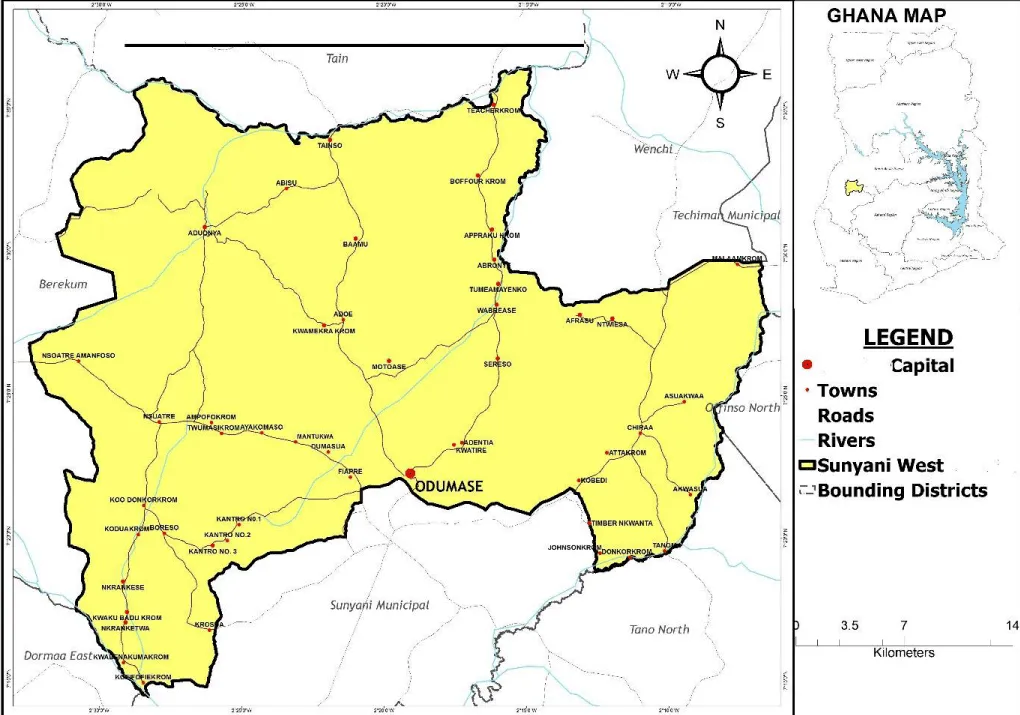
SWM is experiencing spatial transformation, particularly along major transportation corridors such as the Sunyani-Fiapre-Odumase stretch. These zones are witnessing peri-urban expansion with increased pressure on land and social infrastructure. This dichotomy between rapidly expanding peri-urban settlements and underserved rural communities renders the district a strategic location for studies on public health, spatial inequalities, and health service accessibility [46-49].
SWM presents a unique and pertinent setting for research due to its combination of peri-urban and rural environments. The coexistence of transitional peri-urban settlements and traditional rural communities facilitates comparative analyses of community-level phenomena, including disease epidemiology, health behaviour, environmental risks, and socioeconomic disparities. The district's accessibility, administrative stability, and availability of geospatial and demographic data further enhance its suitability as a study area.
Study population and eligibility criteria
The study population consisted of biological fathers aged 18 years and older, each having at least one biological child aged 0-17 years residing in the same household. The objective was to include active caregivers and those with ongoing involvement in child-rearing.
- Inclusion Criteria:
- Male residents of Sunyani West for a minimum duration of one year.
- Fathers with a biological child aged 0-17 years living in the same household.
- Voluntary consent to participate.
- Exclusion Criteria:
- Fathers with diagnosed psychiatric disorders currently receiving psychiatric care (to concentrate on subclinical mental health variations).
- Fathers who were mentally or physically unable to complete the interview process.
Sample Size Determination
For this cross-sectional study, the minimum sample size was calculated using Cochran’s formula [50], assuming a 50% prevalence of poor mental health among Ghanaian fathers is unknown, a 5% margin of error, and a 95% confidence level.
n is the sample size Z is the Z-value (1.96 for 95%) p is the estimated proportion (0.5) E is the margin of error (0.05 for 5%) = = = 384.16
The initial sample size was 384.16 for a large population. This sample size was increased to 430 to account for a potential non-response rate and potential clustering within strata of 10% or a design effect of 10% and to enhance statistical power.
= ≈ 426.84
Sampling technique
A multistage cluster sampling approach was used:
Stage 1 (Community Selection): Ten communities (Five Peri-urban and Five Rural) were randomly selected from the list of settlements in SWM using probability proportional to size.
Peri-urban (Odumase, Nsoatre, Mantukwa, Chiraa, and Fiapre) and Rural Communities (Kwatire, Abesu, Kwabenakuma Krom, Chiraa-Asuakwa, and Kobedi)
Stage 2 (Household Selection): Households with at least one eligible father were identified through community health volunteers. Systematic sampling was applied to select households using a sampling interval based on the total eligible households per community.
Stage 3 (Respondent Selection): In households with more than one eligible father, simple random sampling was used to select one respondent.
Data collection instruments
A structured questionnaire was developed by integrating validated psychometric tools and demographic questions. The tool was administered in English or Twi from January - June 2025, depending on the respondent’s preference. The instrument was pilot-tested in a neighbouring district (Sunyani East and Wenchi Municipality) with 30 fathers each to ensure cultural appropriateness and reliability.
The questionnaire was composed of five sections:
- Sociodemographic Characteristics: Collected data on age, marital status, education, occupation, household income, and number of children.
- Paternal Mental Health Assessment – DASS-21: Used the Depression, Anxiety, and Stress Scale-21 items (DASS-21) developed by [51]. Each subscale (Depression, Anxiety, Stress) consists of 7 items. Responses rated on a 4-point Likert scale (0 = did not apply, 3 = applied most of the time).
- Total scores were multiplied by 2 and categorized per recommended cut-offs.
- Fathering Practices – Inventory of Father Involvement (IFI-SF): Utilized the 8-item short-form of the Inventory of Father Involvement (IFI-SF) developed by [52]. Items rated on a 5-point scale (1 = not at all true, 5 = very true). Assessed domains such as discipline, emotional support, school involvement, and nurturing behaviours.
- Perceived Social Support – Multidimensional Scale of Perceived Social Support (MSPSS): Used a 4-item adapted version of the MSPSS according to [53], measuring support from family, friends, and significant others. Each item was rated on a 7-point Likert scale. Higher scores indicate greater perceived support.
- Child Well-being Index: Developed a 5-item custom checklist to measure perceived child well-being from [54], including emotional, physical, and academic functioning. Each item was rated on a 5-point scale (1 = poor, 5 = excellent). The total score ranged from 5 to 25.
Validity and Reliability
Content validity was ensured through expert review by psychologists, public health specialists, and social scientists. The internal consistency (Cronbach's alpha) [55-57] for each scale was: DASS-21: 0.84, IFI-SF: 0.81, MSPSS: 0.79 and Child Well-being Scale: 0.76. These values indicate good reliability for field-based social research in LMICs.
Data Collection Procedures
Data collection was carried out from October 1, 2024, to May 31, 2025, by eight trained enumerators supervised by two field supervisors. Data was collected using Open Data Kit (ODK) on Android tablets to ensure accuracy and real-time upload. Interviews were conducted in safe, private spaces within respondents’ homes or community centers. Each interview lasted approximately 25-35 minutes.
Data Management and Analysis
Data from ODK was exported into SPSS Version 26 for analysis. Descriptive statistics: Frequencies, means, and standard deviations were calculated. Bivariate analysis: Pearson correlation coefficients were used to assess associations among mental health, fathering practices, perceived support, and child well-being. Multivariable linear regression: Assessed the predictive role of paternal mental health on: (i) Fathering practices and (ii) Child well-being.
Model diagnostics included checking for multicollinearity (VIF < 2.5) and normality of residuals. Significance was set at p < 0.05 (Two-tailed).
Results
Of the 430 questionnaires collected, 30 were incomplete, resulting in 400 questionnaires being included in the analysis.
Sociodemographic characteristics of participants
A total of 400 fathers participated in the study. The mean age of the participants was 40.3 years (SD = 8.1), with ages ranging from 21 to 64 years. Most (53.5%) were married, 26.2% were widowed, and 20.3% were separated or divorced. Most participants had completed secondary education (41.0%), followed by primary education (33.5%). The predominant occupation was farming (62.0%), followed by trading (15.5%) and civil service (10.8%), as shown in table 1.
| Table 1: Sociodemographic characteristics of participants. | ||
| Characteristic | Frequency (n) | Percentage (%) |
| Age (Mean ± SD) | – | 40.3 ± 8.1 |
| Marital Status | ||
| Married | 214 | 53.5 |
| Widowed | 105 | 26.2 |
| Separated/Divorced | 81 | 20.3 |
| Education Level | ||
| No formal education | 52 | 13.0 |
| Primary | 134 | 33.5 |
| Secondary | 164 | 41.0 |
| Tertiary | 50 | 12.5 |
| Occupation | ||
| Farming | 248 | 62.0 |
| Trading | 62 | 15.5 |
| Civil Service | 43 | 10.8 |
| Other | 47 | 11.8 |
Distribution of key psychosocial variables among participating fathers
From figure 2, the mean DASS-21 Mental Health (MH) score was 1.52 (SD = 0.66) on a 0–3 scale. Mean score for fathering practices (IFI-SF) was 3.03 (SD = 0.75) out of 5. The Mean Perceived Social Support (PSS) score was 4.97 (SD = 1.12) out of 7. Mean Child Well-Being (CWB) score was 18.7 (SD = 3.2) out of 25.
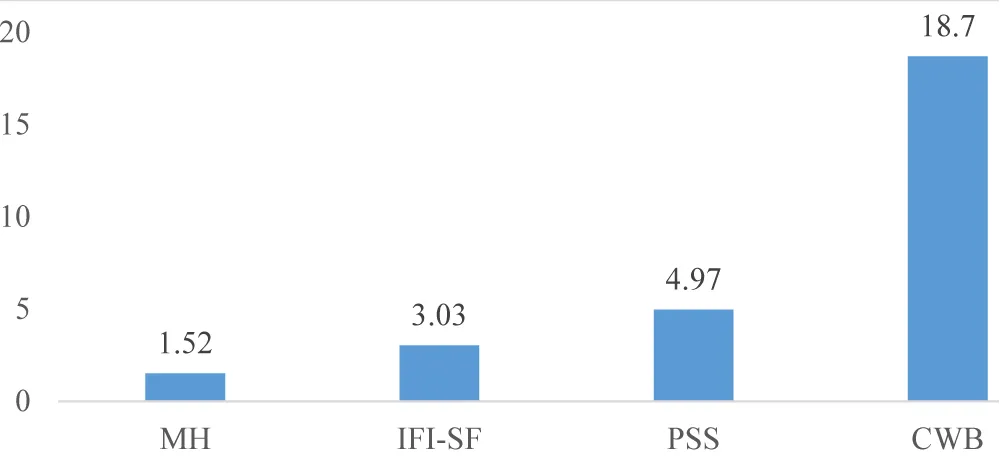
A bar chart comparing average scores for mental health (DASS-21), fathering practices (IFI-SF), social support (MSPSS), and child well-being index.
Correlation matrix among core variables
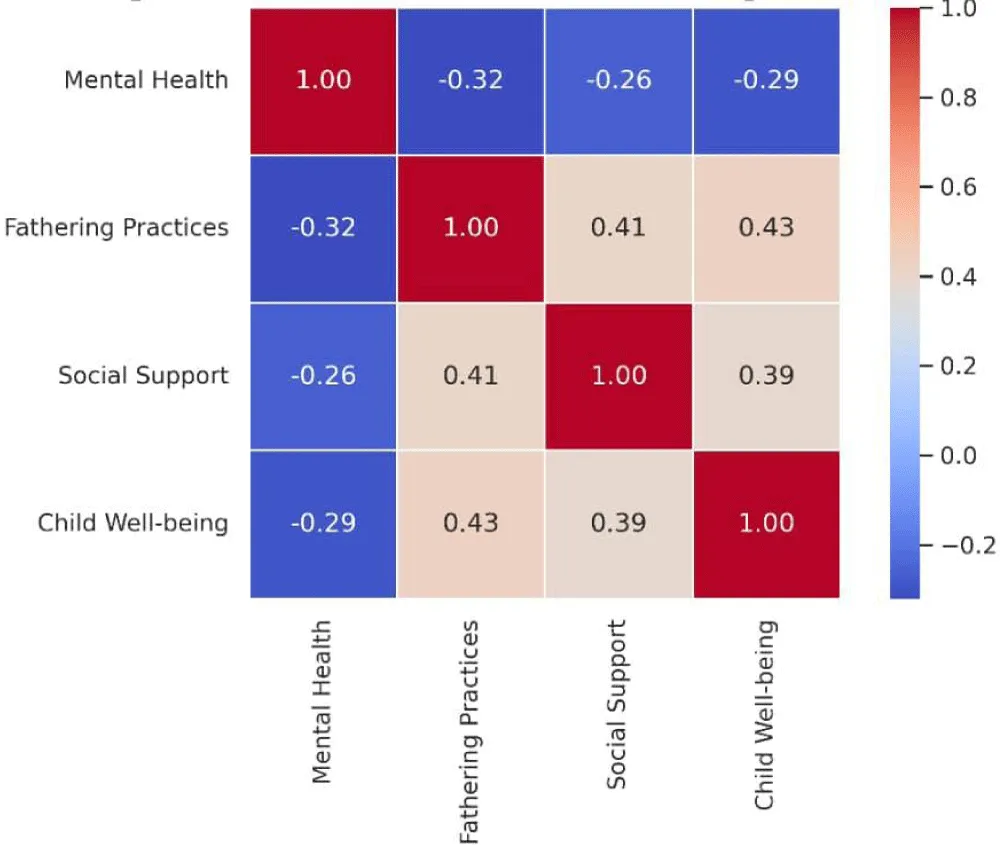
Paternal mental health was negatively correlated with fathering practices (r = -0.32, p < .001) and child well-being (r = -0.29, p < 0.001) as shown in figure 3, suggesting that increased symptoms of depression, anxiety, or stress were associated with poorer parenting and child outcomes.
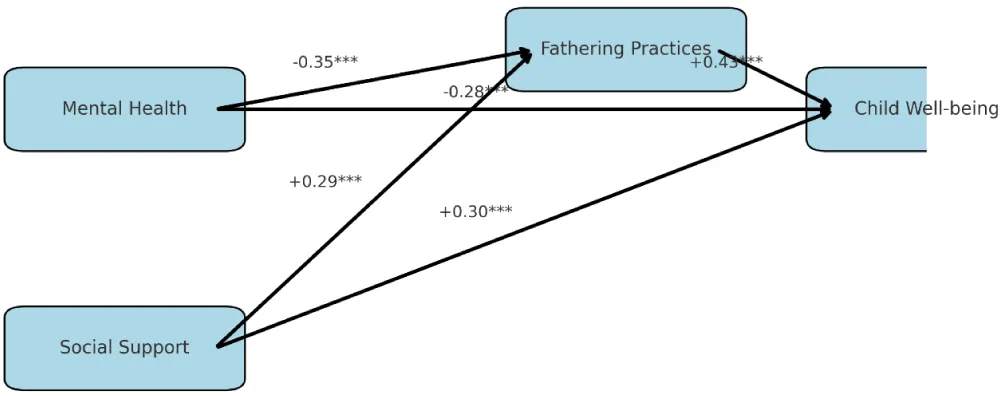
Relationships between Paternal Mental Health, Social Support, Fathering Practices, and Child Well-Being figure 4, Regression path diagram illustrating the direct relationships between paternal mental health, social support, fathering practices, and child well-being. Mental health negatively predicted fathering practices (β = -0.35, p < 0.001) and child well-being (β = -0.28, p < 0.001). Social support positively influenced both fathering practices (β = +0.29, p < 0.001) and child well-being (β = +0.30, p < 0.001). Fathering practices also positively predicted child well-being (β = +0.43, p < 0.001).
Model Summary: R² = 0.45, F (3, 396) = 107.3, p < 0.001. Figure 4 shows directional relationships: Mental health negatively predicts fathering and child well-being; fathering practices and social support positively predict child well-being.
Mental health profiles
Using DASS-21 categorization as shown in figure 5, 25% of fathers exhibited severe depression. 42% reported elevated stress levels.
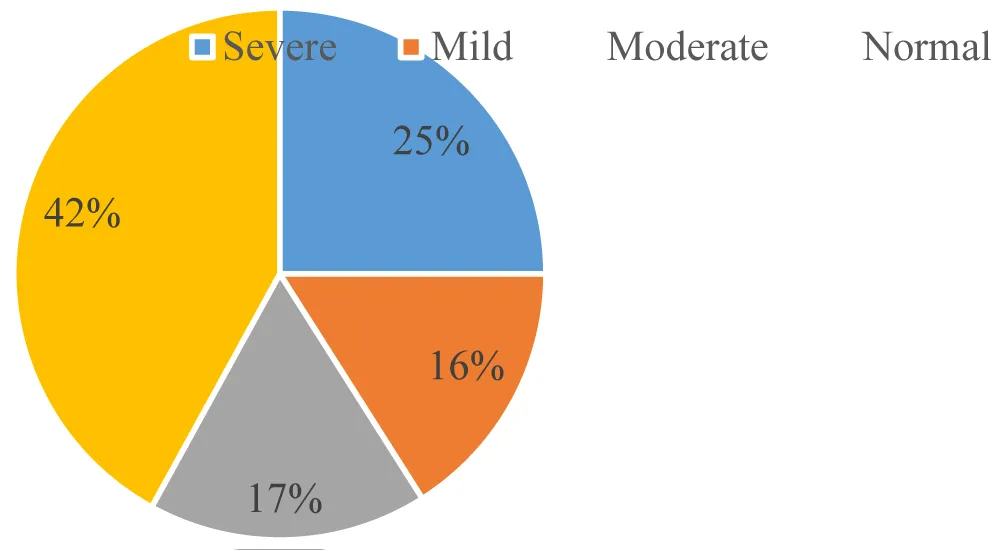
A pie chart showing the proportion of fathers by severity level of depressive symptoms based on DASS-21 categories. Categories include normal, mild, moderate, and severe.
Discussion
This study examined the relationships among paternal mental health, fathering practices, perceived social support, and child well-being within peri-urban and rural communities in SWM, Ghana. The findings demonstrate that poor paternal mental health is significantly associated with reduced involvement in parenting and negatively impacts children’s well-being. These results underscore the critical but often neglected role that fathers’ psychological well-being plays in family and child health outcomes in LMICs.
Mental health and fathering practices
Consistent with prior research, this study found a significant negative relationship between paternal mental health and the quality of fathering practices. Fathers with higher levels of depression, anxiety, or stress (as measured by DASS-21) reported significantly lower levels of positive parenting behaviour, including emotional support, discipline, and school involvement. This aligns with findings from global studies indicating that mental distress in fathers impairs their capacity for sensitive and consistent caregiving [13,15,58]. A meta-analysis by [3,4,15] further supports these results, demonstrating that paternal depression is associated with lower levels of paternal engagement and higher risks of harsh parenting styles.
In the Ghanaian context, where traditional gender norms typically position men as providers rather than caregivers, the transition to a more involved paternal role may heighten psychological strain, particularly among fathers in low-resource settings who lack emotional support systems [27]. This stress may result in detachment or reduced emotional availability, reinforcing a cycle of paternal withdrawal that impacts child development negatively.
Mental health and child well-being
The negative association between poor paternal mental health and child well-being observed in this study mirrors findings from previous work in both high-income and LMIC contexts [10,12,13,15]. Specifically, children of psychologically distressed fathers were perceived to fare worse in emotional, physical, and academic functioning. These results emphasize that children’s outcomes are sensitive not only to maternal mental health but also to the psychological well-being of fathers, an area often overlooked in health programming in Sub-Saharan Africa.
The findings support calls for a more inclusive family health model that acknowledges paternal mental health as a determinant of child development [8,13,58]. In line with the ecological systems theory, parental mental health is a proximal factor influencing children’s immediate environment, particularly in settings where extended family support is weakening due to urbanization and economic pressures [13,23,24,58].
The role of social support
This study also found that perceived social support from family, friends, and community significantly moderated the effects of mental health on parenting quality and child well-being. These findings align with existing literature asserting the buffering role of social support in alleviating parental psychological distress and enhancing parenting efficacy [59]. In Ghanaian society, however, men are less likely to seek emotional support due to stigma and entrenched norms around masculinity, which may exacerbate psychological distress and limit their involvement in caregiving roles [27].
The implication is that interventions targeting paternal mental health should not only address individual psychopathology but also strengthen family and community support structures, including culturally sensitive peer or faith-based counselling groups.
Education and marital status as enablers
Higher levels of education and marital stability were positively associated with better fathering practices, corroborating findings from multiple international studies [6]. Education may empower fathers with knowledge of child-rearing practices, while marital stability provides emotional and logistical support for parenting. These findings highlight the need for policies that promote male education and marital counselling as indirect means of improving child health outcomes.
Unique contextual factors in SWM
The duality of rural and peri-urban dynamics in SWM presents a unique opportunity to examine fathering within diverse sociocultural and economic environments. While fathers in peri-urban settings may benefit from greater access to services and exposure to evolving norms, they also face new stressors such as job insecurity and rising costs of living. Conversely, rural fathers may have limited access to psychosocial services but benefit from closer kin networks and communal child-rearing practices [26]. Tailoring interventions to these contextual nuances is essential.
Strengths and Limitations
A major strength of this study is its use of validated psychometric tools and a large, representative sample across rural and peri-urban communities. The cross-sectional design, however, limits causal inferences. Additionally, child well-being was reported by fathers, which may introduce bias. Future research should incorporate observational or child-reported outcomes and longitudinal designs to track changes over time.
Implications for Policy and Practice
This study highlights the urgent need to integrate paternal mental health into public health policy, particularly within the maternal and child health continuum in Ghana. Mental health screening for fathers should be incorporated into antenatal and postnatal care programs. Furthermore, culturally sensitive parenting programs targeting fathers, especially in peri-urban and underserved rural settings, can promote healthier family environments and developmental outcomes for children.
Conclusion
In conclusion, this study provides critical empirical evidence that paternal mental health is a significant determinant of fathering practices and child well-being in SWM, Ghana. Fathers experiencing symptoms of depression, anxiety, and stress demonstrated significantly lower involvement in caregiving and reported poorer developmental outcomes for their children. The findings underscore the interdependence between fathers’ psychological states and the broader well-being of the family, especially in contexts where men’s caregiving roles are evolving amidst economic and social pressures. Moreover, the positive effects of social support and educational attainment on parenting quality suggest potential leverage points for intervention.
These findings carry important implications for public health programming and policy. To improve child development outcomes and strengthen family health systems in Ghana and similar LMIC settings, it is essential to prioritize paternal mental health. First, routine mental health screening for fathers should be incorporated into maternal and child health services, including antenatal and postnatal clinics. Second, culturally responsive psychosocial support services, such as peer-support groups, faith-based counselling, and mobile mental health outreach, should be expanded to include men, especially in rural and peri-urban areas. Third, public education campaigns must be implemented to destigmatize male mental health and promote emotional well-being among fathers. Lastly, future interventions should adopt a family-systems approach that integrates maternal and paternal roles, fostering cooperative parenting and holistic child development. By investing in fathers' mental health, we can strengthen families and lay the foundation for healthier communities.
References
- Larson EJ. Most adaptable to change: Evolution and religion in global popular media. Journal of Religious History. 2025;216:49(1). doi: 10.1111/1467-9809.13136.
- Pimenta T. Enrique dussel’s concept of modernity: The intellectual evolution of a complex understanding of our age. Revista NUPEM. 2025;17(40). doi: 10.33871/nupem.2025.17.40.8514.
- Garfield CF, Garfield CF, Mesman J. Time and money: Extending fathers’ role in economically challenging contexts. Pediatrics. 2016;138(4). doi: 10.1542/PEDS.2016-2456.
- Bryan DM. To parent or provide the effect of the provider role on low-income men’s decisions about fatherhood and paternal engagement. Fathering: A journal of theory, research, and practice about men as fathers. 2013;11(1):71-89. doi: 10.3149/FTH.1101.71.
- Kabungo CJ, Mwanza-Kabaghe S, Milanzi J. Fathers’ involvement in early childhood education practices and their influence on the cognitive development of children aged 5 to 6 years in Kasama and Mungwi Districts, Zambia. World Journal of Advanced Research and Reviews. 2024;24(3):1518-1522. doi: 10.30574/wjarr.2024.24.3.3836.
- Saha R. The impact of parental and teacher involvement on the cognitive and emotional development of children from diverse backgrounds. International Journal for Multidisciplinary Research. 2024;6(6). doi: 10.36948/ijfmr.2024.v06i06.34467.
- Sharma P, Adamopoulos I, Syrou N, Budhathoki CB, Thapa P. The impact of health-caregivers emotional nurturance on cognitive development in preschoolers: A nationwide public health cross-sectional study. 2024. doi: 10.21203/rs.3.rs-5600588/v1.
- Giusto A, Waller BY, Bunn M, Jaguga F, Dos Santos P, Mootz J. The call to increase adoption of family-based interventions in global mental health programming. Psychiatr Serv. 2025 Apr 1;76(4):413-416. doi: 10.1176/appi.ps.20240243. Epub 2025 Jan 23. PMID: 39844640; PMCID: PMC11961304.
- Kassa GM, Yu Z, Minwuyelet F, Gross D. Behavioural interventions targeting the prevention and treatment of young children's mental health problems in low- and middle-income countries: a scoping review. J Glob Health. 2025 Jan 24;15:04018. doi: 10.7189/jogh.15.04018. PMID: 39849969; PMCID: PMC11758180.
- Adhikari S, Rana H, Joshi MP, Cheng S, Castillo T, Huang KY. Parental wellbeing, parenting, and child mental health in families with young children in Arghakhanchi, Nepal. BMC Pediatr. 2025 Jan 6;25(1):6. doi: 10.1186/s12887-024-05358-x. PMID: 39762775; PMCID: PMC11702219.
- Aytuglu A, Graham-Engeland JE, Feinberg ME, Jones DE, Schreier HMC. Child sleep problems mediate prospective associations between fathers' parenting stress and child blood glucose levels. J Fam Psychol. 2025 Mar;39(2):277-283. doi: 10.1037/fam0001306. Epub 2025 Jan 16. PMID: 39818869; PMCID: PMC12166960.
- Cameron EE, Joyce KM, Hatherly K, Roos LE. Paternal Depression and Anxiety During the COVID-19 Pandemic. Int J Environ Res Public Health. 2025 Jan 19;22(1):124. doi: 10.3390/ijerph22010124. PMID: 39857577; PMCID: PMC11764887.
- Jeong J, Mapendo F, Hentschel E, McCann JK, Yousafzai AK. Validation of an observational tool for assessing mother-child and father-child interactions in Mara, Tanzania. Dev Psychol. 2025 Jan 9. doi: 10.1037/dev0001909. Epub ahead of print. PMID: 39786795.
- Schaan VK, Schulz A, Schächinger H, Vögele C. Parental divorce is associated with an increased risk to develop mental disorders in women. J Affect Disord. 2019 Oct 1;257:91-99. doi: 10.1016/j.jad.2019.06.071. Epub 2019 Jul 2. PMID: 31299409.
- Paulson JF, Bazemore SD. Prenatal and postpartum depression in fathers and its association with maternal depression: a meta-analysis. JAMA. 2010 May 19;303(19):1961-9. doi: 10.1001/jama.2010.605. PMID: 20483973.
- Cristóbal-Narváez P, Haro JM, Koyanagi A. Perceived stress and depression in 45 low- and middle-income countries. J Affect Disord. 2020 Sep 1;274:799-805. doi: 10.1016/j.jad.2020.04.020. Epub 2020 May 12. PMID: 32664017.
- Yatham S, Sivathasan S, Yoon R, da Silva TL, Ravindran AV. Depression, anxiety, and post-traumatic stress disorder among youth in low and middle income countries: A review of prevalence and treatment interventions. Asian J Psychiatr. 2018 Dec;38:78-91. doi: 10.1016/j.ajp.2017.10.029. Epub 2017 Oct 31. PMID: 29117922.
- Sattar R, Chaudhry N, Kiran T, Husain N, Husain I. Integrated parenting intervention for depressed fathers of young children: A nested qualitative study from Pakistan. BJPsych Open. 2024;10:S44–S45. doi: 10.1192/bjo.2024.166.
- Shidhaye P, Giri P. Maternal depression: a hidden burden in developing countries. Ann Med Health Sci Res. 2014 Jul;4(4):463-5. doi: 10.4103/2141-9248.139268. PMID: 25221688; PMCID: PMC4160664.
- Prom MC, Denduluri A, Philpotts LL, Rondon MB, Borba CPC, Gelaye B, Byatt N. A systematic review of interventions that integrate perinatal mental health care into routine maternal care in low- and middle-income countries. Front Psychiatry. 2022 Mar 14;13:859341. doi: 10.3389/fpsyt.2022.859341. PMID: 35360136; PMCID: PMC8964099.
- Rahman MA, Babaye Y, Bhat A, Collins PY, Kemp CG. Availability of two essential medicines for mental health in Bangladesh, the Democratic Republic of Congo, Haiti, Nepal, Malawi, Senegal, and Tanzania: Evidence from nationally representative samples of 7958 health facilities. J Glob Health. 2022 Aug 1;12:04063. doi: 10.7189/jogh.12.04063. PMID: 35908218; PMCID: PMC9339230.
- Fellmeth G, Fazel M, Plugge E. Migration and perinatal mental health in women from low- and middle-income countries: a systematic review and meta-analysis. BJOG. 2017 Apr;124(5):742-752. doi: 10.1111/1471-0528.14184. Epub 2016 Jun 20. PMID: 27320110.
- Gelaye B, Rondon MB, Araya R, Williams MA. Epidemiology of maternal depression, risk factors, and child outcomes in low-income and middle-income countries. Lancet Psychiatry. 2016 Oct;3(10):973-982. doi: 10.1016/S2215-0366(16)30284-X. Epub 2016 Sep 17. PMID: 27650773; PMCID: PMC5155709.
- Herba CM, Glover V, Ramchandani PG, Rondon MB. Maternal depression and mental health in early childhood: an examination of underlying mechanisms in low-income and middle-income countries. Lancet Psychiatry. 2016 Oct;3(10):983-992. doi: 10.1016/S2215-0366(16)30148-1. Epub 2016 Sep 17. PMID: 27650772.
- Rebaone P, Sibusiso M, Million P. A multi-country analysis of fatherhood onset and father-child coresidency in Southern Africa. Afr J Reprod Health. 2023 Oct 31;27(10):81-92. doi: 10.29063/ajrh2023/v27i10.7. PMID: 37915166.
- Wachege PN, Cherono F. African socio-religious cultural understanding of family and parenting: A case of the Agikuyu, Kenya. J Humanit Soc Stud. 2017;5(3).
- Otu W. The changing roles of fathers in parenting in Ghana. Res Humanit Soc Sci. 2015;5(15):120-320.
- Nukpezah RN, Atanuriba GA. 'It is an emotional rollercoaster!!!' Experiences of mothers of preterm newborns seeking care at a tertiary hospital in Ghana: a qualitative phenomenological study. BMJ Open. 2025 Jan 15;15(1):e093173. doi: 10.1136/bmjopen-2024-093173. PMID: 39819941; PMCID: PMC11751851.
- Cogent arts humanit. 2025;12(1).
- Agyeman-Duah Y, Bimerew M. Mothers’ experiences with postnatal home visits by community health nurses in selected districts in ashanti region, Ghana. Am J Health Res. 2024;12(6):251-6. doi: 10.11648/j.ajhr.20241206.20.
- Tahiru R, Amoako M, Apprey C. Exclusive breastfeeding: an exploratory thematic analysis of the perspectives of breastfeeding mothers and significant others in the Tamale metropolis of Northern Ghana. BMC Nutr. 2024 Dec 18;10(1):161. doi: 10.1186/s40795-024-00973-4. PMID: 39696715; PMCID: PMC11657459.
- Quan BKP. In praise of mothers: Songs composed by Ghanaian musicians as tribute to motherhood. Muziki. 2009;6(2):260-9. doi: 10.1080/18125980903250871.
- Stephenson JM, Turkelson A, Fingerman KL, Birditt KS. I love you no matter what: Negative relationship quality and daily encounters in the parent-child tie and their implications for daily mood across the lifespan. Fam Process. 2025 Mar;64(1):e13094. doi: 10.1111/famp.13094. PMID: 39779461; PMCID: PMC11711072.
- Zhou Q, Chen M, Liang J, Chen Q, Li H. Parent-child online interaction and the well‐being of children in rural China: The effects of family social capital and parental migration. Child Fam Soc Work. 2025;0:1-12. doi: 10.1111/cfs.13262.
- Seko MO, Mosha IH. Fathers’ involvement in child care practices to improve stunting among under-five children in sumbawanga rural district, Rukwa Tanzania. East Afr J Appl Health Monit Eval. 2024;7(3). doi: 10.58498/eajahme.v7i3.68.
- Kersey B, Thomsen KN, Bartelli D, Howell K. Externalizing problems in children: Examining the role of caregiver and child adversities and parental involvement. Am J Undergrad Res. 2024;21(3):3-14. doi: 10.33697/ajur.2024.122.
- Khan M, Jameel HT. Impact of emotional regulation on academic achievement of students at secondary school level. Int J Innov Teach Learn. 2024;10(2):98-115. doi: 10.35993/ijitl.v10i2.3334.
- Calderon-Villarreal A, García-Hernández A, Olvera-Gonzalez R, Elizondo-García J. Parental involvement barriers and their influence on student self-regulation in primary education. Educ Urban Soc. 2025. doi: 10.1177/00131245251314489.
- Zheng J. The effects of parenting styles on children’s emotional and social skill development: The mediating role of emotion regulation skills. Lect Notes Educ Psychol Public Media. 2025;84(1):6-10. doi: 10.54254/2753-7048/2025.20550.
- Mprah WK, Opoku MP, Gyimah EM, Nur S, Duorinaah J, Frimpomaa L, Efstratopoulou M. Caregivers' Experience of Supporting Deaf Adults with Mental Health Disorders in Ghana. Int J Environ Res Public Health. 2025 Jan 22;22(2):144. doi: 10.3390/ijerph22020144. PMID: 40003370; PMCID: PMC11855379.
- Ibrahim H, Ismail AA, Rahim NA, Iffland B, Neuner F. Childhood cancer and parental mental health: role of disease severity, socioeconomic status, and social dynamics. BMC Psychiatry. 2025 Jan 17;25(1):42. doi: 10.1186/s12888-025-06494-z. PMID: 39825357; PMCID: PMC11740337.
- 2021Population and housing census: District analytical reports. Ghana Statistical Service (GSS). Accra: GSS. 2021.
- Sunyani West District. Wikipedia. 2025.
- Catholic University College of Ghana. Wikipedia. 2025.
- Boakye SP, Amoako EA. Assessing guidance services in senior high schools in Ghana: A case of a senior high school in the Sunyani West District. Int J Humanit Soc Sci. 2023;13(5):108-17. doi: 10.64712/imjre.v1i1.145.
- Inkoom D, Owusu G. Urban development and secondary cities in Ghana. 2025. doi: 10.4324/9781003511137-3.
- Novignon J, Ofori B, Tabiri KG, Pulok MH. Socioeconomic inequalities in maternal health care utilization in Ghana. Int J Equity Health. 2019 Sep 5;18(1):141. doi: 10.1186/s12939-019-1043-x. PMID: 31488160; PMCID: PMC6729067.
- Nsiah RB, Larbi-Debrah P, Avagu R, Yeboah AK, Anum-Doku S, Zakaria SAR, et al. Mapping health disparities: Spatial accessibility to healthcare facilities in a rural district of Ghana using geographic information systems techniques. Am J Health Res. 2024;12(5):103-15. doi: 10.11648/j.ajhr.20241205.11.
- Asare K. Non-farm livelihood diversification in selected rural and peri-urban communities in the Sunyani West District. Afribary;2021.
- Agyapong M, Boison K. Spatial distribution of rural and peri-urban settlements in Sunyani West District. Sunyani West District Assembly Planning Unit. 2015.
- Cochran WG. Sampling techniques. 3rd ed. New York: John Wiley & Sons; 1977.
- Lovibond SH, Lovibond PF. Manual for the depression anxiety stress scales. 2nd ed. Sydney: Psychology Foundation of Australia; 1995.
- Hawkins AJ, Bradford KP, Palkovitz R, Christiansen SL, Day RD, Call VRA. The inventory of father involvement: A pilot study of a new measure of father involvement. J Men’s Stud. 2002;10(2):183-96. doi: 10.3149/jms.1002.183.
- Zimet GD, Dahlem NW, Zimet SG, Farley GK. The multidimensional scale of perceived social support. J Pers Assess. 1988;52(1):30-41. doi: 10.1207/s15327752jpa5201_2.
- Land KC. The foundation for child development index of child well-being (CWI), 1975-2013 with Projections for 2014. Foundation for Child Development; 2014.
- Taber KS. The use of Cronbach’s alpha when developing and reporting research instruments in science education. Res Sci Educ. 2019;48(6):1273-96. doi: 10.1007/s11165-016-9602-2.
- Tavakol M, Dennick R. Making sense of Cronbach's alpha. Int J Med Educ. 2011 Jun 27;2:53-55. doi: 10.5116/ijme.4dfb.8dfd. PMID: 28029643; PMCID: PMC4205511.
- Fisher J, Cabral de Mello M, Patel V, Rahman A, Tran T, Holton S, Holmes W. Prevalence and determinants of common perinatal mental disorders in women in low- and lower-middle-income countries: a systematic review. Bull World Health Organ. 2012 Feb 1;90(2):139G-149G. doi: 10.2471/BLT.11.091850. Epub 2011 Nov 24. PMID: 22423165; PMCID: PMC3302553.
- Taylor ZE, Conger RD, Robins RW, Widaman KF. Parenting Practices and Perceived Social Support: Longitudinal Relations with the Social Competence of Mexican-origin Children. J Lat Psychol. 2015 Nov 1;3(4):193-208. doi: 10.1037/lat0000038. Epub 2015 Jun 15. PMID: 26751039; PMCID: PMC4705564.





Content Alerts
SignUp to our
Content alerts.
 This work is licensed under a Creative Commons Attribution 4.0 International License.
