
2025 November 12;6(11):1682-1690. doi: 10.37871/jbres2221.
-
Subject area(s):

 |
|
 |
|
 |
|

 Perspective
Combining Whole Food Plant-Based Diet and Intermittent Fasting: A Synergistic Strategy to Combat Chronic Diseases
Mulijono D1-3*
2Indonesian College of Lifestyle Medicine, Indonesia
3Department of Cardiology, Faculty of Medicine, Prima University, Medan, Indonesia
- Whole-food plant-based die
- Intermittent fasting
- Chronic disease
- Cardiovascular health
- Insulin resistance
- Inflammation
- Autophagy
- Metabolic health
- Nutrition therapy
- Longevity
Abstract
The escalating burden of chronic Non-Communicable Diseases (NCDs)-including Cardiovascular Disease (CVD), Type 2 Diabetes Mellitus (T2DM), obesity, hypertension, and cancer-highlights the failure of symptom-based medicine to address root causes. Lifestyle medicine now stands as a transformative alternative, with two proven interventions-Whole-Food Plant-Based Diets (WFPBD) and Intermittent Fasting (IF)-showing powerful metabolic and anti-inflammatory benefits.
When combined, WFPBD and IF yield synergistic physiological effects, enhancing insulin sensitivity, lipid regulation, autophagy, and inflammation control while promoting sustainable weight loss and cellular repair. This integration addresses both the quality and timing of nutrition, targeting the molecular roots of chronic disease.
At Bethsaida Hospital (Indonesia), under the leadership of Prof. Dasaad Mulijono, this combined WFPBD+IF protocol has been implemented for nearly seven years in thousands of patients with advanced cardiometabolic disorders. The program demonstrated measurable success, including the reversal of Coronary Artery Disease (CAD), remission of T2DM & hypertension, reduction in medication use, normalisation of lipid and inflammatory markers, improved renal function, and sustained weight loss.
This low-cost, scalable, and clinically validated model demonstrates that integrating nutrition and fasting offers a replicable blueprint for global metabolic restoration and long-term disease reversal.
Introduction
Chronic NCDS such as CVD, T2DM, obesity, hypertension, and certain cancers account for more than 70% of global deaths each year, according to the World Health Organization [1-6]. These conditions diminish quality of life and strain healthcare systems, economies, and families. The alarming rise in chronic diseases worldwide is closely linked to modifiable lifestyle factors, chief among them being unhealthy dietary patterns, sedentary behaviour, and poor metabolic regulation [7-10].
Despite significant advances in pharmacological therapies and diagnostic technologies, the burden of chronic disease continues to rise, suggesting that medication alone is insufficient to address the root causes of these conditions. In this context, lifestyle medicine has emerged as a decisive paradigm shift, emphasising the potential of food and behaviour change as therapeutic tools.
The WFPBD and IF are among the most promising evidence-based lifestyle interventions. Each approach has demonstrated independent benefits in improving insulin sensitivity, reducing inflammation, normalizing lipid profiles, and supporting healthy weight management. WFPBD, rich in fibre, antioxidants, and phytonutrients, has been shown to reverse atherosclerosis, improve glycaemic control, and lower cancer risk. Meanwhile, IF enhances metabolic flexibility, triggers autophagy, and promotes cellular repair during periods of nutrient deprivation [11-17].
While both strategies have been widely studied in isolation, emerging clinical and mechanistic evidence suggests that combining WFPBD with IF may yield synergistic effects, amplifying their benefits through complementary metabolic pathways. This integrated approach addresses the quantity and quality of food intake, as well as the timing of nutrient delivery, offering a comprehensive method to optimize metabolic health and reverse disease progression.
In this article, we review the scientific foundations of the WFPBD and IF, explore their combined mechanisms of action, and share real-world clinical outcomes from Bethsaida Hospital, where this dual intervention has been implemented successfully in a few thousand patients. The goal is to present a scalable, sustainable, patient-centered strategy for combating the global chronic disease epidemic.
WFPBD: Evidence-based foundation
The WFPBD emphasises minimally processed plant foods-vegetables, fruits, legumes, whole grains, nuts, and seeds—while excluding animal products, processed foods, and added oils. Numerous clinical trials and cohort studies have documented the health benefits of this dietary pattern:
- Cardiovascular health: Dramatic Low-Density Lipoprotein Cholesterol (LDL-C), blood pressure, and inflammation reductions. Dr Esselstyn and Dr Ornish’s landmark studies showed that a low-fat plant-based diet can halt and even reverse CAD [18-26].
- Diabetes management: A 2009 study by Barnard et al. demonstrated greater improvements in HbA1c and insulin sensitivity with a WFPBD than the American Diabetes Association diet [27-34].
- Cancer prevention: High fibre, antioxidants, and phytochemicals are associated with reduced risk of colorectal, breast, and prostate cancers [35-40].
- Weight management: Naturally low in calorie density and high in satiety-promoting fibre, WFPBD supports sustainable weight loss and maintenance [41-50].
IF: Time-restricted metabolic reset
IF involves cycling between periods of eating and fasting, without necessarily altering the quality of food. The most common forms include:
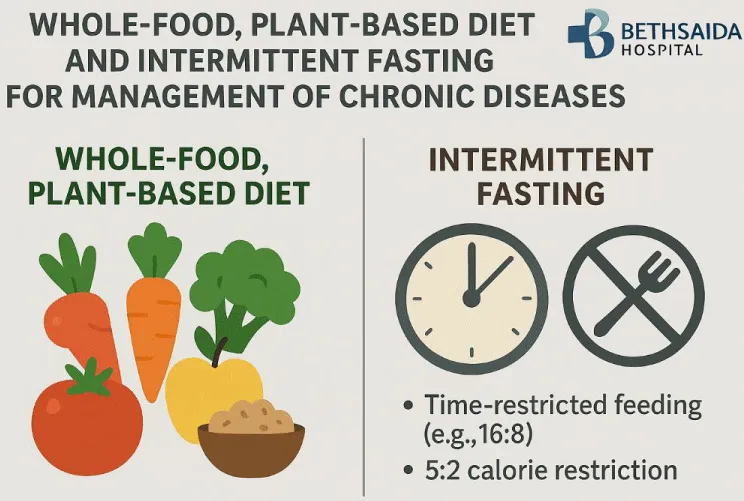
- Time-restricted feeding (e.g., 16:8 means fasting for 16 hours and eating all meals within an 8-hour window, for example, 12 PM to 8 PM).
- 5:2 calorie restriction means you eat normally 5 days a week and restrict calories to 500–600 kcal/day for two non-consecutive days.
- Alternate-day fasting.
Scientific evidence supports several metabolic benefits [11-13]:
- Improved insulin sensitivity: IF lowers fasting insulin and glucose levels, enhancing metabolic flexibility.
- Weight loss and visceral fat reduction: Fasting periods promote lipolysis and shift the body into fat-burning mode.
- Cellular repair and autophagy: Fasting induces cellular cleanup mechanisms, improving mitochondrial efficiency and longevity.
- Neuroprotection: IF enhances brain-derived neurotrophic factor (BDNF), linked to memory and mood stabilisation.
Synergistic effects of combining WFPBD + IF
While both WFPBD and IF offer distinct benefits, their integration enhances key physiological pathways [11-17] (Table 1):
| Table 1: | ||
| Target | Combined Mechanisms | Impact on Chronic Disease |
| Insulin Sensitivity | IF reduces insulin demand; WFPBD prevents postprandial glucose spikes | Reverses insulin resistance, lowers diabetes risk |
| Weight Loss | IF boosts fat burning; WFPBD prevents overconsumption | Sustained weight loss without calorie counting |
| Inflammation | IF activates anti-inflammatory genes; WFPBD reduces dietary pro-inflammatory agents | Prevents atherosclerosis and autoimmune flares |
| Autophagy & Repair | IF stimulates autophagy; WFPBD reduces cellular stress | Slows ageing, reduces neurodegenerative risk |
| Lipid Profile | IF improves fat metabolism; WFPBD lowers LDL-C and TMAO | Reduces cardiovascular events |
| Microbiome Health | IF improves gut barrier and diversity; WFPBD provides prebiotic fibre | Enhances immunity, reduces systemic inflammation |
| TMAO = Trimethylamine N-oxide | ||
Clinical implementation and considerations
- Vitamin B12 must be supplemented in WFPBD.
- Monitoring is essential for patients with diabetes or on medications to prevent hypoglycaemia during fasting.
- Gradual transition is recommended for individuals unfamiliar with fasting or plant-based eating.
- Hydration, sleep, and stress management complement the dietary approach (Figure 1).
Bethsaida hospital’s experience - Seven years of success with WFPBD and IF
For nearly seven years, Bethsaida Hospital in Indonesia, under the leadership of Prof. DM, has pioneered an integrative lifestyle medicine program that combines a WFPBD with IF as a cornerstone strategy for preventing and reversing chronic diseases. This approach has achieved remarkable clinical success among patients committed to addressing the root causes of their conditions, rather than merely managing symptoms through lifelong medication.
The setting and the approach
The WFPBD we employ is centered around unprocessed or minimally processed plant foods: vegetables, fruits, legumes, whole grains, nuts, and seeds. It excludes all animal products, processed foods, added sugars, and oils. This dietary approach is deeply rooted in scientific evidence showing its efficacy in reducing systemic inflammation, improving endothelial function, normalizing metabolic biomarkers, and supporting overall longevity.
In parallel, IF was introduced progressively to patients, commonly using time-restricted eating windows such as 16:8 or 14:10, and in some motivated individuals, 24-hour fasts on alternate days or 5:2 patterns. IF is used not as a restrictive punishment but as a tool to trigger metabolic repair, insulin sensitivity, fat oxidation, and autophagy-all critical mechanisms for disease reversal.
Patient population and disease targets
Over the past seven years, a few thousand patients at Bethsaida Hospital have undergone this combined lifestyle intervention. Many presented with complex and often advanced chronic conditions, including:
- CAD with angina or post-stent restenosis,
- T2DM with long-standing poor glycaemic control,
- Obesity and metabolic syndrome, often resistant to previous conventional interventions,
- Hypertension and dyslipidaemia, frequently requiring multiple medications,
- Early-stage kidney dysfunction (e.g., eGFR 45-60 ml/min/1.73m²), commonly associated with diabetes or vascular disease.
All participants underwent multidisciplinary education, received personalized dietary coaching, and were medically supervised, especially those with comorbidities requiring medication adjustments.
Clinical Outcomes and Transformations
The outcomes observed in our cohort have been both consistent and transformative. Among the most significant benefits recorded are:
- Regression of CAD, often documented by repeat Computed Tomography Coronary Angiography (CTCA) and invasive coronary angiography, and clinically supported by the resolution of angina symptoms.
- Marked improvement in glycaemic control, with many patients reducing or discontinuing insulin and oral hypoglycaemic agents under close monitoring.
- Normalisation of blood pressure, often enabling deprescribing of antihypertensives while maintaining normotension.
- Dramatic reductions in total and Low-Density Lipoprotein Cholesterol (LDL-C), triglycerides, and inflammatory markers such as CRP.
- Decreased restenosis rates following percutaneous coronary interventions, likely due to improved endothelial function, reduced oxidative stress, and favourable lipid and glucose metabolism.
- Improvement in early kidney dysfunction, including stabilisation or partial reversal of declining eGFR and reduction in microalbuminuria.
- Sustained, hunger-free weight loss, patients consistently reporting increased energy levels and improved mental clarity.
Importantly, these outcomes were not isolated cases but were observed across a broad spectrum of patients, demonstrating the generalizability and scalability of this lifestyle model in a real-world hospital setting.
Key Lessons from Implementation
Our long-term experience has taught us that success depends on several key factors:
- Patient commitment and education: Deep, personal motivation and understanding of the "why" behind the intervention were central to adherence.
- Structured supervision: Medical professionals must be equipped to adjust medications, particularly insulin, sulfonylureas, and antihypertensives, to avoid complications such as hypoglycaemia or hypotension.
- Gradual adaptation: For patients with gastrointestinal issues {e.g., dyspepsia, Gastroesophageal Reflux Disease (GERD), or peptic ulcers}, fasting was introduced slowly or modified to prevent exacerbation. Some required proton pump inhibitors or mucosal protectants during the transition.
- Avoiding misuse of IF: A major misconception we actively corrected was the belief that fasting allows indulgence in unhealthy foods during eating periods. Patients were counselled that fasting only works optimally when paired with clean, anti-inflammatory, plant-based nutrition. We strongly discouraged combining IF with high-fat, low-fibre ketogenic diets, which have been shown to increase cardiovascular and renal risk (Table 2).
| Table 2: Key clinical outcomes from Bethsaida hospital’s seven-year WFPBD + IF program. | |||
| Clinical Parameter | Baseline Condition | Outcome After Intervention | Clinical Impact |
| CAD | Symptomatic angina, post-stent restenosis | Documented plaque regression (CTCA, angiography); resolution of angina | Disease reversal; reduced restenosis rate |
| T2DM | Poor glycaemic control (HbA1c > 8%) | HbA1c reduction to < 6.5%; insulin/oral drug withdrawal in many | Medication deprescription; metabolic remission |
| Hypertension | BP > 140/90 mmHg on ≥ 2 drugs | Normalisation (≈ 120/80 mmHg) | Reduced or discontinued antihypertensives |
| Dyslipidaemia | Elevated LDL-C (> 130 mg/dL), TG > 200 mg/dL | LDL-C < 70 mg/dL, TG normalisation | Marked reduction in atherogenic risk |
| Inflammation (CRP) | High CRP > 3 mg/L | Normalized (< 1 mg/L) | Reduced systemic inflammation |
| Renal Function | eGFR 45-60 mL/min/1.73 m² | Stabilized or improved (> 70 mL/min/1.73 m²) | Slowed CKD progression |
| Body Weight / Obesity | BMI > 30 kg/m² | Sustained weight loss (5-15% of body weight) | Improved energy, reduced metabolic load |
| Quality of Life | Fatigue, polypharmacy, poor mood | Enhanced vitality, mental clarity, and emotional stability | Improved patient-reported outcomes |
Discussion
Misconceptions and mistakes: When fasting meets unhealthy eating
While IF is increasingly popular, many individuals misunderstand its therapeutic potential and inadvertently negate its benefits by pairing fasting windows with unhealthy or ketogenic diets. A common mistake is assuming that fasting permits "free eating" during feeding periods, which often leads to overconsumption of animal fats, processed foods, and pro-inflammatory compounds. These dietary choices elevate markers like LDL-C, TMAO, and oxidative stress, ultimately counteracting the metabolic advantages gained during fasting [51-53].
Additionally, ketogenic diets-frequently adopted alongside IF-are high in saturated fat and low in fibre and have been linked to increased cardiovascular risk and gut dysbiosis [54-56]. Unlike WFPBD, which supports endothelial function, nitric oxide production, and microbiome diversity, high-animal-fat diets promote mechanisms underlying atherosclerosis and chronic inflammation. Thus, the quality of food consumed during eating windows is just as critical as the timing of meals. Fasting cannot "cancel out" the damage of a poor diet.
Clinical considerations before initiating IF
Before initiating IF, patients should consult a healthcare provider, especially if they have pre-existing medical conditions. While IF can be beneficial, certain risks must be carefully evaluated and managed:
- Gastrointestinal risks: Individuals with dyspepsia, GERD, or a history of peptic ulcers may experience worsened symptoms during fasting. Skipping meals or prolonged exposure to gastric acid can exacerbate mucosal damage. These patients may require modification of fasting schedules or pharmacologic support before initiating IF [57-59].
- T2DM: IF can substantially improve glycaemic control in T2DM, but it must be medically supervised, especially for patients on insulin or insulin secretagogues (e.g., sulfonylureas). Fasting without appropriate medication adjustment may lead to dangerous hypoglycaemia, particularly during extended fasting periods or overnight. Regular glucose monitoring, dose reduction, and close clinical supervision are essential to ensure safety and effectiveness [60-62].
Conclusion
Integrating WFPBD with IF represents a powerful, evidence-based strategy to combat the rising tide of chronic disease. Together, these two synergistic interventions create a metabolic environment that enhances insulin sensitivity, reduces systemic inflammation, promotes cellular repair, normalizes body weight, and supports healthy ageing. Far beyond symptom control, this combined approach holds the potential to halt and even reverse the progression of many modern lifestyle-related illnesses.
As the global burden of chronic illness continues to escalate, the adoption of these accessible, low-cost, and sustainable interventions offers a scalable public health solution with transformative implications, both within and beyond clinical settings.
Our seven-year experience at Bethsaida Hospital has provided compelling real-world validation: when properly applied, the synergy between a WFPBD and IF can consistently reverse, not merely manage, conditions such as CAD, T2DM, hypertension, obesity, hyperlipidaemia, and early kidney dysfunction. This is not a passing trend, but a medically sound, physiologically grounded, and profoundly human-centred approach to healing.
With appropriate patient education, clinical supervision, and individualized support, this protocol can be safely and effectively implemented across diverse populations. In an era where pharmacologic solutions often fall short of addressing root causes, the Bethsaida model is a replicable blueprint for sustainable health transformation—one patient, one plate, and one fast at a time.
Author Contributions
D.M.; Conceptualisation, writing, review, and editing.
Funding
This research received no external funding.
Data Availability Statement
Data are contained within the article.
Conflict of Interest
The authors declare no conflict of interest.
References
- Ouyang F, Cheng X, Zhou W, He J, Xiao S. Increased Mortality Trends in Patients With Chronic Non-communicable Diseases and Comorbid Hypertension in the United States, 2000-2019. Front Public Health. 2022 Jul 11;10:753861. doi: 10.3389/fpubh.2022.753861. PMID: 35899158; PMCID: PMC9309719.
- Piovani D, Nikolopoulos GK, Bonovas S. Non-Communicable Diseases: The Invisible Epidemic. J Clin Med. 2022 Oct 8;11(19):5939. doi: 10.3390/jcm11195939. PMID: 36233805; PMCID: PMC9572583.
- Taheri Soodejani M. Non-communicable diseases in the world over the past century: a secondary data analysis. Front Public Health. 2024 Oct 3;12:1436236. doi: 10.3389/fpubh.2024.1436236. PMID: 39421825; PMCID: PMC11484412.
- Di Cesare M, Perel P, Taylor S, Kabudula C, Bixby H, Gaziano TA, McGhie DV, Mwangi J, Pervan B, Narula J, Pineiro D, Pinto FJ. The Heart of the World. Glob Heart. 2024 Jan 25;19(1):11. doi: 10.5334/gh.1288. PMID: 38273998; PMCID: PMC10809869.
- Chong B, Jayabaskaran J, Jauhari SM, Chan SP, Goh R, Kueh MTW, Li H, Chin YH, Kong G, Anand VV, Wang JW, Muthiah M, Jain V, Mehta A, Lim SL, Foo R, Figtree GA, Nicholls SJ, Mamas MA, Januzzi JL, Chew NWS, Richards AM, Chan MY. Global burden of cardiovascular diseases: projections from 2025 to 2050. Eur J Prev Cardiol. 2025 Aug 25;32(11):1001-1015. doi: 10.1093/eurjpc/zwae281. PMID: 39270739.
- Gaidai O, Cao Y, Loginov S. Global Cardiovascular Diseases Death Rate Prediction. Curr Probl Cardiol. 2023 May;48(5):101622. doi: 10.1016/j.cpcardiol.2023.101622. Epub 2023 Jan 29. PMID: 36724816.
- Niebuur J, Vonk JM, Du Y, de Bock GH, Lunter G, Krabbe PFM, Alizadeh BZ, Snieder H, Smidt N, Boezen M, Corpeleijn E. Lifestyle factors related to prevalent chronic disease multimorbidity: A population-based cross-sectional study. PLoS One. 2023 Jul 24;18(7):e0287263. doi: 10.1371/journal.pone.0287263. PMID: 37486939; PMCID: PMC10365307.
- Oster H, Chaves I. Effects of Healthy Lifestyles on Chronic Diseases: Diet, Sleep and Exercise. Nutrients. 2023 Oct 31;15(21):4627. doi: 10.3390/nu15214627. PMID: 37960280; PMCID: PMC10650398.
- Du Y, de Bock GH, Vonk JM, Pham AT, van der Ende MY, Snieder H, Smidt N, Krabbe PFM, Alizadeh BZ, Lunter G, Corpeleijn E. Lifestyle factors and incident multimorbidity related to chronic disease: a population-based cohort study. Eur J Ageing. 2024 Nov 28;21(1):37. doi: 10.1007/s10433-024-00833-x. PMID: 39609306; PMCID: PMC11604909.
- Hacker K. The Burden of Chronic Disease. Mayo Clin Proc Innov Qual Outcomes. 2024 Jan 20;8(1):112-119. doi: 10.1016/j.mayocpiqo.2023.08.005. Erratum in: Mayo Clin Proc Innov Qual Outcomes. 2024 Dec 13;9(1):100588. doi: 10.1016/j.mayocpiqo.2024.11.005. PMID: 38304166; PMCID: PMC10830426.
- Vasim I, Majeed CN, DeBoer MD. Intermittent Fasting and Metabolic Health. Nutrients. 2022 Jan 31;14(3):631. doi: 10.3390/nu14030631. PMID: 35276989; PMCID: PMC8839325.
- Song DK, Kim YW. Beneficial effects of intermittent fasting: a narrative review. J Yeungnam Med Sci. 2023 Jan;40(1):4-11. doi: 10.12701/jyms.2022.00010. Epub 2022 Apr 4. PMID: 35368155; PMCID: PMC9946909.
- Reddy BL, Reddy VS, Saier MH Jr. Health Benefits of Intermittent Fasting. Microb Physiol. 2024;34(1):142-152. doi: 10.1159/000540068. Epub 2024 Jul 2. PMID: 38955141; PMCID: PMC11262566.
- Esquivel MK. Nutrition Benefits and Considerations for Whole Foods Plant-Based Eating Patterns. Am J Lifestyle Med. 2022 Apr 22;16(3):284-290. doi: 10.1177/15598276221075992. PMID: 35706588; PMCID: PMC9189583.
- Key TJ, Papier K, Tong TYN. Plant-based diets and long-term health: findings from the EPIC-Oxford study. Proc Nutr Soc. 2022 May;81(2):190-198. doi: 10.1017/S0029665121003748. Epub 2021 Oct 27. PMID: 35934687; PMCID: PMC7613518.
- Herpich C, Müller-Werdan U, Norman K. Role of plant-based diets in promoting health and longevity. Maturitas. 2022 Nov;165:47-51. doi: 10.1016/j.maturitas.2022.07.003. Epub 2022 Jul 22. PMID: 35914402.
- Bansal S, Connolly M, Harder T. Impact of a Whole-Foods, Plant-Based Nutrition Intervention on Patients Living with Chronic Disease in an Underserved Community. Am J Lifestyle Med. 2021 Jun 6;16(3):382-389. doi: 10.1177/15598276211018159. PMID: 35706591; PMCID: PMC9189580.
- Kahleova H, Levin S, Barnard ND. Vegetarian Dietary Patterns and Cardiovascular Disease. Prog Cardiovasc Dis. 2018 May-Jun;61(1):54-61. doi: 10.1016/j.pcad.2018.05.002. Epub 2018 May 22. PMID: 29800598.
- Esselstyn CB Jr, Gendy G, Doyle J, Golubic M, Roizen MF. A way to reverse CAD? J Fam Pract. 2014 Jul;63(7):356-364b. PMID: 25198208.
- Mehta P, Tawfeeq S, Padte S, Sunasra R, Desai H, Surani S, Kashyap R. Plant-based diet and its effect on coronary artery disease: A narrative review. World J Clin Cases. 2023 Jul 16;11(20):4752-4762. doi: 10.12998/wjcc.v11.i20.4752. PMID: 37583985; PMCID: PMC10424050.
- Ornish D, Scherwitz LW, Billings JH, Brown SE, Gould KL, Merritt TA, Sparler S, Armstrong WT, Ports TA, Kirkeeide RL, Hogeboom C, Brand RJ. Intensive lifestyle changes for reversal of coronary heart disease. JAMA. 1998 Dec 16;280(23):2001-7. doi: 10.1001/jama.280.23.2001. Erratum in: JAMA 1999 Apr 21;281(15):1380. PMID: 9863851.
- Satija A, Bhupathiraju SN, Spiegelman D, Chiuve SE, Manson JE, Willett W, Rexrode KM, Rimm EB, Hu FB. Healthful and Unhealthful Plant-Based Diets and the Risk of Coronary Heart Disease in U.S. Adults. J Am Coll Cardiol. 2017 Jul 25;70(4):411-422. doi: 10.1016/j.jacc.2017.05.047. PMID: 28728684; PMCID: PMC5555375.
- Tuso P, Stoll SR, Li WW. A plant-based diet, atherogenesis, and coronary artery disease prevention. Perm J. 2015 Winter;19(1):62-7. doi: 10.7812/TPP/14-036. Epub 2014 Nov 24. PMID: 25431999; PMCID: PMC4315380.
- Peña-Jorquera H, Cid-Jofré V, Landaeta-Díaz L, Petermann-Rocha F, Martorell M, Zbinden-Foncea H, Ferrari G, Jorquera-Aguilera C, Cristi-Montero C. Plant-Based Nutrition: Exploring Health Benefits for Atherosclerosis, Chronic Diseases, and Metabolic Syndrome-A Comprehensive Review. Nutrients. 2023 Jul 21;15(14):3244. doi: 10.3390/nu15143244. PMID: 37513660; PMCID: PMC10386413.
- Babalola F, Adesuyi A, David F, Kolajo BA, Urhi A, Akinade O, Adedoyin AM, Alugba G, Arisoyin AE, Okereke OP, Unedu OR, Aladejare AO, Oboasekhi AA, Anugwom GO. A Comprehensive Review on the Effects of Vegetarian Diets on Coronary Heart Disease. Cureus. 2022 Oct 2;14(10):e29843. doi: 10.7759/cureus.29843. PMID: 36337779; PMCID: PMC9626375.
- Sikand G, Severson T. Top 10 dietary strategies for atherosclerotic cardiovascular risk reduction. Am J Prev Cardiol. 2020 Nov 19;4:100106. doi: 10.1016/j.ajpc.2020.100106. Erratum in: Am J Prev Cardiol. 2021 Mar 22;6:100174. doi: 10.1016/j.ajpc.2021.100174. PMID: 34327475; PMCID: PMC8315554.
- McMacken M, Shah S. A plant-based diet for the prevention and treatment of type 2 diabetes. J Geriatr Cardiol. 2017 May;14(5):342-354. doi: 10.11909/j.issn.1671-5411.2017.05.009. PMID: 28630614; PMCID: PMC5466941.
- Yang X, Li Y, Wang C, Mao Z, Chen Y, Ren P, Fan M, Cui S, Niu K, Gu R, Li L. Association of plant-based diet and type 2 diabetes mellitus in Chinese rural adults: The Henan Rural Cohort Study. J Diabetes Investig. 2021 Sep;12(9):1569-1576. doi: 10.1111/jdi.13522. Epub 2021 Mar 2. PMID: 33559976; PMCID: PMC8409831.
- Pollakova D, Andreadi A, Pacifici F, Della-Morte D, Lauro D, Tubili C. The Impact of Vegan Diet in the Prevention and Treatment of Type 2 Diabetes: A Systematic Review. Nutrients. 2021 Jun 21;13(6):2123. doi: 10.3390/nu13062123. PMID: 34205679; PMCID: PMC8235036.
- Jardine MA, Kahleova H, Levin SM, Ali Z, Trapp CB, Barnard ND. Perspective: Plant-Based Eating Pattern for Type 2 Diabetes Prevention and Treatment: Efficacy, Mechanisms, and Practical Considerations. Adv Nutr. 2021 Dec 1;12(6):2045-2055. doi: 10.1093/advances/nmab063. PMID: 34113961; PMCID: PMC8634508.
- Ansari P, Khan JT, Chowdhury S, Reberio AD, Kumar S, Seidel V, Abdel-Wahab YHA, Flatt PR. Plant-Based Diets and Phytochemicals in the Management of Diabetes Mellitus and Prevention of Its Complications: A Review. Nutrients. 2024 Oct 30;16(21):3709. doi: 10.3390/nu16213709. PMID: 39519546; PMCID: PMC11547802.
- Barnard ND, Cohen J, Jenkins DJ, Turner-McGrievy G, Gloede L, Green A, Ferdowsian H. A low-fat vegan diet and a conventional diabetes diet in the treatment of type 2 diabetes: a randomized, controlled, 74-wk clinical trial. Am J Clin Nutr. 2009 May;89(5):1588S-1596S. doi: 10.3945/ajcn.2009.26736H. Epub 2009 Apr 1. PMID: 19339401; PMCID: PMC2677007.
- Guest NS, Raj S, Landry MJ, Mangels AR, Pawlak R, Senkus KE, Handu D, Rozga M. Vegetarian and Vegan Dietary Patterns to Treat Adult Type 2 Diabetes: A Systematic Review and Meta-Analysis of Randomized Controlled Trials. Adv Nutr. 2024 Oct;15(10):100294. doi: 10.1016/j.advnut.2024.100294. Epub 2024 Sep 30. Erratum in: Adv Nutr. 2025 Feb;16(2):100379. doi: 10.1016/j.advnut.2025.100379. PMID: 39415400; PMCID: PMC11540868.
- Panigrahi G, Goodwin SM, Staffier KL, Karlsen M. Remission of Type 2 Diabetes After Treatment With a High-Fiber, Low-Fat, Plant-Predominant Diet Intervention: A Case Series. Am J Lifestyle Med. 2023 Jun 15;17(6):839-846. doi: 10.1177/15598276231181574. PMID: 38511112; PMCID: PMC10948923.
- Hardt L, Mahamat-Saleh Y, Aune D, Schlesinger S. Plant-Based Diets and Cancer Prognosis: a Review of Recent Research. Curr Nutr Rep. 2022 Dec;11(4):695-716. doi: 10.1007/s13668-022-00440-1. Epub 2022 Sep 23. PMID: 36138327; PMCID: PMC9750928.
- Cheng E, Ou FS, Gatten C, Ma C, Venook AP, Lenz HJ, O'Reilly EM, Campbell PT, Kuang C, Caan BJ, Blanke CD, Ng K, Meyerhardt JA. Plant-based diet and survival among patients with metastatic colorectal cancer. J Natl Cancer Inst. 2025 Jan 1;117(1):169-179. doi: 10.1093/jnci/djae213. PMID: 39212617; PMCID: PMC11717424.
- Loeb S, Hua Q, Bauer SR, Kenfield SA, Morgans AK, Chan JM, Van Blarigan EL, Shreves AH, Mucci LA. Plant-based diet associated with better quality of life in prostate cancer survivors. Cancer. 2024 May 1;130(9):1618-1628. doi: 10.1002/cncr.35172. Epub 2024 Feb 13. PMID: 38348508; PMCID: PMC11009061.
- Madigan M, Karhu E. The role of plant-based nutrition in cancer prevention. J Unexplored Med Data. 2018;(3):9. doi: 10.20517/2572-8180.2018.05.
- Liu VN, Van Blarigan EL, Zhang L, Graff RE, Loeb S, Langlais CS, Cowan JE, Carroll PR, Chan JM, Kenfield SA. Plant-Based Diets and Disease Progression in Men With Prostate Cancer. JAMA Netw Open. 2024 May 1;7(5):e249053. doi: 10.1001/jamanetworkopen.2024.9053. PMID: 38691361; PMCID: PMC11063803.
- Campbell TM, Campbell EK, Culakova E, Blanchard LM, Wixom N, Guido JJ, Fetten J, Huston A, Shayne M, Janelsins MC, Mustian KM, Moore RG, Peppone LJ. A whole-food, plant-based randomized controlled trial in metastatic breast cancer: weight, cardiometabolic, and hormonal outcomes. Breast Cancer Res Treat. 2024 Jun;205(2):257-266. doi: 10.1007/s10549-024-07266-1. Epub 2024 Mar 6. PMID: 38446316; PMCID: PMC11101531.
- Najjar RS, Feresin RG. Plant-Based Diets in the Reduction of Body Fat: Physiological Effects and Biochemical Insights. Nutrients. 2019 Nov 8;11(11):2712. doi: 10.3390/nu11112712. PMID: 31717463; PMCID: PMC6893503.
- Greger M. A Whole Food Plant-Based Diet Is Effective for Weight Loss: The Evidence. Am J Lifestyle Med. 2020 Apr 3;14(5):500-510. doi: 10.1177/1559827620912400. PMID: 32922235; PMCID: PMC7444011.
- Ahmad SR. Plant-based diet for obesity treatment. Front Nutr. 2022 Sep 8;9:952553. doi: 10.3389/fnut.2022.952553. PMID: 36159462; PMCID: PMC9493195.
- Remde A, DeTurk SN, Almardini A, Steiner L, Wojda T. Plant-predominant eating patterns - how effective are they for treating obesity and related cardiometabolic health outcomes? - a systematic review. Nutr Rev. 2022 Apr 8;80(5):1094-1104. doi: 10.1093/nutrit/nuab060. PMID: 34498070.
- Bassin SR, Ferreira De Carvalho J, Gulati M. A Review of Plant-Based Diets for Obesity Management. Endocr Pract. 2024 Aug;30(8):779-789. doi: 10.1016/j.eprac.2024.04.020. Epub 2024 May 8. PMID: 38729570.
- Jakše B, Jakše B, Pinter S, Pajek J, Fidler Mis N. Whole-Food Plant-Based Lifestyle Program and Decreased Obesity. Am J Lifestyle Med. 2020 Aug 28;16(3):260-270. doi: 10.1177/1559827620949205. PMID: 35706599; PMCID: PMC9189574.
- Ivanova S, Delattre C, Karcheva-Bahchevanska D, Benbasat N, Nalbantova V, Ivanov K. Plant-Based Diet as a Strategy for Weight Control. Foods. 2021 Dec 8;10(12):3052. doi: 10.3390/foods10123052. PMID: 34945602; PMCID: PMC8701327.
- Campbell EK, Fidahusain M, Campbell Ii TM. Evaluation of an Eight-Week Whole-Food Plant-Based Lifestyle Modification Program. Nutrients. 2019 Sep 3;11(9):2068. doi: 10.3390/nu11092068. PMID: 31484341; PMCID: PMC6770132.
- Bolori P, Setaysh L, Rasaei N, Jarrahi F, Yekaninejad MS, Mirzaei K. Adherence to a healthy plant diet may reduce inflammatory factors in obese and overweight women-a cross-sectional study. Diabetes Metab Syndr. 2019 Jul-Aug;13(4):2795-2802. doi: 10.1016/j.dsx.2019.07.019. Epub 2019 Jul 26. PMID: 31405709.
- Chen Z, Schoufour JD, Rivadeneira F, Lamballais S, Ikram MA, Franco OH, Voortman T. Plant-based Diet and Adiposity Over Time in a Middle-aged and Elderly Population: The Rotterdam Study. Epidemiology. 2019 Mar;30(2):303-310. doi: 10.1097/EDE.0000000000000961. PMID: 30507650.
- Mazur-Włodarczyk K, Gruszecka-Kosowska A. Sustainable or Not? Insights on the Consumption of Animal Products in Poland. Int J Environ Res Public Health. 2022 Oct 11;19(20):13072. doi: 10.3390/ijerph192013072. PMID: 36293652; PMCID: PMC9603601.
- National Research Council (US) Board on Agriculture and Renewable Resources. Fat Content and Composition of Animal Products: Proceedings of a Symposium Washington, D.C. December 12-13, 1974. Washington (DC): National Academies Press (US); 1976. PMID: 25032409.
- Najjar RS. The Impacts of Animal-Based Diets in Cardiovascular Disease Development: A Cellular and Physiological Overview. J Cardiovasc Dev Dis. 2023 Jun 30;10(7):282. doi: 10.3390/jcdd10070282. PMID: 37504538; PMCID: PMC10380617.
- Masood W, Annamaraju P, Khan Suheb MZ, Uppaluri KR. Ketogenic Diet. 2023 Jun 16. In: StatPearls [Internet]. Treasure Island (FL): StatPearls Publishing; 2025 Jan–. PMID: 29763005.
- Chen S, Su X, Feng Y, Li R, Liao M, Fan L, Liu J, Chen S, Zhang S, Cai J, Zhu S, Niu J, Ye Y, Lo K, Zeng F. Ketogenic Diet and Multiple Health Outcomes: An Umbrella Review of Meta-Analysis. Nutrients. 2023 Sep 27;15(19):4161. doi: 10.3390/nu15194161. PMID: 37836444; PMCID: PMC10574428.
- Crosby L, Davis B, Joshi S, Jardine M, Paul J, Neola M, Barnard ND. Ketogenic Diets and Chronic Disease: Weighing the Benefits Against the Risks. Front Nutr. 2021 Jul 16;8:702802. doi: 10.3389/fnut.2021.702802. PMID: 34336911; PMCID: PMC8322232.
- Jiang Y, Sonu I, Garcia P, Fernandez-Becker NQ, Kamal AN, Zikos TA, Singh S, Neshatian L, Triadafilopoulos G, Goodman SN, Clarke JO. The Impact of Intermittent Fasting on Patients With Suspected Gastroesophageal Reflux Disease. J Clin Gastroenterol. 2023 Nov-Dec 01;57(10):1001-1006. doi: 10.1097/MCG.0000000000001788. Epub 2022 Nov 1. PMID: 36730832.
- Kocakusak A. Does Ramadan fasting contribute to the increase of peptic ulcer perforations? Eur Rev Med Pharmacol Sci. 2017 Jan;21(1):150-154. PMID: 28121343.
- Ojo TK, Joshua OO, Ogedegbe OJ, Oluwole O, Ademidun A, Jesuyajolu D. Role of Intermittent Fasting in the Management of Prediabetes and Type 2 Diabetes Mellitus. Cureus. 2022 Sep 5;14(9):e28800. doi: 10.7759/cureus.28800. PMID: 36225474; PMCID: PMC9534344.
- Corley BT, Carroll RW, Hall RM, Weatherall M, Parry-Strong A, Krebs JD. Intermittent fasting in Type 2 diabetes mellitus and the risk of hypoglycaemia: a randomized controlled trial. Diabet Med. 2018 May;35(5):588-594. doi: 10.1111/dme.13595. Epub 2018 Feb 27. PMID: 29405359.
- Obermayer A, Tripolt NJ, Pferschy PN, Kojzar H, Aziz F, Müller A, Schauer M, Oulhaj A, Aberer F, Sourij C, Habisch H, Madl T, Pieber T, Obermayer-Pietsch B, Stadlbauer V, Sourij H. Efficacy and Safety of Intermittent Fasting in People With Insulin-Treated Type 2 Diabetes (INTERFAST-2)-A Randomized Controlled Trial. Diabetes Care. 2023 Feb 1;46(2):463-468. doi: 10.2337/dc22-1622. PMID: 36508320; PMCID: PMC9887629.
- Chen L, Tian FY, Hu XH, Wu JW, Xu WD, Huang Q. Intermittent fasting in type 2 diabetes: from fundamental science to clinical applications. Eur Rev Med Pharmacol Sci. 2023 Jan;27(1):333-351. doi: 10.26355/eurrev_202301_30880. PMID: 36647882.





Content Alerts
SignUp to our
Content alerts.
 This work is licensed under a Creative Commons Attribution 4.0 International License.
