
Medicine Group 2025 May 23;6(5):530-531. doi: 10.37871/jbres2107.





 Case Study
Giant Chronic Gastric Trichobezoar: Total Gastrectomy
Eduardo Domínguez-Adame1,2*, Cristina Hurtado1 and Marta Domínguez1
2Faculty of Medicine, University of Seville, Spain
Introduction
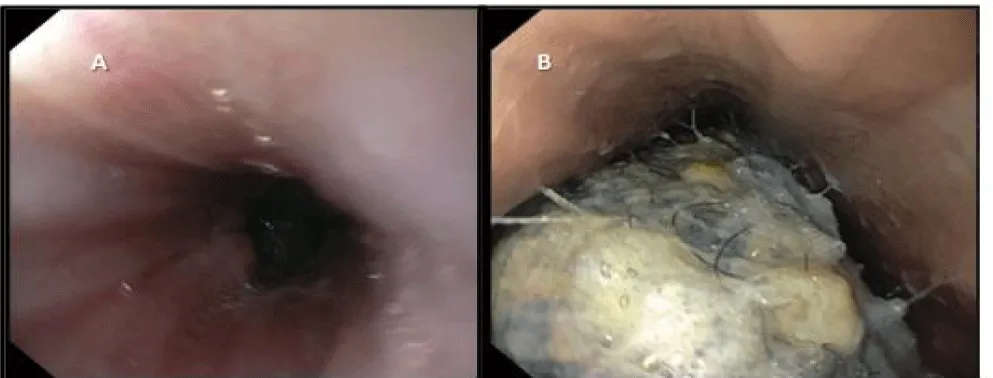
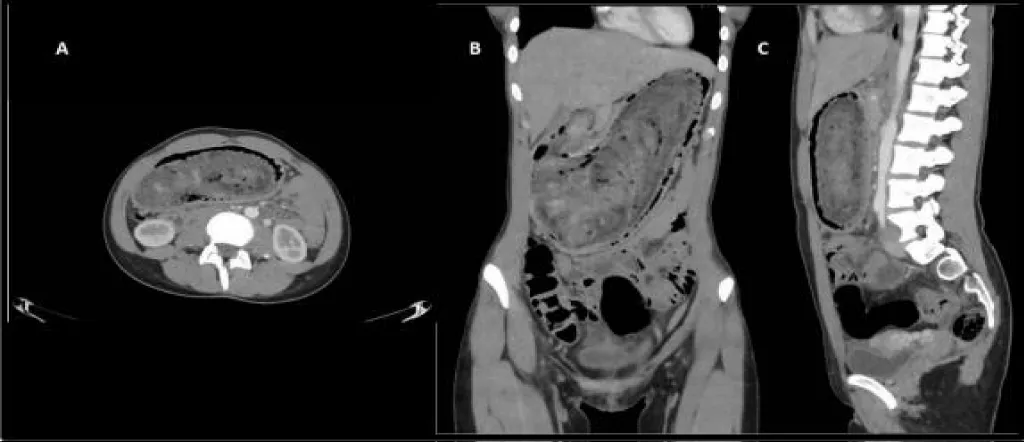
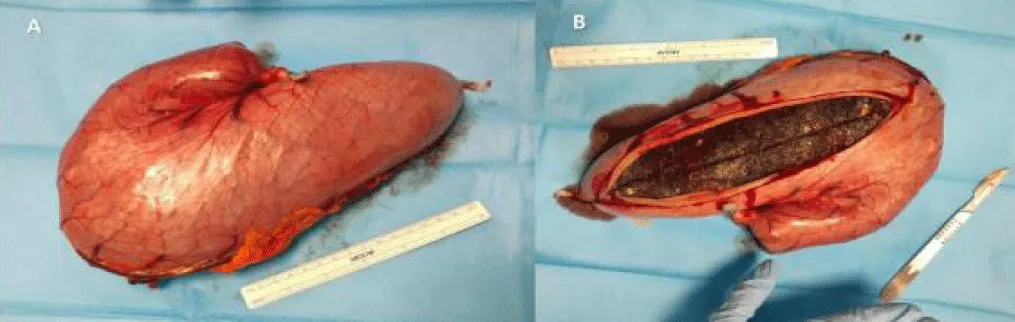
22-year-old patient (height 184 cm, weight 53 kg, Body Mass Index 15.65 kg/m2) with a previous history of trichophagia (Rapunzel Syndrome) in adolescence. For 1 year, he has had intermittent, stabbing epigastric discomfort of variable duration, unrelated to food intake and accompanied by hyporexia, nausea without vomiting, premature satiety and unquantified weight loss. He has a painless palpable tumor in the epigastrium. Endoscopy (Figure 1): megadilated stomach with a giant stony, calcified trichobezoar, not amenable to endoscopic treatment. Abdomino-pelvic CT scan (Figure 2): stomach enlargement, reaching 250 mm longitudinally, extending over the void and right iliac fossa, not ruling out that they correspond to food remains/foreign body. She was referred for surgery (Figure 3) where a megastomach was found due to a giant, calcified, impacted stony trichobezoar. Since the gastric trichobezoar was stony and occupied the entire gastric cavity, it was not possible to fragment it with the endoscope. Therefore, surgery was decided due to the food starvation of the patient. A total gastrectomy was performed with a Roux-en-Y loop gastrojejunal anastomosis (Billroth III technique). The postoperative course was favorable, and the patient was discharged from the hospital on the fourth day without incident. Six months after surgery, the patient is doing well, has regained weight, and has been discharged for clinical follow-up by the Surgery Department.
Discussion
Gastric trichobezoars can become large and extend into the small intestine (Rapunzel syndrome). Their diagnosis is completed with imaging studies such as ultrasound, CT scans, and endoscopies. Treatment is based on the removal of the trichobezoar, either endoscopically or surgically. Sometimes, due to its size, impaction, and time of evolution, it will be necessary to perform an excisional surgery (gastrectomy) due to the gastric atony caused by the trichobezoar [1-3].
References
- Paschos KA, Chatzigeorgiadis A. Pathophysiological and clinical aspects of the diagnosis and treatment of bezoars. Ann Gastroenterol. 2019;32(3):224-232. doi: 10.20524/aog.2019.0370.
- Khalifa MB, Ghannouchi M, Nacef K. Trichobezoar: A case report of a double gastric and ilial localization revealed by an occlusion. Int J Surg Case Rep 2022;91:106782. doi: 10.1016/j.ijscr.2022.106782.
- Luisa Paola GH, Isabel MO, Ernesto MS, Elena MC. Duodenal diastatic perforation due to double gastric and jejunal trichobezoar in a patient with Rapunzel syndrome. Rev Esp Enferm Dig. 2023;115(4):222-223. doi: 10.17235/reed.2023.9394/2022.





Content Alerts
SignUp to our
Content alerts.
 This work is licensed under a Creative Commons Attribution 4.0 International License.
