
Medicine Group. 2024 August 07;5(8):896-900. doi: 10.37871/jbres1968.





 Research Article
Sleep Quality of University Students with Bruxism-Type Craniomandibular Disorders: An Integrative Review of the Literature
Caroline Alvarenga*
- Bruxism
- Sleep quality
- College students
Abstract
Bruxism is characterized by teeth grinding, divided into sleep bruxism and daytime bruxism, it can be classified into primary and secondary. The main causative factors are poor sleep quality, stress, anxiety, alcohol consumption and smoking. The objective of this study was to investigate, through a literature review, the sleep quality of university students with bruxism. An integrative literature review was carried out, carried out in the following databases: VHL, Google academic, SciELO and PubMed with the descriptors: Students, Sleep Quality, Poor Sleep Quality, University Students, Academics, Bruxism. Searches in electronic databases returned a total of 170 articles, 68 in VHL, 47 in SciELO and 55 in PuBMeD. A total of 5 studies met the eligibility criteria. According to selected studies there is a prevalence of sleep bruxism in adults with obstructive sleep apnea, however, the prevalence differs between age group, sex and race, sleep bruxism leads individuals to present insomnia, depression, sleep behavior disorder REM sleep and sleep-related epilepsy. A correlation between sleep bruxism and wakefulness was verified, due to the reuptake of serotonin, a hormone that regulates stress. There is a significant association between psychological factors and wakefulness bruxism. The research had as main obstacles the scarce source of materials on the subject on the correlation between sleep quality and bruxism, being essential the development of new studies on larger population scales.
Introduction
Sleep disorders are a group of conditions that affect the ability to sleep and cause impairment in social and occupational functions. Sleep can be disturbed by irregular bedtimes, activities before bed, stress, diet, illness, and medications. The most common types of sleep disorders are insomnia, snoring and Obstructive Sleep Apnea (OSA), bruxism and sleepwalking [1,2]. Bruxism is characterized by teeth grinding and is divided into sleep bruxism and daytime bruxism and classified into primary and secondary. The main causative factors are poor sleep quality, stress, anxiety, alcohol consumption and smoking. Based on the statement that academic life requires great efforts, the causes mentioned above generally coincide with the reality of university students, making them a group predisposed to bruxism [3,4].
University students have irregular sleep patterns due to the strong pressure and stress related to the high demand for activities, making them a group totally susceptible to sleep disorders that are becoming more and more recurrent, regardless of age [5,6]. Analyzing bruxism and its relationship with the quality of sleep in university students contributes to scientific knowledge for the prevention and treatment of bruxism that compromises the quality of life of this population. Therefore, the objective of this study was to investigate, through an integrative literature review, the quality of sleep of university students with bruxism.
Materials and Methods
An integrative literature review type research was carried out, with a search for scientific articles carried out in the databases: VHL, Google Scholar, SciELO and PuBMeD and a search strategy involving descriptors: Students, Sleep Quality, Poor Sleep Quality, University Students, Academics, Bruxism. The descriptors were taken from previous research and used in all databases.
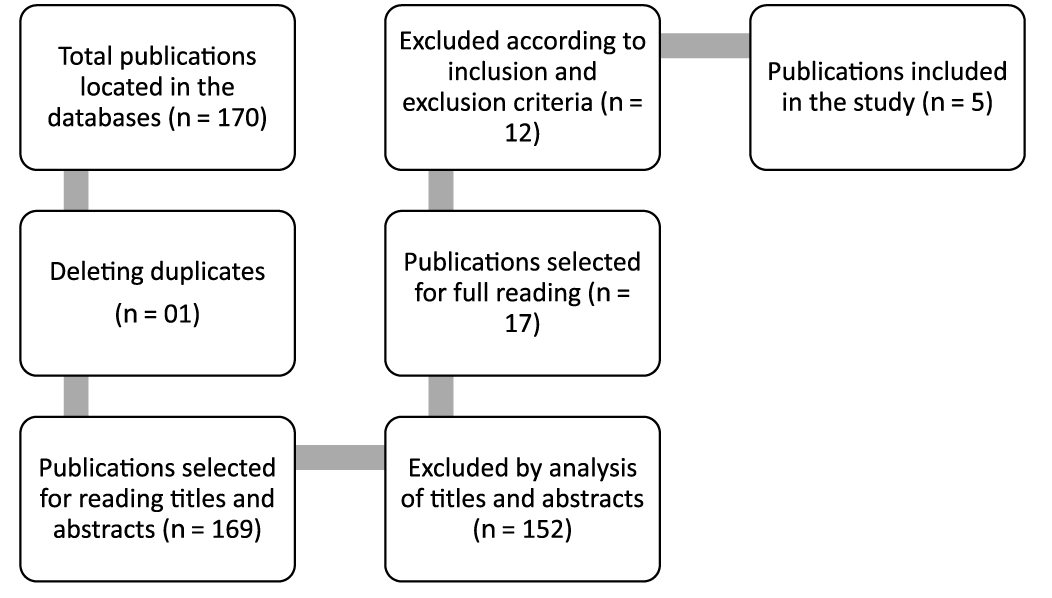
The inclusion criteria were: articles found in full, in English, Portuguese and Spanish, which evaluated the quality of sleep-in university students. Articles that were not freely available were excluded. The selection of articles occurred in three stages. In the first stage, the titles of all studies found through the electronic search were read and analyzed and then those that did not meet the established inclusion criteria were excluded. In the second stage, the abstracts of the studies selected in the previous stage were read and analyzed and those that did not meet the eligibility criteria were excluded. In the third stage, a complete reading of the studies selected in the previous stages was carried out. Article search strategy presented in figure 1.
Results and Discussion
Searches in electronic databases returned a total of 170 articles, 68 in the VHL, 46 in SciELO and 55 in PuBMeD 1 Google Scholar. Of these studies, only one was a duplicate and 149 were excluded because they did not meet the previously established inclusion criteria. After reading the 20 summaries of the remaining studies, three articles were excluded, leaving 17 articles and after reading the articles in full, 12 were excluded due to the sample being incompatible with university students. A total of five studies met the eligibility criteria and were included in the present review.
The selected articles were described (Table 1), classified according to the study objectives, the sample (age), the evaluation instruments and the study results, allowing a detailed analysis of each one.
| Table 1: Characterization of articles selected for review. | |||
| Title / Author | Goal | Material And Method | Conclusion |
| 1 - Sleep bruxism, awake bruxism and Sleep quality among Brazilian dentists [7]. | evaluate the association of sleep bruxism and awake bruxism and sleep quality among dentistry students at the Federal University of Minas Gerais, Belo Horizonte, Brazil. | Cross-sectional study. The instruments used were questionnaires to assess bruxism during sleep and awake and the Epworth Sleepiness Scale. | Poor sleep quality was present among university students who reported sleep bruxism and among those who presented daytime bruxism. |
| 2 - Sleep disorders and bruxism [10]. | Explain the relationship between sleep and increased activity of the masticatory muscles (bruxism). | Literature review. Articles for this study were selected from Medline, PubMed and Ebsco . | Bruxism is related to the neurosensory mechanism, where there is a lack of control in communication between the brain and the chewing muscles. For better management and control of bruxism associated with sleep disorders, assistance and supervision from multi and interdisciplinary teams are important. |
| 3- COVID 19 and its impact on the Psychosocial aspect, Sleep, Temporomandibular Disorders and Bruxism in Medicine undergraduates and Health Residents at the School of Medicine of Medical Sciences / UFRN [11]. | Assess the consequences of COVID 19 on the psychosocial state, signs and symptoms of TMD, sleep bruxism and waking bruxism. | Cross-sectional study. The instruments used were: Pittsburgh Sleep Quality Index and Epworth Sleepiness Scale . | There was a high prevalence of stress, poor sleep quality and sleep bruxism related to TMD and orofacial pain. |
| 4- The occurrence of respiratory events in young people with frequent rhythmic masticatory muscle activity. | To evaluate rhythmic masticatory muscle activity and concomitant respiratory events in young people with sleep bruxism who are asymptomatic with obstructive sleep apnea. | Cross-sectional study. Epworth Excessive Sleepiness Scale and polysomnography. | Participants with sleep bruxism presented respiratory events concomitant with oromotor events . |
| 5- Associations between sleep bruxism and other sleep-related disorders in adults [9]. | Understand the occurrence of sleep bruxism in patients with other sleep disorders. | Systematic literature review with articles selected from PubMed , Embase, Cochrane and Web of Science. | Sleep bruxism has been associated with several sleep disorders such as: Obstructive sleep apnea, restless legs syndrome, insomnia and others. |
Among the articles found, there was a prevalence of observational cross-sectional studies, with the most used assessment instruments being the Epworth Excessive Sleepiness Scale (ESS); Pittsburgh Sleep Quality Index (PSQI); Diagnostic Criteria for Temporomandibular Disorders (DC/TMD); Oral Behavior Checklist (OBC); and Polysomnography.
Table 1 presents the five articles included in the research showing the prevalence of BS in adults with OSA, however, the prevalence of Sleep Bruxism (BS) differs between age groups, sexes and races. Thus, the diversity of these factors may contribute to the variation in the prevalence of BS in scientific studies. The prevalent age range in the studies was between 19 and 24 years old, the majority of participants were female and the most common signs and symptoms were teeth grinding or clenching and muscle pain [7,8].
BS has been correlated with other sleep disorders in addition to OSA, causing individuals to present insomnia, depression, REM sleep behavior disorder and sleep-related epilepsy, making it important to screen for BS in patients with sleep-related disorders [9]. A correlation was also found between bruxism during sleep and wakefulness, due to the reuptake of serotonin, a hormone that regulates stress [10]. BS increases the frequency of micro-awakenings, causing insomnia and daytime drowsiness, increasing stress, mood changes, increased levels of anxiety, causing the appearance or increase of daytime bruxism.
The opposite is also true, that is, the increase in daytime levels of anxiety and stress means that the individual does not have restful sleep, influencing the number of micro-awakenings which, as mentioned above, can initiate or worsen nocturnal bruxism, creating a vicious circle. Peixoto KO, et al. [11]. Expose the reality of university students and residents facing COVID-19, highlighting the significant association between psychological factors (stress, anxiety, and depression) with awake bruxism.
As explained by Manfredini D, et al. [12] Pestana SCN [13], Carvalho GAO, et al. [14]. It is observed that before seeking an analysis of the consequences of bruxism, it is necessary to understand the current epidemiology of bruxism during sleep and awake to identify whether bruxism is related to a disorder, habit or phenomenon.
Pain is the main cause of poor quality of life in individuals with temporomandibular disorders or dysfunctions, however, it is important to highlight that studies correlating quality of life with bruxism are still increasing, seeking to diagnose bruxism since it is increasingly present in current society, with greater occurrence among young people [15-17].
Sleep bruxism is associated with a higher level of education and psychological stress. There is no prevalence of sleep bruxism in relation to sex, however, it is prevalent in individuals over 40 years of age [18-20]. Sleep quality is associated with sleep bruxism, daytime sleepiness, sex and hours of sleep. The literature shows that poor sleep quality in young people with bruxism is greater in females, who sleep less than eight hours a night [21-25].
The scarcity of research on this topic with the young population was a limiting factor for delving deeper into the subject. The correlation between sleep quality and bruxism is still little studied in the area of physiotherapy, being more emphasized by dentistry, and the development of new research with larger samples with a young population diagnosed with bruxism is essential.
Conclusion
The literature reveals that bruxism is related to stress, anxiety, depression and other psychological, neurological and respiratory comorbidities, as well as individuals' night and day habits, impairing the quality of sleep of university students. Bruxism is a multifactorial disease requiring multidisciplinary treatment by a team of physiotherapists, dentists and other health professionals.
References
- Drabovicz PV, Salles V, Drabovicz PE, Fontes MJ. Assessment of sleep quality in adolescents with temporomandibular disorders. J Pediatr (Rio J). 2012 Mar-Apr;88(2):169-72. doi: 10.2223/JPED.2180. Epub 2012 Mar 13. PMID: 22415039.
- Fernandes G. Study of the association between sleep bruxism, temporomandibular disorders and primary headaches. Dissertation (Master’s in Oral Rehabilitation). Faculty of Dentistry of Araraquara - Universidade Estadual Paulista “Júlio de Mesquita Filho”. Araraquara. 2011.
- Araújo MFM, Adman Câmara Soares Lima, Ana Maria Parente Garcia Alencar, Thiago Moura de Araújo, Luciana Vládia Carvalhêdo Fragoso, Marta Maria Coelho Damasceno. Assessment of sleep quality in university students in Fortaleza-CE. Text Context Nursing. 2013;22(2):352-60. doi: 10.1590/S0104-07072013000200011.
- Sá Dp. Excessive daytime sleepiness correlated with parafunctional habits in patients with TMD. Archives of health investigation. 2017.
- Costa ARO. Prevalence and factors associated with bruxism in university students: A pilot cross-sectional study. Rev Bras Dentistry. 2017;74:120-125.
- Lobbezoo F, Ahlberg J, Glaros AG, Kato T, Koyano K, Lavigne GJ, de Leeuw R, Manfredini D, Svensson P, Winocur E. Bruxism defined and graded: an international consensus. J Oral Rehabil. 2013 Jan;40(1):2-4. doi: 10.1111/joor.12011. Epub 2012 Nov 4. PMID: 23121262.
- Serra-Negra JM, Scarpelli AC, Tirsa-Costa D, Guimarães FH, Pordeus IA, Paiva SM. Sleep bruxism, awake bruxism and sleep quality among Brazilian dental students: a cross-sectional study. Braz Dent J. 2014;25(3):241-7. doi: 10.1590/0103-6440201302429. PMID: 25252261.
- Shingo H. The occurrence of respiratory events in young people with frequent rhythmic masticatory muscle activity. Anna Nery School. 2017:15(3).
- Kuang B, Li D, Lobbezoo F, de Vries R, Hilgevoord A, de Vries N, Huynh N, Lavigne G, Aarab G. Associations between sleep bruxism and other sleep-related disorders in adults: a systematic review. Sleep Med. 2022 Jan;89:31-47. doi: 10.1016/j.sleep.2021.11.008. Epub 2021 Nov 19. PMID: 34879286.
- Guzmán FP, Delgado R. Castellanos JL. Sleep disorders and bruxism. Research, Society and Development. 2018:10(8).
- Peixoto KO. Covid-19 and its Impact on Psychosocial Aspects, Sleep, Temporomandibular Disorders and Bruxism in Medical Students and Health Residents at EMCM/UFRN. Brazilian Development Magazine. 2022:7(12).
- Manfredini D, De Laat A, Winocur E, Ahlberg J. Why not stop looking at bruxism as a black/white condition? Aetiology could be unrelated to clinical consequences. J Oral Rehabil. 2016 Oct;43(10):799-801. doi: 10.1111/joor.12426. Epub 2016 Aug 21. PMID: 27545318.
- Shetty S, Pitti V, Satish Babu CL, Surendra Kumar GP, Deepthi BC. Bruxism: a literature review. J Indian Prosthodont Soc. 2010 Sep;10(3):141-8. doi: 10.1007/s13191-011-0041-5. Epub 2011 Jan 22. PMID: 21886404; PMCID: PMC3081266.
- Carvalho GAO. Anxiety as an etiological factor in bruxism - Pesq, Socie e Desen. 2020.
- Almoznino G, Zini A, Zakuto A, Sharav Y, Haviv Y, Hadad A, Chweidan H, Yarom N, Benoliel R. Oral Health-Related Quality of Life in Patients with Temporomandibular Disorders. J Oral Facial Pain Headache. 2015 Summer;29(3):231-41. doi: 10.11607/ofph.1413. Erratum in: J Oral Facial Pain Headache. 2015 Autumn;29(4):330. Avraham, Hadad [corrected to Hadad, Avraham]; Noam, Yarom [corrected to Yarom, Noam]. PMID: 26244431.
- Donnarumma MDC, Muzilli CA, Ferreira C, NEMR K. Temporomandibular disorders: Signs, symptoms and multidisciplinary approach. Rev CEFAC. 2010;12(5).
- Carvalho Ade M, Lima Mde D, Silva JM, Neta NB, Moura Lde F. Bruxism and quality of life in schoolchildren aged 11 to 14. Cien Saude Colet. 2015 Nov;20(11):3385-93. English, Portuguese. doi: 10.1590/1413-812320152011.20772014. PMID: 26602716.
- Alencar TC. Association between sleep quality, sleep bruxism and excessive daytime sleepiness in adolescents. Braz J of Develop. 2020;6(9).
- Costa ARO. Prevalence of bruxism in depression and/or anxiety. Controlled Study Ciênc & Saúde Col. 2010;14(1).
- IM days, Mello LMR, Maia ID, Reis LO. Assessment of risk factors for sleep bruxism. Arq Brasileiros de Cirur Dig Exp. 2017;28(5).
- Sousa DIT. Association between Chronotype, Self-Referred Sleep Bruxism and Wake Bruxism in Dental Medicine Students- Multicenter Study between Portugal and Brazil. Coimbra. Rev SPEMD. 2017;58(1).
- Bezerra MPP, Lira RCM, Silva AO, de Melo ILP, Silva NS, de Sá Roque T. The influence of variation in the sleep cycle on university performance and the well-being of medical students. Research, Society and Development. 2020;9(12). doi: 10.33448/rsd-v9i12.11057.
- Batista JFOL, Alencar TC, Tolêdo JMGF, Mota KR, Santos Júnior VE, Heimer MV. Sleep quality and musculoskeletal pain in adolescents: observational study. Brazilian Pain Rev. 2022;5(1). doi: 10.5935/2595-0118.20220010.
- Baltazar CF. The impact of chronic temporomandibular disorders on quality of life. Full Dentistry in Science. 2018;10(37).
- Bertolazi AN, Fagondes SC, Hoff LS, Dartora EG, Miozzo IC, de Barba ME, Barreto SS. Validation of the Brazilian Portuguese version of the Pittsburgh Sleep Quality Index. Sleep Med. 2011 Jan;12(1):70-5. doi: 10.1016/j.sleep.2010.04.020. Epub 2010 Dec 9. PMID: 21145786.




Content Alerts
SignUp to our
Content alerts.
 This work is licensed under a Creative Commons Attribution 4.0 International License.
