
2025 October 30;6(10):1614-1625. doi: 10.37871/jbres2215.
-
Subject area(s):

 |
|
 |
|
 |
|

 Research Article
New Spectrophotometric and Electrochemical Enzyme Biosystem Based on Laccase and Ionic Liquid for the Detection of Glyphosate in Biological Samples
Galai S1*, HajKacem S1†, Aladnani A1,2†, Rosatella A3, de Los Rios AP4, Fernandez FJH4, Omar S1, Afonso C5 and Diouani MF6
2Department of Biology, Laboratory of Neurophysiology, Cellular Physiopathology and Biomolecules Valorization LR18ES03, Faculty of Sciences of Tunis, University Tunis El Manar 2092, Tunis, Tunisia
3CBIOS-Universidade Lusófona’s Research Center for Biosciences and Health Technologies, 1749-024 Lisbon, Portugal
4Department of Chemical Engineering, Faculty of Chemistry, Green Process Engineering Group, Campus Del Espinardo, P.O. Box 4021, E-30100, University of Murcia, Spain
5Research Institute for Medicines (iMed. ULisboa), Faculty of Pharmacy, University of Lisbon, 1649-003, Lisbon, Portugal
6Laboratory of Molecular Microbiology, Vaccinology and Biotechnology Development LR16-IPT01, Institute Pasteur of Tunis, 13 Place Pasteur, BP-74 1002, Tunis Belvédère, University Tunis El Manar, Tunisia
- Glyphosate
- Laccase
- Redox mediator
- Ionic liquid
- Spectrophotometry
- Enzymatic biosensor
Abstract
Glyphosate (N- (Phosphonomethyl) glycine), one of the most widely used pesticides in the world. The detection methods are difficult to implement, time consuming and expensive due to its chemical properties and its low prevalence; there is a strong need to develop quick-sensitive analytical methods for Glyphosate (GLP) assay and monitoring. For this purpose, a new biosystem based on enzyme reaction was implemented by laccase, redox mediator (Acetosyringone: ASGN), and ionic liquid (IL, as conservator and activator) to catalyse GLP. The laccase-catalytic system has been investigated by two analytical methods: spectrophotometric and electrochemical one. In terms of efficiency, the detection limit for spectrophotometric method was 25 μM GLP, while electrochemical method was even lowest around 5 μM GLP. The developing biosensor based on this enzymatic system has been carried out using gold-plated screen-printed electrode and Nafion polymer for laccase, redox mediator and ionic liquid complex immobilization. GLP samples were successfully analyzed using Cyclic Voltammetry (CV) measurement at scan rate of 100 mV/s. The concentration of GLP was accurately determined in the range of 5 μM to 15 μM GLP, and high correlation rate (98%) between current density and GLP concentration was determined using the laccase-based-biosensor, which shown good reproducibility and repeatability, high selectivity and therefore it has been used for GLP assays in biological samples (Cell lysate and culture medium).
Introduction
Glyphosate is the most used herbicide worldwide confident that it is devoid of any toxicity to vertebrates and invertebrates since them both lack the Shikimate pathway. GLP or N-(Phosphonomethyl) glycine is a non-selective foliar systemic herbicide, which acts by inhibiting the plant enzyme 5-enol-pyruvylshikimate-3-phosphate synthase, though it is also patented as an antibiotic [1] and metal chelating agent [2]. GLP is an organophosphorus compound, which could be classified as an aminophosphonates but also as a polyprotic acid. Suspicions about Glyphosate carcinogenic effect appeared in 2014, in fact, the International Agency for Research on Cancer (IARC) is a part of the World Health Organization (WHO) which classified glyphosate as “probably carcinogenic to humans” [3]. Adding to the long list of Glyphosate hazards, GLP is also classified as neurotoxic [3]. When it has metabolized by mammal’s cells it results in two products: Glyoxylate and Aminomethylphosphonic Acid (AMPA) which having a comparable toxicity to GLP [3-5]. In some disease such Parkinson's disease, GLP was directly linked to Glycation [6]. The Environmental Protection Agency (EPA) reported that over 36% of 271 incidences linked to acute GLP poisoning involved neurological symptoms [7].
Therefore, the determination of pesticide residues in food and environmental samples or/and monitoring them in biological samples is extremely important [8], since only through knowledge of their presence, it may be possible to consider remedial measures which should be taken by the proper authorities. In the same time, it is also desirable to create simple, quick, sensitive, selective, and low-cost analytical procedures for determining pesticide residues [9]. However, the process prior to the actual analysis is also extremely important, then it could be very interesting to develop new way to detect and quantify GLP using highly efficient analytical tools [8,10,11]. This can be achieved since the laccase enzyme is known for its high selectivity with good reproducibility when used under optimal conditions. For this purpose, laccase has been selected to be candidate in the implementation of GLP catalytic system since GLP-oxidoreductase and glycine oxidase (Enzymes implicated in catalysis of GLP to AMPA and glyoxylate) use O2 as electron acceptor in the same way as laccase. The Laccase Enzymes (EC 1.10.3.2) are multicopper oxidoreductases known also as polyphenol oxidases, which use their four copper centers to oxidize phenols and phenolic derivatives using molecular oxygen as a terminal electron acceptor to give water. Such enzymes present large catalytic versatility due to their low substrate specificity. Moreover, laccases, in the presence of Redox Mediators (RM) are able to extend their oxidative action even to non-phenolic compounds [12]. Several phenolic compounds and aromatic amines were used as laccase mediators, such as ABTS, Acetosyringone (ASGN), syringaldehyde, syringaldazine, hydroxybenzotriazol, etc. These compounds extend the list of potential laccase substrates to hundreds, making possible the catalysis of different chemical targets by laccase enzymes such as dyes, xenobiotics, pollutants and pesticides [13].
In another hand, to implement a practical analytical process based on enzyme, it needed to maintain the enzymatic activity and to protect it against long-term utilization. Ionic Liquids (IL) were described as efficient compounds for these tasks [14], in fact, it was demonstrated that ILs could over-enhance the enzyme activity and increase its half-life until five times. Ionic liquids are salts that are liquid at room temperature because their cationic and/or anionic compounds will keep them in a liquid state at such a temperature level [16]. This unique trait gives them a particular behavior, such as interacting with charged amino acids thus influencing the 2D and 3D structure of enzymatic proteins [15].
In the present study, new protocols have been proposed based on enzyme system composed by laccase enzyme-RM-IL which were explored for glyphosate activity assessment by standard spectrophotometric method (using high solution volume and high concentration of GLP) and by miniature electrochemical cells using Au-plana-screen-printed electrodes for micro-volume analyzed solution containing low concentration of GLP.
Materials and Methods
Materials
The enzyme used for this study, fungal laccase (EC 1.10.3.2) isolated from Trametes versicolor, were purchased from Sigma-Aldrich (Madrid, Spain). The substrates, ABTS (2,2′-Azino-bis (3-ethylbenzothiazoline-6-sulfonic acid) diammonium salt) and GLP, the redox mediators ASGN, hydroxybenzotriazole and Syringaldehyde was purchased from Sigma-Aldrich and Merck Chemicals Co. (Germany) with the highest purity grade. The Ionic Liquids (ILs) have been obtained from different sources as following: The IL [HE] [Fo] was purchased from Sigma-Aldrich-Fluka Chemical Co., the IL [OMIM] [NTf2] was from Merck KgaA., the ILs [Chol] [H2PO4] and [Chol] [NTf2] were purchased from IoLiTec Chemical Co (Germany) with purity grade more than 98%. Screen-printed gold electrode Drop Sens 220 AT were obtained from Metrohm Co. (USA). Nafion solution 1%, PBS pH 7.4 100 mM, Sodium acetate and Tris salts was obtained from Sigma-Mercks Co (Germany). Spectrophotometric study we carried out by Cary 60 UV-Vis Agilent Technologies spectrophotometer and cyclic voltammetry electrochemical study was performed using 50 µl solution volume capacity of a miniature planar electrochemical cell with Au working and counter electrodes and Ag/AgCl reference one connected to a Voltalab 40-PGZ301 Potentiostat managed by VoltaMaster4 software. For in vitro studying the toxicity of glyphosate, N2A neuroblastom cell model was used for this purpose. N2A cells were obtained by cell culture in RPMI 1640 growth medium added with Foetal Bovine Serum (FBS), which were obtained from PAN Biotech GmbH (Germany). The N2A cell viability has carried out with Fluorescein Diacetate (FDA) obtained from Sigma-Merck Co. (Germany) using multimode microplate reader Agilent BioTek Synergy NeO2 hybrid.
Methods
Laccase activity assay: Laccase activity was measured by following the oxidation of ABTS (2-azino-bis (3-ethylbenzothiazoline-6-sulfonic acid) diammonium salt), monitoring the kinetic absorbance at 420 nm (e420 = 36.000 mol. L-1 cm-1) using Cary 60 UV-Vis Agilent Technologies Spectrophotometer [15]. The reaction mixture contained 0.5 mmol L−1 ABTS and 20 𝜇g mL−1 laccase in 50 mmol L−1 sodium acetate buffer pH 7.0. One unit of enzyme activity (U) was defined as the amount of enzyme that catalysed the appearance of 1 𝜇mol of product per minute at 25°C. When using ionic liquids, the enzyme was incubated in a 10 mM of each IL in sodium acetate buffer (50 mM; pH 7.0), shaking continuously for 30 min. After what, the reaction was started by adding 0.5 mM ABTS in the standard laccase assay conditions described above (pH 7.0 and 25°C). All experiments were carried out in duplicate and the mean values are reported. The efficiency of the catalytic action was measured by the residual relative activity denied with respect to the control experiment (in 50 mM sodium acetate buffer pH 7.0) as follows:
(Eq.1) Residual relative activity (%) = [(Activity in IL-control activity)/Control activity)] * 100
Implementation of enzymatic biosensor using the Enzyme-Redox Mediator-Ionic liquid system
Before the implementation of the catalytic system, preliminary study was done to study the electrochemical proprieties of the components chosen for our Enzyme-Redox Mediator-Ionic liquid system and see how the redox reaction is taking place by making a cyclic voltammograms with potential ranging from -0.200 V to 0.800 V at a scan rate of 100 mV/s. Cyclic voltammogram measurements were performed using PGZ301 Potentiostat managed by VoltaMaster4 software. Each sample was setting up by putting 50 µL of the components on the gold-plated electrode at varying pH’s. The following assay with Enzyme-Redox Mediator-Ionic liquid system have been done first with the free enzyme, passive enzyme adsorption on the gold working surface and the on-electrode surface immobilized enzyme casting with Nafion (1%).
Biological samples
The biological samples, used for this work to detect glyphosate, were obtained from culture of N2A cells exposed to 1 mM of Glyphosate as following: When confluence of cells reach 80%, it was treated with 1 mM of GLP for 3h, the culture media was recuperated and centrifuged at 1500 rpm for 10 min in 4°C, the cell pellet was then washed and treated with 1% TritonX100 – PBS buffer (pH 7.0) for 15 min, frozen at –20°C for 30 min and quickly thawing at 37°C for 30 sec. Finally, the cell lysate was centrifuged at 3500 rpm for 10 min to remove cellular debris (Pellet) and the supernatant was recuperated in new tube and conserved at 4°C. Supplementary step was added to remove proteins by 1M of perchloric acid for 30 min, samples were neutralized by tri-potassium phosphate (1.1 M) and used for GLP assays.
Results and Discussion
Screening of different component for catalysis of glyphosate by laccase mediated system
The glyphosate is catalysed by different enzymes such as: Glyphosate oxidoreductase or Glycine oxidase in the presence of oxygen [17,18]. The oxidation of glyphosate will lead to cleaving the carbon–nitrogen bond on the carboxyl side of glyphosate and consequently to obtain Aminomethylphosphonic Acid (AMPA) and glyoxylate as reaction by-products [19]. This reaction has been considered as model to design a mediated reaction by laccase and redox mediator (Figure 1).
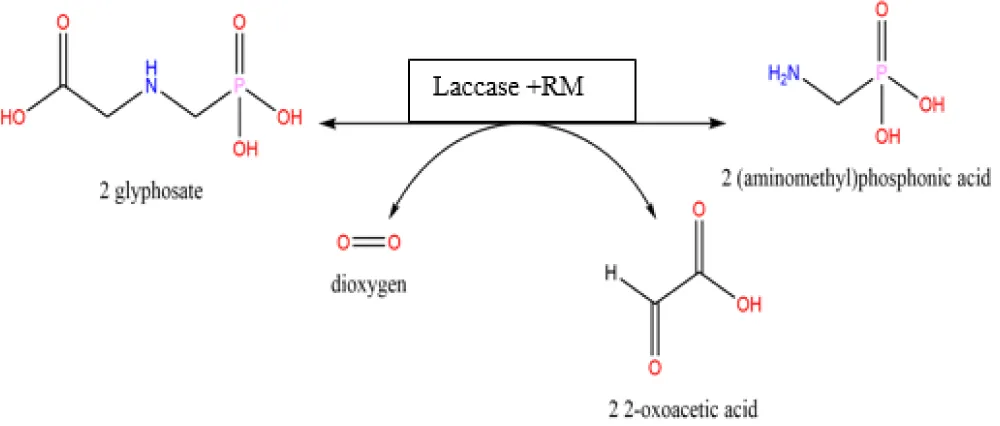
Laccases (EC 1.10.3.2) are multicopper oxidases or/and polyphenol oxidases, this enzyme is an oxygen oxidoreductase which uses its copper centres as a cofactor. Laccases could be extracted from different organisms (Plants, fungi) and microorganisms (Bacteria, filamentous fungus). Laccases can oxidase to degrade a polymer to monomer and also can contributed to polymerize actively dimers or trimers. This enzyme is very versatile and for this reason it is widely used in industry [20]. For instance, in the case of lignin, it acts on phenols and related molecules, and is thought to play a role in the formation of lignin by initiating the oxidative coupling of monolignols [17]. Other laccases, such as those produced by Pleurotus ostreatus, play a role in the degradation of lignin and can therefore be considered as ligninases [21,22]. Considering the versatility of the enzyme and its catalytic efficiency, it was used in many cases with no-specific substrate molecules with a redox mediator [20]. The first redox mediator using with laccase to catalyse non-phenolic substrate was the Hydroxybenzotriazole (HBT) [12], ABTS which was primary the substrate of the enzyme is a very good redox system, it was described by Mendoza L, et al. [24] as a very efficient mediator for laccase, this concept was opened new application for the enzyme [20]. The mediated reaction concept has taken a lot of attention, and different types of demonstration have been showed the efficiency of the biosystem by several authors: In silico to detoxify environmental pollutants such as Aflatoxin [13] or in vitro to decolorize recalcitrant dyes [15,23].
Another important component used in the new biosystem to promote laccase efficiency is the IL, room temperature stable organic salt [14]. In fact, Galai SP, et al. [15] was showed the importance to use IL with laccase to enhance the enzyme and to obtain long term stable activity. Three ILs have been studied in this work [Chol] [NTf2], [OMIM] [NTf2] and [HEA] [HCO2]. In order to choose the best ionic liquid for the present system, laccase was pre-incubated with 0.25% (v/v) IL and measuring the enzyme activity following the ABTS oxidation in presence and absence of IL. The IL relative residual activity was measured considering the Eq. (1) previously described. The results showed that [OMIM] [NTf2] is the best IL to enhance the enzyme activity by almost 7% versus ABTS (Data not shown). Then using [OMIM] [NTf2] to pre-incubate the enzyme seems to be very efficient to enhance its activity and stability. The high hydrophobicity of [OMIM] [NTf2] participated probably in the stabilization of hydrophobic aminoacid in the enzymatic tertiary coat and consequently contributes to its stabilization [25]. Based on this hypothesis and knowing that [OMIM] [NTf2] is more hydrophobic than [Chol] [NTf2] and [HEA] [HCO2], it is logic that [OMIM] [NTf2] is the best one. This screening results are in accordance with those described by Galai SP, et al. [15]. The high hydrophobicity of this IL could be also helpful for the final application in this work: The immobilization of laccase by adsorption and the implementation of electrochemical biosensor.
Regarding the redox mediator, in order to screen the best redox mediator for the laccase mediated system, we have used double screening method by using concentration gradient (from 0.25 mM to 10 mM) for three RM: Acetosyringone (ASGN), Hydroxybenzotriazole (HBT) and Syringaldehyde (SGA). The study has been done following the oxidation of ABTS by laccase in presence and absence of RM. The relative activity was measured by percentage and represented in figure 2.
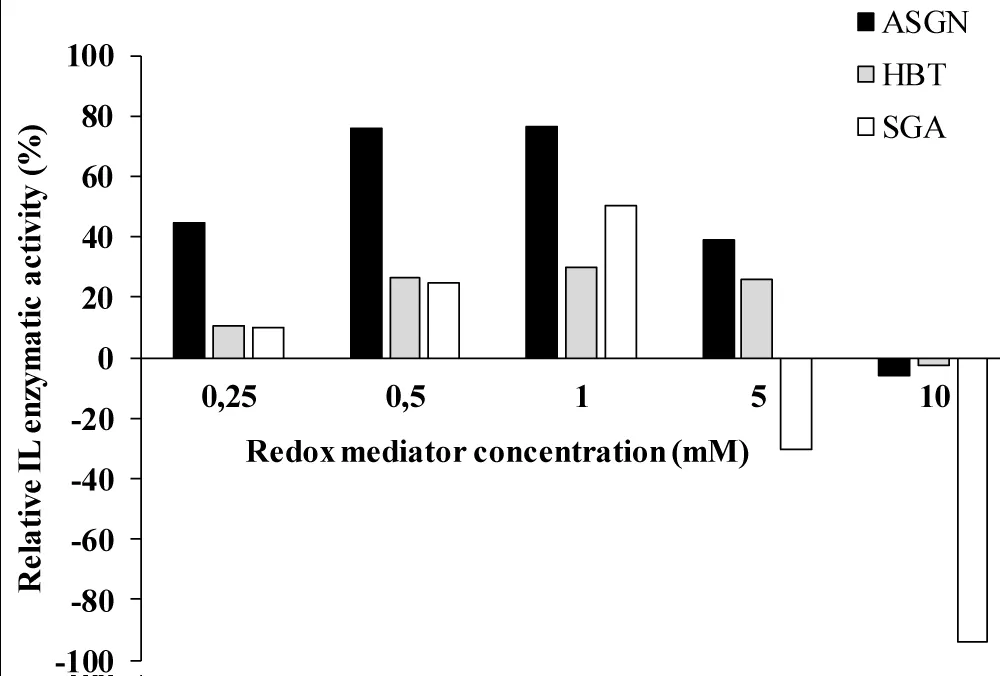
The results in figure 2 showed that the ASGN is the best RM in a range of concentration (0.25 - 5 mM) with a peak of activity at about 1 mM. The SGA and the HBT also show its best activity at the same concentration (1 mM) lowest than recorded by Fabbrini M, et al. [12]. These results are in concordance with the ones founds by Galai SP, et al. [15] showing that ASGN is the best RM with laccase from the bacterium Stenotrophomonas maltophilia AAP56. At high concentration (10 mM) all the RM have trending to have negative residual activity suggesting that competitive inhibition has been occurred between RM and ABTS. This result highlights the importance to use RM with laccase [20].
Glyphosate assay with the laccase catalytic system and proposed quantification method using spectrophotometry
Following the screening and optimization step with ABTS as substrate, the concentrations of some system components have been fixed at 0.25% for IL, 1 mM for ASGN and at 0.4 U/ml for Laccase. In this step of work, with changing the final substrate by GLP in the catalytic system, second check-point have been set up with the different ILs (at the same concentration 0.25%) in order to optimize the use of IL with different concentration of GLP and to avoid the possible disclosure in the catalytic system efficiency. Figure 3 show that, for IL-treated laccase using with ASGN and different concentrations of GLP, the activities exhibited by the system IL-Laccase-RM-GLP were different when using different IL. Although in this new protocol, it shown that all the ILs increase the enzyme activity in all the GLP concentrations used. Especially, the incubation with [OMIM] [NTf2] that enhance laccase activity at the low concentrations between 50 µM and 200 µM. While [Chol] [NTf2] increase Laccase activity at higher concentrations of 400 µM and 800 µM GLP by a slight increase of almost 1% compared [OMIM] [NTf2], the overall average of increasing rate was 7.96% for [OMIM] [NTf2] compared to 6.78% average increase of [Chol] [NTf2] on all the concentration range. Moreover, [OMIM] [NTf2] seems to provide a stable increase in laccase relative activity depending on GLP concentration, it means that [OMIM] [NTf2] shows the best activities in all the gradient concentration with good correlation concentration/activity. The two other ILs show also the same type of correlation which confirm that the choice of ASGN as RM is optimal, however [Chol] [NTf2] and [HEA] [HCO2] show low activities in 50 µM of GLP, that is why the [OMIM] [NTf2] was considered as the screened IL for the continuity of the work.
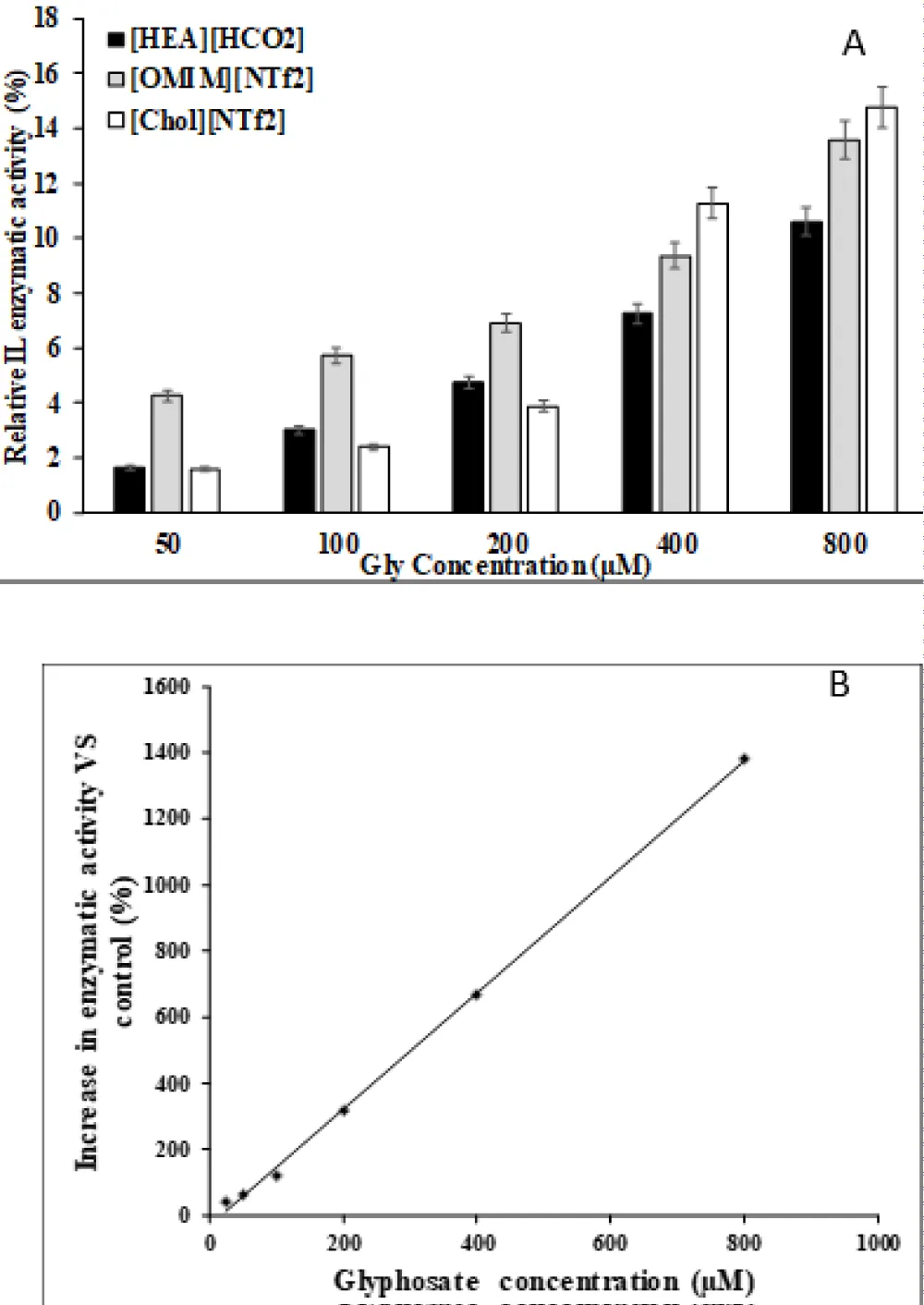
In this part, we established the linear range and calibration curve of IL-Laccase-RM-GLP system for detection of GLP in water-based solution artificially spiked with known concentration of glyphosate using Spectrophotometry. The linear range was established from 25 µM to 800 µM with a limit of detection of 5 µM GLP. Compared to the standard spectrophotometry technique developed by Çetin E, et al. [8] for GLP detection at 435 nm length, with a linear in the range of detection between 3 µM and 60 µM, the present Laccase-ASGN-GLP system have a bigger linear range but a higher limit of detection. Both methods can be used with simple method and using basic laboratory equipment, the UV-Vis spectrophotometer.
In the advanced step of this work, the spectrophotometric IL-Laccase-RM-GLP system was assayed with samples issued from cell culture. In fact, we cultivate N2A cells in the growth medium RPMI (In presence and absence of GLP) for 3 hours and we sampling extracellular (Medium) and intracellular (Cell lysate) to estimate the amount of glyphosate assimilated by the cells. The treated RPMI used to incubate the N2A cells for 3h with GLP show the same signal than the control (RPMI without GLP): This result clearly demonstrated that, through in 3h, the N2A cells have completely assimilated the GLP. When using the diluted cellular extracts from N2A (From culture with and without GLP) with the spectrophotometric method and the calibration curve, we find that N2A cell extract (Diluted 1:20) contained 59 µM GLP. Therefore, to find an estimated concentration in whole N2A cells cultivated, factor dilution has been considered (20 folds) and the obtained result show that the total concentration was estimated at 1180 µM, it is slightly higher than the 1000 µM which present the total concentration added to the growth medium. This finding confirms the previous result in extracellular sample showing that indeed after 3 hours of incubation any trace of glyphosate has been found in the medium and that almost all the glyphosate in the growth medium has been assimilated by N2A cells. To explain the high absorption rate of GLP by N2A cells we can propose two hypotheses: The first that GLP can diffuse passively and simply through the membrane due to its phospholipid solubility properties; the second that GLP could be assimilated by transporter facility assisted membrane protein, such as protein-assisted uptake by active transporters [26] or by passive pathway via special porins [27]. The second seems to be more possible since the rapidity of assimilation by N2A cells.
Study the electrochemical properties of different compound used for biosensor implementation
The enzymatic system established with Laccase-RM-IL using in spectrophotometry was efficient to assay glyphosate in cells growth medium and cells lysate, to promote the use of this system with more precision and fidelity, authors have opted to implement a biosensor using the same catalytic redox activity (Laccase-RM-IL). In the first step of this part, a study of the effect of pH on electrochemical properties of ASGN, Laccase and GLP has been studying. Varying the pH (4.0 to 9.0) of the different compound of the system allow to understand better the electrochemical response of each component separately [28].
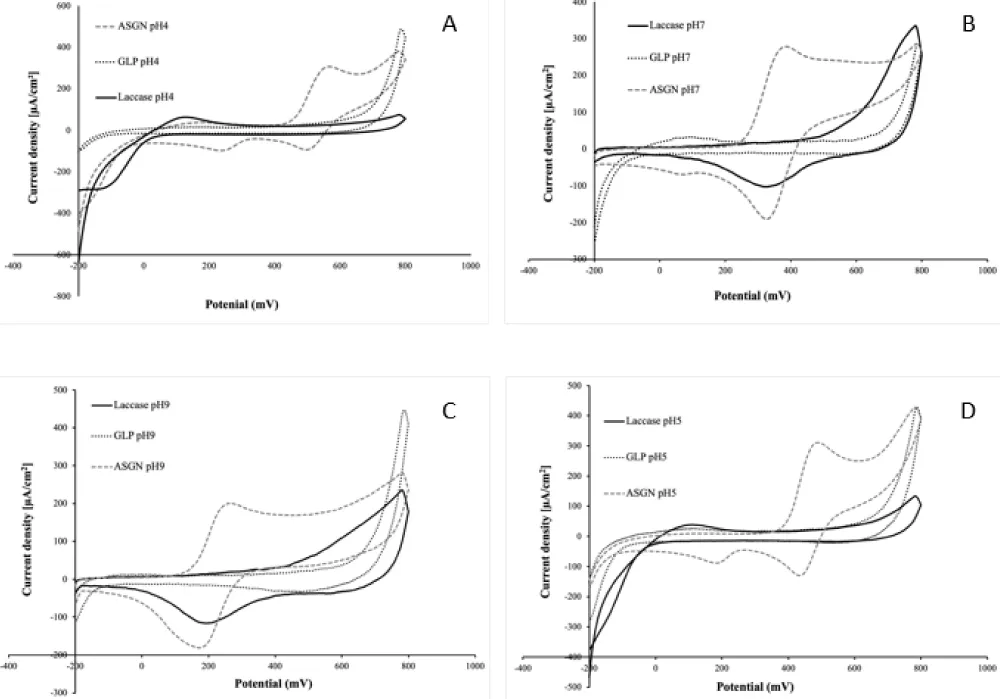
Regarding the laccase, varying the pH from 4.0 to 9.0 show that the enzyme has oxidation peaks at the acid pH (4.0 and 5.0) and reduction peaks at neutral and basic pH (7.0 to 9.0) with the highest peak at pH8.0 (Figure 4). The laccase displayed very good reduction peaks at pH 7 to pH 9, then deciding to work in the smallest optimal pH value 7.0 is better since it is the neural one that can be used also for the other component with more confidence and safety. Moreover, it was demonstrating below that pH7.0 assure a very good redox state for ASGN. The cyclic voltammograms of ASGN at different pH show a clear oxidation and reduction peaks demonstrating that ASGN is a reversible redox molecule and a very good redox mediator with no direct relationship with the pH. However, the potential of the oxidation and reduction peaks decrease reversibly to the increasing of pH, showing a spectacular translation when changing the pH. Nevertheless, changing the pH from 4 to 9 for the GLP seems haven’t affect the redox state of the molecule. By observing the cyclic voltammograms (Figure 5), we see that they still all display no notable oxidation or reduction peaks. We can conclude then that GLP is a very stable and non-electrochemically active substance independently of the pH.
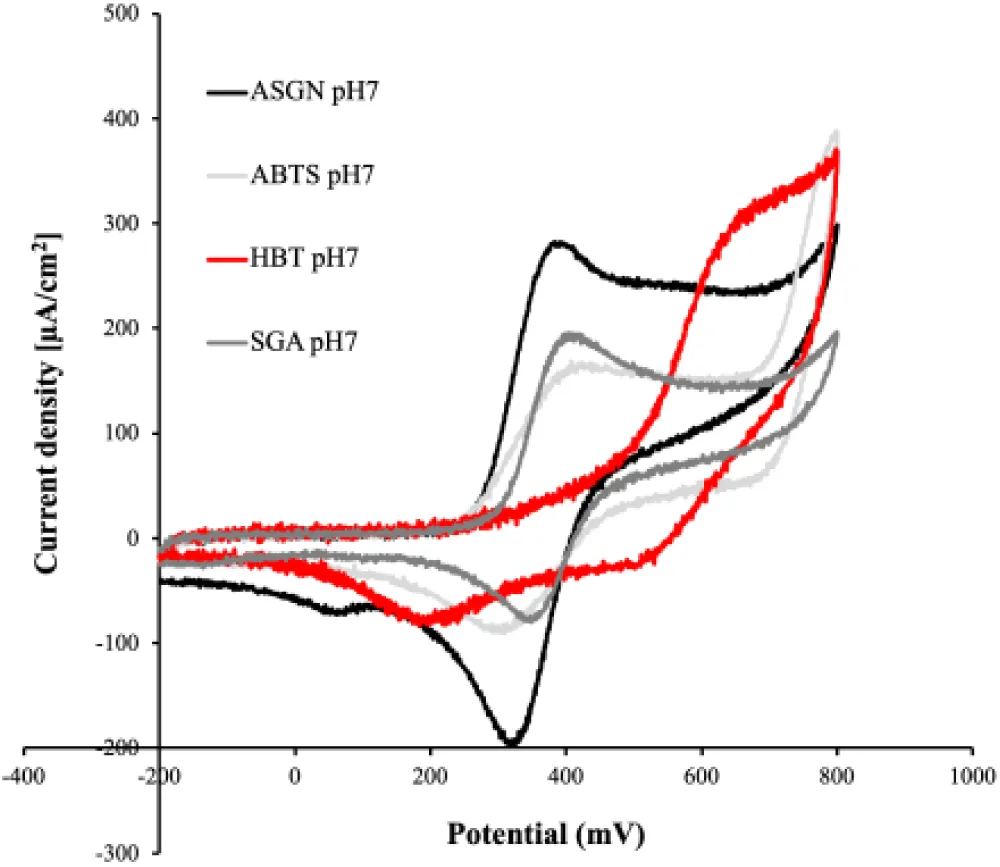
The table 1 show that ΔG is positive in the case of ASGN and SGA, then the redox reaction of GLP by Laccase could be catalysed by this two RM. Basic on the calculation of electron driving force between Laccase and RM, the ΔG of SGA (1.95 Kcal/mol) is superior to the ΔG of ASGN (1.38 Kcal/mol), so theoretically SGA should increase LAC activity more than ASGN. Nevertheless, our previous experimental findings (Figure 3A) show that ASGN enhance Laccase activity more than SGA (76-41% for ASGN compared to 50-28 % for SGA) despite what’s expected from comparing ΔG. When comparing cyclic voltammograms of ASGN and SGA versus ABTS at pH 7, we can show clearly that ASGN is more electrochemically active and it is the best redox reversible system with the highest peaks of oxidation and reduction. Then considering these results, we can conclude that the system ASGN-Laccase is the best redox system for our reaction because of two parameters: (i) The ASGN is the best redox mediator at pH7, (ii) The redox potential E◦ of ASGN (693 mV/NHE) is closer to E◦ of Laccase (638 mV/NHE) compared to E◦ SGA (728 mV/NHE). This fact highlight the importance of the E◦ difference (between Laccase-ASGN) which was 55 mV/NHE < 60 mV/NHE making the redox reaction between ASGN and Laccase much more easy electrochemically. Versus the E◦ difference (between Laccase-SGA) which was 90 mV/NHE > 60 mV/NHE making the redox flux less fluent between the two redox system [12].
| Table 1: Electron driving force of different redox mediators compared to the enzyme at pH 7.0. | ||
| Component | E° Redox potential at pH 7.0 (mV/NHE) | ΔG Driving electron force RM/LAC (kcal/mol) |
| LACCASE | 638 | NA* |
| ASGN | 693 | 1.38 |
| HBT | Only oxidation occurred* | NA* |
| SGA | 728 | 1.95 |
| *NA: Not Attributed | ||
In the light of our findings in the screening process some parameters have been selected such as the ASGN as RM [12] which will be used at the concentration of 1 mM and the pH which will be used at neutral value pH 7.0 that have shown as the best one for the combination ASGN-Laccase. The determination of electrochemical properties of different component of the catalytic system is an important milestone for biosensor implementation.
Electrochemical study of the catalytic system Laccase-ASGN versus GLP
The electrochemical study of the catalytic system Laccase-ASGN versus GLP has been assayed using screen-printed Au electrode an Ag/AgCl as reference. The analysis has been done by cyclic voltammettry of the catalytic system Laccase-ASGN verus different concentration of GLP [0-25 µM]. Figure 6A show small oxidation and reduction peaks that become higher when increasing the GLP concentration with more relability to the reduction peak (between 200 and 400 mv of potential). Fousing in that peak, figure 6B show clearly a proportional relationship between the Glyphosate concentration and the reduction peak value. This slight correlation became more difficult to discern from 15 µM to 25 µM where the margin of differences becomes smaller.
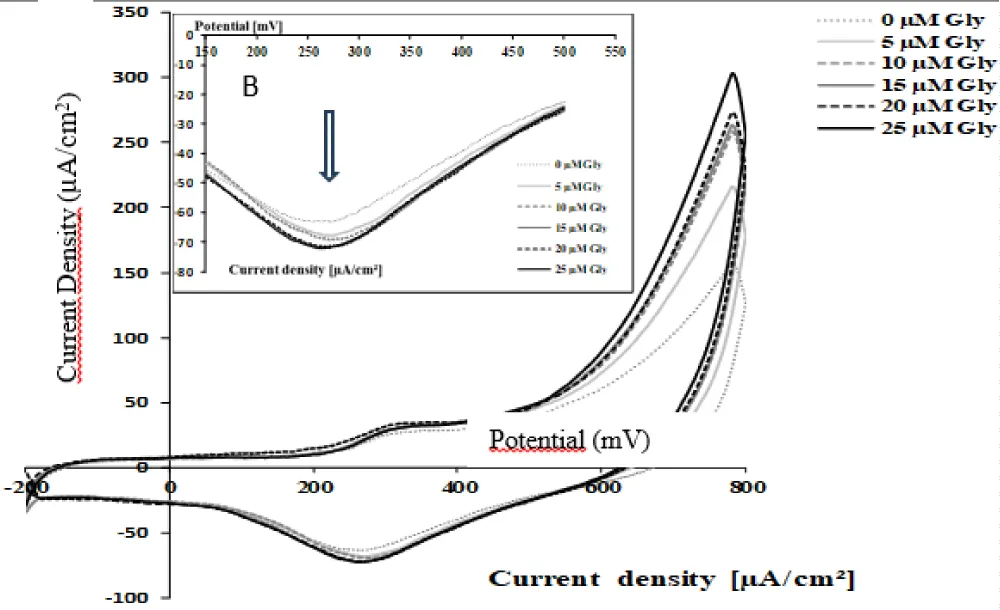
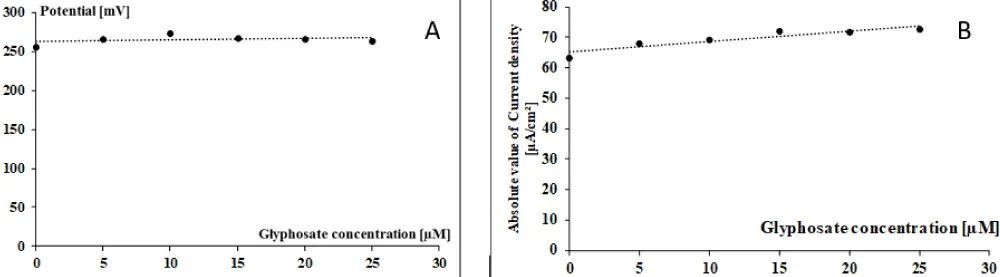
The figure 7A demonstrated that the potential of the reduction peak values detected in cyclic voltammograms seems to be the same for the all GLP concentration range at about 250 mV. However, Figure 7B show the slight variation of the current density values detected in cyclic voltammograms at 250 mV that was generated by the catalytic system IL-LAC-ASGN-GLP at pH 7.0. These results are quite favourable to continue implementing a biosensor using the same catalytic system. In fact, the Laccase system is similar to those developed by Peroxidase where the glyphosate correlation linear range was from 6 to 27 µM [29].
Implementation of the GLP-Biosensor by immobilized the catalytic system IL-LAC-ASGN using nafion micromembrane
The immobilization of the catalytic System IL-LAC has been carried out step by step. The first one was the absorption of IL-LAC on working electrode surface by mixing 0.25 % [OMIM] [NTf2] with LAC on the electrode and let them adsorb on the electrode for over 24 hours. The used ionic liquid displays a protective effect of the enzyme and acquired it more hydrophobicity on the surface of the electrode. The IL [OMIM] [NTf2] is also an enhancer for laccase activity which has been verified in the first step of this work (Figure 3A). The second step was carried out by fixing the enzyme already incubated with [OMIM] [NTf2] on the working electrode by Nafion 1%, then the layer of IL-LAC was topped by a Nafion 1% layer and let it to dry for 1h. This method was successful to obtain very stable reusable biosensor; the reduction potential peaks seem to be very sensible to GLP concentration [0-20 µM] and the potential of detection seems almost constant for the glyphosate concentration range from 5 to 20 µM at about 250 mV (Figure 8). Its absolutes currents densities were decreasing with the GLP concentrations increasing (Figure 9A). These values have been very useful to calibration curve design by deduced Δ Current density and the linear regression has been at about 98% (Figure 9B) and LOD at about 15 µM.
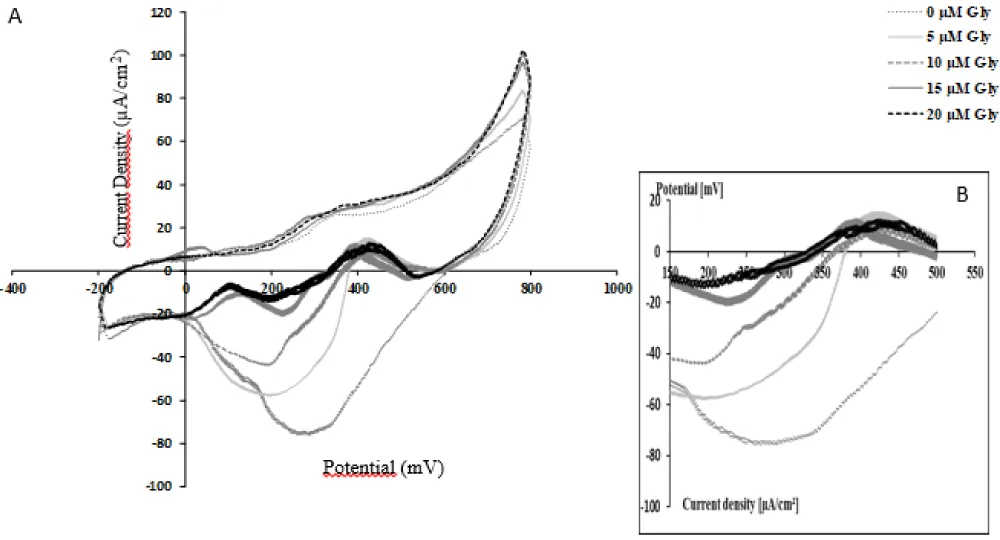
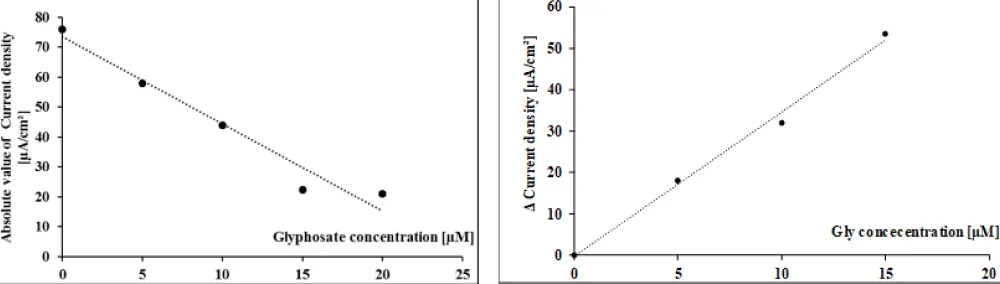
Although the Nafion-IL-LAC layer by layer biosensor seems to have more sensibility to the electron transfer showing by the size of the reduction peak compared to the assay with free-LAC (Figure 8). It is essential to immobilize the enzyme on the electrode to get better results, this step is crucial for biosensor implementation [30]. Moreover, the calibration curve shows a straight linear regression. Summing our previous findings, we were able to successfully make an enzymatic biosensor using LAC for the detection of GLP. In this part, we have established calibration curve for the Nafion-IL-LAC biosensor. The results show that the enzymatic biosensor was able to successfully detect GLP presence in the water-based solution (Neutral or neutralized). However, to account for the fact that the biological samples contain various other chemicals (Amino acids, protein, lipids, fatty acids) we elected to use Δ Current density between the control samples control sample [0 µM] and concentrated or/and unknown concentrated solution to minimize the differences between the samples and water-based solutions while using the biosensor.
Application of the enzymatic biosensor for determination of GLP concentration in biological fractions
In the issue of the previous part, we have assayed the enzymatic biosensor developed from the IL-LAC-ASGN system on biological samples. The results are shown in the table 2 below. We have been not able to quantify the GLP in the growth medium but inside the N2A cells (Cell lysis extract), it was possible. In the case of the growth medium, it is probably that the GLP concentration is much diluted and then it was in detectable. Another eventual hypothesis that the GLP has go in total into the cells since it very lip soluble. For the N2A cells extract it is suspected to having at about 18 µM.
| Table 2: Assay of the enzymatic biosensor for determination of GLP concentration in treated cell culture of N2A (neuroblastoma immortalized cells ligne) by GLP. | |||
| Sample | ΔCurrent density [µA/cm²] | GLP concentration by calibration curve (diluted fraction) | GLP concentration deduced in original sample (*) |
| N2A cells extract (1:50) | 0.92 | 0. 36 µM | 17.8 µM |
| Growth medium of N2A culture | Nd | Nd | Nd |
| *Dilution factor was considered at 50x; Nd: Not defined | |||
Using our previous findings in spectrophotometry to develop IL-Laccase-RM-GLP system and after optimizing we succeeded to implement an enzymatic biosensor for glyphosate using laccase with a linear range from 5µM - 15µM. While the standard electrochemistry technique for GLP detection (Developed by Aguirre M, et al. [10]) has a linear range of detection between 2 µM - 10 µM. The present biosensor developed by IL-Laccase-RM seems to exhibit a larger linear range between 5 - 15 µM is better than that developed by clay-peroxidase system 6 - 27 µM [29].
Conclusion
Glyphosate is being the world most used herbicide under the pretext that it being safe for humans and animals since we do not possess the shikimate pathway, which it inhibits in weeds. However, several studies show that GLP presents a real threat to human and animal health because of its high toxicity and wide spread usage, high water solubility and long half-life. In addition, making the situation worst, it is the fact there are no easy and fast techniques for its detection neither in vitro nor in situ. Laccases seem to give promising results in the detection and quantification of GLP in water.
In the present work, we have developed a new system combining Ionic liquid, redox mediator and enzyme (IL-Laccase-RM) able to quantify GLP according to the present finding by two different methods. The system combing the Laccase enzyme, the redox mediator ASGN and the ionic liquid [OMIM] [NTf2]. This catalytic system was successfully used in spectrophotometry detection of GLP in the range of 25 µM to 800 µM. In addition, the same combination was successfully applied to implement an enzymatic biosensor for glyphosate based on current density leading to obtain better detection range between 5 to 15 µM. Then, we were able to successfully apply the system for the quantification of GLP in biological samples with two different range and depending on the GLP concentration. These findings showing promising analytical device for environment and/or health. Moreover, the biosensor if properly developed in the future as prototype could be a very useful device for in situ control of GLP concentration in water-based samples.
Acknowledgement
Authors gratefully acknowledge financial support by NATO Science for Peace and Security (SPS) Programme (EnzIL, Grant G5713). Authors want to thanks especially Pr. Olfa Masmoudi from Department of Biology, Laboratory of Neurophysiology, Cellular Physiopathology and Biomolecules Valorization LR18ES03, Faculty of Sciences of Tunis, University Tunis El Manar 2092, Tunis (Tunisia) for their precious help during the achievement of some tasks related to this project.
References
- Roberts CW, Roberts F, Lyons RE, Kirisits MJ, Mui EJ, Finnerty J, Johnson JJ, Ferguson DJ, Coggins JR, Krell T, Coombs GH, Milhous WK, Kyle DE, Tzipori S, Barnwell J, Dame JB, Carlton J, McLeod R. The shikimate pathway and its branches in apicomplexan parasites. J Infect Dis. 2002 Feb 15;185 Suppl 1:S25-36. doi: 10.1086/338004. PMID: 11865437.
- Abraham W. Glyphosate formulations and their use for the inhibition of 5-enolpyruvylshikimate-3-phosphate synthase. US Patent. 2010:7771736.
- Larsen K, Najle R, Lifschitz A, Maté ML, Lanusse C, Virkel GL. Effects of Sublethal Exposure to a Glyphosate-Based Herbicide Formulation on Metabolic Activities of Different Xenobiotic-Metabolizing Enzymes in Rats. Int J Toxicol. 2014 Jul;33(4):307-318. doi: 10.1177/1091581814540481. Epub 2014 Jul 1. PMID: 24985121.
- Ford B, Bateman LA, Gutierrez-Palominos L, Park R, Nomura DK. Mapping Proteome-wide Targets of Glyphosate in Mice. Cell Chem Biol. 2017 Feb 16;24(2):133-140. doi: 10.1016/j.chembiol.2016.12.013. Epub 2017 Jan 26. PMID: 28132892.
- Reddy KN, Rimando AM, Duke SO. Aminomethylphosphonic acid, a metabolite of glyphosate, causes injury in glyphosate-treated, glyphosate-resistant soybean. J Agric Food Chem. 2004 Aug 11;52(16):5139-43. doi: 10.1021/jf049605v. PMID: 15291487.
- Castellani R, Smith MA, Richey PL, Perry G. Glycoxidation and oxidative stress in Parkinson disease and diffuse Lewy body disease. Brain Res. 1996 Oct 21;737(1-2):195-200. doi: 10.1016/0006-8993(96)00729-9. PMID: 8930366.
- Hawkins M. Updated review of glyphosate (103601). Incident reports. memorandum, EPA Toxicology and Epidemiology Branch. 2009.
- Çetin E, Şahan S, Ülgen A, Şahin U. DLLME-spectrophotometric determination of glyphosate residue in legumes. Food Chem. 2017 Sep 1;230:567-571. doi: 10.1016/j.foodchem.2017.03.063. Epub 2017 Mar 14. PMID: 28407950.
- Kataoka H, Ryu S, Sakiyama N, Makita M. Simple and rapid determination of the herbicides glyphosate and glufosinate in river water, soil and carrot samples by gas chromatography with flame photometric detection. J Chromatogr A. 1996;726(1-2):253-8. doi: 10.1016/0021-9673(95)01071-8.
- Aguirre M del C, Urreta SE, Gomez CG. A Cu2+-Cu/glassy carbon system for glyphosate determination. Sens Actuators B-Chem. 2019;284:675-83. doi: 10.1016/j.snb.2018.12.124.
- Demonte LD, Michlig N, Gaggiotti M, Adam CG, Beldoménico HR, Repetti MR. Determination of glyphosate, AMPA and glufosinate in dairy farm water from Argentina using a simplified UHPLC-MS/MS method. Sci Total Environ. 2018 Dec 15;645:34-43. doi: 10.1016/j.scitotenv.2018.06.340. Epub 2018 Jul 14. PMID: 30015116.
- Fabbrini M, Galli C, Gentili P. Radical or electron-transfer mechanism of oxidation with some laccase/mediator systems. J Mol Catal B Enzym. 2002 : doi:10.1016/S1381-1177(02)00082-6.
- Zaccaria M, Dawson W, Russel Kish D, Reverberi M, Bonaccorsi di Patti MC, Domin M, Cristiglio V, Chan B, Dellafiora L, Gabel F, Nakajima T, Genovese L, Momeni B. Experimental-theoretical study of laccase as a detoxifier of aflatoxins. Sci Rep. 2023 Jan 17;13(1):860. doi: 10.1038/s41598-023-27519-1. PMID: 36650163; PMCID: PMC9845376.
- Welton T. Room-Temperature Ionic Liquids. Solvents for Synthesis and Catalysis. Chem Rev. 1999 Aug 11;99(8):2071-2084. doi: 10.1021/cr980032t. PMID: 11849019.
- Galai S, de los Ríos AP, Hernández-Fernández FJ, Kacem SH, Tomas-Alonso F. Over-activity and stability of laccase using ionic liquids: screening and application in dye decolorization. RSC Adv. 2015;5(21):16173-89. doi: 10.1039/C4RA07351G.
- Freemantle M. An introduction to ionic liquids. Cambridge, England: Royal Society of Chemistry; 2010.
- Pizzul L, Castillo Mdel P, Stenström J. Degradation of glyphosate and other pesticides by ligninolytic enzymes. Biodegradation. 2009 Nov;20(6):751-9. doi: 10.1007/s10532-009-9263-1. Epub 2009 Apr 25. PMID: 19396551.
- Valle AL, Mello FCC, Alves-Balvedi RP, Rodrigues LP, Goulart LR. Glyphosate detection: methods, needs and challenges. Environ Chem Lett. 2019;17(1):291-317. doi: 10.1007/s10311-018-0789-5.
- Pollegioni L, Schonbrunn E, Siehl D. Molecular basis of glyphosate resistance-different approaches through protein engineering. FEBS J. 2011 Aug;278(16):2753-66. doi: 10.1111/j.1742-4658.2011.08214.x. Epub 2011 Jun 28. PMID: 21668647; PMCID: PMC3145815.
- Martin E, Dubessay P, Record E, Audonnet F, Michaud P. Recent advances in laccase activity assays: A crucial challenge for applications on complex substrates. Enzyme Microb Technol. 2024 Feb;173:110373. doi: 10.1016/j.enzmictec.2023.110373. Epub 2023 Dec 10. PMID: 38091836.
- Cohen R, Persky L, Hadar Y. Biotechnological applications and potential of wood-degrading mushrooms of the genus Pleurotus. Appl Microbiol Biotechnol. 2002 Apr;58(5):582-94. doi: 10.1007/s00253-002-0930-y. Epub 2002 Feb 15. PMID: 11956739.
- Tiwari A, Chen CW, Haldar D, Patel AK, Dong CD, Singhania RR. Laccase in biorefinery of lignocellulosic biomass. Appl Sci. 2023;13:4673. doi: 10.3390/app13084673.
- Said G, Hafsa KY, Nejib MM. Characterization of yellow bacterial laccase SmLac / role of redox mediators in azo dye decolorization. Journal of Chemical Technology & Biotechnology. 2013. doi: 10.1002/jctb.4254.
- Mendoza L, Jonstrup M, Hatti-Kaul R, Mattiasson B. Azo dye decolorization by a laccase/mediator system in a membrane reactor: enzyme and mediator reusability. Enzyme Microb Technol. 2011 Oct 10;49(5):478-84. doi: 10.1016/j.enzmictec.2011.08.006. Epub 2011 Aug 27. PMID: 22112621.
- Sihem HK, Said G, de los Ríos AP, José FFH, Issam S. New efficient laccase immobilization strategy using ionic liquids for biocatalysis and microbial fuel cells applications: New polymeric ionic liquid laccase membrane. J Chem Technol Biotechnol. 2018;93(1):174-83.
- Button DK, Robertson B, Gustafson E, Zhao X. Experimental and theoretical bases of specific affinity, a cytoarchitecture-based formulation of nutrient collection proposed to supercede the Michaelis-Menten paradigm of microbial kinetics. Appl Environ Microbiol. 2004 Sep;70(9):5511-21. doi: 10.1128/AEM.70.9.5511-5521.2004. PMID: 15345439; PMCID: PMC520905.
- Ehrl BN, Mogusu EO, Kim K, Hofstetter H, Pedersen JA, Elsner M. High Permeation Rates in Liposome Systems Explain Rapid Glyphosate Biodegradation Associated with Strong Isotope Fractionation. Environ Sci Technol. 2018 Jul 3;52(13):7259-7268. doi: 10.1021/acs.est.8b01004. Epub 2018 Jun 19. PMID: 29790342; PMCID: PMC7193547.
- Songa EA, Waryo T, Jahed N, Baker PGL, Kgarebe BV, Iwuoha EI. Electrochemical nanobiosensor for glyphosate herbicide and its metabolite. Electroanalysis. 2009;21(3-5):671-4.
- Oliveira GC, Moccelini SK, Castilho M, Terezo AJ, Possavatz J, Magalhães MR, Dores EF. Biosensor based on atemoya peroxidase immobilised on modified nanoclay for glyphosate biomonitoring. Talanta. 2012 Aug 30;98:130-6. doi: 10.1016/j.talanta.2012.06.059. Epub 2012 Jul 1. PMID: 22939138.
- Nguyen HH, Lee SH, Lee UJ, Fermin CD, Kim M. Immobilized Enzymes in Biosensor Applications. Materials (Basel). 2019 Jan 2;12(1):121. doi: 10.3390/ma12010121. PMID: 30609693; PMCID: PMC6337536.





Content Alerts
SignUp to our
Content alerts.
 This work is licensed under a Creative Commons Attribution 4.0 International License.
