
Medicine Group 2025 April 19;6(4):361-367. doi: 10.37871/jbres2090.





 Research Article
Medical and Non-Medical Drivers for Satisfaction and Fulfillment of Expectations of Patients after Spinal Surgery
Dominik Schmid1, İlker Uçkay1,2*, Yasmin Ramadani3, Thorsten Jentzsch3 and Mazda Farshad3
2Infectious Diseases, Balgrist University Hospital, University of Zurich, Zurich, Switzerland
3University Spine Center, Department of Orthopedics, Balgrist University Hospital, University of Zurich, Zurich, Switzerland
- Spine surgery
- Patient
- Satisfaction
- Expectation
- Survey
- Questionnaire
Abstract
Background: The drivers for satisfaction of patients after spinal surgeries are largely unknown and potentially responsive to non-medical factors. We investigated medical and non-medical drivers for patient satisfaction and fulfillment of expectations after spinal surgery.
Methods: We performed a questionnaire-based postoperative survey from May-December 2021. Overall, 400 questionnaires were sent within 3 to 6 weeks after adult spine surgery. The survey contained 33 variables (basic demographic (n = 6), health state (n = 6), satisfaction with change after spine surgery (n = 5), and satisfaction with non-medical (n = 9) variables. The primary outcome was global satisfaction of change after spinal surgery (>50th percentile of question).
Results: The return rate of questionnaires was 42% (n = 167). The internal consistency of the questionnaire was acceptable (Cronbach's alpha 0.59 [range 0.49-0.68]). The current health and satisfaction with change of current health after spine surgery showed mostly strong correlations (mobility: rho 0.67; self-care: 0.74; usual activities: 0.73; pain: 0.73; anxiety: 0.79; p < 0.001 each). Pain was most commonly ranked as the most important factor for satisfaction (n = 56 [58%]), mobility as second (n = 42 [43%]), and friendliness as third (n = 27 [28%]) most important. Surprisingly, radiological proof of successful surgery was most commonly ranked last (n = 51 [53%]]. Patients with fulfillment of their expectations were more likely to have been satisfied with mobility after spine surgery (odds ratio 2.2 [95% Confidence Interval (CI]] 1.3-3.7) and friendliness of the surgeon (1.8 [95% CI 1.1-2.8)].
Conclusion: Aside from the known medical driver, mobility, for satisfaction and fulfillment of patient’s expectations, friendliness of the surgeon is shown to play an important role. Surprisingly, other non-medical factors, such as patient’s knowledge about radiological proof of successful surgery, the role of nurses and guest relations did not play an important role in this patient cohort.
Introduction
Quantitative and qualitative assessments of patients' expectations and satisfaction are becoming increasingly popular for quality assurance. In spinal surgery, there is no clear consensus about the ideal physician-related and Patient-Reported Outcome Measures (PROMs). Commonly used questionnaires in spine surgery, such as the Oswestry Disability Index (ODI) [1], often exclude questions regarding patients’ expectations and satisfaction [2]. Therefore, there is a need to close a gap between PROMs versus patients’ expectations and satisfaction.
In this study, we investigated if patients' expectations and satisfaction play a more important role than objective surgical outcomes. For this reason, we identified six important topics and designed a questionnaire to address these topics: pain, mobility, friendliness of the doctor, fulfilling all the patient’s expectations, post-surgical care, and radiographic proof of a successful intervention [3].
Materials and Methods
Setting
We performed a questionnaire-based postoperative survey from May-December 2021 at an academic spine center.
Questionnaire
We drafted a questionnaire with 47 variables in accordance with the existing scientific surveys and questionnaires, such as ODI, Neck Disability Index (NDI], Zurich Claudication Questionnaire (ZCQ], Hospital Consumer Assessment of Healthcare Providers and Systems (HCAHPS), Health-Related Quality of Life (HRQoL), Short Form 12 (SF-12) and Short Form (SF-36) [2,4-9]. Our questionnaire was written in German language and made available in paper form (Appendix 1). We arbitrarily chose a maximum size of two A4 pages for the questionnaire in order not to overwhelm patients. After validating the questionnaire twice for comprehensibility by interviewing randomly chosen patients, we readapted the definitive phrasing before implementing the survey. Questionnaires were sent to all patients, three to six weeks after surgery. Patients were asked to complete questionnaires on their own in an anonymous fashion. Questionnaires were then returned via mail (envelopes free of charge, or per e-mail).
The questionnaire assessed six basic demographic variables (gender, age, nationality, canton of residence, education [basic school, high school, university], and region of surgery [cervical, thoracic, lumbosacral]]. We also evaluated the current health state with 6 variables (visual analogue scale 0 [worst] to 100 [best], mobility [Likert scale 1 (worst] to 5 (best]], self-care (1-5), usual activities (1-5), pain (1-5), and anxiety (1-5)]. We then assessed patients’ satisfaction with the change of these aspects after spine surgery with five additional variables (mobility (1-5), self-care (1-5), usual activities (1-5), pain (1-5), and anxiety (1-5)). It also assessed the satisfaction with 9 non-medical variables, such as availability of clinical outpatient appointment (1-5), atmosphere during clinical outpatient appointment (1-5), informed consent by surgeon (1-5), availability of surgical appointment (1-5) friendliness of nurses (1-5), competence of nurses (1-5), postoperative care by surgeon (1-5), guest relations in the hospital (1-5), and overall care in hospital (1-5). Satisfaction was also assessed by ranking the three most important aspects and by creating a rank list for six chosen aspects (1 [most important] to 6 [least important] for mobility, pain, friendliness of surgeons, fulfillment of expectations, postoperative care, and radiological proof of successful surgery). Patients were also invited to provide feedback on particularly positive and negative aspects.
The primary outcome was global satisfaction of change after spinal surgery. Global satisfaction was calculated as the sum of all single questions for satisfaction and satisfaction was arbitrarily defined as a patient's response beyond the 50th-percentile of that question (e.g. Likert Scale ≥ 4).
Statistical Analyses
We compared groups with the Pearson-χ2 (categorical variables) or the Wilcoxon-rank sum-test (non-parametric, continuous variables). Spearman correlation was also used to compare health status and satisfaction of change after spinal surgery. To compute the internal consistency of the questions, we used the Cronbach's alpha-test. A multivariate logistic regression analysis with the outcome fulfillment of expectations adjusted for the case-mix. Independent variables with a p-value ≤ 0.05 in univariate results were introduced in a stepwise fashion into the multivariate analysis. We checked for collinearity and interaction and included at minimum 9-10 outcome events per predictor variable. The ultimate independent variables of the final model were composed of gender, age, nationality, education, region of spine surgery, postoperative care, friendliness of surgeons, competence and friendliness of nurses, quality of the guest relations, and radiological proof of successful surgery. We used STATA™ (15, College Station, USA). p-values ≤ 0.05 (two-tailed] were considered significant.
Results
Questionnaires
167 of 400 (42%) patients returned the questionnaire. 80% of patients completed at least 80% of questions. The internal consistency was acceptable without major outliers among our questions. The overall Cronbach's alpha value was 0.59, ranging between 0.49 and 0.68 on individual questions.
Baseline data
Among the study population (n = 167), the median age was 65 (interquartile range, 54-74 years, 87 (52%) were females, 95 (57%) had a high school diploma, 135 (81%) were Swiss citizens, 121 (72%] lived in the canton of the hospital, and 117 (70%) of the surgeries involved the lumbar region (Table 1).
| Table 1: Demographic data (n = 167). | |||
| Gender (n = 164) | N | (%) | |
| Male | 77 | (46) | |
| Female | 87 | (52) | |
| Citizens | 135 | (81) | |
| Residence in hospital's canton | 121 | (72) | |
| Education (n = 152) | |||
| Basic school | 29 | (17) | |
| High school | 95 | (57) | |
| University | 28 | (17) | |
| Region of surgery (n = 157) | Cervical | 27 | (16) |
| Thoracic | 13 | (8) | |
| Lumbosacral | 117 | (70) | |
Current health and satisfaction with change
The current health and satisfaction with change of current health after spine surgery was satisfactory (current health state: median 65 [IQR 50-83]; mobility: 3 [IQR 3-4]; self-care: 4 [IQR 4-4]; usual activities: 4 [IQR 3-5]; pain: 4 [IQR 3-4]; anxiety: 4 [IQR 3-4]]. The satisfaction with the change of current health after spine surgery was similarly satisfactory with mostly strong correlations (mobility: rho 0.67; self-care: 0.74; usual activities: 0.73; pain: 0.73; anxiety: 0.79; p < 0.001 each) (Table 2).
| Table 2: Current health and satisfaction with change of current health after spine surgery (n = 167). | ||||||
| Current health | Satisfaction with change of current health | Spearman correlation | ||||
| Median | Interquartile range | Median | Interquartile range | Rho | p-value | |
| Current health state (0-100) | 65 | (50-83) | ||||
| Mobility (1-5) | 3 | (3-4) | 4 | (3-5) | 0.67 | < 0.001 |
| Self-care (1-5) | 4 | (4-4) | 4 | (4-5) | 0.74 | < 0.001 |
| Usual activities (1-5) | 4 | (3-5) | 4 | (3-5) | 0.73 | < 0.001 |
| Pain (1-5) | 4 | (3-4) | 4 | (3-5) | 0.73 | < 0.001 |
| Anxiety (1-5) | 4 | (3-5) | 5 | (4-5) | 0.79 | < 0.001 |
Satisfaction with hospital care
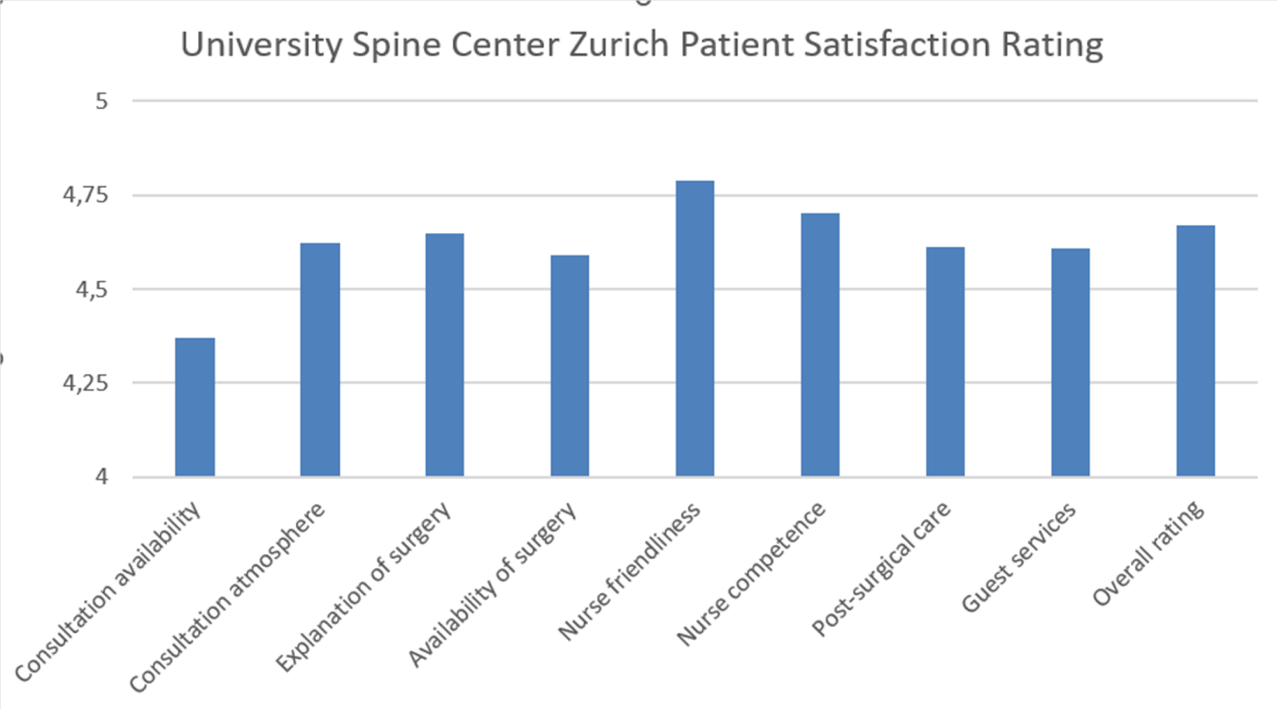
Patients were very satisfied with the hospital care (median 5 [IQR range 4-5]) for all assessed aspects (clinical outpatient appointment, atmosphere during clinical outpatient appointment, informed consent by surgeon, availability of surgical appointment, friendliness of nurses, competence of nurses, postoperative care by surgeon, guest relations in the hospital, and overall care in hospital] (Table 3, figure 1).
| Table 3: Satisfaction with hospital care (n = 167). | ||
Median |
(Interquartile range) |
|
Availability of clinical outpatient appointment |
5 |
(4-5) |
Atmosphere during clinical outpatient appointment |
5 |
(5-5) |
Informed consent by physician |
5 |
(4-5) |
Availability of surgical appointment |
5 |
(4-5) |
Friendliness of nurses |
5 |
(5-5) |
Competence of nurses |
5 |
(5-5) |
Postoperative care by surgeon |
5 |
(5-5) |
Guest relations in the hospital |
5 |
(5-5) |
Overall care in the hospital |
5 |
(5-5) |
Ranking of patient’s satisfaction
Pain was most commonly ranked as the most important factor for satisfaction (n = 56 [58%]). Mobility was mostly ranked second most important (n = 42 [43%]). Friendliness was most commonly ranked third (n = 27 [28%]] and fifth (n = 28 [29%]) most important. Postoperative care was most commonly ranked fourth (n = 33 [34%]] and fifth (n = 31 [32%]) most important. Fulfillment of expectations was also most commonly ranked fourth (n = 25 [26%]). Surprisingly, radiological proof of successful surgery was most commonly ranked last (n = 51 [53%]) (Table 4, figure 1).
| Table 4: Ranking of patients' satisfaction (1 [most important] to 6 least important) (n = 97). | ||||||
| Rank | Pain | Mobility | Friendliness of surgeon | Postoperative care | Fulfillment of expectations | Radiological proof of successful surgery |
| 1 | 56 | 24 | 5 | 2 | 5 | 5 |
| 2 | 28 | 42 | 14 | 4 | 4 | 5 |
| 3 | 8 | 13 | 27 | 18 | 23 | 8 |
| 4 | 0 | 9 | 14 | 33 | 25 | 16 |
| 5 | 2 | 7 | 28 | 31 | 17 | 12 |
| 6 | 3 | 2 | 9 | 9 | 23 | 51 |
Univariate logistic regression analysis
Patients with fulfillment of their expectations were more likely to have been satisfied with the change in mobility after spine surgery (odds ratio 2.2 [95% Confidence Interval (CI]] 1.3-3.7] and friendliness of the surgeon (1.8 [95% CI 1.1-2.8]). Other aspects did not influence fulfillment of patient’s expectations (i.e. gender, age, citizen, education, region of surgery, satisfaction with improvement of pain, availability of surgery appointment, friendliness and competence of nurses, postoperative care, guest relations, and radiological proof of successful surgery) (Table 5).
| Table 5: Logistic regression model for patients with fulfillment of expectations (n = 32). Univariate. | |||
| Odds ratio | (95% confidence interval) | ||
| Baseline | |||
| Female gender | 0.8 | (0.3-2.6) | |
| Age | 1.0 | (0.9-1.1) | |
| Citizen | 0.5 | (0.1-2.7) | |
| ≥ High school | 0.9 | (0.2-3.7) | |
| Cervical spine surgery | 0.5 | (0.1-3.9) | |
| Thoracic spine surgery | 0.9 | (0.1-9.6) | |
| Lumbar spine surgery | 1.2 | (0.3-5.2) | |
| Satisfaction with change after spine surgery | |||
| Improvement of mobility > 50%* | 2.2 | (1.3-3.7) | |
| Improvement of pain > 50% | 1.0 | (0.6-1.6) | |
| Satisfaction with hospital care | |||
| Availability of surgery appointment | 0.8 | (0.4-2.5) | |
| Friendliness of nurses† | 1.3 | (0.6-2.9) | |
| Competence of nurses | 1.8 | (0.5-6.2) | |
| Postoperative care | 1.1 | (0.4-2.6) | |
| Guest relations | 0.9 | (0.6-2.3) | |
| Radiological proof of successful surgery† | 1.3 | (0.9-1.8) | |
| Ranking of satisfaction | |||
| Friendliness of surgeon* | 1.8 | (1.1-2.8) | |
| *Statistically significant | |||
| †Univariate values are given because multivariate values were non-applicable. | |||
Discussion
According to our survey among adult spine surgery patients, the most striking determinants of post-operative global satisfaction are improved mobility as a medical driver, and friendliness of surgeons as a non-medical driver. It was surprising that other non-medical factors, such as patient’s knowledge about radiological proof of successful surgery, the friendliness and competence of nurses, guest relations, availability of appointments, and hospital care, but also the baseline demographic data did not play an important role in this patient cohort.
The literature on patient satisfaction after spine surgery provides contradictory interpretations. According to a majority of articles, the improvement of pain is the most important factor, followed by improvement of mobility, and nurses' competence. Other variables in the literature are age, caregiver interpersonal manner, radiographic proof of a successful intervention, postoperative care, depression, smoking, and employment status of the patient at the time of survey [2,10,11]. However, only few of them ranked these associations by subjective importance [12-14].
Some research groups advocate that Patient-Reported Outcome Measures (PROMs] are a good measure for satisfaction in spine surgery, while others suggest the opposite. Some authors detected no association between the self-assessed level of disability and the patients’ satisfaction; not even in dissatisfied patients [15-17]. These authors further argue that patient satisfaction is not a valid proxy, and therefore should not be used to determine overall quality, safety, or effectiveness of spinal surgery [18,19]. In contrast, other research groups in favor of PROMs suggest a good correlation between PROMs and subjective satisfaction. Furthermore, they argue that patient satisfaction can become more important for the overall quality assessment of care; even much better than the classical objectivized surveillance parameters [20]. Especially, the improvement of pain and mobility would act as a viable surrogate for overall satisfaction after spinal surgery [2,20-25]. This is also the impression in our study. However, by assessing satisfaction, we advocate against the abolition of the usual postoperative surveillance with PROMs, and/or of the established hospitalization surveys. Hence, the assessment of patient’s satisfaction is an additional tool to improve (hospital] care, but does not seem to replace existing tools.
Besides its anonymous and retrospective nature, our study has some limitations. i]. We targeted our questions to the most important parameters of satisfaction, which we retrieved in the scientific literature. A more specific questionnaire would be composed with more detailed questions, a better proof of internal consistency, and other questions concerning the patient's opinion what can be ameliorated would be more informative, but harbors the risk of not being returned, or being filled in in an uncareful manner. ii] Usually in medicine, a targeted survey should also encompass an intervention period (and a re-assessment after intervention, which we did not perform). This actual survey had no interventional parts. iii] The decision to accept an arbitrary satisfaction threshold when all items are beyond the 50th-percentile can be debated. iv] With 400 questionnaires send and 167 returned, we are in the middle field of the science targeting the academic use of questionnaires. If we would have done professional interviews during the hospitalization, the proportion of answering patients would have likely been higher. However, our survey can be regarded as a pilot evaluation, after which a more specific and routine assessment of satisfaction will take place in the coming months. v] Lastly, pain and mobility are dynamic symptoms. We surveyed our patients only after a short period post-discharge, in which the memory is expected to work at best as possible. It is logical that the interpretations of pain and mobility can change over long post-hospitalization periods. For example, clinical experience suggest that sensory losses and pain might improve after several months and mobility can be influenced by other, non-surgical, reasons. Conversely, during prolonged observation periods, other events might negatively influence patient’s long-term satisfaction such as pseudarthrosis or infections [26]. This survey was not designed to evaluate satisfaction related to unplanned complications of spine surgery. vi] The study population represented our daily clinical experience, but with a tendency to more patients with a history of university education (17%). This was the only possible “response” bias, we were able to identify when comparing to patients of our daily clinical experience.
Conclusion
Aside from the known medical driver, mobility, for satisfaction and fulfillment of patient’s expectations, friendliness of the surgeon is shown to play an important role. Surprisingly, other non-medical factors, such as patient’s knowledge about radiological proof of successful surgery, the role of nurses and guest relations did not play an important role in this patient cohort.
Acknowledgement
We are thankful to all secretaries of the University Spine Center Zurich for logistic help.
Potential Conflict of Interests
None of the authors have any financial or other conflicts of interest with this work.
Funding
There was no funding for this work.
Authors Contribution
DS: Data retrieval, questionnaires, analyses, manuscript
IU: Design, analyses, manuscript, supervision
YR: Questionnaires
TJ: Analysis and manuscript
MF: Idea, manuscript, supervision
References
- Fairbank JC, Pynsent PB. The Oswestry Disability Index. Spine (Phila Pa 1976). 2000 Nov 15;25(22):2940-52; discussion 2952. doi: 10.1097/00007632-200011150-00017. PMID: 11074683.
- Menendez JY, Omar NB, Chagoya G, Tabibian BE, Elsayed GA, Walters BC, Guthrie BL, Hadley MN. Patient Satisfaction in Spine Surgery: A Systematic Review of the Literature. Asian Spine J. 2019 Dec;13(6):1047-1057. doi: 10.31616/asj.2019.0032. Epub 2019 Jul 30. PMID: 31352720; PMCID: PMC6894977.
- Menendez ME, Ring D. Does the timing of surgery for proximal humeral fracture affect inpatient outcomes? J Shoulder Elbow Surg. 2014 Sep;23(9):1257-62. doi: 10.1016/j.jse.2014.03.010. Epub 2014 Jun 9. PMID: 24925700.
- Vernon H. The Neck Disability Index: state-of-the-art, 1991-2008. J Manipulative Physiol Ther. 2008 Sep;31(7):491-502. doi: 10.1016/j.jmpt.2008.08.006. PMID: 18803999.
- Comer CM, Conaghan PG, Tennant A. Internal construct validity of the Swiss Spinal Stenosis questionnaire: Rasch analysis of a disease-specific outcome measure for lumbar spinal stenosis. Spine (Phila Pa 1976). 2011 Nov 1;36(23):1969-76. doi: 10.1097/BRS.0b013e3181fc9daf. PMID: 21289573.
- Milligan G. An Introduction to the HCAHPS Survey. Nurse Educ. 2021 Sep-Oct 01;46(5):E89. doi: 10.1097/NNE.0000000000000981. PMID: 34435761.
- Karimi M, Brazier J. Health, Health-Related Quality of Life, and Quality of Life: What is the Difference? Pharmacoeconomics. 2016 Jul;34(7):645-9. doi: 10.1007/s40273-016-0389-9. PMID: 26892973.
- Ware J Jr, Kosinski M, Keller SD. A 12-Item Short-Form Health Survey: construction of scales and preliminary tests of reliability and validity. Med Care. 1996 Mar;34(3):220-33. doi: 10.1097/00005650-199603000-00003. PMID: 8628042.
- Ware JE Jr, Sherbourne CD. The MOS 36-item short-form health survey (SF-36). I. Conceptual framework and item selection. Med Care. 1992 Jun;30(6):473-83. PMID: 1593914.
- Mummaneni PV, Bydon M, Alvi MA, Chan AK, Glassman SD, Foley KT, Potts EA, Shaffrey CI, Shaffrey ME, Coric D, Knightly JJ, Park P, Wang MY, Fu KM, Slotkin JR, Asher AL, Virk MS, Kerezoudis P, Guan J, Haid RW, Bisson EF. Predictive model for long-term patient satisfaction after surgery for grade I degenerative lumbar spondylolisthesis: insights from the Quality Outcomes Database. Neurosurg Focus. 2019 May 1;46(5):E12. doi: 10.3171/2019.2.FOCUS18734. PMID: 31042653.
- Chapin L, Ward K, Ryken T. Preoperative Depression, Smoking, and Employment Status are Significant Factors in Patient Satisfaction After Lumbar Spine Surgery. Clin Spine Surg. 2017 Jul;30(6):E725-E732. doi: 10.1097/BSD.0000000000000331. PMID: 28632560.
- Crawford CH 3rd, Carreon LY, Bydon M, Asher AL, Glassman SD. Impact of preoperative diagnosis on patient satisfaction following lumbar spine surgery. J Neurosurg Spine. 2017 Jun;26(6):709-715. doi: 10.3171/2016.11.SPINE16848. Epub 2017 Mar 24. PMID: 28338454.
- Gepstein R, Arinzon Z, Adunsky A, Folman Y. Decompression surgery for lumbar spinal stenosis in the elderly: preoperative expectations and postoperative satisfaction. Spinal Cord. 2006 Jul;44(7):427-31. doi: 10.1038/sj.sc.3101857. Epub 2005 Nov 22. PMID: 16304562.
- Witiw CD, Mansouri A, Mathieu F, Nassiri F, Badhiwala JH, Fessler RG. Exploring the expectation-actuality discrepancy: a systematic review of the impact of preoperative expectations on satisfaction and patient reported outcomes in spinal surgery. Neurosurg Rev. 2018 Jan;41(1):19-30. doi: 10.1007/s10143-016-0720-0. Epub 2016 Apr 7. PMID: 27053222.
- Abtahi AM, Lyman KS, Brodke DS, Lawrence BD, Zhang C, Spiker WR. Patient Satisfaction is Not Associated With Self-reported Disability in a Spine Patient Population. Clin Spine Surg. 2017 Oct;30(8):E1165-E1168. doi: 10.1097/BSD.0000000000000431. PMID: 27764055.
- Yamashita K, Hayashi J, Ohzono K, Hiroshima K. Correlation of patient satisfaction with symptom severity and walking ability after surgical treatment for degenerative lumbar spinal stenosis. Spine (Phila Pa 1976). 2003 Nov 1;28(21):2477-81. doi: 10.1097/01.BRS.0000090888.63860.4F. PMID: 14595167.
- Toyone T, Tanaka T, Kato D, Kaneyama R, Otsuka M. Patients' expectations and satisfaction in lumbar spine surgery. Spine (Phila Pa 1976). 2005 Dec 1;30(23):2689-94. doi: 10.1097/01.brs.0000187876.14304.15. PMID: 16319756.
- Godil SS, Parker SL, Zuckerman SL, Mendenhall SK, Devin CJ, Asher AL, McGirt MJ. Determining the quality and effectiveness of surgical spine care: patient satisfaction is not a valid proxy. Spine J. 2013 Sep;13(9):1006-12. doi: 10.1016/j.spinee.2013.04.008. Epub 2013 May 16. PMID: 23685216.
- Licina P, Johnston M, Ewing L, Pearcy M. Patient expectations, outcomes and satisfaction: related, relevant or redundant? Evid Based Spine Care J. 2012 Nov;3(4):13-9. doi: 10.1055/s-0032-1328138. PMID: 23531640; PMCID: PMC3592768.
- Ehlers AP, Khor S, Cizik AM, Leveque JA, Shonnard NS, Oskouian RJ Jr, Flum DR, Lavallee DC. Use of patient-reported outcomes and satisfaction for quality assessments. Am J Manag Care. 2017 Oct;23(10):618-622. PMID: 29087633; PMCID: PMC5846490.
- Bible JE, Shau DN, Kay HF, Cheng JS, Aaronson OS, Devin CJ. Are Low Patient Satisfaction Scores Always Due to the Provider?: Determinants of Patient Satisfaction Scores During Spine Clinic Visits. Spine (Phila Pa 1976). 2018 Jan 1;43(1):58-64. doi: 10.1097/BRS.0000000000001453. PMID: 26780613.
- Cheriyan T, Harris B, Cheriyan J, Lafage V, Spivak JM, Bendo JA, Errico TJ, Goldstein JA. Association between compensation status and outcomes in spine surgery: a meta-analysis of 31 studies. Spine J. 2015 Dec 1;15(12):2564-73. doi: 10.1016/j.spinee.2015.09.033. Epub 2015 Sep 30. PMID: 26431997.
- Sigmundsson FG, Jönsson B, Strömqvist B. Determinants of patient satisfaction after surgery for central spinal stenosis without concomitant spondylolisthesis: a register study of 5100 patients. Eur Spine J. 2017 Feb;26(2):473-480. doi: 10.1007/s00586-016-4495-3. Epub 2016 Mar 7. PMID: 26951175.
- Mancuso CA, Duculan R, Cammisa FP, Sama AA, Hughes AP, Lebl DR, Girardi FP. Fulfillment of patients' expectations of lumbar and cervical spine surgery. Spine J. 2016 Oct;16(10):1167-1174. doi: 10.1016/j.spinee.2016.04.011. Epub 2016 Apr 18. PMID: 27102994.
- Levin JM, Winkelman RD, Tanenbaum JE, Benzel EC, Mroz TE, Steinmetz MP. Key drivers of patient satisfaction in lumbar spine surgery. J Neurosurg Spine. 2018 Jun;28(6):586-592. doi: 10.3171/2017.10.SPINE17732. Epub 2018 Mar 23. PMID: 29570048.
- Burkhard MD, Loretz R, Uçkay I, Bauer DE, Betz M, Farshad M. Occult infection in pseudarthrosis revision after spinal fusion. Spine J. 2021 Mar;21(3):370-376. doi: 10.1016/j.spinee.2020.10.015. Epub 2020 Oct 17. PMID: 33080375.




Content Alerts
SignUp to our
Content alerts.
 This work is licensed under a Creative Commons Attribution 4.0 International License.
