
Medicine Group . 2023 June 28;4(6):1092-1099. doi: 10.37871/jbres1772.





 Research Article
The Stressful Effects of Organized Violence on Teenagers’ Mental Health and Coping Mechanisms
Ulfat Tahireen1, Qurat-ul-Ain1, Mahnoor Mehmood1, Fehmida Bibi2 and Inam Ullah Khan3*
2Department of Archeology, Quaid-i-Azam University, Islamabad, Pakistan
3Faculty of Biological Sciences, Quaid-i-Azam University, Islamabad, Pakistan
- Violence
- Mental health
- Internal health
- Coping mechanism
Abstract
The study explored the impact of organized violence on teenagers' mental health and coping mechanisms. Various scales were used to assess between exposure to violence, coping strategies, and mental health. A sample of 300 teenagers aged 14 to 24 participated. The findings indicated reliable and consistent instruments. Correlations revealed a positive link between organized violence and internal health, and a negative link with cerebral well-being. Fear of terrorism and violence predicted both internal health and cerebral torture. Coping strategies such as avoidance and denial negatively affected cerebral well-being, while problem-concentrated coping had a positive impact. Gender differences were observed, with females reporting higher fear levels. Managing strategies accounted for variance in cerebral well-being and torture. Lastly, managing strategies acted as a moderator, influencing the relationship between violence and mental health. Avoidance and denial management were negatively associated with cerebral well-being, while problem-concentrated management positively predicted it. Multiple regression analysis revealed that managing strategies accounted for 32.1% of the variance in cerebral well-being. Managing strategies also explained 31.8% of the variance in cerebral torture. Additionally, the study found that managing strategies acted as a moderator and influenced the relationship between violence and mental health, accounting for 96 variations in the outcome variables of internal health.
Introduction
The world has gone through a revolution in recent years. Technology has played a crucial role in the development of the world. Space rockets, aeroplanes, vehicles, and cell phones have all replaced long-distance calls. Thanks to these structures, the world is becoming a global village. Aside from these conveniences, the stress in people’s lives has also increased. Many external stressors have a tremendous impact on people such as global warming, organized violence, injustice, unemployment, lack of basic services, economic crises and social unrest. Violence is one of the biggest stressors currently prevalent in the world and it negatively impacts people’s lives.
Violence
“Violence is defined as the intentional use of physical force, whether threatened or actual, against oneself, another person, or a group or community, resulting in physical harm, death or psychological harm, delay or deprivation or may lead” [1]. By definition, a person or group must intentionally use violence against themselves or another person or group. Violence is different from evil or harmful actions. Violence falls into several categories depending on who is perpetrating it and the nature of the violence.
Types of violence
Self-directed violence includes self-harming activities, including suicides that are lethal or not, as well as self-mutilation. For suicide attempts that end in death, fatal suicidal actions are frequently utilized. Violent suicide activities that damage oneself but do not cause death are referred to as non-fatal behaviors. When bodily parts are purposely damaged or changed, this is referred to as self-mutilation. Whereas collective violence refers to the intentional use of violence by one group against another, interpersonal violence is the use of violence between family members or between individuals. There is an objective behind these violent activities. It might be political, economic, or social. The armed conflict that occurs inside or between states, terrorism, organized crime, and war are examples of this form of violence. Structural violence refers to physical and psychological harm that occurs due to the unfair political and social system. It includes racism, poverty, slavery etc. whereas armed conflicts refer to wars and violent political conflicts within the states or between two states. It involves non-state actors as well. Organized crime and terrorism come under it.
Organized violence
Organized violence is a vast term that refers to the use of force by a group to put cerebral detriment, death, impairment, injury or cerebral torture [2]. It has three forms that include state- grounded fortified conflict, on-state fortified conflict, and one-sided violence. A state-grounded fortified conflict is a contradiction over government and/ or region where the use of fortified force between two parties, at least one of which is the government of a state.
Terrorism is one of the forms of organized violence as it involves unilateral violence perpetrated against civilians by organized groups. Terrorism refers to the use of cruel and brutal acts to exert pressure, intimidate others, and disrupt the fabric of social and political order [3].
Mental health
The World Health Organization [4] delineates mental health as a condition of constructive psychological form. In it a person understands their own abilities, manages against life stresses, masters hurdles commendably and efficiently, and is contribute own excellence in society mental health is a nice stable predilection to bear in a certain way internal health model [5] illuminated two forms of internal health that are cerebral well-being and mental stress. According to the internal health model internal health comprises two rudiments that are cerebral well-being and cerebral torture.
Psychological well-being model
In [6] model of psychological well-being highlights the conflicts between Pakistan and India in the border area and the activities of non-state actors as instances of state and internal conflicts. According to Ryff's model, psychological well-being encompasses six categories. The first category is self-acceptance, which refers to a positive attitude towards oneself, accepting both positive and negative qualities. The second dimension is personality development, which involves personal growth, self-improvement, and openness to new experiences. The third category is the meaning of life, emphasizing the importance of having a sense of purpose [6].
Positive relationships make up the fourth category, emphasizing healthy and loving connections with others. The fifth category is mastery of the environment, which relates to competence, effective resource management, and seizing opportunities. Autonomy, the final dimension, involves independent decision-making and thinking under social pressure. Coping theories can be classified into Trait-Oriented Theories and State-Oriented Theories. Trait-Oriented Theories propose two coping poles: repression and sensitization, suggesting that individuals cope with stress by denying or repressing stressful events [6]. Pakistan faces state conflicts, political uneasiness, and border clashes with India, as well as an increasing incidence of terrorism, which has affected the mental health of adolescents [7]. In 2008, Pakistan had one of the highest rates of suicide bombings. A Gallup survey conducted in 2009 revealed that 80% of Pakistani citizens feel unstable and hesitant in crowded places [7].
This study aims to address the impact of organized violence and coping strategies on adolescents' mental health, specifically examining catastrophizing effects and managing strategies in relation to stress and death anxiety. The findings will contribute to the literature and assist clinical psychologists in identifying areas for intervention and developing culturally relevant strategies to address the mental health challenges faced by adolescents in Pakistan. Educational counselors can also utilize these findings to enhance adaptive coping strategies in violent situations [7].
Objectives
- To investigate the connection between mental health, coping mechanisms, and organized violence.
- To examine how coping mechanisms and the stressful effects of organized violence differ between genders.
Hypothesis
- Organized violence and adolescent mental health (psychological well-being) will have a negative relationship.
- Organized violence and adolescent mental health (psychological distress) will be positively correlated.
- There will be a beneficial correlation between coping mechanisms and adolescent mental health.
- The relationship between organized violence and mental health will be moderated by coping mechanisms.
- Organized violence will have a greater catastrophizing effect on female adolescents than on male adolescents.
- Between adolescents from joint families and those from nuclear families, there will be differences in organized violence, coping mechanisms, and mental health.
- Youngsters from the low, middle, and high socioeconomic status will differ in terms of organized violence, coping mechanisms, and mental health.
Sample
300 adolescents made up the study’s sample (n = 300). There were 150 males and 150 females with an age range from 14 to 23. In the current study, data were gathered from Leads School, F.G. College in Rawalpindi, International Islamic University in Islamabad, and Quaid-e-Azam University using a purposive convenient sampling technique (Table 1).
| Table 1: Frequency and percentages of sample on age, gender, education, institutes, family system and birth order (n = 300). | ||
| Variables | f | % |
| Gender | ||
| Male | 150 | 50% |
| Female | 150 | 50% |
| Age (in years) | ||
| Young adults (18 to 21) | 300 | 100% |
| Education | ||
| Fsc | 121 | 40.3% |
| BS | 179 | 59.7% |
| Institutes | ||
| Colleges | 112 | 37.3% |
| Universities | 188 | 62.7% |
| Birth order | ||
| Eldest | 62 | 20.7% |
| Middle | 208 | 69.3% |
| Youngest | 30 | 10% |
| Family System | ||
| Nuclear | 183 | 61% |
| Joint | 117 | 39% |
| SES | ||
| Lower SES | 26 | 8.7% |
| Middle SES | 208 | 69.3% |
| High SES | 66 | 22% |
Instruments
These given instruments are use in research 1 (Figure 1).
Impact of terrorism
Scale The Terrorism Impact Scale [9] has a total of 64 items and is divided into five subscales: state affairs, psychosocial distress, Governess issues, civic affairs, and resilience. A five-point Likert scale is shown in figure 2. The Terrorism Impact Scale ranges from Strongly Agree to Strongly Disagree.
Brief Cope questionnaire
COPE questionnaire [9] was used in the present study to assess coping strategies, which adolescents used. It consists of 28 items. It has 14 subscales. Figure 2 it ranges from not at all 0 to great deal 4. The alpha reliabilities are 0.72 to 0.85.
Mental health inventory
The Mental Health Inventory has 38 items. There are two parts to it: There are 22 items for psychological distress and 16 for psychological well-being. It uses a 6-point scale, with 1 representing always and 6 representing never. The total scores for the Psychological Wellbeing subscale ranged from 16 to 96, while the total scores for the Psychological Distress subscale ranged from 22 to 132. According to [10] the MHI was reliable enough and had strong internal consistencies of between 0.83 and 0.96. It is an open access scale.
Demographic sheet
Demographic Sheet The demographic sheet was used to obtain the age, gender, education, birth order, family structure, institution, marital status, and monthly income of the participants in order to obtain the nominal demographic data. In the current study, the informed consent form was used to obtain the participants’ approval and willingness to participate. In the informed consent form, participants were informed that their information would only be used for research purposes and that the fundamental area of the study would be explained to them to remove any ambiguity. Procedure In the initial phase, the author of the Brief Cope questionnaire and the Terrorism Impact Scale was contacted via email to obtain permission to use the instruments in this study (Figure 3). As the use of the mental health inventory was free. It was not necessary to obtain permission to use it. Different schools, colleges, and universities were personally contacted for the purpose of data collection after the instruments were granted permission (Table 1). In order to fulfil the ethical consideration, informed consent forms were given to the participants after receiving permission from high authorities. To eliminate any ambiguity, general instructions were issued. The participants were then given instruments. After the work was done, the instruments were checked to see if anything was missing.
Results
Table 1 represents the distribution of the total sample based on their age, gender, education, institutes, mother occupation, father occupation, family system and birth order.
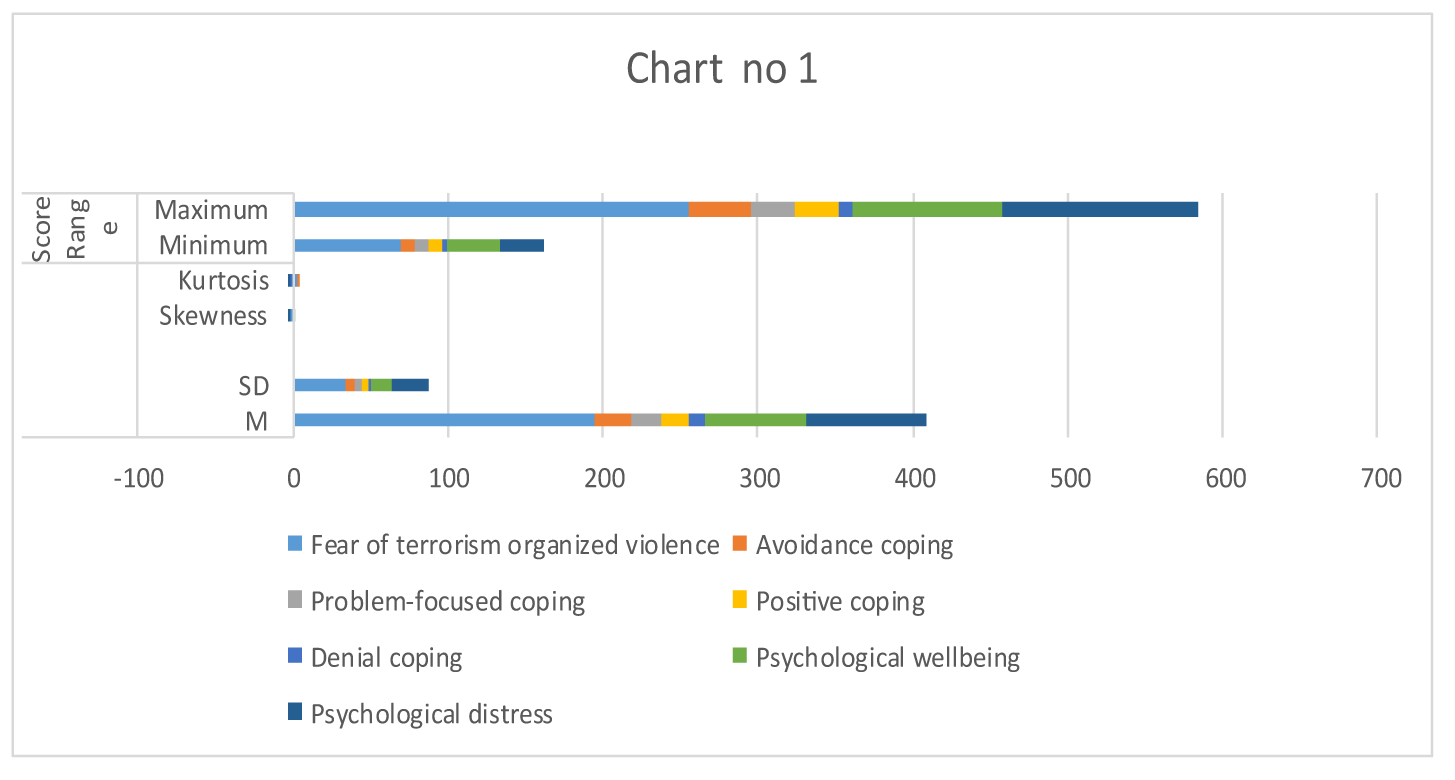
In figure 1: Chart no 1 describes the means and standard deviation, minimum and maximum scores, and level of skewness and kurtosis between fear of organized violence, coping strategies and mental health and indicate all study variables are normally distributed.
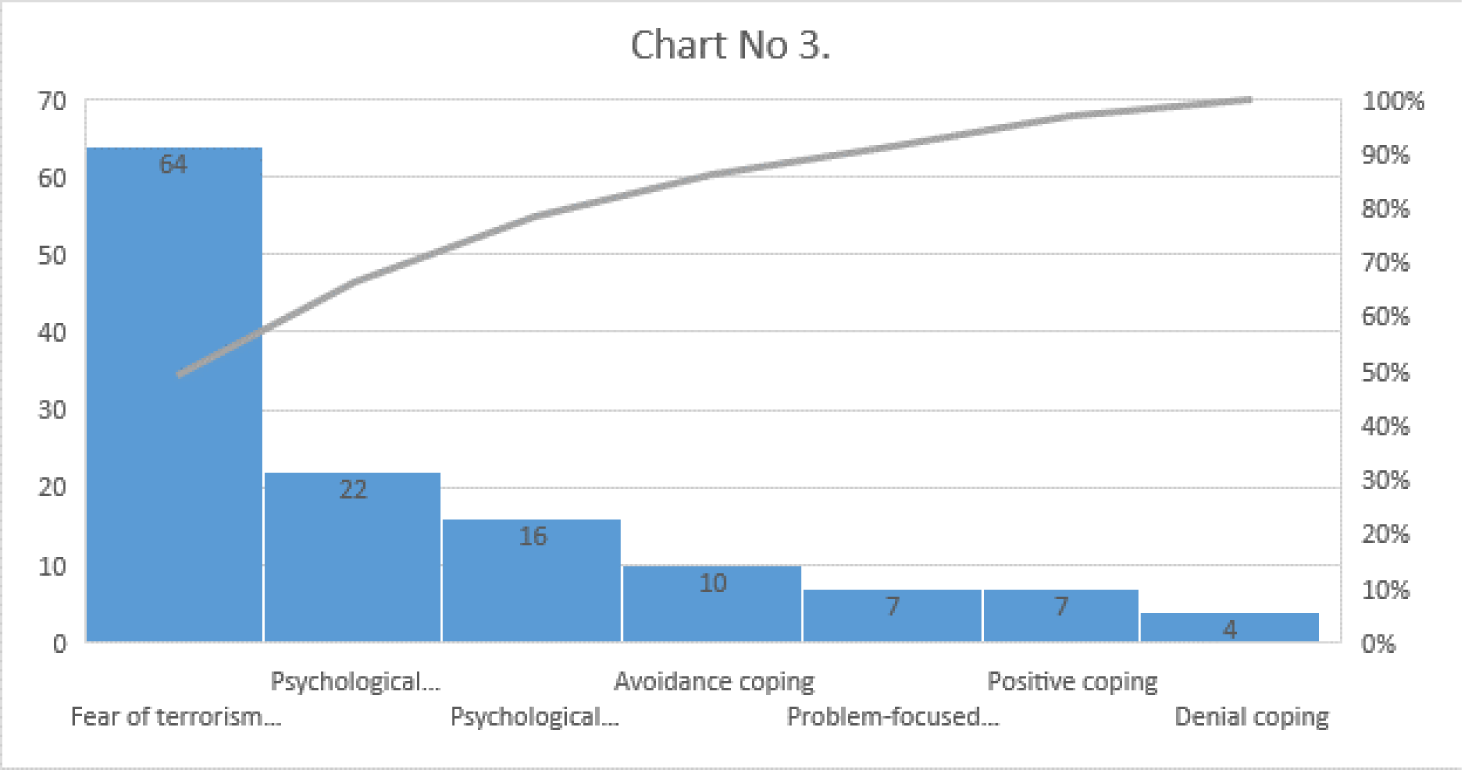
Figure 2 shows the alpha reliabilities of the scales and shows that the reliability of the Impact of Terrorism scale is 0.96, and the subscales of the short survey range from 0.60 to 0.7. Reliabilities for the subscales of the Mental Health Inventory are 0.85 and 0.93. According to [11] criteria, all reliabilities are high and moderate, indicating internal consistency
Table 2 shows the correlations of the study variables. There is a positive relationship between organized violence, avoidant coping and psychological distress, on the other hand, a negative relationship between organized violence, problem-focused and positive coping strategies and mental well-being. There is a positive correlation between fear of organized violence and mental health [12]. There is a negative relationship between negative treatment and mental health. All associations between study variables are expected trends.
| Table 2: Correlations of organized violence, coping strategies, and mental health (n = 300). | ||||||||
| Study variables | 1 | 2 | 3 | 4 | 5 | 6 | 7 | |
| 1 | Organized violence | - | 0.39** | -.21** | -.26** | .01 | -31** | .31** |
| 2 | Avoidance coping | - | .15** | .04 | .39** | -.52** | .28** | |
| 3 | Problem focused coping | - | .71** | .41** | .11 | -.41** | ||
| 4 | Positive coping | - | .34** | .08 | -.39** | |||
| 5 | Denial coping | - | -.22 | -.14* | ||||
| 6 | Psychological wellbeing | - | -.34** | |||||
| 7 | Psychological distress | - | ||||||
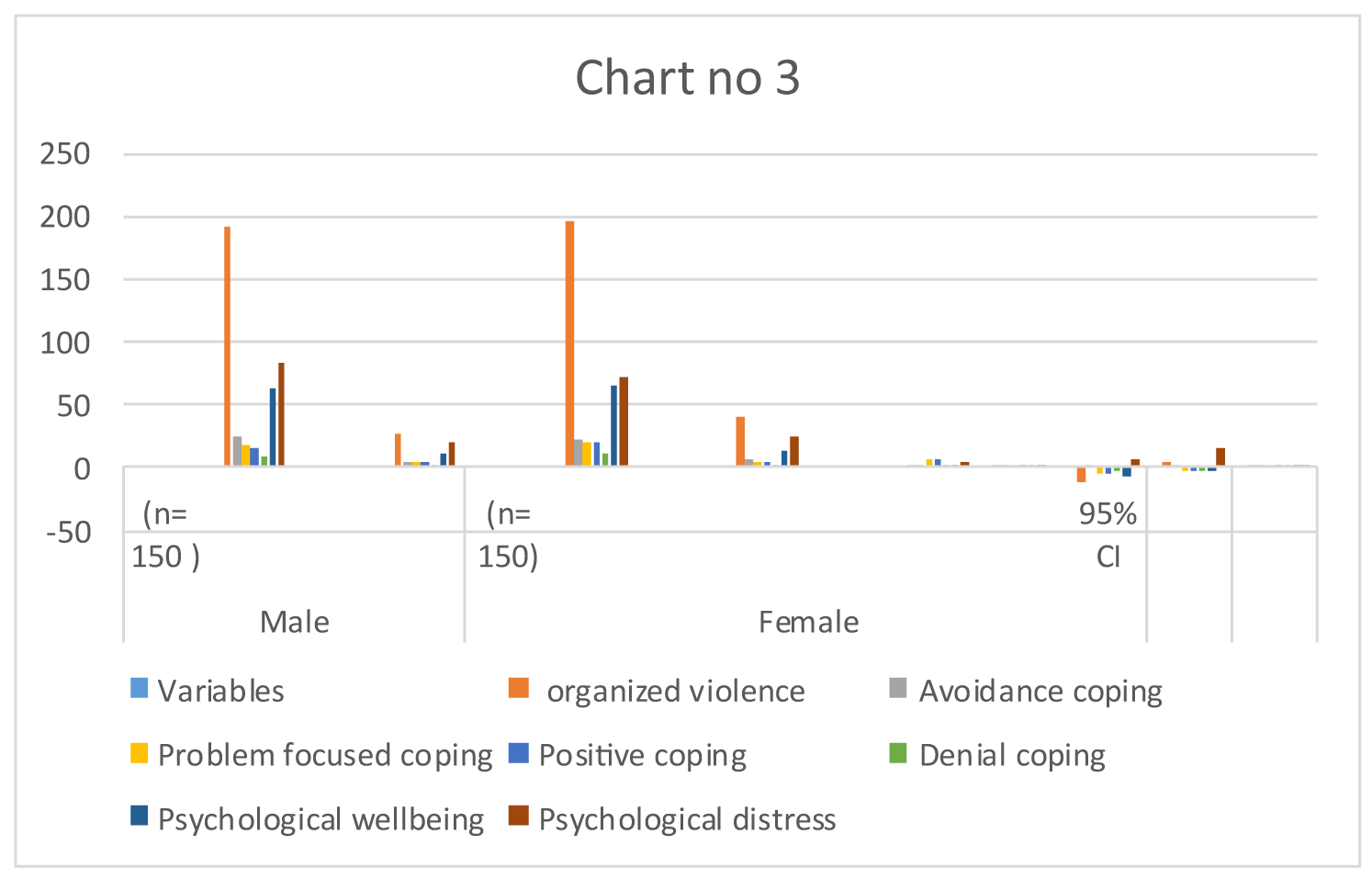
The results of the t-test for comparing mean differences between genders on study variables are shown in chart No 3.
The findings indicate that, in comparison to men, women had higher levels of fear of organized violence and denial coping. In terms of mental health (psychological suffering), men score higher than women. The association between male and female participants in organized violence and psychological discomfort was more strongly correlated, according to Cohen's d.
Table 3 define the teenagers from nuclear families had higher levels of positive coping strategies and fear of organized violence than those from mixed families, according to a report. The remaining study variables' mean differences on the family system are not statistically different.
| Table 3: Means, standard deviation, t-values on organized violence, coping strategies (avoidance coping, problem focused coping and positive coping) and mental health (psychological well-being, psychological distress) (n = 300)./td> | |||||||||
| /td> | Nuclear/td> | Joint/td> | /td> | /td> | /td> | /td> | |||
| /td> | (n = 183)/td> | (n = 117)/td> | /td> | /td> | 95% CI/td> | /td> | |||
| Variables/td> | M/td> | SD/td> | M/td> | SD/td> | t(299)/td> | p/td> | LL/td> | UL/td> | Cohen’s d/td> |
| Organized violence/td> | 206.48/td> | 24.08/td> | 177.03/td> | 40.29/td> | 7.90/td> | 0.00/td> | -27.16/td> | -11.51/td> | 0.88/td> |
| Avoidance coping/td> | 25.06/td> | 5.07/td> | 22.05/td> | 5.44/td> | 4.86/td> | 0.24/td> | -3.24/td> | -0.74/td> | 0.57/td> |
| Problem focused coping/td> | 19.92/td> | 4.27/td> | 18.57/td> | 4.74/td> | 2.56/td> | 0.27/td> | -2.67/td> | -0.59/td> | 0.29/td> |
| Positive coping/td> | 18.62/td> | 3.63/td> | 17.14/td> | 4.55/td> | 3.11/td> | 0.05/td> | -2.12/td> | -0.22/td> | 0.35/td> |
| Denial coping/td> | 10.46/td> | 2.46/td> | 9.86/td> | 2.21/td> | 2.16/td> | 0.03/td> | 0.05/td> | 1.15/td> | 0.87/td> |
| Psychological wellbeing/td> | 62.50/td> | 12.27/td> | 68.89/td> | 12.82/td> | 4.32/td> | 0.64/td> | -1.77/td> | 4.26/td> | 0.51/td> |
| Psychological distress/td> | 77.93/td> | 24.06/td> | 76.75/td> | 21.50/td> | .43/td> | 0.11/td> | -5.57/td> | 5.27/td> | 0.05/td> |
| Note: CI: Confidence Interval; LL: Lower Limit; UL: Upper Limit./td> | |||||||||
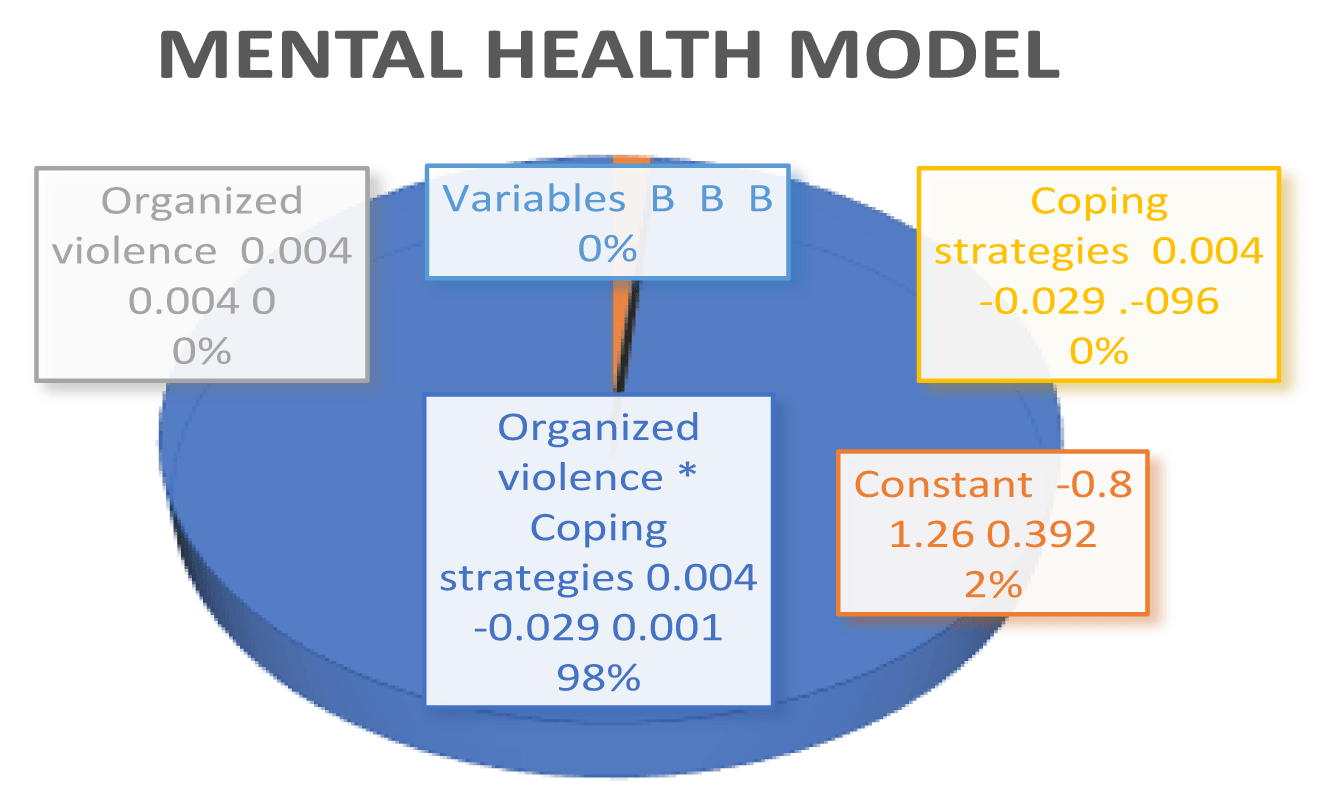
Figure 4 shows the effect of coping mechanisms in the relationship between organized violence and mental health was demonstrated by the multiple regression analysis shown above in the table. It showed coping mechanisms in the table (= 0.967, p > 0.00). The moderator of 96% of the variation in the outcome variable of mental health was coping methods.
Discussion
The current study aims to examine the catastrophizing impact of organized violence on mental health and coping strategies among adolescents in Islamic states. Pakistani people are also facing psychological problems due to terrorism, and the use of terrorism impact scales, subscales of brief cope questionnaires, and mental health inventory are used to measure this. Cronbach's alphas were calculated for each of the measuring instruments to estimate internal consistency (Figure 2). The results showed that the reliabilities of the scales were satisfactory according to [11] criteria, with Alpha reliability of the fear of terrorism Impact scale ranging from .96 to .93. All scales were found reliable and valid to measure the particular construct (Table 2). This research examined the relationship between fear of organized violence, coping strategies and mental health among adolescents in Pakistan. Results showed that there is a positive relationship between these factors, with avoidance coping and psychological distress being a negative relationship. Additionally, fear of terrorism is a strong predictor of psychological distress, as individuals are unable to live happily in stressful situations and fail to adopt healthy coping strategies (Figure 4). In Pakistan, adolescents are at risk of physical violence and terrorist attack at any place in their daily routines, which can increase their fear, terror or anguish. The hypothesis is that there will be a relationship between organized violence and mental health [12] among adolescents.
Adolescents who have the ability to face threatening situations without fear of terrorism and maintain their psychological well-being are more likely to engage in problem-focused coping strategies, which can help them to cope with stressful situations and improve their mental health. Avoidance coping, problem-focused coping, and positive coping are all negatively predicted psychological well-being, with a 32.1% variance in mental health (psychological wellbeing) being positively predicted. The most important details regarding psychological distress, coping strategies, and Adolescence are that psychological distress is a common issue among people, and those who adopt problem-focused strategies have higher psychological well-being than those who use avoidance coping strategies. Problem-focused Coping is the best treatment and procedure for tumbling, reducing or bearing stress, and it is a psychological and emotional effort to deal with the inside or outside demands of the encountered situation. People experience stress and psychological distress in their daily lives, and they use different types of coping strategies and defense mechanisms to survive in stressful and panic situations [13-18]. Women are more likely to experience higher fear of organized violence than male adolescents, leading to higher psychological distress and anxiety. Male adolescents are more anxious towards death due to higher risk and insecurity (Figure 3). Coercing strategies have been found to have a moderating impact on mental health in response to organized violence.
University adolescents are a higher fear of terrorism and organized violence than college adolescents, leading to higher levels of psychological distress and poor mental health. Studies have shown that there is a positive relationship between depression, stress and anxiety with exposure to organized violence and their mental and physical health. Higher education adolescents face different types of threats in Pakistan and have faced terrorist attacks in their universities. Terrorism has caused a catastrophic situation in the country, particularly after the suicide attacks on adolescents of the International Islamic University, Islamabad. A study was conducted on the adjustment of adolescents in a new environment and found that when adolescents are pressurized to adapt to a new environment without social support, it can lead to failure to adopt healthy coping strategies, resulting in poor psychological health.
The most important details of the phrases mental health, family system, coping strategies are that there is a difference on organized violence, mental health and coping strategies between adolescents of nuclear and joint families. In joint family systems, individuals have healthy social interaction and have the opportunity to discuss personal and social issues, and strong relationships and sharing behavior is a strong predictor of psychological well-being (Table 3). Additionally, socioeconomic status is not a prominent aspect of an individual's mental health (psychological well-being), and individuals have the coping ability to live with low socioeconomic status and other strong social and environmental factors. There is a positive relationship between these factors, with avoidance coping and psychological distress being a negative relationship. Additionally, fear of terrorism is a strong predictor of psychological distress, as individuals are unable to live happily in stressful situations and fail to adopt healthy coping strategies (Figure 4).
Conclusion
Fear of organized violence is a powerful predictor of mental health in the current investigation [12]. According to the findings, there is a positive correlation between organized violence and psychological distress but a negative correlation between organized violence and psychological well-being. Coping mechanisms have been shown to have varying degrees of predictive power for psychological wellness and psychological suffering. In contrast to avoidant coping strategies, which are detrimental to mental health and cause psychological suffering, problem-focused coping strategies are adopted by people with low levels of stress. Psychological well-being is inversely correlated with avoidance and denial coping strategies. Moreover, problem-focused approaches predict psychological well-being favorably. The findings showed that those who employed problem-focused coping techniques had more psychological well-being than those who utilized avoidance techniques.
Implications
Most of the research is conducted on coping strategies with mental health which show obvious relations between study variables shown in figure 4. It will be helpful to study to think about which type of coping strategies are essential to fight terrorism fear which exists in our daily lives.
Limitations and Suggestion
The sample was small due to time constraints. Therefore, future studies should collect data from different regions of Pakistan to solve the problem of generalization. In this study, fear of organized violence, coping skills, and mental health were assessed using self-report measures that may be hidden in the discovery of multiple factors.
Acknowledgment
The authors sincerely thank all those who contributed to the research in this study.
Conflicts of Interest
The authors declare that they have no conflicts of interest to report regarding the present study.
References
- World Health Organization. Substance Abuse Department, World Health Organization. Department of Mental Health, Substance Abuse, World Health Organization. Global Status Report: Alcohol Policy. World Health Organization; 2004.
- Winefield HR, Gill TK, Taylor AW, Pilkington RM. Psychological well-being and psychological distress: Is it necessary to measure both? Psychology of Well-Being: Theory, Research and Practice. 2012 Dec;2(1):1-4. doi: 10.1186/2211-1522-2-3.
- Garakani A, Hirschowitz J, Katz CL. General disaster psychiatry. Psychiatr Clin North Am. 2004 Sep;27(3):391-406. doi: 10.1016/j.psc.2004.03.002. PMID: 15325484.
- World Health Organization. The World Health Report 2001: Mental Health: New Understanding, New Hope.
- Veit CT, Ware JE Jr. The structure of psychological distress and well-being in general populations. J Consult Clin Psychol. 1983 Oct;51(5):730-42. doi: 10.1037//0022-006x.51.5.730. PMID: 6630688.
- Ryff CD, Keyes CL. The structure of psychological well-being revisited. J Pers Soc Psychol. 1995 Oct;69(4):719-27. doi: 10.1037//0022-3514.69.4.719. PMID: 7473027.
- Al-Badayneh DM, Al-Khattar A, Al Hasan K. Fearing Future Terrorism: Perceived Personal, National, Regional and International Threats of Terrorism. In: Counter Terrorism in Diverse Communities. IOS Press; 2011. p.30-44.
- Malik F, Khawar R, Iftikhar R, Saeed S, Ilyas R. Development of terrorism impact scale: Initial validity and reliability analyses. Pakistan Journal of Social and Clinical Psychology. 2010 Dec 1;8(2):91-118.
- Carver CS, Scheier MF, Weintraub JK. Assessing coping strategies: a theoretically based approach. J Pers Soc Psychol. 1989 Feb;56(2):267-83. doi: 10.1037//0022-3514.56.2.267. PMID: 2926629.
- Stead R, Shanahan MJ, Neufeld RW. I’ll go to therapy, eventually: Procrastination, stress and mental health. Personality and Individual Differences. 2010 Aug 1;49(3):175-180. doi: 10.1016/j.paid.2010.03.028.
- Nunnally J, Bernstein IH. Psychometric theory. Thorndike RM, editor. In: Applied Psychological Measurement. New York: McGraw-Hill; 1995 Sep;19(3):303-305.
- Khalily MT. Mental health problems in Pakistani society as a consequence of violence and trauma: a case for better integration of care. Int J Integr Care. 2011 Oct;11:e128. doi: 10.5334/ijic.662. Epub 2011 Oct 7. PMID: 22128277; PMCID: PMC3225239.
- Box S. Group processes in family therapy: A psychoanalytic approach. Journal of Family Therapy. 1998 May;20(2):123-132. doi: 10.1111/1467-6427.00073.
- Seema M, Ravikesh T, Humera B. Psychological well-being: Reflections on an elusive construct and its assessment. Journal of the Indian Academy of Applied Psychology. 2013 Jul 1;39(2):189-195.
- Senf K, Liau AK. The effects of positive interventions on happiness and depressive symptoms, with an examination of personality as a moderator. Journal of Happiness Studies. 2013 Apr;14:591-612.
- Caron J, Liu A. A descriptive study of the prevalence of psychological distress and mental disorders in the Canadian population: comparison between low-income and non-low-income populations. Chronic Dis Can. 2010 Jun;30(3):84-94. PMID: 20609292.
- Kainth A, Hewitt A, Sowden A, Duffy S, Pattenden J, Lewin R, Watt I, Thompson D. Systematic review of interventions to reduce delay in patients with suspected heart attack. Emerg Med J. 2004 Jul;21(4):506-8. doi: 10.1136/emj.2003.013276. PMID: 15208248; PMCID: PMC1726390.
- Dooley BA, Fitzgerald A. My World Survey: National Study of Youth Mental Health in Ireland. Headstrong and UCD School of Psychology. 2012.




Content Alerts
SignUp to our
Content alerts.
 This work is licensed under a Creative Commons Attribution 4.0 International License.
