
> Medicine. 2020 September 30;1(5):190-191. doi: 10.37871/jbres1142.
-
Subject area(s):
- Neonatal Care
- Pediatrics
White Peritoneum
Shabih Manzar*
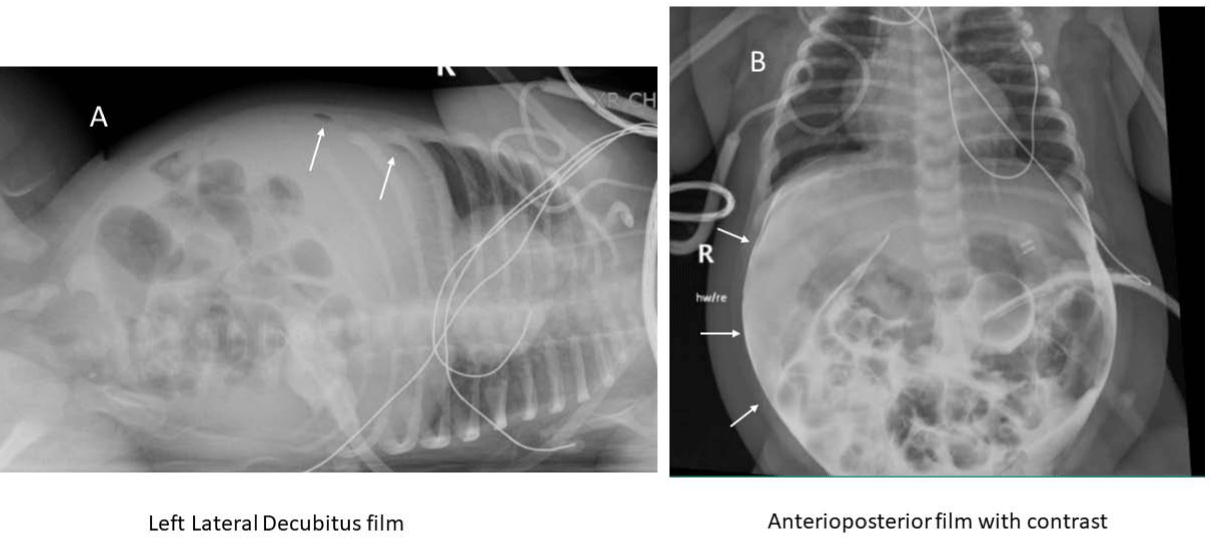
Misadventure of the Gastrostomy Tube (GT) has been described in the literature resulting in complications [1]. Here we present a case of dislodged GT diagnosed by contrast administration. The infant underwent GT placement for nutritional support. On the third post-operative day, she was started on Pedialyte solution five ml every three hours. Soon after the second feed, the infant was reported by the nurse to be agitated despite adequate sedation and pain management. Abdominal examination at that time showed slight distension. An urgent abdominal x-ray was obtained that showed tiny amount of free intraperitoneal air between the liver and the lateral abdominal wall and free air under the diaphragm figure A. The infant was immediately made nil per mouth and intravenous antibiotics were started. A contrast study was performed via GT that showed ‘white peritoneum’ figure B. All the contrast administered was noted to be intraperitoneal surrounding the bowel and liver and within the pericolic gutters. Infant was taken to the OR and GT was replaced. Infant tolerated the procedure well and remained stable post-operatively.
This is the first case of GT dislodgement in our institution. Fortunately, it was diagnosed early without any adverse effects. We were unable to delineate the cause of this incident. In an earlier report, no reasons were found in 35% of GT dislodgement [1]. A quality improvement project is planned. In the meantime, after performing a literature search, we are looking into adopting the recommendations from American Society for Parenteral and Enteral Nutrition using the MARK (Mark the tube, Anchor it, Reassess placement, Keep pressure off skin and Knowledge of staff) acronym [2].
In conclusion, any infant who has GT placed should be monitored closely for any abdominal sign suggesting dislodgement.
- Feil M. Dislodged Gastrostomy Tubes: Preventing a Potentially Fatal Complication. Pa Patient Saf Advis. 2017 Mar;14(1):9-16.
- Boullata JI, Carrera AL, Harvey L, Escuro AA, Hudson L, Mays A, McGinnis C, Wessel JJ, Bajpai S, Beebe ML, Kinn TJ, Klang MG, Lord L, Martin K, Pompeii-Wolfe C, Sullivan J, Wood A, Malone A, Guenter P; ASPEN Safe Practices for Enteral Nutrition Therapy Task Force, American Society for Parenteral and Enteral Nutrition. ASPEN Safe Practices for Enteral Nutrition Therapy [Formula: see text]. JPEN J Parenter Enteral Nutr. 2017 Jan;41(1):15-103. doi: 10.1177/0148607116673053. Epub 2016 Nov 5. PMID: 27815525.




Content Alerts
SignUp to our
Content alerts.
 This work is licensed under a Creative Commons Attribution 4.0 International License.
