
2025 October 21;6(10):1505-1513. doi: 10.37871/jbres2206.
-
Subject area(s):

 |
|
 |
|
 |
|

 Comparative Studies
The Correlation between the Efficacy and Survival of Chemotherapy Combined with PD-1 and Granulocyte Colony-Stimulating Factor in Patients with Advanced NSCLC
Liu X*, Lai C, Liu H and Ding Y
- Non-small cell lung cancer
- Granulocyte colony-stimulating factor
- Neutropenia
Abstract
Objective: This study investigates the relationship between the prophylactic use of granulocyte colony-stimulating factors and clinical efficacy, as well as survival outcomes, in patients with advanced non-small cell lung cancer who develop neutropenia following platinum-based dual-drug chemotherapy combined with immunotherapy.
Methods: A retrospective analysis was conducted on patients diagnosed with advanced non-small cell lung cancer and neutropenia in our department from 2021 to 2023. All patients received chemotherapy combined with immunotherapy. The prevention group was given long-acting granulocyte-stimulating factor for preventive treatment, while the control group did not receive preventive treatment.
Consequence: The results of univariate and multivariate analyses in this study indicate that pathological type, distant metastasis, and prophylactic use of granulocyte-stimulating factor are important influencing factors for Progression-Free Survival (PFS). After receiving chemotherapy combined with immunotherapy, the median PFS in the prevention group was 15.500 months, while that in the control group was 8.000 months (p = 0.010). This reduced the risk of disease progression by 80.3% (p = 0.039), which was statistically significant. Additionally, the median PFS for patients with adenocarcinoma components was 15.000 months, while that for patients with squamous cell carcinoma was 7.500 months (p = 0.020), which was also statistically significant. The median PFS for patients with distant metastasis was 5.000 months, while that for patients without distant metastasis was 14.500 months (p = 0.014), and the risk of disease progression increased by 6.396 times (p = 0.047).
Conclusion: Patients with adenocarcinoma components, those with distant metastasis, and those who benefit from chemotherapy combined with immunotherapy by receiving preventive use of granulocyte-stimulating factor can experience a reduced risk of disease progression. This suggests the necessity of closely monitoring neutrophil levels and taking timely intervention measures during the post-treatment monitoring period.
Introduction
In terms of cancer incidence and death rates, lung cancer is the foremost in both the world and China. According to data released by the National Cancer Centre, in 2022, there were approximately 1,060,600 new cases of lung cancer and about 733,300 cancer-related deaths in China. Lung cancer ranked first in terms of incidence and mortality rates among both men and women [1]. However, for many patients, by the time they visit the hospital, their diseases have already reached an advanced stage [2], and they have lost the opportunity for radical surgery. Domestic and international guidelines clearly state that for patients with advanced non-small cell lung cancer who have negative driver genes, chemotherapy combined with immune checkpoint inhibitors is the main treatment option. During the treatment process for patients receiving chemotherapy combined with immunotherapy, there is a possibility of varying degrees of bone marrow suppression. The most common manifestation is neutropenia, this is a crucial toxicity that limits the dosage of chemotherapy medications [3]. When the patient experiences neutropenia, Granulocyte Colony-Stimulating Factor (G-CSF) is routinely used to increase the white blood cell count. Currently, the commonly used drugs for boosting white blood cells in clinical practice are divided into long-acting and short-acting agents. The long-acting agents are represented by Polyethylene Glycol-Conjugated recombinant human Granulocyte Colony-Stimulating Factor injection (PEG-rhG-CSF), while the short-acting agents are represented by recombinant human granulocyte colony-stimulating factor injection [4].
Granulocyte colony-stimulating factor is a multifunctional hematopoietic growth factor and an important immune-stimulating factor [5], studies have shown that it cannot only restore the reduction of white blood cells caused by chemotherapy, but also induce the proliferation and differentiation of bone marrow Dendritic Cells (DCs) and M1 Macrophages, enhance antigen presentation, and thereby induce the immune response against tumors in the body [6]. The mechanism by which GM-CSF enhances the efficacy of immune checkpoint inhibitors lies in increasing the number of mature DCs and improving the tumor microenvironment. The treatment of tumors with PD-1 or PD-L1 immune checkpoint inhibitors often has poor efficacy due to patients' low immune function. However, the use of GM-CSF can increase the levels of mature DCs and promote the infiltration of T lymphocytes into the tumor microenvironment [7], thereby enhancing the efficacy of PD-1 and PD-L1 inhibitor treatments. This article mainly explores the relationship between the efficacy and survival of patients with advanced NSCLC who experience bone marrow suppression after chemotherapy combined with immunotherapy, comparing those who use long-acting granulocyte-stimulating factor with those who do not.
Materials and Methods
General information
From October 2021 to October 2023, all advanced-stage NSCLC patients treated in our department were unable to undergo surgery. Inclusion criteria: Pathological diagnosis of NSCLC (including adenocarcinoma and squamous cell carcinoma), age >18 years, and diagnosis at an advanced stage. Regardless of whether the patients had received targeted therapy or chemotherapy previously, all received chemotherapy combined with immunotherapy in subsequent treatment. A total of 37 patients were included, comprising 8 females and 29 males, with ages ranging from 46 to 77 years. Other pathophysiological features are shown in table 1.
Therapeutic regimen
According to the 2024 guidelines by the Chinese Society of Clinical Oncology, the focus is on diagnosing and treating advanced Non-Small Cell Lung Cancer (NSCLC), for patients with negative driver gene testing or those who have developed resistance to targeted drug therapy and have no alternative targeted drugs available, it is recommended that they undergo platinum-based doublet chemotherapy combined with Camrelizumab, Sintilimab, or Tislelizumab. Eastern Cooperative Oncology Group (ECOG) score of 0 to 2 points [8]. Before treatment, the patient's blood routine, liver and kidney function, electrolytes, myocardial enzyme spectrum, thyroid function, and other examinations were evaluated. The treatment plan adopted a 3-week schedule. After every 2 cycles of treatment, the patient would undergo chest and abdominal CT, cranial MRI, and other related tests for assessment of tumor efficacy. If the patient showed progression (PD), another treatment plan would be implemented. If the patient achieved a tumor response (PR) or stability (SD), the original treatment plan would be continued or modified to maintenance treatment until disease progression (PD) occurred.
Evaluation of the degree of granulocyte reduction
Record the neutrophil counts of the patients during the treatment process, and grade the neutropenia according to the common terminology criteria for adverse events version 4.0 of the American Institute for Cancer Research [9], it is divided into level 0, level 1, level 2, level 3, and level 4. Level 0 indicates no neutrophil suppression. Levels 1 and 2 indicate mild neutrophil suppression. Level 3 indicates moderate neutrophil suppression. Level 4 indicates severe neutrophil suppression. All patients experienced moderate or severe neutrophil reduction after treatment. They either received prophylactic use of long-acting granulocyte colony-stimulating factor to enhance white blood cell counts or did not receive prophylactic long-acting treatment for white blood cell elevation.
Evaluation of therapeutic efficacy
According to RECIST version 1.1 for evaluating the efficacy of solid tumors, the classifications are as follows: Complete Response (CR) [10], in which all target lesions disappear; Partial Response (PR), in which the sum of the longest diameters of the baseline lesions decreases by ≥ 30%; Progressive Disease (PD), in which the sum of the longest diameters of the baseline lesions increases by ≥ 20% or new lesions appear; and Stable Disease (SD), in which the sum of the longest diameters of the baseline lesions decreases but does not meet the criteria for PR or increases but does not meet the criteria for PD [11].
Prognostic evaluation
The Progression-Free Survival (PFS) of the patients was calculated to evaluate the prognosis. PFS is defined as the time from the start of chemotherapy combined with immunotherapy to disease progression or the last follow-up. The follow-up ended on October 1, 2024.
Statistical treatment
The analysis of the data was analyzed was conducted using SPSS 27.0 software. The measurement data were expressed as medians. Survival rates were compared using the log-rank test and the Kaplan-Meier survival curve method; univariate and multivariate Cox regression analyses were used to identify risk factors for survival rates, and a p value < 0.05 was considered statistically significant.
Result
Basic clinical data of the patients
Among the 37 patients, 28 were male (75.7%) and 9 were female (24.3%); the median age was 66.0 (46-77) years. Twenty-three patients had adenocarcinoma (including Adenosquamous Carcinoma), and 14 patients had squamous cell carcinoma. Thirteen patients (35.1%) received prophylactic granulocyte colony-stimulating factor for the prevention of white blood cell reduction, while 24 patients (64.9%) did not receive such prophylactic treatment. Thirty-three patients (89.2%) had distant metastasis, and 4 patients (10.8%) had no distant metastasis. Other variables, such as gender, age, smoking history, Performance Status (PS) score, surgical history, and lymph node metastasis, showed no statistical significance (p > 0.05) (Table 1).
| Table 1: Clinical data on immunotherapy combined with chemotherapy for NSCLC. | ||||
| Case(n = 37)% | Median | X2 | p | |
| Gender | ||||
| Male | 28(75.5) | 11.000 | 0.001 | 0.975 |
| Female | 9(24.3) | 15.000 | ||
| Age(year) | ||||
| < 65 | 18(48.6) | 15.000 | 0.001 | 0.973 |
| ≥ 65 | 19(51.4) | 12.500 | ||
| Smoke | ||||
| No | 24(69.4) | 14.500 | 0.746 | 0.388 |
| Yes | 13(35.1) | 7.500 | ||
| Pathology | ||||
| Adenocarcinoma | 23(62.2) | 15.000 | 5.410 | 0.020 |
| Squamous-cell carcinoma | 14(37.8) | 7.500 | ||
| Distant metastasis | ||||
| Yes | 33(89.2) | 14.500 | 5.983 | 0.014 |
| No | 4(10.8) | 5.000 | ||
| Lymphatic metastasis | ||||
| N0 | 5(13.5) | 16.000 | 3.681 | 0.298 |
| N1 | 4(10.8) | 9.000 | ||
| N2 | 19(51.4) | 11.500 | ||
| N3 | 9(24.3) | 14.500 | ||
| Surgery history | ||||
| No | 26(70.3) | 12.500 | 0.064 | 0.801 |
| Yes | 11(29.7) | 12.000 | ||
| Leukemia therapy | ||||
| Yes | 13(35.1) | 15.5000 | 6.641 | 0.010 |
| No | 24(64.9) | 8.000 | ||
| Performance Status | ||||
| 0-1 | 30(81.1) | 12.500 | 0.050 | 0.823 |
| 2-3 | 7(18.9) | 23.500 | ||
The preventive use of long-acting white blood cell-stimulating treatment after chemotherapy combined with immunotherapy for patients was statistically analyzed in terms of survival. As of October 1, 2024, the median PFS for all patients was 12.5 months (95% confidence interval: 9.315-15.685 months). The results of the univariate analysis indicated that pathological type, distant metastasis status, and preventive use of long-acting white blood cell-stimulating treatment were significant influencing factors for PFS (Table 2, figure 1).
| Table 2: Univariate analysis of the prophylactic use of white blood cell enhancement therapy after immunotherapy combined with chemotherapy for NSCLC in terms of progression-free survival. | |||||
| Median | X2 | p | SE | 95% Confidence interval | |
| Gender | |||||
| Male | 11.000 | 0.001 | 0.975 | 3.898 | 3.359-18.641 |
| Female | 15.000 | 1.768 | 11.535-18.465 | ||
| Age(year) | |||||
| <65 | 15.000 | 0.001 | 0.973 | 2.367 | 10.360-19.640 |
| ≥65 | 12.500 | 4.772 | 3.147-21.853 | ||
| Smoke | |||||
| No | 14.500 | 0.746 | 0.388 | 1.625 | 11.315-17.785 |
| Yes | 7.500 | 5.055 | 0.000-17.408 | ||
| Pathology | |||||
| Adenocarcinoma | 15.000 | 6.641 | 0.020 | 0.562 | 13.899-16.101 |
| Squamous-cell carcinoma | 7.500 | 1.797 | 3.977-11.023 | ||
| Distant metastasis | |||||
| No | 14.500 | 5.983 | 0.014 | 1.623 | 11.320-17.680 |
| Yes | 5.000 | 0.000 | - | ||
| Lymphatic metastasis | |||||
| N0 | 16.000 | 3.681 | 0.298 | 5.477 | 5.265-26.735 |
| N1 | 9.000 | 12.000 | 0.000-32.520 | ||
| N2 | 11.500 | 4.097 | 3.471-19.529 | ||
| N3 | 14.500 | 3.222 | 8.185-20.815 | ||
| Surgery history | |||||
| No | 12.500 | 0.064 | 0.801 | 4.986 | 2.727-22.273 |
| Yes | 12.000 | 3.853 | 4.447-19.553 | ||
| Leukemia therapy | |||||
| Yes | 15.5000 | 6.641 | 0.010 | 0.539 | 14.443-16.557 |
| No | 8.000 | 1.656 | 4.754-11.246 | ||
| Performance Status | |||||
| 0-1 | 12.500 | 0.050 | 0.823 | 3.538 | 5.566-19.434 |
| 2-3 | 23.500 | 8.820 | 6.212-40.788 | ||
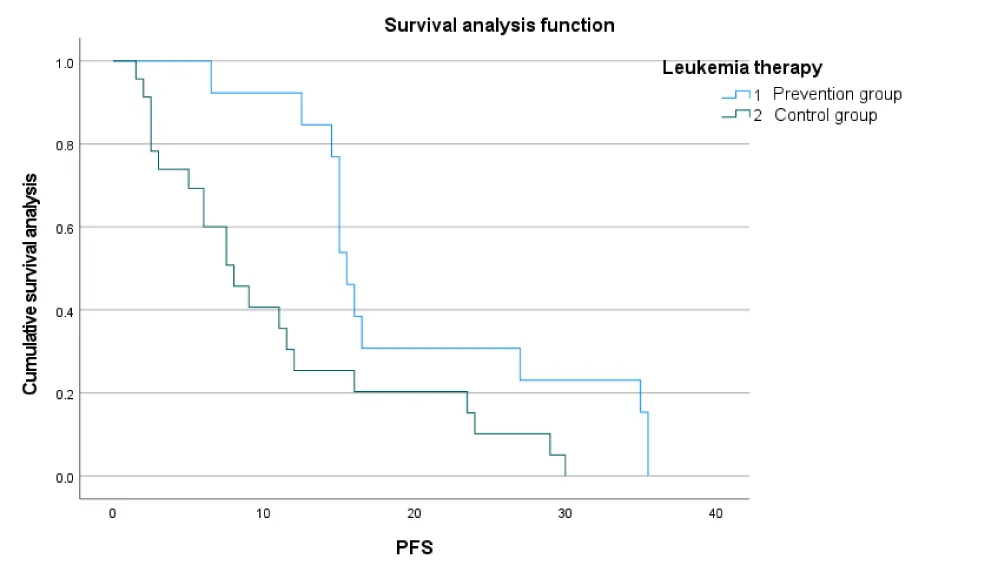
A multivariate statistical analysis of bone marrow suppression and survival after chemotherapy combined with immunotherapy was conducted. Cox multivariate analysis showed that the prophylactic use of long-acting granulocyte-stimulating factor, pathological type, and distant metastasis were independent influencing factors for PFS (Table 3).
| Table 3: Multivariate analysis of progression-free survival in patients after chemotherapy combined with immunotherapy. | |||||
| Wald | P | B | Exp(B) | 95% Confidence interval | |
| Gender | 0.091 | 0.763 | 0.194 | 1.214 | 0.345-4.275 |
| Age(year) | 0.215 | 0.643 | -0.237 | 0.789 | 0.289-2.151 |
| Smoke | 0.753 | 0.753 | 0.174 | 1.190 | 0.403-3.511 |
| Pathology | 2.869 | 0.090 | -1.126 | 0.324 | 0.088-1.194 |
| Distant metastasis | 7.678 | 0.006 | -3.047 | 0.047 | 0.006-0.410 |
| Lymphatic metastasis | 16.116 | 0.001 | |||
| N1 | 2.327 | 0.127 | -1.353 | 0.258 | 0.045-1.470 |
| N2 | 1.054 | 0.305 | -0.719 | 0.487 | 0.123-1.923 |
| N3 | 1.856 | 0.005 | 1.856 | 6.396 | 1.727-23.682 |
| Surgery history | 0.622 | 0.430 | -0.436 | 0.646 | 0.219-1.912 |
| Leukemia Therapy | 4.278 | 0.039 | -1.276 | 0.197 | 0.029-1.352 |
| Performance Status | 6.102 | 0.047 | |||
| 0-1 | 2.733 | 0.098 | -1.627 | 0.197 | 0.029-1.352 |
| 2-3 | 0.636 | 0.425 | 0.507 | 1.661 | 0.477-5.781 |
Discussion
Chemotherapy combined with immunotherapy plays a significant role in the treatment of advanced NSCLC. For patients with advanced NSCLC and negative driver genes, chemotherapy combined with immunotherapy is the standard treatment protocol. For patients with positive driver genes who develop resistance to TKI-targeted therapy, platinum-based doublet chemotherapy combined with PD-1/PD-L1 inhibitors and anti-angiogenic targeted therapy is also an important treatment option.
Chemotherapy often leads to a decrease in the patient's neutrophil count, thereby increasing the risk of infection [12]. Granulocyte Colony-Stimulating Factor (G-CSF) can increase the levels of neutrophils. It is commonly used in clinical practice to prevent neutropenia [13]. Factors such as G-CSF and GM-CSF can regulate the development of neutrophils and stimulate the release of mature neutrophils from the bone marrow [14]. Neutrophils are the most abundant widespread type of white blood cell in the blood circulation and play a crucial role in host defense against infections [15]. Neutrophils have traditionally been regarded as inflammatory immune cells that eliminate pathogens through phagocytosis, degranulation, and the formation of Neutrophil Extracellular Traps (NETs) [16]. Under normal circumstances, the lifespan of neutrophils is quite short. Their activation and mobilization are strictly controlled by the body to prevent the potentially harmful effects of the high toxicity of neutrophil responses on normal tissues [17]. Neutrophils, as immune defense cells, release toxic substances in the tumor microenvironment, such as reactive oxygen species and matrix metalloproteinase 9. They can regulate the expression of tumor necrosis factor-related apoptosis-inducing ligand and Fas ligand, thereby enhancing their ability to induce tumor cell apoptosis. At the same time, they also participate in contribute to anti-tumor immune regulation by synergistically activating working together to activate the immune cell network and enhancing boost anti-cancer effects [18]. Neutrophils express a wide range of cytotoxic factors and apoptosis-related ligands, which mediate the direct killing of tumors. Due to the short lifespan of neutrophils, this immune response may be transient. Early studies have found that, under the influence of IFN-γ and GM-CSF, immature neutrophils in the tumor microenvironment differentiate into hybrid neutrophils with characteristics of Antigen-Presenting Cells (APCs) [19], thereby stimulating anti-cancer T cell responses [20]. Subsequent studies revealed more details. During the pre-migration stage, APCs captured tumor antigens via neutrophils, migrated to the tumor-draining Lymph Nodes (LNs), and formed synapses with T cells, presenting the antigens to the T cells and triggering an anti-tumor immune response [21].
Some patients experienced a decrease in white blood cells after receiving immunotherapy. Studies have shown that IL-6 is associated with immune-related Adverse Events (irAEs) in Immune Checkpoint Blockade (ICB) treatment and is a key factor in the action of neutrophils [22]. Anti-CTLA-4 therapy triggers the release of IL-6 and the accumulation of neutrophils in the intestine, causing an inflammatory response, disrupting the balance of the intestinal microbiota, and promoting irAEs [23]. Therefore, blocking IL-6 during treatment with immune checkpoint inhibitors can enhance tumor immunity and alleviate the symptoms of immune-related adverse events (irAEs). Studies have shown that Granulocyte-Macrophage Colony-Stimulating Factor (GM-CSF) has a significant effect as an adjuvant therapy in cancer immunotherapy. For instance, in a study, the combination of GM-CSF and anti-GD2 monoclonal antibody demonstrated a strong correlation between the treatment success rate and the prognosis of patients with high-risk neuroblastoma [24]. Furthermore, the application of GM-CSF has also been found to improve immune reconstitution following autologous hematopoietic stem cell transplantation, especially in patients undergoing autologous transplantation. GM-CSF can increase the proportion of circulating dendritic cells, thereby facilitating the recovery of the immune system [25]. In among patients with suffering from multiple myeloma, the use of granulocyte colony-stimulating factor has also been shown to shorten the post-transplant recovery time after autologous hematopoietic stem cell transplantation [26]. Furthermore, the study found that the combined use of granulocyte colony-stimulating factor and stem cell factor can delay the onset of ovarian dysfunction in female mice after they undergo chemotherapy with alkylating agents [27]. In patients with severe alcoholic hepatitis, the application of granulocyte colony-stimulating factor has also been proven to improve survival rates. Moreover, compared with standard treatment, the combined use of N-acetylcysteine does not show a significant effect [28]. In conclusion, the combination of granulocyte-stimulating factor with chemotherapy and immunotherapy can not only improve the survival period of patients but also play an important role in various disease contexts, and is worthy of further exploration and application in clinical practice.
The single-factor analysis in this study revealed that pathological type, distant metastasis status, and prophylactic use of granulocyte-stimulating factor were significant influencing factors for PFS. After chemotherapy combined with immunotherapy, the median PFS of patients treated prophylactically with long-acting granulocyte-stimulating factor versus those not treated with it was 15.500 months vs., 8.000 months, p = 0.010. Patients with adenocarcinoma components (Including adenocarcinoma and adenosquamous carcinoma) and patients with squamous cell carcinoma had median PFS of 15.000 months vs., 7.500 months, p = 0.020. Patients without distant metastasis and those with distant metastasis had median PFS of 14.500 months vs., 5.000 months, p = 0.014. The presence of adenocarcinoma components, absence of distant metastasis, and prophylactic treatment with long-acting granulocyte-stimulating factor after chemotherapy combined with immunotherapy were factors indicating a better prognosis for patients.
The results of multivariate analysis showed that the prophylactic use of long-acting granulocyte-stimulating factor after chemotherapy combined with immunotherapy, the presence of distant metastasis, and N3 metastasis in the contralateral mediastinum or supraclavicular lymph nodes were independent influencing factors for PFS. Compared with patients who did not receive prophylactic long-acting granulocyte-stimulating factor treatment after combined therapy, patients who received prophylactic long-acting granulocyte-stimulating factor treatment had an 80.3% reduction in the risk of disease progression (HR = 0.197, 95% CI: 0.029-1.352); patients without distant metastasis had a 95.3% lower risk of disease progression compared to those with distant metastasis (HR = 0.047, 95% CI: 0.006-1.352); and patients with supraclavicular lymph node metastasis or contralateral mediastinal lymph node metastasis (N3) had a 6.396-fold increased risk of disease progression compared to patients without lymph node metastasis (N0) (HR = 6.396, 95% CI: 1.727-23.689).
The results of the multivariate analysis showed that, for patients with advanced lung cancer who receive chemotherapy combined with immunotherapy, this is the standard treatment approach according to both domestic and international guidelines. During the treatment process, patients are likely to experience varying degrees of bone marrow suppression, especially a decrease in neutrophils. Prophylactic use of GM-CSF can provide PFS benefits to patients. However, in addition to this treatment, the patient's pathological type and the presence of distant metastasis are also closely related to the patient's prognosis.
Of course, our research also has some limitations. Firstly, our study is a retrospective study. Secondly, as immunotherapy continues to advance in clinical practice, the role of chemotherapy in clinical treatment has somewhat diminished. Immunotherapy itself leads to a relatively lower probability of neutropenic toxic side effects in patients. Thirdly, the preventive use of granulocyte-stimulating factor treatment can bring PFS benefits to patients. However, it is only one of the important influencing factors, and whether the PFS benefits for patients can be translated into OS benefits remains to be further studied.
Acknowledgment
This work was supported by the Guiding Project of the Ganzhou Science and Technology Bureau (GZ2021ZSF221).
References
- Zheng RS, Chen R, Han BF, Wang SM, Li L, Sun KX, Zeng HM, Wei WW, He J. [Cancer incidence and mortality in China, 2022]. Zhonghua Zhong Liu Za Zhi. 2024 Mar 23;46(3):221-231. Chinese. doi: 10.3760/cma.j.cn112152-20240119-00035. PMID: 38468501.
- Ye X, Huang A, Zhou Y, Kuang Y, Wang W, Gu A, Xu L. Efficacy and safety analysis of anlotinib combined with PD-1 inhibitors in advanced non-small cell lung cancer: a retrospective cohort study. J Thorac Dis. 2023 Apr 28;15(4):2003-2011. doi: 10.21037/jtd-23-289. Epub 2023 Apr 23. PMID: 37197506; PMCID: PMC10183545.
- Di Maio M, Gridelli C, Gallo C, Shepherd F, Piantedosi FV, Cigolari S, Manzione L, Illiano A, Barbera S, Robbiati SF, Frontini L, Piazza E, Ianniello GP, Veltri E, Castiglione F, Rosetti F, Gebbia V, Seymour L, Chiodini P, Perrone F. Chemotherapy-induced neutropenia and treatment efficacy in advanced non-small-cell lung cancer: a pooled analysis of three randomised trials. Lancet Oncol. 2005 Sep;6(9):669-77. doi: 10.1016/S1470-2045(05)70255-2. PMID: 16129367.
- Holmes FA, Jones SE, O'Shaughnessy J, Vukelja S, George T, Savin M, Richards D, Glaspy J, Meza L, Cohen G, Dhami M, Budman DR, Hackett J, Brassard M, Yang BB, Liang BC. Comparable efficacy and safety profiles of once-per-cycle pegfilgrastim and daily injection filgrastim in chemotherapy-induced neutropenia: a multicenter dose-finding study in women with breast cancer. Ann Oncol. 2002 Jun;13(6):903-9. doi: 10.1093/annonc/mdf130. PMID: 12123336.
- Lawicki S, Czygier M, Omyła J, Szmitkowski M. Ocena stezeń czynnika stymulujacego kolonie granulocytarne (G-CSF) i makrofagowe (M-CSF) w osoczu pacjentek z rakiem piersi [The plasma levels of granulocyte-colony stimulating factor (G-CSF) and macrophage-colony stimulating factor (M-CSF) in breast cancer patients]. Pol Arch Med Wewn. 2006 Aug;116(2):749-55. Polish. PMID: 17424919.
- Waller EK. The role of sargramostim (rhGM-CSF) as immunotherapy. Oncologist. 2007;12 Suppl 2:22-6. doi: 10.1634/theoncologist.12-S2-22. PMID: 18039636.
- Zhang X, Shi X, Li J, Mo L, Hu Z, Gao J, Wu S, Long Z. PD-1 Blockade Overcomes Adaptive Immune Resistance in Treatment with Anchored-GM-CSF Bladder Cancer Cells Vaccine. J Cancer. 2018 Oct 22;9(23):4374-4381. doi: 10.7150/jca.25423. PMID: 30519342; PMCID: PMC6277664.
- Passaro A, Attili I, Morganti S, Del Signore E, Gianoncelli L, Spitaleri G, Stati V, Catania C, Curigliano G, de Marinis F. Clinical features affecting survival in metastatic NSCLC treated with immunotherapy: A critical review of published data. Cancer Treat Rev. 2020 Sep;89:102085. doi: 10.1016/j.ctrv.2020.102085. Epub 2020 Jul 22. PMID: 32771858.
- Yamanaka T, Matsumoto S, Teramukai S, Ishiwata R, Nagai Y, Fukushima M. Predictive value of chemotherapy-induced neutropenia for the efficacy of oral fluoropyrimidine S-1 in advanced gastric carcinoma. Br J Cancer. 2007 Jul 2;97(1):37-42. doi: 10.1038/sj.bjc.6603831. Epub 2007 Jun 5. PMID: 17551497; PMCID: PMC2359669.
- He Y, Tang X, Yang F, Jiang Q, Deng L, Lang W. Exploring resistance to initial chemotherapy in small cell lung cancer: The role of bone metastasis and other clinicopathologic characteristics. Medicine (Baltimore). 2025 Mar 21;104(12):e41953. doi: 10.1097/MD.0000000000041953. PMID: 40128052; PMCID: PMC11936556.
- Therasse P, Arbuck SG, Eisenhauer EA, Wanders J, Kaplan RS, Rubinstein L, Verweij J, Van Glabbeke M, van Oosterom AT, Christian MC, Gwyther SG. New guidelines to evaluate the response to treatment in solid tumors. European Organization for Research and Treatment of Cancer, National Cancer Institute of the United States, National Cancer Institute of Canada. J Natl Cancer Inst. 2000 Feb 2;92(3):205-16. doi: 10.1093/jnci/92.3.205. PMID: 10655437.
- Nordvig J, Aagaard T, Daugaard G, Brown P, Sengeløv H, Lundgren J, Helleberg M. Febrile Neutropenia and Long-term Risk of Infection Among Patients Treated With Chemotherapy for Malignant Diseases. Open Forum Infect Dis. 2018 Oct 25;5(10):ofy255. doi: 10.1093/ofid/ofy255. PMID: 30377628; PMCID: PMC6201153.
- Blayney DW, Schwartzberg L. Chemotherapy-induced neutropenia and emerging agents for prevention and treatment: A review. Cancer Treatment Reviews. 2022;109:102427.
- Cornish AL, Campbell IK, McKenzie BS, Chatfield S, Wicks IP. G-CSF and GM-CSF as therapeutic targets in rheumatoid arthritis. Nat Rev Rheumatol. 2009 Oct;5(10):554-9. doi: 10.1038/nrrheum.2009.178. PMID: 19798030.
- Liew PX, Kubes P. The Neutrophil's Role During Health and Disease. Physiol Rev. 2019 Apr 1;99(2):1223-1248. doi: 10.1152/physrev.00012.2018. PMID: 30758246.
- Sionov RV, Fridlender ZG, Granot Z. The Multifaceted Roles Neutrophils Play in the Tumor Microenvironment. Cancer Microenviron. 2015 Dec;8(3):125-58. doi: 10.1007/s12307-014-0147-5. Epub 2014 Jun 4. PMID: 24895166; PMCID: PMC4714999.
- Yvan-Charvet L, Ng LG. Granulopoiesis and Neutrophil Homeostasis: A Metabolic, Daily Balancing Act. Trends Immunol. 2019 Jul;40(7):598-612. doi: 10.1016/j.it.2019.05.004. PMID: 31256783.
- Huang X, Nepovimova E, Adam V, Sivak L, Heger Z, Valko M, Wu Q, Kuca K. Neutrophils in Cancer immunotherapy: friends or foes? Mol Cancer. 2024 May 18;23(1):107. doi: 10.1186/s12943-024-02004-z. PMID: 38760815; PMCID: PMC11102125.
- Huang X, Nepovimova E, Adam V, Sivak L, Heger Z, Valko M, Wu Q, Kuca K. Neutrophils in Cancer immunotherapy: friends or foes? Mol Cancer. 2024 May 18;23(1):107. doi: 10.1186/s12943-024-02004-z. PMID: 38760815; PMCID: PMC11102125.
- Singhal S, Bhojnagarwala PS, O'Brien S, Moon EK, Garfall AL, Rao AS, Quatromoni JG, Stephen TL, Litzky L, Deshpande C, Feldman MD, Hancock WW, Conejo-Garcia JR, Albelda SM, Eruslanov EB. Origin and Role of a Subset of Tumor-Associated Neutrophils with Antigen-Presenting Cell Features in Early-Stage Human Lung Cancer. Cancer Cell. 2016 Jul 11;30(1):120-135. doi: 10.1016/j.ccell.2016.06.001. Epub 2016 Jun 30. PMID: 27374224; PMCID: PMC4945447.
- Pylaeva E, Korschunow G, Spyra I, Bordbari S, Siakaeva E, Ozel I, Domnich M, Squire A, Hasenberg A, Thangavelu K, Hussain T, Goetz M, Lang KS, Gunzer M, Hansen W, Buer J, Bankfalvi A, Lang S, Jablonska J. During early stages of cancer, neutrophils initiate anti-tumor immune responses in tumor-draining lymph nodes. Cell Rep. 2022 Aug 16;40(7):111171. doi: 10.1016/j.celrep.2022.111171. PMID: 35977505.
- Cheng Y, Li H, Deng Y, Tai Y, Zeng K, Zhang Y, Liu W, Zhang Q, Yang Y. Cancer-associated fibroblasts induce PDL1+ neutrophils through the IL6-STAT3 pathway that foster immune suppression in hepatocellular carcinoma. Cell Death Dis. 2018 Apr 1;9(4):422. doi: 10.1038/s41419-018-0458-4. PMID: 29556041; PMCID: PMC5859264.
- Zhou Y, Medik YB, Patel B, Zamler DB, Chen S, Chapman T, Schneider S, Park EM, Babcock RL, Chrisikos TT, Kahn LM, Dyevoich AM, Pineda JE, Wong MC, Mishra AK, Cass SH, Cogdill AP, Johnson DH, Johnson SB, Wani K, Ledesma DA, Hudgens CW, Wang J, Wadud Khan MA, Peterson CB, Joon AY, Peng W, Li HS, Arora R, Tang X, Raso MG, Zhang X, Foo WC, Tetzlaff MT, Diehl GE, Clise-Dwyer K, Whitley EM, Gubin MM, Allison JP, Hwu P, Ajami NJ, Diab A, Wargo JA, Watowich SS. Intestinal toxicity to CTLA-4 blockade driven by IL-6 and myeloid infiltration. J Exp Med. 2023 Feb 6;220(2):e20221333. doi: 10.1084/jem.20221333. Epub 2022 Nov 11. PMID: 36367776; PMCID: PMC9664499.
- Cheung IY, Hsu K, Cheung NK. Activation of peripheral-blood granulocytes is strongly correlated with patient outcome after immunotherapy with anti-GD2 monoclonal antibody and granulocyte-macrophage colony-stimulating factor. J Clin Oncol. 2012 Feb 1;30(4):426-32. doi: 10.1200/JCO.2011.37.6236. Epub 2011 Dec 27. PMID: 22203761; PMCID: PMC3269968.
- Eksioglu EA, Kielbasa J, Eisen S, Reddy V. Granulocyte-macrophage colony-stimulating factor increases the proportion of circulating dendritic cells after autologous but not after allogeneic hematopoietic stem cell transplantation. Cytotherapy. 2011 Aug;13(7):888-96. doi: 10.3109/14653249.2011.579956. Epub 2011 May 24. PMID: 21609205.
- Jackson ER, Jared JR, Piccolo JK, Woo KM, Mably MS, Reed MP, Callander NS. Granulocyte colony-stimulating factor utilization postautologous hematopoietic stem cell transplant in multiple myeloma patients: Does one size fit all? J Oncol Pharm Pract. 2019 Jul;25(5):1135-1141. doi: 10.1177/1078155218781888. Epub 2018 Jun 11. PMID: 29890920.
- Skaznik-Wikiel ME, McGuire MM, Sukhwani M, Donohue J, Chu T, Krivak TC, Rajkovic A, Orwig KE. Granulocyte colony-stimulating factor with or without stem cell factor extends time to premature ovarian insufficiency in female mice treated with alkylating chemotherapy. Fertil Steril. 2013 Jun;99(7):2045-54.e3. doi: 10.1016/j.fertnstert.2013.01.135. Epub 2013 Feb 26. PMID: 23453120; PMCID: PMC3672312.
- Singh V, Keisham A, Bhalla A, Sharma N, Agarwal R, Sharma R, Singh A. Efficacy of Granulocyte Colony-Stimulating Factor and N-Acetylcysteine Therapies in Patients With Severe Alcoholic Hepatitis. Clin Gastroenterol Hepatol. 2018 Oct;16(10):1650-1656.e2. doi: 10.1016/j.cgh.2018.01.040. Epub 2018 Jan 31. PMID: 29391265.




Content Alerts
SignUp to our
Content alerts.
 This work is licensed under a Creative Commons Attribution 4.0 International License.
