
Medicine Group 2024 November 30;5(11):1531-1555. doi: 10.37871/jbres2042.





 Research Article
Spectral Dependence of Inhibitory Effect of Blue Light on Cancer Cells and Efficacy of Light-Induced Intracellular Generation of Reactive Oxygen Species In vitro
Vitaly Yu. Plavskii*, Olga N. Dudinova, Ludmila G. Plavskaya, Antonina I. Tretyakova, Aliaksandr V. Mikulich, Raman K. Nahorny, Alexei D. Svechko, Tatsiana S. Ananich, Andrei N. Sobchuk, Sergey V. Yakimchuk and Ihar A. Leusenka
- Cancer cells
- Blue light
- Reactive oxygen species
- Singlet oxygen
- Endogenous porphyrins
- Flavins
Abstract
A quarter of a century after establishment of inhibitory effect of blue light on growth of cancer cells, many aspects of mechanism of photophysical and photochemical processes underlying the effect of above physical factor have been quite well studied. However, the most controversial question remains about molecules-acceptors of optical radiation. Important information about possible participation of particular endogenous compound in the implementation of photobiomodulation effect can be obtained from comparison of its absorption spectrum and spectrum of action of optical radiation on cells. In this regard, we studied the spectral dependence of light-induced changes in metabolic activity of HeLa cells as well as the dependence of ROS level formation in cells when exposed to radiation from LED sources, peaking at λmax = 395, 405, 415, 445, 465 nm, in the energy dose range of 1.5-15.0 J/cm2. It has been shown for the first time that inhibitory effect of blue light as well as the level of light-induced ROS formation decrease with increasing wavelength of applied radiation. A new pattern has been established, consisting of change in the contribution of various types of ROS to photobiological effects recorded at different time intervals after the cessation of cell irradiation.
Introduction
Since the appearance of the first publications [1-6], which demonstrated the ability of low-intensity blue light (LED source, wavelength - λmax = 470 nm, I = 5.7 mW/cm2, energy dose -D = 3-14 J/cm2) to have an inhibitory effect on cancer cells, a little more than two decades have passed. Over the past time, many aspects of the mechanism of photophysical and photochemical processes underlying the phototoxic and antiproliferative effect of this physical factor on cancer cells in vitro have been quite well studied [7-12]. First of all, it has been established that exposure of cancer cells to blue light in the energy dose range of 1-250 J/cm2 leads to a dose-dependent decrease in their survival, suppression of proliferation, and a decrease in the ability to migrate and invade. The impact of this physical factor on cells initiates disruption (stopping) of the cell cycle [13-20], causes autophagy [13,21-25], necrosis [20,26-28] and apoptosis [13,15, 17,18,25,29-32]. The occurrence of these processes in cancer cells is facilitated by increased production (under the influence of blue light) of Reactive Oxygen Species (ROS) [14,23-27,29,33-38] and DNA damage at relatively high energy doses [15,25,33,35,39-41]. At the same time, already in the first works [2], a higher sensitivity of cancer cells compared to normal, non-transformed in vitro cells to the blue light was noted. Subsequently, this conclusion was repeatedly confirmed in the works of other authors [13,18,20,34,36,38,39,42-45], including cancer and normal cells obtained from the same organ [42,44,45]. Another specific feature of cancer cells is the higher level of blue light-induced ROS formation in them compared to normal, non-transformed cells [36-38].
Despite certain success achieved over the past two decades in the study of photophysical and photochemical mechanisms of the regulatory effect of blue light on cancer cells, many issues in this regard are still far from understanding. The most pressing and controversial issue is still the issue of molecules that are acceptors of optical radiation, localized in cells, and capable of influencing metabolic processes after light absorption. It is believed [7,46-48] that one of the reasons for changes in metabolism in cells under the influence of light is an increase in the level of Reactive Oxygen Species (ROS): singlet oxygen, hydrogen peroxide, peroxide anion radical, hydroxyl radicals, etc., which can lead to changes in redox-state of cells. At the same time, it is well known [46,47,49,50] that ROS, depending on their concentration, can have both a destructive effect on the cell, up to its death (at a high ROS concentration), and a “soft” regulatory effect due to their signaling role in the regulation of basic cell functions when the concentration of ROS slightly exceeds their normal physiological intracellular level. Available literature data [51-53] indicate the presence in biological tissues of a large number of endogenous compounds that absorb blue light and can act as photosensitizers. As a rule, among the candidates for the role of endogenous acceptor molecules that sensitize the formation of ROS are flavins and flavoproteins, porphyrins (including protoporphyrin IX and bilirubin), porphyrin-containing proteins (including hemoglobin and cytochromes), melanin, β-carotene, lipofuscin and others pigments that absorb radiation in visible spectral region. However, with rare exceptions, no evidence has been provided for the possible role of these endogenous compounds in the mechanism of cell sensitization when exposed to blue light. Moreover, some of the above pigments are not able to sensitize the formation of ROS upon photoexcitation (for example, cytochromes, hemoglobin, β-carotene). In fact, in the literature there is only some evidence of the participation of endogenous flavin [10,11,47] and porphyrin [10,11] sensitizers, as well as lipofuscin [54,55] in the effects of photobiomodulation in cells In vitro. In this regard, important information about the possible participation of a particular endogenous compound in the implementation of a photobiological effect can be obtained from a comparison of its absorption spectrum and the spectrum of action of radiation on cells. However, it must be stated that the spectral dependence of the inactivating effect of blue light on cancer cells have practically not been studied. At the same time, over the past two decades since the discovery of the antiproliferative effect of radiation with a wavelength λmax = 470 nm [1-6], it has been established that radiation of any wavelength in violet and blue spectral regions has an inhibitory effect on cancer cells In vitro (to one degree or another): 398 nm [56], 405 nm [11,28,57,58], 415 nm [57], 418 nm [26], 435 nm [59,60], 445 nm [11], 450 nm [25,27,39,44,61-64], 453 nm [32], 455 nm [65], 456 nm [17,31,43,66], 457 nm [23,26,67-69], 460 nm [18,30], 462 nm [70], 465 nm [13-16,21,22,34,71,72], 467 nm [73], 460-470 nm [20], 470 nm [12,24,29,33,35,40,74-77], 473 nm [38], 460-485 nm [19], 485 nm [45], 380-500 nm [36,37,42,78-80], 450-500 nm [36,42] both when exposed to laser [11,20,27,28,36,38,42,45,58], LED [1-6,11-26,29-31,33-35,39,40,43,57,59-62,64-72,74,77,78] and lamp (broadband) [36,37,42,45,63,78-80] sources . However, despite the presence of a large number of publications on the effect of radiation of different wavelengths on cancer cells, it is not possible to draw a conclusion about the spectral dependence of the inactivation effect in blue spectral region based on the data obtained. First of all, the response of somatic cells to exposure to blue light is determined not only by optical parameters and processing modes (wavelength of radiation, its irradiance, energy dose, frequency of light exposure, pulsed or continuous mode of light exposure), but also by cell growing conditions (oxygen concentration, serum concentration, type of nutrient medium, the presence of flavins in its composition and their concentration, cell confluence before irradiation, passage, etc.) [81]. At the same time, in the above works, as a rule, the dependence of the photobiological effect on the parameters of the influencing radiation was studied, using one, sometimes two [11,26,41,57] wavelengths of blue spectral region. Most often, the authors were interested in the influence of radiation of one of the wavelengths in blue (λmax = 405, 418, 453, 455, 456, 457, 462, 465, 470 nm), green (λmax = 515, 518, 520, 521 , 525, 530, 534, 535 nm), sometimes yellow (λmax = 560 nm), red (λmax = 622, 623, 630, 634, 635, 642, 650 nm) and near infrared (λmax = 808, 840, 1064 nm) spectral regions on the parameters of proliferative activity and cell survival as well as on the efficacy of light-induced ROS formation [1,5,13,14,24,26,27,29,31,32,43,58,65,66,68,71], but not the dependence of these characteristics on the wavelength of the applied radiation within the blue spectral range. As a rule, in these works it is stated that radiation in blue spectral region has a pronounced inhibitory effect on the proliferation of cancer cells; the inhibitory effect of radiation in green and yellow spectral regions - less pronounced or absent; and red light either does not have any effect on cancer cells, or this effect is stimulating. Thus, attempts to draw a conclusion about the spectral dependence of effect of inactivation of cancer cells by radiation in blue spectral region based on published data from various authors obtained under different experimental conditions will be incorrect.
Thus, the above analysis of literature data indicates the relevance of studying the effect of inactivation of cancer cells and the efficacy of ROS generation in them depending on the wavelength of optical radiation in blue spectral region. As already noted, such data can provide information about molecules-acceptors localized in cancer cells and involved in the implementation of photobiomodulation effects when exposed to optical radiation in the blue spectral region.
The aim of this work is to study the spectral dependence of light-induced changes in the metabolic activity of cancer cells as well as the dependence of the efficacy of light-induced ROS formation in cells on the wavelength of the applied radiation when it changes within the Soret band of endogenous porphyrin sensitizers and long-wave absorption of flavins.
Materials and Methods
Cell culture
Human cervical epithelioid carcinoma (HeLa) cells were chosen as objects of study. The cells were obtained from the Republican Research and Practical Center for Epidemiology and Microbiology of the Ministry of Health of the Republic of Belarus (Minsk) in the form of a suspension in DMEM nutrient medium with 5% fetal serum. Cell monolayers were grown in disposable Petri dishes with a diameter of 35 mm on the same nutrient medium at 37ºC and 5% CO2. 3 ml of growth medium with cells was added to each dish. The seed cell concentration was 130,000 ml–1. 48 h after seeding, cell monolayers were exposed to blue light.
Effect of optical radiation on cell cultures
Cells were exposed to blue light from LED sources peaking at λmax = 395 nm, λmax = 405 nm, λmax = 415 nm, λmax = 445 nm and λmax = 465 nm. Normalized emission spectra of LEDs are presented in figure 1.
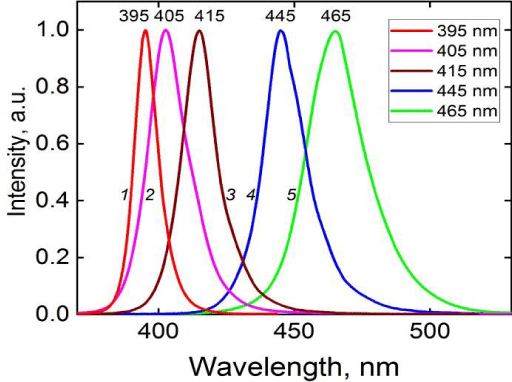
Cell monolayers were irradiated from below, through the bottom of Petri dishes, with light defocused onto the entire surface of the bottom. In this case, all measures were taken to ensure maximum uniformity in light intensity on the surface of the dish bottom. The irradiance at the surface level of the bottom of the Petri dish could vary in the range of I = 5–50 mW/cm2 and was controlled using a PM100D meter with an S121C photodiode sensor (Thorlabs GmbH, Germany). Cell irradiation time was varied in the range of 1-10 min. After irradiation, the cells were placed for 21 hours in a CO2 incubator, which maintained the temperature at 37ºC and 5% CO2. Similar manipulations (except for irradiation) were performed with control cells.
Effect of light on metabolic activity of cells
The biological effect of optical radiation was assessed photocolorimetrically using the MTT test. This test is based on the ability of dehydrogenases in living metabolically active cells to convert the pale yellow water-soluble 3-(4,5-dimethylthiazol-2-yl)-2,5-diphenyltetrazolium bromide (MTT) into blue formazan crystals, which are insoluble in water [82]. Non-viable dead cells do not have this ability. MTT produced by Applichem (Germany) was used in the studies. The MTT solution was prepared according to the standard procedure: 5 mg of MTT was dissolved in 1 ml of H2O (stock solution). After 21 h cell incubation after irradiation, the growth medium was spilled out and a new one without serum was added, containing 50 μl of concentrated MTT per 1 ml of medium. The cells were incubated with new medium for 3 hours at 37ºC and 5% CO2 in incubator. After 3 h of incubation, the supernatant was removed and the cell monolayer was left in Petri dishes overnight to dry. Then, 1 ml of dimethyl sulfoxide (DMSO from Sigma-Aldrich) was added to each Petri dish and incubated for 30 min at room temperature. Analysis of metabolic activity of cells was carried out by monitoring the optical density of the extract at a wavelength of λ = 570 nm. A quantitative measure of metabolic activity of cells after exposure to light in comparison with control samples was the value γ = (Dir/Dc)x100%, where Dir and Dc are the optical densities of the formazan solution from the experimental (irradiated) and control Petri dishes, respectively.
Participation of reactive oxygen species in photochemical processes determining the metabolic activity of cells upon exposure to blue light
To determine the possible participation of reactive oxygen species in the regulatory effect of optical radiation, 10 mM sodium azide (singlet oxygen quencher) or 10 mM sodium pyruvate (hydrogen peroxide scavenger), or 40 μM D-mannitol (hydroxyl radical scavenger), or 5, 10, 50 µM quercetin, a universal antioxidant, superoxide anion radical "scavenger', hydroxyl radicals, hydrogen peroxide and singlet oxygen [83,84] were added to cell culture 30 min before irradiation. Appropriate additives were also added to control (non-irradiated) cell cultures. All reagents are from Sigma-Aldrich, USA. A comparison of the magnitudes of photobiological effects in the absence and presence of quenchers (scavengers) of reactive oxygen species was carried out at the same energy dose (D = 15 J/cm2, irradiance - I = 50 mW/cm2, irradiation time - t = 5 min) of radiation from LED sources peaking at λmax = 405 nm and λmax = 445 nm. In this case, the control of the magnitude of photobiological effect in the absence and presence of ROS quenchers (scavengers) using the metabolic activity of cells (MTT test) as a test was carried out 21 h after their irradiation.
Chemiluminescence assay for monitoring the formation of reactive oxygen species upon exposure to optical radiation
To determine the contribution of reactive oxygen species to the photobiological effects initiated by exposure of cells to blue light, chemiluminescence assay was used. As is known [85,86], the chemiluminescence assay is quite sensitive, since it allows simultaneous (total) detection of various reactive oxygen species (including superoxide anion radical O2•-, hydrogen peroxide H2O2, hydroxyl radical OH• and singlet oxygen 1O2), localized both in intracellular and extracellular space. Measurements of cell luminescence parameters were carried out on Lum 5773 chemiluminometer (DISoft, Russia), operating in photon counting mode; spectral sensitivity - 300-650 nm. Registration and processing of chemiluminescence signals was carried out using specialized software "Power Graph 3.x Professional".
To study the effect of radiation on cell chemiluminescence, a cell suspension with a concentration of 8 × 10⁶ ml-1 was used. 220 μl of suspension was irradiated in glass cylindrical cuvettes with an internal diameter of 10 mm and a flat bottom. The suspension was irradiated through the bottom of the cuvette with radiation from LED sources peaking at λmax = 395 nm, λmax = 405 nm, λmax = 415 nm, λmax = 445 nm and λmax = 465 nm. The irradiation time was t = 3 min, irradiance at the surface level of the cuvette bottom was I = 50 mW/cm2. After cessation of irradiation, the suspension was immediately transferred to a chemiluminometer cuvette. The time from the cessation of irradiation of the suspension to the start of recording the chemiluminescence signal was strictly controlled and was 24 s. Similar manipulations (except for irradiation) were carried out with control samples of the suspension. Measurements of chemiluminescence of control (non-irradiated) and experimental samples of cell suspensions alternated in a random order. The luminometer measured chemiluminescence (in relative units) at 22°C for 5 minutes after the start of recording.
To determine the type of reactive oxygen species involved in photochemical processes in cells initiated by exposure to blue light, 10 μl of one of the specific quenchers (scavengers) of reactive oxygen species was added to the cell suspension 10 min before irradiation: quercetin – an universal antioxidant able to inhibit superoxide anion radical, hydroxyl radicals, hydrogen peroxide and singlet oxygen as well as sodium azide - a quencher of singlet oxygen, sodium pyruvate - a scavenger of hydrogen peroxide or D-mannitol - a hydroxyl radical scavenger. The concentration of stock solutions of the indicated quenchers (scavengers) was prepared in such a way that after adding 10 μl of one of them to 220 μl of a cell suspension, the final concentration was: 10 mM - for sodium azide and sodium pyruvate; 40 mM – for mannitol; 50 μM for quercetin. To account for dilution, 10 μl of saline solution was added to samples of cell suspensions that did not contain ROS quenchers (scavengers).
Absorption and spectral-fluorescent characteristics of solutions
Absorption spectra were measured on a Cary-500 ScanUV-Vis-NIR spectrophotometer (Varian, USA, Australia), and fluorescence emission and fluorescence excitation spectra were measured on a Fluorolog-3 spectrofluorimeter (Horiba Jobin Yvon, Inc., France), using standard quartz cuvettes of 10 × 10 × 40 mm, as well as special cuvettes with an optical path length of 4 × 4 mm. The width of the monochromator slits was 5 nm.
To substantiate the contributions of endogenous flavins and porphyrins to the effects of cell sensitization, aqueous solutions of the following chemically pure compounds were studied: coproporphyrin III, protoporphyrin IX, uroporphyrin III, and flavin mononucleotide phosphate from Sigma-Aldrich, Inc.
Statistical analysis
Statistical analysis was performed using Statistical Analysis System software (SAS Enterprise Guide, version 7.1, SAS Inst. Inc.). Data were tested for normal distribution (Shapiro-Wilk test) followed by pairwise comparisons using Student's t-test. All data are presented as mean ± standard error of the mean. A p < 0.05 was chosen to indicate statistical significance. The results presented were obtained from at least 3 independent experiments.
Results
Choice of wavelength of optical radiation for studying the spectral dependence of inhibitory effect of blue light on cancer cells
As already noted, the generally accepted point of view on the mechanism of photobiomodulation is the assumption of a multiplicity of molecular targets capable of absorbing light quanta and mediating the response of animal cells to such exposure [7,46-48]. At the same time, there is reason to believe that in the blue spectral region, endogenous porphyrins [10,11] and flavins [10,11,47] can act as molecules-acceptors, capable of sensitizing the formation of reactive oxygen species, which can lead to a change in the redox state cells and cause changes in cellular metabolism. To identify the possible contribution of these endogenous photosensitizers to the implementation of the biological effect of blue light, it is of interest to study the spectral dependence of light-induced changes in the metabolic activity of cancer cells as well as the dependence of the efficacy of light-induced ROS formation in cells on the wavelength of the applied radiation when it changes within the long-wavelength range of absorption of flavins and Soret band of endogenous porphyrin sensitizers.
As is known [87,88], in HeLa cells flavins are represented by Riboflavin (RF), Flavin Mononucleotide (FMN), and Flavin Adenine Dinucleotide (FAD). Their total concentration in cells is 0.3-1 µM [87,88]. According to [87], the ratio of the concentrations of RF, FMN and FAD varies depending on the method of their extraction from cells from 0.40/0.17/0.42 to 0.16/0.096/0.75. A characteristic feature of RF, FMN and FAD is the similarity of their absorption characteristics. As an example, in figure 2, curve 1 shows the absorption spectrum of an aqueous solution of FMN. It can be seen that the absorption spectra of flavins in an aqueous environment are characterized by two maxima: short-wavelength in the region of 376 nm and long-wavelength in the region of 447 nm, as well as a local minimum in the region of 403 nm. The quantum yield of flavin-sensitized formation of singlet oxygen in an aqueous medium at neutral pH is ϕ∆ = 0.54 for riboflavin, ϕ∆ = 0.51 for FMN and ϕ∆ = 0.07 for FAD [89]. In addition to singlet oxygen, flavins are also capable of generating superoxide radicals [90] and hydroperoxides [91] upon photoexcitation, although with much less efficacy.
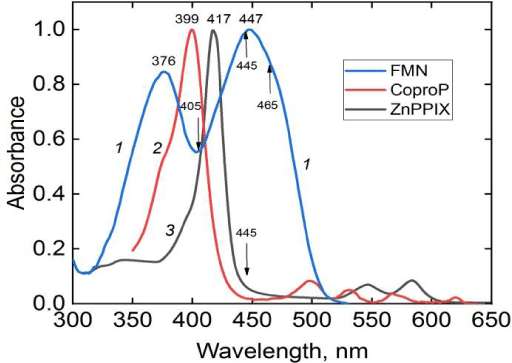
As for porphyrin sensitizers, in somatic cells, including cancer cells, according to [10,11,92], they are represented by free-base porphyrins (protoporphyrin IX, coproporphyrin, uroporphyrin) as well as their zinc complexes. Since most of these tetrapyrroles in aqueous media are prone to varying degrees to the formation of aggregates [93,94], which (unlike monomers) are characterized by a very low efficacy of sensitized generation of singlet oxygen [96], it seems appropriate to consider the absorption spectra of very dilute aqueous solutions of endogenous porphyrins, when the contribution to the total absorption of aggregated forms is minimal. As an example, in figure 2, curve 2 shows the absorption spectrum of coproporphyrin III in an aqueous solution at a concentration of 1 μM. The figure shows that coproporphyrin is characterized by the presence of intense absorption band (Soret band, S2←S0 – transition) in the region of max = 399 nm (B(0,0)) and four significantly weaker Q-bands (S1←S0 – transition) in green, yellow and red spectral regions with maxima at λmax = 497 nm (Qy(1,0)), λmax = 560 nm (Qy(0,0)), λmax = 567 nm (Qx(1,0)), λmax = 620 nm (Qx(0,0)). The same figure shows the absorption spectrum of monomeric form of Zn-protopophyrin IX in aqueous solution (in complex with human serum albumin), constructed according to data from [94]. A characteristic feature of absorption spectrum of Zn-protopophyrin IX in aqueous solution is the presence of intense Soret band (S2←S0 – transition) λmax = 417 nm (B(0,0)) and two less intense Q-bands (S1←S0 – transition) with maxima at λmax = 546 nm (Q(1,0)), λmax = 584 nm (Q(0,0)) [94]. From figure 2 it follows that the Q-absorption bands of Zn-protopophyrin IX are located outside the absorption spectrum of flavins, and the Soret band falls on the short-wavelength slope of their long-wave absorption band. Note that our earlier studies [10,11] showed that in the autofluorescence spectrum of suspension of living HeLa cells when excited in the region of λex = 415 nm against the background of flavin fluorescence with maximum at λmax = 534 nm, two bands are recorded with maxima at λmax1 = 586 nm и λmax2 = 642 nm. In fluorescence excitation spectrum, when it is recorded in the region of λem = 640 nm, a band with maximum of λmax = 415 nm is recorded, the origin of which, according to [10,11], is due to the presence of the zinc complex of protoporphyrin IX in the cells.
The location of absorption band maxima of endogenous free-base porphyrins as well as zinc complexes of protoporphyrin IX and coproporphyrin III is presented in table 1. Data on the quantum yields of the formation of singlet oxygen sensitized by endogenous porphyrins in monomeric form are also presented.
Taking into account the presented data on the absorption characteristics of endogenous flavins and porphyrins, it was decided to use LED sources with the following maximum emission bands to study the dependence of the metabolic activity of cells and the dependence of chemiluminescence intensity on the wavelength of the applied radiation: λmax = 395 nm, λmax = 405 nm, λmax = 415 nm, λmax = 445 nm and λmax = 465 nm. At the same time, as follows from figure 2, radiation with λmax = 445 nm corresponds to the maximum of absorption spectrum of flavins (curve 1) and very weak absorption of porphyrins (the region between the Soret band and the Q-band, curve 2). Emission with λmax = 415 nm practically corresponds to the maximum of the Soret band of absorption spectrum of Zn-copropophyrin IX (λmax = 417 nm) as well as the short-wavelength slope of the long-wavelength absorption band of flavins.
Optical radiation with λmax = 405 nm corresponds to the maxima of the Soret bands in absorption spectra of protopophyrin IX (λmax = 407 nm) and Zn-coproporphyrin III (λmax = 406 nm, table 1) as well as the local minimum (λmin = 403 nm) in absorption spectrum of flavins, located between the short-wavelength maximum at λmax = 376 nm and the long-wavelength maximum at λmax = 447 nm. Optical radiation with λmax = 395 nm corresponds to the maximum of the Soret band in absorption spectrum of uroporphyrin III (λmax = 395 nm) and is located near the maximum of the Soret band of coproporphyrin III (λmax = 399 nm) as well as near the local minimum of the absorption spectrum of flavins (λmin = 403 nm). And finally, the wavelength λmax = 465 nm, although shifted by 18 nm from the maximum of the absorption spectrum of flavins, the light absorption coefficient of the specified compound decreases by no more than 13% compared to the absorption at the maximum. At the same time, radiation with λmax = 465 nm corresponds to the minimum absorbance in absorption spectrum of porphyrins, located between the Soret band and the Q-band, figure 2, curve 2.
In our opinion, using light of the above wavelengths to impact HeLa cells, it will be possible to conclude that endogenous porphyrins and flavins are involved in the implementation of photobiomodulation effects in blue spectral region.
Effect of optical radiation in blue spectral region on metabolic activity of cells
Studies have shown that exposure of HeLa cells to blue light from LED sources peaking at λmax = 395 nm, 405 nm, 415 nm, 445 nm and 465 nm, irradiance I = 25 mW/cm2 in the range energy doses of D = 4.5-15.0 J/cm2 leads to a dose-dependent decrease in their metabolic activity, controlled 21 h after cessation of irradiation, which is confirmed by the data presented in figure 3.
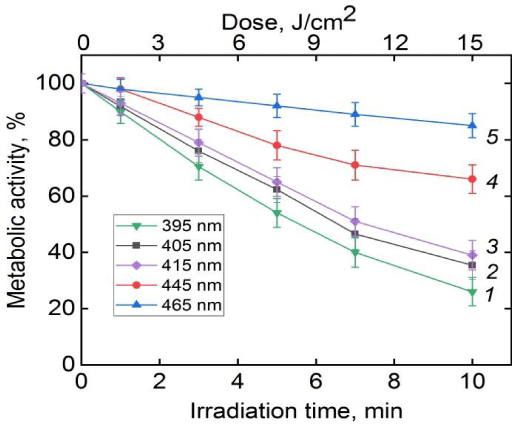
It follows from figure 3 that radiation of shorter wavelengths has a more pronounced inactivating effect. The most significant decrease in metabolic activity is observed after exposure to light with λmax = 395 nm, the least pronounced - after exposure to λmax = 465 nm. Moreover, a significant decrease in the metabolic activity of cells compared to control monolayers as a result of exposure to light with λmax = 465 nm is observed only at energy doses of D > 10.5 J/cm2. It is also characteristic that the differences in the rate of decrease in the metabolic activity of cells as a result of exposure to light with λmax = 405 nm and λmax = 415 nm are minimal, i.e., radiation of these wavelengths has almost the same effect on metabolic processes in cells.
Participation of reactive oxygen species in light-induced changes in the metabolic activity of cells
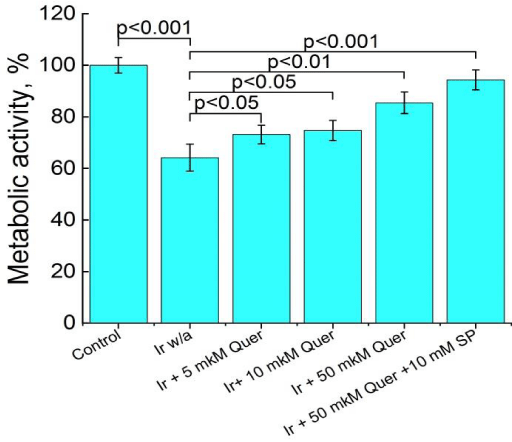
The results of studies reflecting the participation of Reactive Oxygen Species (ROS) in photobiological processes initiated by exposure to blue light on cells are presented in figures 4,5. At the same time, figure 4 shows the results of study on effect of various concentrations of quercetin on the magnitude of the photobiological effect, induced in HeLa cells, when the specified antioxidant is added to the culture medium with cell monolayers 30 min before irradiation with LED source with λmax = 445 nm, irradiance I = 50 mW/cm2, t = 5 min (energy dose - D = 15 J/cm2). Note that the control of magnitude of the photobiological effect both in the absence of ROS quenchers (scavengers) and upon their addition was carried out 21 h after the cell irradiation procedure.
As is known [83,84], quercetin does not have a narrow antioxidant or antiradical specificity with respect to any one of the reactive oxygen species. This flavonoid has a strong inhibitory effect on hydroxyl radicals OH• (reaction rate constant k = 3.2 1012 М-1·s-1 [83], drug concentration that has a 50% inhibitory effect IC50 = 9 µM [84]). It is effective in neutralizing hydrogen peroxide H2O2 (IC50 = 5 µM [84]) and singlet oxygen (k = 5.7 107 М-1·s^-1 [101], IC50 = 7 µM [102]), inhibits lipid peroxidation (IC50 = 5.2 µM [87]). The inhibitory effect of quercetin is also manifested in relation to the superoxide anion radical, although the efficacy of this process is noticeably lower (k = 1.1 104 М-1·s^-1 [83], IC50 = 207 µM [103]) than in relation to other ROS. However, despite the lack of narrow specificity of quercetin in quenching (scavenging) of various types of ROS, its use allows us to conclude that reactive oxygen species are involved in the regulatory action of blue light.
From the data presented it follows that addition of low concentration of quercetin (5-10 µM) to the cell culture before irradiation significantly reduces the inhibitory effect of blue light on HeLa cells, recorded in the absence of external additives. Thus, if in the absence of additives the metabolic activity of cells decreased as a result of light exposure (λmax = 445 nm, D = 15 J/cm2) to the level γ = 64.2 ± 5.2% compared to the control group, then at concentration of quercetin of 5 µM value photobiological effect was γ = 73.2 ± 3.6%, and at a quercetin concentration of 50 µM - γ = 85.5 ± 4.2%. The inhibitory effect of blue light on the metabolic activity of HeLa cells was further reduced when 50 µM quercetin and 10 mM sodium pyruvate, a hydrogen peroxide scavenger, were added before irradiation. In this case, the magnitude of the photobiological effect was γ = 94.4 ± 3.9%. Thus, the presented data certainly indicate the participation of ROS in the mechanism of photochemical processes that initiate a decrease in the metabolic activity of HeLa cells as a result of their irradiation with blue light.
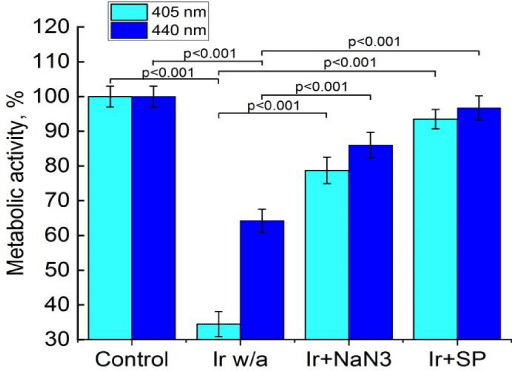
Results reflecting the participation of such reactive oxygen species as singlet oxygen and hydrogen peroxide in photobiological processes initiated by exposure of HeLa cells to blue light with wavelengths of λmax = 405 nm and λmax = 445 nm, irradiance - I = 50 mW/cm2, t = 5 min (energy dose - D = 15 J/cm2), shown in figure 5.
Figure 5 shows that if, in the absence of external additives, the metabolic activity of cells as a result of the action of radiation with λmax = 405 nm at energy dose of D = 15 J/cm2 decreases to γ = 34.5 ± 4.6% relative to the control, then irradiation of cells at the same energy parameters in the presence of sodium azide reduces the value of the photobiological effect to γ = 78.7 ± 3.8%, and the addition of sodium pyruvate before cell irradiation has an even more pronounced protective effect: the value of the photobiological effect is γ = 93.5 ± 2.8% relative to the control. After exposure of HeLa cells to radiation with λmax = 445 nm (D = 15 J/cm2) in the absence of additives, the metabolic activity of the cells decreases to γ = 64.2 ± 4.4% compared to the control, while in the presence of quenchers singlet oxygen and hydrogen peroxide, metabolic activity decreases only up to γ = 86.0 ± 3.7% and γ = 96.7 ± 3.5%, respectively.
Additional experiments showed that the protective effect of pyruvate was largely dependent on the degree of cell inactivation induced by blue light. Thus, it was found that when the photobiological effect in HeLa cells is initiated by radiation λmax = 405 nm at energy dose of D = 10.5 J/cm2 (I = 25 mW/cm2, t = 7 min), metabolic activity decreases compared to the control to γ = 71.1 ± 5.1% (Figure 3). In this case, the addition of 10 mM sodium pyruvate to the cell culture before irradiation completely protects the cells from photoinactivation (the magnitude of the photobiological effect is γ = 101.6 ± 4.1%). Consequently, at high light intensity, which causes a rapid decrease in the metabolic activity of cells, ROS scavengers may not provide complete protection from photoinactivation.
The studies also showed that the addition of D-mannitol, a hydroxyl radical scavenger, at a concentration of 40 µM, before irradiation of cells, has virtually no effect on the magnitude of the inhibitory effect of blue light. Consequently, hydroxyl radicals do not play a significant role in the processes that determine the decrease in the metabolic activity of cancer cells under blue light.
Thus, the data presented indicate the decisive role of hydrogen peroxide and (to a lesser extent) singlet oxygen in the photochemical processes responsible for decrease in the metabolic activity of HeLa cells while controlling the photobiomodulation effect 21 h after cell irradiation.
Identification of ROS types in the mechanism of autosensitized cell damage according to chemiluminescence assay
As we have shown previously in experiments on spermatozoa [104,105] and somatic cells [11], important information about the photochemical processes occurring in cells can be obtained using the chemiluminescence assay, which makes it possible to collectively record various reactive oxygen species (including superoxide anion radical O2•-, hydrogen peroxide H2O2, hydroxyl radical OH• and singlet oxygen), localized both in the intracellular and extracellular spaces.
Kinetic curves reflecting the change in time of the chemiluminescent signal of an empty cuvette without cells (A); suspension of non-irradiated HeLa cells at a concentration of 8 × 10⁶ ml-1 (B); after exposure to radiation from LED source with λmax = 405 nm, irradiance I = 100 mW/cm2 for t = 3 min in the absence of external additives (C); after irradiation of cell suspension in the presence of previously added sodium azide (D); after irradiation of cell suspension in the presence of previously added sodium pyruvate (E); after irradiation of cell suspension in the presence of previously added D-mannitol (F); after irradiation of the cell suspension in the presence of previously added quercetin (G), are presented in figure 6, A-G. Figure 6, H shows a histogram of the light sum (the integral under the curve of the chemiluminescence signal within 5 minutes from the start of its recording) for each of the above irradiation variants.
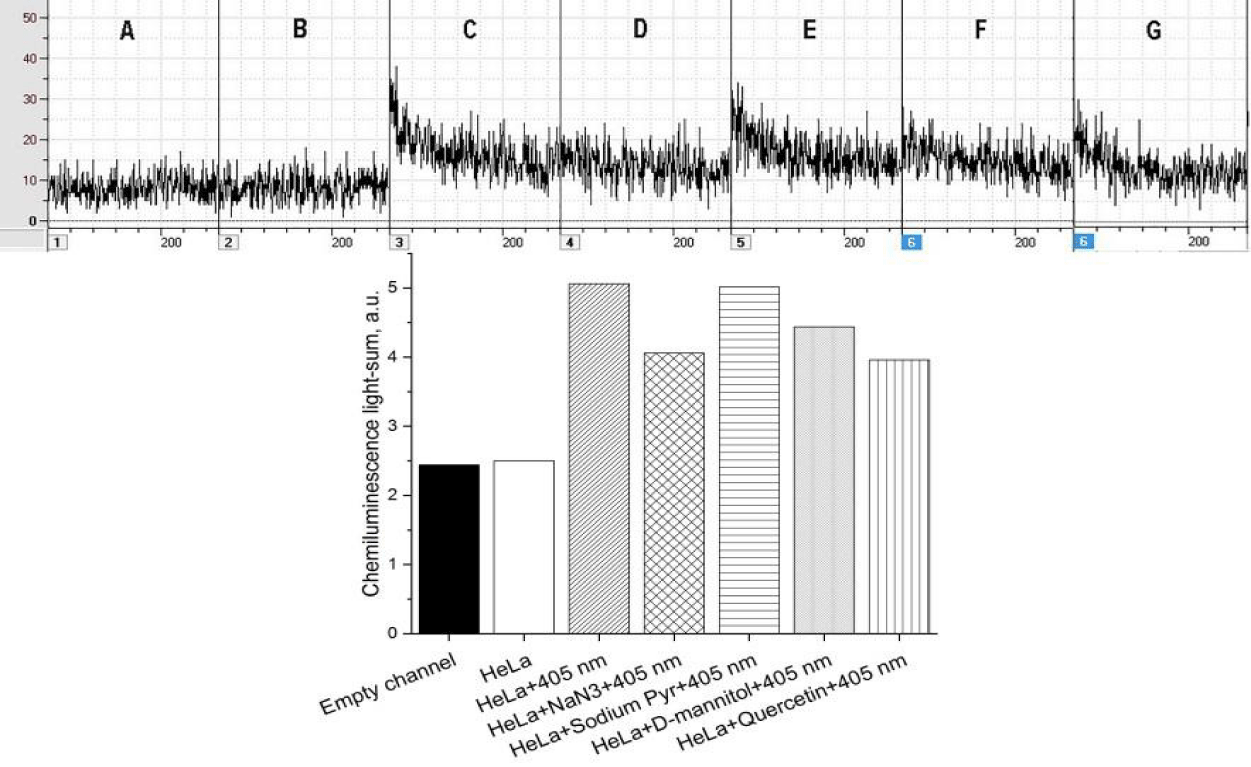
It follows from the figure 6 that the chemiluminescence signal of non-irradiated cell suspension is practically no different from the signal of an empty cuvette, i.e., the spontaneous chemiluminescence of cells is characterized by a very low value. The same low value is characterized by the chemiluminescence of a non-irradiated cell suspension in the presence of any of the used quenchers or ROS scavengers: sodium azide, sodium pyruvate, D-mannitol, quercetin the chemiluminescence of these non-irradiated samples is not shown in figure 6. However, preliminary exposure of the cell suspension to light causes a significant change in the course of the chemiluminescence kinetic curves. These changes are manifested primarily in the fact that the kinetic dependences of the chemiluminescence intensity signal for irradiated cell suspensions (options C, D, E, F, G) are descending curves, while the average chemiluminescence intensity for control (intact) cell suspensions (option B ) practically remains unchanged throughout the entire time of signal recording for 5 minutes. It is also characteristic that the intensity of the chemiluminescent signal of irradiated cell suspensions exceeds the intensity of spontaneous chemiluminescence of control cell samples for at least 10 min after cessation of cell irradiation. This indicates the occurrence of dark chemical processes in cells, initially induced by light due to excitation of endogenous photosensitizers.
From the data presented it follows that irradiation of a cell suspension in the presence of quenchers or scavengers of reactive oxygen species (sodium azide - option D; sodium pyruvate - option E, D-mannitol - option F; quercetin - option G) previously added before irradiation leads to leads to reduction of the chemiluminescent signal the chemiluminescent signal. In this case, the most significant effect on the chemiluminescence light sum is exerted by the universal ROS quencher quercetin (Figure 6G) and the singlet oxygen quencher sodium azide (Figure 6D). Consequently, photodamage to cells, detected by chemiluminescence immediately after cessation of exposure to blue light, occurs with the participation of ROS and determining role of singlet oxygen.
As follows from the data presented, hydroxyl radicals also take a certain part in the photodamage of cells by blue light: addition of the hydroxyl radical scavenger, D-mannitol, at a concentration of 40 mM to the cell suspension 10 minutes before irradiation leads to a significant decrease in the light sum of chemiluminescence (Figure 6F). At the same time, the protective effect of D-mannitol is less pronounced in comparison with the effect of quercetin or sodium azide.
Of the studied quenchers and ROS scavengers, sodium pyruvate has the least effect on the chemiluminescence light sum. As our studies have shown (Figure 6E), the kinetic curves of chemiluminescence of samples irradiated in the presence of sodium pyruvate differ slightly from the irradiation of cell suspension in the absence of external additives (Figure 6C). Hydrogen peroxide makes a minor contribution to cell photodamage recorded immediately after cessation of irradiation.
Thus, the totality of the presented data allows us to conclude that chemiluminescence initiated by exposure of a cell suspension to blue spectral radiation is mainly due to the generation of singlet oxygen in cells due to the excitation of endogenous photosensitizers and, to a lesser extent, due to processes involving hydroxyl radicals. Hydrogen peroxide does not play a significant role in controlling the photochemical process in cells immediately after the cessation of light exposure.
Spectral dependence of blue light-induced ROS formation efficacy according to chemiluminescent assay
The presence of sufficiently intense chemiluminescence signal initiated by exposure to blue light makes it possible to study the dependence of this signal on the wavelength of the applied radiation at a constant energy dose of the specified physical factor. These studies were performed using LED sources peaking at λmax = 395 nm, λmax = 405 nm, λmax = 415 nm, λmax = 445 nm and λmax = 465 nm. The exposure time was t = 3 min, the irradiance at the surface level of the cuvette bottom was I = 50 mW/cm2. After cessation of irradiation, the suspension was immediately transferred to chemiluminometer cuvette. The parameter characterizing the magnitude of the chemiluminescence signal was the light sum value (SCh) - the area under the curve of the luminescence intensity within 5 min after the start of recording.
The dependence of light-induced integral chemiluminescence (light sum, SCh) on the wavelength of radiation from LED sources affecting HeLa cells at an energy dose of D = 9 J/cm2 is shown in figure 7, curve 1. Here are the values for spontaneous integral chemiluminescence of control non-irradiated cell suspension samples, recorded in random order: both before recording the light-induced signal and for dark control samples (curve 2).
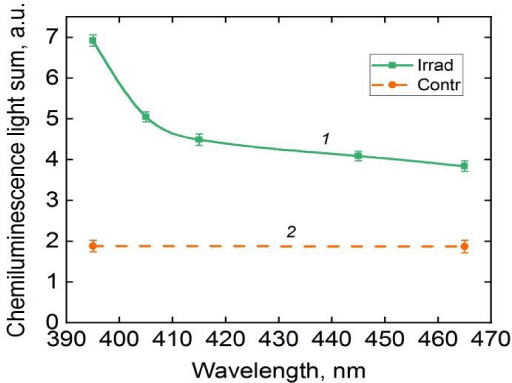
It follows from figure 7 that the integral Chemiluminescence (SCh) of cell suspension strongly depends on wavelength of applied radiation. The most intense signal is recorded after exposure to radiation of the shortest (of the tested) wavelength λmax = 395 nm. When switching to radiation with λmax = 405 nm, the integrated chemiluminescence intensity decreases sharply: the difference between the SCh parameters for λmax = 395 nm and λmax = 405 nm is 𝛥SCh = 1.87 a.u., or in terms of 1 nm change in wavelength - λSCh1 = 0.187 a.u. With each further increase in wavelength to λmax = 415 nm, λmax = 445 nm and λmax = 465 nm, a significant decrease in the SCh value is also observed compared to its previous value. However, when going from λmax = 405 nm to λmax = 415 nm 𝛥SCh = 0.56 a.u., i.e. 𝛥SCh1 = 0.056 a.u.; from λmax = 415 nm to λmax = 445 nm 𝛥SCh = 0.40 a.u., i.e. 𝛥SCh1 = 0.0133 a.u.; from λmax = 445 nm to λmax = 465 nm 𝛥SCh = 0.25, i.e. 𝛥SCh1 = 0.0125 a.u.
Thus, as the wavelength of the applied radiation increases, the integral Chemiluminescence (SCh) of the cell suspension decreases, and its level per 1 nm change in wavelength 𝛥SCh1 also decreases.
Discussion
The studies performed showed (Figure 3) that the radiation of LED sources in the blue spectral region peaking at λmax = 395 nm, 405 nm, 415 nm, 445 nm and 465 nm, irradiance I = 25 mW/cm2 in the energy dose range of D = 4.5-15.0 J/cm2 has a dose-dependent inhibitory effect on metabolic activity of HeLa cells, controlled 21 h after cessation of irradiation. The effect depends not only on the energy dose of blue light, but also on its wavelength. Moreover, at a constant energy dose, the inhibitory effect of blue light decreases with increasing wavelength of the applied radiation.
It is noteworthy that not only the light-induced metabolic activity of cells decreases with increasing wavelength of the acting radiation in the studied spectral range, but also the dependence of the light-induced formation of reactive oxygen species, controlled by chemiluminescence, behaves similarly (Figure 7). In our opinion, the correlation of the dependence of the metabolic activity of cells on the wavelength of the applied radiation with the dependence on the specified parameter of light-induced ROS formation confirms the main role of reactive oxygen species in the processes that determine changes in the metabolic activity of cancer cells when exposed to blue light.
One of the consequences of the obtained spectral dependence of the light-induced change in metabolic activity is that its higher inhibition is observed when exposed to light with wavelength of λmax = 405 nm, corresponding to the local minimum in the absorption spectrum of flavins (riboflavin, FMN, FAD), compared to λmax = 445 nm, corresponding to the long-wave maximum in the absorption spectrum of these compounds (Figure 2). A similar conclusion follows from the dependence of the efficacy of ROS formation on the wavelength of the applied radiation (Figure 7). This pattern may be a consequence of two reasons: a) the lack of contribution of endogenous flavins to the effects of sensitization; b) involvement in the mechanism of implementation of the regulatory action of blue light, along with endogenous flavins, other sensitizers that have a more intense sensitizing effect in the region of the local minimum of the absorption spectrum of flavins (λmin = 403 nm). In our opinion, such sensitizers are primarily free-base porphyrins (protoporphyrin IX, coproporphyrin III and uroporphyrin III), as well as their zinc complexes [10,11]. Some of these porphyrins are characterized by the most intense absorption at the maximum of the Soret band, which practically corresponds to the local minimum in the absorption spectrum of flavins (Table 1). Among the indicated tetrapyrroles are protoporphyrin IX (λmax = 407 nm) and Zn-coproporphyrin III (λmax = 406 nm), which we previously identified by fluorescent methods in HeLa cell extracts [10,11]. As follows from the table 1, Zn-coproporphyrin III is characterized by a fairly high efficacy of singlet oxygen generation: ϕ𝛥 = 0.54 [95]; for protoporphyrin IX in monomeric form ϕ𝛥 = 0.77 [96], which is slightly higher than the average value characteristic of flavins: for riboflavin ϕ𝛥 = 0.54, for FMN ϕ𝛥 = 0.51 and for FAD ϕ𝛥 = 0.07 [89], taking into account that the determining proportion (from 42 to 75%) of the total flavin content in HeLa cells, according to [87], is FAD.
| Table 1: The position of the maxima in the absorption spectrum of aqueous solutions of endogenous porphyrins (concentration - 1 μM) and the value of quantum yield of singlet oxygen generation sensitized by porphyrins (in monomer form) (ϕ∆). | ||||||
| Porphyrin type | Maximum in the absorption spectrum for the band, nm | ϕ∆ | ||||
| B(0,0) | Qy(1,0) | Qy(0,0) | Qx(1,0) | Qx(0,0) | ||
| Protoporphyrin IX | 407 | 505 | 542 | 577 | 628 | 0.77 [96] |
| Coproporphyrin III | 399 | 497 | 530 | 567 | 620 | 0.58 [97] |
| Uroporphyrin III | 395 | 500 | 537 | 559 | 611 | 0.80 [98] |
| Zn-protoporphyrin IX † | 417 | – | – | 546 | 584 | 0.91 [99] |
| Zn-coproporphyrin III ‡ | 406 | – | – | 538 | 572 | 0.54 [95] |
| † Absorption characteristics according to [94]. ‡ Absorption characteristics according to [100]. | ||||||
It is noteworthy that the rates of light-induced decrease in metabolic activity of cells when exposed to radiation with wavelengths of λmax = 405 nm and λmax = 415 nm (Figure 3) are close to each other. In our opinion, the relatively high photobiological effect of radiation with λmax = 415 nm is mainly due to the sensitizing effect of another porphyrin present in cells, Zn-protoporphyrin IX, characterized by absorption maximum in the Soret band at λmax = 417 nm [94] and the highest efficacy of singlet oxygen generation among the studied endogenous porphyrins (ϕ𝛥 = 0.91) [99]. Its cellular localization was confirmed by us in studies performed with suspension of living HeLa cells in saline solution [10,11]. Studies [10,11] have shown that when autofluorescence of cells is excited in the region of λex = 415 nm against the background of intense flavin fluorescence, two bands are recorded with maxima at λmax1 = 586 nm и λmax2 = 642 nm. In fluorescence excitation spectrum, when it is recorded in the region of λem = 640nm, a band with a maximum of is λex = 415 nm registered, the origin of which, according to [10,11], is due to the presence of the zinc complex of protoporphyrin IX in the cells. The high efficacy of singlet oxygen generation by Zn-protoporphyrin IX and the relatively high concentration of this tetrapyrrole in cells (sufficient to detect its fluorescence in cells) are the reasons for its significant contribution to changes in the metabolic activity of cells when exposed to light from LED source peaking at λmax = 415nm (Figure 3).
A natural question arises: what is responsible for the highest (of the wavelengths studied) inhibitory effect of radiation with λmax = 395nm. The answer is that the change in the metabolic activity of cells when exposed to radiation of the indicated wavelength is due to the sensitizing effect of endogenous uroporphyrin III, characterized by absorption maximum in the Soret band at λmax = 395 nm (Table 1) and a high quantum yield generation of singlet oxygen (ϕ∆ = 0.80) [98]. In addition to uroporphyrin III, the radiation of the LED source with λmax = 395 nm is also absorbed by another endogenous tetrapyrrole - coproporphyrin III, the maximum of the absorption spectrum of which in the Soret band corresponds to λmax = 399 nm, and the quantum yield of singlet oxygen generation is ϕ∆= 0.58 [97]. Let us note that according to data [92], based on the use of Ultra performance Liquid Chromatography of cell extracts, the content of uroporphyrin in somatic cells is about 42%, and coproporphyrin is about 58% of all porphyrins found in cells. Thus, the highest concentration of coproporphyrin and uroporphyrin in cells, as well as the fairly high efficacy of singlet oxygen generation by these tetrapyrroles, are the reasons for the highest rate of decrease in the metabolic activity of cells when exposed to radiation from an LED source with λmax = 395 nm (Figure 3).
It is important to note that the photobiomodulation effects, found in this study, on cancer cells upon exposure to blue light are not limited to the sensitizing effect of endogenous porphyrins. Endogenous flavins, characterized by the presence of pronounced absorption in the blue spectral region (Figure 2) with a short-wavelength maximum in the region λmax1 = 376 nm and a long-wavelength maximum in the region λmax2 = 447 nm as well as a local minimum in the region of 403 nm can also have a certain effect on metabolic processes in cells when exposed to blue light. As already noted, the quantum yield of flavin-sensitized formation of singlet oxygen in an aqueous medium at neutral pH is ϕ∆ = 0.54 for riboflavin, ϕ∆ = 0.51 for FMN, and ϕ∆ = 0.07 for FAD [89]. In our opinion, the contribution of flavins to the photobiomodulation effects initiated by blue light in HeLa cells is evidenced by the fact that when the wavelength of the influencing radiation shifts from λmax = 405 nm to λmax = 445 nm, absorption of protoporphyrin IX decreases by approximately 15 times, while the efficacy of generation of reactive oxygen species, assessed by chemiluminescence (Figure 7), decreases by only 1.5 times (with the subtraction of the spontaneous chemiluminescence signal of non-irradiated samples for each wavelength). Such a slight drop in the chemiluminescence signal during the transition from λmax = 405 nm to λmax = 445 nm compared to the change in the absorption coefficient of Zn-protoporphyrin IX precisely indicates the contribution of flavins to the effects of the light-induced decrease in metabolic activity cells, since the wavelength λ = 445 nm corresponds to the maximum of the absorption spectrum of flavins, and the wavelength λ = 405 nm – the maximum of the absorption spectrum of Zn-protoporphyrin IX and the local minimum of the absorption spectrum of flavins (λmin = 403 nm).
The same situation is observed during the transition from λmax = 415 nm (corresponding to the maximum absorption of Zn-protoporphyrin IX) to λmax = 465 nm, when the absorption of the “longest wavelength” of the studied porphyrins (Zn-protoporphyrin IX ) decreases almost 30 times (Figure 2), and the efficacy of generation of reactive oxygen species (Figure 6) decreases only 1.4 times (with the subtraction of the spontaneous chemiluminescence signal of non-irradiated samples for each wavelength). In this case, the light absorption coefficient of flavins at λ = 465 nm is not lower, but higher than the corresponding value of the coefficient at λ = 415 nm by 1.36 times. This contradiction is explained by the fact that when exposed to light with λmax = 415 nm, both endogenous and flavins porphyrins (and, above all, Zn-protoporphyrin IX) contribute to the sensitization effects, which are based on the generation of reactive oxygen species, while the generation of ROS upon exposure to blue light with λmax = 465 nm is mainly due to the absorption of flavins, for which the absorption coefficient at the indicated wavelength is only 13% lower than in the long-wave maximum at λmax = 447 nm.
On the other hand, the most pronounced (of all wavelengths studied) sensitizing effect of radiation with λmax = 395 nm can be due to both the highest concentrations of endogenous uroporphyrin and coproporphyrin in cells and the high efficacy values of generation of singlet oxygen, and more efficient absorption of radiation with λmax = 395nm by flavins compared to λmax = 405 nm (Figure 2).
In connection with the above, a reasonable question arises: why does the contribution of endogenous porphyrins to the effects of sensitized processes in cells become so significant, despite their lower concentration compared to the concentration of flavins in the cell. The answer is as follows: a) porphyrins are characterized by a higher efficacy of sensitized formation of singlet oxygen and an order of magnitude higher values of molar extinction coefficients in the violet-blue region of the spectrum compared to flavins [10]; b) porphyrins are mainly localized in mitochondria, while a significant proportion of flavins are localized in the cytosol [47]; c) a significant proportion of intracellular flavins is in complex with proteins that perform a protective function against flavin-sensitized damage to cellular structures; d) the pronounced antioxidant properties characteristic of flavins allow them to act as quenchers of ROS, generated by them, through the mechanism of physical or chemical quenching, including the conversion of reduced riboflavin into an oxidized form.
In our opinion, the combination of these reasons contributes to the significant contribution of endogenous porphyrins to the regulatory effects initiated in cancer cells by exposure to blue light, despite their lower concentration (compared to endogenous flavins).
Thus, the presented analysis of the obtained experimental results indicates that the observed spectral dependence of light-induced inhibition of the metabolic activity of cancer cells is due to the changing contribution of endogenous porphyrins and flavins to the total absorption of the influencing radiation when its wavelength changes within blue spectral region. Moreover, each of endogenous photosensitizers is characterized by its unique concentration, molar absorption coefficient, ROS generation efficacy, spatial localization in the cell near photosensitive molecules and ROS quenchers (scavengers), which have a decisive influence on the efficacy of sensitized processes.
It should be noted that the spectral dependence of inhibitory effect of blue light obtained in this study generally corresponds to the results of other authors who conducted studies with both cancer and normal non-transformed cells in a narrower spectral range. Thus, the authors of [57], studying the effect of radiation from LED sources with λmax = 405 nm and λmax = 415 nm on A549 adenocarcinoma alveolar epithelial cells, note a decrease in their viability and ability to invade and migrate. At the same time, the anticancer effect of radiation of the indicated wavelengths differs slightly, but radiation of a shorter wavelength (λmax = 405 nm), according to [57], has a more pronounced effect on the parameters of cellular vital activity, which corresponds to our data obtained on HeLa cells (Figure 3).
The results of our studies, indicating a greater sensitivity of HeLa cells to the action of radiation with λmax = 405 nm compared to longer wavelength light, are in good agreement with the results of the authors [106], who studied the effect of low-intensity UV-A and blue light on DNA synthesis in the same cells. These studies have shown that of the four wavelengths of mercury-quartz lamp λmax = 313, 365, 404 and 434 nm (selected from its emission spectrum using a monochromator) with energy dose of D = 1 mJ/cm2, the maximum stimulating effect on DNA synthesis in cells is observed at wavelength of 404 nm. According to research [106], light with wavelength corresponding to the absorption maxima of protoporphyrin IX and Zn-coproporphyrin III, as well as a local minimum in the absorption spectrum of flavins, is characterized by greater biological activity compared to light with max = 434 nm, corresponding the region of the long-wavelength maximum of the absorption spectrum of flavins (Figure 2).
Same results were obtained when studying the spectral dependence of effect of inactivation of normal non-transformed somatic cells [107-110]. The authors [107,108], who studied the comparative effect of radiation from LED sources peaking at λmax = 405 nm, λmax = 415 nm and λmax = 450 nm on human vaginal epithelial cells VK2/E6E7 (vaginal epithelial cell strain), have established that their viability indicators decrease as the wavelength of the exposure radiation increases. In this case, the effects initiated by light with λmax = 405 nm and λmax = 415 nm, as in our studies, differ very slightly [108,109].
According to data [109], which studied the effect of LED radiation with λmax = 410, 420, 453 and 480 nm on fibroblasts, the greatest effect at energy doses D = 15, 30, 60, 90 J/cm2 on cell viability, proliferation, and generation of reactive oxygen species was also influenced by radiation with λmax = 410 nm. Almost no cytotoxicity was observed upon exposure to light with λmax = 453 and 480 nm. In studies [110] of the cytotoxicity of blue light with λmax = 412, 419, 426 and 453 nm at energy doses D = 33, 66, 100 J/cm2, as well as its effect on the proliferation of human keratinocytes and skin endothelial cells, light with λmax = 412 nm turned out to be the most effective; the photobiological effect decreased with increasing radiation wavelength. At the same time, as can be seen from figure 2, radiation with wavelengths of 410, 412, 419 and 420 nm corresponds to the region of the local minimum of the absorption spectrum of flavins and the region of maximum of the Soret band of the absorption spectrum of endogenous porphyrins, and radiation λmax = 453 nm practically corresponds to the region of the maximum of the absorption spectrum of flavins and the local minimum in the spectrum absorption of porphyrins.
Another research group conducted studies of effects of radiation of various wavelengths on non-transformed animal cells, using energy doses that initiate stimulation of metabolic processes [111,112]. Thus, the authors of [111] showed that, at D = 0.72 J/cm2, stimulation of the metabolic activity of myoblasts was higher after exposure to LED source with λmax = 400 nm in comparison with the action of light of the same intensity with λmax = 450 nm. And, according to [112], the stimulating effect of light with λmax = 400 nm in relation to fibroblasts is higher than that of light with λmax = 450 nm (D = 2.86 J/cm2). Thus, when studying the effect of blue light on non-cancerous cells, the contribution of endogenous porphyrins to the effects of photoinactivation is also beyond doubt.
At the same time, there is a publication [26], the results of which somewhat contradict both the results obtained in this work and the data [57,106-112]. According to the results of [26], the authors of which studied the effect of radiation from LED sources with wavelengths λmax = 418 nm and λmax = 457 nm on the growth of B16F10 melanoma cells, it was shown that at energy doses D = 1.1–8.9 J/cm2, light from both sources suppressed the activity of cancer cells. It is characteristic that at D = 2.2 J/cm2, the inhibition of cell growth by light λmax = 457 nm was significantly stronger than under the action of light with λmax = 418 nm. However, at other energy doses, the effect of light of the indicated wavelengths was practically no different, which somewhat complicates the interpretation of the results obtained in [26].
Analyzing the spectral dependence of biological activity of blue light in relation to animal cells in culture, one cannot fail to note the work [113], the authors of which studied the dose dependences of the viability of human keratinocyte HaCaT cells, as well as the light-induced formation of ROS upon exposure to radiation from LED sources with wavelength of λmax = 405 nm and λmax = 385 nm. Comparative studies [113] showed that radiation of a shorter wavelength had a more effective influence on both the decrease in cell viability and the level of ROS formation, which is in agreement with our data, which compared the effect of radiation with a wavelength λmax = 405 nm and λmax = 395 nm on metabolic activity (Figure 3) and the level of ROS formation (Figure 7).
Analysis of the presented data allows us to conclude that the results, obtained in this study, of the spectral dependence of metabolic activity of HeLa cancer cells in a wide range of blue light wavelengths (from λmax = 395 nm to λmax = 465 nm) are generally in agreement with the data of other authors, obtained by comparing individual wavelengths in a narrower spectral range for both cancer and normal, non-transformed cells.
It is important to note that the generation of ROS in cells, sensitized by endogenous porphyrins and flavins, is not limited to photodamage to cellular structures, leading to the death of cancer cells. Indeed, at high energy doses of light exposure, the contribution of these destructive processes initiated by ROS to the decrease in the metabolic activity of cells is significant, which is confirmed by the registration of a certain proportion of dead cells due to the initiation of necrosis [20,26-28] and apoptosis by light [13,15,17,18,25,29-32]. At the same time, it is well known that low concentrations of ROS can act as signaling molecules that can have a regulatory effect on metabolic processes in cells [46,47,49,50]. It is believed that a variation in the intracellular concentration of ROS upon exposure to light can change the redox status of the cell and be a direct cause of both the activation of proliferative processes in cells (at a relatively low level of ROS) and the inhibition of their proliferation (at an increased concentration of ROS).
There is reason to believe that, depending on both the parameters of light exposure and the functional state of cells during irradiation and the type of cells, the reasons for the decrease in their metabolic activity can be either a disruption (stopping) of the cell cycle or/and cell death by the mechanism of necrosis or apoptosis; autophagy may play an important role [13,21-25].
There is no doubt that ROS play a decisive role in the implementation of photobiomodulation effects when exposed to blue light on cancer cells. However, there is no clear opinion about the type of ROS that causes these effects [7-11,26,27,29-31,33,36-38]. On the one hand, this is due to the fact that to monitor the formation of ROS when exposed to blue light, the fluorescent probe 2,7-Dichlorodihydrofluorescein Diacetate (DCFH-DA), which does not have narrow specificity for detecting any specific types of ROS, is usually used. On the other hand, the ROS scavengers used, such as N-acetylcysteine, NAC [24,37], α-tocopherol [37], Trolox [38] are also not characterized by narrow specificity in inhibiting the activity of individual types of ROS. All this has led to the fact that the types of ROS involved in photobiological processes in cancer cells when exposed to blue light have not been identified. There are only reports of the participation of superoxide anion in these effects of photobiomodulation [14,24,25], based on the use of fluorescent probes with a certain selectivity for O2•-: hydroethidine [14], MitoSOX™ mitochondrial superoxide indicator [24], Dihydroethidium (DHE) [25]. At the same time, the narrow specificity of the interaction of these probes with the superoxide anion radical has been questioned by the authors of authoritative reviews [114,115].
In this regard, in this work, we carried out two groups of studies on the influence of selective ROS quenchers (scavengers) on the effects of photobiomodulation when exposed to blue light on cancer cells. In the first group of studies, ROS quenchers (scavengers) were added to cell monolayers before their irradiation (λmax = 405 nm and λmax = 445 nm, I = 50 mW/cm2, t = 5 min, D = 15 J/cm2), and the magnitude of photobiological effect was assessed one day after irradiation using the MTT colorimetric test, which reflects the metabolic activity of cells (Figure 4,5). In the second group of studies, the addition of ROS quenchers (scavengers) to the cell suspension was also carried out before irradiation (λmax = 405 nm, I = 50 mW/cm2, t = 3 min, D = 9 J/cm2), but the analysis of cell photodamage was carried out immediately after cessation of exposure to blue light by monitoring the light-induced chemiluminescence signal (Figure 6).
Both groups of studies showed the decisive role of ROS in the processes under study. The participation of ROS is evidenced by the inhibitory effect of quercetin on the magnitude of the photobiological effect, assessed both by the metabolic activity of cells MTT test, (Figure 4) and by changes in the light sum of chemiluminescence (Figure 6). As is known [83,84,101-103], quercetin does not have a narrow antioxidant or antiradical specificity with respect to any one of the reactive oxygen species: it has a strong inhibitory effect on hydroxyl radicals OH•, effective in neutralizing hydrogen peroxide H2O2 and singlet oxygen, and also inhibits lipid peroxidation. Its inhibitory effect is also manifested in relation to the superoxide ion radical, although the efficacy of this process is noticeably lower than in relation to other ROS. However, despite the lack of narrow specificity of quercetin in the quenching (scavenging) of various types of ROS, its use allows us to conclude that reactive oxygen species are involved in the photobiomodulation effects initiated by the action of blue light on cells.
It should be noted that, according to literature data, quercetin has not only pronounced antioxidant [83,84,101-103] but also noticeable prooxidant properties, acting as a photosensitizer when exposed to radiation corresponding to its absorption spectrum [116-118]. Thus, according to [116-118], quercetin is capable of generating superoxide anion, hydrogen peroxide, and singlet oxygen as active forms of oxygen that oxidize and inactivate cellular components. However, our studies primarily demonstrated its antioxidant properties, which consist in reducing the sensitizing effect of endogenous compounds in the presence of quercetin. At the same time, as additional studies have shown, the antioxidant properties of quercetin under the conditions of our experiments were also manifested when exposed to radiation with a wavelength of λmax = 445 nm, located outside the absorption band of quercetin.
Studies performed with the participation of specific ROS quenchers (scavengers) sodium azide (singlet oxygen quencher), sodium pyruvate (hydrogen peroxide scavenger), D-mannitol (hydroxyl radical scavenger) showed their different effects on processes assessed immediately after the cessation of cell irradiation and after 21 hours of cell incubation in a thermostat.
Thus, studies carried out immediately after cessation of irradiation of cells showed that singlet oxygen plays the main role in their photodamage, assessed using chemiluminescence, since the addition of singlet oxygen quencher sodium azide leads to a significant decrease in the integral intensity of chemiluminescence (Figure 6D). At the same time, the addition of sodium azide had virtually no effect on the chemiluminescence of non-irradiated cell suspensions.
Hydroxyl radicals also take a certain part in the photodamage of cells by blue light: addition of the hydroxyl radical scavenger, D-mannitol, to the cell suspension before irradiation leads to a significant decrease in the chemiluminescence light sum (Figure 6F). However, the protective effect of D-mannitol is less pronounced in comparison with the effect of quercetin or sodium azide.
Among the studied quenchers and ROS scavengers, sodium pyruvate has the least effect on the light sum of chemiluminescence: the kinetic curves of chemiluminescence of samples irradiated in the presence of sodium pyruvate (Figure 6E) differ slightly from the variant of irradiation of cell suspension in the absence of external additives (Figure 6C ). Therefore, hydrogen peroxide makes a minor contribution to cell photodamage recorded immediately after cessation of irradiation.
Thus, the totality of the presented data allows us to conclude that chemiluminescence initiated by exposure of a cell suspension to blue spectral radiation is mainly due to the generation of singlet oxygen in cells due to the excitation of endogenous photosensitizers and, to a lesser extent, due to processes involving hydroxyl radicals. Hydrogen peroxide does not play a significant role in controlling the photochemical process in cells immediately after the cessation of light exposure. Thus, the totality of data presented allows us to conclude that chemiluminescence initiated by exposure of cell suspension to blue light (controlled immediately after cessation of cell irradiation) is mainly due to the generation of singlet oxygen in cells because of the excitation of endogenous photosensitizers and, to a much lesser extent, due to processes with the participation of hydrogen peroxide.
A different situation is observed when monitoring photobiological processes 21 h after the procedure of light exposure of cells. In this case, hydrogen peroxide plays a decisive role in reducing the metabolic activity of cells under the influence of light, since the addition of its scavenger (sodium pyruvate) sharply reduces the magnitude of the photobiological effect (Figure 4). Moreover, when conducting studies at lower energy doses (D = 10.5 J/cm2, I = 25 mW/cm2, t = 7 min), when the metabolic activity of cells as a result of their irradiation (λmax = 405 nm) decreases compared to the control only up to γ = 71.1 ± 5.1%, the addition of 10 mM sodium pyruvate to the cell culture before irradiation completely protects cells from photoinactivation (the value of the photobiological effect 21 h after irradiation is γ = 101.6 ± 4.1%).
Studies have also shown that the addition of singlet oxygen quencher, sodium azide, to cell monolayers inhibits the photobiological effect, assessed by a decrease in metabolic activity, compared to the irradiation in the absence of quencher/scavenger (Figure 4). In this case, the effect of sodium azide on the effects of photobiomodulation is beyond doubt, although it is less pronounced compared to the effect of sodium pyruvate.
It has been established that, in contrast to the effect of sodium pyruvate and sodium azide, the addition of the hydroxyl radical scavenger, D-mannitol, at a concentration of 40 mM to the cell suspension before irradiation has virtually no effect on the magnitude of the photobiological effect (assessed by changes in the metabolic activity of cells), characteristic of cells irradiated in the absence of additives.
Thus, the presented data indicate the participation of hydrogen peroxide and (to a lesser extent) singlet oxygen in photochemical processes that determine the decrease in the metabolic activity of HeLa cells as a result of exposure to blue light while controlling the magnitude of the photobiological effect 21 h after cessation of irradiation.
The presented analysis indicates that the photobiological effect in HeLa cells initiated by exposure to blue light is due to photochemical processes involving reactive oxygen species. Moreover, immediately after the cessation of short-term exposure of cells to light, singlet oxygen makes a decisive contribution to photodamage to cellular structures, which is confirmed by chemiluminescence assay using ROS quenchers. In this case, hydrogen peroxide plays an insignificant role in these destructive processes. However, when monitoring photobiological processes one day after exposure to light, it turned out that the main intermediate determining the light-induced decrease in the metabolic activity of cells is hydrogen peroxide: adding sodium pyruvate, H2O2 scavenger, to the nutrient medium before irradiating the cells is almost capable of completely blocking photobiological reactions. The addition of singlet oxygen quencher, sodium azide, to the nutrient medium only partially reduced the magnitude of the photobiological effect.
In our opinion, such a change in the contribution of various types of ROS to photobiological effects over time after cessation of irradiation is due to the fact that during cell irradiation the main cytotoxic intermediate is singlet oxygen, the formation of which is sensitized by some endogenous pigments that absorb the irradiation. At the same time, the quantum yields of the formation of singlet oxygen sensitized by endogenous compounds are quite high: from ϕ∆ = 0.51 for FMN and ϕ∆ = 0.54 for riboflavin [89] to ϕ∆ = 0.77 for the monomeric form of protoporphyrin IX [96], ϕ∆ = 0.80- for uroporphyrin III [96] and ϕ∆ = 0.91 – for Zn-protoporphyrin IX [99]. However, after the cessation of light exposure, the sensitized formation of singlet oxygen stops and after a few microseconds its level practically decreases to zero as a result of physical and chemical quenching processes. At the same time, according to data [119-121], photosensitizers with different physicochemical properties and intracellular localization can trigger in cells a wave of massive secondary production of ROS, and primarily hydrogen peroxide, which is recorded in cells several hours after completion of irradiation, despite its half-life is about 1 ms. It is assumed that there may be a lag period between irradiation and secondary ROS production; and the lower the energy dose, the longer the lag period [116]. And, despite the fact that the mechanism of the formation of a secondary wave of ROS formation in cells is still far from being understood, the fact of a gradual increase in the level of hydrogen peroxide after photodynamic exposure is beyond doubt [119-122].
It should be noted that the important role of endogenous porphyrins in the implementation of regulatory effect of blue light on cancer cells, revealed in this work, does not at all exclude the possibility of implementing photobiomodulation effects by other photophysical and photochemical mechanisms both upon exposure to radiation in visible and near infrared spectral regions. There are data in the literature on many other possible chromophores involved in the implementation of photobiomodulation effects, such as light-sensitive ion channels, the most well-known of which are channelrhodopsins, which absorb light in blue spectral region, Transient Receptor Potential channels (TRP), Transforming Growth Factor-β (TGF-β), enzymes - superoxide dismutase, catalase, flavoproteins (“cryptochromes”) and nitrosated proteins, the endogenous photosensitizer lipofuscin, etc. [7,11,46,48]. However, the dominant hypothesis in the literature is that the enzyme cytochrome c oxidase [7,46,48,123,124], also known as Complex IV (C-IV) of mitochondrial Electron Transport Chain (ETC), plays a decisive role in the implementation of photobiomodulation effects. ETC is a group of five enzyme complexes that control a series of Reductive and Oxidative (redox) reactions known as oxidative phosphorylation. It is the primary functional activity of mitochondria and is the major source of Adenosine Triphosphate (ATP) produced by mammalian cells under normal conditions. A hypothetical mechanism for how light may influence ETC activity is that photon absorption at C-IV results in the displacement of inhibitory Nitric Oxide (NO) from the enzyme's active site, allowing oxygen to bind in its place [7,46,48,123,124]. It is believed this allows for more efficient functioning of the ETC, subsequently leading to greater ATP production. However, this hypothesis is largely based on indirect evidence grounded on the relative similarity of the absorption spectrum of cytochrome c oxidase and the "action spectrum" of light on biosynthetic processes in cells [106]. At the same time, doubts have been expressed in the literature about the validity of the conclusion about determining role of cytochrome c oxidase in the implementation of photobiomodulation effects [125]. These doubts are based on the fact that the effect of laser radiation in red spectral region with wavelength of 660 nm on cell lines in which cytochrome c oxidase is completely absent has a pronounced stimulating effect on their proliferation [125].
However, the authors of [126] have recently obtained very convincing evidence of the ability of near infrared light with wavelength of 808 nm to influence enzymes of electron transport chain in isolated mitochondria. It was shown for the first time that exposure to near infrared radiation enhances the activity of complex IV, suppresses the activity of complex III, and has no effect on the activity of complex II. It was also found that the effect is dose-dependent and persists even after exposure to light has ceased. However, the observed effect does not obey the Bunsen-Roscoe reciprocity law (the law of interchangeability of time and power density), and there is reason to believe that the observed effect may not have a direct photochemical basis [126].
Since cytochrome c oxidase has a pronounced absorption in the visible region of spectrum with maximum in the region of 423 nm for the oxidized form and in the region of 443 nm for the reduced form [104], it cannot be excluded that the mechanism proposed in [126] is also realized when cancer cells are exposed to radiation in blue spectral range. In our opinion, the mechanisms of the inhibitory effect of blue light on cancer cells, considered in this work and based on photoexcitation of endogenous photosensitizers, do not exclude other mechanisms of the regulatory effect of light, and above all, mitochondrial mechanisms of ROS modulation. It cannot be excluded that the change in the metabolic activity of cells under the impact of blue light discovered in this work may also be due to an indirect effect on mitochondrial functions through endogenous photosensitizers, such as flavins and porphyrins. This suggests that the wavelength-dependent ROS production observed in HeLa cells may reflect complex interactions involving mitochondrial redox activity and ROS generation pathways. It can be expected that, depending on the physiological state of the cells, the oxygen concentration in the medium, the parameters of the exposed radiation (wavelength, intensity, pulsed or continuous exposure mode, etc.), the mechanism of the regulatory action of light may undergo changes.
It is important to note that the choice of HeLa cells as the object of study in this work is primarily due to the extensive literature information on this type of cells. However, for the generality of the obtained results, it is necessary to carry out studies with other types of cells, both cancer and non-transformed. The first results obtained with C6 rat glioma cells confirm the results of the present work on the higher rate of photoinhibition of metabolic activity of cells by radiation with wavelength of 405 nm (corresponding to the maximum absorption of the Soret band of porphyrins) compared to wavelength of 445 nm (corresponding to the maximum absorption band of flavins). At the same time, for C6 rat glioma cells, a correlation is also observed between the level of light-induced ROS formation and the rate of decrease in the metabolic activity of cells. However, the results of these studies will be the subject of future publications.
Conclusion
Studies, carried out in this work, showed for the first time that the effect of optical radiation from LED sources in blue spectral region peaking at λmax = 395 nm, 405 nm, 415 nm, 445 nm and 465 nm, in the energy dose range of D = 1.5 –15.0 J/cm2 has a dose-dependent inhibitory effect on the metabolic activity of HeLa cells, controlled 21 h after cessation of irradiation. At a constant energy dose, the inhibitory effect of blue light decreases with increasing wavelength of the applied radiation. A similar pattern can be observed when monitoring the level of light-induced ROS formation using chemiluminescence.
It has been shown that the observed spectral dependence of light-induced inhibition of the metabolic activity of cancer cells and the light-induced formation of ROS is due to the changing contribution of endogenous porphyrins and flavins to the total absorption of the influencing radiation when its wavelength changes within the blue spectral region. In this case, the contribution of each endogenous photosensitizer is determined by its concentration, molar absorption coefficient, ROS generation efficacy, spatial localization in the cell near photosensitive molecules and ROS quenchers (scavengers), which have a decisive influence on the efficacy of sensitized processes.
Despite the significantly lower concentration of endogenous porphyrins compared to flavins, tetrapyrrole photosensitizers (protoporphyrin IX, coproporphyrin III, uroporphyrin III, Zn-protoporphyrin IX, Zn-coproporphyrin III) play a decisive role in the generation of ROS and inhibition of the metabolic activity of cancer cells during exposure to blue light, which is confirmed by the higher efficacy of the above processes when exposed to radiation with λmax = 405 nm (corresponding to the maximum of the Soret band of endogenous porphyrins and the local minimum of the absorption band of flavins) in comparison with max = 445 nm (corresponding to the long-wavelength maximum of the absorption spectrum of flavins and minimal absorption of porphyrins).
The observed decrease in the inhibitory effect of blue light on the metabolic activity of cells, as well as on the intensity of light-induced chemiluminescence, when the universal antioxidant quercetin was added to the cells before irradiation, indicates the participation of ROS in the effects of photobiomodulation.
Using specific ROS quenchers (scavengers), a new pattern has been established, consisting of a change in the contribution of different types of ROS to photobiological effects recorded at different time intervals after the cessation of cell irradiation. The decisive role in light-induced damage to cancer cells is played by singlet oxygen, formed due to the excitation of endogenous photosensitizers, and, to a lesser extent, by hydroxyl radicals. The participation of hydrogen peroxide is insignificant. When monitoring the light-induced decrease in the metabolic activity of cells one day after their irradiation, it was found that the decisive role in this process belongs to hydrogen peroxide. It is concluded that the change in the contribution of various types of ROS to the effects of photobiomodulation over time after the cessation of light exposure on cells is explained by a wave of massive secondary production of ROS, and above all, hydrogen peroxide, which, according to literature data, during sensitized processes is recorded in cells several hours later after completion of irradiation.
Acknowledgement
This work was done as part of the task 1.6 of the State program for scientific research "Photonics and Electronics for Innovations".
References
- Ohara M, Kawashima Y, Katoh O, Watanabe H. Blue light inhibits the growth of B16 melanoma cells. Jpn J Cancer Res. 2002 May;93(5):551-8. doi: 10.1111/j.1349-7006.2002.tb01290.x. PMID: 12036451; PMCID: PMC5927036.
- Ohara M, Kawashima Y, Watanabe H, Kitajima S. Effects of blue-light-exposure on growth of extracorporeally circulated leukemic cells in rats with leukemia induced by 1-ethyl-1-nitrosourea. Int J Mol Med. 2002 Oct;10(4):407-11. PMID: 12239586.
- Ohara M, Kawashima Y, Kitajima S, Mitsuoka C, Watanabe H. Inhibition of lung metastasis of B16 melanoma cells exposed to blue light in mice. Int J Mol Med. 2002 Dec;10(6):701-5. PMID: 12429995.
- Ohara M, Kawashima Y, Kitajima S, Mitsuoka C, Watanabe H. Blue light inhibits the growth of skin tumors in the v-Ha-ras transgenic mouse. Cancer Sci. 2003 Feb;94(2):205-9. doi: 10.1111/j.1349-7006.2003.tb01420.x. PMID: 12708498; PMCID: PMC11160238.
- Ohara M, Fujikura T, Fujiwara H. Augmentation of the inhibitory effect of blue light on the growth of B16 melanoma cells by riboflavin. Int J Oncol. 2003 Jun;22(6):1291-5. PMID: 12738996.
- Ohara M, Kobayashi M, Fujiwara H, Kitajima S, Mitsuoka C, Watanabe H. Blue light inhibits melanin synthesis in B16 melanoma 4A5 cells and skin pigmentation induced by ultraviolet B in guinea-pigs. Photodermatol Photoimmunol Photomed. 2004 Apr;20(2):86-92. doi: 10.1111/j.1600-0781.2004.00077.x. PMID: 15030593.
- Serrage H, Heiskanen V, Palin WM, Cooper PR, Milward MR, Hadis M, Hamblin MR. Under the spotlight: mechanisms of photobiomodulation concentrating on blue and green light. Photochem Photobiol Sci. 2019 Aug 1;18(8):1877-1909. doi: 10.1039/c9pp00089e. Epub 2019 Jun 11. PMID: 31183484; PMCID: PMC6685747.
- Chen Z, Huang S, Liu M. The review of the light parameters and mechanisms of Photobiomodulation on melanoma cells. Photodermatol Photoimmunol Photomed. 2022 Jan;38(1):3-11. doi: 10.1111/phpp.12715. Epub 2021 Jul 7. PMID: 34181781.
- Yang J, Fu Q, Jiang H, Li Y, Liu M. Progress of phototherapy for osteosarcoma and application prospect of blue light photobiomodulation therapy. Front Oncol. 2022 Oct 13;12:1022973. doi: 10.3389/fonc.2022.1022973. PMID: 36313662; PMCID: PMC9606592.
- Plavskii VY, Sobchuk AN, Mikulich AV, Dudinova ON, Plavskaya LG, Tretyakova AI, Nahorny RK, Ananich TS, Svechko AD, Yakimchuk SV, Leusenka IA. Identification by methods of steady-state and kinetic spectrofluorimetry of endogenous porphyrins and flavins sensitizing the formation of reactive oxygen species in cancer cells. Photochem Photobiol. 2024 Sep-Oct;100(5):1310-1327. doi: 10.1111/php.13911. Epub 2024 Jan 23. PMID: 38258972.
- Plavskii VY, Plavskaya LG, Dudinova ON, Tretyakova AI, Mikulich AV, Sobchuk AN, Nahorny RK, Ananich TS, Svechko AD, Yakimchuk SV, Leusenko IA. Endogenous photoacceptors sensitizing photobiological reactions in somatic cells. J Appl Spectrosc. 2023;90(2):334-345. doi: 10.1007/s10812-023-01540-8.
- da Silva TG, Ribeiro RS, Mencalha AL, de Souza Fonseca A. Photobiomodulation at molecular, cellular, and systemic levels. Lasers Med Sci. 2023 Jun 13;38(1):136. doi: 10.1007/s10103-023-03801-6. PMID: 37310556.
- Matsumoto N, Yoshikawa K, Shimada M, Kurita N, Sato H, Iwata T, Higashijima J, Chikakiyo M, Nishi M, Kashihara H, Takasu C, Eto S, Takahashi A, Akutagawa M, Emoto T. Effect of light irradiation by light emitting diode on colon cancer cells. Anticancer Res. 2014 Sep;34(9):4709-16. PMID: 25202048.
- Sato K, Minai Y, Watanabe H. Effect of monochromatic visible light on intracellular superoxide anion production and mitochondrial membrane potential of B16F1 and B16F10 murine melanoma cells. Cell Biol Int. 2013 Jun;37(6):633-7. doi: 10.1002/cbin.10069. Epub 2013 Mar 13. PMID: 23404540.
- Nishio T, Kishi R, Sato K, Sato K. Blue light exposure enhances oxidative stress, causes DNA damage, and induces apoptosis signaling in B16F1 melanoma cells. Mutat Res Genet Toxicol Environ Mutagen. 2022 Nov-Dec;883-884:503562. doi: 10.1016/j.mrgentox.2022.503562. Epub 2022 Nov 19. PMID: 36462794.
- Tartaglione MF, Eléxpuru Zabaleta M, Lazzarini R, Piva F, Busilacchi EM, Poloni A, Ledda C, Rapisarda V, Santarelli L, Bracci M. Apoptotic mechanism activated by blue light and cisplatinum in cutaneous squamous cell carcinoma cells. Int J Mol Med. 2021 Apr;47(4):48. doi: 10.3892/ijmm.2021.4881. Epub 2021 Feb 12. PMID: 33576463; PMCID: PMC7891828.
- Zhuang J, Liu Y, Yuan Q, Liu J, Liu Y, Li H, Wang D. Blue light-induced apoptosis of human promyelocytic leukemia cells via the mitochondrial-mediated signaling pathway. Oncol Lett. 2018 May;15(5):6291-6296. doi: 10.3892/ol.2018.8162. Epub 2018 Mar 2. PMID: 29731847; PMCID: PMC5921239.
- Kim YM, Ko SH, Shin YI, Kim Y, Kim T, Jung J, Lee SY, Kim NG, Park KJ, Ryu JH. Light-emitting diode irradiation induces AKT/mTOR-mediated apoptosis in human pancreatic cancer cells and xenograft mouse model. J Cell Physiol. 2021 Feb;236(2):1362-1374. doi: 10.1002/jcp.29943. Epub 2020 Aug 4. PMID: 32749680.
- Yang F, Tu J, Pan JQ, Luo HL, Liu YH, Wan J, Zhang J, Wei PF, Jiang T, Chen YH, Wang LP. Light-controlled inhibition of malignant glioma by opsin gene transfer. Cell Death Dis. 2013 Oct 31;4(10):e893. doi: 10.1038/cddis.2013.425. PMID: 24176851; PMCID: PMC3920933.
- Toruner EK, Kayhan H, Ezgu FS. The effect of a geometric-shaped tool with blue led light on the activation of human dermal fibroblasts and cancer cells.Journal of Photochemistry and Photobiology. 2021;8:100087. doi: 10.1016/j.jpap.2021.100087.
- Yoshimoto T, Morine Y, Takasu C, Feng R, Ikemoto T, Yoshikawa K, Iwahashi S, Saito Y, Kashihara H, Akutagawa M, Emoto T, Kinouchi Y, Shimada M. Blue light-emitting diodes induce autophagy in colon cancer cells by Opsin 3. Ann Gastroenterol Surg. 2018 Jan 11;2(2):154-161. doi: 10.1002/ags3.12055. PMID: 29863164; PMCID: PMC5881358.
- Yoshimoto T, Shimada M, Tokunaga T, Nakao T, Nishi M, Takasu C, Kashihara H, Wada Y, Okikawa S, Yoshikawa K. Blue light irradiation inhibits the growth of colon cancer and activation of cancer‑associated fibroblasts. Oncol Rep. 2022 May;47(5):104. doi: 10.3892/or.2022.8315. Epub 2022 Apr 13. PMID: 35417035; PMCID: PMC9019302.
- Chen Z, Zhang R, Qin H, Jiang H, Wang A, Zhang X, Huang S, Sun M, Fan X, Lu Z, Li Y, Liu S, Liu M. The pulse light mode enhances the effect of photobiomodulation on B16F10 melanoma cells through autophagy pathway. Lasers Med Sci. 2023 Feb 15;38(1):71. doi: 10.1007/s10103-023-03733-1. PMID: 36790539.
- He M, Yan G, Wang Y, Gong R, Lei H, Yu S, He X, Li G, Du W, Ma T, Gao M, Yu M, Liu S, Xu Z, Idiiatullina E, Zagidullin N, Pavlov V, Cai B, Yuan Y, Yang L. Blue LED causes autophagic cell death in human osteosarcoma by increasing ROS generation and dephosphorylating EGFR. J Cell Mol Med. 2021 Jun;25(11):4962-4973. doi: 10.1111/jcmm.16412. Epub 2021 May 7. PMID: 33960631; PMCID: PMC8178260.
- Oh PS, Hwang H, Jeong HS, Kwon J, Kim HS, Kim M, Lim S, Sohn MH, Jeong HJ. Blue light emitting diode induces apoptosis in lymphoid cells by stimulating autophagy. Int J Biochem Cell Biol. 2016 Jan;70:13-22. doi: 10.1016/j.biocel.2015.11.004. Epub 2015 Nov 10. PMID: 26555754.
- Chen Z, Li W, Hu X, Liu M. Irradiance plays a significant role in photobiomodulation of B16F10 melanoma cells by increasing reactive oxygen species and inhibiting mitochondrial function. Biomed Opt Express. 2019 Dec 4;11(1):27-39. doi: 10.1364/BOE.11.000027. PMID: 32010497; PMCID: PMC6968738.
- Golovynska I, Golovynskyi S, Qu J. Comparing the Impact of NIR, Visible and UV Light on ROS Upregulation via Photoacceptors of Mitochondrial Complexes in Normal, Immune and Cancer Cells. Photochem Photobiol. 2023 Jan;99(1):106-119. doi: 10.1111/php.13661. Epub 2022 Jul 4. PMID: 35689798.
- Ang FY, Fukuzaki Y, Yamanoha B, Kogure S. Immunocytochemical studies on the effect of 405-nm low-power laser irradiation on human-derived A-172 glioblastoma cells. Lasers Med Sci. 2012 Sep;27(5):935-42. doi: 10.1007/s10103-011-1009-8. Epub 2011 Oct 26. PMID: 22041845.
- Takeuchi M, Nishisho T, Toki S, Kawaguchi S, Tamaki S, Oya T, Uto Y, Katagiri T, Sairyo K. Blue light induces apoptosis and autophagy by promoting ROS-mediated mitochondrial dysfunction in synovial sarcoma. Cancer Med. 2023 Apr;12(8):9668-9683. doi: 10.1002/cam4.5664. Epub 2023 Feb 1. PMID: 36722116; PMCID: PMC10166932.
- Yang J, Jiang H, Fu Q, Qin H, Li Y, Liu M. Blue light photobiomodulation induced apoptosis by increasing ROS level and regulating SOCS3 and PTEN/PI3K/AKT pathway in osteosarcoma cells. J Photochem Photobiol B. 2023 Dec;249:112814. doi: 10.1016/j.jphotobiol.2023.112814. Epub 2023 Nov 7. PMID: 37956614.
- Zhuang J, Xia L, Zou Z, Yin J. Blue light induces ROS mediated apoptosis and degradation of AML1-ETO oncoprotein in Kasumi-1 cells. Med Oncol. 2022 Feb 12;39(5):52. doi: 10.1007/s12032-022-01650-x. PMID: 35150326.
- Teng Y, Li Z, Liu J, Teng L, Li H. Proliferation inhibition and apoptosis of liver cancer cells treated by blue light irradiation. Med Oncol. 2023 Jul 6;40(8):227. doi: 10.1007/s12032-023-02096-5. PMID: 37410177.
- Yan G, Zhang L, Feng C, Gong R, Idiiatullina E, Huang Q, He M, Guo S, Yang F, Li Y, Ding F, Ma W, Pavlov V, Han Z, Wang Z, Xu C, Cai B, Yuan Y, Yang L. Blue light emitting diodes irradiation causes cell death in colorectal cancer by inducing ROS production and DNA damage. Int J Biochem Cell Biol. 2018 Oct;103:81-88. doi: 10.1016/j.biocel.2018.08.006. Epub 2018 Aug 17. PMID: 30125666.
- Li C, Zhu G, Cui Z, Zhang J, Zhang S, Wei Y. The strong inhibitory effect of combining anti-cancer drugs AT406 and rocaglamide with blue LED irradiation on colorectal cancer cells. Photodiagnosis Photodyn Ther. 2020 Jun;30:101797. doi: 10.1016/j.pdpdt.2020.101797. Epub 2020 Apr 29. PMID: 32360851.
- Zhou S, Yamada R, Sakamoto K. Low energy multiple blue light-emitting diode light Irradiation promotes melanin synthesis and induces DNA damage in B16F10 melanoma cells. PLoS One. 2023 Feb 2;18(2):e0281062. doi: 10.1371/journal.pone.0281062. PMID: 36730244; PMCID: PMC9894472.
- Lewis JB, Wataha JC, Messer RL, Caughman GB, Yamamoto T, Hsu SD. Blue light differentially alters cellular redox properties. J Biomed Mater Res B Appl Biomater. 2005 Feb 15;72(2):223-9. doi: 10.1002/jbm.b.30126. PMID: 15546154.
- Lockwood DB, Wataha JC, Lewis JB, Tseng WY, Messer RL, Hsu SD. Blue light generates reactive oxygen species (ROS) differentially in tumor vs. normal epithelial cells. Dent Mater. 2005 Jul;21(7):683-8. doi: 10.1016/j.dental.2004.07.022. PMID: 15978279.
- Lan CC, Lu EY, Pan HJ, Lee CH. Directional migration of cancer cells induced by a blue light intensity gradient. Biomed Opt Express. 2015 Jun 18;6(7):2624-32. doi: 10.1364/BOE.6.002624. PMID: 26203386; PMCID: PMC4505714.
- Kim YJ, Song J, Lee DH, Um SH, Bhang SH. Suppressing cancer by damaging cancer cell DNA using LED irradiation. J Photochem Photobiol B. 2023 Jun;243:112714. doi: 10.1016/j.jphotobiol.2023.112714. Epub 2023 Apr 15. PMID: 37084656.
- He M, Li G, He X, Wang Y, Lei H, Wang Q, Yan G, Gong R, Liu G, Li T, Cai B, Li L, Yuan Y. Blue LED causes cell death in human hepatoma by inducing DNA damage. 2020. doi: 10.21203/rs.3.rs-54193/v1.
- Kvam E, Tyrrell RM. Induction of oxidative DNA base damage in human skin cells by UV and near visible radiation. Carcinogenesis. 1997 Dec;18(12):2379-84. doi: 10.1093/carcin/18.12.2379. PMID: 9450485.
- Wataha JC, Lewis JB, Lockwood PE, Hsu S, Messer RL, Rueggeberg FA, Bouillaguet S. Blue light differentially modulates cell survival and growth. J Dent Res. 2004 Feb;83(2):104-8. doi: 10.1177/154405910408300204. PMID: 14742645.
- Zhuang J, Liu J, Gao X, Li H. Inhibition of Proliferation in U937 Cells Treated by Blue Light Irradiation and Combined Blue Light Irradiation/Drug. Int J Mol Sci. 2018 May 15;19(5):1464. doi: 10.3390/ijms19051464. PMID: 29762467; PMCID: PMC5983758.
- Xia Y, Yu W, Cheng F, Rao T, Ruan Y, Yuan R, Ning J, Zhou X, Lin F, Zheng D. Photobiomodulation With Blue Laser Inhibits Bladder Cancer Progression. Front Oncol. 2021 Oct 18;11:701122. doi: 10.3389/fonc.2021.701122. PMID: 34733776; PMCID: PMC8558536.
- Feith M, Vičar T, Gumulec J, Raudenská M, Gjörloff Wingren A, Masařík M, Balvan J. Quantitative phase dynamics of cancer cell populations affected by blue light. Appl Sci. 2020;10(7):2597. doi: 10.3390/app10072597.
- Hamblin MR. Mechanisms and Mitochondrial Redox Signaling in Photobiomodulation. Photochem Photobiol. 2018 Mar;94(2):199-212. doi: 10.1111/php.12864. Epub 2018 Jan 19. PMID: 29164625; PMCID: PMC5844808.
- Lubart R, Lavi R, Friedmann H, Rochkind S. Photochemistry and photobiology of light absorption by living cells. Photomed Laser Surg. 2006 Apr;24(2):179-85. doi: 10.1089/pho.2006.24.179. PMID: 16706696.
- Passarella S, Karu T. Absorption of monochromatic and narrow band radiation in the visible and near IR by both mitochondrial and non-mitochondrial photoacceptors results in photobiomodulation. J Photochem Photobiol B. 2014 Nov;140:344-58. doi: 10.1016/j.jphotobiol.2014.07.021. Epub 2014 Aug 21. PMID: 25226343.
- Schieber M, Chandel NS. ROS function in redox signaling and oxidative stress. Curr Biol. 2014 May 19;24(10):R453-62. doi: 10.1016/j.cub.2014.03.034. PMID: 24845678; PMCID: PMC4055301.
- D'Autréaux B, Toledano MB. ROS as signalling molecules: mechanisms that generate specificity in ROS homeostasis. Nat Rev Mol Cell Biol. 2007 Oct;8(10):813-24. doi: 10.1038/nrm2256. PMID: 17848967.
- Bastos EL, Quina FH, Baptista MS. Endogenous Photosensitizers in Human Skin. Chem Rev. 2023 Aug 23;123(16):9720-9785. doi: 10.1021/acs.chemrev.2c00787. Epub 2023 Jul 17. PMID: 37459506.
- Baier J, Maisch T, Maier M, Engel E, Landthaler M, Bäumler W. Singlet oxygen generation by UVA light exposure of endogenous photosensitizers. Biophys J. 2006 Aug 15;91(4):1452-9. doi: 10.1529/biophysj.106.082388. Epub 2006 Jun 2. PMID: 16751234; PMCID: PMC1518628.
- Bäumler W, Regensburger J, Knak A, Felgenträger A, Maisch T. UVA and endogenous photosensitizers--the detection of singlet oxygen by its luminescence. Photochem Photobiol Sci. 2012 Jan;11(1):107-17. doi: 10.1039/c1pp05142c. Epub 2011 Oct 11. PMID: 21986813.
- Tonolli PN, Martins WK, Junqueira HC, Silva MN, Severino D, Santacruz-Perez C, Watanabe I, Baptista MS. Lipofuscin in keratinocytes: Production, properties, and consequences of the photosensitization with visible light. Free Radic Biol Med. 2020 Nov 20;160:277-292. doi: 10.1016/j.freeradbiomed.2020.08.002. Epub 2020 Aug 15. PMID: 32810634.
- Tonolli PN, Vera Palomino CM, Junqueira HC, Baptista MS. The phototoxicity action spectra of visible light in HaCaT keratinocytes. J Photochem Photobiol B. 2023 Jun;243:112703. doi: 10.1016/j.jphotobiol.2023.112703. Epub 2023 Mar 28. PMID: 37023538.
- Lunova M, Smolková B, Uzhytchak M, Janoušková KŽ, Jirsa M, Egorova D, Kulikov A, Kubinová Š, Dejneka A, Lunov O. Light-induced modulation of the mitochondrial respiratory chain activity: possibilities and limitations. Cell Mol Life Sci. 2020 Jul;77(14):2815-2838. doi: 10.1007/s00018-019-03321-z. Epub 2019 Oct 3. PMID: 31583425; PMCID: PMC11104903.
- Zhang W, Dong J. Suppressing epithelial-mesenchymal-transition blue light therapy for reducing macrophage-mediated cancerous pulmonary fibrosis: An in-vitro study. J Biophotonics. 2023 Dec;16(12):e202300253. doi: 10.1002/jbio.202300253. Epub 2023 Aug 31. PMID: 37589213.
- Kim H, Kim Y, Kim TH, Heo SY, Jung WK, Kang HW. Stimulatory effects of wavelength-dependent photobiomodulation on proliferation and angiogenesis of colorectal cancer. J Photochem Photobiol B. 2022 Sep;234:112527. doi: 10.1016/j.jphotobiol.2022.112527. Epub 2022 Jul 16. PMID: 35914464.
- Shakibaie M, Vaezjalali M, Rafii-Tabar H, Sasanpour P. Synergistic effect of phototherapy and chemotherapy on bladder cancer cells. J Photochem Photobiol B. 2019 Apr;193:148-154. doi: 10.1016/j.jphotobiol.2019.02.004. Epub 2019 Feb 18. PMID: 30884284.
- Shakibaie M, Vaezjalali M, Rafii-Tabar H, Sasanpour P. Phototherapy alters the oncogenic metabolic activity of breast cancer cells. Photodiagnosis Photodyn Ther. 2020 Jun;30:101695. doi: 10.1016/j.pdpdt.2020.101695. Epub 2020 Feb 25. PMID: 32109618.
- Oh PS, Kim HS, Kim EM, Hwang H, Ryu HH, Lim S, Sohn MH, Jeong HJ. Inhibitory effect of blue light emitting diode on migration and invasion of cancer cells. J Cell Physiol. 2017 Dec;232(12):3444-3453. doi: 10.1002/jcp.25805. Epub 2017 Apr 10. PMID: 28098340.
- Oh PS, Na KS, Hwang H, Jeong HS, Lim S, Sohn MH, Jeong HJ. Effect of blue light emitting diodes on melanoma cells: involvement of apoptotic signaling. J Photochem Photobiol B. 2015 Jan;142:197-203. doi: 10.1016/j.jphotobiol.2014.12.006. Epub 2014 Dec 12. PMID: 25550119.
- Sparsa A, Faucher K, Sol V, Durox H, Boulinguez S, Doffoel-Hantz V, Calliste CA, Cook-Moreau J, Krausz P, Sturtz FG, Bedane C, Jauberteau-Marchan MO, Ratinaud MH, Bonnetblanc JM. Blue light is phototoxic for B16F10 murine melanoma and bovine endothelial cell lines by direct cytocidal effect. Anticancer Res. 2010 Jan;30(1):143-7. PMID: 20150629.
- Oh PS, Kim EM, Boud F, Lim S, Jeong HJ. Blue Light Inhibits Proliferation of Metastatic Cancer Cells by Regulating Translational Initiation: A Synergistic Property with Anticancer Drugs. Photochem Photobiol. 2023 Nov-Dec;99(6):1438-1447. doi: 10.1111/php.13789. Epub 2023 Mar 9. PMID: 36732943.
- Hopkins SL, Siewert B, Askes SH, Veldhuizen P, Zwier R, Heger M, Bonnet S. An in vitro cell irradiation protocol for testing photopharmaceuticals and the effect of blue, green, and red light on human cancer cell lines. Photochem Photobiol Sci. 2016 May 11;15(5):644-53. doi: 10.1039/c5pp00424a. Epub 2016 Apr 21. PMID: 27098927; PMCID: PMC5044800.
- Zhuang J, Liu J, Liu Y, Li H, Wang D, Teng L. Enhanced proliferation inhibition of HL60 cells treated by synergistic all-trans retinoic acid/blue light/nanodiamonds. RSC advances. 2017;7(62):38895-38901. doi: 10.1039/C7RA04093H.
- Chen Z, Qin H, Lin S, Lu Z, Fan X, Liu X, Liu M. Comparative transcriptome analysis of gene expression patterns on B16F10 melanoma cells under Photobiomodulation of different light modes. J Photochem Photobiol B. 2021 Mar;216:112127. doi: 10.1016/j.jphotobiol.2021.112127. Epub 2021 Jan 19. PMID: 33517070.
- Esmaeeli M, Ahmadi-Zeidabadi M, JalalKamali M, Eskandary H, Shojaei M. Inhibitory effect of photobiomodulation on the proliferation rate of the u87 glioblastoma cell line. Int J Opt Photonics. 2021;15(2):197-208. doi: 10.52547/ijop.15.2.197.
- Jiang H, Qin H, Sun M, Lin S, Yang J, Liu M. Effect of blue light on the cell viability of A549 lung cancer cells and investigations into its possible mechanism. J Biophotonics. 2023 Sep;16(9):e202300047. doi: 10.1002/jbio.202300047. Epub 2023 Jun 10. PMID: 37265005.
- Choe SW, Park K, Park C, Ryu J, Choi H. Combinational light emitting diode-high frequency focused ultrasound treatment for HeLa cell. Comput Assist Surg (Abingdon). 2017 Dec;22(sup1):79-85. doi: 10.1080/24699322.2017.1379158. Epub 2017 Sep 28. PMID: 28956464.
- Nishi M, Shimada M, Yoshikawa K, Higashijima J, Nakao T, Takasu C, Eto S, Teraoku H . Effect of light irradiation by light emitting diode on colon cancer cells and cancer stem cells. J Clin Oncol. 2015;33(3):271. doi: 10.1200/jco.2015.33.3_suppl.271.
- Yoshimoto T, Nishi M, Okikawa S, Yoshikawa K, Tokunaga T, Nakao T, Takasu C, Kashihara H, Wada Y, Takayuki Noma, Shimada M. Blue light irradiation inhibits the activation of cancer-associated macrophages in colon cancer. 2024. doi: 10.21203/rs.3.rs-3951809/v1.
- Mo S, Ku HJ, Choi SH, Jeong HJ, Park DG, Oh MH, Ahn JC. 470 nm LED Irradiation Inhibits the Invasiveness of CD133-positive Human Colorectal Cancer Stem Cells by Suppressing the Cyclooxygenase-2/prostaglandin E2 Pathway. Anticancer Res. 2021 Mar;41(3):1407-1420. doi: 10.21873/anticanres.14898. PMID: 33788732.
- Feng C, Gong R, Zheng Q, Yan G, He M, Lei H, Li X, Zhang L, Xu Z, Liu S, Yu M, Ma T, Gao M, Bamba D, Idiiatullina E, Zagidullin N, Pavlov V, Xu C, Yuan Y, Yang L. Synergistic anti-tumor effects of arsenic trioxide and blue LED irradiation on human osteosarcoma. Int J Biol Sci. 2019 Jan 1;15(2):386-394. doi: 10.7150/ijbs.28356. PMID: 30745828; PMCID: PMC6367547.
- Farias TG, Rodrigues JA, Dos Santos MS, Mencalha AL, de Souza da Fonseca A. Effects of low‑power red laser and blue LED on mRNA levels from DNA repair genes in human breast cancer cells. Lasers Med Sci. 2024 Feb 8;39(1):56. doi: 10.1007/s10103-024-04001-6. Erratum in: Lasers Med Sci. 2024 Feb 20;39(1):67. doi: 10.1007/s10103-024-04021-2. PMID: 38329547.
- da Silva TG, Rodrigues JA, Siqueira PB, Dos Santos Soares M, Mencalha AL, de Souza Fonseca A. Effects of photobiomodulation by low-power lasers and LEDs on the viability, migration, and invasion of breast cancer cells. Lasers Med Sci. 2023 Aug 23;38(1):191. doi: 10.1007/s10103-023-03858-3. PMID: 37610503.
- Tanaka H, Takahashi T, Okamoto K, Tokuda M, Yamaguchi F, Hirata Y. Suppression of cancer cell proliferation by high-intensity blue LED light. Physica Status Solidi. 2011;8(2):359-361. doi: 10.1002/pssc.201000467.
- Rotenberg S, Lewis JB, Lockwood PE, Tseng WY, Messer RL, Hsu SD, Omata Y, Wataha JC. Extracellular environment as one mediator of blue light-induced mitochondrial suppression. Dent Mater. 2006 Aug;22(8):759-64. doi: 10.1016/j.dental.2005.11.003. Epub 2005 Dec 20. PMID: 16364420.
- Omata Y, Lewis JB, Rotenberg S, Lockwood PE, Messer RL, Noda M, Hsu SD, Sano H, Wataha JC. Intra- and extracellular reactive oxygen species generated by blue light. J Biomed Mater Res A. 2006 Jun 1;77(3):470-7. doi: 10.1002/jbm.a.30663. PMID: 16482554.
- Patel AD, Rotenberg S, Messer RL, Wataha JC, Ogbureke KU, McCloud VV, Lockwood P, Hsu S, Lewis JB. Blue light activates phase 2 response proteins and slows growth of a431 epidermoid carcinoma xenografts. Anticancer Res. 2014 Nov;34(11):6305-13. PMID: 25368229.
- Mignon C, Uzunbajakava NE, Castellano-Pellicena I, Botchkareva NV, Tobin DJ. Differential response of human dermal fibroblast subpopulations to visible and near-infrared light: Potential of photobiomodulation for addressing cutaneous conditions. Lasers Surg Med. 2018 Oct;50(8):859-882. doi: 10.1002/lsm.22823. Epub 2018 Apr 17. PMID: 29665018.
- Mosmann T. Rapid colorimetric assay for cellular growth and survival: application to proliferation and cytotoxicity assays. J Immunol Methods. 1983 Dec 16;65(1-2):55-63. doi: 10.1016/0022-1759(83)90303-4. PMID: 6606682.
- Wilms LC, Kleinjans JC, Moonen EJ, Briedé JJ. Discriminative protection against hydroxyl and superoxide anion radicals by quercetin in human leucocytes in vitro. Toxicol In Vitro. 2008 Mar;22(2):301-7. doi: 10.1016/j.tiv.2007.09.002. Epub 2007 Sep 14. PMID: 17959353.
- Cai Q, Rahn RO, Zhang R. Dietary flavonoids, quercetin, luteolin and genistein, reduce oxidative DNA damage and lipid peroxidation and quench free radicals. Cancer Lett. 1997 Oct 28;119(1):99-107. doi: 10.1016/s0304-3835(97)00261-9. PMID: 18372528.
- Yu W, L Zhao. Chemiluminescence detection of reactive oxygen species generation and potential environmental applications. TrAC Trends in Analytical Chemistry. 2021;136:116197. doi: 10.1016/j.trac.2021.116197.
- Lu C, Song G, Lin J M. Reactive oxygen species and their chemiluminescence-detection methods. Trends Analyt Chem. 2006;25(10):985-995. doi:10.1016/j.trac.2006.07.007.
- Hühner J, Ingles-Prieto Á, Neusüß C, Lämmerhofer M, Janovjak H. Quantification of riboflavin, flavin mononucleotide, and flavin adenine dinucleotide in mammalian model cells by CE with LED-induced fluorescence detection. Electrophoresis. 2015 Feb;36(4):518-25. doi: 10.1002/elps.201400451. Epub 2015 Jan 22. PMID: 25488801.
- Woodward J R, Ikeya N. Radical pair based magnetic field effects in cells: The importance of photoexcitation conditions and single cell measurements. BioRxiv. 2022. doi:10.1101/2022.11.09.515724.
- Baier J, Maisch T, Maier M, Engel E, Landthaler M, Bäumler W. Singlet oxygen generation by UVA light exposure of endogenous photosensitizers. Biophys J. 2006 Aug 15;91(4):1452-9. doi: 10.1529/biophysj.106.082388. Epub 2006 Jun 2. PMID: 16751234; PMCID: PMC1518628.
- Cunningham ML, Krinsky NI, Giovanazzi SM, Peak MJ. Superoxide anion is generated from cellular metabolites by solar radiation and its components. J Free Radic Biol Med. 1985;1(5-6):381-5. doi: 10.1016/0748-5514(85)90150-3. PMID: 3018063.
- Sato K, Taguchi H, Maeda T, Minami H, Asada Y, Watanabe Y, Yoshikawa K. The primary cytotoxicity in ultraviolet-a-irradiated riboflavin solution is derived from hydrogen peroxide. J Invest Dermatol. 1995 Oct;105(4):608-12. doi: 10.1111/1523-1747.ep12323724. PMID: 7561167.
- Wang Y, Ferrer-Espada R, Baglo Y, Goh XS, Held KD, Grad YH, Gu Y, Gelfand JA, Dai T. Photoinactivation of Neisseria gonorrhoeae: A Paradigm-Changing Approach for Combating Antibiotic-Resistant Gonococcal Infection. J Infect Dis. 2019 Jul 31;220(5):873-881. doi: 10.1093/infdis/jiz018. PMID: 30629196; PMCID: PMC6667797.
- Plavskii VY, Mikulich AV, Tretyakova AI, Leusenka IA, Plavskaya LG, Kazyuchits OA, Dobysh II, Krasnenkova TP. Porphyrins and flavins as endogenous acceptors of optical radiation of blue spectral region determining photoinactivation of microbial cells. J Photochem Photobiol B. 2018 Jun;183:172-183. doi: 10.1016/j.jphotobiol.2018.04.021. Epub 2018 Apr 16. PMID: 29715591.
- Hu J, Allen R, Rozinek S, Brancaleon L. Experimental and computational characterization of photosensitized conformational effects mediated by protoporphyrin ligands on human serum albumin. Photochem Photobiol Sci. 2017 May 17;16(5):694-710. doi: 10.1039/c6pp00096g. PMID: 28287230.
- Tanielian C, Wolff C, Esch M. Singlet oxygen production in water: Aggregation and charge-transfer effects. J Phys Chem. 1996;100(16):6555-6560. doi: 10.1021/jp952107s.
- Nishimura T, Hara K, Honda N, Okazaki S, Hazama H, Awazu K. Determination and analysis of singlet oxygen quantum yields of talaporfin sodium, protoporphyrin IX, and lipidated protoporphyrin IX using near-infrared luminescence spectroscopy. Lasers Med Sci. 2020 Aug;35(6):1289-1297. doi: 10.1007/s10103-019-02907-0. Epub 2019 Dec 18. PMID: 31853809.
- Lambert CR, Reddi E, Spikes JD, Rodgers MA, Jori G. The effects of porphyrin structure and aggregation state on photosensitized processes in aqueous and micellar media. Photochem Photobiol. 1986 Nov;44(5):595-601. doi: 10.1111/j.1751-1097.1986.tb04714.x. PMID: 3809256.
- Blum A, Grossweiner LI. Singlet oxygen generation by hematoporphyrin IX, uroporphyrin I and hematoporphyrin derivative at 546 nm in phosphate buffer and in the presence of egg phosphatidylcholine liposomes. Photochem Photobiol. 1985 Jan;41(1):27-32. doi: 10.1111/j.1751-1097.1985.tb03443.x. PMID: 3157197.
- Fernandez JM, Bilgin MD, Grossweiner LI. Singlet oxygen generation by photodynamic agents. J Photochem Photobiol B. 1997;37:131-140. doi: 10.1016/S1011-1344(96)07349-6.
- Logovinsky V, Kaposi AD, Vanderkoor JM. Fluorescence line narrowing spectroscopy of Zn porphyrins. Photochem Photobiol. 1993;57:235-241. doi: 10.1111/j.1751-1097.1993.tb02281.x.
- Morales J, Günther G, Zanocco AL, Lemp E. Singlet oxygen reactions with flavonoids. A theoretical-experimental study. PLoS One. 2012;7(7):e40548. doi: 10.1371/journal.pone.0040548. Epub 2012 Jul 10. PMID: 22802966; PMCID: PMC3393665.
- Pronin D, Krishnakumar S, Rychlik M, Wu H, Huang D. Development of a Fluorescent Probe for Measurement of Singlet Oxygen Scavenging Activity of Flavonoids. J Agric Food Chem. 2019 Sep 25;67(38):10726-10733. doi: 10.1021/acs.jafc.9b04025. Epub 2019 Sep 11. PMID: 31469953.
- Chen YT, Zheng RL, Jia ZJ, Ju Y. Flavonoids as superoxide scavengers and antioxidants. Free Radic Biol Med. 1990;9(1):19-21. doi: 10.1016/0891-5849(90)90045-k. PMID: 2170243.
- Plavskii V, Mikulich A, Barulin N, Ananich T, Plavskaya L, Tretyakova A, Leusenka I. Comparative Effect of Low-intensity Laser Radiation in Green and Red Spectral Regions on Functional Characteristics of Sturgeon Sperm. Photochem Photobiol. 2020 Nov;96(6):1294-1313. doi: 10.1111/php.13315. Epub 2020 Aug 19. PMID: 32692856.
- Plavskii VY, Barulin NV, Mikulich AV, Tretyakova AI, Ananich TS, Plavskaya LG, Leusenka IA, Sobchuk AN, Sysov VA, Dudinova ON, Vodchits AI, Khodasevich IA, Orlovich VA. Effect of continuous wave, quasi-continuous wave and pulsed laser radiation on functional characteristics of fish spermatozoa. J Photochem Photobiol B. 2021 Mar;216:112112. doi: 10.1016/j.jphotobiol.2020.112112. Epub 2021 Jan 30. PMID: 33524930.
- Karu T. Photobiological fundamentals of low-power laser therapy. IEEE J Quantum Electron. 1987;23(10):1703-1717. doi: 10.1109/JQE.1987.1073236.
- Wang T, Dong J, Zhang G. Analyzing Efficacy and Safety of Anti-Fungal Blue Light Therapy via Kernel-Based Modeling the Reactive Oxygen Species Induced by Light. IEEE Trans Biomed Eng. 2022 Aug;69(8):2433-2442. doi: 10.1109/TBME.2022.3146567. Epub 2022 Jul 18. PMID: 35085070.
- Wang T, Dong J, Yin H, Zhang G. Blue light therapy to treat candida vaginitis with comparisons of three wavelengths: an in vitro study. Lasers Med Sci. 2020 Aug;35(6):1329-1339. doi: 10.1007/s10103-019-02928-9. Epub 2020 Jan 4. PMID: 31900692.
- Opländer C, Hidding S, Werners FB, Born M, Pallua N, Suschek CV. Effects of blue light irradiation on human dermal fibroblasts. J Photochem Photobiol B. 2011 May 3;103(2):118-25. doi: 10.1016/j.jphotobiol.2011.02.018. Epub 2011 Feb 26. PMID: 21421326.
- Liebmann J, Born M, Kolb-Bachofen V. Blue-light irradiation regulates proliferation and differentiation in human skin cells. J Invest Dermatol. 2010 Jan;130(1):259-69. doi: 10.1038/jid.2009.194. PMID: 19675580.
- Serrage HJ, Joanisse S, Cooper PR, Palin W, Hadis M, Darch O, Philp A, Milward MR. Differential responses of myoblasts and myotubes to photobiomodulation are associated with mitochondrial number. J Biophotonics. 2019 Jun;12(6):e201800411. doi: 10.1002/jbio.201800411. Epub 2019 Feb 20. PMID: 30701682; PMCID: PMC7065641.
- Serrage HJ, Cooper PR, Palin WM, Horstman P, Hadis M, Milward MR. Photobiomodulation of oral fibroblasts stimulated with periodontal pathogens. Lasers Med Sci. 2021 Dec;36(9):1957-1969. doi: 10.1007/s10103-021-03331-z. Epub 2021 May 15. PMID: 33991267; PMCID: PMC8593050.
- Lawrence KP, Douki T, Sarkany RPE, Acker S, Herzog B, Young AR. The UV/Visible Radiation Boundary Region (385-405 nm) Damages Skin Cells and Induces "dark" Cyclobutane Pyrimidine Dimers in Human Skin in vivo. Sci Rep. 2018 Aug 24;8(1):12722. doi: 10.1038/s41598-018-30738-6. PMID: 30143684; PMCID: PMC6109054.
- Soh N. Recent advances in fluorescent probes for the detection of reactive oxygen species. Anal Bioanal Chem. 2006 Oct;386(3):532-43. doi: 10.1007/s00216-006-0366-9. Epub 2006 May 13. PMID: 16609844.
- Gomes A, Fernandes E, Lima JL. Fluorescence probes used for detection of reactive oxygen species. J Biochem Biophys Methods. 2005 Dec 31;65(2-3):45-80. doi: 10.1016/j.jbbm.2005.10.003. Epub 2005 Nov 4. PMID: 16297980.
- Lee IH, Kim SH, Kang DH. Quercetin mediated antimicrobial photodynamic treatment using blue light on Escherichia coli O157:H7 and Listeria monocytogenes. Curr Res Food Sci. 2022 Dec 30;6:100428. doi: 10.1016/j.crfs.2022.100428. PMID: 36632435; PMCID: PMC9826937.
- Lagunes I, Trigos Á. Photo-oxidation of ergosterol: indirect detection of antioxidants photosensitizers or quenchers of singlet oxygen. J Photochem Photobiol B. 2015 Apr;145:30-4. doi: 10.1016/j.jphotobiol.2015.02.014. Epub 2015 Feb 27. PMID: 25756399.
- Condat M, Babinot J, Tomane S, Malval JP, Kang IK, Spillebout F, Mazeran PE, Lalevée J, Andalloussi S A, Versace DL. Development of photoactivable glycerol-based coatings containing quercetin for antibacterial applications. RSC advances. 2016;6(22):18235-18245. doi: 10.1039/C5RA25267A.
- Peskova NN, Brilkina AA, Gorokhova AA, Shilyagina NY, Kutova OM, Nerush AS, Orlova AG, Klapshina LG, Vodeneev VV, Balalaeva IV. The localization of the photosensitizer determines the dynamics of the secondary production of hydrogen peroxide in cell cytoplasm and mitochondria. J Photochem Photobiol B. 2021 Jun;219:112208. doi: 10.1016/j.jphotobiol.2021.112208. Epub 2021 May 6. PMID: 33989888.
- Sencha LM, Gorokhova AA, Peskova NN, Cherkasova EI, Balalaeva IV. Dynamic study of pdt-induced oxidative stress in cancer cells embedded in 3d collagen hydrogel using genetically encoded H2O2-sensor. J Biomed Photon Eng. 2022;8(4):040305. doi: 10.18287/JBPE22.08.040305.
- Chernyak BV, Izyumov DS, Lyamzaev KG, Pashkovskaya AA, Pletjushkina OY, Antonenko YN, Sakharov DV, Wirtz KW, Skulachev VP. Production of reactive oxygen species in mitochondria of HeLa cells under oxidative stress. Biochim Biophys Acta. 2006 May-Jun;1757(5-6):525-34. doi: 10.1016/j.bbabio.2006.02.019. Epub 2006 Apr 7. PMID: 16678116.
- Kruchenok JV, Dudinova ON, Plavskii VY. Bilirubin and blue-green light-induced damage of human erythrocytes. J Biomed Photonics Eng. 2023;9(2):020303. doi: 10.18287/JBPE23.09.020303.
- Gao X, Xing D. Molecular mechanisms of cell proliferation induced by low power laser irradiation. J Biomed Sci. 2009 Jan 12;16(1):4. doi: 10.1186/1423-0127-16-4. PMID: 19272168; PMCID: PMC2644974.
- Karu TI. Cellular and molecular mechanisms of photobiomodulation (Low-Power Laser Therapy). IEEE Journal of Selected Topics in Quantum Electronics. 2014;20(2):143-148. doi: 10.1109/JSTQE.2013.2273411.
- Lima PLV, Pereira CV, Nissanka N, Arguello T, Gavini G, Maranduba CMDC, Diaz F, Moraes CT. Photobiomodulation enhancement of cell proliferation at 660 nm does not require cytochrome c oxidase. J Photochem Photobiol B. 2019 May;194:71-75. doi: 10.1016/j.jphotobiol.2019.03.015. Epub 2019 Mar 22. PMID: 30927704.
- Pope NJ, Denton ML. Differential effects of 808-nm light on electron transport chain enzymes in isolated mitochondria: Implications for photobiomodulation initiation. Mitochondrion. 2023 Jan;68:15-24. doi: 10.1016/j.mito.2022.11.002. Epub 2022 Nov 9. PMID: 36371074.




Content Alerts
SignUp to our
Content alerts.
 This work is licensed under a Creative Commons Attribution 4.0 International License.
