
Medicine Group 2024 November 30;5(11):1525-1530. doi: 10.37871/jbres2041.





 Short Communication
Platelet Aggregation Modulation by a Cholesterol Derivative identified in Skin Secretions from Arabian Gulf Catfish (Arius bilineatus, Val.)
Jassim M Al-Hassan1,2, Mohammad Afzal1,2, Sosamma Oommen1,2, Yuan Fang Liu3, Meraj Khan3 and Cecil Pace-Asciak3,4*
2Health Sciences Research Center, Khaldiya Campus, Abdullah Al-Salem University, Kuwait
3Translational Medicine, Research Institute, the Hospital for Sick Children, Toronto, Ontario Canada, M5G OA4
4Department of Pharmacology, Faculty of Medicine, University of Toronto, Toronto, Ontario Canada, M5R 0A3
- Oxysterols
- Arabian gulf catfish
- Skin secretion
- Lipids
- Platelet aggregation
- Collagen
Abstract
We present in this study that one Oxysterol (OS) within the lipid fraction of the isolated epidermal gel released from freshly caught catfish from the Arabian Gulf (Arius bilineatus, Val.) potently and selectively inhibits the collagen-evoked aggregation of human platelets in vitro. This cholesterol metabolite, identified as Cholesterol-3,5,6-triol (S5) is one of 14 steroids/oxysterols identified in the lipid fraction of the secreted epidermal gel. The selective action of S5 in this study suggests that it may have efficacy in cancer therapy as platelet inhibition has been shown to be important in the therapeutic control of cancer and in other chronic diseases including inflammation and related diseases.
Introduction
Cholesterol can be metabolized into oxysterols through the action of both enzymes and free radicals, i.e. lipid gene expression and involved in key roles in developmental, differentiation, and inflammation processes. These include cardiovascular, respiratory, intestinal diseases, cancer, and diabetes [1,2]. Excellent recent reviews are available on the therapeutic effects of OS in a variety of disease affecting brain, heart, liver, bones etc. When present in large amounts, OS could contribute to the expression and complication of major chronic diseases through their inflammation pathways [3-6]. OS are present in certain foods which can have positive and negative effects depending on amount consumed [7].
The catfish program started several decades ago by JMAH to investigate the properties of the catfish gel secreted by freshly caught fishes. Several biological applications were discovered with the crude gel in vivo and in vitro and subsequently with the semi-purified fraction FB containing proteins and lipids. These applications included wound healing, cancer apoptosis, and relief of neurologic pain. An active program was initiated into identifying biologically active components occurring in the extracts of the secreted gel [8-13].
As part of this ambitious program, we recently identified one oxysterol, Cholesterol 3,5,6-triol (S5) out of 14 sterols/oxysterols in the lipid fraction that was cytotoxic to human leukemic cells (K-562) in vitro [14]. S5 was specific to K562 cells since the human breast cancer cell line MDA MB-231 (estrogen positive breast cancer cell line) was less responsive to S5 and even less responsive was MCF-7 (estrogen negative breast cancer cell line).
We now report further studies showing that S5 is selective on the inhibition of aggregation of washed human platelets in vitro evoked by collagen.
The inhibition of platelet aggregation plays a pivotal role as an adjunctive therapeutic approach in cancer [9] treatment (e.g. employing agents like aspirin and clopidogrel) [14]. Our data may have clinical significance in designating S5 as a promising candidate for platelet inhibition, anti-coagulation, and anti-cancer intervention. Subsequent research endeavors are currently underway to assess the toxicity profile of S5 and to explore its potential efficacy within animal models of cancer.
Materials and Methods
All OS used in these studies were identified previously from the gel released from the skin of caught catfish [8] and for this in vitro study were purchased from Sigma-Aldrich, (Oakville, ON, Canada) and Steraloids (Newport, RI, United States).
Ethics approval
The study was approved by the Hospital for Sick Children Human Ethics Permit # 100049654.
Isolation of human platelets
Healthy human subjects who had not taken NSAIDs for at least two weeks were used. Blood was drawn into plastic syringes containing citric Acid-sodium Citrate-Dextrose (ACD) as anticoagulant. It was immediately centrifuged at 23oC at 200 x g for 15 min. The platelet rich plasma was transferred into fresh plastic tubes and centrifuged at 400 x g for 5 min. The supernatant was set aside for later use in calibration of the aggregometer and the platelet sediment was resuspended in fresh buffer containing NaCl (137 mM), KCl (1 mM), NaH2PO4 (0.42 mM), glucose (5.5 mM), HEPES (20 mM) and CaCl2 (1 mM) and allowed to stand at room temperature for 30 min. A platelet count was carried out, which determined the volume of platelet suspension needed to make up 350 x 106 cells for each measurement. The aliquot was diluted with medium to make 0.5 ml/assay/cuvette. Appropriate calibration of the aggregometer (PAP-4C) for 0% and 100% transmission was carried out using a sample of platelet suspension and cell-free medium.
Measurement of platelet aggregation
0.5 ml of platelet suspension was added to siliconized glass tubes (four samples at a time) and heated to 37oC with magnetic stirring (900 rpm) in a platelet aggregometer (PAP-4C, Bio/Data Corp., Horsham, PA). Either vehicle alone (DMSO, 1 µl) or individual OS at various concentrations in DMSO was added, followed by CaCl2 to give a final concentration of 1 mM in the tube, then agonist two min later (collagen 2 µg, Chrono-Par, Chronolog Corp. Havertown, PA). The response was recorded for the next 6 min. The amount of collagen selected for the OS studies was determined after testing various amounts of collagen and determining the minimum dose required to cause platelet aggregation. This dose was adjusted several times during the day as needed to ensure proper sensitivity. It was tested for each experiment carried out. Table I shows the list of steroids and the experimental designation in our study.
| Table 1: Identification of OS compounds used in this study. | |
| Compound name | Number |
| 7α-hydroxy-cholesterol | S2 |
| 7β-hydroxycholesterol | S3 |
| Cholesterol-5β, 6β-epoxide | S4 |
| Cholestane 3,5,6-triol | S5 |
| 5-cholesten-3β-ol-7-one | S6 |
| Progesterone | S7 |
| (+)-4-cholesten-3-one | S8 |
| Cholesta-3,5 diene | S9 |
| Cholesta-3,5 dien-7-one | S10 |
| 5α-cholestane-3,5-dione | S11 |
| 4,6-cholestadien-3-one | S12 |
| Cholesta-2,4-diene | S14 |
| (The present naming of S5 in this paper reflects the naming in our recently published paper (Front. Pharmacology. 14 October 2022, i.e. Cholestane 3,5,6-triol [15] and NOT as referred to in the earlier published manuscript (Front Pharmacology. 2020; 11: 3389) [10] as Cholesta-3,5-diene. As indicated above Cholesta-3,5-diene is now represented as S9) | |
Measurement of platelet eicosanoids
Platelets were incubated as indicated in the previous section but with S10 under the following conditions indicated:
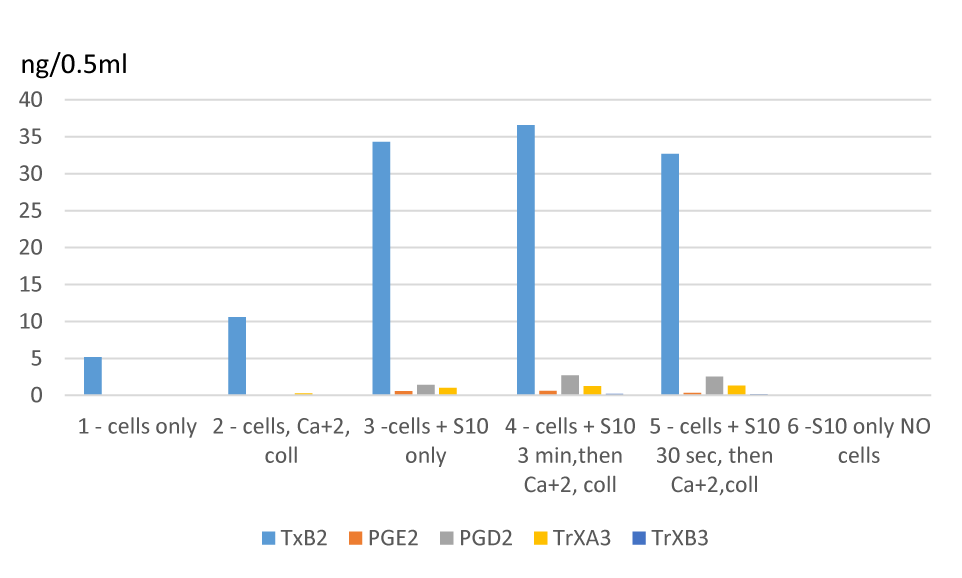
1-cells only; 2-cells with Ca+2 and collagen; 3-cells incubated with S10 only; 4-cells incubated for 3 min with S10 then with Ca+2 and collagen; 5-cells incubated with S10 for 30 s followed by Ca+2 and collagen; 6-no cells, only S10. Measurement of eicosanoids was made by mass spectrometry (LCMSMS) as per our previous report [16].
Results
Representative charts of platelet aggregation are shown in figure 1A where 3 OS (10 µg/mL) highlight the effects on collagen evoked aggregation of human platelets showing that S5 fully inhibits aggregation while S14 has no appreciable effect and S10 displays activation from DMSO vehicle showing the collagen aggregator effect. Figure 1B shows the effects of S10 under various conditions on activating platelet aggregation and figure 1C compares the effect of all the OS described herein showing that S5 stands out as the only inhibitor of collagen-evoked aggregation of human platelets.
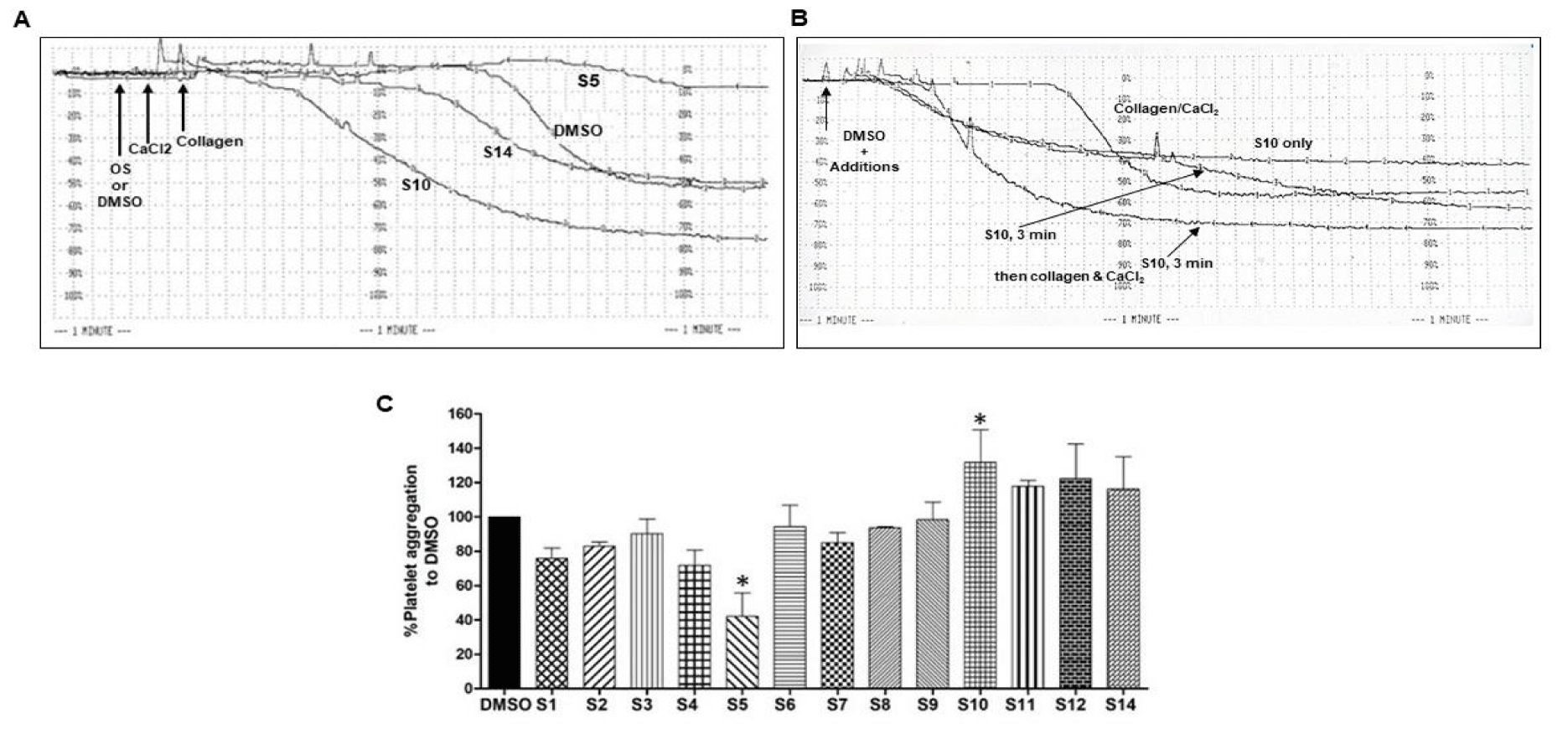
Another interesting finding relates to S10 which causes platelet aggregation as shown in figure 1B. It does this without the need for collagen/CaCl2 and this effect is even stronger than the collagen control (shown as DMSO in figure 1A and Collagen/CaCl2 in figure 1B). This finding is supported by TxB2 measurements with LCMSMS showing that TxB2 is formed after only 30 sec in contact of S10 with platelets at the 10ug/ml dose used in our experiments (Figure 2). Other eicosanoids were measured with minimal amounts formed.
Measurement of EC50
All test compounds were first screened for their effect on collagen at the 10ug dose as shown in figure 1A,C. Compounds that showed effect (inhibition or potentiation) were further tested at three doses, i.e. 10, 5, 2.5 ug/ml, from which the 50% effect was calculated from the plot of the data shown in table 2.
Discussion
In this study we have presented new data showing that within the OS fraction from the epidermal secretion of the catfish (Arius bilineatus, Val.) from the Arabian Gulf, distinct patterns of biological activity as measured on human platelet aggregation are observed. We previously demonstrated that the sterol Cholestane 3,5,6-triol (S5) in the OS fraction, was uniquely active in killing human cancer cells (highly specific for the leukemic cell line K562, lesser for two breast cancer cell lines8. More recently we observed that S5 was most potent of the OS tested in inhibiting the fMLP-activated calcium mobilization in human neutrophils [8]. We now demonstrate an equally specific inhibitory action of S5 on collagen-evoked human platelet aggregation, although we also saw moderate enhancement of collagen action by two other members of the OS family (S10 and S14) (Figure 1C, table 2). Since Ca2+ is involved in platelet aggregation, it is tempting to link these two mechanisms in our observed study [9-11,17]. While we observed in our study that S5 (Cholestane 3,5,6-triol) is a potent ‘inhibitor’ of collagen-evoked human platelet aggregation, Selley ML, et al. [18] reported that this sterol was one of several OS that actually ‘potentiated’ human platelet aggregation evoked by several agonists including collagen through stimulation of thromboxane A2 formation at higher doses than ours (present study). Actually, all OS used in their study were found to stimulate platelet activation. However, Selley, et al. [18] preincubated the platelet preparation with sterols for 60 min prior to adding pro-aggregating agents while we only added our OS for 2 min before adding collagen. It is interesting to note that in our study S4, the Cholesterol-5,6-epoxide, the precursor to S5, is only partly inhibitory suggesting that the platelet epoxide hydrolase is partly active within the short time frame of the experiment responsible for converting S4 to S5.
| Table 2: EC50 of most active OS tested on collagen evoked platelet aggregation. | ||
| OS name | Designation | EC50 (µM) |
| 5α-cholestane-3,5,6-triol | S5 | - 35.7 |
| Cholesta-3,5 diene | S9 | No effect |
| Cholesta-3,5 dien-7-one | S10 | + 9.2 |
| + Potentiation, and - inhibition | ||
Collagen demonstrated potentiation of aggregation of basal platelets at the selected dose of 2 and 4ug/ml used in our study. We have independently seen through LCMSMS measurements that our basal platelet preparation as used in our study has very low TxB2 content (10ng/ml), which rises to 10X the amount after collagen challenge + CaCl2 (Figure 2). While in previous reports it was recommended that prostacyclin (PGI2) should be added at the start of the preparation of washed platelets to maintain active platelets [19] the use of PGI2 in our study would have had minimal effect on TxB2/TxA2 formation/inhibitory action on collagen activation in our preparation and our tested compounds would not have revealed the effects seen, especially since the compound of interest (S5) acts to ‘inhibit’ the collagen aggregatory effect. If indeed there was any basal influence of thromboxane or on platelet integrity in our preparation, S5 in particular, should be even more powerful as a selective aggregation inhibitor than what we have seen. Additionally, we used the same preparation for the comparison of the 14 test compounds with some inactive and several others potentiating aggregation so the inhibitory action of S5 among the group of steroids tested is well controlled as are the varying effects of the other compounds (Figure 1C).
These findings suggest that Cholestane 3,5,6-triol (S5) may be considered for therapeutic use in the above mentioned disease areas.
Further studies are planned to investigate whether S5 is toxic and at what level. Also important is to investigate whether S5 and other OS discovered in our studies are only present in the free form as we have previously shown [8], or whether they occur naturally as complexed or esterified to other lipids in the lipid pool ready to be released as needed for biological action.
Author Contributions
The identification of the steroids/OS shown in this study was carried out by JMAH and his team at Kuwait University. JMAH was instrumental in the management of the identification of the OS compounds described in this study in his Kuwait University laboratory as previously reported with MA, SOA. JMAH was involved in obtaining funds for the overall Catfish Skin Secretion program from the Kuwait Foundation of Advancement in Sciences. CP-A was involved in the organization and management of the biology of the OS compounds investigated in his Toronto laboratory, management of the data and in the writing of the manuscript. MK was involved in the mining of the data and in preparing the figures. YFL carried out the biological experiments reported.
Acknowledgments
This work was supported by Research Sector, Kuwait University grant No. SLO4/09 to JMAH and by Kuwait Foundation for Advancement of Sciences research grants (KFAS grant # 2013-120701 A-C and KFAS grant # CN20-13MM), a megaproject in which CP-A was part of, for which the authors are grateful. CP-A acknowledges the continued support and research facilities provided by the Hospital for Sick Children Research Institute. Professor Nades Palaniyar is acknowledged for his contribution in reading the manuscript and his suggestions in improvement. We also acknowledge DigiBiomics Inc. for being instrumental in manuscript preparation, data analysis and interpretation.
Conflicts of Interest
No commercial or financial relationship was involved in carrying out this study.
References
- Kloudova A, Guengerich FP, Soucek P. The Role of Oxysterols in Human Cancer. Trends Endocrinol Metab. 2017 Jul;28(7):485-496. doi: 10.1016/j.tem.2017.03.002. Epub 2017 Apr 12. PMID: 28410994; PMCID: PMC5474130.
- Canzoneri F, Leoni V, Rosso G, Risso D, Menta R, Poli G. Oxysterols as Reliable Markers of Quality and Safety in Cholesterol Containing Food Ingredients and Products. Front Nutr. 2022 Feb 16;9:853460. doi: 10.3389/fnut.2022.853460. PMID: 35252316; PMCID: PMC8890664.
- de Freitas FA, Levy D, Zarrouk A, Lizard G, Bydlowski SP. Impact of Oxysterols on Cell Death, Proliferation, and Differentiation Induction: Current Status. Cells. 2021 Sep 3;10(9):2301. doi: 10.3390/cells10092301. PMID: 34571949; PMCID: PMC8468221.
- Samadi A, Sabuncuoglu S, Samadi M, Isikhan SY, Chirumbolo S, Peana M, Lay I, Yalcinkaya A, Bjørklund G. A Comprehensive Review on Oxysterols and Related Diseases. Curr Med Chem. 2021;28(1):110-136. doi: 10.2174/0929867327666200316142659. PMID: 32175830.
- Brzeska M, Szymczyk K, Szterk A. Current Knowledge about Oxysterols: A Review. J Food Sci. 2016 Oct;81(10):R2299-R2308. doi: 10.1111/1750-3841.13423. Epub 2016 Aug 25. PMID: 27561087.
- Brown AJ, Sharpe LJ, Rogers MJ. Oxysterols: From physiological tuners to pharmacological opportunities. Br J Pharmacol. 2021 Aug;178(16):3089-3103. doi: 10.1111/bph.15073. Epub 2020 May 17. PMID: 32335907.
- Vejux A, Malvitte L, Lizard G. Side effects of oxysterols: cytotoxicity, oxidation, inflammation, and phospholipidosis. Braz J Med Biol Res. 2008 Jul;41(7):545-56. doi: 10.1590/s0100-879x2008000700001. PMID: 18719735.
- Al-Hassan JM, Thomson M, Criddle RS. Accelerated wound healing by a preparation from skin of the Arabian Gulf catfish. Lancet. 1983 May 7;1(8332):1043-4. doi: 10.1016/s0140-6736(83)92665-x. PMID: 6133079.
- Al-Hassan JM, Fang Liu Y, Khan MA, Yang P, Guan R, Wen XY, Afzal M, Oommen S, Paul BM, Nair D, Palaniyar N, Pace-Asciak C. Furanoic Lipid F-6, A Novel Anti-Cancer Compound that Kills Cancer Cells by Suppressing Proliferation and Inducing Apoptosis. Cancers (Basel). 2019 Jul 9;11(7):960. doi: 10.3390/cancers11070960. PMID: 31323958; PMCID: PMC6678287.
- Al-Hassan JM, Hinek A, Renno WM, Wang Y, Liu YF, Guan R, Wen XY, Litvack ML, Lindenmaier A, Afzal M, Paul B, Oommen S, Nair D, Kumar J, Khan MA, Palaniyar N, Pace-Asciak C. Potential Mechanism of Dermal Wound Treatment With Preparations From the Skin Gel of Arabian Gulf Catfish: A Unique Furan Fatty Acid (F6) and Cholesta-3,5-Diene (S5) Recruit Neutrophils and Fibroblasts to Promote Wound Healing. Front Pharmacol. 2020 Jun 18;11:899. doi: 10.3389/fphar.2020.00899. PMID: 32625093; PMCID: PMC7314935.
- Al-Hassan JM, Wei D, Chakraborty S, Conway T, Rhea P, Wei B, Tran M, Gagea M, Afzal M, Oommen S, Nair D, Paul BM, Yang P. Fraction B From Catfish Epidermal Secretions Kills Pancreatic Cancer Cells, Inhibits CD44 Expression and Stemness, and Alters Cancer Cell Metabolism. Front Pharmacol. 2021 Jul 19;12:659590. doi: 10.3389/fphar.2021.659590. PMID: 34349642; PMCID: PMC8326461.
- Al-Hassan JM, Thomson M, Criddle RS. Accelerated wound healing by a preparation from skin of the Arabian Gulf catfish. Lancet. 1983 May 7;1(8332):1043-4. doi: 10.1016/s0140-6736(83)92665-x. PMID: 6133079.
- al-Bow HA, al-Hassan JM, Thomson M, Thulesius O, Elkhawad A. Multiple vasoactive factors in epidermal secretions of the Arabian Gulf catfish, Arius bilineatus (Valenciennes). Gen Pharmacol. 1997 May;28(5):737-44. doi: 10.1016/s0306-3623(96)00307-2. PMID: 9184812.
- Wojtukiewicz MZ, Hempel D, Sierko E, Tucker SC, Honn KV. Antiplatelet agents for cancer treatment: a real perspective or just an echo from the past? Cancer Metastasis Rev. 2017 Jun;36(2):305-329. doi: 10.1007/s10555-017-9683-z. PMID: 28752248; PMCID: PMC5557869.
- Al-Hassan JM, Afzal M, Oommen S, Liu YF, Pace-Asciak C. Oxysterols in catfish skin secretions (Arius bilineatus, Val.) exhibit anti-cancer properties. Front Pharmacol. 2022 Oct 14;13:1001067. doi: 10.3389/fphar.2022.1001067. PMID: 36313377; PMCID: PMC9614162.
- Aprikian O, Reynaud D, Pace-Asciak C, Leone P, Blancher F, Monnard I, Darimont C, Macé K. Neonatal dietary supplementation of arachidonic acid increases prostaglandin levels in adipose tissue but does not promote fat mass development in guinea pigs. Am J Physiol Regul Integr Comp Physiol. 2007 Nov;293(5):R2006-12. doi: 10.1152/ajpregu.00382.2007. Epub 2007 Aug 29. PMID: 17761509.
- Shiraishi M, Tani E, Miyamoto A. Modulation of rabbit platelet aggregation and calcium mobilization by platelet cholesterol content. J Vet Med Sci. 2010 Mar;72(3):285-92. doi: 10.1292/jvms.09-0385. Epub 2009 Dec 1. PMID: 19952511.
- Selley ML, McGuiness JA, Ardlie NG. The effect of cholesterol oxidation products on human platelet aggregation. Thromb Res. 1996 Sep 15;83(6):449-61. doi: 10.1016/0049-3848(96)00154-5. PMID: 8885139.
- Radomski M, Moncada S. An improved method for washing of human platelets with prostacyclin. Thromb Res. 1983 May 15;30(4):383-9. doi: 10.1016/0049-3848(83)90230-x. PMID: 6351341.





Content Alerts
SignUp to our
Content alerts.
 This work is licensed under a Creative Commons Attribution 4.0 International License.
