
Medicine Group 2024 November 25;5(11):1511-1515. doi: 10.37871/jbres2039.





 Short Communication
Potato-Derived Exosome Nanoparticles as Anti-Inflammation Agents
Yeji Lee, Da‑Young Jeong and Sanghwa Yang*
Abstract
The screening of exosomes from various sources reveals that potato-derived exosomes exhibit the most significant anti-inflammatory activity, as demonstrated by RT-PCR analyses of Tumor Necrosis Factor expression in exosome-treated HaCaT cells. Exosomes extracted from potatoes are nanoparticles averaging 66 nm in diameter and possess the ability to actively infiltrate cells. In an Ex-vivo model of concanavalin A-treated mouse Th1 cells for autoimmune hepatitis, exosomes produced from potatoes significantly inhibit the production of Interferon gamma. Our studies highlight the significant potential of exosomes from potatoes for cosmetic and medicinal uses.
Introduction
Exosomes are extracellular vesicles generated from multivesicular bodies within cells, which subsequently fuse with plasma membranes and are released into the extracellular environment. Exosomes are lipid-protein complexes ranging from 50 to 150 nanometers in diameter, released by animal, plant, and microbial cells. Exosomes contain RNAs, DNAs, peptides, proteins and metabolites derived from parent cells and transfer these bioactive molecules to recipient cells, even across the blood-brain barrier, influencing gene expression [1-3]. Exosomes represent promising candidates for drug delivery owing to their stability in bodily fluids, biocompatibility, low cytotoxicity, and ability to penetrate cellular membranes [4]. Plant exosomes, also referred to as EPDENs [5] or PELNVs [6], display physical characteristics akin to other exosomes, including a lipid bilayer, an oval shape, and similar diameter ranges. Plant exosomes exhibit biocompatibility with animals by evading the immune system and are also being explored as next-generation carriers for exogenous pharmaceuticals, attributed to their lower production costs relative to cultivated cell exosomes [7].
Autoimmune Hepatitis (AIH) is a chronic liver inflammation caused by CD4+ T helper type 1 cell (Th1 cells)-mediated autoimmune responses, where the immune system mistakenly attacks liver cells, causing inflammation and liver damage. If left untreated, AIH can lead to liver failure, fibrosis, and cirrhosis [8]. Current AIH treatments include immunosuppressive corticosteroids like prednisone and azathioprine to minimize liver inflammation. However, since the use of corticosteroids can cause a range of immune system-compromising side effects, including increased susceptibility to infections, active research is being conducted to solve this dilemma [9], including the development of TNF blockers. Tumor Necrosis Factor (TNF) is a pro-inflammatory cytokine, and is one of the most notable targets, against which immunosuppressive therapies have been developed to treat autoimmune diseases, including AIH. However, the use of TNF blockers, such as infliximab and adalimumab, are associated with severe side effects [10]. Despite its pros and cons, the mouse model of Concanavalin A (Con A)-activated Th1 cell-induced liver inflammation is one of the most widely used models to study AIH [11], characterized by the secretion of TNF and Interferon-gamma (IFNγ) [11].
In our previous research report, we showed that exosomes from edible potatoes, termed ExoPs, strongly suppressed the expression of TNF and IL6 in keratinocyte HaCaT cells, yet it promotes the growth of normal keratinocyte, demonstrating the ExoP’s ability to suppress inflammation without cytotoxicity. Since the ExoPs can be isolated to a near homogeneity on a consistent basis with a high yield, we tested whether the ExoPs can have any effect on the expression of IFNγ in this model of AIH to assess its potential prior to a larger scale preclinical testing.
Materials and Methods
HaCaT cell penetration by exosomes isolated from potatoes
Exosomes were isolated from potatoes using ultracentrifugation following a previously published protocol12 and were quantified using Pierce™ BCA Protein Assay Kits (ThermoFisher, Waltham, MA, USA). A total of 10 µg isolated ExoPs in 100 µl of 1X PBS (pH 7.4) were mixed with 2 µl Mem Dye-Deep Green of ExoSparkler Exosome Membrane Labeling Kit-Deep Red (Dojindo Laboratories, Kumamoto, Japan) and was incubated for 30 min at 37˚C. Free fluorescent dyes were cleared of the labeled exosomes using included centrifugal filter units. 1x10⁵ HaCaT cells cultured in 12-well plates in Dulbecco's Modified Eagle's Medium‑high glucose (DMEM; cat. no. 11965092; Thermo Fisher Scientific, Inc.) with 10% fetal bovine serum (FBS; MilliporeSigma), 100 U/ml penicillin and 100 µg/ml streptomycin at 37˚C and 5% CO2 were treated with labeled exosomes and were cultured for an additional 24h before a confocal microscope (LSM 980 with Airyscan 2; Zeiss AG) was used to capture the image of labeled exosomes.
Ex-vivo AIH Model
All animal procedures were carried out in compliance with the guidelines established by the Institutional Animal Care and Use Committee (IACUC) of Korea Laboratory Solution & Bio (Suwon, Gyunggi-Do, Korea 443-727), a certified private non-clinical Good Laboratory Practice (GLP) laboratory, which provided ethical supervision for the study with a IACUC number of KLSIACUC20221209-04-01. Mice were managed and cared for in accordance with the approved protocols of the IACUC to ensure adherence to ethical standards in animal research. Spleen single-cell suspensions were used to isolate naïve CD4+ T cells using the EasySep™ Mouse Pan-Naïve T Cell Isolation Kit (STEMCELL, Vancouver, BC, Canada). CD4+CD25+CD44+CD62High T cell were sorted by Fluorescence-Activated Cell Sorting (FACS). Isolated naïve CD4+ T cells were then activated and expanded in RPMI containing 540 ng of anti-CD3ε antibody (STEMCELL), 0.5 μg/mL of anti-CD28 antibodies (Miltenyi Biotec, Bergisch Gladbach, Germany), 75 U of IL-2 and 10 % FBS in 24-well plates for 3 days. The expanded and activated CD4+ T cells were then differentiated in 24-well plates coated with 540 ng of anti-CD3ε antibody per well in RPMI media containing 0.5 ng/ mL of anti-CD28 antibody, 1 % ImmunoCult™ Mouse Th1 Differentiation Supplement containing IL2, IL12 and anti-IL4 antibodies, 10 % FBS and 50 μM ß-mercaptoethanol at 37˚C, with 5% CO2. Fully differentiated Th1 cells were treated with Con A at a pre-determined concentration of 60 nM that elevates IFNγ to 100% higher than in control Th1 cells. Cells were treated with Transcription Factor Buffer Set (562574, BD Biosciences, Franklin Lakes, NJ, USA) and were stained with PE-T-bet antibody and BV421-IFNƳ antibody (563376, BD Biosciences). Variations in the amounts of IFNγs between control and Con A-treated Th1 cells were compared using FACS.
Results and Discussion
Testing the TNF suppression activities by exosomes from various natural resources
Exosomes isolated from potatoes were compared for their activity to suppress the TNF expression using RT-PCR (Figure 1C,D) [12]. When a group of exosomes isolated from various natural resources was compared, including exosomes from date (Phoenix dactylifera, Pd), ginseng (Panax ginseng, Pg), yeast (Saccharomyces cerevisiae, Sc), apples (Malus domestica, Md) and Lactobacillus rhamnosus (La), a species of bacteria that is part of the human gut microbiome, none of them displayed a TNF-suppression activity comparable to that of exosomes from potatoes (Solanum tuberosum, St) at a final concentration of 50 μg/mL of exosomes. Furthermore, exosomes from apples (Malus domestica, Md), and seaweeds (Codium fragile, Cf and Sargassum fusiforme, Sf) strongly promoted the TNF expression at this specific concentration. Exosomes derived from edible potatoes were the ones displaying strongest anti TNF activities, followed by a relatively modest suppression by exosomes from Lactobacillus rhamnosus.
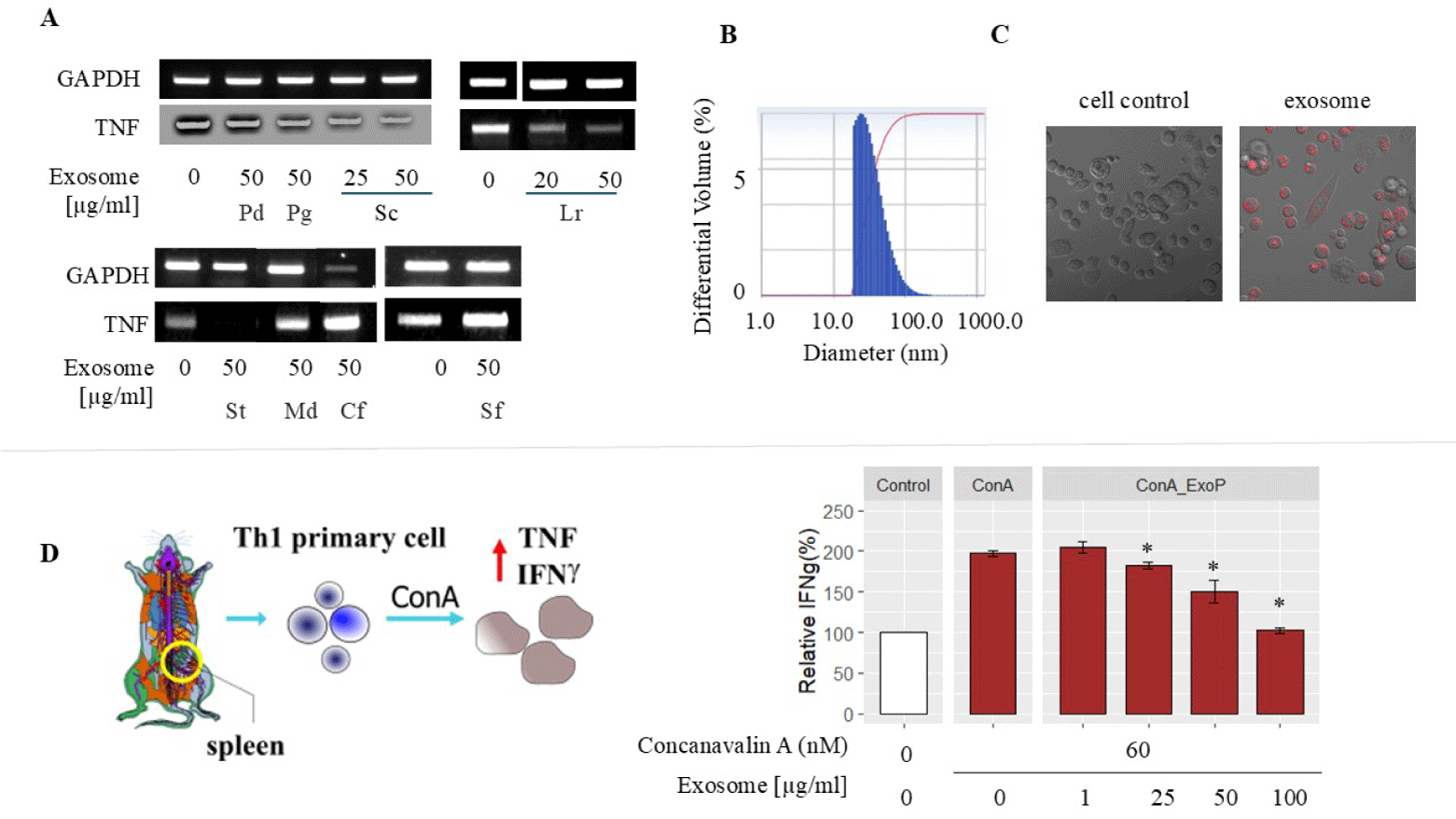
(A) A DLS analysis of islated ExoPs by their diameter and differential volume, which in this case shows that total volume mostly comes from the particles that are less than 100 nm in diameter, with an average diameter of 66.8 nm.
(B) Cell permeability of ExoPs. Compared with control keratinocyte HaCaT cells (left), fluorescently labeled ExoPs for their lipids by MEM Dye-Deep Red enter the keratinocyte HaCaT cells and can be visualized as red color.
(C) RT-PCR analyses of the effects of exosomes isolated from various sources on the expression of TNF in HaCaT. Acronyms for exosomes; Pd, Phoenix dactylifera (dates), Pg, Panax ginseng (ginseng), Sc; Saccharomyces cerevisiae (yeast), Lr, Lactobacillus rhamnosus (intestinal microbiome), St; Solanum tuberosum (potatoes), Md, Malus domestica (apple), Cf. (Codium fragile) and Sf (Sargassum fusiforme) (seaweeds).
(D) A schematic representation of an ex vivo AIH model set up from a spleen of C57BL/6 mice (left). Comparing IFN-γ levels in control, ConA-activated, and ExoP-treated Th1 cells (right).
An asterisk (∗) shows a significant difference in IFN-γ levels from ConA-activated samples at p < 0.05 using Student's t-test calculator (www.mathportal.org/).
The exosomes are characterized by their nanometer size and the cell-penetrating capability. The exosome derived from edible potatoes, ExoPs, meet these criteria with an average size of 66 nm in diameter and a Polydispersity Index (PDI) of 0.28. Distribution of volumes by diameter sizes show that the exosomes are represented by particles with less than 100 nm in diameter, distinguishable from larger contaminating macrovesicles and a PDI of 0.28 suggests that the particles in the sample are relatively uniform in size (Figure 1A). The potato exosomes can actively enter the cultured keratinocyte cell line HaCaT (Figure 1B). Therefore, we tested potato exosomes, with an INCI (International Nomenclature Cosmetic Ingredient) tradename of Potatosome, for their potential suppression activity on the Ex-vivo AIH model.
Potato exosomes suppress the IFNγ production in an Ex-vivo AIH model
Differentiated mouse Th1 cells activated with ConA show a 100% elevated level of IFNγ compared with untreated Th1 cells, establishing an Ex-vivo mouse model of AIH. Treating the ConA-activated Th1 cells with increasing amounts of ExoPs resulted in a concentration-dependent suppression of IFNγ from activated Th1 cells. At a concentration of 100 μg/mL of ExoPs, the level of IFNγ almost reverts to the basal level of unactivated Th1 cells, demonstrating the excellent potential of ExoPs’ to alleviate inflammation.
Potatoes serve as a sustainable food source and are abundant in antioxidants, which confer advantageous effects on human health in the form of secondary metabolites, including vitamins, carotenoids, and polyphenols. These compounds can help reduce inflammation, DNA damage, and arterial stiffness [13]. Therefore, it is not surprising that exosomes derived from potatoes demonstrate a significant inhibitory effect on inflammation, because exosomes inherit the characteristics of their parent cells and can transmit functional molecules through autocrine and paracrine mechanisms. The key difference between exosomes and plant extracts is that exosomes encapsulate functional molecules within soluble vesicles that can be transferred to other cells, while extracts typically have low solubility, stability, and cell permeability, limiting their efficacy in cellular applications. The potato exosomes are deemed safe, as treatment of normal HaCaT cells with up to 1,000 μg/mL of exosomes did not induce any cell death or statistically significant reduction in cell proliferation compared with untreated cells. Furthermore, treatment of human volunteers with cosmetic prototypes containing 100 μg/mL of potato exosomes did not induce any skin irritations, including skin redness, edema, squama, itching, pain, and burning sensation among 21 volunteers in a skin clinical test (submitted). Also, further research is underway to corroborate the safety of potato-derived exosomes by injecting them into mice to assess any potential side effects. The safety and high yields of exosome separation from edible plants offer advantages in medicinal and industrial applications compared to the high costs and low yields associated with exosomes derived from cultivated systems like stem cells. Our data highlight the significant potential for exosomes derived from edible potatoes to be tested in medical applications.
Declaration of Competing Interest
YL is an employee, and S Yang serves as the CEO of Nextab, Inc. D-Y Jeong is a former staff member of Nextab, Inc. Nextab, Inc. aims to commercialize plant exosomes as components in cosmetic or medicinal products.
Author Contributions
YL participated in the inquiry, developed the methodology, wrote the manuscript, and performed data curation, formal analysis, validation, and visualization. D-Y Jeong helped build up the Ex-vivo AIH model and the cell culture. All authors consented to the submission and publication of the manuscript.
References
- Banks WA, Sharma P, Bullock KM, Hansen KM, Ludwig N, Whiteside TL. Transport of Extracellular Vesicles across the Blood-Brain Barrier: Brain Pharmacokinetics and Effects of Inflammation. Int J Mol Sci. 2020 Jun 21;21(12):4407. doi: 10.3390/ijms21124407. PMID: 32575812; PMCID: PMC7352415.
- Alvarez-Erviti L, Seow Y, Yin H, Betts C, Lakhal S, Wood MJ. Delivery of siRNA to the mouse brain by systemic injection of targeted exosomes. Nat Biotechnol. 2011 Apr;29(4):341-5. doi: 10.1038/nbt.1807. Epub 2011 Mar 20. PMID: 21423189.
- Matsumoto J, Stewart T, Sheng L, Li N, Bullock K, Song N, Shi M, Banks WA, Zhang J. Transmission of α-synuclein-containing erythrocyte-derived extracellular vesicles across the blood-brain barrier via adsorptive mediated transcytosis: another mechanism for initiation and progression of Parkinson's disease? Acta Neuropathol Commun. 2017 Sep 13;5(1):71. doi: 10.1186/s40478-017-0470-4. PMID: 28903781; PMCID: PMC5598000.
- Tenchov R, Sasso JM, Wang X, Liaw WS, Chen CA, Zhou QA. Exosomes─Nature's Lipid Nanoparticles, a Rising Star in Drug Delivery and Diagnostics. ACS Nano. 2022 Nov 22;16(11):17802-17846. doi: 10.1021/acsnano.2c08774. Epub 2022 Nov 10. PMID: 36354238; PMCID: PMC9706680.
- Mu J, Zhuang X, Wang Q, Jiang H, Deng ZB, Wang B, Zhang L, Kakar S, Jun Y, Miller D, Zhang HG. Interspecies communication between plant and mouse gut host cells through edible plant derived exosome-like nanoparticles. Mol Nutr Food Res. 2014 Jul;58(7):1561-73. doi: 10.1002/mnfr.201300729. Epub 2014 May 19. Erratum in: Mol Nutr Food Res. 2016 Apr;60(4):964. doi: 10.1002/mnfr.201670044. PMID: 24842810; PMCID: PMC4851829.
- Dad HA, Gu TW, Zhu AQ, Huang LQ, Peng LH. Plant Exosome-like Nanovesicles: Emerging Therapeutics and Drug Delivery Nanoplatforms. Mol Ther. 2021 Jan 6;29(1):13-31. doi: 10.1016/j.ymthe.2020.11.030. Epub 2020 Dec 3. PMID: 33278566; PMCID: PMC7791080.
- Yi Q, Xu Z, Thakur A, Zhang K, Liang Q, Liu Y, Yan Y. Current understanding of plant-derived exosome-like nanoparticles in regulating the inflammatory response and immune system microenvironment. Pharmacol Res. 2023 Apr;190:106733. doi: 10.1016/j.phrs.2023.106733. Epub 2023 Mar 15. PMID: 36931541.
- Webb GJ, Hirschfield GM, Krawitt EL, Gershwin ME. Cellular and Molecular Mechanisms of Autoimmune Hepatitis. Annu Rev Pathol. 2018 Jan 24;13:247-292. doi: 10.1146/annurev-pathol-020117-043534. PMID: 29140756.
- Pofi R, Caratti G, Ray DW, Tomlinson JW. Treating the Side Effects of Exogenous Glucocorticoids; Can We Separate the Good From the Bad? Endocr Rev. 2023 Nov 9;44(6):975-1011. doi: 10.1210/endrev/bnad016. PMID: 37253115; PMCID: PMC10638606.
- Dogra S, Khullar G. Tumor necrosis factor-α antagonists: Side effects and their management. Indian J Dermatol Venereol Leprol. 2013 Jul;79 Suppl 7:S35-46. doi: 10.4103/0378-6323.115526. PMID: 23974693.
- Raphael I, Nalawade S, Eagar TN, Forsthuber TG. T cell subsets and their signature cytokines in autoimmune and inflammatory diseases. Cytokine. 2015 Jul;74(1):5-17. doi: 10.1016/j.cyto.2014.09.011. Epub 2014 Oct 30. PMID: 25458968; PMCID: PMC4416069.
- Lee Y, Jeong DY, Jeun YC, Choe H, Yang S. Preventive and ameliorative effects of potato exosomes on UVB‑induced photodamage in keratinocyte HaCaT cells. Mol Med Rep. 2023 Sep;28(3):167. doi: 10.3892/mmr.2023.13054. Epub 2023 Jul 14. PMID: 37449501; PMCID: PMC10407616.
- Hellmann H, Goyer A, Navarre DA. Antioxidants in Potatoes: A Functional View on One of the Major Food Crops Worldwide. Molecules. 2021 Apr 22;26(9):2446. doi: 10.3390/molecules26092446. PMID: 33922183; PMCID: PMC8122721.




Content Alerts
SignUp to our
Content alerts.
 This work is licensed under a Creative Commons Attribution 4.0 International License.
