
Environmental Sciences Group 2024 November 21;5(11):1503-1510. doi: 10.37871/jbres2038.





 Research Article
Electrochemical Sensor Based on Mgo@PANI@CNT Nanocomposites for Simultaneous Detection of Cd2+ and Pb2+
Afef Dhaffouli1,2*, Emna Ali1, Sondes Guesmi1, Pedro A Salazar-Carballo3 and Houcine Barhoumi1
2Department of chemistry, University of Gafsa, Faculty of Sciences of Gafsa, 2100 Gafsa, Tunisia
3Laboratory of Sensors, Biosensors and Advanced Materials, Faculty of Health Sciences, University of La Laguna, Campus de Ofra s/n, 38071 La Laguna, Spain
- MgO@PANI@CNT
- Lead (II)
- Cadmuim (II)
- Electrochemical sensor
- Differential Pulse Voltammetry (DPV)
Abstract
The high adsorption capacities of Polyaniline (PANI) and Carbon Nanotubes (CNTs) for heavy metals, combined with the synergistic effect of Magnesium Oxide (MgO), were leveraged to develop a modified Glassy Carbon Electrode (GCE), referred to as MgO@PANI@CNT/GCE, for the accurate detection of Cd²+ and Pb²⁺ ions. A comprehensive investigation of the electrochemical response of the MgO@PANI@CNT/GCE was carried out using Differential Pulse Voltammetry (DPV). A systematic optimisation of the electrochemical parameters, including the pH of the buffer solution, the amount of MgO@PANI@CNT on the electrode surface, and the drying time, was carried out. Under optimal conditions, the MgO@PANI@CNT/GCE sensor showed a linear response in the concentration range from 10-8 to 2.5 × 10⁻⁷ M. The lowest detectable concentrations for Cd2+ and Pb2+ were measured as 5 × 10⁻⁸ M and 2.5 × 10⁻⁸ M, respectively. The sensor exhibited excellent stability and reproducibility, and its practical utility was confirmed through the successful detection of Cd²⁺ and Pb²⁺ in river water samples, highlighting its effectiveness for real-world applications.
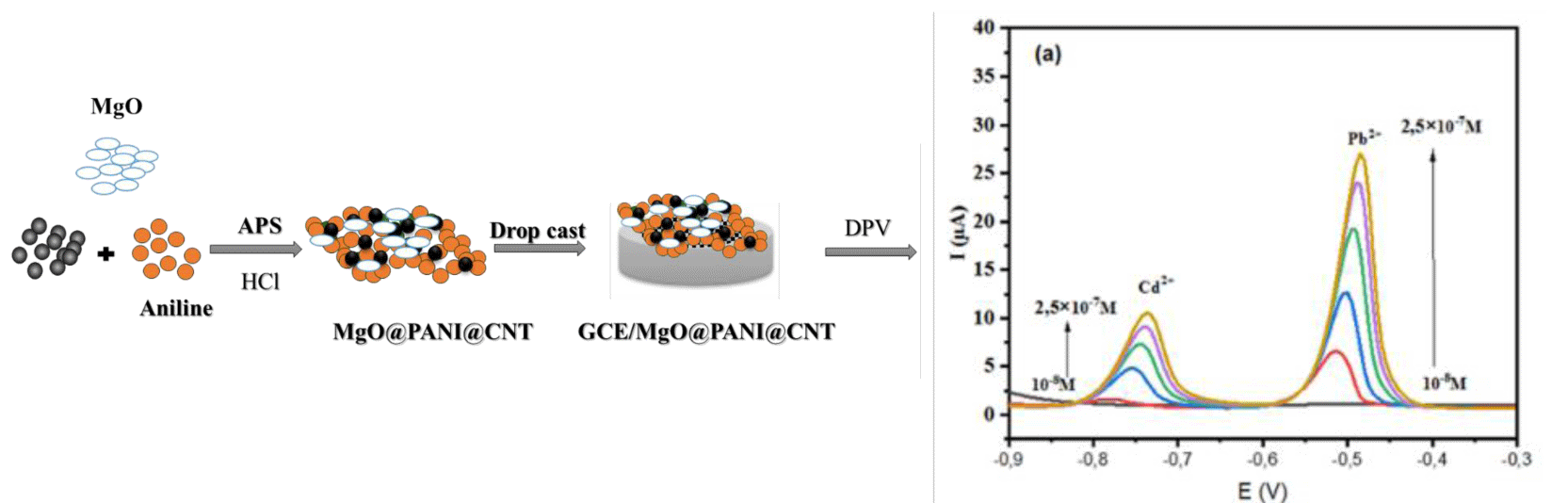
Graphical abstract
Introduction
Heavy metal are major contributors to environmental pollution worldwide. Although natural weathering processes release some heavy metals into the environment, their levels have sharply increased due to rapid industrialization and intensive agricultural practices. Improper wastewater disposal and weak enforcement of environmental regulations, especially in developing countries, have intensified the widespread contamination from heavy metals. Cadmium, known as one of the most toxic heavy metals, is frequently detected in surface and groundwater. A primary source of cadmium exposure is cigarette smoke, along with other environmental pathways [1-4]. The harmful effects of cadmium are associated with numerous acute and chronic health issues, such as emphysema, kidney damage, testicular atrophy, hypertension, and skeletal deformities in developing fetuses. The International Agency for Research on Cancer (IARC) has identified cadmium as a carcinogenic substance, primarily linked to kidney cancer, supported by robust evidence from human and animal studies. Lead is another heavy metal that is naturally present in the environment. Although it has no biological role in the human body, even minimal exposure can be detrimental to health [5]. Major sources of lead contamination include industries involved in gasoline and battery production, as well as paint manufacturing. Lead interferes with the metabolism of essential nutrients, such as calcium, by competing for binding sites in biological systems [6]. In adults, lead poisoning presents with a variety of symptoms, including headache, increased intracranial pressure, arthralgia and abdominal pain, nephropathy, and nervous system dysfunction [7]. In addition, delayed intellectual development in children has been linked to lead poisoning [8,9]. The pressing need to address the significant environmental and health impacts of cadmium and lead has led to the advancement of efficient, sensitive, and accessible detection methods. Among these, Gunduz and colleagues developed a technique for directly detecting lead in rice grains using solid sampling High-Resolution Continuum Source Graphite Furnace Atomic Absorption Spectrometry (HR-CS GFAAS) [10]. Talio and his team applied a solid-surface fluorescence method for lead trace analysis [11]. Schneider and collaborators introduced an atomic absorption spectrometry approach for detecting cadmium [12], while Wolf and colleagues employed Size Exclusion Chromatography with Inductively Coupled Plasma Mass Spectrometry (SEC-ICP-MS) for cadmium analysis [13]. Furthermore, Sadi and his team created a reversed-phase High-Performance Liquid Chromatography (HPLC) method to measure cadmium levels [14]. Although these methods effectively detect varying amounts of cadmium and lead, even at trace levels, there persists a need for methods that are less expensive, time-consuming, and operationally simpler. Particularly, for real-time analysis directly in the environment, there is a demand for analytical methods that offer enhanced efficiency and simplicity. Outstanding sensitivity, swift analysis times, portability, and cost-effectiveness are crucial attributes in analytical methods. In recent years, the evolution of electrochemical methods has opened avenues for performing diverse, rapid, and cost-efficient analytical tests [15,16]. Chemically modified electrodes, which combine flexibility with a unified underlying principle, support a broad spectrum of applications [17-21]. Among electroanalytical methods, stripping techniques are particularly effective for detecting heavy metal ions, providing high sensitivity and enabling the simultaneous measurement of multiple ions. In recent decades, Magnetic Nanoparticles (MNPs) have found applications across diverse fields, including biology, medicine, catalysis, and drug delivery [22,23]. Beyond their low toxicity and excellent biocompatibility, the accessibility and strong adsorption capabilities of magnetic materials make them highly valuable for environmental applications [24,25]. However, bare MNPs often exhibit limitations, such as catalytic and oxidative activity, poor dispersibility, and limited stability, particularly at neutral pH levels where they tend to aggregate [26].
In this study, we synthesized MgO@PANI@CNT nanoparticles coated with Polyaniline (PANI) and Carbon Nanotubes (CNT). These nanoparticles were used to create a highly responsive electrochemical sensor, effectively integrated onto a Glassy Carbon Electrode (GCE) as MgO@PANI@CNT/GCE. The sensor was applied for the detection and quantification of cadmium (II) and lead (II) in real samples using Differential Pulse Voltammetry (DPV). The findings revealed that the electrochemical sensor displayed strong sensitivity specifically toward cadmium (II) and lead (II) ions.
Experimental
Materials and reagents
Aniline, Carbon Nanotube (CNT), Ethanol (EtOH), Magnesium Oxide (MgO) and Ammonium Peroxydisulfate (APS) were purchased from Sigma-Aldrich. Sodium hydroxide (NaOH), potassium hexacyanoferrate (II) trihydrate (K4[Fe(CN)6•3H2O), potassium hexacyanoferrate (III) (K3[Fe(CN)6]), Potassium Chloride (KCl), lead (II) nitrate Pb(NO3)2, cadmium (II) nitrate (Cd(NO3)2•4H2O) were obtained from Sigma-Aldrich. Supporting electrolyte acetate buffer (0.1 M, pH 5), for electrochemical determination, was prepared by mixing 0.1 M acetic acid solution (CH3COOH) and 0.1 M sodium acetate solution (CH3COONa). The pH was adjusted by adding NaOH or HCl solutions.
Synthesis of MgO@PANI@CNT
The synthesis of MgO@PANI@CNT involves a two-step process: initially doping MgO into PANI, followed by forming a bond between the MgO@PANI and CNT through chemical bonding or intermolecular interactions. First, 30 mg of MgO was dispersed in a 25 ml water solution through sonication for 30 minutes to ensure uniform dispersion. Subsequently, 1 ml of aniline monomer was introduced into 1 M HCl, simultaneously adding a 1 M solution of Ammonium Peroxydisulfate (APS) drop wise. Then, 30 mg of CNT was added, and the mixture was sonicated under ultrasound.
The mixture was stirred overnight to complete the polymerization process, as evidenced by the appearance of a dark green precipitate. This precipitate was carefully collected, thoroughly washed three times with HCl and distilled water, and then dried in an oven at 120°C for 4 hours.
Preparation of modified GCE/MgO@PANI@CNT electrode
Before modification, the Glassy Carbon Electrode (GCE) was carefully polished with emery paper containing 0.05 μm alumina powder. After each polishing step, the electrode was sonicated in ethanol for five minutes. The Cyclic Voltammetry (CV) performance of the electrode was then assessed in a 5 mM Fe(CN)₆³⁻/⁴⁻ solution with 0.1 M KCl, at a scan rate of 100 mV s⁻¹, until a quasi-reversible redox reaction was observed.
The modification of the GCE involved the following steps: Initially, 1 mg of MgO@PANI@CNTwas dispersed in 1 mL of ethanol and underwent 30 minutes of sonication to attain a homogeneous suspension. Subsequently, 5 μL of the resulting suspension was carefully applied to the polished GCE surface and allowed to air-dry at room temperature before utilization in measurements.
Apparatus and electrochemical test procedure
Electrochemical measurements were carried out using a computer-controlled Autolab PG potentiostat/galvanostat (AUT 83965). The system employed an Ag/AgCl reference electrode, saturated with 3 M KCl, and a platinum wire with a diameter of 1 mm as the auxiliary electrode. The working electrode was a Glassy Carbon Electrode (GCE).
Cd (II) and Pb (II) ions were detected using Differential Pulse Voltammetry (DPV). First, the ions were reduced and accumulated on the sensor surface at -1 V for 5 minutes. Afterward, a potential scan ranging from -0.9 to -0.3 V was applied to the working electrode to quantify the target species under optimized conditions.
Results and Discussion
Morphology of MgO@PANI@CNT
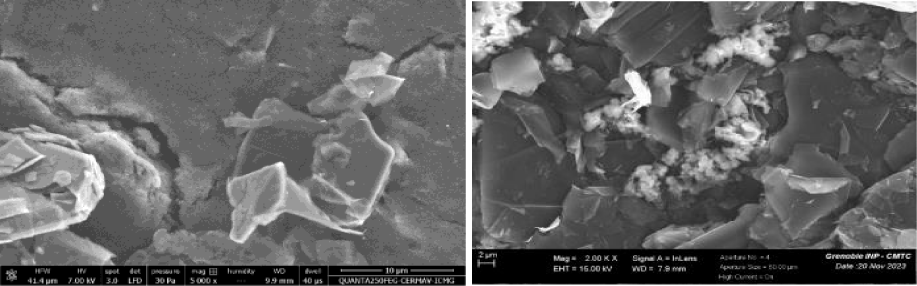
Although MgO constitutes the majority of the MgO@PANI@CNT composite, the SEM image reveals a well-defined (Figure 1). The Carbon Nanotubes (CNTs) serve as a strong framework, supporting the uniform distribution of MgO particles throughout the composite. The integration of MgO with the Polyaniline (PANI) coating also facilitates the formation of a continuous conductive pathway. This configuration results in a high surface area and an interconnected porous network, which improve ion diffusion and electron transfer. The close contact between MgO, PANI, and CNTs ensures effective electron mobility and structural stability, even after multiple detection cycles. These features demonstrate that, despite the significant proportion of MgO, the composite maintains a high-performance architecture, making it suitable for applications that require sensitive and selective ion detection.
Electrochemical behavior of modified electrodes
To perform a comparative analysis, the electrochemical properties of the electrodes were evaluated using Cyclic Voltammetry (CV) (Figure 2a). This study included both an unmodified Glassy Carbon Electrode (GCE) and one modified with MgO@PANI@CNT. Each electrode was immersed in a testing solution containing 5 mM [Fe(CN)₆]³⁻/⁴⁻ with 0.1 mol L⁻¹ KCl and scanned over a potential range of -0.2 V to 0.6 V at a scan rate of 100 mV s⁻¹. As shown in figure 4, the CV of the [Fe(CN)₆]³⁻/⁴⁻ redox probe exhibited a well-defined reversible redox wave with a potential difference (ΔEp) of 125 mV on the unmodified GCE. In contrast, upon modifying the electrode with MgO@PANI@CNT nanoparticles, there was a notable decrease in both the redox peak current and the separation between the anodic and
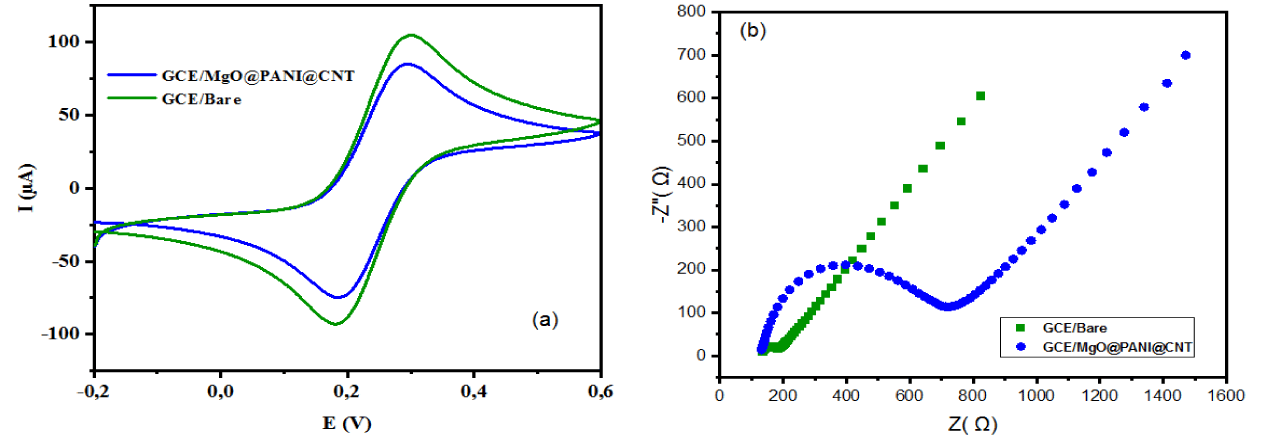
Cathodic peak currents. This reduction can be attributed to the insulating nature of MgO@PANI@CNT, along with electrostatic repulsion and the optical, morphological, elemental, and structural features of PANI and the PANI/MgO nanocomposites, as well as the aromatic characteristics of CNT and PANI. Consequently, the electrode modified with MgO@PANI@CNT demonstrates improved surface electroactivity.
To characterize each electrode, potentiostatic Electrochemical Impedance Spectroscopy (EIS) (Figure 2b) was conducted over a frequency range of 0.1 to 105 Hz, using an applied amplitude of ±10 mV. All measurements were performed at room temperature. Additionally, the layer formed on the Glassy Carbon (GC) electrode was further analyzed using EIS at an applied potential of +200 mV in the presence of the redox probe ([Fe(CN)₆]³⁻/⁴⁻ in 0.1 mol L⁻¹ KCl), as shown in the figure. The resulting EIS spectrum displayed a semicircle and a linear segment; the diameter of the semicircle at higher frequencies corresponded to the charge transfer Resistance (Rct), while the linear portion at lower frequencies indicated the diffusion process.
The charge transfer Resistance (Rct) values for the unmodified GCE and the GCE modified with MgO@PANI@CNT were approximately 187 Ω and 712 Ω, respectively. These differences can be attributed to the inherent resistive properties of the respective electrode configurations. The Nyquist plot for the unmodified GCE showed high-frequency diffusion kinetics, with a small semicircular region. In contrast, the GCE modified with MgO@PANI@CNT exhibited the highest Rct, indicating a greater resistance to charge transfer compared to the other modifications on the electrode surface.
Differential pulse voltammetric determinations
Figure 3, differential pulse voltammograms of Cd (II) and Pb (II) at MgO@PANI@CNT modified electrode in the pH 5.0 ABS. Cd (II) and Pb (II) concentrations from 10-8 to 2.5 × 10⁻⁷ M. Data were collected under specific conditions, including a casting solution of 7 μl, drying time of 2 hours, and an accumulation time of 5 minutes in an HAc-NaAc buffer solution with a pH of 5.
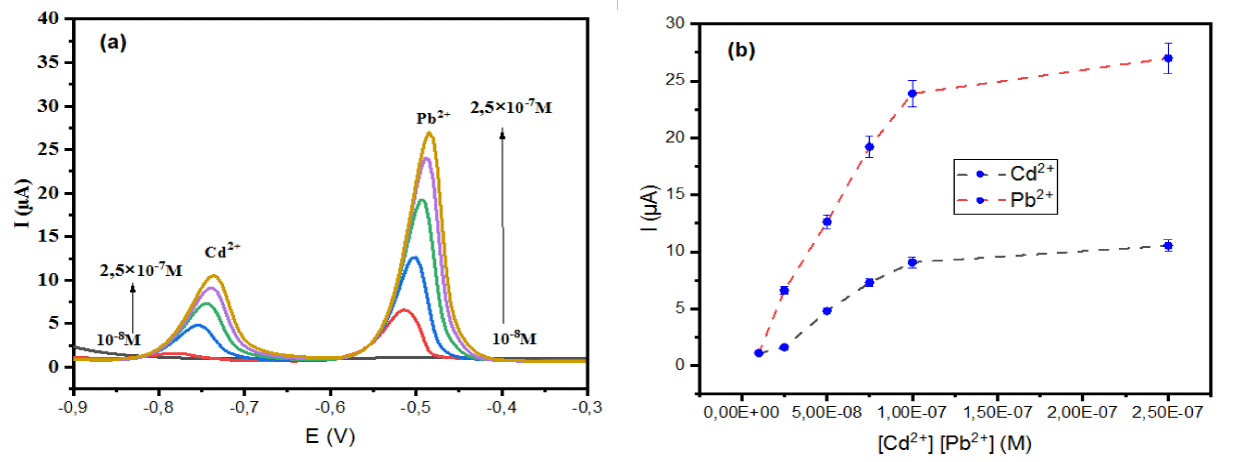
Under optimal conditions, the Differential Pulse Voltammetry (DPV) method was employed to detect Cd (II) and Pb (II) ions using the MgO@PANI@CNT/GCE sensing layer at varying ion concentrations. As shown in figure 1, the peak currents increased steadily with the concentration of the metal ions tested. The response peaks for Cd (II) and Pb (II) were recorded at potentials of −0.8 V and −0.5 V, respectively. Notably, the sensor achieved low detection limits of 5 × 10⁻⁸ M for Cd (II) and 2.5 × 10⁻⁸ M for Pb (II). The oxidation peak currents exhibited a direct relationship with the concentrations of both ions over a range from 10⁻⁸ M to 2.5 × 10⁻⁷ M.
The analytical performance of the modified electrode for the detection of these ions was consistent with responses observed in other modified chemical electrodes reported in the literature (Table 1). Overall, our study demonstrated that the proposed electrode offers high sensitivity for the detection of Cd (II) and Pb (II) ions.
| Table 1: Comparison of the analytical performance with other methods using different electrode materials for the determination of Cd (II) and Pb (II). | ||||
| Electrode | Analyte | Detection limit (M) | Linear range | References |
| GCE/NFC | Cd(II) Pb(II) | 5 0.5 | 10 nM -10 µM 10 nM - 10 µM | [27] |
| GCE/GO/MWCNTs/Bi | Cd(II) Pb(II) | 5 1 | 1 to 10 µg L-1 1 to 10 µg L-1 | [28] |
| GCE/CN-Polymer | Cd(II) Pb(II) | 260 400 | 1 to 10 µg L-1 1 to 10 µg L-1 | [29] |
| GCE/Polyaniline/Bi | Cd(II) Pb(II) | 1.1 16,5 | 0.31-14.8 ppm 0.26-58.73 ppm | [30] |
| GCE/MgO@PANI@CNT | Cd(II) Pb(II) | 5× 10⁻⁸ 2.5× 10⁻⁸ | 10-8 M to 2.5 × 10⁻⁷ M 10-8 M to 2.5 × 10⁻⁷ M | This work |
Selectivity
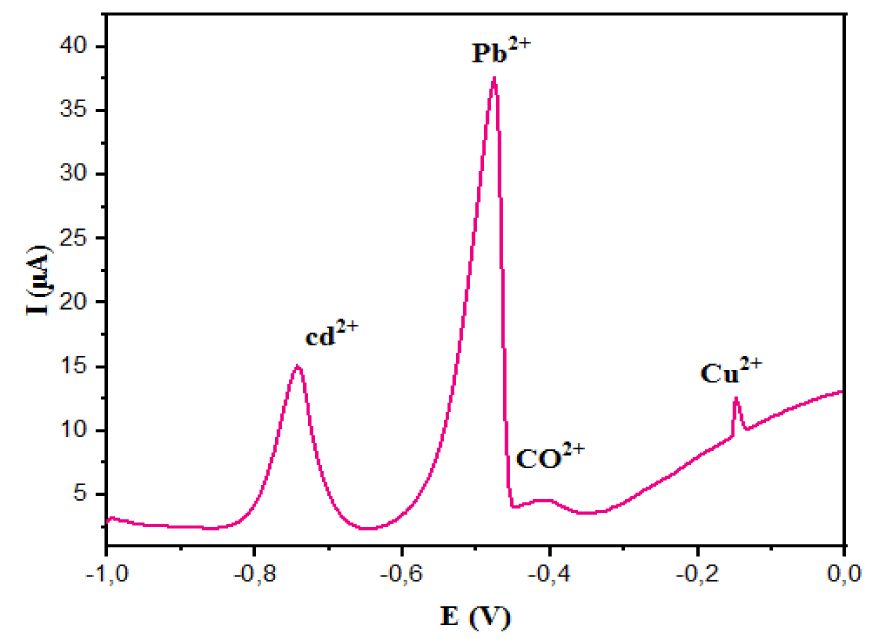
Due to the unique properties of the MgO@CNT@PANI/GCE electrode, this nanomaterial is highly suitable for the simultaneous detection of Pb²⁺ and Cd²⁺ ions at very low concentrations. Additionally, the selectivity of the sensor was evaluated in the presence of potential interferents, such as Co²⁺ and Cu²⁺ ions (Figure 4). As shown, the peaks for Pb²⁺ and Cd²⁺ are significantly more intense than those of other ions, despite the lower concentrations compared to interfering species. This performance results from the sensor’s high affinity for Pb²⁺ and Cd²⁺ ions, its large surface-to-volume ratio, and the use of a well-defined potential window. These features provide a substantial opportunity to enhance the sensor’s sensitivity and selectivity, primarily due to the aromatic groups that can form complexes with heavy metal ions.
Repeatability, stability and reproducibility
The reusability of the MgO@PANI@CNT/GCE electrodes was evaluated for Pb²⁺ and Cd²⁺ detection using the DPV method. After each detection cycle, the electrode was immersed in a 1 M EDTA solution for 10 minutes to remove residual metal ions, then prepared for subsequent Pb²⁺ and Cd²⁺ measurements (n = 5) (Figure 5a). Following EDTA treatment, the electrode was rinsed three times with water and left to air-dry at room temperature for two hours. Results from six consecutive determinations, including five regeneration cycles for a 10⁻⁵ M solution of Pb²⁺ and Cd²⁺, demonstrated stable sensor response, with an RSD of approximately 2.97% for Pb2+ and 2.50 % for cd2+. These findings confirm the sensor's reliability and robustness, supporting its potential for practical electrochemical applications. Repeatability, reproducibility, and stability are essential for effective sensor performance. To assess these aspects, the reproducibility of the MgO@PANI@CNT/GCE electrodes was analyzed by assembling six separate electrodes, each coated with the same electroactive material. These electrodes were tested using DPV for detection of a 10⁻⁵ M Pb²⁺ and Cd²⁺ solution in a 0.1 M acetate buffer (pH 5) (Figure 5b). The oxidation peak potentials for Pb²⁺ consistently appeared at -0.5 V and -0.8 V for Cd2+, with peak currents exhibiting an RSD of approximately 2.78% for Pb2+ and 2.32% for cd2+. This observation underscores the exceptional reproducibility of the proposed electrodes, emphasizing their suitability for reliable electrochemical detection of Pb²⁺ and Cd²⁺ ions.
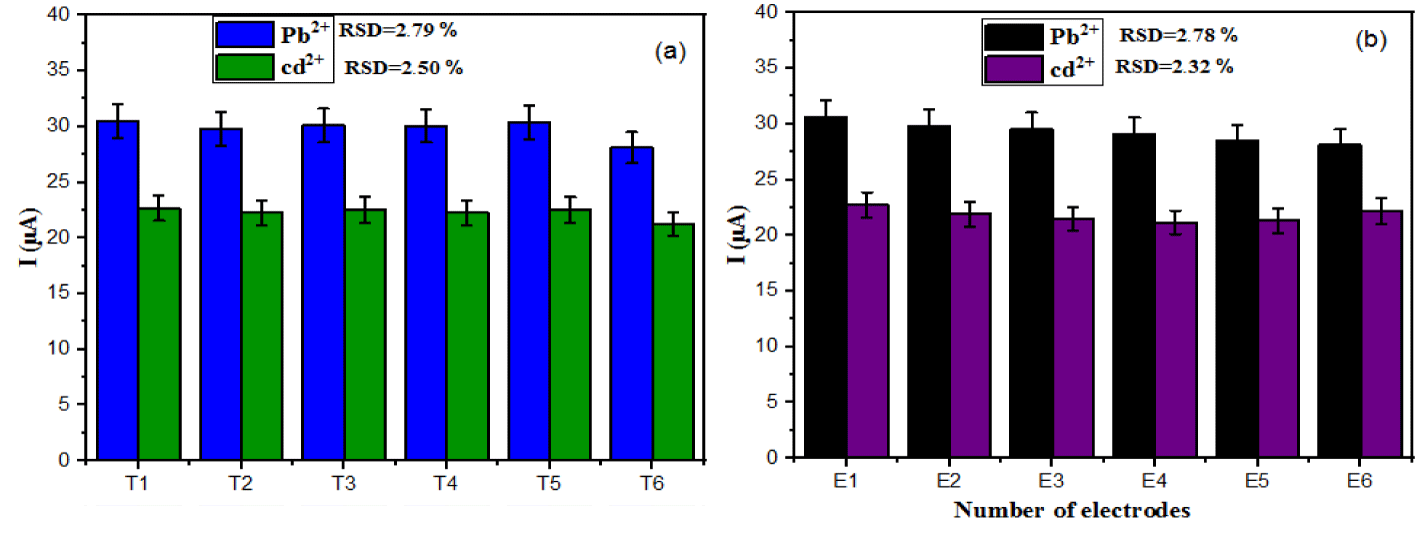
Figure 5(a), repeatability for a single MgO@PANI@CNT/GCE modified electrode after undergoing regeneration (five cycles, from T2 to T6) with 1 mol L-1 EDTA in a 0.1 mol L-1 acetate buffer at pH 5. T1 represent the original current obtained by the sensor at a 10-5 M Pb2+ and cd2+ concentration. (b)Reproducibility test for six different MgO@PANI@CNT/GCE electrodes (from E1 to E6) to a concentration of 10-5 M Pb2+ and cd2+ such electrodes were assemble using the same protocol.
Conclusion
In this study, we electrochemically characterized the composite material (MgO@PANI@CNT) to assess its capability for detecting Pb²⁺ and Cd²⁺ ions. The presence of functional groups on the CNT surface demonstrated notable selectivity toward heavy metal ions. The modified glassy carbon electrode (GCE/MgO@PANI@CNT) exhibited optimal electrochemical performance under carefully optimized conditions. The results highlighted the exceptional analytical capabilities of the sensor, achieving low Limits of Detection (LOD) of approximately 2.5 × 10⁻⁸ M for Pb²⁺ and 5 × 10⁻⁸ M for Cd²⁺. This method provided a dynamic working range from 10⁻⁸ M to 2.5 × 10⁻⁷ M in a 0.1 M acetate buffer at pH 5. Furthermore, MgO@PANI@CNT nanoparticles were successfully employed to quantify Pb²⁺ and Cd²⁺ in real samples using Differential Pulse Voltammetry (DPV), demonstrating high sensitivity and specificity.
References
- Cerutti S, Silva MF, Gásquez JA, Olsina RA, Martinez LD. On- linepreconcentration/determination of cadmium in drinking water on activated carbon using 8-hydroxyquinoline in a flow injection system coupled to an induc- tively coupled plasma optical emission spectrometer. Spectrochim Acta - Part B at Spectrosc. 2003;58(1):43-50. doi: 10.1016/S0584-8547(02)00215-X.
- Noh Y, Jo EJ, Mun H, Ahn YD, Kim MG. Homogeneous and selective detection of cadmium ions by forming fluorescent cadmium-protein nanoclusters. Chemosphere. 2017 May;174:524-530. doi: 10.1016/j.chemosphere.2017.02.025. Epub 2017 Feb 6. PMID: 28189897.
- Mañay N, Cousillas AZ, Alvarez C, Heller T. Lead contamination in Uruguay: the "La Teja" neighborhood case. Rev Environ Contam Toxicol. 2008;195:93-115. PMID: 18418955.
- Jarvis P, Quy K, Macadam J, Edwards M, Smith M. Intake of lead (Pb) from tap water of homes with leaded and low lead plumbing systems. Sci Total Environ. 2018 Dec 10;644:1346-1356. doi: 10.1016/j.scitotenv.2018.07.064. Epub 2018 Jul 13. PMID: 30743847.
- Gao Y, Ren X, Wu J, Hayat T, Alsaedi A, Cheng C, Chen C. Graphene oxide interactions with co-existing heavy metal cations: Adsorption, colloidal properties and joint toxicity. Environ Sci Nano. 2018;5(2):362-371.
- Vázquez-González M, Carrillo-Carrion C. Analytical strategies based on quantum dots for heavy metal ions detection. J Biomed Opt. 2014;19(10):101503. doi: 10.1117/1.JBO.19.10.101503. PMID: 24853041.
- Idris MB, Zakariyya UA. The role of some antioxidants on absorption, distribution and elimination of lead and iron: An in -vivo study. Ejbps. 2016;3:528-531 .
- Erarpat S, Özzeybek G, Chormey DS, Bakirdere S. Determination of lead at trace levels in mussel and sea water samples using vortex assisted dispersive liquid-liquid microextraction-slotted quartz tube-flame atomic absorption spectrometry. Chemo- sphere. 2017;189:180-185 doi: 10.1016/j.chemosphere.2017.09.072.
- Lu YK, Sun HW, Yuan CG, Yan XP. Simultaneous determination of trace cadmium and arsenic in biological samples by hydride generation-double channel atomic fluorescence spectrometry. Anal Chem. 2002 Apr 1;74(7):1525-9. doi: 10.1021/ac0156971. PMID: 12033240.
- Faraji M, Yamini Y, Saleh A, Rezaee M, Ghambarian M, Hassani R. A nanoparticle-based solid-phase extraction procedure followed by flow injection inductively coupled plasma-optical emission spectrometry to determine some heavy metal ions in water samples. Anal Chim Acta. 2010 Feb 5;659(1-2):172-7. doi: 10.1016/j.aca.2009.11.053. Epub 2009 Nov 27. PMID: 20103121.
- Q. Zhou, Lei M, Liu Y, Wu Y, Yuan Y. Simultaneous determination of cad- mium, lead and mercury ions at trace level by magnetic solid phase extraction with Fe@Ag@Dimercaptobenzene coupled to high performance liquid chromatography. Talanta. 2017;175:194-199. doi: 10.1016/j.talanta.2017.07.043.
- Sitko R, Janik P, Zawisza B, Talik E, Margui E, Queralt I. Green approach for ultratrace determination of divalent metal ions and arsenic species using total-reflection X-ray fluorescence spectrometry and mercapto-modified graphene oxide nanosheets as a novel adsorbent. Anal Chem. 2015 Mar 17;87(6):3535-42. doi: 10.1021/acs.analchem.5b00283. Epub 2015 Mar 2. PMID: 25707847.
- Ullah N, Mansha M, Khan I, Qurashi A. Nanomaterial-based optical chemical sen- sors for the detection of heavy metals in water: Recent advances and challenges. TrAC - Trends Anal Chem. 2018;100:155-166. doi: 10.1016/j.trac.2018.01.002.
- Pujol L, Evrard D, Groenen-Serrano K, Freyssinier M, Ruffien-Cizsak A, Gros P. Electrochemical sensors and devices for heavy metals assay in water: the French groups' contribution. Front Chem. 2014 Apr 30;2:19. doi: 10.3389/fchem.2014.00019. PMID: 24818124; PMCID: PMC4012207.
- Aragay G, Pons J, Merkoçi A. Recent trends in macro-, micro-, and nanomaterial-based tools and strategies for heavy-metal detection. Chem Rev. 2011 May 11;111(5):3433-58. doi: 10.1021/cr100383r. Epub 2011 Mar 11. PMID: 21395328.
- Zhang B, Chen J, Zhu H, Yang T, Zou M, Zhang M, Du M. Facile and green fabrication of size-controlled AuNPs/CNFs hybrids for the highly sensitive simul- taneous detection of heavy metal ions. Electrochim Acta. 2016;196:422-430. doi: 10.1016/j.electacta.2016.02.163.
- Hua K, Li X, Fang D, Yi J, Bao R, Luo Z. Electrodeposition of high-density lithium vanadate nanowires for lithium-ion battery. Appl Surf Sci. 2018;447:610-616. doi: 10.1016/j.apsusc.2018.04.043.
- Wang Y, Hu S. Applications of carbon nanotubes and graphene for electrochem- ical sensing of environmental pollutants. J Nanosci Nanotechnol. 2016;16:7852-7872. doi: 10.1166/jnn.2016.12762.
- Jasmin JP, Miserque F, Dumas E, Vickridge I, Ganem JJ, Cannizzo C, Chaussé A. XPS and NRA investigations during the fabrication of gold nanostructured functionalized screen-printed sensors for the detection of metallic pollutants. Appl Surf Sci. 2017;397:159-166. doi: 10.1016/j.apsusc.2016.11.125.
- Abd El-Haleem HS, Hefnawy A, Hassan RYA, Badawi AH, El- Sherbiny IM. Manganese dioxide-core-shell hyperbranched chitosan (MnO2-HBCs) nano-structured screen printed electrode for enzymatic glucose biosensors. RSC Adv. 2016;6(110):109185-109191. doi: 10.1039/C6RA24419J.
- Shen C, Chen C, Wen T, Zhao Z, Wang X, Xu A. Superior adsorption capacity of g-C₃N₄ for heavy metal ions from aqueous solutions. J Colloid Interface Sci. 2015 Oct 15;456:7-14. doi: 10.1016/j.jcis.2015.06.004. Epub 2015 Jun 10. PMID: 26079526.
- Pauliukaite R, Metelka R, Svancara I, Królicka A, Bobrowski A, Vytras K, Norkus E, Kalcher K. Carbon paste electrodes modified with Bi(2)O(3) as sensors for the determination of Cd and Pb. Anal Bioanal Chem. 2002 Nov;374(6):1155-8. doi: 10.1007/s00216-002-1569-3. Epub 2002 Oct 24. PMID: 12458435.
- Zheng H, Ntuli L, Mbanjwa M, Palaniyandy N, Smith S, Modibedi M, Land K, Mathe M The effect of g-C3N4 materials on Pb(II) and Cd(II) detection using disposable screen-printed sensors, Electrocatalysis. 2019;10:149-155. doi: 10.1007/s12678-018-0504-0.
- Guo S, Wu K, Gao Y, Liu L, Zhu X, Li X, Zhang F. Efficient removal of Zn(II), Pb(II), and Cd(II) in waste water based on magnetic graphitic carbon nitride materi- als with enhanced adsorption capacity. J Chem Eng Data. 2018;63:3902-3912. doi: 10.1021/acs.jced.8b00526.
- Zhu Y, Xue J, Xu T, He G, Chen H. Enhanced photocatalytic activity of mag- netic core–shell Fe3 O 4 @Bi 2 O 3 –RGO heterojunctions for quinolone antibiotics degra- dation under visible light. J Mater Sci Mater Electron. 2017;28(12):8519-8528. doi: 10.1007/s10854-017-6574-6.
- Yao XZ, Guo Z, Yuan QH, Liu ZG, Liu JH, Huang XJ. Exploiting differential electrochemical stripping behaviors of Fe3O4 nanocrystals toward heavy metal ions by crystal cutting. ACS Appl Mater Interfaces. 2014 Aug 13;6(15):12203-13. doi: 10.1021/am501617a. Epub 2014 Jul 18. PMID: 25014119.
- Zinoubi K, Majdoub H, Barhoumi H, Boufi S, Jaffrezic-Renault N. Determination of trace heavy metal ions by anodic stripping voltammetry using nanofibrillated cellulose modified electrode. Journal of Electroanalytical Chemistry. 2017;799:70-77. doi: 10.1016/j.jelechem.2017.05.039.
- Naseh MV, Khodadadi AA, Mortazavi Y, Sahraei OA, Pourfayaz F, Sedghi SM. Functionalization of carbon nanotubes using nitric acid oxidation and DBD plasma. World Acad Sci Eng Technol. 2009;49:177-179.
- Philips MF, Gopalan AI, Lee KP. Development of a novel cyano group containing electrochemically deposited polymer film for ultrasensitive simultaneous detection of trace level cadmium and lead. J Hazard Mater. 2012 Oct 30;237-238:46-54. doi: 10.1016/j.jhazmat.2012.07.069. Epub 2012 Aug 24. PMID: 22964385.
- Wang ZM, Guo HW, Liu E, Yang GC, Khun NW. Bismuth/polyaniline/glassy carbon electrodes prepared with different protocols for stripping voltammetric determination of trace Cd and Pb in solutions having surfactants. Electroanalysis. 2010;22(2):209-215. doi: 10.1002/elan.200900251.




Content Alerts
SignUp to our
Content alerts.
 This work is licensed under a Creative Commons Attribution 4.0 International License.
