
Biology Group 2024 November 20;5(11):1486-1502. doi: 10.37871/jbres2037.





 Research Article
A Study on the Application of TRIZ in Wooden Stool Design and Manufacturing
Cheng-Jung Lin1*, Min-Chien Shen2, Po-Heng Lin3 and Chin-Mei Lee3
2Assistant, Forest Production Division, Taiwan Forestry Research Institute, 53 Nanhai Rd., Taipei 10066, Taiwan
3Assistant Researcher, Forest Production Division, Taiwan Forestry Research, 53 Nanhai Rd., Taipei 10066, Taiwan
Abstract
This study, based on TRIZ theory, explored the design and manufacturing process of wooden low stools. The results showed that the systematic approach and innovative tools provided by TRIZ theory effectively resolved various contradictions encountered in the design of wooden low stools, thereby enhancing the product's performance, aesthetics, functionality, and competitiveness. Through the appropriate application of TRIZ, product design and manufacturing were optimized, providing a reference for promoting the upgrading and transformation of the entire wooden furniture industry. This study offered TRIZ theory as a thought process for product design research and provided a reference for the wood industry and woodworking workshops.
Introduction
Wooden furniture has always held a significant position in the global market, particularly under the consumption trend of pursuing natural and environmentally friendly products. Wooden furniture has been widely favored. However, with the increasing market demand, how to ensure product quality while enhancing design innovation has become a major challenge for wooden furniture manufacturers. Wooden low stools, as a typical form of wooden furniture, not only serve practical purposes in home life but also carry certain aesthetic and cultural values. In the process of designing and manufacturing wooden low stools, designers and engineers need to balance multiple factors such as material selection, structural strength, manufacturing techniques, and aesthetics, which often involve many technical contradictions and difficulties.
Although wooden low stools are widely applied in home design, traditional design and manufacturing methods often face technical challenges and innovation bottlenecks when meeting modern demands. For example, how to maintain the aesthetics and durability of the product while pursuing structural strength and material light weighting? How to effectively utilize available resources and materials to reduce waste during the manufacturing process? These issues often involve multiple design and manufacturing contradictions, and relying solely on traditional methods makes it difficult to achieve optimal solutions. Research on factors influencing the purchase intention of wooden chairs (including low stools) has shown that consumers rate small wooden furniture highly in terms of usage, design, material, and environmental factors [1]. However, research on using Taiwanese wood for small furniture remains insufficient.
In the field of wooden furniture design, past research has mainly focused on material properties, manufacturing techniques, and design aesthetics. For example, many scholars have explored the physical and mechanical properties of various types of wood and analyzed their application potential in furniture design. At the same time, some studies have emphasized improvements in manufacturing processes, particularly in the application of CNC machining and digital manufacturing technologies, which have demonstrated significant advantages in improving production efficiency and precision [2]. Additionally, research on the aesthetics of furniture design has continued to expand, especially concerning the application of ergonomics and its impact on user comfort [3].
TRIZ (Theory of Inventive Problem Solving) was proposed by Russian scholar Genrich Altshuller in 1946. The primary goal of TRIZ is to assist innovation and solve technical problems by analyzing a vast number of patents and inventions, summarizing the laws and methods of innovative thinking. The core concepts of TRIZ include contradiction analysis, inventive principles, ideal final result, laws of evolution, and the contradiction matrix. Contradiction analysis is the foundation of TRIZ, helping identify and analyze contradictions within a system to find solutions. The inventive principles offer 40 general strategies to overcome technical contradictions, the laws of evolution describe the trends in system development over time, and the contradiction matrix serves as a tool for identifying and solving technical contradictions [4,5].
TRIZ has been widely applied across various fields, including product design and innovation, process improvement, problem-solving, education and training, and knowledge management. In product design, TRIZ helps designers identify and solve technical contradictions, promoting innovation. In process improvement, TRIZ enhances efficiency, reduces waste, and lowers production costs. For problem-solving, TRIZ provides a systematic approach to tackle business challenges and technical difficulties. In education and training, TRIZ cultivates innovative thinking and problem-solving abilities, while in knowledge management, it drives knowledge innovation. In summary, TRIZ serves as a powerful innovation tool, systematically solving problems, improving efficiency, and promoting technical and business progress [6,7].
The main function of TRIZ is to inspire creative thinking, thereby correctly formulating and solving complex problems in design, ultimately accelerating the entire design process [8]. TRIZ, through contradiction matrix analysis, addresses problems and applies principles of innovative solutions to provide feasible solutions. In life cycle studies, where contradictions frequently arise due to multiple choices, the application of TRIZ is particularly appropriate [9]. The uniqueness of TRIZ lies in its philosophy of solving inventive problems and providing the possibility of using a widely-available knowledge base. TRIZ’s systematic approach emphasizes its detailed nature [10]. Furthermore, TRIZ is a multifunctional innovation tool that can be combined with various process improvement tools [11]. By integrating TRIZ strategic tools, adopting complexity planning guidelines, designers are assisted in effectively managing and reducing product complexity during the conceptual design stage while predicting system evolution trends to enhance complexity management efficiency throughout the product life cycle [12].
However, the application of systematic innovation methods in the design and manufacturing of wooden small furniture, especially TRIZ methodology, remains relatively underexplored in existing literature. Although TRIZ has been widely applied in many fields of industrial design and technological innovation [13,14], its potential application in the design and manufacturing of wooden furniture, particularly wooden low stools, has not been fully explored.
Against this backdrop, TRIZ (Theory of Inventive Problem Solving), as a systematic innovation method, offers new approaches to solving problems. By identifying and resolving technical contradictions in design, TRIZ helps overcome the limitations of traditional design thinking, thus enhancing product innovation and market competitiveness. Therefore, this study applied the TRIZ methodology to the design and manufacturing process of wooden low stools, aiming to explore how this theory can resolve technical challenges in design, optimize manufacturing processes, and ultimately improve the overall quality and functionality of wooden low stools, providing a reference for problem-solving.
Materials and Methods
Research materials
This study selected three types of wood native to Taiwan as the primary materials for manufacturing the low stools, including Taiwania (Taiwania cryptomerioides), Bead tree (Melia azedarach), and Calocedrus (Calocedrus formosana). Each of these woods possessed unique physical and aesthetic characteristics, making them suitable for furniture production with varying functions and design requirements. Taiwania, widely used for its lightweight and rot-resistant properties, was particularly suited for furniture designs that required portability and ease of handling. Bead tree, known for its high hardness and strong insect resistance, was used for structural components, providing excellent support and durability. Calocedrus, with its pleasant fragrance and superior workability, was often chosen for high-end furniture; its fine grain and smooth surface also added to the aesthetic appeal of the wooden low stools.
In the material selection process, the sustainability and environmental friendliness of these woods were fully considered. Taiwania, Bead tree, and Calocedrus, all locally grown in Taiwan, helped reduce the carbon footprint and supported the sustainable development of Taiwan’s forestry. Moreover, this study paid special attention to the workability of the materials and their ability to adapt to different manufacturing processes. The low density of Taiwania made it easy to cut and shape, while the high hardness of Bead tree required more advanced machining techniques and tools. Calocedrus’ excellent workability made it suitable for fine carving and surface finishing.
The selection process also took into account the woods' performance under different environmental conditions. Taiwania demonstrated good stability in humid environments, while Bead tree maintained its structural integrity in both dry and humid conditions. Calocedrus, known for its durability and weather resistance, was suitable for furniture intended for long-term use. By comprehensively evaluating the physical properties, environmental adaptability, and aesthetic qualities of the woods, this study chose these three materials to meet the functional, durable, and aesthetic requirements of the wooden low stools.
Design indicators
In this study, the selection of design indicators was based on a comprehensive consideration of the functionality, aesthetics, user experience, and manufacturing feasibility of the wooden low stools. A total of 10 key design indicators were established to ensure that the final product achieved optimal results in all aspects. These indicators were:
- Strength and stability, ensuring that the wooden low stool could withstand the pressure of daily use and maintained stability during use
- Portability, with the design taking into account the weight of the stool, making it easy to move
- Comfort, focusing on the design and material selection of the seat to enhance user comfort
- Aesthetics, ensuring that the appearance of the stool met modern aesthetic standards
- Material utilization, aiming to maximize the use of wood and minimize waste
- Durability, selecting durable materials and structural designs to extend the product's lifespan
- Production cost, considering cost-effectiveness in the manufacturing process
- Environmental friendliness, choosing environmentally friendly materials and production processes
- Modular design, exploring how the stool could be designed with a modular structure that was easy to assemble and disassemble
- Processing difficulty, considering the technical challenges in the manufacturing process and simplifying the steps where possible. These design indicators provided clear direction and specific goals for the design and manufacturing process of the wooden low stools.
Manufacturing process
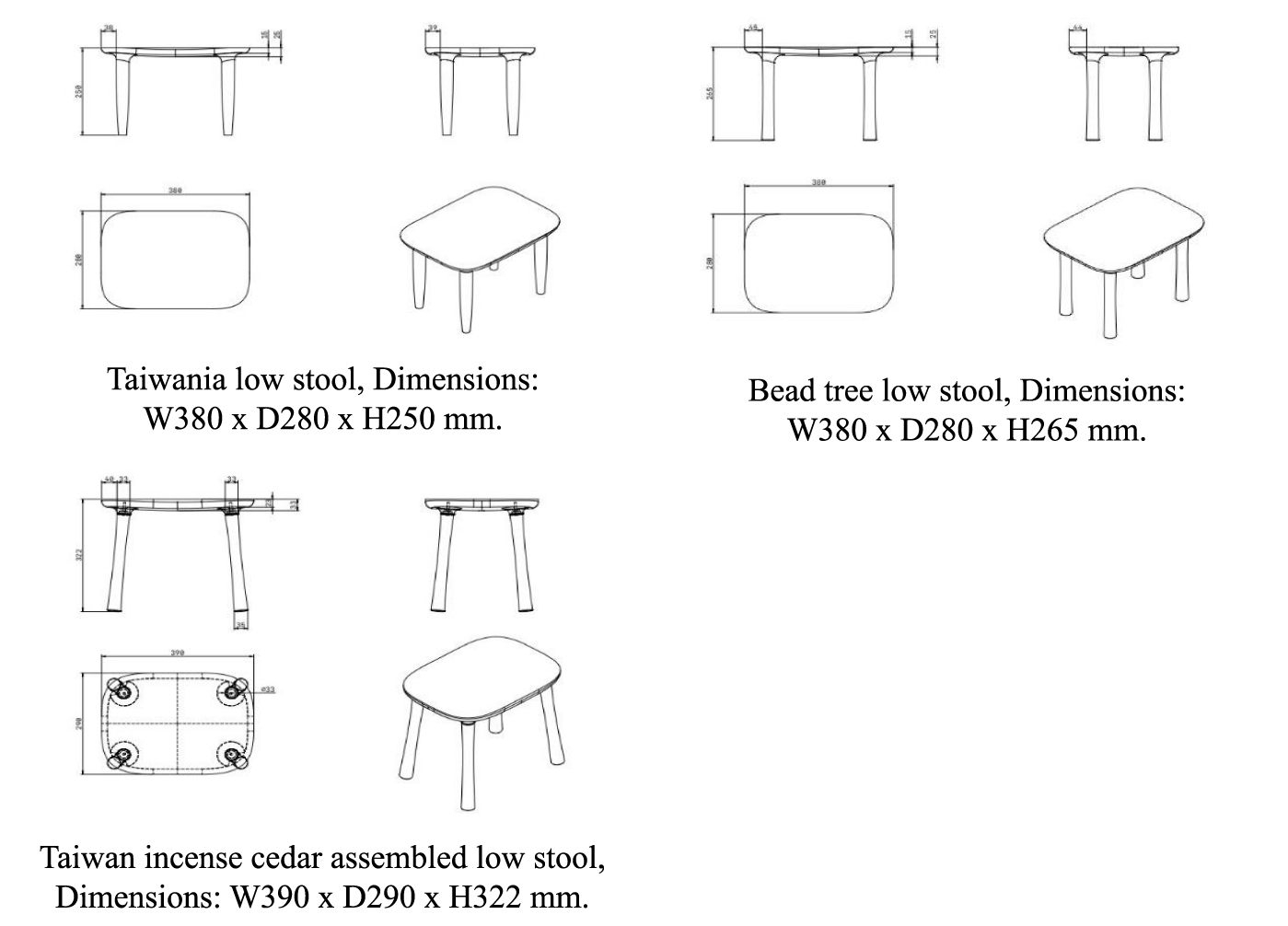
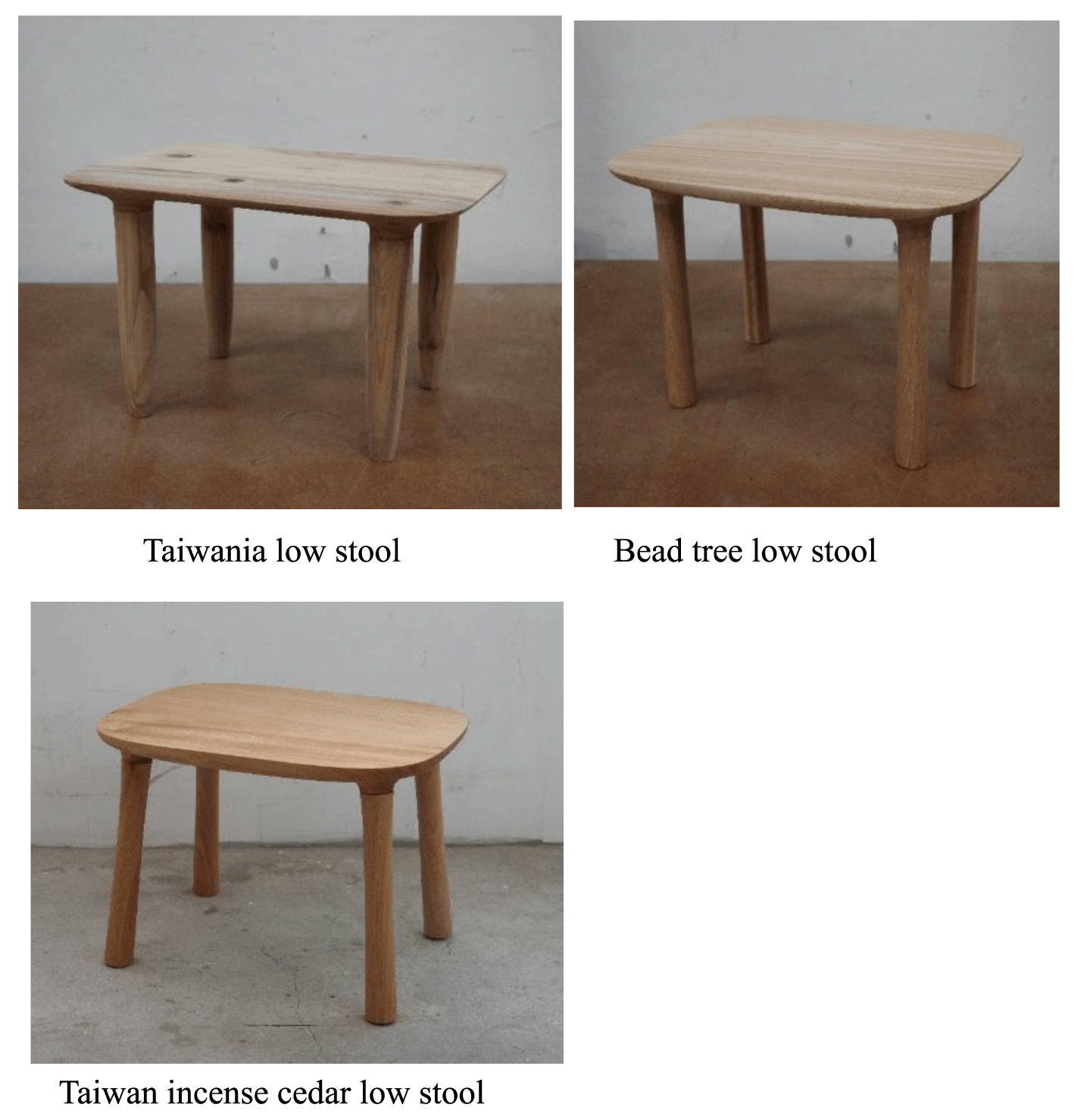
During the manufacturing process of the wooden low stools, the selected wood was first cut and shaped to ensure that each component met the design specifications. Based on the design requirements, CNC digital processing technology was used for precise cutting, particularly for the stool seat, which featured complex curves. This technology significantly improved machining accuracy while reducing human error. Next, the components underwent an initial sanding process to remove rough edges and smooth the surfaces. Following this, the stool legs and seat were assembled using precise joining techniques such as mortise-and-tenon joints or screws, ensuring stability and durability at every connection point. After the assembly was completed, the entire stool was thoroughly sanded to achieve a flawless surface. Finally, depending on the design requirements, surface treatments such as painting or waxing were applied, which not only enhanced the stool's aesthetics but also improved the wood’s weather resistance and durability. The entire manufacturing process followed the design indicators closely, ensuring that the final product met the expected standards in terms of strength, stability, and aesthetics. The design and physical images of the low stools made from Taiwania, Bead tree, and Calocedrus are shown in figures 1,2.
Methodological framework
In this study, TRIZ (Theory of Inventive Problem Solving) was adopted as the core methodology for analyzing the design and manufacturing processes of the wooden low stools. TRIZ provided a systematic set of tools and techniques to identify and resolve potential technical contradictions during the design and manufacturing stages and to explore innovative solutions. The research framework included 11 analysis items, as shown in table 1.
| Table 1: Application of TRIZ in the design and manufacturing of wooden low stools: 11 items. | ||
| Item | Direction of exploration | Application example |
| Contradictions | Identify and resolve technical contradictions in design. | The contradiction in the design is between "stability" and "lightweight." The use of four slanted legs maintains stability, while CNC processing thinned the seat surface to achieve a light yet stable design. |
| Inventive Principles | Apply the 40 inventive principles to overcome design and technical challenges. | The “Segmentation Principle” was applied to design a disassemblable stool, making it easy to carry and store. Combining male and female screws and wooden dowels enhanced the assembly's stability and aesthetic appeal. |
| Trends of Technical Evolution | Study how design evolves with technological advances. | Trends in wooden furniture design were investigated, considering the use of sustainable materials and digital processing tools. Hidden storage or adjustable height features were incorporated into the design. |
| Function Analysis | Analyze how each component fulfills its function and examine potential areas for optimization. | The function of the stool legs was analyzed to ensure stability and support during long-term use. Joints between wooden dowels and screws were examined to seek design improvements for enhanced stability. |
| Ideal Final Result (IFR) | Seek the most ideal solution that maximizes functionality and aesthetics. | The ideal stool should be stable, lightweight, easy to assemble and disassemble, and simple to manufacture. The design was optimized for stability, aesthetics, and ease of processing without adding weight or extra materials. |
| Resource Analysis | Analyze available resources such as materials, processes, technologies, and equipment. | Taiwan-specific Calocedrus wood, surplus materials, and existing equipment were utilized to reduce production costs and minimize resource waste. |
| System Operator Analysis (Nine Windows Analysis) | Analyze problems from different temporal and spatial scales to optimize design and manufacturing processes. | The structure and function of the stool were analyzed during the design planning, prototyping, and usage phases using Nine Windows Analysis. |
| Standard Solutions | Apply TRIZ standard solutions to address technical or physical issues in design. | Standard solutions were applied to balance the strength and weight of the stool, ensuring structural stability while maintaining lightness. |
| Contradiction Matrix | Use the contradiction matrix tool to find specific inventive principles. | The contradiction matrix was used to resolve the conflict between durability and cost, selecting the most suitable materials and design methods. |
| Trends of Technical Evolution | Analyze the evolution trends of design or technology over time. | The evolution trends of wooden furniture were analyzed, considering future materials or design concepts that might be used. |
| Function-Oriented Search | Conduct a function-oriented search for innovative technologies. | Technologies from other industries were searched to improve wood durability, and new processing techniques were explored to enhance production efficiency. |
First, the analysis began with Contradiction Analysis, addressing technical contradictions encountered in the design and manufacturing processes, such as the conflict between stability and portability. The TRIZ Contradiction Matrix was used to identify suitable solutions. Next, the 40 Inventive Principles of TRIZ were applied to explore how innovation could be achieved in the design. For instance, the Segmentation Principle was employed to reduce structural weight. The Law of System Evolution analyzed the evolution trends of wooden furniture with technological advancements and guided innovations in both design and manufacturing processes.
In the Function Analysis, the functions of each stool component were evaluated for their importance, identifying potential areas for improvement to enhance the overall practicality and efficiency of the design. Ideal Final Result analysis sought pathways to achieve an ideal state in the design and manufacturing process, ensuring that required functions were fulfilled without adding complexity or cost. Resource Analysis conducted a comprehensive examination of available resources to maximize the use of existing materials, equipment, and energy, reducing production costs and minimizing waste.
Additionally, problems were analyzed from the perspective of System Operation to ensure optimization at every stage of the design and manufacturing processes. The application of Standard Solutions helped to achieve the best outcomes within the known framework. By using the Contradiction Matrix, innovative solutions were systematically identified to address design contradictions, balancing various performance attributes. Reference to Evolutionary Trends helped predict future design directions and allowed for proactive technical planning. Finally, Function and Attribute-Oriented Search focused on specific functions or attributes of the low stool, conducting cross-industry technical searches to incorporate innovative methods from other fields to improve product performance.
Research process
In this study, the TRIZ methodology was used as the core framework to systematically explore the design and manufacturing process of the wooden low stools. The research first selected and analyzed the properties of materials such as Taiwania, Bead tree, and Calocedrus formosana, determining their applicability in the production of wooden low stools. Then, 10 design indicators were established, including structural strength, stability, comfort, sustainability, and ease of processing, which served as guiding principles for both the design and manufacturing stages. During the manufacturing phase, a combination of traditional and modern techniques was employed, utilizing CNC machines and manual craftsmanship for cutting, sanding, and assembling the wood, while effectively using the leftover wood materials.
On this basis, TRIZ analysis methods were applied to conduct in-depth exploration of 11 items, including contradiction analysis, inventive principles, the law of system evolution, and function analysis. These analyses systematically addressed technical problems encountered in the design and manufacturing processes. Through in-depth analysis of these 11 items, various optimization pathways for the design, material selection, and manufacturing of the wooden low stools were identified, and practical recommendations for improvements were proposed, providing a reference for problem-solving approaches.
Results and Discussion
Through the application of TRIZ theory, this study addressed various contradictions in the design and manufacturing processes of wooden low stools and proposed several innovative solutions (Table 2). The research found that for the contradiction between "lightweight and stability," solutions such as segmented structures and the use of composite materials were effective. Regarding the contradiction between "material strength and weight," material changes and CNC processing technology enabled the achievement of both lightweight and high strength. Additionally, for contradictions such as "curved shapes and processing difficulty," "leg stability and design complexity," and "screw joints and wooden dowel structures," solutions including local quality, dynamics, and integration were proposed. The results showed that TRIZ theory effectively assisted designers in systematically analyzing and resolving various contradictions in the design and manufacturing processes, thereby enhancing the performance and competitiveness of the product. The effectiveness of these solutions needs further verification. Future research should consider a broader range of user needs and test the performance of different designs in real-world environments.
| Table 2: TRIZ theory applied to the design and manufacturing of wooden low stools: Analysis of inventive principles and possible solutions for "contradictions". | |||
| Item | Contradiction description | Inventive principle | Solution |
| Design | The stool needs to be lightweight (for easy movement) but must be stable (to prevent tipping). | Segmentation (Principle 1) | The stool's structure was designed to be disassemblable (e.g., detachable seat and legs), allowing for lighter materials while maintaining structural stability. |
| Materials | Materials need to have high strength (for stability) and lightweight properties (to reduce weight), but high-strength materials are usually heavier. | Material Change (Principle 35) | Composite materials or combinations of different woods were selected, such as using higher-density wood for structural support. CNC processing was used to taper the seat thickness from the dowel holes outward, achieving overall weight reduction while retaining stability. |
| Manufacturing | The curved shape of the stool enhances aesthetics and comfort but increases manufacturing difficulty and time cost. | Local Quality (Principle 3) | Specific processing techniques, such as CNC digital processing, were applied to achieve precise curve designs and simultaneously reduce manual labor and time costs. |
| Structural Design | Vertical design of the legs can lead to instability, but angling the legs increases design and manufacturing complexity. | Dynamics (Principle 15) | The legs were designed to tilt outward (complex slope), enhancing structural support and adaptability to different ground conditions. |
| Assembly | There is a contradiction between the convenience of screw joints and the stability of traditional wooden dowel joints. | Combination (Principle 6) | The advantages of screws and wooden dowels were combined in the assembly process. Male and female screws were used for easy assembly, while wooden dowels improved structural stability. |
Through the 40 Inventive Principles of TRIZ, this study thoroughly explored various contradictions encountered in the design and manufacturing processes of wooden low stools and proposed a series of innovative solutions (Table 3). The research found that principles such as "Segmentation," "Extraction," and "Local Quality" effectively addressed issues like lightweight design, structural strength, and processing difficulty. Moreover, applying principles like "Asymmetry," "Combination," and "Universality" enhanced the aesthetic appeal, functionality, and economic viability of the stools. Principles such as "Nested," "Anti-Gravity," and "Pre-Action" improved storage, usability, and maintenance. Further, principles like biomimicry, flexible shells, dynamics, self-service, pre-set pads, and pneumatic or hydraulic systems significantly improved comfort, safety, and durability. The results indicated that TRIZ theory provided a rich theoretical foundation and practical tools for innovative design, helping designers break through traditional thinking and develop more competitive products. The application of these principles should be tailored to specific design needs, considering feasibility and cost-effectiveness in actual production. Future research could further update and supplement TRIZ principles to address challenges posed by emerging materials and manufacturing technologies.
| Table 3: Application of TRIZ theory in the design and manufacturing of wooden low stools: Analysis of inventive principles and possible applications. | ||
| Inventive principle | Direction of exploration | Application example |
| Segmentation | Divide the object into separate parts or modules to enhance flexibility and usability. | Designed a disassemblable stool for easy transportation and storage, or used different woods for different parts of the stool to combine aesthetics with practicality. |
| Taking Out | Remove unnecessary parts or features to simplify design and enhance performance. | Removed unnecessary decorations or components to reduce the stool's weight while retaining its structural strength and functionality. |
| Local Quality | Optimize specific areas or parts to meet their unique requirements. | Strengthened the connection between the seat and legs to enhance stability while keeping other parts lightweight. |
| Asymmetry | Introduce asymmetrical design to improve product performance or solve problems. | Designed an uneven thickness for the stool seat, using an elliptical shape; the legs had varying diameters and were inclined outward to enhance aesthetics, depth, and stability. |
| Merging | Combine similar or related parts or functions to simplify design and improve efficiency. | Integrated the stool's support structure with decorative elements to reduce material use and lower production costs. |
| Universality | Extend the function of one part to multiple uses, reducing the need for other parts. | Designed a multifunctional stool with storage space to save space and increase product value. |
| Nested Doll | Design nested structures so that parts of different sizes can fit into each other to enhance flexibility. | Designed stackable stools for easy storage and space-saving. |
| Anti-Weight | Reduce weight or use anti-gravity effects to improve product performance. | Used lightweight wood or composite materials to make the stool while ensuring structural strength. |
| Preliminary Action | Implement operations or preparations in advance to reduce difficulty in subsequent steps. | Pre-treated the wood to adapt to different environmental humidity and temperature changes, avoiding deformation of the stool or materials. |
| Copying | Mimic natural structures or mechanisms to enhance design innovation and performance. | Modeled the stool legs after tree root structures to increase stability and load-bearing capacity. |
| Flexible Shells and Thin Films | Use flexible shells or films to cover or protect internal structures. | Added flexible cushions, anti-slip mats, or designed removable seat and leg parts to enhance the stool's comfort and appearance. |
| Dynamization | Introduce dynamic structures or adjustable components to improve product adaptability. | Designed detachable stool legs for replacing with different legs to suit various users' needs. |
| Self-Service | Design automatic or semi-automatic features to reduce dependence on external resources. | Designed replaceable seat and legs for easy cleaning and maintenance. |
| Preliminary Cushioning | Install cushioning in areas where impacts or stresses may occur in advance to reduce damage or increase durability. | Added rubber pads to the bottom of the stool to reduce sliding and noise during use. |
| Pneumatics and Hydraulics | Use pneumatic or hydraulic techniques to improve product performance and comfort. | Installed elastic rubber pads at the base of the stool legs to provide cushioning and increase friction with the ground for enhanced safety. |
Through the analysis of TRIZ technology evolution principles, this study identified significant technological advancements in the design and manufacturing history of wooden low stools (Table 4). The research showed that from traditional simple shapes and manual production, there has been a gradual development to modern complex curves, multifunctional designs, and automated production. TRIZ principles such as "Dynamics," "Material Transformation," "Automation," "Structural Transformation," and "Multifunctionality" played crucial roles in driving technological progress in wooden low stools. For instance, introducing adjustable design elements and modular structures enhanced adaptability and flexibility; while adopting composite materials and automated production technology increased performance and efficiency. These technological advancements not only met diverse demands for furniture functionality and aesthetics but also drove the continuous development of the wooden furniture industry. The application of these technologies requires a comprehensive consideration of market demand and consumer acceptance, particularly in balancing technological costs with market prices. Future research could explore the environmental impact of these technological advancements and evaluate their role in sustainable development.
| Table 4: Application of TRIZ theory in the design and manufacturing of wooden low stools: Description of "trends of technical evolution" and possible improvement directions. | |||
| Item | Technical evolution description | Technical evolution principle | Development and improvement directions |
| Design | The design of wooden low stools has evolved from simple straight shapes to more complex curves and multi-angle designs. | Dynamization (Principle 15) | Introduce adjustable design elements, such as adjustable legs, to adapt the stool to different user needs and scenarios, enhancing the product's adaptability and multifunctionality. Design the seat and legs with a streamlined, three-dimensional form. |
| Materials | Traditional wooden materials have evolved to include composite materials and combinations of various woods to improve performance and sustainability. | Material Transformation (Principle 35) | Explore new wood treatment technologies, such as weather-resistant wood or new composite materials, to enhance the stool's durability and environmental friendliness. |
| Manufacturing | Progressed from handcrafting to CNC digital processing, improving precision and efficiency. | Automation (Principle 28) | Adopt key automation processes for integrated manufacturing from design to finished product, improving production efficiency, reducing labor costs, and ensuring consistency and quality, combining traditional craftsmanship with modern technology. |
| Structural Design | Stool structure has evolved from single connections to combinations of multiple connection methods, such as wood joints and metal fasteners. | Structure Transformation (Principle 5) | Implement modular design allowing different parts of the stool to be flexibly combined and disassembled, enhancing assembly and maintenance convenience while improving the stool's stability and durability. |
| Function | The stool has evolved from a single-function item to multifunctional furniture, such as those with storage space or transformable features. | Multifunctionality (Principle 14) | Design furniture with dual purposes, such as a stool that can transform into a table, or design internal spaces for storage, increasing the product's value and usability. |
Through TRIZ functional analysis, this study systematically explored the functional requirements of wooden low stools and proposed several innovative design solutions (Table 5). The research showed that TRIZ effectively assisted designers in considering all functional elements of the product from user needs and suggested targeted improvements. For instance, ergonomic design enhanced comfort; the use of new composite materials increased durability and environmental friendliness; and multifunctional designs met diverse user needs. TRIZ functional analysis provided a new perspective for designing wooden low stools, helping to develop products that are more aligned with user needs and competitive in the market. The results of the functional analysis should be combined with market trends and consumer preferences to ensure product success. Future designs should pay more attention to sustainability and the demands of the circular economy to increase the environmental benefits of the product.
| Table 5: Application of TRIZ theory in the design and manufacturing of wooden low stools: Analysis of "function analysis" objectives and possible improvement directions. | |||
| Item | Function description | Function objective | Improvement directions |
| Design | Shape and structure design of the stool | Provide comfort and stability | Design the seat to be ergonomic, enhancing user comfort; optimize structural design to improve stability, prevent wobbling, and enhance safety. |
| Materials | Use suitable wood for the seat and legs | Improve durability and aesthetics | Choose high-quality, durable, and aesthetically pleasing wood; consider using treated wood to enhance durability while preserving the natural beauty of the wood grain. |
| Manufacturing | Precise cutting and shaping of the seat and legs | Maintain consistency and high precision | Employ CNC digital processing technology to improve accuracy, ensuring each stool's dimensions and shape are consistent and minimizing manual errors. |
| Connection Method | Connect the seat and legs to ensure overall stability | Enhance structural stability | Use strong and durable connectors, such as wood joints or screws, to ensure the stability and durability of the connections, avoiding looseness or wobbling. |
| Surface Treatment | Polish and finish the wood surface | Improve wear resistance and aesthetics | Choose functional or eco-friendly finishing materials for surface treatment, providing good wear resistance while maintaining or enhancing the natural beauty of the wood. |
| Structural Strength | Provide sufficient strength to support the user's weight | Ensure safety | Optimize structural design and select appropriate materials to enhance the stool's load-bearing capacity, ensuring safety during use. |
| Function Expansion | Add additional features to the stool, such as a footrest or coffee table | Increase product value | Design the stool with multifunctional features such as a footrest or coffee table to increase the product's practicality and versatility. |
Through the application of TRIZ Ideal Final Result analysis, this study explored the design objectives for wooden low stools in depth (Table 6). The ideal wooden low stool should combine structural stability, aesthetic appeal, comfort, durability, and cost-effectiveness. Specifically, in terms of design, it should pursue a simple structure and optimized materials to achieve minimal material consumption and maximum strength. In manufacturing, automation should be achieved to improve efficiency and ensure product consistency. In terms of functionality, the stool should offer multifunctionality to meet diverse user needs. Additionally, the ideal wooden low stool should also possess environmental and sustainability features to align with modern societal demands. Although these ideal solutions provide a clear design direction, practical application may face technical limitations and cost challenges. Future research should further assess the feasibility of ideal solutions in actual manufacturing processes and explore ways to achieve these design goals without increasing costs.
| Table 6: Application of TRIZ theory in the design and manufacturing of wooden low stools: Description and goal analysis of "ideal solution" items. | |||
| Item | Description | Ideal solution goal analysis | Ideal solution analysis |
| Design | Structure design of the wooden low stool | The design should have structural stability, aesthetic appeal, and comfort without adding extra costs or components. | This requires achieving optimal strength with minimal material while maintaining aesthetics and functionality. |
| Material Selection | Choosing suitable wood for making the stool | The material should be lightweight, durable, stable, and not prone to deformation, with wide availability and low cost. | Select wood that meets design requirements and maximizes use of existing resources to minimize waste. |
| Manufacturing | Manufacturing and processing of the stool | The process should be simple, quick, precise, and capable of automation. | Ideally, the process should produce various specifications without the need for equipment or process adjustments, ensuring high quality and low cost. |
| Assembly | Assembly process of the stool | The assembly process should be quick and easy, requiring no special tools. | The stool design should allow for automatic or simple manual assembly without the need for adhesives or nails. |
| Durability | Long-term stability and durability of the stool | The stool should maintain stability and functionality over time without frequent maintenance or repairs. | Ideally, the stool should feature characteristics such as moisture resistance, pest resistance, and anti-deformation to ensure good condition after prolonged use. |
| Aesthetic Appeal | Visual design of the stool | The appearance should attract consumers without increasing costs or manufacturing difficulty. | Ideally, the visual design should perfectly integrate with the structural function, achieving harmony between aesthetics and functionality without additional decoration or processing. |
| User Experience | Comfort and satisfaction of users when using the stool | Users should feel extremely comfortable without needing adjustments or additional support. | Ideally, the stool should meet ergonomic design standards, automatically adapting to different usage scenarios and providing optimal comfort. |
| Environmental Impact | Environmental impact of production and use | The production process should avoid negative environmental impacts, and the material should be sustainable and recyclable. | Ideally, the entire production and usage cycle should be environmentally friendly, minimizing the carbon footprint and reducing natural resource consumption. |
| Cost Effectiveness | Production cost and market value of the stool | The stool should minimize costs while maintaining high quality and have good market competitiveness. | Ideally, the stool should achieve the highest market value with the lowest production cost while providing excellent cost-performance ratio. |
| Function and Performance | Functionality and performance of the stool | The stool should meet all user needs, offering multifunctionality and stable performance. | Ideally, the stool should not only serve as a seat but also feature additional functions, such as a footrest or coffee table. |
| Maintenance and Care | Maintenance needs during the stool’s usage | The stool should require only minimal maintenance throughout its lifetime. | Ideally, the stool should be durable and require only simple maintenance, such as cleaning and applying wood oil, to ensure a long lifespan. |
| Production Efficiency | Production efficiency and output | The production process should achieve maximum efficiency without sacrificing quality or increasing costs. | Ideally, production equipment should operate continuously and efficiently, producing consistent, high-quality products, maximizing output, and shortening production cycles. |
Through TRIZ resource analysis, we systematically reviewed various resources involved in the design and manufacturing process of wooden low stools (Table 7). The study found that, under existing resource conditions, local wood, existing equipment, skilled workers, and established market channels could be effectively utilized to improve the design and production efficiency of wooden low stools. Simultaneously, some areas could be optimized, such as using waste, off-cuts, and introducing new composite materials to achieve better resource utilization and environmental benefits; employing digital design and automation production to enhance product precision and consistency while reducing production costs; and training employees and incorporating external resources to boost the team’s innovation and problem-solving capabilities. TRIZ resource analysis helped us gain a comprehensive understanding of the strengths and weaknesses of existing resources, providing a systematic optimization plan for the design and manufacturing of wooden low stools. Through reasonable resource allocation and innovative solutions, continuous improvement in the design and production of wooden low stools could be achieved to meet market demands for high-quality, personalized, and environmentally friendly products. Resource allocation should consider global resource supply uncertainties and environmental protection needs. Future research could explore how to maximize resource utilization efficiency through innovative design and technological advances in the face of limited resources. Additionally, resource analysis results should be combined with market demands and economic feasibility to ensure the sustainability of design and manufacturing solutions.
| Table 7: Application of TRIZ theory in analyzing and exploring wooden low stools: "resource analysis" items description and resource analysis. | |||
| Item | Description | Current resource analysis | Optimization |
| Material Resources | Materials required for making the wooden low stool | Utilized locally sourced wood such as Taiwania, Bead tree, and Calocedrus. These wood resources are abundant and offer good processability and durability. | Select waste, edge pieces, and small parts to reduce waste, or choose cost-effective and eco-friendly composite materials. |
| Tool Resources | Tools and equipment required for processing and manufacturing the wooden low stool | Utilized existing CNC digital processing equipment and hand tools. | Maximize the use of existing equipment and tools, such as reducing trial-and-error through digital simulation, or sharing equipment to reduce costs. |
| Technical Resources | Technical knowledge and craftsmanship required for design and manufacturing | Utilized woodworking techniques mastered by current factories or workshops, such as carving, joining, and surface finishing. | Enhance design precision with digital design software, or introduce automation technologies to improve processing efficiency and consistency. |
| Human Resources | Technicians and workers involved in design, manufacturing, and assembly | Utilized existing technicians and workers with extensive wood processing experience. | Train current staff to master new processing techniques, or bring in experts to guide and optimize production processes. |
| Time Resources | Time management from design to completion of production | Utilized existing project plans and production schedules. | Save time by parallel processing different manufacturing steps, or shorten design and modification stages using digital design. |
| Financial Resources | Funds and budget supporting the design and manufacturing process | Utilized existing budgets and funds for design and production. | Reduce costs through lean production and resource maximization, or seek external funding support such as government subsidies or investments from partners. |
| Space Resources | Workspaces required for design, processing, and assembly | Utilized existing workspaces, such as workshops or manufacturing facilities. | Maximize space utilization through effective planning of work areas and equipment layout, or consider renting additional space to handle peak production demands. |
| External Resources | Available external knowledge, technical support, and partnerships | Utilized support from local suppliers and external experts. | Collaborate with other companies to share technologies and resources, or use external consultants to solve specific problems or drive design innovation. |
| Information Resources | Data and technical information needed during design and manufacturing | Utilized existing design documents, technical information, and past project experiences. | Establish a centralized information repository for team access and sharing of important data, or use market research to optimize design and product positioning. |
| Market Resources | Market demand and consumer preference data and analysis | Utilized existing market research reports and consumer feedback, and leveraged existing channels. | Conduct deeper market analysis to understand the latest consumer trends, or use social media and digital platforms to collect real-time consumer feedback and rapidly reflect it in the design. |
| Ecological Resources | Utilization of sustainable development and environmental protection resources | Utilized sustainably sourced wood and eco-friendly processing technologies. | Consider using recycled materials and reducing waste in the production process, or introduce low-energy processing technologies to minimize environmental impact. |
Through TRIZ system operation analysis, we systematically optimized the entire process of designing, manufacturing, and using wooden low stools (Table 8). The study found that during the design phase, introducing modular design and digital tools could effectively shorten design cycles and improve design quality; during manufacturing, automation production technology and standardized operating procedures could significantly enhance production efficiency and reduce production costs; and during usage, designing ergonomic structures and selecting easy-to-maintain materials could improve product comfort and lifespan. TRIZ system operation analysis provided a systematic methodology, helping us integrate resources and optimization plans from a global perspective, ultimately achieving optimal design and manufacturing results for wooden low stools. The effectiveness of implementing system operation analysis results depends on the coordination and cooperation between various stages. Future research should further explore how to optimize interactions and cooperation between stages and make dynamic adjustments to design and manufacturing processes based on market feedback. With changes in technology and the market, the system operation analysis method needs continuous updating and supplementation.
| Table 8: Application of TRIZ theory in exploring wooden low stools: "system operation" items description and operation analysis. | |||
| Item | Description | System operation analysis | Optimization |
| Design Operation | Overall scheme and detailed design of the wooden low stool | Define the functional requirements and design goals of the stool, using TRIZ methods to resolve technical contradictions in the design process. | Improve the design process through iterative design, using digital design tools for virtual testing and model validation. |
| Material Selection | Selection of materials suitable for making the wooden low stool | Choose appropriate wood based on the stool's functional requirements, such as Taiwania, Bead tree, and Calocedrus. | Analyze the properties of different materials and apply TRIZ inventive principles to select the material that best meets design requirements. |
| Structural Design | Design the structural components of the wooden low stool, including the seat and legs | Ensure the structural design can withstand everyday use pressure and load, avoiding over-design. | Use TRIZ's principles of technological evolution to improve structural design, achieving a balance between stability and aesthetics. |
| Processing Operation | Wood processing and production of stool parts | Utilize traditional woodworking techniques and modern digital processing technologies for part manufacturing. | Enhance precision and consistency using CNC technology, reducing material waste and labor costs. |
| Assembly Operation | Assembly process of the wooden low stool | Assemble the processed parts, ensuring each component is correctly installed. | Adopt modular design to simplify assembly steps and consider detachable design for ease of transport and storage. |
| Quality Inspection | Inspect the quality of the wooden low stool, including structural stability and surface treatment | Conduct quality inspections to ensure the product meets design requirements and standards. | Establish a quality control process, inspecting at each production stage to detect and correct issues promptly, ensuring high-quality final products. |
| Functional Testing | Test the actual use functionality of the wooden low stool | Test the stool's stability, durability, and comfort. | Adjust design and materials based on testing results to achieve optimal performance. |
| Packaging and Transportation | Packaging design and transportation arrangements for the stool | Design appropriate packaging to protect the stool from damage during transport. | Use eco-friendly materials for packaging and consider modular design to reduce packaging volume and lower transportation costs. |
| User Operation | Operation of the wooden low stool by end consumers | Ensure the stool design is user-friendly and provides a good user experience. | Provide clear assembly instructions and consider consumer usage habits in design improvements. |
| Maintenance and Repair | Maintenance and repair operations during the stool's use | Design the product for ease of maintenance and repair. | Provide replaceable parts and clear maintenance guidelines to extend product life, and simplify maintenance procedures through design. |
Through TRIZ standard solutions analysis, we comprehensively optimized the design and manufacturing processes of wooden low stools (Table 9). The study found that by establishing a series of standards for design, materials, structures, processing, assembly, quality inspection, functional testing, packaging, usage, and maintenance, the design quality and production efficiency of wooden low stools could be effectively improved. TRIZ standard solutions provided a systematic solution for the design and manufacturing of wooden low stools. By establishing a series of standards, product quality and consistency could be ensured while improving production efficiency. The development and application of these standards need to be continuously validated and adjusted in actual production processes. Given the natural heterogeneity of wood, standardized processes might require testing and fine-tuning across different material batches. Balancing standardization with flexibility will be an ongoing challenge in optimizing design and manufacturing processes.
Table 9: Application of TRIZ theory in exploring wooden low stools: "standard solutions" items description and analysis. |
|||
| Item | Description | Standard solution analysis | Result |
| Design Standard Solution | Standard Solution 1.1: Use standard solutions to ensure the product design meets basic needs and design principles. | Develop design standards based on the wooden low stool's basic requirements such as stability, aesthetics, and comfort, ensuring each design phase adheres to these standards. | The design scheme was simple and practical, meeting the target functional requirements. |
| Material Standard Solution | Standard Solution 2.1: Select suitable materials to meet design requirements and optimize performance. | Choose appropriate wood based on the stool's structural needs, such as Taiwania, Bead tree, and Calocedrus, ensuring material strength and durability while considering environmental factors. | The selected materials provided good strength and durability. |
| Structural Standard Solution | Standard Solution 3.1: Apply standard solutions to optimize structural design to enhance product stability and durability. | Use TRIZ's standard solutions to adjust structural design, ensuring firm connections between the seat and legs, and distribute pressure through rational structural design. | The structural design was balanced, improving the stool's stability. |
| Processing Standard Solution | Standard Solution 4.1: Use standard solutions to improve processing precision and efficiency, reducing defects in the processing stage. | Employ CNC technology for high-precision processing and use TRIZ standard solutions to identify and reduce errors in the processing stage. | Processing precision was improved, material waste was reduced, and production efficiency increased. |
| Assembly Standard Solution | Standard Solution 5.1: Use standardized assembly methods to simplify the assembly process and improve efficiency. | Design modular assembly methods, reduce assembly errors through standardized component connection methods, and simplify operational steps. | The assembly process was straightforward, and the stool was stable and durable after assembly. |
| Quality Inspection Standard Solution | Standard Solution 6.1: Develop standard quality inspection procedures to ensure the product meets design standards and quality requirements. | Establish inspection standards to check the stability, durability, and surface treatment of the wooden low stool, ensuring consistent product quality. | The produced stools met the design requirements and quality standards. |
| Functional Testing Standard Solution | Standard Solution 7.1: Conduct functional testing of the product to ensure it meets performance requirements in use. | Test the wooden low stool's stability, load-bearing capacity, and comfort under various conditions according to design requirements. | The product performed well in all functional tests, meeting usage requirements, and was sent for further inspection if necessary. |
| Packaging Standard Solution | Standard Solution 8.1: Use standardized packaging solutions to ensure the product is protected during transportation and to reduce packaging costs. | Design standardized packaging methods, choose appropriate packaging materials to prevent damage to the wooden low stool during transportation. | The packaging solution was cost-effective and ensured safe and reliable transportation. |
| User Standard Solution | Standard Solution 9.1: Design the product to meet ergonomic standards, enhancing the user's operational experience. | Consider user operation habits and needs, designing the wooden low stool to meet ergonomic principles. | The product was comfortable to use and adhered to ergonomic design principles, providing a good user experience. |
| Maintenance Standard Solution | Standard Solution 10.1: Design with maintenance convenience in mind to ensure ease of maintenance and repair during long-term use. | Provide replaceable parts and maintenance guidelines to simplify maintenance without affecting usage. | The product was easy to maintain, extended its lifespan, and reduced maintenance costs. |
Through TRIZ contradiction matrix analysis, we systematically explored the various contradictions present in the design of wooden low stools and proposed innovative solutions (Table 10). For example, for the contradiction of "lightness vs. stability," we achieved lightweight stools without compromising stability by splitting the stool surface and legs and adopting asymmetric designs. The TRIZ contradiction matrix provided a systematic approach to effectively identifying and resolving various contradictions in the design process of wooden low stools, leading to optimized designs. By applying TRIZ inventive principles, we developed wooden low stools with higher performance and better user satisfaction. In practice, different design contradictions may affect each other. Designers need to consider other possible influencing factors while solving individual contradictions. The application of the TRIZ contradiction matrix should be dynamic and iterative, adjusting as the product design progresses.
| Table 10: Application of TRIZ theory in exploring wooden low stools: "Contradiction matrix" items description and analysis. | |||
| Item | Description | Contradiction Matrix Analysis | Solution |
| Lightweight vs Stability | The design requires the stool to be lightweight for easy movement, but it also needs sufficient stability to support weight. | Lightweight design typically reduces stability. | Apply TRIZ Inventive Principle 1: Segmentation (separate the seat and legs for easy assembly and reduced weight) and Principle 4: Asymmetry (use asymmetrical design to enhance stability). |
| Aesthetics vs Manufacturing Difficulty | The curved design enhances aesthetics but increases manufacturing difficulty and cost. | Enhanced aesthetics increase manufacturing complexity. | Use Inventive Principle 15: Dynamics (introduce CNC technology for precise cutting) and Principle 10: Preliminary Action (pre-treat materials to simplify the manufacturing process). |
| Durability vs Environmental Friendliness | The stool needs to be durable while using environmentally friendly materials. | Eco-friendly materials may not be as durable as synthetic materials. | Apply Inventive Principle 35: Parameter Changes (select diverse wood treatment methods to improve durability) and Principle 28: Mechanical Substitution (introduce composite materials while maintaining natural wood as the primary material). |
| Load Capacity vs Cost | The stool must have sufficient load capacity while keeping costs within a reasonable range. | Increasing load capacity often means higher costs. | Use Inventive Principle 2: Taking Out (anticipate and optimize material distribution during the design phase) and Principle 26: Copying (use modular design to control costs). |
| Manufacturing Efficiency vs Precision | High manufacturing efficiency typically reduces processing precision, but precision is crucial for product quality. | Increasing efficiency may compromise precision. | Apply Inventive Principle 20: Continuity of Useful Action (adopt CNC technology for high-efficiency processing and precise control) and Principle 25: Self-Service (allow machines to self-calibrate to improve precision). |
| Comfort vs Durability | The stool design needs to balance comfort with long-term durability, as soft materials are comfortable but less durable, and hard materials are durable but less comfortable. | Balancing comfort and durability. | Use Inventive Principle 40: Composite Materials (combine comfort materials with durable materials in a multi-layer structure) and Principle 3: Local Quality (use soft materials at contact points and hard materials elsewhere). |
| Transport Convenience vs Stability | The stool needs to be easy to transport while maintaining stability and integrity. | Ease of transport may reduce stability. | Use Inventive Principle 17: Another Dimension (design detachable parts for easy transport) and Principle 7: Nested Doll (use embedded structures to protect the stool’s stability during transport). |
Through TRIZ evolution trend analysis, it was clear that the design and manufacturing of wooden low stools were undergoing a transition from traditional craftsmanship to modern technology (Table 11). Material selection has shifted from single wood to composite materials and from traditional processing to CNC processing, enhancing product performance and diversity. In structural design, the shift from fixed structures to modular and adjustable structures has made products more flexible to meet different user needs. In functional design, the transition from single to multifunctional designs has increased the added value of products. Additionally, in the production process, the shift from manual labor to automated production has improved production efficiency and product quality. The evolution trend of wooden low stools is moving towards greater personalization, intelligence, and environmental sustainability. In the future, we can foresee that wooden low stools will no longer be just simple seating but will become multifunctional, customizable home products. Designers must closely follow market trends and consumer preferences to ensure that the product evolution direction aligns with market demands. Despite technological advancements providing more possibilities for product design, cost and production efficiency still need to be considered.
| Table 11: Application of TRIZ theory in exploring wooden low stools: "Evolution trends"items description and analysis. | |||
| Item | Description | Evolution trends analysis | Application |
| Evolution of Material Selection | Evolved from using a single type of wood to a combination of various materials, increasing product durability and functionality. | Material evolution transitioned from single-material to composite materials. | Combine traditional woods like Taiwania with modern composite materials to enhance durability and stability while retaining natural aesthetics. |
| Evolution of Structural Design | Structure evolved from a single design to modular and adjustable structures to meet diverse needs. | Transition from fixed structures to modular, adjustable designs. | Design detachable and adjustable legs to accommodate different usage scenarios, improving transport and storage convenience. |
| Evolution of Processing Technology | Processing technology evolved from manual to CNC machines, further advancing towards automation and smart technologies. | From traditional manual processing to CNC processing, eventually transitioning to automated production. | Introduce CNC technology for precise processing, reducing errors and increasing production efficiency, while considering future adoption of full automation or smart manufacturing technologies. |
| Evolution of Functional Design | Evolved from a single function to multifunctional designs, such as adding storage or integrating with other furniture uses. | Transition from single-function stools to multifunctional furniture. | Design stools with storage space or convertible uses, such as serving as a small table, to enhance product versatility and practicality. |
| Evolution of Product Lifespan | Evolved from short-term use to long-term durability, considering the product's entire lifecycle sustainability. | From short-term durability to long-term durability with consideration for recyclability. | Use specially treated wood or eco-friendly materials to extend product lifespan while ensuring recyclability and reuse, meeting sustainability design requirements. |
| Evolution of Manufacturing Process | Manufacturing process evolved from simple single-step to multi-step, integrated processes to improve product quality. | Transition from single-step processing to multi-step integrated manufacturing. | Introduce multi-stage processing techniques such as initial processing, fine processing, and surface treatment to ensure optimal quality at each stage, enhancing product competitiveness. |
| Evolution of Aesthetic Design | Aesthetic design evolved from simple, practical to beautiful and personalized to attract more consumers. | Transition from simple practical design to highly aesthetic and personalized design. | Design diverse aesthetics to meet varying consumer preferences, and consider customization options to enhance product market appeal. |
| Evolution of Production Efficiency | Production efficiency evolved from manual labor to mechanized production, improving speed and reducing costs. | Transition from small-scale manual production to large-scale mechanized or customized production. | Adopt automated assembly lines and other large-scale production technologies to improve efficiency, reduce costs, and accommodate market demand changes or customization. |
| Evolution of Market Demand | Evolved from single market demand to diversified and personalized demands, requiring more added value. | Transition from standardized market demand to personalized and customized demand. | Customize stool designs and functions based on consumer needs, such as offering various styles and sizes to meet different market segments and adapt to trend changes. |
Through TRIZ functionality and attribute-oriented search, we conducted in-depth analysis of various aspects of wooden low stools (Table 12). The analysis showed that by deeply understanding material properties, the most suitable wood could be selected to enhance product performance; analyzing structural functions could lead to designing more stable and comfortable stools; researching surface treatment techniques could improve product appearance and durability; optimizing processing techniques could increase production efficiency and product quality; choosing connection methods could enhance product stability and ease of assembly; analyzing cost-effectiveness could achieve high-value products; considering environmental impact could design more eco-friendly products; and analyzing sustainability could extend product lifespan. TRIZ functionality and attribute-oriented search provided a systematic method to analyze wooden low stool design from multiple perspectives and find the best solutions. This method could lead to developing higher performance, more user-oriented, and more sustainable wooden low stool products. In practical applications, functionality and attribute-oriented analysis may face challenges, especially when handling materials with complex attributes. Designers need to continuously accumulate material performance data and make dynamic adjustments. Additionally, with rapidly changing market demands, designers should remain flexible and adjust design solutions promptly.
| Table 12: Application of TRIZ theory in exploring wooden low stools: "Function and attribute-oriented search" items description and analysis. | |||
| Item | Description | Search analysis | Application |
| Material Properties Analysis | Analyze the properties of different woods (such as density, hardness, durability) to select the most suitable material for the required function. | Search for materials with properties matching the required functions (e.g., stability, durability). | Choose Taiwanese woods like Taiwania, Bead tree, or Calocedrus to achieve lightweight, stable, and dimensionally stable features. |
| Structural Function Analysis | Analyze how the structure of the wooden low stool supports the user's weight and maintains stability, ensuring safety and comfort. | Search for structural design solutions that enhance stability and support capability. | Design reinforced support structures for the stool legs, using wedge-shaped or crossed structures to increase stability while maintaining lightness. |
| Surface Treatment Properties Analysis | Analyze how different surface treatment techniques and materials affect the stool's appearance, aesthetics, and durability. | Search for surface treatment methods that provide the desired surface characteristics (e.g., moisture resistance, scratch resistance). | Apply wood wax or clear protective coatings to enhance the durability and appearance of the wooden low stool while preserving the natural texture of the wood. |
| Processing Technique Function Analysis | Analyze how different processing techniques impact the quality, precision, and production efficiency of the wooden low stool. | Search for technical solutions that improve processing precision and efficiency. | Use CNC machining technology for precise processing of complex stool surface curves, ensuring product consistency and high precision while reducing manual errors and increasing production efficiency. |
| Connection Method Properties Analysis | Analyze the strength, durability, and assembly convenience of different connection methods to ensure stool stability and ease of disassembly. | Search for connection methods that enhance strength and facilitate disassembly. | Use male-female screw joining technology to enhance assembly convenience, improve the frequency of assembly and disassembly, and ensure connection strength and durability. |
| Cost and Benefit Analysis | Analyze the cost-effectiveness of different design and manufacturing methods to balance quality and production costs. | Search for solutions that reduce costs while maintaining product quality. | Select cost-effective and eco-friendly materials, such as repurposed wood, and use modular design to reduce material waste, maximizing cost-effectiveness. |
| Environmental Impact Properties Analysis | Analyze the environmental impact of materials and manufacturing processes to ensure ecological friendliness. | Search for eco-friendly materials and low-energy production technologies. | Use sustainably managed forest wood and environmentally friendly surface treatment materials, optimizing production processes to reduce energy consumption and ensure environmental friendliness of the wooden low stool. |
| Sustainability Function Analysis | Analyze the sustainability of product design and manufacturing processes to ensure long-term use and environmental friendliness. | Search for design and manufacturing methods that enhance product sustainability. | Design stools with replaceable parts for easy maintenance and repair, extend product lifespan, and consider lifecycle management to ensure eventual recyclability. |
| Market Demand Properties Analysis | Analyze market demand for the functionality and attributes of wooden low stools to guide product design and development. | Search for market research data to identify consumer needs. | Design diverse products based on market demand, such as offering different heights, styles, and material options to meet various consumer preferences and enhance market competitiveness. |
Conclusion
This study explored various contradictions in the design and manufacturing process of wooden low stools through TRIZ theory and proposed a series of innovative solutions. The research results showed that TRIZ theory had a significant effect on enhancing the performance and competitiveness of wooden low stools. By analyzing contradictions such as "lightweight versus stability," "material strength versus weight," and "curved shapes versus processing difficulty," the study introduced innovative methods including segmented structures, the use of composite materials, material changes, and CNC machining techniques. These methods effectively addressed major contradictions in the design process and improved the functionality and cost-effectiveness of the product. Additionally, tools such as TRIZ's 40 Inventive Principles, Ideal Final Result analysis, and System Operation analysis provided rich design ideas that supported improvements in comfort, functionality, and durability.
Future research should focus on further validating the implementation effects of the proposed solutions and consider a broader range of user needs and real-world performance. Particularly, studies should explore how to achieve optimal cost-effectiveness and sustainability while maintaining product performance, with a focus on cost control, resource utilization, and environmental impact. Moreover, as technology and market conditions change, methods and standards in the design and manufacturing process need to be continuously updated and adjusted. Future research should closely monitor market trends and consumer demands to ensure that the design of wooden low stools meets current market requirements and leads future development directions.
Acknowledgement
This study was financially supported by the Science and Technology Project of the Taiwan Forestry Research Institute, and we are gratefully acknowledged.
References
- Mao HL. A study of the factors affecting on customers purchase intention - A case of wooden chair. Department of Product and Interior Design College of Arts and Design, Nanhua University, Master Thesis. 2019:172.
- Chen YC, Chen QX. The development of Taiwanese traditional wooden furniture, chairs and stools style and the presentation and practice of contemporary craft design. Design Research. 2013;9:97-108.
- Wang LC. A study on design image analysis of Taiwan furniture cultural and creative brands. Journal of Design Research. 2018;11:37-55.
- Wang JC. The improved study of TRIZ innovative design method. National Cheng Kung University, Master Thesis. 2022:85.
- Liu CC. A study of TRIZ method improvements and eco-innovative design methods. Department of Mechanical Engineering, National Cheng Kung University, Dissertation for Doctor of Philosophy. 2003:130.
- Wu HH. Products design by customer-driven innovation through TRIZ. Institute of Industrial Engineering and Management, Yuan-Ze University. Master Thesis. 2005:92.
- Wu CC. Integration of TRIZ and eco-design to develop new product - Use correction tape as an illustration. Department of Industrial Engineering & Management College of Management, National Chiao Tung University. 2008:81.
- Labuda I. Possibilities of applying TRIZ methodology elements (the 40 Inventive Principles) in the process of architectural design. Procedia Engineering 2015;131:476-499. doi: 10.1016/j.proeng.2015.12.443.
- Cherifi A, Dubois M, Gardoni M, Tairi A. Methodology for innovative eco-design based on TRIZ. Int J Interact Des Manuf. 2015;9:167-175. doi: 10.1007/s12008-014-0255-y.
- Cerit B, Küçükyazıcı G, Şener D. TRIZ: Theory of inventive problem solving and comparison of triz with the other problem solving techniques. Balkan J. of Electrical & Computer Engineering. 2014;2(2):6-74.
- Sojka V, Lepšík P. Use of TRIZ, and TRIZ with Other Tools for Process Improvement: A Literature Review. Emerging Science Journal. 2020;5(4):319-335. doi: 10.28991/esj-2020-01234.
- Rahim ZA, Bakar NA. Complexity planning for product design using TRIZ. Applied Mechanics and Materials Vol. 2014;529:396-401. doi: 10.4028/www.scientific.net/AMM.529.396.
- Huang LM. Innovation of product design by TRIZ method - A case study of self-defense spray device. Institute of Industrial Engineering and Management, National Chin-Yi University of Technology, Master Thesis. 2019;83.
- Tung HH. Applying TRIZ to advance the new product development strategies. Department/Institute of Industrial Engineering and Management, National Kaohsiung University of Science and Technology, Master Thesis. 2019:56.




Content Alerts
SignUp to our
Content alerts.
 This work is licensed under a Creative Commons Attribution 4.0 International License.
