
Medicine Group 2024 October 25;5(10):1349-1354. doi: 10.37871/jbres2022.





 Research Article
CA19-9 as a Diagnostic Biomarker for Pancreatic Cancer
Nandi Shalita*
Abstract
CA19-9 is a biomarker often used in pancreatic cancer diagnosis; it measures serum CA19-9 levels in the blood which corresponds to cancer status and even staging. It is used clinically but not as a screening biomarker as it doesn’t have the specificity needed to make it cost-effective in a screening programme. It can be used before and after treatment as it can help in choosing a treatment plan. It is used to see if this treatment is working, so it works as a predictive and prognostic biomarker as well. It’s recently been used alongside tumour marker genes to improve its sensitivity and specificity.
Introduction
Pancreatic Cancer (PC) is serious medical condition with a low survival rate. In 2022, there were 62,210 new cases and 49,830 people died from it in the U.S. This shows there is a need for better ways to detect it early as patients do not find out they have it until it has already advanced, which makes treatment harder. People who are at higher risk, such as those with family history, smokers, older people, and those with diabetes, need better ways to be checked. If pancreatic cancer is diagnosed early, like at stage 1a, the survival rate can be as high as 68.7%, which is a better outcome.
Carbohydrate Antigen 19-9 (CA19-9) is one important biomarker that indicates how much cancer is in the body. While it is good for keeping track of treatment and understanding how a patient is responding to treatment, it is not specific enough for screening because it can show up in other health issues too. Moreover, around 5-10% of the patients do not make CA19-9, so the test might not work for everyone.
This paper investigates how CA19-9 helps with diagnosing and managing pancreatic cancer, what its limits are, and how using it with other markers might help detect the disease earlier. Understanding these issues is important to improve cancer treatment.
Pancreatic Cancer
Pancreatic Cancer (PC) is a highly fatal cancer; the 5-year survival rate is incredibly low. In 2022, incidence in the US was 62,210 and the number of deaths was 49,830 [1]. It has very poor prognosis and the main reason for this is that patients are often diagnosed at such a late stage [2]. Pancreatic cancer has been linked to smoking and diabetes and most cases occur in the elderly (60-80 years old). There are some gene mutations that are known to increase the chances of developing pancreatic cancer including BRCA2 and CDKN2A so there is a genetic predisposition in some patients [3]. About 10% of PC cases have familial basis; there is a much higher risk of developing cancer if one or more first-degree relatives have been diagnosed with PC [4].
Early detection of PC is of the utmost importance. A study of PC patients found that those diagnosed at stage 1a had a survival rate of 68.7% which is a promising prognosis [5]. As seen in figure 1, the survival rate of early-stage cancer is much better as treatment options like pancreatectomy are more effective before metastasis.
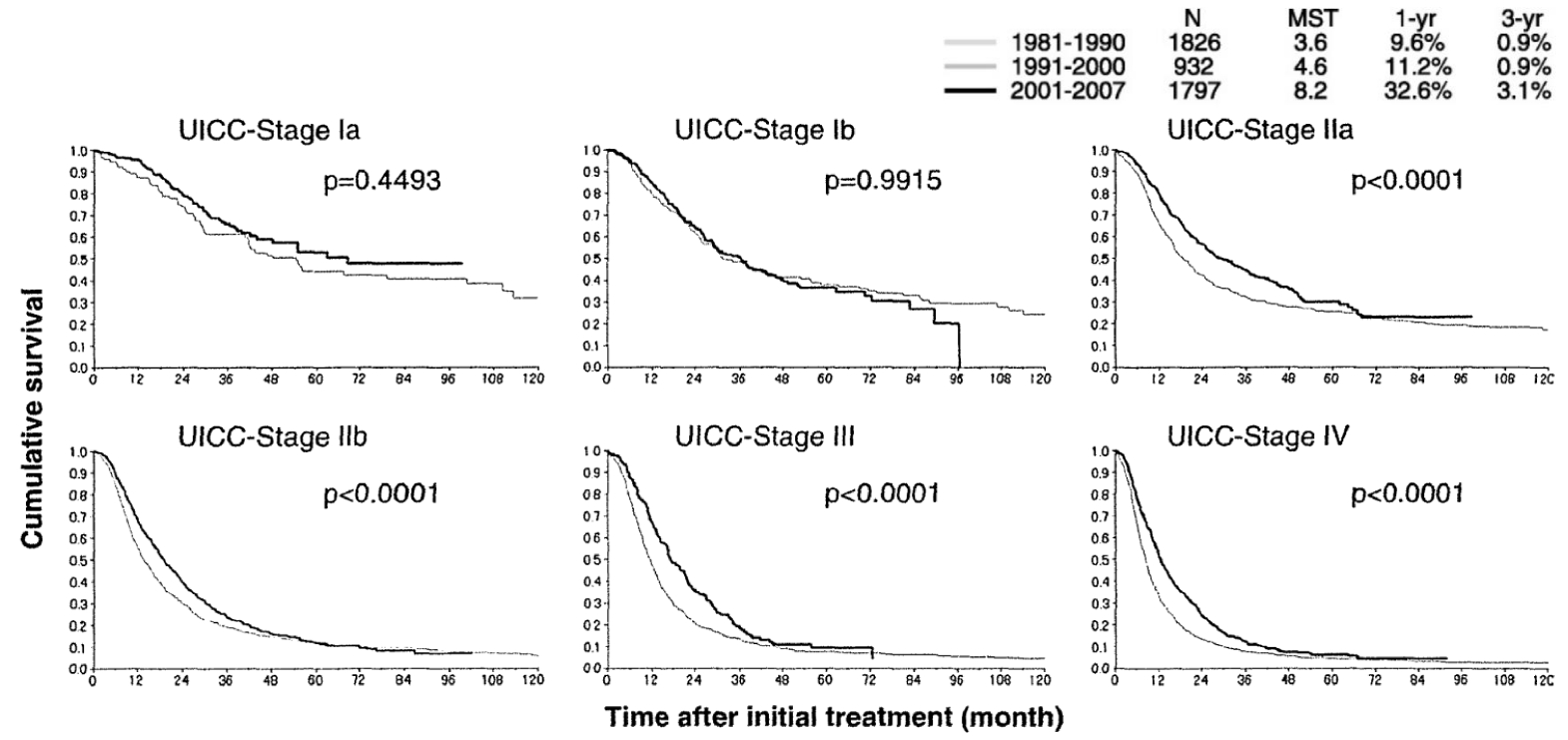
There is very clearly a need for a screening programme for people at risk of developing pancreatic cancer because early diagnosis greatly benefits prognosis of patients. This would include individuals with first-degree relatives with PC, smokers, the elderly, and people with diabetes. As of right now, the NHS doesn’t have a screening programme for people at risk of developing pancreatic cancer.
CA19-9
Carbohydrate antigen 19-9 (also known as cancer antigen 19-9) is a biomarker that is a sign of abnormal glycosylation in pancreatic cancer. CA19-9 was first discovered as a biomarker in 1979 when it reacted with a 1116 NS 19-9 monoclonal antibody from a murine spleen inoculated with a human colon cancer cell line [6]. CA19-9 indicates circulating Sialyl-Lewis levels (a tetrasaccharide antigen) in the blood; tumours express more sialyl-Lewis antigens because it helps with extravasation and metastasis of the cancer [7]. The test is done by radioimmunoassay. The tests use specific antibodies and labelled antigens to find and quantify the select antigen (in this case, CA19-9) which form antigen-antibody complexes [8]. Raised CA19-9 levels in the blood (more than 36 u/ml) indicates a problem and will usually be followed by more tests. The test still works by CA19-9 reacting with a monoclonal antibody [9].
CA19-9 has proven to be an effective biomarker; in a study to test the sensitivity of CA19-9, the biomarker produced a result of 81.3% [2]. It has a reported median sensitivity of 79% and specificity of 82% [10]. It’s important to note that this isn’t just for late-stage PC. In a study of 726 phase II PC patients, CA19-9 had a sensitivity between 70-78% [11]. So, it can effectively detect early-stage PC as well.
The problem with CA19-9 as a diagnostic biomarker for pancreatic cancer is that some pancreatic cancer cases have no Lewis antigen. About 5-10% of PC patients are Lewis antigen-negative meaning there will be very little CA19-9 in the blood [12]. So, for these patients a CA19-9 test would have very low sensitivity and would show as a false negative.
The perfect diagnostic biomarker would have perfect sensitivity and specificity; it would only detect the disease in question and not any other illnesses. Unfortunately, this is not CA19-9. There have been some cases of false positives where high CA19-9 levels are detected in patients with liver damage, inflammation, uncontrolled diabetes mellitus and some other non-pancreatic cancer pathologies [9]. This of course calls into question the specificity of CA19-9 and is part of the reason this biomarker isn’t used to screen for PC.
Other biomarkers
While CA19-9 is still the only biomarker that has been FDA approved for pancreatic cancer, it’s not the only biomarker that’s been investigated in PC research. CEA (Carcino Embryonic Antigen) and CA125 levels are regularly tested and checked in PC patients and are followed throughout therapy to assess the tumour response to treatment. CA125 has been researched as a possible diagnostic biomarker for PC. While it’s been found to be a fairly effective diagnostic biomarker of metastatic PC and non-invasive PC [13]. It is not as effective as CA19-9; it has a worse sensitivity and specificity and it definitely can’t be used for screening as it detects many more pathologies than just pancreatic cancer [14]. It’s mostly used in ovarian cancer patients.
While CEA has a much better specificity (89%), it unfortunately has very poor sensitivity (45%) [15]. It is mostly used as a predictive and prognostic biomarker.
However, these two biomarkers are not without their benefits; as seen in figure 2, where CA19-9 does a poor job of detecting PC in Lewis-negative patients, CA125 and CEA do a much better job [16].
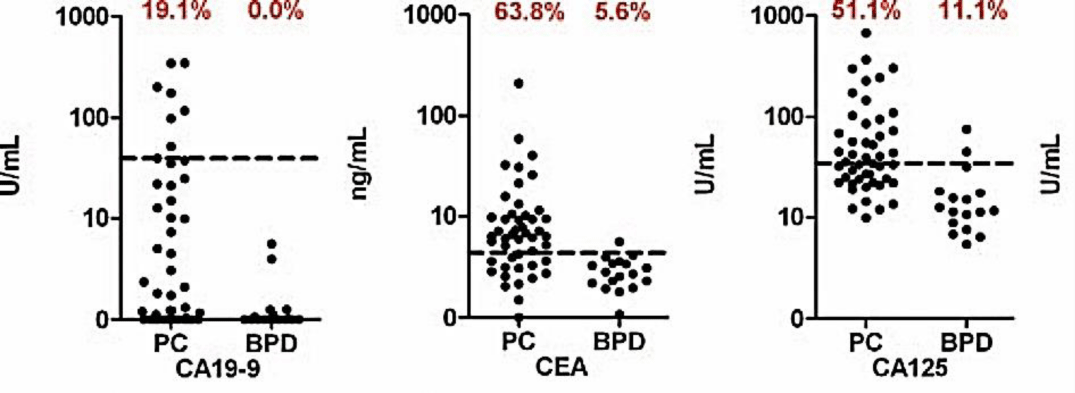
Graph adapted from: Guopei Luo, Potential Biomarkers in Lewis Negative Patients with Pancreatic Cancer, Annals of Surgery, figure 1 [16].
Other uses of CA19-9 in PC
Because the CA19-9 test gives a quantitative result and the amount of CA19-9 in blood directly corresponds with the how far along the cancer is, CA19-9 can double as a prognostic biomarker. It can be used to help stage patients and give an accurate prognosis as patients with normal CA19-9 levels have a longer average survival than those with high CA19-9 in the blood [17].
CA19-9 is also sometimes used as a predictive biomarker. It’s thought that when CA19-9 serum levels are below 100 U/ml the tumour can usually be removed in surgery (resectable) before it spreads but serum levels above 100 U/ml indicate a metastatic cancer [18]. However, there have been cases of lower [19] and higher [20] average CA19-9 serum levels for resectability of cancer in studies. It’s used both pre- and post-operatively and in cases where the tumour isn’t removed surgically CA19-9 can be used to monitor a patient’s response to other treatment like chemotherapy. So it has been used as an effective prognostic and predictive biomarker in many studies and is used in treatment of patients (along with other biomarkers and tests) [21-23].
What’s new for CA19-9?
In a study published last year, researchers found that considering fucosyltransferase (a tumour marker gene) genotypes in the interpretation of CA19-9 test results instead of applying a universal cut off point for the expected CA19-9 levels in PC patients can improve diagnostic accuracy [24]. Fucosyltransferase (FUT) genes are involved in the synthesis pathway of CA19-9. More specifically, the genes that code for the FUT2 and FUT3 enzymes have a great impact on CA19-9 secretion. The role of the FUT3 enzymes is to convert the CA19-9 precursor sialyl-Lewis, into CA19-9. FUT2 breaks it down and goes on to determine secretor status of ABO (blood group) antigens [25]. So, an active FUT3 enzyme, increases CA19-9 secretion, and an active FUT2 enzyme decreases CA19-9 levels in the blood. As a result, PC patients with FUT2 (aka Secretor) inactivity had increased CA19-9 secretion levels. Patients with lots of FUT3 (aka Lewis blood group) activity secreted a lot of CA19-9 and FUT3 inactivity meant minimal CA19-9 secretion [26]. So, as illustrated in figure 3, patients with FUT2 inactivity and FUT3 activity had high CA19-9 synthesis and secretion ability.
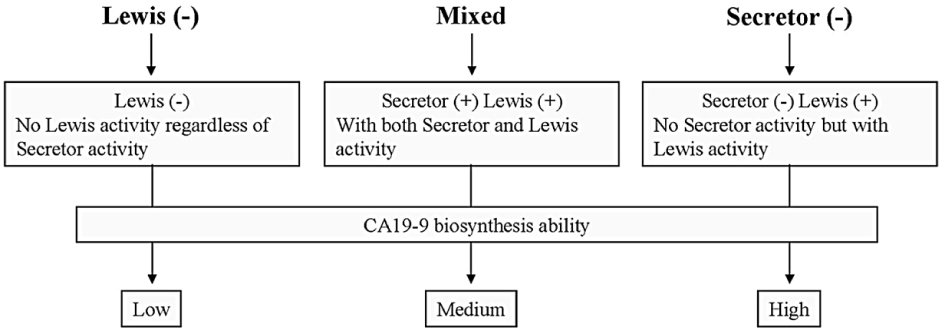
The way this study was carried out, was by separating patients into 4 groups based on their FUT genotype: FUT3-null (patients with 2 inactive FUT3 alleles), FUT-low (one inactive FUT3 allele and functional FUT2), FUT-intermediate (two active FUT3 alleles and functional FUT2) and FUT-high (two active FUT3 alleles and inactive FUT2) using Next Generation or Sanger sequencing. Each genotype group is assigned its own diagnostic cutoff point based off of the CA19-9 secretion levels of each group and it provides better sensitivity and specificity results than the ordinary one-size-fits-all CA19-9 tests [24].
Conclusion
CA19-9 is a moderately accurate diagnostic biomarker of pancreatic cancer. It has a good sensitivity and specificity track record, but it’s not perfect; it is not used to screen for pancreatic cancer because elevated CA19-9 serum levels are not unique to pancreatic cancer, so it doesn’t have 100% specificity. It also rarely detects PC in patients that are Lewis antigen-negative, so it doesn’t have perfect sensitivity either.
A recent study that proposed tailored cut off points for different FUT genotypes provided much better sensitivity and specificity results. This would massively improve the diagnosis rate of Lewis antigen-negative PC patients and lower the number of false-positives among FUT-high patients. These are promising discoveries in the world of CA19-9 as a diagnostic biomarker.
References
- Siegel RL, Miller KD, Fuchs HE, Jemal A. Cancer statistics, 2022. CA Cancer J Clin. 2022 Jan;72(1):7-33. doi: 10.3322/caac.21708. Epub 2022 Jan 12. PMID: 35020204.
- Long J, Luo GP, Xiao ZW, Liu ZQ, Guo M, Liu L, Liu C, Xu J, Gao YT, Zheng Y, Wu C, Ni QX, Li M, Yu X. Cancer statistics: current diagnosis and treatment of pancreatic cancer in Shanghai, China. Cancer Lett. 2014 May 1;346(2):273-7. doi: 10.1016/j.canlet.2014.01.004. Epub 2014 Jan 21. PMID: 24462819.
- Petersen GM. Familial pancreatic cancer. Semin Oncol. 2016 Oct;43(5):548-553. doi: 10.1053/j.seminoncol.2016.09.002. Epub 2016 Sep 22. PMID: 27899186; PMCID: PMC5234085.
- Klein AP, Brune KA, Petersen GM, Goggins M, Tersmette AC, Offerhaus GJ, Griffin C, Cameron JL, Yeo CJ, Kern S, Hruban RH. Prospective risk of pancreatic cancer in familial pancreatic cancer kindreds. Cancer Res. 2004 Apr 1;64(7):2634-8. doi: 10.1158/0008-5472.can-03-3823. PMID: 15059921.
- Egawa S, Toma H, Ohigashi H, Okusaka T, Nakao A, Hatori T, Maguchi H, Yanagisawa A, Tanaka M. Japan Pancreatic Cancer Registry; 30th year anniversary: Japan Pancreas Society. Pancreas. 2012 Oct;41(7):985-92. doi: 10.1097/MPA.0b013e318258055c. PMID: 22750974.
- Koprowski H, Steplewski Z, Mitchell K, Herlyn M, Herlyn D, Fuhrer P. Colorectal carcinoma antigens detected by hybridoma antibodies. Somatic Cell Genet. 1979 Nov;5(6):957-71. doi: 10.1007/BF01542654. PMID: 94699.
- MKudelka MR, Ju T, Heimburg-Molinaro J, Cummings RD. Simple sugars to complex disease--mucin-type O-glycans in cancer. Adv Cancer Res. 2015;126:53-135. doi: 10.1016/bs.acr.2014.11.002. Epub 2015 Feb 7. PMID: 25727146; PMCID: PMC5812724.
- Goldsmith SJ. Radioimmunoassay: review of basic principles. Semin Nucl Med. 1975 Apr;5(2):125-52. doi: 10.1016/s0001-2998(75)80028-6. PMID: 164695.
- Luo G, Jin K, Deng S, Cheng H, Fan Z, Gong Y, Qian Y, Huang Q, Ni Q, Liu C, Yu X. Roles of CA19-9 in pancreatic cancer: Biomarker, predictor and promoter. Biochim Biophys Acta Rev Cancer. 2021 Apr;1875(2):188409. doi: 10.1016/j.bbcan.2020.188409. Epub 2020 Aug 19. PMID: 32827580.
- Goonetilleke KS, Siriwardena AK. Systematic review of carbohydrate antigen (CA 19-9) as a biochemical marker in the diagnosis of pancreatic cancer. Eur J Surg Oncol. 2007 Apr;33(3):266-70. doi: 10.1016/j.ejso.2006.10.004. Epub 2006 Nov 9. PMID: 17097848.
- Kim J, Bamlet WR, Oberg AL, Chaffee KG, Donahue G, Cao XJ, Chari S, Garcia BA, Petersen GM, Zaret KS. Detection of early pancreatic ductal adenocarcinoma with thrombospondin-2 and CA19-9 blood markers. Sci Transl Med. 2017 Jul 12;9(398):eaah5583. doi: 10.1126/scitranslmed.aah5583. PMID: 28701476; PMCID: PMC5727893.
- Koprowski H, Steplewski Z, Mitchell K, Herlyn M, Herlyn D, Fuhrer P. Colorectal carcinoma antigens detected by hybridoma antibodies. Somatic Cell Genet. 1979 Nov;5(6):957-71. doi: 10.1007/BF01542654. PMID: 94699.
- Haridas D, Chakraborty S, Ponnusamy MP, Lakshmanan I, Rachagani S, Cruz E, Kumar S, Das S, Lele SM, Anderson JM, Wittel UA, Hollingsworth MA, Batra SK. Pathobiological implications of MUC16 expression in pancreatic cancer. PLoS One. 2011;6(10):e26839. doi: 10.1371/journal.pone.0026839. Epub 2011 Oct 31. PMID: 22066010; PMCID: PMC3204976.
- Chen Y, Gao SG, Chen JM, Wang GP, Wang ZF, Zhou B, Jin CH, Yang YT, Feng XS. Serum CA242, CA199, CA125, CEA, and TSGF are Biomarkers for the Efficacy and Prognosis of Cryoablation in Pancreatic Cancer Patients. Cell Biochem Biophys. 2015 Apr;71(3):1287-91. doi: 10.1007/s12013-014-0345-2. PMID: 25486903.
- Meng Q, Shi S, Liang C, Liang D, Xu W, Ji S, Zhang B, Ni Q, Xu J, Yu X. Diagnostic and prognostic value of carcinoembryonic antigen in pancreatic cancer: a systematic review and meta-analysis. Onco Targets Ther. 2017 Sep 15;10:4591-4598. doi: 10.2147/OTT.S145708. PMID: 28979147; PMCID: PMC5608082.
- Luo G, Liu C, Guo M, Cheng H, Lu Y, Jin K, Liu L, Long J, Xu J, Lu R, Ni Q, Yu X. Potential Biomarkers in Lewis Negative Patients With Pancreatic Cancer. Ann Surg. 2017 Apr;265(4):800-805. doi: 10.1097/SLA.0000000000001741. PMID: 28267695.
- Ferrone CR, Finkelstein DM, Thayer SP, Muzikansky A, Fernandez-delCastillo C, Warshaw AL. Perioperative CA19-9 levels can predict stage and survival in patients with resectable pancreatic adenocarcinoma. J Clin Oncol. 2006 Jun 20;24(18):2897-902. doi: 10.1200/JCO.2005.05.3934. PMID: 16782929; PMCID: PMC3817569.
- Ballehaninna UK, Chamberlain RS. The clinical utility of serum CA 19-9 in the diagnosis, prognosis and management of pancreatic adenocarcinoma: An evidence based appraisal. J Gastrointest Oncol. 2012 Jun;3(2):105-19. doi: 10.3978/j.issn.2078-6891.2011.021. PMID: 22811878; PMCID: PMC3397644.
- Kiliç M, Göçmen E, Tez M, Ertan T, Keskek M, Koç M. Value of preoperative serum CA 19-9 levels in predicting resectability for pancreatic cancer. Can J Surg. 2006 Aug;49(4):241-4. PMID: 16948881; PMCID: PMC3207573.
- Fujioka S, Misawa T, Okamoto T, Gocho T, Futagawa Y, Ishida Y, Yanaga K. Preoperative serum carcinoembryonic antigen and carbohydrate antigen 19-9 levels for the evaluation of curability and resectability in patients with pancreatic adenocarcinoma. J Hepatobiliary Pancreat Surg. 2007;14(6):539-44. doi: 10.1007/s00534-006-1184-3. Epub 2007 Nov 30. PMID: 18040617.
- Wang QH, Ji ZG, Chen ZG, Li HZ, Fan H, Fan XR, Shi BB, Fang Y. Serum CA 19-9 as a good prognostic biomarker in patients with bladder cancer. Int J Surg. 2015 Mar;15:113-6. doi: 10.1016/j.ijsu.2015.01.031. Epub 2015 Jan 31. PMID: 25647541.
- Humphris JL, Chang DK, Johns AL, Scarlett CJ, Pajic M, Jones MD, Colvin EK, Nagrial A, Chin VT, Chantrill LA, Samra JS, Gill AJ, Kench JG, Merrett ND, Das A, Musgrove EA, Sutherland RL, Biankin AV; NSW Pancreatic Cancer Network. The prognostic and predictive value of serum CA19.9 in pancreatic cancer. Ann Oncol. 2012 Jul;23(7):1713-22. doi: 10.1093/annonc/mdr561. Epub 2012 Jan 11. PMID: 22241899; PMCID: PMC3387824.
- Bauer TM, El-Rayes BF, Li X, Hammad N, Philip PA, Shields AF, Zalupski MM, Bekaii-Saab T. Carbohydrate antigen 19-9 is a prognostic and predictive biomarker in patients with advanced pancreatic cancer who receive gemcitabine-containing chemotherapy: a pooled analysis of 6 prospective trials. Cancer. 2013 Jan 15;119(2):285-92. doi: 10.1002/cncr.27734. Epub 2012 Jul 11. PMID: 22786786; PMCID: PMC4261189.
- Dbouk M, Abe T, Koi C, Ando Y, Saba H, Abou Diwan E, MacGregor-Das A, Blackford AL, Mocci E, Beierl K, Dbouk A, He J, Burkhart R, Lennon AM, Sokoll L, Canto MI, Eshleman JR, Goggins M. Diagnostic Performance of a Tumor Marker Gene Test to Personalize Serum CA19-9 Reference Ranges. Clin Cancer Res. 2023 Oct 13;29(20):4178-4185. doi: 10.1158/1078-0432.CCR-23-0655. PMID: 37566230; PMCID: PMC10570677.
- Ando Y, Dbouk M, Yoshida T, Saba H, Abou Diwan E, Yoshida K, Dbouk A, Blackford AL, Lin MT, Lennon AM, Burkhart RA, He J, Sokoll L, Eshleman JR, Canto MI, Goggins M. Using Tumor Marker Gene Variants to Improve the Diagnostic Accuracy of DUPAN-2 and Carbohydrate Antigen 19-9 for Pancreatic Cancer. J Clin Oncol. 2024 Jun 20;42(18):2196-2206. doi: 10.1200/JCO.23.01573. Epub 2024 Mar 8. PMID: 38457748; PMCID: PMC11191066.
- Luo G, Guo M, Jin K, Liu Z, Liu C, Cheng H, Lu Y, Long J, Liu L, Xu J, Ni Q, Yu X. Optimize CA19-9 in detecting pancreatic cancer by Lewis and Secretor genotyping. Pancreatology. 2016 Nov-Dec;16(6):1057-1062. doi: 10.1016/j.pan.2016.09.013. Epub 2016 Sep 23. PMID: 27692554.




Content Alerts
SignUp to our
Content alerts.
 This work is licensed under a Creative Commons Attribution 4.0 International License.
