
Biology Group 2024 October 22;5(10):1321-1337. doi: 10.37871/jbres2020.





 Research Article
Molecular detection of Borrelia burgdorferi sensu lato, Borrelia miyamotoi, Babesia odocoilei, Babesia microti and Anaplasma phagocytophilum in Ixodes ticks collected across Canada
John D Scott* and Catherine M Scott
- Anaplasma phagocytophilum
- Babesia microti
- Babesia odocoilei
- Borrelia burgdorferi sensu lato
- Borrelia miyamotoi
- Ixodes angustus
- Ixodes pacificus
- Ixodes scapularis
- Hosts
- Dogs
- Cats
- Songbirds
- Flagging
Abstract
Tick-borne zoonotic diseases are a profound challenge to healthcare practitioners, and an overwhelming scourge to patients worldwide. On the whole, patients have great difficulty getting diagnosed and treated, and often become chronically ill. In this study, we tested 224 ticks consisting of Ixodes angustus, Ixodes pacificus, and Ixodes scapularis. Using real-time PCR and nested PCR, we obtained the following positives: Borrelia burgdorferi sensu lato (n = 74), Borrelia miyamotoi (n = 4), Babesia odocoilei (n = 82), Babesia microti (n = 1), and Anaplasma phagocytophilum (n = 8). Markedly, B. odocoilei and B. burgdorferi were detected in I. scapularis ticks nationwide. As well, the Canada-wide prevalence of B. burgdorferi s.l. and B. odocoilei in I. scapularis adults was 40% and 36%, respectively. The statistical ratio of B. odocoilei to B. microti in I. scapularis adults was 60 to 1. Babesia odocoilei is, unquestionably, the predominant Babesia sp. across Canada. We provide the first report of B. odocoilei in an I. angustus tick. In addition, we unfurl the first report of B. odocoilei in I. scapularis in British Columbia, Alberta, Saskatchewan, Manitoba, Prince Edward Island, and Newfoundland and Labrador. From a professional healthcare standpoint, I. scapularis ticks are just as likely to be infected with Babesia odocoilei as Borrelia burgdorferi s.l. Since people spend considerable time in outdoor areas, clinicians must be familiar with current acumen in tick-borne zoonotic diseases.
Introduction
Tick-borne zoonotic diseases inflict immense medical, veterinary, and economic losses globally. Ixodes angustus, the small mammal tick (Acari: Ixodidae), the western blacklegged tick, Ixodes pacificus, and the blacklegged tick, Ixodes scapularis are involved in transmitting tick-borne zoonotic pathogens in North America [1]. Recently, researchers documented I. scapularis in British Columbia (BC), so this tick species is nationwide [2]. Both I. pacificus and I. scapularis, are the primary vectors of several tick-borne zoonotic pathogens. In fact, I. scapularis carries and transmits at least six tick-borne zoonotic pathogens, namely genospecies of Borrelia burgdorferi sensu lato (Bbsl) complex [3,4], Babesia spp. (B. spp.) [5,6], Anaplasma phagocytophilum (Aph) [7,8], Borrelia miyamotoi [9], Ehrlichia muris eauclairensis [10], and the virus of Powassan Virus Disease [11,12].
Left untreated or inadequately treated, tick-borne diseases become chronic and, in the case of Lyme disease, is considered chronic at the 6-month mark [13,14]. Recently, Bbsl, Babesia odocoilei (B. odocoilei), and A. phagocytophilum have been reported in I. pacificus in BC [15].
Babesia odocoilei (Apicomplexa : Piroplasmidae: Babesiidae) is a single-celled, red blood cell parasite that is pathogenic to humans [5,6]. This one-celled piroplasmid is widespread in North America, and has been reported in at least 16 states including California [16], Indiana, Maine, Massachusetts [17,18], Michigan, Minnesota, Montana, New Hampshire [19-21], New York [20-22], Ohio [20], Oklahoma [23,24], Pennsylvania [21,25,26], Texas [21,27,28], Virginia [29], Washington [30], and Wisconsin [17,18,20,23,25,31]. In Canada, B. odocoilei has been documented in Saskatchewan [32], Nova Scotia, Quebec, Southern Ontario, Northern Ontario [33], and BC [15]. In a former tick-pathogen study, which was conducted in eastern and central Canada, the ratio of B. odocoilei to B. microti detected in I. scapularis adults was found to be 41 to 1. These findings spearheaded a new understanding: B. odocoilei is the most prevalent Babesia sp. in North America [33].
Globally, there are at least 111 valid Babesia spp. [34]. Some of these Babesia species are pathogenic to humans, including B. bengimina [35] B. crassa/crassa-like [36], B. divergens [37], Babesia divergens-like MO-1 [38], B. duncani [39], B. microti [40], B. motasi [41], B. odocoilei [5,6], Babesia spp. XXB/HongZhou [42], Babesia sp. TW1 [43], Babesia spp. CA1, CA3, and CA4 [44], and B. venatorum [45].
The primary reservoirs of B. odocoilei are cervids (i.e., the white-tailed deer, Odocoileus virginianus) [27,28] and Columbia black-tailed deer, Odocoileus hemionus columbianus [46]. Babesia odocoilei is also infective to desert bighorn sheep, Ovis canadensis nelsoni [46]. Historically, the first isolations of B. odocoilei were obtained from white-tailed deer in Texas in 1968 [27,28]. More recently, B. odocoilei has been detected in songbird-transported I. scapularis larvae and nymphs [47-52]. This Babesia species has also been detected in I. scapularis adults [47-51]. Notably, this intraerythrocytic Babesia parasite has been detected in the blood of ground-foraging songbirds [52]. In North America, both I. pacificus [15] and I. scapularis [47-52] harbor B. odocoilei. From an epidemiological standpoint, B. odocoilei can infect I. pacificus and I. scapularis, and can be transmitted to humans and cause human babesiosis [5,6].
In retrospect, Banerjee SN, et al. [53] found Bbsl in 24 locations in BC where people had encounter signs and symptoms of Lyme disease. They detected Bbsl in ticks at each of these sites located in southwestern BC, including the Lower Mainland Region, Metro Vancouver, South and Central Vancouver Island, and off-shore islands in the Salish Sea. Biologically, these researchers detected Bbsl in both ticks and small mammals. Epidemiologically, ticks often harbor tick-borne zoonotic pathogens with polymicrobial infections [54,55]. In fact, four different pathogens have been documented in a single I. scapularis adult [54]. Coinfections of polymicrobial pathogens can unknowingly be transmitted to humans, simultaneously, during a tick bite. When these malignant co-infections go undetected, they can become persistent systemic infections [56]. Using a molecular diagnostic technique, East Coast researchers recently detected B. odocoilei in humans residing in Michigan, New Jersey, North Carolina, Oklahoma, and Mexico [57].
The purpose of this study was 1) to gauge the distribution A. phagocytophilum, B. microti, B. odocoilei, Bbsl, and Borrelia miyamotoi across Canada, 2) to determine the prevalence of these five tick-borne zoonotic pathogens in I. angustus, I. pacificus, and I. scapularis, and 3) assess the effect of B. odocoilei on humans.
Materials and Methods
Tick collection
Veterinarians, veterinary technicians, wildlife rehabilitators, bird banders and the public collected ticks from avian and mammalian hosts, and by flagging. With the exception of wildlife rehabilitators, which kept ticks alive, ticks were put in micro tubes containing 94% ethyl alcohol. Specifically, wildlife rehabilitators put ticks in polyethylene, round-bottom tubes capped with a rounded piece of 25 mm X 25 mm tulle netting to enclose the live ticks, thus, keeping them from escaping. A polypropylene stopper, which had a 7-mm hole, allowed the tube to ventilate. These tubes were put in a self-sealing plastic bag containing a slightly moisten paper towel. This bag was put in a bubble pack envelope, and sent to the laboratory for identification (J.D.S.) and, subsequently, for testing. An Olympus SZX16 stereoscopic microscope, and taxonomic keys were used to assist in tick identification [58-60].
Molecular analyses
All DNA extractions and PCRs were completed by Geneticks Inc. Adult ticks were bisected longitudinally, and homogenized using a sterile pestle in 200 μl of DNA/RNA Shield (Zymo Research). Total nucleic acid was extracted from homogenized tick halves using the Quick-DNA/RNA Pathogen Miniprep (Zymo Research) following the manufacturer’s instructions.
Real-time PCR (qPCR) and nested PCR (nPCR) assays compared the performance of pathogen detection. The primers and probes are listed in table 1. All samples were tested for the presence of Borrelia species, B. burgdorferi sensu stricto, B. miyamotoi, A. phagocytophilum, B. microti, and B. odocoilei. All Borrelia testing was performed using real-time PCR in 30 μl reaction volumes using 15 μl of PCRBIO Probe Blue Mix (PCR Biosystems), 800 nM of both forward and reverse primers, 250 nM of probe, and 10 μl of extracted total nucleic as template. Reactions were subjected to an initial denaturation of 8 min at 95°C, followed by 40 cycles each of two stages: 1) 95°C for 10 sec, and then 2) 60°C for 30 sec. Real-time PCR reactions were performed using an iCycler IQ real-time PCR system (BioRad) according to the manufacturer’s instructions.
| Table 1: Pathogen detection primes and probes. | ||||||
| Genus/Species | Gene | PCR Type | Primer name | Sequence (5’-3’) | Amplicon Size | References |
| Borrelia species | 23s IGS | qPCR | Bb23Sf | cgagtcttaaaaggggcgatttagt | 75 | Courtney et al., 2004 [61] |
| Bb23Sr | gcttcagcctggccataaatag | |||||
| Bb23SFAM | FAM-agatgtggtagacccgaagccgagtg-ECLIPSE | |||||
| Borrelia burgdorferi sensu stricto | opsA | qPCR | ospAF | ccttcaagtactccagatccattg | 95 | Tokraz et al., 2017 [62] |
| ospAR | aacaaagacggcaagtacgatc | |||||
| ospAProbe | FAM-TGCAACAGTAGACAAGCTTGAGCT-ECLIPSE | |||||
| Borrelia miyamotoi | flab | qPCR | flaBf | Agcacaagcttcatggacattga | 102 | |
| flaBr | Gagctgcttgagcaccttctc | |||||
| flabProbe | FAM-tgtgggtgcaaatcaggatgaagca-ECLIPSE | |||||
| Anaplasma phagocytophilum | Msp2 | Nested PCR | AnaP44OutL1-F | GTAGAAGAAACCGCCCTAAT | 850 | n/a |
| AnaP44OutL1-R | TCTATGTTGGTTTGGAATTACAG | |||||
| MSP3F0 | CCAGCGTTTAGCAAGATAAGAG | 334 | Holden et al., 1992 [63] | |||
| MSP3R | GCCCAGTAACAACATCATAAGC | |||||
| Babesia microti | 18s rRNA | Nested PCR | Babs1 | CTTAGTATAAGCTTTTATACAGC | 238 | Persing et al., 1992 [64] |
| Bab4 | ATAGGTCAGAAACTTGAATGATACA | |||||
| Bab2 | GTTATAGTTTATTTGATGTTC | 155 | ||||
| Bab3 | AAGCCATGCGATTCGCTAAT | |||||
| Babsia odocoilei | 18s rRNA | Nested PCR | Bab306R_RCF | TTTCTGCGTCACCGTATT | 331 | Burgess et al., 2021 [65] |
| BabGenlnR2 | ACGACGGTATCTGATCGTCT | |||||
| Odo563 | CCGTATTTTGACTTTTGTCGACTGT | 311 | N/A | |||
| BabGenlnR1 | TCTGATCGTCTTCGATCCCC | |||||
Detection of A. phagocytophilum, B. microti, and B. odocoilei was performed by nested PCR in 25 μl reaction volumes using 12.5 μl of 2x Taq FroggaMix (Frogga Bio Scientific Solutions), 400 nM of both forward and reverse primers, and 2 ul of template. The outer reaction conditions for A. phagocytophilum included an initial denaturation at 95°C for 10 min, followed by 35 cycles at 95°C for 30 sec, 53°C for 30 sec, 72°C for 1 min, and a single final extension of 72°C for 10 min. The inner reaction conditions were identical, except annealing was performed at 55°C, and 40 total reaction cycles were used. The outer reaction conditions for B. odocoilei include an initial denaturation at 95°C for 10 min, followed by 40 cycles at 95°C for 30 sec, 58°C for 30 sec, 72°C for 30 sec, and a single final extension of 72°C for 10 min. The inner reaction conditions were identical, except annealing was performed at 63°C for 15 sec, and extension was performed at 72°C for 20 sec. Both outer and inner reaction conditions for B. microti included an initial denaturation at 95°C for 10 min, followed by 35 cycles at 95°C for 30 sec, 55°C for 30 sec, 72°C for 30 sec, and a single final extension at 72°C for 10 min. All nested PCR reactions were performed in a MJ Research PTC-225 Tetrad Thermocycler (BioRad) according to manufacture’s instructions.
Results
Tick collection
In total, 224 Ixodes ticks (Table 2) consisting of I. angustus, I. pacificus, and I. scapularis were tested using nested PCR because this molecular PCR technique gave the most prodigious yield. The nested PCR outperformed the single-step Babesia primer (qPCR) and, thus, we employed nested PCR for our final, summary results.
| Table 2: Detection of tick-borne zoonotic pathogens in human-biting Ixodes ticks collected in Canada. | |||||||
| Region | Tick species | No. of ticks | Bbsl | B. miy. | B. odo. | B. mic. | Aph |
| Questing and Host-acquired | |||||||
| BC | I. angustus | 9 | 0 | 0 | 1 | 0 | 0 |
| I. pacificus | 16 | 0 | 0 | 8 | 0 | 0 | |
| I. scapularis | 8 | 3 | 0 | 3 | 0 | 0 | |
| AB | I. scap. | 4 | 2 | 0 | 2 | 0 | 0 |
| SK | I. scap. | 5 | 1 | 0 | 1 | 0 | 0 |
| MB | I. scap. | 26 | 8 | 0 | 10 | 0 | 1 |
| N. Ont. | I. scap. | 19 | 11 | 1 | 6 | 0 | 0 |
| S. Ont. | I. scap. | 23 | 10 | 0 | 10 | 0 | 2 |
| QC | I. scap. | 27 | 11 | 0 | 11 | 0 | 1 |
| NB | I. scap. | 28 | 10 | 1 | 8 | 0 | 2 |
| NS | I. scap. | 24 | 10 | 0 | 9 | 1 | 1 |
| PE | I. scap. | 11 | 3 | 1 | 3 | 0 | 0 |
| NL | I. scap. | 5 | 3 | 1 | 2 | 0 | 0 |
| Songbird-infested | |||||||
| Larva molts to nymph | 1 | 0 | 0 | 1 | 0 | 0 | |
| Nymphs molt to females | 3 | 0 | 0 | 2 | 0 | 0 | |
| Pending molt & damaged | 15 | 2 | 0 | 5 | 0 | 1 | |
| Total | 224 | 74 | 4 | 82 | 1 | 8 | |
| Bbsl, Borrelia burgdoriferi sensu lato; B. miy., Borrelia miyamotoi; B. odo., Babesia odocoilei; B. mic., Babesia microti; Aph, Anaplasma phagocytophylum. I. scap., Ixodes scapularis. | |||||||
Of the juvenile ticks collected from songbirds, four live ticks molted to the next life stage. Geographically, 10 ticks were collected from avian and mammalian hosts in BC (Table 3), but not tested for tick-borne pathogens because they are not known to bite humans.
| Table 3: Non-human biting Ixodes ticks in British Columbia that were not tested for tick-borne pathogens. | ||
| Tick species | Life stage | Host(s) |
| I. auritulus, avian coastal tick | 1N, 1F | Brown-headed Cowbird, Golden-crowned Sparrow |
| I. rugosus* | 1F | Raccoon |
| I. texanus | 3N, 4F | Striped skunk**, 2 raccoons, dog |
| N, nymph(s); F, females(s) | ||
| *This tick was deposited in Collections at the Canadian Centre for DNA Barcoding, Biodiversity Institute of Ontario, at the University of Guelph, Guelph, Ontario, Canada. **This is the first tick-host report of an I. texanus tick infesting a striped skunk in Canada, and it was collected 3 May 2024, at New Westminster, BC. | ||
Of note, 72 (40%) of 180 I. scapularis adults collected across Canada yielded a significant prevalence for B. burgdorferi sensu lato. Similarly, the prevalence of B. odocoilei in I. scapularis adults collected Canada-wide was 65 (36%) of 180 collected.
Polymicrobial infections consisting of double infections and triple infection were common throughout this study. Bbsl double infections occurred 23 times, whereas B. odocoilei double infections happened 23 times. A triad of Bbsl, B. odocoilei, and A. phagocytophilum occurred once as a triple infection.
Babesia odocoilei was detected in I. scapularis in each province from BC to NL (Table 2). Babesia odocoilei was the only pathogen detected in I. angustus and I. pacificus. Notably, we documented the first-ever B. odocoilei in an I. angustus tick.
In particular, we present the first record of I. scapularis positive for Bbsl in BC. Likewise, we furnish the first documentation of B. odocoilei in an I. scapularis tick collected in BC.
In this Canada-wide, tick-host-pathogen study, B. microti was detected only once, and it was detected in an I. scapularis male collected in Nova Scotia.
Incidentally, we collected an I. angustus female that had parasitized a Douglas squirrel, Tamiasciurus hudsonicus, on 14 August 2023 at Burnaby, BC; this is a novel tick-host record. In addition, we report an I. angustus female parasitizing an eastern cottontail, Sylvilagus floridanus, at Langley, on 26 July 2024. This infestation is a novel tick-host record.
In BC , we collected I. angustus, I. pacificus and I. scapularis from Lower Mainland, Metro Vancouver, South Vancouver Island Central Vancouver Island, Lower Mainland, and Okanagan Valley.
We detected Babesia odocoilei and Borrelia burgdorferi sensu lato in all provinces, namely Newfoundland and Labrador, Prince Edward Island, Nova Scotia, New Brunswick, Quebec, Southern Ontario, Northern Ontario, Manitoba, Saskatchewan, Alberta, and British Columbia.
In far-western North America, I. pacificus has been the motherlode of tick-borne zoonotic pathogens, especially B. burgdorferi s.l. and, now, B. odocoilei. Our environmental discoveries in British Columbia show that I. scapularis share the limelight with I. angustus and I. pacificus.
Overall, there were 169 pathogen positives in 224 Ixodes ticks. On average the majority of Ixodes ticks was infected with a pathogen.
Of special note, an Ixodes rugosus female (tick no., 23-5A1A; BIO-23-022) was collected from a raccoon, Procyon lotor, on 8 February 2023, at Victoria, BC. The tick species was confirmed by molecular barcoding, and deposited as a voucher specimen in Collections of the Centre for Biodiversity Genomics, Biodiversity Institute of Ontario, at the University of Guelph, Guelph, Ontario.
Molecular detection
Since nested PCR outperformed real-time PCR, we reported nested PCR results. Pathogens are in figure 1 and table 2.
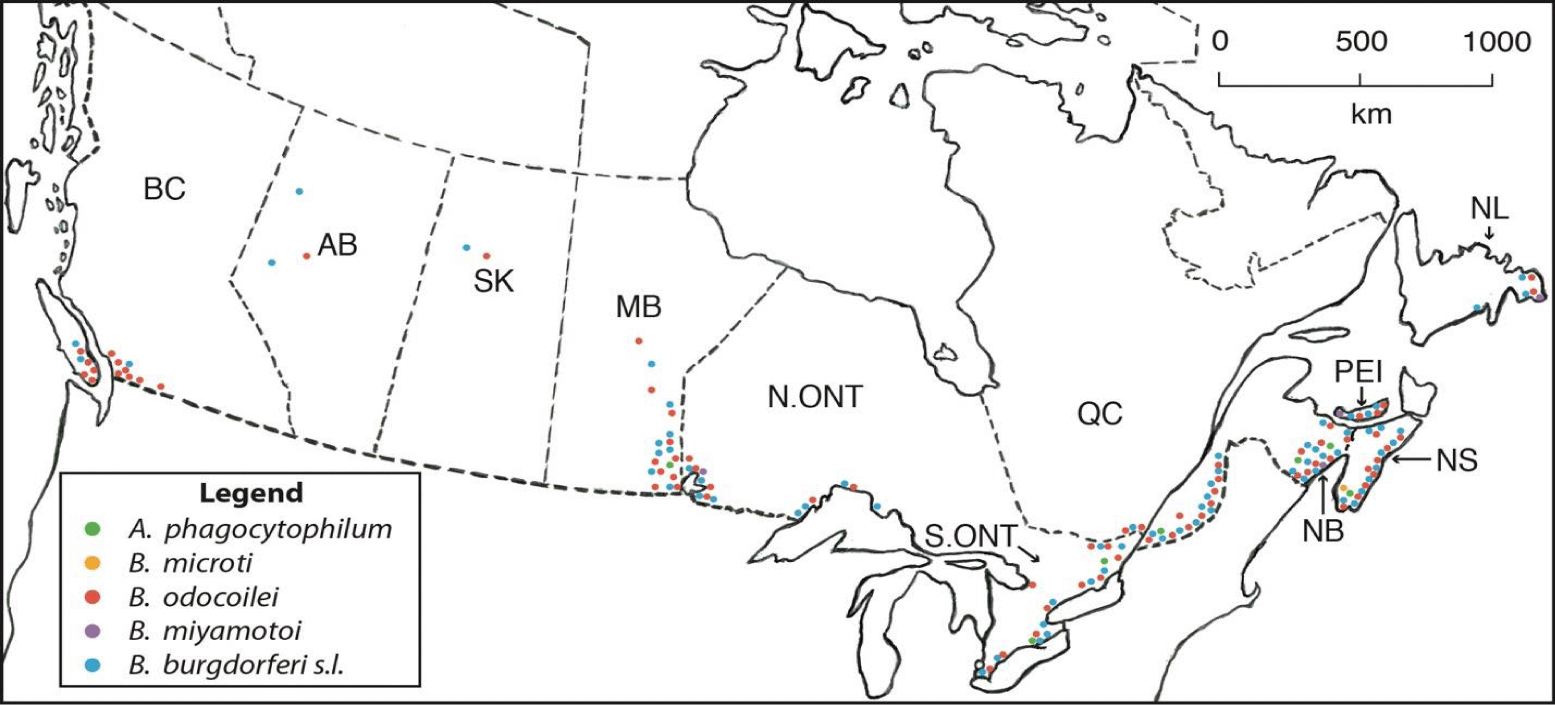
We provide the first report of B. odocoilei in I. angustus in BC. An I. angustus female from a single deer mouse, Peromyscus maniculatus, was negative for all 5 pathogens.
Discussion
We provide the first report of B. odocoilei in I. scapularis in British Columbia, Aberta, Saskatchewan, Manitoba, New Brunswick, Prince Edward Island, and Newfoundland and Labrador. Since B. burgdorferi, Borrelia miyamoti, B. microti, and A. phagocytophilum have previously been studied exquisitely, we concentrated on B. odocoilei, a sequestering Babesia. This novel Babesia piroplasmid is capable of infecting humans causing a chronic, insidious, babesial infection. For pathophysiology information on sequestering Babesia species, we accessed the veterinary, malaria and Babesia literature. Government and licensing colleges must initiate an extensive education program for healthcare practitioners in order to raise the intelligence quotient on tick-borne zoonotic diseases.
Tick identification methods
One technical service group in BC has been using e-photos, taken with smartphones, for tick identification. Unremarkably, smartphones do not have the magnification and resolution to differentiate Ixodes species accurately. For instance, an unfed female I. pacificus, and an unfed female I. scapularis and an unfed female I. spinipalpis look identical through the lens of a smartphone. Once a tick becomes partially or fully engorged, it is impossible to identify Ixodes ticks using a smartphone. For example, the dorsal surface of unfed females of I. pacificus, I. scapularis, and I. spinipalpis are indistinguishable. In the present study, ticks were identified by a professional acarologist (J.D.S.). In particular, an Ixodes rugosus was barcoded (molecular characterization) to confirm the identification.
Dogs as a reservoir of B. odocoilei
Based on our results, we suggest that domestic dogs, Canis familiaris, are a reservoir of B. odocoilei. Significantly, 8 (50%) of the 16 I. pacificus, which had parasitized domestic dogs in BC, were infected with B. odocoilei. These enzootic occurrences were similar to I. scapularis-infested dogs collected in the Huronia region of southern Ontario, which had an infection prevalence of 71% for B. odocoilei [33]. Dogs in southwestern BC were also infested with I. scapularis adults bearing B. odocoilei. Veterinarians and veterinarian technicians should be aware that B. odocoilei is frequently present in Ixodes ticks that parasitize canine domestic animals.
Capillary and venule blockage
During a B. odocoilei-infected I. scapularis tick bite, sporozoites enter the blood stream of the host. They promptly enter uninfected Red Blood Cells (uRBCs), and create infected Red Blood Cells (iRBCs). Next, sporozoites develop into trophozoites, and then gradually advance to infective merozoites [66]. As part of the unique pathophysiological reaction, fibrinogen converts to fibrin. Fibrin then bonds with both iRBC and uRBCs and, together, adhere to the endothelium cells (sequestration) [67,68]. Gradually, these fibrin-bonded entanglements occlude capillaries and venules throughout the body. Sequestering Babesia spp. (i.e., B. canis, B. odocoilei) complete their life cycle within these fibrin-bonded entanglements [68]. Therefore, these sequestering Babesia remain inaccessible to the spleen and the circulating immune system [68]. Sequestering Babesia merozoites obstruct capillaries and venules, and occlude these arterial passageways, especially the brain, which has the smallest capillaries.
Blockage of capillaries by fibrin-bonded entanglements of sequestering Babesia compromises mitochondrial function and, therefore, energy production is lessened. Fundamentally, oxygen and nutrients are hindered from reaching the cells. Mitochondria are tiny organelles in cells that generate chemical energy in the form of Adenosine Triphosphate (ATP) [69]. When ATP falters, physical and mental activity is depleted. Thus, fatigue, inflammation, and cognitive dysfunction are key underlying symptoms of human babesiosis caused by B. odocoilei.
Babesia odocoilei can complete its life cycle within the fibrin-bonded entanglements throughout the human body especially in the brain which has the smallest capillaries [67,68,70]. In stark contrast, non-sequestering Babesia spp. (i.e., B. microti) circulate in the arterial system, and are attacked by macrophages, and also trapped by the spleen (an immunological barrier) [71]. Biogeographically, B. odocoilei is widespread in North America and, undisputably, the predominant Babesia species continentally. Overseas, B. odocoilei was detected in red deer, Cervus elaphus, and cattle in the United Kingdom [72] and, likewise, other countries in Europe.
Transovarial transmission and Transstadial passage
Once a gravid female becomes infected with B. odocoilei, gametes develop into ookinetes, and then kinetes [73,74]. These kinetes migrate to female ovaries. When mating has occurred, and spring temperatures are favorable, the gravid female lays 1000 kinete-infected eggs and, within 4-6 wk., hatch to infective larvae via transovarial transmission [23,66]. Transovarial transmission is an exquisite, reproductive feature of I. scapularis females infected with B. odocoilei. These larvae develop in late July and, within a day, start questing for hosts. Thus, I. scapularis can transmit B. odocoilei to humans. If the infective larvae bite hosts that are not infected with B. odocoilei, these larvae still retain B. odocoilei throughout the larva-nymph molt and, likewise, the nymph-adult molt (transstadial passage) [23,66]. Once I. scapularis larvae become infective they can maintain B. odocoilei for generations without feeding on B. odocoilei-infected vertebrate hosts. On the contrary, B. microti and B. burgdorferi are not transmitted transovarially. If, in the event that I. scapularis larvae are not infected with B. odocoilei, they must acquire a blood meal from a B. odocoilei-infected host to molt to B. odocoilei-infected nymphs.
Because 1000 larvae from one gravid I. scapularis female can be infected with B. odocoilei [66], questing larvae produce an alarming public health threat. People visiting or working in parks and forest-dwelling areas render themselves to B. odocoilei-infected ticks.
Our findings reveal that people are just as likely to contract human babesiosis as Lyme disease. In fact, our data is concordant with a Lyme disease study in southwestern Ontario with a prevalence of 36% for Bbsl [75]. Since a tiny (0.75 mm) larva is hard to see, its minute size greatly raises the chance of people being bitten, and acquiring B. odocoilei infection.
Acute symptomology
Patients with human babesiosis caused by B. odocoilei may have a multitude of symptoms. Primary symptoms that are commonly experienced by patients include unyielding fatigue, slow/impaired cognition, anxiety, difficulty remembering, brain fog, memory loss, muscle and joint aches, muscle and joint stiffness, poor balance, clumsiness, disorientation, bladder dysfunction, sleep disturbance, insomnia, nightmares, irritability/rage/aggression, profound/wild dreams, sweats (especially at night), unsteady gait, clumsiness, dizziness, ischemia (slow blood flow), intestinal problems, constipation, chills, heat and cold intolerance, pathogen-induced depression, irritability, air hunger, increased thirst, slow urination, numbness (especially in fingers), long-standing headaches, encephalopathy, progressive dementia, and herxing (Jarisch-Herxheimer reaction) following treatment [5,6]. From a pathophysiology state, hemolysis and thrombocytopenia (reduced number of blood platelets) are regular haematologic manifestations of sequestering Babesia [5,6]. Suffice it to say, human babesiosis caused by B. odocoilei inflicts major depression in the human population. A comorbidity, such as Lyme disease and human babesiosis caused by B. odocoilei, typically exacerbate pain and suffering.
Children with human babesiosis caused by B. odocoilei promptly develop mystifying symptoms. Before symptoms set in, they are typically very verbal and high-functioning. As this babesial infection becomes established, they generally have a decline in speech. Anxiety, insomnia, and behavioral changes typically take hold. As fibrin-bonded entanglements of B. odocoilei block capillaries, children often become non-verbal, obtain muscle weakness, and have unsteady balance. As well, bladder and bowel dysfunction are concordant with advanced manifestations.
Chronic symptomology
As the symptoms of human babesiosis caused by B. odocoilei advance, symptoms become more pronounced and insidious. These symptoms may include any combination of unending inflammation, absent-mindedness, severe encephalitis, white matter hyperintensities, exertional intolerance, coma, stroke, retinal vasculitis, difficulty walking, shaky, nausea, homicidal tendencies, extreme anger, aggression, emotional (cry for hours), whole body pain, varying moods, severe depression, and suicidal/homicidal ideation. Patients often become bedridden and disabled and, thus, exacerbating and propelling agoraphobia [5,6]. Suicides are familiar, and some patients with chronic human babesiosis caused by B. odocoilei result in death [personal communication, Henry Lindner, MD].
Babesia odocoilei merozoites and fibrin strands occlude capillaries and venules, and are recalcitrant to treat. Patients are often labelled with conditions/disorders/maladies including Alzheimer’s disease, multiple sclerosis, fibromyalgia, ADHD, oxidative stress, chronic fatigue syndrome, bipolar disorder, psychosomatic depression, irritable bowel syndrome, “long-COVID,” long-standing Lyme disease, autoimmune disorder, Susac’s syndrome, autism, narcissistic personality disorder and mast cell activation. Healthcare professionals have been sidestepping the actual cause of human babesiosis cause by B. odocoilei and, instead, fabricate, falsify, and misdiagnose the actual cause. Babesia species are normally transmitted by ticks but may be transmitted by blood transfusion [76,77], organ transplantation [78], and maternal-fetal transmission [79-82]. Babesia odocoilei sequesters in the brain, and produces cerebral pathophysiology. Since the brain has the smallest capillaries, occlusions in capillaries and venules deprive cerebral tissue of oxygen and nutrients. As well, cardiovascular disease often occurs because fibrin-bonded entanglements occlude and block capillaries in the heart.
Songbirds disperse pathogen-infected ticks
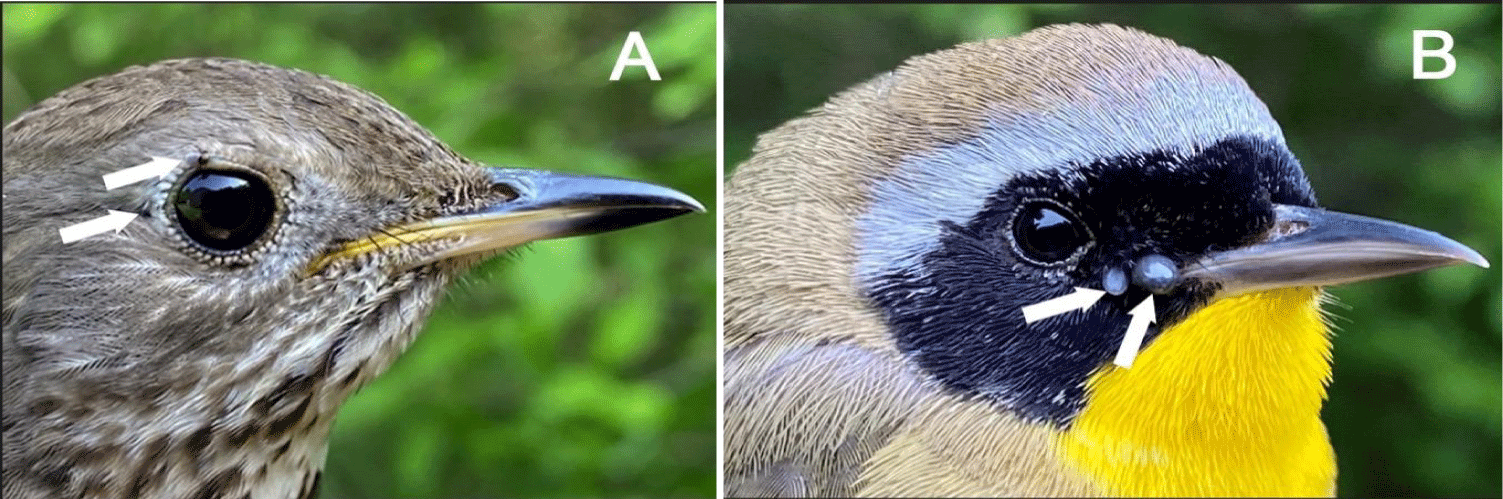
Neotropical migratory songbirds play a major role in the wide dispersal of songbird-transported ticks [83-88]. Certain passerines (i.e., Common Yellowthroat, Gray-cheeked Thrush) are transported as far north as the boreal forest that spans Canada (Figures 2A,B). Ticks on migratory songbirds are released at stopovers en route along the far-reaching flightpath. Scott, et al. [88] collected I. scapularis nymphs as far north and west as northwestern Alberta [84]. After release, blood-fed larvae and nymphs molt, and are ready to conduct host-seeking activities. When a juvenile I. scapularis obtains a blood meal, and becomes fully engorged, they undergo transstadial passage (larvae to nymphs &/or nymph to adults). The unfed nymphs and unfed females can bite humans, and transmit tick-borne zoonotic pathogens such as Bbsl, B. miyamotoi, Babesia spp., and A. phagocytophilum [33,48-52].
Tick co-infections
Certain I. pacificus and I. scapularis ticks in the present study were co-infected with two or more tick-borne zoonotic pathogens. When people are bitten by ticks, these individuals are frequently treated with “one-size-fits-all” antimicrobials. In reality, there are multiple combinations and permutations of tick species and tick pathogens. Polymicrobial infections are seldom taken into account by clinicians. These comorbidities normally require different antimicrobials because of different pathogens. For Bbsl, an antibiotic (i.e., doxycycline, amoxicillin) is commonly administered. For B. odocoilei, an antibabesial (i.e., artemisia, primaquine, tafenoquine, itraconazole, ivermectin) is can potentially be ordered. In addition, a fibrinolytic enzyme (i.e., lumbrokinase, serrapeptase, or nattokinase) is efficacious with antibabesial treatment protocol [89]. In chronic patients, antibabesials should be started at a low dose because the Jarisch-Herxheimer reaction can be severe. Healthcare practitioners and pharmacists should never assume that I. pacificus or I. scapularis are infected with a single pathogen, and a single pill is a cure [90]. When a tick has fed on a person, the tick should be identified by a proficient professional for tick species, and tested for associated tick-borne zoonotic pathogens.
Antimicrobial treatment
Some healthcare practitioners use one doxycycline, 200 mg, as the normal default treatment. Although a single-dose doxycycline for the prevention of Lyme disease may result in the diminution of erythema migrans, most patients failed this single dose regimen, and these study participants proceeded to develop Lyme disease or co-infections. Another shortfall arose when the study only followed the patients for 6 wk [90] and, henceforth, it could not be determined whether the patients went on to develop a long-term, malignant infection, such as chronic Lyme disease [13,14].
Since B. odocoilei infections resemble Plasmodium falciparum malaria, treatment regimens are often recalcitrant. Because fibrin-bonded entanglements are tightly compacted with merozoites and fibrin, highly compacted capillaries are recalcitrant to treat.
Furthermore, a B. odocoilei infection can arise in blood transfusion recipients because donors can be infected. Ruefully, the blood supply in Canada is currently not being screened for B. odocoilei, and this shortfall multiplies and tragically, spreads human babesiosis.
Without efficacious, antimicrobial treatment, chronic patients with tick-borne zoonotic diseases, such as A. phagocytophilum [8,91], B. odocoilei, and Bbsl, can succumb to death [92-94].
Ixodes angustus exhibits vector competence of Borrelia burgdorferi
We provide the first-ever I. angustus positive for B. odocoilei. Historically, Damrow, et al. [95] collected an engorged I. angustus female from the eyelid of a 3-year-old girl residing within Washington State in May 1987. She had a bull’s-eye rash, and had an IFA titre of 1:256 for Lyme disease. Directly to the north, in BC, researchers detected Lyme disease spirochetes in a wild-caught I. angustus [96]. As well, Peavey, et al. [97] found that I. angustus is a competent vector B. burgdorferi sensu stricto, and elucidate vector competence in I. angustus. Although we did not detect Bbsl in I. angustus, we detected B. odocoilei in I. angustus-a first-time documentation.
Conclusion
Our findings reveal that B. odocoilei plays a prominent role as a human pathogen Canada-wide. Our quintessential results show that when a person is bitten by an I. scapularis tick, the person is just as likely to be infected with B. odocoilei as the Lyme disease bacterium. In BC, a person is more likely to be bitten by a B. odocoilei-positive tick than a Bbsl-positive tick. We unveiled the first epidemiological study showing I. scapularis infected with B. odocoilei in BC. Biogeographically, we detected B. odocoilei in I. scapularis ticks for the first time in AB, SK, MB, NB, PE, and NL. Previously, B. odocoilei was discovered in N. Ontario, S. Ontario, Quebec, and Nova Scotia, but now, this babesial piroplasmid is documented in all provinces a unique nationwide finding. In the present study, we demonstrate a more pronounced ratio of B. odocoilei to B. microti, notably 60 to 1. Therefore, B. odocoilei is the predominant Babesia sp. across Canada. Notably, we provide the first report of B. odocoilei in I. angustus. In reality, applying a tick prevention acaricide before frequenting a woodland or park adds credence to cutting the risk of contracting tick-borne zoonotic diseases. In order to minimize the incidence of human babesiosis caused by B. odocoilei, deer culls are prudent wildlife management. With the occurrence of tick-borne zoonotic pathogens continent wide, the medical profession must become trained in tick-borne zoonotic diseases. Polymicrobial infections must be in the healthcare practitioner’s differential. In order to mitigate tick-borne zoonotic pathogens, special professional healthcare attention must be given to test ticks for pathogens. Health care professionals must bolster their continuing medical education training in tick-borne zoonotic diseases.
Acknowledgement
Ethical consideration
Ethical approval is not needed to remove ticks from avian and mammalian hosts. Regulatory approval is not required to hold engorged ticks to molt.
Authors’ contributions
Conceptualization and design: JDS and CMS. Collection and methodology: JDS. Formal analysis: JDS and CMS. Drafting of manuscript: JDS and CMS. Accuracy of data: JDS and CMS. All authors took part in the this bellwether study, and read and approved the final version of the scientific manuscript.
Competing financial and investments interests
The authors declare that they have no competing financial and investment interests relating to the study.
Funding
This cutting-edge research is dedicated in honor of the late Dr. Laverne Kindree and his wife Mrs. Norma Kindree of Squamish, BC. During the late 1980s and 1990s, Dr. and Mrs. Kindree were forerunners in pioneering stellar tick research and, at the same time, supported clinical acumen of tick-borne zoonotic diseases in BC. We are grateful to their daughter Ms. Diane Kindree, who has honored her parents by being a philanthropic contributor to this tick-host-pathogen study a remarkable milestone.
Recognition
We thank veterinarians, veterinary technicians, wildlife rehabilitators, bird banders, and the public for collecting ticks for this nationwide, scientific study. We are pleased that Justin Wood, Geneticks Canada could test the ticks for tick-borne zoonotic pathogens. We are very appreciative to Amanda Green for computer graphics and Glenn Funk for the graphic design. We are grateful to Alicia Koechl for helping to compile tick data.
References
- Nicholson WA, Sonenshine DE, Noden BH. Ticks (Ixodida): In medical and veterinary entomology. 3rd ed. Mullen GR, Durden, LA, editor. London: Elsevier; 2019. p.603-672.
- Scott JD, Scott CM. Primary detection of the establishment of blacklegged ticks, Ixodes scapularis, in British Columbia, Canada. J Biomed Res Environ Sci. 2023;4:935-941. doi: 10.37871/jbres1754.
- Burgdorfer W, Barbour AG, Hayes SF, Benach JL, Grunwaldt E, Davis JP. Lyme disease-a tick-borne spirochetosis? Science. 1982 Jun 18;216(4552):1317-9. doi: 10.1126/science.7043737. PMID: 7043737.
- Banerjee SN, Christensen CI, Scott JD. Isolation of Borrelia burgdorferi on mainland Ontario. Can Commun Dis Rep. 1995 May 30;21(10):85-6. English, French. PMID: 7620454.
- Scott JD, Sajid MS, Pascoe EL, Foley JE. Detection of Babesia odocoilei in Humans with Babesiosis Symptoms. Diagnostics (Basel). 2021 May 25;11(6):947. doi: 10.3390/diagnostics11060947. PMID: 34070625; PMCID: PMC8228967.
- Scott JD, Sajid MS, Hussain K, Hina-tu-Zahra. Human babesiosis caused by Babesia odocoilei: Hiding behind a mask. Open J Public Health. 2024;6:1047. doi: 10.25107/2689-9388-v6-id1047.
- Nieto NC, Salkeld DJ. Epidemiology and Genetic Diversity of Anaplasma phagocytophilum in the San Francisco Bay Area, California. Am J Trop Med Hyg. 2016 Jul 6;95(1):50-4. doi: 10.4269/ajtmh.15-0707. Epub 2016 May 2. PMID: 27139447; PMCID: PMC4944708.
- Dumler JS, Choi KS, Garcia-Garcia JC, Barat NS, Scorpio DG, Garyu JW, Grab DJ, Bakken JS. Human granulocytic anaplasmosis and Anaplasma phagocytophilum. Emerg Infect Dis. 2005 Dec;11(12):1828-34. doi: 10.3201/eid1112.050898. PMID: 16485466; PMCID: PMC3367650.
- Cook VJ, Fedorova N, Macdonald WP, Lane RS, Barbour AG. Unique Strain of Borrelia miyamotoi in Ixodes pacificus Ticks, California, USA. Emerg Infect Dis. 2016 Dec;22(12):2205-2207. doi: 10.3201/eid2212.152046. Epub 2016 Dec 15. PMID: 27479523; PMCID: PMC5189128.
- Pritt BS, Allerdice MEJ, Sloan LM, Paddock CD, Munderloh UG, Rikihisa Y, Tajima T, Paskewitz SM, Neitzel DF, Hoang Johnson DK, Schiffman E, Davis JP, Goldsmith CS, Nelson CM, Karpathy SE. Proposal to reclassify Ehrlichia muris as Ehrlichia muris subsp. muris subsp. nov. and description of Ehrlichia muris subsp. eauclairensis subsp. nov., a newly recognized tick-borne pathogen of humans. Int J Syst Evol Microbiol. 2017 Jul;67(7):2121-2126. doi: 10.1099/ijsem.0.001896. Epub 2017 Jul 12. PMID: 28699575; PMCID: PMC5775894.
- Anderson JF, Armstrong PM. Prevalence and genetic characterization of Powassan virus strains infecting Ixodes scapularis in Connecticut. Am J Trop Med Hyg. 2012 Oct;87(4):754-9. doi: 10.4269/ajtmh.2012.12-0294. Epub 2012 Aug 13. PMID: 22890037; PMCID: PMC3516331.
- Knox KK, Thomm AM, Harrington YA, Ketter E, Patitucci JM, Carrigan DR. Powassan/Deer Tick Virus and Borrelia burgdorferi Infection in Wisconsin tick populations. Vector Borne Zoonotic Dis. 2017 Jul;17(7):463-466. doi: 10.1089/vbz.2016.2082. Epub 2017 May 10. PMID: 28488932; PMCID: PMC5512294.
- Stricker RB, Fesler MC. Chronic lyme disease: A working case definition. Am J Infect Dis. 2018;14:1.44. doi: 10.3844/ajidsp.2018.1.44.
- Phillips SE, Mattman LH, Hulínská D, Moayad H. A proposal for the reliable culture of Borrelia burgdorferi from patients with chronic Lyme disease, even from those previously aggressively treated. Infection. 1998;26:364-367.
- BC Centre for Disease Control. Provincial Health Services Authority. Ticks and tick-borne disease surveillance in British Columbia. June 2023.
- Eshoo MW, Carolan HE, Massire C, Chou DM, Crowder CD, Rounds MA, Phillipson CA, Schutzer SE, Ecker DJ. Survey of Ixodes pacificus ticks in California reveals a diversity of microorganisms and a novel and widespread Anaplasmataceae species. PLoS One. 2015 Sep 16;10(9):e0135828. doi: 10.1371/journal.pone.0135828. PMID: 26375033; PMCID: PMC4574436.
- Steiner FE, Pinger RR, Vann CN, Abley MJ, Sullivan B, Grindle N, Clay K, Fuqua C. Detection of Anaplasma phagocytophilum and Babesia odocoilei DNA in Ixodes scapularis (Acari: Ixodidae) collected in Indiana. J Med Entomol. 2006 Mar;43(2):437-42. doi: 10.1603/0022-2585(2006)043[0437:doapab]2.0.co;2. PMID: 16619631.
- Steiner FE, Pinger RR, Vann CN, Grindle N, Civitello D, Clay K, Fuqua C. Infection and co-infection rates of Anaplasma phagocytophilum variants, Babesia spp., Borrelia burgdorferi, and the rickettsial endosymbiont in Ixodes scapularis (Acari: Ixodidae) from sites in Indiana, Maine, Pennsylvania, and Wisconsin. J Med Entomol. 2008 Mar;45(2):289-97. doi: 10.1603/0022-2585(2008)45[289:iacroa]2.0.co;2. PMID: 18402145.
- Hamer SA, Roy PL, Hickling GJ, Walker ED, Foster ES, Barber CC, Tsao JI. Zoonotic pathogens in Ixodes scapularis, Michigan. Emerg Infect Dis. 2007 Jul;13(7):1131-3. doi: 10.3201/eid1307.070046. PMID: 18214207; PMCID: PMC2878239.
- Gallatin LL, Irizarry-Rovira AR, Renninger ML, Holman PJ, Wagner GG, Sojka JE, Christian JA. Babesia odocoilei infection in elk. J Am Vet Med Assoc. 2003 Oct 1;223(7):1027-32, 986. doi: 10.2460/javma.2003.223.1027. PMID: 14552494.
- Schoelkopf L, Hutchinson CE, Bendele KG, Goff WL, Willette M, Rasmussen JM, Holman PJ. New ruminant hosts and wider geographic range identified for Babesia odocoilei (Emerson and Wright 1970). J Wildl Dis. 2005 Oct;41(4):683-90. doi: 10.7589/0090-3558-41.4.683. PMID: 16456156.
- Bartlett SL, Abou-Madi N, Messick JB, Birkenheuer A, Kollias GV. Diagnosis and treatment of Babesia odocoilei in captive reindeer (Rangifer tarandus tarandus) and recognition of three novel host species. J Zoo Wildl Med. 2009 Mar;40(1):152-9. doi: 10.1638/2008-0011.1. PMID: 19368255.
- Holman PJ, Madeley J, Craig TM, Allsopp BA, Allsopp MT, Petrini KR, Waghela SD, Wagner GG. Antigenic, phenotypic and molecular characterization confirms Babesia odocoilei isolated from three cervids. J Wildl Dis. 2000 Jul;36(3):518-30. doi: 10.7589/0090-3558-36.3.518. PMID: 10941738.
- Waldrup KA, Kocan AA, Qureshi T, Davis DS, Baggett D, Wagner GG. Serological prevalence and isolation of Babesia odocoilei among white-tailed deer (Odocoileus virginianus) in Texas and Oklahoma. J Wildl Dis. 1989 Apr;25(2):194-201. doi: 10.7589/0090-3558-25.2.194. PMID: 2654422.
- Shock BC, Moncayo A, Cohen S, Mitchell EA, Williamson PC, Lopez G, Garrison LE, Yabsley MJ. Diversity of piroplasms detected in blood-fed and questing ticks from several states in the United States. Ticks Tick Borne Dis. 2014 Jun;5(4):373-80. doi: 10.1016/j.ttbdis.2014.01.003. Epub 2014 Apr 6. PMID: 24709338.
- Livengood J, Hutchinson ML, Thirumalapura N, Tewari D. Detection of Babesia, Borrelia, Anaplasma, and Rickettsia spp. in adult black-legged ticks (Ixodes scapularis) from Pennsylvania, United States, with a Luminex Multiplex Bead Assay. Vector Borne Zoonotic Dis. 2020 Jun;20(6):406-411. doi: 10.1089/vbz.2019.2551. Epub 2020 Jan 23. PMID: 31976829.
- Emerson HR, Wright WT. The isolation of a Babesia in white-tailed deer. Bull Wild Dis Assoc. 1968;4:142-143. doi: 10.7589/0090-3558-4.4.142.
- Emerson HR, Wright WT. Correction. J Wildl Dis. 1970;6:519.
- Perry BD, Nichols DK, Cullom ES. Babesia odocoilei Emerson and Wright, 1970 in white-tailed deer, Odocoileus virginianus (Zimmermann), in Virginia. J Wildl Dis. 1985 Apr;21(2):149-52. doi: 10.7589/0090-3558-21.2.149. PMID: 3999247.
- Herwaldt BL, de Bruyn G, Pieniazek NJ, Homer M, Lofy KH, Slemenda SB, Fritsche TR, Persing DH, Limaye AP. Babesia divergens-like infection, Washington State. Emerg Infect Dis. 2004 Apr;10(4):622-9. doi: 10.3201/eid1004.030377. PMID: 15200851; PMCID: PMC3323086.
- Zembsch TE, Lee X, Bron GM, Bartholomay LC, Paskewitz SM. Coinfection of Ixodes scapularis (Acari: Ixodidae) nymphs with Babesia spp. (Piroplasmida: Babesiidae) and Borrelia burgdorferi (Spirochaetales: Spirochaetaceae) in Wisconsin. J Med Entomol. 2021 Jul 16;58(4):1891-1899. doi: 10.1093/jme/tjab056. PMID: 33855361.
- Pattullo KM, Wobeser G, Lockerbie BP, Burgess HJ. Babesia odocoilei infection in a Saskatchewan elk (Cervus elaphus canadensis) herd. J Vet Diagn Invest. 2013 Jul;25(4):535-40. doi: 10.1177/1040638713491746. Epub 2013 Jun 18. PMID: 23780934.
- Scott JD, McGoey E, Pesapane RR. Tick-Borne Pathogens Anaplasma phagocytophilum, Babesia odocoilei, and Borrelia burgdorferi sensu lato in blacklegged ticks widespread across eastern Canada. 2022 Oct 27; 3(10): 1249-1256. doi: 10.37871/jbres1586, Article ID: JBRES1586, Available at: https://www.jelsciences.com/articles/jbres1586.pdf
- Schnittger L, Rodriguez AE, Florin-Christensen M, Morrison DA. Babesia: a world emerging. Infect Genet Evol. 2012 Dec;12(8):1788-809. doi: 10.1016/j.meegid.2012.07.004. Epub 2012 Jul 31. PMID: 22871652.
- Calvopiña M, Montesdeoca-Andrade M, Bastidas-Caldes C, Enriquez S, Rodríguez-Hidalgo R, Aguilar-Rodríguez D, Cooper P. Case report: First report on human infection by tick-borne Babesia bigemina in the Amazon region of Ecuador. Front Public Health. 2023 Aug 4;11:1079042. doi: 10.3389/fpubh.2023.1079042. PMID: 37601195; PMCID: PMC10436305.
- Jia N, Zheng YC, Jiang JF, Jiang RR, Jiang BG, Wei R, Liu HB, Huo QB, Sun Y, Chu YL, Fan H, Chang QC, Yao NN, Zhang WH, Wang H, Guo DH, Fu X, Wang YW, Krause PJ, Song JL, Cao WC. Human babesiosis caused by a Babesia crassa-Like Pathogen: A Case Series. Clin Infect Dis. 2018 Sep 14;67(7):1110-1119. doi: 10.1093/cid/ciy212. PMID: 29538646.
- Zintl A, Mulcahy G, Skerrett HE, Taylor SM, Gray JS. Babesia divergens, a bovine blood parasite of veterinary and zoonotic importance. Clin Microbiol Rev. 2003 Oct;16(4):622-36. doi: 10.1128/CMR.16.4.622-636.2003. PMID: 14557289; PMCID: PMC207107.
- Herwaldt B, Persing DH, Précigout EA, Goff WL, Mathiesen DA, Taylor PW, Eberhard ML, Gorenflot AF. A fatal case of babesiosis in Missouri: identification of another piroplasm that infects humans. Ann Intern Med. 1996 Apr 1;124(7):643-50. doi: 10.7326/0003-4819-124-7-199604010-00004. PMID: 8607592.
- Conrad PA, Kjemtrup AM, Carreno RA, Thomford J, Wainwright K, Eberhard M, Quick R, Telford SR 3rd, Herwaldt BL. Description of Babesia duncani n.sp. (Apicomplexa: Babesiidae) from humans and its differentiation from other piroplasms. Int J Parasitol. 2006 Jun;36(7):779-89. doi: 10.1016/j.ijpara.2006.03.008. Epub 2006 May 4. PMID: 16725142.
- Gray JS, Weiss LM. Babesia microti: In emerging protozoan pathogens. 1st ed. Chan N, editor. London: Taylor and Francis; 2008. p.303-349.
- Kim JY, Cho SH, Joo HN, Tsuji M, Cho SR, Park IJ, Chung GT, Ju JW, Cheun HI, Lee HW, Lee YH, Kim TS. First case of human babesiosis in Korea: detection and characterization of a novel type of Babesia sp. (KO1) similar to ovine babesia. J Clin Microbiol. 2007 Jun;45(6):2084-7. doi: 10.1128/JCM.01334-06. Epub 2007 Mar 28. PMID: 17392446; PMCID: PMC1933034.
- Man SQ, Qiao K, Cui J, Feng M, Fu YF, Cheng XJ. A case of human infection with a novel Babesia species in China. Infect Dis Poverty. 2016 Mar 29;5:28. doi: 10.1186/s40249-016-0121-1. PMID: 27025290; PMCID: PMC4812642.
- Shih CM, Liu LP, Chung WC, Ong SJ, Wang CC. Human babesiosis in Taiwan: asymptomatic infection with a Babesia microti-like organism in a Taiwanese woman. J Clin Microbiol. 1997 Feb;35(2):450-4. doi: 10.1128/jcm.35.2.450-454.1997. PMID: 9003614; PMCID: PMC229598.
- Kjemtrup AM, Conrad PA. Human babesiosis: an emerging tick-borne disease. Int J Parasitol. 2000 Nov;30(12-13):1323-37. doi: 10.1016/s0020-7519(00)00137-5. PMID: 11113258.
- Herwaldt BL, Cacciò S, Gherlinzoni F, Aspöck H, Slemenda SB, Piccaluga P, Martinelli G, Edelhofer R, Hollenstein U, Poletti G, Pampiglione S, Löschenberger K, Tura S, Pieniazek NJ. Molecular characterization of a non-Babesia divergens organism causing zoonotic babesiosis in Europe. Emerg Infect Dis. 2003 Aug;9(8):942-8. doi: 10.3201/eid0908.020748. PMID: 12967491; PMCID: PMC3020600.
- Goff WL, Jessup DA, Waldrup KA, Thomford JW, Conrad PA, Boyce WM, Gorham JR, Wagner GG. The isolation and partial characterization of a Babesia sp. from desert bighorn sheep (Ovis canadensis nelsoni). J Eukaryot Microbiol. 1993 May-Jun;40(3):237-43. doi: 10.1111/j.1550-7408.1993.tb04909.x. PMID: 8508161.
- Scott JD, Clark KL, Coble NM, Ballantyne TR. Detection and Transstadial Passage of Babesia Species and Borrelia burgdorferi sensu lato in ticks collected from avian and mammalian hosts in Canada. Healthcare (Basel). 2019 Dec 2;7(4):155. doi: 10.3390/healthcare7040155. PMID: 31810270; PMCID: PMC6955799.
- Scott JD, Clark KL, Durden LA. Presence of Babesia odocoilei and Borrelia burgdorferi sensu stricto in a tick and dual parasitism of amblyomma inornatum and Ixodes scapularis on a bird in Canada. Healthcare (Basel). 2019 Mar 20;7(1):46. doi: 10.3390/healthcare7010046. PMID: 30897803; PMCID: PMC6473902.
- Scott JD, Pascoe EL, Sajid MS, Foley JE. Detection of Babesia odocoilei in Ixodes scapularis ticks collected from songbirds in Ontario and Quebec, Canada. Pathogens. 2020 Sep 24;9(10):781. doi: 10.3390/pathogens9100781. PMID: 32987727; PMCID: PMC7598643.
- Scott JD, Pesapane RR. Detection of Anaplasma phagocytophilum, Babesia odocoilei, Babesia sp., Borrelia burgdorferi sensu lato, and Hepatozoon canis in Ixodes scapularis ticks collected in eastern Canada. Pathogens. 2021 Oct 1;10(10):1265. doi: 10.3390/pathogens10101265. PMID: 34684214; PMCID: PMC8541619.
- Scott JD, Pascoe EL, Sajid MS, Foley JE. Detection of Babesia odocoilei in Ixodes scapularis ticks collected in Southern Ontario, Canada. Pathogens. 2021 Mar 10;10(3):327. doi: 10.3390/pathogens10030327. PMID: 33802071; PMCID: PMC7999371.
- Scott JD, McGoey E, Morales A, Pesapane RR. Molecular detection of Anaplasma phagacytophilum, Babesia odocoilei, Babesia species and Borrelia burgdorferi sensu lato in songbirds. J BioMed Res Environ Sci. 2022;3:1451-1459. doi: 10.37871/jbres1619.
- Banerjee SN, Banerjee M, Smith JA, Fernando M. Lyme Disease in British Columbia. VII Lyme Disease Foundation International Scientific Conference, Stamford, Connecticut. 1994.
- Sanchez-Vicente S, Tagliafierro T, Coleman JL, Benach JL, Tokarz R. Polymicrobial Nature of Tick-Borne Diseases. mBio. 2019 Sep 10;10(5):e02055-19. doi: 10.1128/mBio.02055-19. PMID: 31506314; PMCID: PMC6737246.
- Stricker RB. Lyme disease: a potential polymicrobial infection. ASM News. 2003.
- Sapi E, Kasliwala RS, Ismail H, Torres JP, Oldakowski M, Markland S, Gaur G, Melillo A, Eisendle K, Liegner KB, Libien J, Goldman JE. The Long-term persistence of Borrelia burgdorferi antigens and DNA in the tissues of a patient with Lyme disease. Antibiotics (Basel). 2019 Oct 11;8(4):183. doi: 10.3390/antibiotics8040183. PMID: 31614557; PMCID: PMC6963883.
- Maggi RG, Calchi AC, Moore CO, Kingston E, Breitschwerdt EB. Human Babesia odocoilei and Bartonella spp. co-infections in the Americas. Parasit Vectors. 2024 Jul 11;17(1):302. doi: 10.1186/s13071-024-06385-4. PMID: 38992682; PMCID: PMC11241936.
- Clifford CM, Anastos G, Elbl A. The larval ixodid ticks of the eastern United States. Misc Publ Entomol Soc Am. 1961;2:213-237. doi: 10.4182/BHJB6050.2-1.3.
- Durden LA, Keirans JE. Nymphs of the genus Ixodes (Acari: Ixodidae) of the United States: Taxonomy, identification key, distribution, hosts, and medical/veterinary importance. Monographs; Thomas Say Publications in Entomology, Entomological Society of America: Lanham, MD, USA, 1996. p.95.
- Keirans JE, Clifford CM. The genus Ixodes in the United States: A scanning electron microscope study and key to the adults. J Med Entomol. 1978;15 (Suppl. S2):1-148.
- Courtney JW, Kostelnik LM, Zeidner NS, Massung RF. Multiplex real-time PCR for detection of Anaplasma phagocytophilum and Borrelia burgdorferi. J Clin Microbiol. 2004 Jul;42(7):3164-8. doi: 10.1128/JCM.42.7.3164-3168.2004. PMID: 15243077; PMCID: PMC446246.
- Tokarz R, Tagliafierro T, Cucura DM, Rochlin I, Sameroff S, Lipkin WI. Detection of Anaplasma phagocytophilum, Babesia microti, Borrelia burgdorferi, Borrelia miyamotoi, and Powassan Virus in Ticks by a Multiplex Real-Time Reverse Transcription-PCR Assay. mSphere. 2017 Apr 19;2(2):e00151-17. doi: 10.1128/mSphere.00151-17. PMID: 28435891; PMCID: PMC5397568.
- Holden K, Boothby JT, Anand S, Massung RF. Detection of Borrelia burgdorferi, Ehrlichia chaffeensis, and Anaplasma phagocytophilum in ticks (Acari: Ixodidae) from a coastal region of California. J Med Entomol. 2003 Jul;40(4):534-9. doi: 10.1603/0022-2585-40.4.534. PMID: 14680123.
- Persing DH, Mathiesen D, Marshall WF, Telford SR, Spielman A, Thomford JW, Conrad PA. Detection of Babesia microti by polymerase chain reaction. J Clin Microbiol. 1992 Aug;30(8):2097-103. doi: 10.1128/jcm.30.8.2097-2103.1992. PMID: 1500517; PMCID: PMC265450..
- Burgess HJ, Lockerbie BP, Ayalew LE, Dibernardo A, Hrazdilová K, Modry D, Bollinger TK. Species-specific PCR assay for the detection of Babesia odocoilei. J Vet Diagn Invest. 2021 Nov;33(6):1188-1192. doi: 10.1177/10406387211032927. Epub 2021 Sep 22. PMID: 34550025; PMCID: PMC8546463.
- Jalovecka M, Sojka D, Ascencio M, Schnittger L. Babesia Life Cycle - When Phylogeny Meets Biology. Trends Parasitol. 2019 May;35(5):356-368. doi: 10.1016/j.pt.2019.01.007. Epub 2019 Feb 4. PMID: 30733093.
- Wright IG. An electron microscopic study of intravascular agglutination in the cerebral cortex due to Babesia argentina infection. Int J Parasitol. 1972 Jun;2(2):209-15. doi: 10.1016/0020-7519(72)90008-2. PMID: 4652608.
- Schetters TP, Kleuskens J, Scholtes N, Gorenflot A. Parasite localization and dissemination in the Babesia-infected host. Ann Trop Med Parasitol. 1998 Jun;92(4):513-9. doi: 10.1080/00034989859483. PMID: 9683902..
- Perlmutter D. Grain brain. Little, Brown and Company, New York; 2013.
- MacPherson GG, Warrell MJ, White NJ, Looareesuwan S, Warrell DA. Human cerebral malaria. A quantitative ultrastructural analysis of parasitized erythrocyte sequestration. Am J Pathol. 1985 Jun;119(3):385-401. PMID: 3893148; PMCID: PMC1888001.
- Allred DR, Al-Khedery B. Antigenic variation and cytoadhesion in Babesia bovis and Plasmodium falciparum: different logics achieve the same goal. Mol Biochem Parasitol. 2004 Mar;134(1):27-35. doi: 10.1016/j.molbiopara.2003.09.012. PMID: 14747140.
- Gray A, Capewell P, Zadoks R, Taggart MA, French AS, Katzer F, Shiels BR, Weir W. Wild deer in the United Kingdom are a potential reservoir for the livestock parasite Babesia divergens. Curr Res Parasitol Vector Borne Dis. 2021 Mar 17;1:100019. doi: 10.1016/j.crpvbd.2021.100019. PMID: 35284871; PMCID: PMC8906096.
- Waldrup KA, Kocan AA, Barker RW, Wagner GG. Transmission of Babesia odocoilei in white-tailed deer (Odocoileus virginianus) by Ixodes scapularis (Acari: Ixodidae). J Wildl Dis. 1990 Jul;26(3):390-1. doi: 10.7589/0090-3558-26.3.390. PMID: 2388362.
- Milnes EL, Thornton GL, Delnatte P, Léveillé AN, Barta JR, Smith DA, Nemeth NM. Molecular detection of Babesia odocoilei in wild, farmed, and zoo cervids in ontario, Canada. J Wildl Dis. 2019 Apr;55(2):335-342. doi: 10.7589/2018-06-147. Epub 2018 Oct 19. PMID: 30339101.
- Scott JD, Foley JE, Anderson JF, Clark KL, Durden LA. Detection of lyme disease bacterium, Borrelia burgdorferi sensu lato, in blacklegged ticks collected in the Grand River Valley, Ontario, Canada. Int J Med Sci. 2017 Feb 8;14(2):150-158. doi: 10.7150/ijms.17763. PMID: 28260991; PMCID: PMC5332844.
- Villatoro T, Karp JK. Transfusion-transmitted babesiosis. Arch Pathol Lab Med. 2019 Jan;143(1):130-134. doi: 10.5858/arpa.2017-0250-RS. Epub 2018 Oct 30. PMID: 30376376.
- Tonnetti L, Townsend RL, Dodd RY, Stramer SL. Characteristics of transfusion-transmitted Babesia microti, American Red Cross 2010-2017. Transfusion. 2019 Sep;59(9):2908-2912. doi: 10.1111/trf.15425. Epub 2019 Jun 27. PMID: 31250463.
- Brennan MB, Herwaldt BL, Kazmierczak JJ, Weiss JW, Klein CL, Leith CP, He R, Oberley MJ, Tonnetti L, Wilkins PP, Gauthier GM. Transmission of Babesia microti Parasites by Solid Organ Transplantation. Emerg Infect Dis. 2016 Nov;22(11):1869–76. doi: 10.3201/eid2211.151028. PMID: 27767010; PMCID: PMC5088010.
- New DL, Quinn JB, Qureshi MZ, Sigler SJ. Vertically transmitted babesiosis. J Pediatr. 1997 Jul;131(1 Pt 1):163-4. doi: 10.1016/s0022-3476(97)70143-4. PMID: 9255211.
- Fox LM, Wingerter S, Ahmed A, Arnold A, Chou J, Rhein L, Levy O. Neonatal babesiosis: case report and review of the literature. Pediatr Infect Dis J. 2006 Feb;25(2):169-73. doi: 10.1097/01.inf.0000195438.09628.b0. PMID: 16462298.
- Cornett JK, Malhotra A, Hart D. Vertical transmission of babesiosis from a pregnant, splenectomized mother to her neonate. Infect Dis Clin Pract. 2012;20:408-410. doi: 10.1097/IPC.0b013e31825b20c1.
- Iyer S, Goodman K. Congenital Babesiosis From Maternal Exposure: A Case Report. J Emerg Med. 2019 Apr;56(4):e39-e41. doi: 10.1016/j.jemermed.2018.12.044. Epub 2019 Jan 29. PMID: 30709608.
- Scott JD, Clark KL, Foley JE, Anderson JF, Bierman BC, Durden LA. Extensive Distribution of the Lyme Disease Bacterium, Borrelia burgdorferi Sensu Lato, in Multiple Tick Species Parasitizing Avian and Mammalian Hosts across Canada. Healthcare (Basel). 2018 Nov 12;6(4):131. doi: 10.3390/healthcare6040131. PMID: 30424543; PMCID: PMC6315338.
- Banerjee SN, Banerjee M, Fernando K, Scott JD, Mann R, Morshed MG. Presence of spirochete causing Lyme disease, Borrelia burgdorferi, in the blacklegged tick, Ixodes scapularis, in southern Ontario. CMAJ. 2000 May 30;162(11):1567-9. PMID: 10862230; PMCID: PMC1231336.
- Scott JD, Durden LA. First isolation of Lyme disease spirochete, Borrelia burgdorferi, from ticks collected in Ontario, Canada. N Am Bird Bander. 2009;34:97-101.
- Scott JD, Anderson JF, Durden LA. Widespread dispersal of Borrelia burgdorferi-infected ticks collected from songbirds across Canada. J Parasitol. 2012 Feb;98(1):49-59. doi: 10.1645/GE-2874.1. Epub 2011 Aug 24. PMID: 21864130.
- Scott JD, Durden LA. New records of the Lyme disease bacterium in ticks collected from songbirds in central and eastern Canada. Int J Acarol. 2015;41:241-249. doi: 10.1080/01647954.2015.1038301.
- Scott JD, Clark KL, Foley JE, Bierman BC, Durden LA. Far-Reaching dispersal of Borrelia burgdorferi sensu Lato-infected blacklegged ticks by migratory songbirds in Canada. Healthcare (Basel). 2018 Jul 25;6(3):89. doi: 10.3390/healthcare6030089. PMID: 30044388; PMCID: PMC6164468.
- Mihara H, Sumi H, Yoneta T, Mizumoto H, Ikeda R, Seiki M, Maruyama M. A novel fibrinolytic enzyme extracted from the earthworm, Lumbricus rubellus. Jpn J Physiol. 1991;41(3):461-72. doi: 10.2170/jjphysiol.41.461. PMID: 1960890.
- Liegner KB. In the Crucible of chronic Lyme Disease. Xlibris; 2015. [a book]
- Leikauskas JA, Read JS, Kelso P, Nichols Heitman K, Armstrong PA, Kwit NA. Anaplasmosis-related fatality in Vermont: A Case Report. Vector Borne Zoonotic Dis. 2022 Mar;22(3):188-190. doi: 10.1089/vbz.2021.0095. Epub 2022 Mar 9. PMID: 35263192; PMCID: PMC10960582.
- Centers for Disease Control and Prevention (CDC). Three sudden cardiac deaths associated with Lyme carditis - United States, November 2012-July 2013. MMWR Morb Mortal Wkly Rep. 2013 Dec 13;62(49):993-6. PMID: 24336130; PMCID: PMC4585587.
- Golovchenko M, Opelka J, Vancova M, Sehadova H, Kralikova V, Dobias M, Raska M, Krupka M, Sloupenska K, Rudenko N. Concurrent Infection of the Human Brain with Multiple Borrelia species. Int J Mol Sci. 2023 Nov 29;24(23):16906. doi: 10.3390/ijms242316906. PMID: 38069228; PMCID: PMC10707132.
- Preac-Mursic V, Pfister HW, Spiegel H, Burk R, Wilske B, Reinhardt S, Böhmer R. First isolation of Borrelia burgdorferi from an iris biopsy. J Clin Neuroophthalmol. 1993 Sep;13(3):155-61; discussion 162. PMID: 8106639.
- Damrow T, Freedman H, Lane RS, Preston KL. Is Ixodes (Ixodiopsis) angustus a vector of Lyme disease in Washington State? West J Med. 1989 May;150(5):580-2. PMID: 2741454; PMCID: PMC1026677.
- Banerjee SN. Isolation of Borrelia burgdorferi in British Columbia. Can Commun Dis Rep. 1993 Dec 30;19(24):204-5. English, French. PMID: 8148784.
- Peavey CA, Lane RS, Damrow T. Vector competence of Ixodes angustus (Acari: Ixodidae) for Borrelia burgdorferi sensu stricto. Exp Appl Acarol. 2000 Jan;24(1):77-84. doi: 10.1023/a:1006331311070. PMID: 10823359.




Content Alerts
SignUp to our
Content alerts.
 This work is licensed under a Creative Commons Attribution 4.0 International License.
