
Medicine Group 2024 October 17;5(10):1313-1320. doi: 10.37871/jbres2019.





 Review Article
The Fear Avoidance Scale of the Sickler
Grace Ababio1*, Ivy Ekem2, William Bill Chaplin3 and Isaac Quaye4
2Department of Hematology, UCC Medical School, Accra, Ghana
3St. John's University, USA
4University of Namibia Medical School, Namibia
Abstract
Background: Fear, one of the psychosocial parameters, has received much attention lately. Based on previous work done elsewhere in other disease states, we sought to investigate the fear – avoidance model, biofeedback and family intervention in sickle cell patients.
Method: Out of the 852 interested participants (622 men and 230 women) that started the study, only 323 subjects fully completed the study. Two hundred and forty – two (242) subjects were diagnosed with Sickle Cell disease while 81 were not. Subjects were recruited consecutively at the outpatient unit after ethical approval and informed consent. Questionnaires were administered to subjects. One aspect of which contained the fear avoidance model of pain also called the Tampa Scale of Kinesiophobia (TSK) was assessed in the subjects. New discoveries for adaptation during the rainy season were also noted as a form of biofeedback and family intervention.
Results: Coefficient Alpha for the 8 items TSK scale was 0.88 and unidimensional. TSK scores between SCD males with painful episodes was statistically significant. Even though HbSS individuals scored relatively higher on the TSK scale, painful episodes were statistically not significant between groups, perhaps, due to the biofeedback and family intervention strategy.
Conclusion: In sickle cell anemia, musculoskeletal pain was more persistent than in HbSC disease and the biofeedback intervention was highly needful in such circumstance.
Introduction
Fear is the emotional reaction to a specific, identifiable and immediate threat [1]. According to previous work elsewhere [2,3], interpretation of the stimulus as threatening, increased sympathetic arousal, and defensive behavior are weakly intertwined and could change at different paces. Even though the components of fear are similar to those of anxiety, it is difficult to make a clinical distinction, especially in instances where the threatening stimulus (pain) is constantly present as in sickle cell crises.
Sickle Cell Disease (SCD) is as a result of a point mutation with an autosomal recessive inheritance which is recognized by chronic hemolysis with acute or chronic painful vaso-occlusive crises following hypoperfusion and organ failure [4-6]. It is thus obvious that pain and fear are not left without in SCD.
Asmundson GJ, et al. [7], added to the existing knowledge that one cannot avoid a threat that is already present. However, their updated model did not contribute much to the existing model. Until recently, the literature on the fear-avoidance model did not ascribe much importance to pain intensity and this had been noted in Vlaeyen JWS and Linton SJ [8] review. They did state that pain intensity is not a primary factor in the avoidance behavior or disability and this conformed to other findings elsewhere [9]. It is thereby, very possible that this may be the case in sickle cell disease pain.
Pain in Sickle Cell Disease (SCD) is attributed to recurring occlusions of micro-vessels present at one or more sites leading to tissue necrosis and inflammation. Pain is therefore defined as the occurrence of pain in the extremities, back, abdomen, chest or head that lasted a minimum of 30 minutes and which could not be explained during a clinic visit except SCD. Pain starts at six months after birth and can continue throughout life time, therefore leading to possible frequent hospitalizations in sickle cell disease patients [10,11]
The homozygous HbSS variant is referred to as Sickle Cell Anemia (SCA) and is one of the most commonly inherited disorders in the world [12] and 2% prevalence in Ghana. Given perceptions of SCD as a disease afflicting Africans, it often represents a source of limitation and stigmatization for those families living with the disease. These emotional reactions include low self-esteem, depression, and poor social functioning and make adherence to medical regimens difficult [13]. In this study, the fear avoidance model of the sickle cell patient was investigated and biofeedback intervention employed.
Method
- Study design: Case-control
- Study site: Cases were obtained from Ghana Institute of Clinical Genetics (sickle cell clinic), Accra. The control subjects were from the national blood bank, Korle-Bu, Accra.
- Study population: Sickle cell disease patients and apparently healthy subjects.
- Sample size: The minimum sample size was determined using the Cochran formula:
- N = Z2(P)(1-P)/(Error)2
Z= standard score for the confidence interval of 95% and equals 1.96. P is the sample proportion of the prevalence of sickle cell disease in Ghana which was 0.02 in the population studied. Assuming an error of 5% in this estimate the sample size per group was supposed to be 30.12; making a total of 150 for the three groups. However, we recruited a total of 852 interested participants to maximize power and cater for the loss to follow-up, confounders, non-respondence and other interacting factors. Out of the 852 subjects, the research team only had 242 consented sickle cell disease patients and 81 consented controls after the case-wide deletion.
Inclusion criteria
SCD patients with 13 years of age and above were included; steady state and acute vaso-occlusive pain crisis were recruited based on Ballas SK [14] classification.
Exclusion criteria
Patients who were recently transfused barely 3 months ago and or declined were excluded.
Anthropometry and demographics: A questionnaire for clinical information e.g. age, gender, weight, height, body mass index, blood pressure and temperature, were obtained after informed consent and ethical review (MS-Et/M.10-P.3.4/2009-10) for this case-control study situated at the sickle cell unit, Korle-Bu teaching hospital, Accra. The sample consisted of 323 participants: 242 SCD and 81 control subjects.
Pain assessment: The number of times a patient expressed discomfort at various locations on his or her body was ranked as a degree of pain e.g. 1=discomfort, 10=extreme pain. Pain was defined as the occurrence of pain in the extremities, back, abdomen, chest or head that lasted a minimum of 30 minutes and which could not be explained during a clinic visit except SCD.
Two main models were used to capture the indices of pain in SCD. These were the verbal and visual analog scales which used alpha numerical to designate the degree of pain, from the least (no pain = 0) to the highest (severest pain = 10) (Figure 1) and the Tampa kinesiophobia scale.
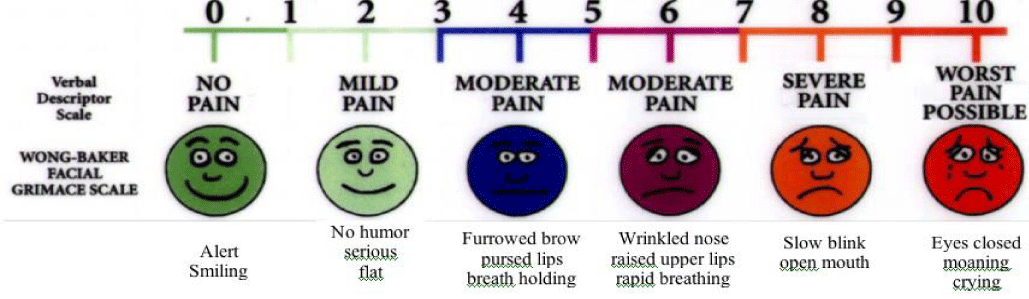
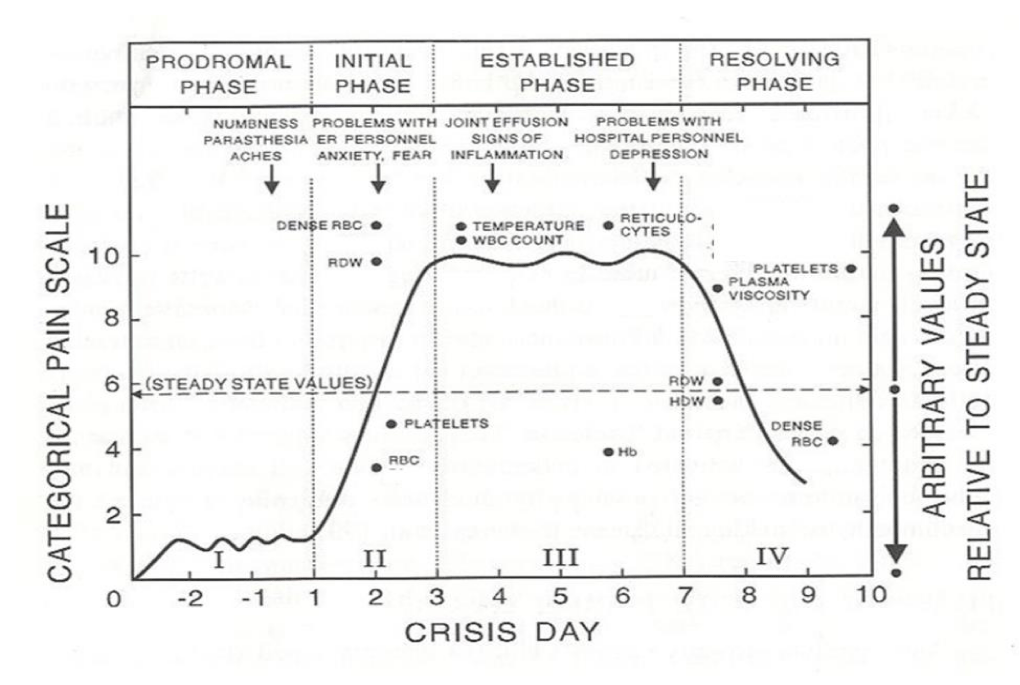
The verbal and visual analog scale was used to determine pain status of the patients and spectrum of pain experienced by the patients. In addition, it was used in conjunction with the World Health Organization (WHO; figure 2) categorical analog scale (based on the verbal and visual analog scale) which describes the phases toward Vaso-Occlusive Crises (VOC), to categorize SCD patients into those in steady state, initial phase of VOC and those who actually experienced VOC. The verbal and visual analog scale was also used to assess attitude of the patients to pain.
The second model is the Tampa scale of kinesiophobia which assessed musculoskeletal pain as well as level of pain associated disability [15,16] due to fear of movement, in both patients and controls.
Measure: The fear avoidance scale consisted of 8 items, three of which were reversed scored. Responses to the items were on a 4-point scale (1-4) with higher scores indicating more fear of pain.
Blood collection: Four milliliter (4ml) blood was drawn from an antecubital vein by means of a plastic syringe and dispensed into EDTA taking careful precautions.
Microscopy: Majority of our control subjects had no sickling statuses.
Cellulose acetate electrophoresis: Confirmation of 242sickle cell statuses of subjects were thereby ascertained using the widely known cellulose acetate electrophoresis. However, out of the 586 control subjects, 100 were randomly sampled for Hb phenotypic confirmation due to logistics.
Biofeedback and family Interventions: Thermal biofeedback was employed. This technique measured the temperature of the fingers. For uniformity and logistics, patients and family members were told to use the back of their hands to determine hot temperature on the day of their clinic visit. When they arrived at the clinic, the temperature of the various study populations was recorded on the finger and the body as well.
As sampling was performed during the rainy season, SCD patients and their respective families were cautioned on what to do in instances of crises and new discoveries for adaptation were noted.
Results
After case-wide deletion, one hundred and sixty – seven (167) HbSS and seventy – five (75) HbSC patients consented. Out of the 100 randomly sampled controls, only 48 HbAA, 9 HbAC and 24 HbAS consented till completion.
Details of the clinical variables for the subjects were presented in tables 1,2. HbSS subjects were the youngest and had the least BMI (mean ± SD; age: 25.1 ± 12.8; BMI: 19.9 ± 3.5 p = 0.0001) in the group. HbSC female subjects were comparable in age to the controls although their BMI was lower. The age and BMI of the control sub groups were similar.
| Table 1: Baseline demographic data of subjects and controls that initially started the study. | ||||
| Phenotype | BMI(kg/m2) (n) | Age(years) (n) | Education (secondary and above)(n) | χ2 test on education |
| SS | 19.9 ± 3.5(50) | 25.1 ± 12.8(183) | 48 | SS vs Control, p = .0001 |
| SC | 22.2 ± 5.1(37) | 32.0 ± 13.7(95) | 20 | SC vs Control, p = .0001 |
| Controls | 27.0 ± 3.5(590) | 31.6 ± 8.6 (588) | 31 | |
| AA | 26.8 ± 2.6(48) | 32.7 ± 8.9(44) | 16 | |
| AS | 27.4 ± 3.1(25) | 31.8 ± 7.7(25) | 10 | |
| AC | 29.5 ± 10.3(9) | 34.8 ± 9.0(9) | 5 | |
| p-value | 0.000 | 0.000 | ||
| Table 2: Clinical indices of patients and controls that initially started the study. | ||||
| Clinical variable | SS Patients n = 186 | SC Patients n = 101 | Controls n = 624 | p-value |
| rbc(1022/L) | 3.0 ± 1.0ǂ | 4.1 ± 0.9 | 4.8 ± 1.3 | 0.000 |
| RDW% | 21.8 ± 4.6 | 18.1 ± 3.0 | 15.1 ± 0.9 | 0.000 |
| Hct(109/L) | 23.2 ± 5.2 | 31.3 ± 6.9 | 39.2 ± 15.5 | 0.000 |
| Plt(fl) | 456.0 ± 313.4 | 255.3 ± 182.6 | 220.0 ± 65.5 | 0.000 |
| wbc(109/L) | 14.2 ± 7.4 | 8.8 ± 6.6 | 5.1 ± 1.4 | 0.000 |
| Hb(g/dL) | 8.0 ± 1.8 | 10.9 ± 2.2 | 13.4 ± 1.6 | 0.000 |
| MCH(pg) | 28.0 ± 4.2 | 26.7 ± 4.0 | 28.4 ± 2.4 | 0.000 |
| MCHC(g/dL) | 34.5 ± 2.8 | 35.0 ± 2.1 | 34.9 ± 1.3 | 0.018 |
| Lym(109/L) | 7.7 ± 27.2 | 3.2 ± 3.4 | 2.2 ± 0.6 | 0.000 |
| Gra(109/L) | 7.2 ± 5.2 | 3.7 ± 4.1 | 2.3 ± 1.0 | 0.000 |
| MID(109/L) | 2.0 ± 6.8 | 1.0 ± 0.6 | 0.6 ± 3.6 | 0.000 |
| Lym% | 40.0 ± 12.6 | 38.9 ± 12.6 | 46.2 ± 21.9 | 0.000 |
| Gra% | 50.2 ± 12.4 | 52.0 ± 12.4 | 47.7 ± 30.2 | 0.205 |
| MID% | 10.0 ± 2.3 | 10.1 ± 2.3 | 8.5 ± 3.4 | 0.000 |
| SBP(mmHg) | 110.0 ± 14.8(91) | 123.0 ± 23.5(57) | 121.7 ± 10.2 (590) | 0.000 |
| DBP(mmHg) | 64.0 ± 10.6(91) | 74.0 ± 14.7(57) | 80.3 ± 7.6 (590) | 0.000 |
| MCVs> 80fL, is normocytic while microcytosis is described for MCVs < 80fL; ǂ(mean ± SD); SBP = systolic blood pressure; DBP = Diastolic Blood Pressure | ||||
The recorded temperature for sickle cell disease patients in crisis was 33.15 ± 1.61 on the fingers and 36.47 ± 0.47 on the body.
The hypotheses that sickle cell patients would score higher on the fear of pain scale than the non - sickle cell groups were also tested. Both the original fear of pain scale and a natural log transformed version of the measure to reduce skewness were the same.
TSK scores between SCD males with painful episodes was statistically significant (Table 3). Even though HbSS individuals scored relatively higher on the TSK scale, painful episodes were statistically not significant between groups.
| Table 3: Clinical variables of male subjects in the study sorted by pain intensity. | |||||||
| Males | |||||||
| WHO pain categories | BMI | Age | Temperature | SBP | DBP | TSK | p-value between groups |
| SC | |||||||
| No pain | 22.1 ± 3.2(4) | 24.8 ± 7.2(8) | 36.2 ± 0.1(4) | 112.5 ± 8.8(4) | 69.5 ± 9.3(4) | 13.9 ± 4.4(8) | 0.000 |
| Mild pain | 20.1(1) | 29.3 ± 11.2(3) | 36.3 ± 0.5(4) | 116.8 ± 17.1(4) | 60.0 ± 4.3(4) | 14.0 ± 2.0(4) | 0.000 |
| Moderate pain | 21.8 ± 1.2(3) | 28.8 ± 7.0(6) | 36.5 ± 0.3(5) | 140.6 ± 38.3(5) | 78.2 ± 21.9(5) | 17.4 ± 2.6(5) | 0.000 |
| Severe pain | 18.2 ± 1.0(6) | 29.0 ± 11.6(13) | 36.4 ± 0.4(12) | 121.3 ± 11.8(12) | 70.7 ± 8.6(12) | 20.9 ± 3.8(13) | 0.000 |
| p-value within group | 0.020 | 0.781 | 0.651 | 0.180 | 0.197 | 0.001 | |
| SS | |||||||
| No pain | 19.2 ± 1.5(5) | 23.6 ± 9.0(15) | 36.8 ± 0.4(7) | 112.6 ± 10.0(7) | 63.1 ± 10.0(7) | 16.7 ± 5.1(16) | 0.000 |
| Mild pain | 19.0 ± 2.3(3) | 23.4± 7.6(10) | 36.6 ± 0.6(8) | 107.4 ± 20.3(9) | 61.7 ± 11.1(9) | 14.5 ± 2.9(11) | 0.000 |
| Moderate pain | 21.1 ± 2.1(4) | 25.8 ± 10.3(16) | 36.6 ± 0.4(9) | 118.1 ± 6.4(9) | 67.3 ± 11.4(9) | 22.0 ± 7.3(16) | 0.000 |
| Severe pain | 19.3 ± 3.7(9) | 24.6 ± 7.5(28) | 36.7 ± 0.8(16) | 115.8 ± 16.9(17) | 65.6 ± 13.8(17) | 29.8 ± 3.9(28) | 0.000 |
| p-value within group | 0.711 | 0.872 | 0.909 | 0.459 | 0.763 | 0.000 | |
| AA | |||||||
| No pain | 26.7 ± 2.5(42) | 32.4 ± 8.2(38) | 37.1 ± 0.2(42) | 121.6 ± 9.1(42) | 79.8 ± 8.4(42) | 14.9 ± 4.1(41) | 0.000 |
| AAnp x SSnp x SCnp | 0.000 | 0.001 | 0.000 | 0.020 | 0.000 | 0.260 | |
| AAnp x SSsp x SCsp | 0.000 | 0.002 | 0.000 | 0.225 | 0.000 | 0.000 | |
| AC | |||||||
| No pain | 30.1 ± 10.3(8) | 34.6 ± 9.0(8) | 37.2 ± 0.2(8) | 126.3 ± 9.7(8) | 81.3 ± 7.8(8) | 15.5 ± 4.2(8) | 0.000 |
| ACnp x SSnp x SCnp | 0.052 | 0.019 | 0.000 | 0.025 | 0.004 | 0.401 | |
| ACnp x SSsp x SCsp | 0.003 | 0.022 | 0.021 | 0.216 | 0.010 | 0.000 | |
| AS | |||||||
| No pain | 27.4 ± 3.2(23) | 32.2 ± 7.8(23) | 37.2 ± 0.2(23) | 121.3 ± 9.2(23) | 77.8 ± 8.0(23) | 14.7 ± 4.2(23) | |
| ASnp x SSnp x SCnp | 0.000 | 0.005 | 0.000 | 0.052 | 0.001 | 0.275 | |
| ASnp x SSsp x SCsp | 0.000 | 0.009 | 0.000 | 0.277 | 0.002 | 0.000 | |
| np=no pain; sp=severe pain; SBP=Systolic Blood Pressure; DBP=Diastolic Blood Pressure; TSK=Tampa Scale Kinesiophobia | |||||||
Based on Principle Components Analysis, the TSK [15,16] scale was reasonably uni-dimensional and could be characterized by 1 factor (Figure 3). The ratio of the first and second eigen values was 4.7/1.1 = 4.3, and this met Lord’s criteria for “essential uni-dimensionality”. Coefficient Alpha for the 8-item scale was 0.88.
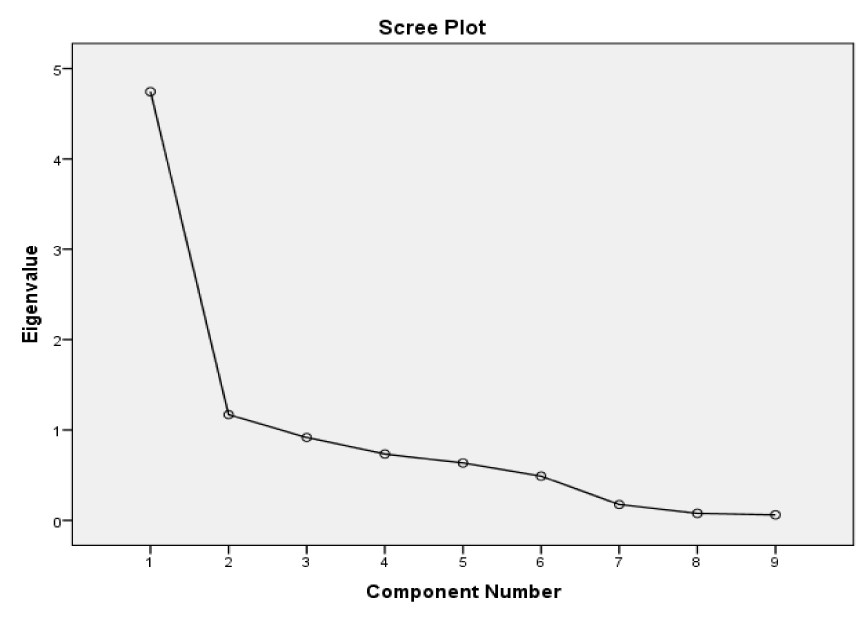
The mean TSK score in the total sample was 2.50 with a standard deviation of 0.55 and a range of 1.90 to 3.90. The distribution of the entire TSK scores was moderately positively skewed (skewness = 1.5).
Biofeedback and family interventions
There was a 24% reduction in the frequency of pain in SCD patients following the intervention. Almost all SCD patients who reported no pain spoke about the fact that they drank more water each day, had consistent health checkups, never missed their medications and wore layers during the rainy season to adapt to the cold weather. Three individuals did point out that they always avoid reptiles as an adapting mechanism. Five (5) families reported describing a favorite novel or music to divert SCD patients’ attention from the perceived pain (Tables 4,5).
| Table 4: Clinical variables of female subjects in the study filtered by pain intensity. | |||||||
| Females | |||||||
| WHO pain categories | BMI | Age | Temperature | SBP | DBP | TSK | p-value between groups |
| SC | |||||||
| No pain | 20.0 ± 5.6(4) | 34.3 ± 18.7(14) | 36.1 ± 0.7(8) | 116.4 ± 18.2(8) | 71.5 ± 18.7(8) | 13.6 ± 4.1(15) | 0.000 |
| Mild pain | 23.9 ± 6.6(9) | 34.9 ± 15.2(16) | 36.9 ± 0.5(13) | 119.4 ± 18.4(13) | 76.2 ± 13.1(13) | 15.1 ± 3.4(14) | 0.000 |
| Moderate pain | 24.2 ± 5.2(9) | 34.2 ± 14.0(21) | 36.3 ± 0.7(8) | 129.0 ± 30.4(9) | 80.6 ± 17.1(9) | 22.6 ± 7.0(18) | 0.000 |
| Severe pain | 27.2 ± 9.9(4) | 33.6 ± 13.3(11) | 36.5 ± 0.5(6) | 128.0 ± 33.4(7) | 76.9 ± 13.3(7) | 27.6 ± 4.7(12) | 0.000 |
| p-value within group | 0.565 | 0.997 | 0.029 | 0.655 | 0.691 | 0.000 | |
| SS | |||||||
| No pain | 19.5 ± 3.7(5) | 25.7 ± 13.1(19) | 36.2 ± 0.4(8) | 107.7 ± 9.5(7) | 63.0 ± 5.6(7) | 15.7 ± 5.1(19) | 0.000 |
| Mild pain | 20.0 ± 3.9(5) | 28.5 ± 11.4(18) | 36.4 ± 0.6(9) | 114.4 ± 14.8(9) | 68.4 ± 13.0(9) | 15.5 ± 3.5(17) | 0.000 |
| Moderate pain | 22.3 ± 5.1(7) | 25.3 ± 10.8(28) | 36.3 ± 0.7(11) | 103.3 ± 10.3(12) | 62.4 ± 9.6(12) | 24.2 ± 7.3(28) | 0.000 |
| Severe pain | 19.5 ± 4.7(7) | 27.0 ± 9.5(30) | 36.5 ± 0.7(21) | 104.8 ± 15.6(21) | 61.9 ± 8.5(21) | 29.5 ± 4.0(31) | 0.000 |
| p-value within group | 0.629 | 0.781 | 0.679 | 0.267 | 0.371 | 0.000 | |
| AA | |||||||
| No pain | 27.5 ± 3.3(6) | 34.7 ± 13.4(6) | 37.3 ± 0.2(6) | 116.7 ± 16.3(6) | 76.7 ± 10.3(6) | 15.2 ± 4.4(6) | 0.000 |
| AAnp x SSnp x SCnp | 0.013 | 0.223 | 0.001 | 0.472 | 0.195 | 0.425 | |
| AAnp x SSsp x SCsp | 0.050 | 0.120 | 0.025 | 0.039 | 0.001 | 0.000 | |
| AC | |||||||
| No pain | 24.8(1) | 36(1) | 37.1(1) | 140.0(1) | 80.0(1) | 20.0(1) | |
| AS | |||||||
| No pain | 27.5 ± 3.2(23) | 27.5 ± 6.4(2) | 37.1 ± 0.1(2) | 125.0 ± 7.1(2) | 85.0 ± 7.1(2) | 13.0 ± 2.8(2) | 0.000 |
| ASnp x SSnp x SCnp | 0.000 | 0.298 | 0.099 | 0.289 | 0.159 | 0.38 | |
| ASnp x SSsp x SCsp | 0.001 | 0.215 | 0.465 | 0.239 | 0.001 | 0.000 | |
| np=no pain; sp=severe pain; SBP=Systolic Blood Pressure; DBP=Diastolic Blood Pressure; TSK=Tampa Scale Kinesiophobia | |||||||
| Table 5: TSK scores in HbSC and HbSS phenotypes. | |||||
| TSK | |||||
| WHO pain categories | SC | SS | p-value | SC males x SS males | SC females x SS females |
| No pain | 13.7 ± 4.1(23) | 16.2 ± 5.0(35) | 0.051 | 0.199 | 0.204 |
| Mild | 15.0 ± 3.1(17) | 15.1 ± 3.3(28) | 0.920 | 0.758 | 0.751 |
| Moderate | 21.4 ± 6.7(23) | 23.6 ± 7.3(45) | 0.231 | 0.189 | 0.513 |
| Severe | 27.6 ± 5.4(12) | 29.6 ± 3.9(59) | 0.135 | 0.000 | 0.191 |
Discussion
In this study, a report on specific differences in SCD phenotypes in Ghanaians with regard to the fear avoidance scale was presented.
The study adds unto the existing knowledge elsewhere that in sickle cell anemia, musculoskeletal pain was more persistent than in HbSC disease [6,17-21]. Also, since the TSK scale determined the extent of pain inflicted disability [15,16], the results affirmed that HbSS patients were more pain disabled than HbSC patients.
Pain is a common occurrence in SCD which is debilitating and stressful. Because of the frequent nature of pain, HbSS patients were significantly pain disabled than HbSC patients. However, per the assessment of attitude of patients in pain by the verbal and visual analog scale, both HbSS and HbSC patients adopted the same mood as a coping strategy for comparable pain ratings.
Significant relationship was seen between sex and sickle cell diagnosis (Supplementary Table).
The suggestive use of biofeedback and family intervention in alleviating pain seemed beneficial [22,23]. This finding suggested that in patient care, counseling on pain coping strategies could be helpful. When these coping strategies are well developed, it will as well be useful to other pain related chronic diseases to help cope with the debilitating pain.
In agreement with other studies, SCA was associated with leanness [24] and a young age group. The low BMI (Table 1) is indicative of growth impairment in SCA [4,24]. Since the change in BMI was in the order HbSS< HbSC
Conclusion
Musculoskeletal pain was more persistent in HbSS than in HbSC disease and the biofeedback and family interventions were highly needful in such circumstance.
Acknowledgement
The authors duly acknowledge the staffs of Sickle cell clinic, cardioiothoracic unit of the Korle-Bu Teaching Hospital, Accra, Ghana; and also, Medical Biochemistry, Univ. of Ghana Medical School.
Funding disclosure
AGK and QIK co-sponsored.
Conflict of interest
The authors declare that there is no conflict of interest.
References
- Rachman S. Health anxiety disorders: a cognitive construal. Behav Res Ther. 2012 Aug;50(7-8):502-12. doi: 10.1016/j.brat.2012.05.001. Epub 2012 May 10. PMID: 22659160.
- Lang PJ. Presidential address, 1978. A bio-informational theory of emotional imagery. Psychophysiology. 1979 Nov;16(6):495-512. doi: 10.1111/j.1469-8986.1979.tb01511.x. PMID: 515293.
- Rachman S, Hodgson R. I. Synchrony and desynchrony in fear and avoidance. Behav Res Ther. 1974 Nov;12(4):311-8. doi: 10.1016/0005-7967(74)90005-9. PMID: 4155621.
- Ababio G, Boateng LA, Asare EV, Reeks R, Dongdem A. Sickle cell disease pain and zinc, any link? a case-control study among patients with sickle cell disease in korle-Bu. Valley International Journal Digital Library. 2024;1:1119-29. doi: 10.18535/ijsrm/v12i08.mp01.
- Ababio GK. Emerging trends in sickle cell disease and Crispr/Caspases. In: Current practices in sickle cell disease. IntechOpen; 2024. doi: 10.5772/intechopen.1004305.
- Boateng LA, Asare EV, Reeks R, Ababio G. Investigating the relationship between possible assessment tools (visual analogue scale, Tampa Scale of Kinesiophobia and Brief pain inventory) that could be used for SCD pain. Valley International Journal Digital Library. 2024;1:1130-7. doi: 10.18535/ijsrm/v12i08.mp02.
- Asmundson GJ, Norton PJ, Vlaeyen JW. Fear-avoidance models of chronic pain: An overview. Understanding and treating fear of pain. 2004 Jul 29:3-24. doi: 10.1093/oso/9780198525141.003.0001.
- Vlaeyen JWS, Linton SJ. Fear-avoidance and its consequences in chronic musculoskeletal pain: a state of the art. Pain. 2000 Apr;85(3):317-332. doi: 10.1016/S0304-3959(99)00242-0. PMID: 10781906..
- Crombez G, Vlaeyen JW, Heuts PH, Lysens R. Pain-related fear is more disabling than pain itself: evidence on the role of pain-related fear in chronic back pain disability. Pain. 1999 Mar;80(1-2):329-39. doi: 10.1016/s0304-3959(98)00229-2. PMID: 10204746.
- Powars DR, Chan L, Schroeder WA. Beta S-gene-cluster haplotypes in sickle cell anemia: clinical implications. Am J Pediatr Hematol Oncol. 1990 Fall;12(3):367-74. doi: 10.1097/00043426-199023000-00022. PMID: 1700639.
- Francis RB Jr, Johnson CS. Vascular occlusion in sickle cell disease: current concepts and unanswered questions. Blood. 1991 Apr 1;77(7):1405-14. PMID: 2009364.
- Creary M, Williamson D, Kulkarni R. Sickle cell disease: current activities, public health implications, and future directions. J Womens Health (Larchmt). 2007 Jun;16(5):575-82. doi: 10.1089/jwh.2007.CDC4. PMID: 17627395.
- Williams I, Earles AN, Pack B. Psychological considerations in sickle cell disease. Nursing Clinics of North America. 1983;1;18(1):215-29. doi: 10.1016/S0029-6465(22)01726-1.
- Ballas SK. More definitions in sickle cell disease: steady state v base line data. Am J Hematol. 2012 Mar;87(3):338. doi: 10.1002/ajh.22259. Epub 2011 Dec 21. PMID: 22190068.
- Hudes K. The Tampa Scale of Kinesiophobia and neck pain, disability and range of motion: a narrative review of the literature. J Can Chiropr Assoc. 2011 Sep;55(3):222-32. PMID: 21886284; PMCID: PMC3154068.
- Damsgård E, Fors T, Anke A, Røe C. The Tampa Scale of Kinesiophobia: A Rasch analysis of its properties in subjects with low back and more widespread pain. J Rehabil Med. 2007 Nov;39(9):672-8. doi: 10.2340/16501977-0125. PMID: 17999003.
- Garra G, Singer AJ, Taira BR, Chohan J, Cardoz H, Chisena E, Thode HC Jr. Validation of the Wong-Baker FACES Pain Rating Scale in pediatric emergency department patients. Acad Emerg Med. 2010 Jan;17(1):50-4. doi: 10.1111/j.1553-2712.2009.00620.x. Epub 2009 Dec 9. PMID: 20003121.
- Vowles KE, McCracken LM, McLeod C, Eccleston C. The Chronic Pain Acceptance Questionnaire: confirmatory factor analysis and identification of patient subgroups. Pain. 2008 Nov 30;140(2):284-291. doi: 10.1016/j.pain.2008.08.012. Epub 2008 Sep 27. PMID: 18824301.
- Vowles KE, McCracken LM. Acceptance and values-based action in chronic pain: a study of treatment effectiveness and process. J Consult Clin Psychol. 2008 Jun;76(3):397-407. doi: 10.1037/0022-006X.76.3.397. PMID: 18540733.
- Vowles KE, McCracken LM, Eccleston C. Patient functioning and catastrophizing in chronic pain: the mediating effects of acceptance. Health Psychol. 2008 Mar;27(2S):S136-43. doi: 10.1037/0278-6133.27.2(Suppl.).S136. PMID: 18377155..
- Burwinkle T, Robinson JP, Turk DC. Fear of movement: factor structure of the tampa scale of kinesiophobia in patients with fibromyalgia syndrome. J Pain. 2005 Jun;6(6):384-91. doi: 10.1016/j.jpain.2005.01.355. PMID: 15943960.
- Cozzi L, Tryon WW, Sedlacek K. The effectiveness of biofeedback-assisted relaxation in modifying sickle cell crises. Biofeedback Self Regul. 1987 Mar;12(1):51-61. doi: 10.1007/BF01000078. PMID: 3663738.
- Gil KM, Abrams MR, Phillips G, Keefe FJ. Sickle cell disease pain: relation of coping strategies to adjustment. J Consult Clin Psychol. 1989 Dec;57(6):725-31. doi: 10.1037//0022-006x.57.6.725. PMID: 2600243.
- Ashcroft MT, Serjeant GR, Desai P. Heights, weights, and skeletal age of Jamaican adolescents with sickle cell anaemia. Arch Dis Child. 1972 Aug;47(254):519-24. doi: 10.1136/adc.47.254.519. PMID: 4340016; PMCID: PMC1648274.




Content Alerts
SignUp to our
Content alerts.
 This work is licensed under a Creative Commons Attribution 4.0 International License.
