
2025 October 18;6(10):1470-1481. doi: 10.37871/jbres2203.
-
Subject area(s):

 |
|
 |
|
 |
|

 Research Article
Vital Registration Services Uptake and Associated Factors among Residents of Southern Ethiopia
Fankasho HW1*, Molis AK1 and Fikire N2
2Department of Public Health, Pharma Health Science College, Wolaita Sodo, Ethiopia
- Services
- Uptake
- Vital registration
Abstract
Background: This study investigated the utilization of vital registration services among mothers of under-five children in Areka Town, Southern Ethiopia. It was initiated in response to the 2012 proclamation that mandated such registrations but highlighted the lack of evidence on service usage.
Methodology: The study employed a cross-sectional design with systematic sampling from households, focusing on mothers with under-five children. Data were analyzed using SPSS, applying binary logistic regression to identify factors influencing service utilization.
Results: Out of 264 participants, the majority were female (91.7%), and the mean age was approximately 30 years. Knowledge of vital registration services uptake was found (51.8%) 95% CI: (45.9%-57.9%). Altitude towards vital registration services uptake (41.5%) 95% CI: (36.5%-48.4%. Practice towards vital registration services (37.9%) 95% CI: (32.0%-43.7%). Key findings indicated that educational status significantly influenced service utilization. Illiterate mothers had higher odds of not utilizing services (AOR = 1.7), while those with primary education showed even greater odds (AOR = 2.93). Poor knowledge and attitudes towards vital registration further exacerbated the issue, with both factors having an AOR of 4.06.
Conclusion: The conclusion underscored a paradox where, although respondents had a good understanding of the registration's importance, their attitudes and practices were lacking. Significant associations were found between educational status, knowledge, attitude, and service utilization.
Recommendations: To enhance uptake, the recommendation was made for vital registration offices to collaborate with health facilities, media, and religious organizations to raise awareness and improve service access for clients.
This study provides critical insights into the barriers to vital registration service utilization, emphasizing the need for targeted educational interventions.
Abbreviations
ANC: Antenatal Care; BRAT: Birth Registration Assessment Tool; CRVS: Civil Registration and Vital Statistics; CSA: Central Statistical Agency; EDHS: Ethiopian Demographic Health Survey; FDRE: Federal Democratic Republic of Ethiopia; FGD: Focus Group Discussion; HEP: Health Extension Program; HEW: Health Extension Workers; KAP: Knowledge Attitude and Practice; LMICs: Low and Middle Income Countries; PNC: Postnatal Care; SDG: Sustainable Development Goal; SNNPRS: Southern Nation Nationality and People’s Regional State; SPSS: Statistical Package for Social Sciences; SRS: Simple Random Sampling; VERA: Vital Event Registration Agency.
Introduction
Background
Civil registration is described as the continuous, permanent, obligatory, and universal recording of the occurrence and characteristics of important occasions per every country's legal requirements. Vital events captured in Civil Registration and Vital Statistics (CRVS) systems include the registration of births, deaths (including the cause of death), marriages, adoptions, and divorces [1]. Ethiopia launched a permanent, compulsory and universal registration and certification of vital events such as birth, death, marriage and divorce in August 2016 [2]. In general, Birth and death registration is a part of vital event registration system that acknowledges the existence of a person before the law, and establishes family relationships and major events of an individual’s life from birth to death [3]. Also, these systems serve individuals’ documentation required to establish legal identity, gives right to get health care services and exercise civil and political rights, to participate in and demonstrate various aspects of modern life in legal ways [4].
The healthcare facilities is well-positioned to improve notification of vital events. The health care facility is often required to notify the civil registry of vital events that take place in facilities [5]. Proclamation 760/2012 for the registration of vital events and national identity cards, which took effect on July 7, 2017, stipulated that the health sector was responsible for reporting births and deaths that took place in health facilities to a nearby civil registrar through the declarant for the purpose of civil registration. However, the proclamation does not address reporting births and deaths that took place in the community. Only 26% of births take place in health facilities. As a result, the amendment proclamation 1049/2017 obligated HEWs to report births and deaths that take place in a community. In Ethiopia, the Health Extension Program (HEP) is essential for increasing vital event registration, particularly for community-based events, due to its direct and substantial connection to individual households [6].
Births registration can be used to drive population level indicators of health status, fertility, infant mortality and population growth. Information on births and deaths aggregated by age, sex and cause is crucial for public health planning. Death records are vital in public health for identifying the magnitude and distribution of significant diseases and health-related problems [7].
The Sustainable Development Goal (SDG) agenda highlights the importance of continued momentum towards improving maternal and new-born health by setting, under SDG goal 17, targets for achieving 100% birth registration and 80% death registration by 2030. The birth registration rate is one of the indicators used to measure progress towards the SDG goal 16th and 17th. However, in many contexts, the coverage of birth and death registration remains very low, especially in developing countries. The study conducted in Gamo Gofa and Konso Zones, southern Ethiopia, the magnitude of birth registration practice indicated only 12% of children are registered, and the majority, 88%, did not register [8]. Moreover, the study conducted in Hawassa City Administration and Its Neighborhoods, SNNPRS, the study result was that only 24.6% of the study participant had registered for important events of their family [9].
In order to identify health and health related issues and to measure the progress of quality improvement and public health goals particularly maternal and child mortality, vital record is very crucial. That serve as an important indicators of country’s health status, by influencing policy development, program funding, research and measures of health care quality. Accurate and timely documentation of vital events is very important to improve the quality of vital statistics [10].
There is lack of evidence on factors associated with birth registration in the study area. Therefore this study will intend to assess birth and death registration practice, and associated factors among residents at Areka town Administration, SNNPR, Ethiopia.
Statement of the problem
Globally, approximately two-thirds (38 million) of the 57 million deaths each year go unregistered, alongside about 40% (48 million) of the 128 million births [7]. This significant underreporting hampers governments' abilities to design effective public health policies and evaluate their impacts. Vital records are crucial for assessing risks and the quality of perinatal outcomes, yet their effectiveness can be compromised by inaccuracies, incomplete data, and lack of timeliness [11].
In sub-Saharan Africa, civil registration systems are notably poor. In Ethiopia, the Federal Ministry of Health (FMoH) is tasked with recording births and deaths, including cause of death data, through health extension workers in communities and health facilities. However, the country experiences one of the lowest birth registration rates globally, at only 7% [12,13]. Coverage of birth registration for children under five varies significantly by region; for instance, 14.4% of children aged 0-5 years in Addis Ababa are registered, while the figure drops to 5.7% in the Southern Nations, Nationalities, and Peoples' (SNNP) region. Notably, 30% of children under five are registered in Tigray [1,14].
The lack of compulsory vital event registration in Ethiopia has contributed to these low figures, and many studies have not sufficiently addressed the integration of health facilities with the Vital Event Registration System (VERA). This underscores the need for comprehensive strategies to enhance both registration coverage and the integration of health services with vital registration initiatives.
Significance of the study
This study aims to serve as a benchmark for enhancing birth and death registration practices, focusing on both facility and community-based notifications. It will assess the knowledge, attitudes, and practices regarding birth and death registration among mothers, as well as evaluate the current status of notification processes at health facilities.
Additionally, the research seeks to identify existing gaps in the registration system and provide insights to policymakers, administrative bodies, and program implementers. By highlighting these gaps, the study aims to inform strategies for improving and strengthening the vital event registration system. This involves enhancing health system integration to ensure effective vital event notifications, ultimately contributing to better public health data and service delivery.
The findings are expected to guide the development of targeted interventions that promote awareness and facilitate the registration of vital events, thereby improving overall health outcomes in the community.
Methods
Study area and time period
This study was conducted at Areka town, South Ethiopia (SE), which is located 362km from Addis Ababa, capital city of Ethiopia in South West direction along the way to Hossana. Based on the 2007 census projection, the total estimated population is 194,977. Of them, 96,171 are females and 30,436 are under-five children [15]. At a town, there are 9 Kebeles. Public health facilities serving Areka town population includes 2 private hospitals and 2 health Centers and 12 Health Posts. Place of vital event registration office found in each kebele administration.
Study design
A community based Cross-sectional was used.
Study population
Source population: All households with under-five children who were registered by health extension workers of Areka town were source Populations.
Study population: A household with under-five children’s was resided six months or more prior to data collection period in urban kebeles of Areka town.
Inclusion criteria
Household heads and women with under-five year’s children who during the study period were included.
Exclusion criteria
Households who are temporary residents less than six months were excluded and houses that are severely ill including mentally illness were excluded.
Sampling and sample size determination
Sample size determined by using single population proportion formula with the following assumptions. The proportion of mothers whose last birth was registered and possessed birth certificates was 12.1% (8) (i.e., p = 0.121), taken from a study conducted at Gamo Gofa Zone (Arbaminch and Sawula town) and Konso Woreda of South Ethiopia Region 95% confidence interval, 5% margin of error, power 80% and 10% expected non-response rate.
N = Zα/22 P (1-p) = 1.962(0.121)0.7 = 3.8416(0.121)0.879 = 163
d2 0.052 0.0025
where:
N = the required sample size.
Zα/2 = the standardized normal distribution at 95% CI.
P = the proportion of respondents whose last birth was registered and possessed birth certificates.
D = Margin of error at 5%.
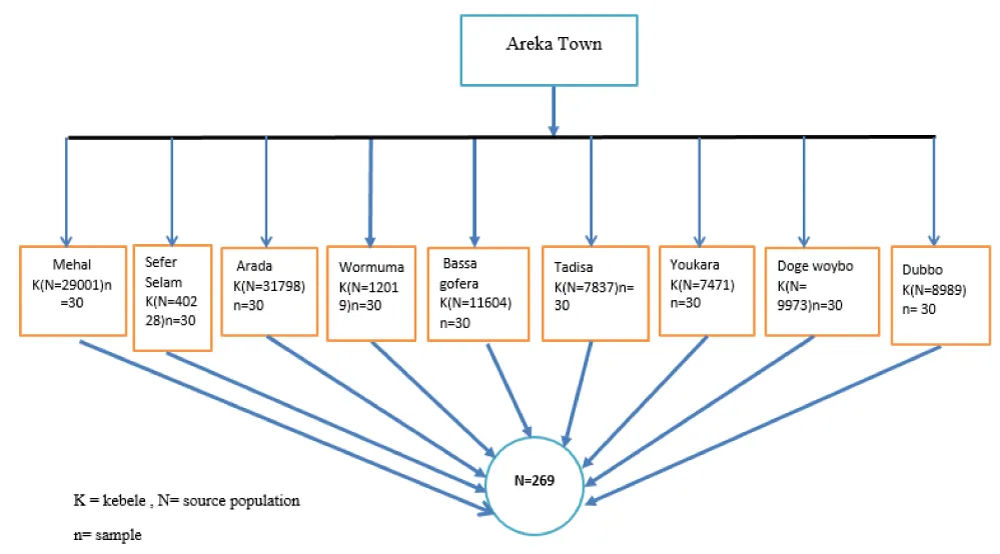
The calculated sample size is 163; including 10% expected non respondent rate, 10% of calculated sample size (16) and including design effect 1.5 of calculated final sample size for this study were 269 mothers with children of age less than five years.
Sampling techniques and strategies
Simple random sampling method used to select 4 kebeles among 9 kebeles of Areka town. Then proportionate allocations of sample size method were used to allocate number of study participants from each Kebele based on a number of households in selected Kebeles (Figure 1).
Data collection tools and procedure
Data collection for this study involved a well-structured, interviewer-administered questionnaire, which was adapted from previous literature concerning vital events. This questionnaire specifically aimed to gather quantitative data on births of children under five years old and deaths occurring within the last five years.
In addition to the quantitative approach, qualitative data were collected using interview guides to provide deeper insights into the findings. The original questionnaire was developed in English and subsequently translated into Amharic to facilitate better understanding and effective communication with participants during data collection. This dual approach ensures comprehensive data that captures both statistical trends and contextual explanations related to vital event registration practices in the study area.
Data management and quality
A two-day training session was conducted for four BSc degree nurse graduates who served as data collectors for the study. To ensure the validity of the questionnaire, 5% of the sample size was utilized for a pretext to identify any survey items that required modification, particularly in the BRAT (Birth and Registration Attitudes and Techniques) competence section.
Based on the pretext findings, necessary adjustments were made to the BRAT component of the questionnaire. Data collectors employed field books to enhance data completeness during the BRAT assessments. Additionally, audio-recorded interviews were carefully translated and transcribed into English by an experienced expert to ensure accuracy and fidelity to the original responses. This meticulous approach aimed to bolster the reliability of the collected data and improve overall study outcomes.
Data processing and analysis
The data collected in this study were carefully checked for completeness and consistency before being entered into EpiData version 4.6. The cleaned dataset was then exported to SPSS version 25 for further statistical analysis. Descriptive statistics, including frequencies, proportions, means, and standard deviations, were computed to summarize the socio-demographic and other characteristics of the participants.
Bivariate logistic regression analysis was initially performed to identify candidate variables for further modeling, with variables showing a p-value of less than 0.25 selected for inclusion in the multivariate analysis. Multicollinearity among independent variables was assessed using the Variance Inflation Factor (VIF), ensuring that all values were below 5. Subsequently, multivariate logistic regression analysis was conducted to identify independent determinants of vital event registration service utilization. Statistical significance was declared at a p-value less than 0.05, with corresponding 95% Confidence Intervals (CIs).
Model fitness was evaluated using the Hosmer-Lemeshow goodness-of-fit test, which yielded a p-value of 0.25, indicating an adequate model fit. Study results were systematically presented using tables and narrative descriptions. This rigorous analytical approach ensured the reliable identification of factors influencing vital event registration service utilization.
Independent variables
- Socio-demographic characteristics such as the educational status of the mother, educational status of the husband, age of respondent, religion, marital status, family size, number of under-five children.
- Knowledge, attitude and perception such as awareness on time and place of registration, attitude towards benefits of registrations, the practice of birth and death registration in previous children.
- Maternal and child health service utilization factors such as: ANC follow up, place of delivery, PNC follow up, vaccination status of child.
- Service provision related factors such as walking time to reach vital events registration center, service integration with health facility, punctuality of vital registration service provider.
Operational definitions
- Vital event: refers to the live birth, death, fetal death, marriage, divorce, adoption, legitimization, recognition of parenthood, annulment of marriage, or legal separation.
- Vital event registration: the registration of births, deaths, marriage and divorce in Ethiopian context.
- Vital event registration agency: A well developed and functioning civil registration system ensures the registration of all vital events including births, marriages, divorces and deaths.
- Birth registration: The number of children under 5 years of age with a birth certificate or whose birth was registered with a civil authority during a specified reference period.
- Death registration: Registration of death and owning a death certificate.
- Birth and death registration practice: The number of children under 5 years of age whose birth was registered with a civil authority and with a birth certificate during a specified reference period and any death registered and owned legal document with in the reference period.
- Good knowledge: a total of 9 questions were used to asses’ knowledge of respondent; respondents who score above the mean of knowledge questions were good knowledge.
- Poor knowledge: participants who scores below the mean.
- Good attitude: from a total of 4 attitude assessing questions respondents who respond above the mean score were good attitude.
- Poor attitude: participants those who scores below the mean.
- Practice: number of women who has registered their child and own birth certificate or who has registered and own death certificate for their family.
- Exclusion criteria: for birth registration household heads and women with greater than 5 year’s children and for deaths occurred before 5 (five) years from this study and deaths less than 30(thirty) days should be excluded.
Ethical consideration
Ethical clearance was obtained from the Pharma Health Science College, School of Public Health, prior to the commencement of the study. Permission letters were subsequently secured from the Areka Town Health Office and presented to all kebele administrators involved in the assessment.
Before data collection began, informed consent was obtained from each participant after providing a clear explanation of the study’s objectives, procedures, potential benefits, and risks. Participants were assured of the confidentiality and anonymity of the information they provided, and data were used solely for research purposes. Participation was entirely voluntary, and respondents were informed that they could withdraw from the study at any stage without any adverse consequences.
All ethical procedures were conducted in accordance with the principles outlined in the Declaration of Helsinki for research involving human subjects. This ethical framework ensured the protection of participants’ rights, dignity, and well-being, and fostered mutual trust and cooperation throughout the research process.
Result
Socio-demographic characteristic of participants
In this study, of the 270 targeted participants, 264 completed the survey, yielding a response rate of 97.7%. The majority of respondents were female (n = 242, 91.7%), while 22 (8.3%) were male. The mean age of participants was 29.79 years (SD = 4.043).
Regarding occupational status, 110 participants (40.1%) were housewives. The remaining 154 participants included 57 (21.6%) government employees, 8 (3.0%) daily laborers, 2 (0.7%) farmers, and 77 (29.2%) self-employed individuals. None of the participants were unemployed.
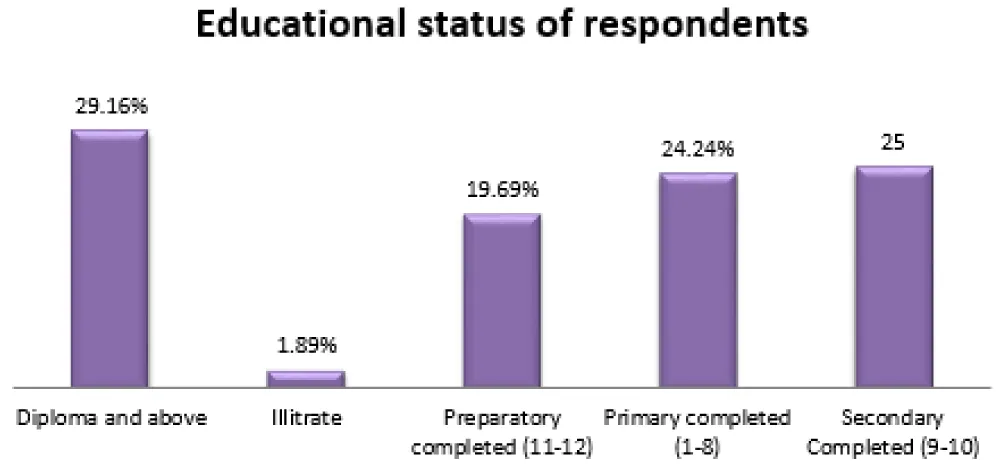
With respect to educational attainment, the majority (77.0%) held a diploma or higher qualification. The remaining participants included 5 (1.9%) who were illiterate, 52 (19.3%) who had completed preparatory education, 64 (24.2%) with primary education, and 66 (24.1%) with secondary education.
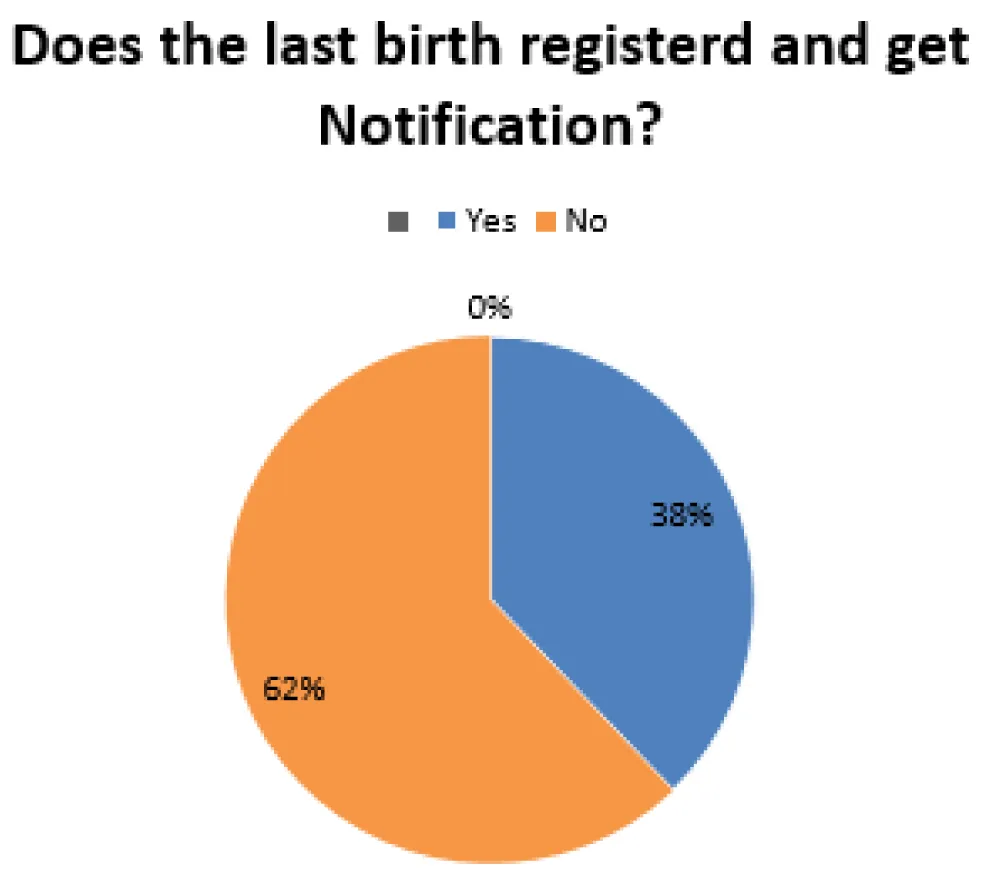
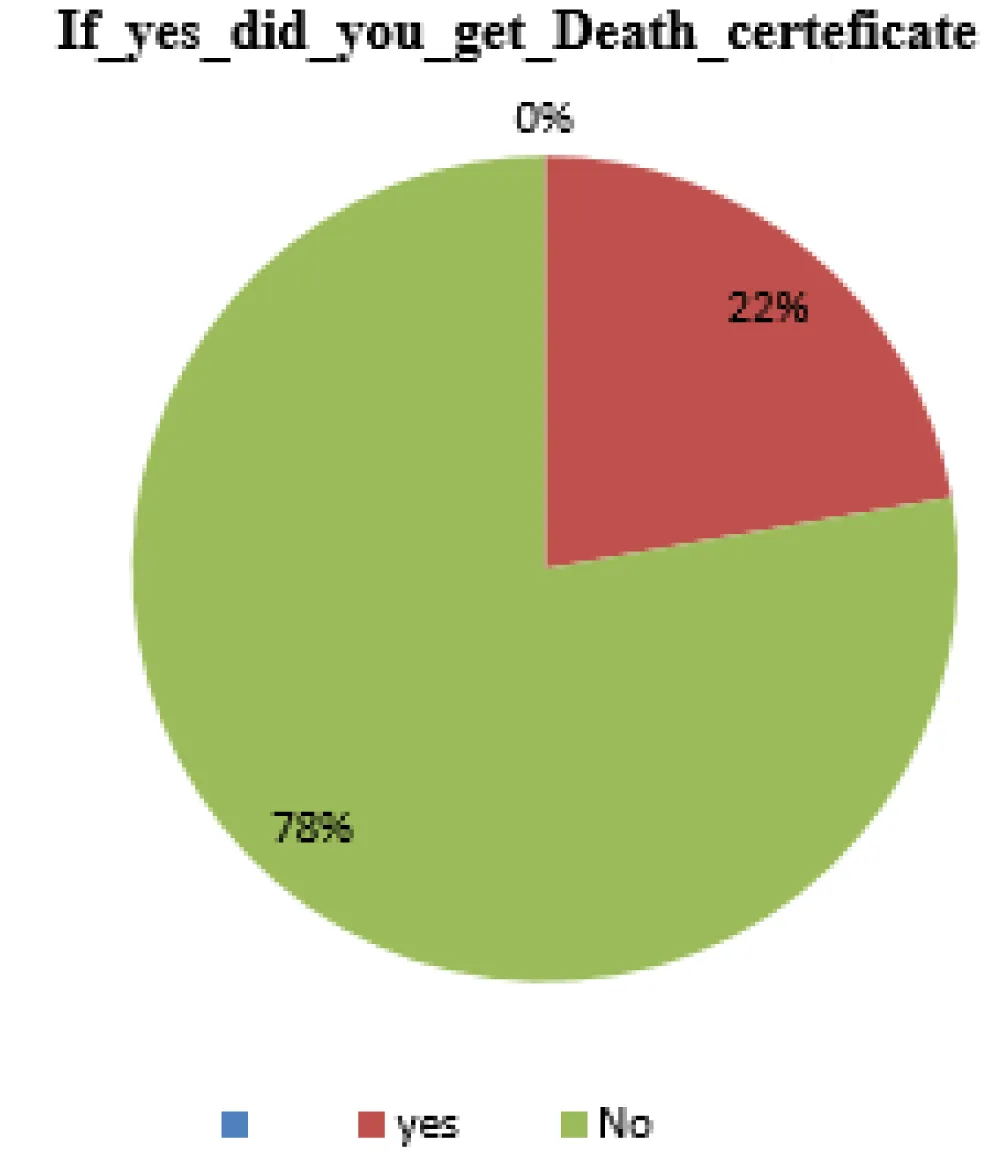
Knowledge of vital registration services was found to be adequate among 137 participants (51.8%) 95% CI: (45.9%-57.9%). However, only 112 participants (41.5%) 95% CI: (36.5%-48.4%) demonstrated a positive attitude toward the utilization of these services. Notably, 164 participants (62.1%) 95% CI: (56.3%-68.0%) reported that their births had not been registered, while 100 (37.9%) 95% CI: (32.0%-43.7%) had completed birth registration (Figure 2). In terms of death registration, only 4 participants (22.2%) 95% CI: (3.0%-41.4%) had received death certificates (Figure 3), whereas 14 (77.8%) had not (Table 1). Table 1 summarizes these findings, illustrating the demographic and attitudinal characteristics of the study population.
| Table 1: Socio-demographic characteristic of participants practice towards birth and death registration (n = 264). | |||
| Variable | Categories | Does the last birth registered | |
| Yes no(%) | No no(%) | ||
| Sex | Female | 85(35.5%) | 157(64.9%) |
| Male | 15(68.2%) | 7(31.8%) | |
| Marital status | Married | 97(39%) | 152(61%) |
| Widowed | 3(50%) | 3(50%) | |
| Divorced | 0(0%) | 9(100%) | |
| Religion | Catholic | 3(21.4%) | 11(78.6%) |
| Muslim | 5(41.7%) | 7(58.3%) | |
| Orthodox | 29(20.7%) | 60(79.3%) | |
| Other protestant | 4(16%) | 21(84%) | |
| Protestant | 59(47.6%) | 65(52.4%) | |
| Educational status of respondent | Diploma and above | 51(66.2%) | 26(33.8%) |
| Illiterate | 1(20%) | 4(80%) | |
| Preparatory | 19(36.5%) | 33(63.5%) | |
| Primary | 15(23.4%) | 49(76.6%) | |
| Secondary | 11(16.7%) | 55(83.3%) | |
| Educational status of partner | Diploma and above | 53(43.8) | 69(56.7%) |
| Illiterate | 1(6.3%) | 15(93.8%) | |
| Preparatory | 6(11.5%) | 46(88.5%) | |
| Primary | 7(21.2%) | 26(78.8%) | |
| Secondary | 14(21.2%) | 52(78.8%) | |
| Occupation of respondent | Government/employed | 35(61.4%) | 22(38.6%) |
| Daily labor | 2(25%) | 6(75%) | |
| Farmer | 2(100%) | 0(0%) | |
| House wife | 31(28.2%) | 79(71.8%) | |
| Own business | 24(31.2%) | 53(68.8%) | |
| Unemployed | 6(60%) | 4(40%) | |
Factors associated with vital event registration uptake
The study identified several key factors significantly associated with birth registration practices. These included respondents’ educational and occupational status, awareness of the legal time frame for registration, knowledge of vital registration services, and attitudes toward the registration process.
Educational status emerged as a strong predictor of birth registration (Figure 4). Participants who were illiterate were 1.7 times more likely not to practice birth registration compared to those with a diploma or higher qualification (AOR = 1.7; 95% CI: 1.56-2.29) (Table 2). Respondents educated only to the preparatory level were seven times more likely not to register their children (AOR = 7.0; 95% CI: 6.53-7.60), while those with primary education were 2.93 times more likely not to register births (AOR = 2.93; 95% CI: 2.59-3.36) compared to participants with higher education. Conversely, individuals with secondary education were 0.084 times less likely not to register their children (AOR = 0.084; 95% CI: 0.014-0.517).
| Table 2: Maternal and child health related variables towards vital registration (n = 264). | |||
| Variable | Categories | Does the last birth registered | |
| Yes no(%) | No no(%) | ||
| ANC visit | Yes | 100(39.5%) | 153(60.5%) |
| No | 0(0%) | 11(90.9%) | |
| Place of delivery | Health center | 36(30.5%) | 82(69.5%) |
| Home | 0(0%) | 2(100%) | |
| Hospital | 64(44.4%) | 80(55.6%) | |
| Post natal care | Yes | 98(50%) | 98(50%) |
| No | 2(2.9%) | 66(97.1%) | |
| Immunization | Yes | 100(38.3%) | 161(61.7%) |
| No | 0(0%) | 3(100%) | |
| Who gave birth notification | Health center/health post | 37(100%) | 0(0%) |
| Hospital | 67(100% | 0(0%) | |
Knowledge and attitude-related variables also showed significant associations (Tables 3,4). Participants unaware of the legal time frame for registration were 6.55 times more likely to fail to register births (AOR = 6.55; 95% CI: 1.314-32.64). Similarly, those with poor knowledge of vital registration services were 4.06 times more likely to forgo registration (AOR = 4.06; 95% CI: 1.039-15.9). In addition, respondents with a negative attitude toward vital registration were more likely not to register their children (AOR = 4.06; 95% CI: 1.86-8.84).
| Table 3: Knowledge related factors (n = 264). | ||||
| Variable | Categories | Does the last birth registered | ||
| Yes no(%) | No no(%) | |||
| Heard about vital events registration? | Yes | 92(42%) | 127(58%) | |
| No | 8(17.8%) | 37(82.2%) | ||
| What kind of media have you heard? | 1 | Mass media | 50(46.7%) | 57(53.3%) |
| 2 | kebele | 25(43.9%) | 32(56.1%) | |
| 3 | Religion institutions | 9(29.0%) | 22(71.0%) | |
| 4 | Friends/ neighbors | 8(33.3%) | 16(66.7%) | |
| Which content of vital events do you know so far? | 1 | For birth | 29(39.7%) | 44(60.3%) |
| 2 | For death | 4(19%) | 17(81%) | |
| 3 | For marriage | 15(44.1%) | 19(55.9%) | |
| 4 | For divorce | 12(44.4%) | 15(55.6%) | |
| Did you know legal registration time | Yes | 29(24.6%) | 89(75.4%) | |
| No | 71(48.6%) | 75(51.4%) | ||
| When Is legal time of registration | Within 3 month | 29(24.6%) | 89(75.4%) | |
| 5 year | 0(0%) | 1(100%) | ||
| Within month | 42(51.2%) | 40(48.8%) | ||
| Within a month | 25(61%) | 16(39%) | ||
| Within a year | 4(18.2%) | 18(81.8%) | ||
| Table 4: Bivariate and multivariate analysis of birth and death registration practice (n = 264). | ||||||
| Does the last birth registered | ||||||
| Variable | Categories | Yes no(%) | No no (%) | Crude OR | AOR | p- value |
| Religion | Catholic | 3(21.4%) | 11(78.6%) | 3.32(0.885,12.5) | 2.75(0.288, 26.3) | 0.379 |
| Muslim | 5(41.7%) | 7(58.3%) | 1.27(0.38, 4.22) | .722(0.112, 4.67) | 0.732 | |
| Orthodox | 29(20.7%) | 60(79.3%) | 1.87 (1.06, 3.31) | 1.09(0.498, 2.42) | 0.817 | |
| Other protestant | 4(16%) | 21(84%) | 4.76(1.54, 14.6) | 4.24(1.04, 17.2) | 0.044 | |
| Protestant | 59(47.6%) | 65(52.4%) | 1 | 1 | ||
| Educational status of respondent | Diploma and above | 51(66.2%) | 26(33.8%) | 1 | 1 | |
| Illiterate | 1(20%) | 4(80%) | 7.84(0.834, 73.8) | 1.69(1.56, 2.29) | 0.005* | |
| Preparatory | 19(36.5%) | 33(63.5%) | 3.40(1.63, 7.11) | 7.0(6.53, 7.6) | 0.000* | |
| Primary | 15(23.4%) | 49(76.6%) | 6.48(3.03, 13.5) | 2.93(2.59, 3.36) | 0.0.02* | |
| Secondary | 11(16.7%) | 55(83.3%) | 7.28(3.42, 15.5) | .084(0.014, 0.517) | 0.008* | |
| Educational status of partner | Diploma and above | 53(43.8) | 69(56.7%) | 1 | 1 | |
| Illiterate | 1(6.3%) | 15(93.8%) | 4.35(1.16, 16.2) | 1.087(0.171, 6.90) | 0.930 | |
| Preparatory | 6(11.5%) | 46(88.5%) | 3.53(1.68, 7.4) | 1.611(0.551, 4.70) | 0.384 | |
| Primary | 7(21.2%) | 26(78.8%) | 2.50(1.09, 5.70) | 1.15(0.284, 4.70) | 0.840 | |
| Secondary | 14(21.2%) | 52(78.8%) | 2.76(1.32, 5.78) | 0.712(0.179, 2.83) | 0.630 | |
| Occupation of respondent | Government/employed | 35(61.4%) | 22(38.6%) | 1 | 1 | |
| Daily labor | 2(25%) | 6(75%) | 4.77(0.88, 25.7) | .882(0.044, 17.7) | 0.934 | |
| Farmer | 2(100%) | 0(0%) | 0(0.0, 0.0) | 0(0.0, 0.0) | 0.999 | |
| House wife | 31(28.2%) | 79(71.8%) | 4.05(2.06, 7.97) | 0.163(0.019, 1.39) | 0.098 | |
| Own business | 24(31.2%) | 53(68.8%) | 3.51(1.71, 7.21) | 0.156(0.020, 1.20) | 0.074 | |
| Unemployed | 6(60%) | 4(40%) | 1.06(0.269, 4.1) | 1.418(0.263, 7.63) | 0.684 | |
| ANC visit | Yes | 100(39.5%) | 153(60.5%) | 1 | 1 | 1 |
| No | 0(0%) | 11(90.9%) | 00(0.00,0.0) | .299(0.025, 3.57) | 0.345 | |
| Place of delivery | Health center | 36(30.5%) | 82(69.5%) | 1 | 1 | 1 |
| Home | 0(0%) | 2(100%) | 0.999(0.00, 0.00) | 47.3(0.0, 0.0) | 1.00 | |
| Hospital | 64(44.4%) | 80(55.6%) | 0.549(0.329, 0.915) | 0.566(0.229, 1.400) | 0.218 | |
| Post natal care | Yes | 98(50%) | 98(50%) | 1 | 1 | |
| No | 2(2.9%) | 66(97.1%) | 33.0(7.86, 138.5) | 3.39(0.84, 13.5) | 0.084 | |
| Did you know legal registration time | Yes | 29(24.6%) | 89(75.4%) | 1 | ||
| No | 71(48.6%) | 75(51.4%) | 0.344(0.203, 0.585) | 6.55(1.31, 32.6) | 0.022* | |
| When Is legal time of registration | Within 3 month | 29(24.6%) | 89(75.4%) | 1 | 1 | |
| 5 year | 0(0%) | 1(100%) | 1.00(0.0, 0.0) | 2.4(0.0,0.0) | 1.00 | |
| Within month | 42(51.2%) | 40(48.8%) | 0.310(0.170, 0.567) | 0.856(0.179, 4.07) | 0.845 | |
| Within a month | 25(61%) | 16(39%) | 0.209(0.098, 0.443) | 0.306(0.060, 1.55) | 0.154 | |
| Within a year | 4(18.2%) | 18(81.8%) | 1466(0.459, 4.68) | . | ||
| Knowledge | Poor | 40(31.5%) | 87(68.5%) | 1.69(1.02, 2.80) | 4.06(1.039, 15.9) | 0.044* |
| Good | 60(43.8%) | 77(56.2%) | 1 | |||
| Attitude | Poor | 78(51.3%) | 74(48.7%) | 0.23(0.132, 0.408) | 4.06(1.86, 8.841) | 0.001* |
| Good | 22(19.6%) | 90(80.4%) | 1 | |||
Discussion
This study assessed the knowledge, attitudes, and practices related to vital event registration services among residents of Areka Town, Wolaita Zone, and Southern Ethiopia. Among the respondents, 37.9% reported having registered at least one vital event, indicating a notable improvement compared to previous studies in Ethiopia, where registration rates ranged from 24.6% to 30% [1,9,14].
Additionally, 48.4% of participants reported registering new births within the last five years, which is higher than earlier findings - 7% in Ethiopia, 41% in India, 62% in Kenya, and 88% in Zambia [4,7]. The most frequently cited reasons for failing to register vital events were a lack of knowledge (48.2%) and unfavourable attitudes toward registration services (59.5%).
Educational status played a critical role in influencing registration practices. Registration rates among illiterate respondents were only 1.9%, whereas those with primary and secondary education reported registration rates of 24.2% and 19.5%, respectively [5,7]. This finding aligns with existing literature indicating that increased maternal education positively influences birth registration. Educated mothers are more likely to understand the importance of registration and actively engage in the process.
Conversely, prior research in Ethiopia revealed that long waiting times at kebele offices were major barriers to registration, affecting over half (56.5%) of respondents [1]. This is consistent with findings from Nigeria, where poor knowledge regarding the necessity of child registration was a common reason for non-registration.
While approximately half of the respondents in the present study demonstrated adequate knowledge of vital registration services, their actual practices did not correspond to this level of understanding, indicating a clear gap between knowledge and practice. This observation is consistent with similar studies conducted in Ethiopia but contrasts with research from Zambia, Kenya, and Vietnam, where the knowledge-practice gap was less pronounced [4,7]. The observed difference between knowledge and practice likely results from a combination of systemic barriers, cultural influences, weak institutional support, and lack of incentives all of which prevent the translation of awareness into consistent practice.
- Limited accessibility of registration offices: Long distances to registration centres, lack of transport, or poor infrastructure discourage timely registration despite awareness.
- Inadequate human resources and logistics: Shortage of trained personnel or registration materials (e.g., forms, computers) can make the process slow or unreliable.
- Weak coordination between health facilities and civil registration offices: Even when people know the importance of registration, the system may not support efficient notification and documentation.
- Administrative and policy constraints: Complex or time-consuming procedures: Bureaucratic requirements and delays can demotivate families from practicing registration.
- Lack of enforcement: Absence of legal or administrative follow-up reduces accountability for non-registration.
- No linkage with service benefits: In some countries (like Kenya or Vietnam), registration is tied to access to social services or schooling motivating compliance. In contrast, Ethiopia may not have strong incentive mechanisms.
Socio-cultural and behavioural factors
Traditional beliefs and customs: Some communities delay birth registration until naming ceremonies or other cultural events, while deaths may not be reported due to stigma or mourning traditions.
Low perceived importance: Even if people know about registration, they may not see its immediate relevance to their daily life.
Gender and decision-making roles: In many rural areas, mothers may be aware but lack authority or resources to act on that knowledge.
Economic and logistical barriers
Indirect costs: Transportation, opportunity cost of travel, or small service fees can deter people despite knowledge.
Poverty and livelihood priorities: Daily survival needs often take precedence over administrative tasks like registration.
Programmatic and awareness gaps
Superficial knowledge vs. actionable knowledge: Respondents may know what vital registration is, but not how or where to complete it.
Limited follow-up or community-based mechanisms: Unlike Zambia or Vietnam, community health workers in Ethiopia may have less involvement in household-level notification and registration.
Importantly, around half of the respondents expressed a positive attitude toward vital registration services, suggesting potential for improvement in the registration system within the study area. Overall, these findings emphasize the need for targeted interventions aimed at enhancing awareness, improving attitudes, and simplifying the registration process to increase the coverage of vital event registration.
Conclusion
This study revealed that although the level of knowledge and awareness regarding vital event registration services among residents of Areka Town was relatively high, the actual practice of registration remained suboptimal. Educational attainment, knowledge of the legal registration timeframe, and positive attitudes toward vital registration were found to be significant predictors of registration practices. Participants with lower educational levels, poor knowledge, and negative attitudes were less likely to register vital events.
These findings highlight the persistent gap between awareness and practice, underscoring the need for context-specific interventions. Strengthening community education programs, improving access to registration centers, and enhancing the efficiency of service delivery at kebele offices are essential to increasing registration coverage. Additionally, public sensitization campaigns emphasizing the legal and social importance of vital registration could further improve compliance.
Overall, integrating educational and behavioral interventions within local administrative structures could play a pivotal role in achieving universal vital registration, thereby improving data quality for public health planning and governance in Ethiopia.
References
- Abay ST, Gebre-Egziabher AG. Status and associated factors of birth registration in selected districts of Tigray region, Ethiopia. BMC Int Health Hum Rights. 2020 Jul 29;20(1):20. doi: 10.1186/s12914-020-00235-x. PMID: 32727474; PMCID: PMC7388520.
- Phillips DE, Adair T, Lopez AD. How useful are registered birth statistics for health and social policy? A global systematic assessment of the availability and quality of birth registration data. Popul Health Metr. 2018 Dec 27;16(1):21. doi: 10.1186/s12963-018-0180-6. PMID: 30587201; PMCID: PMC6307230.
- Suthar AB, Khalifa A, Yin S, Wenz K, Ma Fat D, Mills SL, Nichols E, AbouZahr C, Mrkic S. Evaluation of approaches to strengthen civil registration and vital statistics systems: A systematic review and synthesis of policies in 25 countries. PLoS Med. 2019 Sep 27;16(9):e1002929. doi: 10.1371/journal.pmed.1002929. PMID: 31560684; PMCID: PMC6764661.
- Yokobori Y, Matsuura J, Obara H, Sugiura Y, Kitamura T, Moyo C, Mwango C, Yuasa M. Rapid assessment of the civil registration and vital statistics performance of health facilities in the five districts of Zambia: A cross-sectional study. Heliyon. 2021 Nov 11;7(11):e08367. doi: 10.1016/j.heliyon.2021.e08367. PMID: 34825083; PMCID: PMC8605283.
- Hailemariam G. Endline assessment: Improving birth registration using the existing community structures and immunization processes. 2019.
- Wakibi S, Ngure E. An Assessment of Knowledge, Attitude, and Practices of Birth and Death Registration in Kilifi County in the Coastal Region in Kenya. Biomed Res Int. 2021 Oct 1;2021:9963703. doi: 10.1155/2021/9963703. PMID: 34631893; PMCID: PMC8500746.
- Assesments birth and death registration of under five childern in gamo gofa zone and konso. Grey Literture. 2018.
- Toma SA, Senbeta BA, Bezabih AA. Assessing knowledge, attitude and practice of residents towards civil registration & vital statistics at hawassa city administration and its neighbourhoods. SNNPRS. Ethiopia. Int J Adv Multidiscip Soc Sci. 2020;1:13-27.
- Kasasa S, Natukwatsa D, Galiwango E, Nareeba T, Gyezaho C, Fisker AB, Mengistu MY, Dzabeng F, Haider MM, Yargawa J, Akuze J, Baschieri A, Cappa C, Jackson D, Lawn JE, Blencowe H, Kajungu D; Every Newborn-INDEPTH Study Collaborative Group. Birth, stillbirth and death registration data completeness, quality and utility in population-based surveys: EN-INDEPTH study. Popul Health Metr. 2021 Feb 8;19(Suppl 1):14. doi: 10.1186/s12963-020-00231-2. PMID: 33557862; PMCID: PMC7869445.
- ACOG committee opinion. The importance of vital records and statistics for the obstetrician-Gynecologist.
- Adedini S, Odimegwu C. Assessing knowledge, attitude and practice of vital registration system in South-West Nigeria. IFE Psychol. 2011.
- Gizaw ME. The status, challenges and opportunities of civil registration and vital statistics in Ethiopia: A systematic review. Int J Sci Reports. 2020;6(5):200.
- Plus-Crvs PMA. Final report: PMA Plus/Crvs - birth registration survey in addis ababa and SNNPR. Ethiopia.
- Tigray-Zone W. Population size of towns by sex, region, zone and weredas as of July 2021 tigray-region male female total. 2021.
- Ethiopian demographic health survey. 2016.
- Busetto L, Wick W, Gumbinger C. How to use and assess qualitative research methods. Neurol Res Pract. 2020 May 27;2:14. doi: 10.1186/s42466-020-00059-z. PMID: 33324920; PMCID: PMC7650082.





Content Alerts
SignUp to our
Content alerts.
 This work is licensed under a Creative Commons Attribution 4.0 International License.
